

Submitted:
14 February 2025
Posted:
18 February 2025
You are already at the latest version
Abstract
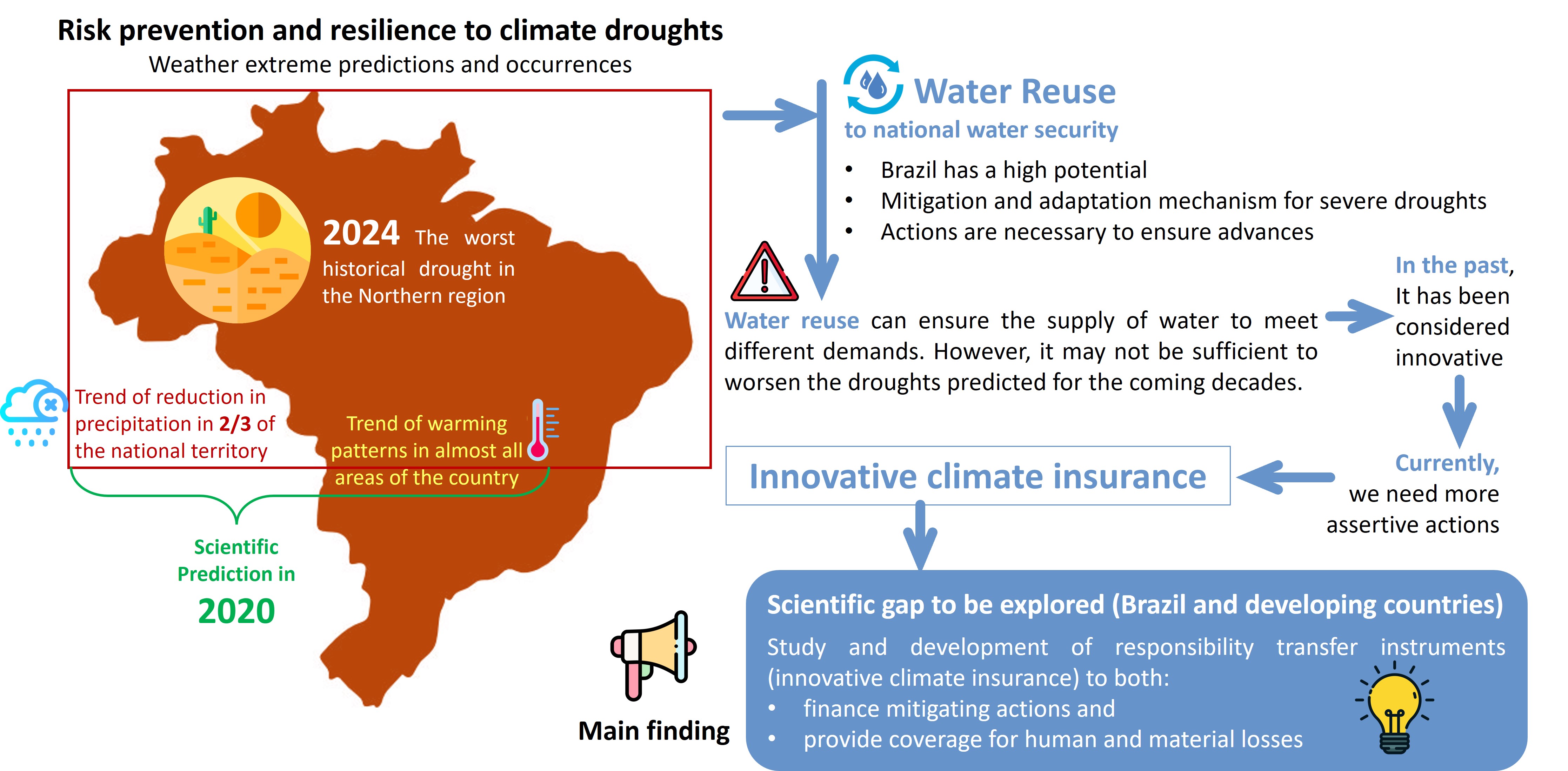
Brazil is globally recognized for its abundance of water. However, the geographical distribution of its population and the environmental, socioeconomic and cultural differences between its regions lead to more complex water management. Furthermore, climate change has posed additional challenges that require more modern and committed management. The north of the country, known for its humid climate and for hosting the largest river in the world (Amazonas), was impacted in 2024 the worst drought in its history. The implementation of water reuse infrastructure to guarantee regional water security has already been considered innovative, in the past. Currently, more assertive actions must also involve the transfer of responsibilities in relation to the impacts and expected risks from climate change, losses resulting from disasters, in addition to their prevention. Innovative climate insurance is gaining prominence as it finances loss prevention measures and creates resilience to climate risks arising from severe droughts. The international scientific community indicates that Brazil still does not have studies to address these issues. The present study was carried out to confirm this hypothesis. The results present an important gap to be explored by the national scientific community, as well as other developing countries that present a similar scenario.
Keywords:
Brazilian Hydrographic Regions
; Climate Change
; Environmental Catastrophe
; Environmental Risk
; Drought
; Financial Instruments
1. Introduction
Brazil is known for its water abundance throughout the world. According to Agência Nacional de Águas e Saneamento Básico - ANA (Water and Sanitation National Agency), 13% of the planet’s water reserves concentrate in the Brazilian territory [1]. However, the Brazilian population is not evenly distributed in the country which, due to its continental geographical scale, have distinct socio-environmental, economic and cultural characteristics.
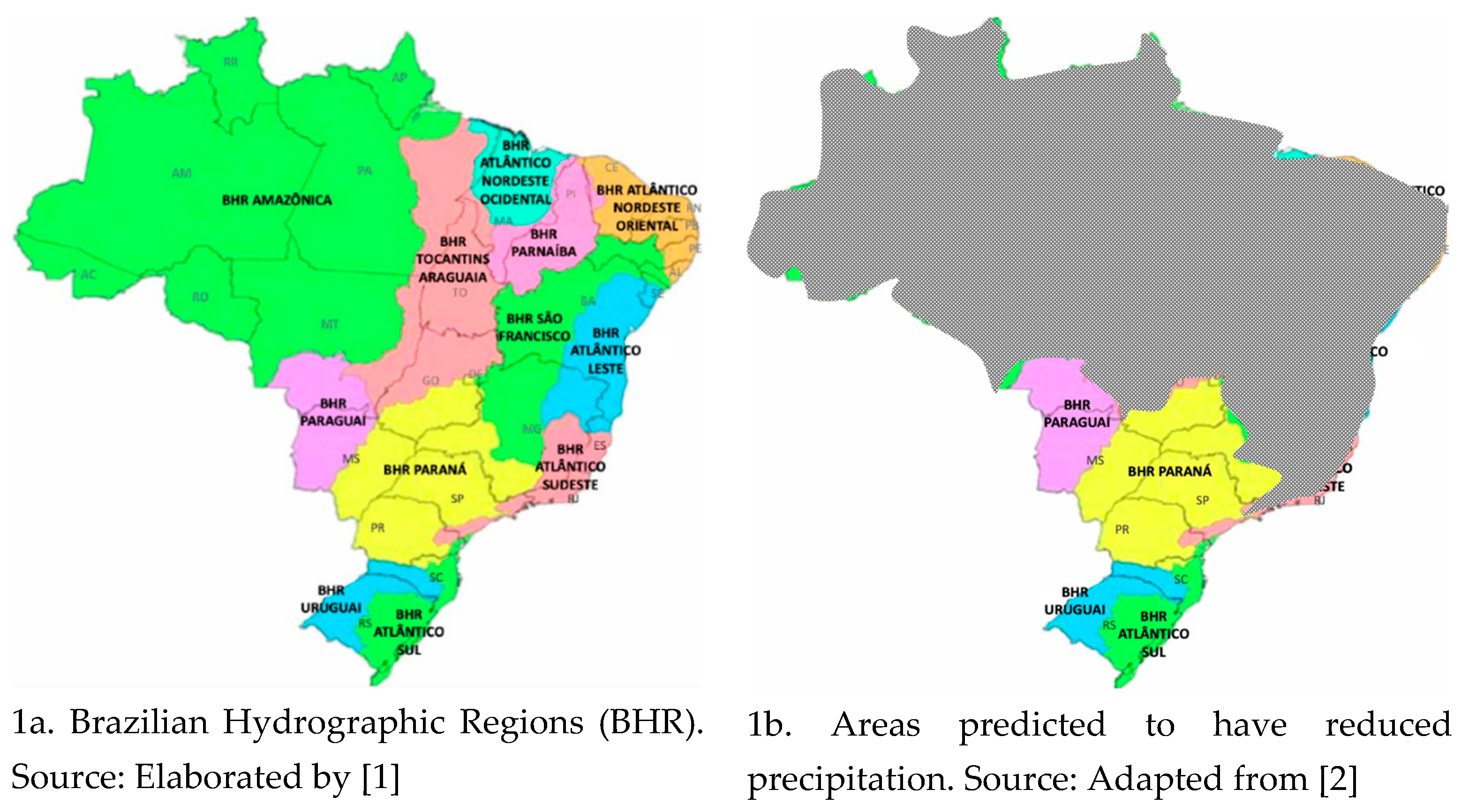
In terms of hydrology, taking into account different climatic conditions, precipitation patterns and water uses in the country, 12 Brazilian Hydrographic Regions (BHR) have been defined. The BHRs concentrate in the northeast of the country characterized by a semi-arid climate, while the Amazon BRH, located in the north, is quite humid. On the other hand, the southeastern BRHs concentrate in the municipalities with the highest socioeconomic development in the country and have satisfactory water potential, but with high demand for human supply and for the different productive sectors [1].
[2] explore these and other historical hydrological differences in Brazil and present comparative predictions about the future of the 12 BHRs, based on different models. The regional water differences in the country make water management considerably complex [1,2].
Under this scenario, according to [2], Brazil experiences extreme weather and climate events that result in significant economic, environmental and social losses. This negative pressure on organizations and citizens is also observed globally by [3]. Furthermore, according to projections related to climate change, these events will increase in intensity and frequency throughout this century, both in Brazil and around the world [2].
Global warming is one of the main causes of changes in weather and climatic patterns [4], that lead to extreme meteorological and climatological events, including severe droughts, heavy precipitation, and hot extremes. These events began to occur more frequently and in uneven periods, with more complex predictability [5]. Continuous variations in extreme temperatures, as demonstrated by [2], have been compromising the main areas of agricultural production in Brazil. It should be noted that, according to a research published in 2021 by the United States Department of Agriculture (USDA), in 2020, Brazil began to lead global agricultural productivity among 187 countries [6].
Although Brazil only treats 50% of its wastewater [7] and has a low water reuse rate (around 1.5% in relation to the treated wastewater) [8], it has a high potential for the application of water reuse in agricultural irrigation across the country [1]. According to the authors, in some BHRs it is possible to meet 30% of water demand for irrigation, with recycled water from wastewater treatment plants, currently in operation.
It is necessary to internalize recycled water in the diversification of the sources, to guarantee the supply of water with adequate quality and quantity for different uses, particularly agriculture. The mathematical modeling developed by [2] showed an increase in consecutive dry days and a reduction in consecutive wet days across the country. This finding directly aligns with the scope of this study, which considers the development of insurance for climate extremes, in particular droughts, in conjunction with the financing of measures to prevent losses, creating resilience to climate risks.
[9] identified a strong correlation between agricultural insurance and the implementation of advanced agricultural and technological practices in a sample of 16,956 Agricultural Production Units in São Paulo State, Brazil. In other words, insurance companies, to underwrite their risks, may require policyholders to apply best practices and adopt technologies that can mitigate potential losses, such as the use of drought-tolerant genetically modified seeds. Thus, insurance can act as a catalyst for structural changes, as it mitigates adverse selection by imposing market practices and control levels that enhance the resilience of risks to climate change as the use of recycled water.
According to [2], designing effective adaptation and mitigation measures in response to changes in extreme weather events depends on a better understanding of how past conditions have changed and are likely to change in the future at regional scales. However, according to [3], this information is still poorly understood. Furthermore, the media plays a vital role in disseminating relevant information about climate change and necessary actions, at regional and global levels [3].
In this sense, our study explores the development of responsibility transfer instruments that finance the implementation of mitigating actions, while ensuring losses related to climatic events. The study emphasizes the scientific gap related to the development of innovative financial instruments for climate change risk prevention and increased resilience considering severe droughts and water reuse in Brazil.
2. Occurrence of Climate Extremes in Brazil in 2024
Brazil was particularly impacted by climate change in 2024. Table 1 shows some predictions of climate extremes made for BHRs in 2020 [2] and the observed occurrence of some of these events, four years later, reported by the main national news media [10]. In a complementary way, Figure 1 presents a schematic figure regarding the BHRs mentioned in Table 1: (1a) representation of the 12 BHRs [11], elaborated by [1]; (1b) area of reduced precipitation predicted by [2].

Table 1.
Weather extreme predictions (2020) and occurrences reported by the media in Brazilian territory (2024) – Four years between scientific predictions and occurrences.
Table 1.
Weather extreme predictions (2020) and occurrences reported by the media in Brazilian territory (2024) – Four years between scientific predictions and occurrences.
| Weather extreme predictions (2020) | Occurrences reported by the media (2024) |
|---|---|
| Trend of precipitation reduction in 8 BHR: Amazônica, Tocantins-Araguaia, Atlântico Nordeste Ocidental, Atlântico Nordeste Oriental, Parnaíba, São Francisco, Atlântico Leste and Atlântico Sudeste. (These BHRs together represent 2/3 of the national territory). See Figure 1. | Brazil faces the biggest drought in history, says federal government agency 1 (https://g1.globo.com/meio-ambiente/noticia/2024/08/31/brasil-enfrenta-a-maior-seca-da-historia-diz-orgao-do-governo-federal.ghtml) 2 |
| Continuous changes in maximum and minimum temperatures have compromised and will continue to compromise the main areas of agricultural production in Brazil. | Meat, beans, oranges: biggest drought in the last 44 years should make food more expensive, experts say 1 (https://g1.globo.com/economia/agronegocios/noticia/2024/08/31/carne-feijao-laranja-maior-seca-dos-ultimos-44-anos-deve-encarecer-alimentos-dizem-especialistas.ghtml) 2 |
| Trend of statistically significant warming patterns for extreme hot and cold indices in almost all areas of Brazil | Is Brazil the hottest country in the world this week? See what the experts say 1 (https://g1.globo.com/meio-ambiente/noticia/2024/09/04/entenda-se-brasil-e-o-pais-mais-quente-do-mundo-nesta-semana-veja-o-que-dizem-os-especialistas.ghtml) 2 |
Figure 1.
Brazilian Hydrographic Regions.
Concrete and joint actions are necessary to ensure advances in water reuse for the purpose of minimizing the impacts of droughts. However, advances are still challenging and include the following, as highlighted by [8]: a) integrated water and wastewater management; b) proper regulation; c) planning and investments in low- and middle-income countries; d) minimization of rejection (factor yuck); and e) adaptation of different wastewater treatment technologies for different uses. These challenging, but more practical actions must be accompanied by different models of responsibility transfer instruments. One of them could be the development and implementation of climate insurance that both finances mitigating actions and provides coverage for human and material losses. Different possibilities of climatic insurance have been developed since the end of last century [12] and are gaining advancements and prominence across the world.
3. Development of Climate Insurance
The Intergovernmental Panel on Climate Change (IPCC) was created in 1988, and according to [12], climate insurance was recognized in this context, in 1990s. According to [13], in the last decade of the last century, insurers relied on traditional approaches to avoid and mitigate climate risk. However, the same author highlighted, at that time, the importance of modernizing the sector to deal with future problems and collective actions to avoid more serious losses.
To corroborate this understanding, [12] state that traditional models were designed to assess current risks and not to project losses into the future; however, it is now necessary for insurers to focus their efforts beyond traditional catastrophic models to climate-related hazards.
In general, innovative measures involve: i) improving educational efforts that help adapt to and mitigate climate risks [14]; ii) investment in more advanced climate prediction analysis and modeling techniques [15], involving geographic, environmental and meteorological factors [16]; iii) development of more structured scientific research that supports changes in the sector [3]; and iv) collaboration between insurers and governments to improve resilience through insurance mechanisms [17].
In this environment of worsening climate change and the development of a broader understanding of the role of climate insurance, [12] claim that some insurers have been employing a combination of traditional and innovative measures to mitigate losses that result from climatic events. In this context, mitigation projects have been gaining prominence as an innovative way of dealing with the impacts of climate change.
The development of this research considers two important factors. The first is highlighted as a scientific gap and the second as a trend towards better development of the sector in the global context:
- According to [3], low and medium-income countries pay little attention to this topic and in this case, international cooperation is of great relevance for the development of more robust and applied scientific research on climate insurance and global understanding. In this context, ongoing research results in Brazil derives from cooperation between researchers from different institutions: Fundação Getúlio Vargas (São Paulo/Brazil), University College of England (United Kingdon), Instituto Reúso de Água (Portugal), and Universidade do Estado do Rio de Janeiro (Rio de Janeiro/Brazil).
- [18] highlight that local governments are using new risk transfer instruments through public-private partnerships to finance investments in resilience and disaster recovery projects. As mentioned, ongoing research aims to link the financing of loss prevention measures with the creation of climate resilience and the provision of insurance for the occurrence of climate extremes. Finally, the aim of our complete research is to create a guiding document that contains the best practices for climate planning in Brazilian municipalities base on scientific knowledge.
According to [3,12], different climate insurance models and other risk transfer instruments have been studied and developed in various regions of the world. However, in these comprehensive and recently developed research, Brazil and other Latin American countries are not mentioned:
- [3] developed a broad literature review and highlighted the approach to this topic in countries such as United States, United Kingdom, Netherlands, Australia, Germany, China, France, Spain, Switzerlend Canada, Indonesia, Austria, Bangladesh, Denmark, India, Italy and Sweden. Brazilian studies do not appear in searches or in the development of work.
- On the other hand, [12] developed another type of work, but only cite United States, United Kingdom, European Union, Australia, India and Southeast Asia. In this case, the authors did not carry out an exhaustive review and only demonstrate the approach of the media as a promoter of actions in this regard. Even so, the lack of mention of Latin American countries drew attention to understand that Brazil, in fact, may not be on the path to developing scientific studies in this area.
Given the forecasts of worsening droughts in Brazil and the prospect of minimizing their impacts on society, the objective of this study is to present a scientific gap related to the development of responsibility transfer instruments that finance the implementation of mitigating actions, while at the same time insure losses. The work was developed based on a systematic review of the literature, in Portuguese (Brazil’s official language). The research was carried out in this way, as the authors mentioned above [3,12] have already demonstrated the possible non-development of this type of initiative in Brazil.
4. Materials and Methods
Although scientific research around the world is developed and published in English, the Brazilian scientific area has high publication rates in Portuguese [19], in several national scientific journals, which also have high impact factors, although they are not known to the international public. Therefore, it was considered relevant to support the findings of [3] and [12], based on a systematic review of the literature, in Portuguese.
In this sense, the main hypothesis of this review is that the authors mentioned above did not find scientific articles, in English, conducted in Brazil, directly aimed at the central theme of this research. To support this hypothesis, we start from two principles:
- Both works are recent (2022 and 2024) and one of them involves an extensive bibliographic review.
- Some Brazilian research could have its scientific results presented in a national database, only in Portuguese.
In this sense, we initially started from the review paper developed by [3] and the research paper developed by [12]. The search was expanded, with keywords in Portuguese, based on the Schoolar Google database. It is highly representative in the scientific context involving the main scientific bases such as Science Direct, Scopus, Scielo, and other Brazilian databases.
Searches were carried out using combinations of keywords in Portuguese, as shown in Table 2 (with translation into English): Seguro Ambiental (Environmental Insurance), Risco Ambiental (Environmental Risk), Catástrofes Ambientais (Environmental Catastrophes), Poluição Ambiental (Environmental Pollution), Aquecimento Global (Global Warming), Mudanças Climáticas (Climate Change). The selected keywords include specific terms related to environmental insurance, climate change and environmental risks, to cover the largest possible number of studies relevant to the topic. It is noteworthy that the words “Seguro Ambiental” (Environmental Insurance) and “Catástrofes Ambientais” (Environmental Catastrophes) are present in the four combinations.
No period limitation was adopted for the search. After the first round of searches, the following exclusion criteria were adopted, to conduct the study with the greatest possible reliability:
- Studies not directly related to the topic. In this case, articles related to other types of disasters, except droughts (e.g., hurricanes, tornadoes and earthquakes) were excluded.
- Duplicated studies.
- Non-scientific studies, such as monographs, commercial documents, government documents and others.
Figure 2 shows the flowchart adopted in the complete methodology.
It is known that review articles raise some limitations, mainly due to the subjectivity of the authors in deciding the way to incorporate the different articles found, the choice of keywords and the time frame adopted. Therefore, the following factors are highlighted that may have led to limitations:
- Exclusion criteria: we strictly followed the initial alignment of incorporating into the review only scientific articles that had a direct relationship with the topic “prevention and resilience to climate droughts - Water Reuse and innovative financial instruments”.
- Keywords: six keywords were adopted in four different combinations to make a complete scan of the possibilities that would consider both “environmental insurance” and “environmental catastrophes”, due to the impacts of “global warming” and of “climate change”. “Environmental risk” was also considered, as it is mentioned in several international articles contextualized on this topic. The term “environmental pollution” was also searched, which is also related to the topic. Finally, the term “water reuse” was not searched to avoid compromising the research with mitigating actions related only to water reuse.
- Time frame: The beginning of the time frame was not limited, but the review was completed in May 2024, for refinement and development of the complete research. The authors are unaware of any scientific research that has been carried out in the national territory on this specific topic. However, recent years have proven to be quite conducive to the development of this type of scientific research. In this sense, results of some research that may be ongoing may not have yet been presented to the scientific community.
5. Results and Discussion
As the result from the systematic review criteria presented in the “methods” item, only 13 articles were analyzed, out of the 147 initially found in the general search. Table 3 presents the results for the defined criteria. Combinations 3 and 4 are the most aligned with the central theme of the research, since they consider, in addition to the more generic keywords (environmental insurance and environmental catastrophe), the words “global warming” and “climate change”. The core of our study is directly related to global warming, which leads to climate change and extremes. Thus, it is observed that only 3 articles were found in these last two keyword combinations.
After fully reading the articles and gathering relevant information for the research, one of them was disregarded because it did not directly address the topic of environmental insurance. The article by [20] focuses on the compatibility between socioeconomic development and environmental protection, focusing on the effectiveness of constitutional environmental standards and the application of the principles of sustainable development and the polluter pay concept. Although the authors explore important aspects of environmental accountability and sustainability, they do not discuss environmental insurance as a specific mechanism for global warming and climate change. For this reason, it was not included in the final analysis, ensuring greater adherence to the research focus.
Thus, only two articles were considered that address environmental insurance as the main characteristic, however, with a generic and traditional approach, as highlighted below:
[21]: This study presents an innovative accounting analysis when preparing the balance sheet of nations under the scenario of global climate change, incorporating environmental insurance as one of the future proposals to mitigate the risks arising from these changes. Based on scenarios designed by the IPCC, the study evaluated the natural heritage of seven countries, using a multidisciplinary approach. It involved climate change biology, energy, geoscience, economics and accounting. The Inquired Balance Sheet technique was used to measure assets, liabilities and environmental net worth revealing that the most developed countries not only consume resources beyond their borders but also compromise the future of the next generations. In conclusion, the authors suggest, among other proposals, the creation of a global environmental insurance model, which could offer financial protection against environmental risks, contributing to a fairer and more sustainable accounting balance. The lack of global environmental insurance is seen by the authors as a current limitation. The development of mechanisms that can be integrated into the balance of nations is recommended, promoting economically viable, socially fair and environmentally correct actions for the future of humanity.
[22]: This study presents detailed research of the disclosure of various environmental parameters by a sample of companies in the electricity sector, including environmental insurance. The results indicate that there was no consistent evidence regarding accounting practices for environmental items, environmental insurance and tangible and intangible environmental assets. Specifically, regarding environmental insurance, no mentions of its existence or application were found in the reports analyzed. It highlights a significant gap in the lack of transparency of companies in relation to the mitigation of environmental risks. The most frequently highlighted subcategory was environmental investments; however, the information provided lacks quality, as companies often only mention making investments without detailing their accounting or, in some cases, not even indicating the values. Among the most publicized information, biodiversity conservation, environmental education, environmental management and sustainability stand out. In contrast, critical aspects such as the use of wasted materials, spills, environmental insurance and energy shortages remain underreported, revealing important limitations in communicating relevant environmental practices.
Note that none of them are directly related to developing environmental insurance for cities most vulnerable to the impacts of droughts resulting from climate change. Both refer to environmental insurance in companies from different production sectors.
The results demonstrate that, although environmental insurance has emerged as a relevant topic in the keyword combinations most aligned with the research topic, its approach in the selected articles is still quite limited and, in many cases, superficial. It reflects a significant gap in the development of financial mechanisms that can effectively mitigate environmental risks arising from climate change and environmental catastrophes. The lack of clear disclosure about environmental insurance, as highlighted by [22], indicates that, even in sectors highly impacted by environmental issues, such as the electricity sector, there is not sufficient transparency or consolidated practices in this regard.
This lack of clarity and detail can be seen as a reflection of the difficulties encountered by companies in incorporating environmental insurance into their risk mitigation strategies, both from an accounting and operational point of view. It suggests the need for new regulations or incentives that promote the adoption of environmental insurance, especially in sectors critical to sustainability. The research by [21] follows this idea by proposing a global model of environmental insurance, which could be a way to fill this gap, promoting greater environmental and financial justice.
Furthermore, it is important to highlight that the articles that deal with environmental insurance, according to the analysis, still present a generic and traditional approach. It points to the need for new research that explores how this mechanism can be used in a more proactive and comprehensive way, considering the specificities of different sectors and the growing risks arising from global warming and climate change. Thus, the creation of innovative models and the inclusion of environmental insurance as an essential tool in companies’ sustainability strategies and in nations’ accounting, as suggested by [21], are crucial elements to advance in this area.
To corroborate the debate on actions to mitigate the impacts of drought in the productive sector, “Projeto Aquapolo” in Brazil stands out, in operation since 2013. With a capacity of 1000 L/s, it was responsible for maintaining the functioning of factories supplied with its water, during the worst drought ever experienced by the region, in the period 2013-2015 [23]. On the other hand, the United States, which concentrates the main advances in this sector, has already implemented more than 50 potable water reuse plants to guarantee water supply for its population [8].
But we can observe that these are infrastructure actions to mitigate the impacts of droughts. In the case of Brazil (Projeto Aquapolo), the action has nothing to do with climate insurance. In this case, security lies only in the perennial supply of water, even under drought conditions.
The research by [23] emphasizes the critical need for innovative financial instruments and water reuse strategies to bolster resilience against climate-induced droughts in Brazil. The study highlights Brazil’s paradox of abundant water resources juxtaposed with severe regional disparities and the looming threat of climate change, which exacerbates water management challenges. The research underscores that while infrastructure projects like the Aquapolo Project in Brazil have successfully mitigated drought impacts by ensuring a steady water supply, these measures alone are insufficient to address the increasingly severe droughts predicted for the future. The integration of innovative climate insurance is posited as a pivotal component that can complement physical water management strategies, providing a dual approach to disaster risk reduction by financing preventive measures and covering human and material losses.
Furthermore, our study identifies a significant gap in the Brazilian scientific literature regarding the development and implementation of climate insurance tailored to drought resilience. Despite the global recognition of climate insurance as a tool for enhancing resilience and adapting to climate risks, there is a notable absence of such studies in Brazil’s academic discourse, particularly in English-language publications. This gap presents an opportunity for the national scientific community to explore and develop insurance models that not only address immediate financial protection but also incentivize the adoption of sustainable practices and technologies. The research calls for a collaborative effort among policymakers, researchers, and industry stakeholders to advance the understanding and application of innovative insurance mechanisms. This collective construction ultimately contributes to the development of more robust climate adaptation structures to ensure long-term water security in Brazilian municipalities.
Finally, the results of this study reinforce the urgency of greater integration between environmental risk mitigation and adaptation mechanisms and environmental insurance policies, especially in a global scenario of increasing climate uncertainty.
In the water and sanitation context, water reuse projects are important mitigation and adaptation mechanisms for episodes of severe drought. The evolution of these practices will depend mostly on coordinated action between governments, companies and regulatory entities, which must work together to implement viable, transparent and sustainable solutions.
6. Conclusions
Extreme climates have intensified, and innovative actions are needed to mitigate impacts, minimize losses and ensure climate risk prevention and resilience. Although the topic sounds urgent, Brazil has not responded to this situation; this scenario may be the reality in other developing countries. In general, urban planning only involves infrastructure actions, but does not apply other instruments that, in combination, can become more effective measures. Simple disaster repair is even more common in low-income regions.
Water reuse projects can ensure the supply of water in sufficient quantity and quality to meet different demands. However, it is observed that these measures may not be sufficient to worsen the droughts predicted for the coming decades.
In this sense, the study evaluated the development of scientific research, in Brazil, related to innovative environmental insurance as a complementary measure to mitigate the effects caused by severe droughts resulting from climate change. The searches were carried out in Portuguese (the country’s official language) to corroborate the scientific establishment, which does not present studies of this type in Brazil, in the English language. In this sense, the research hypothesis was confirmed, contributing to two main points: 1) it expands the state of the art already established in previous studies, in English; and 2) presents an important gap that must be explored by the national scientific community. This topic is of great relevance and responsibility, representing a modern approach with significant potential to guide national public policies and establish climate resilience and water security in Brazilian cities. This Review emphasized the need to study and develop innovative insurance models that meet the climate resilience demands of Brazilian municipalities.
Author Contributions
Conceptualization, A.S. and G.O.; methodology, A.S. and M.L.; validation, G.O. and T.M.; formal analysis, T.K and C.C, investigation, A.S. and M.L.; data curation, M.L and C.C; writing – original draft preparation, A.S.; writing—review and editing, T.M. and T.K.; supervision, G.O. and F.A.; project administration G.O. and F.A.; Funding acquisition, G.O. and L.S. All authors have read and agreed to the published version of the manuscript.
Funding
This research was funded by Fundação Getúlio Vargas (Brazil), and The APC was funded by Fundação Getúlio Vargas.
Data Availability Statement
The data presented in this study is available on request from the corresponding author.
Acknowledgments
We thank Fundação Getúlio Vargas for funding the research and the researchers’ grants.
Conflicts of Interest
The authors declare no conflicts of interest
References
- Lima, M.; Araujo, B. M.; Soares, S. R. A.; Santos, A. S. P.; Vieira, J. M. P. Water reuse potential for irrigation in Brazilian hydrographic regions. Water Supply 2021, 21 (6): 2799–2810. [CrossRef]
- Avila-Diaz, A.; Benezoli, V.; Justino, F.; Torres, R.; Wilson, A. Assessing current and future trends of climate extremes across Brazil based on reanalyses and earth system model projections. Clim Dyn 2020, 55, 1403–1426. [CrossRef]
- Nobanee, H.; Dilshad, M.N.; Lamdi, O.A.; Ballool, B.; Dhaheri, S.; Mheiri, N.; Alyammahi, A.; Alhemeiri. S. Insurance for climate change and environmental risk: a bibliometric review. International Journal of Climate Change Strategies and Management, Vol. 14 No. 5, 2022 pp. 440-461. [CrossRef]
- IPCC, 2022: Summary for Policymakers [H.-O. Pörtner, D.C. Roberts, E.S. Poloczanska, K. Mintenbeck, M. Tignor, A. Alegría, M. Craig, S. Langsdorf, S. Löschke, V. Möller, A. Okem (eds.)]. In: Climate Change 2022: Impacts, Adaptation, and Vulnerability. Contribution of Working Group II to the Sixth Assessment Report of the Intergovernmental Panel on Climate Change [H.-O. Pörtner, D.C. Roberts, M. Tignor, E.S. Poloczanska, K. Mintenbeck, A. Alegría, M. Craig, S. Langsdorf, S. Löschke, V. Möller, A. Okem, B. Rama (eds.)]. Cambridge University Press, Cambridge, UK and New York, NY, USA, pp. 3-33. [CrossRef]
- Giorgio, F.; Rafaelle, F.; Coppola, R. The response of precipitation characteristics to global warming from climate projections. Earth System Dynamics 2019, Volume 10, issue (ESD10, 73–89, 2019). [CrossRef]
- Ministério da Agricultura e Pecuária (Ministry of Agriculture and Livestock). Brasil lidera produtividade agropecuária entre 187 países, aponta estudo do USDA (Brazil leads agricultural productivity among 187 countries, according to USDA study). Available online: https://www.gov.br/agricultura/pt-br/assuntos/noticias/brasil-lidera-produtividade-agropecuaria-entre-187-paises-aponta-estudo-do-usda (accessed on 07/09/2024).
- Ministério das Cidades (Ministery of Cities). Diagnóstico temático/Serviços de Água e Esgoto - Visão geral, ano de referência 2023 (Thematic diagnosis/Water and Sewage Services - Overview, reference year 2023). Available online: https://www.gov.br/cidades/pt-br/acesso-a-informacao/acoes-e-programas/saneamento/snis/produtos-do-snis/diagnosticos/DIAGNOSTICO_TEMATICO_VISAO_GERAL_AE_SNIS_2023.pdf (accessed on 14/12/2024).
- Santos, A. S. P.; Pachawo, V.; Melo, M. C.; Vieira, J. M. P. Progress on legal and practical aspects on water reuse with emphasis on drinking water – an overview. Water Supply 2022, 22 (3): 3000-3014. [CrossRef]
- Harfuch, L.; Lobo, G. Seguro rural no mundo e alternativas para o Brasil: diferentes desenhos e suas interlocuções com a adoção de boas práticas e tecnologias (Rural insurance in the world and alternatives for Brazil: different designs and their interlocutions with the adoption of good practices and technologies). São Paulo: Agroicone. Available online: https://www.agroicone.com.br/wp-content/uploads/2021/08/Agroicone_Seguro-rural-no-mundo-e-alternativas-para-o-Brasil_PORT.pdf (accessed on 14/12/2024).
- Portal de Notícias Globo. Available online: https://g1.globo.com/ (news accessed on 28/09/2024).
- ANA – Agência Nacional de Água e Saneamento Básico (National Water and Sanitation Agency). Atlas Esgotos: Despoluição de bacias hidrográficas (Wastewater Atlas: Water Basins Depollution). Brasília. Available online: http://atlasesgotos.ana.gov.br/ (accessed on 14/05/2024).
- Gupta, A.; Venkataraman, S. Insurance and climate change. Current Opinion in Environmental Sustainability 2024, 67:10141. [CrossRef]
- Dlugolecki A.F. Climate change and the insurance industry. The Genova Papers on Risk and Insurance 2000, vol. 25 nº 4p. 582-601. Available from: https://link.springer.com/content/pdf/10.1111/1468-0440.00084.pdf (accesses on: 14/09/2024).
- Robinson, P. J.; Botzen, W. W. Setting descriptive norm nudges to promote demand for insurance against increasing climate change risk. The Geneva Papers on Risk and Insurance 2022, vol. 47(1), p. 27-49. [CrossRef]
- Fiedler, T.; Pitman, A. J.; Mackenzie, K.; Wood, N.; Jakob, C.; Perkins- Kirkpatrick, S.E. Business risk and the emergence of climate analytics. Nature Climate Change 2021, 11:87-94. [CrossRef]
- Steptoe, H.; Souch, C.; Slingo, J. Advances in numerical weather prediction, data science, and open-source software herald a paradigm shift in catastrophe risk modeling and insurance underwriting. Risk Management and Insurance Review 2022, 25:69-81. [CrossRef]
- Jarzabkowski, P.; Chalkias, K.; Clarke, D.; Iyahen, E.; Stadtmueller, D.; Zwick, A. Insurance for climate adaptation: Opportunities and limitations. Rotterdam and Washington, DC. Available online https://gca.org/wp-content/uploads/2019/07/Insurance-for-climate-adaptation_Opportunities-and-Limitations.pdf (accesses on 14/12/2024).
- Collier, S. J., & Cox, S. Governing urban resilience: Insurance and the problematization of climate change. Economy and Society 2021, 50(2), 275–296. [CrossRef]
- Baumvol, L.; Sarmento, S.; Fontes, A.B.L. Scholarly publication of Brazilian researchers across disciplinary communities. Journal of English for Research Publication Purposes 2021, Volume 2, Issue 1, p. 5 – 29. [CrossRef]
- Ferreira Junior, V.O.C. A ordem econômica e a efetividade do direito ao meio ambiente ecologicamente equilibrado (Economical order and the effective-ness of the right to an ecologically balanced environment). Revista em Agronegócio e Meio Ambiente 2021, 4(2).
- Kassai, J.R.; Feltran-Barbieri, R.; Santos, F.C.B., Carvalho, L.N.G., Cintra, Y.C., Foschine, A. Balanço das Nações: reflexão sob o cenário de mudanças climáticas (Balance of Nations: reflection under the climate change scenario). Anais Do Congresso Brasileiro De Custos (Brazilian Costs Conference). Available online https://anaiscbc.emnuvens.com.br/anais/article/view/1261 (accesses on 10/01/2025).
- Gubiani, C.A.; Santos, V.D.; Beuren, I.M. Disclosure ambiental das empresas de energia elétrica listadas no Índice de Sustentabilidade Empresarial – ISE (Environmental disclosure of electric power companies listed in the corporate sustainability index - CSI. Sociedade, contabilidade e Gestão 2013, 7(2). [CrossRef]
- Santos, A.S.P.; Lima, M.A.M.; Silva Jr., L.C.S., Avelar, P.S., Araujo, B.M., Gonçalves, R.F., Vieira, J.M.P. Proposição de uma metodologia estruturada de avaliação do potencial regional de reúso de água: 01 – Terminologia e conceitos de base (Towards a structured methodology for assessing regional water reuse potential: 01 - Terminology and basic concepts). Gesta 2021, v. 9, n. 2, p. 1-17. [CrossRef]
Figure 2.
Methodological outline of the research.
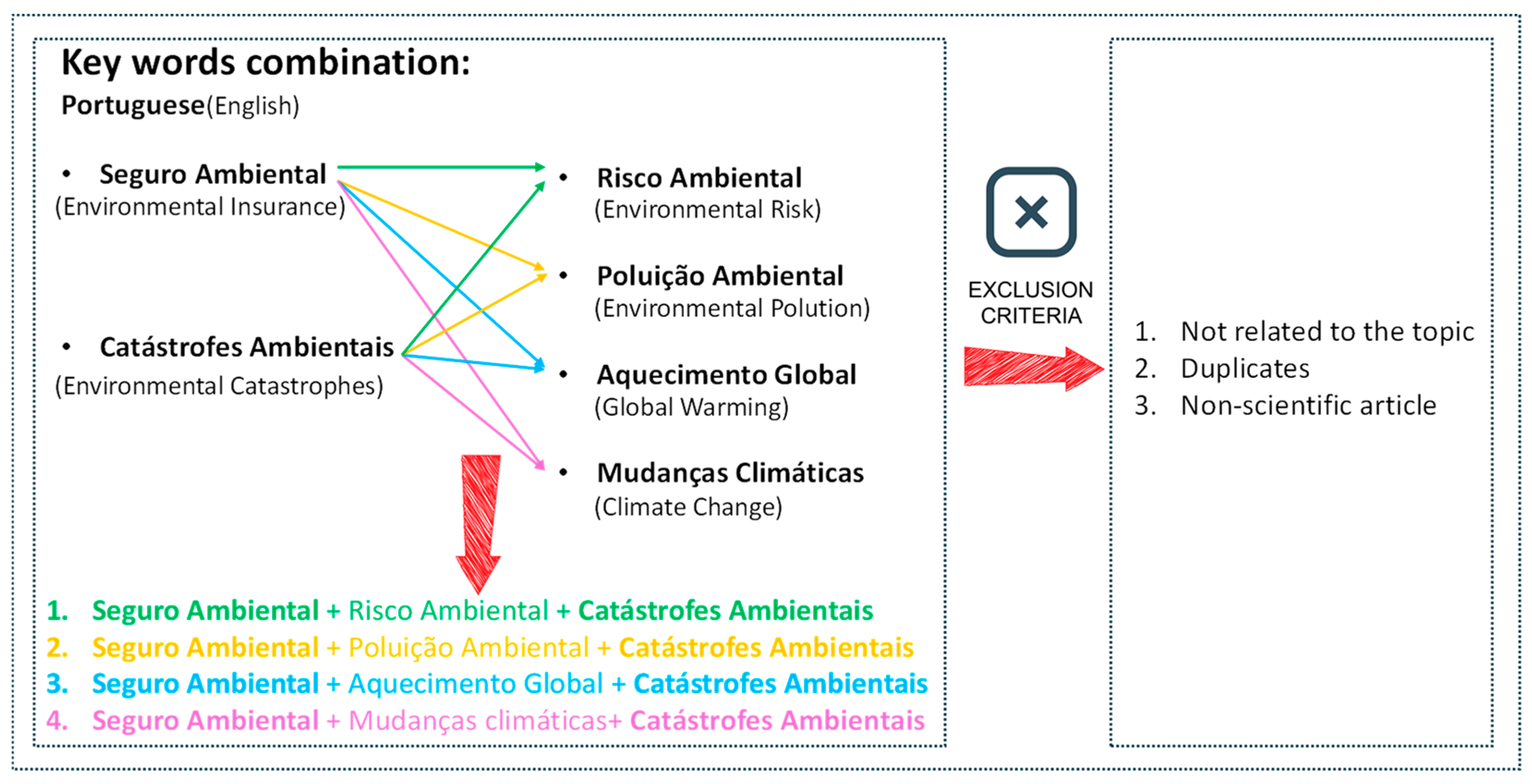
Table 2.
Different combinations of keywords adopted in the review, in Portuguese.
| Combinations | Keywords adopted | |
|---|---|---|
| Portuguese | English (free translation) | |
| 1. |
Seguro Ambiental Risco Ambiental Catástrofes Ambientais |
Environmental Insurance Environmental Risk Environmental Catastrophes |
| 2. |
Seguro Ambiental Poluição Ambiental Catástrofes Ambientais |
Environmental Insurance Environmental Pollution Environmental Catastrophes |
| 3. |
Seguro Ambiental Aquecimento global Catástrofes Ambientais |
Environmental Insurance Global Warming Environmental Catastrophes |
| 4. |
Seguro Ambiental Mudanças climáticas Catástrofes Ambientais |
Environmental Insurance Climate change Environmental Catastrophes |
Table 3.
Different combinations of keywords adopted in the review, in Portuguese.
| Combinations of keywords | General search | Selection based on each exclusion criteria | ||
|---|---|---|---|---|
| 1 | 2 | 3 | ||
| 1. | 30 | 20 | 20 | 7 |
| 2. | 30 | 20 | 11 | 3 |
| 3. | 38 | 29 | 13 | 2 |
| 4. | 29 | 39 | 10 | 1 |
| Total | 147 | 108 | 54 | 13 |
Disclaimer/Publisher’s Note: The statements, opinions and data contained in all publications are solely those of the individual author(s) and contributor(s) and not of MDPI and/or the editor(s). MDPI and/or the editor(s) disclaim responsibility for any injury to people or property resulting from any ideas, methods, instructions or products referred to in the content. |
© 2025 by the authors. Licensee MDPI, Basel, Switzerland. This article is an open access article distributed under the terms and conditions of the Creative Commons Attribution (CC BY) license (http://creativecommons.org/licenses/by/4.0/).
Copyright: This open access article is published under a Creative Commons CC BY 4.0 license, which permit the free download, distribution, and reuse, provided that the author and preprint are cited in any reuse.


