

Submitted:
14 February 2025
Posted:
14 February 2025
You are already at the latest version
Abstract
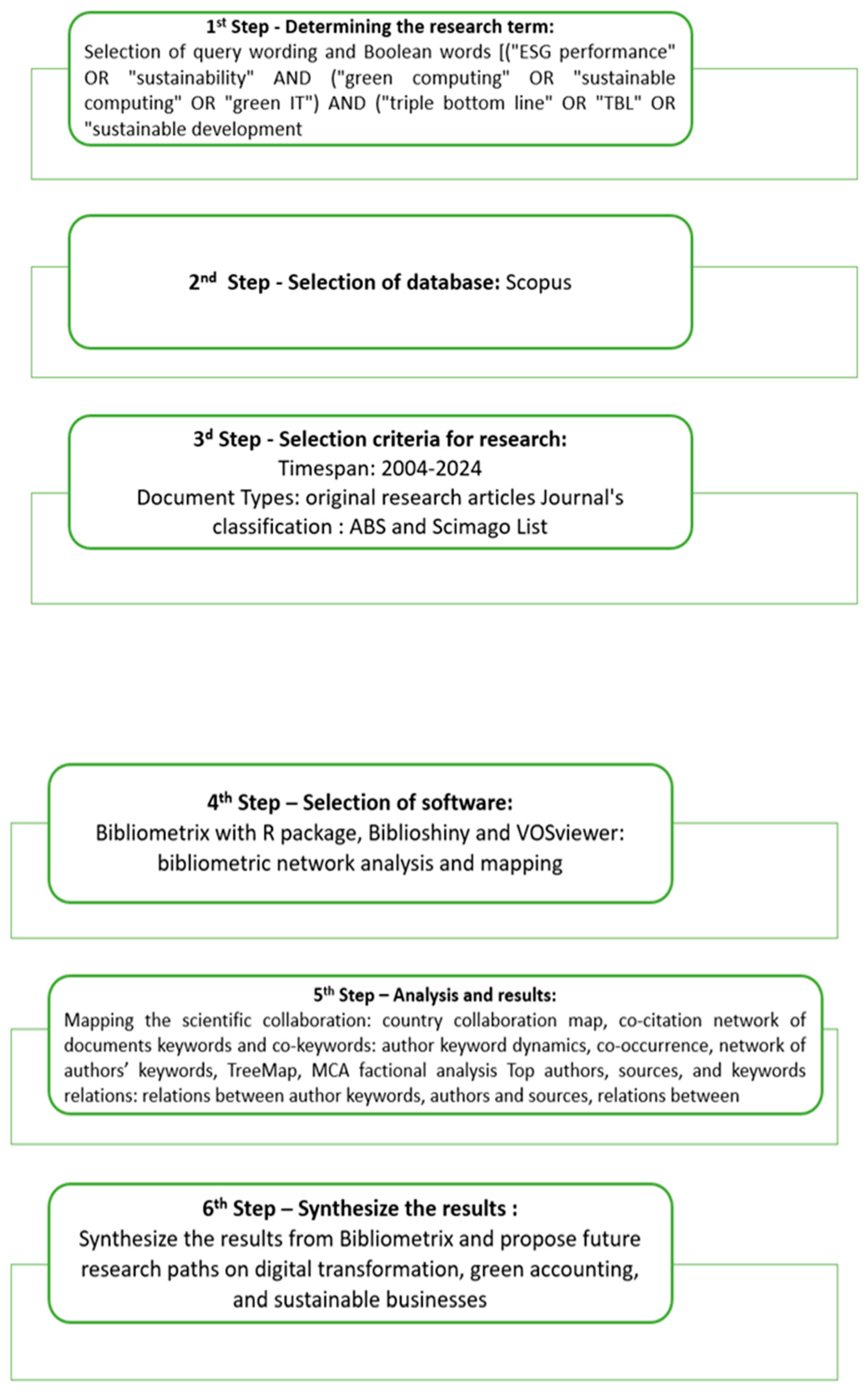
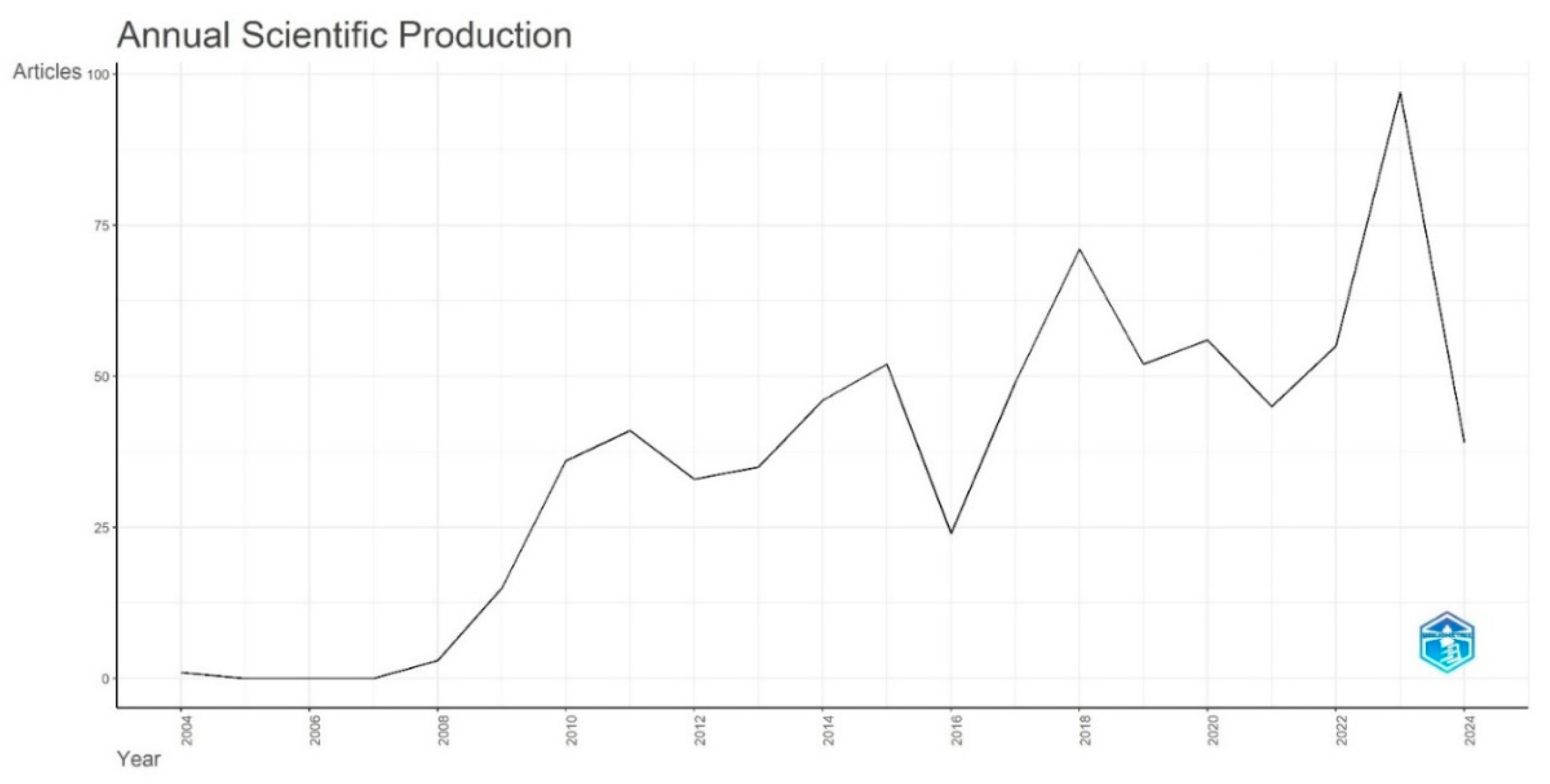
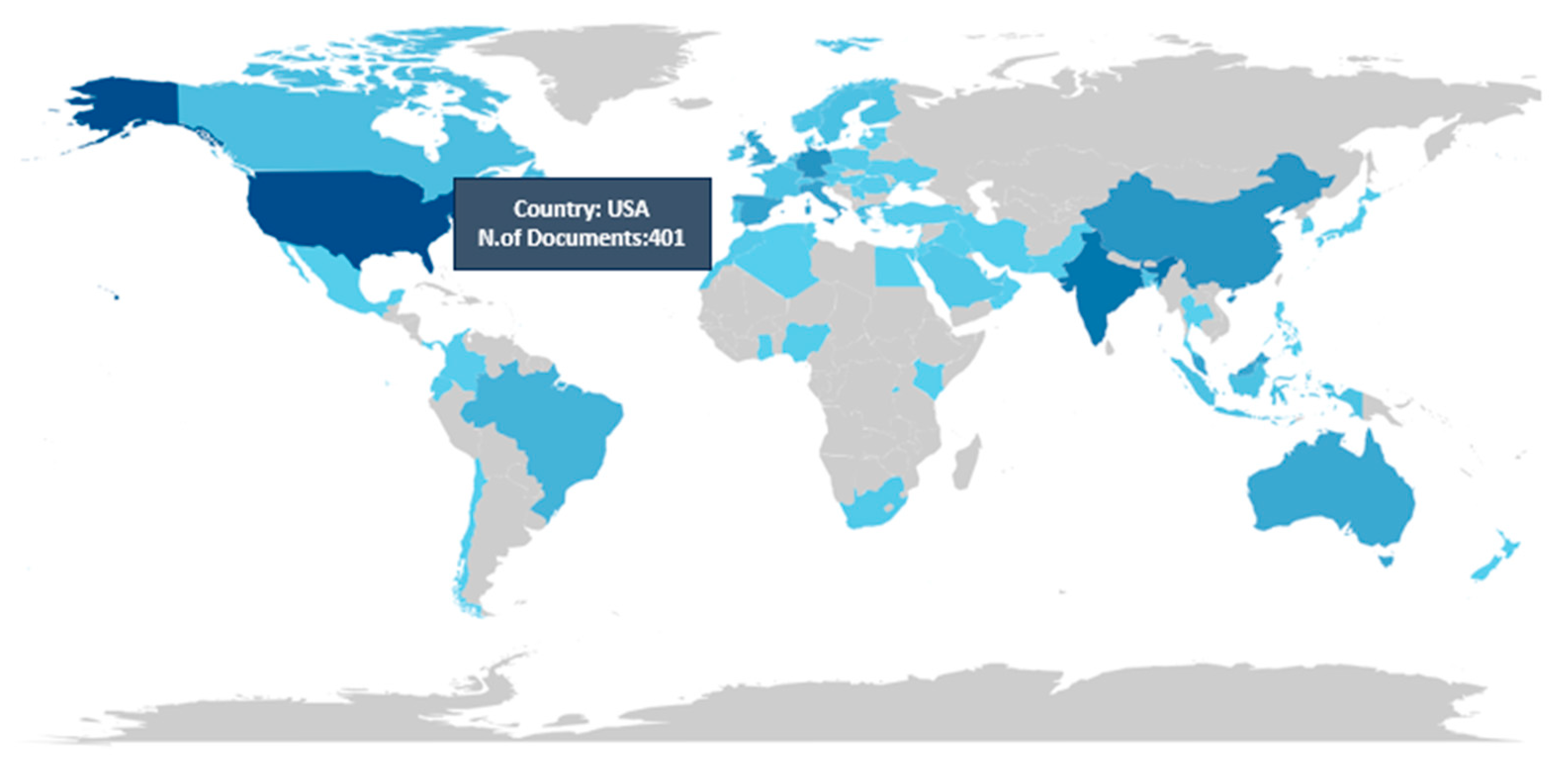
As businesses increasingly prioritize sustainability, integrating Environmental, Social, and Governance (ESG) principles with green computing has emerged as a critical strategy. However, research remains fragmented regarding how these two domains interact within the Triple Bottom Line (TBL) framework. This study conducts a bibliometric analysis of 750 articles published between 2004 and 2024, using multiple correspondence and co-citation analyses to identify key trends. The findings highlight a strong correlation between green computing practices and improved economic outcomes. Results indicate that China and the United States lead research output in this field, with a significant rise in publications post-2018, driven by regulatory pressures and corporate sustainable initiatives. Our findings emphasize that companies integrating green computing with ESG strategies can achieve long term financial sustainability while meeting Environmental and social responsibilities. The study provides insights from business leaders, policymakers, and researchers by identifying critical gaps and future research direction, including industry – specific applications and policy frameworks to accelerate ESG adoption in technology – driven enterprises. Future research should address practical challenges in implementing these practices across different industries and explore the long-term impacts of ESG integration on business performance.
Keywords:
1. Introduction
2. Literature Review
2.1. ESG and Green Computing
2.1.1. Evolution of Green Computing in ESG Context
2.2. ESG in Business Sustainability and Green Computing Adoption
2.3. Research Gaps and Future Directions
3. Methodology
4. Results
4.1. Evolution of the Numbers of Articles
4.2. Geographical Collaboration Analysis
4.3. Keyword Analysis
5. Discussion
6. Conclusions
Author Contributions
Funding
Informed Consent Statement
Data Availability Statement
References
- Lee, M.-J.; Pak, A.; Roh, T. The Interplay of Institutional Pressures, Digitalization Capability, Environmental, Social, and Governance Strategy, and Triple Bottom Line Performance: A Moderated Mediation Model. Bus. Strategy Environ. 2024, 1–22. [CrossRef]
- Khaleel, T.; Kareem, J. A Review of Issues and Challenges to Address the Problem of Implementing Green Computing for Sustainability. Al-Rafidain Eng. J. 2023, 28, 300-311. [CrossRef]
- Hba, R., & El Manouar, A. (2017). ICT green governance: New generation model based on corporate social responsibility and green IT. HAL Open Science. https://hal.archives-ouvertes.fr/hal-01445831.
- Elkington, J. (1997). Cannibals with forks: The triple bottom line of 21st century business. Oxford: Capstone Publishing.
- Nogueira, E.; Gomes, S.; Lopes, J.M. Triple Bottom Line, Sustainability, and Economic Development: What Binds Them Together? A Bibliometric Approach. Sustainability 2023, 15, 6706. [CrossRef]
- Orgerie, A.-C. (2016). Green computing and sustainability. In Annual Workshop of the French Section of URSI (International Union of Radio Science) (pp. 23-27). Rennes, France. Retrieved from https://inria.hal.science/hal-01356921.
- Cohen, G. The Impact of ESG Risks on Corporate Value. Rev. Quant. Financ. Acc. 2023, 60, 1451-1468. [CrossRef]
- Wang, N.; Pan, H.; Feng, Y.; Du, S. How Do ESG Practices Create Value for Businesses? Research Review and Prospects. Sustain. Account. Manag. Policy J. 2023, ahead-of-print, . [CrossRef]
- Passas, I.; Ragazou, K.; Zafeiriou, E.; Garefalakis, A.; Zopounidis, C. ESG Controversies: A Quantitative and Qualitative Analysis for the Sociopolitical Determinants in EU Firms. Sustainability 2022, 14, 12879. [CrossRef]
- Teixeira, P.; Sá, J. C.; Silva, F. J.; Santos, G.; Fontoura, P.; Coelho, A. Lean Contribution to the Companies’ Sustainability. IFIP Adv. Inf. Commun. Technol. 2021, 610, 400-408. http://doi.org/10.1007/978-3-030-92934-3_42.
- Zhang, J.; Liu, Z. Study on the Impact of Corporate ESG Performance on Green Innovation Performance—Evidence from Listed Companies in China A-Shares. Sustainability 2023, 15, 14750. [CrossRef]
- Harmon, R., & Demirkan, H. (2010). From green computing to sustainable IT: Developing a sustainable service orientation. Proceedings of the 43rd Hawaii International Conference on System Sciences, 1-10. [CrossRef]
- Eccles, R.G.; Lee, L.-E.; Stroehle, J. C. The Social Origins of ESG: An Analysis of Innovest and KLD. Organ. Environ. 2020, 33, 575-596. [CrossRef]
- Friede, G., Busch, T., & Bassen, A. (2015). ESG and financial performance: Aggregated evidence from more than 2000 empirical studies. Journal of Sustainable Finance & Investment, 5(4), 210-233. [CrossRef]
- United Nations. (2015). Transforming our world: The 2030 Agenda for Sustainable Development. United Nations. https://sdgs.un.org/2030agenda.
- Ruth, S. (2009). Green IT—More than a three percent solution? IEEE Internet Computing, 13(4), 15-19., . [CrossRef]
- Rohmah, M. (2024). Literature review: Green computing for environmental sustainability. Information Technology International Journal, 1(2). [CrossRef]
- Patel, Y., Jaiswal, R., & Misra, R. (2022). Deep learning-based multivariate resource utilization prediction for hotspots and coldspots mitigation in green cloud data centers. The Journal of Supercomputing, 78(6). [CrossRef]
- Baliga, J., Ayre, R., Hinton, K., & Tucker, R. S. (2011). Energy consumption in wired and wireless access networks. IEEE Communications Magazine, 49(6), 70-77. [CrossRef]
- Masanet, E., Shehabi, A., Lei, N., Smith, S., & Koomey, J. (2020). Recalibrating global data center energy-use estimates. Science, 367(6481), 984-986. [CrossRef]
- Passas, I. The Evolution of ESG: From CSR to ESG 2.0. Encyclopedia 2024, 4, 1711-1720. [CrossRef]
- Passas, I. Bibliometric Analysis: The Main Steps. Encyclopedia 2024, 4, 1014-1025. [CrossRef]
- Mohammed, M. N., Abdulkareem, K. H., & Mostafa, S. A. (2024). Green Artificial Intelligence: Towards an Efficient, Sustainable, and Environmentally Friendly AI. Sustainability, 13(16), 8952. [CrossRef]
- Lee, B. C., Brooks, D., van Benthem, A., Gupta, U., Hills, G., Liu, V., Pierce, B., Stewart, C., Strubell, E., Wei, G.-Y., Wierman, A., Yao, Y., & Yu, M. (2024). Carbon Connect: An Ecosystem for Sustainable Computing. arXiv preprint arXiv:2405.13858.
- European Commission. (2023). Corporate Sustainability Reporting Directive (CSRD). Finance - European Commission. Retrieved from https://finance.ec.europa.eu/capital-markets-union-and-financial-markets/company-reporting-and-auditing/company-reporting/corporate-sustainability-reporting_en.
- Li, G., Sun, Z., Wang, Q., Wang, S., Huang, K., Zhao, N., Di, Y., Zhao, X., & Zhu, Z. (2023). China’s green data center development: Policies and carbon reduction technology path. Environmental Research, 231(Part 3), 116248. [CrossRef]
- Petropoulou, A.; Angelaki, E.; Rompogiannakis, I.; Passas, I.; Garefalakis, A.; Thanasas, G. Digital Transformation in SMEs: Pre- and Post-COVID-19 Era: A Comparative Bibliometric Analysis. Sustainability 2024, 16, 10536. [CrossRef]
- Ragazou, K.; Passas, I.; Sklavos, G. Investigating the Strategic Role of Digital Transformation Path of SMEs in the Era of COVID-19: A Bibliometric Analysis Using R. Sustainability 2022, 14, 11295. [CrossRef]
- Rastogi, S.; Singh, K. The Impact of ESG on the Bank Valuation: Evidence of Moderation by ICT. J. Glob. Responsib. 2023, 14, 273-288. [CrossRef]
- Alsayegh, M.F.; Abdul Rahman, R.; Homayoun, S. Corporate Economic, Environmental, and Social Sustainability Performance Transformation through ESG Disclosure. Sustainability 2020, 12, 3910. [CrossRef]
- Chopra, S.S.; Senadheera, S.S.; Dissanayake, P.D.; Withana, P.A.; Chib, R.; Rhee, J.H.; Ok, Y.S. Navigating the Challenges of Environmental, Social, and Governance (ESG) Reporting: The Path to Broader Sustainable Development. Sustainability 2024, 16, 606. [CrossRef]
- Donthu, N.; Kumar, S.; Mukherjee, D.; Pandey, N.; Lim, W.M. How to Conduct a Bibliometric Analysis: An Overview and Guidelines J. Bus. Res. 2021,133, 285-296. [CrossRef]
- Tamala, J.K.; Maramag, E.I.; Simeon, K.A.; Ignacio, J.J. A bibliometric analysis of sustainable oil and gas production research using VOSviewer. Clean. Eng. Technol. 2022, 7, 100437. [CrossRef]
- Fan, D. Breslin, D.; Callahan, J.L; Iszatt-White, M. Advancing Literature Review Methodology through Rigour, Generativity, Scope and Transparency. Int. J. Manag. Rev. 2022, 24, pp. 171-180. [CrossRef]
- Wang, B.; Bu, Y.; Huang, W. Document- and Keyword-based Author Co-citation Analysis. Data Inf. Manag. 2018, 2, 70–82. [CrossRef]
- Yang, S.; Han, R.; Wolfram, D.; Zhao, Y. Visualizing the intellectual structure of information science (2006–2015): Introducing author keyword coupling analysis. J. Informetr. 2016, 10, 132–150. [CrossRef]
- United Nations. The Global Compact. Who Cares Wins: Connecting Financial Markets to a Changing World; United Nations: Geneva, Switzerland: 2004. Available online https://www.unglobalcompact.org/docs/issues_doc/Financial_markets/who_cares_who_wins.pdf (accessed on 2 June 2024).
- Marcucci, G.; Ciarapica, F.; Poler, R.; Sanchis, R. A Bibliometric Analysis of the Emerging Trends in Silver Economy. IFAC – PapersOnLine, 2021, 54, 936–941. [CrossRef]
- Ahmad, S.; Mishra, S.; Sharma, V. Green Computing for Sustainable Future Technologies and Its Applications. In contemporary Studies of Risks in Emerging Technology, Part A; Grima, S., Sood, K., Özen, E., Eds.; Emerald studies in Finance, Insurance and Risk Management; Emerald Publishing Limited: Leeds, UK, 2023, 241-256 . [CrossRef]
- Alsharif, M.H.; Kelechi, A.H.; Jahid, A.; Kannadasan, R.; Singla, M.K.; Gupta, J.; Geem, Z.W. A Comprehensive Survey of Energy – Efficient Computing to Enable Sustainable Massive IoT Networks. Alex. Eng. J. 2024, 91, 12-29. [CrossRef]
- Yun, G.; Yalcin, M.G.; Hales, D.N.; Kwon, H.Y. Interactions in Sustainable Supply Chain Management: A Framework Review. Int. J. Logist. Manag. 2019, 30, 140–173. [CrossRef]
- Gu, W.; Wang, J. Research on Index Construction of Sustainable Entrepreneurship and Its Impact on Economic Growth. J. Bus. Res. 2022, 142, 266-276. [CrossRef]
- Dicuonzo, G., Donofrio, F., Ranaldo, S. and Dell’Atti, V. The effect of Innovation on Environmental, Social and Governance (ESG) Practices. Meditari Account. Res. 2022, 30, 1191-1209 . [CrossRef]
- Dissanayake, K.; Pal, R. Sustainability Dichotomies of Used Clothes Supply Chains: A Critical Review of Key Concerns and Strategic Resources. Int. J. Logist. Manag. 2023, 34, 75-97. [CrossRef]
- Han, W.; Li, X.; Zhu, W. Enhancing Entrepreneurial Orientation in High-Tech Firms: The Role of Ambidextrous Learning and Business Model Innovation. Technol. Anal. Strateg. Manag. 2024, 71,10054- 10065. http://doi.org/10.1109/TEM.2023.3295061.
Disclaimer/Publisher’s Note: The statements, opinions and data contained in all publications are solely those of the individual author(s) and contributor(s) and not of MDPI and/or the editor(s). MDPI and/or the editor(s) disclaim responsibility for any injury to people or property resulting from any ideas, methods, instructions or products referred to in the content. |
© 2025 by the authors. Licensee MDPI, Basel, Switzerland. This article is an open access article distributed under the terms and conditions of the Creative Commons Attribution (CC BY) license (http://creativecommons.org/licenses/by/4.0/).


