Preprint
Article

This version is not peer-reviewed.

Modeling of Groundwater Potential Zones in Semi-Arid Areas Using UAV, GIS and Multi-Criteria Decision Making

A peer-reviewed article of this preprint also exists.

Submitted:

22 January 2025

Posted:

23 January 2025

You are already at the latest version

Abstract

Today, groundwater potential zones (GWPZ) modeling based on scientific principles and modern techniques is a major challenge for scientists around the world. This challenge is even greater in arid and semi-arid areas. Unmanned aerial vehicle (UAV), geographic information system (GIS) and multi-criteria decision making (MCDM) are modern techniques used in various fields of application, particularly in groundwater exploration. This study attempts to use a workflow for modeling the GWPZ using UAV technology, GIS and the MCDM in semi-arid zones. Aerial survey produced a high-resolution DEM of 4 cm. Six influencing factors, including elevation model, drainage density, lineament density, slope, flood zone and topographic wetness index were considered for the delineation of the GWPZ. Four classes of groundwater potential were identified, high (4.64%), moderate (23.74%), low (18.2%) and very low (53.42%). Three validation methods were used, namely, borehole yield data, receiver operating characteristic-area under the curve (ROC-AUC), and principal component analysis (PCA) and gave accuracies of 82.14%, 65.4% and 72.49%, respectively. These validation indicate satisfactory accuracy and justifies the effectiveness of the approach. The mapping of GWPZ in semi-arid zones are very essential for the availability, planning of water resources management and help in sustainable development.

Keywords: 
;  ;  ;  ;  ;  

1. Introduction

Groundwater is an essential component of the global hydrological cycle, playing a crucial role in sustaining ecosystems, agro-pastoral and industrial activities [1,2,3,4,5,6]. Worldwide, demand for groundwater resources is on the rise, with the advent of industrialisation and population growth [7,8,9]. Several arid and semi-arid regions of the world face challenge in accessing clean and sustainable drinking water. Surface water is scarce and irregularly distributed in arid and semi-arid areas, particularly during the dry season, resulting the depletion of well and water source, forcing local populations to migrate to distant areas in searching of water sources, as well as the source of serious conflicts between certain tribes and nations (Figure 1a) [10]. This is particularly evident in arid and semi-arid areas where accessibility to clean and inexhaustible water is difficult. Considering water scarcity and unavailability at the earth's surface, groundwater stands out as a reliable and resilient water source, which has a better availability in terms of water reserve and quality in both dry and rainy seasons with a higher production capacity compared to surface water (Figure 1b) [3,11,12,13]. Due to the scarcity of surface water in semi-arid environments, it is crucial to investigate groundwater resources, which are abundant and safe for drinking to ensure sustainable development. Thus, Groundwater is very important for villages, towns and cities and many countries around the world, non-governmental organizations and donors are spending a great deal of money to help people build wells and boreholes for their water supply [1,14,15]. What's more, some cities in countries such as New York, Las Vegas, California and Arizona in the USA are making major investments to draw water supplies from several kilometres away [14].
Global climate change has a significant impact on arid and semi-arid regions, leading to water scarcity due to the depletion of water sources. Therefore, groundwater modeling, investigation and assessment are required for the availability, quality, accessibility, consumption and management of water resources in arid and semi-arid environments [10]. Thus, it is important for science to understand the aquifer system [16]. Groundwater potential modeling aims to identify suitable and accessible groundwater locations within a study area [17,18,19,20,21]. GIS and remote sensing is a traditional water assessment method which provides large spatial data and generally used on a regional scale with a low resolution of around meters [5,22]. It is costly and do not provide adequate spatial and temporal data [23]. They are now being replaced by modern and more sophisticated techniques. UAV is a fast, accurate and cost-effective technique used to collect and generate large and reliable datasets more quickly at local scale, in order to produce high image resolution of the order of centimeter [24]. This is an approach that allows high-resolution data to be obtained and is therefore the most suitable method for this study, as it has already been used on several occasions to solve high-resolution mapping problems and sometimes when delineating groundwater potential estimation [17,19,25,26,27,28,29]. The development of UAV technology in science, civil life and industry offers a great opportunity for their application in various fields, including military and police, media, water, health, tourism, disaster management, environment and construction [24]. Unmanned Aerial Vehicle (UAV) is often more cost-effective than traditional remote sensing thanks to data collection methods with new advances in UAV design (power supply, payload capacity and integrated sensors), rapid image capture and high-resolution digital elevation model (DEM) production [23]. However, UAV imagery cannot detect groundwater directly. Geographic information system (GIS) technique has been widely used to assess the status of groundwater and surface water in various parts of the world [18,20,21,30]. It is the most effective tool for integrating large geospatial data in the field [3]. Spatial data extracted from UAV help to identify Groundwater potential zones (GWPZ) through integration into GIS systems. Using GIS to map GWPZ helps to plan appropriate locations for well drilling [3]. Several methods have been developed to assess GWPZ in different areas of the world. These include: logistic regression model, certainty factor model, weighted overlay analysis, and multi-influencing factors [3]. Multi-criteria decision making (MCDM) is one of the most important methods for groundwater modeling and management. The analysis hierarchy process (AHP) is an MCDM technique. It is a popular model proposed by Saaty, that has been widely used to determine the importance of potential groundwater zones [5,20,31,32,33]. The assessment of GWPZ is essential for assessing groundwater availability and planning its optimal use to ensure groundwater sustainability [2,3,16,17,18,20,21]. The GWPZ assessment model will be validated using three methods: borehole yield data, receiver operating characteristic - area under the curve (ROC-AUC) and principal component analysis (PCA). The borehole yield data validation establishes consistency between borehole pumping test data, the AHP method and the use of GIS during a study [3]. ROC-AUC validation indicates the reliability of the model to identify the GWPZ [33,34]. PCA is a validation technique that shows high or low correlation between criteria [35,36,37,38].
Many researchers in world, geophysicists, geologists and hydrogeologists are generally faced with the problem of aquifer assessment in arid and semi-arid areas. This entails locating boreholes in areas of interest so that they are productive. This has led to the development of an approach that integrate UAV, GIS and MCDM. The aim of this study is to delineate GWPZ using UAV data integrated with GIS and MCDM in semi-arid areas. Mapping GWPZ helps to guide geophysical surveys and increase the probability of successful drilling. In this research, numerical techniques and a statistical approach were applied to obtain the final result regarding the mapping of groundwater potential zones. This work is articulated in three main steps: the generation of the geospatial database, the calculation of the weight of the groundwater potential factors and the validation of the result.

2. Materials and Methods

2.1. Study Area
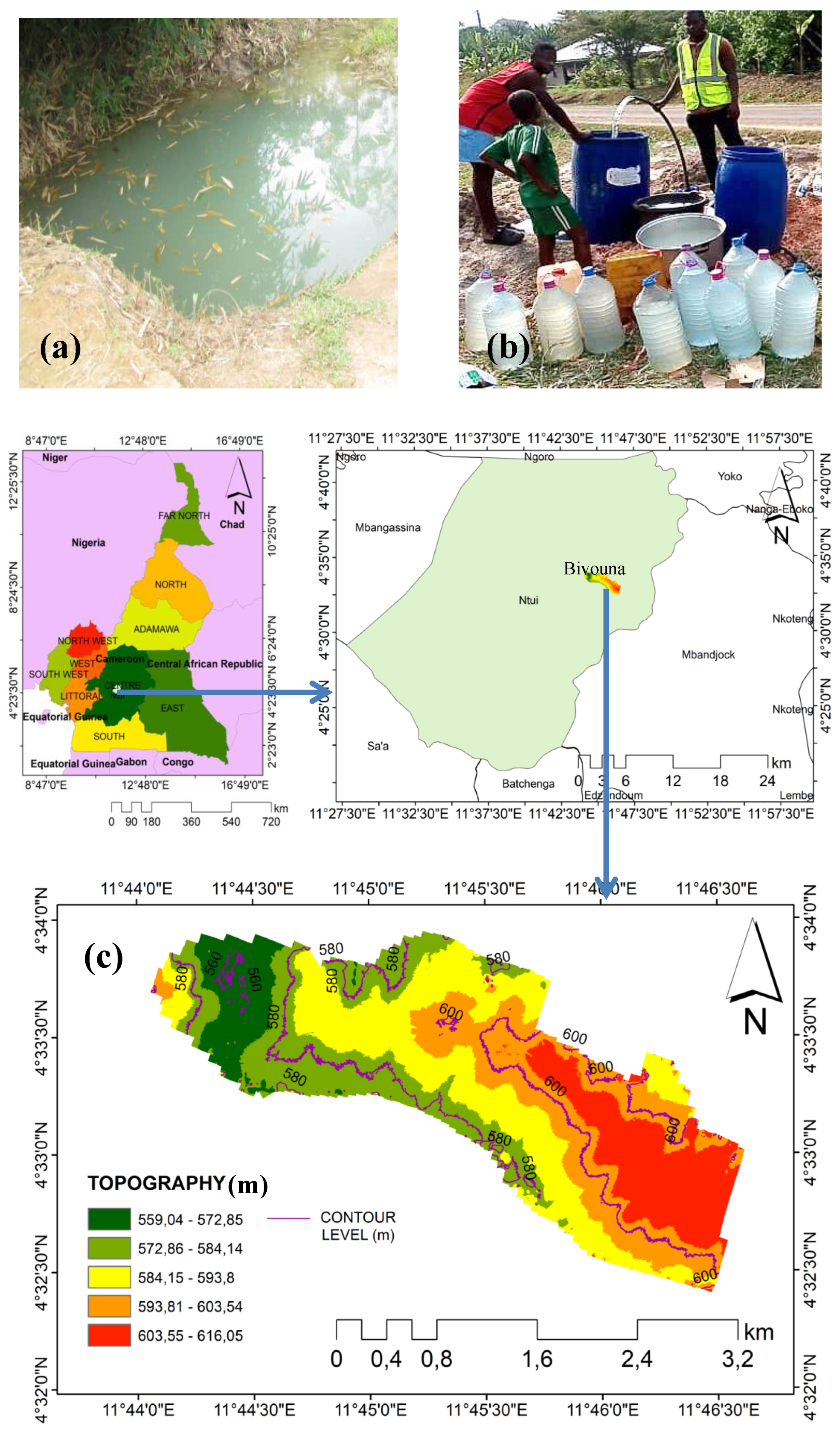
The study site is Bivouna, locality of the Ntui subdivision, Cameroon. The area is semi-arid and comparable to several zones around the world such as Colorado in USA (America), Aconna in Italia (Europe), Gobi in China (Asia) and Sahara in Morocco (Africa). It is located between 4°32 North and 4°34'00‘’ North, 11°44‘’ East and 11°46'30‘’ East, covering an area of 5 km² (Figure 1c). This area is a transition zone between two regions of Cameroon, the Centre and Adamawa, and is subdivided into three geomorphological units: the first unit extends towards the Centre region, from Ntui to Yaoundé; the second unit extends towards the Adamawa region in the east; and the third unit extends from the Adamawa region to the Western Plateaux of Cameroon. Morphologically, its relief is moderate and varied, comprising plains, hills and valleys with altitudes ranging from 600 to 800m. The vegetation in this transition zone is of the shrubby periforest savannah type, and is therefore not densely wooded. The average temperature in the area is around 26°C. Rainfall is between 1,400 and 1,600 mm per year with a tropical Sudanese climate. The area's hydrography consists mainly of the Sanaga river and its tributaries. The hydrogeological formation is of the basement type and the flow of water is generally determined by faulting in the area, thus the corresponding aquifer is a fractured basement aquifer. The hydrographic network is dendritic with parallel streams flowing mainly in the direction of the major fractures. Red ferralitic soils can be found on acidic rocks, alternating with brown-yellow ferralitic soils on various rocks, hydromorphic soils made up of red or yellow clays, lateritic gravel and duricrust outcrops. The geological formation in the study area is metamorphic, consisting mainly of gneisses divided into two units: (i) a metasedimentary unit consisting of kyanite gneisses, biotite gneisses, talc-silicate rocks and quartzites and (ii) a meta-igneous unit consisting of ultramafic to mafic alkaline gneisses, amphibolites and alkaline orthogneisses with amphiboles [39].
Figure 1. (a) Exhaustible water source consumed in the site (b) distribution of groundwater from boreholes to communities (c) Study area.
Preprints 146898 g001

2.2. Workflow

GWPZ modeling is generally carried out in three stages [11,31,32,33]. The first stage involves collecting data from a UAV survey, building a 3D model of each plot, producing a digital elevation model (DEM) of each sector and lastly obtaining a mosaic, which is the final DEM for the whole area. The thematic layers of the various influencing factors were spatialized, generated and developed using ArcGIS software. The second step is to apply the AHP method by calculating the weight of the influencing factors using a pairwise comparison matrix and combining them by multiplying each factor by its respective weight to generate a Groundwater Potential Index (GWPI). The final step is to validate the GWPI map using three methods: borehole yield data, ROC-AUC and PCA. A flow chart summarising the methodology used in this work is presented in Figure 2.

2.3. UAV Technique

2.3.1. Equipment

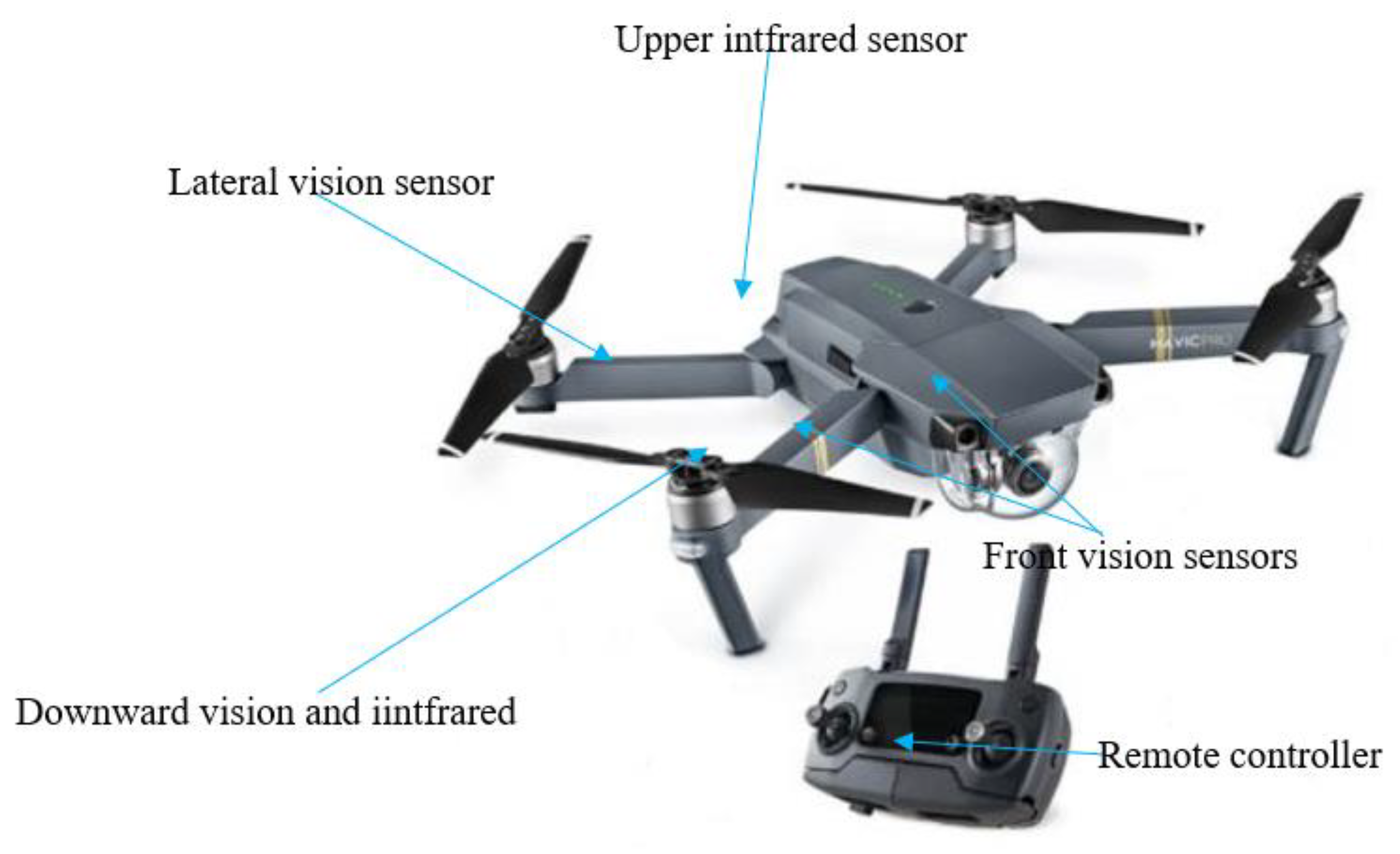
The drone used in this survey is the Mavic 2 Pro (Figure 3). Today, many UAV professionals consider the Mavic 2 Pro to be one of the best UAV available due to its flight time, stability, constant speed, obstacle avoidance, powerful camera, battery and integrated imaging technology [24]. It is a portable, easy-to-handle quadcopter, which can be handled using a remote control with the DJI Go 4 App connected. The DJI Go 4 App was used to control the UAV [26,28,40]. It is equipped with red, green and blue (RGB) image sensors, stabilisation, and 20-megapixel resolution. These sensors capture the light observed in the visible spectrum (400-700 nm) and produce images with three pixel values. UAV equipped with RGB sensors are easy to use and provide high-quality images for ortho imagery, DEM development and orthomosaics [23]. The Mavic 2 Pro uses a DJI lithium-ion four-cell polymer intelligent flight battery with a capacity of 3850 mAh that lasts up to 31 minutes of flight time, and can fly a horizontal distance of up to 8 km without wind, at a constant speed of 25 km/h [24]. It uses both the Navigation System by Timing and Ranging / Global Positioning System (NAVSTAR/GPS) and the Globalnaya Navigatsionnaya Sputnikovaya Sistema (GLONASS) satellite navigation systems to adjust precision flight, waypoints and points of interest.

2.3.2. Data Collection

UAV can be used to collect high-resolution data and images [17,23,28,29]. In this study, the Mavic 2 pro was used over an area of 5 km², which was subdivided into six plots to facilitate data collection on the field and make processing less difficult. The drone flew at a constant altitude of 50 m above the ground and captured images in windy conditions at a speed of 10 km/h. Eleven ground control points (GCP) were set and used as waypoints for automatic flight and geo-referencing of the images. The main factors to be taken into account when selecting a suitable sensor on the field during an aerial survey are: (a) sensor size: a larger sensor generally produces a better image quality; (b) focal length: this determines the sensor's field of view; (c) type of shutter used: mechanical shutters offer a faster shutter speed than electronic rolling shutters [23].

2.3.3. UAV Processing

Drone imagery is used to generate high-resolution images [17,25,26,27,28,29]. This process involves downloading the raw images, aligning and geo-referencing them, and finally downloading the GPS coordinates of the GCP into specific software to correct the geolocation of the images. After successful geo-referencing, a dense 3D point cloud is generated to develop geospatial data outcomes. The DEM is generated from the point cloud and an ortho mosaic image is developed from the DEM [23]. The UAV images obtained in this study were processed using SfM (Structure from Motion) algorithms, a technique that reconstructs the 3D model from its projections in a series of images taken at different points [2,25,26,27,41,42]. Processing was carried out using Pix4D software with the 3D map model. The Pix4D workflow consists of three stages: The first step involves initial processing and densification of the point cloud, the second step generates DEM with a resolution of 4 cm for each plot, and the third step consists of producing the mosaic in ArcGIS while maintaining the resolution of the input DEM [42].

2.4. Generation of Thematic Layers by GIS

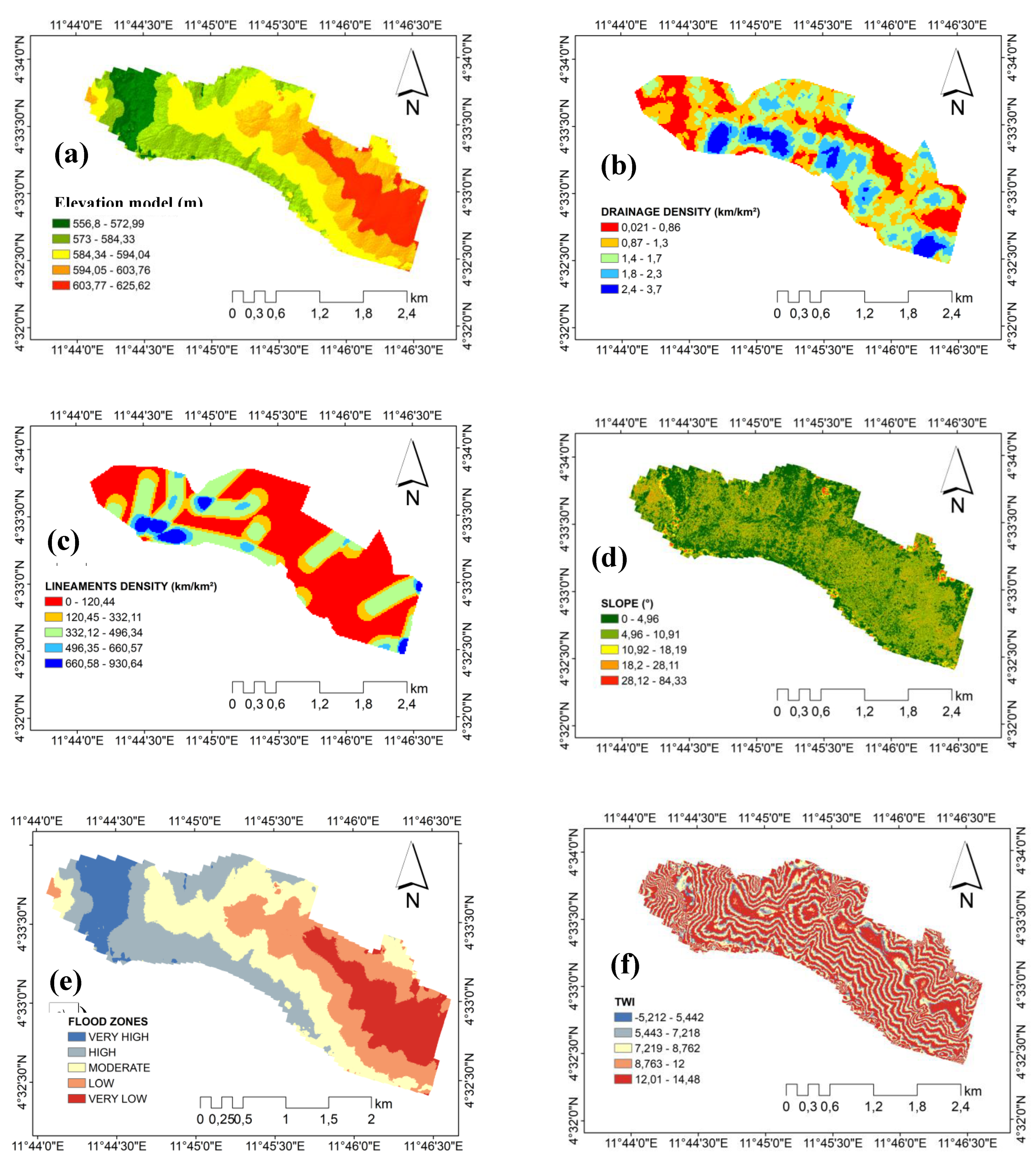
GIS is part of the geospatial technology that integrates a set of spatial data on factors influencing groundwater to produce thematic maps [2,31,32,43,44]. The thematic database was generated using ArcGIS software. These thematic maps were derived from a digital elevation model (DEM) using UAV data with a resolution of 4 cm. To extract the potential groundwater zones in the study area, six influencing factors were taken into account: elevation model (EM), lineament density (LD), drainage density (DD), slope (SL), flood zone (FZ) and topographic wetness index (TWI). The development of the thematic layers involves digital images that are spatialized, rasterized, generated and developed in ArcGIS [41]. The elevation model map, lineament density map, drainage density map, slope map, flood zone map and topographic wetness index map were prepared from the DEM. The geospatial data was generated in ArcGIS, and the weighting of groundwater exploration factors was calculated using the AHP method. The GWPZ map was generated in ArcGIS using the raster calculation tool by combining pixels from all thematic layers [3,31,45,46].

2.5. AHP Model

AHP is a reliable and popular technique widely used for MCDM. This method allows weights to be assigned to several criteria in spatial decision-making, particularly in groundwater assessment [3,31,32]. It involves a pairwise comparison method in which each criterion is given a score relative to other criteria, followed by a valid consistency check [32,47,48].

2.5.1. Assigning Ranks and Weights Using AHP

Saaty’s Scale

For each level of the hierarchy, the criteria were compared two by two using the Saaty scale (Table 1). This scale, ranging from 1 (equal importance) to 9 (extreme importance), is used to express the intensity of preference for one criterion over another.

Standardization of Thematic Layers

The classification of factors is a complex stage and must be carried out with care. The selected factors were grouped into five classes. A standard range, from 1 to 5, was considered for this work. A score of very good, good, medium, poor and very poor was assigned to the factors according to whether or not they contributed to the excellent performance of the indicator in question. The ranks and their respective weights for each parameter are listed in Table 2.

2.5.2. Weighting of Determining Factors

Pairwise Comparison

In this study, six parameters were taken into account to describe the groundwater potential, the elevation model (EM), the drainage density (DD), the lineament density (LD), the slope (SL), the flood zone (FZ) and the TWI (topographic wetness index). Each parameter was assigned a specific weight according to its relative importance in determining the presence of groundwater from the AHP model (Table 3) [3,16,31,32,45,46].

Normalized Weight

The pairwise comparison matrix is normalized (Table 4) to obtain relative weights. The values of the thematic elements were divided by the sum of the values in the corresponding column of the pairwise comparison matrix [3,16,31,32,45,49].

2.5.3. Assessing of Matrix Consistency

The following equations are used to obtain the coherence index and coherence ratio [6,20,32,33,50] given in (Eq. 1) and (Eq. 2) respectively:
C I = λ m a x n n 1
where CI is the consistency index and n is the number of factors. λ max is the highest eigenvalue of the pairwise comparison matrix [33].
The consistency ratio (CR) is obtained by (Eq. 2):
C R = C I R I
CR is the consistency and must be less than 10% ([30,33,50].
RI is the value of the random coherence index which is given as a function of the number of variables. Its values are presented in Table 5.
From the above, λmax represents the maximum significant absolute eigenvalue of comparison matrix matching calculated from (Eq. 3) [3,33,45,49].
λ m a x = 1 n w i n A w i w i
where W is the eigenvector of λ max and AW (i=1,2,..............n) is the weighting value for each factor, which is easily determined from the matrix in (Eq. 4). (n) is the number of factors influencing groundwater [3,16,31,32,33,45,49].
A W = a 11 a 12 a 13 a 1 n 1 a 1 n a 12 a 22 a 23 a 2 n 1 a 2 n . . . . . . . . . . . . . a n 1 a 2 n a n 3 1 a n 1 a n n   ×   W 1 W 2 . . W n
In this study, the consistency ratio (CR) is 0.03, with CI=0.04; λmax = 6.2; n = 6 and RI = 1.24. This research confirmed the consistency of the matrix and the AHP method produced valid and reliable results [3,33,47].

2.6. Deriving GWPZ

The multi-influencing factors of groundwater potential considered in the study were superimposed on the GIS platform and ranked according to their assigned ranks and weights. The Groundwater Potential Index (GWPI) was calculated using (Eq. 5) from the weight of the features Wf derived from the AHP method, multiplied by the weight of each criterion Wc [3,16,22,31,32,45,46]:
G W P I = W f × W c
Wf is the relative weight, and Wc is the standardised score for criterion i.
The GWPZ is based on the GWPI values. It is classified into high, moderate, low and very low groundwater potential zones. To test the accuracy of our results, the GWPZ was validated using data from twenty-eight boreholes drilled during the pumping trial.

3. Results and Discussion

3.1. Thematic Maps

3.1.1. Elevation Model

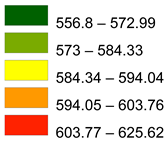
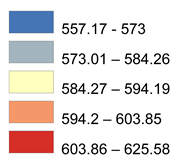
The elevation of the study area plays a major role in groundwater potential and is one of the most used parameters for groundwater infiltration [2,44]. The elevation map model (Figure 4a) was generated in ArcGIS, using the DEM obtained from the UAV data with a spatial resolution of 4 cm. It represents the topography of an area and is one of the main factors widely used for GWPZ delineation [41,43]. Areas with low topography have high infiltration, and therefore high groundwater recharge. The elevation model (EM) in the study area is subdivided into five subclasses, namely: Very Low (556.8-572.99 m), Low (573-584.33 m), Moderate (584.34-594.04 m), High (594.05-603.76 m) and Very High (603.77-625.62 m), occupying an area of approximately 0.5 km² (10%), 1.2 km² (24%), 1.4 km² (28%), 1.2 km² (24%), 0.7 km² (14%) of the total area, respectively. The low-lying areas represent valleys, plains and alluvium, while the high-lying areas are gently to moderately sloping hills.

3.1.2. Drainage Density

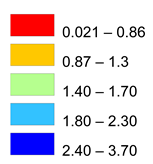
Drainage density (DD) is an effective factor of GWPZ, and plays a very crucial role in determining GWPZ. There is a very significant relationship between drainage density and groundwater recharge potential [2,20]. A high drainage density results in less infiltration and is therefore not very favourable to groundwater accumulation [43]. A low drainage density leads to a reduction in runoff, which ultimately accelerates the infiltration of surface water and therefore increases groundwater recharge, and vice versa [16]. Therefore, the high permeability of the underlying rocks contributes to the low drainage density. Consequently, areas with low drainage density have a good GWPZ. The drainage density map of the area was extracted from the DEM using ArcGIS software [51]. The drainage density map was reclassified into five categories including very low (0.021-0.86 km/km²), low (0.87-1.3 km/km²), medium (1.4-1.7 km/km²), high (1.8-2.3 km/km²) and very high (2.4 - 3.7 km/km²) occupying an area of approximately 1.3 km² (26%), 1.55 km² (31%), 1.54 km² (30.8%), 0.24 km² (4.8%), 0.37 km² (7.4%) of the total area, respectively. Figure 3b shows the drainage density map of the study area.

3.1.3. Lineament Density

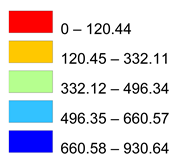
Lineaments are an important hydrological feature. They are natural fractures in the earth's surface that play a major role in the infiltration of surface water. These fractures favour communication between aquifer layers and increase the infiltration rate of rainwater [43]. The structure of the lineaments can be a good indication of the direction of groundwater flow. The higher the lineament density, the faster the GWPZ recharges [2,16]. Therefore, an area of high lineament density indicates good water infiltration [20,44]. The lineament density (LD) model of the zone length and number of lineaments within the zone is derived from the DEM using ArcGIS software. The lineament density map (Figure 4c) was obtained from lineaments extracted from remotely sensed data using GIS techniques [52,53,54]. Lineament density and groundwater potential are positively correlated [55]. Regions with high water potential generally have a high lineament density [56]. The Lineament density of this study area is subdivided into five subclasses: very low (0-120.44 km/km²), low (120.45-332.11 km/km²), moderate (332.12-496.34 km/km²), high (496.35-660.57 km/km²) and very high (660.58-930, 64 km/km²), occupying an area of approximately 2.75 km² (55%), 0.49 km² (9.8%), 1.2 km² (24%), 0.29 km² (5.8%) and 0.27 km² (5.4%) of the total surface area, respectively.

3.1.4. Slope

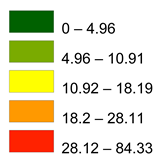
Slope is a key parameter that influences surface water infiltration, and the gradient of the terrain plays a determining role in groundwater recharge [30,57]. Steeper slopes produce lower recharge because the water received from precipitation flows rapidly down a steep slope during rainfall [43]. A steep slope results in significant soil surface runoff and erosion, and significantly reduces groundwater recharge potential [16,41]. Slopes were extracted from the DEM using the Slope 3D analysis tool in ArcGis [51]. In ArcGIS, a slope map can be prepared from DEM data in percentage or degree in Arctoolbox with a resolution of 4 cm. The slope map (Figure 4d) of the site was classified into five categories including very low (0-4.96°), low (4.96-10.91°), medium (10.92-18.19°), high (18.2-28.11°) and very high (28, 12-84.33°) occupying approximately 2.32 km² (46.4%), 1.32 km² (26.4%), 0.71 km² (14.2%), 0.51 km² (10.2%) and 0.14 km² (2.8%) of the total surface area respectively.

3.1.5. Flood Zone

The flood zone (FZ) can be defined as the area that will be temporarily flooded by high water during the rainy season. Flood zones are areas where run-off water has time to stagnate and seep into fractures and cracks in the ground. The flood zone map (Figure 4e) was generated from a DEM with a spatial resolution of 4 cm. It was determined by calculating the drainage ratio between a pixel and its neighbouring pixel(s) in the DEM image, slope, TWI and flood data from the surrounding watercourse [58]. An FZ map was generated using GIS tools to additionally determine a flow direction map, which refers to the direction of flow in the potential area in ArcGIS. The flood zone results in the study area vary in five categories, namely: very low (0.37 km², 7.4%), low (1.3 km², 26%), moderate (1.5 km², 30%), high (1.13 km², 22.6%) and very high (0.7 km², 14%).

3.1.6. Topographic Wetness Index

The topographic wetness index (TWI) model describes how topography affects the location of saturated zones that generate runoff. That is, the influence of topography on hydrological processes reflects the potential groundwater infiltration caused by the effects of topography [59,60]. TWI is used to assess wetness conditions at the catchment basin scale. It measures the potential for groundwater infiltration caused by topographic influences [16,20,43]. The TWI map was prepared using DEM on a GIS platform from UAV data with a spatial resolution of 4 cm. TWI can be quantified by applying the equation below Eq. (6) [20,33,43]:
T W I = l n ( α tan β )
α = Upslope contributing surface; β = Topographic gradient (slope)
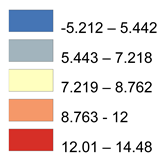
The TWI for the study area ranged from 5.212 to 14.48 (Figure 4f). The values were reclassified into five categories such as very low (5.212-5.442), low (5.443-7.218), medium (7.219-8.762), high (8.763-12) and very high (12-14.48) occupying about 0.2 km² (4%), 0.9 km² (18%), 0.9 km² (18%), 0.4 km² (8%), 2.6 km² (52%) of the total area respectively. High weights were assigned to high TWI and vice versa [41,43]. The higher the TWI values, the greater the groundwater recharge potential and vice versa [20,30].

3.1.7. Groundwater Potential Index

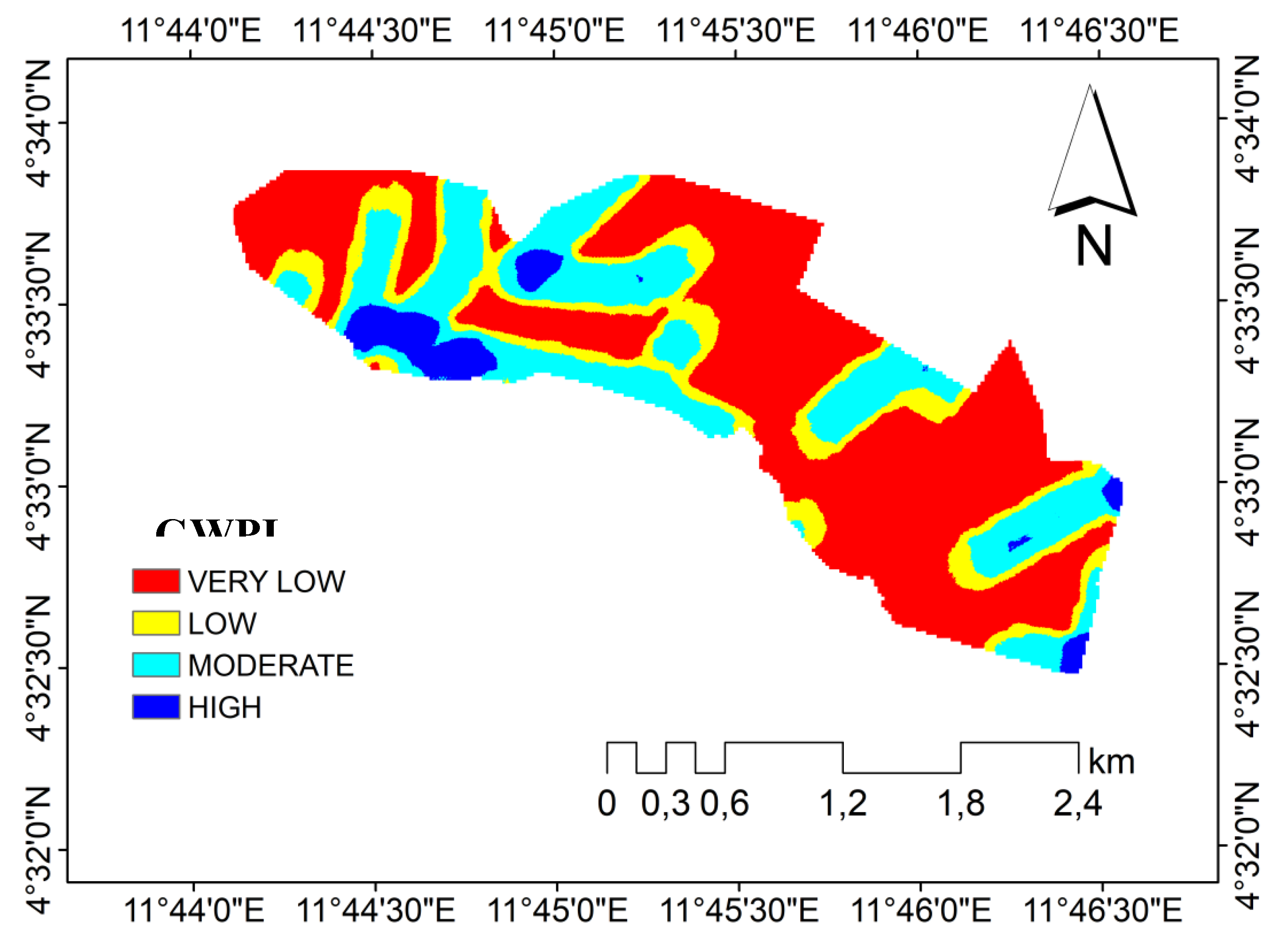
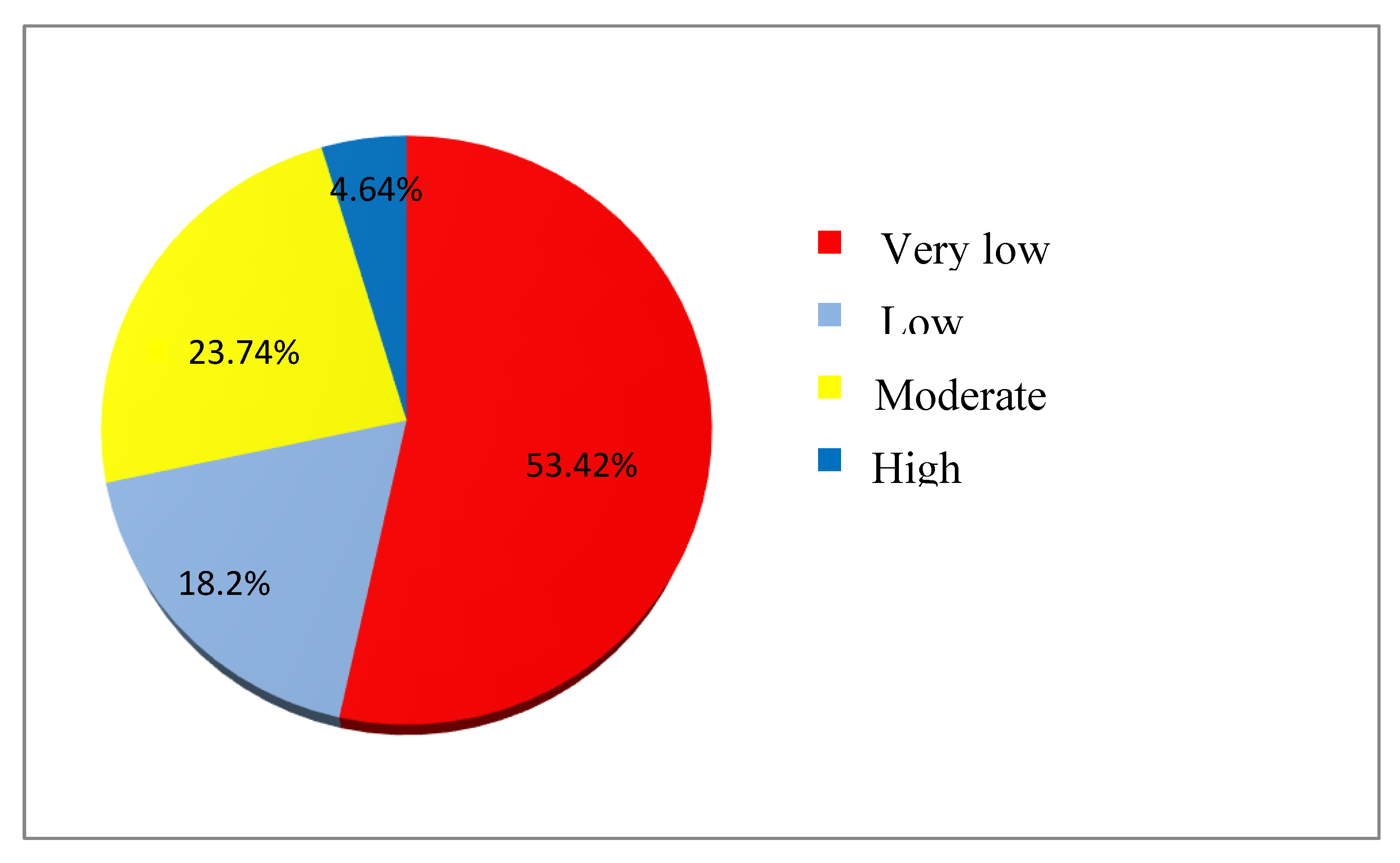
The GWPI is mapped by integrating the six multiple influencing factors of groundwater potential (elevation model, lineament density, slope, drainage density, flood zone and topographic) into GIS platforms using the AHP technique. Table 2 lists the weights of the criteria and the consistency ratio for the parameters, and Table 4 lists the normalised weights for the different classes of each parameter. Using overlay analysis, the GWPI is derived. The GWPI of the study area is classified into four zones, namely, high (H), moderate (M), low (L) and very low (VL) (Figure 5). Specifically, 0.232 km² (4.64%), 1.187 km² (23.74%), 0.91 km² (18/2%) and 2.671 km² (53.42%) of the total area fall within the high, moderate, low and very low GWPI zones respectively. Table 6 and Figure 6 show the surface distribution of the various potential zones in the study area. Thus, high groundwater potential (GWP) is located in areas with high lineament density, high flood zone, high TWI, low altitude, low drainage density and low slope, and vice versa. This shows that groundwater recharge occurs mainly in recharge zones, which are low-altitude areas (plains, valleys and alluvium) and rarely on hills and mountains. The areas that can be exploited for groundwater are in the minority, representing 28.62% of the total surface area. They correspond to medium and high groundwater potential (Table 6). The GWPI shows that the study area has low groundwater potential, with less than 30% of the total surface area suitable for groundwater exploitation.

3.2. Model Validation

3.2.1. Validation with Borehole Yield Data

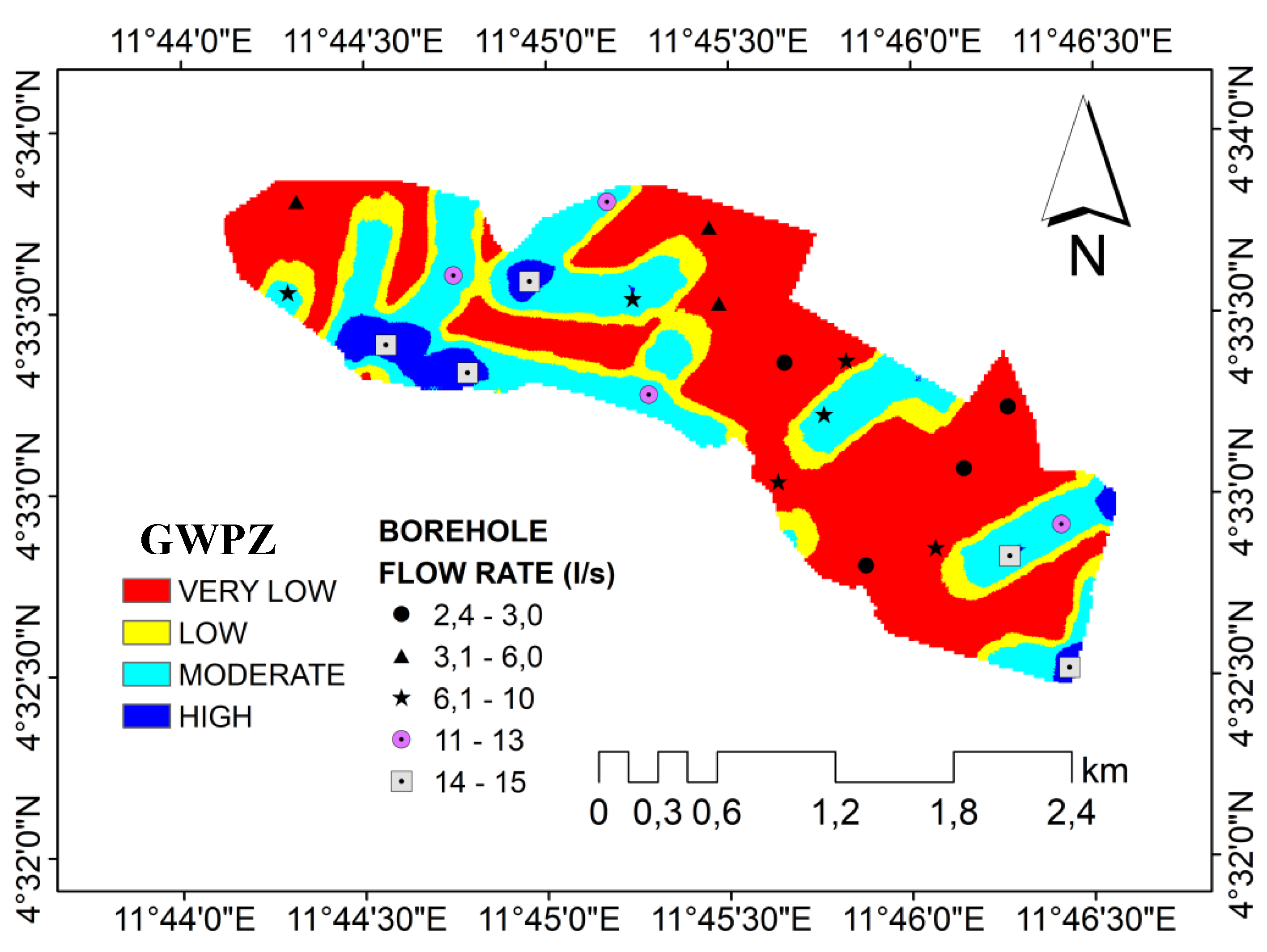
Validation of the model with borehole yield data is crucial and establishes consistency between the borehole data, the AHP method and the use of GIS [3]. To test the accuracy of the model, the GWPI was validated using twenty-eight (28) borehole flow rate data from the pumping trial. For this work, the groundwater flow rate data were classified into five classes: 2.4-3 l/s (very poor yield zone), 3.1-6 l/s (poor yield zone), 6.1-10 l/s (medium yield zone), 11-13 l/s (good yield zone) and 14-15 l/s (very good yield zone) (Figure 7).
The validation method with borehole yield data assessed the consistency between the description of the actual yield obtained in the field and the predicted yield obtained from the GWPI [3]. For this validation, if the accuracy is higher than 70%, the AHP method can be accepted [3]. The borehole locations and actual yield data are presented in Figure 7 and Table 7. Table 7 specifies the agreement or disagreement between the actual yield data and the GWPI result. The ranges of yield data for the study area were grouped into three categories: good ˃ 11 l/s, medium between 6.1 l/s and 10 l/s and poor ˂ 6 l/s. The accuracy prediction by the borehole yield data validation method is given by (Eq. 7) [3]:
Y p =   U N × 100
Yp is the accuracy prediction, U is the number of boreholes agreeing with consistency (U = 23); N is the total number of boreholes (N = 28).
The prediction accuracy is 82.14%. The AHP method, GIS and drone are therefore significantly reliable and accurate results [3].

3.3.2. ROC-AUC

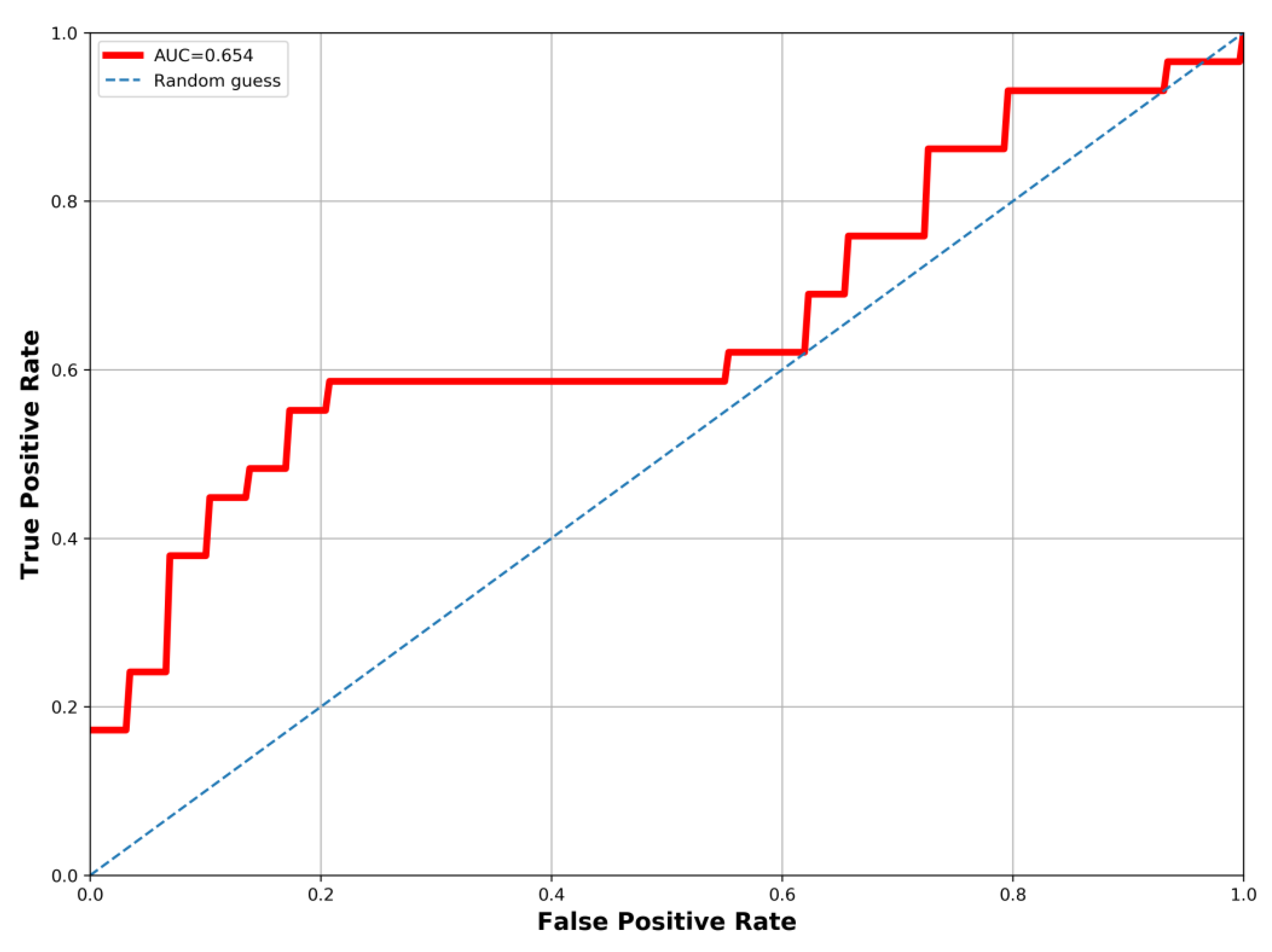
The AHP model was evaluated in this study using the receiver operating under a surface feature from the use of ArcSDM in ArcGIS software [20]. This curve is used to evaluate the performance of a model to validate the work [34] and the borehole yield data is compared to GWPZ. The same points used to establish the ROC and AUC can be used to assess the predictive performance of the model, and a larger AUC indicates a better model [33]. The AUC values for prediction rate vary in five classes of relative predictive accuracy of the model: ˂ 0.6: poor, 0.6-0.8: medium and ˃ 0.8: good [30,34].
Figure 8 shows a Receiver operating characteristic (ROC) - Area under curve (AUC). For this purpose, the GWPZ map was validated with flow from twenty-eight (28) boreholes and classified into five categories in the field: very good, good, average; poor and very poor. The ROC reveals that the AUC is 0.654, indicating that the groundwater potential model was 65.4% consistent with the borehole data and, therefore, the ROC result agrees with the AHP model used in this study, such that this method can be accepted as a simple tool for GWPZ generation [20,30]. The result of the ROC-AUC validation confirms the reliability of the AHP model to identify the GWPZ used in this study.

3.3.3. PCA Validation

Principal component analysis (PCA) is a widely used method in all branches of science and technology [37,38]. It suggests that PCA is effective as an alternative evaluation technique when it comes to verifying the results of AHP analysis [36]. PCA is a procedure that transforms a number of correlated variables into a smaller number of uncorrelated variables. The number of principal component scores (PCs) was indicated to show high and low correlation between criteria. One PC means a very high correlation and two means a relatively high correlation [36]. The PCA was validated with twenty-eight (28) borehole yield data. To express the PCA, we consider a linear combination of equations [35]. Let the random vector X' = (X1, X2,........ Xp) have covariance matrix ⅀ of eigenvalues λ 1 ≥ λ 2 ≥.........≥ λ1 ≥ 0. Considering the following linear combinations in (Eq. 8), (Eq. 9) and (Eq. 10):
Y 1 = l ' 1 X = l 11 X 1 + l 21 X 2 + . + l p 1 X p
Y 2 = l ' 2 X = l 12 X 1 + l 22 X 2 + . + l p 2 X p
Y p = l ' p X = l 1 p X 1 + l 2 p X 2 + . + l p p X p
V a r ( Y i ) = l ' p l i   ,   i = 1 ,   2 , p
C o v ( Y i , Y k ) = l ' p l k ,   i = 1 ,   2 , p
Thus, we can obtain p principal components with uncorrelated linear combinations Y1, Y2,... Yp with the largest possible variance in (Eq. 11) and covariance in (Eq. 12).
Having obtained the principal component scores, we use the AHP model to evaluate the GWPI and flow rate of borehole yield data in the study area. The process involves evaluating the correlation between GWPI and flow rate in space at the point where the borehole is distributed.
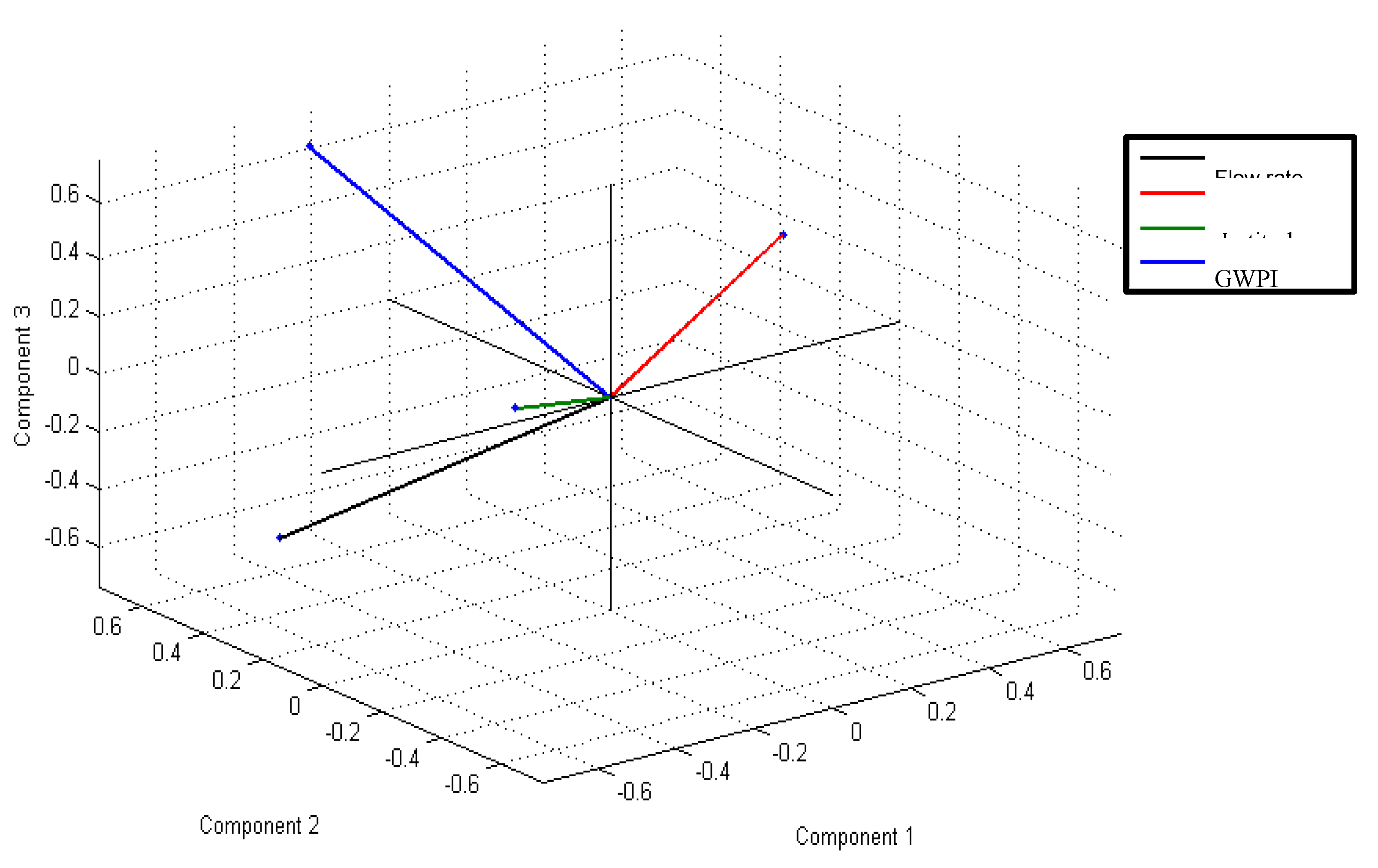
Table 8 shows the linear correlation coefficients between the variables. These coefficients indicate the strength and direction of the linear relationship between pairs of variables. A positive correlation coefficient indicates a positive relationship, i.e. the variables increase or decrease together. A negative correlation coefficient indicates a negative relationship, i.e. the variables increase in opposite directions. In this study, the criteria highlighted to assess their similarity are the flow rates of the boreholes drilled and the GWPI. Flow rates and GWPI have a correlation of around 0.7249 (72.49%), showing a strong correlation between the two results. Furthermore, their respective correlations with longitude and latitude are similar (low and negative). Consequently, there is a high degree of similarity between borehole flow rates and GWPI, showing that they are highly correlated and almost similarly distributed throughout the study area. Table 9 shows the correlation between variables and principal components. These correlations indicate the contribution of each variable to the construction of each factor. Similar contributions indicate a similarity between the variables considered. A high correlation coefficient indicates that a variable is strongly linked to a factor and contributes significantly to the definition of that factor. Principal components PC1 and PC2 have similar and high significance (45.1248% and 43.2198% respectively) (Table 9). This shows that PCA can be considered correlated in two principal components (first and second order) which reflects a high correlation between variables [36]. It can be seen that flows rate and GWPI show high and similar correlations with the PC1 and PC2 factor in longitude and latitude, showing that these variables (flow rate, GWPI, longitude and latitude) are strongly related (Table 9). Figure 9 shows these correlations in three-dimensional hyperspace. This similarity shows that areas with high groundwater potential generally have the best flow rates, and vice versa. The high correlation (72.49%) between flow rates and GWP map validates the AHP model.

4. Conclusions

The aim of this paper was to use a workflow for modeling GWPZ by combining UAV technique, GIS and the MCDM. This methodology was used to delineate GWPZ in semi-arid zones. UAV imagery generated a DEM with 4 cm resolution. GIS technology integrated groundwater influencing factors to generate thematic maps. The MCDM was applied to develop a GWPZ in order to identify aquifer. Appropriate weights are assigned according to the impact of the availability of factors. The GWPZ was generated on the basis of the combination of different factors: elevation model, drainage density, lineament density, slope, flood zone and TWI. It is classified into four zones with high, moderate, low and very low groundwater potential. The results shows that high GWPZ is 0.232 km² (4.64%), moderate is 1.187 km² (23.74%), low is 0.91 km² (18.2%) and very low is 2.671 km² (53.42%). Validation of the results was carried out by comparing the GWPZ with twenty-eight existing boreholes, using three validation methods: borehole yield data, ROC-AUC and PCA. Validation with borehole yield, ROC-AUC and PCA was calculated and gave 82.14%, 65.4% and 72.49%, respectively. These analyses and validations show that the method is reliable and can be an effective alternative technique for mapping the GWPZ. This research establishes a viable approach for mapping the GWPZ in semi-arid zones while optimizing time and cost for future geophysical surveys and drilling.

Author Contributions

MCN, MMAG and AMPN contributed to Methodology, PNN, AMPN and JLM contributed to Software, BPGP, SRKN, AT, WF, MM and PNN contributed to Formal analysis and investigation. MMAG, JLM and PNN contributed to visualization, JLM, BPGP, SRKN, AT and WF contributed to Writing—original draft preparation, MCN, MMAG, AMPN, MM and PNN contributed to Writing–review and editing, MCN, MMAG, AMPN, JLM, WF and PNN contributed to Supervision. All authors have read and agreed to the published version of the manuscript.

Funding

This work has not received any funding.

Data Availability Statement

The data that support the findings of this study are available on request from the corresponding author.

Conflicts of interest

The authors have no conflicts of interest to declare.

References

  1. Wheater, H.S; Gober, P. Water security and the science agenda. Water Resources Research 2015, 51(7), 5406-5424. [CrossRef]
  2. Thapa, R; Gupta, S; Guin, S; kaur, H. Assessment of groundwater potential zones unsing multi-inluencing factor (MIF) and GIS: a case study from Birbhum district, west Bengal. Applied water science 2017, 7(7), 4117–4131.
  3. Das, N; Sutapa, M. Application of multi-criteria making technique for the assessment of groundwater potential zones: a study on Birbhum district, West Bengal, India. Environment Development and Sustainability 2018, 22 (2), 931-955.
  4. Elshall, A S; Arik, A D; El-Kadi, A. I; Pierce, S; Ye, M; Burnett, K. M; Wada, C. A; Bremer, L.L; Chun, G. Groundwater sustainability: A review of the interactions between science and policy. Environmental Research Letters 2020, 15(9), 093004. [CrossRef]
  5. Abdo, H.G; Vishwakarma, D.K; Alsafadi, K; Bindajam, A.A; Malick, J; Malick, S. K; Kuma, K.C.A ; Kuriqi, J.A.A; Artan Hysa, A. GIS-based multi-criteria decision making for delineation of potential groundwater recharge zones for sunstainable resource management in the Eastern Mediteranean: a case study. Applied water science 2024, 14: 160, 1-19.
  6. El-Sayed, H.M; Elgendy, A.R. Geospatial and geophysical insights for groundwater potential zones mapping and aquifer evaluation at Wadi Abu Marzouk in ElNagila, Egypt. The Egyptian Journal of Aquatic Research 2024, 50(1), 23-35. [CrossRef]
  7. World Health Organization (WHO). Report on surveillance of antibiotic consumption: 2016–2018 early implementation. World Health Organization 2018.
  8. UN (United Nation). Report on sustainable development objectives. United Nation 2019.
  9. World Health Organization (WHO). A global overview of national regulations and standards for drinking-water quality. 2nd ed. Geneva: World Health Organization 2021. ISBN 978-92-4-002364-2.
  10. Anusha,B.N; Babu, K.R; Kumar,B.P; Kumar, P.R; M. Rajasekhar, M. Geospatial approaches for monitoring and mapping of water resources in semi-arid regions of southern India. Environmental challenges 2022, 8, 100569. [CrossRef]
  11. Das, S. C; Akhtar, F; Alrasheedi, A. F; Akbar, A.C. Application of water cycle algorithm with demand follows green level and nonlinear power pattern of the product for an inventory system. Scientific Reports 2024, 14(1), 20995.
  12. Franke, J. Drying groundwater. Nature Climate Change 2024, 14(8), 896.
  13. Rohde, M. M; Albano , C. M; Huggins, X; Kirk R; Klausmeyer, K.R; Charles Morton, C; Sharman, A; Zaveri, E; Laurel Saito, L; Freed, Z; Howard, J.K; Job, N; Richter, H; Toderich, K; Rodella, A.S; Gleeson, T; Huntington, J; Chandanpurkar, H.A; Purdy, A.J; Famiglietti, J.S; Singer, M.B; Dar A. R; Caylor, K; John C. S. Groundwater-dependent ecosystem map exposes global dryland protection needs. Nature 632 2024, 101–107. [CrossRef]
  14. Turner; S. W. D; Rice, J.S; Nelson K.D; Vernon, C.R; McManamay, R ; Dickson, K;Marston, L. Comparison of potential drinking water source contamination across one hundred U.S. cities. Nature communication 2021, 12:7254 . [CrossRef]
  15. Hashimoto, R; Kazama, S; Hashimoto, T; Oguma, K; Satoshi Takizawa, S. Planning methods for conjunctive use of urban water resources based on quantitative water demand estimation models and groundwater regulation index in Yangon City, Myanmar. Journa of cleaner production 2022, 367(133121): 0959-6526. [CrossRef]
  16. Minuyelet, Z.M; Kasie, L.A; Bogale, S. Groundwater potential zones delineation using GIS and AHP techniques in upper parts of Chemoga watershed, Ethiopia. Applied Water Science 2024, 14, 85. [CrossRef]
  17. Mir M. R; McDermid. G. J; Strack , M; Lovitt J. A New Method to Map Groundwater Table in Peatlands Using Unmanned Aerial Vehicles. Remote Sensing 2017, 9, 1057. [CrossRef]
  18. Chen , W ; Tsangaratos, P ; Ilia, I ; Duan, Z; Chen, X. Groundwater spring potential mapping using population-based evolutionary algorithms and data mining methods. Science of the Total Environment 2019, 684, 31–49. [CrossRef]
  19. Smith, C; Satme, J; Martin, J; Downey, A.R.J ; Vitzilaios, N; Imran, J. UAV rapidly-deployable stage sensor with electro-permanent magnet docking mechanism for flood monitoring in undersampled watersheds. HardwareX 2022, 12, 2468-0672. [CrossRef]
  20. Bhuyan, M.J; Deka, N. Delineation of groundwater potential zones at micro-spatial units of Nagaon district in Assam, India, using GIS-based MCDA and AHP techniques. Environmental Science and Pollution Research 2022, 3, 54107-54128.
  21. Orojah, J.O; Eshimiakhe, D; Oniku A.S; Kolawole, M.L. Application of remote sensing and electrical resistivity technique for delineating groundwater potential in North Western Nigeria. Scientific reports 2024, 14, 22299.
  22. EL-Bana, E.M.M; Alogayell, H.M; Sheta, H.M; Mohamed Abdelfattah, M. An integrated remote sensing and GIS-based technique for mapping groundwater recharge zone: A case study of SW Riyadh, Central Saudi Arabia. Hydrology 2024, 11, 38.
  23. Acharya, B.S; Bhandari, M; Bandini, F; Pizarro, A; Perks, M; Joshi, R.D; Wang, S; Dogwiler, T; Rai, R.L; Kharel, G; Sharma, S. Unmanned aerial vehicles in hydrology and water management applications, challenges, and perspectives. Water resources research 2021, 57 (11), 1944-7973.
  24. Vellemu, E.C; Katonda, I; Abiou, V; Yapuwa, H; Msuku, G; Nkhoma, S; Makwakwa, C; Safuya, K; Maluwa, A. Using the Mavic 2 Pro drone for basic water assessment. Scientific African 2021, 14(3), e00979. [CrossRef]
  25. Vélez, N. M; García, L.S; Barbero, L; Verónica Ruiz, O; Sánchez, B.A. Applications of Unmanned Aerial Systems (UASs) in Hydrology: A Review. Remote Sensing 2021, 13, 1359.
  26. Lee, E; Park, S; Jang, H; Choi, W; Sohn, H.G. Enhancement of low-cost UAV-based photogrammetric point cloud using MMS point cloud and oblique images for 3D urban reconstruction. Measurement 2024, 226,114158. [CrossRef]
  27. Liu, Z; Li, J; Shen, J; Wang, X; Chen, P. Leader–follower UAVs formation control based on a deep Q-network collaborative framework. Scientific Reports 2024, 14, 4674. [CrossRef]
  28. Román, A ; Navarro, G ; Tovar, A.S ; Zarandona, P ; Roque, D.A ; Barbero, L. Shetlands UAV metry: unmanned aerial vehicle-based photogrammetric dataset for Antarctic environmental research. Scientific Data 2024, 11, 202.
  29. Rui, Y; Wang, C; Barton,N ; Du, S. A photogrammetric approach for quantifying the evolution of rock joint void geometry under varying contact states, International Journal of Mining Science and Technology 2024, 34(4), 461-47. [CrossRef]
  30. Kouamou, N.S.R; Enyegue, A.N.F.M.; Bikoro, B.M; Tchikangoua, N.A; Tabod, C.T. Modeling groundwater potential zones in the Kribi-Campo region, South Cameroon using geospatial techniques and statistical models. Modelling Earth System and Environment 2022.
  31. Vellaikannu, A ; Palaniraj, U; Karthikeyan, S; Senapathi, V; Viswanathan, P. M, Sekar, S. Identification of groundwater potential zones using geospatial approach in Sivagangai district, South India. Arabian Journal of Geosciences 2021, 14(1), 8. [CrossRef]
  32. Shebl, A; Abdelaziz, M. I; Ghazala, H; Awad, S. S. A; Abdellatif, M; Csámer, A. Multi-criteria ground water potentiality mapping utilizing remote sensing and geophysical data: A case study within Sinai Peninsula. The Egyptian Journal of Remote Sensing and Space Sciences 2022, 25(3), 765–778. [CrossRef]
  33. Ikrri, M; Boutaleb, I; Abiou, M; Zahra, F.E; Abdelrahman, K; Mouna, I; Tamer, A; Hasna, E.A; Sara, E; Farid, F. Delineation of groundwater potential area using an AHP, remote sensing, and GIS Techniques in the Ifni Basin, Western Anti-Atlas, and Morocco. Water 2023, 15(7), 1436.
  34. Akatsuka,T; Saito, R.; Kajiwara, T; Osada, K.; Nagaso, M; Norihiro, W.N; Tsuchiya, N; Hiroshi, A; Kanetsuki, T. Geothermal geology and comprehensive temperature model based on surface and borehole geology in Sengan, Northeast Japan. Geothermics 2022, 105, 102485. [CrossRef]
  35. Yeh, H.C; Chen, Y.C; Wei, C. Cross-validation methods in principal component analysis: a comparison. Paddy water environ 2013, 11(1), 71–82.
  36. Kamijo, T; Chen, Y.C; Wei, C. A verification of alternative assessment using principal component analysis based on case studies of the japan international cooperation agency. Paddy water environ 2014, 45(5), 31–38.
  37. Kong, G; Jiang, L; Yin, X.; Wang, T; Xu, D.L; Ruiz, O.V; Y, J.B; Hu, Y. Combining principal component analysis and the evidential reasoning approach for healthcare quality assessment. Ann oper res 2018, 271(2), 679–699. [CrossRef]
  38. Giancarlo, D; Chiara, T. Cross-validation methods in principal component analysis: a comparison. Statistical methods and applications 2002, 11(1), 71–82.
  39. Ngnotué, T; Nzenti, J.P; Sing, A., Barbey, P; Tchoua, F.M. The Ntui-Betamba high-grade gneiss: a northward extension of the pan-afriacn Yaoundé gneiss in cameroon. Journal of african earth science 2000, 31(2), 1464–343X.
  40. Beni, T; Borselli, D; Bonechi,L.,Lombardi, L; Gonzi, S; Melelli, M; Turchetti , M.A; Fanò, L; Alessandro,R.; Gigli, G; Casagli, N. Laser scanner and UAV digital photogrammetry as support tools for cosmic-ray muon radiography applications: An archaeological case study from Italy. Scientific Reports 2023, 13, 19983. [CrossRef]
  41. Yeh, H.F; Cheng, Y.S; Lin, H.I; Lee, C.H. Mapping groundwater recharge potential zone using a GIS approach in Hualian River. Taiwan. Sustainable Environment Research 2016, 26(1), 33–43. [CrossRef]
  42. Garcia, L.S; Velez, N.M; Martinez, L.J; Bellon, S.A; Pacheko, O.M.J; Ruiz, O.V; Munoz, J.J.P; Barbero, L. Using UAV photogrammetry and automated sensors to assess aquifer recharge from a coastal wetland. Remote sensing 2022, 14(24), 6185.
  43. Arulbalaji, P; Padmalal, D; Sreelash, K. GIS and AHP Techniques Based Delineation of Groundwater Potential Zones: a case study from Southern Western Ghats, India. Scientific reports 2019, 9, 2082. [CrossRef]
  44. Abdullahi, A; Muralitharan, J; Getahun, E; Gunalan, J; Abebe, A.. Assessment of potential groundwater Zones in the drought-prone Harawa catchment, Somali region, eastern Ethiopia using geospatial and AHP techniques. The Egyptian Journal of Remote Sensing and Space Sciences 2023, 26, 628–641. [CrossRef]
  45. El Mekki, A.O; Laftouhi, N.E. Combination of a geographical information system and remote sensing data to map groundwater recharge potential in arid to semi-arid areas: the Haouz Plain, Morocco. Earth Science Informatics 2016, 9(4), 465–479.
  46. Nshagali, B.G; Meli’i, J. L; Nyouma, R. N; Marcel, J; Oyoa, V; Perilli, N; Nouck, P. N. Groundwater Potential index map and characterization of unconfined aquifers, in crystalline basement region of Cameroon, using Multicriteria Decision Making. Arabian Journal of Geosciences 2022, 15, 1594. [CrossRef]
  47. Saaty, T. L. How to make a decision: The analytic hierarchy process. European Journal of Operational Research 1990, 48(1), 9–26.
  48. Patel, A.K; Sharma, M; Sing, A; Dubey, S; Chandola, V.K; Mishra, S. Groundwater potential zones using multi-criteria decision making for Mirzapur, District, U.P, India. International journal of environment and climate change 2024, 14(4), 27–45.
  49. Saaty, T.L. How to make a decision: The analytic hierarchy process. European Journal of Operational Research 1980, 48:9–26.
  50. Saaty, T.L. Fundamentals of the analytic network process—multiple networks with benefits, costs, opportunities and risks. J Syst Sci Syst Eng 2004, 13(3):348–379.
  51. Pouth, N. A. M, Meli’I, J. L, Gweth, M. M., Gounou, P. B. P., Njock, M. C, Teikeu, A. W., Mbouombouo, N.,I., Poufone, Y. K., Wouako, W. R. K. & Njandjock, N. P. An approach to assess hazards in the vicinity of mountain and volcanic areas. Landslides 2024.
  52. Gweth, M. M. A; Nkoungou, H. E; Meli’i, J. L; Gouet, D. H; Njandjock, N. P. Fractures models comparison using GIS data around crater lakes in Cameroon volcanic line environment. The Egyptian Journal of Remote Sensing and Space Sciences 2021a, 24(2), 419-429. [CrossRef]
  53. Gweth, M.M.A; Jorelle Larissa Meli'i, J.L; Oyoa, V; Diab, D.A.; Gouet, D.H; Marcel, J; Njandjock, N.P. Fracture network mapping using remote sensing in three crater lakes environments of the Cameroon volcanic line (central Africa). Arabian Journal of Geosciences 2021b, 14(6), 422.
  54. Poufone, K.P; Meli’i, J.L; Aretouyap, Z; Gweth, M.M.A; Nguemhe, S.C.F; Nshagali, G.B; Oyoa, V; Perilli, N; Njandjock, N.P. Possible pathways of seawater intrusion along the MountCameroon coastal area using remote sensing and GIS techniques. Advances in Space Research 2022, 69(2), 2047–2060.
  55. Andualem, T. G; Demeke, G.G. Groundwater potential assessment using GIS and remote sensing: A case study of Guna tana landscape, upper Blue Nile Basin, Ethiopia. Journal of Hydrology: Regional Studies 2019, 24, 100610. [CrossRef]
  56. Tolche, A. D. Groundwater potential mapping using geospatial techniques: a case study of Dhungeta-Ramis sub-basin, Ethiopia. Geology, Ecology, and Landscapes 2020, 5(1), 65–80. [CrossRef]
  57. Githinji, T. W; Dindi, E. W; Kuria, Z. N; Olago, D. O. Application of analytical hierarchy process and integrated fuzzy-analytical hierarchy process for mapping potential groundwater recharge zone using GIS in the arid areas of Ewaso Ng’iro–Lagh Dera Basin, Kenya. HydroResearch 2022, 5, 22-34. [CrossRef]
  58. Sulaiman, W. H; Mustafa, Y.T. Geospatial multi-criteria evaluation using AHP- GIS to delineate groundwater potential zones in Zakho Basin, Kurdistan Region, Irak. Earth 2023, 4(3), 655-675.
  59. Saha, S. Groundwater potential mapping using analytical hierarchical process: a study on Md. Bazar Block of Birbhum District. West Bengal. Spatial Information Research 2017, 25,615–626. [CrossRef]
  60. Mallick J; Khan R.A; Ahmed M; Alqadhi, S.D; Alsubih, M; Falqi, I; HASSAN, M.A. Modeling groundwater potential zone in a semi-arid region of Aseer using Fuzzy-AHP and geoinformation techniques. Water 2019, 11(12), 2656. [CrossRef]
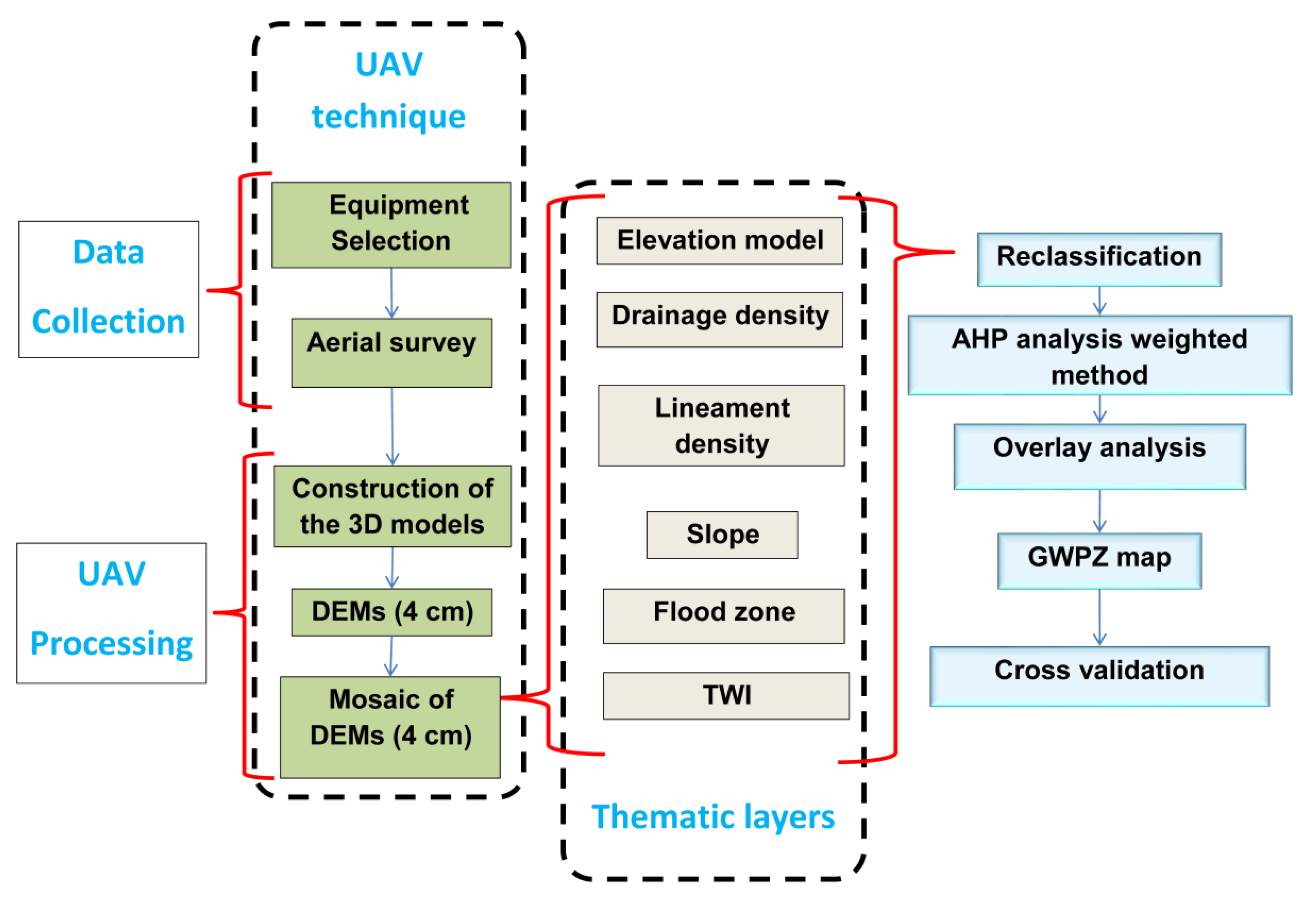
Figure 2. Flow chart of the method used.
Preprints 146898 g002
Figure 3. DJI Mavic 2 Pro and its components (source: Dronezon.com).
Preprints 146898 g003
Figure 4. Maps of the criteria used in the model: (a) Elevation model (b) Drainage density (c) Lineament density (d) Slopes (e) Flood zones (f) Topographic Wetness Index.
Preprints 146898 g004
Figure 5. GWPI map.
Figure 5. GWPI map.
Preprints 146898 g005
Figure 6. Circular diagram of the geometric distribution of groundwater potential. .
Preprints 146898 g006
Figure 7. GWPZ map of study area.
Preprints 146898 g007
Figure 8. ROC-AUC curves.
Preprints 146898 g008
Figure 9. Hypersphere of correlations.
Preprints 146898 g009
Table 1. Saaty’s scale [49].
Intensity of Importance Definition
1 Equal Importance
2 Equal to moderate importance
3 Moderate importance
4 Moderate to strong importance
5 Strong importance
6 Strong to very strong importance
7 Very strong importance
8 Very to extremely strong importance
9 Extreme importance
Table 2. Weight and rank assignment.
Factors Classes potentiality Criterion weight Rank Normalized weight
EM Preprints 146898 i001 Very good
Good
Medium
Poor
Very poor
0.51
0.24
0.13
0.07
0.05
5.00
4.00
2.00
1.00
1.00
0.36
DD Preprints 146898 i002 Very good
Good
Medium
Poor
Very poor
0.44
0.26
0.17
0.09
0.04
5.00
4.00
1.00
1.00
1.00
0.25
LD Preprints 146898 i003 Very poor
Poor
Moderate
Good
Very good
0.41
0,26
0,19
0,09
0,05
5.00
3.00
2.00
1.00
1.00
0.1630295
SL Preprints 146898 i004 Very good Good
Moderate
Poor
Very poor
0.40
0.22
0.19
0.17
0.02
5.00
4.00
3.00
2.00
1.00
0.10438802
FZ Preprints 146898 i005 Very good
Good
Moderate
Poor
Very poor
0.34
0.23
0.16
0.15
0.12
5.00
4.00
3.00
2.00
1.00
0.06671751
TWI Preprints 146898 i006 Very poor
Poor
Moderate
Good
Very good
0.5
0.3
0.12
0.05
0.03
5.00
4.00
3.00
2.00
1.00
0.0493883
Note: EM: elevation model, DD: drainage density, LD: lineament density, SL: slope, FZ: flood zone, TWI: topographic wetness index.
Table 3. Pairwise comparison matrix of groundwater influencing indicators using AHP.
EM DD LD SL FZ TWI
EM 1 2 3 4 5 4
DD 0.5 1 2 3 4 5
LD 0.333 0.5 1 2 3 4
SL 0.25 0.333 0.5 1 2 3
FZ 0.2 0.25 0.333 0.5 1 2
TWI 0.25 0.2 0.25 0.333 0.5 1
Table 4. Normalized pairwise comparison matrix.
EM DD LD SL FZ TWI Criteria weight
EM 0.39473684 0.46692607 0.42352941 0.36923077 0.32258065 0.21052632
0.028
DD 0.19736842 0.23346304 0.28235294 0.27692308 0.25806452 0.26315789
0.014
LD 0.13157895 0.11673152 0.14117647 0.18461538 0.19354839 0.21052632
0.021
SL 0.09868421 0.07782101 0.07058824 0.09230769 0.12903226 0.15789474
0.030
FZ 0.07894737 0.05836576 0.04705882 0.04615385 0.06451613 0.10526316
0.026
TWI 0.09868421 0.04669261 0.03529412 0.03076923 0.03225806 0.05263158
0.016
Table 5. Random coherence index [49].
n 2 3 4 5 6 7 8 9 10 11 12 13 14
RI 0 0.52 0.9 1.12 1.24 1.32 1.41 1.45 1.49 1.51 1.53 1.56 1.57
Table 6. Geometric proportion of groundwater potentials.
Level Area (km²) Proportions (%)
Very low 2.671 53.42
Low 0.91 18.2
Moderate 1.187 23.74
High 0.232 4.64
Total 5.00 100
Table 7. Agreement between GWPI and borehole yield data [3].
Number
of borehole

Laitude

Longitude

flow rate
(l/s)

Actual
yield rank
Expected yield
predicted from GWPI
Agreement between actual and predicted
1 807.812447 502.623977 14.2 very good High Agree
2 807.508868 503.190658 13.1 very good moderate Disagree
3 807.77197 503.352567 10.3 good moderate Agree
4 807.498749 503.949606 2.6 very low very low Agree
5 807.276124 503.635908 2.4 very low very low Agree
6 807.134454 503.231136 7.6 medium very low Disagree
7 806.780278 503.140062 2.9 very low very low Agree
8 806.679085 504.18235 9.5 medium very low Disagree
9 806.567773 503.909129 10 medium moderate Agree
10 806.335029 503.565073 8.7 medium very low Disagree
11 806.365386 504.172231 2.8 very low very low Agree
12 805.980853 504.860344 4.9 low very low Agree
13 806.031449 504.47581 4.6 low very low Agree
14 805.677274 504.010322 11.8 good moderate Agree
15 805.596319 504.496049 8.6 medium moderate Agree
16 805.464768 504.991895 10.8 medium moderate Agree
17 805.070116 504.587122 13.4 good high Disagree
18 804.756417 504.121634 14.2 very good high Agree
19 804.341526 504.263305 14.8 very good high Agree
20 804.685582 504.61748 12.3 good moderate Agree
21 803.84568 504.526407 8.7 medium moderate Agree
22 803.886157 504.991895 3.7 low very low Agree
23 808.004422 503.467351 15 very good high Agree
24 806.879098 504.069268 12.7 good moderate Agree
25 805.797391 504.208843 13.2 good moderate Agree
25 806.870375 503.572032 2.6 very low very low Agree
27 806.093988 504.025651 2.7 very low very low Agree
28 805.317602 504.060545 12.5 medium moderate Agree
Table 8. Correlations between variables.
Flow rate longitude latitude GWPI
Flow rate 1.0000 -0.2047 -0.2047 0.7249
Longitude -0.2047 1.0000 -0.7682 -0.0119
Latitude -0.0053 -0.7682 1.0000 -0.1458
GWPI 0.7249 -0.0119 -0.1458 1.0000
Table 9. Correlations between variables and factors.
Principal component scores (PCs) or factors Flow rate Longitude Latitude GWPI Importance of the factor
PC1 1.8050 -0.4126 0.5729 0.6076 0.3638 45.1248%
PC2 1.7288 0.6535 0.2712 -0.2150 0.6732 43.2198%
PC3 0.2684 -0.5705 -0.4200 -0.3562 0.6093 6.7092%
PC4 0.1978 -0.2779 0.6495 -0.6765 -0.2080 4.9462%
Disclaimer/Publisher’s Note: The statements, opinions and data contained in all publications are solely those of the individual author(s) and contributor(s) and not of MDPI and/or the editor(s). MDPI and/or the editor(s) disclaim responsibility for any injury to people or property resulting from any ideas, methods, instructions or products referred to in the content.
Copyright: This open access article is published under a Creative Commons CC BY 4.0 license, which permit the free download, distribution, and reuse, provided that the author and preprint are cited in any reuse.
Prerpints.org logo

Preprints.org is a free preprint server supported by MDPI in Basel, Switzerland.

Subscribe

Disclaimer

Terms of Use

Privacy Policy

Privacy Settings

© 2025 MDPI (Basel, Switzerland) unless otherwise stated