

Submitted:
15 January 2025
Posted:
16 January 2025
You are already at the latest version
Abstract
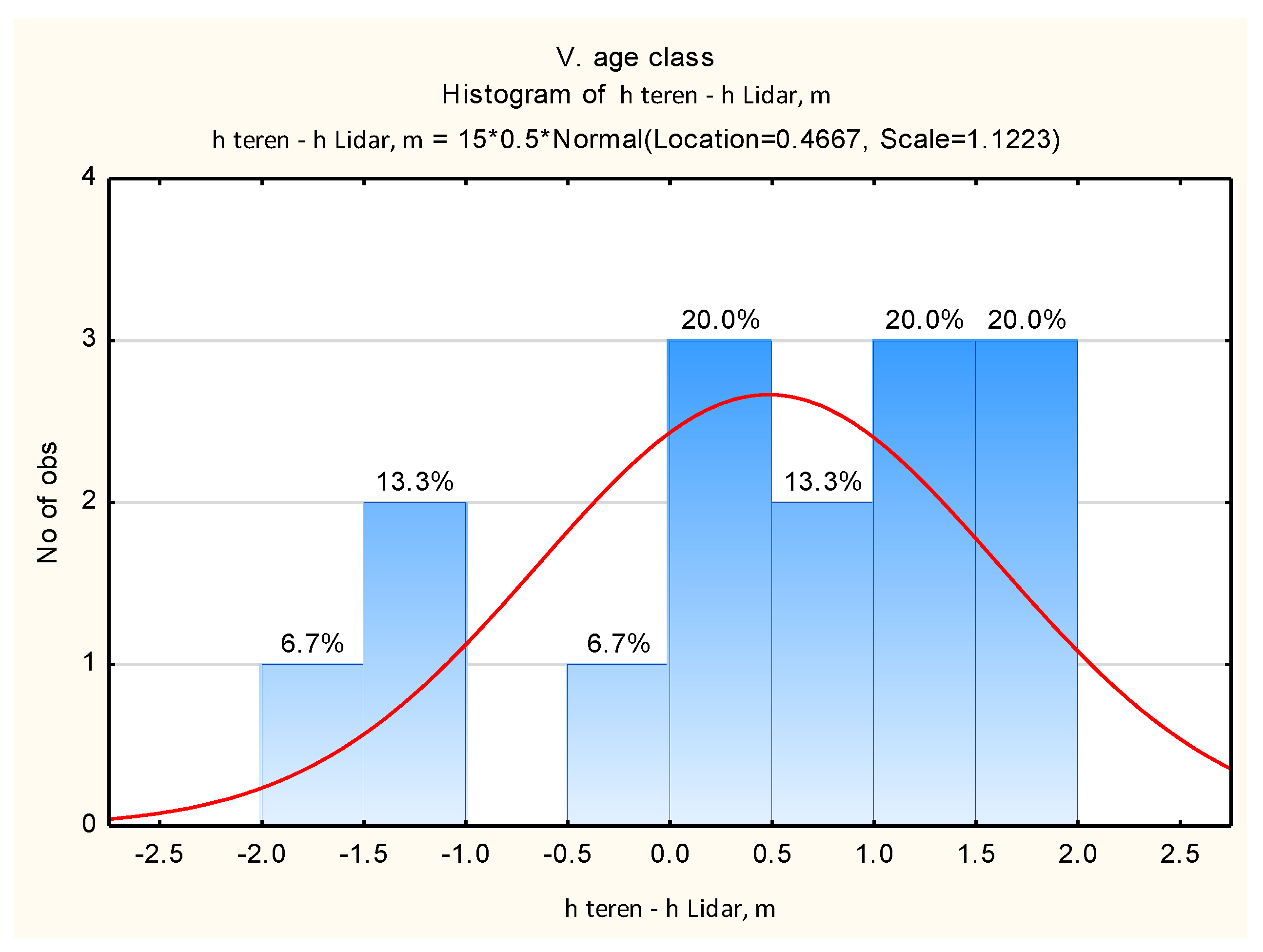
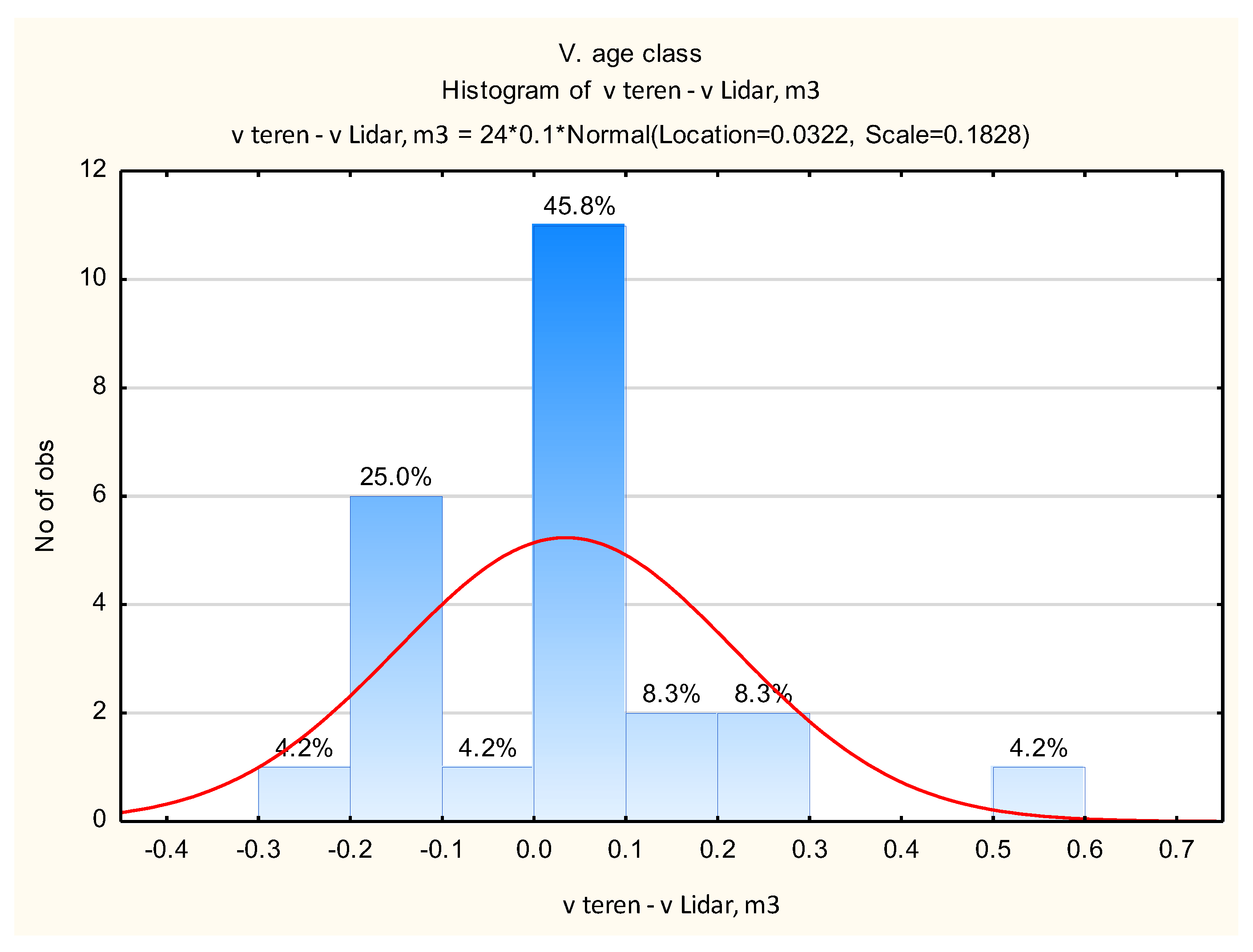
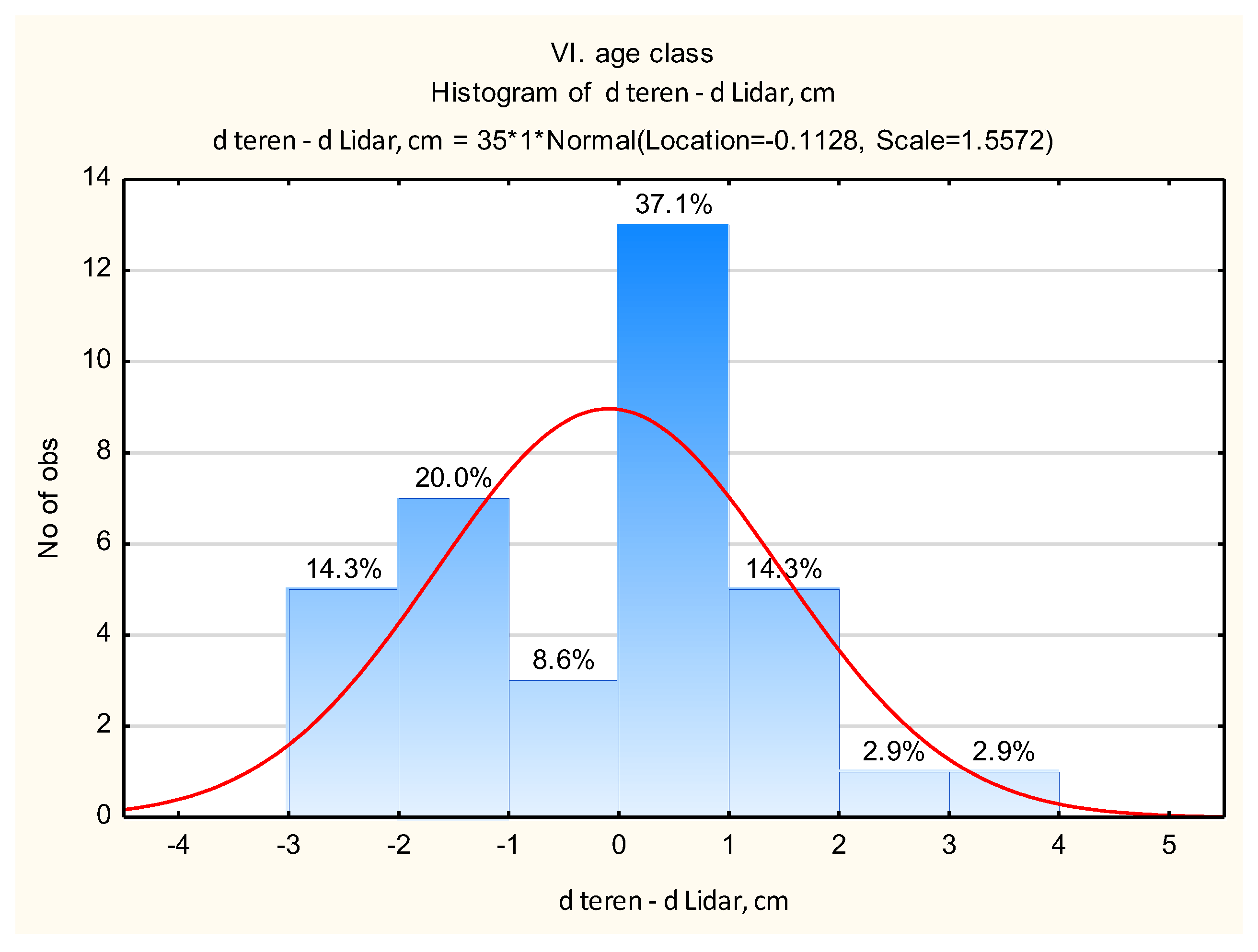
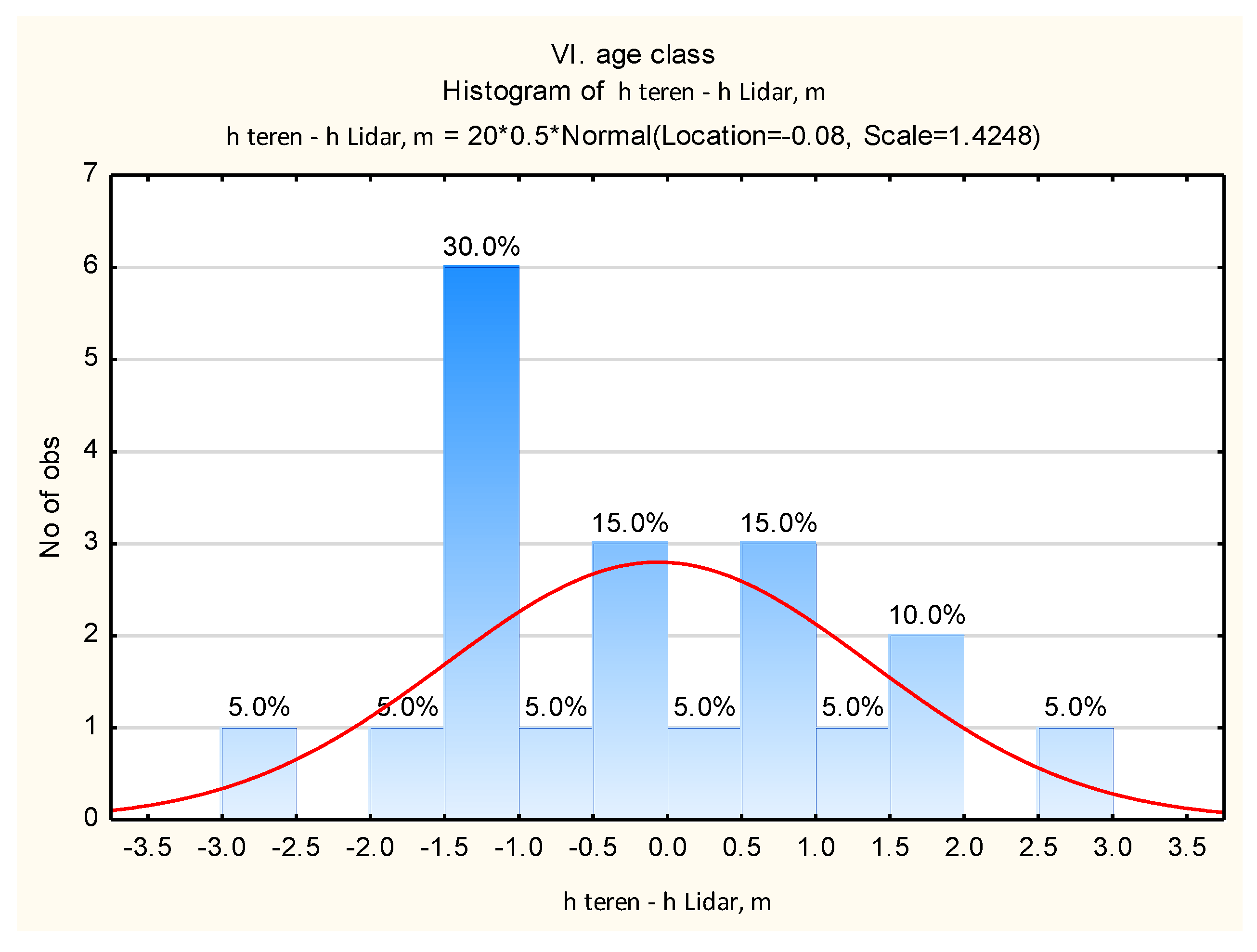
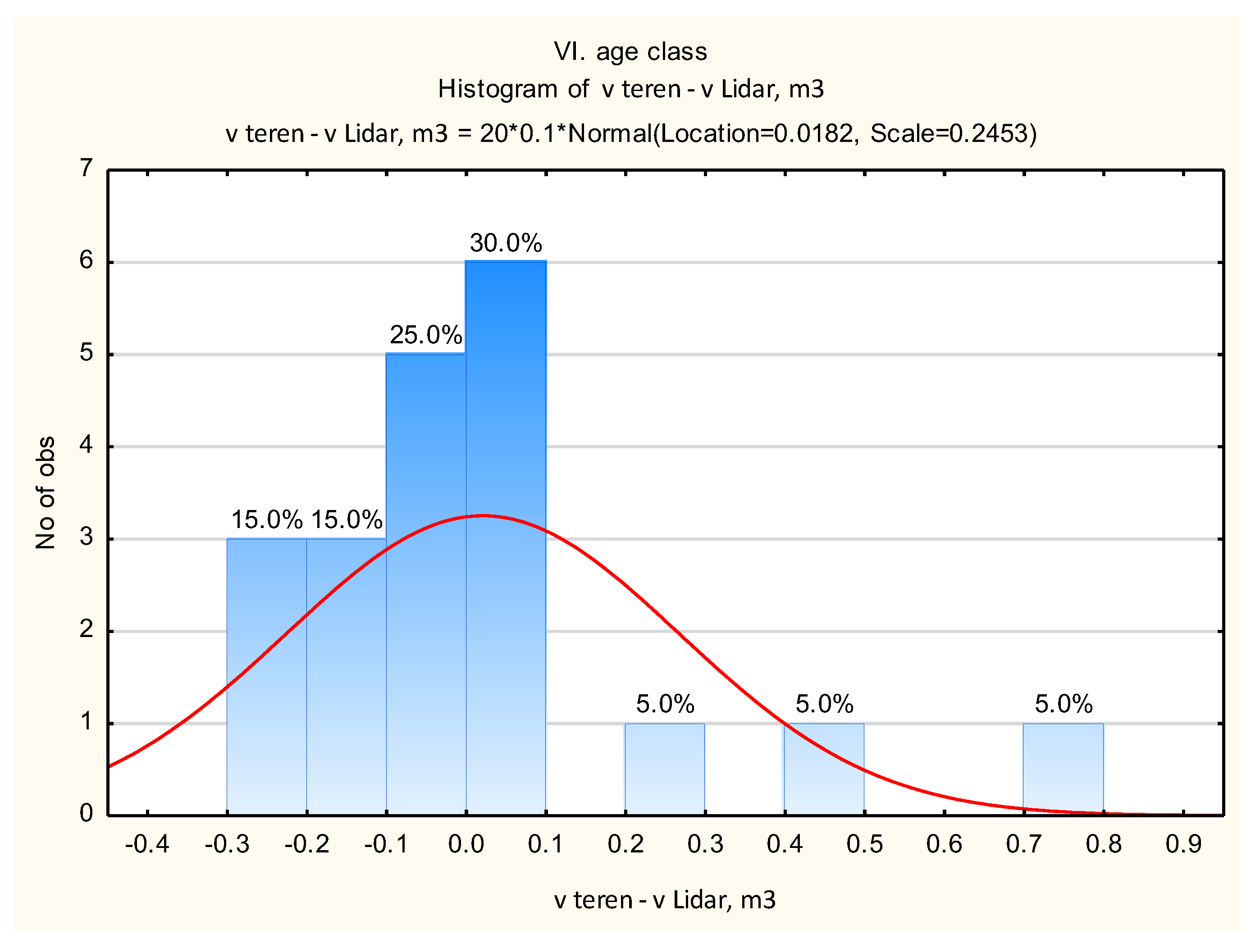
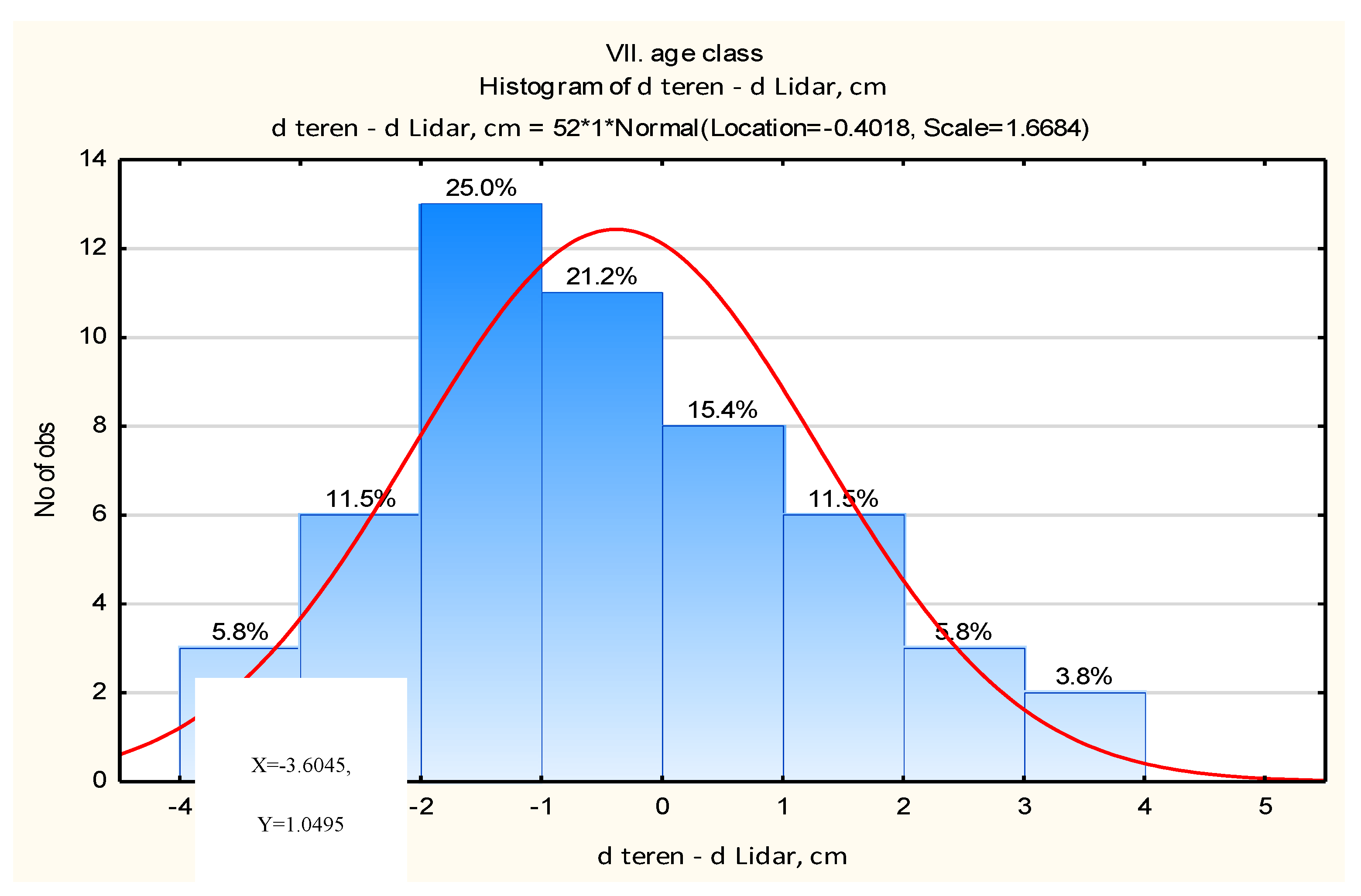
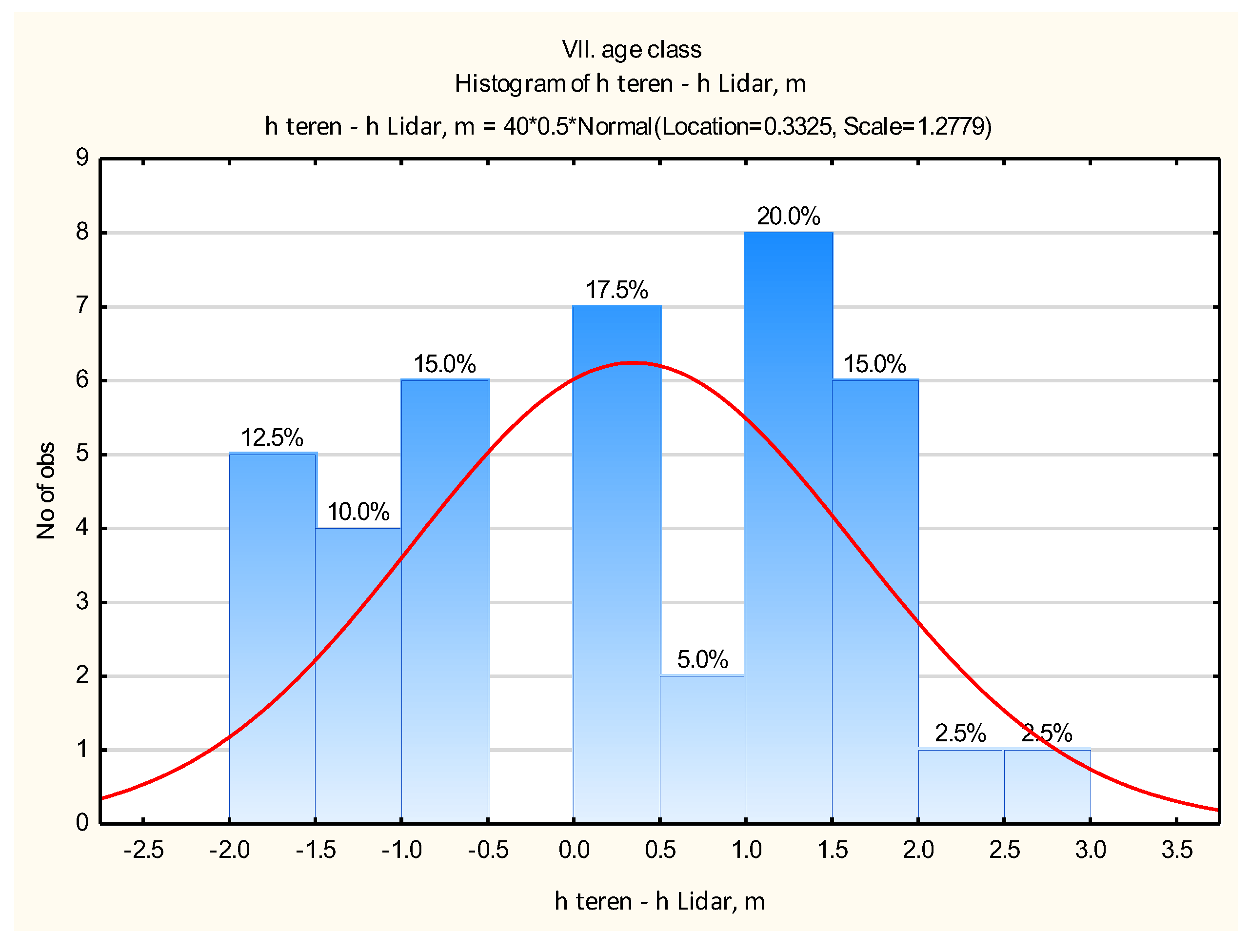
Data on forests (height, diameter at breast height, volume, etc.) are increasingly being collected using remote sensing methods, which improve forest inventories. The latest popular method of data collection is through unmanned aerial vehicles (UAVs) equipped with LiDAR sensors, which allow for a more detailed assessment of structural parameters in space and time, facilitating the practical application of more complex forest management systems. Therefore, the main objective of this study was to measure the structural elements of the stand (volume, basal area, tree count, height, diameter at breast height, crown width and area, etc.) from LiDAR images and determine the accuracy of the results obtained. The research was conducted in the area of the most valuable forests in Croatia – the lowland oak forests, covering an area of 5500 ha. The results of the study showed that there is no statistically significant difference between the diameters and heights measured in the field and those from LiDAR images, and consequently, no difference in the calculated volume. The study also concluded that the use of unmanned aerial vehicles with various sensors can significantly reduce fieldwork while achieving the same accuracy in the results, thus leading to substantial savings in both time and money.
Keywords:
1. Introduction
2. Materials and Methods
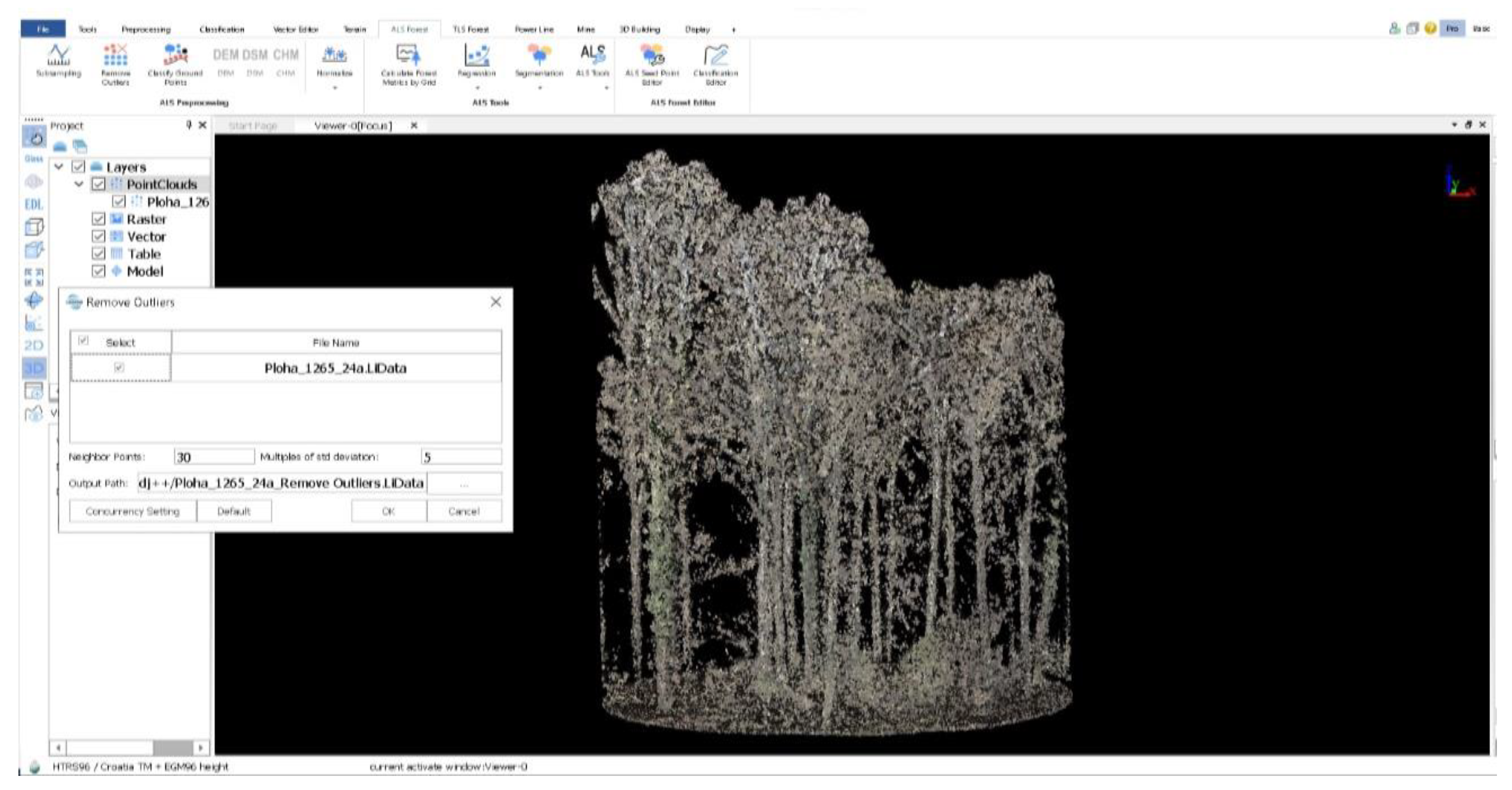
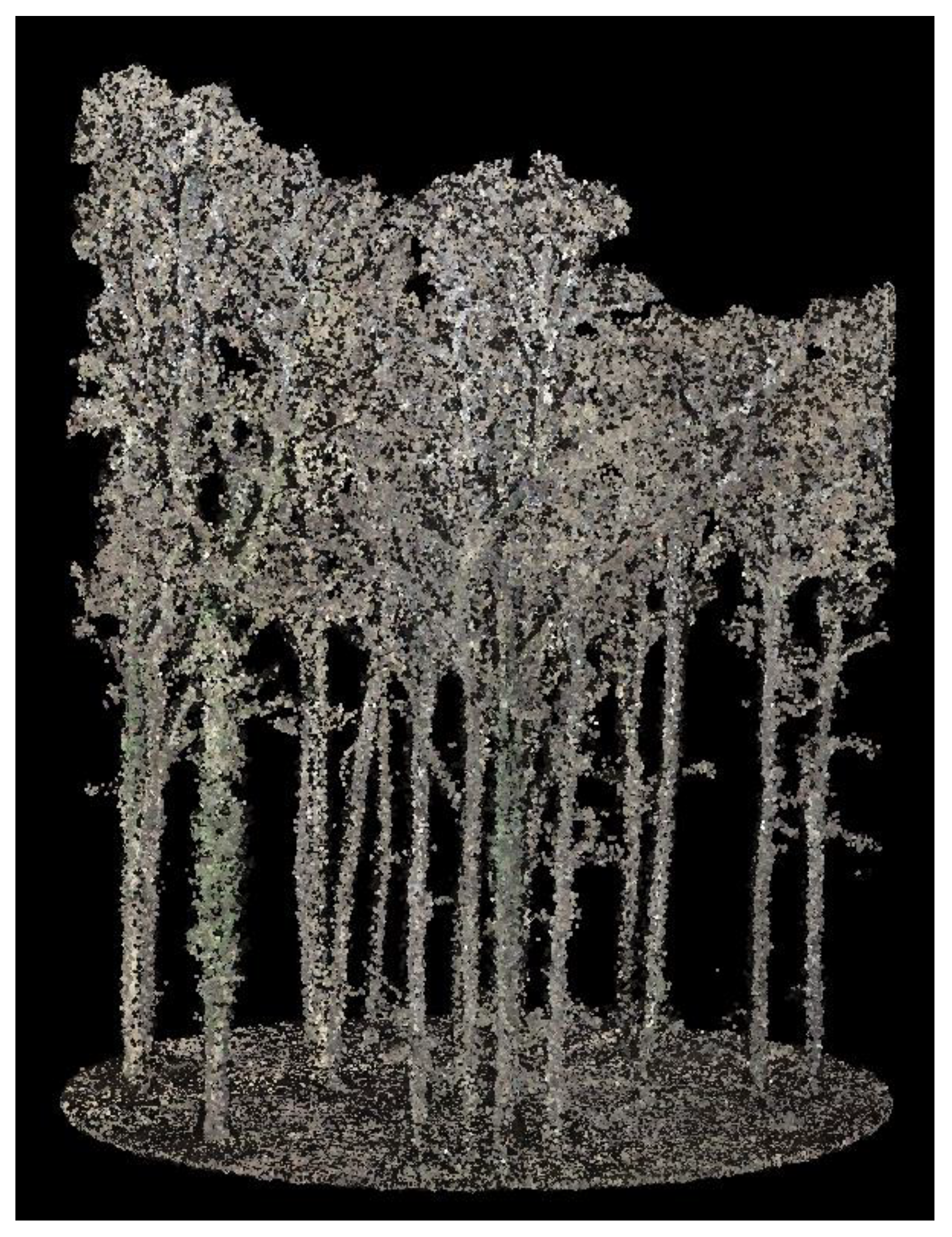
- "Cleaning" of the point cloud, i.e., mitigation of "noise"
- Classification of points representing the ground (separation of ground points from vegetation)
- Normalization of the point cloud (conversion of elevation values to heights above ground level)
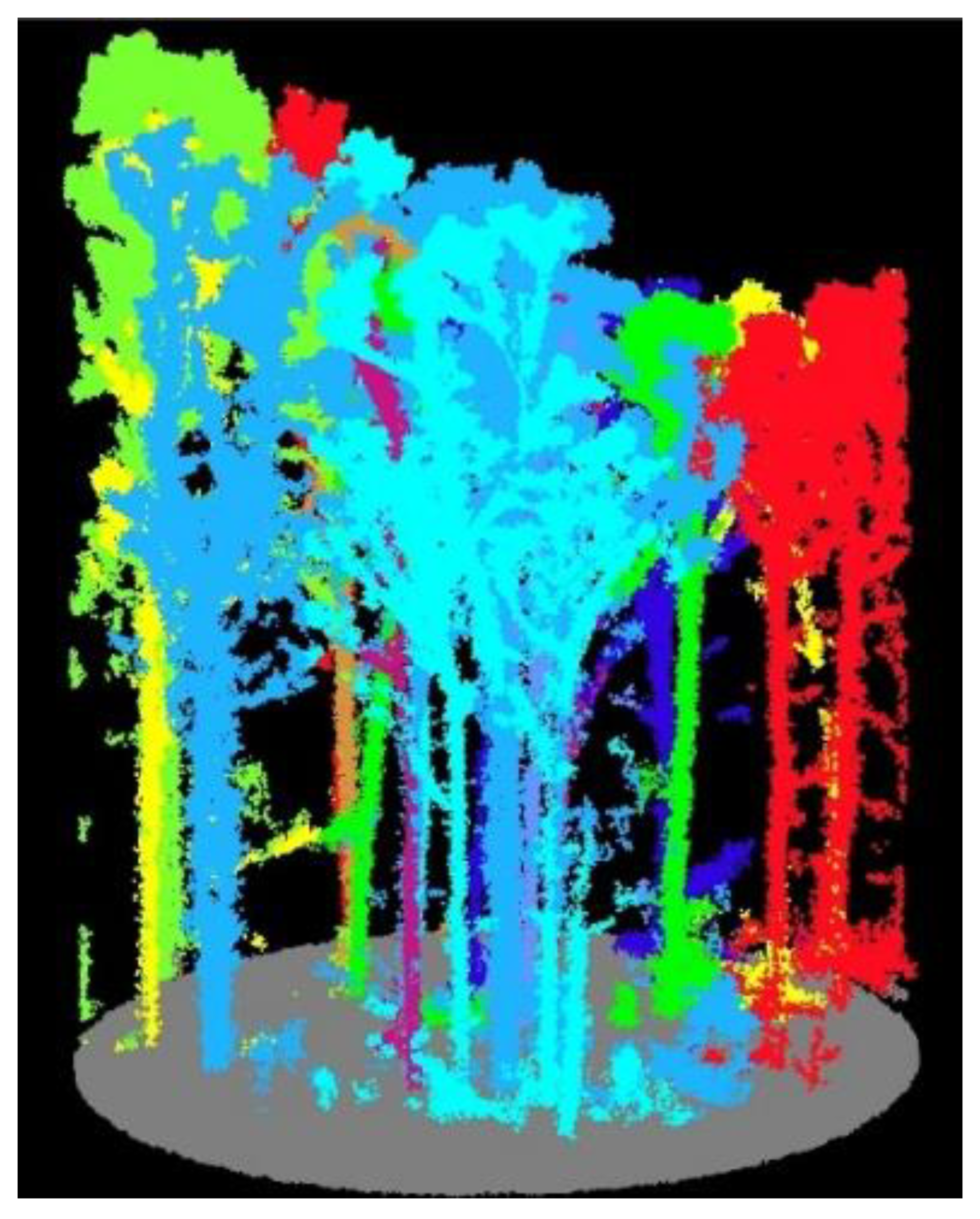
- Automatic segmentation of vegetation (individual trees, shrubs, and other vegetation types)
- Manual correction of segmented trees (if necessary)
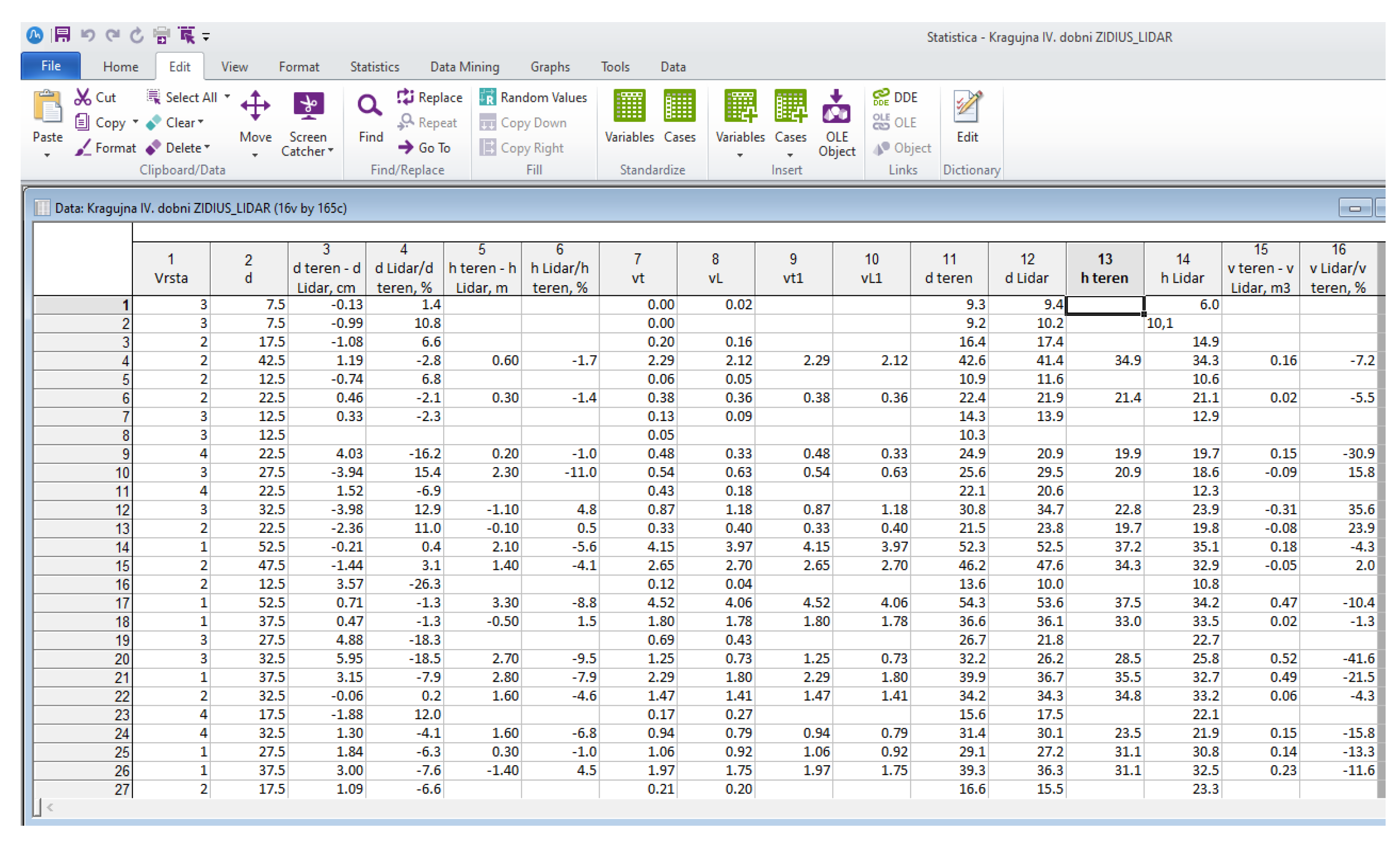
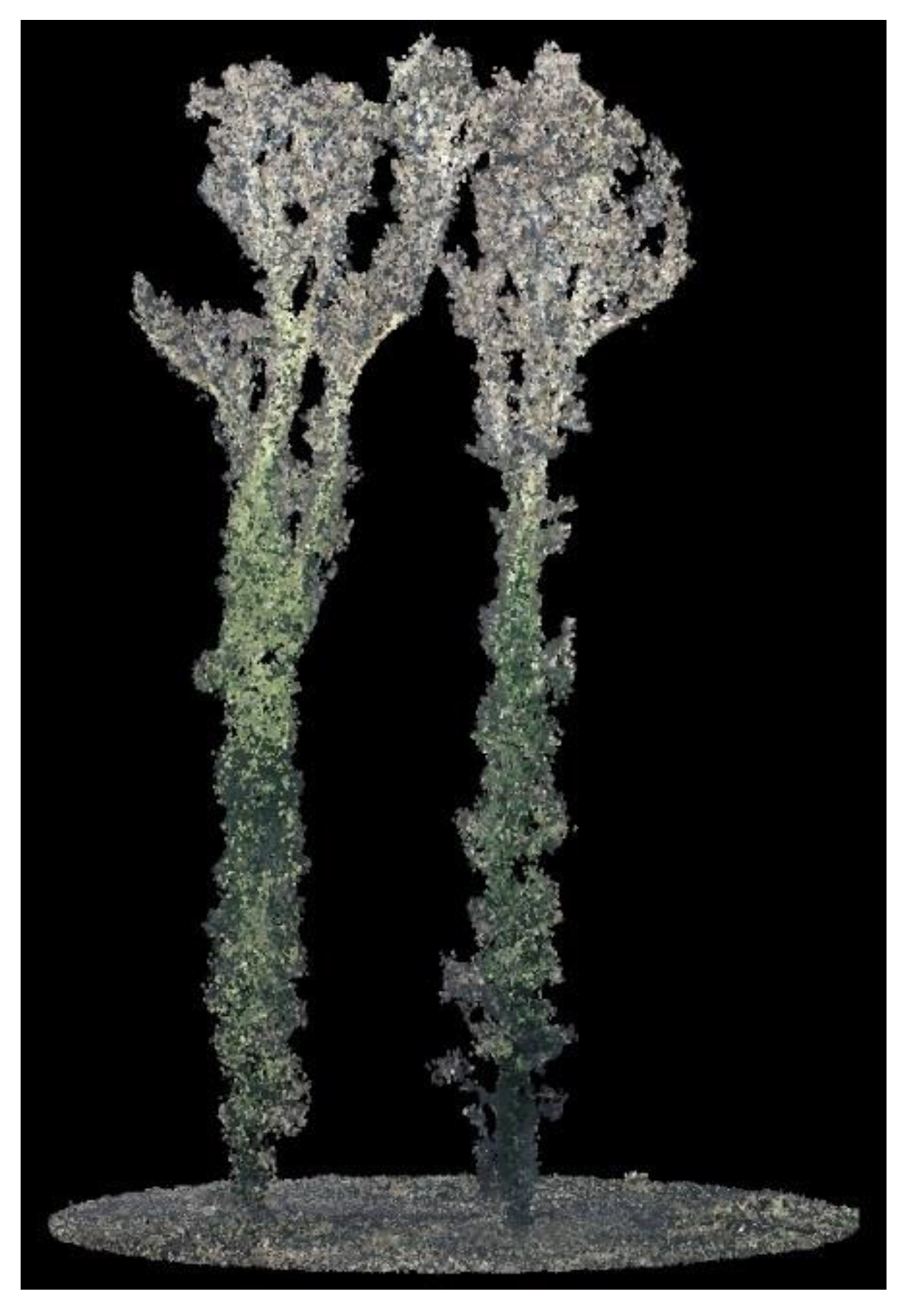
- Measurement of segmented trees (tree coordinates, diameter at breast height, height, crown width, etc.), i.e., determination of parameters as in operational forest management.
3. Results
4. Discussion
5. Conclusions
Author Contributions
Funding
Data Availability Statement
Acknowledgments
Conflicts of Interest
References
- Næsset, E. Area-based inventory in Norway – from innovation to an operational reality. In For Appl Airborne Laser Scanning Concepts Case Stud; Maltamo, M., Næsset, E., Vauhkonen, J., Eds.; Springer: Netherlands, Dordrecht, 2014; pp. 215–240. [Google Scholar]
- White, J. C.; Coops, N. C.; Wulder, M. A.; Vastaranta, M.; Hilker, T.; Tompalski, P. Remote sensing technologies for enhancing forest inventories: A review. Canadian Journal of Remote Sensing 2016, 42, 619–641. [Google Scholar] [CrossRef]
- Magnussen, S.; Nord-Larsen, T.; Riis-Nielsen, T. Lidar supported estimators of wood volume and above ground biomass from the Danish national forest inventory (2012–2016). Remote Sens. Environ. 2018, 211, 146–153. [Google Scholar] [CrossRef]
- Coops, C.; Tompalski, P.; Goodbody, T. R.H.; Queinnec, M.; Luther, J. E.; Bolton, D. K.; White, J. C.; Wulder, M.A.; R. van Lier, O.; Hermosilla, T. Modelling lidar-derived estimates of forest attributes over space and time: A review of approaches and future trends Nicholas. Remote Sensing of Environment 2021, 260, 112477. [Google Scholar] [CrossRef]
- Pranjić, A.; Lukić, N. Izmjera šuma. Šumarski fakultet, Sveučilište u Zagrebu, 1997, 405 str., Zagreb.
- Arslan, A.E.; İnan, M.; Çelik, M.F.; Erten, E. Estimations of Forest Stand Parameters in Open Forest Stand Using Point Cloud Data from Terrestrial Laser Scanning, Unmanned Aerial Vehicle and Aerial LiDAR Data. European Journal of Forest Engineering 2022, 8, 46–54. [Google Scholar] [CrossRef]
- Bodaghi, M.; Kránitz, J.; Jung, A. UAV LIDAR IMAGING BASED FOREST MAPPING. In Proceedings of the Vol. 2, 8th International Conference on Cartography and GIS, Nessebar, Bulgaria, 20–25 June 2022; Bandrova, T., Konečný, M., Marinova, S., Eds.; 1314. ISBN 1314-0604. [Google Scholar]
- Janiec, P.; Hawryło, P.; Tymińska-Czabańska, L.; Miszczyszyn, J.; Socha, J. A low-cost alternative to LiDAR for site index models: applying repeated digital aerial photogrammetry data in the modelling of forest top height growth. Forestry: An International Journal of Forest Research 2024. [Google Scholar] [CrossRef]
- Pernar, R.; Šelendić, D. Prilog povećanju interpretabilnosti aerosnimaka i satelitskih snimaka za potrebe uređivanja šuma. Glasnik za šumske pokuse 2006, 5, 467–477. [Google Scholar]
- Valbuena, R.; Maltamo, M.; Packalen, P. Classification of multilayered forest development classes from low-density national airborne lidar datasets. Forestry: An International Journal of Forest Research 2016, 89, 392–401. [Google Scholar] [CrossRef]
- Pernar, R.; Ančić, M.; Seletković, A.; Kolić, J. Važnost daljinskih istraživanja pri procjeni šteta na šumskim sastojinama uzrokovanih velikim prirodnim nepogodama. Proceedings of Gospodarenje šumama u uvjetima klimatskih promjena i prirodnih nepogoda, Zagreb, Croatia, 20.04.2018.; Anić, Igor; Publisher: HAZU, Zagreb, Croatia, 2020; pp. 143–160. [Google Scholar] [CrossRef]
- Wulder, M.A.; Hermosilla, T.; White, J.C.; Coops, N.C. Biomass status and dynamics over Canada’s forests: disentangling disturbed area from associated aboveground biomass consequences. Environ. Res. Lett. 2020, 15, 094093. [Google Scholar] [CrossRef]
- Benko, M.; Balenović, I. PROŠLOST, SADAŠNJOST I BUDUĆNOST PRIMJENE METODA DALJINSKIH ISTRAŽIVANJA PRI INVENTURI ŠUMA U HRVATSKOJ. Šumarski list – Posebni broj 2011, 272–281. [Google Scholar]
- Gajski, D. Osnove laserskog skeniranja iz zraka. Ekscentar [Internet] 2007, 10, 16–22. [Google Scholar]
- Nelson, R. How did we get here? An early history of forestry lidar. Can. J. Remote. Sens. 2013, 39 (Suppl. 1), S6–S17. [Google Scholar] [CrossRef]
- Mitchum, J. Evaluation of Airborne Lidar to Estimate Tree Height in a Dense Forest Canopy. 2018. [Google Scholar]
- Lefsky, M.A.; Cohen, W. B.; Acker, S. A.; Spies, T.A.; Parker, G.G.; Harding, D. Lidar remote sensing of biophysical properties and canopy structure of forest of Douglas-fir and western hemlock. Remote Sens. Environ. 1999, 70, 339–361. [Google Scholar] [CrossRef]
- Zimble, D.A.; Evans, D.L.; Carlson, G.C.; Parker, R.C.; Grado, S.C.; Gerard, P.D. Characterizing vertical forest structure using small-footprint airborne LiDAR. Remote Sens. Environ. 2003, 87, 171–182. [Google Scholar] [CrossRef]
- Hall, S.A.; Burke, I.C.; Box, D.O.; Kaufmann, M.R.; Stoker, J.M. Estimating stand structure using discrete-return lidar: an example from low density, fire prone ponderosa pine forests. For. Ecol. Manage. 2005, 208, 189–209. [Google Scholar] [CrossRef]
- Maltamo, M.; Packalen, P.; Yu, X.; Eerikainen, K.; Hyyppa, J.; Pitkanen, J. Identifying and quantifying structural characteristics of heterogeneous boreal forests using laser scanner data. For. Ecol. Manage. 2005, 216, 41–50. [Google Scholar] [CrossRef]
- Reutebuch, S.E.; Andersen, H.-E.; McGaughey, R.J. Light detection and ranging (LIDAR):an emerging tool for multiple resource inventory. J Forestry. 2005, 103, 286–292. [Google Scholar] [CrossRef]
- Kellner, J. R.; Asner, G. P. Convergent structural responses of tropical forests to diverse disturbance regimes. Ecol. Lett. 2009, 12, 887–897. [Google Scholar] [CrossRef] [PubMed]
- Jaskierniak, D.; Lane, P. N. J.; Robinson, A.; Lucieer, A. Extracting LiDAR indices to characterise multilayered forest structure using mixture distribution functions. Remote Sens. Environ. 2011, 115, 573–585. [Google Scholar] [CrossRef]
- Ussyshkin, V.; Theriault, L. Airborne lidar: advances in discrete return technology for 3D vegetation mapping. Remote Sensing 2011, 3, 416–434. [Google Scholar] [CrossRef]
- Valbuena, R.; Packalen, P.; Mehta¨talo, L.; Garcı ´a-Abril, A.; Maltamo, M. Characterizing forest structural types and shelterwood dynamics from Lorenz-based indicators predicted by airborne laser scanning. Can. J. For. Res. 2013, 43, 1063–1074. [Google Scholar] [CrossRef]
- Balestra, M.; Marselis, S.; Sankey, T.T.; et al. LiDAR Data Fusion to Improve Forest Attribute Estimates: A Review. Curr. For. Rep. 2024, 10, 281–297. [Google Scholar] [CrossRef]
- Rocha, K.D.; Silva, C.A.; Cosenza, D.N.; Mohan, M.; Klauberg, C.; Schlickmann, M.B.; Xia, J.; Leite, R.V.; Almeida, D.R.A.d.; Atkins, J.W.; et al. Crown-Level Structure and Fuel Load Characterization from Airborne and Terrestrial Laser Scanning in a Longleaf Pine (Pinus palustris Mill.) Forest Ecosystem. Remote Sens. 2023, 15, 1002. [Google Scholar] [CrossRef]
- Waser, L.; Day, R.; Chasmer, L.; Taylor, A. Influence of vegetation structure on Lidar-derived canopy height and fractional cover in forested riparian buffers during leaf-off and leaf-on conditions. PLoS One 2013, 8, e54776. [Google Scholar] [CrossRef]
- Balestra, M.; Tonelli, E.; Vitali, A.; Urbinati, C.; Frontoni, E.; Pierdicca, R. Geomatic Data Fusion for 3D Tree Modeling: The Case Study of Monumental Chestnut Trees. Remote Sens 2023. [Google Scholar] [CrossRef]
- Queinnec, M.; Coops, N. C.; White, J. C.; McCartney, G.; Sinclair, I. Developing a forest inventory approach using airborne single photon lidar data: from ground plot selection to forest attribute prediction. Forestry 2022, 95, 347–362. [Google Scholar] [CrossRef]
- Zhao Y, Im J, Zhen Z, Zhao Y. Towards accurate individual tree parameters estimation in dense forest: optimized coarse-to-fine algorithms for registering UAV and terrestrial LiDAR data. GIS-cience Remote Sens. 2023, 60, 2197281. [Google Scholar] [CrossRef]
- Luo, H.; Wang, C.; Wen, C.; Chen, Z.; Zai, D.; Yu, Y.; Li, J. Semantic Labeling of Mobile LiDAR Point Clouds via Active Learning aid Higher Order MRF. IEEE Transactions on Geoscience and Remote Sensing 2018, 56, 3631–3644. [Google Scholar] [CrossRef]
- Hauglin, M.; Rahlf, J.; Schumacher, J. Large scale mapping of forest attributes using heterogeneous sets of airborne laser scanning and National Forest Inventory data. For Ecosyst. 2021, 8, 1–15. [Google Scholar] [CrossRef]
- Hopkinson, C.; Chasmer, L.; Hall, R.J. The uncertainty in conifer plan tation growth prediction from multi-temporal lidar datasets. Remote Sens Environ. 2008, 112, 1168–80. [Google Scholar] [CrossRef]
- Socha, J.; Hawryło, P.; Sterenczak, K. Assessing the sensitivity of site index models developed using bi-temporal airborne laser scanning data to different top height estimates and grid cell sizes. Int J Appl Earth Observ Geoinform. 2020, 91, 102129. [Google Scholar] [CrossRef]
- Tyminska-Czabanska, L.; Socha, J.; Hawryło, P. Weather-sensitive height growth modelling of Norway spruce using repeated airborne laser scanning data. Agric For Meteorol. 2021, 308, 108568. [Google Scholar] [CrossRef]
- Tymińska-Czabanska, L.; Hawryło, P.; Socha, J. Assessment of the effect of stand density on the height growth of scots pine using repeated ALS data. Int J Appl Earth Observ Geoinform. 2022, 108, 102763. [Google Scholar] [CrossRef]
- Burger, J.A. Management effects on growth, production and sustainability of managed forest ecosystems: past trends and future directions. For. Ecol. Manage 2009, 258, 2335–2346. [Google Scholar] [CrossRef]
- Packalen, P.; Heinonen, T.; Pukkala, T.; Vauhkonen, J.; Maltamo, M. Dynamic treatment units in eucalyptus plantation. For. Sci. 2011, 57, 416–426. [Google Scholar] [CrossRef]
- Slavík, M.; Kuželka, K.; Modlinger, R.; Surový, P. Spatial Analysis of Dense LiDAR Point Clouds for Tree Species Group Classification Using Individual Tree Metrics. Forests 2023, 14, 1581. [Google Scholar] [CrossRef]
- Koc-San, D.; Selim, S.; Aslan, N.; San, B.T. Automatic citrus tree extraction from UAV images and digital surface models using circular Hough transform. Computers and Electronics in Agriculture 2018, 150, 150,289–301. [Google Scholar] [CrossRef]
- Demir, N. Using UAVs for detection of trees from digital surface models. Journal of Forestry Research 2018, 29, 813–821. [Google Scholar] [CrossRef]
- Liang, X.; Wang, Y.; Pyorala, J.; Lehtomaki, M.; Yu, X.; Kaartinen, H.; Kukko, A.; Honkavaara, E.; Issao ui, A.E.I.; Nevalainen, O. Forest in situ observations using unmanned aerial vehicle as an alternative of terrestrial measurements. Forest Ecosystems. 2019, 6, 20. [Google Scholar] [CrossRef]
- Guerra-Hernandez, J.; Diaz-Varela, R.A.; Avarez- Gonzalez, J.G.; Rodriguez-Gonzalez, P.M. Assessing a novel modelling approach with high resolution UAV imagery for monitoring health status in priority riparian forests. Forest Ecosystems 2021, 8, 61. [Google Scholar] [CrossRef]
- Goodbody, T.R.H.; Coops, N.C.; Marshall, P.L.; Tompalski, P.; Crawford, P. Unmanned aerial systems for precision forest inventory purposes: a review and case study. For. Chron. 2017, 93, 71–81. [Google Scholar] [CrossRef]
- Popescu, S. Estimating biomass of individual pine trees using air-borne LIDAR. Biomass and Bioenergy 2007, 31, 646–655. [Google Scholar] [CrossRef]
- Jazbec, A. 2008: Osnove statistike. Šumarski fakultet, Zagreb, 136 str.
- Windrim, L.; Bryson, M. Detection, segmentation, and model fitting of individual tree stems from airborne laser scanning of forests using deep learning. Remote Sens. 2020, 12, 1469. [Google Scholar] [CrossRef]
- Wang, Y.; Pyörälä, J.; Liang, X.; Lehtomäki, M.; Kukko, A.; Yu, X.; Kaartinen, H.; Hyyppä, J. In situ biomass estimation at tree and plot levels: What did data record and what did algorithms derive from terrestrial and aerial point clouds in boreal forest. Remote Sens Environ 2019, 232. [Google Scholar] [CrossRef]
- Chen, Y.; Yang, H.; Yang, Z.; Yang, Q.; Liu, W.; Huang, G.; Ren, Y.; Cheng, K.; Xiang, T.; Chen, M.; Lin, D.; Qi, Z.; Xu, J.; Zhang, Y.; Xu, G.; and Guo, Q. Enhancing high-resolution forest stand mean height mapping in China through an individual tree-based approach with close-range lidar data. Earth Syst. Sci. Data 2024, 16, 5267–5285. [Google Scholar] [CrossRef]
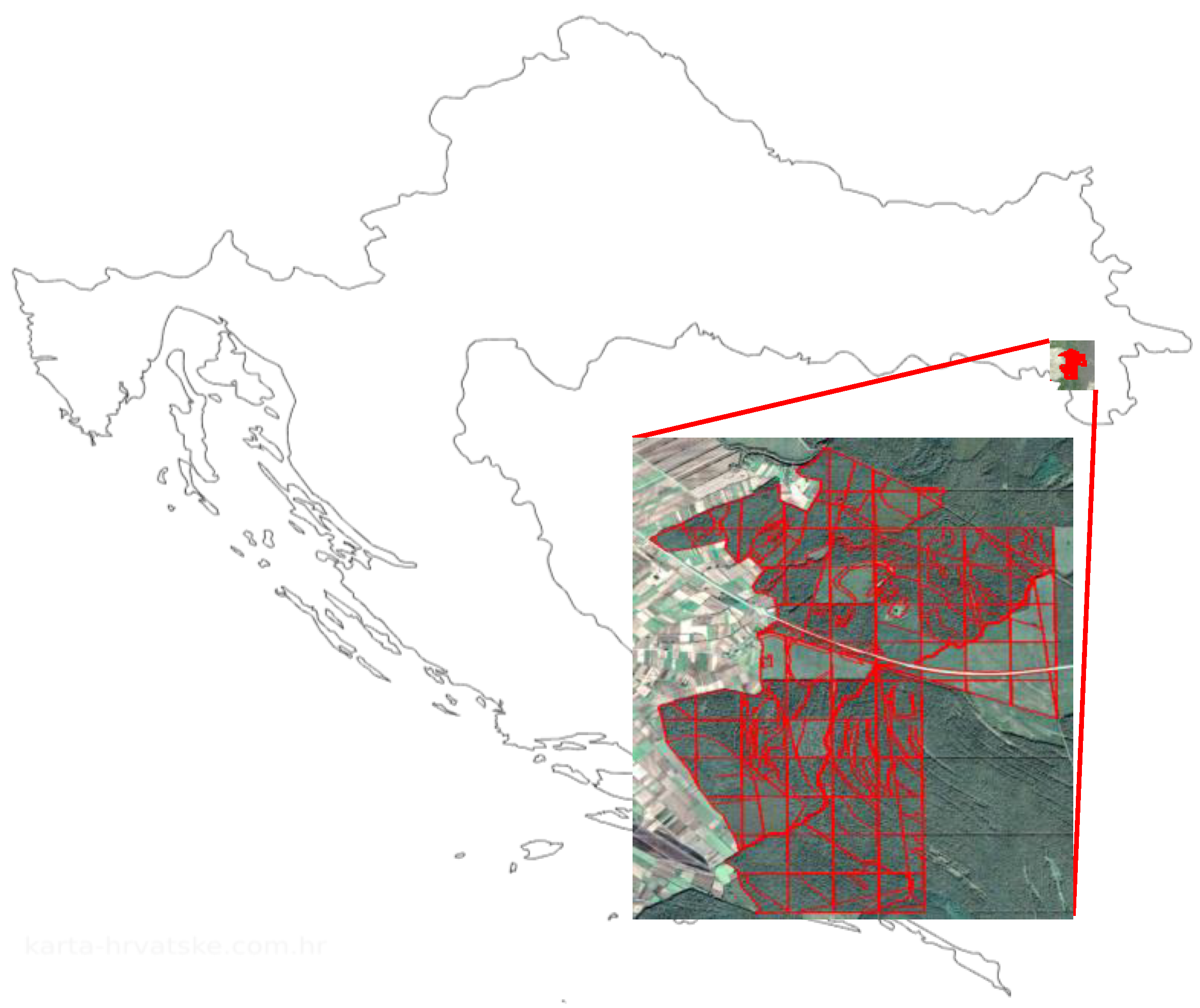
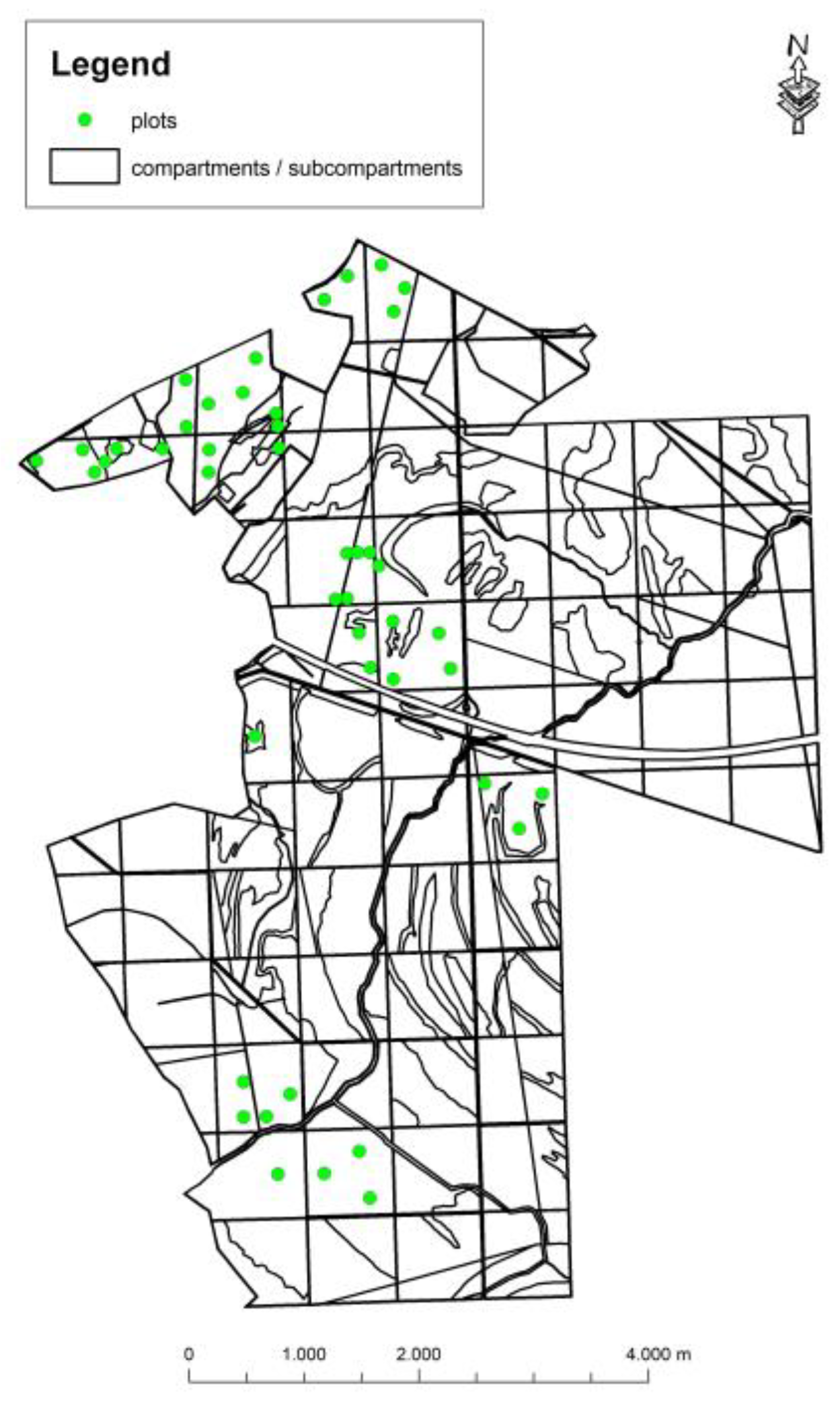
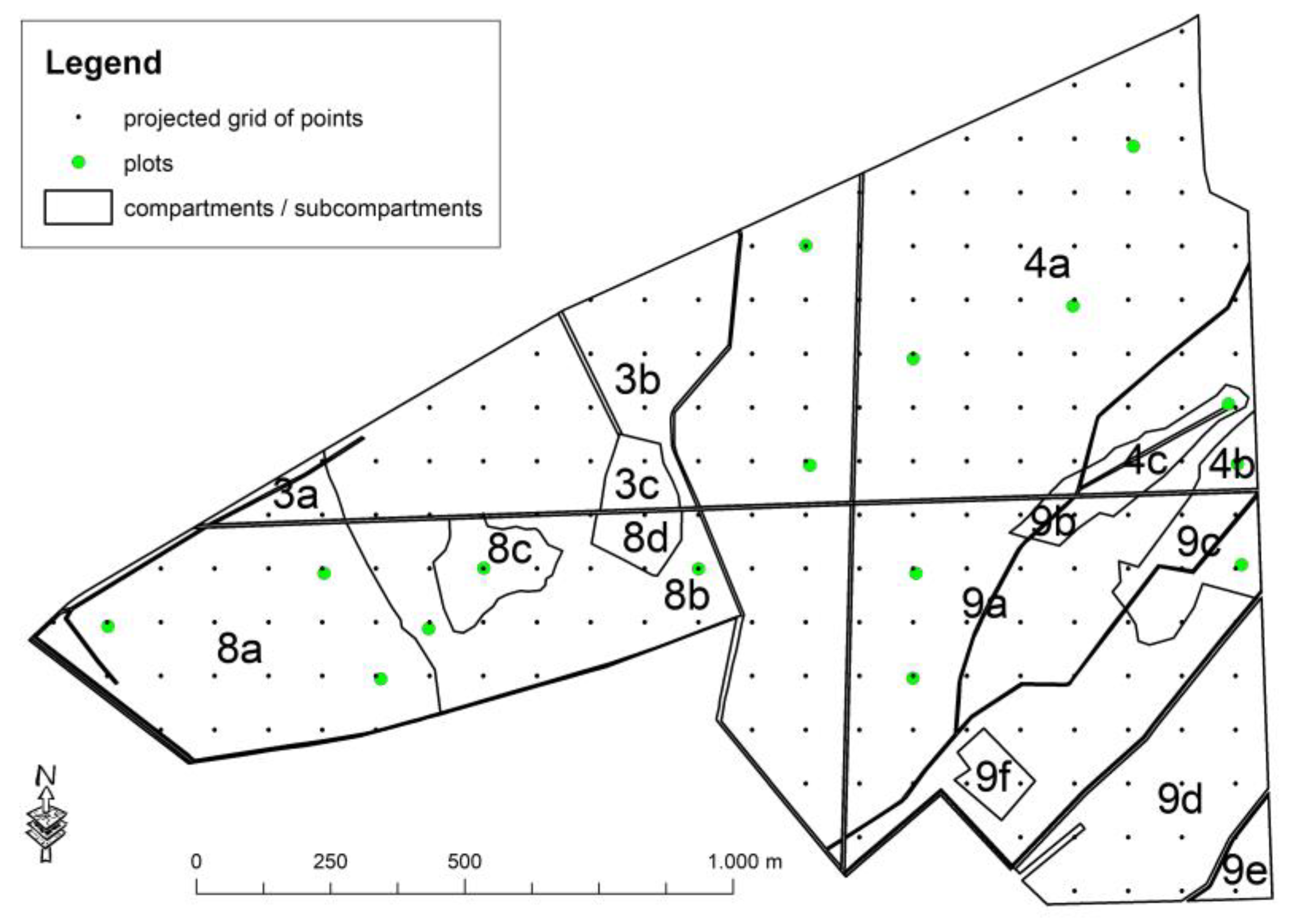
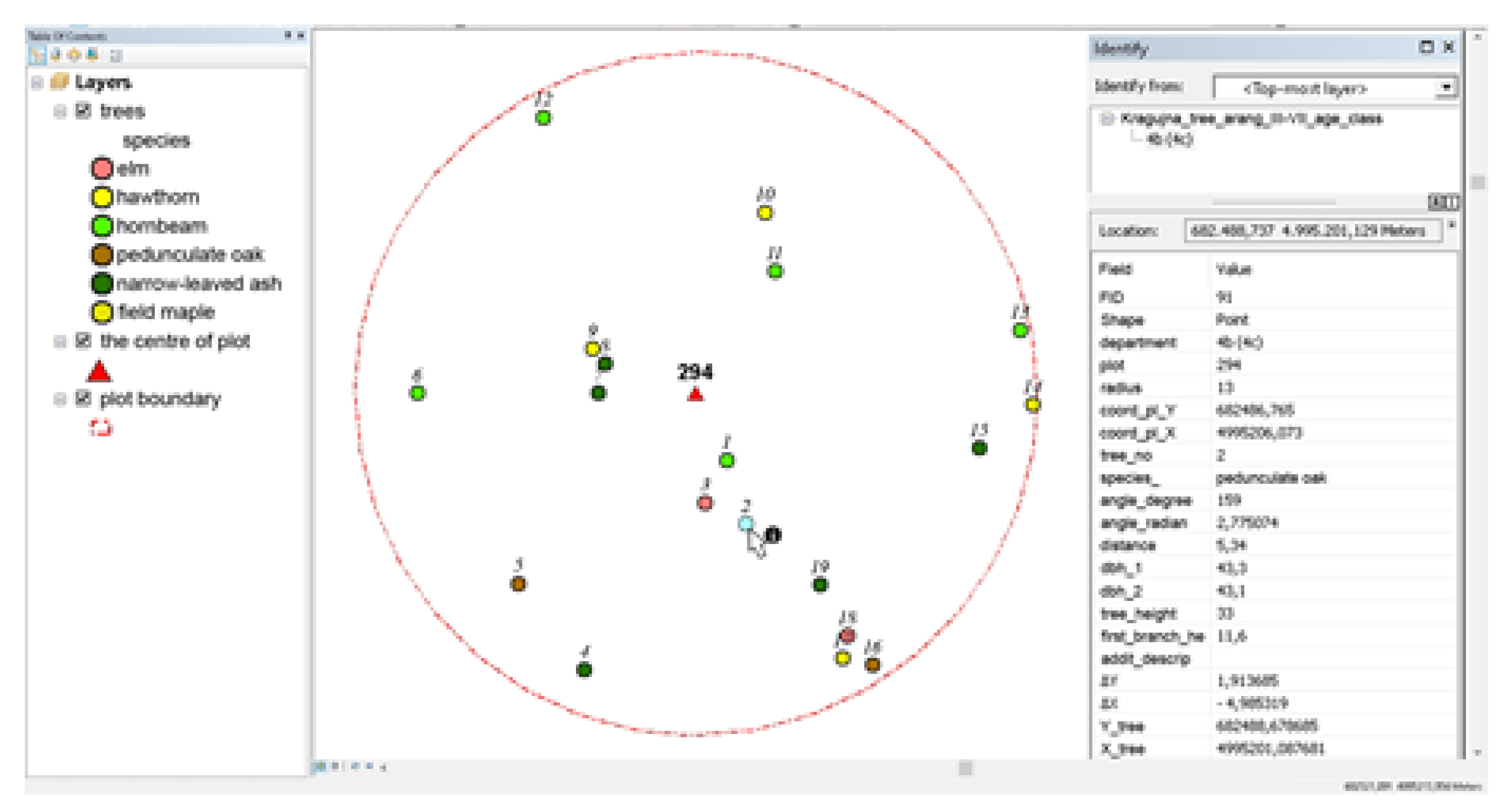
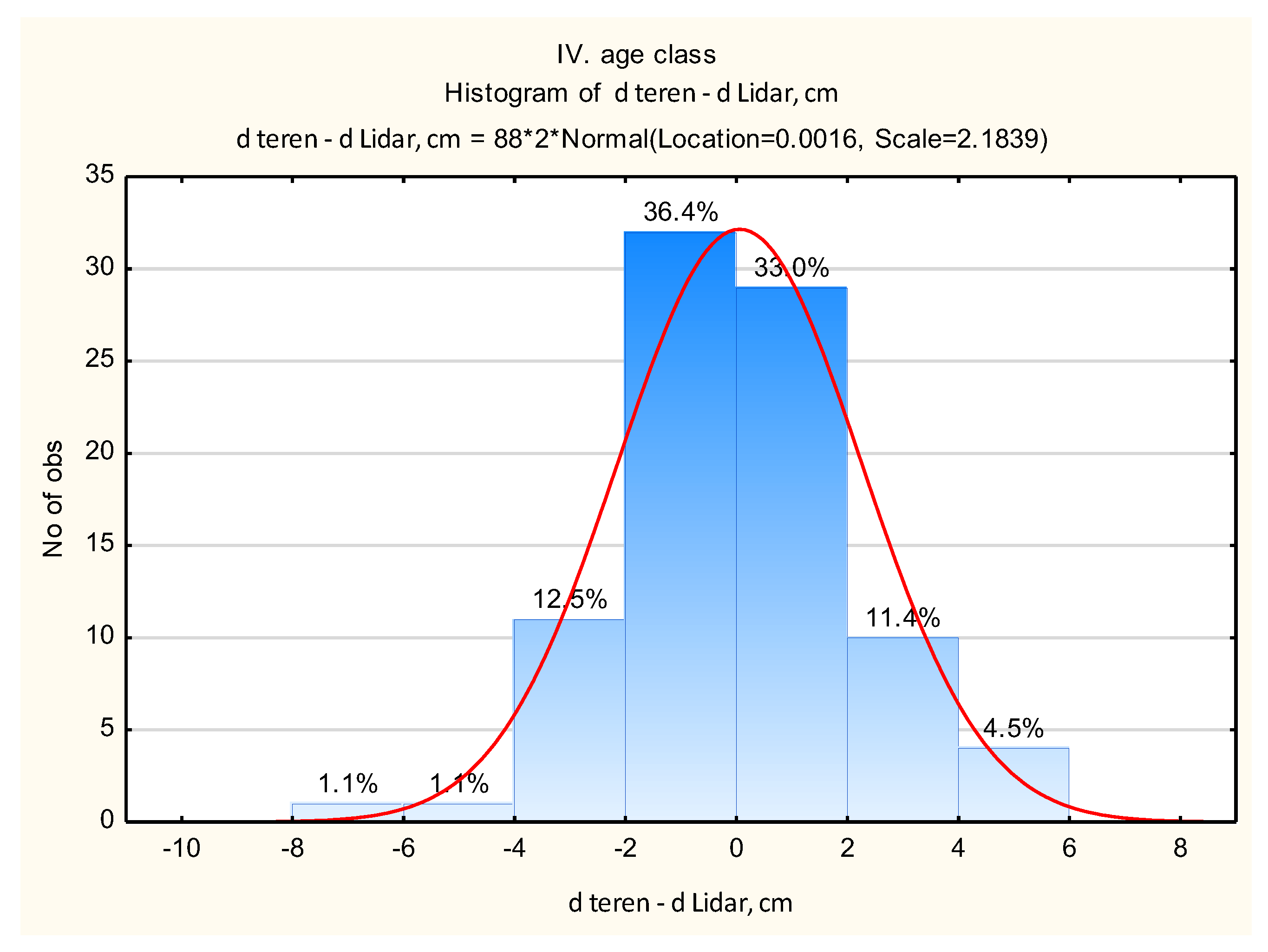
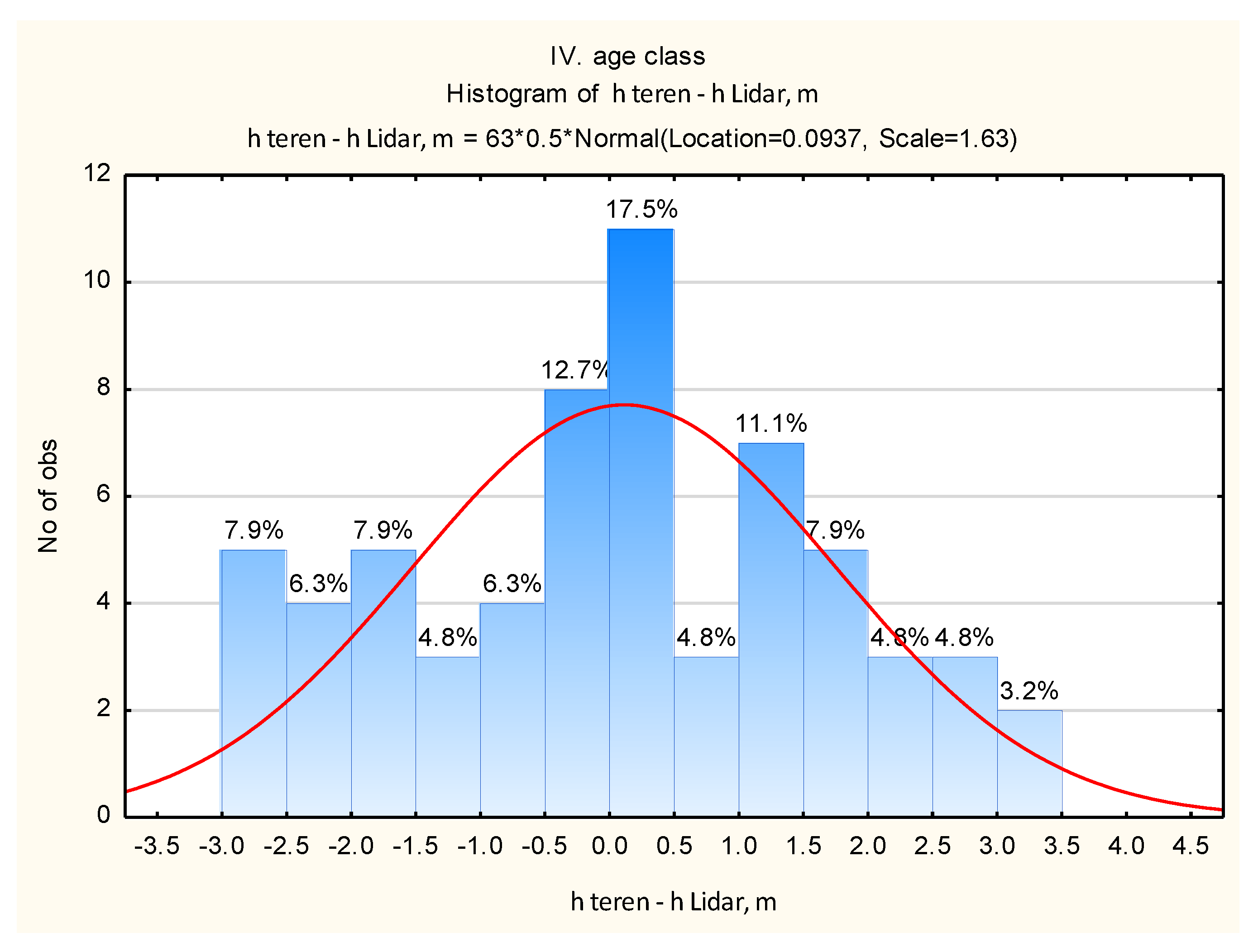
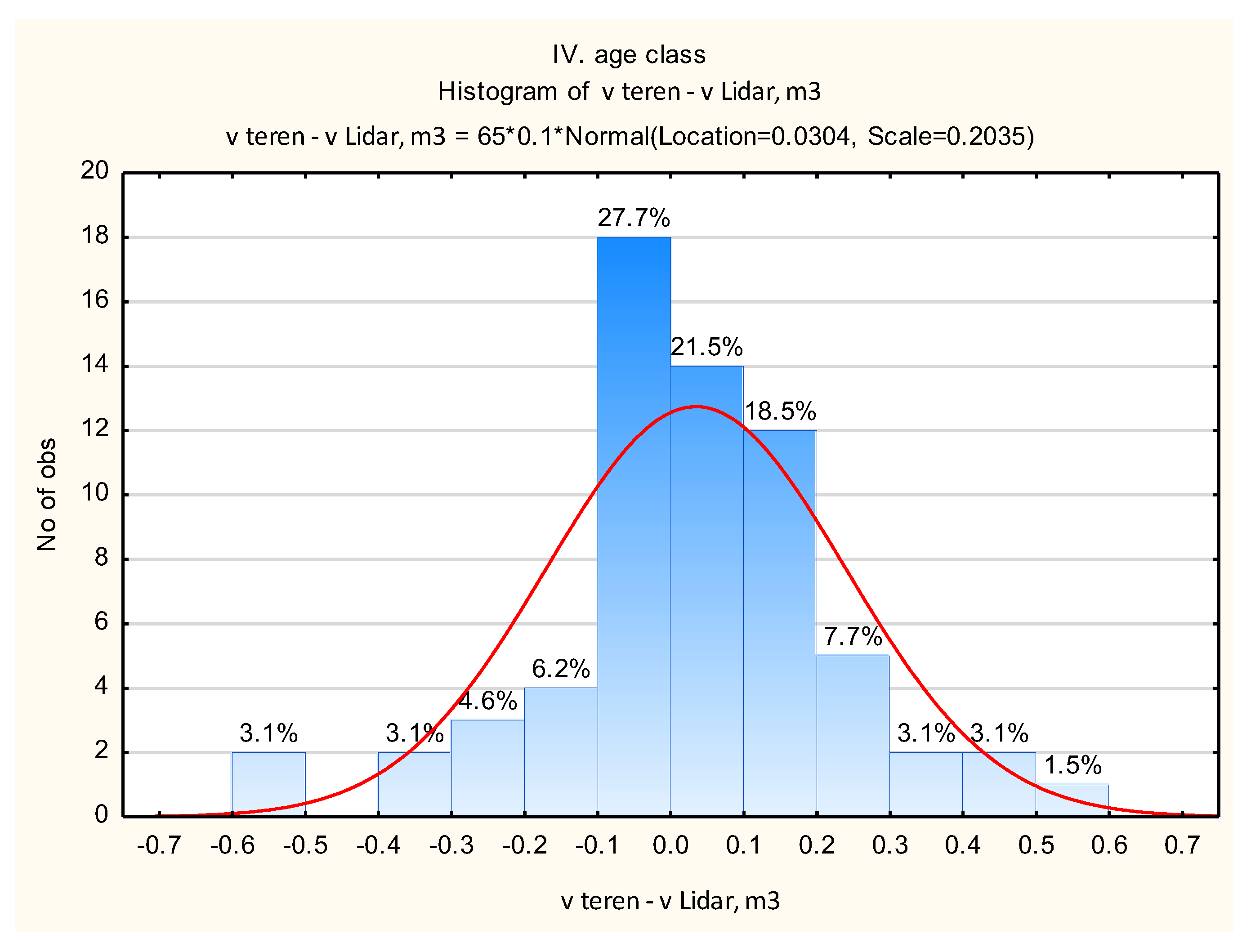
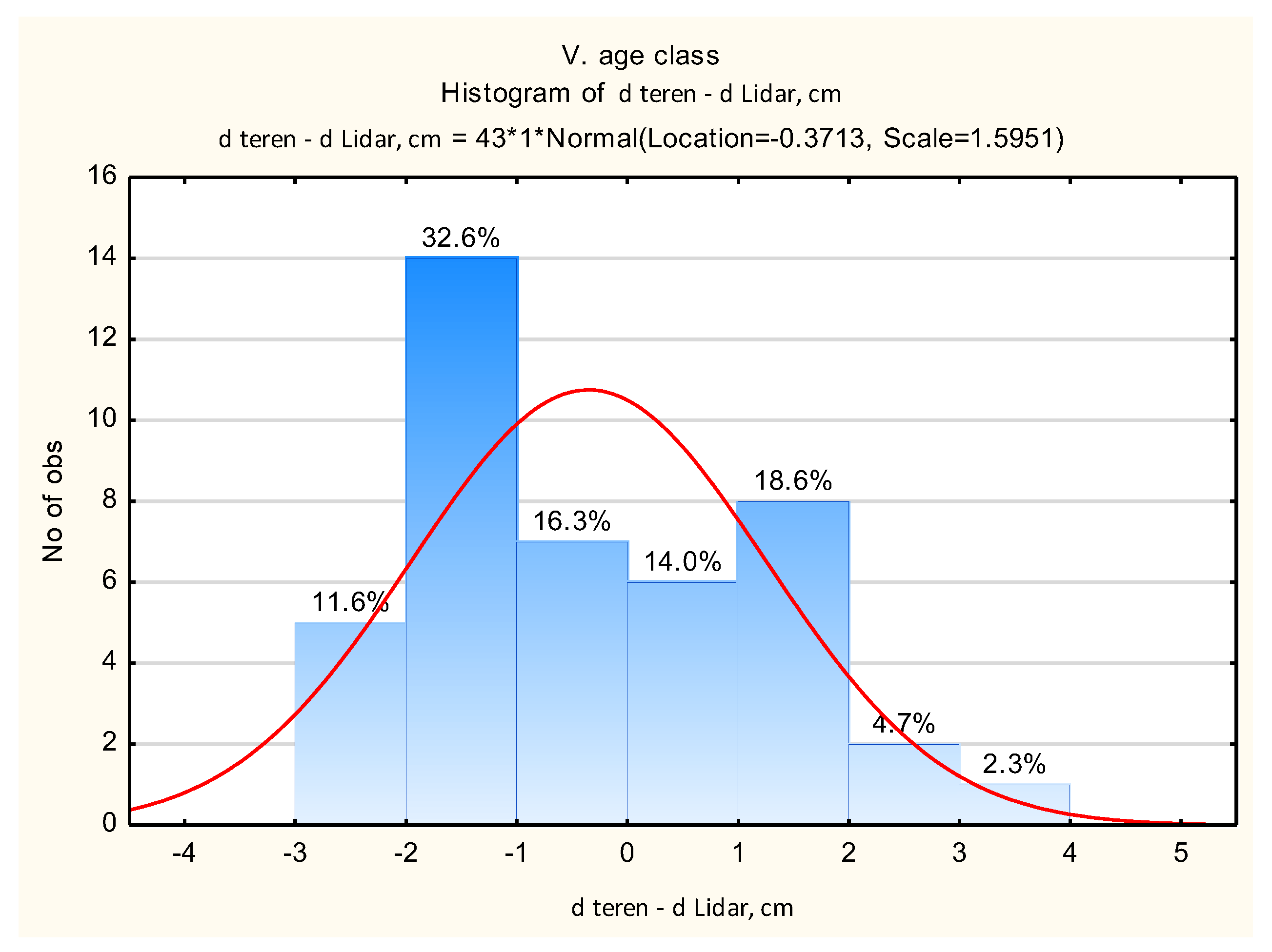
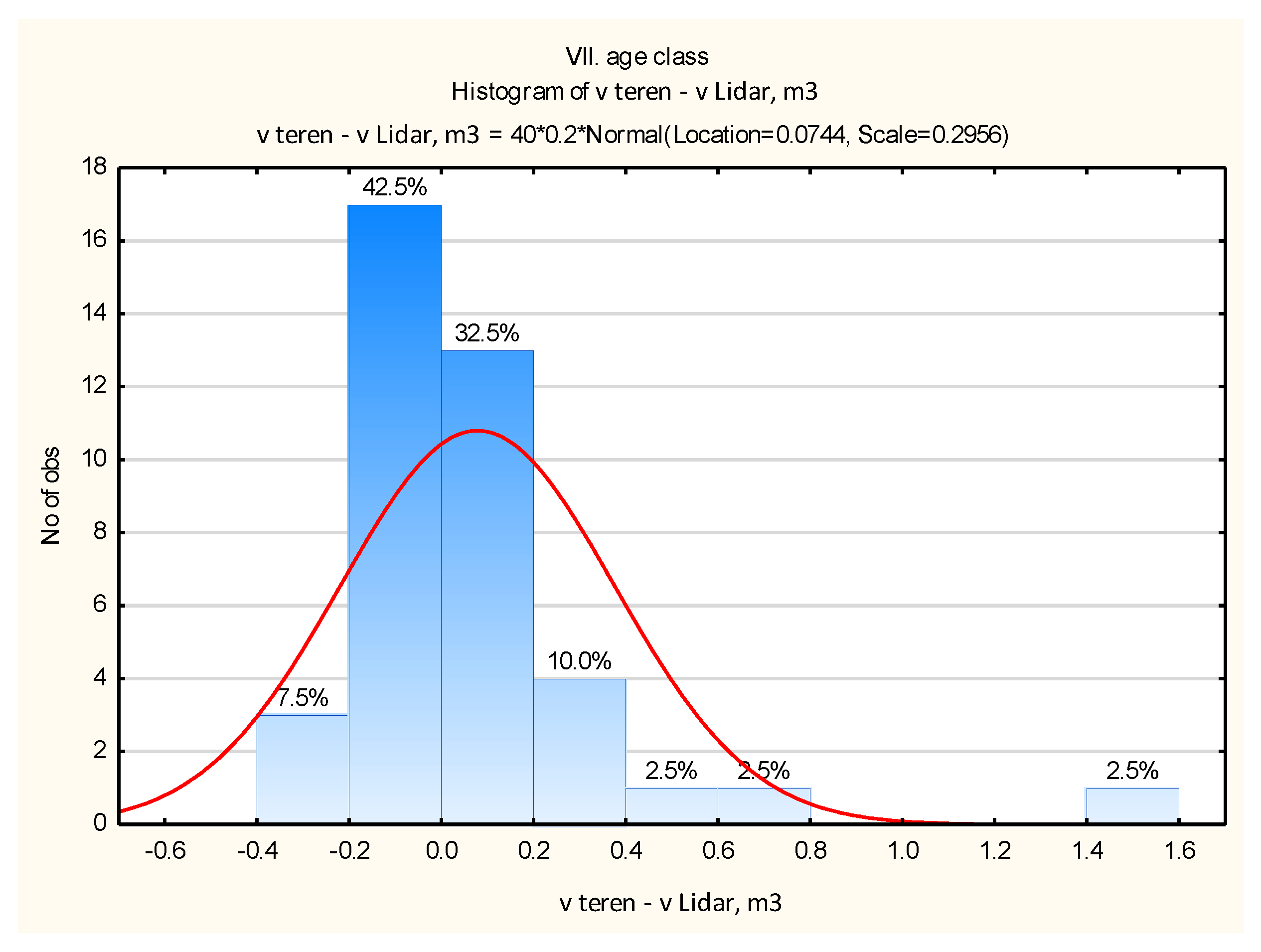
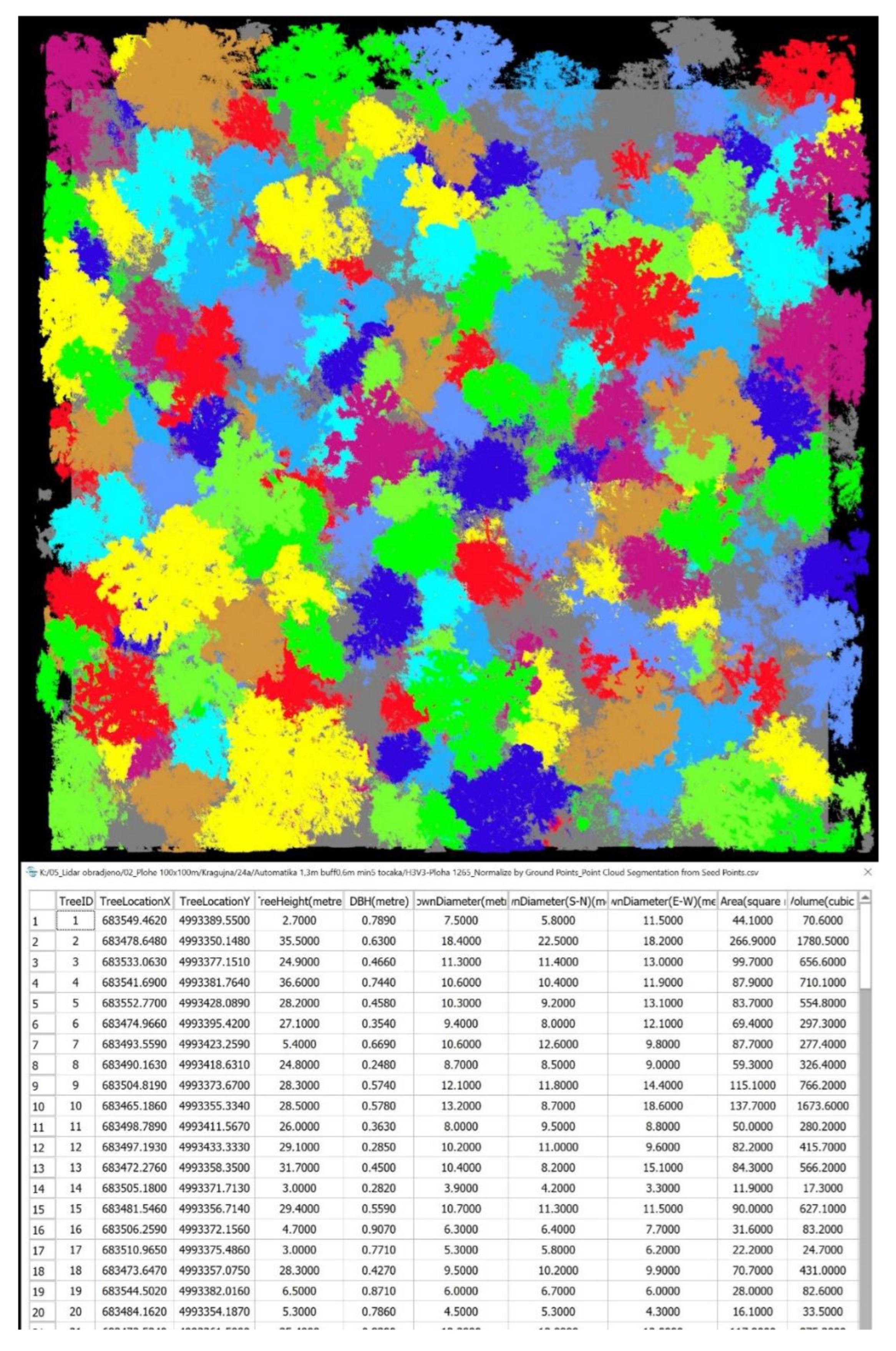
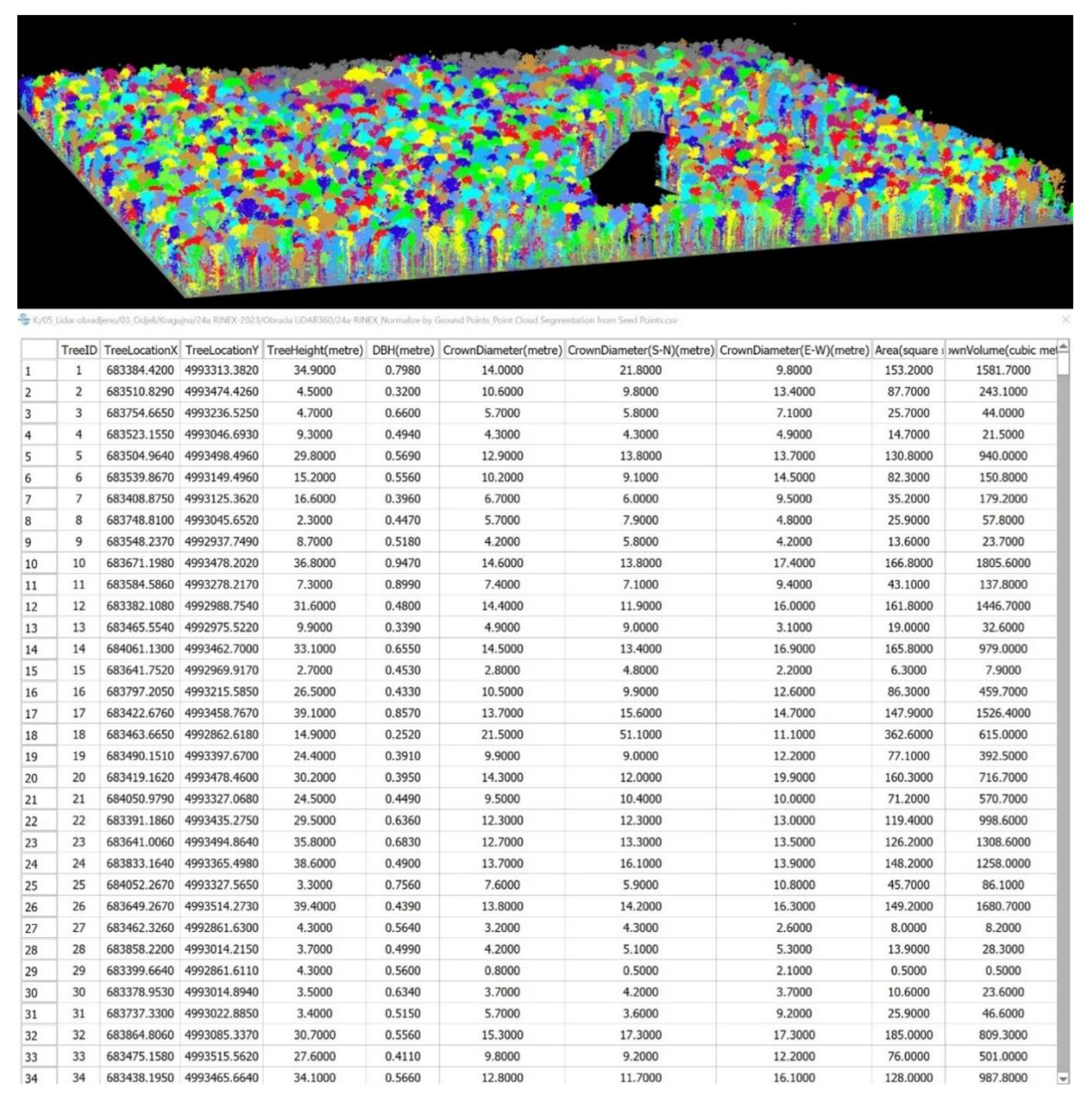

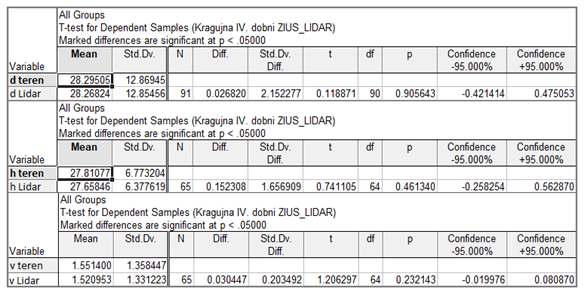 |
 |
 |
 |
 |
 |
 |
 |
| Plot label 100x100m (1 ha) |
Mean diameter at breast height (cm) | Number of trees / 1 ha | Number of trees in the subcompartment (51 ha) | Mean diameter at breast height (cm) in the subcompartment |
|---|---|---|---|---|
| H3V3 | 56 | 215 |
12172 |
52 |
| H5V6 | 51 | 339 | ||
| H7V4 | 57 | 199 | ||
| H8V7 | 58 | 179 | ||
| Mean value | 56 | 233 | 239 |
Disclaimer/Publisher’s Note: The statements, opinions and data contained in all publications are solely those of the individual author(s) and contributor(s) and not of MDPI and/or the editor(s). MDPI and/or the editor(s) disclaim responsibility for any injury to people or property resulting from any ideas, methods, instructions or products referred to in the content. |
© 2025 by the authors. Licensee MDPI, Basel, Switzerland. This article is an open access article distributed under the terms and conditions of the Creative Commons Attribution (CC BY) license (http://creativecommons.org/licenses/by/4.0/).