

Submitted:
02 January 2025
Posted:
03 January 2025
You are already at the latest version
Abstract
Background: Endocannabinoid system (ECS) via cannabinoid (CB: CB1 and CB2) receptors and enzymes degrading endocannabinoids in the brain (atty-acid amide hydrolase (FAAH) and monoacylglycerol lipase (MAGL), plays a key role in regulation of mood and anxiety. However, the effects of cannabinoid compounds on anxiety-related responses is complex and yield mixed results depending on the type of pharmacological manipulation (direct or indirect) of functions of ECS, as well as kind of cannabinoids, dosage and procedure.
Methods: The aim of the study was to determine and compare the influence of the direct (via CB receptors ligands) and indirect (via inhibition of enzymes degrading endocannabinoids in the brain) pharmacological modulation of ECS function on the anxiety-like responses in mice in the elevated plus maze (EPM) test. For this purpose, in the first step of experiments we used selected ligands of CB1, CB1/CB2 and CB2 receptors to asses which type of CB receptors is involved in the anxiety-related responses in mice. Next, we used inhibitors of FAAH or MAGL to assess which enzyme is more responsible for anxiety-related behavior in mice.
Results: The results of our presented research showed that an acute administration of CB1 receptor agonist – oleamide (5-20 mg/kg) had no influence on anxiety-related responses and CB1 receptor antagonist – AM 251 had anxiogenic (0.25-3 mg/kg) effects in the EPM test in mice. In turn, an acute administration of CB1/CB2 receptor agonist - WIN55,212-2 used at a dose of 1 mg/kg, had an anxiolytic effect observed in mice in the EPM test. What is of interest, both acute administration of CB2 receptor agonist (JWH 133 at the doses of 1 and 2 mg/kg) and antagonist (AM 630 at the doses of 0.5-2 mg/kg) had anxiogenic effects in this procedure. Moreover, we revealed that an acute administration of only FAAH inhibitor - URB 597 (0.3 mg/kg) had anxiolytic effect, while MAGL inhibitor (JZL 184) after an acute injection had no influence on anxiety behavior in mice observed in the EPM.
Conclusion: In our experiments we confirmed the significant involvement of the ECS in anxiety-related responses. Both pharmacological indirect and direct (mainly through the CB1 receptors) manipulation of ECS functions is able to elicit promising anxiolytic effects. Therefore, ECS could be a potential target for novel anxiolytic drugs; however the further studies are needed.
Keywords:
anxiety
; endocannabinoid system
; cannabinoid receptor ligands
; mice
; elevated plus maze test
1. Introduction
The endocannabinoid system (ECS) is a complex cell-signaling system that plays a key role in regulating many physiological and psychological/central functions, including memory and learning, sleep, appetite, pain sensation, immune function, as well as mood and responses to stress and anxiety [1,2,3,4]. Such extensive involvement of the ECS in many processes and body homeostasis is related to the components that are part of the ECS system. The ECS consists of three primary components, including cannabinoid (CB) receptor, endocannabinoids that occur naturally in brain and enzymes that breaking down endocannabinoids. There are two most known main endocannabinoids in the body, anandamide (AEA) that plays a role in regulating mood and emotions, as well as promoting feelings of well-being and 2-Arachidonoylglycerol (2-AG) which is more abundant and is involved in a wide range of functions, including immune response and inflammation regulation. Endocannabinoids in the brain are breaking down by specific enzymes: fatty acid amide hydrolase (FAAH) breaks down AEA and monoacylglycerol lipase (MAGL) breaks down 2-AG. Endocannabinoids in the brain are similar in structure to the active plant compounds occurring in the Cannabis sativa. The most well-known phytocannabinoids are tetrahydrocannabinol (THC) and cannabidiol (CBD) [5,6].
Endocannabinoids and both plant and synthetic cannabinoids compounds act on the body through specific cannabinoid (CB) receptors of type 1 (CB1) and type 2 (CB2). CB is found in various parts of the brain. CB1 are located mainly in central nervous system (CNS), including areas associated with memory and learning or emotion, such as amygdala, hippocampus and prefrontal cortex. CB2 receptors are located primarily in the peripheral tissues and immune cells. They play a role in regulating inflammation and immune responses. [7,8,9,10].
Thus, cannabis compounds due to a multidirectional mechanism of action, are associated with regulating a variety of processes [11,12,13]. Among others, ECS plays a crucial role in regulating processes related to anxiety, therefore understanding the role of ECS in the anxiety is the subject of many pre- and clinical studies. On the one hand, modulating the functions of the ECS system may have a beneficial effect on anxiety, on the other hand there is also considerable evidence that links use of Cannabis with increased anxiety [1,13,14,15,16,17,18]. Research connecting with the effects of compounds acting by modulation of ECS system on anxiety is complex and yields mixed and contradictory results, depending on the type of cannabinoid, compounds, dosage and the specific anxiety-related behaviors being studied [19,20,21,22]. It has been noted that CB receptor ligands can affect anxiety-like behaviors in a variety of ways - both anxiolytic (anxiety-reducing) and anxiogenic (anxiety-increasing) effects have been revealed. There are scientific reports suggesting that the effects of CB1 receptor agonists are dose-dependent, i.e., low doses have anxiolytic effects, while high doses have anxiety-producing effects [16,17,18]. What is of interest, scientists have conducted a number of experiments to define the role of compounds directly acting on the function of ECS using CB receptor ligands and there are a little information associated with the indirectly influence of modulation of ECS activity on the emotions, including anxiety. What is more, a direct modulation of the ECS through CB receptor ligands may not be effective in treating emotional disorders and, as we mentioned, is often associated with adverse effects. An alternative and promising approach to avoid these side effects focuses on indirect activation of the ECS system via inhibition of endocannabinoid-degrading enzymes in the brain (using FAAH or/and MAGL inhibitors). Some studies suggest that inhibiting FAAH and/or MAGL could enhance endocannabinoid signaling, leading to increased levels of AEA or 2-AG, which may represent potential targets for developing new pharmacotherapeutics for anxiety-related disorders [19,20,21]. However, the results of these studies remain unclear and not answer for the second main question how indirect manipulation of this system can affect anxiety-related behavior.
Based on the cited scientific reports, both on clinical trials as well as animal experiments, we get unclear and contradictory results concerning the role of ECS in anxiety-related behavior. Therefore, our work attempted to assess and compare the influence of variety compounds modulating the ECS function directly and indirectly on anxiety-related behaviors in mice. In our experiments, we used both CB1 receptor agonist (oleamide), and antagonist (AM 251), as well as CB1/CB2 receptor mixed agonist (WIN 55,212) and CB2 receptor agonist (JWH 133) and antagonist (AM 630) to evaluate the direct influence of ECS on the anxiety-related action in mice. In the next step, we used inhibitors of enzymes that break down endocannabinoids in the brain (FAAH inhibitor - URB 597 and MAGL inhibitor - JZL 184) to evaluated indirect impact of ECS on the anxiety behavior in mice. We used the EPM test which has been validated for the evaluation of anxiety in mice. The results obtained from our studies will expand knowledge about the involvement of the ECS in anxiety-provoking behavior and provide further information on the relationship between cannabis use and anxiety. Investigating and understanding the involvement of the ECS in these processes could lead to the discovery of novel promising strategies for the development of more precise and safer anxiolytic therapies using pharmacological direct or/and indirect modulation of the function of ECS.
2. Results
2.1. The Influence of an Acute Administration of Compounds Acting Directly on the ECS on The anxiety-Related Responses in Mice in the EPM Test
2.1.1. CB1 Receptor Ligands: Oleamide and AM-251
Statistical analysis of the results using the one-way ANOVA showed that an acute administration of CB1 receptor agonist - oleamide at the following doses: 5 mg/kg, 10 mg/kg and 20 mg/kg caused no statistically significant differences between the groups of animals receiving oleamide in the above-mentioned doses and the control group (vehicle), both in relation to the time spent by the animals in the open arms of the EPM [F(3.31) = 1.264; p=0.3058) [Figure 1A], and the number of entries to these arms [F(3.31)=0.8256; p=0.4909] [Figure 1B].
Number of entries into closed arms of the EPM: The locomotor activity of mice expressed by the number of entries into closed arms in the above-mentioned experimental groups did not change significantly (one-way ANOVA, F(3.31)=0.2685; p=0.8475) [Table 1].
Statistical analysis of the results using the one-way ANOVA method showed that a single administration of CB1 receptor antagonist - AM 251 at doses of 0.25 mg/kg, 0.5 mg/kg, 1 mg/kg and 3 mg/kg caused statistically significant differences between the groups of animals receiving AM 251 in the above-mentioned doses and the control group (vehicle), both in relation to the time spent by the animals in the open arms of the EPM [F(4.39) = 10.68; p<0.0001), as and the number of entries to these arms [F(4.39)=4.595; p=0.0044]. Tukey’s post-hoc test confirmed that AM 251 administered at a range of doses 0.25-3 mg/kg reduced the time spent by mice in the open EPM arms (p<0.01 for the dose of 0.5 mg/kg and p<0.001 for the doses of 0.25, 1 and 3 mg/kg) compared to the control group [Figure 2A] and the number of entries into the open arms of EPM (p<0.05 for the dose of 0.25 mg/kg and p<0.001 for the dose of 3 mg/kg) in individual groups receiving AM 251 in relation to the control group [Figure 2B].
Number of entries into EPM closed arms: The locomotor activity of mice expressed by the number of entries into closed arms in the above-mentioned experimental groups did not change significantly (one-way ANOVA, F(4.39)=0.4662; p=0.7601) [Table 2].
2.1.2. CB1/CB2 Receptor Ligands: WIN 55,212-2
Statistical analysis of the results using the one-way ANOVA method showed that an acute administration of mixed CB1/CB2 receptor agonist - WIN 55,212-2 at doses of 0.25 mg/kg, 0.5 mg/kg and 1 mg/kg caused statistically significant differences between the groups of animals receiving WIN 55,212-2 administered at the above-mentioned doses and the control group (vehicle), both in relation to the time spent by the animals in the open arms of the EPM [F(3.31) = 16.75; p<0.0001), as and the number of entries to these arms [F(3.31)=5.741; p=0.0034]. Tukey’s post-hoc test confirmed that an acute injection of WIN 55,212-2 administered at a dose of 1 mg/kg caused a statistically significant increase in time spent in the open EPM arms (p<0.001) [Figure 3A]. Moreover, an acute injection of WIN 55,212-2 administered at a dose of 1 mg/kg significantly increased the number of entries into the open arms of the EPM (p<0.01) [Figure 3B]. These values were compared to the control group receiving vehicle.
Number of entries into EPM closed arms: The locomotor activity of mice expressed by the number of entries into closed arms in the above-mentioned experimental groups did not change significantly (one-way ANOVA, F(3.31)=1.911; p=0.1508) [Table 3].
2.1.3. CB2 Receptor Ligands: JWH 133 and AM 630
Statistical analysis of the results using the one-way ANOVA method showed that an acute administration of CB2 receptor agonist - JWH 133 at doses of 0.5 mg/kg, 1 mg/kg and 2 mg/kg caused statistically significant differences between groups of animals receiving JWH 133 in the above-mentioned doses and the control group (vehicle), both in relation to the time spent by the animals in the open arms of the EPM [F(3.35) = 6.611; p=0.0013), as well as the number of entries into these arms [F(3.35)=6.685; p=0.0012]. Tukey’s post-hoc test showed that an acute injection of JWH 133 administered at doses of 1 mg/kg and 2 mg/kg resulted in a statistically significant reduction in time spent in open EPM arms (p<0.05) [Figure 4A] and reduced the number of entries into the open arms of the EPM (p<0.05) [Figure 4B]. These values were compared to the control group receiving vehicle.
Number of entries into EPM closed arms: The locomotor activity of mice expressed by the number of entries into closed arms in the above-mentioned experimental groups did not change significantly (one-way ANOVA, F(3.35)=0.5579; p=0.6467) [Table 4].
Statistical analysis of the results using the one-way ANOVA method showed that an acute administration of CB2 receptor antagonist - AM 630 at doses of 0.25 mg/kg, 0.5 mg/kg, 1 mg/kg and 2 mg/kg caused statistically significant differences between the groups of animals receiving AM 630 in the above-mentioned doses and the control group, both in relation to the time spent by the animals in the open arms of the EPM [F(4.44) = 10.68; p<0.0001), as and the number of entries to these arms [F(4.44)=5.902; p=0.0008]. Tukey’s post-hoc test showed that an acute injection of AM 630 administered at doses of 0.5 mg/kg, 1 mg/kg and 2 mg/kg, caused a statistically significant reduction in time spent in the open EPM arms (p<0.01 for dose 0.5 mg/kg and p<0.001 for doses of 1 mg/kg and 2 mg/kg)) [Figure 5A]. Moreover, an acute injection of AM 630 administered at doses of 1 mg/kg and 2 mg/kg significantly reduced the number of entries into the open arms of the EPM (p<0.05 for a dose of 1 mg/kg and p<0.01 for a dose of 2 mg/kg) [Figure 5B]. These values were compared to the control group receiving vehicle.
Number of entries into EPM closed arms: The locomotor activity of mice expressed by the number of entries into closed arms in the above-mentioned experimental groups did not change significantly (one-way ANOVA, F(4.44)=0.2943; p=0.8799) [Table 5].
2.2. The Influence of an Acute Administration of Compounds Acting Indirectly on the ECS on the Anxiety-Related Responses in Mice in the EPM Test
2.2.1. FAAH or MAGL Inhibitors: URB 597 and JZL 194
Statistical analysis of the results using the one-way ANOVA method showed that an acute administration of FAAH inhibitor - URB 597 at doses: 0.1 mg/kg, 0.3 mg/kg and 1 mg/kg caused statistically significant differences between the groups of animals receiving URB 597 in the above-mentioned doses and the control group, both in relation to the time spent by the animals in the open arms of the EPM [F(3.31) = 5.804; p=0.032), as and the number of entries to these arms [F(3.31)=3.860; p=0.0198]. Tukey’s post-hoc test confirmed that an acute injection of URB 597 administered at a dose of 0.3 mg/kg caused a statistically significant increase in the time spent in the open EPM arms (p<0.01) [Figure 6A] and in the number of entries into the open arms of the EPM (p<0.01) [Figure 6B]. These values were compared to the control group receiving vehicle.
Number of entries into EPM closed arms: The locomotor activity of mice expressed by the number of entries into closed arms in the above-mentioned experimental groups did not change statistically significantly (one-way ANOVA, F(3.31)=0.1465; p=0.9311) [Table 6].
Statistical analysis of the results using the one-way ANOVA method showed that an acute administration of MAGL inhibitor - JZL 184 at doses of 2 mg/kg, 4 mg/kg, 20 mg/kg and 40 mg/kg did not cause statistically significant differences between groups of animals receiving JZL 184 in the above-mentioned doses and the control group, both in relation to the time spent by the animals in the open arms of the EPM [F(4.39)=0.9298; p=0.4579), as well as the number of entries into these arms [F(4.39)=2.716; p=0.0454]. Tukey’s post-hoc test confirmed that an acute injection of JZL 184 administered at doses of 2 mg/kg, 4 mg/kg, 20 mg/kg and 40 mg/kg had no statistically significant effect on the time spent in the open arms. EPM and the number of entries into the open arms of the EPM compared to the control group receiving vehicle [Figure 7A and 7B, respectively].
Number of entries into EPM closed arms: The locomotor activity of mice expressed by the number of entries into closed arms in the above-mentioned experimental groups did not change statistically significantly (one-way ANOVA, F(4.39)=0.2572; p=0.9033) [Table 7].
3. Discussion
In the first step of our experiments we evaluated the indirect influence of ECS on the anxiety-like effects in mice using EPM test. For this purpose, we used selected ligands of CB1, CB1/CB2 and CB2 receptors to assess which type of CB receptors is mainly involved in the anxiety-related responses in mice.
The results of our presented research showed that the CB1 receptor agonist - oleamide administered at doses of 2.5 mg/kg, 10 mg/kg and 20 mg/kg had an anxiogenic effect. Interestingly, the CB1 receptor antagonist - AM 251 administered at the lowest dose of 0.25 mg/kg, had also an anxiogenic effect, while the administration of higher doses of AM-251 (0.5 and 1 mg/kg) had an anxiolytic effect. Moreover, the acute injection of mixed CB1/CB2 receptor agonist - WIN55,212-2 at a dose of 1 mg/kg had an anxiolytic observed in the EPM test in mice.
In the case of CB2 receptor involvement in anxiety-related behavior in mice, we revealed that an acute administration of CB2 receptor agonist JWH 133 and also the CB2 receptor antagonist AM 630 had similar influence on the parameters measured in the EPM test. It was shown that the CB2 receptor agonist JWH 133 injected at doses of 1 and 2 mg/kg exhibited anxiogenic effects and an identical effect was observed after an acute injection of the CB2 receptor antagonist AM 630 injected at doses of 0.5, 1 and 2 mg/kg.
Our results should be discussed in the context of other available data which indicate that cannabinoids compounds can significantly modulate various behaviors and emotions, both in terms of mood and anxiety in animals and humans [23]. However, these reports are not unequivocal. According to some scientists, CB1 receptor agonists exhibit anxiogenic or anxiolytic effects in rodents, depending on the administered dose - low doses induce anxiolytic effects while higher doses - anxiogenic effects [16,17,18,23]. It has been also reported that intracerebral administration of CB1 receptor agonists causes anxiolytic and antidepressant effects [23,24,25,26]. For example CB1 receptor agonist - THC, shows anxiolytic effects in humans; thus, this compound can be also anxiogenic in rodents, depending on the dose and context [27]. Low doses of THC can reduce anxiety-like behavior in the EPM test, where rodents are tested for anxiety based on their reluctance to enter open spaces. Higher doses of THC are often associated with increased anxiety or paranoia [28,29,30]. What is of interest, in experimental animal models, THC, administered at low doses, mimics the anxiolytic effects of diazepam [31,32]. Moreover, in addition to their rewarding effects, cannabinoids can also induce aversive effects, especially anxiety and panic attacks, especially after very high doses of the drugs [32,33,34]. It has also been shown that they can induce conditioned aversion, especially when animals are placed in an environment that they associate with previous drug administration [35]. In turn, administration of CBD, a non-psychoactive cannabinoid, had gained significant attention for its potential anxiolytic properties. Unlike THC, CBD is generally considered to reduce symptoms of anxiety and its effects have been widely explored in both human and animal studies. For example, CBD has been found to reduce anxiety in commonly used models for assessing anxiety in rodents, e.g., the light/dark box (LDB) test, the EPM test, and the open field test (OFT) [36,37,38,39]. However, there is also contradiction in behavioral outcomes of CBD treatment with some studies reporting anxiogenic-like effects in rodents [40,41].
In the context of our results, interesting data described the influence of another CB1 receptor agonist - oleamide in various physical and mental functions in the body. The impact of that compound on the central nervous system (CNS) is especially of interest, especially pointing out on the memory and learning, sleep, mood and anxiety [42,43]. Some studies suggested that oleamide may have positive effects on cognition and depressive-related behavior; as such this cannabinoid compound shows calming impact and may decrease anxiety level in animal models [44]. Unfortunately, in our studies, oleamide at the doses used (5-20 mg/kg) did not affect the level of anxiety in mice in the EPM test, however, a tendency to increase in specific parameters of EPM (the percentage of the time and of the number entries spent into open arms of EPM) was maintained, which may indicate and confirm a potential anxiolytic effect of oleamide.
CB1 receptor activation (due to their localization in the CNS and the increase in endocannabinoids level in brain) is often associated with reduced anxiety. As a result of this localization (mainly in the brain structures involved in emotional control including basolateral amygdala, cortical regions and the hippocampus), CB1 activation might have a complex pattern of influence upon neurotransmitters known to modulate anxiety. Thus, the anxiolytic effects of oleamide is probably connected with the interaction with CB receptors (mainly CB1) and interaction with specific various neurotransmitters and systems. Oleamide interacts with gamma aminobutyric acid (GABA)-ergic and serotoninergic systems, enhancing these signaling pathways. Following that, these stimulations lead to anxiolytic effect which may be similar to effects of other CB1 receptor agonist described above [42,43,44].
Therefore, CB1 receptor antagonists may potentially have opposite effect, increasing anxiety-related responses in animal models. Many scientific publications report that single injections of CB1 receptor antagonists – rimonabant and AM 251, cause an increase in aversive behaviors associated with generalized anxiety disorders [17,18,45,46,47,48]. Rimonabant was used successfully in the treatment of obesity, but it also showed a number of side effects, such as anxiogenic effects, decreased mood and induced pro-suicidal behaviors. There are also scientific studies indicating the lack of effect of rimonabant on anxiety-like behaviors assessed in the EPM test in mice within the range of the tested doses [23,49].
In case of AM 251, an analogue of rimonabant that is a potent and selective CB1 receptor antagonist but which, unlike rimonabant, has no activity at the novel receptor, the literature data have shown that this compound had also anxiogenic-like profile. In maze-naïve mice, the lower dose of AM-251 (1.5 mg/kg) significantly reduced percentage of open-arm time and increased grooming while the higher dose (3.0 mg/kg) additionally reduced percentage of open-arm entries and total head-dipping, and increased closed-arm returns in the EPM test [50,51]. These results are in accordance with the results obtained from our study. We also revealed that AM 251 tends to increase anxiety-like behaviors in mice in the EPM test. However, there are also scientific reports indicating the anxiogenic effect of AM 251, observed in wild-type mice, as well as the lack of any effect on mice lacking the gene encoding the CB1 receptor [52]. Moreover, AM 251 has the potential to reverse the sedative effect induced by diazepam in rats in the EPM test [53].
In turn, another CB1 receptor antagonist AM 281 did not influence anxiety reaction in the dark/light box (LDB) test when given alone [54]. Similarly, other CB1 receptor antagonist, AM 4113, has no effect on anxiety reactions. It has also been shown that AM 4113, to a much lesser extent than AM 251, affects the activation of neurons in brain structures key to anxiety reactions, i.e., the amygdala [55]. It is hypothesized that this effect is related to the fact that AM 251 also exhibits activity as a reversible agonist of CB1 receptors, whereas AM 4113 only exhibits antagonist effects at this receptor.
To clearly assess the role of CB receptors in anxiety-related processes, in subsequent experiments the next compound we tested was the mixed CB1/CB2 receptor agonist - WIN 55,212-2. We revealed that the administration of this cannabinoid compound at a dose of 1 mg/kg produced an anxiolytic effect, assessed in the EPM test in mice. Lower doses do not affect anxiety-like behaviors. These results are only partially consistent with the results of other researchers because in some animal studies, WIN 55,212-2 might cause anxiety or other negative psychological effects while other studies suggest potential anxiolytic effects, depending on the dosage, context, individual differences and circumstances of experience. The researchers described that a dose of 0.25 mg/kg caused an anxiolytic effect, while a high dose of 1.25 mg/kg showed an anxiogenic effect [56,57]. After the higher dose, WIN 55,212-2 (5 mg/kg) induced the anxiogenic-like effect accompanied by motor inhibition in the LDB test [54]. These results are consistent with the effects of experiments conducted using other mixed CB receptor agonists: HU-210 and CP 55940. These cannabinoid compounds when administered at high doses, also intensify anxiety reactions in mice [17,25,26,45,46]. What is of interest, both effects of WIN 55, 212-2, i.e., the anxiogenic-like and the sedative one were attenuated by a CB1 receptor antagonist, AM 281, suggesting mainly involvement of CB1 receptors [54].
More complicated and unclear is the role of CB2 receptors in emotions because the CB2 receptor is mostly expressed in peripheral tissues, including immune system. Most evidence suggests that cannabinoid ligands acting on CB2 receptors could have less direct impact on mood and behavior compared to those targeting CB1 receptors, but they may modulate anxiety-related responses through immune system effects, e.g., modulating inflammation and potentially affecting neuroinflammation, which may contribute to anxiety disorders [5,6,7]. We have found some scientific reports that described the influence of CB2 receptor ligands on emotions, mood and anxiety reactions. However, these data are so often contradictory. The available literature data results have shown their antidepressant, anxiolytic, anxiogenic effects or they show no effect on anxiety reactions at all [58,59]. The diversity of the results obtained may be due to many factors, including the strain of animals used in the experiments, the experimental conditions, the type of procedure used to assess the results [60], the drugs previously used, differences in the doses used, and the initial level of anxiety [61].
In our experiments, we revealed that both an acute administration of CB2 receptor agonist (JWH 133 at the doses of 1 and 2 mg/kg) and antagonist (AM 630 at the doses of 0.5-2 mg/kg) had anxiogenic effects in the EPM test in mice. These results are partially consistent with the results available in the scientific literature. In some studies, CB2 receptor ligands may be used to explore their potential anxiolytic or anxiogenic effects through animal models. Acute administration of JWH 133 (0.5-2 mg/kg, ip) failed to produce any effect observed in two animal anxiety models (LDB and EPM). In turn, acute administration of AM 630 (1-3 mg/kg, ip) increased anxiety and additionally this effect of AM 630 (3 mg/kg) was blocked by pre-treatment with JWH 133 (2 mg/kg). Chronic administration of JWH 133 (0.5-2 mg/kg, ip, twice a day) for a total of 7 day treatment increased anxiety-like behavior whereas chronic AM 630 treatment (1-3 mg/kg, ip, twice a day) produced a significant anxiolytic effect observed in LDB and EPM tests [58].
The contrasting responses to anxiety-like behaviors observed following chronic and acute administration of AM 630 and JWH 133 confirm the complicate but key role of CB2 receptors in the regulation of anxiety-like behaviors. The distribution of CB2 receptors in brain areas associated with stress and anxiety responses also suggests the involvement of these receptors in the modulation of emotional behaviors. Scientific publications report that additional biochemical studies of the cerebral cortex and amygdala were conducted to determine the mechanisms underlying the above-described behavioral changes. It was proven that the anxiolytic effect induced by chronic administration of AM 630 is associated with increased expression of the gene encoding CB2 in both the cerebral cortex and the amygdala, as well as with reduced expression of the CB2 receptor protein in the cerebral cortex. Interestingly, the anxiolytic effect of JWH 133 was accompanied by opposite changes in CB2 receptors. Chronic administration of JWH 133 decreased expression of the CB2 receptor gene in the amygdala, and increased expression of the CB2 receptor protein in the cortex. What is of interest, in experiments conducted using transgenic mice with increased expression of CB2 receptors in the CNS, a phenotype resistant to a single exposure to aversive factors used in the LDB and EPM procedures was observed [62,63]. The latest findings confirming the role of CB2 receptors in the regulation of anxiety and mood disorders also include studies showing that mice lacking the gene encoding the CB2 receptor (CB2 - / -) show increased susceptibility to stressful stimuli, assessed in the LBD, EPM and tail suspension test (TST) procedures [62,63,64].
In order to further suggest neurophysiological mechanisms underlying the above-described effects, as we already mentioned, the GABAergic system is considered to be a key element in the regulation of emotional states. Pentameric GABA-A receptors are formed by the assembly of various subunits containing α1, α2, α3 or α5 with β and γ2 subunits. Literature data indicate that GABA-A receptors containing α2 and γ2 subunits mediate the anxiolytic effects of benzodiazepines [65]. Both subunits are located in the limbic system and cerebral cortex [66,67,68]. It has been proven that genetic changes in CB2 receptors also lead to changes in GABA-A receptors. Transgenic mice with increased expression of CB2 receptors also show increased GABA-Aα2 and GABA-Aγ2 gene expression in the hippocampus and amygdala [58]. Scientific reports indicated the inhibition of GABA-ergic neurotransmission in the cerebral cortex and hippocampus after the administration of the CB2 receptor agonist – JWH 133. These effects can be blocked by prior administration of AM 630. This result supports the thesis of the involvement of CB2 receptors in the effects exerted by JWH 133 on GABA-ergic transmission and thus the possibility of modulation of GABA-ergic neurotransmission via CB2 receptors [58].
Summarizing the above described results, also taking into account the results of our work, it is not possible to clearly determine the influence of CB1 and/or CB2 receptor ligands on anxiety-related behavior, because they are dependent on many factors, as mentioned, on the dose, the test used or the route of administration. The mechanisms of these phenomena also require explanation, although the indirect influence of CB receptor activation on the activity of other neurotransmitter systems, including GABA and monoaminergic ones, can be taken into account. Further studies are therefore necessary to explain these effects, their type and potential mechanisms. Additionally, a direct modulation of ECS via ligands of CB receptors could be not effective in treating emotional disorders and is always connected with many adverse effects.
Alternative and promising approach to avoid the adverse effects of direct CB receptor ligands has been focused to evaluate the effects of indirect activation of ECS system, by inhibiting the process of endocannabinoids degradation by the FAAH and MAGL enzymes. Thus, to increase the knowledge in this context, in the second set of our experiments we evaluated the influence of indirect modulation of ECS function on the anxiety-like responses in mice in the EPM.
In the conducted experiments, after an acute administration of URB 597 (0.3 mg/kg), a FAAH inhibitor, we observed dose-dependent anxiolytic effects in the EPM test in mice. Lower doses may cause reduction in anxiety, while higher doses may produce sedation or other behavioral changes that might confound results. In our studies we observed anxiolytic effect of URB 597 only at the dose of 0.3 mg/kg. In turn, after an acute administration of JZL 184 (2 mg/kg, 4 mg/kg, 20 mg/kg and 40 mg/kg), a MAGL inhibitor, and no statistically significant change was observed in the amount of time spent in the open arms of the EPM, as well as the number of entries into these arms.
Our results should be discussed with other available literature data. Some studies suggest that inhibition of FAAH or/and MAGL could lead to enhanced endocannabinoid signaling and thus elevation of AEA or 2-AG could be represent potential targets for the development of new classes of pharmacotherapeutics to treat anxiety-related disorders [69,70,71]. However, cited results are not clear and our results of the experiments in the presented work are not quite consistent with the literature data.
In our experiments we used URB 597, a selective inhibitor of FAAH, which is responsible for the breakdown endocannabinoids in the brain, particularly AEA. We can supposed that URB 597 by inhibiting FAAH and increasing AEA levels activated CB1 receptors, the mostly implicated in regulation of fear and anxiety responses, especially those located in brain regions like the hippocampus, amygdala and prefrontal cortex. Our results are consistent with other scientific reports. For instance, literature data indicated that URB 597 and its analog URB 532 produced anxiolytic-like effects in several animal models, including LDB and EPM test. These effects were blocked by the administration of CB1 receptor antagonists, rimonabant [70]. Moreover, both compounds increased AEA level in the brain without modifying those of the second endogenous cannabinoid, 2-AG. It is therefore likely that their pharmacological actions, which are sensitive to the CB1 antagonist rimonabant, are primarily due to AEA accumulation. However, other FAAH inhibitor, e.g., ST 4070 also produced anxiolytic effect after intragastric administration in CD1 mice in the EPM test and LDB test [16,72] and increased the level of AEA and two AEA analogs N-palmitoylethanolamine oleoylethanolamide, whose biological effects are independent of CB1 receptors [16,70,72,73,74]. Therefore, we should not exclude other mechanisms related to the action of FAAH inhibitors.
Additionally, it has been proven that URB 597 shows exceptional selectivity towards FAAH, while showing no affinity towards other ECS elements. Thanks to this, administration of URB 597 selectively inhibits FAAH activity and significantly increases the level of AEA in the brain. Due to this property, it does not cause a number of adverse classic effects accompanying the administration of direct CB receptor ligands, i.e., catalepsy or hypothermia, which are symptoms of cannabinoid poisoning in a rodent [70,75,76,77]. The results of the presented experiments suggest that AEA participates in the modulation of emotional states and indicate the inhibition of FAAH as an innovative approach to anti-anxiety therapy.
However, not only AEA, but also another major endocannabinoid 2-AG could activate CB1 receptors in the brain, particularly in regions involved in emotional processing, such as the amygdala and prefrontal cortex and thus can promote feelings of relaxation and reduce anxiety. Unfortunately, the effects of 2-AG on anxiety have been difficult to ascertain, due to its rapid in vivo metabolism. MAGL is the primary enzyme responsible for 85% of 2-AG catabolism and MAGL inhibitors prevent the breakdown of 2-AG, leading to increased 2-AG levels and could have a potential anxiolytic effects. However, it should be noted that other enzymes, such as ABHD6 and ABHD12, contribute to 2-AG degradation, thus, they have distinct intracellular distributions [71]. As such, it is possible that the inhibition of these minor 2-AG catabolic enzymes may also affect anxiety-related behavior in ways that differ from MAGL inhibition.
In our experiments, we assessed the effect of inhibition of MAGL on the anxiety-related responses in mice observed in the EPM test. We used JZL 184 that is a potent and selective MAGL inhibitor. JZL184 [29] significantly inhibits MAGL in vivo and is highly selective (300-fold higher for MAGL than for FAAH), with long-lasting effects (> 24 h). [29,78].
Unfortunately, in our studies, we did not demonstrate any effect of JZL on anxiety-related behavior in mice. However, there is some literature data describing the anxiolytic potential of MAGL inhibitors, including JZL 184 [78,79,80,81]. Sciolino et al. [81] has been reported that chronic administration of JZL184 (8 mg/kg per day for six days) produced anxiolytic-like effects in the EPM under high, but not low, levels of environmental aversiveness. These anxiolytic effects of JZL 184 were prevented by the CB1 inverse agonist rimonabant. The amygdala seems to be critical to this response because the local infusion of an MAGL inhibitor into this structure recapitulates the effects of systemic MAGL blockade [79]. In turn, Ivy et al. [82] revealed that systemic administration of JZL 184 (4, 8 and 16 mg/kg, ip) caused dose-dependent significant anxiolytic-like effects in rats, as demonstrated in the EPM test and marble burying tests but surprisingly, the effect of JZL184 was prevented by co-administration of the CB2 inverse agonist AM630, but not rimonabant. Additionally, many other effects induced by 2-AG, including reduction in GABA transmission, are independent of mechanisms related to CB1 receptors. It has been revealed that these effects are mainly induced by CB2 receptors, as they are not blocked by the CB1 receptor antagonist - LY 320135, but by the CB2 receptor antagonist - AM 630 [83].
The contradictory results presented in the experiments discussed above may result from significant differences between the test procedures used, the experimental conditions and the species of animals used in these studies. The anxiolytic effects of JZL-184 may be context-dependent, meaning they are influenced by environmental factors, such as stress levels or the presence of stressors. Additionally, further investigations are necessary to assessment the molecular mechanism of endocannabinoids mobilization and its connection with long-term anxiety responses.
4. Materials and Methods
4.1. Animals
The experiments were carried out on the white naïve male Swiss mice obtained from the Center for Experimental Medicine, Lublin, Poland, weighing from 20 to 25 g. The animals were housed in groups of 10 mice/home cage and maintained under standard laboratory conditions (12-h light/dark cycle, room temperature 21 ± 1°C) with free access to tap water and laboratory chow (Bacutil, Motycz, Poland). The animals were adapted to laboratory conditions for a period of one week. The number of animals in each group was 8-10 mice. All behavioral experiments were carried out between 8:00 a.m. and 3:00 p.m., maintaining the natural day-night cycle.
The research was carried out with the consent and in accordance with the requirements of the ARRIVE guidelines to improve the reporting of animal research and improve the quality of the studies, and were conducted in accordance with the National Institute of Health Guidelines for the Care and Use of Laboratory Animals, and with the European Community Council Directive for the Care and Use of Laboratory Animals of 22 September 2010 (2010/63/EU). Furthermore, we obtained the agreement of the Local Ethical Committee for all performed experiments: Local Ethical Committee for Animal Experiments in Lublin: Approval Code: 3/2020; Approval Date: 24 February 2020.
4.2. Drugs
Compounds acting directly on the ECS:
oleamide (substance, cis-9-octadecenamide, Tocris, USA): 5; 10; 20 mg/kg – CB1 receptor agonist
AM 251 (substance, N-(piperidin-1-yl)-5-(4-iodophenyl)-1-(2,4-dichlorophenyl)-4-methyl-1H-pyrazole-3-carboxamide], Tocris, USA ): 0.25; 0.5; 1; 3 mg/kg – CB1 receptor antagonist
WIN 55,212-2 (substance, [R(+)-[2,3-dihydro-5-methyl-3-[(morpholinyl)methyl]pyrrolol [1,2,3-de]-1,4-benzoxazin- yl]-(1-naphthalenyl) methanone mesylate], Tocris, USA) 0.25; 0.5; 1 mg/kg – CB1/CB2 receptor agonist
JWH 133 (substance, 3-(1′1′Dimethylbutyl)-1-deoxy-∆8-tetrahydrocannabinol, Tocris, USA): 0.25; 0.5; 1; 2 mg/kg – CB2 receptor agonist
AM 630 (substance, (6-iodo-2methyl-1-[2-(morpholinyl)ethyl]-1H-indol-3-yl](4-methoxyphenyl)methanone, substance, Tocris, USA): 0.25; 0.5; 1;2; 3 mg/kg – CB2 receptor antagonist
Compounds acting indirectly on the ECS:
URB 597 (substance, [3-(3-Carbamoylphenyl)phenyl] N-cyclohexylcarbamate, Tocris, USA): 0.1; 0.3; 1 mg/kg – FAAH inhibitor
JZL 184 (substance, (4-nitrophenyl-4-[bis(1,3-benzodioxol-5-yl)(hydroxy) methyl] piperidine-1-carboxylate, Tocris, USA): 2; 4; 8; 20; 40 mg/kg – MAGL inhibitor
CB receptor ligands and inhibitors of enzymes were suspended in a 1% solution of Tween 80 (Sigma, St. Louis, MO, USA) in a saline solution (0.9% NaCl) and were administered intraperitoneally (ip) at a volume of 10 ml/kg. Fresh drug solutions were prepared on each day of experimentation. Control groups received injections of saline with Tween 80 at the same volume (vehicle) and by the same route of administration.
4.3. Experimental Procedure
Mice behavior was observed in the EPM test, widely used in behavioral neuroscience to assess anxiety-like responses in rodents. The procedure was similar to the method used by Lister [84,85]. The apparatus of EPM is made of dark Plexiglas and is composed of four crossed arms, arranging in a “plus” shape, and a central platform (5 x 5 cm) at the intersection of the arms. Two opposing arms of the maze are open (30 x 5 cm) and the other two arms are enclosed with walls (30 x 5 x 15 cm). The maze is elevated 50 cm above the floor, to increase the anxiety level of the mice. Experiments using the EPM test were conducted in a quiet, dark room, and the central square of the maze was illuminated evenly with dim red light.
The experimental procedure included placing each tested mouse in the central platform of the EPM in such a way that the front part of the animal’s body faced the closed arm and the animal had opportunity to explore the four arms for 300 s. Entry into one arm was recorded when an animal placed all four paws past the line dividing the central square from the open arms.
Rodents tend to naturally avoid the open arms. Observation of animal behavior included the measurement of:
- time spent in the open arms of the maze, as a percentage of the total session duration and the number of entries into the open arms, as a percentage of the total number of entries to open and closed EPM arms - anxiolytic activity was indicated by increases in time spent in open arms or in number of open arms entries; anxiogenic effects were characterized by decreases in these measures;
4.4. Treatment
4.4.1. The Influence of an Acute Administration of Compounds Acting Directly on the ECS on the Anxiety-Related Responses in Mice in the EPM Test
CB1 receptor agonist: oleamide (5; 10; 20 mg/kg), CB1 receptor antagonist: AM 251 (0.25; 0.5; 1; 3 mg/kg), CB1/CB2 receptor agonist: WIN 55,212-2 (0.25; 0.5; 1 mg/kg), CB2 receptor agonist: JWH 133 (0.5; 1; 2 mg/kg), and CB2 receptor antagonist: AM 630 (0.25; 0.5; 1; 2 mg/kg) were administered ip once on the day of the test. Observation of anxiety behaviors was carried out for 30 minutes after injection. The results were compared to the control group that received vehicle as an acute injection.
4.4.2. The Influence of an Acute Administration of Compounds Acting Indirectly on the ECS on the Anxiety-Related Responses in Mice in the EPM test
FAAH inhibitor: URB 597 (0.1; 0.3; 1 mg/kg) and MAGL inhibitor: JZL 184 (2; 4; 20; 40 mg/kg) were administered ip once on the day of the test. Observation of anxiety behaviors was carried out for 30 minutes after injection. The results were compared to the control group that received vehicle as an acute injection.
Doses of CB-receptor ligands and inhibitors of enzymes degrading endocannabinoids in the brain used for behavioral experiments and procedures were chosen accordingly to those frequently used in literature and our previous experiences [Table 1].
| Compounds | Selected doses | Literature data |
| oleamide | 5; 10; 20 mg/kg | [42,44] |
| AM 251 | 0.25; 0.5; 1; 3 mg/kg | [42,43,46,47,51,53] |
| WIN 55,212-2 | 0.25; 0.5; 1 mg/kg | [25,26,46] |
| JWH 133 | 0.5; 1; 2 mg/kg | [42,43,62,63,64] |
| AM 630 | 0.25; 0.5; 1; 2 mg/kg | [42,43,62,63,64] |
| URB 597 | 0.1; 0.3; 1 mg/kg | [20,21,69,70,71,88,89] |
| JZL 184 | 2; 4; 20; 40 mg/kg | [20,21,78,79,80,81,88,89] |
4.5. Statistics
The data are expressed as the means ± SEM. The statistical analyses were performed using one-way analysis of variance (ANOVA). Post-hoc comparison of the means was carried out with the Tukey’s test for multiple comparisons, when appropriate. The confidence limit of p < 0.05 was considered statistically significant.
5. Conclusion
Both pharmacological indirect and direct manipulation of ECS functions is able to provoke promising anxiolytic effects. Based on our results and available data it can be suggested that mainly inhibition of FAAH and MAGL in mice may have a positive influence on the anxiety level, likely due to increased levels of endocannabinoids (AEA and 2-AG), which activate CB1 and/or CB2 receptors and modulate anxiety-related circuits in the brain. Thus, indirect modulation of ECS function (via inhibition of enzymes degrading endocannabinoids in the brain) could show promise as anxiolytic target. Following that, more research is needed to fully understand the therapeutic potential and safety profile of possible inhibitors for anxiety-related disorders treatment, as their effects can vary depending on factors such as dosage, chronicity and context of anxiety-related problems. Our research can contribute to understanding this issue and brings new data that deepens the existing knowledge on this subject.
Author Contributions
Marta Kruk-Slomka - conceptualization; methodology; data curation; formal analysis; writing - original draft; writing – review & editing; supervision; funding acquisition; Agnieszka Dzik - writing original draft; Grazyna Biala - writing original draft; writing -review & editing; funding acquisition.
Funding
Statutory Funds of the Medical University of Lublin, Poland (DS 21 Marta Kruk-Slomka; DS 23 Grazyna Biala).
Conflicts of Interest
The Authors declare no conflict of interest.
References
- Petrie:, G.N.; Nastase, A.S.; Aukema, R.J.; Hill, M.N. Endocannabinoids, cannabinoids and the regulation of anxiety. Neuropharmacology 2021, 195, 108626. [Google Scholar] [CrossRef] [PubMed]
- Goodman, J.; Packard, M.G. The influence of cannabinoids on learning and memory processes of the dorsal striatum. Neurobiol Learn Mem 2015, 125, 1–14. [Google Scholar] [CrossRef] [PubMed]
- Maroso, M.; Szabo, G.G.; Kim, H.K.; Alexander, A.; Bui, A.D.; Lee, S-H.; Lutz, B.; Soltesz, I. Cannabinoid Control of Learning and Memory through HCN Channels. Neuron 2016, 89, 1059–1073. [Google Scholar] [CrossRef]
- Morena, M.; Campolongo, P. The endocannabinoid system: an emotional buffer in the modulation of memory function. Neurobiol Learn Mem 2014, 112, 30–43. [Google Scholar] [CrossRef]
- Lu, H.C.; Mackie, K. Review of the endocannabinoid system. Biol Psychiatry Cogn Neurosci Neuroimaging 2021, 6(6), 607–615. [Google Scholar] [CrossRef]
- Pertwee, R.G. Endocannabinoids and their pharmacological actions. Handb Exp Pharmacol 2015, 231, 1–37. [Google Scholar] [PubMed]
- Aso, E.; Ferrer, I. CB2 Cannabinoid receptor as potential target against Alzheimer’s Disease. Front Neurosci 2016, 10, 243. [Google Scholar] [CrossRef]
- Li, Y.; Kim, J. CB2 Cannabinoid receptor knockout in mice impairs contextual long-term memory and enhances spatial working memory. Neural Plast 2016, 2016, 9817089. [Google Scholar] [CrossRef] [PubMed]
- Murineddu, G.; Deligia, F.; Dore, A.; Pinna, G.; Asproni, B.; Pinna, G.A. Different classes of CB2 ligands potentially useful in the treatment of pain. Recent Pat CNS Drug Discov 2013, 8(1), 42–69. [Google Scholar] [CrossRef]
- Zou, S.; Kumar, U. Cannabinoid receptors and the endocannabinoid system: signaling and function in the central nervous system. Int J Mol Sci 2018, 19(3), 833. [Google Scholar] [CrossRef] [PubMed]
- Chesworth, R.; Cheng, D.; Staub, C.; Karl, T. Effect of long-term cannabidiol on learning and anxiety in a female Alzheimer’s disease mouse model. Front Pharmacol 2022, 13, 931384. [Google Scholar] [CrossRef] [PubMed]
- Franzen, J.M.; Werle, I.; Vanz, F.; de Oliveira, B.B.; Martins Nascimento, L.M.; Guimarães, F.S.; Bertoglio, L.J. Cannabidiol attenuates fear memory expression in female rats via hippocampal 5-HT1A but not CB1 or CB2 receptors. Neuropharmacology 1093, 223, 109316. [Google Scholar] [CrossRef]
- Ruehle, S.; Remmers, F.; Romo-Parra, H.; Massa, F.; Wickert, M.; Wörtge, S.; Häring, M.; Kaiser, N.; Marsicano, G.; Pape, H.C.; Lutz, B. Cannabinoid CB1 receptor in dorsal telencephalic glutamatergic neurons: distinctive sufficiency for hippocampus-dependent and amygdala-dependent synaptic and behavioral functions. J Neurosci 2013, 33(25), 10264–10277. [Google Scholar] [CrossRef] [PubMed]
- Beletsky, A.; Liu, C.; Lochte, B.; Samuel, N.; Grant, I. Cannabis and Anxiety: A Critical Review. Med Cannabis Cannabinoids 2024, 7(1), 19–30. [Google Scholar] [CrossRef]
- Ibarra-Lecue, I.; Pilar-Cuéllar, F.; Muguruza, C.; Florensa-Zanuy, E.; Díaz, Á.; Urigüen, L.; Castro, E.; Pazos, A.; Callado, L.F. The endocannabinoid system in mental disorders: Evidence from human brain studies. Biochem Pharmacol 2018, 157, 97–107. [Google Scholar] [CrossRef]
- Marco, E.M.; Rapino, C.; Caprioli, A.; Borsini, F.; Laviola, G.; Maccarrone, M. Potential Therapeutic Value of a Novel FAAH Inhibitor for the Treatment of Anxiety. PLoS ONE 2015, 10(9), 013703. [Google Scholar] [CrossRef] [PubMed]
- Huffstetler, C.M.; Cochran, B.; May, C.A.; Maykut, N.; Silver, C.R.; Cedeno, C.; Franck, E.; Cox, A.; Fadool, D.A. Single cannabidiol administration affects anxiety-, obsessive compulsive-, object memory-, and attention-like behaviors in mice in a sex and concentration dependent manner. Pharmacol Biochem Behav 2023, 222, 173498. [Google Scholar] [CrossRef] [PubMed]
- Viveros, M.P.; Marco, E.M.; File, S.E. Endocannabinoid system and stress and anxiety responses. Pharmacol Biochem Behav 2005, 81, 331–342. [Google Scholar] [CrossRef]
- Bedse, G.; Hartley, N.D.; Neale, E.; Gaulden, A.D.; Patrick, T.A.; Kingsley, P.J.; Uddin, M.J.; Plath, N.; Marnett, L.J.; Patel, S. Functional redundancy between canonical endocannabinoid signaling systems in the modulation of anxiety. Biol Psychiatry 2017, 82(7), 488–499. [Google Scholar] [CrossRef] [PubMed]
- Bedse, G.; Bluett, R.J.; Patrick, T.A.; Romness, N.K.; Gaulden, A.D.; Kingsley, P.J.; Plath, N.; Marnett, L.J.; Patel, S. Therapeutic endocannabinoid augmentation for mood and anxiety disorders: comparative profiling of FAAH, MAGL and dual inhibitors. Transl Psychiatry 2018, 8(1), 92. [Google Scholar] [CrossRef] [PubMed]
- Bedse, G.; Hill, M.N.; Patel, S. 2-Arachidonoylglycerol Modulation of Anxiety and Stress Adaptation: From Grass Roots to Novel Therapeutics. Biol Psychiatry 2020, 88(7), 520–530. [Google Scholar] [CrossRef] [PubMed]
- Glodosky, N.C.; Cuttler, C.; McLaughlin, R.J. A review of the effects of acute and chronic cannabinoid exposure on the stress response. Front Neuroendocrinol 2021, 63, 100945. [Google Scholar] [CrossRef] [PubMed]
- Moreira, F.A.; Aguiar, D.C.; Guimaraes, F.S. Anxiolytic-like effect of cannabinoids injected into the rat dorsolateral periaqueductal gray. Neuropharmacology 2007, 52, 958–965. [Google Scholar] [CrossRef]
- Bambico, F.R.; Katz, N.; Debonnel, G.; Gobbi, G. Cannabinoids elicit antidepressant-like behavior and activate serotonergic neurons through the medial prefrontal cortex. J Neurosci 2007, 27, 11700–11711. [Google Scholar] [CrossRef] [PubMed]
- Rubino, T.; Guidali, C.; Vigano, D.; Realini, N.; Valenti, M.; Massi, P.; Parolaro, D. CB1 receptor stimulation in specific brain areas differently modulate anxiety-related behaviour. Neuropharmacology 2008, 54, 151–160. [Google Scholar] [CrossRef] [PubMed]
- Rubino, T.; Realini, N.; Castiglioni, C.; Guidali, C.; Viganó, D.; Marras, E.; Petrosino, S.; Perletti, G.; Maccarrone, M.; Di Marzo, V.; Parolaro, D. Role in anxiety behavior of the endocannabinoid system in the prefrontal cortex. Cereb Cortex 2008, 18, 1292–1301. [Google Scholar] [CrossRef]
- Balerio, G.N.; Aso, E.; Maldonado, R. Role of the cannabinoid system in the effects induced by nicotine on anxiety-like behaviour in mice. Psychopharmacology 2006, 184(3-4), 504–513. [Google Scholar] [CrossRef]
- Kasten, C.R.; Zhang, Y.; Boehm, S.L. 2nd. Acute and long-term effects of Δ9-tetrahydrocannabinol on object recognition and anxiety-like activity are age- and strain-dependent in mice. Pharmacol Biochem Behav 2017, 163, 9–19. [Google Scholar] [CrossRef]
- Long, J.Z.; Li, W.; Booker, L.; Burston, J.J.; Kinsey, S.G.; Schlosburg, J.E.; Pavón, F.J.; Serrano, A.M.; Selley, D.E.; Parsons, L.H.; Lichtman, A.H.; Cravatt, B.F. Selective blockade of 2-arachidonoylglycerol hydrolysis produces cannabinoid behavioral effects. Nat Chem Biol 2009, 5(1), 37–44. [Google Scholar] [CrossRef]
- Long, L.E.; Chesworth, R.; Huang, X.F.; McGregor, I.S.; Arnold, J.C.; Karl, T. A behavioural comparison of acute and chronic Delta9-tetrahydrocannabinol and cannabidiol in C57BL/6JArc mice. Int J Neuropsychopharmacol 2010, 13(7), 861–876. [Google Scholar] [CrossRef] [PubMed]
- Berrendero, F.; Maldonado, R. Involvement of the opioid system in the anxiolytic-like effects induced by Delta(9)-tetrahydrocannabinol. Psychopharmacology (Berl) 2002, 163, 111–117. [Google Scholar] [CrossRef] [PubMed]
- Patel, S.; Hillard, C.J. Pharmacological evaluation of cannabinoid receptor ligands in a mouse model of anxiety: further evidence for an anxiolytic role for endogenous cannabinoid signaling. JPET 2006, 318, 304–311. [Google Scholar] [CrossRef]
- Moreira, F.A.; Lutz, B. The endocannabinoid system: emotion, learning and addiction. Addict Biol 2008, 13, 196–212. [Google Scholar] [CrossRef]
- Onaivi, E.S.; Green, M.R.; Martin, B.R. Pharmacological characterization of cannabinoids in the elevated plus maze. JPET 1990, 253, 1002–1009. [Google Scholar]
- Valjent, E.; Maldonado, R. A behavioural model to reveal place preference to delta 9-tetrahydrocannabinol in mice. Psychopharmacology (Berl) 2000, 147, 436–438. [Google Scholar] [CrossRef] [PubMed]
- Blessing, E.M.; Steenkamp, M.M.; Manzanares, J.; Marmar, C.R. Cannabidiol as a Potential Treatment for Anxiety Disorders. Neurotherapeutics 2015, 12(4), 825–836. [Google Scholar] [CrossRef] [PubMed]
- Huffstetler, C.M.; Cochran, B.; May, C.A.; Maykut, N.; Silver, C.R.; Cedeno, C.; Franck, E.; Cox, A.; Fadool, D.A. Single cannabidiol administration affects anxiety-, obsessive compulsive-, object memory-, and attention-like behaviors in mice in a sex and concentration dependent manner. Pharmacol Biochem Behav 2023, 222, 173498. [Google Scholar] [CrossRef] [PubMed]
- Tucker, L.B.; McCabe, J.T. Measuring anxiety-like behaviors in rodent models of traumatic brain injury. Front Behav Neurosci 2021, 15, 682935. [Google Scholar] [CrossRef] [PubMed]
- Zieba, J.; Sinclair, D.; Sebree, T.; Bonn-Miller, M.; Gutterman, D.; Siegel, S.; Karl, T. Cannabidiol (CBD) reduces anxiety-related behavior in mice via an FMRP-independent mechanism. Pharmacol Biochem Behav 2019, 181, 93–100. [Google Scholar] [CrossRef]
- ElBatsh, M.M.; Assareh, N.; Marsden, C.A.; Kendall, D.A. Anxiogenic-like effects of chronic cannabidiol administration in rats. Psychopharmacology (Berl) 2012, 221(2), 239–247. [Google Scholar] [CrossRef]
- Schleicher, E.M.; Ott, F.W.; Müller, M.; Silcher, B.; Sichler, M.E.; Löw, M.J.; Wagner, J.M.; Bouter, Y. Prolonged cannabidiol treatment lacks on detrimental effects on memory, motor performance and anxiety in C57BL/6J Mice. Front Behav Neurosci 2019, 13, 94. [Google Scholar] [CrossRef]
- Kruk-Slomka, M.; Biala, G. CB1 receptors in the formation of the different phases of memory-related processes in the inhibitory avoidance test in mice. Behav Brain Res 2016, 301, 84–95. [Google Scholar] [CrossRef] [PubMed]
- Kruk-Slomka, M.; Boguszewska-Czubara, A.; Slomka, T.; Budzynska, B.; Biala, G. Correlations between the memory-related behavior and the level of oxidative stress biomarkers in the mice brain, provoked by an acute administration of CB receptor ligands. Neural Plast 2016, 9815092. [Google Scholar] [CrossRef] [PubMed]
- Wei, X.Y.; Yang, J.Y.; Dong, Y.X.; Wu, C.F. Anxiolytic-like effects of oleamide in group-housed and socially isolated mice. Prog Neuropsychopharmacol Biol Psychiatry 2007, 31(6), 1189–1195. [Google Scholar] [CrossRef] [PubMed]
- Haller, J.; Bakos, N.; Szirmay, M.; Ledent, C.; Freund, T.F. The effects of genetic and pharmacological blockade of the CB1 cannabinoid receptor on anxiety. Eur J Neurosci 2002, 16, 1395–1398. [Google Scholar] [CrossRef]
- Haller, J.; Varga, B.; Ledent, C.; Freund, T.F. CB1 cannabinoid receptors mediate anxiolytic effects: Convergent genetic and pharmacological evidence with CB1-specific agents. Behav Pharmacol 2004, 15(4), 299–304. [Google Scholar] [CrossRef] [PubMed]
- Martin, M.; Ledent, C.; Parmentier, M.; Maldonado, R.; Valverde, O. Involvement of CB1 cannabinoid receptors in emotional behaviour. Psychopharmacology 2002, 159, 379–387. [Google Scholar] [CrossRef] [PubMed]
- Chruscicka-Smaga, B.; Sowa-Kucma, M.; Panczyszyn-Trzewik, P.; Bobula, B.; Korlatowicz, A.; Latocha, K.; Pabian, P.; Czechowska, E.; Lenda, T.; Faron-Gorecka, A.; Stachowicz, K. Evidence for functional interaction between the CB1 and the mGlu7 receptors mediated signaling in modulation of anxiety behavior and cognition. Life Sci 2024, 361, 123313. [Google Scholar] [CrossRef] [PubMed]
- Biala, G.; Kruk, M.; Budzynska, B. Effects of the cannabinoid receptor ligands on anxiety-related effects of d-amphetamine and nicotine in the mouse elevated plus maze test. J Physiol Pharmacol 2009, 60(2), 113–122. [Google Scholar] [PubMed]
- Rodgers, R.J.; Dalvi, D.A. Anxiety defence and the elevated plus-maze. Neurosci Biobehav Rev 1997, 21, 801–810. [Google Scholar] [CrossRef] [PubMed]
- Rodgers, R.J.; Evans, P.M.; Murphy, A. Anxiogenic profile of AM-251, a selective cannabinoid CB1 receptor antagonist, in plus-maze-naive and plus-maze-experienced mice. Behav Pharmacol 2005, 16, 405–441. [Google Scholar] [CrossRef] [PubMed]
- Pacher, P.; Bátkai, S.; Kunos, G. The endocannabinoid system as an emerging target of pharmacotherapy. Pharmacol Rev 2006, 58, 389–462. [Google Scholar] [PubMed]
- Komaki, A.; Abdollahzadeh, F.; Sarihi, A.; Shahidi, S.; Salehi, I. Interaction between Antagonist of Cannabinoid Receptor and Antagonist of Adrenergic Receptor on Anxiety in Male Rat. Basic Clin Neurosci 2014, 5(3), 218–224. [Google Scholar] [PubMed]
- Rutkowska, M.; Jamontt, J.; Gliniak, H. Effects of cannabinoids on the anxiety-like response in mice. Pharmacol Rep 2006, 58(2), 200–206. [Google Scholar]
- Sink, K.S.; Segovia, K.N.; Sink, J.; Collins, L.E.; Correa, M.; Vemuri, V.K.; Makriyannis, A.; Salamone, J.D. Potential anxiogenic effects of cannabinoid CB1 receptor antagonist/inverse agonists in rats: comparisons between AM251, AM4113, and the benzodiazepine inverse agonist, FG-7142. Eur Neuropsychopharmacol 2010, 20, 112–122. [Google Scholar] [CrossRef] [PubMed]
- Frontera, J.L.; Gonzalez Pini, V.M.; Messore, F.L.; Brusco, A. Exposure to cannabinoid agonist WIN 55,212-2 during early adolescence increases alcohol preference and anxiety in CD1 mice. Neuropharmacology 2018, 137, 268–274. [Google Scholar] [CrossRef]
- Ghasemi, M.; Abrari, K.; Goudarzi, I.; Rashidy-Pour, A. Effect of WIN55-212-2 and Consequences of Extinction Training on Conditioned Fear Memory in PTSD Male Rats. Basic Clin Neurosci 2017, 8(6), 493–502. [Google Scholar] [CrossRef]
- García-Gutiérrez, M.S.; García-Bueno, B.; Zoppi, S.; Leza, J.C.; Manzanares, J. Chronic blockade of cannabinoid CB2 receptors induces anxiolytic-like actions associated with alterations in GABA(A) receptors. Br J Pharmacol 2012, 165(4), 951–964. [Google Scholar] [CrossRef]
- Poleszak, E.; Wosko, S.; Sławinska, K.; Wyska, E.; Szopa, A.; Sobczynski, J.; Wrobel, A.; Doboszewska, U.; Wlaz, P.; Wlaz, A.; Szponar, J.; Skalecki, P.; Serefko, A. Ligands of the CB2 cannabinoid receptors augment activity of the conventional antidepressant drugs in the behavioural tests in mice. Behav Brain Res 2020, 378, 112297. [Google Scholar] [CrossRef]
- Hill, M.N.; Gorzalka, B.B. The endocannabinoid system and the treatment of mood and anxiety disorders, CNS & neurological disorders. Drug Targets 2009, 8, 451–458. [Google Scholar]
- Degroot, A. Role of cannabinoid receptors in anxiety disorders. In: K. A, Cannabinoids and the brain. USA: Springer 2008, 559–572. ISBN: 978-0-387-74348-6.
- García-Gutiérrez, M.S.; Manzanares, J. Overexpression of CB2 cannabinoid receptors decreased vulnerability to anxiety and impaired anxiolytic action of alprazolam in mice. J Psychopharmacol 2011, 25(1), 111–120. [Google Scholar] [CrossRef]
- Urigüen, L.; García-Gutiérrez, M.S.; Manzanares, J. Decreased GABAA and GABAB receptor functional activity in cannabinoid CB1 receptor knockout mice. J Psychopharmacol 2011, 25(1), 105–110. [Google Scholar] [CrossRef]
- Ortega-Alvaro, A.; Aracil-Fernández, A.; García-Gutiérrez, M.S.; Navarrete, F.; Manzanares, J. Deletion of CB2 cannabinoid receptor induces schizophrenia-related behaviors in mice. Neuropsychopharmacology 2011, 36(7), 1489–1504. [Google Scholar] [CrossRef]
- Löw, K.; Crestani, F.; Keist, R.; Benke, D.; Brünig, I.; Benson, J.A.; Fritschy, J.M.; Rülicke, T.; Bluethmann, H.; Möhler, H.; Rudolph, U. Molecular and neuronal substrate for the selective attenuation of anxiety. Science 2000, 290(5489), 131–134. [Google Scholar] [CrossRef]
- Pirker, S.; Schwarzer, C.; Wieselthaler, A.; Sieghart, W.; Sperk, G. GABA(A) receptors: immunocytochemical distribution of 13 subunits in the adult rat brain. Neuroscience 2000, 101(4), 815–850. [Google Scholar] [CrossRef]
- Möhler, H.; Crestani, F.; Rudolph, U. GABA(A)-receptor subtypes: a new pharmacology. Curr Opin Pharmacol 2001, 1(1), 22–25. [Google Scholar] [CrossRef] [PubMed]
- Nyíri, G.; Freund, T.F.; Somogyi, P. Input-dependent synaptic targeting of alpha(2)-subunit-containing GABA(A) receptors in synapses of hippocampal pyramidal cells of the rat. Eur J Neurosci 2001, 13(3), 428–442. [Google Scholar] [CrossRef] [PubMed]
- Gil-Ordóñez, A.; Martín-Fontecha, M.; Ortega-Gutiérrez, S.; López-Rodríguez, M.L. Monoacylglycerol lipase (MAGL) as a promising therapeutic target. Biochem Pharmacol 2018, 157, 18–32. [Google Scholar] [CrossRef] [PubMed]
- Kathuria, S.; Gaetani, S.; Fegley, D.; Valino, F.; Duranti, A.; Tontini, A.; Mor, M.; Tarzia, G.; La Rana, G.; Calignano, A.; Giustino, A.; Tattoli, M.; Palmery, M.; Cuomo, V.; Piomelli, D. Modulation of anxiety through blockade of anandamide hydrolysis. Nat Med 2003, 9, 76–81. [Google Scholar] [CrossRef] [PubMed]
- Blankman, J.L.; Simon, G.M.; Cravatt, B.F. A comprehensive profile of brain enzymes that hydrolyze the endocannabinoid 2-arachidonoylglycerol. Chem Biol 2007, 14(12), 1347–1356. [Google Scholar] [CrossRef] [PubMed]
- Lichtman, A.H.; Leung, D.; Shelton, C.C.; Saghatelian, A.; Hardouin, C.; Boger, D.L.; Cravatt, B.F. Reversible inhibitors of fatty acid amide hydrolase that promote analgesia: evidence for an unprecedented combination of potency and selectivity. J Pharmacol Exp Ther 2004, 311(2), 441–448. [Google Scholar] [CrossRef] [PubMed]
- Canteras, N.S.; Resstel, L.B.; Bertoglio, L.J.; Carobrez Ade, P. Guimaraes, F.S. Neuroanatomy of anxiety. Curr Top Behav Neurosci 2010, 2, 77–96. [Google Scholar] [PubMed]
- Piomelli, D.; Tarzia, G.; Duranti, A.; Tontini, A.; Mor, M.; Compton, T.R.; Dasse, O.; Monaghan, E.P.; Parrott, J.A.; Putman, D. Pharmacological profile of the selective FAAH inhibitor KDS-4103 (URB597). CNS Drug Rev 2006, 12(1), 21–38. [Google Scholar] [CrossRef] [PubMed]
- Danandeh, A.; Vozella, V.; Lim, J.; Oveisi, F.; Ramirez, G.L.; Mears, D.; Wynn, G.; Piomelli, D. Effects of fatty acid amide hydrolase inhibitor URB597 in a rat model of trauma-induced long-term anxiety. Psychopharmacology (Berl) 2018, 235(11), 3211–3221. [Google Scholar] [CrossRef]
- Ebrahimi-Ghiri, M.; Khakpai, F.; Zarrindast, M.R. URB597 abrogates anxiogenic and depressive behaviors in the methamphetamine-withdrawal mice: Role of the cannabinoid receptor type 1, cannabinoid receptor type 2, and transient receptor potential vanilloid 1 channels. J Psychopharmacol 2021, 35(7), 875–884. [Google Scholar] [CrossRef] [PubMed]
- Haller, J.; Barna, I.; Barsvari, B.; Gyimesi Pelczer, K.; Yasar, S.; Panlilio, L.V.; Goldberg, S. Interactions between environmental aversiveness and the anxiolytic effects of enhanced cannabinoid signaling by FAAH inhibition in rats. Psychopharmacology 2009, 204, 607–616. [Google Scholar] [CrossRef]
- Kinsey, S.G.; O’Neal, S.T.; Long, J.Z.; Cravatt, B.F.; Lichtman, A.H. Inhibition of endocannabinoid catabolic enzymes elicits anxiolytic-like effects in the marble burying assay. Pharm Biochem Behav 2011, 98, 21–27. [Google Scholar] [CrossRef]
- Lim, J.; Igarashi, M.; Jung, K.M.; Butini, S.; Campiani, G.; Piomelli, D. Endocannabinoid modulation of predator stress-induced long-term anxiety in rats. Neuropsychopharmacology 2016, 41, 1329–1339. [Google Scholar] [CrossRef] [PubMed]
- Kinsey, S.G.; Long, J.Z.; O’Neal, S.T.; Abdullah, R.A.; Poklis, J.L.; Boger, D.L.; Cravatt, B.F.; Lichtman, A.H. Blockade of endocannabinoid-degrading enzymes attenuates neuropathic pain. J Pharmacol Exp Ther 2009, 330(3), 902–910. [Google Scholar] [CrossRef]
- Sciolino, N.R.; Zhou, W.; Hohmann, A.G. Enhancement of endocannabinoid signaling with JZL184, an inhibitor of the 2-arachidonoylglycerol hydrolyzing enzyme monoacylglycerol lipase, produces anxiolytic effects under conditions of high environmental aversiveness in rats. Pharm Res 2011, 64, 226–234. [Google Scholar] [CrossRef]
- Ivy, D.; Palese, F.; Vozella, V.; Fotio, Y.; Yalcin, A.; Ramirez, G.; Mears, D.; Wynn, G.; Piomelli, D. Cannabinoid CB2 receptors mediate the anxiolytic-like effects of monoacylglycerol lipase inhibition in a rat model of predator-induced fear. Neuropsychopharmacology 2020, 45(8), 1330–1338. [Google Scholar] [CrossRef]
- Morgan, N.H.; Stanford, I.M.; Woodhall, G.L. Functional CB2 type cannabinoid receptors at CNS synapses. Neuropharmacology 2009, 57(4), 356–368. [Google Scholar] [CrossRef] [PubMed]
- Lister, R.G. The use of a plus maze to measure anxiety in the mouse. Psychopharmacology 1987, 92, 180–185. [Google Scholar] [CrossRef]
- Lister, R.G. Ethologically-based animal models of anxiety disorders. Pharmacol Ther 1990, 46, 321–340. [Google Scholar] [CrossRef]
- Pellow, S.; Chopin, P.; File, S.E.; Briley, M. Validation of open: closed arm entries in an elevated plus-maze as a measure of anxiety in rat. J Neurosci Methods 1985, 14, 149–167. [Google Scholar] [CrossRef]
- Pellow, S.; File, S. Anxiolytic and anxiogenic drug effects on exploratory activity an elevated plus-maze: a novel test of anxiety in the rat. Pharmacol Biochem Behav 1986, 24, 525–529. [Google Scholar] [CrossRef]
- Kruk-Slomka, M.; Banaszkiewicz, I.; Biala, G. The impact of CB2 receptor ligands on the MK-801-induced hyperactivity in mice. Neurotox Res 2017, 31(3), 410–420. [Google Scholar] [CrossRef] [PubMed]
- Kruk-Slomka, M.; Banaszkiewicz, I.; Slomka, T.; Biala, G. Effects of fatty acid amide hydrolase inhibitors acute administration on the positive and cognitive symptoms of schizophrenia in mice. Mol Neurobiol 2019, 56(11), 7251–7266. [Google Scholar] [CrossRef] [PubMed]
Figure 1.
The effect of an acute administration of the CB1 receptor agonist: oleamide on the anxiety-related behavior in the EPM test in mice. Mean (+/- SEM) percentage time spent in open arms and percentage open arm entries in the EPM, 30 min after an acute ip injection of oleamide (5-20 mg/kg) or vehicle in mice; n=8.
Figure 1.
The effect of an acute administration of the CB1 receptor agonist: oleamide on the anxiety-related behavior in the EPM test in mice. Mean (+/- SEM) percentage time spent in open arms and percentage open arm entries in the EPM, 30 min after an acute ip injection of oleamide (5-20 mg/kg) or vehicle in mice; n=8.
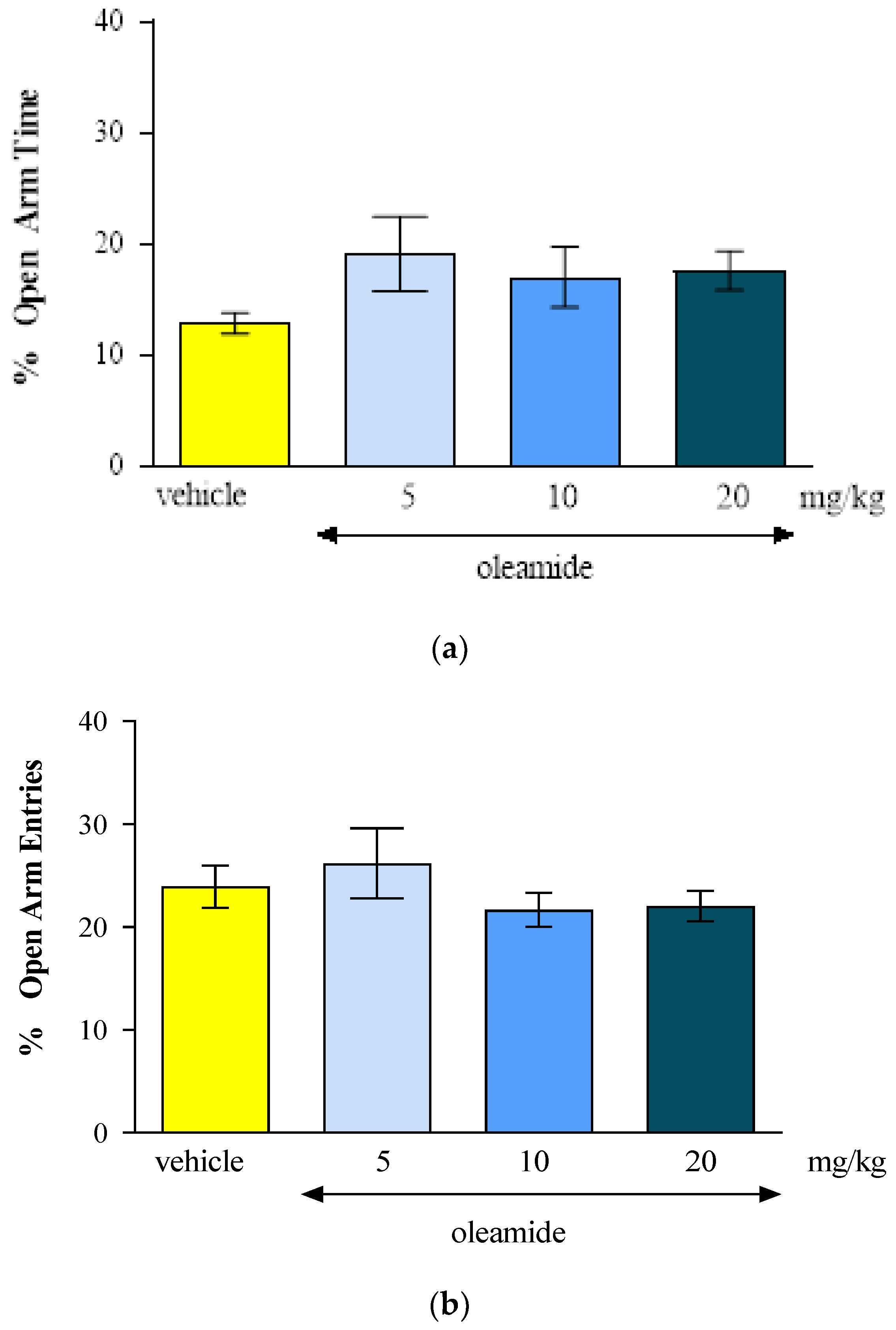
Figure 2.
The effect of an acute administration of the CB1 receptor antagonist: AM 251 on the anxiety-related behavior in the EPM test in mice. Mean (+/- SEM) percentage time spent in open arms and percentage open arm entries in the EPM, 30 min after an acute ip injection of AM 251 (0.25-3 mg/kg) or vehicle in mice; n=8. *p<0.05; **p<0.01; ***p<0.001 vs. vehicle control group, Tukey’s test. *- p<0.05; ** - p<0.01; *** - p<0.001 vs. control group (vehicle).
Figure 2.
The effect of an acute administration of the CB1 receptor antagonist: AM 251 on the anxiety-related behavior in the EPM test in mice. Mean (+/- SEM) percentage time spent in open arms and percentage open arm entries in the EPM, 30 min after an acute ip injection of AM 251 (0.25-3 mg/kg) or vehicle in mice; n=8. *p<0.05; **p<0.01; ***p<0.001 vs. vehicle control group, Tukey’s test. *- p<0.05; ** - p<0.01; *** - p<0.001 vs. control group (vehicle).
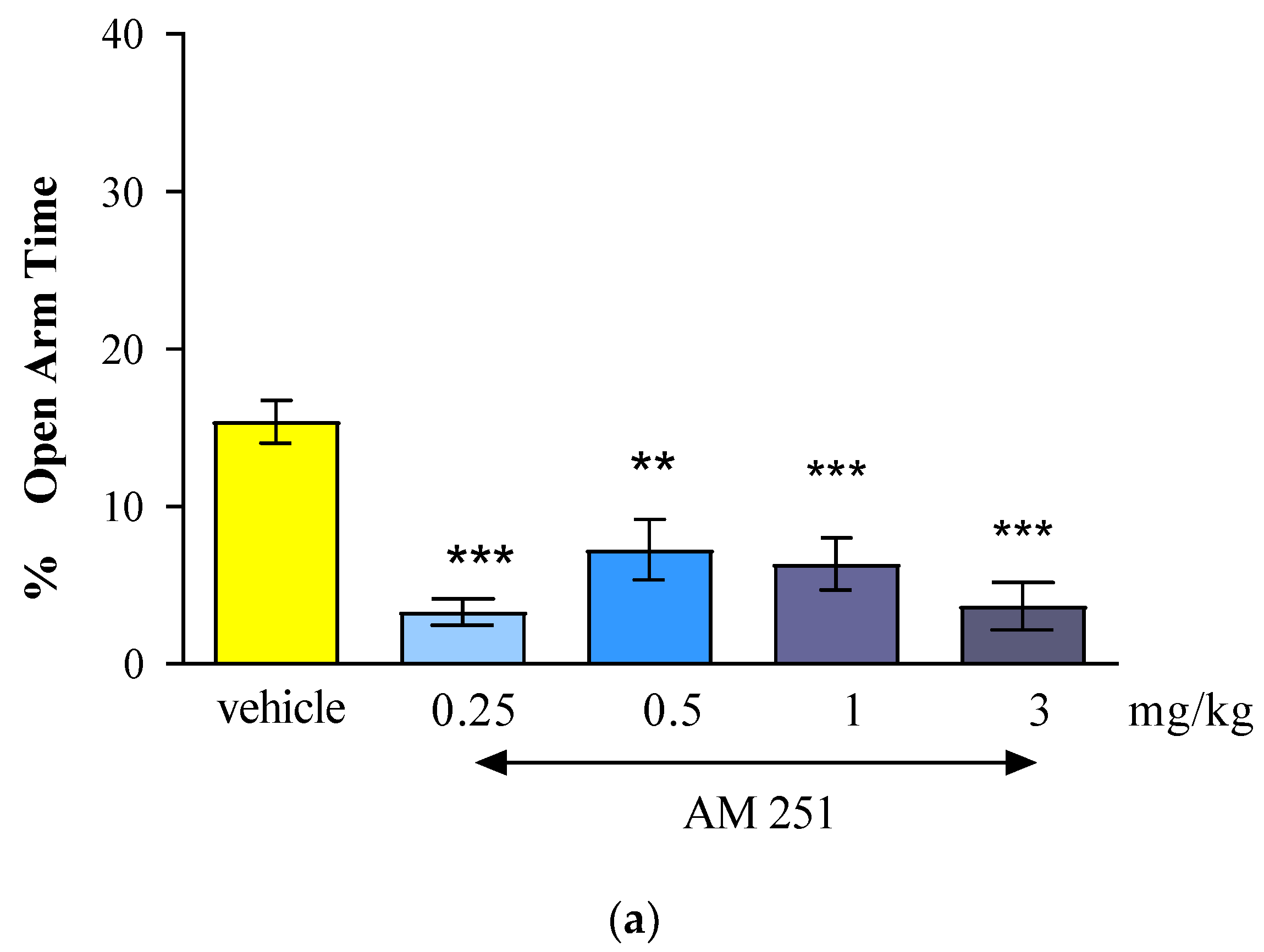
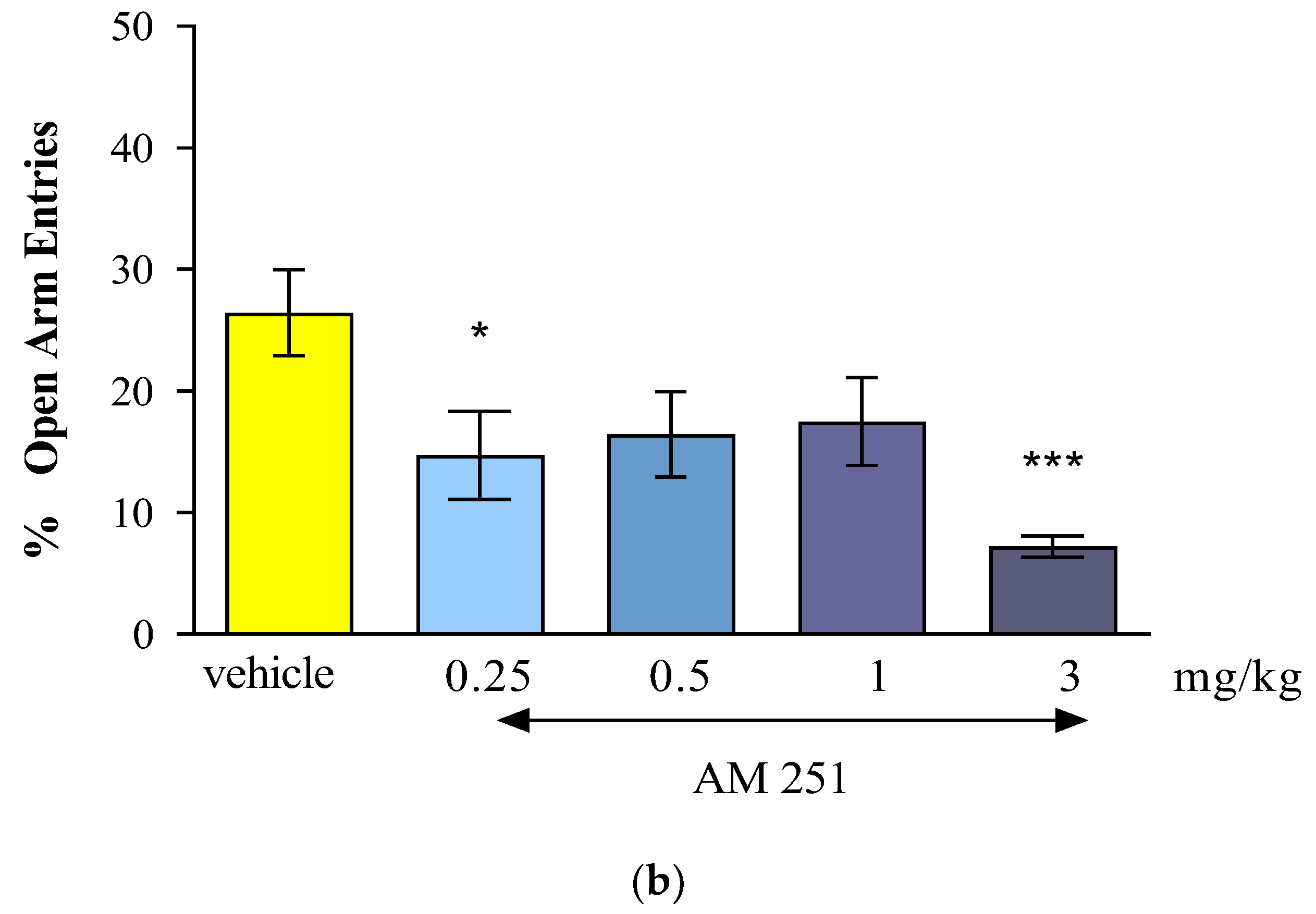
Figure 3.
The effect of an acute administration of the mixed CB1/CB2 receptor agonist: WIN 55,212-2 on the anxiety-related behavior in the EPM test in mice. Mean (+/- SEM) percentage time spent in open arms and percentage open arm entries in the EPM, 30 min after an acute ip injection of WIN 55,212-2 (0.25-1 mg/kg) or vehicle in mice; n=8. **p<0.01 and ***p<0.001 vs. vehicle control group, Tukey’s test. ** – p<0.01; ***- p<0.001 vs. control group (vehicle).
Figure 3.
The effect of an acute administration of the mixed CB1/CB2 receptor agonist: WIN 55,212-2 on the anxiety-related behavior in the EPM test in mice. Mean (+/- SEM) percentage time spent in open arms and percentage open arm entries in the EPM, 30 min after an acute ip injection of WIN 55,212-2 (0.25-1 mg/kg) or vehicle in mice; n=8. **p<0.01 and ***p<0.001 vs. vehicle control group, Tukey’s test. ** – p<0.01; ***- p<0.001 vs. control group (vehicle).
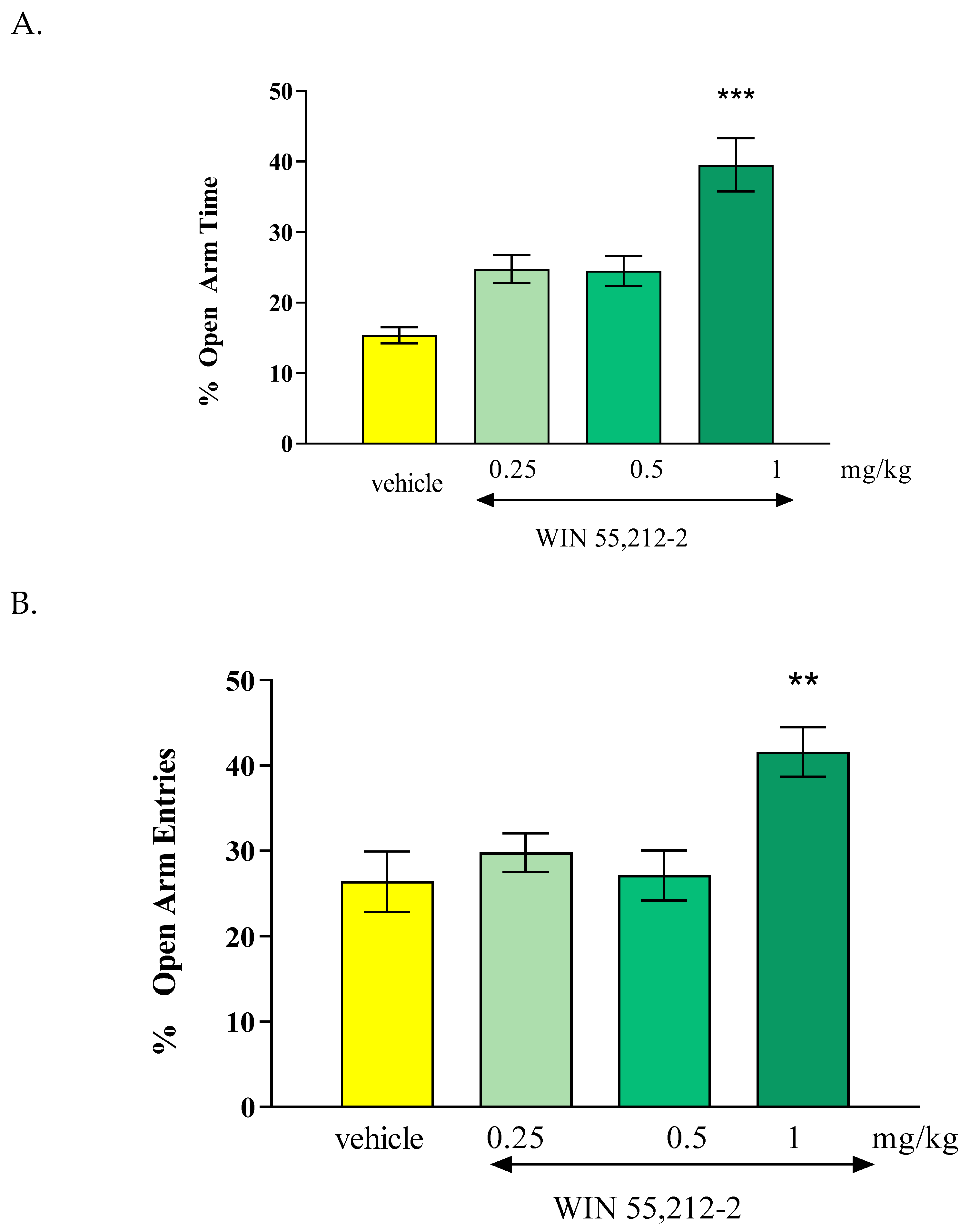
Figure 4.
The effect of an acute administration of the CB2 receptor agonist: JWH 133 on the anxiety-related behavior in the EPM test in mice. Mean (+/- SEM) percentage time spent in open arms and percentage open arm entries in the EPM, 30 min after an acute ip injection of JWH 133 (0.5-2 mg/kg) or vehicle in mice; n=8-10. *p<0.05 vs. vehicle control group, Tukey’s test. * – p<0.05 vs. control group (vehicle).
Figure 4.
The effect of an acute administration of the CB2 receptor agonist: JWH 133 on the anxiety-related behavior in the EPM test in mice. Mean (+/- SEM) percentage time spent in open arms and percentage open arm entries in the EPM, 30 min after an acute ip injection of JWH 133 (0.5-2 mg/kg) or vehicle in mice; n=8-10. *p<0.05 vs. vehicle control group, Tukey’s test. * – p<0.05 vs. control group (vehicle).
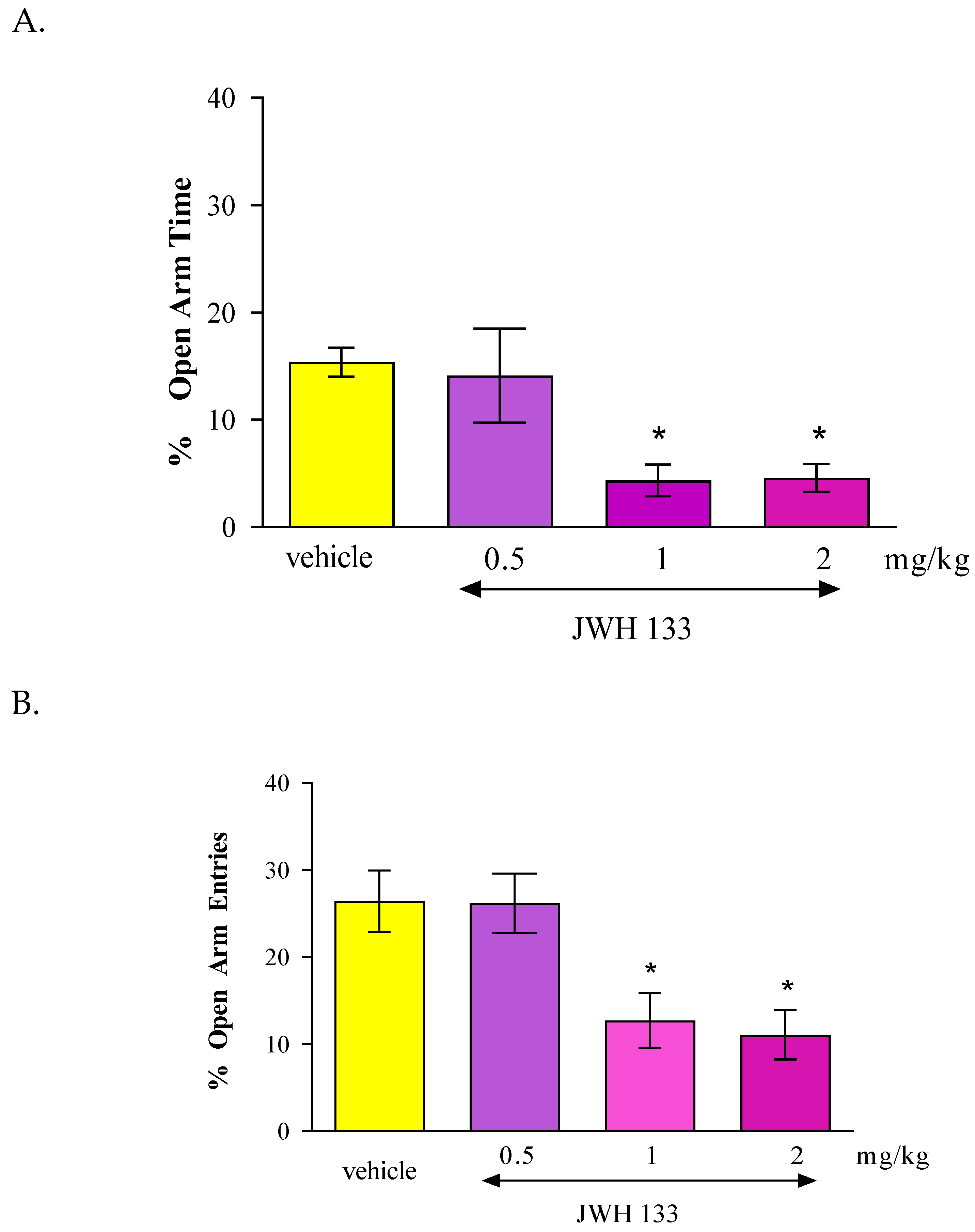
Figure 5.
The effect of an acute administration of the CB2 receptor antagonist: AM 630 on the anxiety-related behavior in the EPM test in mice. Mean (+/- SEM) percentage time spent in open arms and percentage open arm entries in the EPM, 30 min after an acute ip injection of AM 630 (0.25-2 mg/kg) or vehicle in mice; n=8-10. *p<0.05, **p<0.01 and ***p<0.01 vs. vehicle control group, Tukey’s test. * – p<0.05 ** – p<0.01 ***- p<0.001 vs. control group (vehicle).
Figure 5.
The effect of an acute administration of the CB2 receptor antagonist: AM 630 on the anxiety-related behavior in the EPM test in mice. Mean (+/- SEM) percentage time spent in open arms and percentage open arm entries in the EPM, 30 min after an acute ip injection of AM 630 (0.25-2 mg/kg) or vehicle in mice; n=8-10. *p<0.05, **p<0.01 and ***p<0.01 vs. vehicle control group, Tukey’s test. * – p<0.05 ** – p<0.01 ***- p<0.001 vs. control group (vehicle).
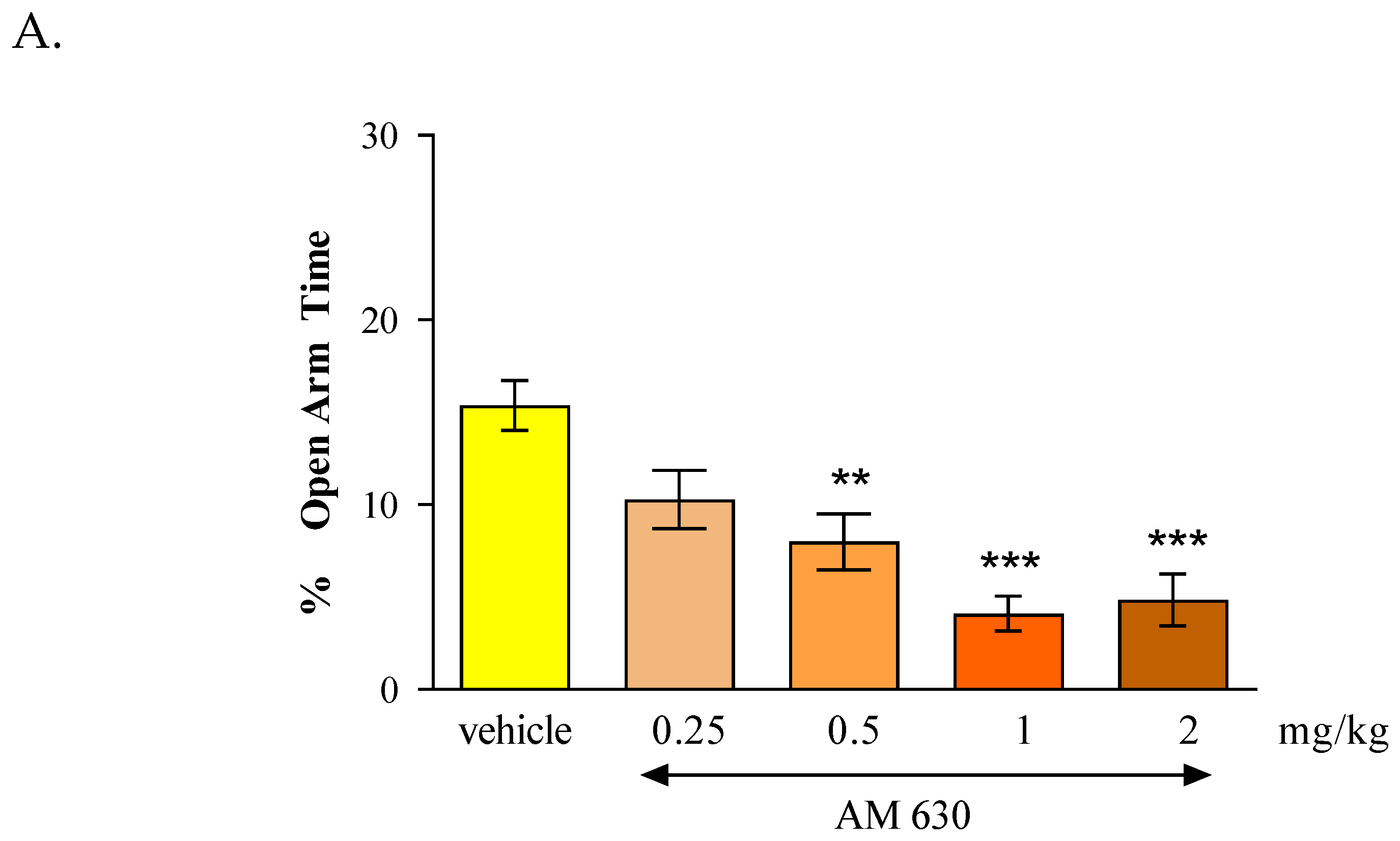
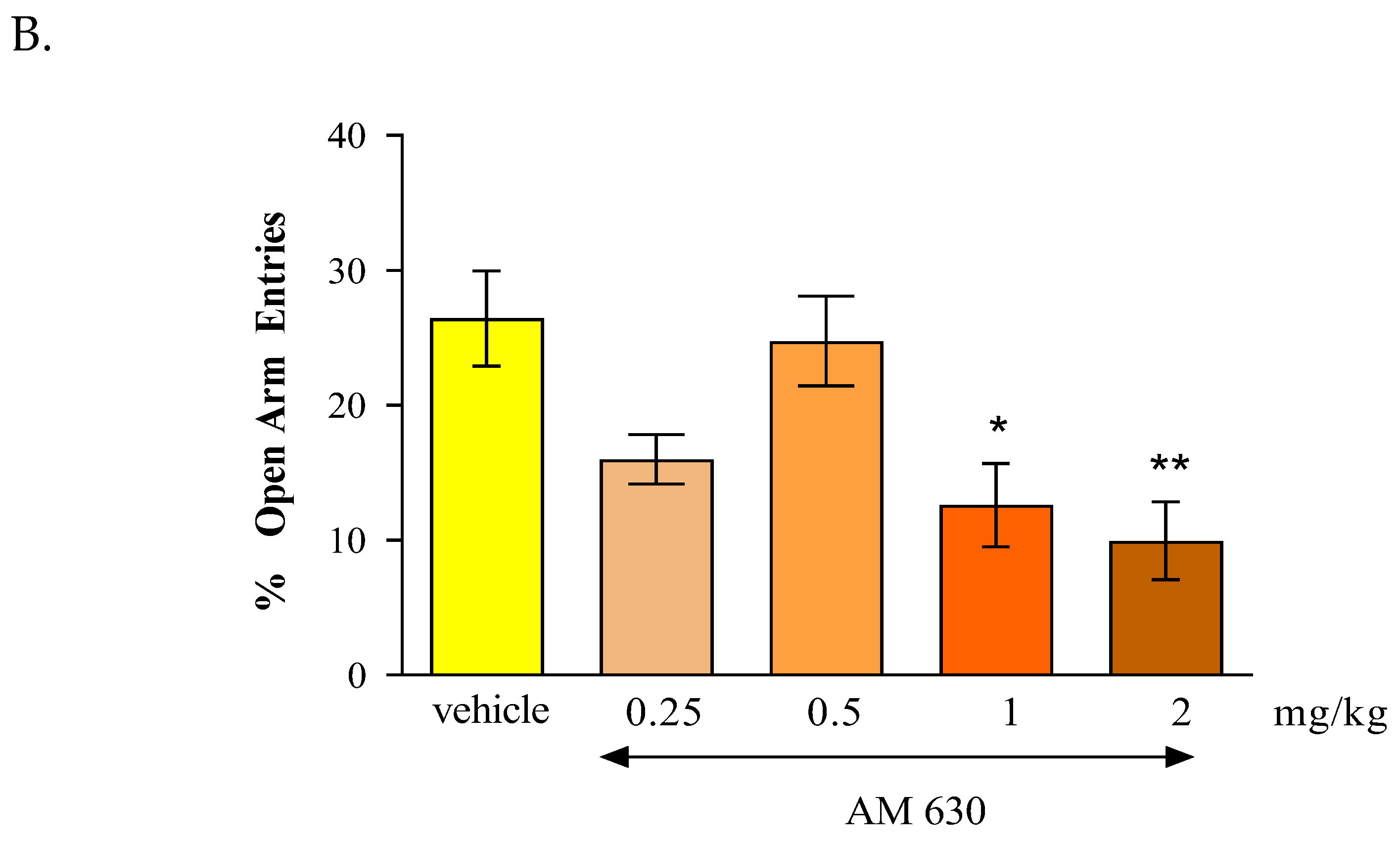
Figure 6.
The effect of an acute administration of the FAAH inhibitor: URB 597 on the anxiety-related behavior in the EPM test in mice. Mean (+/- SEM) percentage time spent in open arms and percentage open arm entries in the EPM, 30 min after an acute ip injection of URB 597 (0.1-1 mg/kg) or vehicle in mice; n=8; **p<0.01 vs. vehicle control group, Tukey’s test. ** – p<0.01 vs. control group (vehicle).
Figure 6.
The effect of an acute administration of the FAAH inhibitor: URB 597 on the anxiety-related behavior in the EPM test in mice. Mean (+/- SEM) percentage time spent in open arms and percentage open arm entries in the EPM, 30 min after an acute ip injection of URB 597 (0.1-1 mg/kg) or vehicle in mice; n=8; **p<0.01 vs. vehicle control group, Tukey’s test. ** – p<0.01 vs. control group (vehicle).
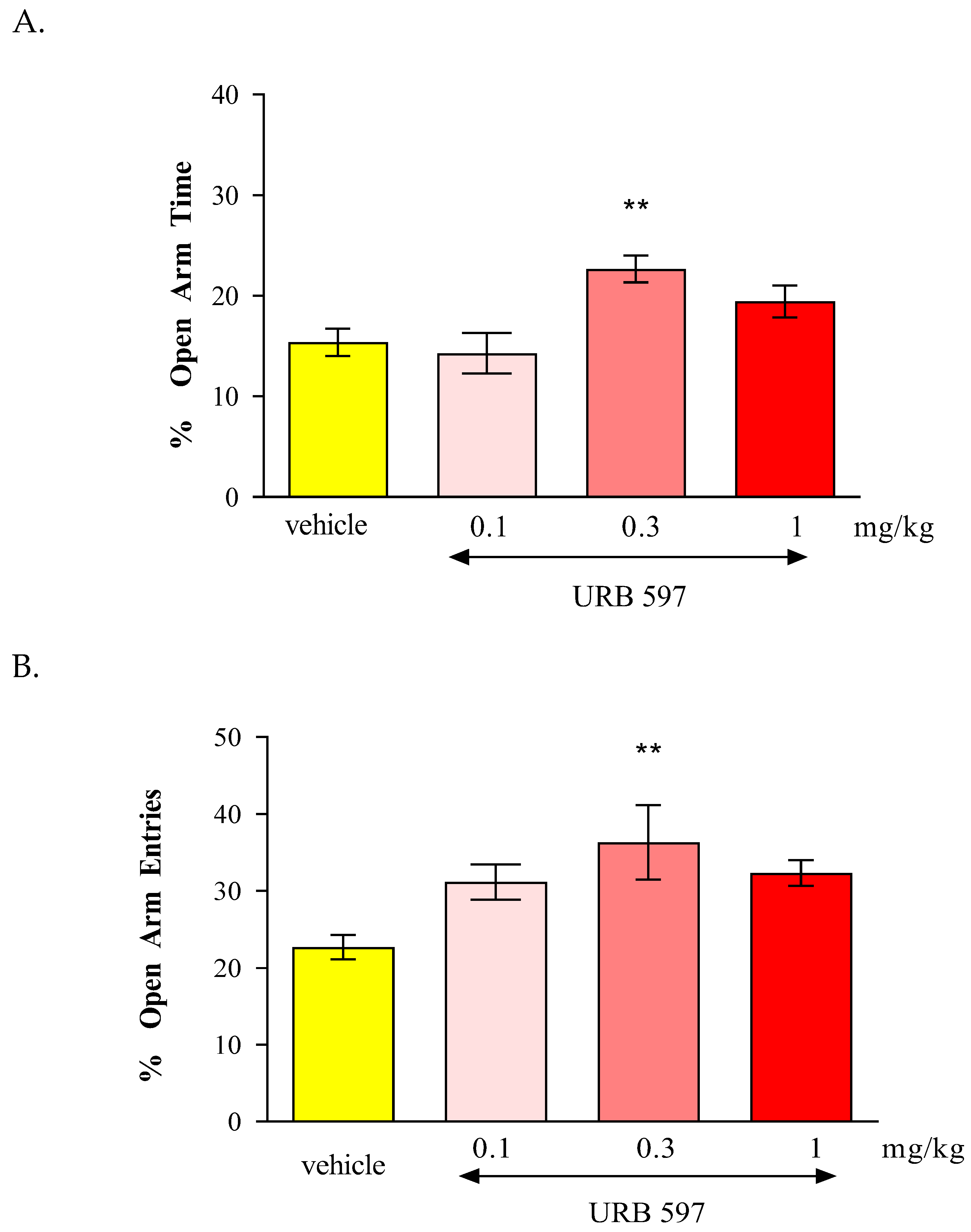
Figure 7.
The effect of an acute administration of the FAAH inhibitor: JZL 184 on the anxiety-related behavior in the EPM test in mice. Mean (+/- SEM) percentage time spent in open arms and percentage open arm entries in the EPM, 30 min after an acute ip injection of JZL 184 (2-40 mg/kg) or vehicle in mice; n=8.
Figure 7.
The effect of an acute administration of the FAAH inhibitor: JZL 184 on the anxiety-related behavior in the EPM test in mice. Mean (+/- SEM) percentage time spent in open arms and percentage open arm entries in the EPM, 30 min after an acute ip injection of JZL 184 (2-40 mg/kg) or vehicle in mice; n=8.
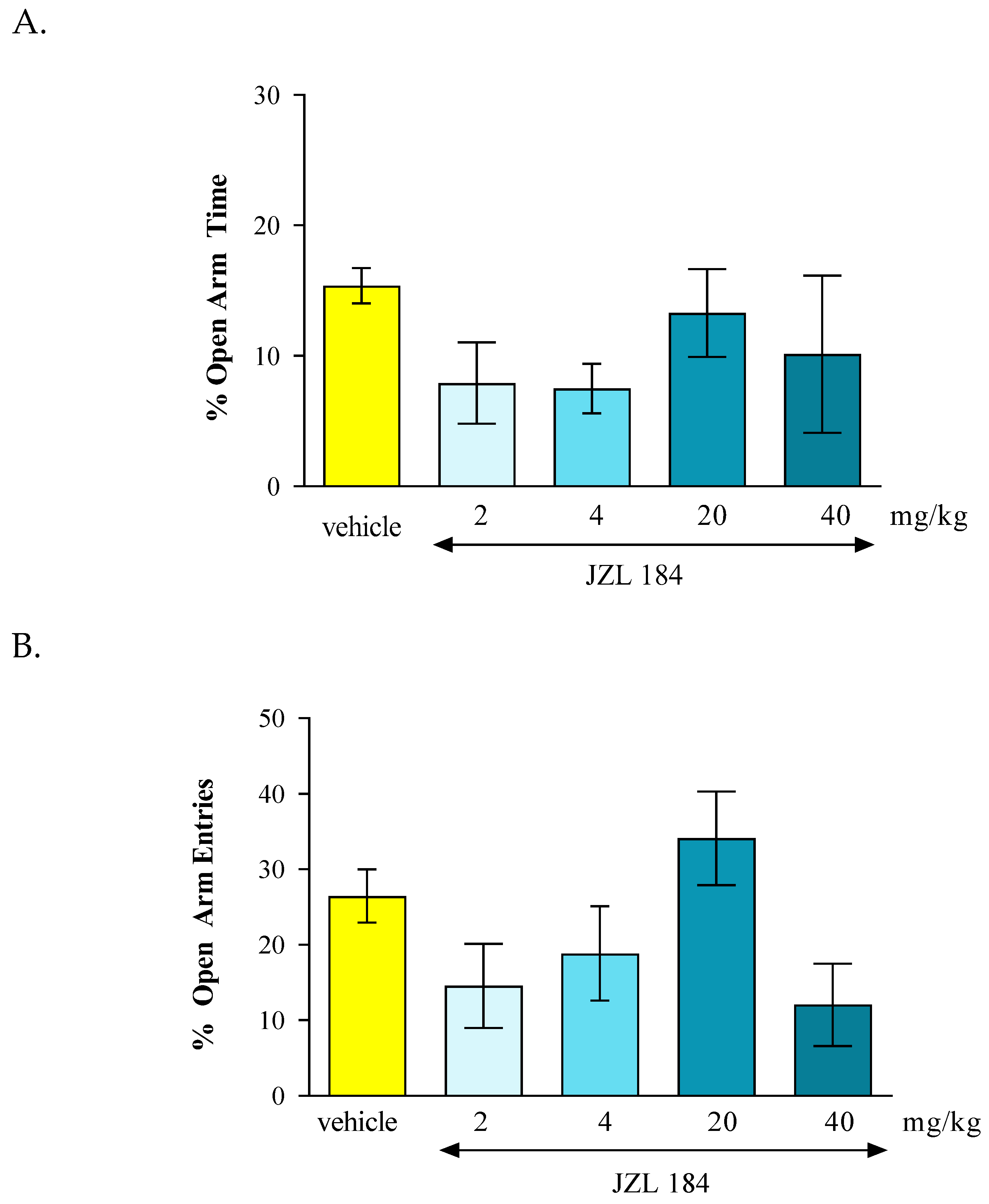

Table 1.
Mean (+/- SEM) number of entries into EPM closed arms 30 min after an acute ip injection of oleamide (5-20 mg/kg) or vehicle in mice; n=8.
Table 1.
Mean (+/- SEM) number of entries into EPM closed arms 30 min after an acute ip injection of oleamide (5-20 mg/kg) or vehicle in mice; n=8.
| Acute drug injection | Mean entries into EPM closed arms | Number of mice |
|---|---|---|
| vehicle | 12.13 ± 1.27 | 8 |
| oleamide (5.0 mg/kg) | ± | |
| oleamide (10.0 mg/kg) | ± | |
| oleamide (20.0 mg/kg) | ± | |
Table 2.
Mean (+/- SEM) number of entries into EPM closed arms 30 min after an acute ip injection of AM 251 (0.25-3 mg/kg) or vehicle in mice; n=8.
Table 2.
Mean (+/- SEM) number of entries into EPM closed arms 30 min after an acute ip injection of AM 251 (0.25-3 mg/kg) or vehicle in mice; n=8.
| Acute drug injection | Mean entries into EPM closed arms | Number of mice |
|---|---|---|
| vehicle | 12.13 ± 1.27 | 8 |
| AM 251 (0.25 mg/kg) | 8.88 ±3.0 | 8 |
| AM 251 (0.5 mg/kg) | 9.13 ±2.53 | 8 |
| AM 251 (1 mg/kg) | 8.5 ±3.07 | 8 |
| AM 251 (3 mg/kg) | 12.13 ± 3.0 | 8 |
Table 3.
Mean (+/- SEM) number of entries into EPM closed arms 30 min after an acute ip injection of WIN 55,212-2 (0.25-1 mg/kg) or vehicle in mice; n=8.
Table 3.
Mean (+/- SEM) number of entries into EPM closed arms 30 min after an acute ip injection of WIN 55,212-2 (0.25-1 mg/kg) or vehicle in mice; n=8.
| Acute drug injection | Mean entries into EPM closed arms | Number of mice |
|---|---|---|
| vehicle | 12.13 ± 1.27 | 8 |
| WIN 55,212-2 (0.25 mg/kg) | 12.50 ± 1.15 | 8 |
| WIN 55,212-2 (0.5 mg/kg) | 12.70 ± 0.94 | 8 |
| WIN 55,212-2 (1 mg/kg) | 9.4 ± 1.07 | 8 |
Table 4.
Mean (+/- SEM) number of entries into EPM closed arms 30 min after an acute ip injection of JWH 133 (0.5-2 mg/kg) or vehicle in mice; n=8-10.
Table 4.
Mean (+/- SEM) number of entries into EPM closed arms 30 min after an acute ip injection of JWH 133 (0.5-2 mg/kg) or vehicle in mice; n=8-10.
| Acute drug injection | Mean entries into EPM closed arms | Number of mice |
|---|---|---|
| vehicle | 12.13 ± 1.27 | 8 |
| JWH 133 (0.5 mg/kg) | 10.88 ± 1.13 | 8 |
| JWH 133 (1 mg/kg) | 12.50 ± 1.28 | 10 |
| JWH 133 (2 mg/kg) | 12.80 ± 0.68 | 10 |
Table 5.
Mean (+/- SEM) number of entries into EPM closed arms 30 min after an acute ip injection of AM 630 (0.25-2 mg/kg) or vehicle in mice; n=8-10.
Table 5.
Mean (+/- SEM) number of entries into EPM closed arms 30 min after an acute ip injection of AM 630 (0.25-2 mg/kg) or vehicle in mice; n=8-10.
| Acute drug injection | Mean entries into EPM closed arms | Number of mice |
|---|---|---|
| vehicle | 12.13 ± 1.27 | 8 |
| AM 630 (0.25 mg/kg) | 12.75 ± 3.49 | 8 |
| AM 630 (0.5 mg/kg) | 10.30 ± 1.56 | 10 |
| AM 630 (1 mg/kg) | 10.70 ± 1.23 | 10 |
| AM 630 (2 mg/kg) | 11.10 ± 1.21 | 9 |
Table 6.
Mean (+/- SEM) number of entries into EPM closed arms 30 min after an acute ip injection of URB 597 (0.1-1 mg/kg) or vehicle in mice; n=8.
Table 6.
Mean (+/- SEM) number of entries into EPM closed arms 30 min after an acute ip injection of URB 597 (0.1-1 mg/kg) or vehicle in mice; n=8.
| Acute drug injection | Mean entries into EPM closed arms | Number of mice |
|---|---|---|
| vehicle | 12.13 ± 1.27 | 8 |
| URB 597 (0.1 mg/kg) | 10.00 ± 1.60 | 8 |
| URB 597 (0.3 mg/kg) | 10.43 ± 4.24 | 8 |
| URB 597 (1 mg/kg) | 11.29 ± 1.50 | 8 |
Table 7.
Mean (+/- SEM) number of entries into EPM closed arms 30 min after an acute ip injection of JZL 194 (2-40 mg/kg) or vehicle in mice; n=8.
Table 7.
Mean (+/- SEM) number of entries into EPM closed arms 30 min after an acute ip injection of JZL 194 (2-40 mg/kg) or vehicle in mice; n=8.
| Acute drug injection | Mean entries into EPM closed arms | Number of mice |
|---|---|---|
| vehicle | 12.13 ± 1.27 | 8 |
| JZL 184 (2 mg/kg) | 10.13 ±2.53 | 8 |
| JZL 184 (4 mg/kg) | 9.71 ±2.50 | 8 |
| JZL 184 (20 mg/kg) | 8.43 ±4.31 | 8 |
| JZL 184 (40 mg/kg) | 8.43 ±3.51 | 8 |
Disclaimer/Publisher’s Note: The statements, opinions and data contained in all publications are solely those of the individual author(s) and contributor(s) and not of MDPI and/or the editor(s). MDPI and/or the editor(s) disclaim responsibility for any injury to people or property resulting from any ideas, methods, instructions or products referred to in the content. |
© 2025 by the authors. Licensee MDPI, Basel, Switzerland. This article is an open access article distributed under the terms and conditions of the Creative Commons Attribution (CC BY) license (http://creativecommons.org/licenses/by/4.0/).
Copyright: This open access article is published under a Creative Commons CC BY 4.0 license, which permit the free download, distribution, and reuse, provided that the author and preprint are cited in any reuse.


