
Preprint
Article

This version is not peer-reviewed.

Comparison of Intraoperative and Short-Term Postoperative Outcomes Between Stand-Alone ALIF, 360° ALIF, and Arthroplasty in Patients with Recurrent Lumbar Disc Herniation: A Retrospective Observational Study

Submitted:

20 December 2024

Posted:

23 December 2024

You are already at the latest version

Abstract

Introduction: To compare intraoperative and short-term postoperative outcomes of patients with recurrent lumbar disc herniation undergoing ALIF Stand-Alone, ALIF 360°, or Arthroplasty. Methods: This retrospective cohort study was conducted at a single center from August 2019 to January 2024. Inclusion criteria included patients over 18 years diagnosed with recurrent lumbar disc herniation undergoing ALIF Stand-Alone, ALIF 360°, or Arthroplasty. Exclusion criteria were incomplete data or other indications. Data collected included demographics, surgical specifics (procedure type, operated levels, graft type, incision type), and clinical outcomes (intraoperative morbidity and short-term postoperative outcomes). Results: Sixty-five patients were evaluated. No intraoperative complications occurred in any group. Average operative times were 165.8 ± 61.72 minutes for ALIF Stand-Alone, 236.25 ± 46.3 minutes for ALIF 360°, and 98.43 ± 45 minutes for Arthroplasty (p < 0.0001). The average postoperative hospital stay was 2.46 ± 1.14 days, with no significant difference between groups (p = 0.515). Postoperative complications were minimal: one surgical site infection in the ALIF Stand-Alone group (p = 0.444) and four instances of sympathetic changes (p = 0.477). Conclusion: There was no significant difference in intraoperative morbidity, short-term postoperative outcomes, or length of stay among the three groups. All techniques demonstrated good results with low morbidity and short hospitalization times post-procedure, suggesting that the choice of technique should be based on the surgeon's experience and the patient's condition and preferences.

Keywords: 
;  ;  ;  ;  ;  

Introduction

Lumbar disc herniation results from a biomechanical imbalance, leading to nucleus pulposus extrusion through microfractures in the annulus fibrosus [1]. Symptomatically, chemokines can induce pain, and compression of the dural sac or nerve root may cause sensory and motor deficits [2]. Treatment can be conservative or surgical, depending on the patient's clinical picture and the surgeon's expertise [3]. When conservative treatment fails, surgical options like nerve root decompression are common [4]. Recurrence of disc herniation occurs in 2% to 25% of cases, often necessitating another surgery [5,6,7,8,9,10].
Surgical options for recurrent disc herniation via the anterior approach include ALIF Stand-Alone, ALIF 360º, and arthroplasty. ALIF Stand-Alone uses a single anterior pathway and intersomatic devices [11], allowing for better disc exposure and correction of sagittal balance [12]. It is associated with reduced bleeding and shorter recovery time [13]. ALIF 360º adds posterior lumbar instrumentation, enhancing stability and fusion, though with longer surgery time and more bleeding compared to ALIF Stand-Alone [14,15]. Arthroplasty preserves disc movement and is usually reserved for initial cases [16,17].
Anterior approaches may increase risks like retroperitoneal injury, vascular injury, or colon perforation [18,19,20,21], but studies show low complication rates and significant improvement in radiculopathy [22]. This study aims to compare ALIF 360º, ALIF Stand-Alone, and arthroplasty for recurrent lumbar disc herniation in terms of intraoperative morbidity and short-term outcomes.

Material and Methods

Study Design

We conducted a retrospective observational study at the Hospital Associação de Assistência à Criança Deficiente (AACD) to evaluate and compare the intraoperative and short-term postoperative outcomes of patients diagnosed with recurrent lumbar disc herniation, undergoing Stand-alone ALIF, 360° ALIF, or Arthroplasty between August 2019 and January 2024. The selection of these surgical procedures reflects the diversity of surgical approaches and enables a comprehensive analysis of efficacy and safety aimed at optimizing evidence-based clinical practices. This manuscript was prepared in accordance with the STROBE [23] (Strengthening the Reporting of Observational Studies in Epidemiology) guidelines.
Recurrent disc herniation was defined as a disc herniation that is refractory to conservative treatment and primary decompressive surgery.

Ethical Considerations

This study was approved by the AACD Hospital Research Ethics Committee, ensuring compliance with ethical standards for research involving human subjects. Informed consent was waived due to the retrospective nature of the study and the use of anonymized data.

Study Population

Initially, 150 patients operated on by our team during the specified period were evaluated. Participant selection was based on the analysis of medical records, following well-defined inclusion and exclusion criteria to ensure the comparability and representativeness of the study groups. Patient selection is summarized in Figure 1.

Inclusion and Exclusion Criteria

The inclusion criteria for this study were adult patients (age ≥ 18 years) diagnosed with recurrent disc herniation after the failure of primary surgical treatment (decompression) who subsequently underwent reoperation using ALIF Stand-Alone, ALIF 360º, or arthroplasty.
Patients who underwent different procedures from those evaluated, had incomplete medical records, or were treated for conditions other than disc herniation, such as pseudarthrosis or spinal stenosis, were excluded from the analysis.

Data Collection

Data collection was carried out by two independent researchers following a standardized protocol for reviewing medical records, ensuring the anonymization and confidentiality of the information [24]. We extracted demographic data (age, Body Mass Index (BMI), and gender), surgical data (type of procedure, levels operated, graft used, and type of incision), and main complaint. We assessed detailed intraoperative complications, including vascular injuries, dural sac injuries, nerve root injuries, and intra- and retroperitoneal organ injuries, also recording repair strategies. Short-term postoperative complications were evaluated up to 6 months after the procedure, with all included patients having already undergone follow-up at 1 week, 1 month, 3 months, and 6 months post-procedure. These postoperative outcomes were already recorded in the medical records of AACD Hospital. The complications assessed included: cavitary hematoma, wall hematoma, surgical wound infection, retroperitoneal infection, lymphocele, evisceration, Deep Vein Thrombosis (DVT), retrograde ejaculation, and sympathetic alterations.

Subgroup Analysis

We conducted a subgroup analysis based on the operated levels (1 level, 2 levels, and 3 levels) concerning the parameters of operative time and postoperative hospitalization duration. The number of operated levels may act as a potential confounder in our study, as these parameters can vary according to the number of treated levels. Additionally, the groups may exhibit heterogeneity regarding the operated levels, which could distort the average operative time and hospitalization duration in each group.

Surgical Technique

Stand-alone ALIF: This technique involves an anterior approach for lumbar interbody fusion, providing direct access to the lumbar spine without significant damage to the posterior musculature. We utilized a retroperitoneal access route to minimize impact on intra-abdominal organs. Complete discectomy was performed, followed by the insertion of an interbody implant filled with autologous, heterologous, or combined graft.
360° ALIF: This approach combined the Stand-alone ALIF technique with percutaneous posterior instrumentation to provide additional stability and increase fusion rates. Following the ALIF procedure as described above, the patient was repositioned for dorsal approach, where percutaneous fixation with pedicular screws and rods was performed, completing the 360-degree fusion.
Arthroplasty: Total disc replacement was performed using an anterior approach similar to that used for Stand-alone ALIF. Discectomy was followed by meticulous preparation of the disc space to accommodate the artificial disc implant, aiming to preserve motion and alleviate pain while avoiding spinal fusion.
All techniques were performed under general anesthesia, following strict asepsis protocols. The selection of surgical technique was based on rigorous clinical criteria, including the location and severity of the disc herniation, presence of comorbidities, and patient preferences after an informed discussion about the risks and benefits of each approach.
The standardization of surgical techniques, combined with the surgical team's experience, ensured consistency and reproducibility of the procedures, allowing for an accurate assessment of postoperative outcomes and complications associated with each technique.

Statistical Analysis

We implemented a robust statistical analysis strategy to compare the variables collected among the procedure groups. Initially, normality tests were performed to determine the choice between parametric and non-parametric analyses. Continuous variables were compared using ANOVA or the Kruskal-Wallis test, while categorical variables were assessed using the Chi-square test or Fisher's exact test, with corrections for multiple comparisons when necessary. When initial analyses revealed statistically significant differences between the surgical procedure groups, post-hoc analyses were conducted to identify which specific groups differed. For these multiple comparisons, the Tukey test was used for adjustments, ensuring rigorous control of Type I error. These post-hoc analyses not only identified the presence of significant differences but also clarified the nature of these differences among specific types of surgical procedures.
The significance level for all analyses was set at p<0.05, with a 95% confidence interval. Statistical analysis was conducted using Python version 3.11, which provides robust analysis for the proposed models and necessary post-hoc comparisons.

Results

Demographic Data

We evaluated 65 patients with a mean age of 43.87 ± 10 years and a median age of 42 years, ranging from 20 to 72 years. Of the participants, 39 (60%) were male, and 26 (40%) were female, with an average BMI of 28.73 ± 5.10 kg/m².
The ALIF Stand-Alone group included 25 patients with a mean age of 43.08 ± 9.41 years (range: 28–59), comprising 13 (52%) males and 12 (48%) females. The average BMI was 30.25 ± 6.9 kg/m². The ALIF 360° group had 24 patients, with a mean age of 48.95 ± 9.19 years (range: 34–72), including 16 (66.7%) males and 8 (33.3%) females, and an average BMI of 28.23 ± 3.2 kg/m². The Arthroplasty group consisted of 16 patients with a mean age of 37.5 ± 8.35 years (range: 20–53), with 10 (62.5%) males and 6 (37.5%) females, and an average BMI of 27.11 ± 3.5 kg/m².
No statistical differences were found among the groups regarding gender (p = 0.562) and BMI (p = 0.475). However, a significant difference in mean age was observed (p < 0.0001), with the post-hoc analysis showing the Arthroplasty group differed from the ALIF 360° group (p = 0.0007). Comparisons between ALIF 360° and ALIF Stand-Alone (p = 0.0685) and between ALIF Stand-Alone and Arthroplasty (p = 0.142) showed no significant age differences.

Complaint

Of the 65 patients analyzed, 27 (41.53%) reported complaints of lumbar or axial pain, 32 (49.23%) reported both lumbar pain and sciatica, and 6 (9.24%) reported only sciatica. Within the ALIF Stand-Alone group, 10 (40%) patients complained solely of lumbar or axial pain, 13 (52%) reported both lumbar pain and sciatica, and 2 (8%) reported only sciatica. In the ALIF 360° group, 11 (45,8%) patients reported lumbar or axial pain, 11 (45,8%) reported both lumbar pain and sciatica, and 2 (8,4%) reported only sciatica. Lastly, in the Arthroplasty group, 6 (37,5%) patients complained of axial or lumbar pain, 8 (50%) of both lumbar pain and sciatica, and 2 (12,5%) of only sciatica.

Operated Levels

In our study, a total of 91 spinal levels were operated on. Surgeries were performed on 27 (41.53%) patients at the L5-S1 level, 16 (24.61%) at L4-L5-S1, 15 (23.08%) at L4-L5, 4 (6.16%) at L3-L4-L5-S1, 2 (3.08%) at L3-L4-L5, and 1 (1.54%) at L3-L4.
In the ALIF Stand-Alone group, 39 levels were operated on: 8 (32%) patients at L5-S1, 10 (40%) at L4-L5-S1, 4 (16%) at L4-L5, 2 (8%) at L3-L4-L5-S1, and 1 (4%) at L3-L4. In the ALIF 360° group, 35 levels were operated on: 9 (37.5%) at L5-S1, 5 (20.9%) at L4-L5-S1, 6 (25%) at L4-L5, 2 (8.3%) at L3-L4-L5-S1, and 2 (8.3%) at L3-L4-L5.
Finally, in the Arthroplasty group, 17 levels were operated on: 10 (62.5%) at L5-S1, 1 (6.25%) at L4-L5-S1, and 5 (31.25%) at L4-L5.

Incision and Graft Type

We performed a longitudinal incision on 54 (83.07%) patients, while transverse and Pfannenstiel incisions were used in 5 (7.7%) and 6 (9.23%) patients, respectively. In the Stand-Alone group, 20 (80%) incisions were longitudinal, 2 (8%) were transverse, and 3 (12%) were Pfannenstiel. In the ALIF 360° group, 21 (87.5%) incisions were longitudinal, and 3 (12.5%) were Pfannenstiel. In the Arthroplasty group, 13 (81.25%) incisions were longitudinal, and 3 (18.75%) were transverse.
We used grafts in 49 patients, all in ALIF surgeries. Of these, 15 (30.61%) were heterologous, 16 (32.66%) autologous, and 18 (36.73%) were combined. In the Stand-Alone group, 6 (24%) received heterologous grafts, 11 (44%) autologous, and 8 (32%) combined. In the ALIF 360° group, 9 (37.5%) received heterologous grafts, 5 (20.83%) autologous, and 10 (41.67%) combined.

Details of the Outcomes

No intraoperative complications, such as vascular, nerve root, dural sac, or organ injuries, occurred in any group. The average operative time was 165.8 ± 61.72 minutes in the ALIF Stand-Alone group, 236.25 ± 46.3 minutes in the ALIF 360° group, and 98.43 ± 45 minutes in the Arthroplasty group. The overall average for the 65 patients was 175.23 ± 74.69 minutes. Statistical analysis showed a significant difference between the groups (p < 0.0001), with post-hoc analysis confirming this difference in all subgroups (p < 0.0001).
The average hospital stay was 2.2 ± 0.76 days for ALIF Stand-Alone, 2.75 ± 1.48 days for ALIF 360°, and 2.43 ± 1.03 days for Arthroplasty. The overall average was 2.46 ± 1.14 days, with no statistical differences between the groups (p = 0.515).
No short-term postoperative complications such as hematomas, infections, or deep vein thrombosis occurred. One patient (1.53%) from the ALIF Stand-Alone group developed a surgical wound infection, treated with oral cephalexin, resolving in 10 days. There was no statistical difference regarding infection rates (p = 0.444). Four patients (6.15%) experienced sympathetic alterations—one from the ALIF Stand-Alone group, one from ALIF 360°, and two from Arthroplasty—but no statistical differences were found (p = 0.477). These alterations resolved within 5 to 7 days.

Subgroup Analysis

The mean total operative time was 166.27 ± 80.35 minutes for patients with 1 operated level, 188.82 ± 58.98 minutes for 2 levels, and 223.75 ± 64.72 minutes for 3 levels. In the subgroup analysis, the mean time for 1 level was 164.61 ± 65.29 minutes in the ALIF Stand-Alone group, 238 ± 50.73 minutes in the ALIF 360° group, and 96 ± 45.48 minutes in the Arthroplasty group, with a statistically significant difference (p < 0.0001).
For 2 levels, the mean time was 172.5 ± 62.37 minutes in the ALIF Stand-Alone group and 246.42 ± 25.28 minutes in the ALIF 360° group, with a significant difference (p = 0.02). The Arthroplasty group had only one patient with 2 levels (134 minutes). For 3 levels, the mean time was 190 ± 14.14 minutes in the ALIF Stand-Alone group and 257.5 ± 88.38 minutes in the ALIF 360° group, with a significant difference (p < 0.0001).
Regarding hospitalization, the mean stay was 2.37 ± 1.24 days for 1 level, 2.7 ± 0.92 days for 2 levels, and 2.95 ± 0.65 days for 3 levels. For 1 level, the mean stay was 1.93 ± 0.76 days in the ALIF Stand-Alone group, 2.8 ± 1.65 days in the ALIF 360° group, and 2.33 ± 0.97 days in the Arthroplasty group, with no significant difference (p = 0.172).
For 2 levels, the stay was 2.5 ± 0.7 days in the ALIF Stand-Alone group and 3 ± 1.15 days in the ALIF 360° group (p = 0.334). For 3 levels, it was 2.7 ± 0.71 days in the ALIF Stand-Alone group and 3.2 ± 0.62 days in the ALIF 360° group (p = 0.293).

Discussion

The analysis of three patient series with chronic pain referred for spinal surgery due to recurrent lumbar herniated discs showed no significant difference in gender and BMI among patients selected for ALIF 360°, ALIF Stand-Alone, and Arthroplasty surgeries (p-value > 0.05). The only parameter that showed a statistically significant difference was the age distribution between patients undergoing arthroplasty versus ALIF 360° (p-value = 0.0007). This suggests a certain homogeneity in the selection of patients for each subgroup.
Although the indications for intersomatic fusion techniques and arthroplasty are similar [25,26], previous studies highlight some differences in perioperative parameters between these techniques [27,28]. Other studies suggest a greater similarity between short-term and long-term outcomes [29,30]. Based on this, the current study aims to report the experience obtained with the three different techniques indicated for recurrent lumbar disc herniation surgery. The objective is to compare the reported perioperative morbidity with recent evidence from the literature.

Perioperative Complications

In this study, there were no recorded vascular lesions, nerve root injuries, dural sac injuries, or injuries to intra- and extraperitoneal organs in any of the subgroups evaluated. Regarding short-term postoperative outcomes, there was an occurrence of 1 surgical wound infection in the ALIF Stand-Alone group; 1 sympathetic dysfunction for ALIF Stand-Alone, 1 for ALIF 360°, and 2 for Arthroplasty. None of these complications were statistically significant when the subgroups were compared (p-value > 0.05).
A retrospective study conducted by Rolt et al. (2017) selected 205 patients for arthroplasty and 99 patients for ALIF, all with indications of Degenerative Disc Disease (DDD), to elucidate the complications between the two groups. A vascular injury rate of 4.4% was obtained for arthroplasty, while it was 2.2% for ALIF, with no statistical relevance (p-value = 0.478). No other injuries were reported beyond a single dural sac injury for arthroplasty (0.5%) [31].
In contrast, a meta-analysis by Li et al. (2020), reported a statistically significant difference for dural sac injury, infections, vascular injury, neurological damage, and nerve root injury between ALIF patients (86/321) and Arthroplasty patients (100/655); (RR=0.59) with DDD [27]. Although the present study did not reveal significant differences in these parameters, comparisons with the literature suggest that studies with larger sample sizes are needed to more accurately assess the rates of perioperative complications between arthroplasty and intersomatic fusion surgeries.
It is important to note that the referenced meta-analysis and retrospective study include patients with a broader range of indications, while our study focuses solely on patients with recurrent lumbar disc herniation. This discrepancy may also explain the differences in outcomes between our study and the two aforementioned studies.
There is a technical similarity between ALIF 360° and ALIF stand-alone surgeries, with the primary difference being posterior instrumentation [32]. Previous studies report a higher chance of vascular or nerve damage due to the displacement of the posteriorly inserted screw [33]. Increased damage to the posterior musculature is also associated with persistent postoperative lower back pain [34]. There were no significant differences in the complications of both anterior fusion techniques in this study. This may be related to the surgical similarity between the techniques. Strube et al. (2012) reported no statistical significance regarding perioperative complications between anteroposterior ALIF and ALIF stand-alone up to six months postoperatively [35].

Operative Time

In this study, the comparison of the average operative time between the three procedures showed a statistically significant difference (p-value < 0.0001). Arthroplasty had the shortest average duration of 98.43 ± 45 minutes, followed by ALIF Stand-alone at 165.8 ± 61.72 minutes, and ALIF 360° at 236.25 ± 46.3 minutes.
Concordantly, Wei et al. (2013) reported in a meta-analysis of 6 clinical trials with 1603 patients the existence of a statistical difference in operative time between the anterior fusion group and the arthroplasty group [36]. Zigler et al. (2012) also reported a shorter operation time for patients undergoing arthroplasty [37].
In a prospective study comparing 40 patients undergoing ALIF Stand-alone versus 40 patients undergoing ALIF 360°, a significantly shorter surgical time was reported for the technique without instrumentation (p-value < 0.001) [35]. Consistent with the current study, Ubdy et al. (2015) concluded that ALIF Stand-Alone has a shorter surgical time than the combined technique [38].
The authors conducted a subgroup analysis of operative time, evaluating separately the number of levels operated to determine if this would result in a difference in the average operative time. The analysis revealed that operative time continued to show a statistically significant difference among the three procedures when patients had only one level operated. For two and three levels operated, it was not possible to calculate the mean for the Arthroplasty group, as there was only one patient in the two-level subgroup and no patients in the three-level subgroup. Nevertheless, the analysis of the ALIF Stand-Alone and 360° groups maintained the same pattern of statistically significant difference in average operative time. Therefore, within our cohort, this subgroup analysis provided further validation of the observed difference in operative time among the three techniques. Additionally, it was observed that the average operative time descriptively increased with the number of levels operated, which is consistent with the findings of Ho et al. (2020) [39]. Specifically, in the referenced study, patients with three or more exposed levels had a significantly longer operative time compared to those with one or two exposed levels (p=0.0116).

Length of Hospital Stay

Shultz et al. (2018) retrospectively evaluated 1,801 patients who underwent ALIF and 255 patients who underwent arthroplasty for DDD to confirm adverse event and readmission rates. It was reported that although the operative time was not significantly different between the two cohorts, the postoperative hospital stay was longer for ALIF cases (+0.28 days; p-value < 0.001) [40]. Previous studies have also reported that the combined ALIF technique has a longer hospital stay compared to the technique without posterior instrumentation [38,41]. In anterior fusion surgeries, factors such as advanced age, prolonged operative time, and significant blood loss are also known to increase hospitalization time [42]. In contrast, in the current study, there was no statistical significance between the three groups regarding the length of hospital stay. This may be due to the absence of intraoperative complications in the reported series. The average hospital stay for all 65 operated patients was 2.46 ± 1.14 days.
The authors also conducted a subgroup analysis of postoperative hospital stay, evaluating separately the number of levels operated to determine if this would result in a difference in hospitalization duration. The analysis showed that the length of hospital stay did not present a statistically significant difference among the three procedures when patients had only one level operated. For cases with two and three levels operated, it was not possible to calculate the mean for the Arthroplasty group, as there was only one patient in the two-level subgroup and no patients in the three-level subgroup. However, the analysis of the ALIF Stand-Alone and 360° groups also did not show a statistically significant difference in average hospitalization duration. Therefore, this subgroup analysis provided greater confidence in the evaluation of hospital stay duration among the three groups. The authors also observed that the average hospital stay descriptively increased with the number of levels operated, similarly to the operative time, which is consistent with the findings of McGirt et al. (2017) [43], where an increase in the number of operated levels was identified as a risk predictor for longer hospitalization time.

Strengths and Limitations

This study fulfills its role by reporting intraoperative morbidity and short-term postoperative outcomes in patients undergoing the described techniques. These findings are essential for comparing the three surgeries performed for the same indication of recurrent disc herniation correction. The authors aimed to consider potential confounders, such as the number of operated levels, by conducting subgroup analyses to avoid erroneous conclusions.
The retrospective nature of the study limits the data analysis. The number of patients (n = 65) may have influenced the interpretation of the results. Thus, future studies with a larger population are necessary to confirm the findings of this study.

Conclusions

The evaluated subgroups demonstrate significant similarity regarding intraoperative morbidity and short-term postoperative outcomes for patients undergoing surgery for recurrent lumbar disc herniation. A statistically significant difference was identified in operative times among the techniques, with Arthroplasty having the shortest surgical duration and ALIF 360° the longest. The results suggest that short-term health outcomes are comparable among the three groups. All techniques demonstrated good results with low morbidity and short hospitalization times post-procedure, suggesting that the choice of technique should be based on the surgeon's experience and the patient's condition and preferences. Future studies that include extended follow-up of these patients may be essential for better determining long-term morbidity.

Funding

This research had no funding sources.

Conflicts of Interest

None.

References

  1. Bogduk, N. Functional anatomy of the spine. Handbook of Clinical Neurology. 2016;136:675–88.
  2. Ruben Ngnitewe Massa, Mesfin FB. Disc Herniation [Internet]. Nih.gov. StatPearls Publishing; 2023.
  3. Yao M, Xu B, Li Z, Zhu S, Tian Z, Li D, et al. A comparison between the low back pain scales for patients with lumbar disc herniation: validity, reliability, and responsiveness. Health and Quality of Life Outcomes [Internet]. 2020 Jun 10;18.
  4. Silvinato A, Simões RS, Buzzini RF, Bernardo WM. Lumbar herniated disc treatment with percutaneous hydrodiscectomy. Revista da Associação Médica Brasileira. 2018 Sep;64(9):778–82.
  5. Carragee EJ, Han MY, Suen PW, Kim D. Clinical outcomes after lumbar discectomy for sciatica: the effects of fragment type and anular competence. The Journal of Bone and Joint Surgery American Volume [Internet]. 2003 Jan 1;85(1):102–8.
  6. Wera GD, Marcus RE, Ghanayem AJ, Bohlman HH. Failure within One Year Following Subtotal Lumbar Discectomy. The Journal of Bone and Joint Surgery-American Volume. 2008 Jan;90(1):10–5.
  7. Rogers, LA. Experience with limited versus extensive disc removal in patients undergoing microsurgical operations for ruptured lumbar discs. Neurosurgery [Internet]. 1988 Jan 1;22(1 Pt 1):82–5.
  8. O’Sullivan MG, Connolly AE, Buckley TF. Recurrent lumbar disc protrusion. British Journal of Neurosurgery [Internet]. 1990;4(4):319–25.
  9. Lebow RL, Adogwa O, Parker SL, Sharma A, Cheng J, McGirt MJ. Asymptomatic Same-Site Recurrent Disc Herniation After Lumbar Discectomy. Spine. 2011 Dec;36(25):2147–51.
  10. Ebeling U, Kalbarcyk H, Reulen HJ. Microsurgical reoperation following lumbar disc surgery. Journal of Neurosurgery. 1989 Mar;70(3):397–404.
  11. Pradhan BB, Nassar JA, Delamarter RB, Wang JC. Single-Level Lumbar Spine Fusion: A Comparison of Anterior and Posterior Approaches. Journal of Spinal Disorders & Techniques. 2002 Oct;15(5):355–61.
  12. Mobbs RJ, Phan K, Malham G, Seex K, Rao PJ. Lumbar interbody fusion: techniques, indications and comparison of interbody fusion options including PLIF, TLIF, MI-TLIF, OLIF/ATP, LLIF and ALIF. Journal of Spine Surgery [Internet]. 2015 Dec 1;1(1):2–18.
  13. Vadim Goz, Weinreb JC, Schwab FJ, Virginie Lafage, Errico TJ. Comparison of complications, costs, and length of stay of three different lumbar interbody fusion techniques: an analysis of the Nationwide Inpatient Sample database. 2014 Sep 1;14(9):2019–27.
  14. Ahlquist S, Thommen R, Park HY, Sheppard W, James K, Lord E, et al. Implications of sagittal alignment and complication profile with stand-alone anterior lumbar interbody fusion versus anterior posterior lumbar fusion. Journal of Spine Surgery. 2020 Dec;6(4):659–69.
  15. Vadim Goz, Weinreb JC, Schwab FJ, Virginie Lafage, Errico TJ. Comparison of complications, costs, and length of stay of three different lumbar interbody fusion techniques: an analysis of the Nationwide Inpatient Sample database. 2014 Sep 1;14(9):2019–27.
  16. Gamradt SC, Wang JC. Lumbar disc arthroplasty. The Spine Journal. 2005 Jan 1;5(1):95–103.
  17. Sandhu FA, Dowlati E, Garica R. Lumbar Arthroplasty: Past, Present, and Future. Neurosurgery. 2019 Nov 14.
  18. Mobbs RJ, Phan K, Daly D, Rao PJ, Lennox A. Approach-Related Complications of Anterior Lumbar Interbody Fusion: Results of a Combined Spine and Vascular Surgical Team. Global Spine Journal. 2015 Jul 16;6(2):147–54.
  19. Comer GC, Smith MJ, Hurwitz EL, Mitsunaga KA, Kessler R, Carragee EJ. Retrograde ejaculation after anterior lumbar interbody fusion with and without bone morphogenetic protein-2 augmentation: a 10-year cohort controlled study. The Spine Journal. 2012 Oct 1;12(10):881–90.
  20. Garg J, Woo K, Hirsch J, Bruffey JD, Dilley RB. Vascular complications of exposure for anterior lumbar interbody fusion. Journal of Vascular Surgery. 2010 Apr;51(4):946–50.
  21. Mahoney JR, Barnes D, Pahl D. Perforated ileus after L5-S1 anterior lumbar interbody fusion: a case report presentation. AME Case Reports. 2019 Jul;3:21–1.
  22. Phan K, Lackey A, Chang N, Ho YT, Abi-Hanna D, Kerferd J, et al. Anterior lumbar interbody fusion (ALIF) as an option for recurrent disc herniations: a systematic review and meta-analysis. Journal of Spine Surgery. 2017 Dec;3(4):587–95.
  23. STROBE. STROBE – Strengthening the Reporting of Observational Studies in Epidemiology [Internet]. STROBE. 2023. Available from: https://www.strobe-statement.org/.
  24. Luo L, Li L, Hu J, Wang X, Hou B, Zhang T, et al. A hybrid solution for extracting structured medical information from unstructured data in medical records via a double-reading/entry system. BMC Medical Informatics and Decision Making. 2016 Aug 30;16(1).
  25. Mobbs RJ, Loganathan A, Yeung V, Rao PJ. Indications for Anterior Lumbar Interbody Fusion. Orthopaedic Surgery. 2013 Aug;5(3):153–63.
  26. Sandhu FA, Dowlati E, Garica R. Lumbar Arthroplasty: Past, Present, and Future. Neurosurgery. 2019 Nov 14.
  27. Li Y, Sun P, Chen D, Tang L, Chen C, Wu A. Artificial total disc replacement versus fusion for lumbar degenerative disc disease: an update systematic review and meta-analysis. Turkish Neurosurgery. 2018.
  28. Silva GM da, Rodrigues LMR, Lopes FA, Cesar AEM. QUALITY OF LIFE ANALYSIS ON PATIENTS AFTER ARTHROPLASTY OR LUMBAR ARTHRODESIS. Coluna/Columna [Internet]. 2023 Apr 17 [cited 2023 Sep 12];22:e262320.
  29. Guyer RD, McAfee PC, Banco RJ, Bitan FD, Cappuccino A, Geisler FH, et al. Prospective, randomized, multicenter Food and Drug Administration investigational device exemption study of lumbar total disc replacement with the CHARITÉ artificial disc versus lumbar fusion: Five-year follow-up. The Spine Journal. 2009 May;9(5):374–86.
  30. Berg S, Tullberg T, Branth B, Olerud C, Tropp H. Total disc replacement compared to lumbar fusion: a randomised controlled trial with 2-year follow-up. European Spine Journal. 2009 Jun 9;18(10):1512–9.
  31. Holt RT, Majd ME, Isaza JE, Blumenthal SL, McAfee PC, Guyer RD, et al. Complications of Lumbar Artificial Disc Replacement Compared to Fusion: Results From the Prospective, Randomized, Multicenter US Food and Drug Administration Investigational Device Exemption Study of the Charité Artificial Disc. International Journal of Spine Surgery. 2007;1(1):20–7.
  32. Christensen, FB. Lumbar spinal fusion. Outcome in relation to surgical methods, choice of implant and postoperative rehabilitation. Acta Orthopaedica Scandinavica Supplementum [Internet]. 2004 Oct 1;75(313):2–43.
  33. Amato V, Giannachi L, Irace C, Corona C. Accuracy of pedicle screw placement in the lumbosacral spine using conventional technique: computed tomography postoperative assessment in 102 consecutive patients. Journal of Neurosurgery: Spine. 2010 Mar;12(3):306–13.
  34. Fan S, Hu Z, Zhao F, Zhao X, Huang Y, Fang X. Multifidus muscle changes and clinical effects of one-level posterior lumbar interbody fusion: minimally invasive procedure versus conventional open approach. European Spine Journal. 2009 Oct 30;19(2):316–24.
  35. Strube P, Hoff E, Hartwig T, Perka CF, Gross C, Putzier M. Stand-alone Anterior Versus Anteroposterior Lumbar Interbody Single-level Fusion After a Mean Follow-up of 41 Months. Journal of Spinal Disorders & Techniques. 2012 Oct;25(7):362–9.
  36. Wei J, Song Y, Sun L, Lv C. Comparison of artificial total disc replacement versus fusion for lumbar degenerative disc disease: a meta-analysis of randomized controlled trials. International Orthopaedics. 2013 May 4;37(7):1315–25.
  37. Zigler JE, Delamarter RB. Five-year results of the prospective, randomized, multicenter, Food and Drug Administration investigational device exemption study of the ProDisc-L total disc replacement versus circumferential arthrodesis for the treatment of single-level degenerative disc disease. Journal of Neurosurgery: Spine. 2012 Dec;17(6):493–501.
  38. Udby PM, Bech-Azeddine R. Clinical outcome of stand-alone ALIF compared to posterior instrumentation for degenerative disc disease: A pilot study and a literature review. Clinical Neurology and Neurosurgery. 2015 Jun;133:64–9.
  39. Ho VT, Martinez-Singh K, Colvard B, Lee JT, Chandra V. Increased vertebral exposure in anterior lumbar interbody fusion associated with venous injury and deep venous thrombosis. Journal of Vascular Surgery: Venous and Lymphatic Disorders. 2020 Aug.
  40. Shultz BN, Wilson AT, Ondeck NT, Bovonratwet P, McLynn RP, Cui JJ, et al. Total Disc Arthroplasty Versus Anterior Interbody Fusion in the Lumbar Spine Have Relatively a Few Differences in Readmission and Short-term Adverse Events. Spine [Internet]. 2018 Jan 1;43(1):E52–9.
  41. Kim JS, Kim DH, Lee SH, Park CK, Jang Yeon Hwang, Cheh G, et al. Comparison Study of the Instrumented Circumferential Fusion with Instrumented Anterior Lumbar Interbody Fusion as a Surgical Procedure for Adult Low-Grade Isthmic Spondylolisthesis. 2010 May 1;73(5):565–71.
  42. Kobayashi K, Ando K, Kato F, Kanemura T, Sato K, Hachiya Y, et al. Predictors of Prolonged Length of Stay After Lumbar Interbody Fusion: A Multicenter Study. Global Spine Journal. 2018 Sep 13;9(5):466–72.
  43. McGirt MJ, Parker SL, Chotai S, Pfortmiller D, Sorenson JM, Foley K, et al. Predictors of extended length of stay, discharge to inpatient rehab, and hospital readmission following elective lumbar spine surgery: introduction of the Carolina-Semmes Grading Scale. Journal of Neurosurgery Spine [Internet]. 2017 Oct 1 [cited 2020 Dec 13];27(4):382–90.
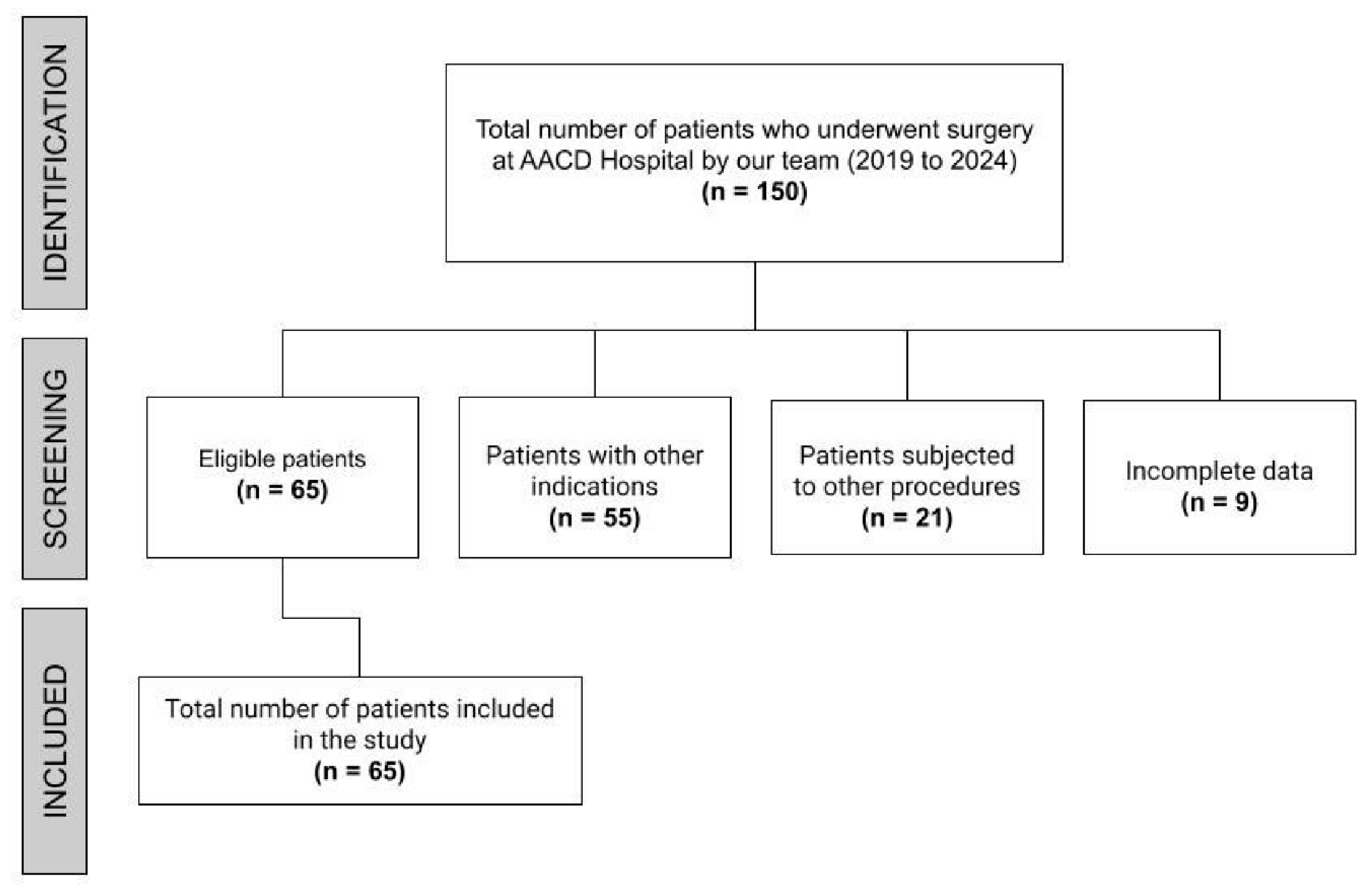
Figure 1. STROBE Flowchart.
Preprints 143561 g001
Disclaimer/Publisher’s Note: The statements, opinions and data contained in all publications are solely those of the individual author(s) and contributor(s) and not of MDPI and/or the editor(s). MDPI and/or the editor(s) disclaim responsibility for any injury to people or property resulting from any ideas, methods, instructions or products referred to in the content.
Copyright: This open access article is published under a Creative Commons CC BY 4.0 license, which permit the free download, distribution, and reuse, provided that the author and preprint are cited in any reuse.
Prerpints.org logo

Preprints.org is a free preprint server supported by MDPI in Basel, Switzerland.

Subscribe

Disclaimer

Terms of Use

Privacy Policy

Privacy Settings

© 2025 MDPI (Basel, Switzerland) unless otherwise stated