

Submitted:
26 November 2024
Posted:
26 November 2024
You are already at the latest version
Abstract
Dexamphetamine (DEX) is widely used in treatments, but concerns persist about its potential for addiction. This review aimed to assess the risks of DEX dependence by examining existing literature. Originally planned as a systematic review, it was adjusted due to a lack of qualifying studies. Of seven cohort and case studies reviewed, only four poorly documented cases of possible DEX addiction were found. Commonly cited papers on prescription amphetamine addiction did not hold up to scrutiny. Overall, the evidence that DEX is addictive is limited and inconclusive, highlighting the need for more rigorous research to clarify its true addiction risk.
Keywords:
dexamphetamine
; addiction
; dependence
; stimulants
1. Introduction
DEX is a drug with a wide range of effects, most notably increasing alertness and concentration, mood elevation and improving impulse control [1]. These have enabled DEX to be utilized therapeutically for a variety of different indications. In the early to mid-1900s, DEX was widely used to treat conditions such as asthma, depression, and various psychiatric disorders [2]. DEX was also found to be a useful drug for weight management [3] Its use extended into military settings, to reduce fatigue and enhance the confidence and mood of soldiers in training and combat [4].
However, despite widespread use, addiction to DEX was not seen as a problem. In 1955 an editorial in the British Medical Journal mentioned that an “amphetamine habit” could develop in “unstable” individuals using DEX for the purpose of restoring their confidence, but stated that “there is no evidence that true drug addiction develops to it, as tolerance, craving and the withdrawal syndrome are not associated with its use. There is no risk of cumulative ill-effects from even the prolonged administration of dexamphetamine in therapeutic doses” [5].
In 1962 a pivotal article was published in the British Medical Journal with new evidence from case reports of amphetamines addiction, with psychosis and psychiatric disturbance in patients who had been hospitalized following consumption of massive doses of amphetamine [6]. Subsequently the US Food and Drug Administration declared that the use of amphetamines for obesity and depression was unproven, and that they could be used only for the treatment of narcolepsy and Attention Deficit Hyperactivity Disorder (ADHD), uses that persist to this day [7,8].
The efficacy of stimulants, including amphetamine, DEX, and its pro-drug version lisdexamfetamine (lis-DEX) is well-established for ADHD in short-term efficacy trials [9,10,11]. In combination with behavioral intervention, stimulants are generally accepted as a safe and effective treatment for ADHD in both children and adults [9,12,13,14,15]. In Australia, prescribing data show an increase in prescriptions of DEX for ADHD of 257% in the past ten years [16]. DEX and lis-DEX are also among the most frequently prescribed stimulants worldwide [17,18,19].
More recently DEX has been used for treating methamphetamine dependence and addiction, where it is associated with reduced street amphetamine use [20], increased compliance with the treatment protocol [20], and a reduction in symptoms of methamphetamine withdrawal and craving [21,22]. In this high risk population, there were no reports of addiction to DEX as a complication of treatment.
Although stimulants such as phentermine are still used and approved for weight management in many countries, the cheaper alternative DEX is not recommended for obesity due to its perceived addiction potential [23]. However, there may be potential for DEX to be reconsidered for treating obesity. The value of DEX for obesity was documented in an observational cohort study published in 1947, where 110 patients lost an average of 13.3% of their total body weight [3]. More recently an observational pre and post intervention study published in 2015 [24], administered DEX in doses of up to 30 mg twice daily for six months and was associated with mean weight loss of 10.6 kg (p<0.0001). The study reported no problems with abuse or any withdrawal syndrome.
The main constraint to the wider use of DEX, including for treatment of obesity remains concern about its addictive potential [25]. We reviewed the evidence for DEX addiction. This review was complicated by the changes in the definition of addiction over time, which had to be taken into consideration for interpreting the literature.
2. Evolving Definitions of Drug Addiction
The definition of drug addiction has evolved from simple descriptions such as habitual use [26], to physiological and/or psychological addiction [27], to abuse and dependence [28,29,30,31], and finally to the term substance use disorder (SUD) [30]. These changes can be tracked through previous versions of the Diagnostic and Statistical Manual of Mental Disorders (DSM) and The International Classification of Diseases (ICD). The term "drug addiction" has been phased out in updates to the DSM in favor of “drug dependence” [31], which is a component of substance use disorder (SUD). The DSM-5 defines Substance Use Disorder (SUD) as requiring at least 2 out of 11 criteria to be met within the past 12 months. SUD is categorized by severity [30]:
Mild: 2-3 criteria met
Moderate: 4-5 criteria met
Severe: 6 or more criteria met
In contrast, the ICD-11offers a more streamlined approach and describes dependence using three key criteria [32]:
Impaired control over substance use
Increasing precedence of substance use over other aspects of life, including maintenance of health, and daily activities and responsibilities, such that substance use continues or escalates despite the occurrence of harm or negative consequences
Physiological features indicative of neuroadaptation to the substance, including: 1) tolerance to the effects of a substance or a need to use increasing amounts of a substance to achieve the same effect; 2) withdrawal symptoms following cessation or reduction in use of a substance or 3) repeated use of a substance or pharmacologically similar substances to prevent or alleviate withdrawal symptoms.
A literature review of the definition of addiction published by Sussman and Sussman in 2011 sought to resolve the variability in definitions of addiction, suggesting that five elements would appear to encapsulate addiction [33]. Given the complexities and the changing definitions, for the purposes of this review we have chosen to use the Sussman’s five elements of addiction (Table 1).
An important limitation of framework proposed by Sussman and Sussman is that it is unclear whether all the criteria are required to be met confirm a diagnosis of addiction.
3. Method
A search of the literature was conducted on PubMed, Scopus and Embase in September 2022 and updated for records up to January 2024 using the keywords “dexamphetamine”, “addiction”, and “dependence”. The inclusion criteria were human studies and articles published in English. Types of studies included case reports, database audits, cohort studies, Randomized Controlled Trials (RCT), and systematic reviews/meta-analyses. Initial screening involved excluding abstracts that did not mention “amphetamine”. Only abstracts containing the phrases (amphetamine OR stimulant) and (addiction OR dependence) were kept. Papers published after DSM 5 acceptance (2013 onwards) required additional search terms “amphetamine use disorder” or “stimulant use disorder”. This was to detect studies using SUD as per DSM 5. Only papers discussing and investigating addiction, dependence, or stimulant use disorder were included. Studies that investigated stimulant use disorder to a level equivalent to that of DSM IV substance abuse, or to a level that was considered less than moderate to severe SUD were also excluded. One paper that reported addiction to a drug combination of DEX plus a barbiturate was excluded [34]. Reference lists of relevant papers were examined for additional papers not found during the original search.
Due to the small number of relevant studies and their methodological diversity, their findings could not be used for meta-analysis. Instead, a detailed description of each is given, including a statement as to whether the findings meet the Sussman and Sussman’s five elements of addiction. The level of the evidence of the study type, based on the National Health and Medical Research Council (NHMRC) [35] is also included. Because the commonest use of DEX and lis-DEX is for treatment of ADHD, we also conducted a search of randomized controlled trials with the keywords “ADHD” and “Dexamphetamine” on PubMed, Scopus, and Embase. Of 250 trials, three studies inferred that DEX may have an inherent potential to cause addiction, but none provided direct evidence [36,37,38]. The remaining studies did not mention addiction or dependence. Additionally, from this search only four RCTs directly investigated the use of DEX in ADHD therapy.
4. Results
This search produced 1740 articles (Figure 1). Three papers with original data met the search criteria initially, and a fourth was sourced from review of the reference lists of relevant papers. Three reviews have also been included as they specifically discussed DEX in relation to addiction, and have been highly cited as evidence of DEX addiction. Therefore it was important to examine their underlying evidence.
Paper 1 Amphetamine addiction and habituation Grahn, 1958 [39]
This case series from a single physician described 32 patients using different types of amphetamines, including Benzedrine (amphetamine) and Dexedrine (DEX), at dosages ranging from 10 mg to 30 mg daily. Addiction was based on the World Health Organization (WHO) definition, which, at the time of the study, included elements of the DSM 5 criteria of SUD and DSM IV dependence. The study identified only one patient who met the WHO definition of addiction as determined by the author as: “continuous use of a drug in such a way or quantity that the user, society, or both are harmed” (Sussman’s element 5). This individual had anxiety, chronic anemia and early Parkinsonism. It was reported that after release from a mental hospital she was taking over 100 mg of amphetamine and Dexedrine daily. The author concluded that addiction to amphetamines was possible but extremely rare.
Opinion: This article presents one patient who met only one criterion addiction: preoccupation with the behavior. Specific details were lacking to determine whether others were met. Therefore, this is a possible but not a definitive case of DEX addiction.
Possible single case of addiction.
Evidence rating Level IV: this is a case series study with no comparator group.
Paper 2 Amphetamine addiction Bell & Threthowan, 1961 [40].
This observational cohort study included 14 cases of amphetamine abuse, including amphetamine, DEX, and methamphetamine. Over 70% of the cohort presented with poly-amphetamine use, with an average maximum daily dosage of 230 mg and a median of 150 mg. Only two of the 14 individuals had solely used DEX. All 14 had underlying personality disorders, and it was noted that amphetamine use led to feelings of elevated self-esteem and delusions of omnipotence. All 14 individuals apparently suffered drug withdrawal symptoms. All had experienced a disturbed childhood, and many had a family history of alcoholism and other mental illnesses. An important limitation of the study was that addiction to amphetamines was based solely on self-report rather than the systematic application of specific criteria. The authors concluded that widespread amphetamine use led to the occurrence of addiction; however, they noted that underlying personality instability may have contributed to the impressions of addiction rather than the drug alone.
Opinion: This paper hinted at a drug withdrawal syndrome, but this was not supported with any descriptive detail. Although the effects of stimulants were mentioned, two elements from Sussman’s definition of addiction (1 and 5: suffering negative consequences and preoccupation with the behavior were met in the form of withdrawal). The authors only suggested the continued use of amphetamines led to a reduced occupational level but did not specify how the varying quantities and doses of stimulants affected each individual patient to a level to be able to determine whether the features of addiction were met. Therefore, we cannot conclude that addiction had occurred in the two out of 14 cases taking solely DEX.
Addiction to DEX possible but not definitive in two individuals solely using DEX.
Evidence rating Level IV: this is a retrospective case series with no comparator group.
Paper 3 Habituation And Addiction To Amphetamines Kiloh & Brandon, 1962 [41]
In this case-series study, the authors reported on amphetamine prescribing at two hospitals in Newcastle, UK. Of the 40 different amphetamine formulations prescribed, drinamyl (a combination of DEX and barbiturate) accounted for 53% of all prescriptions. The authors presented two cases as examples of presumed amphetamine addiction in individuals using very high doses. Case 1 involved a woman in her 30s with a history of DEX use of up to 200 mg. After being caught by police, she was confined to a bed and was showing symptoms of hypersomnia. This event was preceded by several years of phenmetrazine use with associated withdrawal symptoms (“feeling depressed and flat”). Prior to being caught, she was said to be restless, overactive, doing her housework in spurts and unable to settle. She suffered additional withdrawal symptoms after hospitalization as well as hallucinations, sleepiness, and depression.
Case 2 was a woman in her 20s believed to be addicted to Drinamyl (combination of amobarbital and DEX). Again, much of the relevant clinical detail was lacking. The paper also suggested that 20% of amphetamine users were taking “moderate” doses and were habituated or addicted to the drug, showing dependence on it and being resistant to its withdrawal. However, this was based on a survey of general practitioners' subjective estimates. The paper used the WHO definition of addiction in use at the time: an overpowering desire or need to continue taking the substance and obtain it by any means; a tendency to increase the dose; a psychological and physical dependence on the effects of the substance; detrimental effect on the individual and on society [42].
Opinion: This paper suggests that at least some individuals might be consuming excessive quantities of amphetamines and fulfil the WHO definition of addiction 1957 [42]. It is important to note that the WHO definition at the time, unlike ICD-11 and DSM 5, solely listed characteristics of addiction without providing a definitive set of criteria for diagnosis. Case 1 satisfies the minimum requirement for an ICD-11 diagnosis of addiction to DEX (dose escalation and a withdrawal syndrome) and meets two of Sussman’s five elements of addiction (1 and 5: preoccupation with the behavior and suffering negative consequences). However, case 2 lacks sufficient information to infer addiction. Furthermore the patient took drinamyl, of which DEX is only one component. In conclusion, the paper highlights the potential for abuse and describes a single case meeting two requirements for addiction to DEX taken at massive doses.
One possible case of DEX addiction.
Evidence rating Level IV: the authors utilized a case-series approach to illustrate habituation and addiction to amphetamines including DEX, based on subjective estimates.
Paper 4 Dextroamphetamine. Evaluation of psychomimetic properties in man Griffith et al., 1972 [43]
In this interventional cohort study, DEX was given to nine adult men with a history of drug abuse. DEX was initially administered intravenously and then orally every hour across several days. Cumulative doses ranged from 100 mg to 800 mg over up to 6 days. The effects of DEX were monitored via recorded interviews, narrative descriptions obtained by psychiatrists, a symptom checklist, retrospective descriptions by the participants, and psychological tests. After 50 mg of cumulative dosage had been reached, all participants displayed characteristics of depression; six went on to develop psychosis. All psychotic behavior ceased upon discontinuation of DEX, and there was no mention of any withdrawal syndrome, craving or tolerance.
Opinion: In this carefully monitored experimental study giving large doses of DEX over a few days, sufficient to cause psychosis in some, there was no mention of addiction to DEX according to the ICD-11 guidelines or Sussman’s five elements. It is perhaps of significance that addiction was neither described nor apparently even considered a risk during this experiment.
No evidence of DEX addiction.
Evidence rating Level III C: the authors included a control period of this single arm study. It lacked a placebo arm or randomization but was conducted to a level higher than level IV.
Paper 5 Addictiveness of central stimulants Dackis & Gold, 1990 [44]
This review, which is a chapter in the book Addiction Potential of Abused Drugs and Drug Classes, discusses the addictive potential of amphetamines (specifically DEX and methamphetamine) and cocaine. Cocaine addiction was a major focus due to the cocaine epidemic at the time of publishing. The authors’ hypothesis was that stimulant addiction is mainly driven by cravings and drug-induced euphoria. The authors cited data from a cocaine hotline indicating that a significant number of cocaine users (74%) were addicted. They also discussed stimulant dependence in animal studies. They noted that while the stimulants methylphenidate and DEX are widely used for ADHD treatment, there is potential for abuse in young patients. However, the authors considered the therapeutic doses as typically being too low to promote euphoria or craving, the presumed major drivers of dependence.
Opinion: This review, while discussing features of addiction, did not present data from human studies that met the ICD-11 criteria for substance addiction or any features of addiction. The primary focus of the author was on the abuse of stimulants with a focus mainly on cocaine. Not only is convincing evidence of DEX addiction lacking, but the authors put forward the opinion that low doses that do not induce euphoria should not be addictive.
No evidence of DEX addiction.
Evidence rating: the NHMRC level of evidence only rates review studies that are to the level of a systematic review, which this is not. While some of the animal studies were conducted to a high evidence rating level, supporting human studies are lacking.
Paper 6 America's first amphetamine epidemic 1929-1971: a quantitative and qualitative retrospective with implications for the present Rasmussen, 2008 [25]
This historical review paper was included as it has been frequently cited (258 citations in Google Scholar) and the powerful message that it conveys is that there is a problem of increasing amphetamine abuse. This is mainly due to increased illicit methamphetamine production, but increased amphetamine prescription rates have allegedly contributed.
This author suggested prescribed amphetamines may lead to addiction, citing data from four sources. The first was from the Substance Abuse and Mental Health Services Administration 2002-2006, from which the author asserted that during 2004 “Some 3 million Americans consumed amphetamine-type stimulants of all kinds nonmedically” and that “250 000 to 350 000 of them were addicted”. However, DEX addiction cannot be inferred because the dataset would have included methamphetamine [45].
The second source was Kiloh and Brandon [41] (Paper 3 above). Rasmussen reported this as evidence of “significant dependency on prescribed amphetamines”, based on the primary care physician survey.
The third source was a GP survey by Brandon and Smith in 1962 [46]. This was a cohort study of data collected prospectively by GPs on consecutive patients prescribed amphetamines in general practice. Of their sample of 620 patients, 20.5% were considered habituated to amphetamines. Any differentiation between habituation and addiction is unclear. The paper uses the term “habituation” throughout, apart from one mention of addiction: “Of the total addiction 24.5% occurred in the over 65 years age group”. Rasmussen apparently combined the findings of the studies by Brandon and Smith, 1962 [46], and Kiloh and Brandon, 1962 [41], inferring a “dependency rate among past-year medical amphetamine users of 6.7 to 10%.”
The fourth reference was another British study, which found that one-third of people taking Dexamyl (similar to Drinamyl: contains DEX and a barbiturate) were either habituated or dependent on the medication [47]. However, this could have been due to the barbiturate component.
Opinion: This historical review did not present any novel human data. The sources cited do not contribute to the case for the addictive properties of DEX.
This paper did not contribute any new or convincing evidence to support the claim that the use of DEX leads to addiction.
Evidence rating: The NHMRC level of evidence only rates review studies that are to the level of a systematic review, which this is not.
Paper 7 The potential for misuse and abuse of medications in ADHD: a review Clemow & Walker, 2014 [48]
This review paper was included as it discussed ADHD medications including DEX and spoke towards dependence. It explored the evidence for misuse, abuse, dependence, and diversion of ADHD medications, specifically methylphenidate and amphetamines. The authors defined addiction as a physical and psychological dependence and noted that an individual may be psychologically dependent on a substance without being truly addicted. The authors noted that misuse and diversion of these medications is common, with prevalence rates of illicit use ranging from 5 to 10% of high school students and 5% to 35% of tertiary education students [49].
While there was evidence of non-medical use of stimulants for performance enhancement and recreational use, there was no clear evidence presented to support any natural progression from stimulant use to the development of a true stimulant dependence.
Opinion: This literature review addresses concerns regarding the misuse and diversion of ADHD medications, including amphetamines. However, it points out that there is no clear association between long-term use of these medications and addiction. This paper presents no definitive link between DEX usage and addiction.
Evidence rating: The NHMRC level of evidence only rates review studies that are to the level of a systematic review, which this is not.
Discussion
The seven studies reviewed were of poor design and gave low quality evidence. Only four studies presented original data. Three were rated level IV, and one study level III C. The three reviews were not systematic reviews and therefore did not qualify for NHMRC evidence grade criteria.
Our comprehensive literature review on DEX addiction yielded a total of only four possible, but not definitive cases, who met either one or two criteria for addiction to DEX. These cases were poorly documented, with insufficient clinical detail for full evaluation.
We found a notable lack of recent studies, with only two published this century and the majority dating back to the 1950s to 1980s. While early research was more specific in identifying the type of stimulant leading to addiction, recent evidence has failed to differentiate between different amphetamine-based compounds, simply inferring a similar addiction potential. The design of the older studies was weak, including three observational cohort studies with a limited number of participants ranging from 9 to 32. Three were literature reviews. One was a historical review spanning the 1930s to 1970s [25]. The second lacked evidence from studies in humans linking DEX to addiction [44], while the third only briefly discussed DEX and addiction, noting a lack of conclusive evidence for long-term non-medical use leading to addiction [48].
5. Conclusions
Our comprehensive review yielded minimal evidence of DEX addiction. The review underscores the need for a more nuanced approach when considering amphetamine addiction and dependence, emphasizing the importance of evaluating specific types of amphetamines, doses, and circumstances of use. Therefore in this literature review spanning 77 years, only four possible cases of addiction to DEX were found. Papers cited in evidence of prescription amphetamine addiction [25], but did not stand up to scrutiny. In conclusion, definitive evidence that DEX is addictive is severely lacking. Given the large amount of research on the use of stimulant medication for treating ADHD, the failure to report specifically on the presence or absence of instances of addiction represents a missed opportunity for making any specific contribution to this important question.
Author Contributions
Hazer Khalifa: Writing-review and editing, project administration, conceptualization, investigation; Emily Hibbert: Review and editing; Natalie Gauci: Review and editing; Alison Poulton: Supervision, conceptualization, review and editing.
Funding
This research received no external funding.
Conflicts of Interest
The authors declare no conflicts of interest.
References
- Gozal, D.; Molfese, D.L. Attention deficit hyperactivity disorder: From genes to patients; Springer Science & Business Media: 2005.
- Rasmussen, N. Chapter Two - Amphetamine-Type Stimulants: The Early History of Their Medical and Non-Medical Uses. In International Review of Neurobiology, Taba, P., Lees, A., Sikk, K., Eds.; Academic Press: 2015; Volume 120, pp. 9-25.
- Ray, H.M. The obese patient; a statistical study and analysis of symptoms, diagnosis and metabolic abnormalities; sex differences; treatment. Am J Dig Dis 1947, 14, 153-162. [CrossRef]
- Bower, E.A.; Phelan, J.R. Use of amphetamines in the military environment. Lancet 2003, 362 Suppl, s18-19. [CrossRef]
- Questions and Comments. BMJ 1955, 1, 679.
- Kiloh, L.G.; Brandon, S. Habituation and addiction to amphetamines. Br Med J 1962, 2, 40-43. [CrossRef]
- Uebel-von Sandersleben, H.; Dangel, O.; Fischer, R.; Ruhmann, M.; Huss, M. Effectiveness and safety of dexamphetamine sulfate (Attentin(®)) in the routine treatment of children and adolescents with ADHD: results from a 12-month non-interventional study. Scand J Child Adolesc Psychiatr Psychol 2021, 9, 73-86. [CrossRef]
- Castells, X.; Blanco-Silvente, L.; Cunill, R. Amphetamines for attention deficit hyperactivity disorder (ADHD) in adults. Cochrane Database Syst Rev 2018, 8, Cd007813. [CrossRef]
- Biederman, J.; Boellner, S.W.; Childress, A.; Lopez, F.A.; Krishnan, S.; Zhang, Y. Lisdexamfetamine Dimesylate and Mixed Amphetamine Salts Extended-Release in Children with ADHD: A Double-Blind, Placebo-Controlled, Crossover Analog Classroom Study. Biological Psychiatry 2007, 62, 970-976. [CrossRef]
- Biederman, J.; Wigal, S.B.; Spencer, T.J.; McGough, J.J.; Mays, D.A. A post hoc subgroup analysis of an 18-day randomized controlled trial comparing the tolerability and efficacy of mixed amphetamine salts extended release and atomoxetine in school-age girls with attention-deficit/hyperactivity disorder. Clin Ther 2006, 28, 280-293. [CrossRef]
- Faraone, S.V.; Buitelaar, J. Comparing the efficacy of stimulants for ADHD in children and adolescents using meta-analysis. Eur Child Adolesc Psychiatry 2010, 19, 353-364. [CrossRef]
- Daly, B.P.; Creed, T.; Xanthopoulos, M.; Brown, R.T. Psychosocial treatments for children with attention deficit/hyperactivity disorder. Neuropsychol Rev 2007, 17, 73-89. [CrossRef]
- Faraone, S.V.; Buitelaar, J. Comparing the efficacy of stimulants for ADHD in children and adolescents using meta-analysis. European Child & Adolescent Psychiatry 2010, 19, 353-364. [CrossRef]
- James, R.S.; Sharp, W.S.; Bastain, T.M.; Lee, P.P.; Walter, J.M.; Czarnolewski, M.; Castellanos, F.X. Double-Blind, Placebo-Controlled Study of Single-Dose Amphetamine Formulations in ADHD. Journal of the American Academy of Child & Adolescent Psychiatry 2001, 40, 1268-1276. [CrossRef]
- Fredriksen, M.; Halmøy, A.; Faraone, S.V.; Haavik, J. Long-term efficacy and safety of treatment with stimulants and atomoxetine in adult ADHD: A review of controlled and naturalistic studies. European Neuropsychopharmacology 2013, 23, 508-527. [CrossRef]
- Department of Health, P.B.S.D.u.s.-c. Attention Deficit Hyperactivity Disorder: Utilisation Analysis. 2023.
- Briars, L.; Todd, T. A Review of Pharmacological Management of Attention-Deficit/Hyperactivity Disorder. J Pediatr Pharmacol Ther 2016, 21, 192-206. [CrossRef]
- Grimmsmann, T.; Himmel, W. The 10-year trend in drug prescriptions for attention-deficit/hyperactivity disorder (ADHD) in Germany. European Journal of Clinical Pharmacology 2021, 77, 107-115. [CrossRef]
- Renoux, C.; Shin, J.-Y.; Dell'Aniello, S.; Fergusson, E.; Suissa, S. Prescribing trends of attention-deficit hyperactivity disorder (ADHD) medications in UK primary care, 1995-2015. Br J Clin Pharmacol 2016, 82, 858-868. [CrossRef]
- Shearer, J.; Wodak, A.; Mattick, R.P.; Van Beek, I.; Lewis, J.; Hall, W.; Dolan, K. Pilot randomized controlled study of dexamphetamine substitution for amphetamine dependence. Addiction 2001, 96, 1289-1296. [CrossRef]
- Longo, M.; Wickes, W.; Smout, M.; Harrison, S.; Cahill, S.; White, J.M. Randomized controlled trial of dexamphetamine maintenance for the treatment of methamphetamine dependence. Addiction 2010, 105, 146-154. [CrossRef]
- Galloway, G.P.; Buscemi, R.; Coyle, J.R.; Flower, K.; Siegrist, J.D.; Fiske, L.A.; Baggott, M.J.; Li, L.; Polcin, D.; Chen, C.Y.; et al. A randomized, placebo-controlled trial of sustained-release dextroamphetamine for treatment of methamphetamine addiction. Clin Pharmacol Ther 2011, 89, 276-282. [CrossRef]
- Hendricks, E.J. Off-label drugs for weight management. Diabetes Metab Syndr Obes 2017, 10, 223-234. [CrossRef]
- Poulton, A.S.; Hibbert, E.J.; Champion, B.L.; Cook, T.L.; Alais, D.; Coulshed, D.S. Piloting a new approach to the treatment of obesity using dexamphetamine. Frontiers in endocrinology 2015, 6, 14-14. [CrossRef]
- Rasmussen, N. America's first amphetamine epidemic 1929-1971: a quantitative and qualitative retrospective with implications for the present. Am J Public Health 2008, 98, 974-985. [CrossRef]
- Diagnostic and statistical manual of mental disorders, 2d ed.; American Psychiatric Association: Washington, 1968.
- Diagnostic and statistical manual of mental disorders : DSM-3, Third edition. ed.; American Psychiatric Association: Washington, D.C, 1980.
- Broyles, L.M.; Binswanger, I.A.; Jenkins, J.A.; Finnell, D.S.; Faseru, B.; Cavaiola, A.; Pugatch, M.; Gordon, A.J. Confronting inadvertent stigma and pejorative language in addiction scholarship: a recognition and response. Subst Abus 2014, 35, 217-221. [CrossRef]
- O'Brien, C.P.; Volkow, N.; Li, T.K. What's in a word? Addiction versus dependence in DSM-V. Am J Psychiatry 2006, 163, 764-765. [CrossRef]
- Diagnostic and statistical manual of mental disorders : DSM-5; American Psychiatric Association: Arlington, VA, 2013.
- Diagnostic and statistical manual of mental disorders, 4th ed; American Psychiatric Publishing, Inc.: Arlington, VA, US, 1994; pp. xxvii, 886-xxvii, 886.
- Organization, W.H. International Classification of Diseases, Eleventh Revision (ICD-11), World Health Organization (WHO) 2019/2021. 2019.
- Sussman, S.; Sussman, A.N. Considering the definition of addiction. Int J Environ Res Public Health 2011, 8, 4025-4038. [CrossRef]
- Oswald, I.; Thacore, V.R. AMPHETAMINE AND PHENMETRAZINE ADDICTION. PHYSIOLOGICAL ABNORMALITIES IN THE ABSTINENCE SYNDROME. Br Med J 1963, 2, 427-431. [CrossRef]
- Shekelle PG, M.M., Luoto J, et al. Global Health Evidence Evaluation Framework [Internet]. Table B.9, NHMRC Evidence Hierarchy: designations of ‘levels of evidence’ according to type of research question (including explanatory notes). 2013.
- Carpentier, P.J.; Levin, F.R. Pharmacological Treatment of ADHD in Addicted Patients: What Does the Literature Tell Us? Harvard Review of Psychiatry 2017, 25, 50-64. [CrossRef]
- Morrow, S.A.; Smerbeck, A.; Patrick, K.; Cookfair, D.; Weinstock-Guttman, B.; Benedict, R.H. Lisdexamfetamine dimesylate improves processing speed and memory in cognitively impaired MS patients: a phase II study. J Neurol 2013, 260, 489-497. [CrossRef]
- Sorbera, L.A.; Serradell, N.; Rosa, E.; Bolós, J. Lisdexamfetamine mesilate. Treatment of attention deficit hyperactivity disorder. Drugs of the Future 2007, 32, 223-227. [CrossRef]
- Grahn, H.V. Amphetamine addiction and habituation. American practitioner (Philadelphia, Pa 1958, 1962). 9(3), 387-389.
- Bell, D.S.; Trethowan, W.H. Amphetamine addiction. Journal of Nervous and Mental Disease 1961, 133(6), 489-496.
- Kiloh, L.G.; Brandon, S. Habituation And Addiction To Amphetamines. The British Medical Journal 1962, 2, 40-43.
- EXPERT committee on addiction-producing drugs; seventh report. World Health Organ Tech Rep Ser 1957, 1-15.
- Griffith, J.D.; Cavanaugh, J.; Held, J.; Oates, J.A. Dextroamphetamine. Evaluation of psychomimetic properties in man. Arch Gen Psychiatry 1972, 26, 97-100. [CrossRef]
- Dackis, C.A.; Gold, M.S. Addictiveness of central stimulants. Adv Alcohol Subst Abuse 1990, 9, 9-26. [CrossRef]
- Substance Abuse and Mental Health Services Administration. (2006). Results from the 2005 National Survey on Drug Use and Health: National Findings (Office of Applied Studies. 2005.
- Brandon, S.; Smith, D. Amphetamines in general practice. J Coll Gen Pract 1962, 5, 603-606.
- Wilson, C.; Beacon, S. An investigation into the habituating properties of an amphetamine-barbiturate mixture. British Journal of Addiction to Alcohol & Other Drugs 1964, 60, 81-92.
- Clemow, D.B.; Walker, D.J. The potential for misuse and abuse of medications in ADHD: a review. Postgrad Med 2014, 126, 64-81. [CrossRef]
- Wilens, T.E.; Adler, L.A.; Adams, J.; Sgambati, S.; Rotrosen, J.; Sawtelle, R.; Utzinger, L.; Fusillo, S. Misuse and diversion of stimulants prescribed for ADHD: a systematic review of the literature. J Am Acad Child Adolesc Psychiatry 2008, 47, 21-31. [CrossRef]
- Weiss, M.; Hechtman, L. A randomized double-blind trial of paroxetine and/or dextroamphetamine and problem-focused therapy for attention-deficit/hyperactivity disorder in adults. J Clin Psychiatry 2006, 67, 611-619.
- Taylor, F.B.; Russo, J. Comparing guanfacine and dextroamphetamine for the treatment of adult attention-deficit/hyperactivity disorder. J Clin Psychopharmacol 2001, 21, 223-228. [CrossRef]
- Taylor, F.B.; Russo, J. Efficacy of modafinil compared to dextroamphetamine for the treatment of attention deficit hyperactivity disorder in adults. J Child Adolesc Psychopharmacol 2000, 10, 311-320. [CrossRef]
- Paterson, R.; Douglas, C.; Hallmayer, J.; Hagan, M.; Krupenia, Z. A Randomised, Double-Blind, Placebo-Controlled Trial of Dexamphetamine in Adults with Attention Deficit Hyperactivity Disorder. Australian & New Zealand Journal of Psychiatry 1999, 33, 494-502. [CrossRef]
Figure 1.
Flow chart of literature review.
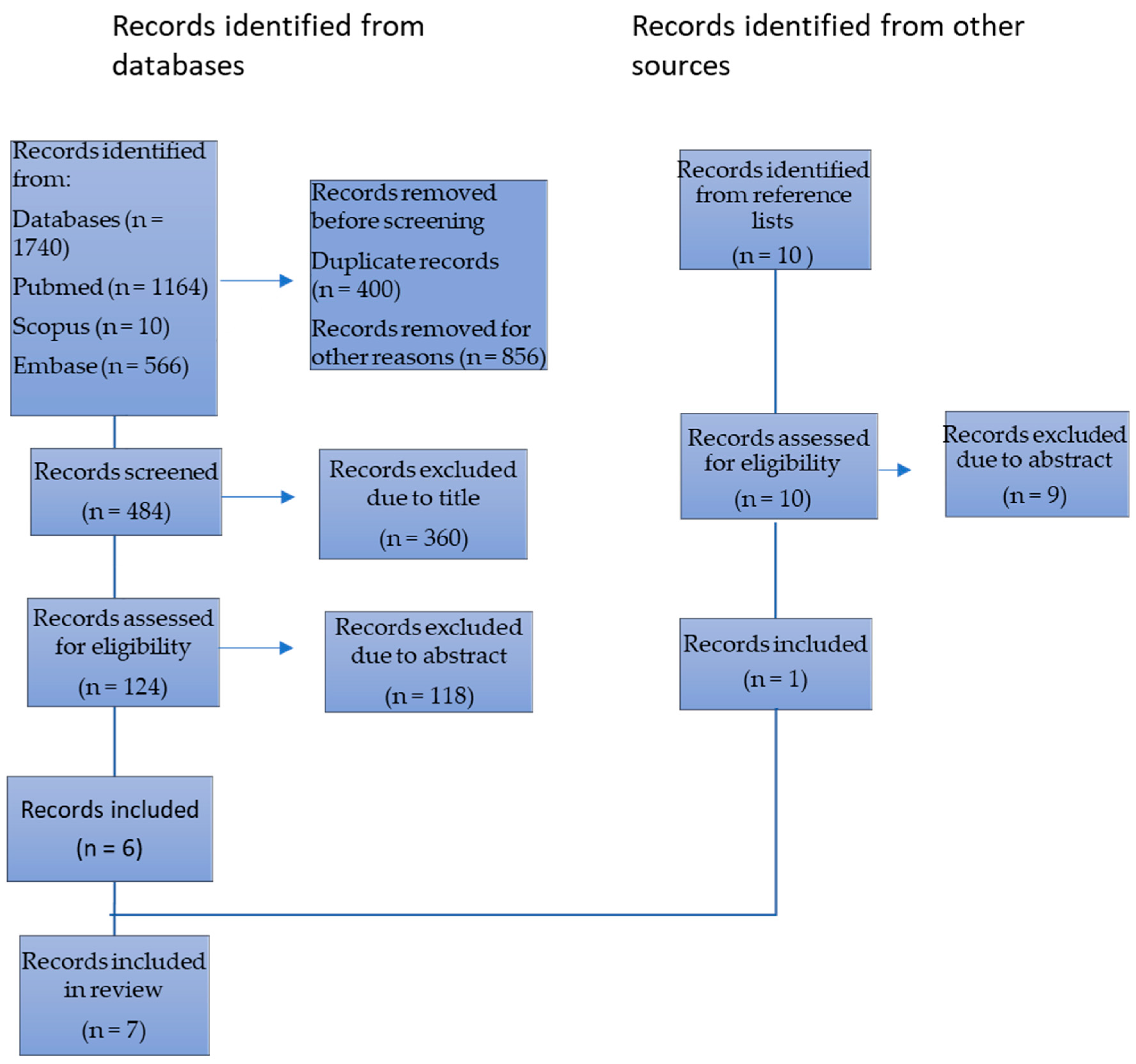

Table 1.
Sussman and Sussman’s five elements of addiction [33].
Table 1.
Sussman and Sussman’s five elements of addiction [33].
| 1 | Engagement in behavior that can become addictive (for example: abuse of an illicit substance) |
| 2 | Preoccupation with the behavior including planning, engaging, and recovering from its desired effects |
| 3 | Temporary satiation |
| 4 | Loss of control |
| 5 | Suffering negative consequences |
Disclaimer/Publisher’s Note: The statements, opinions and data contained in all publications are solely those of the individual author(s) and contributor(s) and not of MDPI and/or the editor(s). MDPI and/or the editor(s) disclaim responsibility for any injury to people or property resulting from any ideas, methods, instructions or products referred to in the content. |
© 2024 by the authors. Licensee MDPI, Basel, Switzerland. This article is an open access article distributed under the terms and conditions of the Creative Commons Attribution (CC BY) license (http://creativecommons.org/licenses/by/4.0/).
Copyright: This open access article is published under a Creative Commons CC BY 4.0 license, which permit the free download, distribution, and reuse, provided that the author and preprint are cited in any reuse.


