

Submitted:
23 November 2024
Posted:
25 November 2024
You are already at the latest version
Preprints on COVID-19 and SARS-CoV-2
Abstract
(1) Background: The development of benign prostatic hyperplasia (BPH) and its associated symptoms is recognized as one of the complications of COVID-19 infection. Polyphenols have so far been extracted from Ficus pumila L. leaves, stems and fruits, and these bioactive compounds exhibit multiple therapeutic activities.; (2) Methods: In this study, we focused on Ficus pumila L. in Okinawa area of Japan, to treat prostate related post-COVID-19 symptoms. Ficus pumila L. extract administration improved lower urinary tract symptoms (LUTS) in BPH patients.; (3) Results: After one month of infection treatment, 61 out of 89 COVID-19 infected patients were diagnosed with BPH showed high prostate specific antigen (PSA) level (10.7±4.4 ng/mL), international prostate symptom score (IPSS) (27.8 ± 6.4), IPSS quality of life (QoL) (4.1±1.1) and postvoiding residual urine (PVR) (176.9±10.7ml), while voiding volume (179.4 ± 23.7 ml) being low. Of the 61 patients, 42 patients who received Ficus pumila L. extract for 6 months significantly improved values of: PSA (3.7±1.9 ng/ml), IPSS (10.6±5.2), IPSS QoL (1.5±1.2), PVR (98.3±30.5ml), and the voiding volume (339.8 ± 47.1ml).; (4) Conclusions: Ficus pumila L. extracts may ameliorate exacerbation of LUTS in COVID-19 patients and may have some utility against prostate disease.
Keywords:
Polyphenols
; Ficus pumila L.
; lower urinary tract symptoms
; benign prostatic hyperplasia
; prostate cancer
; COVID-19
1. Introduction
Severe acute respiratory disease syndrome coronavirus 2 (SARS-CoV-2) damages the prostate through angiotensin converting enzyme 2 (ACE2) signaling, androgen receptors (AR)-associated mechanisms, inflammation, and metabolic disturbances, and induce serious symptoms on benign prostatic hyperplasia (BPH) and associated lower urinary tract symptoms (LUTS) [1]. Exacerbation of LUTS, significant increases in prostate specific antigen (PSA), and increases in international prostate symptom score (IPSS) have been reported in BPH patients infected with COVID-19. Also, a strong correlation was observed between BPH and changes in LUTS in patients infected with COVID-19 [2]. One possible factor that may ameliorate these symptoms is the flavonoids, especially flavonols, showed ability to interact with the ACE2 receptor. Also, natural flavonoids with potential efficacy against COVID-19 by blocking ACE2 receptor have been reported [3]. Flavonoids likely exhibit complementarity with androgen nuclear receptors binding sites and cause genome-mediated effects [4].
Ficus pumila L. is Angiosperms belonging to the Moraceae, family that inhabits among wide area of Japan and southern China, grows roots from its stems, clings to tree trunks, cliffs and rocks, and climbs like a vine, which is known as Ficus (Figure 1 a).
The bioactive compounds of Ficus pumila L. and the latest knowledge on treatments were reported in detail. Flavonoids (Rutin), flavones (Apigenin and Luteolin), flavonols (Quercetin and Kaempferol) and triterpenoids (Isoflavone) have so far been extracted from Ficus pumila L. leaves, stems and fruits, and these bioactive compounds exhibit multiple therapeutic activities such as antioxidant, anti-inflammatory, antibacterial, antitumor, hypoglycemic, and cardiovascular protective activities [5].
2. Materials and Methods
Of the 89 COVID-19 infected male patients diagnosed with BPH between May and September 2022, 61 (the mean age (±SD), 86.6 ± 9.9) showed no improvement in PSA level, IPSS, IPSS quality of life (QoL) score, postvoiding residual urine (PVR), and voiding volume, at one month after infection treatment. Forty-two of the 61 patients routinely ingested extracts from leaves and stems of Ficus pumila L. after discharged from COVID-19 infection. They took extracts at least 5 days a week or more, and the extract contained about 0.24 mg of rutin (20-30 g of leaf and stem/day) and about 0.14 mg of Apigenin (20-30 g of leaf and stem/day) [6]. After 6 months, lab data of Ficus pumila L. ingested group and 19 patients of the 61 patients who did not take extracts group were measured. With in normal limited value: PSA < 4 ng/mL, IPSS < 20, IPSS QoL < 5, PVR < 100ml, the voiding volume 200-400ml
3. Results
The values of the 89 COVID-19 infected male patients diagnosed with BPH are shown as following: PSA :10.7±4.4 ng/mL, IPSS: 27.0±6.4, QoL: 4.1±1.1, PVR: 176.9±10.7 ml voiding volume: 179.4 ± 23.7 ml. After 6 months, lab data of Ficus pumila L. ingested group showed significant improvement: PSA: 3.7±1.9 ng/mL (p<0.05) (Figure 2a), IPSS: 10.6±5.2 (p<0.05) (Figure 2b), IPSS QoL: 1.5±1.2 (p < 0.01) (Figure 2c), PVR: 98.3 ± 30.5 ml (p<0.05) (Figure 2d). The voiding volume was significantly increased to 339.89 ± 47.1 ml (p<0.05) (Figure 2e).
After 6 months, lab data of patient’s group who did not take extracts showed no improvement, thus PSA (9.8 ± 4.6 ng/mL) and IPSS (25.2 ± 6.1) remained high (Figure 2a, b), and IPSS QoL (2.7 ± 1.1) and PVR (137 ± 34.4ml) (Figure 2c, d) trended to decrease, and voiding volume (251.9 ± 39.6ml) slightly increased (Figure 2e).
4. Discussion
Our present data indicate Ficus pumila L. extract as possible treatment for the post COVID-19 infection LUTS. As COVID-19 infections begin to subside worldwide, countermeasures against its aftereffects have become an urgent need. Among these, LUTS in patients with BPH are significantly affected by COVID-19. Alpha-blockers are currently considered as a treatment for patients with BPH, but their effectiveness remains unclear regarding the after-effects of coronavirus infection.
Flavonoids have been reported to have activity against inflammation and tumors. Regulation of the arachidonic acid (AA) cascade through cyclooxygenase (COX) and lipoxygenase (LOX) represents two major pathways for treating inflammation in BPH. Treatment with Anemarrhenae Rhizoma flavonoids significantly ameliorated BPH-associated prostate inflammation, inhibited COX-2 and 5-LOX expression at protein and mRNA levels, and reduced AA levels and their metabolites associated with COX and LOX pathways (Figure 1e) [7]. This time, we focused on Ficus pumila L. from Okinawa, which contains flavonoids. The results confirmed the effectiveness of LUTS for BPH patients and there are several mechanistic possibilities for this effectiveness.
In addition, among the patients who received Ficus pumila L. leaf and stem extracts showed decrease in PSA levels. Rutin inhibits ACE and angiotensin 2 type 1 receptor that induce BPH, and is effective in preventing BPH. Rutin also inhibits androgen biosynthesis in Leydig cells and is effective in the treatment of androgen-sensitive prostate cancer. Priming of the viral spike (S) -glycoprotein by the transmembrane serine protease 2 (TMPRSS2) facilitates its binding to ACE2, facilitating SARS-CoV-2’s entry into the host cells. The prostatic columnar epithelium, which produces PSA and expresses both ACE2 and TMPRSS, therefore provides a reasonable and unifying basis explaining the patho-mechanisms linking SARS-CoV-2 infections and elevated PSA levels (Figure 1f) [8]. In fact, flavonoids have been shown to exhibit potential inhibitory activity against critical viral targets, required to facilitate their entry and replication [9].
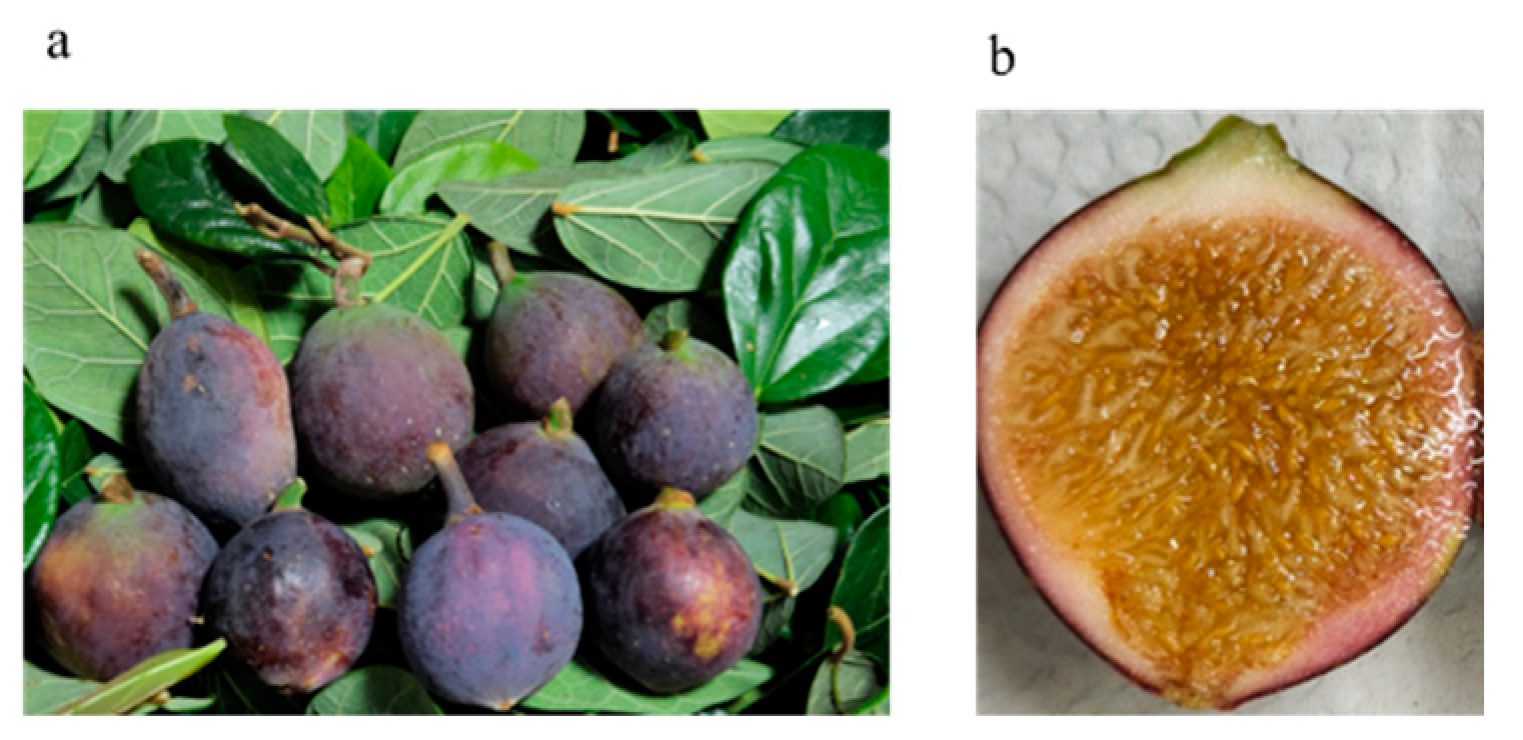
Flavonoids and Phenolic acids have been detected in the fruits of Ficus pumila L. [5], and they suppress the production of Nitric oxide (NO) (Patent No. 4903751) [10]. NO may play an important role in the development and metastasis of prostate cancer [11]. Rutin, a flavonid contained in the fruit of Ficus pumila L., and Psoralene, a phenolic acid, inhibit NO. 6 patients who received Ficus pumila L. fruit (Figure 3a, b) showed dramatic decrease in PSA levels. (30.1±7.4 to 2.9±1.5 ng/mL).
Apigenin induces arrest of prostate cancer cells in the G2 phase and is a potential therapeutic agent for prostate cancer. Furthermore, co-administration of apigenin and abiraterone acetate strongly enhanced the efficacy of abiraterone acetate therapy in treating prostate cancer (Figure 1g). Luteolin may be a promising treatment for prostate cancer and COVID-19 based on bioinformatic findings. Derivatives of Lupeol, a natural triterpenoid, may serve as antiproliferative and anti-metastatic agents against prostate cancer cells. Lupeol has also been highly evaluated as a modulator of prostate cancer cell metabolism. The tumor suppressor microRNA(miR)s are downregulated in prostate cancer cells and promote proliferation, metastasis, and cell invasion, while Luteolin and quercetin are found to restore the expression of miR-301 and miR-21, respectively, inhibit proliferation of prostate cancer cells, and induce apoptosis (Figure 1h). Quercetin has been suggested as a potential inhibitor of 5-alpha reductase II that induces BPH, and thus it can be the most potent ACE2 inhibitor among polyphenols. Kaempferol has been demonstrated to inhibit BPH by lowering intracellular reactive oxygen species, thereby reducing inflammation triggers and reducing inflammation. Isoflavone reduced prostate mass and inhibited prostatic epithelial proliferation, suggesting that it may serve as a potential alternative to BPH treatment. Soy isoflavones have a lasting effect on prostatic smooth muscle contraction and stromal cell proliferation, suggesting a negative relationship with BPH development and voiding symptoms (Figure 1i).
5. Conclusions
These results suggest that Ficus pumila L. extracts may ameliorate exacerbation of LUTS in COVID-19 patients and may have some utility against prostate disease.
Author Contributions
“Conceptualization, K.G.; methodology, K.G and K.S.; software, K.G. and T.H.; validation, K.G.; formal analysis, K.G.; investigation, K.G.; resources, K.G., K.S. and T.H.; data curation, K.G.; writing—original draft preparation, K.G.; writing—review and editing, K.G.; visualization, K.G. and H.S.; supervision, T.T., A.O., H.S., S.T., Y.M. and K.S. All authors have read and agreed to the published version of the manuscript.
Funding
This research received no external funding.
Institutional Review Board Statement
The study was conducted in accordance with the Declaration of Helsinki, and approved by the local ethics committee (the Ethics Review Board of Daido Central Hospital: No.20). All procedures were in accordance with the ethical standards of the responsible committee on human experimentation at Fukushima Medical University.
Informed Consent Statement
Written informed consent has been obtained from the patient(s) to publish this paper.
Data Availability Statement
Suggested Data Availability Statements are available in section “MDPI Research Data Policies” at https://www.mdpi.com/ethics.
Acknowledgments
The authors would also like to thank the Okinawan patients for their participation in this study. This study was part of the Okinawa–Fukushima Obesity Project and Drug Research for Astatine-221 Targeted Alfa Therapy Project. Dr. Gonda, the corresponding author, was participating in this project and was practicing medicine in Okinawa Prefecture. Thanks to the courtesy of Mr. and Mrs. China of Ginoza Jam Kobo, we had them provide us Ficus pumila L. fruit.
Conflicts of Interest
The authors declare no conflicts of interest.
References
- Sevim M, Alkiş O, Kartal İG, et al. Impact of COVID-19 on the progression of benign prostatic hyperplasia and aggravation of related symptoms: A prospective study. Prostate. 2023, 83, 82–86. [Google Scholar] [CrossRef] [PubMed]
- Ivanov A, Antonov P, Hristova-Atanasova E, et al. Changes in Lower Urinary Tract Symptoms in Benign Prostatic Hyperplasia Patients Affected by Covid-19. Urol Int. 2023, 20, 1–5. [Google Scholar]
- Muchtaridi M, Fauzi M, Khairul Ikram NK, et al. Natural Flavonoids as Potential Angiotensin-Converting Enzyme 2 Inhibitors for Anti-SARS-CoV-2. Molecules. 2020, 25, 3980. [Google Scholar] [CrossRef] [PubMed]
- D’Arrigo G, Gianquinto E, Rossetti G, et al. Binding of Androgen- and Estrogen-Like Flavonoids to Their Cognate (Non)Nuclear Receptors: A Comparison by Computational Prediction. Molecules. 2021, 26, 1613. [Google Scholar] [CrossRef] [PubMed]
- Zhi-Yong Qi, Jia-Ying Zhao, Fang-Jun Lin, et al. Bioactive Compounds, Therapeutic Activities, and Applications of Ficus pumila L. Agronomy 2021, 11, 89.
- Gonda K, Kono K, Takenoshita S. Ficus pumila L. improves the prognosis of patients infected with HTLV-1, an RNA virus. Nutr J. 2021, 20, 16.
- Cao X, Shang Y, Kong W, et al. Flavonoids derived from Anemarrhenae Rhizoma ameliorate inflammation of benign prostatic hyperplasia via modulating COX/LOX pathways. J Ethnopharmacol. 2022, 284, 114740. [Google Scholar] [CrossRef] [PubMed]
- Tan YJ, Tan Y. Elevated prostate-specific antigen (PSA) levels from acute COVID-19 infection confounding cancer disease surveillance. QJM. 2024, 117, 378–379. [Google Scholar] [CrossRef] [PubMed]
- Alzaabi MM, Hamdy R, Ashmawy NS, et al. Flavonoids are promising safe therapy against COVID-19. Phytochem Rev. 2022, 21, 291–312. [Google Scholar] [CrossRef] [PubMed]
- Okinawa Prefectural Agriculture, Forestry and Fisheries Department, Forest Management Division, Okinawa Wild Vegetables Database. 2018; p11.
- Burke AJ, McAuliffe JD, Natoni A, Ridge S, Sullivan FJ, Glynn SA. Chronic nitric oxide exposure induces prostate cell carcinogenesis, involving genetic instability and a pro-tumorigenic secretory phenotype. Nitric Oxide. 2022, 127, 44–53. [Google Scholar] [CrossRef] [PubMed]
Figure 1.
a. Ficus pumila L. crawls on limestone walls. b. Boiling 100 g of cleanly washed leaves and stems of Ficus pumila L. in 1 L of water at 100°C for 10 minutes produces an amber liquid. c. The extract of Ficus pumila L. has a cinnamon aroma, is mellow and easy to drink, and was loved by the elderly. d. Robotic surgery to remove the prostate gland (yellow arrows indicate prostate). e. Regulation of the arachidonic acid (AA) cascade through cyclooxygenase (COX) and lipoxygenase (LOX) represents two major pathways for treating inflammation in BPH. f. Rutin inhibits angiotensin converting enzyme and angiotensin 2 type 1 receptor that induce BPH, and is effective in preventing BPH. Priming of the viral spike (S)-glycoprotein by the transmembrane serine protease 2 (TMPRSS2) facilitates its binding to Angiotensin-converting enzyme 2 (ACE2), facilitating SARS-CoV-2’s entry into the host cells. g. Apigenin induces arrest of prostate cancer cells in the G2 phase. h. Luteolin and quercetin are found to restore the expression of microRNA-301 and miR-21, respectively, inhibit proliferation of prostate cancer cells, and induce apoptosis. Lupeol has also been highly evaluated as a modulator of prostate cancer cell metabolism. i. Quercetin has been suggested as a potential inhibitor of 5-alpha reductase II that induces BPH. Kaempferol has been demonstrated to inhibit BPH by lowering intracellular reactive oxygen species, thereby reducing inflammation triggers and reducing inflammation. Isoflavone reduced prostate mass and inhibited prostatic epithelial proliferation.
Figure 1.
a. Ficus pumila L. crawls on limestone walls. b. Boiling 100 g of cleanly washed leaves and stems of Ficus pumila L. in 1 L of water at 100°C for 10 minutes produces an amber liquid. c. The extract of Ficus pumila L. has a cinnamon aroma, is mellow and easy to drink, and was loved by the elderly. d. Robotic surgery to remove the prostate gland (yellow arrows indicate prostate). e. Regulation of the arachidonic acid (AA) cascade through cyclooxygenase (COX) and lipoxygenase (LOX) represents two major pathways for treating inflammation in BPH. f. Rutin inhibits angiotensin converting enzyme and angiotensin 2 type 1 receptor that induce BPH, and is effective in preventing BPH. Priming of the viral spike (S)-glycoprotein by the transmembrane serine protease 2 (TMPRSS2) facilitates its binding to Angiotensin-converting enzyme 2 (ACE2), facilitating SARS-CoV-2’s entry into the host cells. g. Apigenin induces arrest of prostate cancer cells in the G2 phase. h. Luteolin and quercetin are found to restore the expression of microRNA-301 and miR-21, respectively, inhibit proliferation of prostate cancer cells, and induce apoptosis. Lupeol has also been highly evaluated as a modulator of prostate cancer cell metabolism. i. Quercetin has been suggested as a potential inhibitor of 5-alpha reductase II that induces BPH. Kaempferol has been demonstrated to inhibit BPH by lowering intracellular reactive oxygen species, thereby reducing inflammation triggers and reducing inflammation. Isoflavone reduced prostate mass and inhibited prostatic epithelial proliferation.
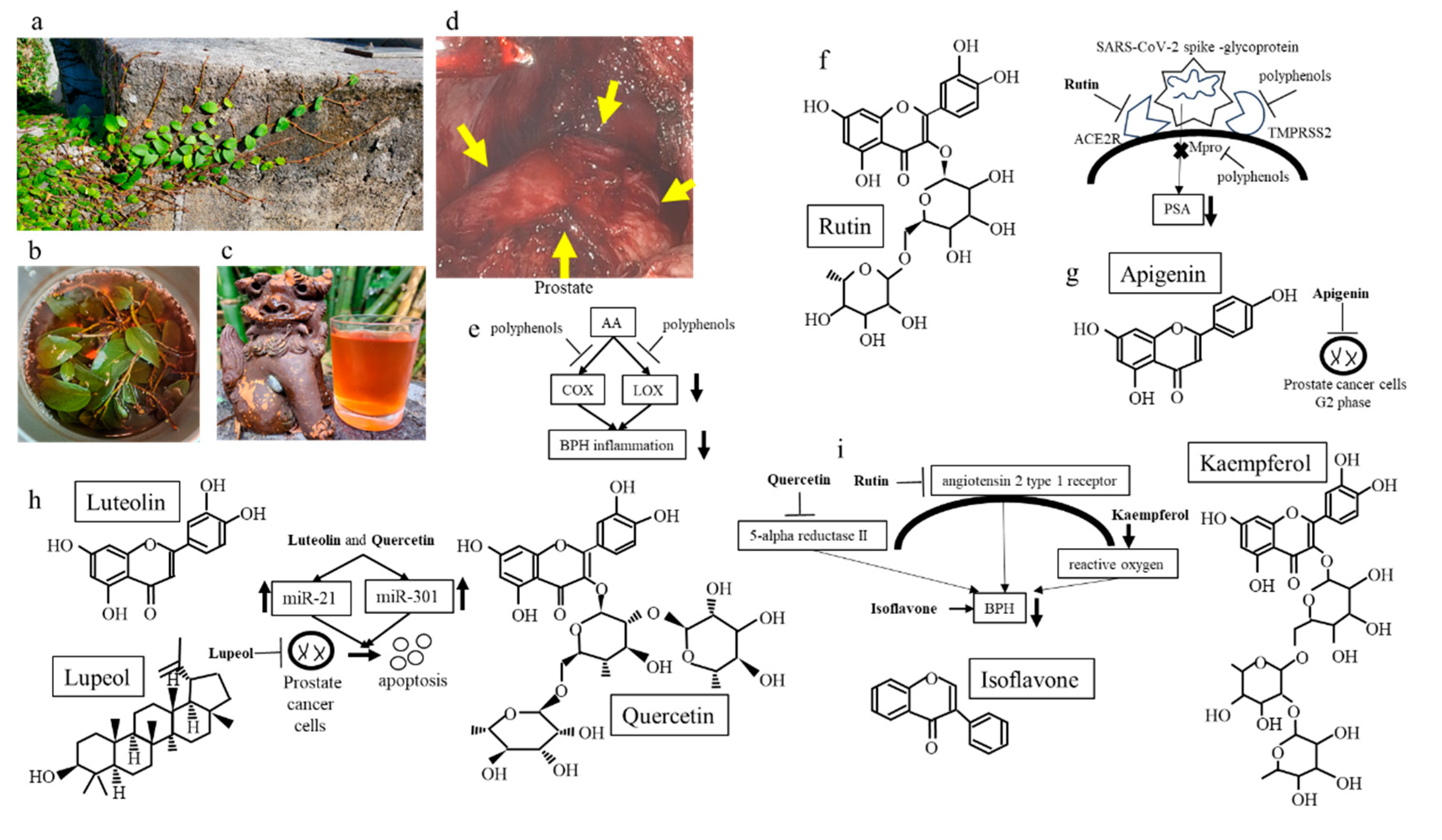
Figure 2.
At one month after discharge from hospital for treatment of COVID-19 infection, a. prostate specific antigen (PSA) level, b. International Prostate Symptom Score (IPSS), c. IPSS quality of life (QoL), d. postvoiding residual urine (PVR) values were elevated, and e. voiding volume was low (orange box). However, after 6 months, patients who received Ficus pumila L. extracts showed significantly decreased (a-d) and increased (e) compared to those who did not (red box). Patients who not received extracts showed increased (a-d) and decreased (e) compared to those who did (blue box). *: p<0.05 was considered to indicate statistical significance. All values are shown as mean + SD. Normal range was indicated by green bar.
Figure 2.
At one month after discharge from hospital for treatment of COVID-19 infection, a. prostate specific antigen (PSA) level, b. International Prostate Symptom Score (IPSS), c. IPSS quality of life (QoL), d. postvoiding residual urine (PVR) values were elevated, and e. voiding volume was low (orange box). However, after 6 months, patients who received Ficus pumila L. extracts showed significantly decreased (a-d) and increased (e) compared to those who did not (red box). Patients who not received extracts showed increased (a-d) and decreased (e) compared to those who did (blue box). *: p<0.05 was considered to indicate statistical significance. All values are shown as mean + SD. Normal range was indicated by green bar.
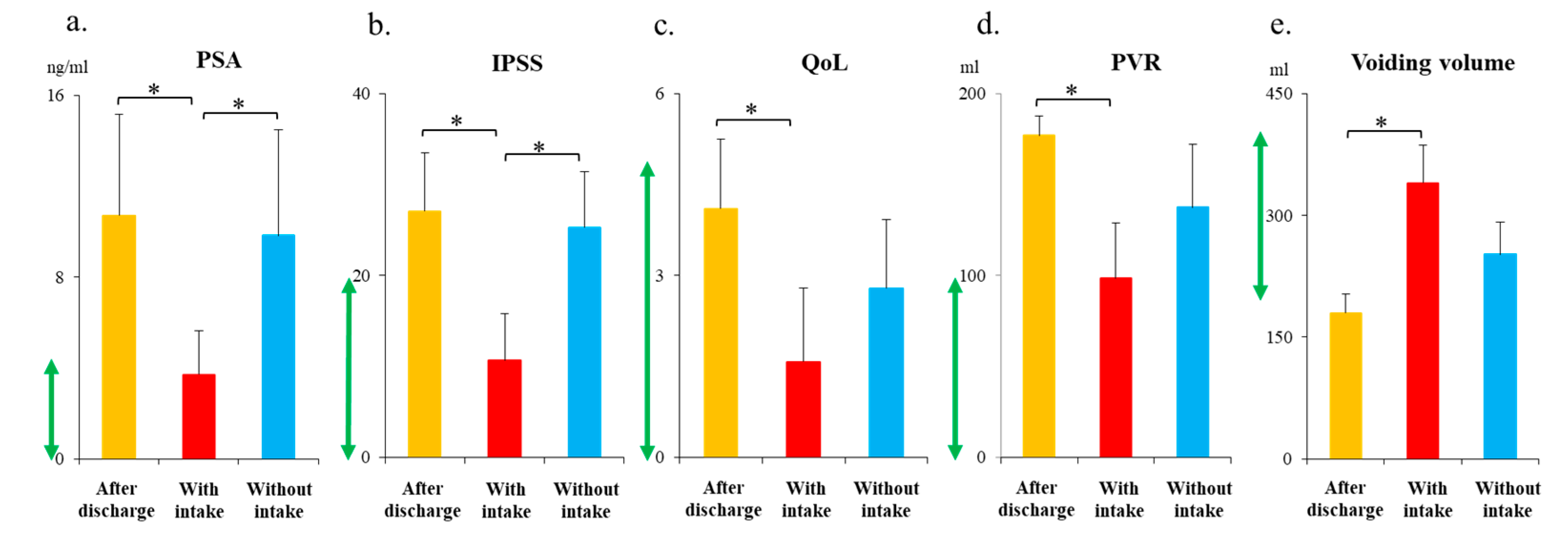
Figure 3.
a. purple porcupine fruit of Ficus pumila L. b. The flower sacs of fruit.
Disclaimer/Publisher’s Note: The statements, opinions and data contained in all publications are solely those of the individual author(s) and contributor(s) and not of MDPI and/or the editor(s). MDPI and/or the editor(s) disclaim responsibility for any injury to people or property resulting from any ideas, methods, instructions or products referred to in the content. |
© 2024 by the authors. Licensee MDPI, Basel, Switzerland. This article is an open access article distributed under the terms and conditions of the Creative Commons Attribution (CC BY) license (http://creativecommons.org/licenses/by/4.0/).
Copyright: This open access article is published under a Creative Commons CC BY 4.0 license, which permit the free download, distribution, and reuse, provided that the author and preprint are cited in any reuse.


