

Submitted:
06 November 2024
Posted:
07 November 2024
You are already at the latest version
Abstract
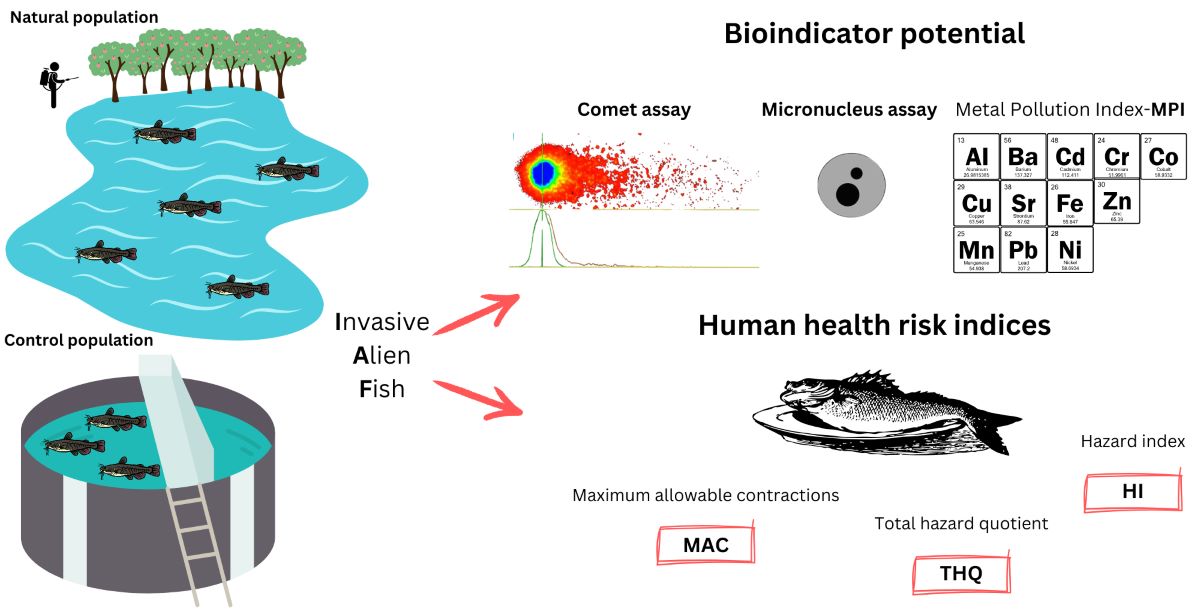
This study aims to evaluate the black bullhead Ameiurus melas, an invasive alien fish (IAF) in Serbia, as a bioindicator organism and the safety of natural and aquaculture specimens for human consumption. A set of biomarkers was analysed to assess the bioindicator potential at site exposed to agricultural activities. The genotoxic response was determined by alkaline comet assay and micronucleus assay in fish erythrocytes, and the metal pollution index (MPI) was calculated to assess the toxic element burden on fish. Water quality was evaluated using physicochemical pa-rameters and faecal indicator bacteria, while the sediment was analysed for the presence of pesti-cides. The concentration of metals and metalloids in fish muscle was monitored to assess the safety for human consumption, and the corresponding indices (MAC, THQ, HI) were calculated. All biomarker responses were linked by integrated biomarker response (IBR). Water analyses indi-cated the absence of communal wastewater, while sediment analysis revealed the presence of paclobutrazol, bifenthrin, and cyfluthrin. The IBR showed that June and September had the highest stress index, coinciding with peak pesticide use and precipitation. All indices confirmed the safety of black bullhead for human consumption. This study highlighted used approaches as nature-based solutions to the problem of IAF.
Keywords:
pesticide pollution
; invasive alien fish
; comet assay
; micronucleus assay
; toxic elements
; nature-based solutions
1. Introduction
Covering less than 1% of Earth’s surface, freshwater ecosystems are biodiversity hotspots, hosting one-third of vertebrate species and 10% of all species [1], providing, at the same time, ecosystem services to billions of people [2]. Despite efforts and initiatives, the loss of biodiversity continues dramatically, representing one of the most severe human-caused global environmental problems [3,4,5]. After habitat destruction, invasive alien fish (IAF) are a second cause of reduced biodiversity in aquatic environments and potential extinction of local fish populations [6,7]. In the face of climate change, declining biodiversity weakens aquatic ecosystems' resilience, demanding immediate attention [8].
Black bullhead Ameiurus melas [9] is a fish species native to North America. It was intentionally introduced mostly to Western Europe at the end of the 19th century, mainly for aquaculture purposes [10]. This species was recorded in Serbia for the first time in 2005 [11], and until today it has become ubiquitous in the environment. Thanks to several life-history and ecological characteristics, such as high fecundity, parental care of the offspring, prolonged reproductive period, high flexibility in life-history traits, voracious and versatile feeding habits, habitat and water quality flexibility, and tolerance to pollution, black bullhead is a very successful invader [12,13,14,15,16,17,18,19]. In terms of IAF management, their use as bioindicator organisms [20,21], as well as their safety for consumption and aquaculture potential, should be examined [22,23]. By monitoring the response of different biomarkers in IAF at the locality of interest, information could be obtained about their condition, and possible mechanisms that allow them to be superior to native populations. The alkaline comet assay is a widely used and sensitive method for detecting the genotoxic potential, indicating the level of initial DNA damage in individual eucaryotic cells [24]. If the specimens are chronically exposed to stressful conditions, their repair mechanisms can weaken, and permanent chromosomal damage may occur [25]. The micronucleus assay detects micronuclei (MN) in the cell's cytoplasm. These structures represent either whole or fragmented chromosomes smaller than a third of the primary cell nucleus [26]. This assay can uncover additional nuclear abnormalities (NA), including binuclei, lobed, blebbed, notched, and irregular nuclei [27]. Pollution with metals and metalloids poses a risk to the environment and human health. The degree of contamination and burden on fish can be expressed by the metal pollution index (MPI) [28]. With regard to nutrition and human health, of particular importance is the analysis of certain elements in fish muscle for which maximum allowable concentrations (MACs) are calculated [29,30]. In addition, the total hazard quotient (THQ) and hazard index (HI) could be determined to assess the potential health risks of fish consumption to humans [31].
Within the frame of the Rufford Foundation project "Mass removal of the black bullhead (Ameiurus melas) – Possibilities for self-sustaining commercial farming in Serbia (ID: 31053-2), this study was conducted at the Markovac Lake to examine the potential of the black bullhead, IAF in Serbia, as a bioindicator organism and its safety for human consumption. A set of biomarkers was analysed to achieve this. The genotoxic response was assessed by an alkaline comet assay and a micronucleus assay in blood cells, and the MPI was calculated to assess the burden of toxic elements on fish. To reveal the safety of using natural and cultivated black bullheads in the human diet, the concentration of metals and metalloids in fish muscle was monitored, and appropriate indices were calculated (MAC, THQ, HI). The Integrated Biomarker Response v.2 (IBRv.2) method was applied to get a comprehensive overview of environmental stress in comparison to control (aquaculture) fish. To assess water quality and identify primary pollution sources, complementary analyses included basic physicochemical parameters, microbiological indicators of faecal pollution, and an examination of pesticides in lake sediment.
2. Materials and Methods
2.1. Sampling Site and Procedure
Markovac Lake (44°23'23.3"N 20°39'14.2"E) (Figure 1) is located at the foot of Kosmaj Mountain. It is one of the oldest and richest artificial reservoirs on the territory of Belgrade (municipality Mladenovac), the capital of Serbia. It was created in the mid-sixties of the last century to meet the irrigation needs of the nearby agricultural combine and apple orchard. The lake is 1000 meters long and 500 meters wide, with an average depth of 7 meters. On the slopes of this lake, one of the largest apple orchards in that part of Serbia (50 ha) is located. This is also a very attractive location for tourists and recreational fishermen. A sampling of water and fish was carried out in June (15/06/21), July (06/07/21), August (24/08/21), and September (14/09/21). These months were selected as they align with the typical application period for pesticides throughout the year [32].
2.2. Analyses of Water
Every month, water samples were collected in sterile glass bottles to analyse basic physicochemical parameters, including temperature, pH, oxygen concentration and saturation, conductivity, total dissolved solids (TDS), as well as nitrite (NO2-), nitrate (NO3-), and ammonium (NH4+). Additionally, faecal indicator bacteria, specifically total coliforms and E. coli were monitored. Physical parameters were measured with multiparameter sonde YSI 6600 V2 (Xylem Analytics, Australia). Chemical parameters were determined by using AQUANAL™-plus test set (Sigma Aldrich, Germany). The absorbance level was measured with a WinLab Data Line Photometer (Winlab, Germany), by following methods: “Nitrite +” (0.01-2 mg/L NO2-), “Nitrate low +” (0.1-30 mg/L NO3-) and “Ammonium +” (0.05-3.0 mg/L NH4+). Water was classified according to the “Regulation on parameters of ecological and chemical status of surface waters and parameters of chemical and quantitative status of groundwater” [33], and reference values for accumulations formed on type 3 and type 4 water bodies were used to determine water quality class. Total coliforms and E. coli were simultaneously detected and quantified by ISO 9308-2:2012 standard [34] Colilert-18 test (IDEXX, USA). Water quality according to the faecal indicator bacteria was determined based on the classification of Kavka et al. and Kirschner et al. [35,36].
2.3. Fish Sampling
Once per month, 10 specimens of black bullhead (wild-caught fish) were sampled using the double fyke nets (length 82 cm, diameter 50 cm, and hole size 8 mm) that had been in the water for 24 hours. Before dissection, specimens were anaesthetised with clove oil (50µL/L) and euthanised by a quick blow to the head, applied above the brain. Total length L (cm) and weight W (g) were measured, and Fulton's condition factor (K) was calculated according to the formula K = 100 x (W/L3) [37]. For the comet and micronucleus assay, blood was taken directly from the heart with a heparinised 2 mL syringe and 21G needle. The part of the muscle was sampled for the analysis of micro- and macroelements by ICP-OES. As a control, 10 black bullhead specimens (aquaculture fish) reared in a recirculating aquaculture system (RAS) in the Centre for Fisheries and Applied Hydrobiology (CEFAH) of the University of Belgrade, Faculty of Agriculture were processed (19/10/21) in the same way as samples from Markovac Lake. Experimental breeding of these individuals lasted from June to October 2021.
2.4. Alkaline Comet Assay
An alkaline comet assay was performed based on our previous work [38] with slight modifications. In brief, on site, a drop of blood was placed in a cold 1xPBS solution and transported to the laboratory within one hour in a dark and cool box. Samples were additionally diluted 20x in cold 1xPBS. The cell suspension was mixed with 1% LMP agarose (low melting point), placed on the 1% NMP (normal melting point) layer on the glass slide previously coated with 1% NMP, and covered with a coverslip. After the gel solidified (5 min, 4 °C), the coverslips were removed, and the slides were placed in the ice-cold lysis solution (2.5 M NaCl, 100 mM EDTA, 10 mM Tris, 1% Triton X-100, 10% DMSO, pH 10, at 4 °C for 16-18 h). After lysis, denaturation (20 min, 4 °C) and electrophoresis (0.75 V cm-1, 300 mA, 20 min, 4 °C) were performed in the electrophoresis chamber using an alkaline solution (300 mM NaOH, 1 mM EDTA, pH 13). The slides were then neutralised (0.4 M Tris, pH 7.5, 15 min, 4 °C) and fixed in cold methanol (15 min, 4 °C). For positive control, cells embedded in agarose were exposed to 20 µM H2O2 for 15 min. [38], washed with 1×PBS, and further processed as described above.
Samples were stained with 1:500 diluted GreenSafe Premium (Nzytech, Portugal), and comet-like structures were observed under 400x magnification using a DM4 B fluorescence microscope (Leica, Germany) equipped with a DFC7000 T camera (Leica, Germany). Images were saved in “.bmp” format and manually scored in CometScore 2.0 software (TriTek Corporation, Virginia, USA). The DNA damage was expressed by using the Tail DNA (%) parameter, which represents one of the most common descriptors of the DNA damage level [39].
2.5. Micronucleus Assay
For the micronucleus assay, a drop of blood was spread on the pre-cleaned slide, air dried for one hour, and fixed in cold methanol for 15 minutes. GreenSafe Premium (Nzytech, Portugal), diluted 1:500, was used for staining. Cells were observed under 400x magnification using a DM4 B fluorescence microscope (Leica, Germany) equipped with a DFC7000 T camera (Leica, Germany). For each sample, 2000 cells were randomly selected and the number of micronuclei and other nuclear aberrations was expressed in parts per thousand (‰).
2.6. Analysis of Micro and Macro Elements in Muscle
Samples of muscle tissue were rinsed with distilled water and stored at -18 °C until processed for element analysis. Approximately 0.5 g of dry weight (dw) muscle tissue sample was processed in a microwave digester (ETHOS EASY Advanced Microwave Digestion System 230 V/50 Hz, Milestone, Italy) with 6 mL of 65% HNO3 (Suprapur®, Merck, Germany) and 4 mL of H2O2 (Suprapur®, Merck, Germany). After cooling to room temperature, digested samples were diluted with distilled water to a total volume of 25 mL. Concentrations of 23 elements (Al, As, Ba, B, Cd, Cr, Co, Cu, Pb, Li, Se, Ag, Sb, Mo, Pt, Rh, Sn, Ti, Sr, Fe, Zn, Mn, Ni) were assessed by ICP-OES (Inductively Coupled Plasma - Optical Emission AVIO 200, PerkinElmer, USA). Concentrations of all elements are expressed as mg kg-1 dry weight (dw). The element values are expressed in mg kg-1 wet weight for calculating indices MPI, THQ, and HI.
Blank samples resolved the potential presence of the analysed elements in the chemicals used for digestion. Table S1 presents the ICP-OES method's detection wavelength (λ) and lower detection threshold (mg/L).
The target hazard quotient (THQ) was calculated using the following formula:
where Efr is the exposure frequency (365 days/year), ED is the exposure duration (70 years), FIR is the daily quantity of human consumption of freshwater fish (fish intake rate), which is 4.2 g per person per day in Serbia [40], C is the element concentration in fish muscle (μg/g wet weight), RfD is the oral reference dose (Hg = 0.0005, Cd = 0.001, Pb = 0.004, Cu = 0.04, Zn = 0.3, Cr = 1.5, Mn = 0.14, Al = 0.0004, As = 0.0003, Fe = 0.04, Co = 0.0003, Ni = 0.02 μg/g ww), WAB is the average body weight of an adult (70 kg), and TA is the average exposure time (365 days/year x ED) [41,42,43].
THQ = ((Efr x ED x FIR x C) / (Bwa x AT x RfD)) x 10-3
The hazard index (HI), or the total THQ, was calculated as the sum of individual THQ values for each element:
HI = THQ1 + THQ2 + THQn
Metal pollution index (MPI) was calculated to evaluate the total bioaccumulation degree in muscle of fish specimens, using the following formula [44]:
where Mn is the concentration of metal n (in muscle tissue). MPI employed potentially toxic trace elements and heavy metals, including Al, Ba, Cd, Cr, Co, Cu, Pb, Sr, Fe, Zn, Mn, and Ni.
MPI = (M1 x M2 x … x Mn)1/n
The concentration of elements expressed in the wet weight (ww) is compared to the Maximum Allowable Concentration (MAC) prescribed by the EU regulations, National regulations of RS, and FAO recommendations. According to the European Commission Regulation, the maximum acceptable concentrations (MAC) for Cd, Pb, and Hg in fish meat are 0.05 µg/g, 0.3 µg/g, and 0.5 µg/g ww, respectively [45]. National regulation of the Republic of Serbia prescribed 1.0, 0.1, 2.0, 1.0, 30.0, 30.0, 100.0 µg/g ww as MAC for Pb, Cd, As, Hg, Cu, Fe, and Zn in fish meat, respectively [46]. Limits recommended by the Food and Agriculture Organization for both Cu and Zn are 30 µg/g ww [47].
2.7. Sediment Analysis
Sediment sampling for the analysis of pesticides was subsequently conducted in April 2023. The sediment samples were collected at three representative sampling points designated as 1 (44°23'20.14"N, 20°39'3.46"E), 2 (44°23'22.95"N, 20°39'16.96"E), and 3 (44°23'23.00"N, 20°39'34.69"E) (Figure 1). Pesticides in sediment were examined to optimise and validate a modified extraction method based on QuEChERS [48]. This method is used to quantitatively determine multiple pesticide residues in sediment, whereby pesticides currently used most frequently in agriculture were primarily investigated. The validated method accurately quantifies 90 pesticides and metabolites by gas chromatography with mass detection (GC/MS).
2.7.1. Sample Extraction
Reagents used in this study were of chromatographic grade and were obtained from Merck (Germany). The solid pesticide standards and the internal standard (triphenyl phosphate) were obtained from Dr. Ehrenstorfer™ (Germany). Dissolution of the individual undiluted pesticides in acetone or acetonitrile yielded stock solutions of 1 mg/mL, which were used to prepare a mix stock solution of 10 μg/mL in acetonitrile, which was further diluted to a 1 μg/mL working standard mixture. Table S2 lists 90 pesticides and metabolites analysed in the study. It also contains information on pesticide action and retention time as well as qualifier and quantifier ions for each particular residue. Sediment samples were oven-dried at 60 °C and sieved at 250 μm before residue testing. For the extraction, 10 g of sample was weighed into a 50 mL PTFE centrifuge tube, and 10 mL of acetonitrile was added. Then, 100 µL of internal standard (10 µg/mL) was added. The QuEChERS salts used for extraction were 4 g of MgSO₄ and 1 g of NaCl for the first phase of extraction, while the following QuEChERS extraction salts were used for the second phase of purification: 150 mg of C18, 150 mg of primary-secondary amine (PSA), and 900 mg of MgSO₄ were obtained from Agilent (USA). After adding MgSO₄ salt and NaCl in the first phase, the mixture was shaken for 1 minute and then vortexed by Mini Vortex Stirrer LBX Instruments, V03 series (Labbox Labware, Spain). Afterwards, the reaction mixture was centrifuged for 5 min (at 4000 rpm). An aliquot of 8 mL was transferred from the supernatant to a new clean 15 mL centrifuge tube containing sorbents 150 mg PSA, 150 mg C18, and 900 mg anhydrous MgSO4 for a procedure termed dispersive solid-phase extraction (d-SPE) cleanup. After re-centrifugation, the top layer of extracts was finally collected in the vials and dried under a gentle stream of nitrogen gas. After removal of the interferences through a nylon filter, the residues after evaporation were dissolved in 1 mL of ethyl acetate: hexane (1:1) and analysed on the GC-MS instrument.
2.7.2. GC-MS Analysis
Analysis of pesticides was conducted using a Gas Chromatograph (GC) system Clarus 680 (PerkinElmer, USA) equipped with Clarus SQ8T mass spectrometer (PerkinElmer, USA). The injector operated at 250 °C. A capillary column (Elite-5MS, 30 m, 0.25 mm I.D., 0.25 μm film thicknesses, 5% phenyl 95% dimethylpolysiloxane) was used to separate the target analytes. Helium (ultrahigh purity) was used as the carrier gas at a constant pressure of 20 psi. The initial oven temperature of 70 °C was held for 3 minutes, increased to 150 °C at 23 °C/min, then to 200 °C at 3 °C/min, and further increased to 280 °C at 7 °C/min and then maintained at the final temperature of 280 °C for 9 min. The solvent delay time was 5.0 min. The injection volume was 1.0 μL in the spitless mode. The mass spectrometer (MS) inlet line and the ion source temperatures were set at 280 °C and 250 °C, respectively. The MS ionization energy was 70 eV. Pesticides in the extracts from the sediment samples were analyzed in the selected ion monitoring mode (SIM) using one target and three qualifier ions for each analyte (Table S2). The limit of quantification for all analytes was 5 µg kg-1 dry weight. All analyses were conducted in triplicate, and the results are expressed as a mean ± SD.
2.7.3. Method Validation and Accuracy Assurance
Data quality for pesticide residues was ensured by examining solvent blanks, procedural blanks, internal standards, detection limits, qualification limit and certified reference material. To eliminate the influence of interference, all reagents used in the analysis were subjected to identical extraction techniques and checked on the GC/MS system before analysis. Certified reference material and blank samples were prepared according to the same procedure and recorded in the same run as the analysed sediment samples. The calibration parameters are presented in supplementary Table S3. The limit of detection (LOD) was determined using the signal-to-noise ratio (0.0005 mg kg-1), whereas the limit of quantification (LOQ) was determined using recovery and precision data (set at 0.005 mg kg-1 for each pesticide residue). The matrix effect was studied considering the calibration curves in the solvent (ethyl acetate: hexane (1:1)) and the matrix. The calculation based on the equation: %MEs= ((peak area (matrix standard)/peak area (solvent standard)) −1) x 100 [48], showed that the matrix effect is less than 20%. For quantification, calibration was used in both the matrix and the solvent, given that the instrument software allows it. The mean values of pesticide recovery after the preparation of blank samples at two concentration levels, 5 and 50 µg kg-1, are shown in Table S3.
2.8. Integrated Biomarker Response (IBR) Analysis
Integrated Biomarker Response v.2 (IBRv.2) analysis was performed in Microsoft Excel based on the method of Sanchez et al. [49] with minor modifications. All sampling months for Markovac Lake and reference site Radmilovac were ranked using radial diagrams constructed based on the selected parameters (condition index - CI, micronucleus frequency - MN, TI% comet assay - CA, Metal Pollution Index - MPI, and Hazard index - HI). Considering all possible arrangements of the parameters on the radial diagrams, the mean value and standard deviation for each IBR area were also calculated.
2.9. Statistical Analyses
For statistical analyses, IBM SPSS Statistics (Version 25) was used. Whether the samples are normally distributed was determined by using the Shapiro-Wilk test. Statistical differences in condition index were examined with One-Way ANOVA. Significant differences between samples were tested using the Kruskal-Wallis H test for the comet assay data. Differences between sampling months and control for nuclear aberrations and IBR were determined by the Paired Samples T-Test (normal distribution) and the Wilcoxon Signed Ranks Test (not normal distribution). For element concentrations and MPI where data did not follow a normal distribution (Al, Ba, Cr, Co, Cu, Li, Pt, Ti, Sr, Fe, Zn, Mn), significance was tested by the Mann-Whitney U test. For all tests, the significance level was set to 0.05.
3. Results
3.1. Analyses of Water
Table 1 gives the results on the basic physicochemical parameters and the microbiological indicators of faecal pollution in the water of Markovac Lake during four sampling months.
The highest water temperature, TDS concentration, water conductivity, and the lowest O2 concentration were measured in July. Based on the pH values, the water was classified in the III-IV category, except in September, when the water fell into the IV-V category. Oxygen concentrations pointed to the II-III water quality class, except July when it belonged to the IV-V category. According to NH4+ concentrations, the water belonged to category II-III, except in September, when it was classified as the III-IV category. Based on the NO3- levels, water was classified in the II-III category. The concentration of EC was below 100 MPN/100 mL during all of the months, pointing to the I class of water quality. According to TC, water quality was in the I category in July, the II category during June and August, and the III class in September.
3.2. Fulton's Condition Factor
Table 2 shows results on fish average total length L (cm) and weight W (g) for control and four sampling months, as well as Fulton's condition factor (K). There were no statistically significant differences in fish condition between examined groups.
3.3. Alkaline Comet Assay
The degree of DNA damage determined by the alkaline comet assay is shown in Figure 2. Statistical significance was found between all samples and H2O2 treatment of control site blood cells. In all months except August, the DNA damage level was significantly higher than the control. There were no significant differences in DNA damage level between June, July, and September.
3.4. Micronucleus Assay
The results of the micronucleus analysis are presented in Table 3. Micronuclei were the most represented type of nuclear aberrations. The highest number of nuclear aberrations, including micronuclei, was observed in June, while the control showed the lowest number of micronuclei and most other nuclear abnormalities. A statistically significantly higher number of micronuclei compared to the control were observed in June, August, and September.
Figure 3 shows the types of nuclear aberrations that were observed during the study.
3.5. Analysis of Micro and Macro Elements in Muscle
The concentrations of As, B, Ag, Sb, Mo, Rh, and Sn were below the detection limit. In June, we observed significantly higher values of Ba, Cu, Li, Sr, and Zn compared to the control. During July, Cd, Mn, and Ni had significantly higher values than the control. In August, Mn and Ni had significantly higher concentrations in comparison to the control, while in September, significant differences were observed for Sr and Ni (Table 4).
The HI value did not exceed 1 in either control (aquaculture) or wild-caught fish, so the use of black bullhead meat in the human diet poses no risk. The values for Al were the highest and had a multiple influence on the value of HI, while the other elements (Cd, Cr, Co, Cu, Pb, Fe, Zn, Mn, Ni) had much smaller effects. The lowest THQ values were obtained for Cr (Control: 0.0000038; June: 0.0000047; July: 0.0000030; August: 0.0000026; September: 0.0000032), probably due to high reference value (RFD). HI and MPI had the highest values during June, but without statistical significance between months and control (Table 5).
Black bullhead meat from both aquaculture and native populations is safe for human consumption as none of the detected elements (Pb, Cd, Cu, Fe, Zn) exceed the recommended MAC values. The concentrations of As and Hg were below the detection threshold. (Table S4).
3.6. Sediment Analysis
The recovery data varied between 74.5 and 119.6% for all validated pesticide residues (with RSD values between 1.05 and 14.35%), which is a satisfactory condition for successful optimisation and validation of the method according to EU SANTE/12682/2019 guidelines [50]. All concentrations of detected pesticides in sediment samples were represented on a dry weight basis (μg/kg dw). Among 90 tested residues, only the pesticide paclobutrazol was detected at sampling point 1 (11.56±0.69 µg kg-1). At sampling point 2, pesticides bifenthrin (5.75±0.39 µg kg-1) and cyfluthrin (41.38±4.48 µg kg-1) were discovered, while none of the 90 tested residues were detected at sampling point 3.
3.7. IBR Analysis
The results of the IBR analysis for all inspected biomarkers across all sampling months at the Markovac Lake, compared to the control, are presented in Figure 4. It was observed that the impact of different biomarkers on the expansion of the IBR diagram area varied depending on the month. A statistically significant increase in the IBR diagram area was observed in all months compared to the control. The highest stress index with an IBR value of 7.06 ± 0.16 was observed in June. This was attributed to the highest levels of genotoxicity alongside the highest MPI and HI. In contrast, the control group showed the lowest IBR value of 0.19 ± 0.20, with all biomarkers displaying a weaker response compared to Lake Markovac, except for the HI.
4. Discussion
Having in mind nature-based solutions (NBS) and circular economy, the problem of IAF could be solved through their use as bioindicators, as a food source in aquaculture, or for animal feed production [51,52,53,54]. To find successful strategies for managing the IAF, this study was carried out to investigate the potential of the black bullhead, an invasive alien fish in Serbia, as both a bioindicator organism and the safety of both natural and aquaculture specimens for human consumption.
The Fulton's condition factor is often used in ecological monitoring to indicate the general condition of fish. This approach is fast, simple, and inexpensive, but it lacks sensitivity [55]. Values of K were similar to those reported for European introduced populations (K = 1.37) of black bullhead [18]. The absence of statistical significance between control and different months in this study confirmed its low sensitivity, as observed in other studies [56,57,58].
Genotoxicity biomarkers were chosen due to their high sensitivity and ability to bridge biomarkers at lower and higher levels of biological organisation [57,59]. Several studies have used brown bullhead, a closely related species, as a reliable bioindicator for genotoxicity [60,61,62,63,64]. To our knowledge, this is the first study to apply a comet and MN assay to test the genotoxic response in black bullhead.
In our field tests, we chose a site impacted by extensive agricultural activities exposed to pesticide pollution through surface runoff. Analysis of E. coli ruled out the presence of municipal wastewater at the site. However, we confirmed the presence of paclobutrazol, bifenthrin, and cyfluthrin in the lake sediment in April 2023, highlighting pesticides as the primary source of pollution from the apple orchard on the lake shore. It's important to note that pesticides can pose significant harm, especially when applied in mixtures, leading to synergistic effects on various endpoints such as DNA damage, chromosomal aberrations, toxicity, oxidative stress, apoptosis, effects on detoxifying enzymes and hormones [65,66]. Paclobutrazol is commonly used as a plant growth regulator during spring and early summer and can also be applied later in the summer [67]. However, there have been no studies on its genotoxic effects. Nevertheless, research has indicated its potential to disrupt behaviour, organ development, and biomarkers of antioxidant defence, oxidative response, SOD, and neurotransmitter levels in the brain of zebrafish [68,69]. Bifenthrin, a pyrethroid insecticide and acaricide, primarily exerts neurotoxic effects [70,71]. It is often applied in spring and fall and is considered persistent in the environment, with high toxicity and bioaccumulation potential in aquatic organisms [72,73,74]. Ullah et al. [75] classified bifenthrin as highly toxic for grass carp (Ctenopharyngodon idella), disrupting multiple biomarkers, including DNA damage. Cyfluthrin, another pyrethroid, is proven toxic to crustaceans Daphnia magna and Ceriodaphnia dubia even at low concentrations of 0.07 µg/L [76] and zebrafish embryos [77]. The study of Marinowic et al. [78] demonstrated the genotoxic effects of β-cyfluthrin in fish Bryconamericus iheringii erythrocytes. Our results point to consistent levels of DNA damage throughout June, July, and September, which coincides with the months of pesticide application. The intriguing twist in August, with a statistically significant decrease in DNA damage, could be attributed to the reduced precipitation during that month, which caused a reduced input of pesticides into the lake water [32,79]. These findings emphasise the intricate relationship between environmental factors and pesticide impact. Unlike the comet assay, the micronucleus test detects permanent chromosomal damage, classified as aneugenic or clastogenic depending on whether the whole or part of the chromosome is lagging [80,81]. Both assays effectively evaluate pollution-induced stress and cytotoxicity in aquatic ecosystems [82,83,84,85]. Regarding MN and nuclear abnormalities, our study showed the highest level of these aberrations during June. Many studies have shown the potential of pyrethroid insecticides to induce micronucleus and nuclear aberrations in fish blood [83,86,87]. It should be borne in mind that the presence of micronuclei is influenced not only by the repair capacity of the organism [88] but also by cell kinetics and cell replacement, i.e., the process of erythropoiesis [89,90].
Determining the concentration of heavy metals in fish muscle is the first step in assessing the level of contamination in the aquatic ecosystem and evaluating its impact on human health [91]. Fish consumption is proven to lead to several health benefits, such as antioxidant, anti-inflammatory, wound healing, neuroprotection, cardioprotection, and hepatoprotection properties. Fish proteins, such as immunoglobins, act as defence agents against viral and bacterial infections [92]. However, due to the presence of toxic metals, consuming fish meat can be harmful, therefore, it is necessary to examine the health impact of such a diet [42,93]. This is especially necessary considering that these are the wild-caught black bullhead specimens of an allochthonous species for which limited literature data is available. According to obtained results regarding MAC and HI, the muscle of black bullhead is considered safe for human consumption. However, MPI values in the muscle of this species from wild populations and aquaculture (0.49-0.69) are moderately high and several times higher compared to other studies on native fish from different artificial reservoirs in Serbia [42,94]. This indicates the need for more detailed research into the risks associated with using this IAF in human consumption. Similar to our findings, many studies have shown higher concentrations of metals and other toxic elements in wild fish specimens' tissues than in aquaculture ones [95,96,97]. Needless to say, specimens reared in aquaculture are raised in a safe and controlled environment, protected from both natural and anthropogenic sources of stress. The elevated Mn levels in tissue may result from increased concentration and bioavailability of this element in the lake water, likely due to a pH decrease during the summer months. Similarly, the rise in Cu concentration in muscle tissue could be attributed to ecological stress in the lake’s aquatic system, as Cu levels in blood and tissue increase rapidly in response to elevated concentrations in the water [98]. Given that the processes determining the accumulation of Sr in fish depend on ecological and biological factors such as the type of geological substrate, water chemistry, trophic level, size, and age of the fish [99], it is challenging to explain the cause of the difference in Sr concentration in the muscle of black bullhead between wild and control samples. Several studies have also shown that different formulations of pesticides and insecticides may also contain metals in their composition [100,101,102]. For example, a high concentration of Ni is present in the commercial preparation Pyrinex [103], which also contains Bifenthrin, the insecticide detected in this study. In this way, agricultural activity double burdens aquatic ecosystems with both organic and inorganic pollutants.
Integrated biomarker response is an analysis that combines all monitored biomarkers into a “general stress index” [104]. When the response of several biomarkers is examined at different localities, IBR allows a comprehensive overview of the specimens’ state, enabling clear distinction between sites [105]. In this study, IBR analysis revealed that June, following September, had the highest "general stress index." This aligns with the months of high pesticide application and high precipitation conditions [32]. Further, IBR validated Radmilovac as an appropriate and reliable control site.
5. Conclusions
Regarding the use of black bullhead as a bioindicator, this study provided valuable data on its sensitivity and highlighted the impact of environmental conditions on the variability of biomarker response. It would be desirable to direct future research towards comparing the response of this species with that of native ones to assess its potential to replace them in biomonitoring studies. In addition, such studies would shed light on the possible resistance mechanisms of IAF compared to native populations.
Regarding incorporating this species into human nutrition and discussing its presence in the food supply, our findings indicate that both wild and cultivated specimens are safe for consumption. Further management steps could be focused on educating the aquaculture sector about the possibilities of breeding this species by taking over from natural populations. Also, wild individuals of this species could be recommended for human consumption or the production of pet food after testing the nutritional value of their meat.
Both approaches represent a nature-based solution to the problem of IAF, creating a win-win solution.
Supplementary Materials
The following supporting information can be downloaded at the website of this paper posted on Preprints.org. Table S1: Lower detection threshold (mg/L) and detection wavelength (λ) of the ICP-OES; Table S2: List of pesticide residues – information related to pesticide definition, chemical classification and pesticides action, retention time, quantify and qualifier ions; Table S3: Validation parameters – calibration curves, correlation coefficients, linearity (range 5 – 50 µg/kg), recovery for two spiked levels and and relative standard deviations (RSDr); Table S4: Concentrations of elements in the muscle tissue of the black bullhead are expressed in mg kg-1 wet weight.
Author Contributions
Conceptualization, M.J. and J.K.; methodology, M.J., J.K., J.Đ.A., Ž.V.J., D.N., Z.M., M.K.K. and A.T.; validation, J.K., J.Đ.A., Z.M., A.T. and M.J.; formal analysis, J.K., J.Đ.A., Ž.V.J. and A.T.; investigation, M.J., D.N., Z.M., J.K., J.Đ.A., M.K.K. and A.T.; resources, M.J. and Z.M.; data curation, M.J. and J.K.; writing—original draft preparation, J.K., J.Đ.A., Ž.V.J., A.T. and M.J.; writing—review and editing, J.K., J.Đ.A., Ž.V.J., D.N., Z.M., M.K.K., A.T. and M.J.; visualization, J.K. and J.Đ.A.; supervision, M.J.; project administration, M.J.; funding acquisition, M.J. All authors have read and agreed to the published version of the manuscript.
Funding
This research was funded by the Ministry of Science, Technological Development and Innovation of the Republic of Serbia, grant numbers 451-03-66/2024-03/200053, 451-03-47/2023-01/200116, 451-03-66/2024-03/200030, and 451-03-66/2024-03/200007. It was performed under the auspices of the Rufford Foundation project "Mass removal of the black bullhead (Ameiurus melas)—Possibilities for self-sustaining commercial farming in Serbia" (ID: 31053-2).
Institutional Review Board Statement
The authors received authorisation from the Ministry of Environmental Protection and the Environmental Protection Agency of the Republic of Serbia to conduct the research. During the sampling and research, animal welfare was strictly taken into account. A special permit from the ethical commission is not required, given that these invasive fish species must be removed from the environment.
Data Availability Statement
The raw data supporting the conclusions of this article will be made available by the authors on request.
Acknowledgments
We would like to thank to BIOLAWEB project team for collecting sediment samples.
Conflicts of Interest
The authors declare no conflicts of interest.
References
- Strayer, D.L.; Dudgeon, D. Freshwater biodiversity conservation: Recent progress and future challenges. J. N. Am. Benthol. Soc. 2010, 29, 344–358. Doi:10.1899/08-171.1. [CrossRef]
- Koehnken, L.; Rintoul, M.S.; Goichot, M.; Tickner, D.; Loftus, A.C.; Acreman, M.C. Impacts of riverine sand mining on freshwater ecosystems: A review of the scientific evidence and guidance for future research. River Res. Appl. 2020, 36(3), 362-370. Doi:10.1002/rra.3586. [CrossRef]
- Cardinale, B.J.; Duffy, J.E.; Gonzalez, A.; Hooper, D.U.; Perrings, C.; Venail, P.; Narwani, A.; Mace, G.M.; Tilman, D.; Wardle, D.A.; Kinzig, A.P.; Daily, G.C.; Loreau, M.; Grace, J.B.; Larigauderie, A.; Srivastava, D.S.; Naeem, S. Biodiversity loss and its impact on humanity. Nature 2012, 486(7401), 59-67. Doi: 10.1038/nature11148. [CrossRef]
- Darwall, W.R.T.; Freyhof, J. Lost fishes, who is counting? The extent of the threat to freshwater fish biodiversity. In Conservation of Freshwater Fishes, 1st ed.; Closs, G.P., Krkosek, M., Olden, J.D., Eds.; Cambridge University Press: Cambridge, Kingdom of England, 2016; pp. 1–36.
- Ceballos, G.; Ehrlich, P.R.; Dirzo, R. Biological annihilation via the ongoing sixth mass extinction signaled by vertebrate population losses and declines. Proc. Natl. Acad. Sci. 2017, 114(30), E6089-E6096. Doi: 10.1073/pnas.1704949114. [CrossRef]
- Genovesi, P.; Shine, C. European strategy on invasive alien species: Convention on the Conservation of European Wildlife and Habitats (Bern Convention) (No. 18-137). Council of Europe: Strasbourg, France, 2004.
- Van der Veer, G.; Nentwig, W. Environmental and economic impact assessment of alien and invasive fish species in Europe using the generic impact scoring system. Ecol. Freshw. Fish 2015, 24(4), 646-656. Doi:10.1111/eff.12181. [CrossRef]
- Shin, Y.J.; Midgley, G.F.; Archer, E.R.; Arneth, A.; Barnes, D.K.; Chan, L.; Hashimoto, S.; Hoegh-Guldberg, O.; Insarov, G.; Leadley, P.; Levin, L.A.; Ngo, H.T.; Pandit, R.; Pires, A.P.F.; Pörtner, H.O.; Rogers, A.D.; Scholes, R.J.; Settele, J.; Smith, P. Actions to halt biodiversity loss generally benefit the climate. Glob. Chang. Biol. 2022, 28(9), 2846-2874. Doi: 10.1111/gcb.16109. [CrossRef]
- Rafinesque, C.S. Description of the Silures or catfishes of the River Ohio. Quart. J. Sci. Lit. Arts 1820, 9, 48-52.
- Nowak, M.; Koščo, J.; Popek, W.; Epler, P. First record of the black bullhead Ameiurus melas (Teleostei: Ictaluridae) in Poland. J. Fish Biol. 2010, 76(6), 1529-1532. Doi: 10.1111/j.1095-8649.2010.02601.x. [CrossRef]
- Cvijanović, G.; Lenhardt, M.B.; Hegediš. The first record of black bullhead Ameiurus melas (Pisces, Ictaluridae) in Serbian waters. Arch. Biol. Sci. 2005, 57(4), 307-308. Doi:10.2298/ABS0504307C. [CrossRef]
- Leunda, P.M.; Oscoz, J.; Elvira, B.; Agorreta, A.; Perea, S.; Miranda, R. Feeding habits of the exotic black bullhead Ameiurus melas (Rafinesque) in the Iberian Peninsula: first evidence of direct predation on native fish species. J. Fish Biol. 2008, 73(1), 96-114. Doi: 10.1111/j.1095-8649.2008.01908.x. [CrossRef]
- Ribeiro, F.; Elvira, B.; Collares-Pereira, M.J.; Moyle, P.B. Life-history traits of non-native fishes in Iberian watersheds across several invasion stages: a first approach. Biol. Invasions 2008, 10, 89-102. Doi: 10.1007/s10530-007-9112-2. [CrossRef]
- Pedicillo, G.; Bicchi, A.; Angeli, V.; Carosi, A.; Viali, P.; Lorenzoni, M. Growth of black bullhead Ameiurus melas (Rafinesque, 1820) in Corbara Reservoir (Umbria–Italy). Knowl. Manag. Aquat. Ecosyst. 2008, (389), 05 p1-15. Doi: 10.1051/kmae/2008011. [CrossRef]
- Novomeská, A.; Kováč, V. Life-history traits of non-native black bullhead Ameiurus melas with comments on its invasive potential. J. Appl. Ichthyol. 2009, 25(1), 79-84. Doi: 10.1111/j.1439-0426.2008.01166.x. [CrossRef]
- Jaćimović, M. Populaciona dinamika i ekotoksikologija crnog americkog patuljastog soma (Ameiurus melas Rafinesque, 1820) u Savskom jezeru [Population dynamic and ecotoxicology of the black bullhead (Ameiurus melas Rafinesque, 1820) in Sava Lake]. Doctoral dissertation, University of Belgrade, Belgrade, Serbia, 2015. http://nardus.mpn.gov.rs/ handle/123456789/5170 [In Serbian].
- Jarić, I.; Jaćimović, M.; Cvijanović, G.; Knežević-Jarić, J.; Lenhardt, M. Demographic flexibility influences colonization success: profiling invasive fish species in the Danube River by the use of population models. Biol. Invasions. 2015, 17, 219-229. Doi: 10.1007/s10530-014-0721-2. [CrossRef]
- Copp, G.H.; Tarkan, A.S.; Masson, G.; Godard, M.J.; Koščo, J.; Kováč, V.; Novomeská, A.; Miranda, R.; Cucherousset, J.; Pedicillo, G.; Blackwell, B.G. A review of growth and life-history traits of native and non-native European populations of black bullhead Ameiurus melas. Rev. Fish Biol. Fish. 2016, 26, 441-469. Doi: 10.1007/s11160-016-9436-z. [CrossRef]
- Jaćimović, M.; Lenhardt, M.; Krpo-Ćetković, J.; Jarić, I.; Gačić, Z.; Hegediš, A. Boom-bust like dynamics of invasive black bullhead (Ameiurus melas) in Lake Sava (Serbia). Fish. Manag. Ecol. 2019, 26, 153–164. Doi: 10.1111/fme.12335. [CrossRef]
- Kennard, M.J.; Arthington, A.H.; Pusey, B.J.; Harch, B.D. Are alien fish a reliable indicator of river health?. Freshw. Biol. 2005, 50(1), 174-193. Doi: 10.1111/j.1365-2427.2004.01293.x. [CrossRef]
- Koutsikos, N.; Koi, A.M.; Zeri, C.; Tsangaris, C.; Dimitriou, E.; Kalantzi, O.I. Exploring microplastic pollution in a Mediterranean river: The role of introduced species as bioindicators. Heliyon 2023, 9(4). Doi: 10.1016/j.heliyon.2023.e15069. [CrossRef]
- Singh, A.K. Emerging alien species in Indian aquaculture: prospects and threats. J. Aquat. Biol. Fish. 2014, 2(1) 2014, 32-41.
- Sicuro, B.; Tarantola, M.; Valle, E. Italian aquaculture and the diffusion of alien species: costs and benefits. Aquac. Res. 2016, (47)12, 3718-3728. Doi: 10.1111/are.12997. [CrossRef]
- Gajski, G.; Žegura, B.; Ladeira, C.; Novak, M.; Sramkova, M.; Pourrut, B.; Del Bo’, C.; Milić, M.; Bjerve Gutzkow, K.; Costa, S.; Dusinska, M.; Brunborg, G.; Collins, A. The comet assay in animal models: From bugs to whales–(Part 2 Vertebrates). Mutat. Res. Rev. Mutat. Res. 2019, 781, 130-164. Doi: 10.1016/j.mrrev.2019.04.002. [CrossRef]
- Cho, E.; Allemang, A.; Audebert, M.; Chauhan, V.; Dertinger, S.; Hendriks, G., Luijten, M; Marchetti, F.; Minocherhomji, S.; Pfuhler, S.; Roberts, D.J.; Trenz, K.; Yauk, C. L. AOP report: Development of an adverse outcome pathway for oxidative DNA damage leading to mutations and chromosomal aberrations. Environ. Mol. Mutagen. 2022, 63(3), 118-134. Doi: 10.1002/em.22479. [CrossRef]
- Obiakor, M.O.; Okonkwo, J.C.; Ezeonyejiaku, C.D. Genotoxicity of freshwater ecosystem shows DNA damage in preponderant fish as validated by in vivo micronucleus induction in gill and kidney erythrocytes. Mutat. Res. Genet. Toxicol. Environ. Mutagen 2014, 775, 20-30. Doi: 10.1016/j.mrgentox.2014.09.010. [CrossRef]
- Carrola, J.; Santos, N.; Rocha, M.J.; Fontainhas-Fernandes, A.; Pardal, M.A.; Monteiro, R.A.; Rocha, E. Frequency of micronuclei and of other nuclear abnormalities in erythrocytes of the grey mullet from the Mondego, Douro and Ave estuaries—Portugal. Environ. Sci. Pollut. Res. 2014, 21, 6057-6068. Doi: 10.1007/s11356-014-2537-0. [CrossRef]
- Ju, Y.R.; Chen, C.W.; Chen, C.F.; Chuang, X.Y.; Dong, C. D. Assessment of heavy metals in aquaculture fishes collected from southwest coast of Taiwan and human consumption risk. Int. Biodeterior. Biodegrad. 2017, 124, 314-325. Doi: 10.1016/j.ibiod.2017.04.003. [CrossRef]
- Subotić, S.; Spasić, S.; Višnjić-Jeftić, Ž.; Hegediš, A.; Krpo-Ćetković, J.; Mićković, B.; Skorić, S.; Lenhardt, M. Heavy metal and trace element bioaccumulation in target tissues of four edible fish species from the Danube River (Serbia). Ecotoxicol. Environ. Saf. 2013, 98, 196-202. Doi: 10.1016/j.ecoenv.2013.08.020. [CrossRef]
- Kalipci, E.; Cüce, H.; Ustaoğlu, F.; Ali Dereli, M.; Türkmen, M. (2023). Toxicological health risk analysis of hazardous trace elements accumulation in the edible fish species of the Black Sea in Türkiye using multivariate statistical and spatial assessment. Environ. Toxicol. Pharmacol. 2023, 97, 104028. Doi: 10.1016/j.etap.2022.104028. [CrossRef]
- Risk Assessment Guideline for Superfund Volume 1 Human Evaluation Manual (Part A); Office of Emergency and Remedial Response, U.S. Environmental Protection Agency: Washington, DC, USA, 1989.
- Kruć-Fijałkowska, R.; Dragon, K.; Drożdżyński, D.; Górski, J. Seasonal variation of pesticides in surface water and drinking water wells in the annual cycle in western Poland, and potential health risk assessment. Sci. Rep. 2022, 12(1), 3317. Doi: 10.1038/s41598-022-07385-z. [CrossRef]
- 74/2011; Regulation on the parameters of ecological and chemical status of surface waters and the parameters of the chemical and quantitative status of groundwater. Official Gazette of Republic of Serbia: Belgrade, Serbia, 2011.
- ISO 9308-2:2012. Water Quality—Enumeration of Escherichia coli and Coliform Bacteria—Part 2: Most Probable Number Method; International Organization for Standardization: Geneva, Switzerland, 2012.
- Kavka, G.G.; Kasimir, D.G.; Farnleitner, A.H. (2006). Microbiological water quality of the River Danube (km 2581 - km 15): Longitudinal variation of pollution as determined by standard parameters. In Proceedings of the 36th International Conference of IAD (pp. 415–421). Austrian Committee Danube Research / IAD, Vienna, Austria, 04-08/09/2006.
- Kirschner, A.K.; Kavka, G.G.; Velimirov, B.; Mach, R.L.; Sommer, R.; Farnleitner, A.H. Microbiological water quality along the Danube River: integrating data from two whole-river surveys and a transnational monitoring network. Water Res. 2009, 43(15), 3673-3684. Doi: 10.1016/j.watres.2009.05.034. [CrossRef]
- Ricker, W.E. Computation and interpretation of biological statistics of fish populations. Bulletin of the Fisheries Research Board of Canada, Bulletin 191: Ottawa, Canada, 1975., 191, 1-382.
- Kostić, J.; Kolarević, S.; Kračun-Kolarević, M.; Aborgiba, M.; Gačić, Z.; Lenhardt, M.; Vuković-Gačić, B. Genotoxicity assessment of the Danube River using tissues of freshwater bream (Abramis brama). Environ. Sci. Pollut. Res. 2016, 23, 20783-20795. Doi: 10.1007/s11356-016-7213-0. [CrossRef]
- Boutet-Robinet, E.; Haykal, M.M.; Hashim, S.; Frisan, T.; Martin, O.C. Detection of DNA damage by alkaline comet assay in mouse colonic mucosa. STAR Protoc. 2021, 2(4), 100872. Doi: 10.1016/j.xpro.2021.100872. [CrossRef]
- Janković, S.; Antonijević, B.; Ćurčić, M.; Radičević, T.; Stefanović, S.; Nikolić, D.; Ćupić, V. Assessment of mercury intake аssociated with fish consumption in Serbia. Meat Technol. 2012, 53(1), 56-61. Doi:10.5937/tehmesa1201056J. [CrossRef]
- Copat, C.; Arena, G.; Fiore, M.; Ledda, C.; Fallico, R.; Sciacca, S.; Ferrant, M. Heavy metals concentrations in fish and shellfish from eastern Mediterranean Sea: Consumption advisories. Food Chem. Toxicol. 2013, 53 (2013), 33–37. Doi: 10.1016/j.fct.2012.11.038. [CrossRef]
- Milošković, A.; Milošević, Đ.; Radojković, N.; Radenković, M.; Đuretanović, S.; Veličković, T.; Simić, V. Potentially toxic elements in freshwater (Alburnus spp.) and marine (Sardina pilchardus) sardines from the Western Balkan Peninsula: An assessment of human health risk and management. Sci. Total Environ. 2018, 644(2018), 899-906. Doi: 10.1016/j.scitotenv.2018.07.041. [CrossRef]
- Varol, M.; Sünbül, M.R. Macroelements and toxic trace elements in muscle and liver of fish species from the largest three reservoirs in Turkey and human risk assessment based on the worst-case scenarios. Environ. Res. 2020, 184, 109298. Doi: 10.1016/j.envres.2020.109298. [CrossRef]
- Usero, J.; Gonzalez-Regalado, E.; Gracia, I. Trace metals in the bivalve molluscs Ruditapes decussatus and Ruditapes philippinarum from the Atlantic Coast of Southern Spain. Environ. Int. 1997, 23(3), 291-298. Doi: 10.1016/S0160-4120(97)00030-5. [CrossRef]
- 1881/2006/EC; Setting maximum levels for certain contaminants in foodstuffs. Official Journal of the European Union, European Commission Regulation: Brussels, Belgium, 2006.
- 29/2014, 37/2014 - corr., 39/2014 and 72/2014; Rules on the maximum allowable residues of pesticides in food and animal feed which is determined by the maximum allowable amounts of residues of plant protection products. Official Gazette of Republic of Serbia: Belgrade, Serbia, 2014.
- FAO Fishery Circular No. 464; Compilation of legal limits for hazardous substances in fish and fishery products. Food and Agriculture Organization of the United Nations, Rome, Italy, 2000 ; pp. 5-10.
- Mazza, F.C.; de Souza Sampaio, N.A.; von Mühlen, C. Hyperspeed method for analyzing organochloride pesticides in sediments using two-dimensional gas chromatography–time-of-flight mass spectrometry. Anal. Bioanal. Chem. 2023, 415(13), 2629-2640. Doi: 10.1007/s00216-022-04464-y. [CrossRef]
- Sanchez, W.; Burgeot, T.; Porcher, J.M. A novel “Integrated Biomarker Response” calculation based on reference deviation concept. Environ. Sci. Pollut. Res. 2013, 20, 2721-2725. Doi: 10.1007/s11356-012-1359-1. [CrossRef]
- SANTE/12682/2019; Analytical Quality Control and Method Validation for Pesticide Residues Analysis in Food and Feed. European Commission Directorate General for Health and Food Safety: Brussel, Belgium, 2019.
- Hewitt, C.L.; Campbell, M.L.; Gollasch, S. Alien species in aquaculture. Considerations for responsible use. IUCN The World Conservation Union: Gland, Switzerland, 2006; pp. 1-46.
- Katsanevakis, S.; Rilov, G.; Edelist, D. (2018). Impacts of marine invasive alien species on European fisheries and aquaculture - plague or boon? In CIESM Monograph 50 - Engaging marine scientists and fishers to share knowledge and perceptions - early lessons; Briand, F., Ed.; CIESM Publisher: Monaco, Principality of Monaco, 2018; pp. 125–132.
- Skorupski, J.; Śmietana, P.; Stefánsson, R.A.; von Schmalensee, M.; Panicz, R.; Nędzarek, A.; Eljasik, P.; Szenejko, M. Potential of invasive alien top predator as a biomonitor of nickel deposition–the case of American mink in Iceland. Eur. Zool. J. 2021, 88(1), 142-151. Doi: 10.1080/24750263.2020.1853264. [CrossRef]
- Nekrasova, O.; Pupins, M.; Tytar, V.; Fedorenko, L.; Potrokhov, O.; Škute, A.; Čeirāns, A.; Theissinger, K.; Georges, J. Y. Assessing Prospects of Integrating Asian Carp Polyculture in Europe: A Nature-Based Solution under Climate Change? Fishes 2024, 9(4), 148. Doi: 10.3390/fishes9040148. [CrossRef]
- Van der Oost, R.; Beyer, J.; Vermeulen, N.P. Fish bioaccumulation and biomarkers in environmental risk assessment: a review. Environ. Toxicol. Pharmacol. 2023, 13(2), 57-149. Doi: 10.1016/S1382-6689(02)00126-6. [CrossRef]
- Rašković, B.; Poleksić, V.; Skorić, S.; Jovičić, K.; Spasić, S.; Hegediš, A.; Vasić, N.; Lenhardt, M. Effects of mine tailing and mixed contamination on metals, trace elements accumulation and histopathology of the chub (Squalius cephalus) tissues: Evidence from three differently contaminated sites in Serbia. Ecotoxicol. Environ. Saf. 2018, 153, 238-247. Doi: 10.1016/j.ecoenv.2018.01.058. [CrossRef]
- Nikolić, D.; Kostić, J.; Đorđević Aleksić, J.; Sunjog, K.; Rašković, B.; Poleksić, V.; Pavlović, S.; Borković-Mitić, S.; Dimitrijević, M.; Stanković, M.; Radotić, K. Effects of mining activities and municipal wastewaters on element accumulation and integrated biomarker responses of the European chub (Squalius cephalus). Chemosphere 2024, 143385. Doi: 10.1016/j.chemosphere.2024.143385. [CrossRef]
- Varga, J.; Fazekas, D.L.; Halasi-Kovács, B.; Józsa, V.; Tóth, F.; Nyeste, K.; Mozsár, A. Fecundity, growth and body condition of invasive black bullhead (Ameiurus melas) in eutrophic oxbow lakes of River-Körös (Hungary). Bioinvasions Rec. 2024, 13(2), 515–527. Doi: 10.3391/bir.2024.13.2.16. [CrossRef]
- Lacaze, E.; Geffard, O.; Goyet, D.; Bony, S.; Devaux, A. Linking genotoxic responses in Gammarus fossarum germ cells with reproduction impairment, using the Comet assay. Environ. Res. 2011, 111(5), 626-634. Doi: 10.1016/j.envres.2011.03.012. [CrossRef]
- Pandrangi, R.; Petras, M.; Ralph, S.; Vrzoc, M. Alkaline single cell gel (comet) assay and genotoxicity monitoring using bullheads and carp. Environ. Mol. Mutagen. 1995, 26(4), 345-356. Doi: 10.1002/em.2850260411. [CrossRef]
- Arcand-Hoy, L.D.; Metcalfe, C.D. Hepatic micronuclei in brown bullheads (Ameiurus nebulosus) as a biomarker for exposure to genotoxic chemicals. J. Great Lakes Res. 2000, 26(4), 408-415. Doi: 10.1016/S0380-1330(00)70704-0. [CrossRef]
- Yang, X.; Meier, J.; Chang, L.; Rowan, M.; Baumann, P.C. DNA damage and external lesions in brown bullheads (Ameiurus nebulosus) from contaminated habitats. Environ. Toxicol. Chem. 2006, 25(11), 3035-3038. Doi: 10.1897/05-706R.1. [CrossRef]
- Baumann, P.C.; LeBlanc, D.R.; Blazer, V.; Meier, J.R.; Hurley, S.T.; Kiryu, Y. Prevalence of tumors in brown bullhead from three lakes in Southeastern Massachusetts, 2002. Scientific Investigations Report 2008-5198. U.S. Geological Survey: Reston, VA, United States, 2008. Doi: 10.3133/sir20085198. [CrossRef]
- Pinkney, A.E.; Harshbarger, J.C.; Karouna-Renier, N.K.; Jenko, K.; Balk, L.; Skarphéðinsdóttir, H.; Liewenborg, B.; Rutter, M.A. Tumor prevalence and biomarkers of genotoxicity in brown bullhead (Ameiurus nebulosus) in Chesapeake Bay tributaries. Sci. Total Environ. 2011, 410, 248-257. Doi: 10.1016/j.scitotenv.2011.09.035. [CrossRef]
- Wang, Y.; Yang, G.; Shen, W.; Xu, C.; Di, S.; Wang, D.; Li, X.; Wang, X.; Wang, Q. Synergistic effect of fenpropathrin and paclobutrazol on early life stages of zebrafish (Danio rerio). Environ. Pollut. 2020, 266, 115067. Doi: 10.1016/j.envpol.2020.115067. [CrossRef]
- Naz, H.; Abdullah, S.; Abbas, K.; Shafique, L.; Liu, Q.; Zhu, P. Comparative study: antioxidant enzymes, DNA damage and nuclear abnormalities in three fish species Cirrhina mrigala, Catla catla and Labeo rohita exposed to insecticides mixture (endosulfan+ chlorpyrifos+ bifenthrine). Pak. J. Agric. Sci. 2022, 59(2), 295-301. Doi: 10.17582/journal.pjz/20220429100432. [CrossRef]
- Luo, Y.; Wainwright, H.; Moore, K.G. Effects of orchard application of paclobutrazol on the post-harvest ripening of apples. J. Hortic. Sci. 1987, 62(3), 295-301. Doi: 10.1080/14620316.1987.11515784. [CrossRef]
- Wang, W.D.; Wu, C.Y.; Lonameo, B.K. Toxic effects of paclobutrazol on developing organs at different exposure times in Zebrafish. Toxics 2019, 7(4), 62. Doi: 10.3390/toxics7040062. [CrossRef]
- Hussain, A.; Audira, G.; Siregar, P.; Lin, Y.C.; Villalobos, O.; Villaflores, O.; Wang, W.D.; Hsiao, C.D. Waterborne exposure of paclobutrazol at environmental relevant concentration induce locomotion hyperactivity in larvae and anxiolytic exploratory behavior in adult zebrafish. Int. J. Environ. Res. Public Health 2020, 17(13), 4632. Doi: 10.3390/ijerph17134632. [CrossRef]
- Soderlund, D.M.; Clark, J.M.; Sheets, L.P.; Mullin, L.S.; Piccirillo, V.J.; Sargent, D.; Stevens, J.T.; Weiner, M.L. Mechanisms of pyrethroid neurotoxicity: implications for cumulative risk assessment. Toxicology 2002, 171(1), 3-59. Doi: 10.1016/s0300-483x(01)00569-8. [CrossRef]
- Napierska, D.; Sanseverino, I.; Loos, R.; Cortés, L.G.; Niegowska, M.; Lettieri, T. Modes of action of the current Priority Substances list under the Water Framework Directive and other substances of interest. EUR 29008 EN, Publications Office of the European Union, Luxembourg, 2018. Doi:10.2760/226911. [CrossRef]
- Siepmann, S.; Holm, S. Hazard assessment of the synthetic pyrethroid insecticides bifenthrin, cypermethrin, esfenvalerate, and permethrin to aquatic organisms in the Sacramento-San Joaquin River system. Office of Spill Prevention and Response 00-6. Administrative Report. California Department of Fish and Game, Rancho Cordova, CA, USA, 2000.
- EFSA (European Food Safety Authority). Conclusion on the peer review of the pesticide risk assessment of the active substance bifenthrin. EFSA J. 2011, 9, 2159. Doi: 10.2903/j.efsa.2011.2159. [CrossRef]
- Riaz, G.; Tabinda, A.B.; Kashif, M.; Yasar, A.; Mahmood, A.; Rasheed, R.; Khan, M.I.; Iqbal, J.; Siddique, S.; Mahfooz, Y. Monitoring and spatiotemporal variations of pyrethroid insecticides in surface water, sediment, and fish of the river Chenab Pakistan. Environ. Sci. Pollut. Res. 2018, 25, 22584-22597. Doi: 10.1007/s11356-018-1963-9. [CrossRef]
- Ullah, S.; Ahmad, S.; Altaf, Y.; Dawar, F.U.; Anjum, S.I.; Baig, M.M.F.A.; Fahad, S.; Al-Misned, F.; Atique, U.; Guo, X.; Nabi, G.; Wanghe, K. Bifenthrin induced toxicity in Ctenopharyngodon idella at an acute concentration: a multi-biomarkers-based study. J. King Saud Univ. Sci. 2022, 34(2), 101752. Doi: 10.1016/j.jksus.2021.101752. [CrossRef]
- Mokry, L.E.; Hoagland, K.D. Acute toxicities of five synthetic pyrethroid insecticides to Daphnia magna and Ceriodaphnia dubia. Environ. Toxicol. Chem. 1990, 9(8), 1045-1051. Doi: 10.1002/etc.5620090811. [CrossRef]
- Padilla, S.; Corum, D.; Padnos, B.; Hunter, D.L.; Beam, A.; Houck, K.A.; Sipes, N.; Kleinstreuer, N.; Knudsen, T.; Dix, D.J.; Reif, D.M. Zebrafish developmental screening of the ToxCast™ Phase I chemical library. Reprod. Toxicol. 2012, 33(2), 174-187 Doi: 10.1016/j.reprotox.2011.10.018. [CrossRef]
- Marinowic, D.R.; Mergener, M.; Pollo, T.A.; Maluf, S.W.; da Silva, L.B. In vivo genotoxicity of the pyrethroid pesticide β-cyfluthrin using the comet assay in the fish Bryconamericus iheringii. Z. Naturforsch. C 2012, 67(5-6), 308-311. Doi: 10.1515/znc-2012-5-610. [CrossRef]
- Chow, R.; Curchod, L.; Davies, E.; Veludo, A.F.; Oltramare, C.; Dalvie, M.A.; Stamm, C.; Röösli, M.; Fuhrimann, S. Seasonal drivers and risks of aquatic pesticide pollution in drought and post-drought conditions in three Mediterranean watersheds. Sci. Total Environ. 2023, 858, 159784. Doi: 10.1016/j.scitotenv.2022.159784. [CrossRef]
- Ayllon, F.; Garcia-Vazquez, E. Micronuclei and other nuclear lesions as genotoxicity indicators in rainbow trout Oncorhynchus mykiss. Ecotoxicol. Environ. Saf. 2001, 49(3), 221-225. Doi: 10.1006/eesa.2001.2065. [CrossRef]
- Kirschbaum, A.A.; Seriani, R.; Pereira, C.D.; Assunção, A.; Abessa, D.M.D.S.; Rotundo, M.M.; Rahossnzani-Paiva, M.J. Cytogenotoxicity biomarkers in fat snook Centropomus parallelus from Cananéia and São Vicente estuaries, SP, Brazil. Genet. Mol. Biol. 2009, 32(1), 151-154. Doi: 10.1590/S1415-47572009005000007. [CrossRef]
- Dixon, D.R.; Pruski, A.M.; Dixon, L.R.; Jha, A.N. Marine invertebrate eco-genotoxicology: a methodological overview. Mutagenesis 2002, 17(6), 495-507. Doi: 10.1093/mutage/17.6.495.
- Çavaş, T.; Ergene-Gözükara, S. Micronuclei, nuclear lesions and interphase silver-stained nucleolar organizer regions (AgNORs) as cyto-genotoxicity indicators in Oreochromis niloticus exposed to textile mill effluent. Mutat. Res. Genet. Toxicol. Environ. Mutagen. 2003, 538(1-2), 81-91. Doi: 10.1016/s1383-5718(03)00091-3. [CrossRef]
- Baršienė, J.; Rybakovas, A.; Lang, T.; Andreikėnaitė, L.; Michailovas, A. Environmental genotoxicity and cytotoxicity levels in fish from the North Sea offshore region and Atlantic coastal waters. Mar. Pollut. Bull. 2013, 68(1-2), 106-116. Doi: 10.1016/j.marpolbul.2012.12.011. [CrossRef]
- Hussain, B.; Sultana, T.; Sultana, S.; Masoud, M.S.; Ahmed, Z.; Mahboob, S. Fish eco-genotoxicology: Comet and micronucleus assay in fish erythrocytes as in situ biomarker of freshwater pollution. Saudi J. Biol. Sci. 2018, 25(2), 393-398. Doi: 10.1016/j.sjbs.2017.11.048. [CrossRef]
- Campana, M.A.; Panzeri, A.M.; Moreno, V.J.; Dulout, F.N. Genotoxic evaluation of the pyrethroid lambda-cyhalothrin using the micronucleus test in erythrocytes of the fish Cheirodon interruptus interruptus. Mutat. Res. Genet. Toxicol. Environ. Mutagen. 1999, 438(2), 155-161. Doi: 10.1016/s1383-5718(98)00167-3. [CrossRef]
- Muranli, F.D.G.; Güner, U. Induction of micronuclei and nuclear abnormalities in erythrocytes of mosquito fish (Gambusia affinis) following exposure to the pyrethroid insecticide lambda-cyhalothrin. Mutat. Res. Genet. Toxicol. Environ. Mutagen. 2011, 726(2), 104-108. Doi: 10.1016/j.mrgentox.2011.05.004. [CrossRef]
- Luzhna, L.; Kathiria, P.; Kovalchuk, O. Micronuclei in genotoxicity assessment: from genetics to epigenetics and beyond. Front. Genet. 2013, 4, 131. Doi: 10.3389/fgene.2013.00131. [CrossRef]
- Al-Sabti, K.; Metcalfe, C. D. Fish micronuclei for assessing genotoxicity in water. Mutat. Res. Genet. Toxicol. 1995, 343(2-3), 121-135. Doi: 10.1016/0165-1218(95)90078-0. [CrossRef]
- Udroiu, I. The micronucleus test in piscine erythrocytes. Aquat. Toxicol. 2006, 79(2), 201-204. Doi: 10.1016/j.aquatox.2006.06.013. [CrossRef]
- Hossain, M.B.; Tanjin, F.; Rahman, M.S.; Yu, J.; Akhter, S.; Noman, M.A; Sun, J. Metals Bioaccumulation in 15 Commonly Consumed Fishes from the Lower Meghna River and Adjacent Areas of Bangladesh and Associated Human Health Hazards. Toxics 2022, 10(3), 139. Doi:10.3390/toxics10030139. [CrossRef]
- Chen, J.; Jayachandran, M.; Bai, W.; Xu, B. A critical review on the health benefits of fish consumption and its bioactive constituents. Food Chem. 2022, 369, 130874. Doi: 10.1016/j.foodchem.2021.130874. [CrossRef]
- Isangedighi, I.A.; David, G.S. Heavy Metals Contamination in Fish: Effects on Human Health. J. Aquat. Sci. Mar. Biol. 2019, 2(4), 7-12. Doi:10.22259/2638-5481.0204002. [CrossRef]
- Nikolić, D.; Skorić, S.; Lenhardt, M.; Hegediš, A.; Krpo-Ćetković, J. Risk assessment of using fish from different types of reservoirs as human food–A study on European perch (Perca fluviatilis). Environ. Pollut. 2020, 257, 113586. Doi: 10.1016/j.envpol.2019.113586. [CrossRef]
- Fallah, A.A.; Saei-Dehkordi, S.S.; Nematollahi, A.; Jafari, T. Comparative study of heavy metal and trace element accumulation in edible tissues of farmed and wild rainbow trout (Oncorhynchus mykiss) using ICP-OES technique. Microchem. J. 2011, 98(2), 275-279. Doi: 10.1016/j.microc.2011.02.007. [CrossRef]
- Kalantzi, I.; Shimmield, T.M.; Pergantis, S.A.; Papageorgiou, N.; Black, K.D.; Karakassis, I. Heavy metals, trace elements and sediment geochemistry at four Mediterranean fish farms. Sci. Total Environ. 2013, 444, 128-137. Doi: 10.1016/j.scitotenv.2012.11.082. [CrossRef]
- Umirah Idris, N.S.; Yaakub, N; Abdul Halim, N.S. Assessment of metal distribution in various tissues of wild-caught and cultured Pangasius sp. J. Sustain. Sci. Manag. 2020, 15, 40-48. Doi: 10.46754/jssm.2020.10.005. [CrossRef]
- Andreji, J.; Stránai, I.; Massányi, P.; Valent, M. Concentration of selected metals in muscle of various fish species. J. Environ. Sci. Health 2005, 40(4), 899-912. Doi: 10.1081/ese-200048297. [CrossRef]
- Smith, J.T.; Sasina, N.V.; Kryshev, A.I.; Belova, N.V.; Kudelsky, A.V. A review and test of predictive models for the bioaccumulation of radiostrontium in fish. J. Environ. Radioact. 2009, 100, 950-954. Doi: 10.1016/j.jenvrad.2009.07.005. [CrossRef]
- Abdallah Alnuwaiser, M. An analytical survey of trace heavy elements in insecticides. Int. J. Anal. Chem. 2019, 2019(1), 8150793. Doi: 10.1155/2019/8150793. [CrossRef]
- Khanam, R.; Kumar, A.; Nayak, A.K.; Shahid, M.; Tripathi, R.; Vijayakumar, S.; Bhaduri, D.; Kumar, U.; Mohanty, S.; Panneerselvam, P.; Chatterjee, D.; Satapathy, B.S.; Pathak, H. Metal (loid) s (As, Hg, Se, Pb and Cd) in paddy soil: Bioavailability and potential risk to human health. Sci. Total Environ. 2020, 699, 134330. Doi: 10.1016/j.scitotenv.2019.134330. [CrossRef]
- Rashid, A.; Schutte, B.J.; Ulery, A.; Deyholos, M.K.; Sanogo, S.; Lehnhoff, E.A.; Beck, L. Heavy metal contamination in agricultural soil: environmental pollutants affecting crop health. Agronomy 2023, 13(6), 1521. Doi: 10.3390/agronomy13061521. [CrossRef]
- Defarge, N.; De Vendômois, J.S.; Séralini, G.E. Toxicity of formulants and heavy metals in glyphosate-based herbicides and other pesticides. Toxicol. Rep. 2018, 5, 156-163. Doi: 10.1016/j.toxrep.2017.12.025. [CrossRef]
- Beliaeff, B.; Burgeot, T. Integrated biomarker response: a useful tool for ecological risk assessment. Environ. Toxicol. Chem. 2002, 21(6), 1316-1322. Doi: 10.1002/etc.5620210629. [CrossRef]
- Kolarević, S.; Aborgiba, M.; Kračun-Kolarević, M.; Kostić, J.; Simonović, P.; Simić, V.; Milošković, A.; Reischer, G.; Farnleitner, A.; Gačić, Z.; Milačič, R.; Zuliani, T.; Vidmar, J.; Pergal, M.; Piria, M.; Paunović, M.; Vuković-Gačić, B. Evaluation of genotoxic pressure along the Sava River. PloS one 2016, 11(9), e0162450. Doi: 10.1371/journal.pone.0162450. [CrossRef]
Figure 1.
Sampling site Markovac Lake with sediment sampling points (1, 2 and 3). Map created using the Free and Open Source QGIS Version 3.24.0.
Figure 1.
Sampling site Markovac Lake with sediment sampling points (1, 2 and 3). Map created using the Free and Open Source QGIS Version 3.24.0.
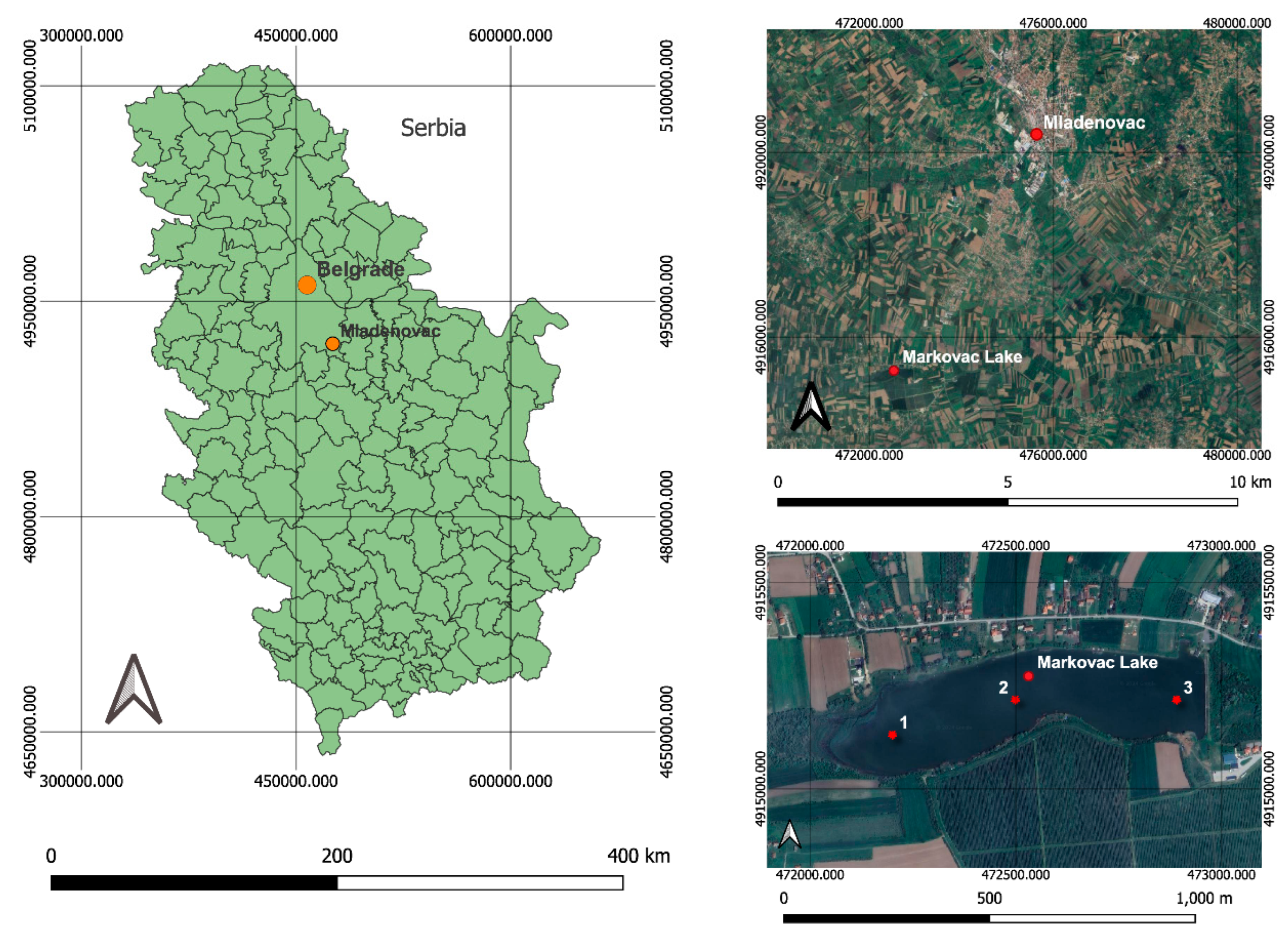
Figure 2.
The level of DNA damage during sampling months, at the control and after H2O2 treatment (positive control). a, b, c- different letters denote statistical significance between samples (p < 0.05).
Figure 2.
The level of DNA damage during sampling months, at the control and after H2O2 treatment (positive control). a, b, c- different letters denote statistical significance between samples (p < 0.05).
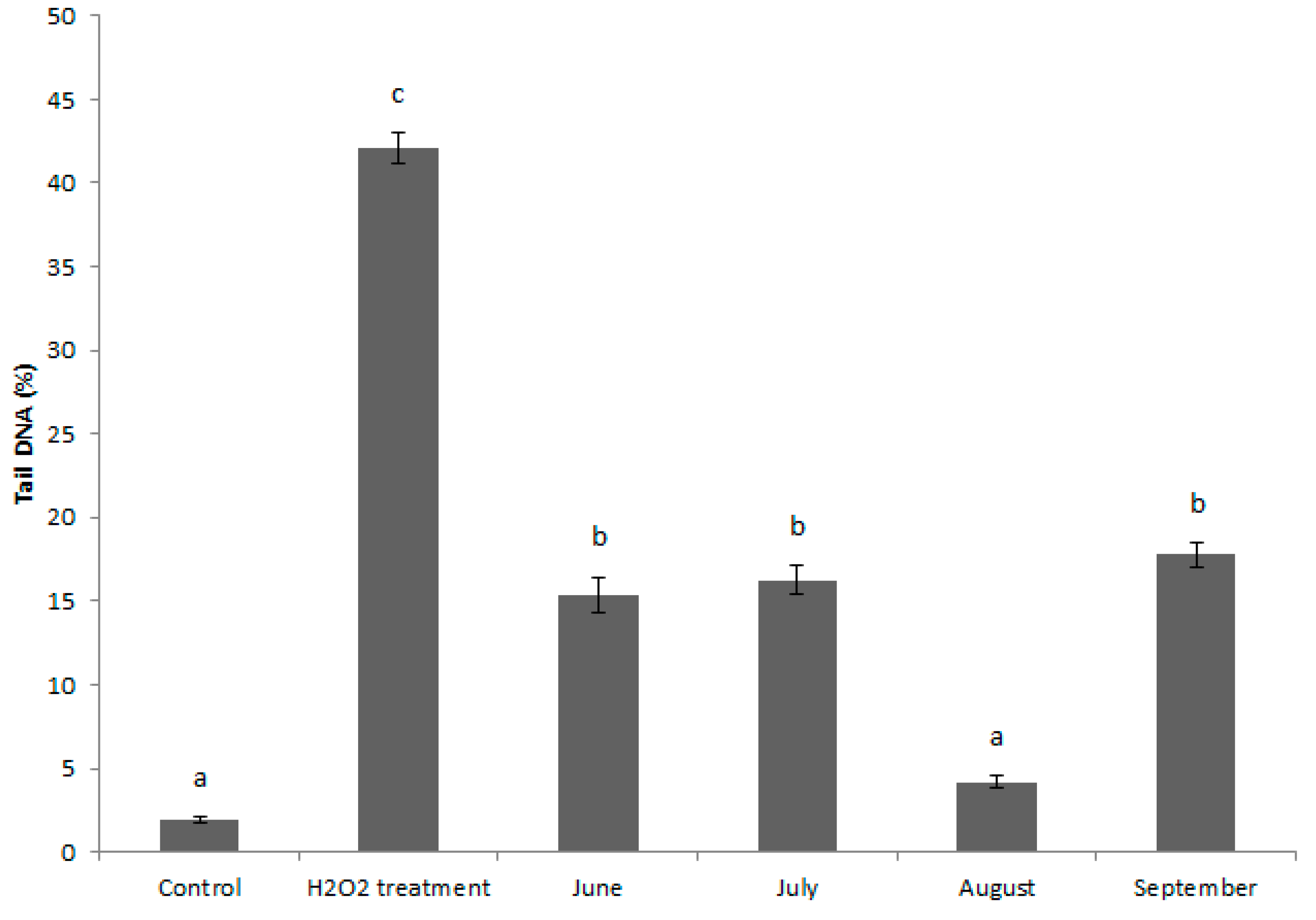
Figure 3.
Nuclear aberrations analysed by the micronucleus assay (a – normal cells, b – micronucleus, c – bud-shaped nuclei, d – notched nuclei, e – binucleus, f – irregularly shaped nuclei).
Figure 3.
Nuclear aberrations analysed by the micronucleus assay (a – normal cells, b – micronucleus, c – bud-shaped nuclei, d – notched nuclei, e – binucleus, f – irregularly shaped nuclei).
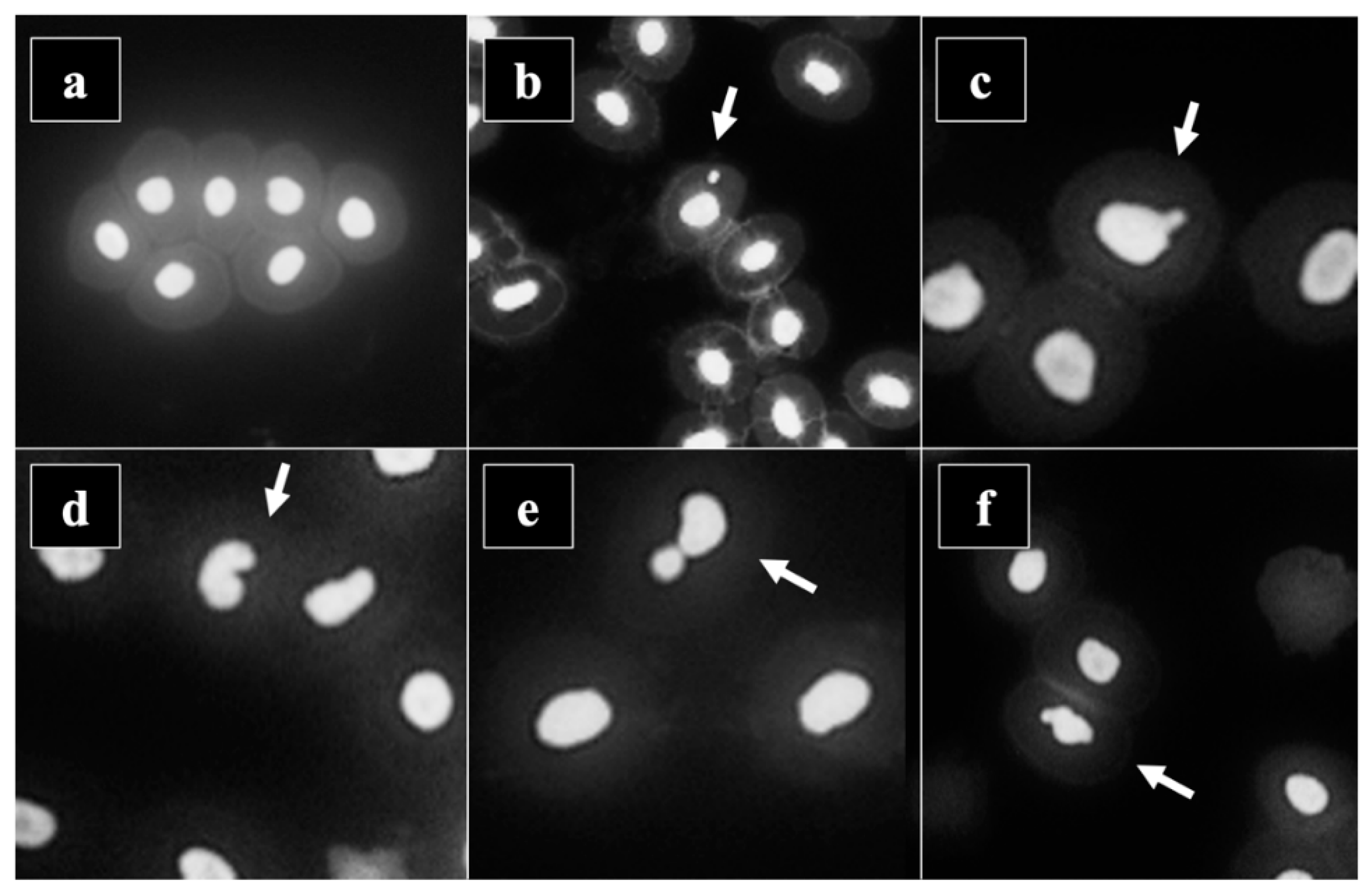
Figure 4.
IBR test results: (a) IBR diagram for each sampling month compared to control for all examined biomarkers: condition index (CI), metal pollution index (MPI), hazard index (HI), comet assay (CA), micronucleus assay (MN); (b) IBR diagram values for sampling months, for all parameters (mean±SD); a, b, c, d - different letters denote significant differences (p<0.05).
Figure 4.
IBR test results: (a) IBR diagram for each sampling month compared to control for all examined biomarkers: condition index (CI), metal pollution index (MPI), hazard index (HI), comet assay (CA), micronucleus assay (MN); (b) IBR diagram values for sampling months, for all parameters (mean±SD); a, b, c, d - different letters denote significant differences (p<0.05).
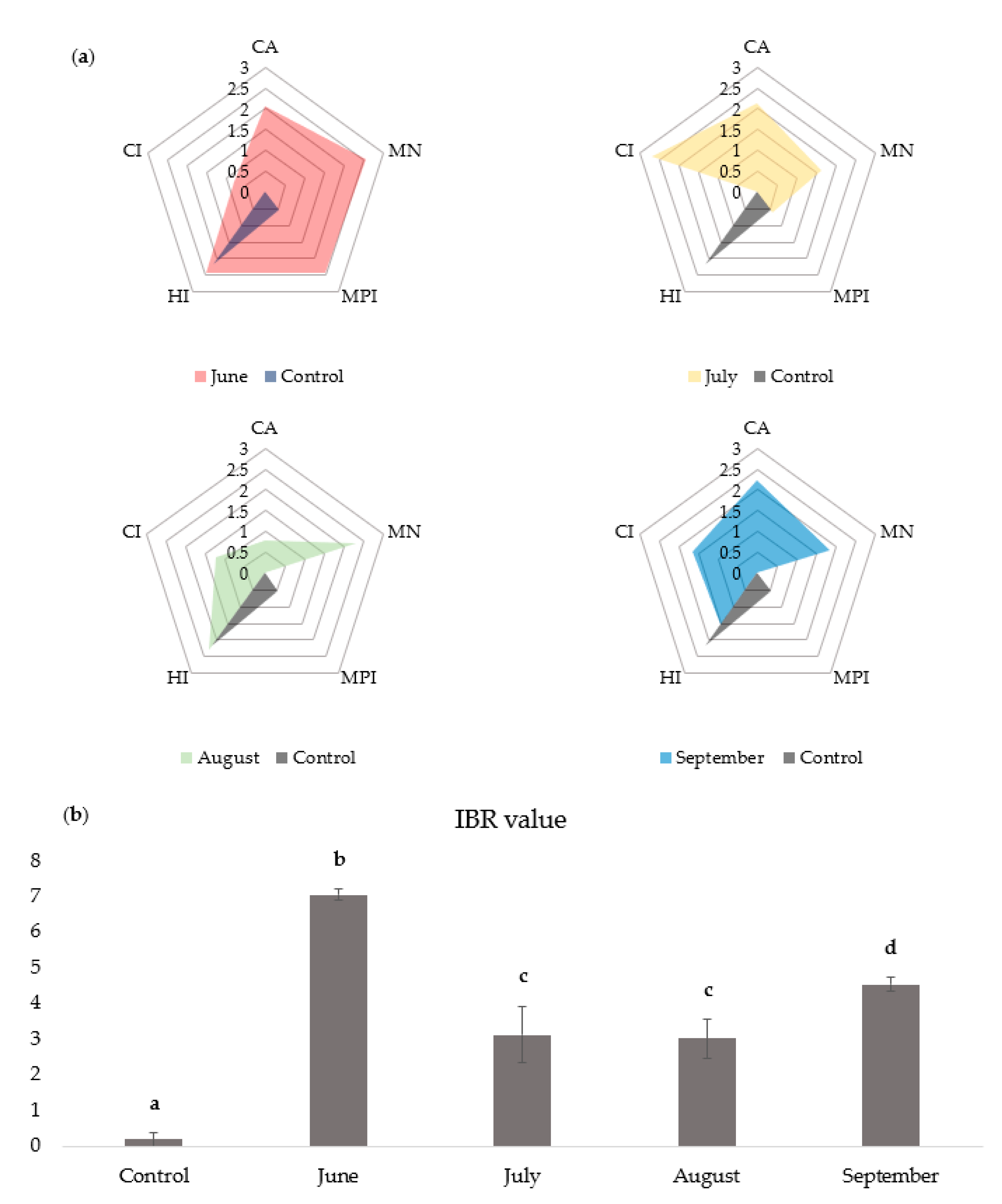

Table 1.
Physico-chemical parameters and microbiological indicators of water quality at Markovac Lake.
Table 1.
Physico-chemical parameters and microbiological indicators of water quality at Markovac Lake.
| June | July | August | September | |
|---|---|---|---|---|
| T (°C) | 21.7 | 25.8 | 23.5 | 19.7 |
| pH | 8.17 | 7.91 | 8.42 | 8.93 |
| O2 (mg/L) | 6.84 | 2.57 | 5.40 | 6.77 |
| O2 (%) | 77.5 | 32.3 | 63.0 | 74.4 |
| Conductivity (μS/cm) | 357 | 409 | 306 | 288 |
| TDS (mg/L) | 0.247 | 0.261 | 0.205 | 0.208 |
| NO2- (mg/L) | 0.01 | 0.01 | 0.52 | 0.01 |
| NO3- (mg/L) | 1.26 | 0.10 | 0.01 | 0.10 |
| NH4+ (mg/L) | 0.11 | 0.09 | 0.05 | 0.18 |
| TC MPN/100 mL | 763 | 381.5 | 2442 | >12098 |
| EC MPN/100 mL | 20 | 10 | 43 | 10 |
Table 2.
Total length and body weight of fish with Fulton's condition factor.
| Control | June | July | August | September | |
|---|---|---|---|---|---|
| L | 25.2±1.1 | 13.6± 1.5 | 13.5±1.5 | 14.5±1.6 | 16.0±1.0 |
| W | 226.9±45.3 | 34.7± 11.2 | 30.2±8.7 | 41.2±11.8 | 53.5±10.8 |
| K | 1.4±0.1 | 1.4±0.3 | 1.2±0.1 | 1.3±0.1 | 1.3±0.1 |
L – total length (cm), W – weight (g), K - Fulton's condition factor. Values are presented as mean±SD.
Table 3.
Frequency of micronuclei and nuclear abnormalities.
| Control | June | July | August | September | |
|---|---|---|---|---|---|
| MN* | 0.15±0,34a | 1.30±0.89b | 0.60±0.61ab | 1.08±0.87b | 0.70±0.42b |
| BUD** | 0.55±0.44ab | 0.85±0.71b | 0.33±0.24a | 0.75±0.54ab | 0.90±0.61b |
| NOTCHED** | 0.90±0.61a | 0.10±0.21b | 0.25±0.63ab | 0.20±0.48b | 0.23±0.25b |
| BI** | 0±0a | 0.15±0.34ab | 0.20±0.26b | 0.43±0.44b | 0.55±0.72b |
| IRR** | 0.05±0.16 | 0.40±0.61 | 0.20±0.35 | 0.10±0.21 | 0.25±0.49 |
MN – micronucleus, BUD – bud-shaped nuclei, NOTCHED – notched nuclei, BI – binucleus, IRR – irregularly shaped nuclei presented as mean±SD in parts per thousand (‰). a, b Different letters indicate statistically significant differences between the control and different months (p < 0.05); * Paired Samples Test; ** Wilcoxon Signed Ranks Test.
Table 4.
The concentration of elements in the muscle of the black bullhead specimens from control and in different months (Lake Markovac).
Table 4.
The concentration of elements in the muscle of the black bullhead specimens from control and in different months (Lake Markovac).
| Control | June | July | August | September | |
|---|---|---|---|---|---|
| Al | 12.61±18.32 | 34.05±18.53 | 8.93±12.41 | 15.50±29.27 | 12.81±29.12 |
| Ba | 2.18±1.14 | 5.15±1.08* | 2.97±2.34 | 2.18±0.99 | 3.30±1.74 |
| Cd | 0.01±0.02 | 0.06±0.02 | 0.08±0.02* | 0.04±0.02 | 0.05±0.02 |
| Cr | 0.42±0.21 | 0.59±0.28 | 0.37±0.07 | 0.34±0.12 | 0.39±0.11 |
| Co | 0.17±0.06 | 0.19±0.09 | 0.11±0.06 | 0.11±0.07 | 0.09±0.07* |
| Cu | 1.82±0.37 | 4.79±1.50* | 0.40±0.34 | 2.19±0.35 | 1.87±0.40 |
| Pb | 0.60±0.19 | 0.40±0.12* | 0.41±0.17* | 0.70±0.23 | 0.58±0.14 |
| Li | 0.04±0.03 | 0.34±0.08* | 0.07±0.03 | 0.04±0.03 | 0.60±0.05 |
| Se | 0.71±0.48 | 0.42±0.31 | 0.73±0.25 | 0.53±0.35 | 0.86±0.32 |
| Pt | 0.27±0.13 | 0.25±0.15 | 0.24±0.16 | 0.25±0.05 | 0.22±0.11 |
| Ti | 0.31±0.43 | 0.79±0.55 | 0.28±0.32 | 0.31±0.66 | 0.16±0.25 |
| Sr | 2.93±2.69 | 11.77±5.53* | 5.23±3.76 | 3.75±3.54 | 6.67±6.25* |
| Fe | 33.03±22.24 | 48.63±30.84 | 33.22±17.93 | 34.32±24.92 | 30.45±17.65 |
| Zn | 124.45±28.82 | 204.98±33.45* | 124.00±32.24 | 109.04±24.54 | 123.22±40.58 |
| Mn | 3.54±2.43 | 5.53±5.93 | 11.42±2.08* | 7.83±4.97* | 6.28±1.86 |
| Ni | 4.97±2.39 | 8.93±7.03 | 13.97±2.21* | 10.79±4.71* | 8.82±1.85* |
Values are expressed in mg kg-1 dry weight (mean±SD). * Statistical significance in comparison to control (p<0.05).
Table 5.
Target Hazard Quotient (THQ), Hazard Index (HI), and Metal Pollution Index (MPI) in the muscle tissue of black bullhead.
Table 5.
Target Hazard Quotient (THQ), Hazard Index (HI), and Metal Pollution Index (MPI) in the muscle tissue of black bullhead.
| Control | June | July | August | September | |
|---|---|---|---|---|---|
| Al THQ | 0.433 | 0.408 | 0.280 | 0.451 | 0.417 |
| Cd THQ | 0.014 | 0.012 | 0.009 | 0.005 | 0.006 |
| Co THQ | 0.077 | 0.074 | 0.046 | 0.043 | 0.036 |
| Cu THQ | 0.006 | 0.014 | 0.006 | 0.006 | 0.006 |
| Pb THQ | 0.002 | 0.001 | 0.001 | 0.002 | 0.002 |
| Fe THQ | 0.011 | 0.015 | 0.010 | 0.010 | 0.009 |
| Zn THQ | 0.006 | 0.008 | 0.005 | 0.004 | 0.005 |
| Mn THQ | - | - | 0.001 | 0.001 | 0.001 |
| Ni THQ | 0.034 | 0.054 | 0.085 | 0.061 | 0.055 |
| HI | 0.57 | 0.59 | 0.44 | 0.58 | 0.53 |
| MPI | 0.53 | 0.69 | 0.53 | 0.49 | 0.49 |
Disclaimer/Publisher’s Note: The statements, opinions and data contained in all publications are solely those of the individual author(s) and contributor(s) and not of MDPI and/or the editor(s). MDPI and/or the editor(s) disclaim responsibility for any injury to people or property resulting from any ideas, methods, instructions or products referred to in the content. |
© 2024 by the authors. Licensee MDPI, Basel, Switzerland. This article is an open access article distributed under the terms and conditions of the Creative Commons Attribution (CC BY) license (http://creativecommons.org/licenses/by/4.0/).
Copyright: This open access article is published under a Creative Commons CC BY 4.0 license, which permit the free download, distribution, and reuse, provided that the author and preprint are cited in any reuse.


