

Submitted:
26 September 2024
Posted:
29 September 2024
You are already at the latest version
Abstract
Effective inventory management is vital for both organizational success and customer satisfaction. This study explores how service crew commitment impacts inventory management efficiency in Quick Service Restaurants (QSR) in Quezon City, Philippines. Utilizing a quantitative descriptive-correlation approach, data were gathered from 171 participants through purposive sampling, using a structured questionnaire to assess service crew commitment, factors influencing it, and inventory management efficiency. Descriptive and inferential statistics, including regression and correlation analyses, were employed to analyze the data. The results revealed a strong positive correlation (r = 0.911, p < 0.001) between service crew commitment and inventory management efficiency. Key factors influencing this commitment included training, recognition, standardized procedures, resource availability, and organizational culture. Regression analysis showed that service crew commitment (Beta = 0.659, p < 0.001) and these related factors (Beta = 0.318, p < 0.001) significantly affect inventory management efficiency. These findings underscore the need to enhance service crew commitment through comprehensive training programs, effective recognition systems, clear and standardized procedures, optimized resource allocation, and a supportive organizational culture. Such improvements are crucial for optimizing inventory management processes, reducing operational costs, and enhancing overall supply chain performance. Recommendations focus on implementing regular training sessions, establishing robust recognition programs, maintaining clear procedures, ensuring adequate resources, and fostering a positive work environment to sustain high inventory management standards.
Keywords:
employee commitment
; inventory counting
; inventory management
; quick service restaurant
; inventory accuracy
1. Introduction
To stay competitive and effectively meet customer demands, organizations must excel in inventory management. In the context of Quick Service Restaurants (QSR), inventory management is crucial for maintaining operational success and organizational performance (Munyaka & Mudavalli, 2022). The Tagalog term “Imbento” refers to inaccurate or manipulated inventory data, underscoring the importance of precise and honest inventory practices.
Effective inventory management involves balancing stock availability to meet customer needs while managing carrying costs and operational inefficiencies. A systematic ordering policy can minimize total inventory costs and enhance organizational efficiency (Inegbedion et al., 2019). Accurate inventory data is vital for making informed decisions in procurement, production, and customer service.
The dedication of service crew members, who are responsible for inventory counting and monitoring, is critical. Their commitment directly affects the reliability of inventory data, which in turn influences the entire supply chain—from forecasting and procurement to sales and customer service. High standards in inventory management can enhance competitive advantage and improve overall organizational performance (Kansime, 2022).
Rodriguez and Palallos (2024) emphasize that accurate demand forecasting, product diversification, and efficient distribution are crucial for effective supply chain management. Similarly, effective inventory management is essential for cost-efficient operations and maintaining appropriate safety stocks.
This study aims to explore how the commitment of service crew members impacts inventory management efficiency in Quick Service Restaurants. Objectives include assessing the level of commitment towards accurate inventory counts, identifying key factors influencing this commitment, examining the relationship between commitment and inventory metrics (such as accuracy, turnover rates, and stock levels), and evaluating the effectiveness of current inventory practices. The study seeks to provide valuable insights to optimize operational processes and boost performance through enhanced service crew engagement in inventory management.
1.1. Statement of the Problem
Specifically, the study aims to investigate service crew members’ commitment to inventory taking in a timely and accurate manner, identify the key factors that influence their commitment to such activities, investigate the impact of their commitment on inventory accuracy, inventory turnover rates, and the frequency of stock-out and overstock scenarios, and investigate how current practices are perceived by the organization as effective means of managing its inventory.
- What is the level of commitment of the service crew to Inventory counting?
-
What are the factors affecting the Commitment of the Service Crew to Inventory counting in terms of:
- 2.1
- Training and Effectiveness
- 2.2
- Recognition and Feedback
- 2.3
- Counting Procedures
- 2.4
- Availability of Resources
- 2.5
- Organizational Culture?
-
What is the level of Impact on Inventory Management Efficiency in terms of:
- 3.1
- Inventory Accuracy
- 3.2
- Inventory Turnover
- 3.3
- Inventory Stock-outs
- 3.4
- Inventory Overstock?
- Is there a significant relationship between the Factors affecting the Commitments of the Service Crew to Inventory Counting and Inventory Management efficiency?
- Is there a significant impact of Factors Affecting the Commitment of the Service Crew to Inventory counting and Inventory Management Efficiency?
- Based on the result, what will be the Intervention program to boost the Efficiency of Inventory Management in the organization?
1.2. Hypothesis
HO1:
There is no significant relationship between the Factors affecting the Commitments of the Service Crew to Inventory Counting and Inventory Management efficiency.
HO2:
There is no significant impact of Factors Affecting the Commitment of the Service Crew to Inventory counting and Inventory Management Efficiency.
2. Review of Related Literature
2.1. Commitment in Inventory Counting
“Commitment to inventory counting” involves employees being dedicated to accurately tracking inventory levels, adhering to procedures meticulously, and ensuring overall inventory accuracy. This dedication is essential for effective decision-making in procurement, production planning, and customer service. Employees who are committed to inventory counting work to minimize errors, maintain consistency, and continuously improve their counting methods.
Research underscores the importance of accurate inventory data in supply chain management. Errors in inventory can disrupt efficiency and lead to poor customer satisfaction (Avrahami & Korchatov, 2019). Enhancing the reliability of inventory systems through advanced technologies and a skilled workforce is crucial for improving operational efficiency (Huang et al., 2018). Effective inventory management, seen across various sectors, is vital for optimizing processes and reducing costs (Mukherjee & Rao, 2023; Villacis et al., 2024).
A strong commitment to precise inventory counting not only ensures operational accuracy but also contributes to organizational efficiency and cost-effectiveness in inventory management practices (Amirrudin et al., 2023). This commitment is key to supporting seamless operations and achieving better overall performance.
2.2. Factors Influencing Commitment to Inventory Counting
Effective warehouse inventory management relies on several critical factors. First, having a knowledgeable and skilled staff is essential, along with robust documentation practices and adequate funding (Tarudin et al., 2021). Effective procurement procedures, careful inventory planning, and thorough documentation are key to successful inventory management (Wijekumara & Kumara, 2019). Utilizing advanced strategies, like transfer learning from successful heuristic methods, can significantly enhance deep reinforcement learning systems, especially for managing perishable goods (Moor et al., 2022).
Inventory control systems, combined with efficient control practices and up-to-date information technology, play a crucial role in inventory management (Kaewchur, 2021). To handle demand uncertainties during production surges, optimizing workforce training—by tailoring it for both slower and faster learners—ensures flexibility and responsiveness (Valeva et al., 2020). Deep reinforcement learning (DRL) has proven to be an effective tool for addressing complex inventory challenges such as lost sales and multi-echelon management, outperforming traditional methods (Gijsbrechts et al., 2022).
Key factors influencing inventory control include forecasting accuracy, production and sales alignment, skilled worker turnover, and market demand fluctuations (Ong et al., 2022). Implementing strategic inventory practices, such as demand forecasting and procurement optimization, positively affects key performance indicators like order fulfillment and customer satisfaction (Al Shukaili et al., 2023). Effective inventory management not only improves operational efficiency and cost-effectiveness but also supports firm performance and decision-making, ultimately providing a competitive edge (Mumo & Moronge, 2019; Kiran, 2019).
2.3. The Inventory Management Efficiency
Efficient inventory management is crucial for streamlining warehouse operations and ensuring precise tracking of stock movements. It involves facilitating accurate stock counting, maximizing storage space utilization, and preventing losses due to theft (Amirrudin et al., 2023). Inventory Management Efficiency (IME) is a key metric that measures performance by reducing variability in inventory levels (Kim, 2023). Implementing effective IME strategies includes using strategic ordering practices to lower overall inventory costs, such as setting specific thresholds for reordering items (Inegbedion et al., 2019).
High IME is vital for boosting overall supply chain performance and can significantly influence financial indicators like Cost of Goods Sold (COGS) and Gross Margins (Coney et al., 2019). By maintaining optimal inventory levels, IME helps minimize the risk of stock shortages or surpluses, ensuring that goods are available when needed without excess (Jhansi et al., 2022). In essence, a well-managed inventory system not only supports operational efficiency but also contributes to improved financial outcomes and customer satisfaction.
2.4. Previous Studies on the Relationship between Employee Commitment and Inventory Accuracy
Previous research consistently highlights a strong link between employee commitment and inventory accuracy. Higher employee commitment correlates with more accurate inventory counts, showcasing how dedication and engagement contribute to reliable inventory data. This reliable data is crucial for making informed decisions in procurement, production scheduling, and customer service (Karoso et al., 2022).
Organizational commitment acts as a bridge between the work environment and employee performance, significantly affecting operational outcomes. For instance, economic order quantities and production costs directly impact operational and sales turnover costs (Akpoviroro & Varečková, 2023), underscoring the close relationship between inventory management and broader organizational strategies. Additionally, employee commitment and effective recruitment processes are linked to better internal supply chain performance (Alansaari et al., 2019), emphasizing the importance of human resource practices in supply chain efficiency.
Effective training is essential for deploying advanced inventory management systems and managing supply chain risks (Saleem, 2020). Fostering a culture of continuous improvement and employee engagement can significantly enhance inventory accuracy and operational efficiency (Kulikova et al., 2023; Chancasanampa-Mandujano et al., 2019). Strategies like setting precise reorder points and managing supplier partnerships also improve warehouse efficiency and stock accuracy (Ammirudin et al., 2023). Overall, understanding these factors is vital for developing strategies that boost employee commitment and optimize inventory management, leading to enhanced organizational performance.
2.5. Theoretical Framework
The theory that was anchored in this study is the Social Exchange theory.
Figure 1.
Social Exchange Theory.

The Social Exchange Theory (SET) explores the dynamics of psychological transactions and their impact on exchange processes. SET suggests that individuals are motivated to engage in behaviors that offer the greatest rewards while minimizing costs, whether in personal relationships or organizational settings. In the context of this study, SET helps explain why service crew members are dedicated to accurate and timely inventory counting. They are driven by the anticipation of rewards such as job satisfaction and career recognition, which offset the time and effort invested in counting (Zooler & Muldoon, 2019).
From an organizational perspective, accurate inventory data—achieved through committed counting practices—is seen as a significant reward. Reliable inventory data enhances operational efficiency and supports informed decision-making in procurement, production planning, and customer service. On the other hand, inaccurate inventory counts lead to increased costs due to stockouts, overstock, and inefficiencies in operations, ultimately raising expenses (Ahmad et al., 2023).
SET provides a valuable framework for understanding how the commitment of service crew members affects organizational outcomes. It emphasizes aligning individual efforts with organizational rewards to foster commitment while minimizing the costs associated with inaccurate inventory management. Recognizing and rewarding accurate inventory practices can help organizations build a culture of commitment, leading to improved operational effectiveness and efficiency.
2.6. Conceptual Framework
Figure 2.
IV-DV Paradigm.
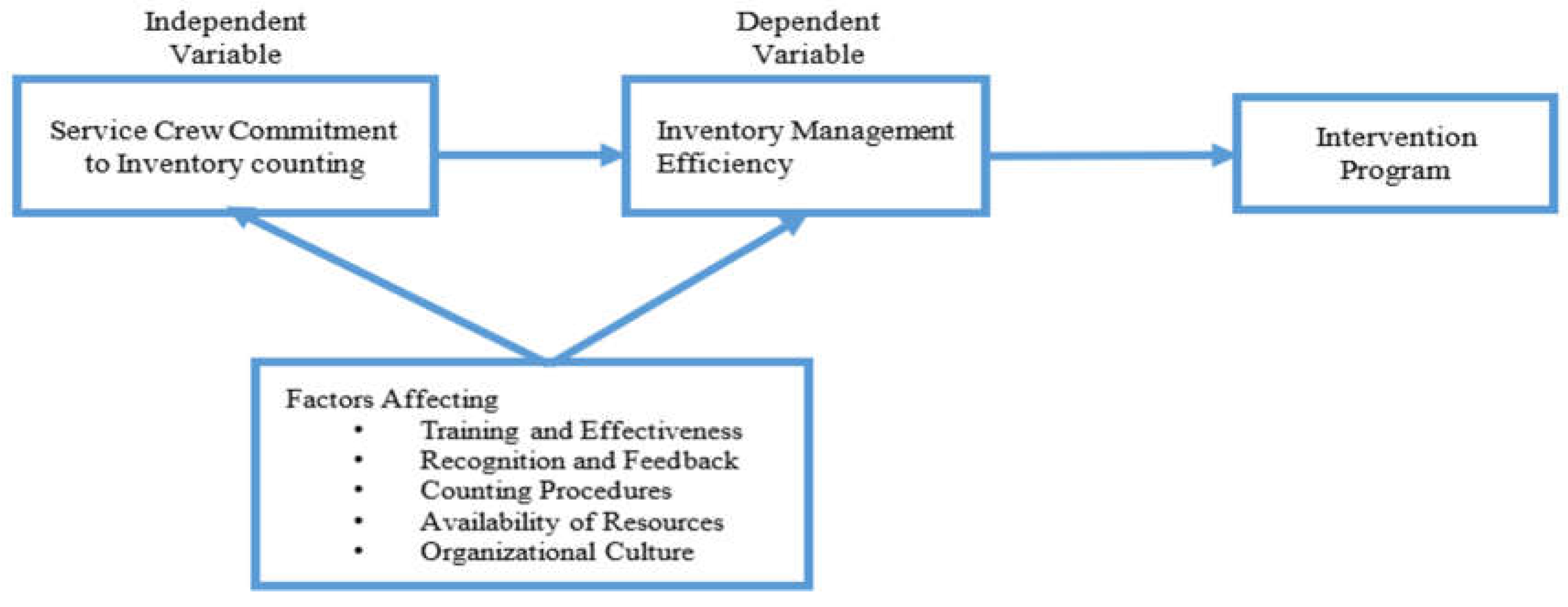
The conceptual framework highlights how the service crew’s commitment to accurate inventory counting is shaped by several key factors: training, recognition, counting procedures, resource availability, and organizational culture. This commitment has a direct impact on inventory management efficiency, which in turn can guide the creation of targeted intervention programs to refine inventory practices. By understanding these relationships, organizations can pinpoint areas for improvement and implement strategies that enhance overall inventory management. This approach not only boosts efficiency but also helps develop effective solutions for optimizing inventory practices.
3. Research Methodologies
This study will use a quantitative research approach to explore how employee commitment to inventory counting affects inventory management practices. Specifically, a Descriptive-Correlation method will be employed. This approach systematically collects and analyzes numerical data, allowing us to examine correlations, identify predictors, and understand causal relationships between variables. As Janse et al. (2021) explain, the correlation coefficient is a statistical tool that measures the strength and direction of the relationship between variables, or assesses the agreement between different methods.
3.1. Sampling Methods and Participants
To ensure a well-rounded representation of different employee roles, the study will use purposive sampling. This method will target stockman crew, supervisors, and managers—all of whom are directly involved in inventory counting and management. The participants will come from various departments and locations within Quick Service Restaurants (QSR) in Quezon City, Metro Manila, Philippines. To determine the sample size, the researcher applied the Yamane Formula, resulting in a target of 171 participants for this study.
3.2. Data Collection and Instruments
Data will be collected using a structured questionnaire designed to measure employee commitment factors and perceptions of inventory management effectiveness. The first part is the level of commitment of the service crew to Inventory counting, second part is for factors affecting the Commitment of the Service Crew to Inventory counting in terms of Training and Effectiveness, Recognition and Feedback, Counting Procedures, Availability of Resources and Organizational Culture and the third is the level of Impact on Inventory Management Efficiency in terms of Inventory Accuracy, Inventory Turnover, Inventory Stock-outs, and Inventory Overstock. The following table shows the metrics and verbal interpretation of the results.

Table 1.
Four-point Likert Scale for Level of Service Crew Commitment on Inventory Counting.
| Score | Mean | Verbal Interpretation |
|---|---|---|
| 4 | 3.25- 4.00 | Very High (VH) |
| 3 | 2.50- 3.24 | High (H) |
| 2 | 1.75- 2.49 | Low (L) |
| 1 | 1.00- 1.74 | Very Low (VL) |
Table 2.
Four-point Likert Scale for Factors Influencing the Service Crew Commitment.
| Score | Mean | Verbal Interpretation |
|---|---|---|
| 4 | 3.25- 4.00 | Extremely Influential |
| 3 | 2.50- 3.24 | Influential |
| 2 | 1.75- 2.49 | Moderate Influential |
| 1 | 1.00- 1.74 | Not Influential at all |
Table 3.
Four-point Likert Scale for Impact on Inventory Management Efficiency.
| Score | Mean | Verbal Interpretation |
|---|---|---|
| 4 | 3.25- 4.00 | Very accurate |
| 3 | 2.50- 3.24 | Accurate |
| 2 | 1.75- 2.49 | Inaccurate |
| 1 | 1.00- 1.74 | Very Inaccurate |
3.3. Statistical Methods
Quantitative data analysis will include descriptive statistics (mean, standard deviation) to summarize the level of commitment, factors influencing the crew commitment, and assessment of the Inventory management efficiency. Inferential statistical techniques such as regression analysis was employed to examine the predictive relationships between employee commitment (independent variable) and inventory management outcomes (dependent variables). Correlation analysis will assess the strength and direction of relationships between variables of interest.
4. Results
The Results garnered in this study investigate the level of commitment among service crew members to inventory counting, explore key factors influencing this commitment, assess its impact on inventory management efficiency, examine the relationship between commitment and efficiency, and propose intervention strategies to enhance overall inventory management effectiveness.
4.1. Assessment of the Service Crew Commitment to Inventory Counting
| Indicators | N | Mean | SD | VI |
|---|---|---|---|---|
|
171 | 3.7368 | .44164 | Very High |
|
171 | 3.2105 | .62507 | High |
|
171 | 3.6257 | .48535 | Very High |
|
171 | 3.5731 | .49608 | Very High |
|
171 | 3.2105 | .75312 | High |
| AVERAGE | 171 | 3.4713 | VERY HIGH |
The analysis of commitment toward inventory counting for the Service Crew indicates an overall high commitment. The overall average mean score is 3.4713. They are outstanding in ensuring the accuracy of verification of stock levels with a mean of 3.7368 and SD of 0.44164. They also take responsibility for discovering inaccuracies and reporting them with a mean of 3.6257 and SD of 0.48535. They continue to seek further development of their skills with a mean of 3.5731 and an SD of 0.49608. However, on issues to do with prioritizing inventory counting tasks, the mean reading was 3.2105, and a SD of 0.62507, while following standardized procedures had a mean reading of 3.2105 and a SD of 0.75312. Indeed, this calls for supplementary training on the aspect of standardized procedures and the establishment of clear guidelines concerning this. Variables regarding continuous improvement through workshops and regular feedback need to be further firmed by the crew’s performance and commitment toward inventory counting.
4.2. Assessment of the Factors Affecting the Commitment of the Service Crew to Inventory counting
| Training and Effectiveness | ||||
| Indicators | N | Mean | SD | VI |
|
171 | 3.2047 | .63169 | Influential |
|
171 | 3.1930 | .64458 | Influential |
|
171 | 3.6257 | .48535 | Extremely Influential |
| TOTAL | 3.3411 | Extremely Influential | ||
| Recognition and Feedback | ||||
| Indicators | N | Mean | SD | VI |
|
171 | 3.5556 | .54353 | Extremely Influential |
|
171 | 3.2105 | .62507 | Influential |
|
171 | 3.6082 | .52440 | Extremely Influential |
| TOTAL | 3.4581 | Extremely Influential | ||
| Counting Procedures | ||||
| Indicators | N | Mean | SD | VI |
|
171 | 3.5439 | .55530 | Extremely Influential |
|
171 | 3.1871 | .65084 | Influential |
|
171 | 3.1871 | .66868 | Influential |
| TOTAL | 3.3060 | Extremely Influential | ||
| Availability of Resources | ||||
| Indicators | N | Mean | SD | VI |
|
171 | 3.6257 | .48535 | Extremely Influential |
|
171 | 3.5731 | .50780 | Extremely Influential |
|
171 | 3.5614 | .50780 | Extremely Influential |
| TOTAL | 3.5867 | Extremely Influential | ||
| Organizational Culture | ||||
| Indicators | N | Mean | SD | VI |
|
171 | 3.5439 | .56579 | Extremely Influential |
|
171 | 3.5439 | .57610 | Extremely Influential |
|
171 | 3.5789 | .49518 | Extremely Influential |
| TOTAL | 3.5556 | Extremely Influential | ||
From the assessment, it can be seen that many factors have a significant influence on the commitment of the Service Crew towards counting inventory. The training programs are very effective in bringing about efficiency with a mean of 3.3411, which is very high. Similarly, recognition and feedback is another important factor with strong acknowledgement of contributions by the staff with a mean of 3.4581. The counting procedures are standardized in order to bring uniformity and accuracy with a mean of 3.3060. The resources are also quite adequate with proper tools, sufficient staffing, and budget with a mean of 3.5867. Therefore, a significantly enhanced commitment means that a strong organizational culture, stressing accuracy, teamwork, and continuous improvement, among others, bring out a significantly boosted commitment of 3.5556. To ensure that these efficiencies are maintained and enhanced, the training programs should be continued and enhanced; the recognition and feedback mechanisms should be further strengthened, counting procedures standardized, resource allocation ensured, and a positive organizational culture promoted. These will sustain high standards and move inventory counting practices into better practices.
4.3. Assessment of the Impact on Inventory Management Efficiency
| Inventory Accuracy | ||||
| Indicators | N | Mean | SD | VI |
|
171 | 3.2865 | .73147 | Very Accurate |
|
171 | 3.5497 | .57562 | Very Accurate |
|
171 | 3.2865 | .73147 | Very Accurate |
| TOTAL | 3.3742 | Very Accurate | ||
| Inventory Turnover | ||||
| Indicators | N | Mean | SD | VI |
|
171 | 3.5906 | .56017 | Very Accurate |
|
171 | 3.2222 | .74184 | Accurate |
|
171 | 3.5965 | .55919 | Very Accurate |
| TOTAL | 3.4698 | Very Accurate | ||
| Inventory Stock-outs | ||||
| Indicators | N | Mean | SD | VI |
|
171 | 3.5789 | .50692 | Very Accurate |
|
171 | 3.2105 | .62507 | Accurate |
|
171 | 3.5789 | .50692 | Very Accurate |
| TOTAL | 3.4561 | Very Accurate | ||
| Inventory Overstock | ||||
| Indicators | N | Mean | SD | VI |
|
171 | 3.2515 | .63333 | Very Accurate |
|
171 | 3.5146 | .55685 | Very Accurate |
|
171 | 3.2573 | .63560 | Very Accurate |
| TOTAL | 3.3411 | Very Accurate | ||
The assessment of inventory management was that the Service Crew actually does a good job managing its inventories, with the accuracy rated very accurate overall, with an average of 3.3742. Variance is identified and resolved in a timely manner so that data is valid. Inventory turns are adequate compared to industry benchmarks with an average of 3.4698; there are attempts to reduce obsolete inventory levels, but the implementation is patchy, while stock-outs are rare and managed with effective work-arounds so there is minimal impact on operations with an average of 3.4561. Accumulation of overstocked inventory is prevented, and the associated processes are efficient, with demand forecasted accurately: the mean stands at 3.3411. This will require the sustenance of training programs, periodic audits with feedback, refinement in inventory practices to reduce overstock, and robust mitigation measures against stock-outs and overstock circumstances.
4.4. The Significant Relationship between Service Crew Commitment to Inventory Management Efficiency
| SERVICE CREW COMMITMENT | INVENTORY MANAGEMENT EFFICIENCY | ||
| SERVICE CREW COMMITMENT | Pearson Correlation | 1 | .911** |
| Sig. (2-tailed) | .000 | ||
| N | 171 | 171 | |
| INVENTORY MANAGEMENT EFFICIENCY | Pearson Correlation | .911** | 1 |
| Sig. (2-tailed) | .000 | ||
| N | 171 | 171 | |
| **. Correlation is significant at the 0.05 level (2-tailed). | |||
| LEGEND INTERPRETATION: 0 or Below- No Relationship (NR); 0.01-0.25- Low Relationship (LR); 0.26-0.50-Moderate Relationship (MR); 0.51-0.75-High Relationship (HR); 0.76-0.99-Very High Relationship (VHR); 1.00- Perfect Relationship (PR) | |||
The data reveals a very high positive and statistically significant relationship between Service Crew Commitment and Inventory Management Efficiency, with a Pearson correlation coefficient of 0.911 and a p-value of 0.000. This indicates that higher levels of commitment among the service crew are strongly associated with increased inventory management efficiency. To capitalize on this relationship, organizations should focus on enhancing service crew commitment through continuous training, recognition programs, and fostering a supportive organizational culture. Regular monitoring and support can help maintain and improve both commitment and efficiency, leading to better overall inventory management.
4.5. The Significant Impact of Factors Affecting the Commitment of the Service Crew to Inventory Counting and Inventory Management Efficiency
| Model | Unstandardized Coefficients | Standardized Coefficients | t | Sig. | ||
|---|---|---|---|---|---|---|
| B | Std. Error | Beta | ||||
| 1 | (Constant) | -.323 | .114 | -2.825 | .005 | |
| SERVICE CREW COMMITMENT | .768 | .054 | .659 | 14.345 | .000 | |
| FACTORS AFFECTING THE COMMITMENT OF THE SERVICE CREW | .306 | .044 | .318 | 6.921 | .000 | |
| a. Dependent Variable: Inventory Management Efficiency | ||||||
The regression analysis shows that both Service Crew Commitment and factors affecting their commitment significantly influence Inventory Management Efficiency. Service Crew Commitment has a strong positive impact (Beta = 0.659, p-value = 0.000), while the factors affecting their commitment also have a significant, albeit smaller, positive impact (Beta = 0.318, p-value = 0.000). The negative constant indicates a baseline level of efficiency. To enhance inventory management efficiency, it is crucial to focus on strategies that increase service crew commitment, such as training, recognition, and support, and to address the specific factors influencing their commitment, ensuring a supportive work environment.
Figure 3.
P-Plot for Regression Analysis.
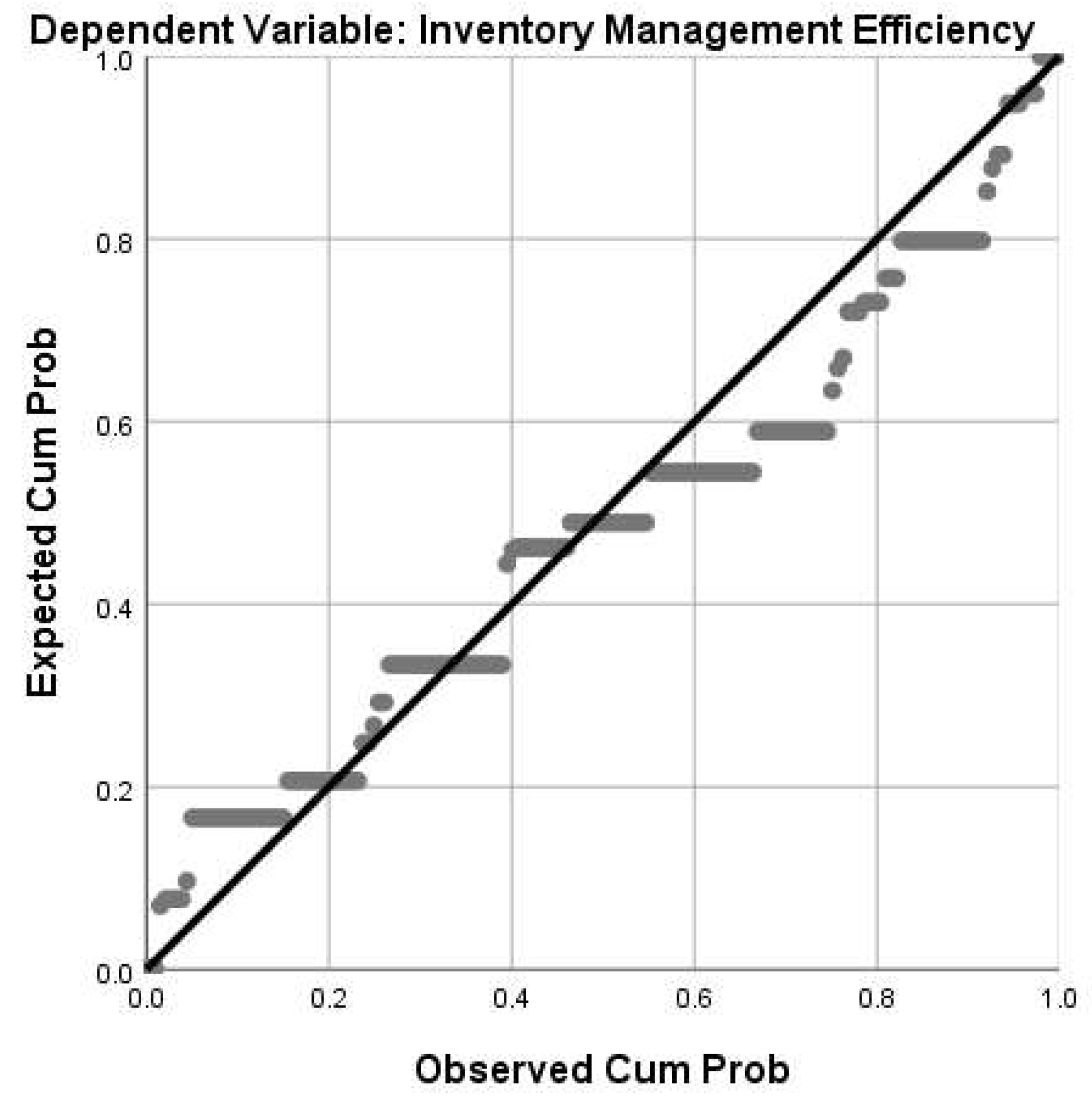
Using the Normal P-P Plot of Residuals in inventory management efficiency, it can be proved that residuals are normally distributed since most of the points tend to follow very closely the diagonal line of perfect agreement. The assumption that residues are normally distributed is proven right; hence, the regression model is also right. Minor deviations from the line can be observed but not significant enough to invalidate the normality assumption. Thus, the regression model is reliable for predicting Inventory Management Efficiency from Service Crew Commitment and factors affecting their commitment.
4.6. Output (The Intervention Program)
| Area | Objectives | Strategies | Time Frame | Persons Involved | Outcome |
| Advanced Inventory Counting Methods | Enhance skills in accurate recording and verification of inventory levels | Conduct workshops on advanced counting techniques, provide hands-on training, certification | Quarterly | Inventory Managers, Service Crew | Improved accuracy and efficiency in counting |
| Standard Operating Procedures (SOPs) Training | Ensure adherence to standardized counting procedures | Develop detailed SOP manuals, conduct training sessions, regular audits | Bi-annual | Inventory Supervisors, Service Crew | Consistent and standardized counting procedures |
| Technology Integration Training | Improve efficiency through the use of inventory management software | Training on software usage, practice sessions, troubleshooting and support sessions | Ongoing | Managers, Inventory Managers | Enhanced use of software for real-time data entry |
| Team Collaboration and Communication | Foster a positive team culture for effective inventory management | Workshops on communication and teamwork, role-playing exercises, feedback mechanisms | Monthly | Team Leaders, Service Crew | Improved collaboration and communication skills |
| Continuous Improvement Workshops | Encourage ongoing learning and process enhancement | Quarterly workshops on process optimization, idea-sharing sessions, recognition for innovations | Quarterly | Total Quality Manager, Service Crew | Enhanced process efficiency and innovation |
Discussion
The level of commitment of the service crew to inventory counting
The study’s findings on the service crew’s commitment to inventory counting echo existing research on the importance of accurate inventory management and employee dedication for boosting operational efficiency. Commitment in this context means employees are devoted to accurately recording inventory levels, adhering to procedures, and maintaining overall inventory accuracy. This dedication is crucial for making sound decisions in procurement, production planning, and customer service. Employees work to minimize errors, stay consistent, and improve their counting methods continually.
Research underscores the significance of inventory accuracy in supply chain management, where inaccuracies can affect both efficiency and customer satisfaction (Avrahami & Korchatov, 2019). Improving inventory system reliability through advanced technology and a skilled workforce can enhance efficiency (Huang et al., 2018). Effective inventory management is essential across various sectors for optimizing processes and cutting costs (Mukherjee & Rao, 2023; Villacis et al., 2024). A commitment to precise inventory counting not only ensures operational accuracy but also enhances organizational efficiency and cost-effectiveness in inventory management practices (Amirrudin et al., 2023).
The Factors Affecting the Commitment of The Service Crew to Inventory Counting in Terms of Training and Effectiveness, Recognition and Feedback, Counting Procedures, Availability of Resources and Organizational Culture.
The assessment reveals several key factors that significantly affect the Service Crew’s commitment to inventory counting. Effective training programs, which scored 3.34, are crucial for enhancing skills (Tarudin et al., 2021). Recognition and feedback mechanisms, with a score of 3.46, play a vital role in boosting job satisfaction and motivation (Wijekumara & Kumara, 2019). Standardized counting procedures, averaging a score of 3.31, highlight the need for consistent practices to ensure accuracy (Kaewchur, 2021). Adequate resource allocation, scoring 3.59, is essential for maintaining operational efficiency (Mukherjee & Rao, 2023; Villacis et al., 2024). A positive organizational culture, with a score of 3.56, strengthens commitment and teamwork (Amirrudin et al., 2023). To uphold high standards in inventory management, it is recommended to enhance training, strengthen feedback mechanisms, standardize procedures, optimize resource allocation, and cultivate a supportive organizational culture. These recommendations are aligned with existing research on improving operational efficiency and decision-making in warehouse management.
The Level of Impact on Inventory Management Efficiency in terms of Inventory accuracy, Inventory Turnover, Inventory Stockouts and Inventory Overstock
The assessment of inventory management practices among the Service Crew shows strong performance in maintaining accuracy (average 3.3742), effectively managing variance, and minimizing data validity issues, consistent with literature emphasizing accuracy’s crucial role in cost reduction and efficiency (Amirrudin et al., 2023). Adequate inventory turnover (average 3.4698) aligns with industry benchmarks, reflecting effective stock management efforts (Kim, 2023). Challenges in reducing obsolete inventory levels highlight improvement opportunities, emphasizing the need to optimize inventory to enhance financial performance (Inegbedion et al., 2019). Rare stock-outs (average 3.4561), managed effectively to minimize disruptions, demonstrate practical application of inventory strategies (Coney et al., 2019). Efficient processes preventing overstock (mean 3.3411) underscore benefits of accurate forecasting and proactive inventory management (Jhansi et al., 2022). Sustaining training programs, regular audits with feedback, and refining practices are crucial for ongoing improvement aligned with best practices in the field.
The Relationship Between Service Crew Commitment to Inventory Management Efficiency
The analysis reveals a strong correlation (r = 0.911, p < 0.001) between Service Crew Commitment and Inventory Management Efficiency, showing that higher levels of commitment significantly boost inventory management effectiveness. To leverage this insight, organizations should focus on continuous training, recognition programs, and creating a supportive culture to enhance both commitment and efficiency over time.
Research consistently highlights the essential role of employee commitment in ensuring accurate inventory data and improving operational outcomes across procurement, production scheduling, and customer service (Karoso et al., 2022). Key economic factors, such as order quantity and production costs, underline the strategic importance of efficient inventory management (Akpoviroro & Varečková, 2023). Studies also emphasize how dedicated employees positively affect internal supply chain performance and organizational success (Alansaari et al., 2019). Effective training and ongoing improvement initiatives are vital for optimizing inventory management systems and minimizing supply chain risks (Saleem, 2020; Kulikova et al., 2023). By integrating comprehensive inventory strategies and fostering employee engagement, organizations can enhance warehouse efficiency and maintain accurate inventory records (Chancasanampa-Mandujano et al., 2019; Amirrudin et al., 2023). These findings highlight the importance of nurturing employee commitment and adopting thorough inventory management practices to achieve overall operational excellence.
The Impact of Factors Affecting the Commitment of the Service Crew to Inventory Counting and Inventory Management Efficiency
The regression analysis reveals a strong positive connection between Service Crew Commitment and Inventory Management Efficiency (IME). With Service Crew Commitment showing a substantial impact (Beta = 0.659, p < 0.001) and contributing factors also having a positive influence (Beta = 0.318, p < 0.001), the results emphasize the importance of nurturing high levels of commitment. This can be achieved through effective training, recognition, and creating a supportive work environment, all of which enhance IME.
These findings are consistent with existing literature, which underscores the crucial role of employee dedication in achieving accurate inventory management and operational efficiency (Karoso et al., 2022). Effective practices such as strategic ordering and robust documentation are vital for optimizing supply chain performance and controlling costs (Akpoviroro & Varečková, 2023; Amirrudin et al., 2023). This approach highlights the need for ongoing improvement initiatives and active employee engagement to maintain high commitment levels and improve overall warehouse management practices (Chancasanampa-Mandujano et al., 2019; Kulikova et al., 2023).
Conclusion
The findings of the study underscore the criticality of Service Crew Commitment to inventory counting in operational efficiency and, in general, effectiveness in inventory management. It is expected that employee commitment to the diligent recording of inventory levels and the rigorous procedures for stock updating, which guarantees accuracy, would be high and would therefore underpin effective decision-making across procurement, planning, and production and customer service, as well as be in line with literature highlighting commitment as a principal driver for the attainment of these goals. These are, among others, effective training programs, recognition and feedback mechanisms, adequate allocation of resources, positive organizational culture, and standard counting procedures that gear this commitment towards the attainment of high standards in inventory management.
According to the assessment, these factors all impact the efficiency in inventory management, as witnessed through the high correlations between levels of commitment against the metrics for inventory management efficiency, such as inventory accuracy, turnover, stock-outs, and overstock prevention. Identify this relationship and further strengthen it with regression analysis that shows how higher commitment levels are related most significantly to an increase in inventory management efficiency with a Beta of 0.659 and a p-value less than 0.001. Organizational initiatives that enhance commitment through training, two-way and timely feedback mechanisms, procedural standardization, resource optimization, and cultural practices offering support can best optimize IME.
In other words, these findings identify the development of employee commitment and including overall inventory management strategies as a key consideration in deploying a competitive strategy through operational excellence, reducing costs, and enhancing supply chain performance as a whole. This holistic view allows for the smooth operation of warehouses but also increases the resilience and competitiveness of organizations within such dynamic market environments.
Recommendations
Based on the findings of the study, here are the following recommendations for this study: Provide extended and periodic training sessions regarding new inventory counting methods, standardized work practices, technology integration, team collaboration, and improvements.
- Develop systems that are robust enough to recognize and reward service crew members in terms of their tremendously outstanding contribution to the inventory management component to foster an appreciative and motivating culture.
- Come up with transparent and very prescriptive standard operating procedures regarding inventory counting for purposes of consistency and accuracy of operations.
- Allocate sufficient resources in terms of personnel, tools and budget for effective inventory management practices.
- Provide a good working environment, which rewards dedication, teamwork, and learning of inventory management practices.
Author’s Contribution
Joel Mark P. Rodriguez led the planning, prepared the instrument, wrote the report, and processed and analyzed data. Lourdes Q. Palallos contributed to data curation, participated in planning, prepared the instrument, and wrote the report.
Funding
No Funding was granted for this study.
Availability of data and materials
The datasets used and/or analysed during the current study are available from the corresponding author upon reasonable request.
Ethics approval
Appropriate The study was conducted with all the research responsibilities based upon established ethical standards. Ethics committee review evaluated whether the design, method, and procedures of the study adhered to the given standards established in considerations for participants’ safekeeping and rights for the potential participants.
Consent to Participate
Prior to the experiment, written informed consent was obtained from the participants in which the nature, purpose, risks, and benefits of the study were fully explained. Detailed information on what the participation of the individuals comprised was given, and the participants responded to the free participation with a thoroughly clear understanding of their rights, including the possibility to withdraw from the study at any time without penalty.
Consent to publish
The authors agreed to the publication and declared that the findings of this study are also available for sharing with all stakeholders. Further, the publication was agreed to by the participants on the basis that it will guarantee their anonymity. By this, the data published will have protection through anonymization or presentation in a way that makes individual participants unidentifiable, thus ensuring their privacy and personal information is untampered with.
Originality/Value of the Study
The uniqueness of this study is its investigation into the relationship of service crew commitment to the efficiency of inventory management in QSRs within a specific area covered by Quezon City, Philippines—a focus that was relatively not covered previously in the body of existing research. It pinpoints the factors that affect crew commitment and inventory efficiency significantly, including training, recognition, standardized procedures, availability of resources, and organizational culture. The quantitative descriptive-correlation approach presents useful data with which to act by showing a strong relationship between these variables. The authors have provided managers with practical ways to improve service crew engagement and optimize inventory processes in order to reduce costs and improve operational efficiency, especially in the setting of the Philippine QSR industry.
References
- Ahmad, R., Nawaz, M., Ishaq, M., Khan, M., & Ashraf, H. (2023). Social exchange theory: Systematic review and future directions. Frontiers in Psychology, 13. [CrossRef]
- Akpoviroro, K., & Varečková, Ľ. (2023). CORRELATE OF INVENTORY MANAGEMENT AND ORGANIZATIONAL PERFORMANCE. Ekonomicko-manazerske spektrum. [CrossRef]
- Amirrudin, A., Kamaruddin, N., Salehuddin, N., & Ibrahim, S. (2023). Improving Warehouse Efficiency Through Effective Inventory Management Practices. Social and ManagementResearch Journal. [CrossRef]
- Alansaari, O., Yusoff, R., & Ismail, F. (2019). Exploring the link between employee commitment, recruitment process, and performance of internal supply chain of manufacturing firms in UAE. Uncertain Supply Chain Management. [CrossRef]
- Avrahami, A., & Korchatov, E. (2019). The Value of Inventory Accuracy in Supply Chain Management: Correlation Between Error Sources and Proactive Error Correction. American Journal of Operations Management and Information Systems. [CrossRef]
- Chancasanampa-Mandujano, J., Espinoza-Poblete, K., Sotelo-Raffo, J., Álvarez, J., & Ibañez, C. (2019). Inventory Management Model Based on a Stock Control System and a Kraljic Matrix to Reduce Raw Materials Inventory. Proceedings of the 5th International Conference on Industrial and Business Engineering. [CrossRef]
- Conley, K., Natarajarathinam, M., Lu, W., & Rangan, S. (2019). Effect of Accounting Policies on Effectiveness of Inventory Management Strategies. Engineering Management Journal, 31, 246 - 256. [CrossRef]
- Huang, H., He, Y., & Li, D. (2018). Coordination of pricing, inventory, and production reliability decisions in deteriorating product supply chains. International Journal of Production Research, 56, 6201 - 6224. [CrossRef]
- Inegbedion, H., Eze, S., Asaleye, A., & Lawal, A. (2019). Inventory Management and Organisational Efficiency. The Journal of Social Sciences Research. [CrossRef]
- Jhansi, V., Ilakkiya, T., Baranidharan, D., Gracy, D., & Immaculate, D. (2022). Inventory Management. International Journal of Advanced Research in Science, Communication and Technology. [CrossRef]
- Kaewchur, P. (2021). Role of Inventory Management on Competitive Advantage of Small and Medium Companies in Thailand., 12, 2753-2759. [CrossRef]
- Kansime, K. (2022). Research on the Impact of Inventory Management Practice on Organizational Performance in Telecommunication Companies. International Journal for Research in Applied Science and Engineering Technology. [CrossRef]
- Karoso, S., Riinawati, R., Ilham, R., Rais, R., & Latifa, D. (2022). Analyzing the Relationship of Work Environment and Quality of Work Life on Employee Performance: The Mediating Role of Organizational Commitment. Journal of Madani Society. [CrossRef]
- Kiran, D. (2019). Scientific inventory control. Production Planning and Control. [CrossRef]
- Kim, G. (2023). Evaluating Inventory Management Performance as Measured by Inventory Management Efficiency. International Academy of Global Business and Trade. [CrossRef]
- Kulikova, L., Sungatullina, L., & Sabirova, A. (2020). Analysis of the Employee Commitment and Supply Chain Integration Effects on Industrial Enterprise. International Journal of Supply Chain Management, 9, 1126-1134.
- Moor, B., Gijsbrechts, J., & Boute, R. (2022). Reward shaping to improve the performance of deep reinforcement learning in perishable inventory management. European Journal of Operational Research. [CrossRef]
- Munyaka, J., & Yadavalli, S. (2022). INVENTORY MANAGEMENT CONCEPTS AND IMPLEMENTATIONS: A SYSTEMATIC REVIEW. South African Journal of Industrial Engineering. [CrossRef]
- Mukherjee, C., & Rao, D. (2023). An Empirical Study of Inventory Management with reference to Construction Sector. INTERANTIONAL JOURNAL OF SCIENTIFIC RESEARCH IN ENGINEERING AND MANAGEMENT. [CrossRef]
- Mumo, G., & Moronge, M. (2019). INFLUENCE OF INVENTORY MANAGEMENT PRACTICES ON PERFORMANCE OF FLOUR MANUFACTURING FIRMS IN NAIROBI KENYA. Strategic Journal of Business & Change Management. [CrossRef]
- Nguyen, A. (2023). Contribution of supply chain quality management on operations performance of manufacturing companies in Vietnam. International Journal of Management Studies and Social Science Research. [CrossRef]
- Ong, Y., Kang, C., & Ding, J. (2022). Use of the AHP Method to Evaluate Key Inventory Control Indicators: Case Study of a Taiwanese Manufacturer in China. International Journal for Engineering Modelling. [CrossRef]
- Ramdass, K., Wateren, M., & Mncwango, B. (2023). Optimizing Inventory Control in A Microbiology Laboratory to Provide High Quality Patient Results. Proceedings of the International Conference on Industrial Engineering and Operations Management. [CrossRef]
- Rodriguez, J. M. P., & Palallos, L. Q. (2024). An Analysis of Supply Chain Management: Crafting a Plan for Supply Chain and Inventory Management. International Journal of Science Engineering and Technology, 12(2):575. [CrossRef]
- Saleem, A. (2020). Automated Inventory Management Systems and its impact on Supply Chain Risk Management in Manufacturing firms of Pakistan. International Journal of Supply Chain Management, 9, 220-231.
- Wijekumara, J., & Kumara, P. (2019). Factors Affecting the Inventory Management of Listed Manufacturing Companies in Sri Lanka. International Journal of Advance Research and Innovative Ideas in Education, 6, 247-254.
- Villacis, M., Merlo, O., Rivero, D., & Towfek, S. (2024). Optimizing Sustainable Inventory Management using An Improved Big Data Analytics Approach. Journal of Intelligent Systems and Internet of Things. [CrossRef]
- Zoller: Y., & Muldoon, J. (2019). Illuminating the principles of social exchange theory with Hawthorne studies. Journal of Management History. [CrossRef]
Disclaimer/Publisher’s Note: The statements, opinions and data contained in all publications are solely those of the individual author(s) and contributor(s) and not of MDPI and/or the editor(s). MDPI and/or the editor(s) disclaim responsibility for any injury to people or property resulting from any ideas, methods, instructions or products referred to in the content. |
© 2024 by the authors. Licensee MDPI, Basel, Switzerland. This article is an open access article distributed under the terms and conditions of the Creative Commons Attribution (CC BY) license (http://creativecommons.org/licenses/by/4.0/).
Copyright: This open access article is published under a Creative Commons CC BY 4.0 license, which permit the free download, distribution, and reuse, provided that the author and preprint are cited in any reuse.


