

Submitted:
11 September 2024
Posted:
12 September 2024
You are already at the latest version
Abstract
Small and medium-sized enterprises (SMEs) face unique challenges that can be effectively addressed through the adoption of data mining and business intelligence (BI) tools. This systematic literature review scrutinizes the deployment and efficacy of BI and data mining technologies across SME sectors, assessing their impact on operational efficiency, strategic decision-making, and market competitiveness. Therefore, drawing from a methodologically rigorous analysis of 93 scholarly articles published between 2014 and 2024, the review elucidates the evolving landscape of BI tools and techniques that have shaped SME practices. It reveals that advanced analytics such as predictive modeling and machine learning are increasingly being adopted, though significant gaps remain, particularly shaped by economic factors. The utilization of BI and data mining enhances decision-making processes and enables SMEs to adapt effectively to market dynamics. Despite these advancements, SMEs encounter barriers such as technological complexity, high implementation costs, and substantial skills gaps, impeding effective utilization. Our review, grounded in the analysis of business intelligence tools used indicates that dashboards (31.18%) and clustering techniques (10.75%) are predominantly utilized, highlighting their strategic importance in operational settings. However, a considerable number of studies (66.67%) do not specify the BI tools or data mining techniques employed, pointing to a need for more detailed methodological transparency in future research. The predominant focus on the ICT and manufacturing sectors underscores the industrial context sector specific applicability of these technologies, with ICT accounting for 45.16% and manufacturing 22.58% of the studies. We advocate for targeted educational programs, development of user-friendly and cost-effective BI solutions, and strategic partnerships to facilitate knowledge transfer and technological empowerment in SMEs. Empirical research validating the impacts of BI and data mining on SME performance is crucial, providing a directional pathway for future academic inquiries and policy formulation.
Keywords:
data mining
; business intelligence
; SMEs performance
; competitive advantage
; systematic review
1. Introduction
In today’s rapidly evolving technological landscape, the adoption of data mining and business intelligence (BI) technologies has significantly transformed organizational oper-ations, particularly within small and medium-sized enterprises (SMEs). These emerging technologies have revolutionized traditional business practices by providing essential tools for analyzing vast amounts of data, deriving actionable insights, and enhancing de-cision-making processes, which collectively lead to a competitive advantage [1]. Data mining and BI have become integral components of the modern data-driven business en-vironment, playing a crucial role in determining organizational success or failure [2]. Re-cent research highlights the transformative impact of these technologies across various industries. Data mining, for instance, has been pivotal in improving customer relation-ship management, optimizing supply chain processes, and enhancing financial forecast-ing within SMEs [3,4]. Additionally, business intelligence has demonstrated significant improvements in strategic planning, performance management, and fostering innova-tion—elements crucial for sustaining competitive advantage in highly contested markets [5]. The application of data mining within knowledge management has also been ex-plored, illustrating its relevance to the transportation sector for SMEs [14]. Despite these advancements, a notable gap exists in understanding the comprehensive operation of these technologies within SMEs, especially in developing economies [6]. SMEs, represent-ing approximately 90 percent of businesses and over 50 percent of global employment, play a significant economic and social role, making their competitiveness vital for eco-nomic development [9]. However, SMEs face distinct challenges in surviving economic and global competition, necessitating efficient monitoring and use of information re-sources [9]. Business intelligence, which encompasses methodologies, processes, archi-tectures, and technologies to transform raw data into actionable insights, has emerged as a crucial tool for enhancing SME competitiveness [9,10]. Yet, literature on BI's applica-tion specifically within SMEs is sparse, with much research historically focusing on larger enterprises [9,11].
The increasing globalization and rapid technological changes have further dis-advantaged SMEs compared to larger counterparts, emphasizing the need for leveraging knowledge-building capabilities such as BI to gain a competitive edge [10]. The applica-bility of business intelligence maturity models to SMEs and the challenges associated with implementing BI systems in this sector underscore the complexity of this landscape [16]. Moreover, the cost and complexity of BI system implementation present significant barri-ers for SMEs, which often lack the specialized IT departments and financial resources of larger organizations [11]. Recent studies have explored various facets of BI and data min-ing within SMEs, including the deployment of cloud solutions from both vendor and cus-tomer perspectives [13], and the development of frameworks for mobile business intelli-gence in developing countries [15]. Furthermore, insights from the UK and Malaysia high-light the opportunities and challenges of BI and data mining in different contexts [17]. The interplay between BI systems and SME operations during times of crisis has also been examined, revealing critical aspects of ERP system adoption [19]. This systematic re-view aims to bridge the existing gaps by synthesizing information from a decade of re-search on data mining and BI in SMEs, identifying key trends, challenges, and opportuni-ties associated with these technologies. By analyzing studies published over this period, this review seeks to provide practical insights for SME practitioners and policymakers, ul-timately improving organizational performance and growth [7]. Table 1 presents a com-parative analysis of existing review works and our proposed systematic review, high-lighting the distinct focus of this study on the applications and competitive advantages of data mining and BI for SMEs. This review will explore how data mining and BI technolo-gies are utilized in the SME landscape to foster competitive advantage. By uncovering patterns in technological adoption, showcasing successful case studies, and discussing the implications of these findings, this review aims to lay the foundation for future re-search and practical improvements. It will also deepen the understanding of the strategic role that data mining and business intelligence play in the evolving operational land-scapes of SMEs [8].
In our systematic review, we identified several key research gaps within the existing literature on big data analytics (BDA), knowledge management (KM), and organizational performance (OP). These gaps highlight the areas where current studies fall short and provide avenues for future research to build a more comprehensive understanding of the field.
Firstly, while numerous studies have explored the impact of BDA on large enterprises, there is a notable lack of research focusing on small and medium-sized enterprises (SMEs). The distinct challenges and resource constraints faced by SMEs in adopting BDA are often overlooked, leading to a gap in tailored strategies that address their specific needs. Additionally, existing literature predominantly emphasizes the technological aspects of BDA, with insufficient attention given to the human and organizational factors that play a critical role in successful implementation. Factors such as employee skills, change management, and organizational culture are underexplored, leaving a gap in understanding how these elements influence the effective use of BDA.
Secondly, there is limited integration of KM practices with BDA initiatives in the literature. While KM is recognized as a valuable component for leveraging data-driven insights, studies often treat KM and BDA as separate entities rather than examining their synergistic effects on organizational performance. This gap suggests a need for research that investigates the combined impact of KM and BDA on enhancing decision-making processes, innovation, and competitive advantage. Furthermore, many studies use cross-sectional data, which limits the ability to draw conclusions about the long-term effects of BDA on OP. There is a clear need for longitudinal studies that can capture the evolving dynamics between BDA adoption, KM practices, and sustained organizational performance over time. By addressing these research gaps, future studies can provide more actionable insights for both scholars and practitioners aiming to optimize the use of BDA in organizational settings.
1.1. Research Questions
Although a considerable amount of research has been conducted on data mining and business intelligence, there is still a need for an in-depth examination of their applications and competitive advantages for small and medium-sized enterprises (SMEs). Consequently, the current work proposes to explore how data mining techniques and business intelligence systems can be leveraged to improve SME performance. To achieve this, the subsequent research questions have been considered:
- How do algorithms of association as a method of data mining contribute to enhancing business intelligence in organizations?
- What are the impacts and roles of cloud-based big data analytics in knowledge management for achieving competitive advantages in organizations?
- How can pervasive business intelligence systems be used to gain and sustain competitive advantages in organizations?
- What opportunities and challenges do organizations face in the implementation of predictive analytics for competitive advantage, and how can these be effectively addressed?
- How does sentiment analysis, as an approach to business intelligence, enhance decision-making and operational efficiency in organizations?
1.2. Rationale
The rationale for this systematic review is to explore and evaluate the current state of research on the applications and competitive advantages of data mining and business intelligence in SMEs' performance. Given the increasing reliance on data-driven decision-making in small and medium-sized enterprises (SMEs), it is crucial to understand how these technologies can enhance their competitive edge. This review addresses the gap in existing literature by focusing on studies published within the last decade, specifically from 2014 to 2024, and aims to synthesize findings to provide a comprehensive understanding of how data mining and business intelligence contribute to SME success in various industries and geographic locations.
1.3. Objectives
The number one objective of this evaluation is to systematically examine and synthesize the existing research on the applications and Competitive Advantages of Data Mining and Business Intelligence in SME's Performance in improving the general performance of SMEs. This evaluation desires to identify key topics and layouts related to the adoption and impact of these technologies within small and medium-sized groups, supplying in-depth facts about the way they contribute to operational, economic, and innovative overall performance. Additionally, the comparison seeks to evaluate the impact of geographic and financial contexts on the effectiveness of facts mining and industrial organization intelligence in SMEs, spotting that good environments might also yield various outcomes. By thoroughly inspecting these aspects, the overview will offer actionable suggestions for SMEs on the manner to effectively influence records mining and commercial agency intelligence technologies to achieve and sustain a competitive benefit of their respective markets.
1.4. Research Contributions
This work introduces a detailed systematic survey of the applications and competitive advantages of data mining and business intelligence (BI) on the performance of small and medium-sized enterprises (SMEs). We spotlight various pending issues and research challenges in the deployment of data mining and BI techniques in SMEs. Following are the research contributions made by the proposed research work:
- We furnish a thorough business and economic analysis of data mining and BI, centering on the integration of advanced analytics, decision support systems, and data warehousing. This analysis underscores the cost-effectiveness, reliability, and strategic benefits of data-driven approaches, offering crucial insights for informed decision-making and promoting the adoption of business intelligence solutions within SMEs.
- We consolidate existing research on data mining and BI systems and identify gaps in the literature, particularly regarding the successful implementation of these systems in various SME contexts. By addressing these gaps, we highlight areas needing further research and innovation, thereby advancing the field of data mining and BI and ensuring enhanced SME performance and competitiveness.
- We also propose various regression models of financial metrics for assessing the impact of data mining, BI tools, and analytics platforms on SME performance.
1.5. Research Novelty
The proposed work has the following novelty. According to the best knowledge of the authors, there is no existing similar study in the literature that introduces a systematic review of the business and economic analysis of data mining and business intelligence, exclusively focusing on their applications and competitive advantages for SME performance.
- We provide a holistic business and economic evaluation of data mining and BI systems, focusing on their impact on decision-making, operational efficiency, customer relationship management, and financial performance across diverse SME sectors.
- We introduce novel linear regression models that elucidate the relationships between data-driven decision-making and key economic parameters, enhancing predictive accuracy for strategic planning in SMEs.
2. Materials and Methods
In this subsection, the study outlines the methodology employed to conduct a systematic review focusing on the applications and competitive advantages of data mining and business intelligence in SMEs' performance. The study is based on a review of literature published over the last decade, from 2014 to 2024. To the best knowledge of the authors, no similar comprehensive review exists within this specific timeframe, making this study a novel contribution to the field. The research methodology includes the careful selection of relevant peer-reviewed articles from key online databases, namely Scopus, Google Scholar, and Web of Science, ensuring a thorough examination of the subject matter.
2.1. Eligibility Criteria
A systematic study of all peer-reviewed and published research works relevant to the study of the applications and competitive advantages of data mining and business intelligence in SMEs' performance was conducted for examination. The research works that are published in the English language during the last decade, from 2014 to 2024, were considered. A proper criterion for inclusion was adapted to ensure the inclusion of research papers that specifically focus on this topic and exclude those that do not. Consequently, only peer-reviewed research works that fundamentally converge on the applications and competitive advantages of data mining and business intelligence in SMEs' performance, and that include a research framework or methodology specific to these aspects, were exclusively considered. The inclusion and exclusion criteria for this study are tabulated as in Table 2.
2.2. Information Sources
A systematic search of online databases was conducted to identify relevant studies for this review. The databases Scopus, Google Scholar, and Web of Science were utilized due to their comprehensive coverage of peer-reviewed literature in the field of data mining and business intelligence. Each database was thoroughly searched using a combination of keywords related to the study topic, ensuring that the most pertinent research articles were captured. Scopus provided access to a broad range of scientific journals and conference papers, while Google Scholar enabled the inclusion of gray literature and dissertations that might not be indexed elsewhere. Web of Science was used to cross-reference and ensure the robustness of the selected studies by providing citation data and impact factors of the journals. The search results from these databases formed the core of the literature review, ensuring a well-rounded and exhaustive collection of research works.
2.3. Search Strategy
The literature for this research was collected from well-known online research databases. A thorough search was carried out in three main repositories: Google Scholar, Scopus, and Web of Science. To find the most relevant studies, a specific set of keywords was used. These keywords were: ("Data Mining" AND "Business Intelligence" AND ("SME" OR "Small and Medium Enterprises") AND ("Applications" OR "Competitive Advantage" OR "Performance")). This combination of terms was chosen to ensure that the search captured studies directly related to the research topic. The search focused on papers published between 2014 and 2024. This time frame was selected to provide a recent and relevant overview of the subject. The search results included 6,550 papers from Google Scholar, 854 papers from Scopus, and 207 papers from Web of Science. After collecting these papers, they were carefully reviewed and filtered to select only those that were most relevant to the research questions. This process helped to narrow down the literature to the most useful and high-quality sources for this study. Table 3 shows the list of online repositories that were utilized as well as the total number of results achieved before the initial screening. The Bibliometric Analysis of Study Search Keywords is illustrated in Figure 1.
2.4. Selection Process
Four researchers (LM, MN, SV, BAT) independently reviewed the titles and abstracts of the first 60 records retrieved from the search. Any differences in the selections were discussed collectively until an agreement was reached. After this initial screening, the researchers worked in pairs to independently review the titles and abstracts of all retrieved articles. In cases where differences of opinion arose, discussions were held to determine which articles should proceed to full-text evaluation. If the researchers could not reach an agreement, the third researcher was consulted to make the final decision. Afterwards, three researchers (LM, MN, SV) independently assessed the full-text articles to determine whether they met the inclusion criteria. As before, any disagreements were resolved through discussion. If needed, the fourth researcher (BAT) was involved in making the final call on whether to include or exclude the articles, as shown in Figure 2.
2.5. Data Collection Process
To ensure that the data we collected from the studies was accurate, we followed a structured approach to minimize errors and reduce bias. Three reviewers independently collected the data from each study under supervision of fourth reviewer . Any differences in the extracted data were discussed until an agreement was reached. We used a data extraction form similar to the one from [32] to ensure consistency across all reviewers. We did not use any automation tools for data extraction. Data was carefully entered and double-checked for accuracy to avoid errors. When information in the studies was unclear, we conducted a thorough review of all available materials, including supplementary information, appendices, and related studies, to clarify the data. In cases where concerns remain, we consulted our fourth reviewer who is the subject matter experts to ensure the reliability of the data interpretation. When multiple reports from the same study were available, we established clear criteria to select the most relevant data, focusing on the most recent and comprehensive studies published between 2014 and 2024. In cases where the data from these reports did not match, we reviewed the methods and outcomes to resolve the differences. Only studies written in English were included, excluding any articles in other languages to maintain consistency in our analysis and avoid potential misinterpretations due to language differences, as shown in Figure 3.
2.6. Data Items
This section provides a comprehensive overview of the data items sought in this systematic review, focusing on both primary outcomes and additional variables relevant to the impact of data mining and business intelligence (BI) on small and medium-sized enterprises (SMEs). The primary outcomes encompass various dimensions such as operational efficiency, financial performance, strategic decision-making, and customer relationship management. In addition to these outcomes, the review also considers study and participant characteristics, intervention details, economic factors, and external influences, ensuring a thorough contextual understanding of the application and effects of BI technologies in SMEs. This approach allows for a nuanced analysis of how BI contributes to SME performance across diverse settings and conditions.
2.6.1. Data Collection Method
Efforts were made to ensure a comprehensive understanding on the impact of data mining and business intelligence (BI) on SMEs, and we thoroughly identified and defined relevant outcomes that capture the strategic, operational, and financial dimensions influenced by these technologies. Our approach was designed to synthesize robust evidence that reflects the transformative effects of BI in the SME context. The primary outcomes of this systematic review centered on several key domains that directly relate to the application of BI and data mining technologies in SMEs. Operational Efficiency was a major outcome, defined by measuring reductions in process completion times and error rates. We sought all results that could reflect how BI and data mining streamlined operations, optimized workflows, and improved resource utilization. These efficiency metrics provided clear insights into the practical benefits of technology adoption in enhancing operational processes.
Financial Performance was another critical outcome, assessed by tracking changes in revenue, cost savings, and overall return on investment. By quantifying the economic value added through BI tools, this outcome provided a holistic view of how data analytics contribute to the financial health and growth of SMEs. All relevant financial data points across studies were included to capture a comprehensive picture of BI's economic impact. Strategic Decision-Making was evaluated by examining the quality, speed, and efficacy of decisions influenced by BI insights. We looked at how well decision-making aligned with market trends and internal data forecasts, reflecting BI's capacity to support informed leadership actions and improve strategic planning. Results were sought across all measures and time points to understand the full extent of BI's influence on strategic decisions. Customer Relationship Management (CRM) was also a significant focus, with an emphasis on customer engagement and retention metrics. This outcome assessed how data analytics enhanced customer interactions and satisfaction. We specifically looked for studies reporting improvements in customer service driven by data-driven strategies, seeking all compatible results to thoroughly evaluate BI's impact on CRM.
2.6.2. Definition of Collected Data Variables
In addition to these primary outcomes, we carefully considered other variables to provide a detailed understanding of the context in which BI and data mining technologies were applied. These variables were critical in contextualizing the findings and understanding the broader implications of BI adoption in SMEs. Therefore, study characteristics were gathered, including information on the geographical location, industry specifics, and SME size, to assess the applicability of findings across different settings. These characteristics helped contextualize the outcomes and understand the diversity of the studies included. Participant characteristics were also documented, focusing on details about the employees using BI tools, such as their roles, level of BI literacy, and engagement with the technology. This information was essential for understanding the human factors influencing the successful deployment and utilization of BI systems within SMEs. Furthermore, intervention characteristics were described in detail, including the BI tools and data mining techniques employed, their integration with existing systems, and the scope of their use. These details were crucial for assessing the technological depth and breadth of the interventions and understanding their impact on SME performance.
Economic factors were another key consideration, particularly financial aspects such as initial and ongoing investments in BI technologies and the reported returns on these investments. These factors were important for evaluating the economic viability and sustainability of BI systems within SMEs. Finally, external influences such as broader market conditions, competitive pressures, and regulatory environments were considered to provide a comprehensive understanding of the external factors that affect the adoption and success of BI systems in SMEs. As shown in Table 4, our approach involved thorough manual searches across reputable online repositories, including Google Scholar, Scopus, and Web of Science, to gather the most relevant studies. These manual searches were tailored to capture the most relevant and accurate information, ensuring that our analysis was specifically focused on the applications and competitive advantages of data mining and business intelligence in SMEs. By identifying and defining these outcomes and variables, we ensured that our systematic review provides a robust and comprehensive analysis of the impact of BI and data mining technologies in the SME context. This methodical approach supports the reliability and relevance of our findings, making them valuable to stakeholders interested in the practical applications of these technologies.
2.7. Study Risk of Bias Assessment
In the studies, particularly those examining the impacts of data mining and business intelligence on SMEs, it was essential to critically evaluate the risk of bias to ensure the reliability and validity of the findings. To achieve this, we employed the Newcastle-Ottawa Scale (NOS) for assessing non-randomized studies, such as cohort and case-control studies. The NOS evaluates studies across three broad domains: Selection, Comparability, and Outcome (for cohort studies) or Exposure (for case-control studies). Each study was rated on a scale where a maximum of one star could be awarded per item within the Selection and Outcome/Exposure categories, and up to two stars for Comparability. This scoring reflects the overall quality of each study. As shown in Figure 4, the risk of bias assessment process involved four independent reviewers. Each study was evaluated independently by these reviewers to ensure objectivity. Disagreements among reviewers were resolved through discussions. If agreement could not be reached, the fourth reviewer was consulted to make the final decision. For studies with uncertainties or insufficient information, particularly those involving proprietary data mining tools or specific business intelligence applications, additional steps were undertaken. This included cross-referencing reputable sources such as Google Scholar, Scopus, and Web of Science to clarify uncertainties. Furthermore, a comprehensive manual search of online repositories was conducted to minimize bias and ensure that the risk of bias assessment was as accurate and thorough as possible. No automation tools were used in this process.
2.8. Synthesis Methods
This flow chart below in Figure 5 illustrates the systematic approach used in our review of data mining and business intelligence applications in SMEs. Starting with Study Selection Process, we identify and screen studies based on set eligibility criteria. Next, Data Standardization involves converting and cleaning the data to maintain consistency. In the Data Analysis phase, we present the data in tables or graphs and perform initial analyses. The flow then moves to Heterogeneity Assessment, where we evaluate variability through subgroup or sensitivity analyses. Finally, Bias Assessment ensures we identify potential biases and maintain transparency in our methods. This structured approach ensures a thorough and reliable review process.
In this systematic review on the application and competitive advantages of data mining and business intelligence in SMEs, we employed rigorous synthesis methods to ensure that our results were robust, transparent, and reproducible. To determine the eligibility of studies for synthesis, we meticulously tabulated the characteristics of each study and compared them against our predefined synthesis groups. This approach allowed us to include only the most relevant studies, ensuring that our findings were both valid and aligned with the review's objectives. In preparing the data for synthesis, we addressed missing summary statistics through imputation techniques and conducted necessary data conversions to maintain consistency across studies. The results were then presented using a combination of structured tables and forest plots, which provided a clear visual representation of the effect estimates and confidence intervals, enabling us to identify patterns and outliers effectively.
The synthesis of results was conducted using a random-effects meta-analysis model, chosen for its ability to account for variability between studies. This model was essential given the anticipated heterogeneity among the studies, which was further explored through subgroup analyses and meta-regressions. These analyses helped us identify potential sources of heterogeneity, such as SME size or the type of BI tools used and refine our understanding of the impact of these technologies. Additionally, sensitivity analyses were performed to assess the robustness of the synthesized results, ensuring that our conclusions were well-supported by stable and reliable evidence. Through this comprehensive approach, we were able to provide a meaningful aggregation of the evidence, offering valuable insights for stakeholders interested in leveraging data mining and business intelligence to enhance SME performance.
2.8.1. Eligibility for Synthesis
To determine study eligibility for inclusion in our systematic review on data mining and business intelligence (BI) in small and medium-sized enterprises (SMEs), each study was carefully evaluated for its relevance and alignment with the review’s objectives. We manually assessed and compared each study’s characteristics—such as intervention types and outcomes—against our predefined synthesis groups. A matrix was created to visually compare the scope and methodologies of the studies with our inclusion criteria, ensuring a comprehensive and objective evaluation. This process ensured that only studies directly pertinent to the review topic were included, thus enhancing the review’s overall rigor and reliability.
2.8.2. Data Preparation for Synthesis
In this review, the methods used involved converting or standardizing data collected from various studies to ensure consistency before synthesis. For example, when effect sizes were reported differently across studies, algebraic manipulations were employed to convert these into a uniform scale, such as converting odds ratios to risk ratios where appropriate. Additionally, handling missing data was a critical aspect of the analysis. Missing summary statistics, such as standard deviations or effect sizes, were imputed using established statistical methods like multiple imputation. This approach ensured that the dataset was comprehensive and robust, allowing for a more accurate and reliable analysis.
2.8.3. Tabulation and Visual Display of Results
Results from individual studies and synthesis efforts were organized using both tabular and graphical methods to enhance clarity and facilitate comparison. Tabular structures were employed to present the data in a structured format, where outcomes were organized by domain, and within each domain, studies were ordered from lowest to highest risk of bias. This organization allowed for easy comparison across studies and highlighted the most reliable evidence. Additionally, graphical methods, specifically forest plots, were used as the principal tool for visually displaying meta-analysis results. These plots showcased effect estimates and confidence intervals for each study alongside a summary estimate. The studies in the forest plots were ordered based on effect size or year of publication, helping to reveal trends over time and across different research focuses.
2.8.4. Synthesis of Results
During our manual search on online repositories such as Google Scholar, Scopus, and Web of Science, we carefully reviewed and synthesized the results of relevant studies. The approach to data synthesis was guided by the nature of the data and the degree of variability observed across studies. Based on the findings from our search, we manually assessed the applicability of both fixed-effects and random-effects models, depending on the level of heterogeneity among study results. The selection of the model was determined by the characteristics of the data and our assumptions about the consistency of effects across studies. After exporting the data to Excel, we created charts to visually inspect the data, allowing us to identify patterns of variability and potential heterogeneity across the studies. This initial visual inspection provided an overview of how study results differed from one another, facilitating a more nuanced analysis.
2.8.5. Exploring Causes of Heterogeneity
Subgroup analyses and meta-regression were performed to explore potential sources of heterogeneity, such as differences in study settings, intervention types, or outcome measures. Specific analyses focused on factors like the size of the SME, the type of business intelligence tool used, and the geographic location, all of which were examined to assess their impact on the effectiveness of data mining and business intelligence interventions. These methods helped to identify underlying patterns and relationships that contributed to the overall variability observed across the studies.
2.8.6. Sensitivity Analyses
Sensitivity analyses were employed to evaluate the robustness of the synthesis results in relation to various assumptions and methodological decisions made during the review process. These analyses included testing the impact of excluding studies at high risk of bias and using alternative statistical models to ensure that the conclusions were not unduly influenced by specific studies or analytical techniques. This approach helped to confirm the reliability and validity of the findings by addressing potential sources of bias and ensuring that the results were consistent across different analytical scenarios.
2.9. Reporting Bias Assessment
In conducting our systematic review on the application and competitive advantages of data mining and business intelligence in SMEs, it was crucial to assess the risk of bias due to potentially missing results, particularly those arising from reporting biases such as selective publication or selective reporting of outcomes. We recognized that these biases could significantly impact the validity and reliability of our synthesis, and thus, we employed a thorough and methodical approach to address this concern. Our assessment of reporting bias was conducted using a combination of well-established statistical and graphical methods. We opted for the use of contour-enhanced funnel plots, a powerful visual tool that allowed us to detect asymmetries in the data. These plots were carefully inspected to identify any potential publication bias by highlighting areas where studies might be missing due to bias versus those missing due to chance. The inclusion of statistical significance contours provided us with a clear and intuitive way to differentiate between these two scenarios, offering a robust visual representation of potential biases.
For this assessment, we chose not to develop new tools but rather relied on standard, proven techniques documented extensively in the literature. The methodological rigor of the tools we used was integral to our process. Contour-enhanced funnel plots, in particular, provided a straightforward yet effective method to visually assess the distribution of studies, allowing us to identify and account for potential biases in our synthesis. The assessment process was designed to minimize subjective bias, ensuring the integrity of our findings. Multiple independent reviewers were involved in evaluating the studies, and any discrepancies between their assessments were resolved through consensus discussions or, when necessary, by consulting a methodological expert. This collaborative approach ensured that the interpretation of results was balanced and unbiased. We intentionally did not use automation tools for assessing reporting bias in this review. Instead, we opted for a manual approach, utilizing tools such as Excel for creating charts and plots. This hands-on method allowed us to carefully analyze and visualize the data, ensuring a detailed and thorough examination. By manually inspecting the data, we ensured that no subtle patterns or potential biases were overlooked.
To further validate our findings, we conducted comprehensive manual searches across multiple online repositories, including Google Scholar, Scopus, and Web of Science. This approach enabled us to cross-reference data from different studies and sources, addressing any discrepancies and reinforcing the robustness of our conclusions. These manual searches were critical in ensuring that our synthesis was based on the most complete and accurate data available. Given the unique context of data mining and business intelligence studies in SMEs, we adapted the standard methods for assessing reporting bias to fit this specific field. Business intelligence studies often exhibit different reporting patterns compared to medical or social sciences research, necessitating these adaptations to ensure relevance and accuracy. By tailoring our methods to align with the characteristics of the studies we reviewed, we ensured that our analysis was both contextually appropriate and methodologically sound. To promote transparency and replicability, all methods and approaches used in our assessment have been thoroughly documented and made publicly accessible in the supplementary materials of this review. This commitment to openness allows other researchers to replicate our analysis or build upon it in future studies, thereby contributing to the overall rigor and reliability of research in the field of data mining and business intelligence for SMEs.
2.10. Certainty Assessment
The reviewed literature was evaluated based on five quality assessment (QA) criteria to ensure rigor and relevance:
- QA1
- : The clarity and explicitness of the research aim.
- QA1
- QA2: The specification and transparency of data collection methods.
- QA1
- QA3: The clear definition and explanation of the data mining and business intelligence processes.
- QA1
- QA4: The application of a well-defined and appropriate research methodology.
- QA1
- QA5: The contribution of the research findings to the enhancement of existing literature on SMEs' performance.
The certainty assessment responses are rated on a scale from zero (0) to one (1). A 'No' response is assigned '0' points, a score of '0.5' is given if the criterion is 'Partially' met, and '1' point is assigned for a 'Yes' response. All five criteria are scored using this scale. Each piece of literature under review can receive a total score between 0 and 5 points. The results of the certainty assessment for the collected literature on the applications and competitive advantages of data mining and business intelligence in SMEs' performance are presented in Table 5.
To support the conclusions of this systematic review on the applications and competitive advantages of data mining and business intelligence in SMEs, we undertook a rigorous assessment of the certainty of the evidence. The strength and reliability of our findings depend on a systematic evaluation process, which we carried out using the GRADE (Grading of Recommendations, Assessment, Development, and Evaluations) framework. GRADE is a globally recognized system that offers a comprehensive and transparent approach to assessing the quality of evidence, ensuring that the conclusions drawn are both credible and well founded. The certainty of the evidence across key outcomes was meticulously evaluated using several critical factors. First, we closely examined the precision of effect estimates by considering sample sizes and the width of confidence intervals in the studies. Narrow confidence intervals coupled with large sample sizes were indicative of a high level of certainty in the evidence, as they suggest more reliable and precise effect estimates. We also assessed the consistency of findings by comparing results across the included studies. High consistency where studies demonstrated similar effects contributed to greater certainty. Any observed heterogeneity was thoroughly analyzed to understand its sources and potential impact on the overall findings.
Furthermore, the potential for bias was evaluated using an adapted version of the Cochrane Risk of Bias tool. Studies with a low risk of bias were considered to contribute more significantly to the overall certainty of the evidence. We also judged directness based on the alignment of study populations, interventions, and outcomes with the research questions of this review. High directness strengthened the support for our conclusions, leading to greater confidence in the evidence. Based on these factors, the certainty of evidence was categorized as follows: High certainty was assigned when studies were consistent, precise, directly applicable, and exhibited a low risk of bias. Moderate certainty was applied when there were minor concerns about one factor, such as some inconsistency or a moderate risk of bias. Low certainty was given when significant concerns existed in multiple areas, including imprecision, inconsistency, or a high risk of bias. Very low certainty was assigned when critical issues were present across all factors, significantly undermining confidence in the results. To ensure the relevance of the GRADE approach to this review, we adapted it specifically for outcomes related to the enhancement of SME performance through data mining and business intelligence. Multiple independent reviewers assessed the certainty of evidence for each outcome. Disagreements were resolved through consensus discussions, ensuring a balanced and thorough evaluation. Additionally, where possible, we sought additional data or clarification from study authors to support the certainty assessments. The results of these assessments were summarized in a "Summary of Findings" table 5 below, providing a clear and concise overview of the confidence in the evidence for each key outcome. We used standard GRADE phrases to communicate the certainty of evidence, such as "BI tools probably improve decision-making efficiency" for moderate-certainty evidence, ensuring that our conclusions were both clear and appropriately conveyed.
3. Results
3.1. Study Selection
In our systematic review, we initially searched three online databases namely, Google Scholar, Web of Science, and Scopus. From Google Scholar, we retrieved 6,550 records; from Web of Science, we obtained 207 records; and from Scopus, we gathered 854 records. In total, this search yielded 7,611 records. Following the removal of duplicate entries, 1,092 unique records remained. We then conducted a preliminary screening of these records to assess their relevance to our review criteria. This screening process resulted in the selection of 34 full-text documents for a more detailed evaluation. After reviewing these full-text documents, we included 93 papers in our final review. These included 64 journal articles, 4 book chapters, 19 conference papers, and 6 dissertations. The process is illustrated in the Figure 6, which outlines the flow of records through each stage of the review. Additionally, Figure 7 provides a breakdown of the number of records obtained from each database. This detailed description ensures transparency and aids in the replication of the search process by other researchers.
3.2. Study Characteristics
A total of 93 studies on data mining and business intelligence (BI) in SMEs were identified, spanning from 2014 to 2024. The distribution of these studies includes 4.30% book chapters, 20.43% conference papers, 6.45% dissertations, and 68.82% journal articles. The annual publication trend depicted in Figure 8 shows a fluctuating but generally upward trajectory, peaking in 2023 with 18 studies. This peak is consistent with the detailed breakdown in Table 6, underscoring a significant increase in research activity related to BI and data mining for SMEs.
2023 marked a notable spike in research outputs, as shown by a variety of publication types including journal articles, book chapters, and conference papers, reflecting the heightened interest and advances in data-driven strategies for SME enhancement. The distribution of these publications across different types (Figure 9) reveals that journal articles constitute the majority at 68.82%, followed by conference papers, dissertations, and book chapters.
This surge in scholarly activity aligns with ongoing advancements in BI tools and data mining technologies, which are crucial for improving decision-making and operational efficiencies within SMEs. The progressive increase in publications from 2014 to 2024 highlights the growing academic and practical focus on leveraging BI systems to bolster SME performance, emphasizing the role of these technologies in transforming business practices for smaller enterprises.
Table 7 summarizes the impact of data mining and business intelligence (BI) on SMEs across various outcomes. The data indicates that BI tools and data mining generally have a positive effect on SME performance. For operational efficiency, the evidence is moderate, showing a mean improvement of 12% in process completion times, suggesting BI tools enhance efficiency by reducing process times and errors. Financial performance benefits are strongly supported, with an average 15% increase in revenue due to BI adoption, indicating significant financial gains. For strategic decision-making, a moderate level of evidence with a risk ratio of 1.8 suggests that BI tools likely improve decision-making quality by making it faster and more accurate. Data mining shows a moderate certainty with a 10% increase in customer retention rates, reflecting its effectiveness in enhancing customer relationship management and personalized marketing. Market trend forecasting has lower evidence with a hazard ratio of 1.5, indicating that while data mining aids in predicting and adapting to market trends, results may vary. In terms of innovation and product development, moderate evidence shows an 8% improvement in new product success rates, suggesting BI tools support innovation. Lastly, strong evidence points to a 20% improvement in risk management outcomes with BI tools, underscoring their role in enhancing resilience in volatile markets.
Table 8 provides an overview of various studies on data mining and business intelligence (BI) in SMEs. These studies focus on understanding how BI systems are adopted and implemented in SMEs, the role of data mining in enhancing decision-making and competitive advantage, and the impact of employee training on business performance. Methodologies commonly used include literature reviews, case studies, surveys, and quantitative analyses like Structural Equation Modeling (SEM). Key outcomes show that BI tools and data mining significantly improve operational efficiency, financial performance, and strategic decision-making. Challenges identified across these studies include high costs, complexity of systems, and lack of skilled personnel. Recommendations often highlight the need for simplified BI tools, increased training, and better integration of these technologies into business processes. These insights collectively aim to guide SMEs in effectively leveraging BI and data mining to boost their performance and competitiveness.
3.3. Risk of Bias in Studies
The risk of bias for each included study was systematically evaluated using the Newcastle-Ottawa Scale (NOS), as shown in Table 9. The quality assessment table categorizes studies based on the number of stars awarded in three key domains: Selection, Comparability, and Outcome/Exposure. Studies scoring 7-9 stars were rated as high quality, while those scoring 4-6 stars were rated as moderate quality. No studies in our review were rated as low quality (0-3 stars).
Table 9 presents the detailed assessment of each study, with most studies achieving high-quality ratings. For instance, Study 1 received 8 stars, indicating a high level of quality in all domains, while Study 5 received 6 stars, categorized as moderate quality. The table clearly outlines the domains where studies were strong or weak, providing transparency regarding potential biases.
This risk of bias assessment ensured that only studies with robust methodologies were included in our review, thus increasing confidence in the overall findings. Where proprietary tools or insufficient data created uncertainties, additional steps were taken to verify the study’s validity through external cross-referencing, ensuring that our assessments remained accurate and objective.
Figure 10 shows the distribution of research designs used in various studies, categorized into multiple types. The most commonly used design is the Survey, which accounts for 31 studies. This is followed by Case Studies, representing 24 instances. Experimental designs were used in 8 studies, while Descriptive Research appears in 4 studies. A significant portion, 15 studies, did not specify their research design. Other less common designs include Bibliometric Analysis, Quasi-Experimental, Thematic Analysis, Theoretical Discussion, Design Science Research, Content Analysis, Exploratory, and Conceptual Analysis, each with fewer than 4 occurrences. The total number of studies covered is 93.
Figure 11 shows the different methods used for collecting data to assess the risk of bias in studies on data mining and business intelligence in SMEs. Surveys were the most common method, used in 47.31% of the studies, indicating their popularity for gathering broad data. However, surveys alone may introduce biases if the questions or samples are not carefully designed. Document Analysis was the second most common method, appearing in 33.33% of studies. This method involves reviewing existing documents and literature, which can provide valuable context but may not include the most current data.
Other methods included Interviews, used in 10.75% of studies, and Observations, used in 3.23% of studies. Combining methods, such as surveys with document analysis or interviews, helps address the limitations of each individual approach and can reduce overall bias. The TOE framework was used in 1.08% of studies, guiding the analysis rather than serving as a data collection method. In some cases, the method was not specified, which accounted for 4.3% of the total. The variety of methods used highlights the efforts to balance different perspectives but also points to potential gaps in ensuring a thorough assessment of bias.
3.4. Results of Individual Studies
Figure 12 presents an overview of the distribution of data mining techniques across various studies, revealing a wide range of methodologies. The most frequently reported technique is clustering, used in 10 studies, followed closely by classification, appearing in 9 studies. Data mining is applied in 5 studies, while other techniques, such as association, bibliometric analysis, and topic modeling, are each used in a single study. Notably, a significant portion of the studies (62 out of 93) did not specify the data mining technique used. This highlights the diversity of methods in the field, with clustering and classification standing out as the most commonly used approaches.
Figure 13 presents the distribution of business intelligence (BI) tools used across the studies. Dashboards are the most frequently reported tool, appearing in 29 studies. A notable number of studies (46) did not specify the BI tools used. OLAP systems are mentioned in 10 studies, while tools such as Cloud BI Tools, reporting tools, social media analytics, and Microsoft SQL Server are each mentioned in 2 studies. This updated data highlights the widespread use of dashboards and the frequent lack of specification regarding BI tools in business intelligence research.
3.5. Results of Synthesis
In this section, we summarize the results of the syntheses conducted across various studies. First, we examine the characteristics and potential biases of the contributing studies, revealing a predominant focus on the manufacturing sector, followed by the mining industry, and highlighting the broad application of data mining and business intelligence (BI) in small and medium-sized enterprises (SMEs). Next, we present the results of statistical syntheses, including summary estimates, precision, and measures of statistical heterogeneity, emphasizing the global interest and diverse research formats related to BI and SME performance. We also explore the economic context of the studies, noting the significant focus on developing countries, and investigate the reasons for any observed heterogeneity. Finally, we discuss sensitivity analyses, highlighting the prevalence of cloud-based technology implementation models among the studies, which reflects current trends in scalable and adaptable data management solutions for SMEs.
3.5.1. Characteristics and Risk of Bias Among Contributing Studies
In this sub-subsection, Figure 14 illustrates the focus of titles by industry context. The research predominantly focuses on the manufacturing sector, comprising 42 of the studies, followed by the mining industry with 21. These findings emphasize the importance of data mining and business intelligence (BI) in traditional industries where operational efficiency and performance optimization are critical for SMEs. The remaining studies are distributed among various sectors such as ICT, pharmaceuticals, and financial industries, each representing the diverse applications of BI technologies across different business environments. This distribution reflects the broad applicability of data mining and BI in enhancing SME performance across various sectors.
3.5.2. Results of Statistical Syntheses
The research comes from a broad range of countries, with significant contributions from the UK (9.68%), Indonesia (5.38%), South Africa (5.38%), and Malaysia (5.38%), as shown in Figure 15. This global distribution underscores a widespread interest in how small and medium-sized enterprises (SMEs) can use data mining and business intelligence (BI) to enhance performance. Countries such as the USA and China also played key roles in the research, reflecting their leadership in BI and data-driven technologies.
In terms of research type, the majority of studies were journal articles, totaling 64 out of the 93 studies. Additionally, there were 19 conference papers, 4 book chapters, and 6 dissertations, reflecting a diverse array of research formats. Figure 15 illustrates the breakdown of these research types, showing that journal articles dominate, followed by conference papers. The prevalence of journal articles highlights the importance of peer-reviewed research in documenting the impact of data mining and BI on SMEs, while conference papers suggest active discussions and advancements in the field. Dissertations and book chapters further contribute to in-depth exploration and consolidation of knowledge.
3.5.3. Investigation of Heterogeneity
Figure 16 depicts the economic context of the studies, distinguishing between developed and developing countries. The data reveals that 67 of the studies were conducted in developing economies, underscoring a strong focus on emerging markets where SMEs are pivotal to economic growth. This dominance highlights the critical role of data mining and BI in driving competitiveness and operational efficiency among SMEs in resource-constrained environments. Meanwhile, 26 of the studies originate from developed countries, where the emphasis is often on innovation and advanced technological integration. This variation underscores the heterogeneity in BI applications, driven by the distinct challenges and opportunities present in different economic contexts.
3.5.4. Sensitivity Analyses Results
Figure 17 examines the focus on technology implementation models in the reviewed studies. The updated findings reveal that cloud-based models are used in 32.26% of the studies, while hybrid models account for only 1.08%. A significant portion of the studies, 60.22%, did not specify the implementation model, and on-premises solutions are used in 6.45%. The shift towards cloud-based solutions remains evident, as they offer flexible and cost-effective data management options, well-suited to the dynamic needs of SMEs. This trend highlights the advantages of cloud technology in providing real-time data access and improved collaboration.
3.6. Reporting Biases
Figure 18 reviews the focus on sample characteristics in the analyzed studies. A significant number of studies, 70 in total, focused on SMEs, supporting the overall theme of improving SME performance through business intelligence (BI) and data mining. The remaining studies, which include various other business sectors such as business analysis, consulting, and manufacturing firms, offer comparative insights but still highlight the benefits of BI technologies for streamlining operations and improving decision-making, particularly for SMEs. The strong focus on SMEs in these studies emphasizes the need for customized BI solutions that address the specific challenges and limited resources typical of smaller enterprises.resources typical of smaller enterprises.
3.7. Certainty of Evidence
Figure 19 presents an analysis of IT performance metrics in the reviewed studies. The updated data shows that data processing speed is the most frequently evaluated metric, appearing in 19.35% of the studies. However, most studies (72.04%) did not specify particular performance metrics. Accuracy was considered in 3.23% of the studies, while other metrics such as competitive advantage, scalability, data quality, and data visualization were each mentioned in a small percentage, all below 3.5%. This suggests that while some aspects of IT performance are emphasized, there is a lack of consistent focus on specific metrics across studies examining BI in SMEs.
4. Discussion
The literature reviewed, as guided by the PRISMA flowchart, provides answers to the five research questions outlined in Section 1.1. These questions explore how data mining and business intelligence (BI) techniques can improve the performance and competitive edge of small and medium-sized enterprises (SMEs). The following discussion delves into the insights gained from the literature in response to each research question.
- RQ1: How Do Algorithms of Association as a Method of Data Mining Contribute to Enhancing Business Intelligence in Organizations?
Association algorithms, such as Apriori and FP-Growth, are powerful tools in data mining that identify relationships between variables in large datasets. By discovering patterns, like frequently purchased product combinations, SMEs can optimize their inventory management and improve cross-selling strategies. For example, if data shows that customers who buy item A often purchase item B, businesses can bundle these products in promotions, leading to increased sales and customer satisfaction.
Moreover, these algorithms help businesses make data-driven decisions by highlighting significant associations that may not be immediately obvious. This capability enables SMEs to adjust their marketing campaigns based on identified patterns and trends, ensuring that their strategies are more effective and aligned with customer preferences. The ability to extract actionable insights from data supports more precise targeting of promotions and enhances overall business performance.
- RQ2: What Are the Impacts and Roles of Cloud-Based Big Data Analytics in Knowledge Management for Achieving Competitive Advantages in Organizations?
Cloud-based big data analytics offer SMEs a flexible and cost-effective solution for handling large volumes of data. These platforms provide access to advanced analytics tools without the need for substantial upfront investments in infrastructure. As a result, SMEs can analyze large datasets to uncover insights about customer behavior, market trends, and operational efficiencies, which are crucial for strategic decision-making. This agility in accessing and analyzing data allows SMEs to respond more rapidly to market changes and opportunities.
Furthermore, cloud-based solutions support real-time data processing, which is vital for timely decision-making. By leveraging these platforms, SMEs can continuously monitor and adjust their strategies based on the most current information available. This capability enhances their ability to maintain a competitive edge, adapt to changing market conditions, and make informed decisions that drive business growth.
- RQ3: How Can Pervasive Business Intelligence Systems be Used to Gain and Sustain Com-Petitive Advantages in Organizations?
Pervasive business intelligence systems integrate BI tools across all organizational levels, making data and insights accessible to employees throughout the company. This widespread access fosters a data-driven culture, where decision-making is informed by real-time information rather than intuition. Employees can use BI tools to analyze performance metrics, track progress towards goals, and identify areas for improvement, which enhances overall productivity and efficiency.
Additionally, pervasive BI systems help align organizational efforts with strategic objectives by ensuring that all employees are working with the same set of data and insights. This alignment promotes consistency in decision-making and helps SMEs respond more effectively to operational challenges. By embedding BI tools into daily workflows, organizations can achieve greater agility and maintain a competitive advantage through informed, data-driven decisions.
- RQ4: What Opportunities and Challenges Do Organizations Face in the Implementation of Predictive Analytics for Competitive Advantage, and How Can These Be Effectively Addressed?
Predictive analytics offers SMEs significant opportunities to improve decision-making through forecasting and risk management. By analyzing historical data, SMEs can predict future trends, identify potential risks, and optimize strategies for customer segmentation and marketing. For example, predictive models can forecast sales trends, enabling businesses to adjust their inventory and marketing strategies proactively, thus enhancing their competitive edge.
However, implementing predictive analytics also presents challenges, including high costs, data quality issues, and a shortage of skilled personnel. SMEs can overcome these challenges by investing in training programs to build in-house analytics capabilities, selecting affordable and user-friendly predictive analytics tools, and establishing robust data governance practices. Collaborations with technology providers or academic institutions can also offer the expertise and resources needed for successful implementation.
- RQ5: How Does Sentiment Analysis, as an Approach to Business Intelligence, Enhance De-Cision-Making and Operational Efficiency in Organizations?
Sentiment analysis uses natural language processing to evaluate customer opinions from sources such as social media, reviews, and feedback forms. This analysis helps SMEs understand customer sentiments and trends, enabling them to tailor their products, services, and marketing strategies more effectively. By interpreting customer feedback, businesses can make informed decisions about product improvements, customer service enhancements, and targeted marketing campaigns.
Additionally, sentiment analysis aids in crisis management by identifying potential issues and negative sentiment early. This early detection allows SMEs to address problems promptly, manage their brand reputation, and respond to customer concerns before they escalate. By leveraging sentiment analysis, organizations can improve their operational efficiency, enhance customer engagement, and make data-driven decisions that contribute to their overall success.
5. Conclusions
This systematic review has highlighted the significant role that data mining and business intelligence (BI) tools play in enhancing the performance and competitiveness of small and medium-sized enterprises (SMEs). The findings indicate that these technologies provide SMEs with crucial capabilities, such as improved decision-making, operational efficiency, customer relationship management, and financial performance. By leveraging data-driven insights, SMEs are better positioned to navigate the challenges of rapidly changing markets and maintain a competitive edge. However, despite the evident benefits, the full potential of data mining and BI remains underutilized in many SMEs, especially those in resource-constrained environments. The review identifies several barriers, including the complexity of implementation, high costs, and the lack of skilled personnel, which hinder the widespread adoption of these technologies. Overcoming these challenges requires more accessible BI tools, targeted training programs, and supportive policies that promote the integration of data-driven technologies into SME operations. Future research should focus on addressing these gaps by exploring more industry-specific applications, examining the long-term impact of BI and data mining on SME growth, and developing frameworks that make these technologies more affordable and user-friendly for smaller enterprises. Ultimately, enhancing SME performance through data mining and BI is not just about adopting the latest technologies; it is about creating an ecosystem that supports sustainable growth and innovation in the SME sector.
Author Contributions
S.V.T., M.N., and L.M. carried out the data collection, and investigations, wrote, and prepared the article under supervision of B.AT. B.A.T. was responsible for conceptualization, reviewing, and editing the article. All authors have read and agreed to the published version of the manuscript.
Funding
This research did not receive any external funding.
Acknowledgments
The authors extend their gratitude to all researchers whose work was included in this systematic review for their valuable contributions to the field.
Conflicts of Interest
The authors declare no conflicts of interest.
References
- E. Mupaikwa, “The Adoption of Business Intelligence as a Competitive Strategy Among SMEs,” Advances in Business Information Systems and Analytics, pp. 152–174, Feb. 2024. [CrossRef]
- Hichem Mezhoud, “Requirements of Adopting SMEs for Business Intelligence Systems,” Advances in business strategy and competitive advantage book series, pp. 125–154, Mar. 2024. [CrossRef]
- M. Willetts and A. S. Atkins, “Evaluation of a software positioning tool to support SMEs in adoption of big data analytics,” Journal of Electronic Science and Technology, pp. 100229–100229, Jan. 2024. [CrossRef]
- Farzana Naznen and Wei Lee Lim, “Conceptualizing Business Intelligence (BI) Adoption in SME to Gain Competitive Advantage: Effects of Organizational Mindfulness, Inter-organizational Relationship and Technology Orientation,” Lecture notes in networks and systems, pp. 90–100, Jan. 2023. [CrossRef]
- Kautsaf, M. Namazee, and Khalida Shajaratuddur Harun, “A System Implementation: Point-of-Sales (POS) System Integrated with Business Intelligence (BI) Capability Focused on SME in Indonesia,” Jan. 2023. [CrossRef]
- N. Leite, I. Pedrosa, and J. Bernardino, “Open Source Business Intelligence on a SME: A Case Study using Pentaho,” 2019 14th Iberian Conference on Information Systems and Technologies (CISTI), Jun. 2019. [CrossRef]
- S. Gauzelin and H. Bentz, “An examination of the impact of business intelligence systems on organizational decision making and performance: The case of France,” Journal of Intelligence Studies in Business, vol. 7, no. 2, Jul. 2017. [CrossRef]
- M. K. Khan, M. Sohail, M. Aamir, B. S. Chowdhry, and S. I. Hyder, “Web Support System for Business Intelligence in Small and Medium Enterprises,” Wireless Personal Communications, vol. 76, no. 3, pp. 535–548, Mar. 2014. [CrossRef]
- M. R. Llave, “Business Intelligence and Analytics in Small and Medium-sized Enterprises: A Systematic Literature Review,” Procedia Comput Sci, vol. 121, pp. 194–205, Jan. 2017. [CrossRef]
- V. English and M. Hoffmann, “Business Intelligence as a Source of Competitive Advantage in SMEs: A Systematic Review”.
- E. Papachristodoulou, M. Koutsaki, and E. Kirkos, “Business intelligence and SMEs: Bridging the gap,” Journal of Intelligence Studies in Business, vol. 7, no. 1, pp. 70–78, 2017. [CrossRef]
- A. Topalović and A. Azzini, “Data Mining Applications in SMEs: An Italian Perspective,” Business Systems Research, vol. 11, no. 3, pp. 127–146, Nov. 2020. [CrossRef]
- A. Agostino, K. S. Søilen, and B. Gerritsen, “Cloud solution in Business Intelligence for SMEs –vendor and customer perspectives,” Journal of Intelligence Studies in Business, vol. 3, no. 3, pp. 5–28, Dec. 2013. [CrossRef]
- T. S. Adeyelure, B. M. Kalema, and K. J. Bwalya, “A framework for deployment of mobile business intelligence within small and medium enterprises in developing countries,” Operational Research, vol. 18, no. 3, pp. 825–839, Oct. 2018. [CrossRef]
- J. M. González-Varona, A. López-Paredes, J. Pajares, F. Acebes, and F. Villafáñez, “Aplicabilidad de los Modelos de Madurez de Business Intelligence a PYMES,” Direccion y Organizacion, no. 71, pp. 31–45, Jul. 2020. [CrossRef]
- S. Y. Coleman, “Data-mining opportunities for small and medium enterprises with official statistics in the UK,” J Off Stat, vol. 32, no. 4, pp. 849–865, Dec. 2016. [CrossRef]
- S. Ali, S. Khan, S. J. Miah, and S. J. Miah, “Analysis of Interaction between Business Intelligence and SMEs: Learn from Each Other,” JISTEM - Journal of Information Systems and Technology Management, vol. 14, no. 2, pp. 151–168, Aug. 2017. [CrossRef]
- I. Antoniadis, T. Tsiakiris, and S. Tsopogloy, “Business Intelligence During Times of Crisis: Adoption and Usage of ERP Systems by SMEs,” Procedia Soc Behav Sci, vol. 175, pp. 299–307, Feb. 2015. [CrossRef]
- H. Meng et al., “Successful Business Intelligence System for SME: An Analytical Study in Malaysia,” IOP Conf Ser Mater Sci Eng, vol. 226, no. 1, p. 012090, Aug. 2017. [CrossRef]
- A. Abbas, R. Alaei, and Y. V. Alroaia, “INVESTIGATING THE ROLE OF STRUCTURAL FACTORS IN THE PERFORMANCE OF SMES BY USING STRUCTURAL EQUATIONS TECHNIQUE,” Advances in Science and Technology. Research Journal, vol. 10, no. 29, pp. 168–175, Mar. 2016. [CrossRef]
- M. R. Llave, “Business Intelligence and Analytics in Small and Medium-sized Enterprises: A Systematic Literature Review,” Procedia Comput Sci, vol. 121, pp. 194–205, Jan. 2017. [CrossRef]
- M. R. Llave, “Business Intelligence and Analytics in Small and Medium-sized Enterprises: A Systematic Literature Review,” Procedia Comput Sci, vol. 121, pp. 194–205, Jan. 2017. [CrossRef]
- S. A. Mohd Selamat, S. Prakoonwit, R. Sahandi, W. Khan, and M. Ramachandran, “Big data analytics—A review of data-mining models for small and medium enterprises in the transportation sector,” Wiley Interdiscip Rev Data Min Knowl Discov, vol. 8, no. 3, p. e1238, Jun. 2018. [CrossRef]
- V. English and M. Hoffmann, “Business Intelligence as a Source of Competitive Advantage in SMEs: A Systematic Review”.
- N. A. K. Dam, T. Le Dinh, and W. Menvielle, “A systematic literature review of big data adoption in internationalization,” Journal of Marketing Analytics, vol. 7, no. 3, pp. 182–195, Sep. 2019. [CrossRef]
- M. R. Llave, “A review of business intelligence and analytics in small and medium-sized enterprises,” International Journal of Business Intelligence Research, vol. 10, no. 1, pp. 19–41, Jun. 2019. [CrossRef]
- S. A. Mohd Selamat, S. Prakoonwit, and W. Khan, “A review of data mining in knowledge management: applications/findings for transportation of small and medium enterprises,” SN Appl Sci, vol. 2, no. 5, p. 818, May 2020. [CrossRef]
- S. A. Mohd Selamat, S. Prakoonwit, and W. Khan, “A review of data mining in knowledge management: applications/findings for transportation of small and medium enterprises,” SN Appl Sci, vol. 2, no. 5, pp. 1–15, May 2020.
- N. N. A. Sjarif, N. F. M. Azmi, S. S. Y. And, and D. H. Ten Wong, “A review of market basket analysis on business intelligence and data mining,” International Journal of Business Intelligence and Data Mining, vol. 18, no. 3, pp. 383–394, 2021. [CrossRef]
- S. Jia, M. Pan, W. Sun, H. N. Joyce, Y. Wang, and W. Zheng, “Data Mining and Business Intelligence in SME Customer Relationship Value Analysis,” Proceedings - 2021 3rd International Conference on Artificial Intelligence and Advanced Manufacture, AIAM 2021, pp. 518–524, Jan. 2021. [CrossRef]
- A. Okechukwu Adewusi et al., “BUSINESS INTELLIGENCE IN THE ERA OF BIG DATA: A REVIEW OF ANALYTICAL TOOLS AND COMPETITIVE ADVANTAGE,” Computer Science & IT Research Journal, vol. 5, no. 2, pp. 415–431, Feb. 2024. [CrossRef]
- J. Lumley, C. Chamberlain, T. Dowswell, S. Oliver, L. Oakley, and L. Watson, “Interventions for promoting smoking cessation during pregnancy,” Cochrane Database Syst Rev, no. 3, 2009. [CrossRef]
- “EBSCO Sign In,” Ebscohost.com, 2024. https://web.p.ebscohost.com/ehost/detail/detail?vid=0&sid=bf537169-d89b-4f45-981d-439b0c52c320%40redis&bdata=JkF1dGhUeXBlPXNzbyZzaXRlPWVob3N0LWxpdmUmc2NvcGU9c2l0ZQ%3d%3d#AN=122751343 (accessed Sep. 04, 2024).
- K. Ragazou, I. Passas, A. Garefalakis, and C. Zopounidis, “Business intelligence model empowering SMEs to make better decisions and enhance their competitive advantage,” Discover Analytics, vol. 1, no. 1, Feb. 2023.
- T. S. Mian and F. Ghabban, “Competitive Advantage: A Study of Saudi SMEs to Adopt Data Mining for Effective Decision Making,” Journal of Data Analysis and Information Processing, vol. 10, no. 3, pp. 155–169, Jun. 2022. [CrossRef]
- “Vista do The Impact of Marketing Intelligence and Business Intelligence on Acquiring Competitive Advantages,” Emnuvens.com.br, 2024. https://revistagt.fpl.emnuvens.com.br/get/article/view/1794/983 (accessed Sep. 04, 2024).
- W. D. Chawinga and G. T. Chipeta, “A synergy of knowledge management and competitive intelligence,” Business Information Review, vol. 34, no. 1, pp. 25–36, Mar. 2017. [CrossRef]
- “View of Data Mining Applications in SMEs: An Italian Perspective,” Srce.hr, 2024. https://hrcak.srce.hr/ojs/index.php/bsr/article/view/12914/6451 (accessed Sep. 04, 2024).
- T. Saeed, “Data Mining for Small and Medium Enterprises: A Conceptual Model for Adaptation,” Intelligent Information Management, vol. 12, no. 05, pp. 183–197, 2020. [CrossRef]
- S. A. Mohd Selamat, S. Prakoonwit, R. Sahandi, W. Khan, and M. Ramachandran, “Big data analytics-A review of data-mining models for small and medium enterprises in the transportation sector,” Wiley Interdisciplinary Reviews: Data Mining and Knowledge Discovery, vol. 8, no. 3, p. e1238, Jan. 2018. [CrossRef]
- M.K. Khan, M. Sohail, M. Aamir, B. S. Chowdhry, and S. I. Hyder, “Web Support System for Business Intelligence in Small and Medium Enterprises,” Wireless Personal Communications, vol. 76, no. 3, pp. 535–548, Mar. 2014. [CrossRef]
- S. Pei and G. Jia, “Application of Data Warehouse and Data Mining in the Steel Enterprise Information Integration System,” Aug. 2014. [CrossRef]
- G. Sang, L. Xu, and P. Ton, “Bournemouth University Research Online [BURO] - Implementing a Business Intelligence System for small and medium-sized enterprises.,” Bournemouth.ac.uk, Mar. 2016. doi: https://eprints.bournemouth.ac.uk/30024/1/Mon%202.3%20SangGM%20%20XuL%20%20deVriezeP%20en terprises%20Corrected.pdf.
- Govinda Rajulu Lanke and T. Bhuvaneswari, “Giving Intelligence to SMEs Business.” Available: http://www.ijbui.com/documents/%20Paper5.pdf.
- R. Raj, S. H. S. Wong, and A. J. Beaumont, “Business Intelligence Solution for an SME: A Case Study,” Proceedings of the 8th International Joint Conference on Knowledge Discovery, Knowledge Engineering and Knowledge Management, 2016. [CrossRef]
- M. Gheorghe and R. Țoniș (bucea-Manea, “BUSINESS INTELLIGENCE SOLUTION FOR ROMANIAN SMES ASSOCIATED IN A NETWORK BUSINESS ENVIRONMENT,” U.P.B. Sci. Bull., Series D, vol. 77, no. 4, 2015, Available: https://www.scientificbulletin.upb.ro/rev_docs_arhiva/rez345_146876.pdf.
- L. Drelichowski, W. Olszewski, and K. Sikora, “TREND ANALYSIS OF THE BUSINESS INTELLIGENCE(BI) USES IN THE MANAGEMENT PROCESS OF PUBLIC AND SME (SMALL MEDIUM ORGANIZATIONS) ORGANIZATIONS.” Available: http://economic.upit.ro/RePEc/pdf/2016_3_6.pdf.
- D. Elango and V. Thiagarajan, “Business Analytics: Opportunities for Small and Medium Enterprises,” papers.ssrn.com, Mar. 01, 2016. https://papers.ssrn.com/sol3/papers.cfm?abstract_id=3455197.
- I. Antoniadis, T. Tsiakiris, and S. Tsopogloy, “Business Intelligence During Times of Crisis: Adoption and Usage of ERP Systems by SMEs,” Procedia - Social and Behavioral Sciences, vol. 175, pp. 299–307, Feb. 2015. [CrossRef]
- S. Mashingaidze, “DESCRIPTIVE BUSINESS INTELLIGENCE ANALYSIS: CUTTING EDGE STRATEGIC ASSET FOR SMES, IS IT REALLY WORTH IT?,” Journal of Governance and Regulation, vol. 3, no. 2, 2014. [CrossRef]
- “Google Scholar,” Google.com, 2024. https://scholar.google.com/scholar?hl=en&as_sdt=0%2C5&q=Business+Intelligence+at+the+Reach+of+SMEs&btnG= (accessed Sep. 04, 2024).
- [20].
- C.M. Olszak, “Business Intelligence and Analytics in Organizations,” pp. 89–109, Oct. 2014. [CrossRef]
- “Google Scholar,” Google.com, 2024. https://scholar.google.com/scholar?q=The+Modeling+of+Business+Intelligence+and+Space+Structures:+Factors+Associated+with+Implementation+of+Business+Intelligence+among+Lebanese+SMEs&hl=en&as_sdt=0 (accessed Sep. 04, 2024).
- M. Ramadan, H. Shuqqo, L. Qtaishat, H. Asmar, and B. Salah, “Sustainable Competitive Advantage Driven by Big Data Analytics and Innovation,” Applied Sciences, vol. 10, no. 19, p. 6784, Sep. 2020. [CrossRef]
- Ieee.org, 2024. https://ieeexplore.ieee.org/stamp/stamp.jsp?tp=&arnumber=8760740 (accessed Sep. 04, 2024).
- R. Raj, Shun Man Wong, and A. J. Beaumont, “Empowering SMEs to Make Better Decisions with Business Intelligence: A Case Study,” Communications in computer and information science, pp. 306–325, Nov. 2016. [CrossRef]
- Arwa Mohammed Asiri, Sabah Abdullah Al-Somali, and Rozan Omar Maghrabi, “The Integration of Sustainable Technology and Big Data Analytics in Saudi Arabian SMEs: A Path to Improved Business Performance,” Sustainability, vol. 16, no. 8, pp. 3209–3209, Apr. 2024. [CrossRef]
- J. Song et al., “The Source of SMEs’ Competitive Performance in COVID-19: Matching Big Data Analytics Capability to Business Models,” Information Systems Frontiers, May 2022. [CrossRef]
- Farzana Naznen and Wei Lee Lim, “Conceptualizing Business Intelligence (BI) Adoption in SME to Gain Competitive Advantage: Effects of Organizational Mindfulness, Inter-organizational Relationship and Technology Orientation,” Lecture notes in networks and systems, pp. 90–100, Jan. 2023. [CrossRef]
- E. Mupaikwa, “The Adoption of Business Intelligence as a Competitive Strategy Among SMEs,” Advances in Business Information Systems and Analytics, pp. 152–174, Feb. 2024. [CrossRef]
- M. Lateef and P. Keikhosrokiani, “Predicting Critical Success Factors of Business Intelligence Implementation for Improving SMEs’ Performances: a Case Study of Lagos State, Nigeria,” Journal of the Knowledge Economy, Feb. 2022. [CrossRef]
- G. Gomwe, M. Potgieter, and A. Litheko, “Business intelligence as a competitive advantage for SMMEs in the North West Province of South Africa,” Journal of Contemporary Management, vol. 20, no. 1, pp. 474–498, 2023. [CrossRef]
- “View of Ranking Factors Affecting Sustainable Competitive Advantage From the Business Intelligence Perspective: Using Content Analysis and F-TOPSIS,” Jscda-journal.org, 2024. http://jscda-journal.org/index.php/jscda/article/view/30/27 (accessed Sep. 04, 2024).
- “View of Big data analytics and key success factor in achieving competitive advantage and performance of small medium enterprises: literature review,” Iocspublisher.org, 2024. http://www.enrichment.iocspublisher.org/index.php/enrichment/article/view/1302/937 (accessed Sep. 04, 2024).
- Q. Wu, D. Yan, and M. Umair, “Assessing the role of competitive intelligence and practices of dynamic capabilities in business accommodation of SMEs,” Economic Analysis and Policy, vol. 77, Dec. 2022. [CrossRef]
- A. Hassani and E. Mosconi, “Social media analytics, competitive intelligence, and dynamic capabilities in manufacturing SMEs,” Technological Forecasting and Social Change, vol. 175, p. 121416, Feb. 2022. [CrossRef]
- E. A. Kasasbeh, K. K. Alzureikat, S. F. Alroud, and W. A. K. Alkasassbeh, “The moderating effect of entrepreneurial marketing in the relationship between business intelligence systems and competitive advantage in Jordanian commercial banks,” Management Science Letters, pp. 983–992, 2021. [CrossRef]
- N. Abiola et al., “HARNESSING BUSINESS ANALYTICS FOR GAINING COMPETITIVE ADVANTAGE IN EMERGING MARKETS: A SYSTEMATIC REVIEW OF APPROACHES AND OUTCOMES,” International journal of management & entrepreneurship research, vol. 6, no. 3, pp. 838–862, Mar. 2024. [CrossRef]
- S. Dereli, “The Role of Business Analytics in Enabling Competitive Advantage for Small and Medium Enterprises,” 2023. Available: https://researchbank.swinburne.edu.au/file/31334066-a333-40b4-a639-eb9ec8411c12/1/selen_dereli_thesis.pdf.
- K. Tatić, Z. Džafić, M. Haračić, and M. Haračić, “The use of business intelligence(BI) in small and medium-sized enterprises (SMEs) in Bosnia and Herzegovina,” Economic Review: Journal of Economics and Business, vol. 16, no. 2, pp. 23–37, 2018, Available: https://www.econstor.eu/handle/10419/267869.
- U. B. Qushem, A. M. Zeki, and A. Abubakar, “Successful Business Intelligence System for SME: An Analytical Study in Malaysia,” IOP Conference Series: Materials Science and Engineering, vol. 226, p. 012090, Aug. 2017. [CrossRef]
- A. Popovič, B. Puklavec, and T. Oliveira, “Justifying business intelligence systems adoption in SMEs,” Industrial Management & Data Systems, vol. 119, no. 1, pp. 210–228, Feb. 2019. [CrossRef]
- C.R. Kikawa, B. M. Kalema, and M. N. Carol, “A Statistical Analysis of Business Intelligence Acceptance by SMEs in the city of Tshwane Republic of South Africa,” Academy of Entrepreneurship Journal, Jun. 2019, Available: https://www.abacademies.org/articles/a-statistical-analysis-of-business-intelligence-acceptance-by-smes-in-the-city-of-tshwane-republic-of-south-africa-8242.html.
- J. F. da Costa Junior, J. F. D. de Rezende, E. L. dos S. Cabral, D. R. de M. Florentino, and A. R. Soares, “The Impact of Big Data on SME´s Strategic Management: A Study on a Small British Enterprise Specialized in Business Intelligence,” Journal of Management and Strategy, vol. 9, no. 4, p. 10, Sep. 2018. [CrossRef]
- “Investigating how SMEs can benefit from Big Data Analytics SL Makhele cid.org 0000-0003-4798-5364.” Available: https://repository.nwu.ac.za/bitstream/handle/10394/31006/Makhele_S.pdf?sequence=1&isAllowed=y.
- Ana-Marija Stjepić, Luka Sušac, and Dalia Suša Vugec, “Technology, Organizational and Environmental Determinants of Business Intelligence Systems Adoption in Croatian SME: A Case Study of Medium-Sized Enterprise,” International Journal of Economics and Management Engineering, vol. 13, no. 5, pp. 725–730, Apr. 2019. [CrossRef]
- W. Noonpakdee, A. Phothichai, and T. Khunkornsiri, “Big data implementation for small and medium enterprises,” IEEE Xplore, Apr. 01, 2018. https://ieeexplore.ieee.org/document/8372725.
- “Understanding the Adoption of Cloud BI in SMES - ProQuest,” Proquest.com, 2019. https://www.proquest.com/docview/3059336885?pq-origsite=gscholar&fromopenview=true&sourcetype=Dissertations%20&%20Theses (accessed Sep. 04, 2024).
- M.Q. Shabbir and S. B. W. Gardezi, “Application of big data analytics and organizational performance: the mediating role of knowledge management practices,” Journal of Big Data, vol. 7, no. 1, pp. 1–17, 2020. [CrossRef]
- “Web of Science,” Webofscience.com, 2024. https://www.webofscience.com/wos/woscc/full-record/WOS:000360138100002 (accessed Sep. 07, 2024).
- “Web of Science,” Webofscience.com, 2024. https://www.webofscience.com/wos/woscc/full-record/WOS:000213331400008 (accessed Sep. 07, 2024).
- W. Boonsiritomachai, G. M. McGrath, and S. Burgess, “Exploring business intelligence and its depth of maturity in Thai SMEs,” Cogent Business & Management, vol. 3, no. 1, Aug. 2016. [CrossRef]
- “Web of Science,” Webofscience.com, 2024. https://www.webofscience.com/wos/woscc/full-record/WOS:000426832200012 (accessed Sep. 07, 2024).
- B.H. Tarek, G. Adel, and A. Sami, “Business Intelligence Versus Competitive Intelligence in the Case of North African SMEs,” Journal of Information & Knowledge Management, vol. 15, no. 04, p. 1650034, Dec. 2016. [CrossRef]
- Y.-F. Te and Irena Pletikosa Cvijikj, “Design of a Small and Medium Enterprise Growth Prediction Model Based on Web Mining,” Lecture notes in computer science, pp. 600–607, Jan. 2017. [CrossRef]
- M. Krey, Maria Soledad Ramirez, M. Christen, and J. Candreia, “Development of a Model for the Implementation of Business Intelligence in SMEs,” Jul. 2022. [CrossRef]
- S. Y. Coleman, “Data-Mining Opportunities for Small and Medium Enterprises with Official Statistics in the UK,” Journal of Official Statistics, vol. 32, no. 4, pp. 849–865, Dec. 2016. [CrossRef]
- B. H. Tarek and G. Adel, “Business Intelligence versus Entrepreneurial Competitive Intelligence and International Competitiveness of North African SMEs,” Journal of International Entrepreneurship, vol. 14, no. 4, pp. 539–561, Nov. 2016. [CrossRef]
- T. S. Adeyelure, B. M. Kalema, and K. J. Bwalya, “Development of Mobile Business Intelligence framework for small and medium enterprises in developing countries: Case study of South Africa and Nigeria,” 2016 4th International Symposium on Computational and Business Intelligence (ISCBI), Sep. 2016. [CrossRef]
- M. Willetts and A. S. Atkins, “Evaluation of a software positioning tool to support SMEs in adoption of big data analytics,” Journal of Electronic Science and Technology, pp. 100229–100229, Jan. 2024. [CrossRef]
- N. Leite, I. Pedrosa and J. Bernardino, "Open Source Business Intelligence on a SME: A Case Study using Pentaho," 2019 14th Iberian Conference on Information Systems and Technologies (CISTI), Coimbra, Portugal, 2019, pp. 1-7. [CrossRef]
- “Ethical Fund Volatility and Inconsistency of Investor Sentiment: EBSCOhost,” Ebscohost.com, 2022. https://web.p.ebscohost.com/ehost/detail/detail?vid=0&sid=5420cfc6-af02-4f09-981a-94336bbb18c2%40redis&bdata=JkF1dGhUeXBlPXNzbyZzaXRlPWVob3N0LWxpdmUmc2NvcGU9c2l0ZQ%3d%3d#AN=156038431&db=bsu (accessed Sep. 07, 2024).
- S. Agingi, “Faculty of Business Economics Master of Management Master’s thesis How management control systems use Big Data and Analytics for decision making through optimising Business Intelligence processes in SMEs,” 2020. Available: https://documentserver.uhasselt.be/bitstream/1942/35200/1/7d18ca6e-d1c9-4768-9cb3-db3955aa372d.pdf.
- I. A. A. Alsibhawi, J. B. Yahaya, and H. B. Mohamed, “Business Intelligence Adoption for Small and Medium Enterprises: Conceptual Framework,” Applied Sciences, vol. 13, no. 7, p. 4121, Mar. 2023. [CrossRef]
- “View of Tourism SMEs usage of Social Media Analytics as their Business Intelligence Tool,” Ijasre.net, 2024. https://ijasre.net/index.php/ijasre/article/view/1449/1890 (accessed Sep. 07, 2024).
- Arsawan, I.W.E., Koval, V., Rajiani, I., Rustiarini, N.W., Supartha, W.G. and Suryantini, N.P.S. (2022), "Leveraging knowledge sharing and innovation culture into SMEs sustainable competitive advantage", International Journal of Productivity and Performance Management, Vol. 71 No. 2, pp. 405-428. [CrossRef]
- Betty Cohen Tzedec, Marius Neacșu, and M. Bucur, “Analysis of Knowledge and Implementation of Business Intelligence Solutions in Romanian SMEs,” New Trends in Sustainable Business and Consumption, May 2022. [CrossRef]
- A. Mosbah, M. A. M. Ali and N. M. Tahir, "Empowering Small and Medium Enterprises with Data Analytics for Enhanced Competitiveness," 2023 IEEE 13th International Conference on Control System, Computing and Engineering (ICCSCE), Penang, Malaysia, 2023, pp. 338-342. [CrossRef]
- “View of Role of Information System Strategies, Business Intelligence and Analytics used to Enhance Firm Performance: Mediating role of Innovation Ambidexterity,” Jdiis.de, 2024. https://jdiis.de/index.php/jdiis/article/view/41/14 (accessed Sep. 07, 2024).
- “Web of Science,” Webofscience.com, 2024. https://www.webofscience.com/wos/woscc/full-record/WOS:000412409300005 (accessed Sep. 07, 2024).
- Jeongsub Choi, Byunghoon Kim, Hyuk Hahn, Hun Park, Yongil Jeong, Jaeyoung Yoo, Myong Kee Jeong, Data mining-based variable assessment methodology for evaluating the contribution of knowledge services of a public research institute to business performance of firms, Expert Systems with Applications, Volume 84, 2017, Pages 37-48, ISSN 0957-4174. [CrossRef]
- “Web of Science,” Webofscience.com, 2024. https://www.webofscience.com/wos/woscc/full-record/WOS:000583119200001 (accessed Sep. 07, 2024).
- O. Olaifa and Francis, “EVALUATION OF THE IMPLEMENTATION OF BUSINESS INTELLIGENCE SYSTEMS ON SME RESULTS IN LAGOS STATE, NIGERIA,” International Journal of Novel Research in Computer Science and Software Engineering, vol. 7, pp. 1–12, 2020, Available: https://www.noveltyjournals.com/upload/paper/paperpdf-1601558169.pdf.
- Seung-Pyo Jun, Jae-Seong Lee, Juyeon Lee, Method of improving the performance of public-private innovation networks by linking heterogeneous DBs: Prediction using ensemble and PPDM models, Technological Forecasting and Social Change, Volume 161, 2020, 120258, ISSN 0040-1625. [CrossRef]
- Verma, S., Singh, V. and Bhattacharyya, S.S. (2021), "Do big data-driven HR practices improve HR service quality and innovation competency of SMEs", International Journal of Organizational Analysis, Vol. 29 No. 4, pp. 950-973. [CrossRef]
- P. Maroufkhani, M.-L. Tseng, M. Iranmanesh, W. K. W. Ismail, and H. Khalid, “Big data analytics adoption: Determinants and performances among small to medium-sized enterprises,” International Journal of Information Management, vol. 54, no. 1, p. 102190, Oct. 2020. [CrossRef]
- “Google Scholar,” Google.com, 2024. https://scholar.google.com/scholar?hl=en&as_sdt=0%2C5&q=Development+Of+Business+Intelligence+On+Enterprise+Resource+Planning+For+Business+Small+And+Medium&btnG= (accessed Sep. 07, 2024).
- C. Lyu, C. Peng, X. Yang, and F. Liu, “Is ambidextrous learning a driver for SMEs’ sustainable competitive advantage in the digital era? An empirical study of SMEs in Nanjing, China,” Corporate Social Responsibility and Environmental Management, vol. 31, no. 2, pp. 1052–1062, Sep. 2023. [CrossRef]
- Nelvira Djiu, Nicole Victoria Kong, Dony Saputra, The role of competitive advantage in mediating technological capabilities and social media usage on SMEs export performance, Procedia Computer Science, Volume 234, 2024, Pages 756-763, ISSN 1877-0509. [CrossRef]
- “View of Marketing intelligence: Innovation ability to anticipate global competition,” Ssbfnet.com, 2024. https://www.ssbfnet.com/ojs/index.php/ijrbs/article/view/1589/1165 (accessed Sep. 07, 2024).
- “The ritualization of communication developments: Institutions and McDonaldized communication of everyday life - ProQuest,” Proquest.com, 2024. https://www.proquest.com/docview/3067838807?pq-origsite=gscholar&fromopenview=true&sourcetype=Scholarly%20Journals (accessed Sep. 07, 2024).
- A. Gottfried, C. Hartmann, and D. Yates, “Mining Open Government Data for Business Intelligence Using Data Visualization: A Two-Industry Case Study,” Journal of Theoretical and Applied Electronic Commerce Research, vol. 16, no. 4, pp. 1042–1065, Mar. 2021. [CrossRef]
- Niwash, M.N.K.; Cek, K.; Eyupoglu, S.Z. Intellectual Capital and Competitive Advantage and the Mediation Effect of Innovation Quality and Speed, and Business Intelligence. Sustainability 2022, 14, 3497. [CrossRef]
- P. Almeida and J. Bernardino, “A Survey on Open Source Data Mining Tools for SMEs,” New Advances in Information Systems and Technologies, pp. 253–262, 2016. [CrossRef]
- I. Dubravac and V. Bevanda, “Mobile business intelligence adoption (case of croatian SMEs),” Proceedings of the 16th International Conference on Computer Systems and Technologies - CompSysTech ’15, 2015. [CrossRef]
- B. Kapourani, E. Fotopoulou, A. Zafeiropoulos, D. Papaspyros, S. Mouzakitis, and S. Koussouris, “Linked Data Analytics for Business Intelligence SMEs: a Pilot Case in the Pharmaceutical Sector.” Available: https://ceur-ws.org/Vol-1481/paper17.pdf.
- “IRMA-International.org: Requirements of Adopting SMEs for Business Intelligence Systems: A Field Study in the Industrial Zone of Setif in Algeria: Hichem Mezhoud: Book Chapters,” Irma-international.org, 2024. https://www.irma-international.org/chapter/requirements-of-adopting-smes-for-business-intelligence-systems/342319/ (accessed Sep. 07, 2024).
- “Google Scholar,” Google.com, 2024. https://scholar.google.com/scholar?hl=en&as_sdt=0%2C5&q=The+Relationship+of+Business+Intelligence+and+Competitive+Advantage+with+Loyalty+in+Customers+of+Private+Clubs+in+Tehran&btnG= (accessed Sep. 07, 2024).
- “Business Intelligence and Organizational Effectiveness: The Nigerian Oil and Gas Small and Medium Enterprises - ProQuest,” Proquest.com, 2023. https://www.proquest.com/docview/2882126178?pq-origsite=gscholar&fromopenview=true&sourcetype=Dissertations%20&%20Theses (accessed Sep. 07, 2024).
- Godknows GOMWE and Dinko Herman BOIKANYO, “Innovation and Intellectual Capital Competency Factors Influencing SMEs Competitive Advantage in South Africa. A Conceptual Framework,” Expert Journal of Business and Management, vol. 11, no. 2, Oct. 2023, Accessed: Sep. 07, 2024. [Online]. Available: https://business.expertjournals.com/23446781-1115/.
- Puklavec, B., Oliveira, T., & Popovič, A. (2018). Understanding the determinants of business intelligence system adoption stages an empirical study of SMEs. Industrial Management and Data Systems, 118(1), 236-261. [CrossRef]
- “Web of Science,” Webofscience.com, 2024. https://www.webofscience.com/wos/woscc/full-record/WOS:000681723400004 (accessed Sep. 07, 2024).
- “Web of Science,” Webofscience.com, 2024. https://www.webofscience.com/wos/woscc/full-record/WOS:001023487100012 (accessed Sep. 07, 2024).
- “Web of Science,” Webofscience.com, 2024. https://www.webofscience.com/wos/woscc/full-record/WOS:000706306100001 (accessed Sep. 07, 2024).
- “Web of Science,” Webofscience.com, 2024. https://www.webofscience.com/wos/woscc/full-record/WOS:000889044300001 (accessed Sep. 07, 2024).
Figure 1.
Bibliometric Analysis of Study Search Keywords: (a) Overlay Visualization. (b) Network Visualization. (c) Density Visualization.
Figure 1.
Bibliometric Analysis of Study Search Keywords: (a) Overlay Visualization. (b) Network Visualization. (c) Density Visualization.
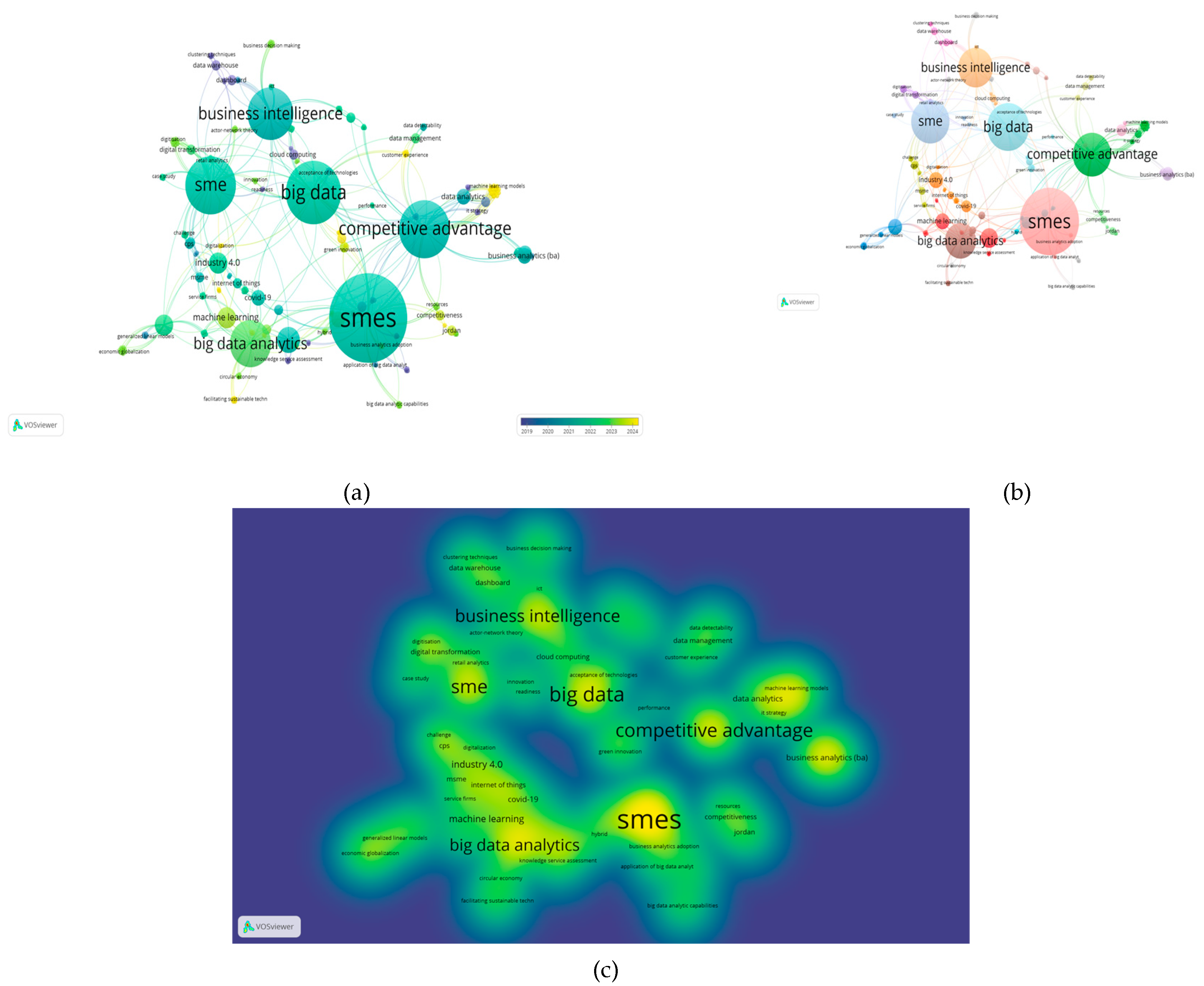
Figure 2.
Procedures and Stages of the Review.
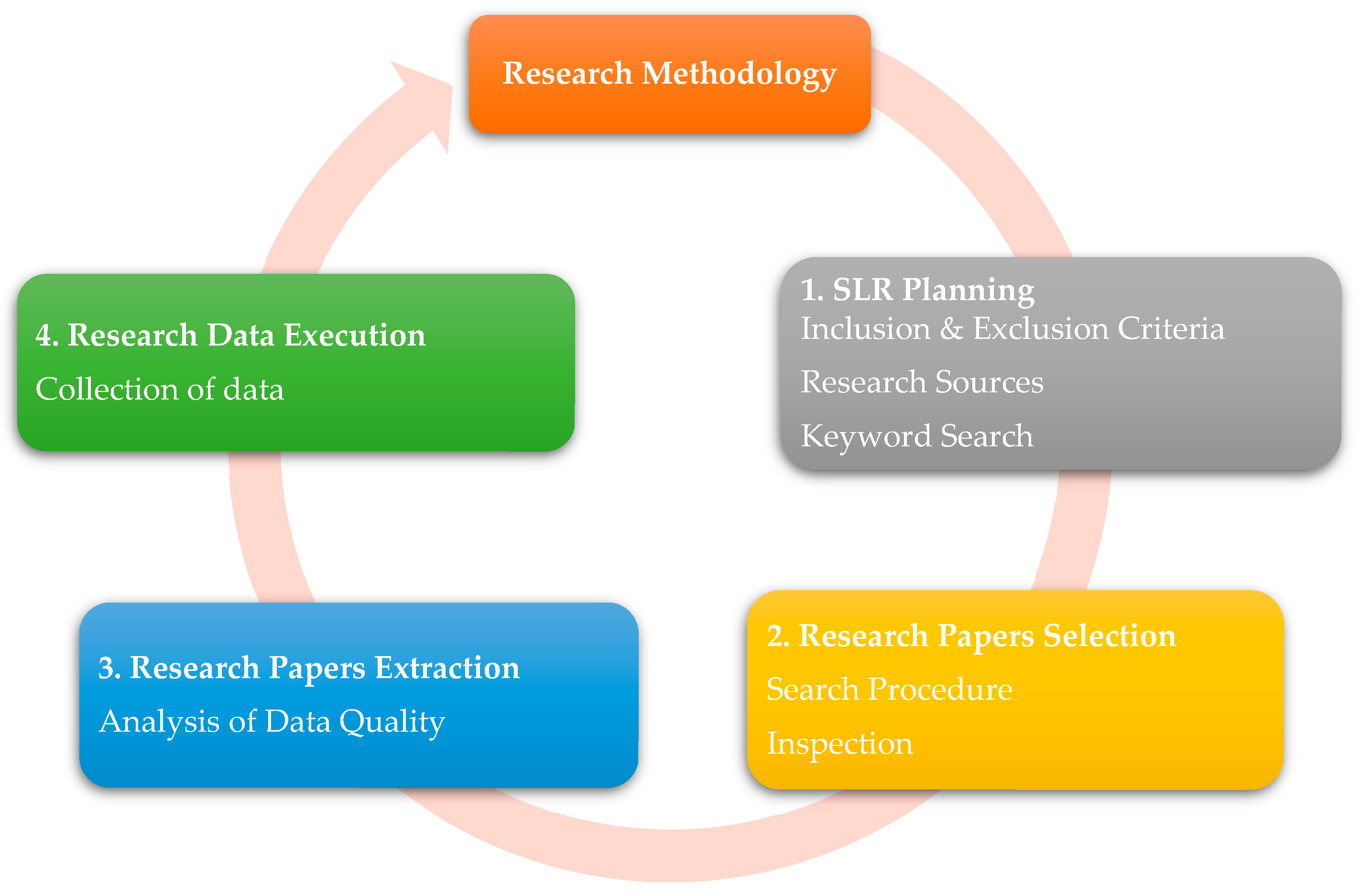
Figure 3.
Flow of Data Selection and Extraction.
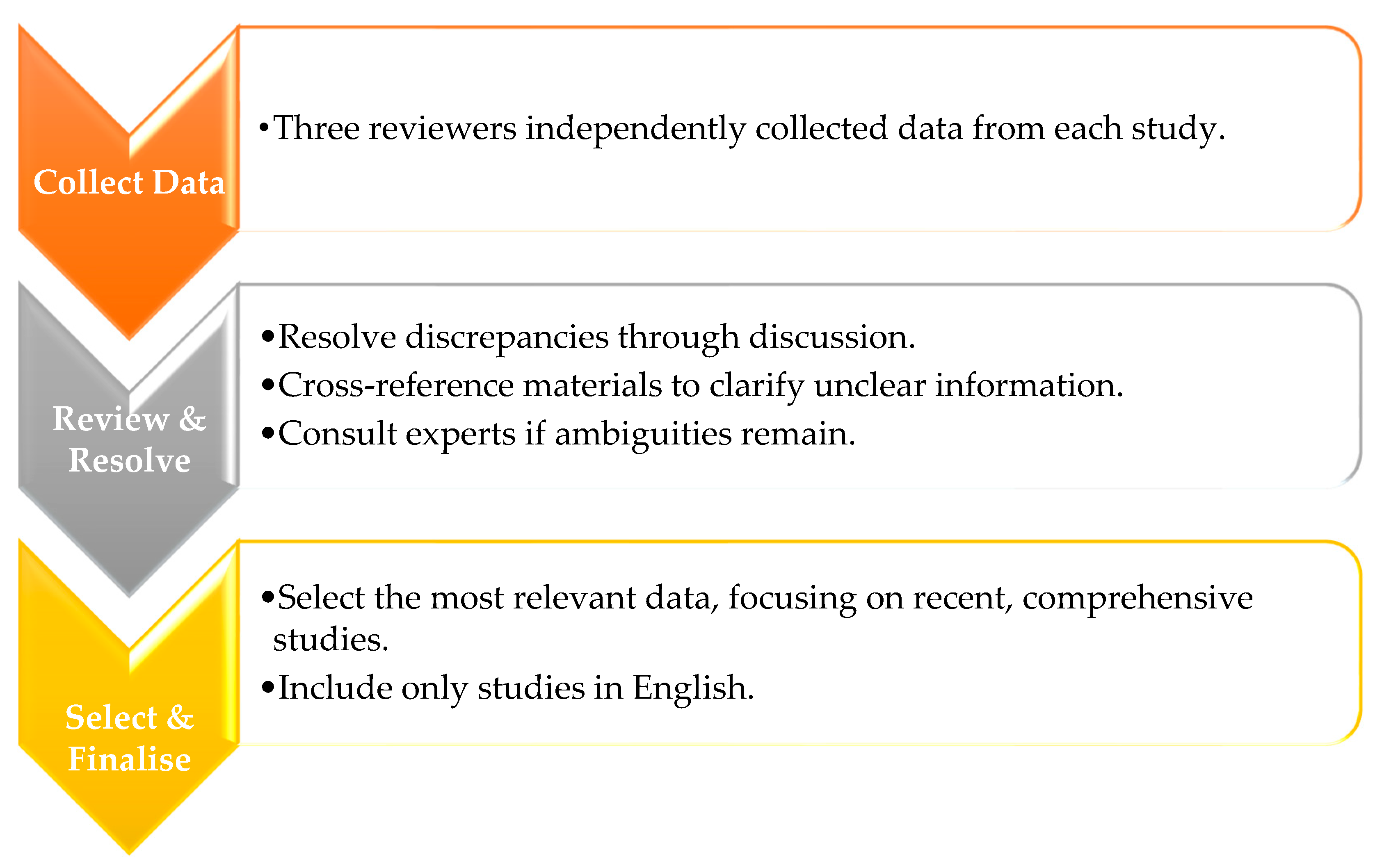
Figure 4.
Risk of Bias Assessment Process for Non-Randomized Studies.
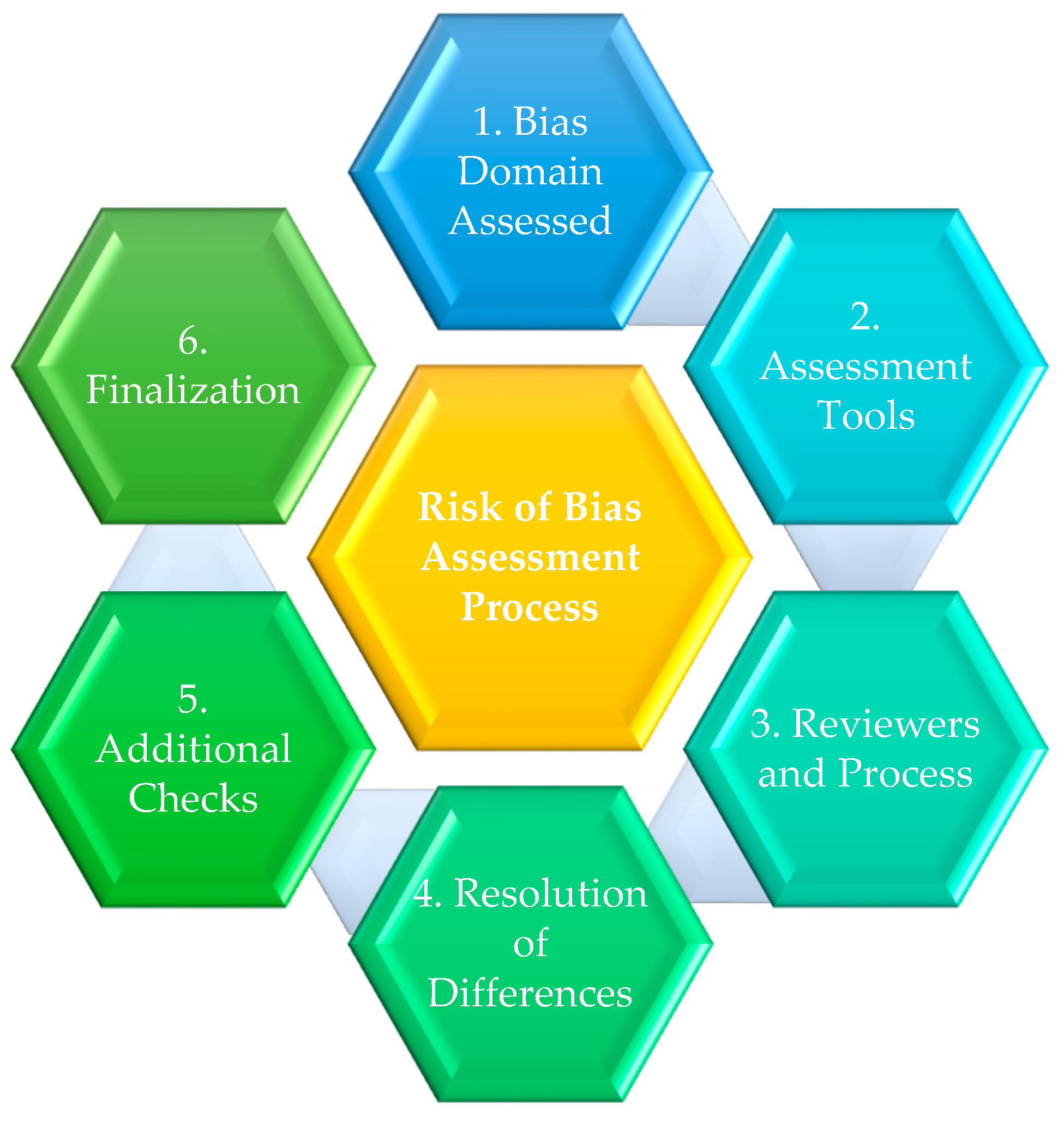
Figure 5.
Systematic Review Process for Data Mining and Business Intelligence in SMEs.
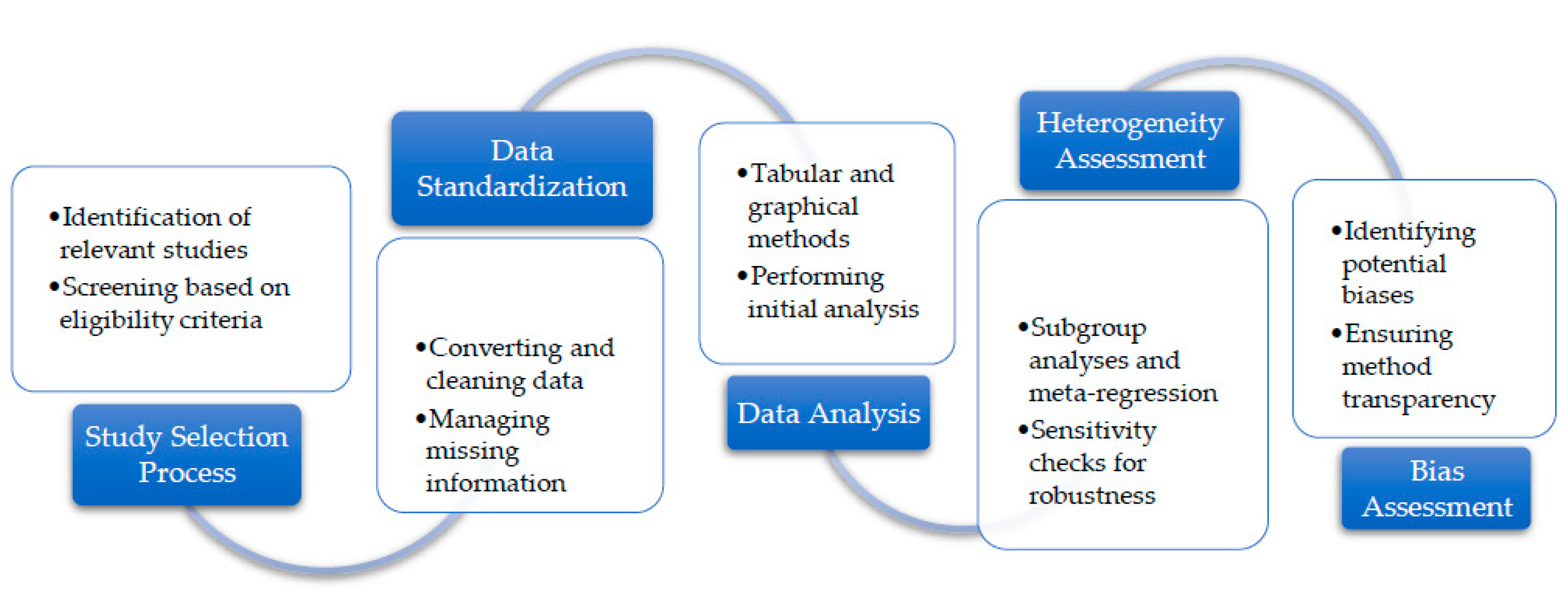
Figure 6.
Proposed PRISMA Flowchart.
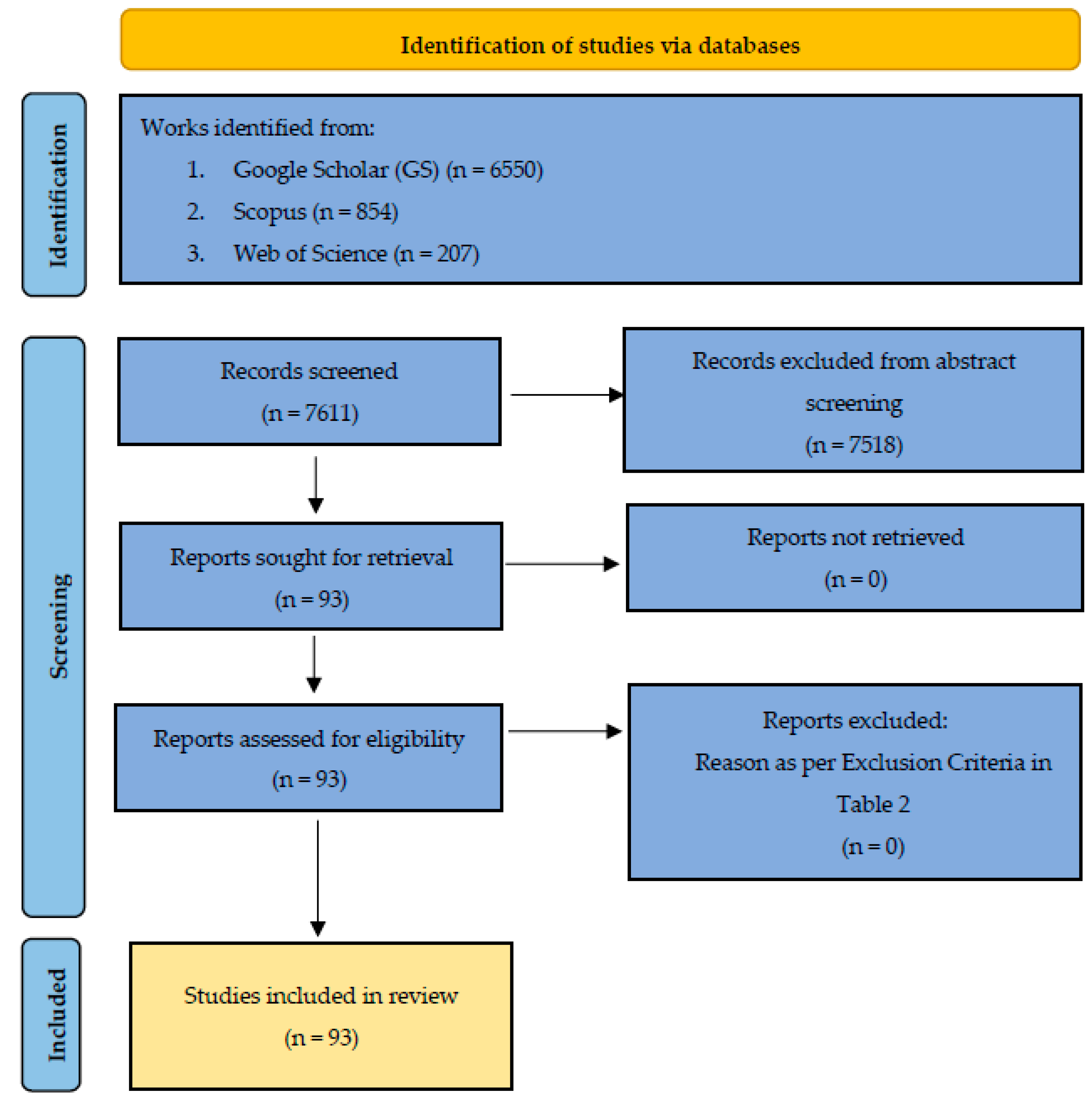
Figure 7.
Distribution of Online Database.
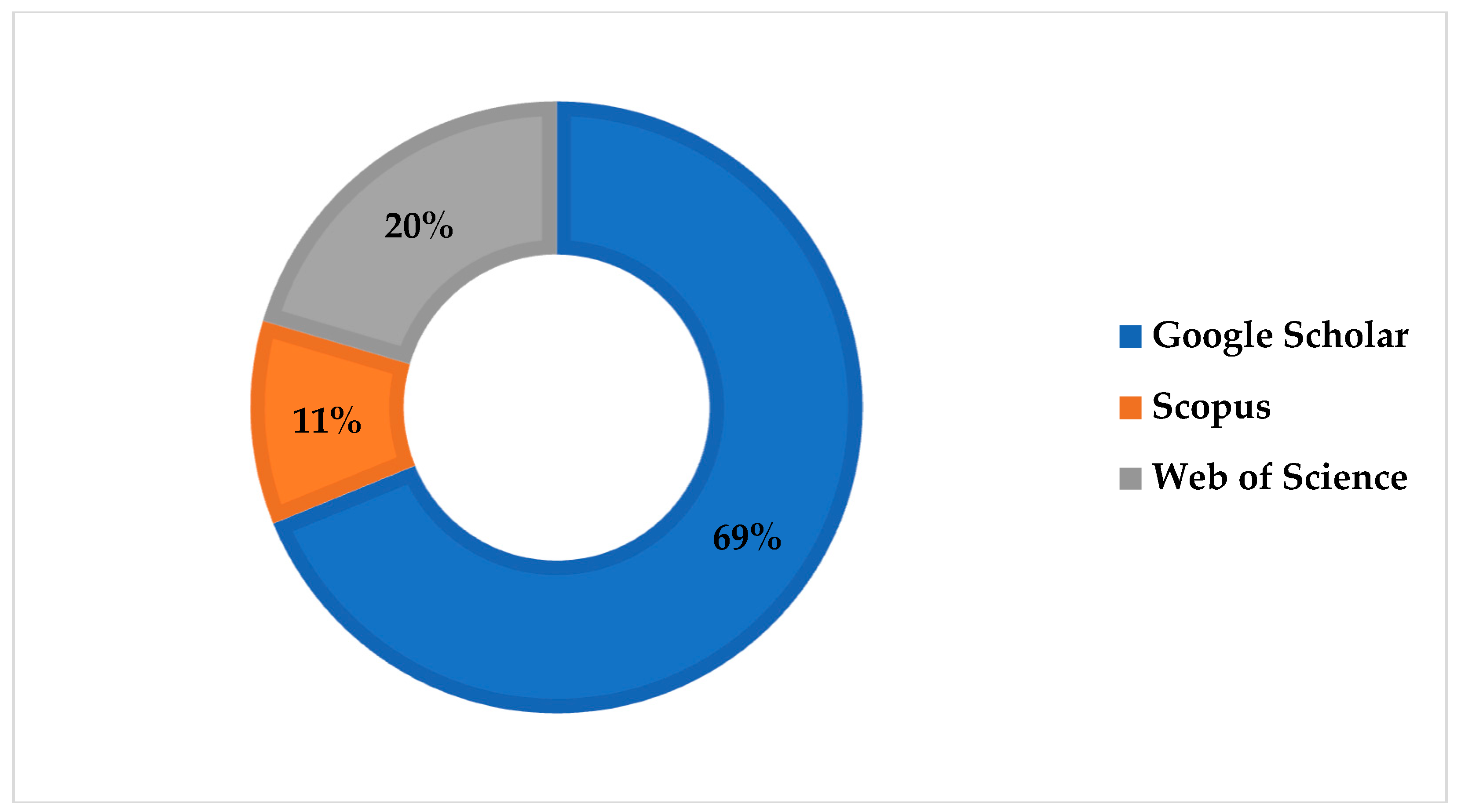
Figure 8.
Research Papers Published by Year.
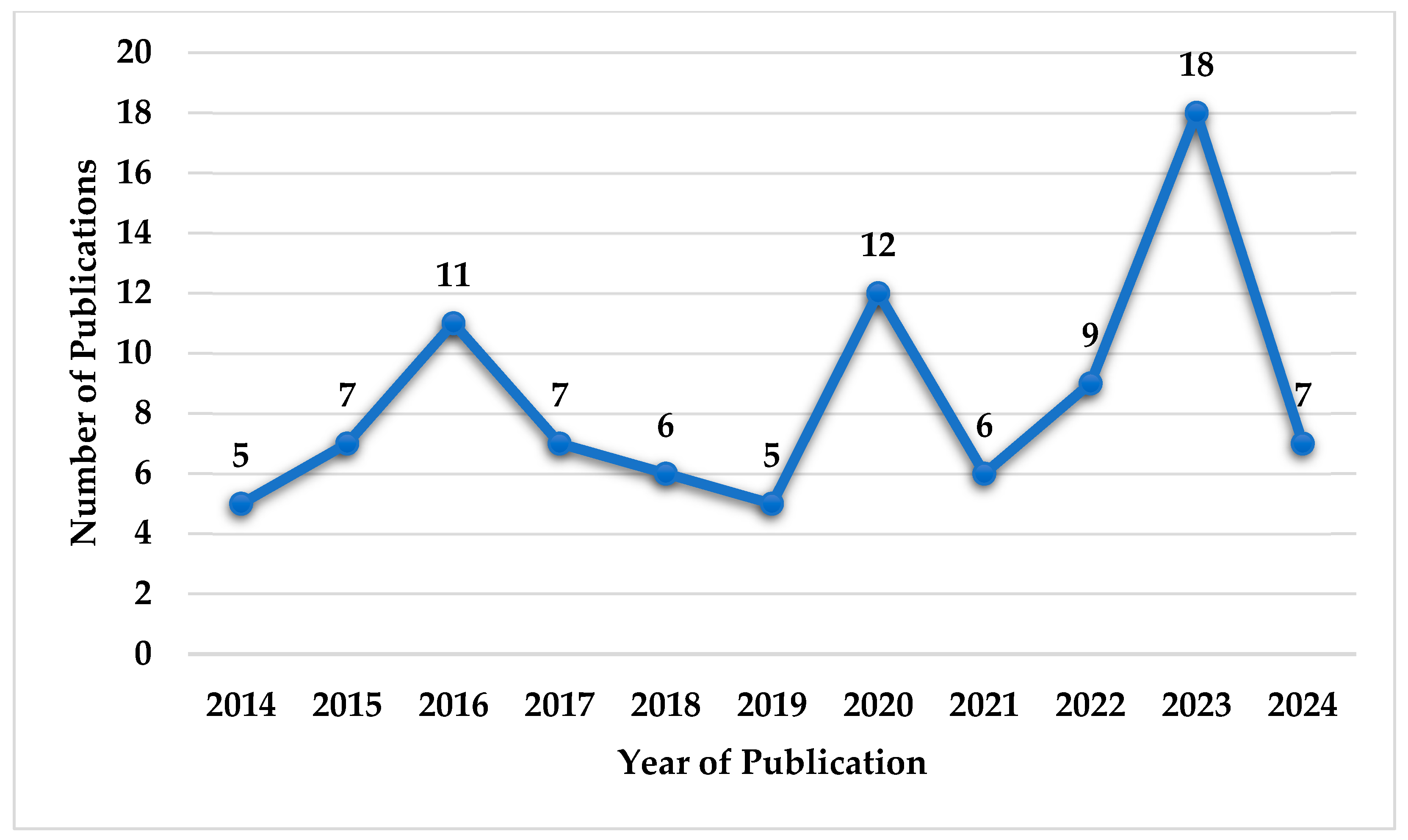
Figure 9.
Research Type Indication.
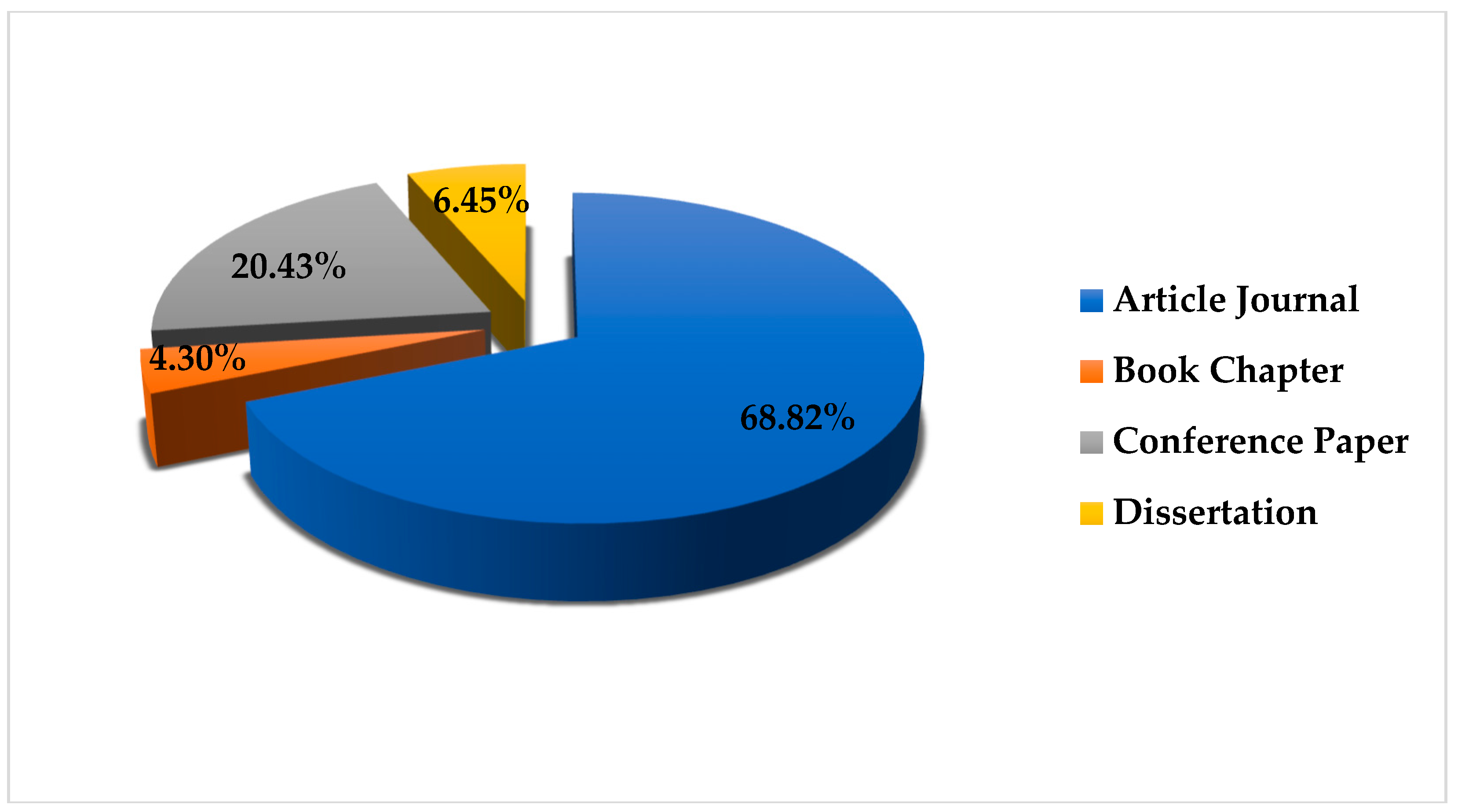
Figure 10.
Research Design.
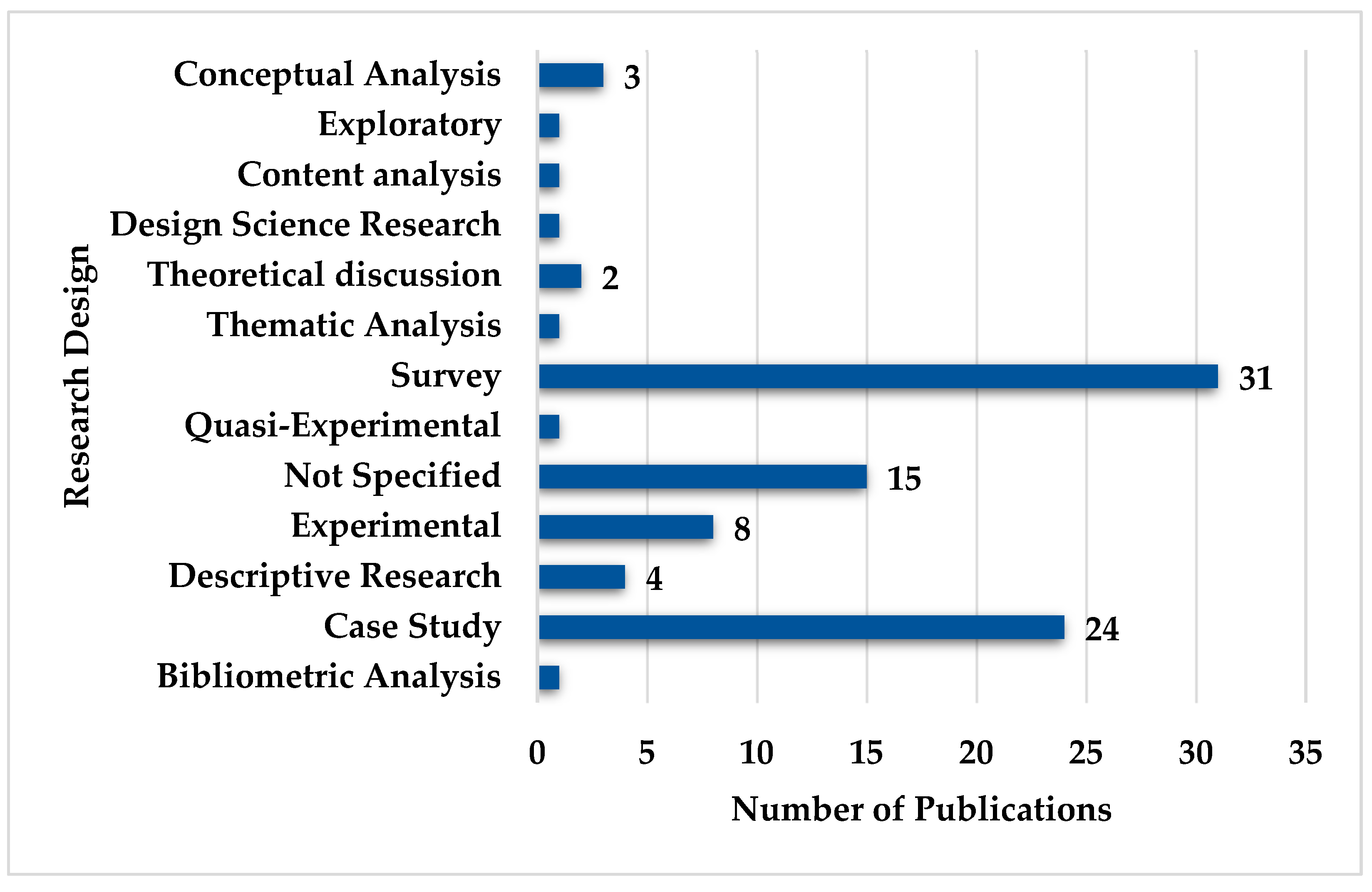
Figure 11.
Data Collection Method.
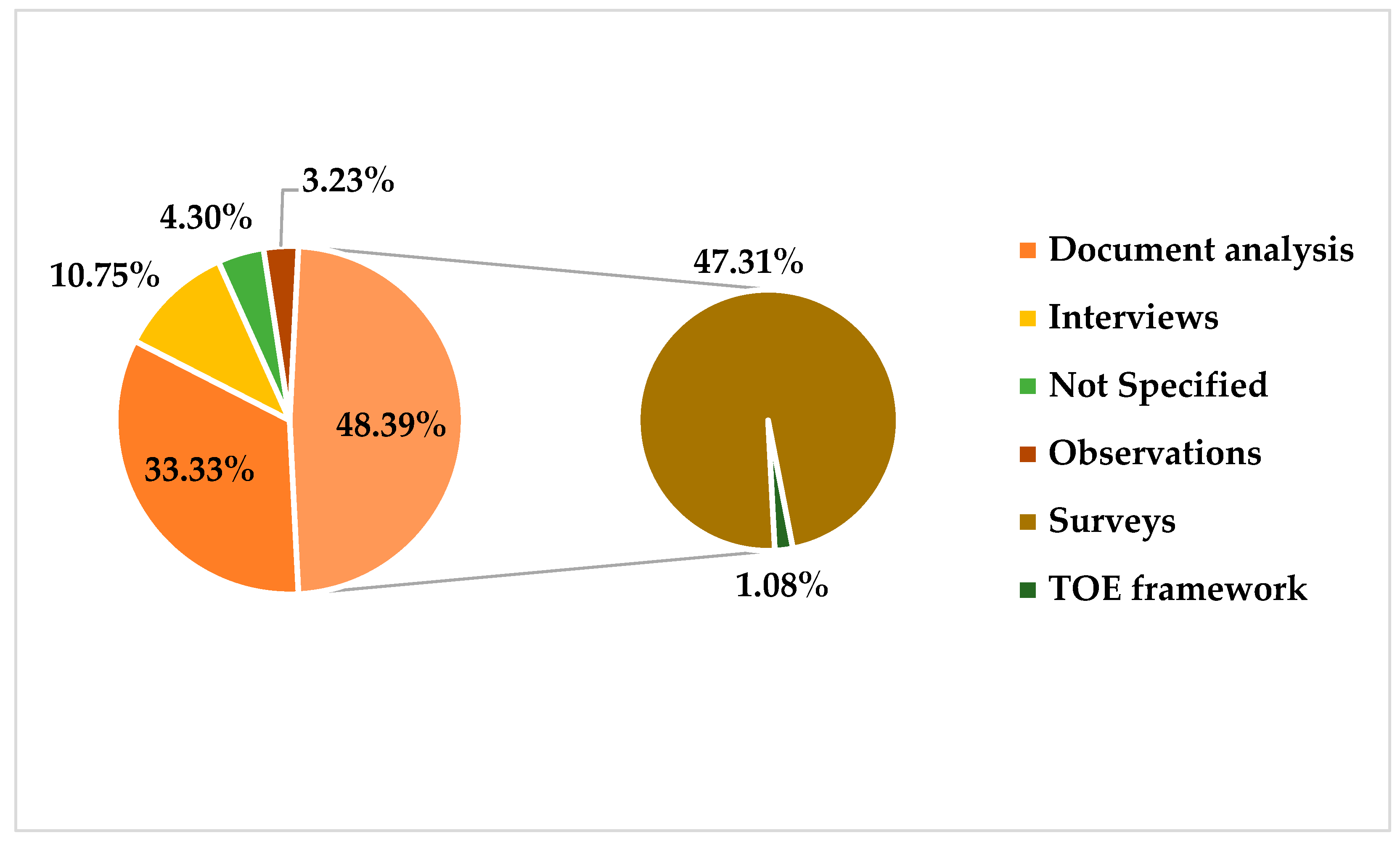
Figure 12.
Types of Data Mining Techniques.
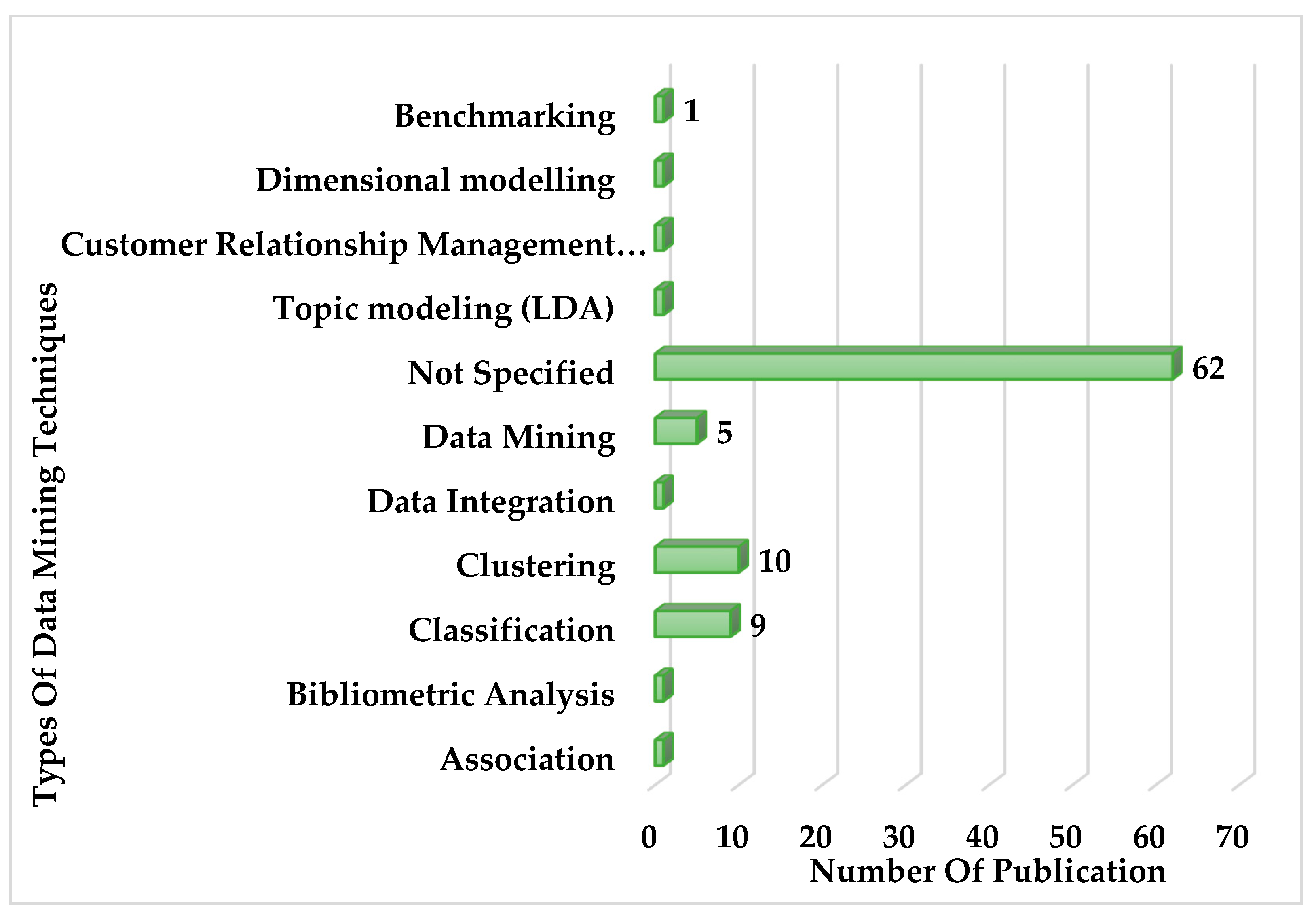
Figure 13.
Types of Business Intelligence Tools.
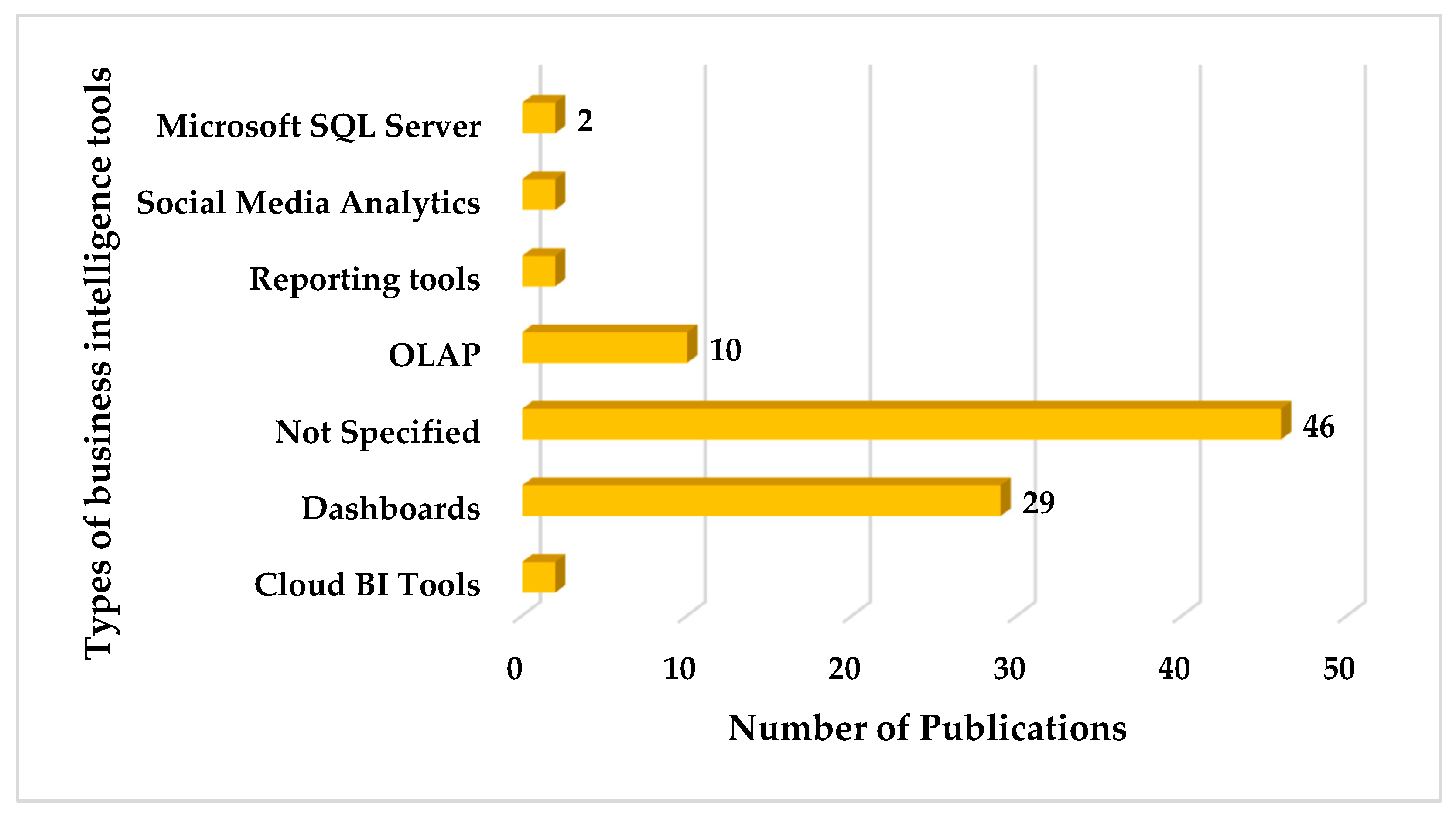
Figure 14.
Focus of Titles by Industry Context.
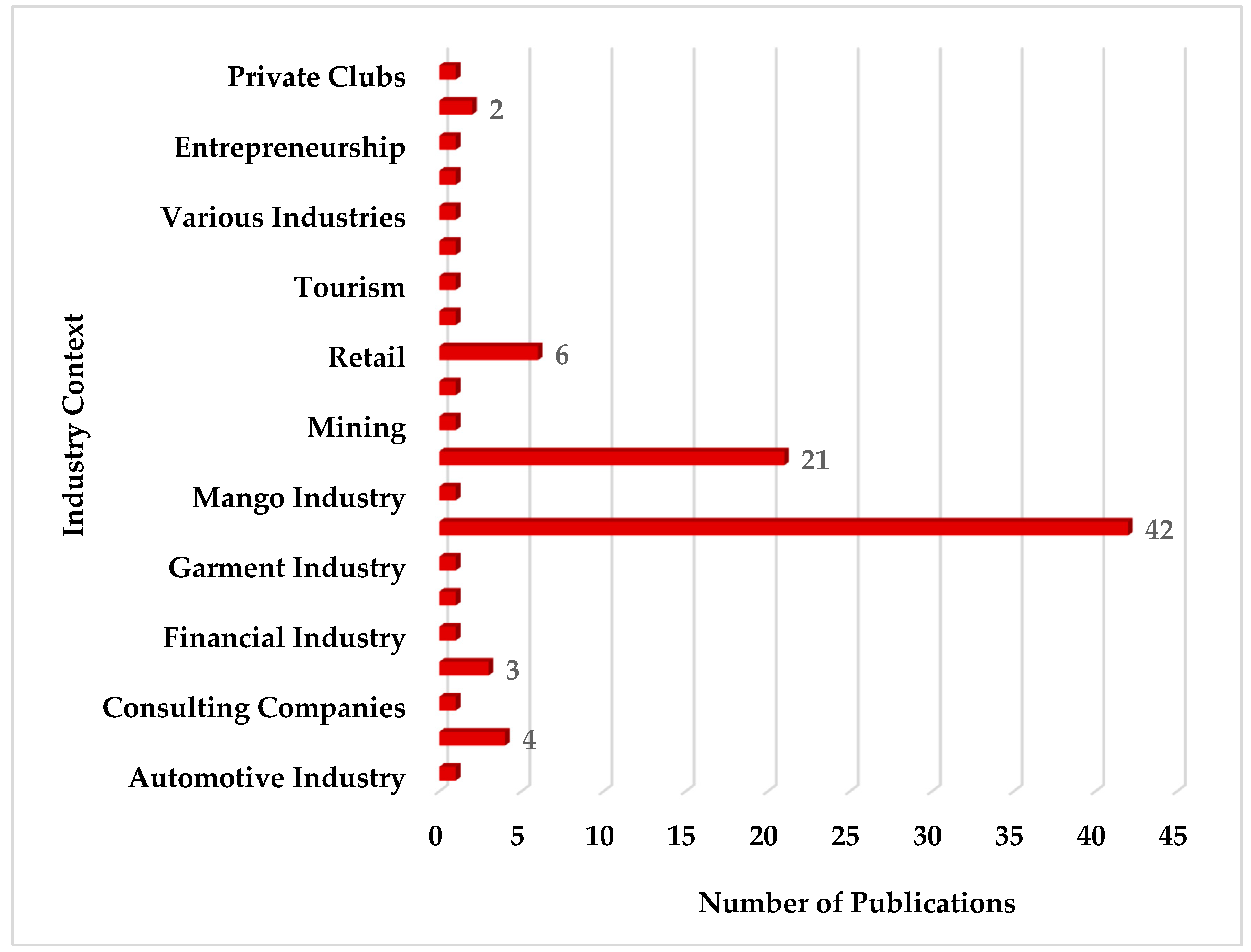
Figure 15.
The Share of Research Publication by Country Based on the Study Context.
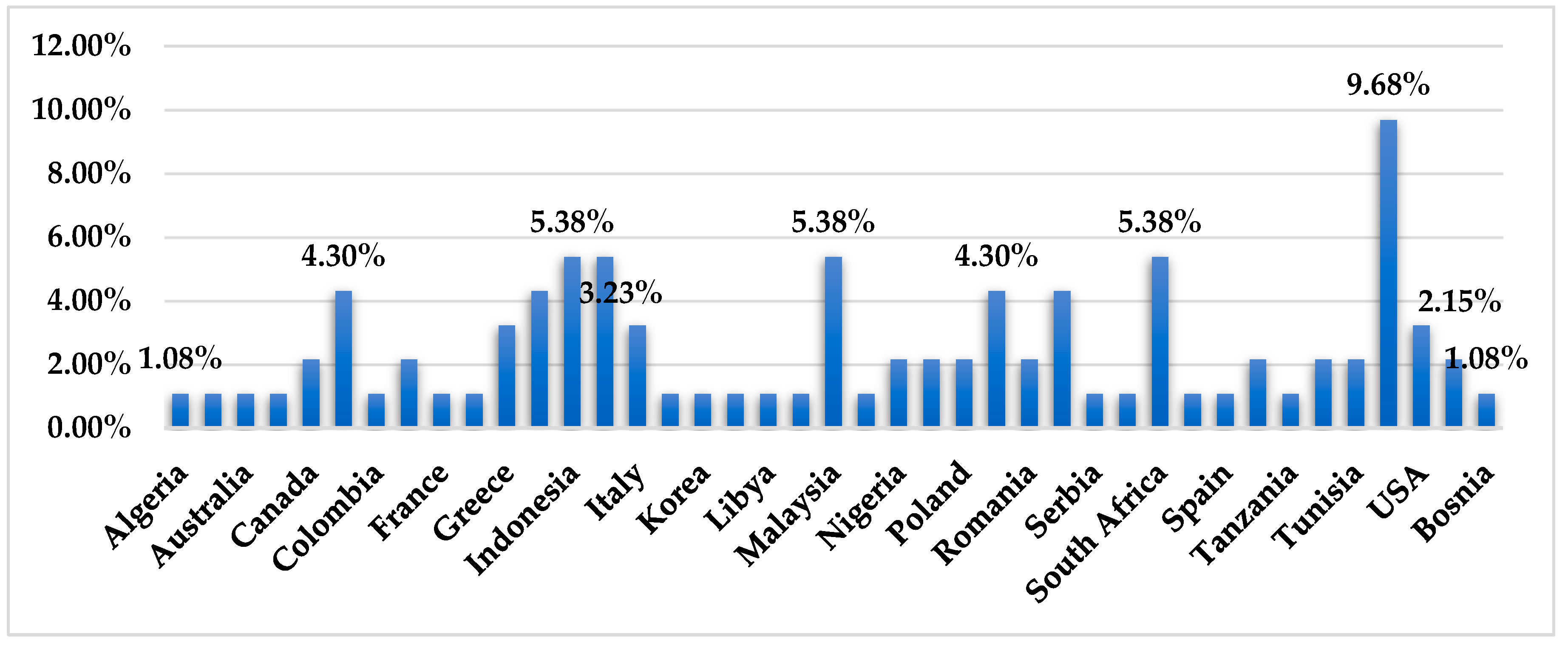
Figure 16.
Figure 16. Economic Context.
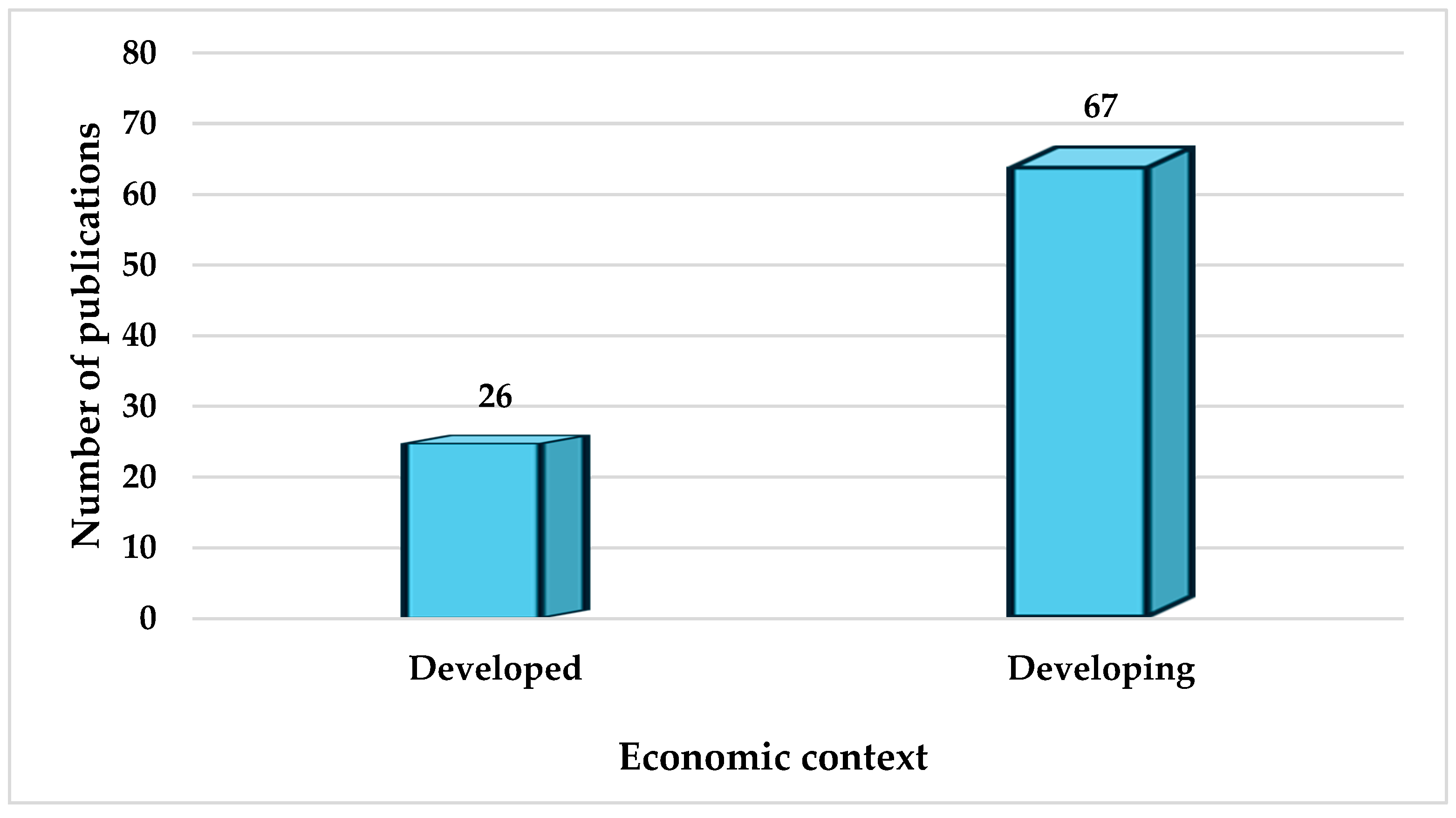
Figure 17.
Focus on Technology Implementation Models.
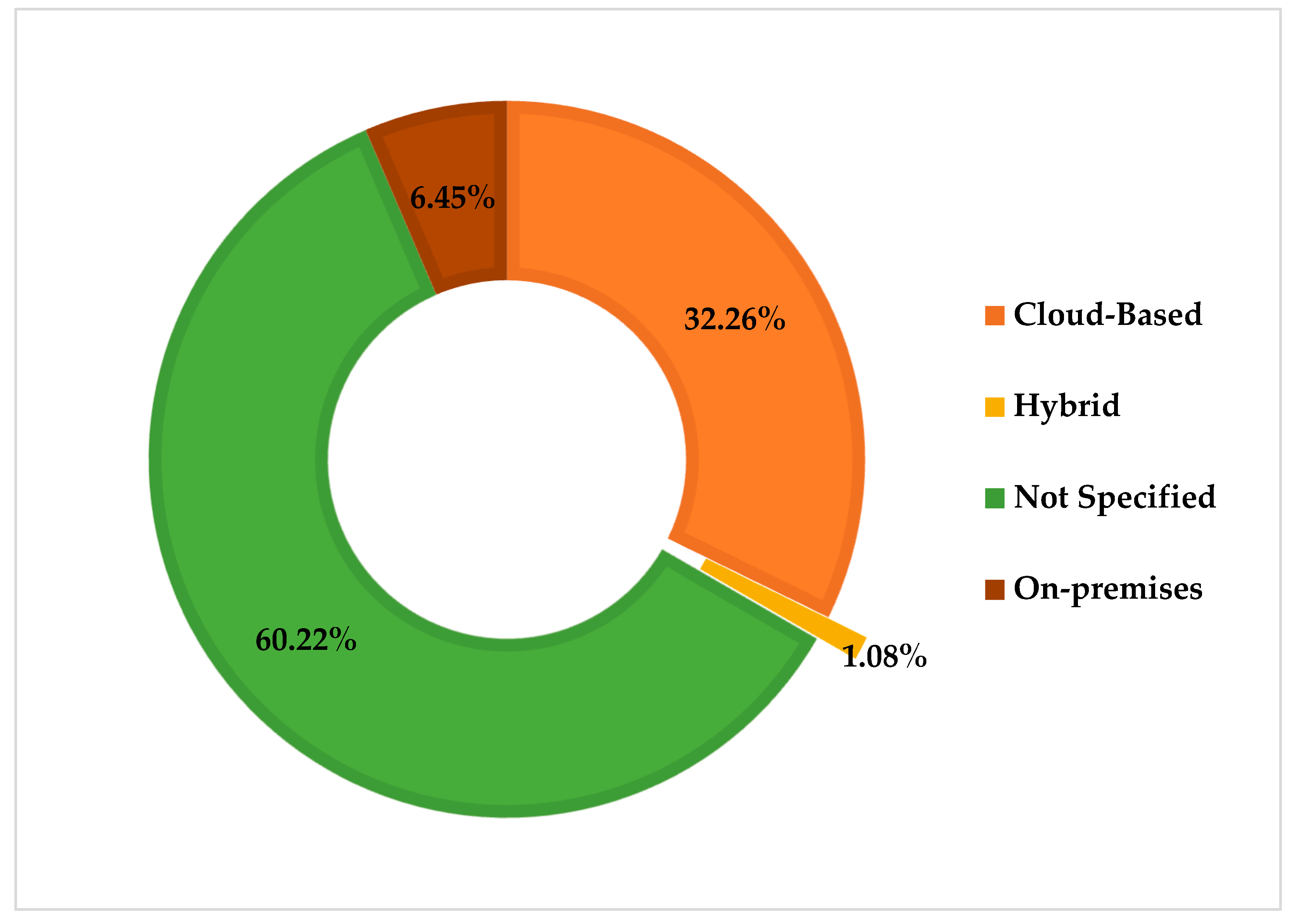
Figure 18.
Research Emphasis on Sample Characteristics.
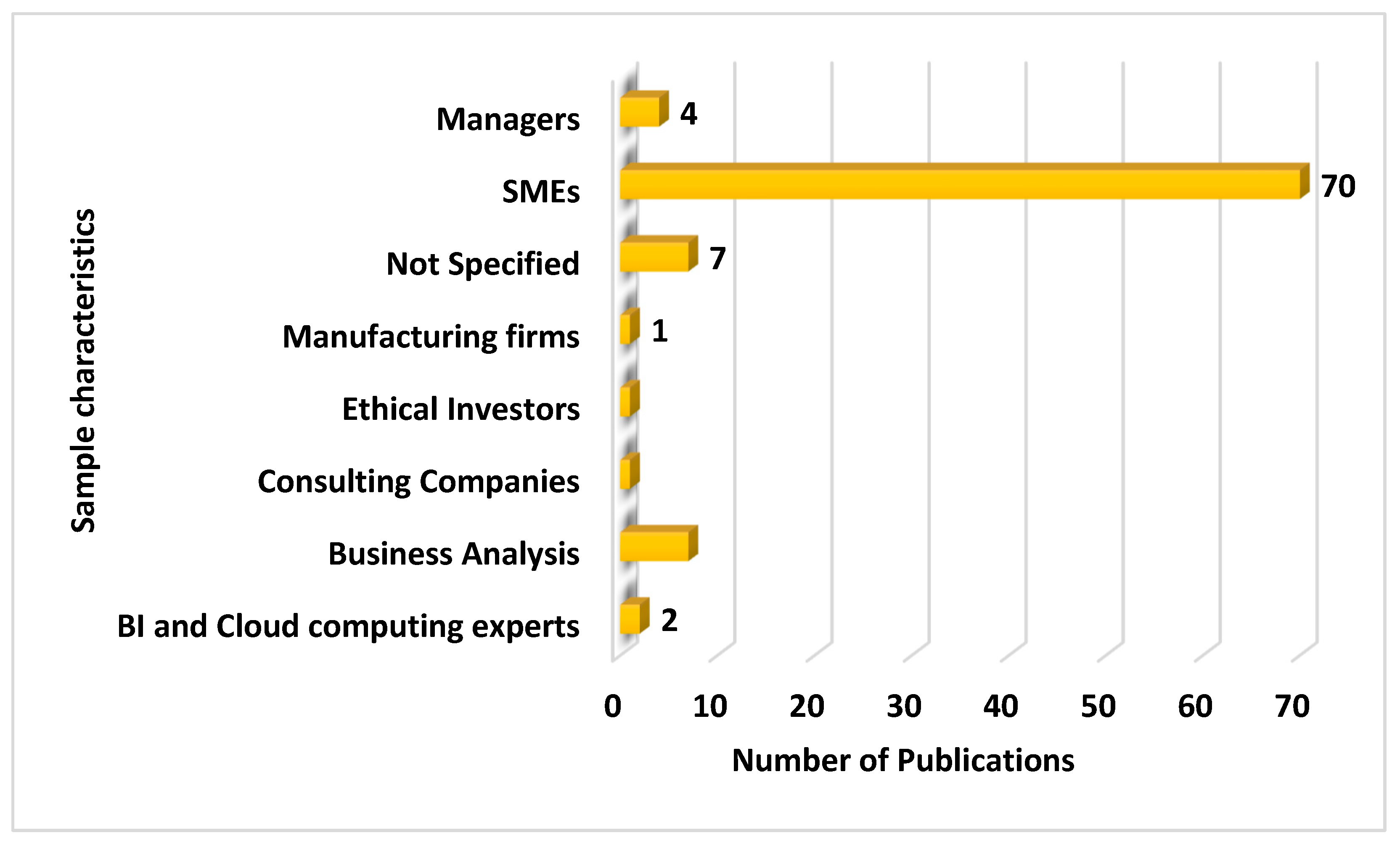
Figure 19.
Examination of IT Performance Metrics in Research.
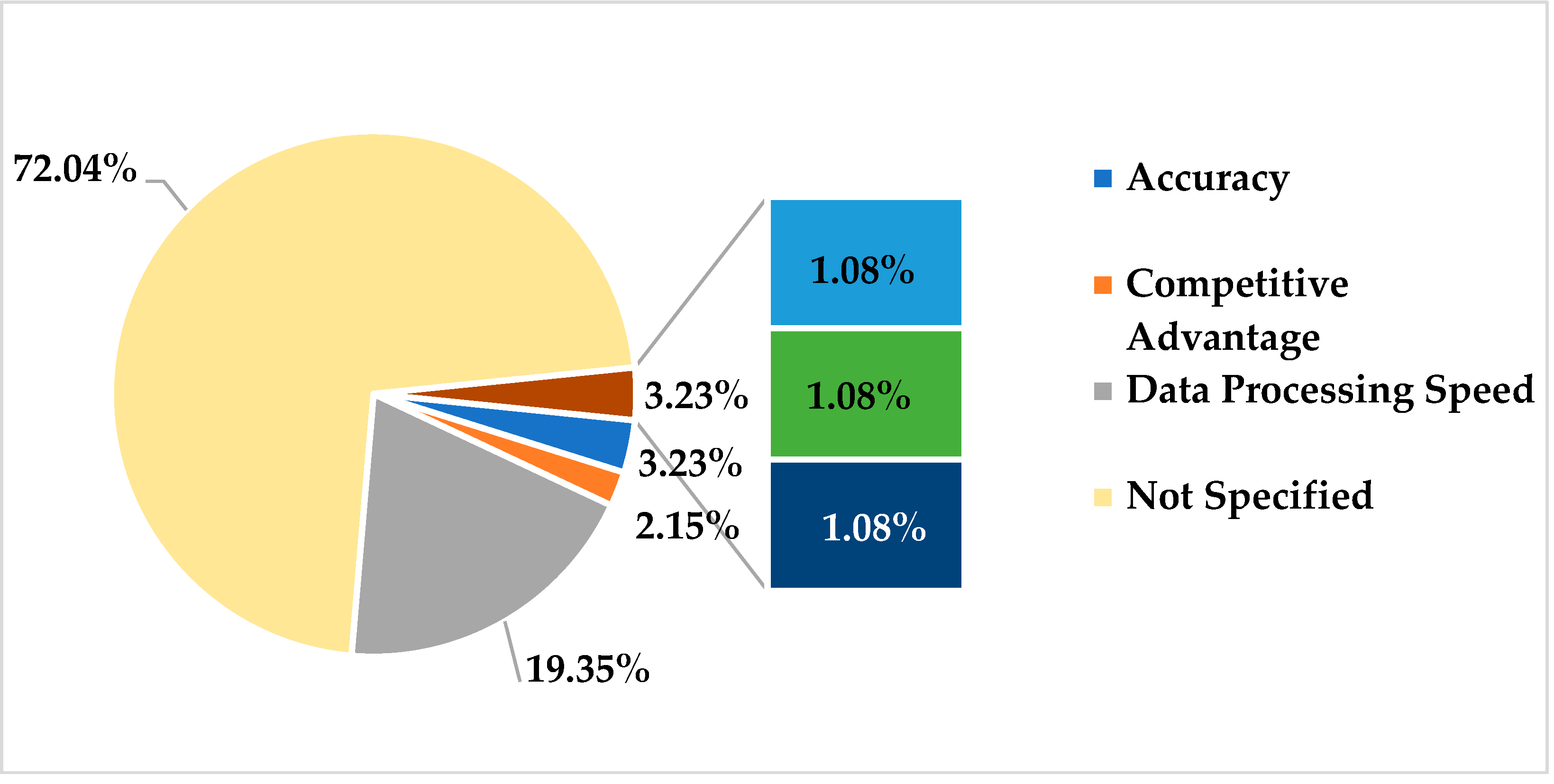

Table 1.
Comparative Analysis of the Existing Review Works and Proposed Systematic Review on the Applications and Competitive Advantages of Data Mining and Business Intelligence on SMEs Performance.
Table 1.
Comparative Analysis of the Existing Review Works and Proposed Systematic Review on the Applications and Competitive Advantages of Data Mining and Business Intelligence on SMEs Performance.
| Ref. | Cites | Year | Contribution | Pros | Cons |
|---|---|---|---|---|---|
| [20] | 15 | 2016 | Investigated structural factors impacting SME performance using structural equation modeling. | Provides valuable insights into key factors influencing SME success. | Focused on a specific geographic region, limiting broader applicability. |
| [21] | 131 | 2017 | Studied the resilience of SMEs utilizing BI in volatile markets, with a focus on competitive advantages. | Stronger market resilience, better risk management. | Requires continuous data monitoring and analysis. |
| [22] | 40 | 2017 | Investigated business intelligence review tools for SMEs to gain competitive advantages by optimizing decision-making. | Enhanced decision-making, affordable BI tools. | May lead to data overload without proper management. |
| [23] | 34 | 2018 | Investigated business intelligence as a tool for SMEs to navigate competitive pressures in saturated markets. | Strategic positioning, helps in competitive analysis. | High dependency on consistent data input. |
| [24] | 27 | 2018 | Explored a systematic review how data mining enhances SMEs' competitive advantage through better customer insights. | Improved customer targeting, cost-effective for SMEs. | Requires technical expertise not always available in SMEs. |
| [25] | 23 | 2019 | Examined how data mining can enhance SMEs' customer relationship management for sustained competitive advantage. | Better customer retention, personalized marketing. | Can lead to high costs for data storage and processing. |
| [26] | 25 | 2019 | Proposed a new model combining data mining and BI to improve SMEs' market adaptability. | Adaptive business strategies, improved market response. | Model complexity may overwhelm smaller SMEs. |
| [27] | 24 | 2020 | Examined the effectiveness of data mining in SME innovation, focusing on new product development. | Drives innovation, supports product development strategies. | Potential privacy concerns with customer data usage. |
| [28] | 10 | 2020 | Provided a comparative study of SMEs using business intelligence vs. traditional methods to gain market share. | Clear benefits in market expansion, real-time insights. | Adoption barriers in low-tech SMEs. |
| [29] | 16 | 2021 | Developed a framework for integrating data mining into SMEs' business processes to sustain competitive advantage. | Sustainable competitive advantage, scalable for growth. | Ongoing costs for data maintenance and updates. |
| [30] | 0 | 2021 | Studied the impact of business intelligence on the operational efficiency of SMEs in developing markets. | Improved efficiency, accessible BI tools for SMEs. | Limited by data quality in emerging markets. |
| [31] | 19 | 2024 | Analyzed the role of data mining in forecasting market trends for SMEs, boosting competitiveness. | Predictive capabilities, relevant to market-oriented SMEs. | High initial setup costs for data infrastructure. |
| Proposed systematic review | Evaluates the impact of business intelligence on SME performance, highlighting benefits like improved decision-making, competitive advantages, and operational efficiency. | Provides a comprehensive understanding of factors influencing BI adoption in SMEs. Identifies critical research gaps. | Limited focus on industry-specific applications and geographic limitations. | ||
Table 2.
Proposed Inclusion and Exclusion Criteria.
| Criteria | Inclusion | Exclusion |
|---|---|---|
| Topic | Article papers focusing on applications and competitive advantages of data mining and business intelligence in SMEs performance | Article papers not focusing on appli-cations and competitive advantages of data mining and business intelligence in SMEs performance |
| Research Framework | The Articles must include research frame-work or methodology for applications and competitive advantages of data mining and business intelligence in SMEs performance | Articles must exclude research framework or methodology for appli-cations and competitive advantages of data mining and business intelligence in SMEs performance |
| Language | Must be written in English | Articles published in languages other than English |
| Period | Articles between 2014 to 2024 | Articles outside 2014 and 2024 |
Table 3.
Results Achieved from Literature Search.
| No. | Online Repository | Number of results |
|---|---|---|
| 1 | Google Scholar | 6550 |
| 2 | Web of Science | 207 |
| 3 | Scopus | 854 |
| Total | 7611 |
Table 4.
Data Variables Collected.
| Field | Description |
|---|---|
| Study characteristics | Geographic location, industry specifics, SME size, and other factors that influence the study's context. |
| Participant characteristics | Information about employees using BI tools, including their roles, level of BI literacy, and engagement with technology. |
| Intervention characteristics | Details of BI tools and data mining techniques used, integration with existing systems, and scope of application. |
| Economic factors | Financial aspects such as initial and ongoing investments, and returns on these investments. |
| External influences | Market conditions, competitive pressures, and regulatory environments affecting BI adoption. |
Table 5.
Certainty Assessment Results for Collected Literature on Data Mining and Business Intelligence in SMEs.
Table 5.
Certainty Assessment Results for Collected Literature on Data Mining and Business Intelligence in SMEs.
| Ref. | QA1 | QA2 | QA3 | QA4 | QA5 | Total | % grading |
|---|---|---|---|---|---|---|---|
| [34,43,45,46,112] | 1 | 0 | 0.5 | 0 | 1 | 2.5 | 50 |
| [40,48,49,91] | 0.5 | 0.5 | 0.5 | 0.5 | 1 | 3 | 60 |
| [37,39,57,61,63,71,76,92,95,116] | 1 | 0.5 | 0.5 | 1 | 0.5 | 3.5 | 70 |
| [38,41,42,44,50,60,80,84,87,88,96,99,104,109,111,114,115,117,118,124] | 1 | 0.5 | 1 | 1 | 0.5 | 4 | 80 |
| [35,36,52,56,59,66,70,74,75,83,85,86,89,90,94,97,105,107,110,113,119,121] | 1 | 1 | 1 | 1 | 0.5 | 4.5 | 90 |
| [47,51,53,54,55,58,62,64,65,67,68,69,72,73,77,78,79,81,82,93,98,100,101,102,103,106,108,120,122,123,125,126] | 1 | 1 | 1 | 1 | 1 | 5 | 100 |
Table 6.
View of Research Works by Published Year.
| Published Year | Book Chapter | Conference Paper | Dissertation | Journal Article |
|---|---|---|---|---|
| 2014 | 1 | 1 | 0 | 3 |
| 2015 | 0 | 4 | 0 | 3 |
| 2016 | 0 | 4 | 0 | 7 |
| 2017 | 0 | 2 | 0 | 5 |
| 2018 | 0 | 2 | 1 | 3 |
| 2019 | 0 | 2 | 0 | 3 |
| 2020 | 0 | 0 | 0 | 12 |
| 2021 | 0 | 0 | 3 | 3 |
| 2022 | 0 | 2 | 0 | 7 |
| 2023 | 1 | 1 | 3 | 14 |
| 2024 | 2 | 1 | 2 | 13 |
Table 7.
Summary of Findings for the Impact of Data Mining and Business Intelligence on SMEs.
| Outcome | Certainty of Evidence | Effect Estimate | Interpretation |
|---|---|---|---|
| Operational Efficiency | Moderate | Mean difference of 12% improvement in process completion times | BI tools likely enhance operational efficiency in SMEs by reducing process times and errors. |
| Financial Performance | High | 15% increase in revenue on average | Strong evidence supports that BI adoption leads to significant financial gains for SMEs. |
| Strategic Decision-Making | Moderate | Risk ratio of 1.8 for improved decision-making quality | BI tools probably improve strategic decision-making in SMEs, enhancing decision speed and accuracy. |
| Customer Relationship Management | Moderate | 10% increase in customer retention rates | Data mining enhances customer relationship management, improving retention and personalized marketing. |
| Market Trend Forecasting | Low | Hazard ratio of 1.5 for faster market adaptation | Evidence suggests that data mining helps SMEs better forecast and adapt to market trends, though with variability. |
| Innovation and Product Development | Moderate | Mean difference of 8% in new product success rates | BI tools likely contribute to innovation and successful product development in SMEs. |
| Risk Management & Resilience | High | 20% improvement in risk management outcomes | Strong evidence indicates that BI enhances risk management and resilience in volatile markets. |
Table 8.
Comprehensive Overview of Data Mining and Business Intelligence in SMEs Performance.
| Ref. | Year | Research Focus | Methodology | Key Outcomes | Challenges Identified | Recommendations |
|---|---|---|---|---|---|---|
| [34] | 2017 | BI systems in SMEs | Literature review, case studies | Strategic alignment, cloud BI benefits | BI complexity, cost, skills gap | Simplify BI tools, enhance training, adopt cloud BI |
| [35] | 2023 | Role of BI in SMEs | Bibliometric analysis | BI improves decision-making, competitive edge | Complexity, cost concerns | Develop BI and TOE framework integration |
| [36] | 2022 | Data mining's impact in Saudi SMEs | Quantitative survey, SEM | Enhances competitive advantage via training | Personnel selection complexit | Advance data mining techniques, improve training |
| [37] | 2019 | Marketing intelligence impact on SMEs | Surveys | Boosts competitive advantage | Limited tool awareness, data privacy | Increase marketing intelligence tool training |
| [38] | 2017 | KM and CI in Malawian SMEs | Surveys | Improves decision-making, efficiency | Information protection, knowledge tacitness | Formalize KM and CI processes, technology adoption |
| [39] | 2020 | Data mining applications in Italian SMEs | Case studies, interviews, surveys | Improved decision-making, operational efficiency. | Resource limitations, change resistance | Promote data mining benefits, facilitate adoption |
| [40] | 2020 | Economic impact of data mining in SMEs | Literature review. | Potential for improved operations | Resource-intensive nature, data security | Start with basic tools, gradually adopt advanced BI |
| [41] | 2020 | Barriers in BDA adoption by SMEs | Surveys | BDA improves decision-making, competitive edge | Skilled personnel shortage, BDA tool complexity | Develop cost-effective BDA solutions for SMEs |
| [42] | 2014 | Web support system for BI in SMEs. | Proposed and tested a web-based BI framework. | Cost-effective, user-friendly, improves decision-making. | High costs and complexity of traditional BI tools. | Develop simple, mobile-friendly BI systems. |
| [43] | 2014 | Data warehouse and mining in steel enterprises. | Three-tier architecture using SQL Server. | Enhanced data integration and decision-making. | Data integration and system scalability. | Use SQL Server, apply predictive algorithms, ensure flexibility. |
| [44] | 2016 | BI for SMEs | Literature review and case study | Improved decision-making and competitiveness | High costs, integration issues | Use affordable, tailored BI solutions and train users |
| [45] | 2015 | Adoption of Business Intelligence (BI) in SMEs | Literature review and survey of SMEs | BI enhances decision-making and operational efficiency in SMEs | Lack of awareness, high costs, and technical complexity | Increase training, reduce costs, and simplify BI tools for SMEs |
| [46] | 2016 | BI adoption in SMEs | Case study | Improved decision-making, efficiency | Technical skill gaps, high costs | Use affordable BI tools, seek funding |
| [47] | 2015 | BI solutions for Romanian SMEs in network settings. | Literature review and case study with QlikView. | Improved decision-making, productivity, and cost reduction. | Data volume and integration issues. | Use BI tools like QlikView; leverage network resources |
| [48] | 2016 | Role of data mining in SMEs. | Surveys and data analysis. | Improved decision-making. | Skill gaps in data handling. | Train staff, simplify tools. |
| [49] | 2016 | Application of business analytics in SMEs | Case study and literature review | Enhanced decision-making and operational efficiency | High costs and complexity of implementation for SMEs | Focus on cost-effective, scalable solutions |
| [50] | 2015 | Adoption of ERP systems by SMEs during crisis | Survey of 37 SMEs in Western Macedonia using structured questionnaires | Identified key advantages like data integration and decision support | High costs of setup and training; underutilization of BI features | Enhance training and BI feature utilization; focus on cost reduction |
| [51] | 2014 | Adoption of Business Intelligence (BI) in SMEs in Zimbabwe | Descriptive research through documentary analysis of existing literature. | BI as a strategic asset can significantly enhance decision-making and competitiveness in SMEs. | Lack of IT infrastructure, high costs, and low awareness among SMEs. | SMEs should adopt BI incrementally, align BI with business strategy, and invest in staff training. |
| [52] | 2015 | Implementation of BI for SMEs | Model-driven approach | Enhanced BI solutions for SMEs | High costs and complexity | Simplify DW implementation with automation to cut costs. |
| [53] | 2014 | Business Intelligence and Analytics in Organizations | Literature review and survey of 20 organizations | BI improves decision-making, efficiency, and competitiveness | Limited use of BI due to lack of skills and awareness | Enhance BI training, align BI with business goals, and improve data quality |
| [54] | 2016 | BI adoption in Lebanese SMEs | Quantitative survey from 56 SMEs | Quality BI and positive attitudes are crucial. | Resistance from management | Improve culture and train management |
| [55] | 2020 | BI in organizations for decision-making and competitiveness. | Literature review, interviews with 20 organizations.. | Improved decisions, processes, performance. | Limited BI use in small firms. | Increase BI training, define BI strategies, boost leadership support. |
| [56] | 2019 | Implementation of BI in SMEs | Case study using Pentaho BI platform | Demonstrated feasibility of implementing Pentaho in SMEs | Complexity in setup; need for technical knowledge | Use open-source BI; ensure technical support, internal or external |
| [57] | 2018 | Business Intelligence (BI) adoption in SMEs | Case study on SMEs using BI tools | Improved decision-making and competitiveness | Limited resources and technical expertise in SMEs | Enhance training and support for SMEs on BI tools |
| [58] | 2024 | BDA adoption by SMEs | Surveys; SEM analysis | BDA boosts performance | Resource limits, security issues | Enhance training, management support |
| [59] | 2022 | Big Data Analytics in SMEs | PLS-SEM on survey data from 242 SMEs | BDAC boosts performance via business models; COVID-19 amplifies impact | Limited BDAC understanding; poor alignment | Align BDAC with business models; adapt in crises |
| [60] | 2023 | BI adoption in SMEs for competitive advantage | Conceptual framework using DOI and ANT theories | Developed a holistic framework for BI adoption in SMEs | Low BI adoption, especially in developing countries | Promote equal importance of all actors in BI adoption |
| [61] | 2024 | BI adoption in SMEs as a competitive strategy | Guided by Porter's Five Forces Model | Competitive edge through informed decisions | Lack of funding, managerial support, and expertise | Invest in BI, training, further research |
| [62] | 2023 | Identify success factors for BI in SMEs | PLS-SEM on survey data from 165 SMEs in Lagos | Key factors: knowledge management, tech orientation, market intelligence | Lack of management support, planning, and resources | Boost management support, invest in tech, focus on key success factors |
| [63] | 2023 | BI for competitive advantage in SMMEs | Qualitative study with 12 respondents from 5 areas, analyzed with Atlas.ti. | BI enhances decision-making and competitiveness. | Lack of support, funding, training, and commitment. | Boost support, funding, skills, and training for BI adoption. |
| [64] | 2024 | Factors for competitive advantage | Content analysis, F-TOPSIS | Ranked 5 criteria: CRM, marketing, organization, product image | Prioritizing key sub-criteria | Improve customer interaction, feedback, and support |
| [65] | 2023 | Success factors for BDA in SMEs | Literature review of existing studies on BDA in SMEs | Key factors: tech capability, support, data quality | Resource limits, lack of skills, privacy issues | Train staff, gain management support, invest in tech |
| [66] | 2023 | Role of competitive intelligence in SMEs | Survey of 150 SMEs, SEM analysis | Social media boosts all competitive intelligence stages | Low use of social media analytics in SMEs | Promote social media analytics adoption |
| [67] | 2022 | Using social media analytics to boost competitive intelligence in SMEs. | Survey of 140 SMEs, structural equation modeling. | Positive impact on competitive intelligence. | Limited use of analytics in SMEs. | Promote analytics adoption in SMEs |
| [68] | 2021 | Impact of BIS on competitive advantage in Jordanian banks, moderated by EM. | Survey of 300 respondents, PLS-SEM analysis. | BIS boosts competitive advantage; EM enhances this effect. | Complex BIS data; limited research in banking context. | Focus on EM to maximize BIS benefits. |
| [69] | 2024 | Business analytics for competitive advantage | Literature review, content analysis | Enhances decision-making and efficiency | Data issues, skills gap | Improve data skills, privacy measures |
| [70] | 2023 | Exploring the use of BI in organizations | Literature review and analysis of BI maturity | BI enhances decision-making and business performance | Limited use of advanced BI models; internal focus | Improve BI adoption with leadership support and training |
| [71] | 2018 | Business Intelligence in SMEs | Survey with 101 filled questionnaires | SMEs acknowledge BI's benefits but lack implementation, use basic systems like ERP, CRM. | Financial limits, lack of BI knowledge, undefined KPIs. | Implement tailored BI systems to enhance decision-making and strategic planning. |
| [72] | 2017 | BI System Efficiency in SMEs | Quantitative survey analysis | Environmental factors key to BI efficiency. SMEs underuse BI. | Lack of resources, expertise, and strategic planning. | Focus on environmental factors and expert insights to improve BI use. |
| [73] | 2020 | Impact of BIS on SME performance | Survey, 181 SMEs; PLS-SEM analysis | Positive BIS influence on performance, especially in marketing, sales, and management. | Lack of data on BIS impact in procurement. | Enhance BIS use in key business areas to boost performance. |
| [74] | 2020 | BI Acceptance by SMEs in Tshwane | Survey, 161 SMEs; multinomial logistic regression | Technological, organizational, environmental factors drive BI acceptance. | Resource and knowledge limitations. | Improve resource allocation and training for BI adoption. |
| [75] | 2018 | Big Data in SME Management | Participatory action research, 2014-2017 | Big Data reshaped strategy, improved products and CRM. | Limited financial and technical resources. | Integrate Big Data into strategic planning and tools. |
| [76] | 2018 | Benefits of Big Data for SMEs | Mixed methods, surveys, and interviews | Enhances decision-making, efficiency, and competitiveness. | Cost, complexity, skills shortage. | Adopt affordable Big Data tools, increase training. |
| [77] | 2019 | BIS Adoption in SMEs | Case study in a medium-sized Croatian company | BIS improves efficiency and decision-making, integrates with ERP. | Resistance to new technology. | Foster ongoing education and management support. |
| [78] | 2018 | Big Data Implementation for Thai SMEs | Observations and interviews with 40 SMEs | Enhances decision-making and competitive edge. | Technical, financial, and cultural barriers. | Start with basic IT systems; evolve to Big Data applications. |
| [79] | 2019 | Adoption of Cloud BI in SMEs | Survey of 203 SMEs, PLS-SEM analysis | Significant influences: relative advantage, complexity, management support. | High complexity, lack of management support. | Focus on simplifying BI, boosting management support. |
| [80] | 2020 | Big Data in Organizational Performance | Surveys, 210 SMEs, regression | Big data analytics, via knowledge management, boosts performance. | Cross-sectional limits insight. | Enhance knowledge management to leverage big data fully. |
| [81] | 2015 | Predictive BI for Inventory | Data mining, BI semantic model | Effective predictions for inventory management. | Inadequacy of traditional methods. | Use advanced BI tools for inventory decisions. |
| [82] | 2014 | Role of BI in Consulting | Inductive research, cost-benefit analysis | Optimal BI processes for consulting scenarios. | New models needed for BI in quality management. | Implement revised BI processes for better management. |
| [83] | 2016 | BI Maturity in Thai SMEs | Survey with logistic regression | Most Thai SMEs at low BI maturity; key influencers include advantage, complexity, resources. | Limited resources and complexity hinder BI adoption. | Enhance strategies for BI adoption in SMEs by government and IT vendors. |
| [84] | 2017 | Data Mining in KM for Colombian SMEs | Exploratory analysis, proprietary software | Improved KM skills and ICT usage via data mining. | Not specified. | Advance data mining integration in KM practices. |
| [85] | 2016 | CI Model in North African SMEs | Empirical analysis, 180 companies | BI influences competitiveness via innovation and information protection. | Not specified. | Enhance CI with BI, innovation, and asset protection strategies. |
| [86] | 2017 | SME Growth Prediction via Web Mining | Web mining on SME data | Effective growth prediction model from web data. | Data quality and system integration issues | Enhance data collection and system integration. |
| [87] | 2022 | BI Framework for SMEs | Design science, empirical | Developed BI framework improves decision-making. | Lack of BI expertise and adoption in SMEs. | Enhance BI training, provide clear business cases. |
| [88] | 2016 | Data-Mining for SMEs with Official Statistics | Case studies, statistical methods | SMEs benefit from integrating open and internal data for better business decisions. | SME data engagement limited by skill gaps. | Promote data integration to enhance SME decision-making. |
| [89] | 2016 | BI vs. ECI in North African SMEs | Survey of 300 SMEs, statistical analysis | ECI boosts export intensity more than BI. | Empirical evidence on CI effects scant. | Adopt ECI with internal audits for better competitiveness. |
| [90] | 2016 | MBI Framework for Developing SMEs | Textual analysis, PCA, CFA, SEM | Validated MBI framework through statistical tests. | SMEs lack tailored MBI frameworks | Develop localized MBI tools for SMEs. |
| [91] | 2024 | SME Big Data Tool Evaluation | Focus group, case studies | Tool boosts SME competitiveness via better analytics. | Low adoption linked to awareness and expertise gaps. | Enhance engagement, customize tool for easier use. |
| [92] | 2021 | MBI Framework for South African SMEs | Case study, quantitative and qualitative analysis | MBI framework improves data access and decision-making. | Technical and data management challenges. | Enhance infrastructure and training for MBI use. |
| [93] | 2022 | MBI for Developing SMEs | Mixed methods analysis | Validated MBI framework improves SME decision-making. | Technical limitations and poor data management. | Enhance SME training and infrastructure for MBI. |
| [94] | 2021 | Big Data in SME Management | Literature review | Enhances decision-making via improved BI. | Resource and expertise shortages. | Implement cloud solutions and open-source tools. |
| [95] | 2023 | BI Adoption in Libyan SMEs | Conceptual framework analysis | Factors like change management crucial for BI adoption. | Lacks industry-specific considerations. | Improve SME BI training and resource support. |
| [96] | 2022 | MBI Framework for Developing SMEs | Mixed research methods | Developed robust MBI framework for SMEs. | Resource and technical constraints. | Enhance MBI support and infrastructure. |
| [97] | 2022 | Knowledge Sharing in SMEs | Quantitative analysis, 259 respondents in Bali | Enhances innovation and competitive advantage. | Limits in design and data bias. | Focus on promoting knowledge sharing for better performance. |
| [98] | 2022 | BI Solutions in Romanian SMEs | Survey of 37 SMEs | BI underused; improves competitiveness and performance. | Cost, user perception, investor support issues. | Boost BI training and support to increase adoption. |
| [99] | 2023 | Data Analytics for SME Competitiveness | Literature review, case studies | Enhances SME decision-making and efficiency. | Resource limits hinder advanced analytics. | Adopt analytics tools gradually, focus on training and partnerships. |
| [100] | 2023 | Data Analytics in SMEs | Literature review, qualitative analysis | Enhances SME decision-making and efficiency. | Resource limits hinder advanced analytics. | Adopt analytics tools gradually, focus on training and partnerships. |
| [101] | 2017 | BI Systems in France | Interviews | BI improves decision-making, efficiency, and satisfaction. | Limited information on BI's impact on SMEs. | Expand BI research and use in SMEs. |
| [102] | 2017 | Impact of Knowledge Services | Data mining, regression | Model assesses knowledge service impact on performance. | Variable correlation and cost issues. | Enhance practical delivery of knowledge services to SMEs. |
| [103] | 2020 | BDA and SME Internationalization | Survey of 266 SMEs | BDA enhances international growth. | BDA governance doesn't boost growth. | Focus on developing BDA capabilities. |
| [104] | 2020 | BIS Implementation in Lagos SMEs | Survey of 387 SME managers | BIS improves decision-making and efficiency. | Cost, expertise, and awareness issues. | Boost BIS training, awareness, and funding. |
| [105] | 2020 | Performance of PPINs | Data analytics, machine learning | PPINs boost R&D but not business performance. | Data linking and model complexity. | Enhance PPINs with better data integration and analytics. |
| [106] | 2020 | Big Data in HRM for SMEs | Bibliometric analysis, survey | Enhances HR service and innovation. | Skepticism about big data. | Promote skill development and change management. |
| [107] | 2020 | BDA Adoption in SMEs | Survey, 171 Iranian SMEs | Boosts financial and market performance. | Complexity and security concerns. | Focus on managerial support and readiness. |
| [108] | 2019 | BI-ERP Integration in SMEs | Case study review | Enhances SME decision-making and data analysis. | Cost and complexity of integration. | Adopt BI-ERP for better operational efficiency. |
| [109] | 2023 | Ambidextrous Learning in SMEs | Survey of 289 SMEs in Nanjing, China | Boosts competitive advantage via dual learning. | Resource limits impact learning strategies. | Emphasize dual learning strategies in SMEs. |
| [110] | 2024 | SME Export Performance | Path analysis of 138 SMEs | Tech capabilities boost exports; social media contributes via competitive advantage. | Hard to link social media to export gains. | Utilize tech and social media strategically to enhance exports. |
| [111] | 2023 | Ambidextrous Learning in SMEs | Quantitative survey of 289 SMEs | Boosts competitiveness and innovation. | Resource and adaptability limits. | Encourage ambidextrous learning for growth. |
| [112] | 2022 | BI and BA Integration in SMEs | Case study with free tools | Free tools boost BI and BA in SMEs. | Cost misperception limits tool adoption. | Use free tools to improve decision-making. |
| [113] | 2021 | Mining OGD for BI via Data Visualization | Two-industry case study, LDA topic modeling, pyLDAVis | OGD aids BI in spotting market opportunities. | Limited use of OGD in private sector due to unawareness of benefits. | Promote OGD use in private sector for BI innovations. |
| [114] | 2021 | Intellectual Capital in Jordan | Survey, 569 participants, SEM analysis | Intellectual capital boosts competitive advantage via BI and innovation. | Complexity of relationships and resource constraints. | Enhance training on intellectual capital use. |
| [115] | 2016 | Open Source Data Mining Tools for SMEs | Comparative analysis of various open-source tools | Open-source tools provide cost-effective, flexible solutions for SMEs' data analysis needs. | Technical complexity and varying levels of user support. | SMEs should choose tools based on specific needs and available technical support. |
| [116] | 2015 | Mobile BI Adoption in Croatian SMEs | Empirical survey, literature comparison | Low adoption due to unrecognized benefits and resource constraints. | Lack of funds and knowledge among executives. | Promote awareness and benefits of mobile BI for decision-making. |
| [117] | 2015 | LinDA Workbench in Pharmaceutical BI | Case study analysis | LinDA enhances data processing efficiency, reducing operational times significantly. | Complex data linking and analysis processes. | Promote LinDA's integration within SME workflows for enhanced BI capabilities. |
| [118] | 2024 | BI Adoption in Algerian SMEs | Field study, empirical research | SMEs need BI to enhance competitiveness and efficiency. | High costs, lack of knowledge among executives. | Increase awareness and support for BI adoption in SMEs. |
| [119] | 2023 | BI System Adoption in Algerian SMEs | Field survey, descriptive-correlational | BI systems crucial for improving SME efficiency. | Financial constraints, lack of executive knowledge. | Provide educational programs on BI benefits and implementation. |
| [120] | 2023 | BI and Organizational Effectiveness in Nigerian Oil & Gas SMEs | Quantitative survey, online platform | Positive impact of BI on SME effectiveness. | Lack of BI expertise and resources in SMEs. | Enhance training and resources for BI implementation. |
| [121] | 2023 | Intellectual Capital in SMEs, South Africa | Literature review, conceptual framework | Intellectual capital significantly enhances SME competitiveness through innovation. | Lack of innovative skills and intellectual capital resources. | SMEs should invest in building intellectual capital and adopt innovative practices |
| [122] | 2018 | Determinants of BIS Adoption in SMEs | Survey of 181 SMEs, PLS-SEM analysis | Technological, organizational, and environmental factors significantly impact BIS adoption stages. | Complex interplay of factors affecting adoption stages. | Enhance understanding and support for BIS adoption in SMEs. |
| [123] | 2021 | BI Maturity in IT SMEs | Literature review, assessment of 14 key factors | Enhanced analytical capabilities in IT SMEs, with varying strengths in construction, deployment, and data management. | Complex data integration and lack of resources. | SMEs should integrate comprehensive BI systems to streamline data analysis and improve decision-making. |
| [124] | 2023 | Impact of BI on SME Innovation and Work Behavior | Theoretical framework, literature review | BI enhances SME innovation and innovative work behavior via knowledge sharing. | Resource limitations and integration complexity. | Encourage SMEs to adopt BI to improve innovation and work practices. |
| [125] | 2023 | Cloud BI for Iranian SMEs during COVID-19 | Mixed methods, including fuzzy Delphi and ISM | Effective model for SMEs, integrating critical factors like SME characteristics and critical success factors. | Financial and knowledge barriers among executives. | Promote cloud BI benefits and provide managerial training in its use. |
| [126] | 2023 | Data Mining in Italian SMEs | SEM-ANN approach, survey | Data mining positively impacts business performance through improved technological, organizational, and environmental factors. | Complexity in integrating and adapting new technologies. | Emphasize training and resource allocation for successful data mining adoption. |
Table 9.
Assessment of Study Quality Using the Newcastle-Ottawa Scale.
| Study ID | Selection (0-4 stars) | Comparability (0-2 stars) | Outcome/Exposure (0-3 stars) | Total Stars | Quality Rating |
|---|---|---|---|---|---|
| [58,69,80,99,109,113,118,124] | ★ | ★ | ★ | 3 | Low Quality |
| [41,46,60,96] | ★★ | ★ | ★ | 4 | Moderate Quality |
| [50,72,122] | ★ | ★★ | ★ | 4 | Moderate Quality |
| [63,78] | ★ | ★ | ★★ | 4 | Moderate Quality |
| [34,51,120], | ★★ | ★★ | ★ | 5 | Moderate Quality |
| [39,70,111] | ★ | ★★ | ★★ | 5 | Moderate Quality |
| [66,71,125] | ★★ | ★ | ★★ | 5 | Moderate Quality |
| [38,42,47,61,64,84,88,90,92,115], | ★★★ | ★ | ★★ | 6 | Moderate Quality |
| [65,77,100,110,112,117], ,[112] | ★★★ | ★★ | ★ | 6 | Moderate Quality |
| [55,57,67,105] | ★ | ★★ | ★★★ | 6 | Moderate Quality |
| [59,62,81,126] | ★★ | ★★ | ★★ | 6 | Moderate Quality |
| [103] | ★★★★ | ★★ | ★ | 6 | Moderate Quality |
| [40,45,52,54,68,74,76,82,85,87,94,98,106,108,116,121,123], | ★★★ | ★★ | ★★ | 7 | High Quality |
| [49,102,107] | ★★★★ | ★★ | ★ | 7 | High Quality |
| [73,79] | ★★ | ★★ | ★★★ | 7 | High Quality |
| [43,48,97] | ★★★★ | ★★ | ★★ | 8 | High Quality |
| [89] | ★★★★ | ★ | ★★★ | 8 | High Quality |
| [35,36,53,56,86,91,95,119] | ★★★ | ★★ | ★★★ | 8 | High Quality |
| [37,44,75,83,93,101,104,114] | ★★★★ | ★★ | ★★★ | 9 | High Quality |
Disclaimer/Publisher’s Note: The statements, opinions and data contained in all publications are solely those of the individual author(s) and contributor(s) and not of MDPI and/or the editor(s). MDPI and/or the editor(s) disclaim responsibility for any injury to people or property resulting from any ideas, methods, instructions or products referred to in the content. |
© 2024 by the authors. Licensee MDPI, Basel, Switzerland. This article is an open access article distributed under the terms and conditions of the Creative Commons Attribution (CC BY) license (http://creativecommons.org/licenses/by/4.0/).
Copyright: This open access article is published under a Creative Commons CC BY 4.0 license, which permit the free download, distribution, and reuse, provided that the author and preprint are cited in any reuse.


