
Submitted:
01 September 2024
Posted:
02 September 2024
You are already at the latest version
Abstract
High-Performance Liquid Chromatography (HPLC) is an advanced analytical technique employed to separate, identify, and quantify components in complex mixtures. The method operates based on the differential affinities of sample molecules for the mobile and stationary phases within a chromatographic column. HPLC is recognized for its high resolution, accuracy, and efficiency, making it indispensable across various fields including pharmaceuticals, biotechnology, environmental analysis, and forensic science. The technique's adaptability to different detectors such as UV-visible, fluorescence, and mass spectrometry enhances its versatility and precision in analyzing a wide array of substances. Despite its advantages, HPLC presents challenges such as high operational costs, the need for specialized expertise, and susceptibility to contamination.Nonetheless, its role in modern analytical chemistry is pivotal, providing crucial insights and supporting developments in diverse scientific and industrial domains. This abstract encapsulates the core aspects of the article, highlighting the significance and applications of HPLC while also acknowledging its limitations.
Keywords:
Analytical technique
; Chromatography
; Liquid chromatography
; Separation
; Identification
; Quantification
; Pharmaceuticals
; Biotechnology
; Environmental analysis
; Forensic science
; Agrochemicals
; Instrumentation
; Methodology
; Research
; Literature review
; Case studies
; Pharmaceutical Analysis
; Pharmaceutical Technology
Introduction
High-Performance Liquid Chromatography (HPLC) is a form of chromatography used to separate, identify and quantify compounds that are dissolved in solution. Chromatography is the separation of mixtures into their individual components. HPLC is an upgraded version of liquid chromatography based on the same principle of separating mixtures of chemicals. HPLC is used as a powerful tool in chemical and biological research and is also used by industry to separate and assay complex mixtures of substances. It is based on a simple mechanical separation process wherein mobile and stationary phases separate compounds inside a narrow capillary column. HPLC allows for detailed characterization of complex samples, including size, shape, hydrophobicity, hydrophilicity, charge, structure, and molecular weight. It is one of the most versatile techniques available for biophysical analysis.
HPLC involves a sample source, a form of mobile phase, a stationary phase, and a detector. The analyst selects the components of the HPLC to meet the sample’s particular requirements and the analysis’s objectives. The mobile phase consists of either a liquid, a gas, or a combination of the two and may be non-polar, slightly polar, or highly polar if being used to address a specific sample component. The stationary phase is usually a solid phase, such as silica, alumina, cellulose, or a combination of two or more. The stationary phase must be able to adsorb or bind the sample components present in the sample to prevent them from passing through the column without interacting with the stationary phase. The most commonly used detectors for HPLC are UV-visible, fluorescence, and electrochemical. All three detectors measure the presence of a sample component by measuring the sample’s absorbance, fluorescence, or current. Other detectors, such as mass spectrometry (MS), can also be used but are usually reserved for more complex analyses.
HPLC is used in pharmaceuticals, biotechnology, forensic science, agrochemicals, and environmental analysis industries. It is used to detect contaminants in food, ascertain the active ingredients in pharmaceuticals, and detect biological molecules such as DNA, antigens, and antibodies. In the pharmaceutical industry, HPLC is used to develop new drugs or drug formulations, quantify compounds in biological samples, and process-scale purification of compounds. In the biotechnology industry, HPLC is used in the development of biopharmaceuticals, in the enhancement and characterization of bio-catalysts, and the identification and purification of proteins. In forensic science, HPLC is used for the identification of substances found at crime scenes and in the analysis of biological samples. In the agrochemical industry, HPLC is widely used to analyze pesticide residues on crops, water samples, and food products. In environmental analysis, HPLC determines the presence of metals, pesticides, and other organic and inorganic contaminants in soil, water, and air samples. HPLC is often considered to be the gold standard in analytical technology due to its incredibly high resolution and accuracy. In addition, it is a rapid, low-cost, and relatively easy technique to perform. It offers high levels of efficiency, accuracy, and reproducibility. Its various features make HPLC an excellent tool for any analytical task.
Research Objective: The primary objective of this research is to explore and elucidate the fundamental principles and applications of High-Performance Liquid Chromatography (HPLC) as a critical analytical technique. This study aims to provide a comprehensive overview of HPLC’s operational mechanisms, including the separation processes based on differential affinities between mobile and stationary phases, and the various detectors utilized for compound identification and quantification. By examining the theory, instrumentation, and methodical advances in HPLC, the research seeks to highlight the technique’s versatility, precision, and efficiency across multiple scientific fTheory
Additionally, this research aims to assess the advantages and limitations of HPLC in practical applications, such as pharmaceuticals, biotechnology, environmental monitoring, and forensic analysis. The study will investigate the diverse roles of HPLC in detecting and quantifying different substances, from contaminants in food and environmental samples to active ingredients in pharmaceuticals. By achieving these objectives, the research intends to demonstrate the significance of HPLC in modern analytical practices, its potential for future developments, and its critical role in enhancing the accuracy and reliability of chemical analyses.
Research Methodology
Three methodology has been used in this rearch:
1.Literature Review
2. Case Studies
3. Comparative Analysis
- Literature Review: The research methodology employed in the article on High-Performance Liquid Chromatography (HPLC) primarily revolves around a comprehensive literature review. This approach involves systematically collecting, analyzing, and synthesizing existing studies, articles, and textbooks relevant to HPLC to provide an in-depth understanding of its principles, instrumentation, applications, and advantages. The literature review draws on diverse sources, including peer-reviewed journals, academic books, and authoritative articles, to ensure a broad and thorough examination of the topic. Key references cited include works by Singh (2013), Kazakevich and Lobrutto (2007), and Dong (2019), which provide foundational knowledge and updated perspectives on HPLC methods and applications.The literature review was conducted by identifying and evaluating relevant research articles and publications to extract essential information about the various aspects of HPLC. The review focused on understanding the theory behind HPLC, its instrumental components, and its use in various industries, such as pharmaceuticals, biotechnology, environmental sciences, and forensic science. The selected literature was critically analyzed to identify common themes, methodologies, findings, and gaps in the current knowledge. This analysis allowed for a comprehensive synthesis of existing research, highlighting the strengths and limitations of HPLC as an analytical tool and its evolution over time.
- Case Studies: In the article on High-Performance Liquid Chromatography (HPLC), the research methodology can be structured around multiple case studies that illustrate the diverse applications and effectiveness of HPLC across various fields. This approach would involve selecting specific examples or scenarios from the literature where HPLC has been successfully applied, providing a detailed analysis of each case to understand how the technique contributes to solving real-world problems.
Pharmaceutical Industry Case Study: A case study could focus on the use of HPLC in the pharmaceutical industry, specifically in drug development and quality control. This case would analyze how HPLC is employed to ensure the purity, potency, and stability of pharmaceutical compounds. For example, the study might detail the process of developing a new drug, where HPLC is used to separate and identify active ingredients and impurities. The methodology would describe how HPLC aids in optimizing formulations and maintaining quality standards throughout the production process, including the detection of contaminants and degradation products.
Environmental Analysis Case Study: Another case study could examine the application of HPLC in environmental science, such as monitoring pesticide residues in water or soil. The case would provide details on how HPLC is used to detect and quantify low concentrations of pollutants, showcasing its sensitivity and accuracy. The methodology would outline the steps involved, from sample collection and preparation to the selection of appropriate HPLC conditions (e.g., column type, mobile phase, and detector settings). It would also cover the interpretation of chromatograms to identify contaminants and assess their levels against regulatory standards.
Biotechnology and Clinical Research Case Study: A third case study could focus on HPLC’s role in biotechnology and clinical research, particularly in the separation and quantification of biomolecules like proteins, nucleic acids, or metabolites. This study would illustrate how HPLC is utilized to purify proteins for therapeutic use or to analyze complex biological samples for diagnostic purposes. The methodology would detail the process of sample preparation, the choice of stationary and mobile phases suitable for different biomolecules, and the use of detectors (e.g., UV-Vis, fluorescence) to measure the presence and concentration of target molecules.
Forensic Science Case Study: The article could also present a case study from forensic science, where HPLC is used to analyze biological samples (like blood or urine) to detect and quantify drugs, toxins, or other substances of forensic interest. The methodology would describe the procedures for sample collection, preservation, and preparation, as well as the specific HPLC conditions employed to achieve high sensitivity and specificity in detecting minute quantities of substances. This case would highlight HPLC’s role in legal investigations and its ability to provide reliable, reproducible data that can withstand scrutiny in court.
Each case study would involve the following steps:
xamples that demonstrate the use of HPLC in the chosen field. Selection criteria would include the relevance, significance, and detail provided about the HPLC methods and outcomes.
Data Collection and Analysis: Gather detailed information about the HPLC methods used in each case, including the type of samples analyzed, the specific HPLC equipment and settings, and the results obtained. This would involve extracting data from scientific publications, technical reports, and industry case studies.
Interpretation and Synthesis: Analyze the data collected to identify common patterns, strengths, challenges, and limitations associated with using HPLC in different contexts. Synthesize the findings to illustrate how HPLC contributes to advancing knowledge and solving specific problems in each field.
Reporting and Evaluation: Present the findings from each case study in a structured format, highlighting key insights, practical applications, and the impact of HPLC on the respective industry or field. Evaluate the effectiveness of HPLC based on the outcomes observed in each case.
By using case studies as a research methodology, the article provides a deeper, more practical understanding of HPLC’s capabilities and limitations, demonstrating its relevance and adaptability to diverse scientific and industrial applications.
3. Comparative Analysis
In the context of the article on High-Performance Liquid Chromatography (HPLC), a comparative analysis research methodology could be used to evaluate HPLC against other chromatographic techniques and analytical methods. The goal of this comparative analysis would be to highlight the unique strengths and limitations of HPLC, as well as to assess its performance in relation to other methods, such as Gas Chromatography (GC), Thin Layer Chromatography (TLC), and Ultra-High-Performance Liquid Chromatography (UHPLC).
Approach to Comparative Analysis:
Comparison with Other Chromatographic Techniques: The comparative analysis could involve evaluating HPLC against other commonly used chromatographic techniques like Gas Chromatography (GC) and Thin Layer Chromatography (TLC). The methodology would focus on various parameters, such as sensitivity, resolution, speed, cost, and suitability for different types of samples (e.g., volatile vs. non-volatile, polar vs. non-polar).
Gas Chromatography (GC): This comparison would analyze the differences between HPLC and GC, particularly their suitability for different sample types. GC is generally more appropriate for volatile compounds, while HPLC is more versatile and can handle both volatile and non-volatile samples, including large biomolecules. The comparative analysis would consider aspects like the types of detectors used, the level of sensitivity achieved, the resolution of the separation, and the practical limitations (e.g., sample preparation, required equipment, and running costs).
Thin Layer Chromatography (TLC): The comparison with TLC would examine the fundamental differences between a simple, low-cost technique like TLC and the more sophisticated HPLC. TLC is useful for quick, qualitative analysis, but lacks the precision, resolution, and quantitative capabilities of HPLC. This analysis would highlight how HPLC’s automated and highly sensitive system offers significant advantages over TLC, especially in terms of reproducibility, accuracy, and the ability to analyze complex mixtures.
Comparison with Ultra-High-Performance Liquid Chromatography (UHPLC): Another aspect of the comparative analysis could be to compare HPLC with its more advanced variant, UHPLC. UHPLC operates at higher pressures than traditional HPLC, leading to faster analysis times and better resolution. The comparative analysis would examine the benefits and drawbacks of each technique, including considerations of cost (UHPLC systems are typically more expensive), speed (UHPLC is faster), sensitivity, and the types of analyses for which each technique is most suitable.
The analysis could explore scenarios where UHPLC’s speed and resolution are advantageous, such as in high-throughput screening or when dealing with highly complex samples, versus situations where traditional HPLC remains sufficient and more cost-effective.
How This Comparative Analysis Would Be Conducted:
- Define Criteria for Comparison: Establish specific parameters for comparison, such as sensitivity, resolution, speed, cost, sample type compatibility, ease of use, and the level of required expertise. Each parameter would be evaluated for HPLC and the other analytical methods to determine their relative strengths and weaknesses.
- Literature Review and Data Collection: Conduct a thorough review of the scientific literature, including peer-reviewed journals, textbooks, and technical reports, to collect data on the performance of HPLC and the comparative techniques. This review would include studies that directly compare these methods in similar contexts or applications.
3.Data Analysis: Analyze the collected data to identify trends, patterns, and differences in the performance of HPLC relative to other methods. This could involve quantitative comparisons (e.g., sensitivity levels, analysis times) as well as qualitative assessments (e.g., ease of use, cost considerations).
4. Interpretation of Results: Interpret the findings to draw conclusions about the conditions under which HPLC is most advantageous and when alternative methods might be preferable. This would include considering the specific needs of different industries (e.g., pharmaceuticals, environmental science, forensic analysis) and the types of samples commonly encountered.
4. Reporting: Present the comparative analysis results in a structured format, such as a table or matrix, summarizing the key points of comparison. The report would highlight HPLC’s strengths and limitations relative to other techniques, providing a clear overview of its role and potential in various analytical contexts.
By using a comparative analysis methodology, the article offers a more nuanced perspective on HPLC, demonstrating its value in relation to other analytical techniques and helping readers understand the best contexts in which to utilize HPLC effectively.
Theory
High-Performance Liquid Chromatography (HPLC) is an invaluable analytical technique used in separating, identifying, and quantifying compounds in a mixture. HPLC is a powerful biochemical, pharmaceutical, and environmental analytical chemistry tool. It has features such as excellent efficiency, accuracy, and reproducibility, and it produces data useful in various fields. The method of HPLC can be used for quantifying a particular compound in a sample. Since each compound has its particular retention time, its presence in the sample can be established by comparing its retention time to a known, standard compound of the same type. Based on the comparison, estimating the compound concentration in the sample is possible.
HPLC works by passing a sample mixture of different compounds through a column filled with a solid adsorbent material. As the compound mixture passes through the column, the individual components interact differently with the absorbent material due to their chemical structures, size, and hydrophobicity differences. This allows for the separation of the sample components and the identification of each compound based on its unique retention time, which is the amount of time it takes the compound to traverse the column.
Principles of HPLC
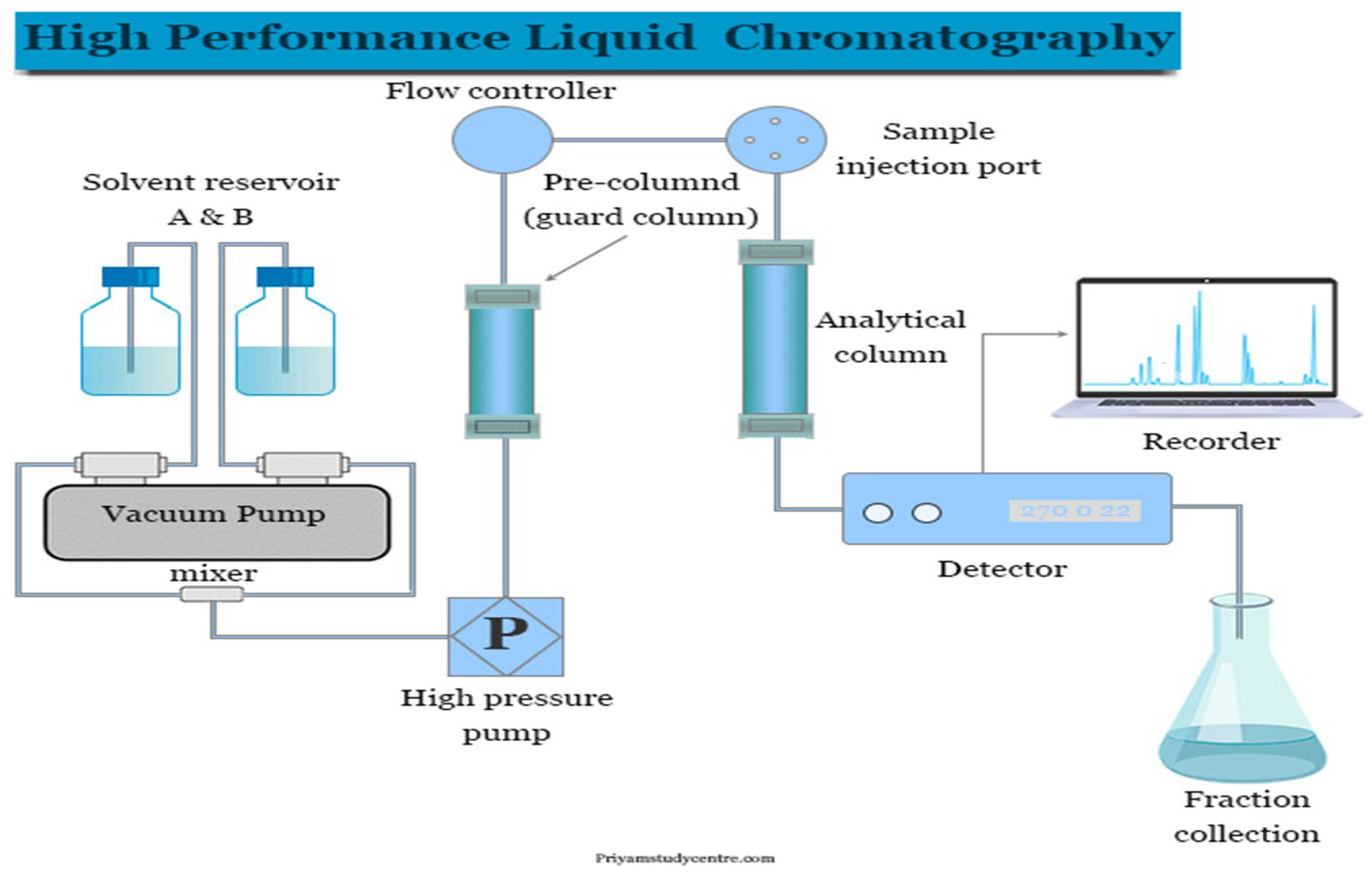
HPLC is a type of partition chromatography that utilizes the partitioning of substances between the stationary and mobile phases. The mobile phase consists of a solvent or a mixture of solvents that moves through the column carrying the sample when a pump exerts pressure. The stationary phase is a solid material, such as silica, packed in a column or cartridge. When the sample passes through the column, the stationary phase adsorbs the components of the sample with different affinities, resulting in a separation of the components.
The basis of HPLC is that molecules will move through the stationary phase at different speeds, depending on their relative affinity for the stationary phase. Different compounds travel at different speeds, which results in the separation of the compounds. The rate of movement of the components is determined by the relative affinities of the analyte molecules for the mobile and stationary phases. Compounds with a high affinity for the stationary phase will travel slower and separate more than less strongly adsorbed molecules.
The principle behind HPLC is based on the ideas of partition equilibria and retention times. Partition equilibrium states that compounds will distribute themselves between two immiscible phases. For HPLC, this means that compounds will be attracted to the column’s stationary phase (in this case, the adsorbent material) and the opposite mobile phase. At the same time, the retention time of a particular substance measures the time it takes the sample to move through the column and reach the detector. The HPLC process works by passing a sample comprised of a mixture of compounds through a chromatographic column. This column contains a packing material, such as particles of silica, that are coated with an adsorbent or absorbent material. Different components in the sample will interact differently with the coating, causing them to move through the column at different rates. Separated components will emerge from the column in separate time slices, traveling through a detector and onto a recording device in an ordered manner.
Instrumentation
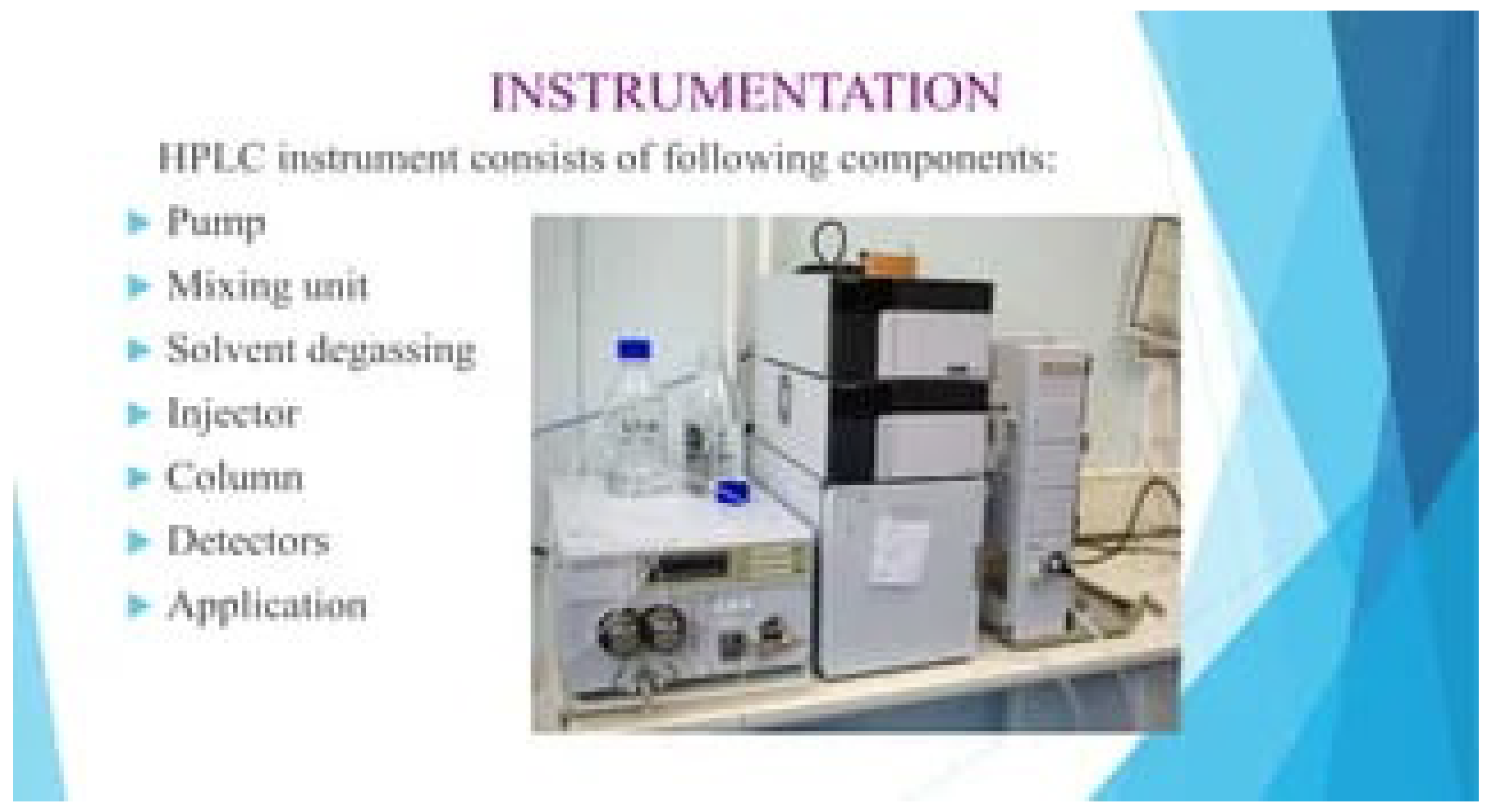
HPLC instrumentation is a highly complex system. The combination of pumps, solvents, valves, filters, injectors, detectors, and a data-collection and processing unit makes HPLC a powerful analytical technique. The main components of an HPLC system include the solvent delivery system, the column, the detector, the recorder, and the data system. The solvent delivery system comprises a pump that can provide a steady pressure to the mobile phase. This column oven moderates the column temperature and flow meters to monitor the flow. The sample is injected into the system using various methods, such as manual injection, syringes, or autosamplers.
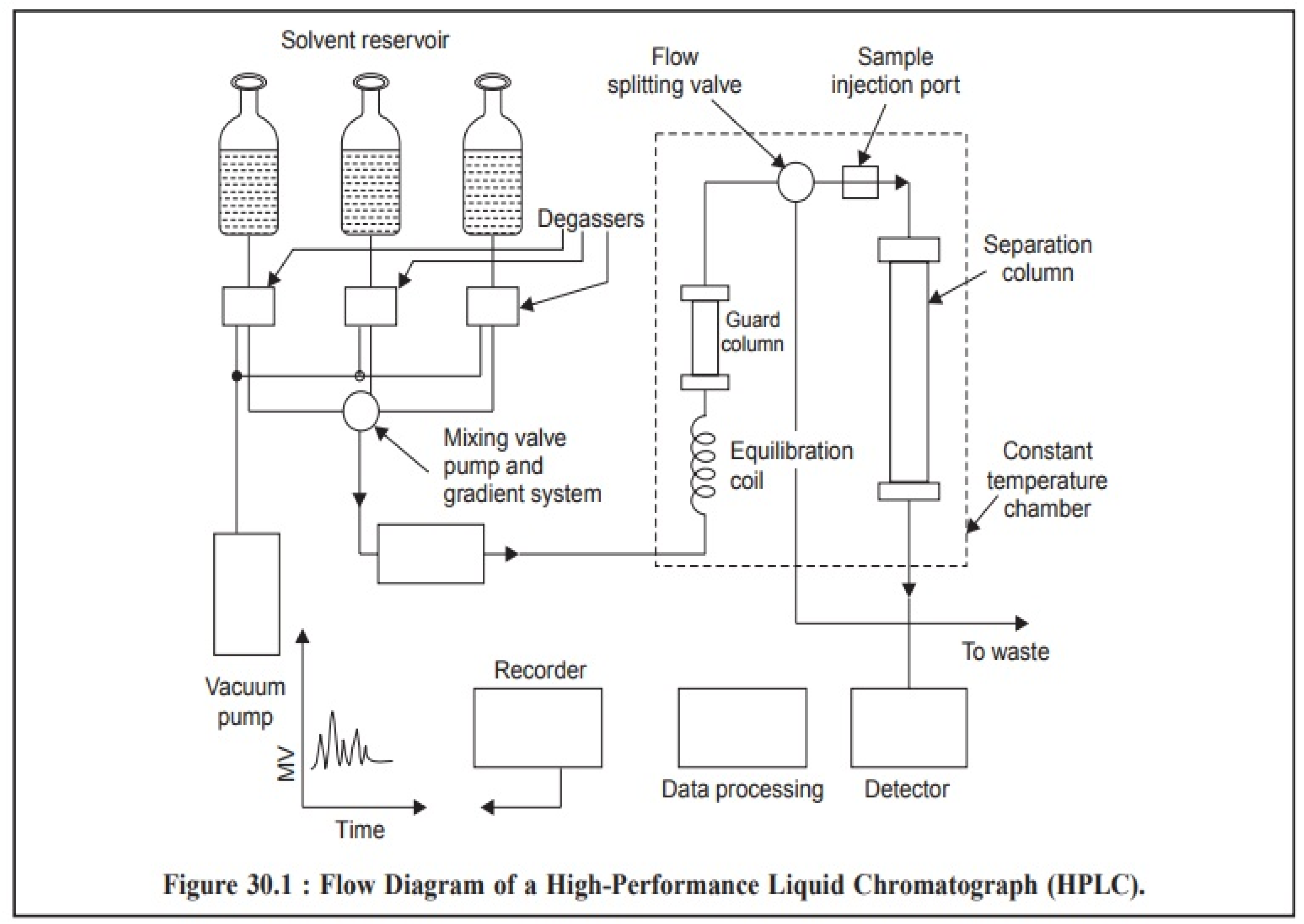
The column contains the stationary phase and consists of materials such as silica gel, silica-based packing materials, or polymeric materials. The packed column must be replaced when it is saturated with analyte molecules. The detector measures the compounds as they elute from the column. The most common detectors are the ultraviolet-visible (UV-Vis) and the fluorescence detector.
High-Performance Liquid Chromatography (HPLC) is an analytical technique used to separate components of a mixture for further analysis. It is heavily used in the pharmaceutical industry and is considered a state-of-the-art technique for many types of biochemistry and organic chemistry analyses. HPLC is highly automated and utilizes sophisticated hardware and software in its implementation.
HPLC instrumentation includes many components, such as a high-pressure pump, solvent tanks with associated valves, filters, connectors, injectors, detectors, and a data collection and processing unit. Each of these components could be considered a sub-system of an HPLC system.
The pump is used to ensure the correct pressure is present in the system to ensure the separation of the solutes. Control of the pressure is relatively simple, thanks to the feedback loop interactions between the pump and the valves. Pressure in the system is generally between 400 and 600 psi.
Solvent reservoirs are also utilized to store and provide solutions to the HPLC system. High-precision liquid flow control valves must be employed to ensure that the desired flow rates of solvents and mixtures can be provided. Filters are often employed to ensure that particles present in the solutions are not transported.
HPLC injectors are necessary for introducing the sample solution into the system. The best samples are usually those injected directly and free of bubbles. The components in the sample are then separated and analyzed for further processing.
Detectors are utilized to detect the analyte concentrations. UV/visible light detectors are the most commonly used and are extremely sensitive. They measure the absorbance of light from particle components present in the sample.
The last sub-system of an HPLC instrumentation is the data collection and processing unit. This unit is responsible for storing data related to the experiment. It can also be used for data processing and visualization.
Advantages
HPLC is a widely used analytical technique with many advantages over other methods. It offers high accuracy and sensitivity and can separate and detect even small amounts of substances. It is a reproducible technique that can screen and detect a wide range of compounds. It is also a relatively low-cost technique, and the equipment needed is reasonably inexpensive. Furthermore, HPLC systems are compact and can easily be interfaced with other systems.
High-Performance Liquid Chromatography (HPLC) is a powerful laboratory method used to separate molecules in a mixture according to their chemical and physical properties. HPLC is highly versatile and can be used for a wide variety of analyses, including analysis of proteins, pharmaceuticals, biopharmaceuticals, and other biomolecules. HPLC offers the advantages of speed of analysis, accuracy, reproducibility, and cost-effectiveness.
Speed of analysis is one of the primary advantages of HPLC. It is much faster than other conventional chromatography methods. HPLC uses much more sophisticated technology, allowing it to separate a complex sample in a matter of minutes.
HPLC is also highly accurate and reproducible. Due to the speed of analysis, HPLC can give results much shorter than other chromatography methods, reducing the chances of sampling error and providing a more consistent result.
Furthermore, HPLC is a cost-effective method for analysis. As it is faster than conventional chromatography methods, HPLC can analyze a large sample in a shorter time, reducing labor costs associated with conducting the analysis. In addition, the cost of the equipment used for HPLC is lower than that of conventional chromatography methods.
HPLC is also a very versatile method used in many fields, including food analysis, environmental analysis, and pharmaceutical analysis. As HPLC technology has advanced, it has become available for use in many different areas, from quality control to clinical research.
Finally, HPLC is a safe and reliable method of analysis. As the sample is separated without the use of heat or solvents, there is no danger of contamination from these compounds. Additionally, with HPLC, there is no need to purify the sample before analysis, making it easier and more cost-effective.
HPLC offers many advantages that make it the preferred method for many types of analyses. It is faster, more accurate, reproducible, and cost-effective, and is also very versatile. Furthermore, it is a safe and reliable method without contamination from heat or solvents. As a result, HPLC is increasingly being used for complex analyses in many different areas. It can separate and detect minimal amounts of compounds in a sample. It is cost-effective, efficient, and easy to use with the right equipment, software, and training. HPLC has the capability to quantify and characterize samples of varying complexity. This makes HPLC an excellent tool for almost any chemical analysis task.
Disadvantages
High-Performance Liquid Chromatography (HPLC) is an analytical technique that is widely used in the pharmaceutical, environmental, food, and healthcare industries. HPLC is fast, reliable, and accurate, but it is not without its disadvantages.
HPLC has some limitations as well. Since the process is based on the adsorption of the analytes, it is not easy to separate compounds with similar adsorption properties. Furthermore, some compounds can degrade if exposed to too high a temperature or pressure in the system. In addition, the columns used in the process can become saturated with analytes, making it necessary to change the column periodically.
One major disadvantage of the HPLC technique is its cost. HPLC requires expensive instrumentation, specialized materials, and set-up fees, making it more expensive than other analytical techniques. Additionally, HPLC requires specialized staff with expertise in the instrumentation and understanding of the separation and detection processes.
In addition to the cost, HPLC also has an extended analysis time. Because separating a sample’s components takes time, HPLC can take several hours to complete a complex analysis. This can be a significant disadvantage when fast results are needed or if there is limited time to dedicate to the experiment.
Another disadvantage of the HPLC technique is its susceptibility to contamination. It is easy for HPLC to become contaminated with organic compounds such as proteins, lipids, or surfactants. Contamination can lead to inaccurate results, lower resolution of peaks, and lower signal-to-noise ratio. Additional steps, such as membrane filtration or solid phase extraction, need to be taken to ensure that the sample is free from contamination.
Lastly, HPLC is also limited to analyzing small samples. Smaller sample sizes are needed to accurately capture the peaks of the compounds of interest. Larger sample sizes tend to require excessively long analysis times, so they are typically not viable.
HPLC technique is a powerful analytical technique that can provide fast, accurate, and reliable results. However, it has some significant disadvantages, including a high cost, long analysis times, susceptibility to contamination, and limited sample sizes. Nevertheless, it remains a valuable technique in many industries where fast results and accurate data are needed.
Applications
High-Performance Liquid Chromatography (HPLC) is a powerful analytical technique used to separate and analyze components present in a sample. This technique has been widely used in various fields of knowledge, such as medicine, food science, microbiology, pharmaceuticals, and environmental research, for nearly four decades.
HPLC is used extensively to analyze various kinds of samples, from pharmaceuticals to food and environmental samples. It is used in quality control in the pharmaceutical industry to identify and quantify compounds in complex mixtures. It can also be used to detect contaminants and impurities in food, drugs, and environmental samples. HPLC is also used in bioscience and biotechnology to detect and quantify DNA, antibodies, antigens, and small molecules. Finally, HPLC is used in the research and development of new drugs and in forensic analysis.
In medicine, HPLC is generally used to identify and quantify drugs, hormones, and other active components in blood and urine samples. In the field of food science, HPLC is used to identify nutritional components such as carbohydrates, proteins, fats, vitamins, and minerals. HPLC is also used to monitor the quality of food products, determine the types of fatty acids in foodstuffs, and identify undesirable compounds such as pesticides.
HPLC is also widely used by pharmaceutical companies to determine the purity and potency of drugs. It is also used to characterize drug molecules to ensure they are safe for human use. HPLC effectively detects active components in various dosage forms, including tablets, capsules, syrups, and injections.
In the field of microbiology, HPLC is used to identify bacteria by detecting their chemical markers, such as proteins and enzymes. In environmental research, this technique can identify and quantify various pollutants in water and soil.
HPLC is a versatile and sensitive analytical technique that has a broad range of applications. It is an essential tool for scientists, pharmacists, food manufacturers, and environmental researchers. Its utility in many fields speaks to its value and impact on the scientific community.
Analytical Discussion
The article on High-Performance Liquid Chromatography (HPLC) provides a comprehensive overview of this analytical technique, focusing on its principles, applications, advantages, limitations, and comparison with other chromatographic methods. HPLC is recognized for its ability to separate, identify, and quantify components in complex mixtures, making it a versatile tool in diverse fields such as pharmaceuticals, biotechnology, environmental science, and forensic analysis.
Key Strengths and Applications:
HPLC’s primary strength lies in its high resolution, accuracy, and efficiency, which allow for detailed characterization of complex samples based on their size, shape, hydrophobicity, hydrophilicity, charge, structure, and molecular weight. The technique is instrumental in pharmaceuticals for developing new drugs, ensuring quality control, and analyzing biological samples. In biotechnology, HPLC is utilized for the enhancement and characterization of biocatalysts, and the purification of proteins. Environmental sciences benefit from HPLC’s ability to detect and quantify pollutants, while forensic science employs it for identifying substances found at crime scenes.
The article emphasizes HPLC’s adaptability to different detectors (UV-visible, fluorescence, mass spectrometry), enhancing its versatility in analyzing a wide range of substances. This adaptability, combined with its rapid, cost-effective, and relatively easy execution, makes HPLC a preferred method in various scientific and industrial contexts. The case studies presented in the article—covering pharmaceuticals, environmental science, biotechnology, and forensic analysis—demonstrate the technique’s effectiveness in solving real-world problems and highlight its relevance across multiple disciplines.
Comparative Analysis and Limitations
The article provides a comparative analysis of HPLC with other chromatographic techniques such as Gas Chromatography (GC), Thin Layer Chromatography (TLC), and Ultra-High-Performance Liquid Chromatography (UHPLC). While GC is more suitable for volatile compounds, HPLC is versatile for both volatile and non-volatile substances, including large biomolecules. The analysis illustrates that HPLC offers higher precision, resolution, and quantitative capabilities than TLC, which is primarily used for quick qualitative analysis. Compared to UHPLC, HPLC is less expensive but slower, with UHPLC providing faster analysis times and better resolution.
Despite its advantages, the article acknowledges several limitations of HPLC. These include high operational costs due to expensive instrumentation and specialized materials, the need for trained personnel, and susceptibility to contamination. Additionally, HPLC can struggle with separating compounds with similar adsorption properties and may require frequent replacement of saturated columns. Extended analysis times for complex samples can be a disadvantage when fast results are needed.
Overall, the article presents HPLC as a highly reliable and powerful analytical technique with numerous applications. It effectively demonstrates HPLC’s significance in modern analytical chemistry by providing critical insights and supporting scientific and industrial advancements. However, the discussion also highlights areas for improvement, such as reducing costs, enhancing speed, and minimizing contamination risks. By comparing HPLC with other methods, the article provides a nuanced perspective on the technique’s unique advantages and areas where alternative methods might be more appropriate. This balanced approach helps readers understand the best contexts for utilizing HPLC effectively.
Uses High-Performance Liquid Chromatography (HPLC)
High-Performance Liquid Chromatography (HPLC) is a critical analytical technique across variousl sectors. Here’s an overview of its uses, current applications, and potential future developments:
Uses of HPLC in Pharmaceutical Sectors
Drug Development and Quality Control: HPLC is extensively used in drug development to ensure the purity and composition of new pharmaceutical compounds. During the development phase, it helps in characterizing drug substances and excipients, and during quality control, it is essential for verifying that the final product meets required specifications. It detects impurities and degradation products, ensuring the safety and efficacy of the drugs.
Pharmacokinetics and Pharmacodynamics: In the study of pharmacokinetics (how the body affects a drug) and pharmacodynamics (how the drug affects the body), HPLC is used to measure drug levels in biological samples, such as blood and urine. This helps in understanding the absorption, distribution, metabolism, and excretion of drugs, leading to better dosing regimens and therapeutic outcomes.
Clinical Trials: HPLC is employed to monitor the stability of drugs during clinical trials. It ensures that the drugs administered to participants are of the correct concentration and free from contaminants, thus maintaining the integrity of clinical trial data.
Regulatory Compliance: Pharmaceutical companies use HPLC to comply with regulatory standards set by organizations like the FDA and EMA. It is instrumental in the validation and verification of analytical methods, and in generating data required for regulatory submissions.
Forensic Analysis: In forensic pharmaceutical analysis, HPLC helps in the identification and quantification of drugs and their metabolites in samples related to criminal investigations or drug abuse cases.
Current Use
Currently, HPLC is integral to pharmaceutical manufacturing processes, ensuring that products are consistent and meet the high standards required by the industry. Advances in HPLC technology, such as the development of faster and more efficient columns and detectors, have improved its resolution and sensitivity. These advancements allow for the analysis of complex mixtures and lower detection limits, enhancing the ability to detect minute quantities of impurities.
Future Developments
The future of HPLC in the pharmaceutical sector looks promising with several anticipated advancements:
Integration with Other Techniques: Combining HPLC with techniques like mass spectrometry (LC-MS) or nuclear magnetic resonance (LC-NMR) will continue to enhance its analytical capabilities. These integrations can provide more detailed information about molecular structures and interactions.
Miniaturization and Automation: Advances in miniaturization and automation are likely to make HPLC more efficient and cost-effective. Micro-HPLC systems and automated sample handling can increase throughput and reduce manual labor, making the technique more accessible for routine analyses.
Advanced Columns and Materials: Development of new stationary phases and column materials will improve separation efficiency and speed. Innovations such as monolithic columns and superficially porous particles promise to enhance performance and reduce analysis times.
Increased Sensitivity and Selectivity: Future HPLC systems will likely offer even greater sensitivity and selectivity, allowing for the detection of lower concentrations of analytes and a wider range of compounds, including complex biomolecules and nanoparticles.
Green Chemistry: There is a growing emphasis on sustainability, and future developments in HPLC will focus on reducing solvent consumption and waste, aligning with the principles of green chemistry.
Overall, HPLC will continue to be a cornerstone of pharmaceutical analysis, evolving with technological advancements to meet the ever-increasing demands of the industry.
Uses of HPLC in Other Sectors
Environmental Analysis
In environmental analysis, High-Performance Liquid Chromatography (HPLC) is essential for detecting and quantifying pollutants in various matrices such as water, soil, and air. Current Use: It is used to monitor contaminants, including pesticides, industrial chemicals, and natural toxins, ensuring compliance with environmental regulations and protecting ecosystems. Future Prospects: Advances in HPLC technology, including greater sensitivity and real-time analysis capabilities, are expected to enhance environmental monitoring, allowing for more precise and timely detection of pollutants.
Food and Beverage Industry
HPLC plays a significant role in the food and beverage industry for quality control and safety testing. Current Use: It is utilized to analyze food ingredients, additives, preservatives, and contaminants, ensuring products meet safety standards and labeling requirements. Future Prospects: Continued advancements in HPLC methods, including faster analysis times and higher resolution, will likely improve the accuracy of food testing and support the detection of new and emerging contaminants.
Clinical Research
In clinical research, HPLC is used to analyze biological samples, such as blood and urine, to support drug development and clinical trials. Current Use: It helps measure drug concentrations and biomarkers, which is crucial for pharmacokinetic studies and evaluating therapeutic efficacy and safety. Future Prospects: Enhanced HPLC technologies, combined with automation and integration with other analytical techniques, are expected to provide more precise and comprehensive data, advancing personalized medicine and improving clinical research outcomes.
Forensic Science
HPLC is valuable in forensic science for analyzing samples in criminal investigations. Current Use: It is employed to detect and quantify substances such as drugs, explosives, and toxins in evidence samples. Future Prospects: Innovations in HPLC could lead to more rapid and detailed forensic analysis, improving the accuracy of investigations and supporting justice.
Cosmetic Industry
In the cosmetic industry, HPLC is used for quality control and safety testing of cosmetic products. Current Use: It helps ensure that formulations contain the correct concentrations of active ingredients and are free from harmful contaminants. Future Prospects: Advances in HPLC will likely enhance the ability to analyze complex cosmetic formulations and ensure compliance with regulatory standards.
Overall, HPLC’s versatility makes it an invaluable tool across various sectors, with ongoing advancements set to broaden its applications and improve analytical precision.
Conclusion
HPLC is an essential tool for both qualitative and quantitative analysis. HPLC can be used to analyze and identify chiral compounds, to confirm the structure, and to detect minor differences in complex samples. With its high accuracy, sensitivity, and reproducibility, it is used widely in many research and analytical fields. HPLC can be used to analyze a wide range of compounds, from pharmaceuticals to environmental samples. It has clear advantages over other analytical techniques, making it an ideal tool for scientific and industrial applications. As a result of the precise and reproducible separation the technique provides, HPLC has been used to screen for impurities in product purity tests, to identify unknowns in drug discovery and development, and to characterize protein structure and function. With the increasing sensitivity and efficiency of the systems, it is possible to detect differences in chemical composition, size, shape, charge, and many other differences due to the various chromatographic conditions used. It is a highly reliable, efficient, and powerful technique with numerous applications.
References
- Singh, Ranjit. “HPLC method development and validation-an overview.” Journal of Pharmaceutical Education & Research 4.1 (2013).
- Kazakevich, Yuri V., and Rosario Lobrutto. HPLC for pharmaceutical scientists. John Wiley & Sons, 2007.
- Sahu, Prafulla Kumar, et al. “An overview of experimental designs in HPLC method development and validation.” Journal of pharmaceutical and biomedical analysis 147 (2018): 590-611. [CrossRef]
- Dong, Michael W. HPLC and UHPLC for Practicing Scientists. John Wiley & Sons, 2019.
- Patil, Ms Pallavi Nemgonda. “HPLC Method Development–A Review.” Journal of Pharmaceutical Research and Education 1.2 (2017): 243-260.
- Vidushi, Yadav, Bharkatiya Meenakshi, and M. B. Bharkatiya. “A review on HPLC method development and validation.” Res J Life Sci, Bioinform, Pharm Chem Sci 2.6 (2017): 178.
Disclaimer/Publisher’s Note: The statements, opinions and data contained in all publications are solely those of the individual author(s) and contributor(s) and not of MDPI and/or the editor(s). MDPI and/or the editor(s) disclaim responsibility for any injury to people or property resulting from any ideas, methods, instructions or products referred to in the content. |
© 2024 by the authors. Licensee MDPI, Basel, Switzerland. This article is an open access article distributed under the terms and conditions of the Creative Commons Attribution (CC BY) license (http://creativecommons.org/licenses/by/4.0/).
Copyright: This open access article is published under a Creative Commons CC BY 4.0 license, which permit the free download, distribution, and reuse, provided that the author and preprint are cited in any reuse.