

Submitted:
21 August 2024
Posted:
22 August 2024
You are already at the latest version
Abstract
ObjectivesIn increasingly stressful times, many people are increasingly turning to fast food, neglecting to drink enough fluids and often forgoing regular exercise. The fast tempo of everyday life leaves little room for healthy habits, such as cooking at home, which means that a conscious and balanced diet takes a back seat.MethodsA descriptive pilot study was conducted to investigate the effects of an eight-week intervention program. This program included the daily intake of breakfast, cooking at home, adequate fluid intake and daily physical activity. The aim of the study was to evaluate the effects of these measures on the participants' body weight and general health.Results During the 56-day intervention, there was a steady trend towards weight reduction, and at the end of the intervention phase, a significant weight reduction in the test person could be observed. At the end of the intervention, the participant was still 45 years old, measured a body weight of 73.4 kg, which represents a BMI of 25.1 and is classified as slightly overweight. ConclusionThe results of the pilot study demonstrate clearly that the health mix of regular cooking at home, a daily breakfast, a daily physical activity session and sufficient fluid intake can be an effective booster for weight loss in adults. This combination has not only led to a significant reduction in body weight, but has also shown that simple, everyday measures can have a profound effect on health.
Keywords:
Fitness
; Obesity
; Home cooking
; healthy lifestyle
; body mass index
Introduction
In recent decades, people's eating habits have changed drastically around the world. 1-3 One of the most striking developments is the increasing consumption of fast food 4,5 and the associated decline in cooking at home. 1,6,7 This trend is due to a variety of factors that are deeply rooted in the social, economic and cultural changes of modern society. 8-11
One major reason for the rise in fast food consumption is the hectic lifestyle that many people lead today. 6,12 In an increasingly fast-paced world, time and convenience have become precious commodities, so many people simply don't have the time or energy to prepare a meal after a busy day due to work commitments, long hours and numerous other activities. 13,14
Another factor is the increasing availability and aggressive marketing of fast food chains.15 Fast food restaurants can now be found virtually everywhere - in urban areas, along highways, in shopping centers and even in smaller towns.16
However, more fast food consumption has significant health consequences.4,17 Fast food is often high in calories, saturated fats, sugar and salt, but low in nutrients such as vitamins, minerals and fiber. Frequent consumption of these foods can lead to a number of health problems. 18,19 These include overweight and obesity, which have now become global epidemics.20-22 Obesity, in turn, increases the risk of a variety of diet-related diseases, such as cardiovascular disease, type 2 diabetes, high blood pressure and certain cancers.23-25
To counteract stress, hectic lifestyles and fast food consumption, cooking at home should be made easier and more efficient.26-28 The Thermomix kitchen appliance offers an ideal solution here by combining numerous kitchen appliances in one and making it easy to prepare fresh, healthy meals.29,30 In times when unhealthy eating is often the result of a lack of time, the Thermomix helps you to eat a balanced diet.29,30 Combined with a healthy breakfast31 and daily exercise32, this can make a lasting contribution to a healthier lifestyle.29,30,33
A descriptive pilot study was conducted to evaluate the effectiveness of these measures. The aim of the study was to assess the impact of an eight-week intervention program, which included the use of a Thermomix appliance for meal preparation, regular consumption of a healthy breakfast, adequate hydration and daily physical activity, on the health outcomes of an overweight adult individual.
Methods
The main aim of the study was to assess the effect of this general intervention on body mass index and how it could potentially improve it. A pilot study, designed to collect information for a large-scale planned intervention, was started with a middle-aged male obese adult in spring 2024. All studies were conducted in accordance with the Declaration of Helsinki.
Selection of Study Participant
The author of this study made himself available as study participant to provide the best possible control of the compliance with all intervention contents.
Procedures
A comprehensive intervention program was implemented, which included daily cooking and eating meals at home, consistent fluid intake throughout the day, a balanced breakfast and a daily physical activity session. Regular measurements were taken to monitor changes in body weight, both in the morning immediately after getting up and in the evening before going to bed.
Cooking and Eating Meals at Home
Lunches were prepared using the Thermomix TM6 (Vorwerk brand). Cooking with a Thermomix appliance offers a number of benefits that make preparing meals at home much easier and more efficient:
- Multifunctionality: The Thermomix combines numerous kitchen appliances in one. It can chop, mix, knead, cook, steam and much more. This saves space in the kitchen and makes cooking more versatile.
- Time saving: As the Thermomix takes over many tasks that would normally have to be done manually or with several appliances, it significantly reduces the time needed to prepare meals.
- Easy to use: The intuitive user interface and step-by-step instructions mean that even beginners can easily prepare complex dishes.
- Healthy eating: The Thermomix allows you to prepare fresh, healthy meals with minimal effort. This promotes a balanced diet and helps to avoid processed foods.
- Precision: The precise temperature setting and integrated scales allow recipes to be implemented with precision, which is particularly important for sophisticated dishes.
The lunches were selected using the Cookidoo App34 by the Vorwerk company, which offers a wide range of recipes. Particular attention was given to ensuring a balanced diet, with fish, meat and vegetables forming the main components of the lunches each week. A detailed overview of the selected lunches is shown in Table 1.
A detailed overview of the components of the individual lunches is available in the Cookidoo App34 by the Vorwerk company.
Consistent Fluid Intake Throughout the Day
Care was taken to ensure that sufficient fluid intake was balanced throughout the day. According to current health recommendations, an adult should consume around 2 to 3 liters of fluid per day35, with the exact amount depending on individual factors such as body weight, physical activity and climatic conditions.
A detailed overview of the daily fluid intake is shown in Table 2.
Balanced Breakfast
As part of the intervention, four different breakfast options were consumed in rotation, which were characterized by their quick preparation time. This made it possible to start the day healthy and energized, without additional stress in the morning.
- Breakfast 1 = 20 to 30 g of bread with cream cheese
- Breakfast 2 = Croissant filled/with jam
- Breakfast 3 = Soft-boiled egg with 20 to 30 g of bread
- Breakfast 4 = Organic sourdough bread roll without added sugar with a slice of Gouda
Daily Physical Activity Session
When selecting the daily exercise unit for adults, it is crucial that the intrinsic motivation is as high as possible. It is less important which specific activity is practiced, but rather that regular physical activity takes place at all. For this reason, the study participants were allowed to organize his exercise units according to his own needs and wishes, as long as they were physically feasible and personally motivating for him. A detailed overview of the physical activity carried out is given in Table 3.
Dinner
A small amount of fresh ginger was eaten raw for dinner; only on a few days was a full meal eaten due to the job. A detailed overview of the evening meals is shown in Table 4.
Outcomes
In this study, the primary outcome was the impact of the intervention program on body mass index (BMI). The anthropometric data included height (cm) and weight (kg). The measurements were taken daily in the morning directly after getting up and in the evening before going to bed. Height was measured to the nearest 0.1 cm with a portable stadiometer (SECA 213, Hamburg, Germany). Weight was measured to the nearest 0.1 kg using an electronic weighing scale (BOSCH PPW4202/01, Nuremberg, Germany). The BMI was calculated as weight in kilograms divided by height in metres squared.
Statistical Analysis
Descriptive statistics were calculated for each day (morning and evening). The analyzed data contain only complete data for all measured time points, and no imputation of the data was performed.
BMI cut-off values can be used to categorize weight into five categories (underweight BMI<18.5 kg/m2, normal weight BMI 18.5 to 25.0 kg/m2, overweight BMI≥25.0 kg/m2, obese BMI≥30.0 kg/m2, morbid obesity BMI≥35.0 kg/m2).
All statistical analyses were performed in SPSS 29.0 (IBM SPSS Statistics 29, IBM, New York, USA).
Results
In the observation period from February 26, 2024 up to and including April 21, 2024, the test person cooked fresh food at home every day, ate breakfast, documented his liquid kit intake and took sufficient daily exercise.
At the start of the intervention, the participant was 45 years old, 171 cm tall and weighed 88.1 kg, which represents a BMI of 30.1 and must be classified as obese (Table 5).
During the 56-day intervention, there was a steady trend towards weight reduction, and at the end of the intervention phase, a significant weight reduction in the test person could be observed. At the end of the intervention, the participant was still 45 years old, measured a body weight of 73.4 kg, which represents a BMI of 25.1 and is classified as slightly overweight (Table 5, Figure 1).
Discussion
Within eight weeks, the targeted intervention led to a significant weight reduction in an obese adult to a weight on the threshold of normal weight, showing not only pleasing physical changes, but also having far-reaching positive effects on health. The transformation from an obese body to a near-normal weight is a significant step that not only improves physical appearance, but also overall well-being and long-term health.
Losing excess body weight is particularly beneficial as obesity is associated with a variety of health risks. Key benefits of weight loss include reducing the risk of cardiovascular disease, type 2 diabetes, certain cancers and respiratory diseases. Reduced body weight reduces the burden on the cardiovascular system by lowering blood pressure and blood lipid levels and improving heart function. This significantly reduces the risk of coronary heart disease, heart attacks and strokes. In addition, insulin sensitivity is also improved, which reduces the risk of developing type 2 diabetes. The risk of certain types of cancer, such as breast, bowel and uterine cancer, can also be reduced by losing weight. The reduction of fat deposits in the abdomen, which are considered to be particularly metabolically active, plays a decisive role here.36-38
In addition to the mentioned health benefits, the transition to a healthy body weight also promotes general well-being. Physical performance increases, breathing capacity improves and complaints such as joint pain, which are often caused by being overweight, decrease. All these factors contribute to those affected being able to participate more actively in life, which in turn increases their self-confidence and quality of life. A healthier weight also has psychological benefits, improving self-image and reducing the risk of depression and anxiety.39
As well as weight loss, healthy lifestyle habits also play a key role in achieving and maintaining a healthy weight. Cooking at home is one of the most effective strategies to ensure a balanced and nutritious diet. Home-cooked meals allow for better control over ingredients and portion sizes, which can reduce the intake of calories, sugar and unhealthy fats. In addition, cooking at home can strengthen the bond with food and promote a conscious and mindful way of eating, leading to healthier eating habits in the long term.
Cooking with the Thermomix appliance offers considerable advantages in this context. The Thermomix makes it quick and easy to prepare healthy meals that are perfectly tailored to individual nutritional needs. Thanks to its versatility, fresh ingredients can be processed gently, which promotes the preservation of nutrients and vitamins. The precise control of temperatures and cooking times also helps to maximize the nutritional value of the food. Another advantage is the ability to adjust recipes and portion sizes exactly as required, which is particularly helpful when it comes to calorie management and reducing unhealthy additives. In addition, the Thermomix supports structured and efficient meal planning, making it easier to integrate healthy eating habits into everyday life and thus ensure the long-term success of weight reduction.27,28
Daily physical activity is another crucial factor for weight loss and maintaining a healthy body weight. Regular physical activity not only helps to burn calories, but also boosts metabolism, muscle development and overall fitness. Physical activity can help to accelerate weight loss and maintain muscle tone, which is particularly important to ensure a sustainable and healthy weight status. In addition, regular physical activity helps to improve cardiovascular health, flexibility and mental health.32
Eating a small daily breakfast has also been shown to be beneficial for weight regulation. A balanced breakfast can boost metabolism, stabilize blood sugar levels and regulate appetite throughout the day. People who eat breakfast regularly are less prone to cravings and uncontrolled eating, which in turn has a positive effect on weight control.40,41
Adequate hydration also plays an essential role in supporting weight loss and overall health. Water is not only important for hydration, but also for metabolism and digestion. Adequate water intake can help reduce hunger by increasing stomach volume and thus promoting a feeling of fullness. In addition, water supports the elimination of waste products and promotes healthy skin, which also contributes to general well-being.42
In summary, losing weight from obese to normal weight not only leads to an improvement in physical appearance, but also brings a variety of health benefits. The combination of a healthy diet, regular exercise, a daily breakfast and sufficient fluid intake forms the basis for successful and sustainable weight loss, which significantly improves quality of life and reduces the risk of numerous chronic diseases.
Strengths and Limitations
Although the pilot study showed promising results, it also has some weaknesses that need to be taken into account. The study was only carried out on one person and took place over a relatively short period of time, which limits the validity of the results. In addition, the subject had medical and sports science knowledge, which can be seen as a possible factor influencing the implementation. Nevertheless, the strengths of the study cannot be overlooked: The weight reduction achieved in a short time demonstrates the potential of the approach, especially as the intervention can be carried out at home and by anyone. The possibility of implementing such low-cost, large-scale measures with voluntary participants could also be used in the humanitarian sector in the future without having to rely on public funding, which could represent an enormous health booster.
Conclusions
The results of the pilot study demonstrate clearly that the health mix of regular cooking at home, a daily breakfast, a daily physical activity session and sufficient fluid intake can be an effective booster for weight loss in adults. This combination has not only led to a significant reduction in body weight, but has also shown that simple, everyday measures can have a profound effect on health.
Given these positive results, it is of great importance that further studies should be carried out to validate the findings from the pilot study in a larger, representative longitudinal study. Only through a broader scientific investigation can the potential benefits of this intervention approach for the general population be fully assessed. Such a study could help to have a lasting positive impact on the health development of the population and demonstrate that successful weight loss and health promotion is achievable for everyone, even without expensive medical or sports science expertise. In the long term, these findings could help to strengthen the prevention of obesity and related diseases and improve the quality of life of many people.
Competing interests
The authors declare no conflicts of interest.
Author Contributions
Conceptualization, G.J.; methodology, G.J.; formal analysis, G.J.; investigation, G.J.; resources, G.J.; data curation, G.J.; writing—original draft preparation, G.J.; writing—review and editing, G.J.; visualization, G.J.; supervision, G.J; project administration, G.J.; The author read and agreed to the published version of the manuscript.
References
- Popkin BM. Global nutrition dynamics: the world is shifting rapidly toward a diet linked with noncommunicable diseases2. The American Journal of Clinical Nutrition. 2006;84(2):289-298. [CrossRef]
- Micha R, Khatibzadeh S, Shi P, Andrews KG, Engell RE, Mozaffarian D. Global, regional and national consumption of major food groups in 1990 and 2010: a systematic analysis including 266 country-specific nutrition surveys worldwide. BMJ Open. 2015;5(9):e008705. [CrossRef]
- Ronto R, Wu JHY, Singh GM. The global nutrition transition: trends, disease burdens and policy interventions. Public Health Nutrition. 2018;21(12):2267-2270. [CrossRef]
- Pereira MA, Kartashov AI, Ebbeling CB, et al. Fast-food habits, weight gain, and insulin resistance (the CARDIA study): 15-year prospective analysis. The Lancet. 2005;365(9453):36-42. [CrossRef]
- Kearney J. Food consumption trends and drivers. Philosophical Transactions of the Royal Society B: Biological Sciences. 2010;365(1554):2793-2807. [CrossRef]
- Janssen HG, Davies IG, Richardson LD, Stevenson L. Determinants of takeaway and fast food consumption: a narrative review. Nutr Res Rev. 2018;31(1):16-34. [CrossRef]
- Smith LP, Ng SW, Popkin BM. Trends in US home food preparation and consumption: analysis of national nutrition surveys and time use studies from 1965-1966 to 2007-2008. Nutrition Journal. 2013;12(1):45. [CrossRef]
- Enriquez JP, Archila-Godinez JC. Social and cultural influences on food choices: A review. Critical Reviews in Food Science and Nutrition. 2022;62(13):3698-3704. [CrossRef]
- Pilcher, JM. Food in World History. Third edition. Routledge, Taylor & Francis Group; 2023.
- Baker P, Machado P, Santos T, et al. Ultra-processed foods and the nutrition transition: Global, regional and national trends, food systems transformations and political economy drivers. Obes Rev. 2020;21(12):e13126. [CrossRef]
- Food, Culture, and Identity in Multicultural Societies: Insights from Singapore. 2020.
- Viljoen AT, van der Spuy E, Du Rand GE. Food consumption, lifestyle patterns, and body mass index of a group of white South African students. Int J Consumer Studies. 2018;42(5):533-546. [CrossRef]
- Lestari A, Fakhira A, Ismiana A, Annisaa A. Fast Food Consumption Behavior in Adolescents. MIPHMP. 2021;1(1):607-616. [CrossRef]
- Jaworowska A, Blackham T, Davies IG, Stevenson L. Nutritional challenges and health implications of takeaway and fast food. Nutr Rev. 2013;71(5):310-318. [CrossRef]
- Bankole E, Harris N, Rutherford S, Wiseman N. A systematic review of the adolescent-directed marketing strategies of transnational fast food companies in low- and middle-income countries. Obes Sci Pract. 2023;9(6):670-680. [CrossRef]
- Kirkpatrick SI, Reedy J, Kahle LL, Harris JL, Ohri-Vachaspati P, Krebs-Smith SM. Fast-food menu offerings vary in dietary quality, but are consistently poor. Public Health Nutrition. 2014;17(4):924-931. [CrossRef]
- Bowman SA, Vinyard BT. Fast food consumption of U.S. adults: impact on energy and nutrient intakes and overweight status. Journal of the American College of Nutrition. 2004;23(2):163-168. [CrossRef]
- Jenkin G, Wilson N, Hermanson N. Identifying 'unhealthy' food advertising on television: a case study applying the UK Nutrient Profile model. Public Health Nutr. 2009;12(5):614-623. [CrossRef]
- Lobstein T, Davies S. Defining and labelling ‘healthy’ and ‘unhealthy’ food. Public Health Nutr. 2009;12(3):331-340. [CrossRef]
- Abdullah NN, Mokhtar MM, Bakar MHA, Al-Kubaisy W. Trend on Fast Food Consumption in Relation to Obesity among Selangor Urban Community. Procedia - Social and Behavioral Sciences. 2015;202:505-513. [CrossRef]
- Worldwide trends in underweight and obesity from 1990 to 2022: a pooled analysis of 3663 population-representative studies with 222 million children, adolescents, and adults. The Lancet. 2024;403(10431):1027-1050. [CrossRef]
- James PT, Leach R, Kalamara E, Shayeghi M. The worldwide obesity epidemic. Obesity Research. 2001;9 Suppl 4(S11):228S-233S. [CrossRef]
- Dixon, JB. Dixon JB. The effect of obesity on health outcomes. Molecular and Cellular Endocrinology. 2010;316(2):104-108. [CrossRef]
- Afshin A, Forouzanfar MH, Reitsma MB, et al. Health Effects of Overweight and Obesity in 195 Countries over 25 Years. N Engl J Med. 2017;377(1):13-27. [CrossRef]
- Nyberg ST, Batty GD, Pentti J, et al. Obesity and loss of disease-free years owing to major non-communicable diseases: a multicohort study. The Lancet Public Health. 2018;3(10):e490-e497. [CrossRef]
- Wolfson JA, Leung CW, Richardson CR. More frequent cooking at home is associated with higher Healthy Eating Index-2015 score. Public Health Nutr. 2020;23(13):2384-2394. [CrossRef]
- Reicks M, Kocher M, Reeder J. Impact of Cooking and Home Food Preparation Interventions Among Adults: A Systematic Review (2011–2016). Journal of Nutrition Education and Behavior. 2018;50(2):148-172.e1. [CrossRef]
- Reicks M, Trofholz AC, Stang JS, Laska MN. Impact of Cooking and Home Food Preparation Interventions Among Adults: Outcomes and Implications for Future Programs. Journal of Nutrition Education and Behavior. 2014;46(4):259-276. [CrossRef]
- Fries A, Bergmeister A-W, Spindler M. Thermomix by Vorwerk – A New Way of Cooking. In: Büchler J-P, ed. Fallstudienkompendium Hidden Champions: Innovationen für den Weltmarkt. Springer Fachmedien Wiesbaden; 2018:73-90.
- Alyce, A. Quick Fix in the Thermomix. RR Donnelley; 2012.
- Rani R, Dharaiya CN, Singh B. Importance of not skipping breakfast: a review. Int J Food Sci Technol. 2021;56(1):28-38. [CrossRef]
- Piercy KL, Troiano RP, Ballard RM, et al. The Physical Activity Guidelines for Americans. JAMA. 2018;320(19):2020-2028. [CrossRef]
- Warin M, Jay B, Zivkovic T. “Ready-made” assumptions: Situating convenience as care in the Australian obesity debate. Food and Foodways. 2019;27(4):273-295. [CrossRef]
- Kollmann, T. Kollmann T. Die Digitale Transformation in der Küche. In: Ghadiri A, Vilgis T, Bosbach T, eds. Wissen schmeckt: Die Magie der Wissenschaften beim Kochen erklärt – mit 16 Rezepten. Springer Fachmedien Wiesbaden; 2018:147-167.
- Willett W, Skerrett PJ, Giovannucci EL. Eat, Drink, and Be Healthy: The Harvard Medical School Guide to Healthy Eating. Updated and expanded [edition]. Free Press; 2017.
- Jaacks LM, Vandevijvere S, an Pan, et al. The obesity transition: stages of the global epidemic. The Lancet Diabetes & Endocrinology. 2019;7(3):231-240. [CrossRef]
- Kivimäki M, Kuosma E, Ferrie JE, et al. Overweight, obesity, and risk of cardiometabolic multimorbidity: pooled analysis of individual-level data for 120 813 adults from 16 cohort studies from the USA and Europe. The Lancet Public Health. 2017;2(6):e277-e285. [CrossRef]
- Afshin A, Sur PJ, Fay KA, et al. Health effects of dietary risks in 195 countries, 1990–2017: a systematic analysis for the Global Burden of Disease Study 2017. The Lancet. 2019;393(10184):1958-1972. [CrossRef]
- Fulton S, Décarie-Spain L, Fioramonti X, Guiard B, Nakajima S. The menace of obesity to depression and anxiety prevalence. Trends in Endocrinology & Metabolism. 2022;33(1):18-35. [CrossRef]
- Megson M, Wing R, Leahey TM. Effects of breakfast eating and eating frequency on body mass index and weight loss outcomes in adults enrolled in an obesity treatment program. J Behav Med. 2017;40(4):595-601. [CrossRef]
- Monzani A, Ricotti R, Caputo M, et al. A Systematic Review of the Association of Skipping Breakfast with Weight and Cardiometabolic Risk Factors in Children and Adolescents. What Should We Better Investigate in the Future? Nutrients. 2019;11(2):387. [CrossRef]
- Armstrong LE, Johnson EC. Water Intake, Water Balance, and the Elusive Daily Water Requirement. Nutrients. 2018;10(12):1928. [CrossRef]
Figure 1.
Descriptive course of weight reduction.
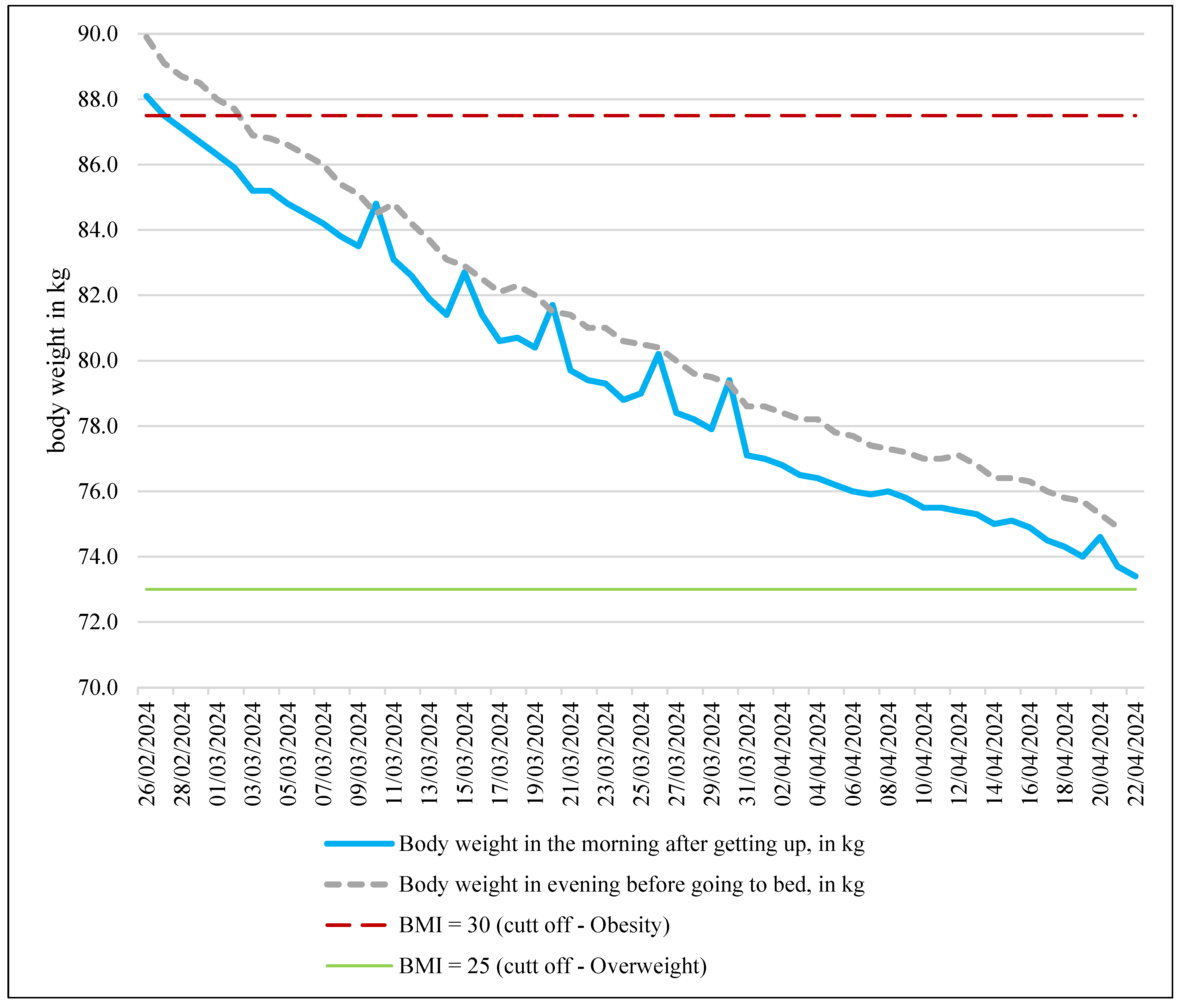

Table 1.
Overview of the selected lunches in the intervention phase.
| Date | Lunch |
|---|---|
| 26.02.2024 | Potato-Cauliflower Casserole |
| 27.02.2024 | Vegetable Couscous with Dates and Feta |
| 28.02.2024 | Chicken with Bell Pepper Vegetables |
| 29.02.2024 | Caribbean Cauliflower Curry with Sweet Potatoes |
| 01.03.2024 | Chickpea-Vegetable Curry with Rupp Gouda |
| 02.03.2024 | Coconut Soup Tom Kha Gai |
| Mushroom Ragout with Green Beans | |
| 03.03.2024 | Quinoa Risotto Provençale |
| 04.03.2024 | Broccoli-Gorgonzola Pasta |
| 05.03.2024 | Creamy Ham Noodles Au Gratin |
| 06.03.2024 | Fennel Risotto |
| 07.03.2024 | Hunter Sauce with Dumplings |
| 08.03.2024 | Salmon on Leek-Cream Cheese Bed with New Potatoes |
| 09.03.2024 | Lasagna |
| 10.03.2024 | Pizza Soup |
| Quinoa Salad with Vegetables and Herbs | |
| 11.03.2024 | Sole Rolls on Saffron Risotto |
| 12.03.2024 | Super Quick Margherita Pizza |
| 13.03.2024 | Tortellini in Ham-Cream Sauce |
| 14.03.2024 | Potato Goulash |
| Meatless Meatloaf | |
| 15.03.2024 | Vegetable Fritters from the Baking Tray |
| Crepes with Apricot Jam | |
| 16.03.2024 | Pizza Rolls |
| Ham-Cheese Sauce | |
| 17.03.2024 | Spinach Strudel with Potatoes |
| 18.03.2024 | Potato-Apple Ragout with Sausages |
| 19.03.2024 | Strawberry-Basil Ice Cream |
| 20.03.2024 | Potato-Celery Gratin |
| Rice Noodles with Vegetable Curry | |
| 21.03.2024 | Coconut Soup Tom Kha Gai |
| Rice Noodles with Vegetable Curry | |
| 22.03.2024 | Rice Noodles with Vegetable Curry |
| 23.03.2024 | Green Smoothie |
| Hawaiian Quiche | |
| 24.03.2024 | Strawberry-Basil Ice Cream |
| Carrot-Mango Soup with Coconut | |
| Spinach Dumplings on Tomato Ragout | |
| 25.03.2024 | Butter Chicken with Pumpkin and Basmati-Wild Rice Mix |
| 26.03.2024 | Creamy Pasta Casserole with Tomatoes |
| 27.03.2024 | Meatloaf - Stefanie Roast |
| 28.03.2024 | Jambalaya |
| 29.03.2024 | Kohlrabi in Dill Sauce with New Potatoes and Sausages |
| 30.03.2024 | Salmon on Leek-Cream Cheese Bed with New Potatoes |
| Carrot Cake with Cream Cheese Frosting | |
| 31.03.2024 | Strawberry-Basil Ice Cream |
| Chestnut Cream Soup | |
| Asparagus and Potatoes with Hollandaise Sauce | |
| 01.04.2024 | Lasagna |
| 02.04.2024 | Spinach Cannelloni |
| 03.04.2024 | Grandma’s Carinthian Reindling (a type of cake) |
| 04.04.2024 | Apple-Celery Cream Soup |
| 05.04.2024 | Oven Nuggets |
| 06.04.2024 | Basil Pesto (with Spaghetti) |
| 07.04.2024 | Bulgur-Chickpea Salad |
| 08.04.2024 | Creamy Pasta Casserole with Tomatoes |
| 09.04.2024 | White Pizza with Pesto and Mozzarella |
| 10.04.2024 | Beef Roulades with Cheese-Bacon Filling |
| 11.04.2024 | Pork Strips with Rice and Broccoli |
| 12.04.2024 | Tomato Pasta with Vegetables and Feta |
| 13.04.2024 | Pike-Perch with Saffron Sauce, Rice, and Braised Tomatoes |
| Lemonade with Crushed Ice | |
| 14.04.2024 | Basil Pesto (with Spaghetti) |
| 15.04.2024 | Meatloaf - Stefanie Roast |
| 16.04.2024 | Vegetable Döner |
| 17.04.2024 | Potato-Apple Ragout with Sausages |
| 18.04.2024 | Salmon with Dill-Mustard Sauce on Pasta |
| Vegetarian Pizza | |
| 19.04.2024 | Bell Pepper-Salami Quiche |
| Vegetarian Stuffed Eggplant with Saffron Yogurt | |
| 20.04.2024 | Creamy Wild Garlic Polenta with Chicken |
| Vegetarian Linguine Carbonara | |
| 21.04.2024 | Spinach Dumplings on Asparagus-Morel Ragout |
| Tomato-Garlic Pasta |
Table 2.
Overview of the fluid intake.
| Date | Water or diluted juice, in liter | Total [liter] | Cup of coffee | |||||
|---|---|---|---|---|---|---|---|---|
| 0.5 liter | 0.5 liter | 0.5 liter | 0.5 liter | 0.5 liter | 0.5 liter | |||
| 26.02.2024 | 0.5 | 0.5 | 0.5 | 0.5 | 2.0 | 2 | ||
| 27.02.2024 | 0.5 | 0.5 | 0.5 | 0.5 | 0.5 | 0.5 | 3.0 | 2 |
| 28.02.2024 | 0.5 | 0.5 | 0.5 | 0.5 | 2.0 | 1 | ||
| 29.02.2024 | 0.5 | 0.5 | 0.5 | 0.5 | 0.5 | 2.5 | 2 | |
| 01.03.2024 | 0.5 | 0.5 | 0.5 | 0.5 | 0.5 | 2.5 | 2 | |
| 02.03.2024 | 0.5 | 0.5 | 0.5 | 0.5 | 0.5 | 0.5 | 3.0 | 1 |
| 03.03.2024 | 0.5 | 0.5 | 0.5 | 0.5 | 0.5 | 2.5 | 2 | |
| 04.03.2024 | 0.5 | 0.5 | 0.5 | 0.5 | 2.0 | 2 | ||
| 05.03.2024 | 0.5 | 0.5 | 0.5 | 0.5 | 0.5 | 2.5 | 3 | |
| 06.03.2024 | 0.5 | 0.5 | 0.5 | 0.5 | 0.5 | 2.5 | 2 | |
| 07.03.2024 | 0.5 | 0.5 | 0.5 | 0.5 | 2.0 | 1 | ||
| 08.03.2024 | 0.5 | 0.5 | 0.5 | 0.5 | 2.0 | 2 | ||
| 09.03.2024 | 0.5 | 0.5 | 0.5 | 0.5 | 0.5 | 0.5 | 3.0 | 2 |
| 10.03.2024 | 0.5 | 0.5 | 0.5 | 0.5 | 0.5 | 2.5 | 1 | |
| 11.03.2024 | 0.5 | 0.5 | 0.5 | 1.5 | 2 | |||
| 12.03.2024 | 0.5 | 0.5 | 0.5 | 0.5 | 0.5 | 2.5 | 3 | |
| 13.03.2024 | 0.5 | 0.5 | 0.5 | 0.5 | 0.5 | 2.5 | 2 | |
| 14.03.2024 | 0.5 | 0.5 | 0.5 | 0.5 | 2.0 | 1 | ||
| 15.03.2024 | 0.5 | 0.5 | 0.5 | 0.5 | 2.0 | 3 | ||
| 16.03.2024 | 0.5 | 0.5 | 0.5 | 0.5 | 0.5 | 2.5 | 2 | |
| 17.03.2024 | 0.5 | 0.5 | 0.5 | 0.5 | 2.0 | 2 | ||
| 18.03.2024 | 0.5 | 0.5 | 0.5 | 1.5 | 2 | |||
| 19.03.2024 | 0.5 | 0.5 | 0.5 | 0.5 | 0.5 | 2.5 | 2 | |
| 20.03.2024 | 0.5 | 0.5 | 0.5 | 1.5 | 2 | |||
| 21.03.2024 | 0.5 | 0.5 | 0.5 | 1.5 | 1 | |||
| 22.03.2024 | 0.5 | 0.5 | 0.5 | 0.5 | 2.0 | 1 | ||
| 23.03.2024 | 0.5 | 0.5 | 0.5 | 0.5 | 0.5 | 2.5 | 2 | |
| 24.03.2024 | 0.5 | 0.5 | 0.5 | 0.5 | 0.5 | 2.5 | 2 | |
| 25.03.2024 | 0.5 | 0.5 | 0.5 | 1.5 | 2 | |||
| 26.03.2024 | 0.5 | 0.5 | 0.5 | 0.5 | 0.5 | 0.5 | 3.0 | 2 |
| 27.03.2024 | 0.5 | 0.5 | 0.5 | 0.5 | 2.0 | 1 | ||
| 28.03.2024 | 0.5 | 0.5 | 0.5 | 0.5 | 2.0 | 2 | ||
| 29.03.2024 | 0.5 | 0.5 | 0.5 | 0.5 | 0.5 | 2.5 | 1 | |
| 30.03.2024 | 0.5 | 0.5 | 0.5 | 0.5 | 0.5 | 0.5 | 3.0 | 3 |
| 31.03.2024 | 0.5 | 0.5 | 0.5 | 0.5 | 0.5 | 0.5 | 3.0 | 2 |
| 01.04.2024 | 0.5 | 0.5 | 0.5 | 1.5 | 2 | |||
| 02.04.2024 | 0.5 | 0.5 | 0.5 | 0.5 | 2.0 | 2 | ||
| 03.04.2024 | 0.5 | 0.5 | 0.5 | 0.5 | 2.0 | 2 | ||
| 04.04.2024 | 0.5 | 0.5 | 0.5 | 0.5 | 2.0 | 2 | ||
| 05.04.2024 | 0.5 | 0.5 | 0.5 | 0.5 | 0.5 | 2.5 | 1 | |
| 06.04.2024 | 0.5 | 0.5 | 0.5 | 0.5 | 0.5 | 2.5 | 2 | |
| 07.04.2024 | 0.5 | 0.5 | 0.5 | 0.5 | 0.5 | 2.5 | 2 | |
| 08.04.2024 | 0.5 | 0.5 | 0.5 | 0.5 | 2.0 | 1 | ||
| 09.04.2024 | 0.5 | 0.5 | 0.5 | 0.5 | 0.5 | 0.5 | 3.0 | 2 |
| 10.04.2024 | 0.5 | 0.5 | 0.5 | 0.5 | 2.0 | 2 | ||
| 11.04.2024 | 0.5 | 0.5 | 0.5 | 0.5 | 2.0 | 2 | ||
| 12.04.2024 | 0.5 | 0.5 | 0.5 | 1.5 | 1 | |||
| 13.04.2024 | 0.5 | 0.5 | 0.5 | 0.5 | 0.5 | 0.5 | 3.0 | 2 |
| 14.04.2024 | 0.5 | 0.5 | 0.5 | 0.5 | 0.5 | 2.5 | 2 | |
| 15.04.2024 | 0.5 | 0.5 | 0.5 | 1.5 | 2 | |||
| 16.04.2024 | 0.5 | 0.5 | 0.5 | 0.5 | 0.5 | 2.5 | 1 | |
| 17.04.2024 | 0.5 | 0.5 | 0.5 | 0.5 | 2.0 | 2 | ||
| 18.04.2024 | 0.5 | 0.5 | 0.5 | 0.5 | 2.0 | 2 | ||
| 19.04.2024 | 0.5 | 0.5 | 0.5 | 0.5 | 2.0 | 2 | ||
| 20.04.2024 | 0.5 | 0.5 | 0.5 | 0.5 | 0.5 | 2.5 | 2 | |
| 21.04.2024 | 0.5 | 0.5 | 0.5 | 1.5 | 2 | |||
Table 3.
Overview of the daily activity session.
| Date | Cycling on an ergometer | Hockey | Own body strength training |
|---|---|---|---|
| 26.02.2024 | 55 min on average 170 Watt | ||
| 27.02.2024 | 1 hour 15 min | ||
| 28.02.2024 | 55 min on average 170 Watt | ||
| 29.02.2024 | 45 min on average 190 Watt | 100 push up, 30 pull up | |
| 01.03.2024 | 55 min on average 200 Watt | ||
| 02.03.2024 | 1 hour 15 min | ||
| 03.03.2024 | 100 push up, 30 pull up | ||
| 04.03.2024 | 55 min on average 170 Watt | ||
| 05.03.2024 | 1 hour 15 min | ||
| 06.03.2024 | 55 min on average 170 Watt | ||
| 07.03.2024 | 45 min on average 190 Watt | 100 push up, 30 pull up | |
| 08.03.2024 | 55 min on average 200 Watt | ||
| 09.03.2024 | 1 hour 15 min | ||
| 10.03.2024 | 100 push up, 30 pull up | ||
| 11.03.2024 | 55 min on average 170 Watt | ||
| 12.03.2024 | 1 hour 15 min | ||
| 13.03.2024 | 55 min on average 170 Watt | ||
| 14.03.2024 | 45 min on average 190 Watt | 100 push up, 30 pull up | |
| 15.03.2024 | 55 min on average 200 Watt | ||
| 16.03.2024 | 1 hour 15 min | ||
| 17.03.2024 | 100 push up, 30 pull up | ||
| 18.03.2024 | 55 min on average 170 Watt | ||
| 19.03.2024 | 1 hour 15 min | ||
| 20.03.2024 | 55 min on average 170 Watt | ||
| 21.03.2024 | 45 min on average 190 Watt | 100 push up, 30 pull up | |
| 22.03.2024 | 55 min on average 200 Watt | ||
| 23.03.2024 | 1 hour 15 min | ||
| 24.03.2024 | 100 push up, 30 pull up | ||
| 25.03.2024 | 55 min on average 170 Watt | ||
| 26.03.2024 | 1 hour 15 min | ||
| 27.03.2024 | 55 min on average 170 Watt | ||
| 28.03.2024 | 45 min on average 190 Watt | 100 push up, 30 pull up | |
| 29.03.2024 | 55 min on average 200 Watt | ||
| 30.03.2024 | 1 hour 15 min | ||
| 31.03.2024 | 100 push up, 30 pull up | ||
| 01.04.2024 | 55 min on average 170 Watt | ||
| 02.04.2024 | 1 hour 15 min | ||
| 03.04.2024 | 55 min on average 170 Watt | 100 push up, 30 pull up | |
| 04.04.2024 | 45 min on average 190 Watt | ||
| 05.04.2024 | 55 min on average 200 Watt | ||
| 06.04.2024 | 1 hour 15 min | ||
| 07.04.2024 | 100 push up, 30 pull up | ||
| 08.04.2024 | 55 min on average 170 Watt | ||
| 09.04.2024 | 1 hour 15 min | ||
| 10.04.2024 | 55 min on average 170 Watt | ||
| 11.04.2024 | 45 min on average 190 Watt | 100 push up, 30 pull up | |
| 12.04.2024 | 55 min on average 200 Watt | ||
| 13.04.2024 | 1 hour 15 min | ||
| 14.04.2024 | 100 push up, 30 pull up | ||
| 15.04.2024 | 55 min on average 170 Watt | ||
| 16.04.2024 | 1 hour 15 min | ||
| 17.04.2024 | 55 min on average 170 Watt | ||
| 18.04.2024 | 45 min on average 190 Watt | 100 push up, 30 pull up | |
| 19.04.2024 | 55 min on average 200 Watt | ||
| 20.04.2024 | 1 hour 15 min | ||
| 21.04.2024 | 100 push up, 30 pull up |
Table 4.
Overview of the daily dinner.
| Date | Dinner | Date | Dinner |
|---|---|---|---|
| 26.02.2024 | Ginger cubes 0.3 x 0.3 cm in total approx. 10 to 15 g | 25.03.2024 | Ginger cubes 0.3 x 0.3 cm in total approx. 10 to 15 g |
| 27.02.2024 | 26.03.2024 | Stuffed calamari and tiramisu | |
| 28.02.2024 | 27.03.2024 | Ginger cubes 0.3 x 0.3 cm in total approx. 10 to 15 g | |
| 29.02.2024 | 28.03.2024 | ||
| 01.03.2024 | 29.03.2024 | ||
| 02.03.2024 | 30.03.2024 | Stuffed calamari | |
| 03.03.2024 | Calamari fritti and profiterole | ||
| 04.03.2024 | 31.03.2024 | Ginger cubes 0.3 x 0.3 cm in total approx. 10 to 15 g | |
| 05.03.2024 | 01.04.2024 | ||
| 06.03.2024 | 02.04.2024 | ||
| 07.03.2024 | 03.04.2024 | ||
| 08.03.2024 | 04.04.2024 | ||
| 09.03.2024 | Spare ribs with tiramisu | 05.04.2024 | |
| 10.03.2024 | Ginger cubes 0.3 x 0.3 cm in total approx. 10 to 15 g | 06.04.2024 | |
| 11.03.2024 | 07.04.2024 | ||
| 12.03.2024 | 08.04.2024 | ||
| 13.03.2024 | 09.04.2024 | ||
| 14.03.2024 | Salami pizza | 10.04.2024 | |
| 15.03.2024 | Ginger cubes 0.3 x 0.3 cm in total approx. 10 to 15 g | 11.04.2024 | |
| 16.03.2024 | 12.04.2024 | ||
| 17.03.2024 | 13.04.2024 | ||
| 18.03.2024 | 14.04.2024 | ||
| 19.03.2024 | Indian dinner (shana masala and avocado salad) | 15.04.2024 | |
| 20.03.2024 | Ginger cubes 0.3 x 0.3 cm in total approx. 10 to 15 g | 16.04.2024 | |
| 21.03.2024 | 17.04.2024 | ||
| 22.03.2024 | 18.04.2024 | ||
| 23.03.2024 | 19.04.2024 | Stuffed calamari | |
| 24.03.2024 | 20.04.2024 | Ginger cubes 0.3 x 0.3 cm in total approx. 10 to 15 g | |
| 21.04.2024 |
Table 5.
Overview of weight and BMI during the intervention phase.
| Date | Body weight in the morning after getting up, in kg | Body weight in evening before going to bed, in kg | Comparison with the previous day | BMI for a body height of 171cm | Comparison with the previous day | |||
|---|---|---|---|---|---|---|---|---|
| morning | evening | morning | evening | morning | evening | |||
| 26.02.2024 | 88.1 | 89.9 | 30.1 | 30.7 | ||||
| 27.02.2024 | 87.5 | 89.1 | -0.6 | -0.8 | 29.9 | 30.5 | -0.2 | -0.3 |
| 28.02.2024 | 87.1 | 88.7 | -0.4 | -0.4 | 29.8 | 30.3 | -0.1 | -0.1 |
| 29.02.2024 | 86.7 | 88.5 | -0.4 | -0.2 | 29.7 | 30.3 | -0.1 | -0.1 |
| 01.03.2024 | 86.3 | 88.0 | -0.4 | -0.5 | 29.5 | 30.1 | -0.1 | -0.2 |
| 02.03.2024 | 85.9 | 87.7 | -0.4 | -0.3 | 29.4 | 30.0 | -0.1 | -0.1 |
| 03.03.2024 | 85.2 | 86.9 | -0.7 | -0.8 | 29.1 | 29.7 | -0.2 | -0.3 |
| 04.03.2024 | 85.2 | 86.8 | 0.0 | -0.1 | 29.1 | 29.7 | 0.0 | 0.0 |
| 05.03.2024 | 84.8 | 86.6 | -0.4 | -0.2 | 29.0 | 29.6 | -0.1 | -0.1 |
| 06.03.2024 | 84.5 | 86.3 | -0.3 | -0.3 | 28.9 | 29.5 | -0.1 | -0.1 |
| 07.03.2024 | 84.2 | 86.0 | -0.3 | -0.3 | 28.8 | 29.4 | -0.1 | -0.1 |
| 08.03.2024 | 83.8 | 85.4 | -0.4 | -0.6 | 28.7 | 29.2 | -0.1 | -0.2 |
| 09.03.2024 | 83.5 | 85.1 | -0.3 | -0.3 | 28.6 | 29.1 | -0.1 | -0.1 |
| 10.03.2024 | 84.8 | 84.5 | 1.3 | -0.6 | 29.0 | 28.9 | 0.4 | -0.2 |
| 11.03.2024 | 83.1 | 84.8 | -1.7 | 0.3 | 28.4 | 29.0 | -0.6 | 0.1 |
| 12.03.2024 | 82.6 | 84.2 | -0.5 | -0.6 | 28.2 | 28.8 | -0.2 | -0.2 |
| 13.03.2024 | 81.9 | 83.7 | -0.7 | -0.5 | 28.0 | 28.6 | -0.2 | -0.2 |
| 14.03.2024 | 81.4 | 83.1 | -0.5 | -0.6 | 27.8 | 28.4 | -0.2 | -0.2 |
| 15.03.2024 | 82.7 | 82.9 | 1.3 | -0.2 | 28.3 | 28.4 | 0.4 | -0.1 |
| 16.03.2024 | 81.4 | 82.5 | -1.3 | -0.4 | 27.8 | 28.2 | -0.4 | -0.1 |
| 17.03.2024 | 80.6 | 82.1 | -0.8 | -0.4 | 27.6 | 28.1 | -0.3 | -0.1 |
| 18.03.2024 | 80.7 | 82.3 | 0.1 | 0.2 | 27.6 | 28.1 | 0.0 | 0.1 |
| 19.03.2024 | 80.4 | 82.0 | -0.3 | -0.3 | 27.5 | 28.0 | -0.1 | -0.1 |
| 20.03.2024 | 81.7 | 81.5 | 1.3 | -0.5 | 27.9 | 27.9 | 0.4 | -0.2 |
| 21.03.2024 | 79.7 | 81.4 | -2.0 | -0.1 | 27.3 | 27.8 | -0.7 | 0.0 |
| 22.03.2024 | 79.4 | 81.0 | -0.3 | -0.4 | 27.2 | 27.7 | -0.1 | -0.1 |
| 23.03.2024 | 79.3 | 81.0 | -0.1 | 0.0 | 27.1 | 27.7 | 0.0 | 0.0 |
| 24.03.2024 | 78.8 | 80.6 | -0.5 | -0.4 | 26.9 | 27.6 | -0.2 | -0.1 |
| 25.03.2024 | 79.0 | 80.5 | 0.2 | -0.1 | 27.0 | 27.5 | 0.1 | 0.0 |
| 26.03.2024 | 80.2 | 80.4 | 1.2 | -0.1 | 27.4 | 27.5 | 0.4 | 0.0 |
| 27.03.2024 | 78.4 | 80.0 | -1.8 | -0.4 | 26.8 | 27.4 | -0.6 | -0.1 |
| 28.03.2024 | 78.2 | 79.6 | -0.2 | -0.4 | 26.7 | 27.2 | -0.1 | -0.1 |
| 29.03.2024 | 77.9 | 79.5 | -0.3 | -0.1 | 26.6 | 27.2 | -0.1 | 0.0 |
| 30.03.2024 | 79.4 | 79.3 | 1.5 | -0.2 | 27.2 | 27.1 | 0.5 | -0.1 |
| 31.03.2024 | 77.1 | 78.6 | -2.3 | -0.7 | 26.4 | 26.9 | -0.8 | -0.2 |
| 01.04.2024 | 77.0 | 78.6 | -0.1 | 0.0 | 26.3 | 26.9 | 0.0 | 0.0 |
| 02.04.2024 | 76.8 | 78.4 | -0.2 | -0.2 | 26.3 | 26.8 | -0.1 | -0.1 |
| 03.04.2024 | 76.5 | 78.2 | -0.3 | -0.2 | 26.2 | 26.7 | -0.1 | -0.1 |
| 04.04.2024 | 76.4 | 78.2 | -0.1 | 0.0 | 26.1 | 26.7 | 0.0 | 0.0 |
| 05.04.2024 | 76.2 | 77.8 | -0.2 | -0.4 | 26.1 | 26.6 | -0.1 | -0.1 |
| 06.04.2024 | 76.0 | 77.7 | -0.2 | -0.1 | 26.0 | 26.6 | -0.1 | 0.0 |
| 07.04.2024 | 75.9 | 77.4 | -0.1 | -0.3 | 26.0 | 26.5 | 0.0 | -0.1 |
| 08.04.2024 | 76.0 | 77.3 | 0.1 | -0.1 | 26.0 | 26.4 | 0.0 | 0.0 |
| 09.04.2024 | 75.8 | 77.2 | -0.2 | -0.1 | 25.9 | 26.4 | -0.1 | 0.0 |
| 10.04.2024 | 75.5 | 77.0 | -0.3 | -0.2 | 25.8 | 26.3 | -0.1 | -0.1 |
| 11.04.2024 | 75.5 | 77.0 | 0.0 | 0.0 | 25.8 | 26.3 | 0.0 | 0.0 |
| 12.04.2024 | 75.4 | 77.1 | -0.1 | 0.1 | 25.8 | 26.4 | 0.0 | 0.0 |
| 13.04.2024 | 75.3 | 76.8 | -0.1 | -0.3 | 25.8 | 26.3 | 0.0 | -0.1 |
| 14.04.2024 | 75.0 | 76.4 | -0.3 | -0.4 | 25.6 | 26.1 | -0.1 | -0.1 |
| 15.04.2024 | 75.1 | 76.4 | 0.1 | 0.0 | 25.7 | 26.1 | 0.0 | 0.0 |
| 16.04.2024 | 74.9 | 76.3 | -0.2 | -0.1 | 25.6 | 26.1 | -0.1 | 0.0 |
| 17.04.2024 | 74.5 | 76.0 | -0.4 | -0.3 | 25.5 | 26.0 | -0.1 | -0.1 |
| 18.04.2024 | 74.3 | 75.8 | -0.2 | -0.2 | 25.4 | 25.9 | -0.1 | -0.1 |
| 19.04.2024 | 74.0 | 75.7 | -0.3 | -0.1 | 25.3 | 25.9 | -0.1 | 0.0 |
| 20.04.2024 | 74.6 | 75.3 | 0.6 | -0.4 | 25.5 | 25.8 | 0.2 | -0.1 |
| 21.04.2024 | 73.7 | 74.9 | -0.9 | -0.4 | 25.2 | 25.6 | -0.3 | -0.1 |
| 22.04.2024 | 73.4 | -0.3 | 25.1 | -0.1 | ||||
Disclaimer/Publisher’s Note: The statements, opinions and data contained in all publications are solely those of the individual author(s) and contributor(s) and not of MDPI and/or the editor(s). MDPI and/or the editor(s) disclaim responsibility for any injury to people or property resulting from any ideas, methods, instructions or products referred to in the content. |
© 2024 by the authors. Licensee MDPI, Basel, Switzerland. This article is an open access article distributed under the terms and conditions of the Creative Commons Attribution (CC BY) license (http://creativecommons.org/licenses/by/4.0/).
Copyright: This open access article is published under a Creative Commons CC BY 4.0 license, which permit the free download, distribution, and reuse, provided that the author and preprint are cited in any reuse.