

Submitted:
12 August 2024
Posted:
13 August 2024
You are already at the latest version
Abstract
Background: Research has consistently shown increased drug use among lesbian, gay, bisexual, transgender, intersex, queer/questioning, and asexual (LGBTQIA+) individuals. This is particularly the case among LGBTQIA+ adolescents. Substance use within this vulnerable community can propagate mental health issues leading to psychiatric disorders, self-harm and even suicide. Therefore, the objective of this scoping review was to evaluate the determinants of drug use among LGBTQIA+ adolescents. Methods: A comprehensive search of mainly primary research was conducted using several databases. Peer-reviewed articles published between 2018 and 2023 were included. The scoping review was conducted using the framework outlined by Joanna Briggs Institute (JBI) and reported using the Preferred Reporting Items for Systematic Reviews and Meta-Analyses- Extension for Scoping Reviews (PRISMA-ScR) statement. Results: A total of 29 articles (including 400194 participants) were included in the analysis. The articles reported that the main determinants of drug use among LGBTQIA+ adolescents include homelessness, peer-peer interactions, mental health, and protective factors. The articles reported that mental health issues, which are mainly triggered by rejection, were the main determinants of drug use among LGBTOIA+ adolescents. Conclusion: Findings from this scoping review provide relatively reliable evidence that homelessness, mental health, peer-peer interactions, and protective factors are the main determinants of illicit drug use among LGBTQ+ adolescents. Rigorous studies that include large sample sizes, and systematic reviews are needed to further confirm these findings and assist in developing interventions to combat the unusually high level of drug use among this group.
Keywords:
Adolescent
; Drug Abuse
; Illicit Drug Use
; LGBTQ+
; Risk factors
; stigma
; minority
1. Introduction
Illicit drug use continues to be a worldwide public health issue that is slowly expanding its negative effects to every corner of the globe. If the expansion of drug use and abuse is a nightmare, then the development of new synthetic drugs is akin to Armageddon. Recent data from the United Nations Office on Drugs and Crime (UNODC) World Drug Report of 2022 reported record rises in illicit drug manufacturing that has been coupled with an increase in illicit drug use worldwide (UNODC, 2022). It is currently estimated that approximately 284 million people between the age of 15-64 years have used at least one illicit drug within the past 12 months. This is a dramatic 26% increase when compared to the number of reported users in 2010 (UNODC, 2022). This dramatic increase in illicit drug use is likely due to global population growth, or an expanding drug market. The number of global illicit drug-related deaths has also increased in recent years. This may be due to the increase and expansion of synthetic opioid manufacturing, namely fentanyl. In the United States alone, there were over 100,000 illicit drug overdose deaths in 2021. This is a dramatic increase in drug overdose related deaths when compared to the 50,000 deaths reported in 2015 (D’Orsogna et al., 2023). As the number of illicit drug users increase worldwide, so do the social, human, health and economic costs; ultimately manifesting as drug-related violence, increased crime rates, legal orders, rehabilitative services and reduced work capacity/productivity (Cartwright, 2008).
There is an increased susceptibility to illicit drug use within certain populations in our society. Research has consistently shown increased illicit drug use in the following populations: young people, those with mental health conditions, and lesbian, gay, bisexual, transgender, intersex, queer/questioning, asexual (LGBTQIA+) people (Australian Institute of Health and Welfare, 2023).
Individuals within the LGBTQIA+ community constantly face negative stigma and micro-aggression in their day-to-day lives. This ongoing homophobia, bullying, discrimination and peer/familial rejection results in the development of mental scars that ultimately manifest as mental illnesses. The ongoing stressors encountered by sexual minority individuals form the basis of the Minority Stress theory that states that LGBTQIA+ individuals encounter various stressors that accumulate, producing poor mental health (Meyer, 1995). This is one possible explanation as to the mental health disparities seen in sexual and gender minorities when compared to their heterosexual counterparts (Meyer, 1995). To cope with mental health issues, stigma, or prejudice, many LGBTQIA+ people often turn to unhealthy coping mechanisms, so to lessen the daily pressure exerted on their mental health and wellbeing. One common mechanism explored by the LGBTQIA+ community is the use of illicit drugs. A recent study showed a significant association between identity (sexual orientation or gender) related distress and drug use, especially among queer adolescents (Goldbach et al. 2014). When compared to heterosexual adolescents, queer adolescents were approximately 190% more likely to consume illicit drugs (Marshal et al., 2008). During adolescence, the neuro-developmental process of cognitive functions is not fully developed, making this group extremely suspectable to experimentation and addiction (Degenhardt, 2016; Luikinga et al., 2018).
Given the increasing trend in drug trade/trafficking as well as the number of people belonging to sexual/gender minorities, particularly those of adolescent age, and, given the significant negative consequences associated with illicit drug use, particularly among adolescents, this scoping review aimed to evaluate the determinants of drug use in LGBTQIA+ adolescents.
2. Research Design & Methods
Basic Framework
A comprehensive scoping review utilising the "Joanna Briggs Institute (JBI) methodology for scoping review" was performed. This search framework was first suggested by Arksey and O'Malley in 2005 (Aromataris & Munn, 2020; Peters et al., 2017). The guidelines established by the Joanna Briggs Institute (JBI) for conducting a scoping review consists of the following steps: developing the research question (s)/topic, identifying relevant literature, selecting literature that meets the inclusion criteria, extracting results from the selected literature, and presenting results (Peters et al., 2020).
A scoping review of the literature was considered an appropriate method given the aim of this scoping review. The scoping review was conducted using the framework outlined by the Joanna Briggs Institute (https://jbi.global/scoping-review-network/resources#) and reported using the Preferred Reporting Items for Systematic Reviews and Meta-Analyses- Extension for Scoping Reviews (PRISMA-ScR) statement (Moher et al., 2009). The search strategy employed an iterative process, and was guided by the primary questions: ‘What are the determinant of drug use among LGBTQIA+ adolescents?’
A literature search was conducted in PubMed, ProQuest, and CINAHL to identify articles published between 2018-2023, using a combination of keywords and MESH terms for Adolescent, drug use, LGBTQ+, youth, and risk factors. Keywords including “Adolescent*, youth, drug abuse, drug use, LGBTQIA+, LGBT* and risk factors” were used, and Boolean operators “OR”, “AND” were used as required. Multiple databases were chosen for this study to improve results and reduce the risk of overlooking any eligible studies that could be used during our final appraisal (Ewald, et al., 2022).
Article titles and abstracts were initially screened against the inclusion criteria to determine which articles would undergo full-text review. Then, the full text of the resulting articles was reviewed for inclusion. Also, the reference list of all included articles was searched for additional articles. Articles that were considered for inclusion were: those that included participants who were both sexual minorities and adolescent populations, peer-reviewed articles, published in the English language, and published between 2018-2023. Given that there are multiple definitions for the adolescent age group, we utilised the World Health Organization (WHO)’s definition of adolescents. According to WHO, adolescents are defined as individuals within the second decade of life. That is, those that are10-19 years of age (WHO, 2019). We have also limited the inclusion criteria to only include articles that were published within the previous five years. This ensured that the analysis reflects the present status of drug use among the target cohort. Also, this time frame revealed drug use trends following the COVID pandemic which has resulted in changes in drug consumption, with its consequential mental effects that occur due to drug use, withdrawal, and overdose (Loi et al., 2022). Exclusion criteria included articles that focused on the target cohort’s adult counterparts. We included articles that provided original data (e.g. randomized controlled trials and observational studies) as well as systematic reviews.
Once data extraction was completed, Braun and Clarke’s approach to thematic analysis was utilised to evaluate the data (Braun and Clark, 2006). This approach consists of six phases: 1. getting familiar with the data; 2. producing initial codes for the data; 3. searching for potential themes; 4. reviewing themes; 5. defining and naming themes; and 6. reporting and analysing themes (Braun and Clark, 2006). Phase 6, which involved reporting and analysing findings was completed using the Preferred Reporting Items for Systematic reviews and Meta-Analyses extension for Scoping Reviews (PRISMA-ScR) guidelines.
The PRISMA flow diagram was followed for study identification and to select the articles to be included in the final analysis. Articles retrieved from PubMed, ProQuest, and CINAHL databases were compiled within the Mendeley citation manager and duplicates were removed. The remaining articles were analysed using their titles and abstracts for screening against the eligibility criteria. Following this, the articles underwent a full-text review, and those that were not relevant to the research question were eliminated from the final pool. Findings were further summarised using an iterative coding process. These were used to develop a series of categories that broadly captured the determinants of drug use among LGBTQIA+ adolescents.
3. Results
3.1. Search Results
A total of 10,081 articles were initially identified within the three databases (PubMed, EBSCO, and ProQuest). After removing duplicates (n=114), 9967 articles underwent our screening process following the PRISMA chart used in systematic and scoping reviews yielding a total of twenty-nine articles to be evaluated for this review (Figure 1).
3.2. Studies Characteristics
All included articles were published between 2018 and 2023 and predominantly utilised quantitative methodologies. Eighteen articles were published in the United States of America (USA). The remaining studies were spread across a few countries: New Zealand, Australia, Thailand, South Africa, Canada, Singapore, and Brazil. See Table 1 for detailed characteristics of the included studies.
A narrative account was prepared from the included studies, to evaluate the determinants of drug use in LGBTQIA+ adolescents. Notably, most articles examined multiple determinants simultaneously. Based on the research question, the extracted data was segregated thematically into four main themes (Figure 2). These are as follows:
3.2.1. Homelessness
A homeless person is defined as a person who is currently living/sleeping in non-conventional accommodation including staying on the street or in short-term/emergency accommodation, which can include living with friends/family (Nawi et al., 2021). Five studies explored the influence of homelessness on drug use among LGBTQ+ adolescents (Cutuli J et al., 2020; Damian et al., 2022; Fraser et al., 2019; Maria et al., 2020; Noble et al., 2022). Studies were conducted in USA, Canada, and New Zealand (NZ). Participant number varied from 77,559 participants to 14 participants. These studies showed that homelessness is a strong determinant of drug use among LGBTQ+ adolescents. One study showed that LGBTQ+ students (14-18 years old) who experienced homelessness were 196% more likely to use alcohol and 275% more likely to use hard drugs than their counterparts (Cutuli et al., 2020). Another article showed that adolescents with a history of foster care are more likely to use alcohol or illicit drugs, especially during sexual intercourse (Maria et al., 2020). This study also showed that drug use/abuse was both a consequence and reason for homelessness (Maria et al., 2020). Also, a study by Noble et al. explored the impacts of COVID-19 on adolescents experiencing homelessness (Noble et al., 2022). The study showed that feelings of isolation/loneliness increased mental health disturbances and drug use among LGBTQ+ adolescents (Noble et al., 2022).
3.2.2. Peer-Peer Interactions
For the purpose of this scoping review, we defined peer-to-peer interactions as interactions between individuals. These interactions can be non-verbal, verbal, or physical interactions. Also, these interactions can be positive (i.e. relationships) or negative (i.e. homophobia). Twelve studies explored the influence of peer-peer interactions on drug use among LGBTQ+ adolescents (Bochicchio et al., 2022; Cutuli et al., 2020; Damian et al., 2022; Do et al., 2020; Griffin et al., 2022; Hatchel et al., 2019; Ksatz-Wise et al., 2021; Metheny et al., 2022; Scheer et al., 2021; Seekaew et al., 2019; Soares et al., 2023; Wichaidit et al., 2021). Studies were conducted in USA, NZ, Thailand, South Africa, and Brazil. Participant number varied from 77,559 participants to 10 participants. The studies showed that peer-peer interaction is a determinant of drug use among LGBTQ+ adolescents. Researchers in Thailand explored social violence in Thai gender role conforming versus non-conforming students. The study showed that LGBTQ+ adolescent participants used substances that ranged from cannabis to injection drugs, mainly due to experiencing social violence (Do et al., 2020). Another study examined sexual violence and drug use in first year university women (sexual minority vs. non-minority). The study showed that sexual minority women were more likely to report illicit drug use when compared to heterosexual women of the same age, mainly due to experiencing sexual violence (Griffin et al., 2022). Bisexual women within this study were also more likely to report new cases of sexual violence compared to their heterosexual counterparts (Griffin et al., 2022).
3.2.3. Mental Health
Mental health issues, including depression, internalised homophobia, social phobias, stigmas, and stress, were cited as determinants of illicit drug use in 9 studies that were evaluated in this scoping review (Cutuli et al., 2020; Damian et al., 2022; Filia et al., 2022; Hatchel et al., 2019; Maria et al., 2020; Metheny et al., 2022; Ong et al., 2021; Pike et al., 2023; Sharma et al., 2019). These articles reported that mental health is a strong determinant of drug use among LGBTQ+ adolescents. Studies were conducted in USA, NZ, Australia, South Africa, and Singapore. Participant number varied from 77,559 participants to 14 participants. A USA based study examined the relationship between peer victimization, drug use, and depressive symptoms. The study reported that adolescents who reported drug use were 1.7 times more likely to endorse suicidal behaviour (Hatchel et al., 2019). Similar findings were observed in a South African study that assessed substance misuse and depressive symptoms in gay/bisexual men (Metheny et al., 2022). In this study, participants who displayed high levels of internalized homophobia, had higher odds of substance use and more depressive symptoms (Metheny et al., 2022). Another study showed that delayed acceptance of sexual orientation or internalised homophobia were positively associated with smoking cigarettes and marijuana use (Ong et al., 2021).
3.2.4. Protective Factors
The final theme observed within this scoping review (cited in five articles) is that protective factors are negatively associated with drug use among LGBTQ+ adolescents (Bochicchio et al., 2022; Eisenberg et al., 2020; Ksatz-Wise et al., 2021; Scheer et al., 2021; Whitton et al., 2018). Studies that cited this theme were conducted in the USA. Participant numbers varied from 77,559 participants to 10 participants. A systematic review that explored the beneficial effects of psychotherapeutic interventions on LGBTQ+ youths (14-22 years old) with a history of mental illness and drug abuse (Bochicchio et al., 2022) showed a significant reduction in drug use among participants that underwent psychotherapeutic interventions (Bochicchio et al., 2022). Cognitive reappraisal in this population had a negative association with illicit drug use (Scheer et al., 2021). Another study showed that resilience and gender-related pride have a negative association with gender minority stressors among LGBTQ+ adolescents. This, in turn, lowers the future odds of drug use (Ksatz-Wise et al., 2021). The study also showed that strong family function and social support groups are protective factors that may be associated with lower levels of gender minority stress among LGBTQ+ adolescents (Ksatz-Wise et al., 2021). However, a study by Whitton et al. which explored protective factors that may decrease the risk of substance use among LGBTQ+ adolescents, reported that romantic involvement was associated with increased marijuana and other illicit drug use (Whitton et al., 2018).
4. Discussion
This scoping review showed that homelessness (Cutuli J et al., 2020; Damian et al., 2022; Fraser et al., 2019; Maria et al., 2020; Noble et al., 2022), peer-peer interactions (Bochicchio et al., 2022; Cutuli et al., 2020; Damian et al., 2022; Do et al., 2020; Griffin et al., 2022; Hatchel et al., 2019; Ksatz-Wise et al., 2021; Metheny et al., 2022; Scheer et al., 2021; Soares et al., 2023; Wichaidit et al., 2021), protective factors (Bochicchio et al., 2022; Eisenberg et al., 2020; Ksatz-Wise et al., 2021; Scheer et al., 2021; Whitton et al., 2018) and mental health (Cutuli et al., 2020; Damian et al., 2022; Filia et al., 2022; Hatchel et al., 2019; Maria et al., 2020; Metheny et al., 2022; Ong et al., 2021; Pike et al., 2023; Sharma et al., 2019) are strong determinants of drug use among LGBTQIA+ adolescents.
Currently, its estimated that LGBTQIA+ people make up approximately 20-40% of the homeless population (Fraser et al., 2019). Many factors contribute to this cycle of homelessness within this population. A proximal cause of the increased homelessness in this population is drug use, which is both, a cause and a response to homelessness in this population (Maria et al., 2020). Many studies suggested that the main reason for LGBTQIA+ adolescents becoming homeless is running away after being rejected by their families (Robinson, 2020). This parental rejection often results in ongoing mental health issues that linger into adulthood. These in turn, lead to illicit drug use. A study by Ryan, et al. examined lesbian, gay, and bisexual (LGB) adults’ mental health following parental rejection during their teenager years. The study reported that these individuals were 3.4 times more likely to use illegal substances than their adult counterparts (Ryan, et al., 2009). Another study within this scoping review reported that strong family functioning and peer social support may have a protective effect against using illicit drugs (Ksatz-Wise et al., 2021). Therefore, it is clear that having adequate housing and parental caregiving are essential for having a healthy mental status, and, well-adjusted coping strategies, rather than using drugs as a coping mechanism, among LGBTQIA+ adolescents.
LGBTQIA+ adolescents experience numerous interactions with their peers that influence their mental health. These peer-peer interactions can either positively or negatively influence illicit drug use within this adolescent population. One study within this scoping review reported that many transexual and lesbian individuals experience sexual violence (Griffin et al., 2022). It was also reported that bisexual women experience a significantly higher lifetime prevalence of physical violence and rape compared to heterosexual women (Walters et al., 2013). These acts of violence result in the development of Rape Trauma Syndrome (RTS) which is characterised by three distinct phases that cumulate in victims feeling shame, guilt, anxiety, or depression (O’Donohue et al., 2014). To cope with these feelings, some victims adopt harmful practices which may include suicide ideas or drug use (Cuellar & Curry, 2007). Another important peer-to-peer interaction in this group relates to sexual practices. Two studies in this scoping review explored the reasons that crystal methamphetamine tends to be used by LGBTQIA+ individuals during intercourse. Participants admitted to using crystal methamphetamine during sex to enhance sexual pleasure (Hammoud et al., 2020). This conquers with another study by Whitton et al. which reported that romantic involvement may be associated with increased marijuana and other illicit drug use (Whitton et al., 2018).
LGBTQIA+ adolescents tend to have numerous mental health problems including depression, internalised homophobia, stigmas, and suicidal ideas. These issues are likely exacerbated by minority stress. The coping mechanism during adolescent years consists of three main strategies: support-seeking, problem-solving, and distraction/escape (Skinner & Zimmer-Gembeck, 2007). Given that adolescents often feel that they are alone and have no one to talk to, they frequently resort to distraction/escape coping mechanisms, which routinely end in experimentation with illicit drugs. This worsens their mental health. This early onset of drug abuse, during adolescent years results in impaired development of critical thinking skills and cognitive skills essential for successful adults (Crews et al., 2007).
5. Conclusion and Recommendations
This scoping review investigated the determinants of drug use among LGBTQIA+ adolescents. Homelessness, peer-to-peer interactions, mental health and protective factors (resilience, gender-related pride and social support) were strong determinants of drug use among LGBTQIA+ adolescents. The results of this scoping review conquer with those observed within adult LGBTQIA+ individuals. These disparities contribute to drug use in this community and among their adult counterparts, mainly via the minority stress theory. Increasing community resources to help improve coping strategies, and, increasing access to cognitive therapy for those with a history of trauma as well as providing societal support can contribute to the reduction of drug use within this community. The findings from this scoping review are invaluable for healthcare providers and policymakers to identify strategies and community-based programs to reduce and break drug use in this vulnerable population.
References
- Aromataris, E., & Munn, Z. (2020). JBI Manual for Evidence Synthesis. [CrossRef]
- Arrington-Sanders, R., Hailey-Fair, K., Wirtz, A. L., Cos, T., Galai, N., Brooks, D., Castillo, M., Dowshen, N., Trexler, C., D’Angelo, L. J., Kwait, J., Beyrer, C., Morgan, A., Celentano, D. D., & Study, P. (2020). Providing unique support for health Study among young Black and Latinx men who have sex with men and young Black and Latinx transgender women living in 3 urban cities in the United States: Protocol for a Coach-Based Mobile-Enhanced Randomized Control Trial. JMIR Research Protocols, 9(9), e17269. [CrossRef]
- Australian Institute of Health and Welfare (AIHW). (2023, June 30). Illicit Drug Use. Australian Institute of Health and Welfare. Retrieved August 22, 2023, from https://www.aihw.gov.au/reports/illicit-use-of-drugs/illicit-drug-use.
- Bochicchio, L., Reeder, K., Ivanoff, A., Pope, H., & Stefancic, A. (2022). Psychotherapeutic interventions for LGBTQ + youth: a systematic review. Journal of Lgbt Youth, 19(2), 152–179. [CrossRef]
- Braun, V., & Clarke, V. (2021). Thematic analysis: A Practical Guide. SAGE.
- Virginia Braun & Victoria Clarke (2006) Using thematic analysis in psychology, Qualitative Research in Psychology, 3:2, 77-101, DOI: 10.1191/1478088706qp063oa. [CrossRef]
- Bremond, P. (2022). World Drug Report 2022. Dianova. https://www.dianova.org/news/world-drug-report-2022/#:~:text=suggests%20possible%20responses.-,Current%20trends,part%20to%20global%20population%20growth.
- Cartwright, W. S. (2008). Economic costs of drug abuse: Financial, cost of illness, and services. Journal of Substance Abuse Treatment, 34(2), 224–233. [CrossRef]
- Crews, F. T., He, J., & Hodge, C. W. (2007). Adolescent cortical development: A critical period of vulnerability for addiction. Pharmacology, Biochemistry and Behavior, 86(2), 189–199. [CrossRef]
- Cuellar, J., & Curry, T. R. (2007). The prevalence and comorbidity between delinquency, drug abuse, suicide attempts, physical and sexual abuse, and Self-Mutilation among delinquent Hispanic females. Hispanic Journal of Behavioral Sciences, 29(1), 68–82. [CrossRef]
- Cutuli, J. J., Treglia, D., & Herbers, J. E. (2020). Adolescent homelessness and associated features: prevalence and risk across eight states. Child Psychiatry & Human Development, 51(1), 48–58. [CrossRef]
- Damian, A. J., Ponce, D., Ortiz-Siberon, A., Kokan, Z., Curran, R., Azevedo, B., & Gonzalez, M. L. (2022). Understanding the Health and Health-Related Social Needs of Youth Experiencing Homelessness: A Photovoice study. International Journal of Environmental Research and Public Health, 19(16), 9799. [CrossRef]
- Degenhardt, L., Stockings, E., Patton, G. C., Hall, W., & Lynskey, M. T. (2016). The increasing global health priority of substance use in young people. The Lancet Psychiatry, 3(3), 251–264. [CrossRef]
- D’Orsogna, M. R., Böttcher, L., & Chou, T. (2023). Fentanyl-driven acceleration of racial, gender and geographical disparities in drug overdose deaths in the United States. PLOS Global Public Health, 3(3), e0000769. [CrossRef]
- Eastwood, E. A., Nace, A., Hirshfield, S., & Birnbaum, J. M. (2019). Young transgender women of color: homelessness, poverty, childhood sexual abuse and implications for HIV care. Aids and Behavior, 25(S1), 96–106. [CrossRef]
- Eisenberg, M. E., Erickson, D. J., Gower, A. L., Kne, L., Watson, R. J., Corliss, H. L., & Saewyc, E. (2020). Supportive Community Resources Are Associated with Lower Risk of Substance Use among Lesbian, Gay, Bisexual, and Questioning Adolescents in Minnesota. Journal of Youth and Adolescence, 49(4), 836–848. [CrossRef]
- Ewald, H., Klerings, I., Wagner, G., Heise, T. L., Stratil, J. M., Lhachimi, S. K., Hemkens, L. G., Gartlehner, G., Armijo-Olivo, S., & Nussbaumer-Streit, B. (2022). Searching two or more databases decreased the risk of missing relevant studies: a metaresearch study. Journal of clinical epidemiology, 149, 154–164. [CrossRef]
- Filia, K., Menssink, J. M., Gao, C. X., Rickwood, D., Hamilton, M., Hetrick, S., Parker, A. G., Herrman, H., Hickie, I. B., Sharmin, S., McGorry, P. D., & Cotton, S. (2022). Social inclusion, intersectionality, and profiles of vulnerable groups of young people seeking mental health support. Social Psychiatry and Psychiatric Epidemiology, 57(2), 245–254. [CrossRef]
- Fraser, B., Pierse, N., Chisholm, E., & Cook, H. (2019). LGBTIQ+ Homelessness: A review of the literature. International Journal of Environmental Research and Public Health, 16(15), 2677. [CrossRef]
- Goldbach, J. T., Tanner-Smith, E. E., Bagwell, M., & Dunlap, S. (2014). Minority Stress and Substance Use in Sexual Minority Adolescents: A Meta-analysis. Prevention Science, 15(3), 350–363. [CrossRef]
- Griffin, K. W., Lindley, L. L., Russell, E., Mudd, T., Williams, C., & Botvin, G. J. (2022). Sexual Violence and Substance Use among First-Year University Women: Differences by Sexual Minority Status. International Journal of Environmental Research and Public Health, 19(16), 10100. [CrossRef]
- Hammoud, M., Jin, F., Maher, L., Bourne, A., Haire, B., Saxton, P., Vaccher, S., Lea, T., Degenhardt, L., & Prestage, G. (2020). Biomedical HIV protection among gay and bisexual men who use crystal methamphetamine. Aids and Behavior, 24(5), 1400–1413. [CrossRef]
- Hatchel, T., Ingram, K. M., Mintz, S., Hartley, C., Valido, A., Espelage, D. L., & Wyman, P. A. (2019). Predictors of Suicidal Ideation and Attempts among LGBTQ Adolescents: The Roles of Help-seeking Beliefs, Peer Victimization, Depressive Symptoms, and Drug Use. Journal of Child and Family Studies, 28(9), 2443–2455. [CrossRef]
- Katz-Wise, S. L., Sarda, V., Austin, S. B., & Harris, S. K. (2021). Longitudinal effects of gender minority stressors on substance use and related risk and protective factors among gender minority adolescents. PLOS ONE, 16(6), e0250500. [CrossRef]
- Költő, A., Cosma, A., Young, H., Moreau, N., Pavlova, D., Tesler, R., Thorsteinsson, E. B., Vieno, A., Saewyc, E., & Gabhainn, S. N. (2019). Romantic Attraction and Substance Use in 15-Year-Old Adolescents from Eight European Countries. International Journal of Environmental Research and Public Health, 16(17), 3063. [CrossRef]
- Loi, N. M., Thorsteinsson, E. B., Rice, K., & Rock, A. J. (2022). Illicit drug use in Australia during the COVID-19 pandemic. Journal of Global Health, 12. [CrossRef]
- Luikinga, S. J., Kim, J. H., & Perry, C. (2018). Developmental perspectives on methamphetamine abuse: Exploring adolescent vulnerabilities on brain and behavior. Progress in Neuro-psychopharmacology & Biological Psychiatry, 87, 78–84. [CrossRef]
- Maria, D. S., Daundasekara, S. S., Hernandez, D. C., Zhang, W., & Narendorf, S. C. (2020). Sexual risk classes among youth experiencing homelessness: Relation to childhood adversities, current mental symptoms, substance use, and HIV testing. PLOS ONE, 15(1), e0227331. [CrossRef]
- Marshal, M. P., Friedman, M., Stall, R., King, K. M., Miles, J. C., Gold, M. A., Bukstein, O. G., & Morse, J. Q. (2008). Sexual orientation and adolescent substance use: a meta-analysis and methodological review. Addiction, 103(4), 546–556. [CrossRef]
- Metheny, N., Stephenson, R., Darbes, L. A., Chavanduka, T., Essack, Z., & Van Rooyen, H. (2022). Correlates of Substance Misuse, Transactional Sex, and Depressive Symptomatology Among Partnered Gay, Bisexual and Other Men Who Have Sex with Men in South Africa and Namibia. Aids and Behavior, 26(6), 2003–2014. [CrossRef]
- Meyer, I. H. (1995). Minority stress and mental health in gay men. Journal of Health and Social Behavior, 36(1), 38. [CrossRef]
- Moher, D., Liberati, A., Tetzlaff, J., & Altman, D. G. (2009). Preferred reporting items for systematic reviews and meta-analyses: the PRISMA statement. J Clin Epidemiol, 62(10), 1006-1012. [CrossRef]
- Nawi, A. M., Ismail, R., Ibrahim, F., Hassan, M. R., Manaf, M. R. A., Amit, N., Ibrahim, N., & Shafurdin, N. S. (2021). Risk and protective factors of drug abuse among adolescents: a systematic review. BMC Public Health, 21(1). [CrossRef]
- Noble, A., Owens, B., Thulien, N., & Suleiman, A. (2022). “I feel like I’m in a revolving door, and COVID has made it spin a lot faster”: The impact of the COVID-19 pandemic on youth experiencing homelessness in Toronto, Canada. PLOS ONE, 17(8), e0273502. [CrossRef]
- O’Donohue, W., Carlson, G., Benuto, L., & Bennett, N. (2014). Rape Trauma syndrome. Psychiatry, Psychology and Law, 21(6), 858–876. [CrossRef]
- Ong, C., Tan, R. K. J., Le, D., Tan, A., Tyler, A., Tan, C., Kwok, C., Banerjee, S., & Wong, M. L. (2021). Association between sexual orientation acceptance and suicidal ideation, substance use, and internalised homophobia amongst the pink carpet Y cohort study of young gay, bisexual, and queer men in Singapore. BMC Public Health, 21(1). [CrossRef]
- Peters, M., Godfrey, C., Khalil, H., McInerney, P., Soares, C., & Parker, D. (2017). 2017 Guidance for the Conduct of JBI Scoping Reviews. In.
- Peters, M. D. J., Godfrey, C., McInerney, P., Munn, Z., Trico, A., & Khalil, H. (2020). Chapter 11: Scoping reviews. In JBI eBooks. [CrossRef]
- Pike, I., Kraus-Perrotta, C., & Ngo, T. D. (2023). A scoping review of survey research with gender minority adolescents and youth in low and middle-income countries. PLOS ONE, 18(1), e0279359. [CrossRef]
- Robinson, B. A. (2020). Coming Out to the Streets: LGBTQ youth experiencing homelessness. University of California Press. https://www.ucpress.edu/book/9780520299276/coming-out-to-the-streets.
- Ryan, C., Huebner, D. M., Diaz, R. M., & Sanchez, J. (2009). Family rejection as a predictor of negative health outcomes in white and Latino lesbian, gay, and bisexual young adults. Pediatrics, 123(1), 346–352. [CrossRef]
- Scheer, J. R., & Mereish, E. H. (2021). Intimate Partner violence and illicit substance use among sexual and gender minority youth: The Protective Role of Cognitive Reappraisal. Journal of Interpersonal Violence, 36(21–22), 9956–9976. [CrossRef]
- Schuler, M. S., Prince, D. M., Breslau, J., & Collins, R. L. (2020). Substance Use Disparities at the Intersection of Sexual Identity and Race/Ethnicity: Results from the 2015–2018 National Survey on Drug Use and Health. LGBT Health, 7(6), 283–291. [CrossRef]
- Schuler, M. S., Stein, B. D., & Collins, R. L. (2019). Differences in substance use disparities across age groups in a national Cross-Sectional Survey of Lesbian, gay, and Bisexual adults. LGBT Health, 6(2), 68–76. [CrossRef]
- Seekaew, P., Lujintanon, S., Pongtriang, P., Nonnoi, S., Hongchookait, P., Tongmuang, S., Srisutat, Y., & Phanuphak, P. (2019). Sexual patterns and practices among men who have sex with men and transgender women in Thailand: A qualitative assessment. PLOS ONE, 14(6), e0219169. [CrossRef]
- Sharma, A., Kahle, E., Todd, K., Peitzmeier, S., & Stephenson, R. (2019). Variations in testing for HIV and other sexually transmitted infections across gender identity among transgender youth. Transgender Health, 4(1), 46–57. [CrossRef]
- Skinner, E. A., & Zimmer-Gembeck, M. J. (2007). The Development of Coping. Annual Review of Psychology, 58(1), 119–144. [CrossRef]
- Soares, F., Magno, L., Filho, M. E., Duarte, F. M., Grangeiro, A., Greco, D. B., & Dourado, I. (2023). Important steps for PrEP uptake among adolescent men who have sex with men and transgender women in Brazil. PLOS ONE, 18(4), e0281654. [CrossRef]
- Thi, L. A., Voelker, M., Kanchanachitra, C., Boonmongkon, P., Ojanen, T. T., Samoh, N., & Guadamuz, T. E. (2020). Social violence among Thai gender role conforming and non-conforming secondary school students: Types, prevalence and correlates. PLOS ONE, 15(8), e0237707. [CrossRef]
- Tricco, A. C., Lillie, E., Zarin, W., O’Brien, K. K., Colquhoun, H., Levac, D., Moher, D., Peters, M. D. J., Horsley, T., Weeks, L., Hempel, S., Akl, E. A., Chang, C., McGowan, J., Stewart, L., Hartling, L., Aldcroft, A., Wilson, M. G., Garritty, C., Straus, S. E. (2018). PRISMA Extension for Scoping Reviews (PRISMA-SCR): Checklist and explanation. Annals of Internal Medicine, 169(7), 467–473. [CrossRef]
- United Nations Office on Drugs and Crime [UNODC]. (2022). World Drug Report 2022. United Nations. https://www.unodc.org/unodc/data-and-analysis/world-drug-report-2022.html.
- Walters, M. L., Chen, J., & Breiding, M. J. (2013). The National Intimate Partner and Sexual Violence Survey: 2010 Findings on Victimization by Sexual Orientation [Dataset]. In PsycEXTRA Dataset. [CrossRef]
- Watson, R. J., Fish, J. N., McKay, T., Allen, S. H., Eaton, L. A., & Puhl, R. M. (2020). Substance use among a national sample of sexual and gender minority adolescents: intersections of sex assigned at birth and gender identity. LGBT Health, 7(1), 37–46. [CrossRef]
- Whitton, S. W., Dyar, C., Newcomb, M. E., & Mustanski, B. (2018a). Effects of romantic involvement on substance use among young sexual and gender minorities. Drug and Alcohol Dependence, 191, 215–222. [CrossRef]
- Whitton, S. W., Dyar, C., Newcomb, M. E., & Mustanski, B. (2018b). Effects of romantic involvement on substance use among young sexual and gender minorities. Drug and Alcohol Dependence, 191, 215–222. [CrossRef]
- Wichaidit, W., Assanangkornchai, S., & Chongsuvivatwong, V. (2021). Disparities in behavioral health and experience of violence between cisgender and transgender Thai adolescents. PLOS ONE, 16(5), e0252520. [CrossRef]
- World Health Organization: WHO. (2019, November 26). Adolescent health. www.who.int. Retrieved August 19, 2023, from https://www.who.int/health-topics/adolescent-health#tab=tab_1.
- Yockey, R. A., & Barnett, T. E. (2023). Past-Year Blunt Smoking among Youth: Differences by LGBT and Non-LGBT Identity. International Journal of Environmental Research and Public Health, 20(7), 5304. [CrossRef]
Figure 1.
Review PRISMA Flowchart.
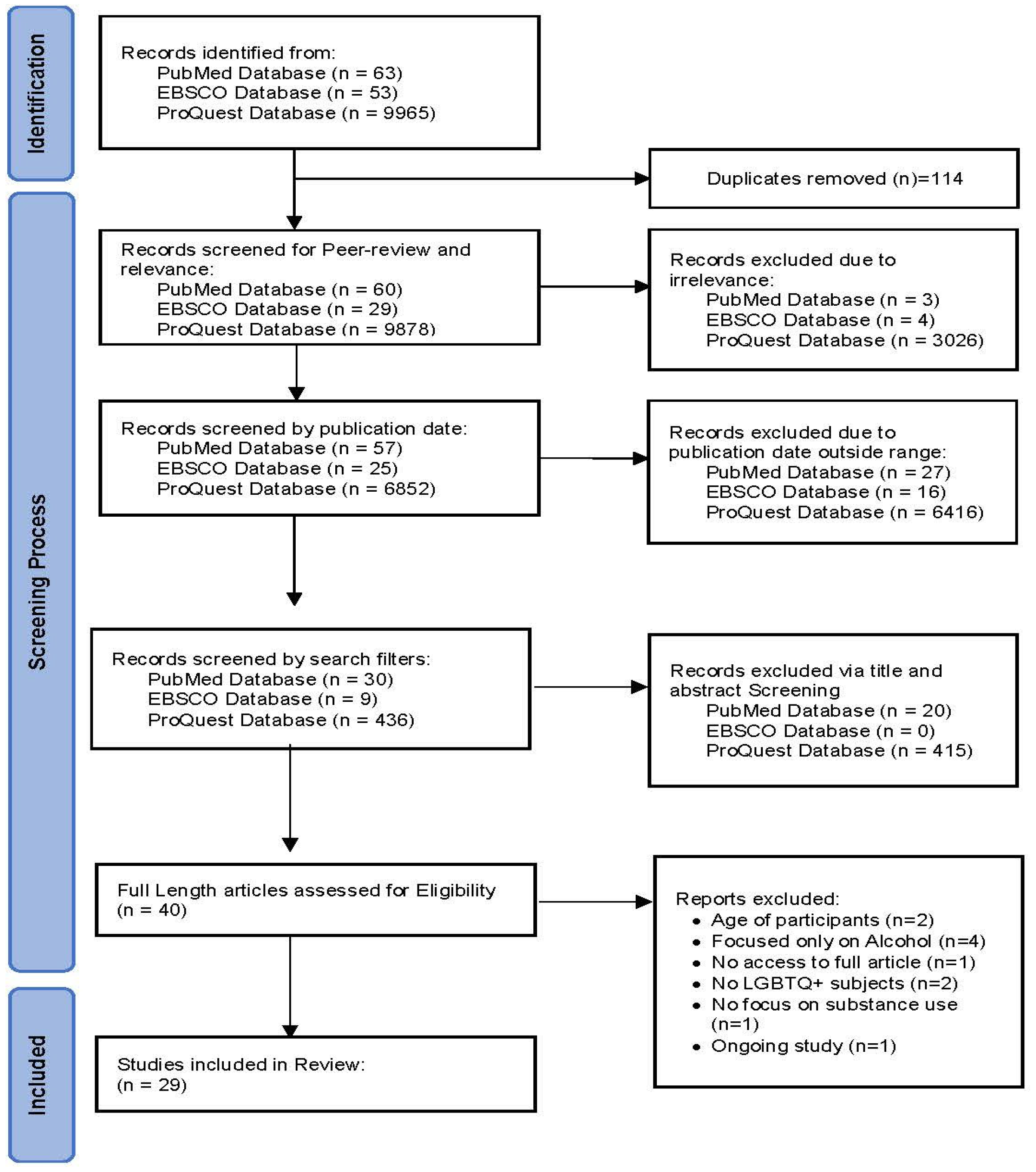
Figure 2.
General themes resulting from reviewed studies.
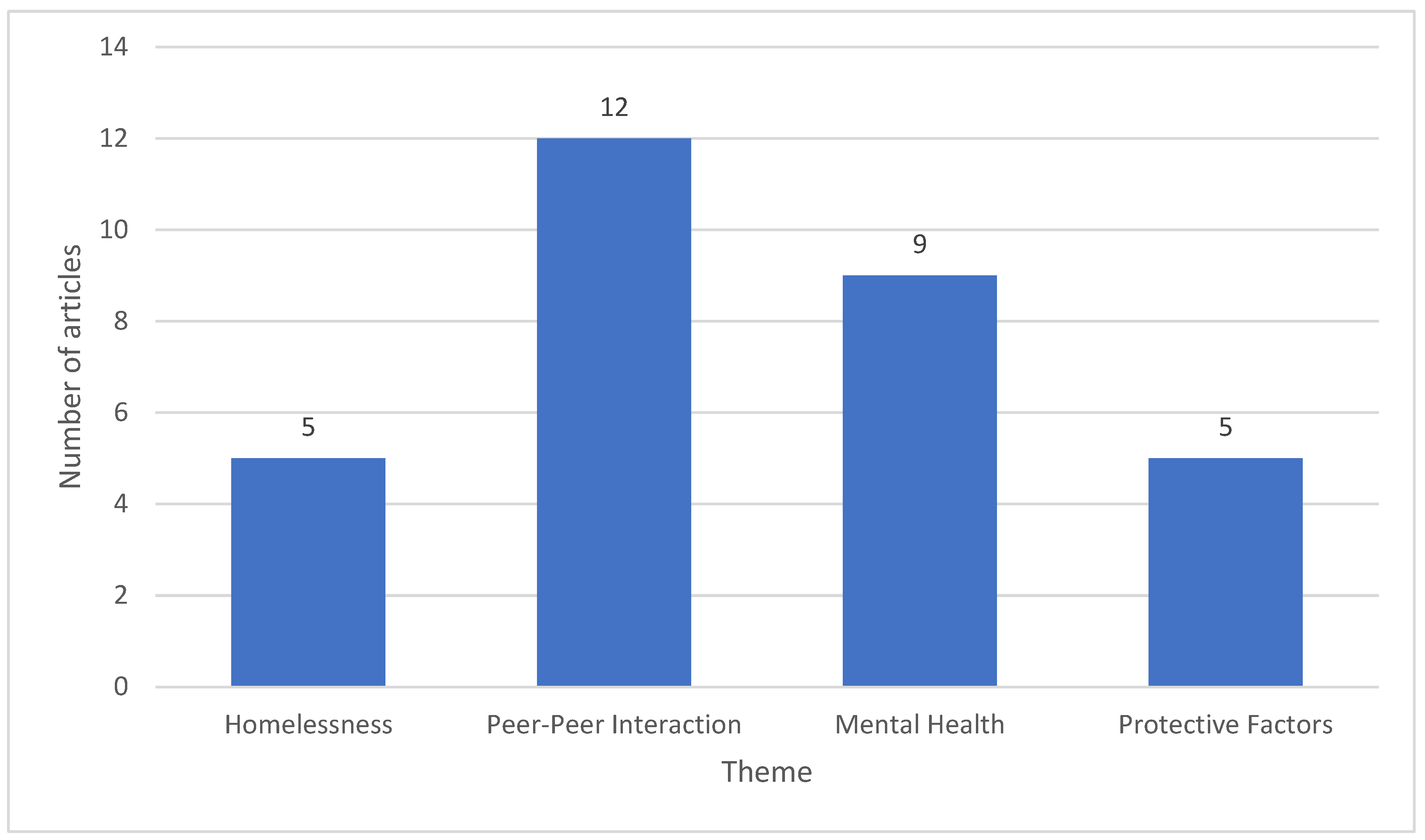

Table 1.
Characteristics of included studies.
| # |
Author Year & Country |
Article Title |
Population (n) Age range |
Aims/Parameters Examined | Study Design/Key Findings |
| 1 | Arrington-Sanders et al, 2020. USA. |
Providing unique support for health study among Young Black and Latinz Men who have sex with Men and Young Black and Latinx Transgender Women living in 3 urban Cities in the USA: Protocol for a Coach-Based Mobile-Enhanced Randomized Control Trial. | Young Black and Latinx men who have sex with men, and transgender women. Ages 15-24 years. N=402 participants. |
To assess mobile enhanced interventions compared to standard care, to increase engagement and retention into HIV, PrEP and Substance use treatment care. |
|
| 2 | Bochicchio et al, 2022. USA. |
Psychotherapeutic interventions for LGBTQ+ youth: a systematic review. | LGBTQ+ adolescents. Age range: 14-22 years old (yo). (n) = 10 articles (n=822) that ranged from 10-268 participants. |
Psychotherapeutic interventions for LGBT+ adolescents with mental illness and substance abuse. |
|
| 3 | Cutuli et al, 2020. USA. |
Adolescent Homelessness and Associated Features: Prevalence and Risk Across Eight States. | LGBTQ+ youth from 14-18 yo in specific states in the USA. N=77,559. |
To test for positive associations between homelessness and key indicators. |
|
| 4 | Damian et al,2022. USA. |
Understanding the Health and Health-Related Social Needs of Youth Experiencing Homelessness: A photovoice Study. | LGBTQ+ youths (14-24 yo) experiencing homelessness during COVID-19 pandemic in Connecticut. N=14. |
Record homeless youth everyday reality. | Participant described vicious cycle of alcohol and substance use which made housing insecurity worse. |
| 5 | Do et al, 2020. Thailand. |
Social Violence Among Thai gender role conforming and non-conforming secondary school students: Types, prevalence, and correlates. | Secondary school students who are trans or same sex attracted. Age 13-20 yo. N=2070. |
Substance use was found in 98 (4.8%) participants and included: cannabis, amphetamine pills, crystal methamphetamine, ecstasy/MDMA, sleeping pills and injection drug use. | |
| 6 | Eastwood et al, 2021. USA. |
Young Transgender Women of Colour: Homelessness, Poverty, Childhood Sexual Abuse and Implications for HIV Care. | HIV+ young (18-24 yo) transgender women of colour. N=102. |
To engage and retain transgender women of colour with HIV in care to manage viral load suppression and determine factors contributing to sustained health care. | 15.6% of participants reported drug dependence. |
| 7 | Eisenberg et al, 2020. USA. |
Supportive Community Resources Are Associated with Lower Risk of Substance Use among Lesbian, Gay, Bisexual, and Questioning Adolescents in Minnesota. | LGBQ high school students. N=2454. |
To examine stigma and support and their association with substance use in LGBQ youth. |
|
| 8 | Filia et al, 2022. AUS/NZ. |
Social inclusion, intersectionality, and profiles of vulnerable groups of young people seeking mental health support. | Young people 12-25 yo presenting to a Headspace Centre for mental health +/- substance use related issues. Age range 12-25 yo. N=1107. |
To examine social inclusion across specific domains of housing, employment, study, alcohol and other drugs. |
|
| 9 | Fraser et al, 2019. NZ. |
LGBTIQ+ Homelessness: A Review of Literature. | “LGBT Homelessness” “Queer Homelessness” “LGBT Housing First” essentially LGBTIQ+ homelessness. N=53 articles. |
To examine the intersecting factors associated with homelessness and LGBTIQ+ homelessness. |
|
| 10 | Griffin et al, 2022. USA. |
Sexual Violence and Substance Use among First-Year University Women: Differences by Sexual Minority Status. | 1st year university women from 14 USA Universities. N =974. Mean age 19.1. |
To examine the rates of sexual violence, perpetration and substance use seen in first year university women. |
|
| 11 | Hammoud et al, 2020. AUS. |
Biomedical HIV Protection Among Gay and Bisexual Men Who Use Crystal Methamphetamine. | Gay/Bisexual men >16 yo who’ve had sex with another man in the last 12 months and lived in Australia. Median age 35 (16-81 yo). N=1367. |
To investigate the relationship between crystal use and HIV risk behaviours in relation to biomedical prevention. |
|
| 12 | Hatchel et al, 2019. USA. |
Predictors of Suicidal Ideation and Attempts among LGBTQ Adolescents: The Roles of Help-seeking Beliefs, Peer Victimization, Depressive Symptoms, and Drug Use. | LGBTQ+ high school students participating in randomised clinical trial testing the effects of sources of strengths. Mean age=15 yo. N=713 (LGBTQ). |
To examine whether peer victimization, drug use, depressive symptoms, and help-seeking beliefs predict suicidal ideation/attempts among LGBTQ adolescents. |
|
|
13 |
Ksatz-Wise et al, 2021. USA. |
Longitudinal effects of gender minority stressors on substance use and related risk and protective factors among gender minority adolescents. |
Gender minority adolescents in the US from the Trans Teen and Family Narratives (TTFN) project. Ages 13-17 yo. N=30. |
To determine the effects of minority stressors (gender) on substance use among gender minority adolescents and the related risk/protective factors. |
|
| 14 | Költö et al, 2019. Europe. |
Romantic Attraction and Substance Use in 15-Year-Old Adolescents from Eight European Countries. | Same- and both-gender attracted 15 yo adolescents from different European countries. Ave Age = 15.55. N=14,545. |
To explore the association between being of sexual minority and different substance use behaviours. |
|
| 15 | Maria et al, 2020. USA. |
Sexual risk classes among youth experiencing homelessness: Relation to childhood adversities, current mental symptoms, substance use, and HIV testing. | Youth between the ages of 13-24yo that were homeless or had unstable housing. Age 13-24 yo. N=416 (final analysis). |
To determine if different subgroups of youth with different types of sexual risk behaviours experience homelessness and to examine the associations between potential classes and other variables. |
|
| 16 | Metheny et al, 2022. South Africa. |
Correlates of Substance Misuse, Transactional Sex, and Depressive Symptomatology Among Partnered Gay, Bisexual and Other Men Who Have Sex with Men in South Africa and Namibia. | Gay, bisexual and other men who have sex with men in South Africa and Nambia. Age 18-24. N=152. |
To assess the association between 3 major HIV risk factors in Gay/Bisexual men in Southern Africa. |
|
| 17 | Noble Aet al, 2022. Canada. |
“I feel like I’m in a revolving door, and COVID has made it spin a lot faster”: The impact of the COVID-19 pandemic on youth experiencing homelessness in Toronto, Canada. | Youth Experiencing Homelessness in Toronto, Ontario Canada. With some focus on particular sub-groups; mainly 2SLGBTQ, black youth and newcomer youth. Age= 16-24 N=45 youth N=31 staff members N=9 2SLGBTQ (20%) |
To appraise the impact of COVID-19 pandemic on youth experiencing homelessness. |
|
| 18 | Ong et al, 2021. Singapore. |
Association between sexual orientation acceptance and suicidal ideation, substance use, and internalised homophobia amongst the pink carpet Y cohort study of young gay, bisexual, and queer men in Singapore. | Gay/Bi/Questioning men that live within Singapore that are either HIV-negative or unsure about their HIV status. Age 18-25 yo (mean 21.9). N=564. |
To explore the associations between delayed acceptance of sexual orientation and the health specific outcomes relating to gay/bi/questioning men in Singapore. |
|
| 19 | Pike et al, 2023. USA. |
A scoping review of survey research with gender minority adolescents and youth in low and middle-income countries. | Peer-reviewed articles published in English that utilize surveying data to explore gender minority youth experiences. N=33 articles analysis. |
To explore the different ways studied in the experience of gender minority youth. |
|
| 20 | Scheer Jet al, 2021. USA. |
Intimate Partner Violence and Illicit Substance Use Among Sexual and Gender Minority Youth: The Protective Role of Cognitive Reappraisal. | Self-identified sexual and gender minority youths between ages 18-25. N=149. Ages 18-25 yo. |
To examine cognitive reappraisal as a moderator to the various forms of intimate partner violence and illicit substance use among sexual and gender minority youths. |
|
| 21 | Schuler et al, 2019. USA. |
Differences in substance use disparities across age groups in a national cross-sectional survey of Lesbian, Gay, and Bisexual Adults. | LGB adults of different age groups (18-25, 26-34, 35-49). N=76354, LGBTQ+=4868. |
To examine LGB disparities and recent substance use in different age groups and compare these to their heterosexual counterparts. |
|
| 22 | Schuler et al, 2020. USA. |
Substance Use Disparities at the Intersection of Sexual Identity and Race/Ethnicity: Results from the 2015-2018 National Survey on Drug Use and Health. | LGB adults of different ages groups and races/ethnicities from the 2015-2016 NSDUH. (n)=168560; LGB=11389. |
To examine the differences in the presence and magnitude of substance use disparities in LGB adults across different races/ethnicities. |
|
| 23 | Seekaew et al, 2019. Thailand. |
Sexual patterns and practices among men who have sex with men and transgender women in Thailand: A qualitative assessment. | Thai men who have sex with men and transgender women, living in Bangkok, Thailand that are over 18 yo. N=12MSM N=13TGW Median Age MSM=33.1 (29.9-35.7) TGW=25.8 (23.4-29.1) |
To understand the diversity of men who have sex with men and transgender women in Thailand and to identify sexual patterns and themes of men who have sex with men in Bangkok. |
|
| 24 | Sharma et al, 2019. USA. |
Variations in Testing for HIV and Other Sexually Transmitted Infections Across Gender Identity Among Transgender Youth. | Individuals between 15-24 yo currently living in USA, that identify as non-cisgender and have never been diagnosed with HIV, but willing to conduct a rapid home HIV test. N=186 Age range 15-24 yo |
To quantify HIV and other STI testing levels and examine the variations in testing levels across three categories of gender identity: transgender men, transgender women and nonbinary individuals. | 71.5% of participants admitted that they use drugs. |
| 25 | Soares et al, 2023. Brazil. |
Important steps for PrEP uptake among adolescent men who have sex with men and transgender women in Brazil. | Participants were between the ages of 15-19yo and lived within testing city. Age 15-19. N=751. |
The aim of this study was to analyse the factors associated with drug use among adolescent men who have sex with men and transgender women in Brazil. | 31.5% of participants reported drinking alcohol, and 32.5% reported using drugs. |
| 26 | Watson R et al, 2020. USA. |
Substance Use among a National Sample of Sexual and Gender Minority Adolescents: Intersections of Sex Assigned at Birth and Gender Identity. | Participants aged between 13-17yo, self-identified as sexual or gender minority and reside in the US. N=11,129. Age range 15-17 yo. |
The aim of this study was to test whether current gender identity and sex at birth were key factors in substance use among a large sample. |
|
| 27 | Whitton et al, 2018. USA. |
Effects of romantic involvement on substance use among young sexual and gender minorities. | Gender minority youth, living in Chicago. N=248. Age range 16-20 yo. |
The aim of this study was to identify protective factors that decreased the risk of substance use among sexual and gender minority adolescents. |
|
| 28 | Wichaidit et al, 2021. Thailand. |
Disparities in behavioural health and experiences of violence between cisgender and transgender Thai adolescents. | Data from The National School Survey on Alcohol Consumption, Substance Use and Other Health-Risk Behaviours (cross-sectional survey) The participants were then stratified based on sex at birth and their gender identity. N=31898. |
The objective of this study was to assess the extent of behavioural health outcomes and violence among respondents of the National School Survey on Alcohol Consumption, Substance Use and Other Health-Risk Behaviours. |
|
| 29 | Yockey R and Barnett T, 2023. USA. |
Past-Year Blunt Smoking among Youth: Differences by LGBT and Non-LGBT Identity. | LGBT+ youth. Age range 14-17 yo. N=7518. |
The aim of this study was to investigate the past year’s marijuana and tobacco use among a national sample of adolescents and compare the difference between LGBT+ youth versus non-LGBT youth. |
|
Disclaimer/Publisher’s Note: The statements, opinions and data contained in all publications are solely those of the individual author(s) and contributor(s) and not of MDPI and/or the editor(s). MDPI and/or the editor(s) disclaim responsibility for any injury to people or property resulting from any ideas, methods, instructions or products referred to in the content. |
© 2024 by the authors. Licensee MDPI, Basel, Switzerland. This article is an open access article distributed under the terms and conditions of the Creative Commons Attribution (CC BY) license (http://creativecommons.org/licenses/by/4.0/).
Copyright: This open access article is published under a Creative Commons CC BY 4.0 license, which permit the free download, distribution, and reuse, provided that the author and preprint are cited in any reuse.


