

Submitted:
02 August 2026
Posted:
04 August 2026
You are already at the latest version
Abstract
Homeostasis and its interaction with gene expression in the development and maintenance of living systems is discussed in order to formulate a new method to diagnose and treat diseases on this causative level. This includes an inquiry into the unsolved homeostasis problems of: Location - where in the cell are the totality of set-points located? How are they stored? As electrical signals or something else? Type of communication? - what language is used between the set-points? Identity - how do the set-points communicate with gene expression so that each cell can know and maintain its identity? What are the computational mechanisms for each set-point to ensure cellular differentiation? As these functions require the processing of vast amounts of information which is communicated at every level of organization including the mechanisms of epigenetics, different computer models are discussed, with examples for each. This includes an analog, digital and the possibility of a quantum biological model. Each one allows certain properties and cell functions to emerge. The difference between functional homeostasis and dysfunctional homeostasis is discussed with strategies to indirectly study dysfunctional homeostasis in terms of epigenetic signatures. The concept of hormesis is introduced as a mechanism to rebuild homeostasis functions and subsequently reverse the epimutations, leading to a method of treatment for almost any chronic disease. This model is a dynamic interconnected system.
Keywords:
homeostasis
; control center
; set-points
; end-points
; epigenetics
; epimutations
; hormesis
; toxicogenomics
; quantum biology
; superposition reference image
; ultra-high dilutions
; primary and secondary drug action
; quantum drug action
Discussion
Homeostasis involves some of the most interesting unsolved problems in modern biology. For example an end-point, such as bone density, is communicated via hormones, other small chemical messengers and electrical signals to receptors (sensors) and processed in a cell’s control center. Here in the control center, the density of each bone is compared to the ideal density - information stored in set-points. A plan is then made to make an adjustment if needed. Osteoblasts or osteoclasts are then sent signals to actually accomplish the work to adjust the bone density. Here is the model:
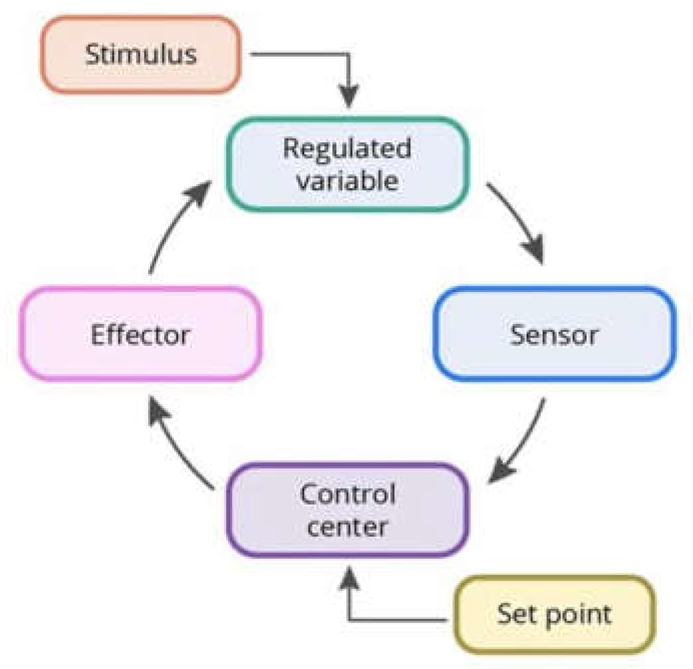
Unfortunately within any cell the control center holding the set-points has not been found, the information in each set-points is not observable and the computational work has never been measured. This is true for positive and negative feedback systems. Are there any examples where the locations of set-points have been determined, how the information is stored and mechanisms of function determined? Unfortunately molecular biology has not yet been able to answer these questions. In a review article by K D Farnsworth:
This leads us to the question of how the set-point is determined by the way the structures of participating molecules constrain their interactions, thereby setting the parameters of molecular dynamics. The conventional answer is, as Nijhaut et al. (2019) wrote “... none of the mechanisms that determine a physiological set-point are understood.”.
Therefore it is not possible to easily diagnose diseases that originate at this processing level. This is an obstacle in finding a curative solution to many chronic diseases.
The mechanisms of homeostasis, when healthy, like a thermostat, are able to compare the known value of an end-point (for example blood pressure) with a known set-point (the ideal blood pressure stored as a range). It can then produce a reaction to adjust the end-point and maintain healthy blood pressure. But every biological structure and function has an end-point. Each one needs a corresponding set-point to reference in order to ensure healthy functioning. Here are the possible ways in which this homeostasis system can malfunction leading to disease:
-The information received from the end-point is incorrect, distorted or incomplete. For example the patient has been infected by a virus but the immune system receives incomplete information about it. A second example: Cancer cells disable detection mechanisms preventing awareness of the growing tumor. A third example: One pollen grain is counted as one million leading to an over reaction by the homeostasis control center, leading to a hyper reaction and allergy hay fever symptoms.
-The homeostasis control center can’t access the accurate value of the set-point or the set-point no longer exists. This step is crucial to normal homeostasis management. Recording and retrieving accurate values of each set-point is necessary in order to determine if any action is needed.
-The homeostasis control center has received the correct information from the end-points, it determines what action is needed by referring to the set-point but the processing unit can’t complete the plan to adjust the end-point. It has difficulty in implementing the solution. This step is also critical as the control center has determined the action to change an end-point such as blood sugar but now is unable to implement that change (the effector is disabled) and so the blood sugar acquires an unsafe value.
In all of these examples the net result is an end-point, such as bone density, blood sugar or blood pressure, that drifts out of the homeostasis healthy range. For most patients with a chronic disease they would have a combination of these errors in homeostasis function: such as: information received, information processing and instruction information. For example, the homeostasis instructions to define a certain epigenetic pattern for the hypothalamus cells is incorrect, leading to hormonal imbalances; or the amount of stomach acid is too much or not enough; the number of mitochondria in the heart cells are too few, the structure of a cell membrane has too few glucose receptors, or the instructions for the folding pattern of a certain enzyme is not correct. These are a few examples but there are thousands of end-points for each cell type. If the end-point remains outside of the healthy range for too long then symptoms arise and eventually it can be named as a disease process. For example the body temperature rises over 98.6 (fever), the blood sugar rises for too long (diabetes), the brain hallucinates threatening voices (schizophrenia), undifferentiated cells divide too often (cancer) etc. How can modern tools allow us to directly or indirectly study the exact malfunction in the homeostasis control center and correct exact difunctional patterns?
Analog Computer Model for Homeostasis
Life forms, including the organization of methylation patterns are self organizing according to the systems of homeostasis, but how? The analog computer model explains part of the solution: When one looks at a Swiss watch not only can we appreciate the elegance of the craftsmanship but it can tell us the exact time down to a few seconds of accuracy a day. It can do this because it is an analog computer, the parts are assembled in such a way as to accurately compute the correct time. A well trained watchmaker can open it up and make sense of each piece, its shape, material used (steel, glass, jewel etc) and function of each piece. The same is true of many cell functions, they are cellular analog computers to an extent. For example, chromatin will arrange itself geographically to optimize correct gene expression. When insulin binds to the receptor on a cell wall, it activates the membrane’s structures to allow sugar molecules to enter the cell.
The stoichiometry of cell structures and folded proteins lend themselves to analog functions. Oxygen binds to hemoglobin because the three dimensional structure of the folded protein optimizes this part of the cell structure to work efficiently so that iron can bind and carry oxygen. It is not difficult to locate and study this level of computing in cells and diagnose obvious mistakes being made. Sickle cell anemia is an example. The proteins are folded incorrectly, so the red blood cells’ shapes are abnormal [4]. By analogy if a sprocket is missing on a wheel in the watch, its time measuring functions break down.
Even at this level, the analog functions only make sense when the whole interconnected system is understood and appreciated. By analogy if one part of a watch is removed and observed in isolation from how it fits into the totality of the functions of the timepiece it has less meaning. Homeostasis needs to configure each set of epigenetic markers for each cell type and continuously adjust these molecular attachments on the DNA according to the needs of that cell and the organism as a whole. The homeostasis mechanism needs to evaluate how many analog components (enzymes, organelles etc), it needs to make, where to place them, then collect the data from each one and make sense of this data leading to adjustment reactions. Unfortunately at a certain point the processing of analog information in cells is not available for our examination. Where in each cell and how in each cell is this information processing accomplished? For example, where is the set-point for the instructions on how to build a nuclear membrane? If something goes wrong with homeostasis on this level how can we diagnose and correct it? This paper proposes an alternative method to diagnose analog mistakes in homeostasis information processing and how to repair them.
Digital Computer Model for Homeostasis
Cells also generate, collect and process electrical signals through the nervous system and via small molecules; this is more like a digital computer. For example when something is touched that is hot, the nervous system sends electrical pain signals to the brain, the brain immediately tells the hand to take itself away from the hot object. We can follow the pain signals to parts of the brain but then a similar problem presents itself. The location within the neurons of where and how the information was analyzed with set-points is not revealed. Frustratingly this ‘computer’ which processes analog and digital information is hidden somewhere in cellular tissue, but where exactly and how were the signals processed so quickly and accurately? And again, what method is there to diagnose dysfunctional homeostasis?
Summary of the set-point Model
Homeostasis in the control center ideally has immediate access to the totality of a cell’s end-points and set-points. There in the control center it can make an accurate evaluation of analog and electromagnetic signals in order to prevent the beginning of a disease process. It is able to compare the value of the end-points with the ideal set-point values. Information is received and after processing a response is generated to make minor or major corrections leading to an effector response. <—— > The information can travel from the end-point such as blood sugar level, to the control centers set-points and then back again to cells with instructions to lower or increase the blood sugar levels. In this way there is a continuous two way communication between all the end-points and set-points. The stresses from the internal and external environment also influence the end-points. This information is also sent to the control center for evaluation, which continuously filters the information through the known set-points. This model is represented by the following diagram:
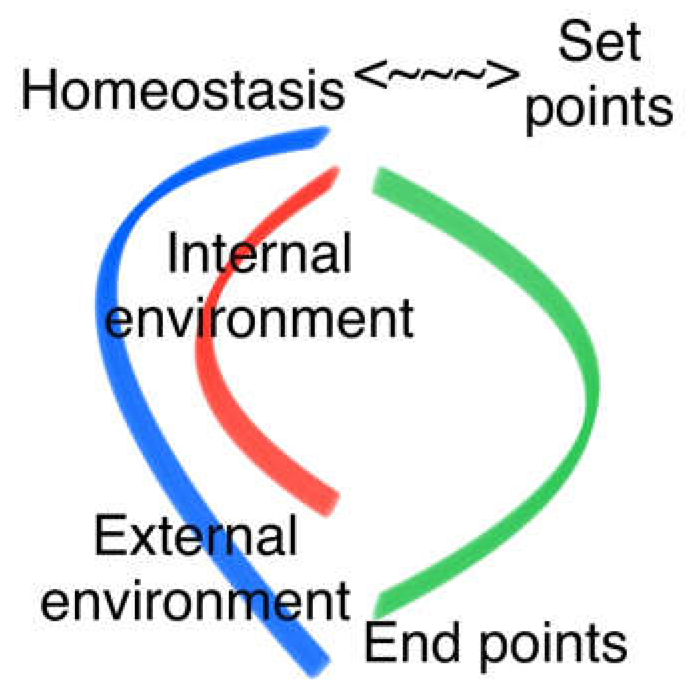
This model is described by John Torday: “Homeostasis is constantly oscillating around a set-point, monitoring the cellular environment, always ready to reset itself, but also to provide the reference point for change if necessary for survival in an ever-changing environment. Whereas the perspective that homeostasis is static is based on contemporary descriptive biology, the dynamic perspective is best seen in the field of developmental physiology [5].”
The fact that we can’t get inside of this analog and digital cellular computer to see its ‘control center’, its ‘resistors’, ‘memory chips’ and ‘circuit boards’ etc, means that when something goes wrong with it there is no easy fix. We have no homeostasis cure for any chronic disease because we can’t measure the mistakes being made. We don’t know the language used, how the set-point information is stored, how the information is processed and then how it is communicated to the DNA to control gene expression, or communicated to other organelles within the cells or to the brain. Again without this knowledge, it’s not possible to diagnose the causes of diseases that rely on these homeostasis functions. This is fundamental to medicine because in one way or another almost every disease prevention strategy made by each organism relies on these self regulating mechanisms of homeostasis.
Quantum Biological Model
What about the possibility of a quantum biological computer? Increasingly there are reasons to believe quantum biology has a role in cell regulatory dynamics. Classical biology is a product of quantum functions, but are the functions of homeostasis information processing partly described by and dependent upon quantum biology? As Jianshu Cao explains: “In more general terms, we believe that there is a deep understanding to be gained in tackling the emergence of the essentially classical world of biology from its quantized molecular origins [6].”
Do some quantum effects survive and are biologically useful in what seems like a biology based only on classical elements. Marais, Adams et al propose that:
“Biological systems are dynamical, constantly exchanging energy and matter with the environment in order to maintain the non-equilibrium state synonymous with living. Developments in observational techniques have allowed us to study biological dynamics on increasingly small scales. Such studies have revealed evidence of quantum mechanical effects, which cannot be accounted for by classical physics, in a range of biological processes. Quantum biology is the study of such processes, and here we provide an outline of the current state of the field, as well as insights into future directions… All living systems are made up of molecules, and fundamentally all molecules are described by quantum mechanics [7].”
There is evidence cited in many papers to support the following processes have a quantum explanation: photosynthesis, DNA mutation repair, olfaction, vision, enzymatic activity, mitochondria, molecular solutions in proteins, magnetoreception in bird navigation, ferritin, the conversion of chemical energy into motion and brownian motions in many cellular processes [8,9,10].
These quantum computations take place within cells, allowing outcomes that can’t be explained by classical physics. Lambert et al: “These features go beyond trivial quantum effects and may include harnessing quantum coherence on physiologically important timescales [11].”
Quantum coherences are the quantum rules for each wave function, their mathematical descriptions and rules as they provide the foundations to form and maintain atoms, molecules and finally living structures [12]. As stated by Marais, Adams, Ringsmuth, et al:
“Quantum mechanics is the fundamental theory that describes the properties of subatomic particles, atoms, molecules, molecular assemblies and possibly beyond. Quantum mechanics operates on the nanometre and sub-nanometre scales and is at the basis of fundamental life processes such as photosynthesis, respiration and vision. In quantum mechanics, all objects have wave-like properties, and when they interact, quantum coherence describes the correlations between the physical quantities describing such objects due to this wave-like nature [13].”
The three aspects of quantum field theory as they relate to biology and relevant to this paper are quantum coherence - the characteristics and rules for each wave function, superposition - the wave function can exist with many potential or statistical outcomes, and entanglement - quantum wave connections that can transmit information almost instantly. Entanglement or non-locality, allows transmission of information even when the parts are separated. For example, it is well established in physics that two entangled particles can be spatially separated but still share information. Einstein called this: “Spooky action at a distance.” Could cells and cell structures communicate in this way? In theory, the control center in every cell could by this method of entanglement know the status of every other cell’s structures and functions?
Quantum coherences as already mentioned above are the characteristics of the wave like properties of matter. Each type of atom has a unique quantum mathematical description, providing narrow limits of its wave functions and therefore constraints on the atomic or particle functions. For example, the electron field can produce electrons which have very defined properties and abilities. This is homeostasis at its most basic level - the wave function self regulates and defines the healthy functions for each type of field and particle. Joining atoms together to form molecules have more complex aggregate quantum functions and diverse chemical and biological possibilities. Each physical molecule has unique wave properties that need to be actively and continuously maintained. Molecules build enzymes, cell structures and organelles; each structure with a more complicated wave function. The wave functions are formative to the structures they maintain and are therefore more fundamental. They continuously monitor and create the possibilities and limits of all chemical functions. In this model, the wave functions exist as set-points for each atom, molecule, organelle, cell and organism as a whole. As the combination of joined wave functions becomes more complex this ultimately allows each cell type a more complexity, unique identity, superposition structures and abilities. Each organism finally is an integration of millions of wave functions acting intelligently (with limited awareness and limited purpose but interconnected) to define its material nature, the totality of end-points. This aggregate or matrix of set-points is the quantum reference image, a logarithm filter that all afferent information from the end-points has to pass through continuously, analyzed and reacted to. Is the following statement therefore true? Does the description, rules and subconscious intelligence for these wave functions help to develop and maintain each biological structure and work to prevent diseases? Are these quantum properties contributing to the overall healthy functions of homeostasis? Analog structures can partially explain homeostasis, electrical and chemical signals can partly explain homeostasis; but studies that demonstrate the possibility of quantum homeostasis also could lead to part of the solution?
Can superposition and entanglement of quantum fields receive analog, electrical and chemical information, store the values of each set-point, process information and communicate with the end-points? Quantum homeostasis in theory then could regulate larger structures such as cells, tissues and body systems?
“Entanglement, Schrodinger found, is pervasive in quantum physics. When any two subatomic particles collide, they almost always become entangled. When a group of objects forms some larger object, like subatomic particles in an atom or atoms in a molecule, they become entangled. In fact, nearly any interaction between any particles would cause them to become entangled, sharing a single wave function.[14]”
If Schrodinger is right, then we have cell structures with wave functions/coherence and many wave connections/entanglement. To what extent if any do these entangled quantum structures contribute to homeostasis, maintaining cell structures and whole organisms? Marais A, Adams B, Ringsmuth AK, et al continue:
“The existence of superposition states in the quantum regime results in uniquely quantum-mechanical properties, which are often counterintuitive. For example, quantum coherence describes the well-defined relationship between the individual states constituting a superposition, and quantum entanglement is a special form of correlation between quantum states. An excellent example is the delocalization of electronic states in photosynthesis that is crucial to explain the speed and efficiency of electronic energy transfer and charge separation at the basis of photosynthesis [13].”
Photosynthesis is one example, but we are searching for a comprehensive model where all end-points are continuously being compared to all set-points with a mechanism to nudge the end-points back to an ideal value. This would also give homeostasis the capacity to differentiate cells into whole organisms, receive data from every cell structure, perceive the environment and continually make adjustments with predetermined goals. The human body contains about thirty trillion cells [15], (80 billion of which are brain neurons), each cell also contains a minimum of eleven different cell organelles and each cell has to be monitored for a minimum of eleven functions. This means each human is a functional unit with a minimum of 30T x 11T x 11T = 3,630 trillion end-points and the same number of corresponding set-points. This aggregate of set-points is located in every gamete and during cell differentiation every cell inherits this same number of quantum set-points. Adding to the complexity is that each cell’s 3.6 trillion set-points have to be in communication with every other cell’s 3.6 trillion set-points. It makes sense to inquire into the possibility of a quantum computer to explain the processing capacity of homeostasis at this level because superposition allows for a field to be nonlocal, in all places at all times, and not take up any physical space. Quantum computers by definition can explore all possible pathways toward a solution in the same instant. It is physically impossible to place an analog or digital computer in every cell with a capacity to process the necessary trillions of computations per second, there just isn’t enough room and none have been found. Fields by definition are connected to molecules, enzymes, organelles and cells; and can contain within themselves a hierarchy of needs. The need to survive is at the center of this intelligent matrix. This model provides a means by which the somatic structures and functions can be communicated to and manipulated by the quantum reference image (totality of set-points) to perform exact functions, repair structures while knowing the priorities for each organism.
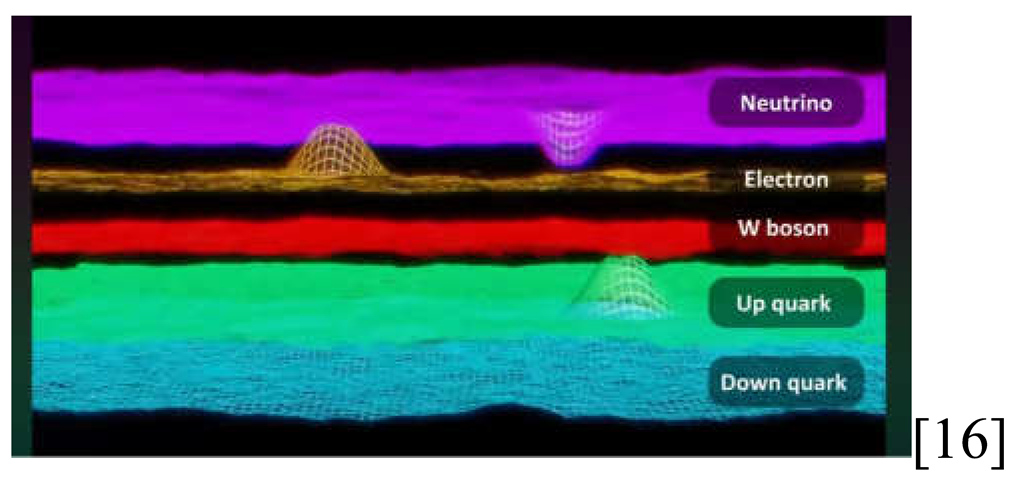
Non Local Quantum Field Theory - Quantum field theory states that each type of field has unique characteristics and exists at all points of space. This is counterintuitive, we normally think about an object taking up space to the exclusion of other objects using the same exact space. In quantum field theory all the fields can occupy the same space, but are not necessarily influencing each other. The diagram below lists the fundamental particles (building blocks) of the universe, along with their quantum fields as described by the standard model. David Tong - at the University of Cambridge explains: “There is a field associated with each type of fundamental particle that appears in Nature [8].”
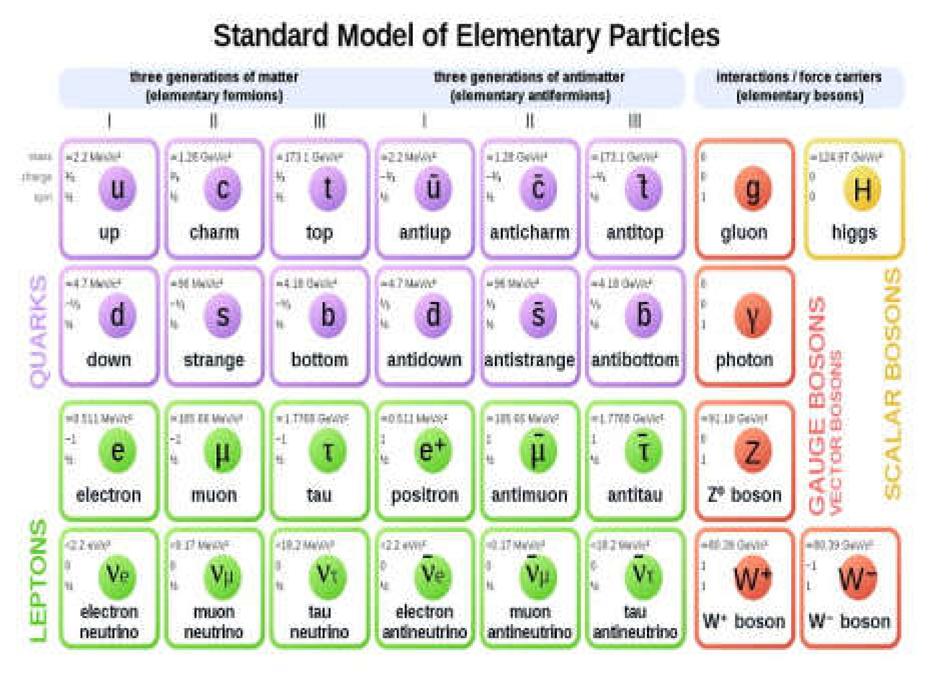
Depending on the type of field, their arrangement and connections between each other, the periodic table of elements can be created. For example a proton is made of two up quark fields and one down quark field:
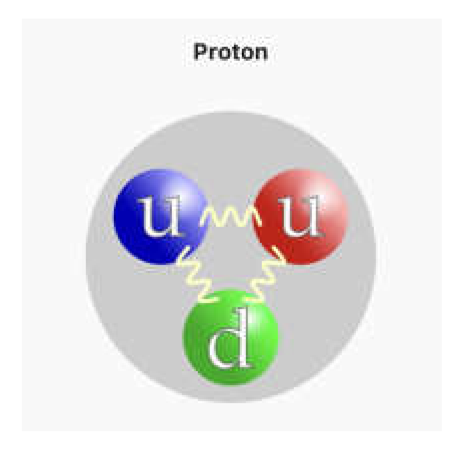
A hydrogen atom is one proton in the proton field and one electron in the electron field. Here is an example of five fields interacting:
New particles are created depending on how much energy is available in each field:
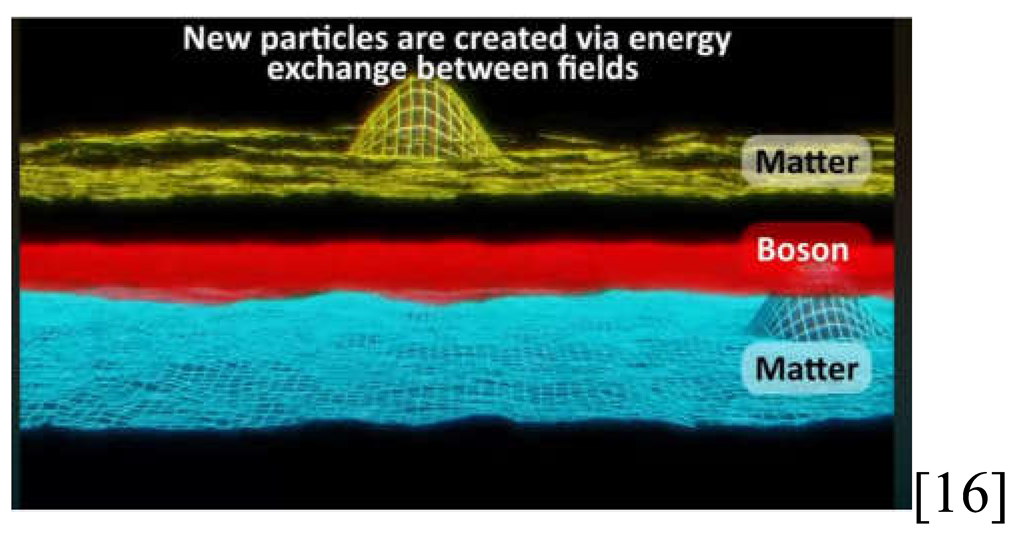
Carbon - one of the fundamental atoms of life; contains 6 protons, six neutrons and 12 electrons. Every part of every living organism is ultimately made up of quantum fields interacting in unique ways.
Each component above in the standard model exists as a field with certain mathematical properties [17]. If enough energy is put into that field a specific type of particle, force or atomic structure will result. The wave function is always in oscillation with the particle function. There is no example in nature where a physical particle can exist without its wave counterpart, because the field is more fundamental, it is there with its rules and structures to create and maintain the material object. This means by definition complex wave functions exist and can maintain each and every biological structure.
Quantum Field Theory and Homeostasis
Is there any usefulness to the fact that in any one organism all the molecules and therefore all the wave structures for each cell structure are in a superposition? In order for quantum homeostasis to make sense as a hypothesis the following would need to be true:
-All the information for each healthy set-point of a living organism would need to be contained in this quantum superposition matrix.
-This quantum matrix would need to be able to translate analog, digital and small molecule messenger signals into quantum language and process that information.
-Quantum homeostasis would need to be able to evaluate information, compare information between the end-points and set-points and come up with a plan to adjust end-points. Over time it would need to remember new successful strategies and be able to reference them when needed.
Because science is based on the verification of theories, this theory needs studies to prove it. It is interesting that organisms and cells act as if this theory was true. Living systems seem to process information through a homeostasis filter that can accomplish these goals continuously and almost instantly. Every cell acts as if it has a reference image for all its end-points. If this was the basis for how homeostasis works, then here are the advantages of such a system:
-Every epigenetic pattern, protein, cell structure, organelle function, type of cell, tissue system and the overall anatomy and physiology of an organism would be in a continuous connection to the healthy set-points. This interconnected totality of set-points defines the organism’s identity; the complete quantum reference image (set of plans for the whole organism). Each organelle, cell type, anatomy structure and whole organism can therefore retain an awareness of its structure, place and function because it is connected to the integrated superposition homeostasis matrix.
-This quantum homeostasis matrix would allow for an interconnected system in a two way communication with every cell structure and function.
-It would conserve space as it could be present everywhere in an organism at all times as a quantum matrix, but take up no physical space in the cell.
-It could be positioned/available to filter all information through itself almost instantaneously, all the information from within and from the environment.
-As a result it could also react almost instantaneously to this information to maintain homeostasis.
-This model can more easily explain developmental biology, cell differentiation and self regulation. The totality of quantum set-points act together as plans for every cell type and a plan for the whole organism, contained in every gamete. An organism would only be able to develop and make a copy of itself according to this plan that exists as a quantum matrix - totality of interconnected set-points.
-Most of these quantum functions interact with the autonomic or subconscious level of cellular activity. But some are able to participate with the brain itself to create conscious thoughts, experiences and sensations. This conscious level of homeostasis allows organisms the advantages of processing vision, hearing, smell, touch, emotions and thoughts to optimize its chances of survival. At this level the quantum set-points are completely integrated into brain activity creating awareness and experiences. It’s also interesting that our conscious mind retains some of its quantum properties, allowing us to retain the sensation of being able to imagine many possible outcomes to any given problem and evaluate each one at the same time. This is how we solve conscious and subconscious problems. Quantum processing through all the set-points creates sensation, such as knowing our own identity, knowing colors and or feeling emotions.
Because this is consistent with what cells and organisms do, it should be tested as one of many theories that tries to explain the unanswered questions of homeostasis.
Possible Theories of Homeostasis
Analog - it only explains some functions of homeostasis and breaks down as a complete observable and measurable system within cells.
Digital and chemical homeostasis - Also offers a partial explanation, but no digital set-points have been found stored in any cell organelle. It is difficult to explain developmental biology with this model because what digital mechanisms control the epigenetic patterns for each cell? We can measure the results; epigenetic patterns being unique in each cell type, but not how this was accomplished?
Quantum Homeostasis - the ability of cells to receive analog, digital, chemical and quantum information/signals and process this information by comparing it to a totality of quantum set-points - a quantum reference image. Use of quantum language to communicate, process information and react by building and repairing any cell structure’s end-point. As Torday correctly states:
“Homeostasis is conventionally thought of merely as a synchronic (same time) servo-mechanism that maintains the status quo for organismal physiology. However, when seen from the perspective of developmental physiology, homeostasis is a robust, dynamic, intergenerational, diachronic (across-time) mechanism for the maintenance, perpetuation and modification of physiologic structure and function [5].”
Functional Resilient Homeostasis and Dysfunctional Diseased Homeostasis
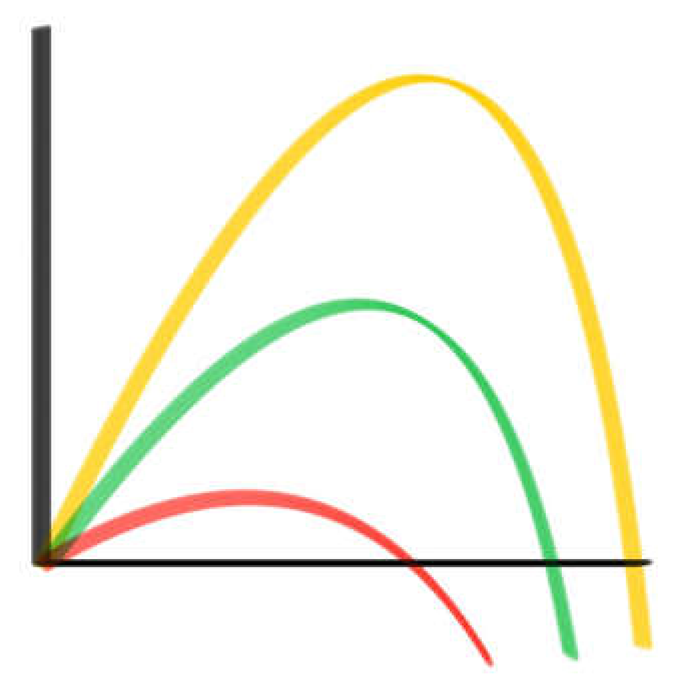
Functional homeostasis means a particular stress in a medium dose can be applied to any end-point and the homeostasis system responds by immediately correcting any end-point deviations. When all the set-points are functionally robust then the end-point when healthy can display resilience and adapt to any given stress, such a toxin, emotional shock or environmental change. The limit of resilience is usually about 130 to 160% beyond the normal control. For example if a healthy adult can lift 80 lbs then when more weight is gradually introduced over a few months of training many athletes can achieve lifting a weight of 104 to 128 lbs. When Olympic or professional athletes compete, the limit is reached with only one athlete beating another by a mere hundredths of a second. Or after five hours of tennis the championship match is often won by only a few points; because for every end-point, homeostasis has an upper limit of functional capacity.
If an individual has high functional homeostasis in all areas, for all the end-points, then the stress has to be over 160% to cause any lasting symptoms. These are the people who can smoke a certain amount, consume sugar and alcohol in excess at times, don’t exercise on a regular basis, are exposed to various toxins in moderate amounts, endure emotional trauma and proceed to live without any chronic diseases into their late 80’s or beyond. If the stress is briefly over 160% some symptoms can develop temporarily but they can gradually recover.
But when a person has an inherently weak homeostasis function (quantum susceptibility) then less stress is needed to create symptoms; sometimes almost no stress at all.
This can be graphed. In the diagram below stress increases on the X axis. Resilience increases on the Y axis. Below the X axis symptoms result. Above the X axis there is resilience and no symptoms. The curved yellow line has the most robust value for a given function of homeostasis. The green line has a slightly susceptible homeostasis functional ability to tolerate a certain stress. The red line depicts a homeostasis function that is very susceptible to a particular stress, it is easily overwhelmed and symptoms are easily produced. At the far right of each line where it crosses the x axis is where symptoms begin.
Dysfunctional homeostasis is the opposite of resilient functional homeostasis. Within most individuals there are one or more deficiencies in homeostasis, creating specific sensitivities to various stresses and leading to pathologies that can be named. The homeostasis in certain areas can be very fragile; such as exposure to a few bacteria leading to an infection, a few pollen grains leading to hay fever, eating a piece of bread (gluten) leading to abdominal pain, drinking a small amount of alcohol leading to a headache, and eating a few sweets resulting in the eventual development of adult onset diabetes. For every person with a chronic disease there are always stresses which these people can not tolerate, even in very small amounts. This is the opposite of resilience, it is homeostasis that is decompensated and dysfunctional.
Dysfunctional homeostasis affects epigenetic markers, affecting gene expression, leading to abnormal cell functions, leading to a disease susceptibility. It is not moderate stresses that causes diseases, it is the ever more fragile and deepening homeostasis susceptibility that allows them to persist. Moderate stresses can easily be tolerated by those with a fully functioning homeostasis defense mechanism. In fact, moderate stresses can and usually do make the individual stronger.
When one or more of the systems of homeostasis becomes dysfunctional, how can it be diagnosed? In this model we are assuming these dysfunctions of homeostasis are originating on a quantum level.
Most likely there will never be a tool to directly study the pathways, connections and hierarchies of quantum homeostasis structures within an organism. As soon as a quantum state is measured it collapses the wave functions and the result is information about a particle or degraded energy signal. At best, trying to test quantum biological properties directly would only reveal one small part of the homeostasis profile at this level. By analogy, we would understand a few words from say a Shakespeare play. This is insufficient. We need a system of analysis to reveal the whole play, the story of each character, information markers of the whole disease process and qualities of the disease process. If we can’t study it directly, what reliable tools are left to study the information of quantum homeostasis - especially the dysfunctional patterns? A reliable method is available to understand the patterns and qualities of all disease possibilities by understanding epigenetics, toxicology and toxicogenomics.
Epigenetics
Epigenetics is the study of heritable changes in gene expression that are caused by factors such as DNA methylation rather than by changes in the sequence of base pairs in the DNA itself. Optimum patterns of methylation, controlled by homeostasis lead to healthy gene expression while methylation patterns that are less than optimal lead to epimutations and disease tendencies [1,2]. Each cell type inherits either robust/optimal epigenetics or fragile/susceptible epigenetic patterns, but what are the mechanisms of homeostasis that maintain correct gene expression in each cell type? As Roland Wagner points out:
“Through control of gene expression and homeostasis, aspects of the epigenome regulate almost every biological process, from cellular differentiation and maintenance of phenotypes to onset of disease and aging. Epigenetic mechanisms such as DNA methylation, histone tail modifications, chromatin accessibility and changes in DNA architecture are tightly correlated with normal cellular function, while their dysregulation manifests in aberrant gene expression and disease [3].”
Toxicology - Each individual substance when consumed in a large enough dose creates the same toxic effects (symptoms), quantum effects and changes in markers and the same epigenetic signature. We know this because in toxicology, the biomarkers and epigenetic signatures are consistent over many models and end-points studied [18]. Toxic substances break, bend or exaggerate quantum connections according to the toxins exact character, configuration and quantum strength. It is best to think of this property as a unique epigenetic thumb print with a variable intensity of frequency. There are three ways to increase the intensity/toxicity of a quantum substance; increase the dose size — more atoms, repeat the dose more often and or turn up the intensity of the quantum field.[1] All or one can lead to greater toxicity depending on how they are combined. We can measure this toxicity in terms of symptoms, in terms of biological markers and epigenetic patterns. The toxicity can also be measured as qualitative stories, ones that have themes and characteristics. For example, cutting onions creates burning and watery eyes. This means, the signal caused by the sulfur in the onion vapor is toxic enough to create a temporary disturbance and overwhelm the physical and quantum matrix of the conjunctiva leading to a sensation of burning and watery eyes. We can’t see exactly where and how the quantum computers in those cells were affected but at least we have one piece of valuable, accurate and repeatable information - the reaction is the same for everyone - onion vapor can cause burning watery eyes. Including a binary imprint, called an epigenetic signature for each toxin. Each toxin affects homeostasis in such a way as to pathologically turn certain genes on and others off. Lead, Arsenic and many other toxins have now been defined by their epigenetic signatures [19]. The goal is to know this exact epigenetic signature for every substance, if we know this, then in theory we know the epigenetic signature of potentially every disease process. This requires more explanation:
Every toxic substance sent into the matrix of the human quantum computer, produces a unique epigenetic pathology signature. This signature is a combination of the direct effect on and the reaction to that substance. Eyes burn and water from onions, Ipecac causes vomiting, pepper causes sneezing, salt creates excessive thirst etc. Every substance in a large dose produces a picture of symptom toxicity but also a unique epigenetic signature.
We can’t see or directly measure the inner mechanisms of quantum computers in living organisms but if we send in a known substance then very precise effects are echoed back. If enough substances are tested in this way, then we can accumulate a data-base of all the possible ways that the quantum human computer can break. This is the same list as all possible diseases. More examples are needed to explore this topic:
Each disease process is an assault on the human quantum computer, each one stressing it in a very particular manner, the same is true of every substance.[2] The two lists eventually become exactly the same if enough substances are studied and enough diseases are studied; because there are a finite number of ways to break homeostasis. In one list the break is caused by a toxic substance, in the other list the same mechanism is broken by a disease process.
The symptoms of burning and watery eyes can be caused by a toxin called onion and caused by a disease process such as a unique type of hay fever; and the epigenetic code for onion and the epigenetic code of that particular hay fever will be exactly the same. Every disease therefore has a corresponding toxin that can cause the same breaks in homeostasis, the same symptoms and the same epigenetic signature. This theory can be tested, starting with the studies proposed below.
There are a finite number of ways the human quantum computer can break, just as any computer has vulnerable components. This concept is crucial to understanding this model. Imagine a patient with hay fever, her eyes are watery and burning because of pollen and a genetic susceptibility to that illness. The eyes are constantly burning as if they had been exposed to onions. Out of all the possible types of hay fever this patient has a type that exactly matches with toxicity of onions. But she was not exposed to onions, she has a specific type of hay fever, triggered by a certain combination of pollens. The pollen happens to damage exactly the same homeostasis functions, distort the same epigenetic patterns, activate the same susceptibility and produce the same symptoms as can be created by cutting onions. This is an extremely helpful concept. If the reaction to two different stresses, one a toxin and one a disease process, are identical then the same quantum connections are broken in the same way. We can therefore categorize diseases in this way, by the name of the substance that can cause that same disease process. This particular patient with hay fever therefore has an onion susceptibility.
Toxicogenomics-Every substance can therefore be defined by its unique imprint on the quantum computer by its binary code called an epigenetic signature — also in modern biology called toxicogenomics. Every person with an individual chronic disease process can also then be named by the substance that can cause that susceptibility. Every substance in a large enough dose becomes toxic and can be defined by this method, by its epigenetic signature and totality of symptoms. Every substance is a character, has a symptom list and has an epimutation list.
There are many databases that collect the epigenetic signatures for toxins. ToxSign [20] has accumulated over 8,000 epigenetic signatures [21]. The data stored in TOXRIC contains 113,372 compounds [22].
The significance of this is that every toxicology signature is defining a possible disease process. The benefit we have is that the epigenetic signature of a toxin can be compared to the epigenetic signature of a disease process in an individual. If they are the same, the name of that toxin is the best name for that disease, and hormesis tells us that if that toxin is used in a small dose it will always be a stimulant, the antidote to reverse that disease process. The name of the toxin also becomes the cure when used in a small dose. The hormesis mechanism can be used to correct homeostasis and reverse the epimutation(s) and the disease process. What is hormesis?
Hormesis
“Hormesis is a term used by toxicologists to refer to a biphasic dose response to an environmental agent characterized by a low dose stimulation or beneficial effect and a high dose inhibitory or toxic effect. In the fields of biology and medicine hormesis is defined as an adaptive response of cells and organisms to a moderate (usually intermittent) stress [23].”
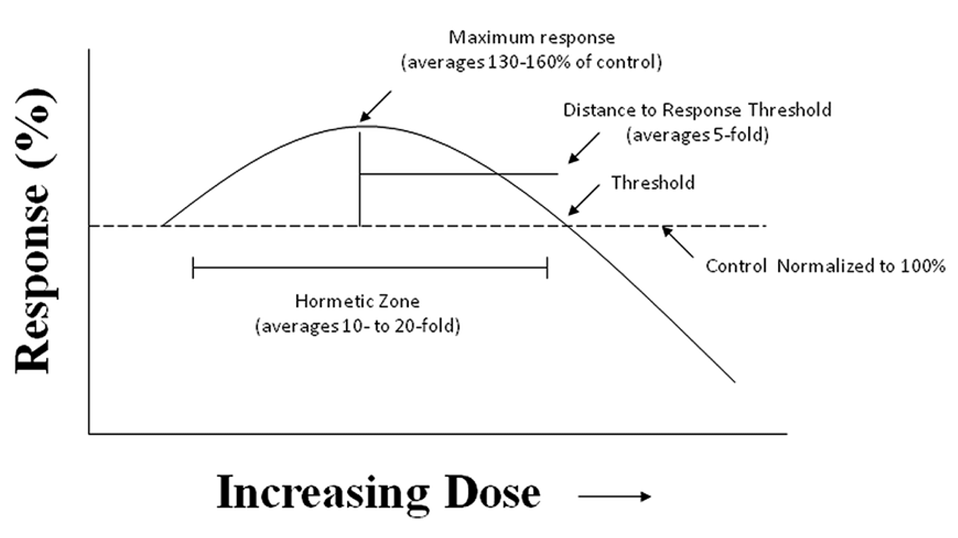
In the above diagram the small dose (or doses) can stimulate an end-point such as longevity or muscle strength (depending on the substance used, it could be any end-point). At a medium small dose there is a net stimulus effect called the Hormetic zone - see above. But as the dose is increased or repeated too often the response falls below the stimulus range and becomes inhibiting or toxic. For example, after five cups of coffee in one hour many people will develop an abnormal heart rhythm. Every substance eventually at a large enough dose becomes toxic and homeostasis breaks down. For example, below the dotted line, in the above diagram five cups of coffee becomes toxic.
Hormesis studies have tested tens of thousands of substances to prove this concept [24,25,26]. Small doses can always stimulate certain functions of homeostasis. Each substance in a small dose can stimulate a beneficial homeostasis response, affecting a specific end-point. Hormesis has two applications. Making areas that are healthy stronger and secondly, reactivating areas that are not functional; areas of disease, where there are deficiencies of homeostasis, in order to restore them.[3] The mechanisms of hormesis works unconditionally because it interacts with the ever present homeostasis system which monitors every influence from the environment and is able to mitigate and improve its response to that influence as best it can. Think of weight training, or immunization therapy.
In order to diagnose and treat chronic diseases this second use of hormesis is relevant to this model and discussion:
Hormesis Mechanism of Action — Small Dose Stimulation
There are always two drug actions when any drug is given - primary and secondary drug action. One or the other will be stronger depending on the dose size, dose repetition and matching percentage to the susceptibility.
Primary Drug Action is the immediate effect of a drug on a chemical pathway, usually to push certain reactions in a certain direction or inhibit certain reactions. The drug has to be in a large enough dose to temporarily override homeostasis. For example morphine causes numbness, a primary drug action. Homeostasis will always oppose the primary drug action, leading to drug resistance, a function of secondary drug action. Those who use morphine for chronic pain will often have to increase the dose to produce the same effect because the secondary drug action becomes more effective at opposing the primary drug action. The same is true of many drugs when used for their primary drug action.
Secondary Drug Action: These reactions are exactly opposite to the primary drug action. They are a function of net homeostasis response. The dose has to be small enough to create a net opposite effect to the primary drug action. These reactions are always adaptive, they work in the same direction as homeostasis. For example a small dose of lead will increase the functions of homeostasis exactly opposite to lead toxicity. If a disease such as motor paralysis has the same exact pathophysiology as lead toxicity then a very small dose of lead will activate a homeostasis reaction exactly opposite and act in a curative way. The net effect will be to reverse the motor paralysis pathophysiology. This is a useful concept because the secondary drug action, or hormesis drug action, can be used to either prevent or treat any disease process. Every substance has a net secondary drug action when given in a small enough dose.
The above hormesis graph shows the net effect of these two drug actions. But perhaps it is more clear if both drug actions are depicted. See graph below. On the X axis the dose size increases as we move to the right, the Y axis is the dose effect - a stimulus above the X axis. Toxic effects show up below the X axis. The red line is the primary drug action. The blue line is the counter secondary drug reaction. At small doses there is a net secondary drug action, at large doses there is a net primary drug action. In the middle is the hormetic zone.
The Hormetic Zone
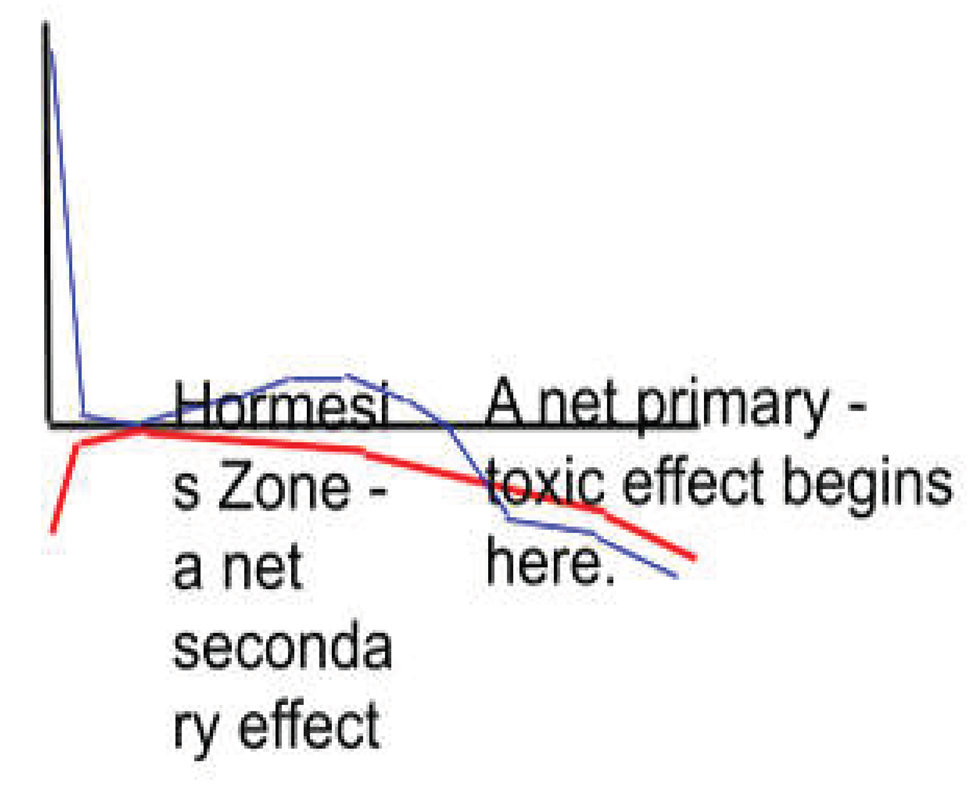
The drug reaction in this zone strengthens homeostasis, it’s unconditional, the organism has no choice but to create an exact opposite effect that is able to overcome the primary drug action. This is an advantage because diseases are caused by deficits in homeostasis self regulation, leading to epimutations. To cure any chronic disease one has to repair or rebuild the exact quantum connections with a drug that has the correct secondary or opposite action to that of the disease process. A regained greater strength in quantum self regulation - homeostasis, leads to a healthier epigenome and later to healthier structures and functions on the tissue level.
How is the most appropriate medicine used for its secondary drug action determined for each patient?
Diagnosis - The diagnosis of the exact substance needed for each patient is what is most difficult, but the toxicogenomic study I describe below, can provide a method to determine this. This proof of concept study could lead to testing and eventually determining the epigenetic signature of every substance and therefore the cure of every disease that was caused by a lack of homeostasis.
Hormesis and Evolution: When life began, the ability to react against stress was essential in order to develop new strategies to survive. A method was needed to overcome the challenges from the ever changing environment. The ability to make micro-adaptations, equal and opposite to the stress most likely came into being out of necessity to preserve resources, adapt and fix errors immediately. Random mutations allow for the possibility of new proteins, but day to day each organism needs to be able to make small changes, to cope with an ever challenging environment and cope with stresses that can cause diseases. Living organisms needed a range of plasticity to operate in. Without retaining these coping mechanisms, individuals and species would have gone extinct more quickly, because the environment was always changing and new pathogens needed to be dealt with. These functions of homeostasis once learned were conserved and retained by each species. But from the discussion above this self regulatory ability was already being used in a primitive way to maintain atoms and molecules. In this way the dividing line between ‘non living’ atomic structures and living organisms is blurred because they both use the same basic quantum strategies and mechanisms.
What are the key takeaways when all this information is put together?
— Toxicogenomics: Toxins produce incredibly precise outcomes, such as symptom pictures and epigenetic profiles. In theory, each substance in a small dose can rebuild a specific homeostasis function and therefore has the potential to cure a unique chronic disease process. It depends on the technology to measure each substance as a unique epigenetic profile. — There is a self correcting mechanism in all living systems called hormesis. To most efficiently and safely use this potential requires the use of ultra-small doses to activate it. The smaller the doses, the stronger the response to restore the quantum properties of homeostasis.[4] The proof of concept studies below can verify this claim.
— The concept of similarity: The exact reciprocal is needed to stimulate a curative response. For every substance at the correct ultra-small dose, a reaction, equal and opposite to the disease, needs to be generated at least 99% similar to the disease in its pathophysiology and epigenetic profile.
— Epigenetic Profiles: A database of every toxin’s epigenetic profile is needed to implement this strategy. Each patient can then be tested to determine their epimutation profile, a match can then be searched in the data-base for the same signature. A substance is needed that can produce that same epimutation profile of their disease. Through the principle of hormesis, this toxin in a small dose will correct the patient’s epimutations.
For example a patient has recurrent migraine headaches, with disorientation such that she easily loses her sense of direction. With the headaches there is a sensation of blood surging to the head and a feeling of extreme pressure in the head. A blood test reveals she has the same epimutations as that produced by nitroglycerin. This substance, nitroglycerin can produce these exact symptoms and the epigenetic profile is found to match that of the patients. Nitroglycerin is prescribed in an ultra-high dilution and within a month the migraine headaches are 70% improved. After a year of further treatment with ultra-small doses of nitroglycerin she reports no headaches. On blood examination, after one year, the epimutations for nitroglycerin are not found. She remains well for many years with no need for further medication.
Mechanisms of Quantum Biology
As a thought experiment, imagine quantum properties that get stronger if a small stress is applied to them. This is perhaps one of the basic mechanisms of life. When an organism is sick; are the connections between quantum fields tight and correctly aligned or loose and easily falling apart, allowing for faulty connections and faulty self regulation? Is homeostasis able to communicate with the (totality of set-points) reference image correctly? Are the pathways of communication and connections all tuned like an orchestra and able to self regulate all functions? - play with the correct rhythm and intensity? All living things have a strong innate drive to survive, to live a long life, to accomplish certain goals, this ability is inextricably connected to homeostasis. When homeostasis begins to break down, the epigenome changes and symptoms can start to develop. There is an advantage in thinking about life and biology in this way, and how the human quantum computer is affected by environmental influences - because it is a comprehensive model, with a solution regarding how to affect the causes of diseases.
Quantum Drugs
If a quantum dose, (doses smaller than 10 to the minus 24) of a substance, (ultra-high dilution), is exposed to an organism with the same exact epigenetic code as the disease, then that epimutation will be reversed, back toward health. Here is some evidence to support this assertion: Ultra-high dilutions have been found to affect gene expression in a number of recent studies [28,29,30,31,32,33,34,35]. If this concept is combined with the implications of hormesis studies then a safe, non-invasive diagnostic technique and reliable system of gene therapy can be developed for acute and chronic diseases. I realize this is controversial, doses this small are not considered biologically active. But if one was to read all these studies in references 28 to 35, the evidence is compelling. Ultra-high dilutions can easily affect gene expression. Carl Sagan said it best:
The suppression of uncomfortable ideas may be common in religion or in politics, but it is not the path to knowledge, and there’s no place for it in the endeavor of science.
Here is an example of this evidence from one of these studies:
As compared to placebo, the Arnica Montana-30C- <a dilution of ten to the minus 60> treated bacteria showed less DNA damage and oxidative stress as manifested by a decrease in ROS generation, and an increase in SOD, CAT and GSH activities. Arnica Montana-30C also up-regulated the expression of repair genes as compared to the control. CONCLUSION: Arnica Montana-30C helped repair the DNA damage through up-regulation of repair genes and also ameliorated the oxidative stress through the reduction of ROS generation and suitable modulation of anti-oxidative stress enzymes [36].
Summary of Expected Findings - A Proof of Concept Study - If we put all these concepts together a useful method becomes available to diagnose the homeostasis quantum computer and repair it. Toxicology can now give us the epigenetic profile for any substance. Each substance in the form of this epigenetic profile tells us a possible vulnerability of the homeostasis quantum computer and a list of symptoms can be correlated to it.
Proof of Concept - Study One
Step One
Obtain peripheral stem cells from at least twenty donors who are in good health, non smokers and not taking any medications.
Divide these cells into five groups or cohorts.
Cohort One: placebo group. Nothing is added to these cells.
Cohort Two: expose these cells to a toxic dose of sulfur so that two to five stable epimutations appear in 90% of the cells and persist for at least three months [37].
Cohort Three: Precondition this group of cells for a month to doses of sulfur that are one part in 10 to the minus 12. A 6c dilution.
Cohort Four: Precondition this group for a month to doses of sulfur that are one part in ten to the minus 60. A 30c dilution.
Cohort Five: Precondition this group of cells for a month to doses of sulfur that are one part in ten to 400. A 200c dilution.
Step Two
During this first month test all the cells every five days for the epigenetic toxicity signature of sulfur.
Expected results: In Cohort One no sulfur epimutations - the placebo group. In Cohort Two the two to five epimutations appear and persist for three months in 90% of the cells.
Cohorts Three, Four and Five - no sulfur epimutations appear.
Step Three
Now expose Cohort Three, Four and Five to the same toxic dose of sulfur as was used in Cohort Two.
Expected results: Cohort Three should show about 20% less cells with the sulfur epimutations as compared to Cohort two.
Cohort Four should show 40% less sulfur epimutations as compared to Cohort Two.
Cohort Five should show 60% less sulfur epimutation than Cohort Two.
Conclusion: the ultra high dilutions in Cohorts Three, Four and Five were able to progressively strengthen the homeostasis functions that relate to sulfur toxicity and therefore prevent sulfur toxicity.
Proof of Concept - Study Two
Divide Cohort Two cells into four groups. These are the cells with the sulfur epimutations. Group One is a control group. Expose Group Two to a dilution of sulfur that is 6c three times a day for a month. Expose Group Three to a dilution of sulfur that is 30c. One dose every three to five days for a month. Expose Group Four to a dilution of sulfur that is 200c, once a week to every two weeks for a month to six weeks.
Expected results: In Group One there should be a baseline of already established sulfur epimutations that persists for six weeks. In Group Two there should be a 20% reversal of epimutations compared to Cohort Two control group. In Group Three there should be a reversal of 40% sulfur epimutations compared to Cohort Two control group. In Group Four there should be 80% reversal of sulfur epimutations compared to Group One control group.
Conclusion: Ultra-high dilutions can reverse epimutations. These two studies prove this same concept and further research in this area becomes justified.
Discussion: How were the epimutations reversed? By the mechanism of hormesis. What evidence is there to conclude it made changes to the quantum homeostasis set-points? The medicines are not material, there are very few atoms in the 6c dilution, no atoms in the 30c and 200c dilutions. The quantum identity - quantum structure still exists for these dilutions, they are most likely interacting with the quantum set-point structures. What else could they be interacting with?
Study Design
The toxin does not have to be sulfur, it could be any substance. The first step is to give that toxin to healthy cells to cause at least two or five stable epimutations in 80 to 90% of the cells for at least three months after the toxin is no longer administered to the cells. This step needs to be done first to establish the concentration of the toxin and how often it needs to be exposed to the cells to create this effect.
Collaboration is needed with a lab that is already doing toxicogenomics research.
Equipment –Illumina’s Infinium Methylation Array technology. Infinium EPIC Array v2 or improved version.
Source for Dilutions
The ultra-high dilutions: Sulfur 6c, 30c and 200c can be ordered from Helios Pharmacy: https://www.helios.co.uk/
The doses of 6c, 30c and 200c also will need adjustment to ensure the above results. A 6c has a therapeutic stimulus effect at about three to twelve doses a day. A 30c has a therapeutic effect at about one dose every three to seven days. A 200c dose is therapeutic when used once every 7 to 30 days. An optimal dose can be determined for each dilution.
Conclusion and Implications
This is a comprehensive theory worth considering and testing for its validity because a treatment strategy at the causative level for most chronic diseases has not been realized. It is a strategy that leads to an understanding of how to diagnose damaged or defective homeostasis structures. Most likely the functions of homeostasis originate with what we can best describe as a quantum computer. This is later integrated with the analog, small molecule and electrical signalling aspects of homeostasis. When homeostasis is restored the epimutations in theory should gradually reverse. Toxicogenomics tells us that we can learn the epigenetic profile for any substance. It is difficult to find anything in this theory that contradicts current data from any biological or physics study. The more one studies hormesis, toxicology, quantum biology, epigenetics, homeostasis and ultra-high dilutions (because they have large data sets) and integrate these concepts, the inevitable outcome is the idea that we can cure diseases described in the above model.
If the epigenetic signatures (thumb prints/omics profiles) of 10,000 substances can be determined and stored in a database, then 10,000 disease processes are known and the antidote is also known. If a patient with a chronic disease has one of these signatures then the treatment for that chronic disease is known because hormesis tells us that small doses are always a stimulant to homeostasis. In this way any and all homeostasis chronic diseases could be diagnosed and treated according to an understanding of the secondary action of drugs that affect the human quantum computer. Ideally, all known substances eventually would be in the data-base.
In this way we can learn the effect of each substance. Quantum ultra-high dilutions add additional benefits. Their effects last longer, they have less toxicity and the secondary action can be increased with more dilutions. Ultra-high dilutions follow the rules of hormesis and secondary drug action. Quantum set-point values in humans are continually in need of adjusting themselves as the environment changes, toxicity stresses become overwhelming and or psychological trauma leads to mental disorders. When, on occasion when homeostasis breaks down, living systems fall out of balance and are in need of a clear signal to create coherence and rebuild their optimal connections. Almost all patients at some point in their lives need a renewal of homeostasis at this causative level.
Title
Rebuilding Quantum Homeostasis Protocol of study design: Overall concept. Details undetermined.
Contact
drsteveolsen@gmail.com
Institutional affiliation
Bastyr University.
Registration
None to date.
Role of sponsor or funding
None to date.
Conflict of Interest
The author declares no conflict of interest.
References
- Sergeeva, A.; Davydova, K.; Perenkov, A.; Vedunova, M. Mechanisms of human DNA methylation, alteration of methylation patterns in physiological processes and oncology. Gene 2023, 875, 147487. [Google Scholar] [CrossRef] [PubMed]
- DNA Demethylation Dynamics - ScienceDirect. Available online: https://www.sciencedirect.com/science/article/pii/S0092867411010129 (accessed on 12 February 2024).
- Wagner, R.N.; Piñón Hofbauer, J.; Wally, V.; et al. Epigenetic and metabolic regulation of epidermal homeostasis. Exp. Dermatol. 2021, 30(8), 1009–1022. [Google Scholar] [CrossRef] [PubMed]
- Valastyan, J.S.; Lindquist, S. Mechanisms of protein-folding diseases at a glance. Dis. Model Mech. 2014, 7(1), 9–14. [Google Scholar] [CrossRef] [PubMed]
- Torday, J.S. Homeostasis as the Mechanism of Evolution. Biology 2015, 4(3), 573–590. [Google Scholar] [CrossRef] [PubMed]
- Quantum biology revisited | Science Advances. Available online: https://www.science.org/doi/10.1126/sciadv.aaz4888 (accessed on 14 September 2023).
- The future of quantum biology | Journal of The Royal Society Interface. Available online: https://royalsocietypublishing.org/doi/10.1098/rsif.2018.0640 (accessed on 14 September 2023).
- Quantum biology. Wikipedia. 2023. Available online: https://en.wikipedia.org/w/index.php?title=Quantum_biology&oldid=1172317459 (accessed on 14 September 2023).
- Seifi, M.; Soltanmanesh, A.; Shafiee, A. Quantum coherence on selectivity and transport of ion channels. Sci. Rep. 2022, 12(1), 9237. [Google Scholar] [CrossRef] [PubMed]
- Marais, A.; Adams, B.; Ringsmuth, A.K.; et al. The future of quantum biology. J. R Soc. Interface 2018, 15(148), 20180640. [Google Scholar] [CrossRef] [PubMed]
- Quantum biology | Nature Physics. Available online: https://www.nature.com/articles/nphys2474/ (accessed on 14 September 2023).
- Quantum Reports | Free Full-Text | Quantum Biology: An Update and Perspective. Available online: https://www.mdpi.com/2624-960X/3/1/6 (accessed on 12 February 2024).
- Marais, A.; Adams, B.; Ringsmuth, A.K.; et al. The future of quantum biology. J. R Soc. Interface 2018, 15(148), 20180640. [Google Scholar] [CrossRef] [PubMed]
- quantum entanglement - Quantum Physics Lady. Available online: https://quantumphysicslady.org/glossary/quantum-entanglement/ (accessed on 12 February 2024).
- Cell (biology). Wikipedia. 2024. Available online: https://en.wikipedia.org/w/index.php?title=Cell_(biology)&oldid=1198147715 (accessed on 12 February 2024).
- Quantum Fields: The Most Beautiful Theory in Physics! 2022. Available online: https://www.youtube.com/watch?v=eoStndCzFhg (accessed on 12 February 2024).
- Tong, D.D. University of Cambridge Part III Mathematical Tripos. 2007. Available online: https://www.damtp.cam.ac.uk/user/tong/qft/qft.pdf.
- Toxicogenomics - an overview | ScienceDirect Topics. Available online: https://www.sciencedirect.com/topics/pharmacology-toxicology-and-pharmaceutical-science/toxicogenomics (accessed on 14 September 2023).
- Lieberman-Cribbin, W.; Domingo-Relloso, A.; Navas-Acien, A.; et al. Epigenetic Biomarkers of Lead Exposure and Cardiovascular Disease: Prospective Evidence in the Strong Heart Study. J. Am. Heart Assoc. 2022, 11(23), e026934. [Google Scholar] [CrossRef] [PubMed]
- TOXsIgN. Available online: https://toxsign.com/about/ (accessed on 12 February 2024).
- Darde, T.; Gaudriault, P.; Béranger, R.; et al. TOXsIgN: A cross-species repository for toxicogenomic signatures. Bioinforma Oxf. Engl. 2018, 34. [Google Scholar] [CrossRef] [PubMed]
- Wu, L.; Yan, B.; Han, J.; et al. TOXRIC: a comprehensive database of toxicological data and benchmarks. Nucleic Acids Res. 2023, 51(D1), D1432–D1445. [Google Scholar] [CrossRef] [PubMed]
- Mattson, M.P. Hormesis Defined. Ageing Res. Rev. 2008, 7(1), 1–7. [Google Scholar] [CrossRef] [PubMed]
- Hormesis outperforms threshold model in National Cancer Institute antitumor drug screening database - PubMed. Available online: https://pubmed.ncbi.nlm.nih.gov/16950854/ (accessed on 12 February 2024).
- The frequency of U-shaped dose responses in the toxicological literature - PubMed. Available online: https://pubmed.ncbi.nlm.nih.gov/11452146/ (accessed on 12 February 2024).
- Calabrese, E.J. Hormesis: why it is important to toxicology and toxicologists. Env. Toxicol. Chem. 2008, 27(7), 1451–1474. [Google Scholar] [CrossRef] [PubMed]
- Zhao, F.; Wang, Z.; Yang, J.; Sun, J.; Wang, Q.; Xu, J. Low-dosage adrenaline induces transient marked decrease of blood pressure during functional endoscopic sinus surgery. Am. J. Rhinol. 2006, 20(2), 182–185. [Google Scholar] [CrossRef]
- Olsen, S. Effects of ultra-high dilutions of sodium butyrate on viability and gene expression in HEK 293 cells. Homeopathy 2017, 26(1), 32–36. [Google Scholar] [CrossRef] [PubMed]
- Huh, Y.H.; Kim, M.J.; Yeo, M.G. Homeopathic Rhus toxicodendron treatment increased the expression of cyclooxygenase-2 in primary cultured mouse chondrocytes. Homeopathy 2013, 102(4), 248–253. [Google Scholar] [CrossRef] [PubMed]
- Ultra-highly diluted plant extracts of Hydrastis canadensis and Marsdenia condurango induce epigenetic modifications and alter gene expression profiles in HeLa cells in vitro - PubMed. Available online: https://pubmed.ncbi.nlm.nih.gov/26559365/ (accessed on 12 February 2024).
- Electromagnetic signals are produced by aqueous nanostructures derived from bacterial DNA sequences. Interdisciplinary Sciences: Computational Life Sciences. Available online: https://link.springer.com/article/10.1007/s12539-009-0036-7 (accessed on 12 February 2024).
- Foletti, A.; Ledda, M.; D’Emilia, E.; Grimaldi, S.; Lisi, A. Experimental finding on the electromagnetic information transfer of specific molecular signals mediated through the aqueous system on two human cellular models. J. Altern. Complement Med. N Y N 2012, 18(3), 258–261. [Google Scholar] [CrossRef] [PubMed]
- Cytotoxic effects of ultra-diluted remedies on breast cancer cells - PubMed. Available online: https://pubmed.ncbi.nlm.nih.gov/20043074/ (accessed on 12 February 2024).
- Arnica montana effects on gene expression in a human macrophage cell line. Evaluation by quantitative Real-Time PCR - PubMed. Available online: https://pubmed.ncbi.nlm.nih.gov/27211321/ (accessed on 12 February 2024).
- Endler, P.C.; Bellavite, P.; Bonamin, L.; Jäger, T.; Mazon, S. Replications of fundamental research models in ultra high dilutions 1994 and 2015 – update on a bibliometric study. Homeopathy 2015, 104(4), 234–245. [Google Scholar] [CrossRef] [PubMed]
- Das, S.; Saha, S.K.; De, A.; Das, D.; Khuda-Bukhsh, A.R. Potential of the homeopathic remedy, Arnica Montana 30C, to reduce DNA damage in Escherichia coli exposed to ultraviolet irradiation through up-regulation of nucleotide excision repair genes. Zhong Xi Yi Jie He Xue Bao 2012, 10(3), 337–346. [Google Scholar] [CrossRef] [PubMed]
- Elemental Sulfur Inhibits Yeast Growth via Producing Toxic Sulfide and Causing Disulfide Stress - PMC. Available online: https://www.ncbi.nlm.nih.gov/pmc/articles/PMC8945482/ (accessed on 14 September 2023).
- Millimolar (mM) a Molar Concentration Unit & Conversion Chart. Available online: https://domainconverters.com/molar-concentration/millimolar-conversions/ (accessed on 14 September 2023).
| 1 | This is the subject of another paper. Quantum loudness can be a function of the intensity of a frequency, its toxicity and how often repeated. |
| 2 | This principle reveals an understanding of the mind body problem. The mind and body affect each other as a function of the homeostasis filter (totality of set-points). For example information from the body passes through the homeostasis filter which then affects the mind and emotions. And or a strong emotional experience passes through the filter and affects the body, somatic effects. |
| 3 | This second application was the life work of Samuel Hahnemann and subsequent development of homeopathy. |
| 4 | It is not surprising that quantum fields have a loudness or variability of intensity. |
Disclaimer/Publisher’s Note: The statements, opinions and data contained in all publications are solely those of the individual author(s) and contributor(s) and not of MDPI and/or the editor(s). MDPI and/or the editor(s) disclaim responsibility for any injury to people or property resulting from any ideas, methods, instructions or products referred to in the content. |
© 2026 by the authors. Licensee MDPI, Basel, Switzerland. This article is an open access article distributed under the terms and conditions of the Creative Commons Attribution (CC BY) license (http://creativecommons.org/licenses/by/4.0/).
Copyright: This open access article is published under a Creative Commons CC BY 4.0 license, which permit the free download, distribution, and reuse, provided that the author and preprint are cited in any reuse.


