

Submitted:
02 June 2024
Posted:
03 June 2024
You are already at the latest version
Abstract
Sustainable development and education in sustainable development (ESD) are crucial and interconnected topics under wide discussion today. Young adults need to be educated in how to help bring about change. Thus, the dynamic relationship between school and home is important. In education, use could be made of English language classes, especially since English is a global language that enables access to the sustainability literature and facilitates discussion in global conferences and meetings. Consequently, English as a foreign language (EFL) students could gain confidence from being able to understand and use the terminology of, for example, sustainability. In this paper, the use of competence-based language teaching (CBLT) is proposed as a means of introducing sustainability topics into EFL writing classes at a university in Saudi Arabia. Students’ competence in sustainable development is therefore considered based on their ability to write about suggested sustainable development topics, measured on a scale for five dimensions of ESD proposed by Michelsen and Fischer (2017). The results demonstrate that the students possessed competence in sustainable development and intended to participate in its implementation. Thus, recommendations are made for the stakeholders in the education sector to include sustainable development topics as an initial offering in the curricula of various specialties using the CBLT approach.
Keywords:
sustainable development
; education for sustainable development
; English language
; EFL learners
; language skills
1. Introduction
The issue of sustainability is a crucial matter that is widely discussed at global level. In this regard, sustainable development takes into account global challenges such as climate change, biodiversity loss, marine pollution, unemployment, and the unequal distribution of wealth between the developed and developing world (Michelsen & Fischer, 2017). It has become essential to educate the public about the possible dangers and life-threatening conditions that they could face in their home countries. Thus, as a concept, sustainable development must be properly understood by laypersons, while appropriate action should be proposed for the whole of the human race. This would mean each individual assuming responsibility for any possible harm that he or she might cause to self, family members, or others. This harm may take the form of irresponsible acts affecting the environment.
The younger generation tend to represent the core of the community and the future hope of their countries. They are likely to be highly motivated to take positive action, but they must have suitable awareness of the concept of sustainability (for example, the potential dangers and the proposed solutions). The youth also need a sense of responsibility as part of a wider community, driving them to take steps to ensure a better future. Hence, education plays a key role in sustainable development. For example, higher education involves a host of different stakeholders, comprising faculty members, students, employers, funding organizations, other staff, and the associated communities (Yuan & Zuo, 2013).
In the present research context, Saudi Arabia is taking serious steps to meet the United Nations’ (UN) Sustainable Development Goals. As a result, the Saudi government has made moves to resolve fundamental sustainability issues. In one Declaration, King Salman (custodian of the two Holy Mosques) (Vision 2030, 2018, p.4) asserts:
We are part of this world, and we live the problems and challenges it is facing. We all share this responsibility and we will contribute, God willing, actively to the development of solutions to many of the world’s pressing issues, including the issues of the environment and sustainable development. We will continue in this regard to work with international organizations, institutions and partners.
Furthermore, sustainability has been especially considered by Crown Prince Mohammed Ibn Salman in Saudi Arabia’s Vision 2030 (2018, p.5):
In order to preserve the unique environmental character of the region, environmental sustainability laws and mechanisms will be developed. Natural resources will be conserved in accordance with the best practices and standards in place globally.
One of the strategies indicated in the report presented at the UN High-level Political Forum (Vision 2030, 2018) was to offer inclusive and equitable quality education and to promote life-long English language learning. As mentioned earlier, education in itself plays an integral part in sustainability. However other environmental and social factors are equally important. In order to encourage Saudi students to engage with such global matters, it is therefore necessary to integrate topics relating to sustainability into higher education courses. However, most of the material on these topics tends to be in English, especially in global forums. Language classes in general often play a major role in educating Saudi students on crucial matters. In particular, EFL students learn the basic terminology and are informed of the latest developments in their education on sustainability, since environmental change is a constant and ongoing process, with political decisions being made on a regular basis by the world’s governments. Consequently, based on the identified importance of this research topic, the current study examines the inclusion of sustainability topics in an EFL writing class at a Saudi university, surveying students’ perceptions and experiences to answer the following research questions:
- To what extent do EFL students at a university in Saudi Arabia understand their role and intend to take action towards sustainable development at a university in Saudi Arabia?
- To what extent does writing on an EFL course help develop students’ ability to recognize sustainability matters at a university in Saudi Arabia?
In the next section, the different existing notions of sustainability are discussed in a review of the relevant literature, particularly in reference to education and the Saudi higher education context.
2. Literature Review
In reviewing the relevant literature, it was first necessary to determine a general definition of the term ‘sustainability’ and identify possible ways of introducing it into education, specifically in EFL classes at a Saudi university.
2.1. What Is Education in Sustainable Development (ESD)?
The concept of education in sustainable development (ESD) is a multi-faceted one, with ESD being applied in a variety of ways in the education sector. However, all perspectives of ESD are aimed at achieving the same goal of increasing the competence of the younger generation in relation to sustainability. In a discussion of the different conceptualizations of ESD, UNESCO offers a comprehensive description, referring to its capacity to give learners of different ages the knowledge, skills, values, and agency to consider the relevant global challenges, including climate change, loss of biodiversity, unsustainable use of resources, and inequality. Additionally, ESD has the potential to help learners of all ages make informed decisions and take appropriate action, whether individually or in groups, to change society or save the planet.
Overall, ESD represents a process of lifelong learning and an essential component of quality education. It helps to enhance cognitive, socio-emotional, and behavioural aspects of learning and includes learning content, outcomes, the learning environment, and pedagogy (UNESCO, 2023). In a previous discussion about teaching sustainability as a topic for a brighter future, McKeown (2013) mentions that education should provoke students to ask questions, think critically, and make decisions, while supporting them in applying their skills to devise solutions to problems of sustainability. In another early study, Franco et al. (2019) highlighted the responsibility of the higher education sector to develop an awareness of sustainability among future generations by proactively attempting to action the UN’s Sustainable Development Goals in higher education policy.
Similarly, albeit in greater detail, Michelsen and Fischer (2017) considered the relationship between education and sustainable development, indicating that in sustainability, a comprehensive and far-reaching transformation and fundamental changes of perspective are required. The above authors add that there is a consensus in academia that such shifts can only be brought about by adopting different lifestyles, or through changes in production and consumption. For this to be achieved, individuals need to develop new attitudes and greater awareness, which can only be approached via the systematic learning offered in educational practice.
Finally, Michelsen and Fischer’s (2017, pp.8-11) definition of ESD was adopted in this study, which emphasizes ESD as a distinct concept that can complement other aspects and conceptualizations of sustainability. On this basis, five reconceptualizations of ESD were developed, as set out in the following sub-sections.
2.1.1. From a Threat to a Modernization Scenario
The reconceptualization of sustainability as the need for modernization, rather than a response to threat, expresses the notion that it is not enough to problematize sustainability issues or policy areas. Instead, it is more important to investigate the possibilities for addressing sustainability through change and development.
2.1.2. From Moralizing to Value-Classification Approaches
Sustainable development is not merely descriptive, but rather normative, relating to how the world should be rather than how it actually is. From this perspective, values play an important role in sustainable development, as in the case of justice, dignity and the preservation of the environment. Thus, values should be the focus of ESD.
2.1.3. From Behavioural Guidelines to Competent Decision-Making
Behaviour relates to uncertainty about life and current knowledge with regard to universal problems and their potential solutions. In an approach to education that is oriented towards the division of sustainable development, learners need to be able to take action under changing conditions and help advance sustainable development.
2.1.4. From Transmissive to Deliberative Communication Processes
Early approaches in education were predominantly concerned with communicating scientific findings and specific values, attitudes, and behaviour. However, the concept of ESD is in sharp contrast to these earlier approaches, in that it is no longer aimed at inducing learners to adopt predetermined views or attitudes. Instead, it essentially consists of discovering different positions articulated in discussions about sustainability, testing suppositions and consistency, and finding democratic ways of resolving conflicts and problems. This critical reflexivity must therefore be embedded in teaching and learning.
As a result, ESD should be seen as political and civic in nature, rather than purely as the individual taking responsibility for the future. In the process, learners are invited to reflect critically on their social and political impact. This refers to current and future behaviour, especially from a global perspective. The individual must become productive by engaging with others to promote political and civic ESD. Moreover, this is not simply a matter of criticizing existing structures but should involve an examination of press participation, constructive decision-making, and engagement in political parties, trade unions, and non-governmental organizations (NGOs).
2.1.5. Focus on Knowledge for Opportunities to Take Action
Initially, the focus in environmental education was on taking action, whereas the fact-based approach to studying ecological problems has often been heavily criticized. One main criticism was that ecologically based environmental education was not grounded in the natural sciences, but rather concerned with examining problems and conflicts of interest in mankind’s use of nature. In Northern Europe, action was introduced via a credit system to make the goal of ESD one of systematic development of competence in democratic action. In the above context, action expressly refers to the ability to bring about change and find solutions. In particular, the term ‘competence’ relates to taking action, but without consequences for everyday life. Thus, professional practices and mainstream life are not treated as relevant. In another strand of discussion, ESD is regarded as going beyond merely acquiring knowledge about various natural consequences, attitudes, and values, but rather extending to stimulating the learning process through experiences of taking action. Therefore, knowledge is converted into action, so that as far as possible, action can add to knowledge.
Even though active involvement in sustainability has been considered in education, the results reported in the extant indicate a deficiency in the understanding of ESD among both instructors and students. One Spanish study by Cebrián and Junyent (2015) explored the perceptions of educators and students with regard to sustainability, using questionnaires to survey ESD competencies. Based on their findings, the above authors identified what was required for inclusion in the curriculum, as suggested by the participants to improve their competencies in the area of sustainability.
2.2. Why Should We Include Sustainability as a Topic in the Higher Education Sector, Specifically in EFL Classes in Saudi Universities?
One of the main constructs of Saudi Vision 2030 is to contribute to sustainable development. To support the role of Saudi Arabia in this development, a framework with a detailed description of the scheduled strategies was presented to the UN High-level Political Forum (Vision 2023, 2018), titled the First Voluntary National Review of the Kingdom of Saudi Arabia. This Review contained the following draft strategies for working towards achieving the UN’s Sustainable Development Goals (Vision 2030, 2018, pp.17-79), adapted below:
- To end poverty in all its forms everywhere.
- To end hunger, achieve food security, improved global nutrition, and promote sustainable agriculture.
- To ensure a healthy lifestyle and promote well-being for all, at all ages.
- To ensure inclusive and equitable quality education and to promote lifelong learning opportunities for all.
- To achieve gender equality and empower all women and girls.
- To ensure the availability and sustainable management of water and sanitation.
- To ensure access to affordable, reliable, sustainable, and modern energy for all.
- To promote sustained, inclusive, and sustainable economic growth, full and productive employment, and decent work for all.
- To build resilient infrastructure, promote inclusive and sustainable industrialization, and foster innovation.
- To reduce inequality within and among countries.
- To make cities and human settlements inclusive, safe, resilient, and sustainable.
- To ensure sustainable consumption and production patterns.
- To take urgent action to combat climate change and its impact.
- To conserve and sustainably use the oceans, seas, and marine resources for sustainable development.
- To protect, restore, and promote the sustainable use of terrestrial ecosystems, sustainably manage forests, combat desertification, halt and reverse land degradation, and halt biodiversity loss.
- To promote peaceful and inclusive societies for sustainable development, provide access to justice for all, and build effective, accountable, and inclusive institutions at all levels.
- To strengthen the means of implementation and revitalize the Global Partnership for Sustainable Development.
Nevertheless, Saudi Arabia may still be considered to fall behind as a nation in its general awareness of the need for sustainability and how to contribute to it. In a general study, Almulhim (2022) aimed to understand the public’s attitudes and awareness of renewable energy resources as an aspect of sustainable energy development. A sample of 310 participants were therefore recruited in a snowball approach. The findings revealed that most of the participants were moderately knowledgeable about the concept of renewable energy, and nearly 79% were concerned about the harmful effects of pollution, thereby indicating the importance of renewable energy. However, almost 97% of the respondents were dissatisfied with the adoption of renewable energy technology, based on the perception that it would be ineffective and costly. Based on these results, the above study concluded that this conceptualization of sustainable development by the public could be a barrier to achieving Saudi Vision 2030, with the recommendation that public awareness of the matter still needs to be raised.
Being a Saudi citizen herself, the current researcher has witnessed the efforts of the Saudi government and related organizations to achieve all the goals on the agenda for 2030. For example, the Sports Boulevard that is currently under construction in the heart of Riyadh is an incentive to encourage and enable the public to engage in various types of sport and to do so conveniently, in the open air. This is novel in Saudi Arabia, and it is anticipated that it will raise public awareness of the importance of exercise, sport, and physical fitness.
In addition, the Saudi Ministry of Education is currently exploring ways of using educational technology to improve teaching and learning practices in schools and universities across the Kingdom. This is of particular interest to the researcher as an education professional who is also concerned about sustainable development. So far, a positive impact has been observed for the national learning management system (LMS), created by the Ministry for schools, specifically during the COVID-19 pandemic. Moreover, this LMS is still in use, due to its efficiency. Oraif and Elyas (2021) revealed a high level of engagement among EFL students while they were learning English via this platform. However, for a broader view of ESD, reference must be made to more recent studies.
For example, a qualitative study was conducted by Essa and Harvey (2022) to better understand the integration of ESD into Saudi Vision 2030, using critical discourse analysis (CDA) as a tool for examining two kinds of document: official policy documents published by governmental entities involved in the planning and/or execution of the ESD integration policy, and newspaper articles collected from the three top-ranked Saudi newspapers (Arab News, Asharq Al-Awsat, and Al Riyadh). Themes were subsequently extracted and coded. Fairclough’s CDA Model was subsequently applied to obtain in-depth insights into the existing situation, determining whether Saudi Arabia really aims to include sustainable development in its education planning under Vision 2030. The results revealed very limited discussion of ESD integration into Vision 2030, whether in the media coverage or in the official government policy documents, with very general language used to present the roadmap for ESD implementation, and a considerable lack of precise description of the procedures for integrating ESD into the Saudi education system. Therefore, a lack of strategic planning with pre-determined steps was noted in the above study, indicating that plans for ESD integration should be taken much more seriously in Saudi Arabia.
In relation to the education sector, one recent study conducted by Allmnakrah and Evers (2020) called for reforms to the Saudi education sector, which would involve listening to the various voices and assessing what Saudi pre-service and in-service teachers needed to play a positive role in achieving the economic goals outlined in Saudi Vision 2030. This would inform the development of teaching strategies and tools that could make a positive contribution to the Saudi economy. The above study also indicated that training teachers based on their needs would be more time- and cost-efficient in introducing them to the labour market.
In another study, conducted by Abowardah et al. (2024) at a university in Dammam in the Western Region of Saudi Arabia, an online survey was used to investigate the level of awareness of the UN’s Sustainable Development Goals among Saudi university staff and students. A sample of 152 students was selected. The results of the study revealed that most of the participants still needed assistance to understand and apply the various concepts surrounding sustainability. Moreover, although the investigation revealed the participants’ interest in sustainability issues, the results also showed that more specific and subject-focused units needed to be designed and added to the curricula to help broaden the students’ perspectives. This is examined in the current paper, given the scarcity of studies in this research area in Saudi Arabia.
What may be concluded from the previous examination of the literature on the Saudi public’s awareness of sustainable development is that serious action is necessary to educate the Saudi public about the seriousness of the matter and its dimensions. To start with, the education sector, comprising schools and universities, must take prompt action with the permission of stakeholders to create ESD-friendly programmes. Consequently, this study proposes the introduction of sustainable development topics into an EFL writing class at a Saudi university, examining students’ competence in the topics introduced. Such an initiative would align with Saudi Vision 2030. The proposed implementation could similarly be introduced into other English language skills classes. In turn, the outcomes would shed light on the phenomenon and help with the formulation of hypotheses about the inclusion of sustainability topics in other disciplines at university level.
3. Methodology
In this section, the design and construction of the study is presented, specifying the data collection procedures and methods of data analysis.
3.1. Teaching Procedure and Research Plan
A case study approach was adopted in this study, with sustainability topics being introduced to EFL students in their English writing class. Where technology was used to teach essay-writing, the students were required to submit their assignments via an LMS. The study was conducted in April 2024 for a period of one week only.
In order to integrate sustainability topics in an appropriate manner and using the methods suggested for ESD, a teaching approach with a theoretical base was considered in this study, namely, competency-based language teaching (CBLT), which has its roots in Bloom’s behaviourist tradition (Griffith & Hye-Yeon, 2014). According to Griffith and Hye-Yeon (2014), in CBLT, learners are presented with authentic situations that they are likely to encounter outside the classroom, for instance, a student may be required to fill out an application form or give directions on how to complete a certain task. Thus, even though learners are taught to a level of competence, this is not purely for grading purposes, but rather to improve their task performance.
Language competencies represent a practical application of language in context. This type of competency has several components, and students should be able to express and receive complex information that is useful beyond the classroom and throughout their lifetime. Meanwhile, the teacher serves as the facilitator, which means delivering information but in a way that will allow students to practice their skills. Conversely, the student’s role also changes by not solely relying on the teacher to integrate, produce, or extend knowledge. Instead, the materials demand doing rather than merely knowing. By way of example, the Ministry of Education in Mexico identified several competencies, one of which was to understand and write instructions for dealing with an environmental emergency. This was a final task to assess mastery of specific competencies.
For this study, the competency required for the identified sustainability topic was assessed with a writing task. This consisted of writing an essay on possible solutions to problems of sustainability. During the actual teaching, the students were divided into groups, each comprised of five participants. The total number of participants amounted to 18 students, with four submissions being corrected. A process approach was adopted to teach writing on this course. In a process approach, an outline and multiple drafts are submitted, and the students receive feedback from their teacher or peers (Oraif, 2016). In this current study, the students received feedback from their teacher and subsequently resubmitted a final draft. Moreover, they were divided into groups to encourage them to write about the new topic of sustainability. This offered them the chance to discuss it with each other and share their opinions, in order to arrive at possible solutions to the serious issues associated with sustainability. Consequently, they would have the chance to understand the importance of the topic. Similarly, a study conducted by Awada et al. (2020) approved the above-mentioned benefits of collaborative writing.
The type of essay assigned for the task in this study was an opinion essay. This already formed part of the EFL curriculum, but the topic of sustainability was added for the purposes of the research. To ensure that the chosen topic was of suitable interest to the students, the teacher asked them to choose between two essential matters related to sustainability: water conservation and climate change. All the students agreed on the suitability of these writing topics. As mentioned previously, a process approach was adopted to teach writing on this course, wherein an outline was created in the classroom and then two drafts submitted, the first receiving feedback from the teacher in class, and the second and final draft created on the basis of the feedback provided. This type of task is normally a paper-based submission, but in the present study, it would be submitted via the institution’s official LMS (see Figure 1). Furthermore, to ensure that the students had satisfactory background on the topic, a YouTube video was shared (see Figure 2 and Figure 3).
The links illustrated above were selected by the researcher for each essay topic. The language used in the videos is simple English, which was expected to facilitate the students’ comprehension. The assignments were sent to the teacher through the class WhatsApp group, which was the means of communication used by the teacher to assign the task and provide feedback to the students. For this course, the teacher met the students twice a week. The duration of the first meeting was around one and a half hours, while the second was half an hour. The teacher gave indirect feedback on the first draft, underlining errors and indicating the type of mistake made by the students (for example, grammar or vocabulary).
Figure 4.
Teaching and study procedure.
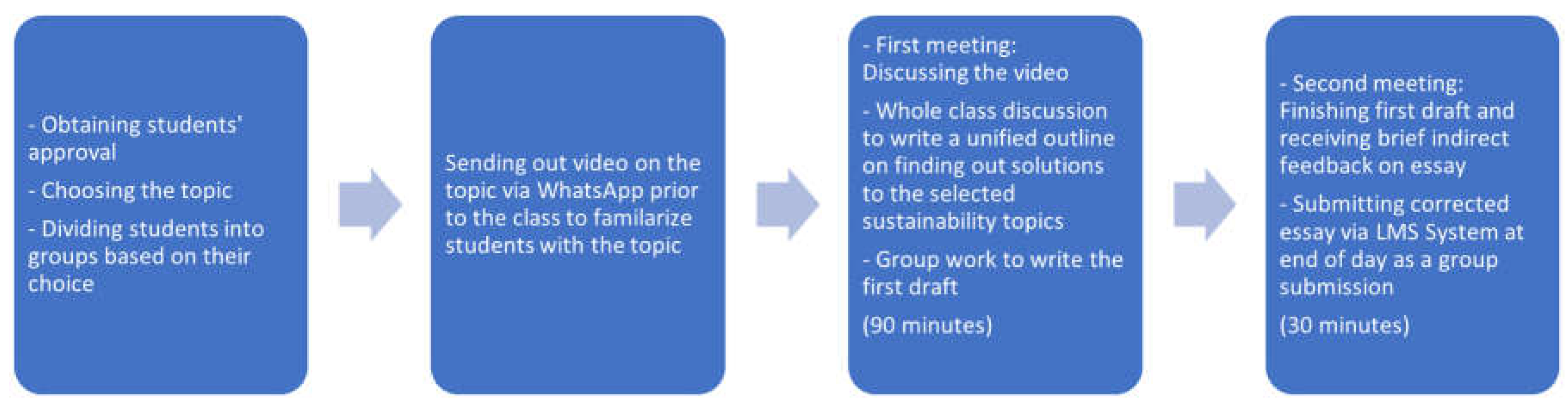
In this study, the teacher was not the researcher, so as to ensure objectivity. However, the researcher explained the study procedure with the instructor and made sure to implement the study during the week assigned for the opinion essay, as this was considered to be the most suitable type of essay for topics related to sustainability. An opinion essay, as defined by the course textbook assigned by the institution must include the writer’s opinions on the topic and include facts and anecdotes to support the writer’s ideas.
Regarding ethical considerations, this research did not risk causing any kind of harm to the participants, and their participation was purely voluntary. Neither would the students’ performance in the task affect their actual grades on the course, as it was simply a practice essay. The only requirement for the researcher was to obtain permission from the Head of the Department to conduct the study by sending a letter of request to explain the purpose and duration of the study. This was undertaken by the researcher prior to starting the data collection.
3.2. Sampling Procedure
For the sampling procedure, the teacher was involved after being granted permission by the Head of Department. The teacher held a PhD in TESOL and had been teaching EFL at university level for more than 15 years. However, all materials used in the study were provided by the researcher. The participating students (n=20) were all registered on the EFL writing course with the same teacher, and this was the total number of students registered on the programme. Nevertheless, only 18 participants consented to participate in the research survey, whereas the remaining two students only attended the classes. The sample consisted of female undergraduates in their second year of study. Therefore, they had two more years before graduating with a major in English Language from the English Department of a College of Languages and Translation. Their English language level ranged from Intermediate to Upper Intermediate, and they had been required to pass two introductory writing courses before registering for the course.
3.3. Reliability and Validity of the Constructed Survey
In this study, the definition of ESD was taken from Michelsen and Fischer (2017). This definition includes five components on which the following survey items were based (a comprehensive description of each item may be found in the Literature Review above):
- Variable 1: From threat to modernization scenarios
- Variable 2: From moralizing to value-clarification approaches
- Variable 3: From behavioural guidelines to competent decision-making
- Variable 4: From transmissive to deliberative communication processes.
Meanwhile, the final concept of focusing on knowledge to focus on opportunities and then take action was examined in the part of the survey designed to gather background information. Here, the survey mainly concerned the participants’ conceptualization of themselves in relation to their role in sustainable development, posing the following question: ‘From the topics introduced to you in the English Writing class, you discovered that you could be which of the following in relation to sustainability?’, to which the participants could respond: ‘Yes, I can help’ or ‘No, I don’t care’.
The researcher used simplified English to create the items for each construct, with a five-point Likert scale (Strongly agree, Agree, Neither agree nor disagree, Disagree, Totally disagree) to measure the students’ level of competence in relation sustainability after being taught about it in their writing class. The Google Forms platform was selected to build the e-survey, and the responses were sent to the researcher. The survey was given to the students to complete at their second meeting in class, with four main ideas being examined using the five-point Likert scale.
For the analysis, the Software Package for the Social Sciences (SPSS) was selected to analyze the percentage, mean, median, and standard deviation of each survey item. The data would be analyzed as follows: the main characteristics of the sample were to be gathered in section 1 of the questionnaire to describe the participants' information and their competence in their role (i.e. Before your English writing class, had you ever heard anything about sustainability? How would you describe your understanding of sustainability now? Would you like to help develop sustainability in your country after learning about it? From the topics introduced to you in the English Writing class, you discovered that you could be which of the following in relation to sustainability?).
Nevertheless, reliability is a very important aspect to consider when selecting a questionnaire instrument. In this study, the questionnaire’s reliability was evaluated according to the degree of consistency or stability in the research results if conducted for the same respondents on repeated occasions. Thus, the reliability and validity of the survey tool, Cronbach’s alpha was applied to a sample of 10 students whose characteristics were similar to the one used in this study. This pilot sample completed the sample using Google Forms, with the researcher assisting them if they had any questions about an item or if they had any difficulty understanding the questionnaire. However, nothing was noted by the pilot sample. In relation to content validity, a professor of Applied Linguistics was provided with a copy of the survey and the definitions included for each variable to check its suitability for each component. Suggestions were made accordingly by the Professor and implemented by the researcher.
In order to evaluate the questionnaire’s reliability, Cronbach's alpha values were calculated for each dimension. Cronbach’s alpha (α), developed by educational psychologist Lee Cronbach in 1951, is the most common estimate of reliability (Clark et al., 2021). It is based on inter-correlations of the observed indicator variables. Cronbach's alpha values fall between 0 and 1, with an acceptable range of between 0.7 and 1.

Table 1.
Reliability analysis.
| Items | No. of Items | Cronbach's Alpha |
|---|---|---|
| Variable 1: From threat to modernization scenarios | 6 |
0.975 |
| Variable 2: From moralizing to value-clarification approaches |
8 |
0.972 |
| Variable 3: From behavioural guidelines to competent decision-making |
5 |
0.949 |
| Variable 4: From transmissive to deliberative communication processes |
3 |
0.949 |
| TOTAL | 22 | 0.989 |
The above Table demonstrates that the data passed the reliability test, since all the Cronbach’s Alpha values exceed the acceptable value. The Cronbach's alpha value for the questionnaire was .989 (hence, more than 0.7). In addition, Pearson’s correlation was considered to check the nature of the relationship between the dimensions. Through this analysis, a positive correlation between the dimensions was found (see Table 3 and Table 4).
Table 2.
Pearson’s correlation coefficient between the items and the axis to which they belong.
| Variable 1: From Threat to Modernization Scenarios | Variable 2: From Moralizing to Value- clarification Approaches | Variable 3: From Behavioural Guidelines to Competent Decision-making | Variable 4: From Transmissive to Deliberative Communication Processes | ||||
|---|---|---|---|---|---|---|---|
| No. | R | No. | R | No. | R | No. | R |
| 1 | 0.804** | 7 | 0.949** | 15 | 0.928** | 20 | 0.962** |
| 2 | 0.985** | 8 | 0.901** | 16 | 0.946** | 21 | 0.993** |
| 3 | 0.962** | 9 | 0.802** | 17 | 0.958** | 22 | 0.911** |
| 4 | 0.979** | 10 | 0.992** | 18 | 0.986** | ||
| 5 | 0.991** | 11 | 0.969** | 19 | 0.740** | ||
| 6 | 0.991** | 12 | 0.886** | ||||
| 13 | 0.870** | ||||||
| 14 | 0.961** | ||||||
**Correlation is significant at the 0.01 level (2-tailed).
3. Results
This study examines the inclusion of sustainability topics in an EFL writing class at a university in Saudi Arabia. Accordingly, the following questions were addressed:
- To what extent do EFL students at a university in Saudi Arabia understand their role and intend to take action towards sustainable development at a university in Saudi Arabia?
- To what extent does writing on an EFL course help raise awareness of sustainability matters at a university in Saudi Arabia?
To answer the first research question, ‘To what extent do EFL students at a university in Saudi Arabia understand their role and intend to take action towards sustainable development at a university in Saudi Arabia?’ the following Tables present a summary of the participants' responses to the included items.
Table 5.
Table of frequency for Part 1 of the survey.
| Variable | Category | Frequency | % |
|---|---|---|---|
| Before your English Writing class, had you ever heard anything about sustainability? | No | 8 | 44.44 |
| Yes | 10 | 55.56 | |
| How would you describe your understanding of sustainability now? | Fair | 14 | 77.78 |
| Poor | 4 | 22.22 | |
| Would you like to help develop sustainability in your country after learning about it? | No | 0 | 0.00 |
| Yes | 18 | 100.00 | |
| From the topics introduced to you in the English Writing class, you discovered that you could do which of the following in relation to sustainability? | Yes, I can help | 14 | 77.78 |
| Nothing, I don’t care | 4 | 22.22 |
The previous analysis reveals that the students had received suitable information about sustainability and wished to help resolve the issues. It indicates that the fifth component proposed by Michelsen and Fischer (2017) for ESD related to focusing on action rather than knowledge was a priority.
Furthermore to answer the second research question, ‘To what extent does writing on an EFL course help develop students’ ability to recognize sustainability matters at a university in Saudi Arabia?’, the survey generated positive results.
Table 6.
Means and standard deviations for dimensions of the questionnaire.
| No. | Items | Mean | Std. Deviation |
Median | % | Ranking | Response |
|---|---|---|---|---|---|---|---|
| 1 | Variable 1: From threat to modernization scenarios | 3.98 | 0.995 | 4 | 79.6% | 1 | Agree |
| 2 | Variable 2: From moralizing to value-clarification approaches | 3.82 | 1.159 | 4 | 76.4% | 2 | Agree |
| 3 | Variable 3: From behavioural guidelines to competent decision-making | 3.80 | 1.265 | 4 | 76.0% | 3 | Agree |
| 4 | Variable 4: From transmissive to deliberative communication processes | 3.78 | 1.304 | 4 | 75.6% | 4 | Agree |
| Total | 3.84 | 1.155 | 4 | 76.9% | Agree |
From the data in the above Table, it is clear that the research participants agreed with the axes of opportunities for sustainability after covering the topic in their English Writing classes, with ‘Variable 1: From threat to modernization scenarios’ eliciting the highest agreement at 79.6% ‘Variable 2: From moralizing to value-clarification approaches’ eliciting the second highest agreement at 76.4%, ‘Variable 3: From behavioural guidelines to competent decision-making’ eliciting third highest agreement at 76.0%, and ‘Variable 4: From transmissive to deliberative communication processes’ eliciting the least agreement at 75.6%. The responses to the variables are presented in greater detail in Table 4, below.
It is clear from the data in the above Table that the students agreed on the axes of opportunities for sustainability after covering the topic in their English Writing classes, with percentages ranging from 82.2%-68.9%. The items with the highest values were ‘Things that make the world a better place, not just learning about facts’ (82.2%), ‘Learning must come from trying new things and seeing what works, not just reading or listening’ (82.2%), ‘Learning should include taking action to make things better for nature and for people’ (82.2%), and ‘Shar[ing] our ideas and work[ing] together with others to solve environmental problems’ (80.0%). Meanwhile, the items that ranked lowest were ‘Finding better solutions to problems like pollution and waste’ (77.8%), ‘Why questioning my own attitudes and values regarding sustainability is essential’ (68.9%), ‘Helping us to make decisions that affect the environment and others positively’ (73.3%), and ‘Talk[ing] to others and listen[ing] to their ideas, rather than just listening to the teacher’ (71.1%).
4. Discussion
The results indicated the positive impact of using CBLT to teach competence in relation to a specific topic in an EFL writing class. In this study, the first indicator of students’ increased competency in sustainability emerged was observed in them writing about it. The second indicator of learners’ acceptance and increased competence was revealed by asking their opinions, using a survey based on an ESD framework. Even though multiple factors were involved in creating the teaching environment for this writing class, for example, using a process approach, group work, and an opinion essay, the researcher adapted the situation by concentrating solely on the topic of sustainability and supporting the development of students’ competence in this topic through CBLT. The teaching procedure was made up of multiple components, all interacting in a dynamic way to complement each other and work together in the same direction to achieve positive results, aimed at developing students’ ability to write an opinion essay.
However, as mentioned previously, the aim of this study was not to check the development of EFL students’ English writing skills per se, but to consider the development of their competence in relation to sustainability issues by being able to write about them. Since many students have difficulties expressing their thoughts about various topics, the YouTube video helped to build students’ knowledge and terminology related to the assigned topic and served as a prompt for students’ ideas as they endeavoured to write about it.
The students’ ability to write about sustainability was investigated in this study through the production of a group essay in collaborative learning and working together to find a sustainable development solution as one of the goals of ESD (Glavič, 2020). Education for sustainable development calls for an interactive, experiential, learner-centred and action-oriented pedagogy. Competence-based learning theory and a subject-specific teaching approach can be merged dynamically in the teaching and learning process (ibid.). To facilitate implementation, CBLT could be applied to specific parts of the curriculum, as demonstrated in this study, wherein a specific type of essay was selected (an opinion essay). The teaching procedure consisted of the process approach to learn about and apply knowledge of sustainable development to essay-writing.
In order to gain a deeper understanding of students’ competence in sustainability and to increase the reliability of the teaching procedure, a survey on sustainability matters was conducted. In Part 1 of the survey, most of the participants indicated that they had a fair amount of knowledge about sustainability and that they were ready to take action to promote sustainability in their country. This result is unsurprising, since the younger generations are especially competent in serious topics like sustainability, due to their technology usage. Nevertheless, even though they might feel capable of bringing about change and taking action, no real steps are taken. Here, schools and universities could include actual sustainability practices in the curriculum. The combination of working with peers and the existence of a formal scholastic component would help students identify how they might participate. Glavič (2020) explains the significant influence of universities on many of the world’s future leaders, calling for reporting, managing, engaging, and developing a sustainable development strategy that will have an impact. In the same vein, the above author explains that the way in which students are educated is important for forcing change. For instance, despite 22 years of development in sustainability reporting and seven years of integrated reporting, this potential has not yet been fulfilled.
In Part 2 of the survey, different elements related to ESD were included. With regard to ways of building the language classroom, based on the students’ experience in this study, the importance of involving the topic of sustainable development in language education was found to be important. The dimension ‘From threat to modernization scenarios’ called for finding solutions rather than merely problematizing the current situation, whereupon the participants were in agreement with all of the corresponding survey items. Therefore, the participants agreed on working towards solutions to make the world a better place by finding ways to address environmental issues.
For the second dimension ‘From moralizing to value-classification approaches’, it was indicated that the world should take real action, rather than solely explaining concepts. The participants also agreed that learning should take the form of positive action, asking oneself about the consequences of one’s actions on others, and practicing equality and integrity in the treatment of all peoples worldwide.
For the dimension ‘From behavioural guidelines to competent decision-making’, which relates to the freedom to make one’s own decisions in response to any conditions that arise, the participants agreed that they should make appropriate decisions about preserving the natural environment and human communities.
Finally, for the dimension, ‘From a transmissive to a deliberative communication process’, which would allow students to collaborate in a democratic manner to derive solutions, the participants agreed on the need to collaborate with others in effective decision-making and step forward with any necessary action.
From the participants’ responses in this study, it would appear that a sample of university students were prepared to play a prominent role in sustainable development. However, the curriculum requires reforms to permit the integration of sustainable development topics into existing disciplines, or to develop a separate course on sustainable development to increase students’ awareness and ensure their ability to take action. In addition, teachers should be prepared to include such crucial topics in their classroom practice, applying the appropriate teaching approaches.
5. Conclusions
This study is one of very few to examine the implementation of sustainable development topics in higher education. Through CBLT, the EFL learners were given a smooth introduction to various urgent problems related to sustainable development. The results indicated that the experience had been positive for the students since they demonstrated competence in sustainable development, and a willingness to make decisions and take appropriate action. The new generation and future leaders have the potential to play a key role in sustainable development, but they need to be directed carefully in this regard and armed with the appropriate knowledge. The stakeholders in Saudi Arabia’s education sector, especially in higher education, could therefore benefit from the results of this case study. More generally, the results could be useful globally to teaching about sustainable development in higher education.
Nevertheless, the limitations of this study point to the need for further research. For instance, the sample was exclusively female, due to the gender-segregation imposed in Saudi Arabia. Moreover, only students’ opinions were gathered, and only one class was selected. Thus, the following recommendations are proposed:
- Sustainable development topics could be integrated into other subjects being taught.
- Male students could be included in a case study in this research area.
- Teachers’ opinions could be gathered concerning the integration of sustainable development topics in their subjects.
References
- Abowardah, E. S., Labib, W., Aboelnagah, H., & Nurunnabi, M. (2024). Students’ perception of sustainable development in higher education in Saudi Arabia. Sustainability, 16(4), 1483. [CrossRef]
- Allmnakrah, A. & Evers, C. (2020). The need for a fundamental shift in the Saudi education system: Implementing the Saudi Arabian economic vision 2030. Research in Education, 106(1), 22-40. [CrossRef]
- Almulhim, A. I. (2022). Understanding public awareness and attitudes toward renewable energy resources in Saudi Arabia. Renewable Energy, 192, 572-582. [CrossRef]
- Awada, G., Burston, J., & Ghannage, R. (2020). Effect of student team achievement division through WebQuest on EFL students’ argumentative writing skills and their instructors’ perceptions. Computer Assisted Language Learning, 33(3), 275-300. [CrossRef]
- Cebrián, G. & Junyent, M. (2015). Competencies in education for sustainable development: Exploring the student teachers’ views. Sustainability, 7(3), 2768-2786. [CrossRef]
- Clark, T., Foster, L., Bryman, A., & Sloan, L. (2021). Bryman's social research methods. Oxford university press.
- ClickView. (2021). What is climate change? Explore the causes of climate change [Video]. YouTube, 20 April. Available at: https://youtu.be/EuwMB1Dal-4?si=a3WSoJ4BxDIYJZlR.
- Essa, S. & Harvey, B. (2022). Education for sustainable development in Saudi Arabia: A critical discourse analysis of media and government policy documents. Interdisciplinary Journal of Environmental and Science Education, 18(2), e2266. Available at: https://www.ijese.com/article/education-for-sustainable-development-in-saudi-arabia-a-critical-discourse-analysis-of-media-and-11519. [CrossRef]
- Franco, I., Saito, O., Vaughter, P., Whereat, J., Kanie, N, & Takemoto, K. (2019). Higher education for sustainable development: Actioning the global goals in policy, curriculum and practice. Sustainability Science 14, 1621-1642. [CrossRef]
- Glavič, P. (2020). Identifying key issues of education for sustainable development. Sustainability, 12(16), 6500. [CrossRef]
- Griffith, W. I. & Lim, H. Y. (2014). Introduction to competency-based language teaching. MEXTESOL Journal, 38(2), 1-8.
- McKeown, R. (2013). Teaching for a brighter more sustainable future. Kappa Delta Pi Record, 49(1), 12-20. [CrossRef]
- Michelsen, G. & Fischer, D. (2017). Sustainability and education. In M. von Hauff & C. Kuhnke (Eds.), Sustainable Development Policy: A European Perspective (pp. 135- 158). Routledge. [CrossRef]
- Oraif, I. M. (2016). The right approach in practice: A discussion of the applicability of EFL writing practices in a Saudi context. English Language Teaching, 9(7), 97-102. [CrossRef]
- Oraif, I. & Elyas, T. (2021). The impact of COVID-19 on learning: Investigating EFL learners’ engagement in online courses in Saudi Arabia. Education Sciences, 11(3), 99. [CrossRef]
- SciShow Kids. (2021). How can I save water?’ [Video]. YouTube, 12 April. Available at: https://youtu.be/6yCAPAqXodc?feature=shared.
- UNESCO. 2012. Education for sustainable development: Building a better, fairer world for the 21st century [Pamphlet]. Available at: http://unesdoc.unesco.org/images/0021/002166/216673E.pdf.
- UNESCO. (2023). What you need to know about education for sustainable development. Available at: https://www.unesco.org/en/education-sustainable-development/need-know.
- Vision 2030. (2018). 1st voluntary national review of Kingdom of Saudi Arabia. UN High-Level Political Forum 2018, 9-18 July, New York. Available at: https://sustainabledevelopment.un.org/content/documents/20230SDGs_English_Report972018_FINAL.pdf.
- Yuan, X. & Zuo, J. (2013). A critical assessment of the higher education for sustainable development from students' perspectives – a Chinese study. Journal of Cleaner Production, 48, 108-115. [CrossRef]
Figure 1.
Sample of students’ assignments on water conservation, submitted via an LMS.
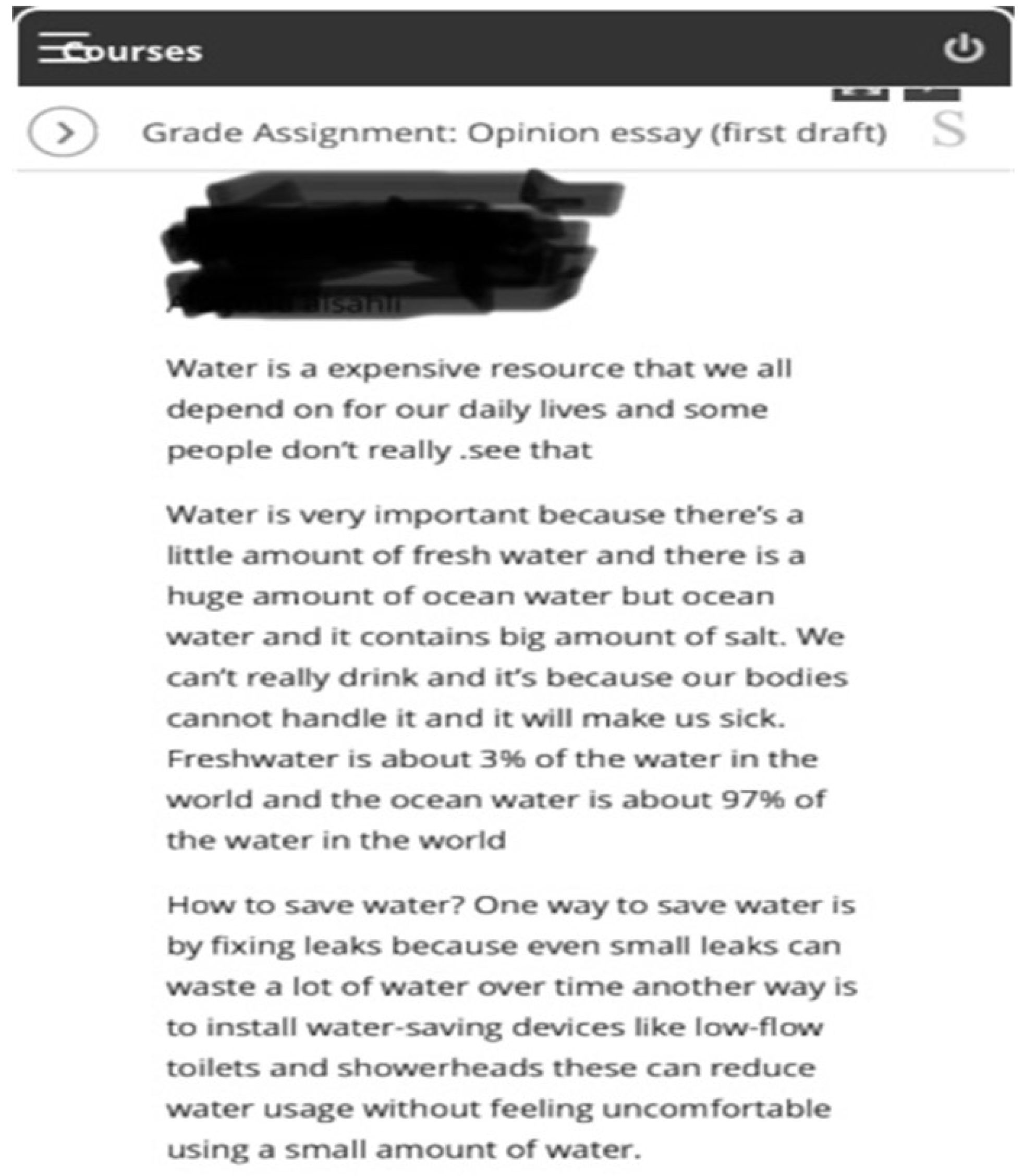
Figure 2.
YouTube video on climate change (ClickView, 2021).
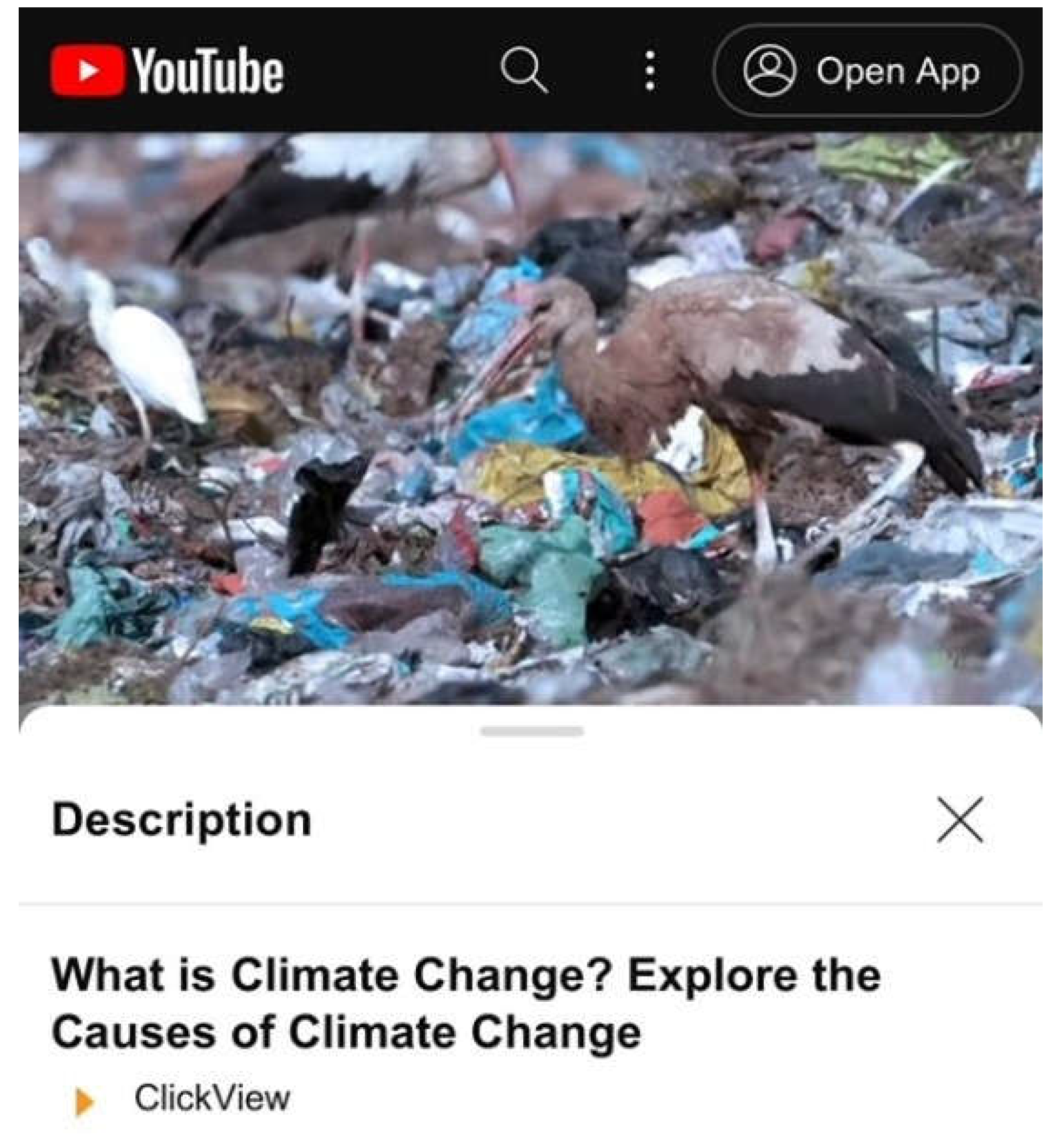
Figure 3.
YouTube video on water conservation (SciShow Kids, 2021).
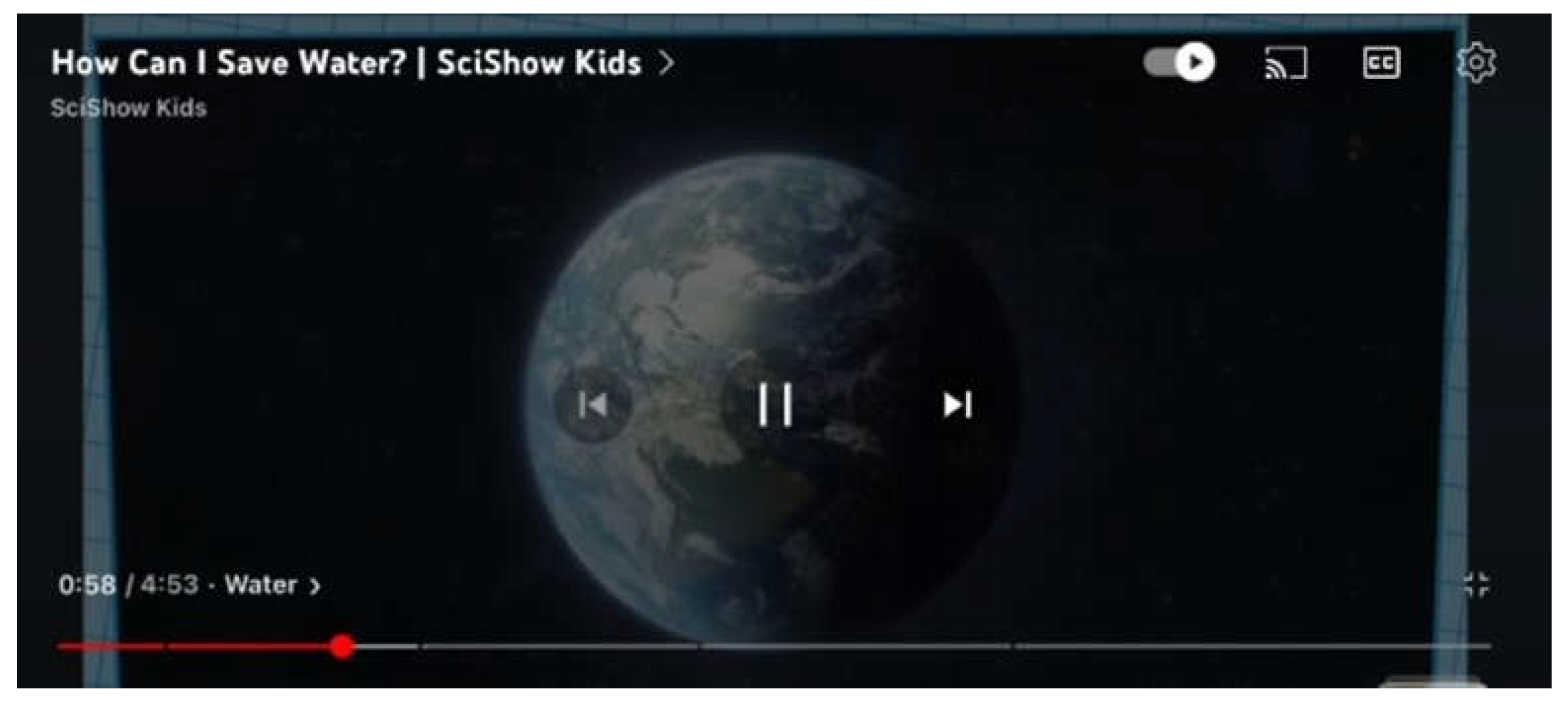
Table 3.
Pearson’s correlation coefficient between the axes and the total questionnaire scores.
| No. | Items | No of items | R |
|---|---|---|---|
| 1 | Variable 1: From threat to modernization scenarios | 6 | 0.955** |
| 2 | Variable 2: from moralizing to value-clarification approaches | 8 | 0.996** |
| 3 | Variable 3: From behavioural guidelines to competent decision-making | 5 | 0.979** |
| 4 | Variable 4: From transmissive to deliberative communication processes | 3 | 0.980** |
**Correlation is significant at the 0.01 level (2-tailed).
Table 4.
Means and standard deviations.
| No. | Item | Mean | Std. Deviation | Median | % | Ranking | Response |
|---|---|---|---|---|---|---|---|
| 3 |
In English language classes, I should learn about: Things that make the world a better place, not just facts. |
4.11 | 1.231 | 4 | 82.2 | 1 | Agree |
| 1 | Ways to act for sustainability rather than against it. | 4.00 | 0.686 | 4 | 80.0 | 2 | Agree |
| 2 | Finding new ways to solve environmental problems. | 4.00 | 0.840 | 4 | 80.0 | 3 | Agree |
| 4 | Finding ways to help the environment and communities. | 4.00 | 1.188 | 4 | 80.0 | 4 | Agree |
| 5 | Doing things that bring about positive change in the world. | 3.89 | 1.132 | 4 | 77.8 | 5 | Agree |
| 6 | Finding better solutions to problems like pollution and waste. | 3.89 | 1.132 | 4 | 77.8 | Agree | |
| Variable 1: From threat to modernization scenarios | 3.98 | 0.995 | 4 | 79.6 | Agree | ||
| 13 |
In English language classes, I should understand: That learning must come from trying new things and seeing what works, not just from reading or listening. |
4.11 | 1.231 | 4 | 82.2 | 1 | Agree |
| 11 | How learning should come from trying new things and learning from our mistakes. | 4.00 | 1.283 | 4 | 80.0 | 2 | Agree |
| 14 | That learning should encourage us to care for both nature and people in our communities. | 4.00 | 1.188 | 4 | 80.0 | 3 | Agree |
| 9 | Why things like fairness and protecting nature are important. | 3.89 | 1.132 | 4 | 77.8 | 4 | Agree |
| 7 | What is good, and that it is important. | 3.78 | 1.353 | 4 | 75.6 | 5 | Agree |
| 10 | Why treating everyone fairly and equally is important. | 3.78 | 1.166 | 4 | 75.6 | 6 | Agree |
| 12 | How our actions affect the Earth and its ecosystems (e.g. a community or group of living organisms that live in and interact with each other in a specific environment). | 3.56 | 1.464 | 4 | 71.1 | 7 | Agree |
| 8 | Why questioning my own attitudes and values regarding sustainability is essential. | 3.44 | 1.294 | 4 | 68.9 | 8 | Agree |
| Variable 2: From moralizing to value-clarification approaches | 3.82 | 1.159 | 4 | 76.4 | Agree | ||
| 19 |
Learning in language classes must be built on: Taking action to make things better for nature and for people. |
4.11 | 1.231 | 4 | 82.2 | 1 | Agree |
| 15 | Helping us to make smart choices, not just telling us what to do. | 3.78 | 1.263 | 4 | 75.6 | 2 | Agree |
| 16 | Teaching us how to make good decisions for the future, not just to follow rules. | 3.78 | 1.592 | 4 | 75.6 | 3 | Agree |
| 17 | Teaching us how to make smart decisions that help protect the environment. | 3.67 | 1.534 | 4 | 73.3 | 4 | Agree |
| 18 | Helping us to make decisions that affect the environment and others positively. | 3.67 | 1.283 | 4 | 73.3 | 5 | Agree |
| Variable 3: From behavioural guidelines to competent decision-making | 3.80 | 1.265 | 4 | 76.0 | Agree | ||
| 22 |
Learning in language classes must encourage us to: Share our ideas and work with others to solve environmental problems. |
4.00 | 1.188 | 4 | 80.0 | 1 | Agree |
| 21 | Talk to others and share ideas to solve problems together. | 3.78 | 1.353 | 4 | 75.6 | 2 | Agree |
| 20 | Talk to others and listen to their ideas, rather than just listening to the teacher. | 3.56 | 1.542 | 4 | 71.1 | 3 | Agree |
| Variable 4: From transmissive to deliberative communication processes | 3.78 | 1.304 | 4 | 75.6 | Agree | ||
| Total | 3.84 | 1.155 | 4 | 76.9 | Agree |
Disclaimer/Publisher’s Note: The statements, opinions and data contained in all publications are solely those of the individual author(s) and contributor(s) and not of MDPI and/or the editor(s). MDPI and/or the editor(s) disclaim responsibility for any injury to people or property resulting from any ideas, methods, instructions or products referred to in the content. |
© 2024 by the authors. Licensee MDPI, Basel, Switzerland. This article is an open access article distributed under the terms and conditions of the Creative Commons Attribution (CC BY) license (http://creativecommons.org/licenses/by/4.0/).
Copyright: This open access article is published under a Creative Commons CC BY 4.0 license, which permit the free download, distribution, and reuse, provided that the author and preprint are cited in any reuse.


