

Submitted:
29 September 2024
Posted:
14 October 2024
You are already at the latest version
Abstract
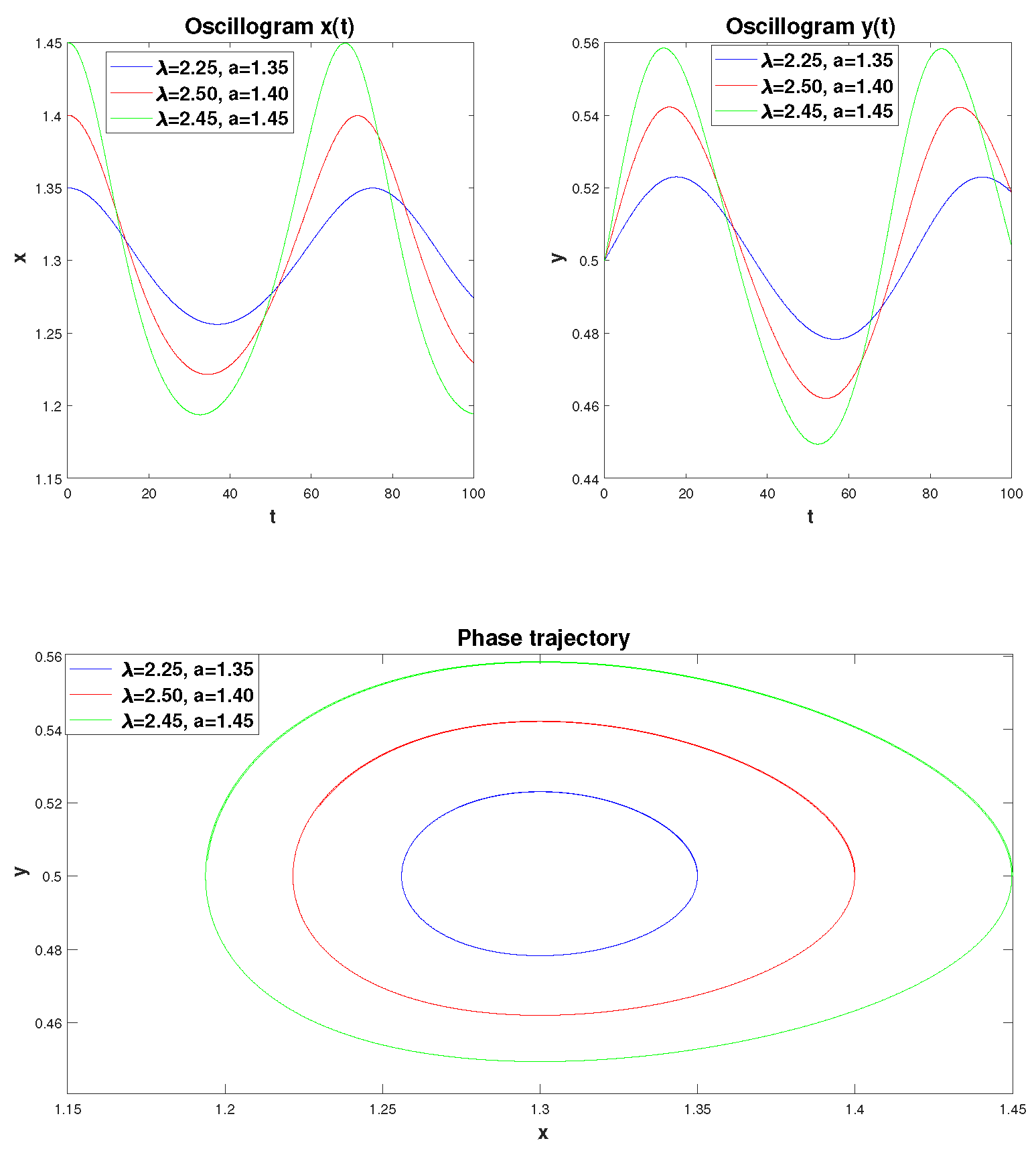
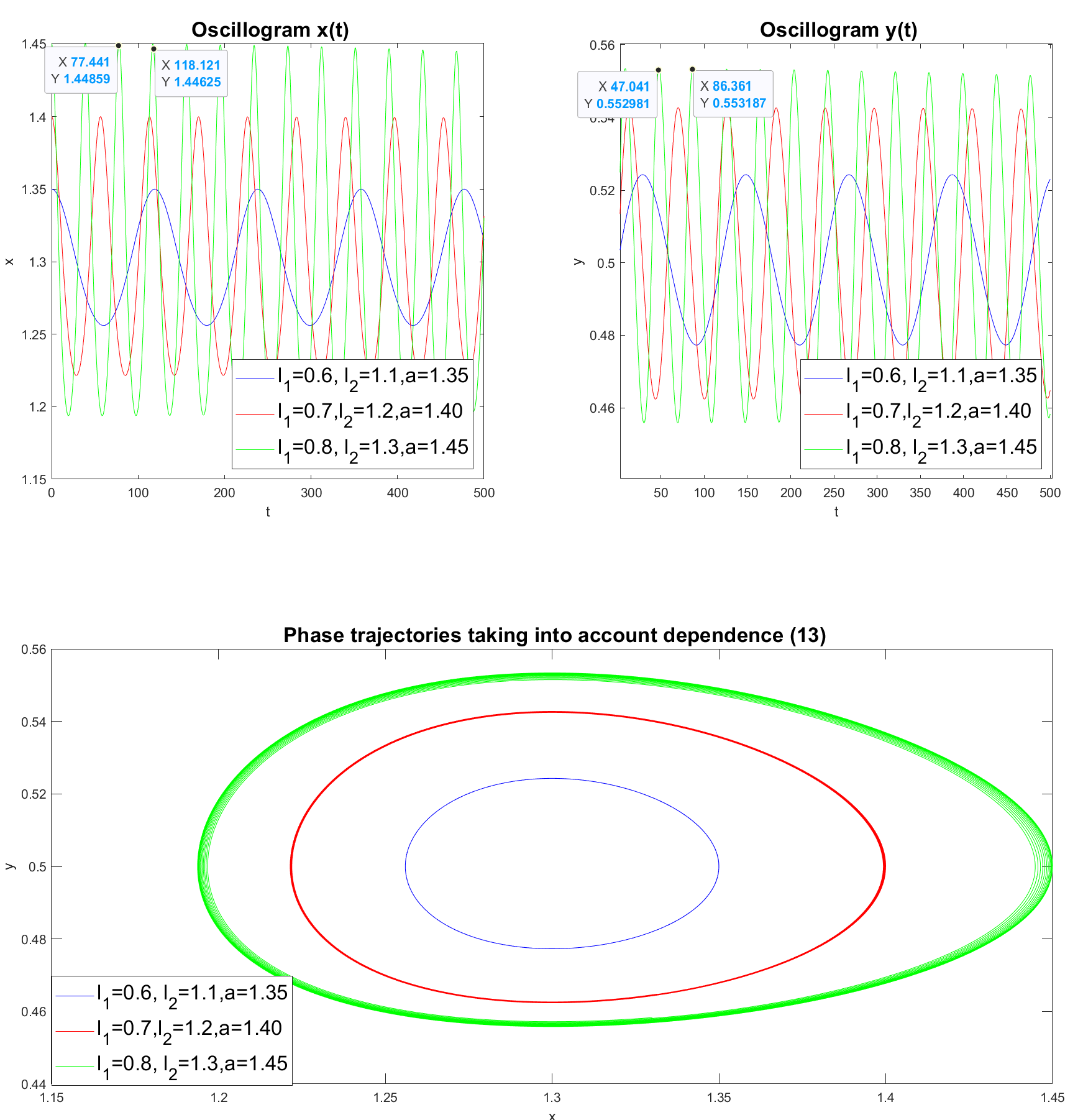
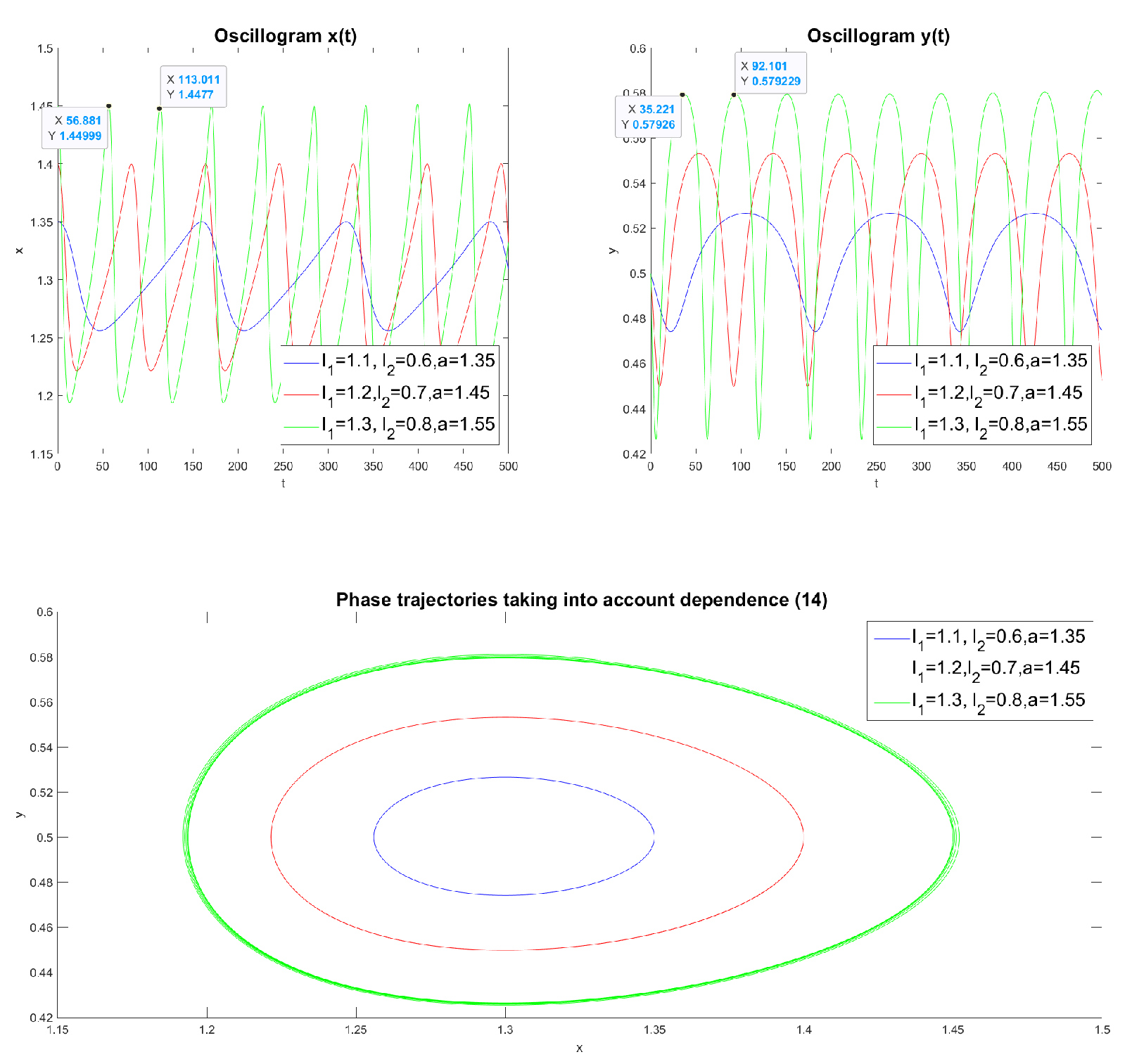
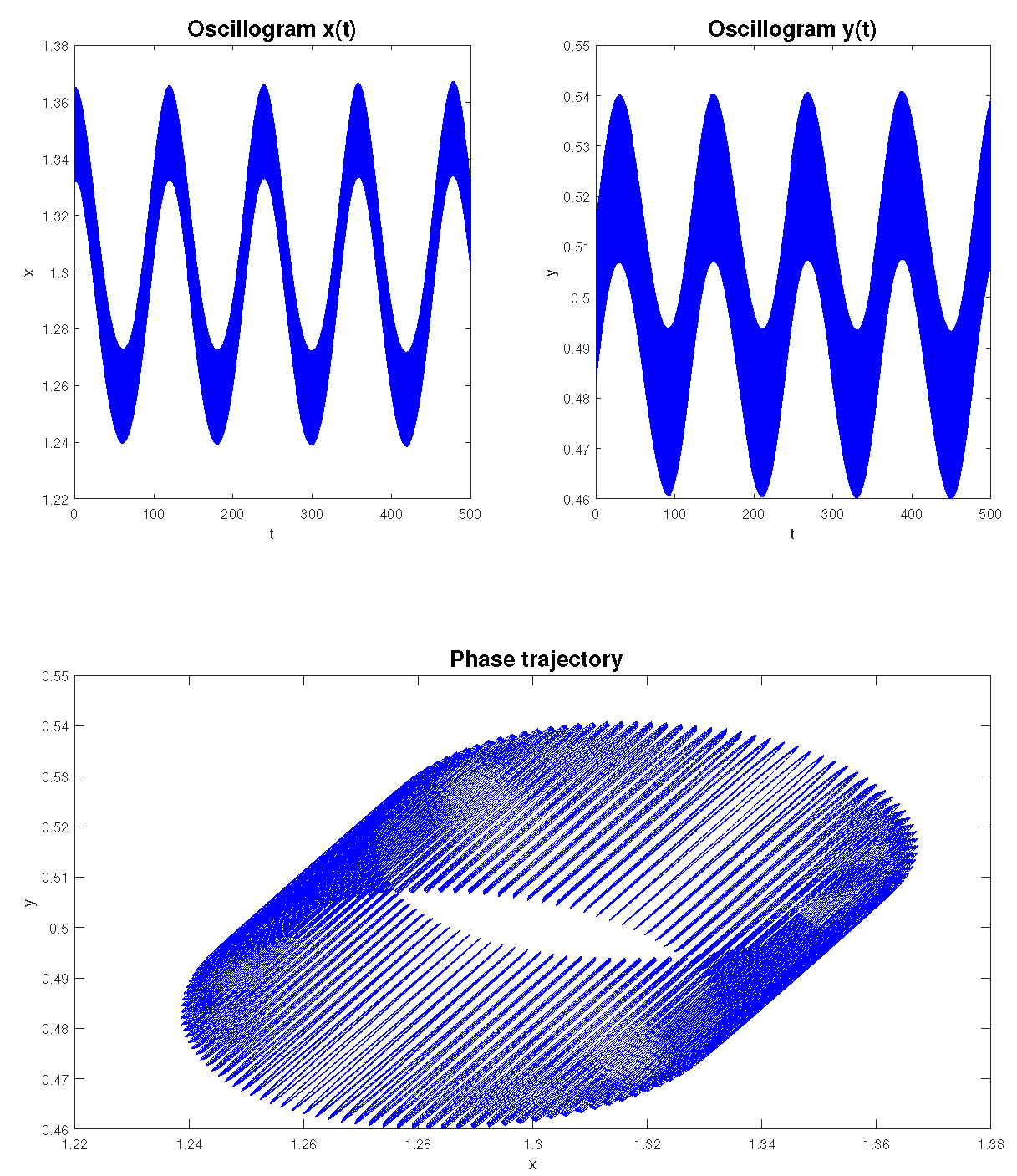
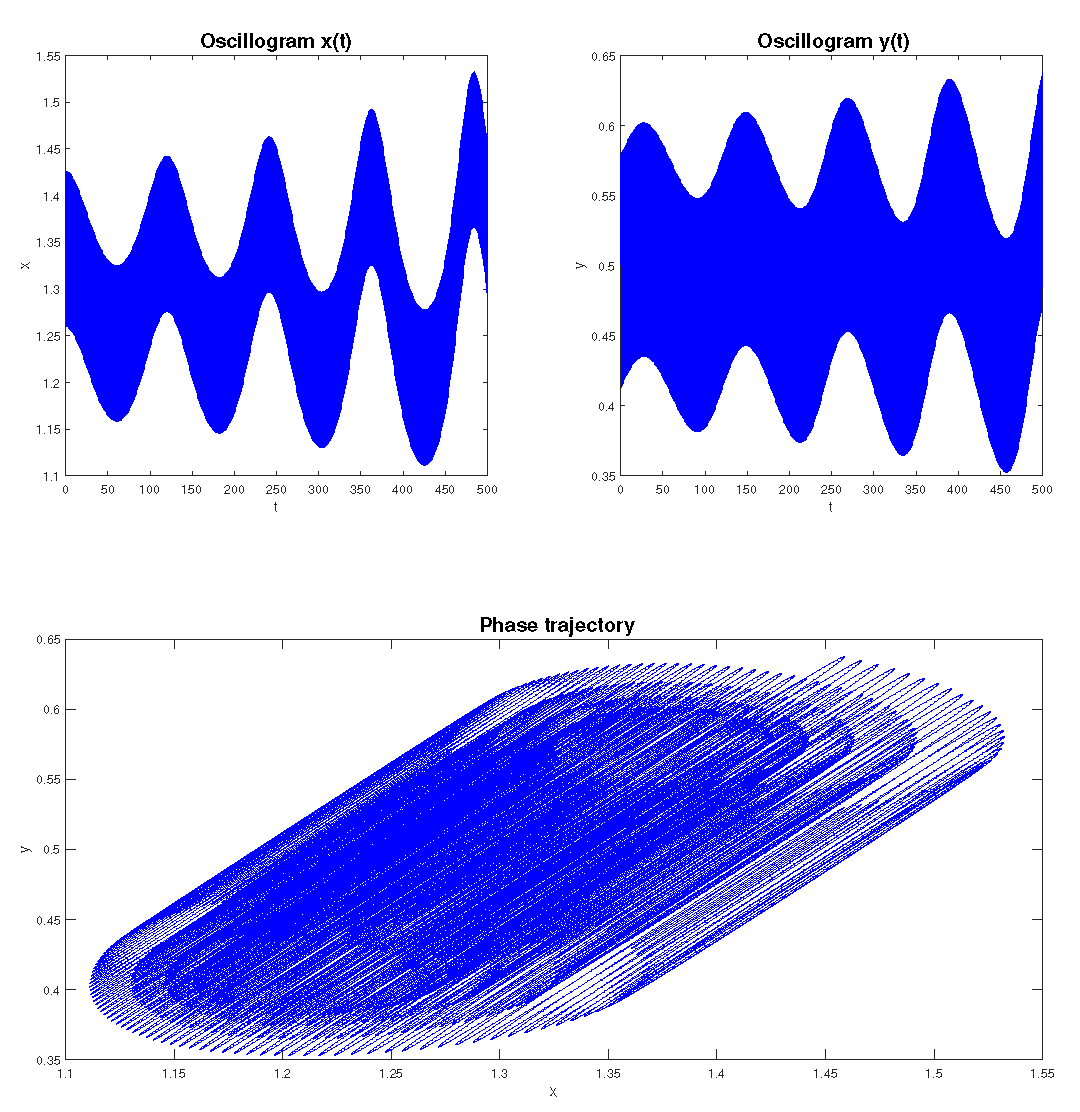
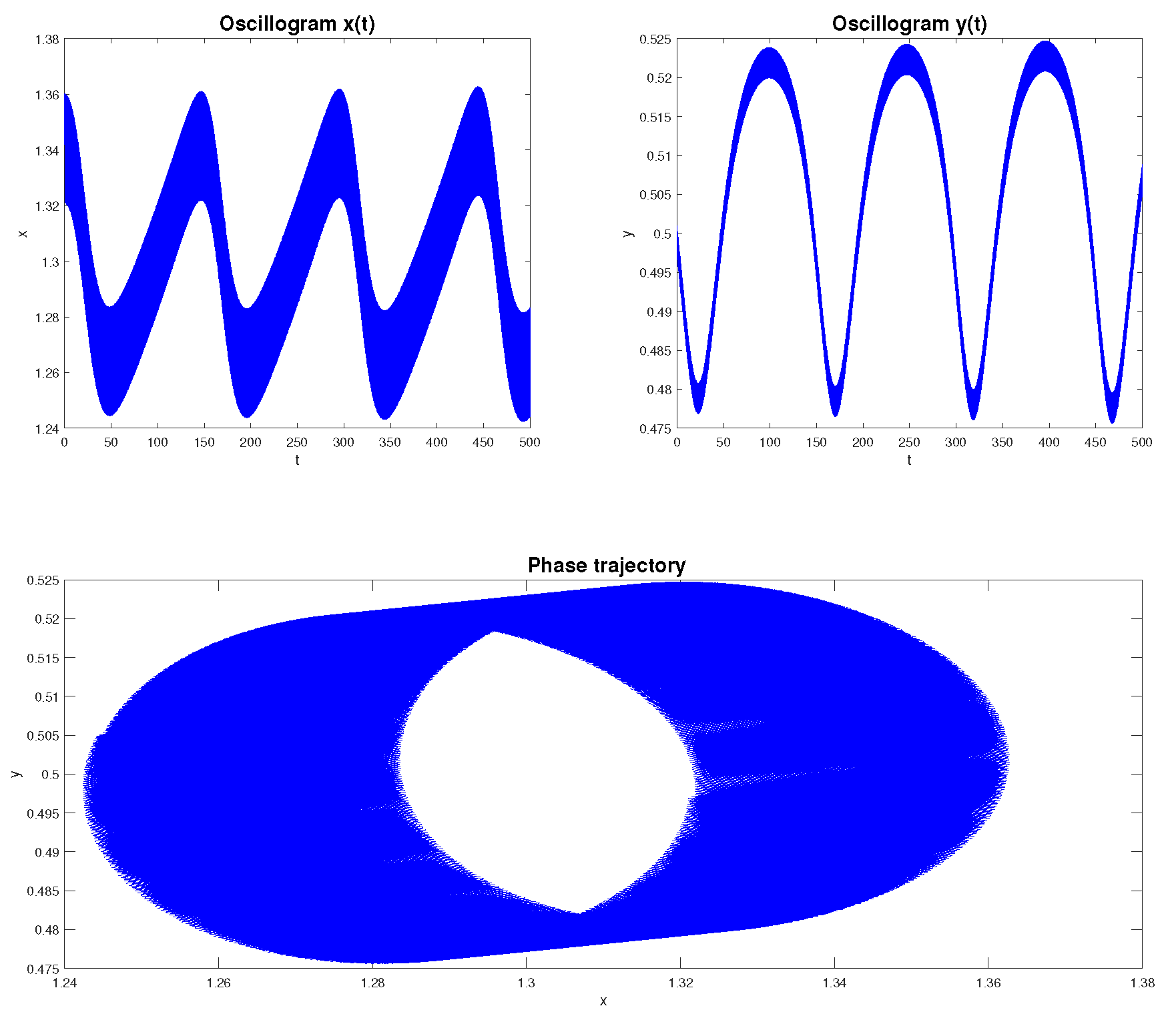
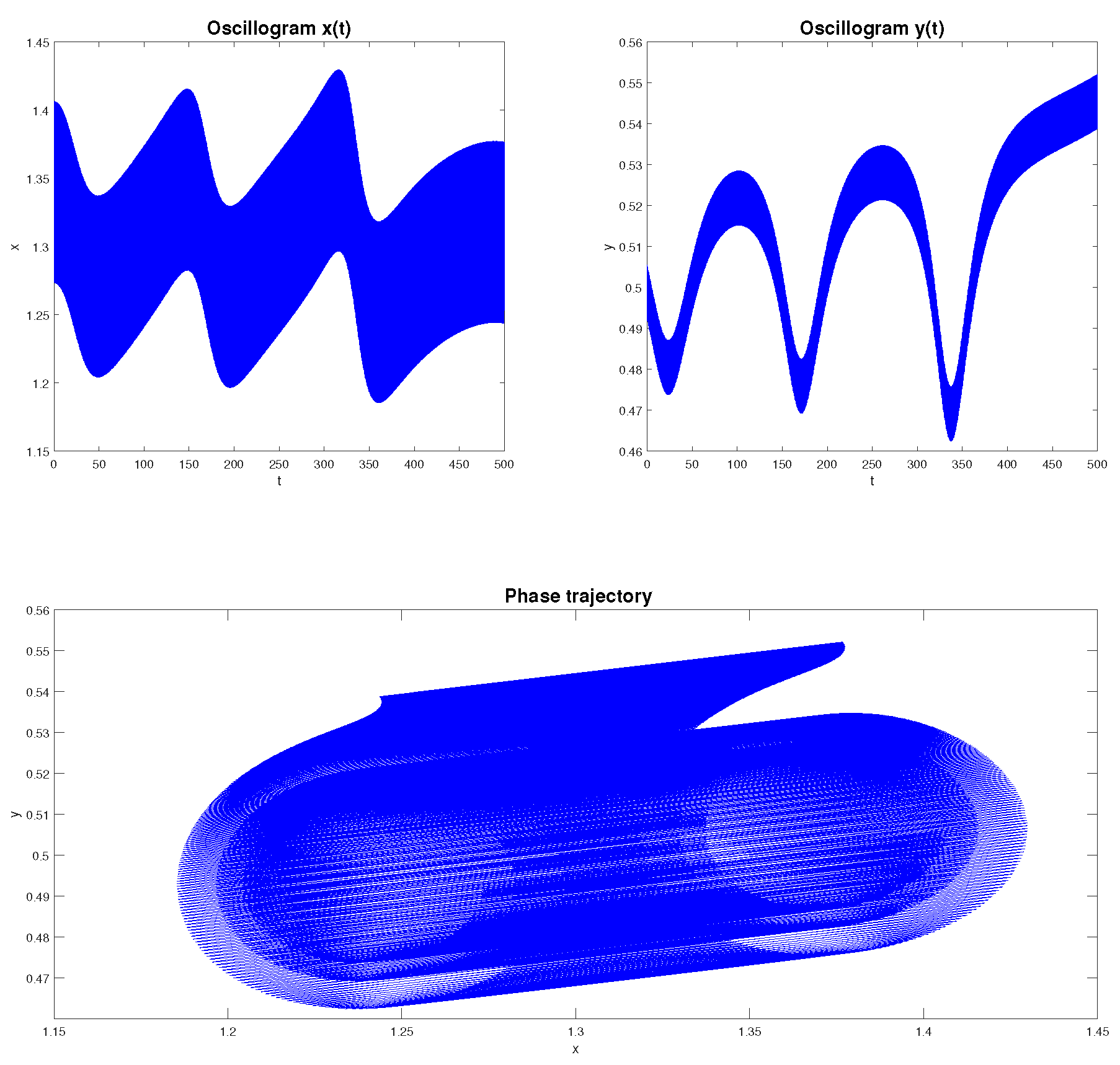
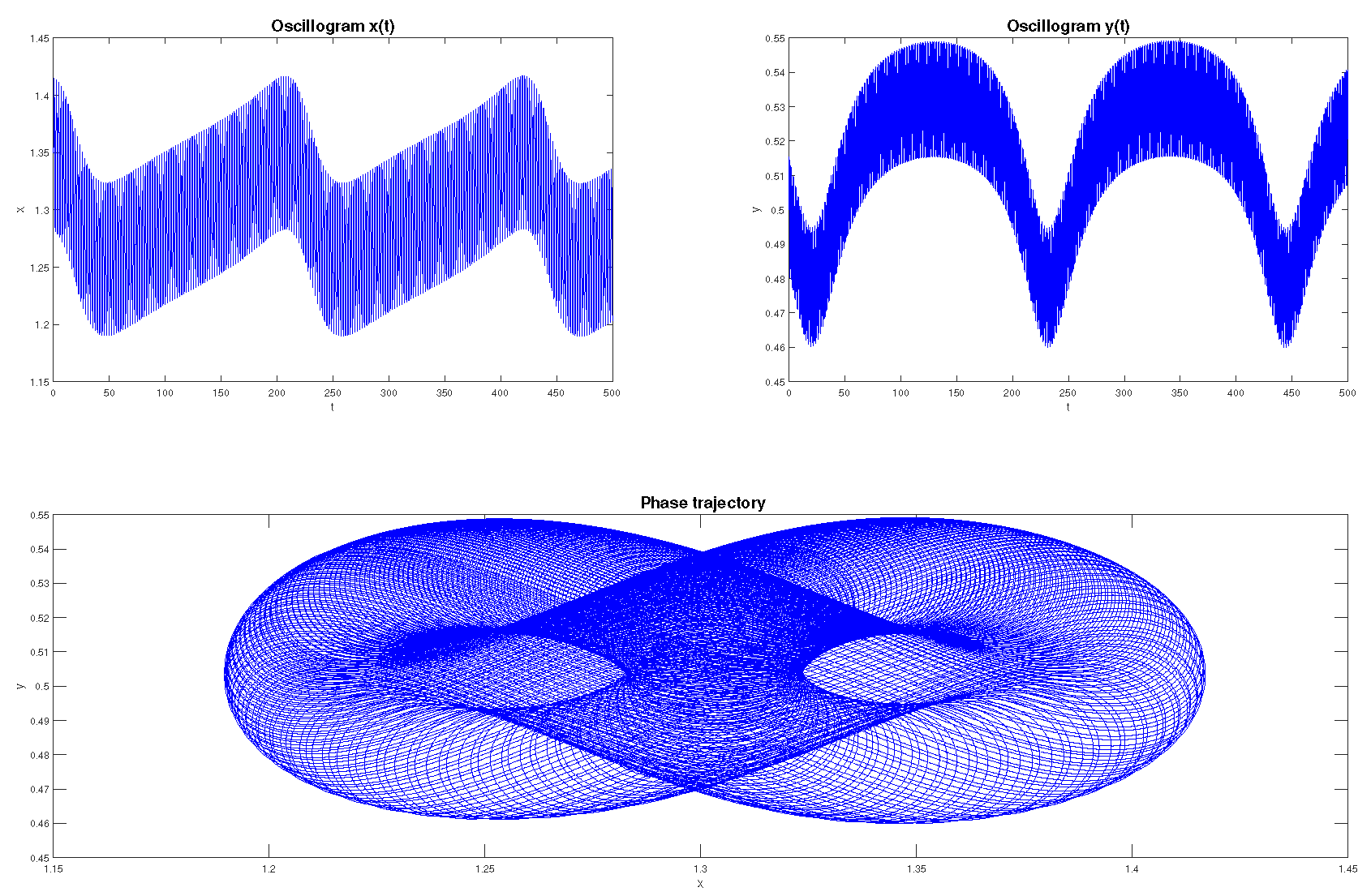
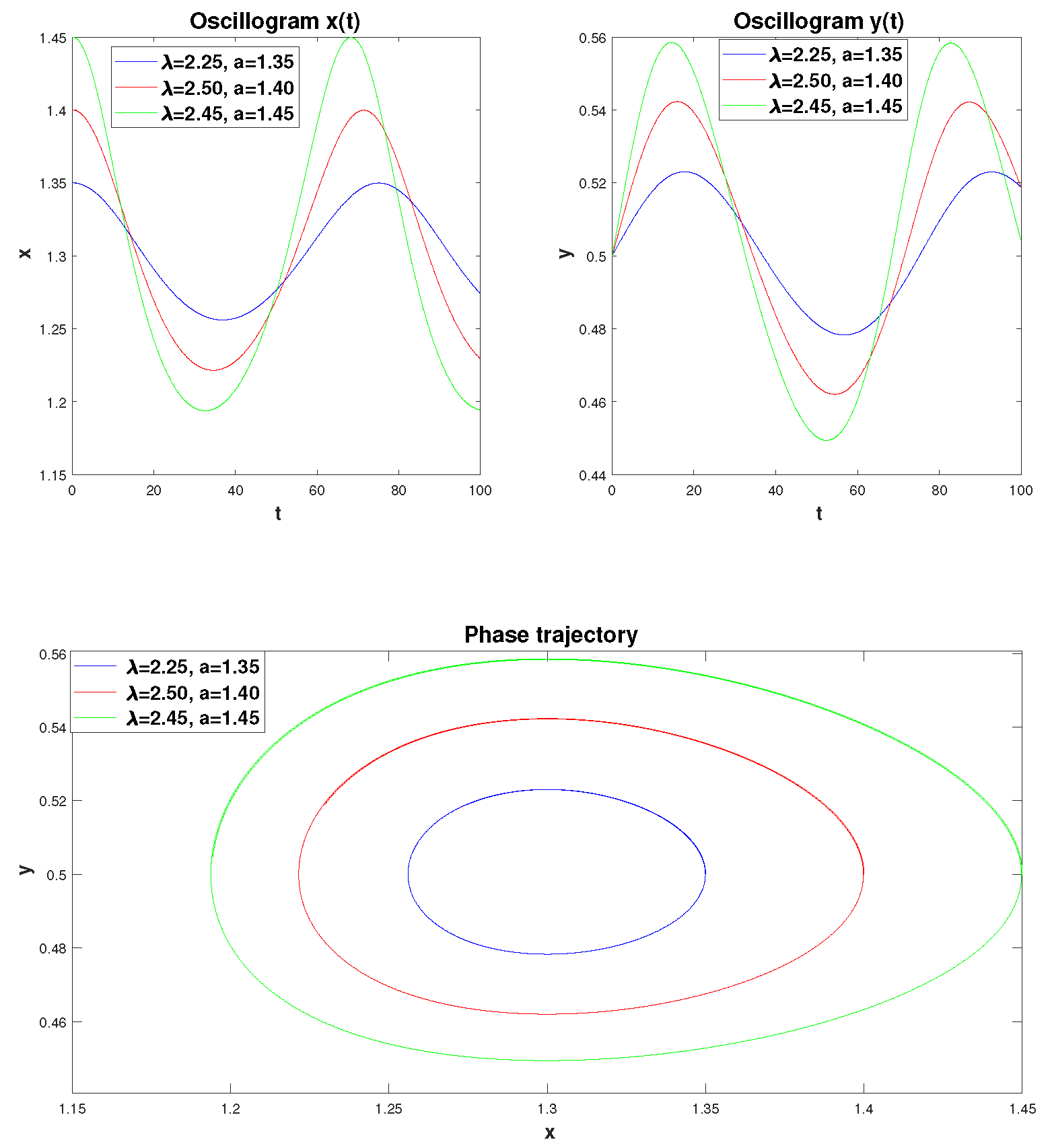
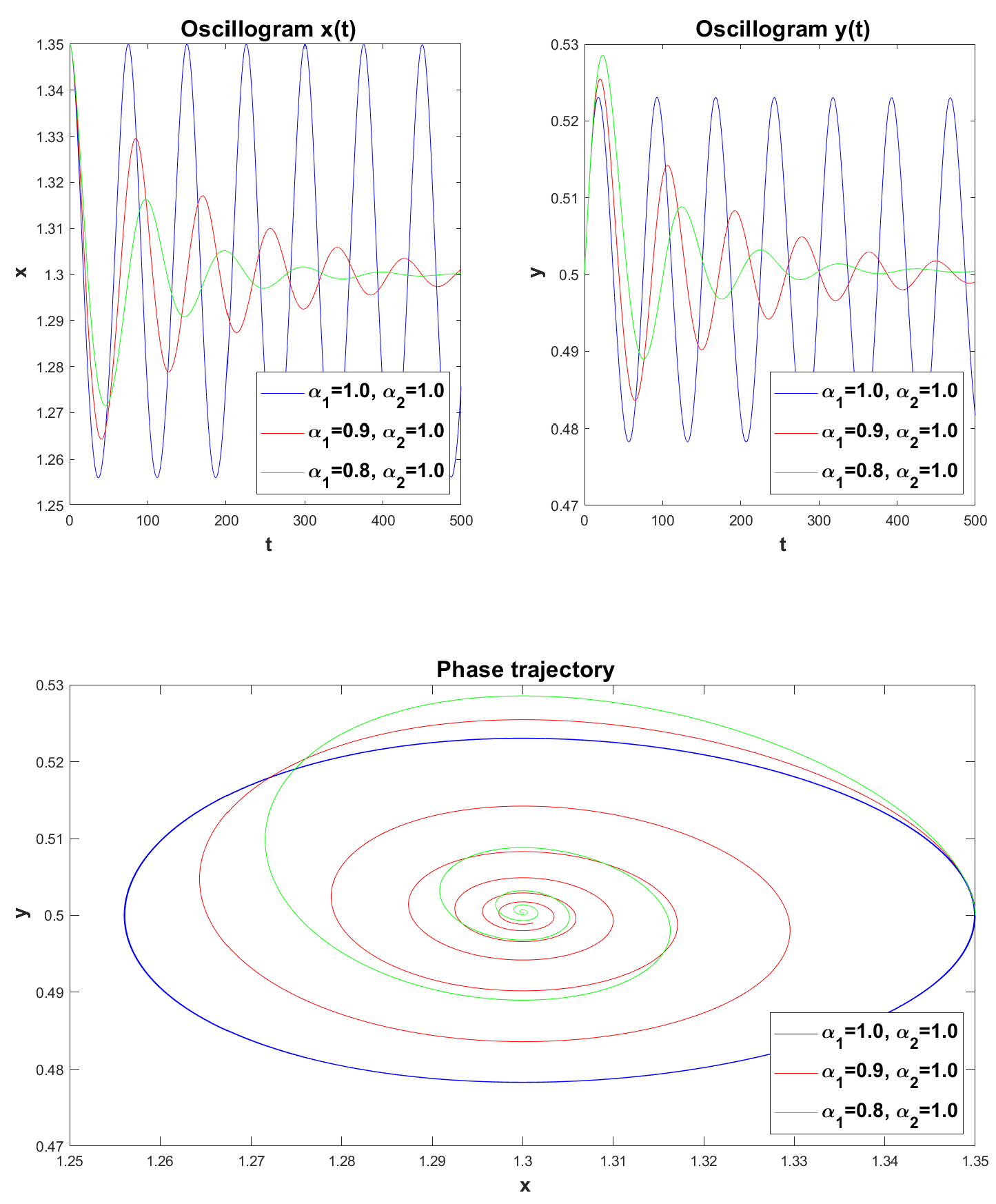
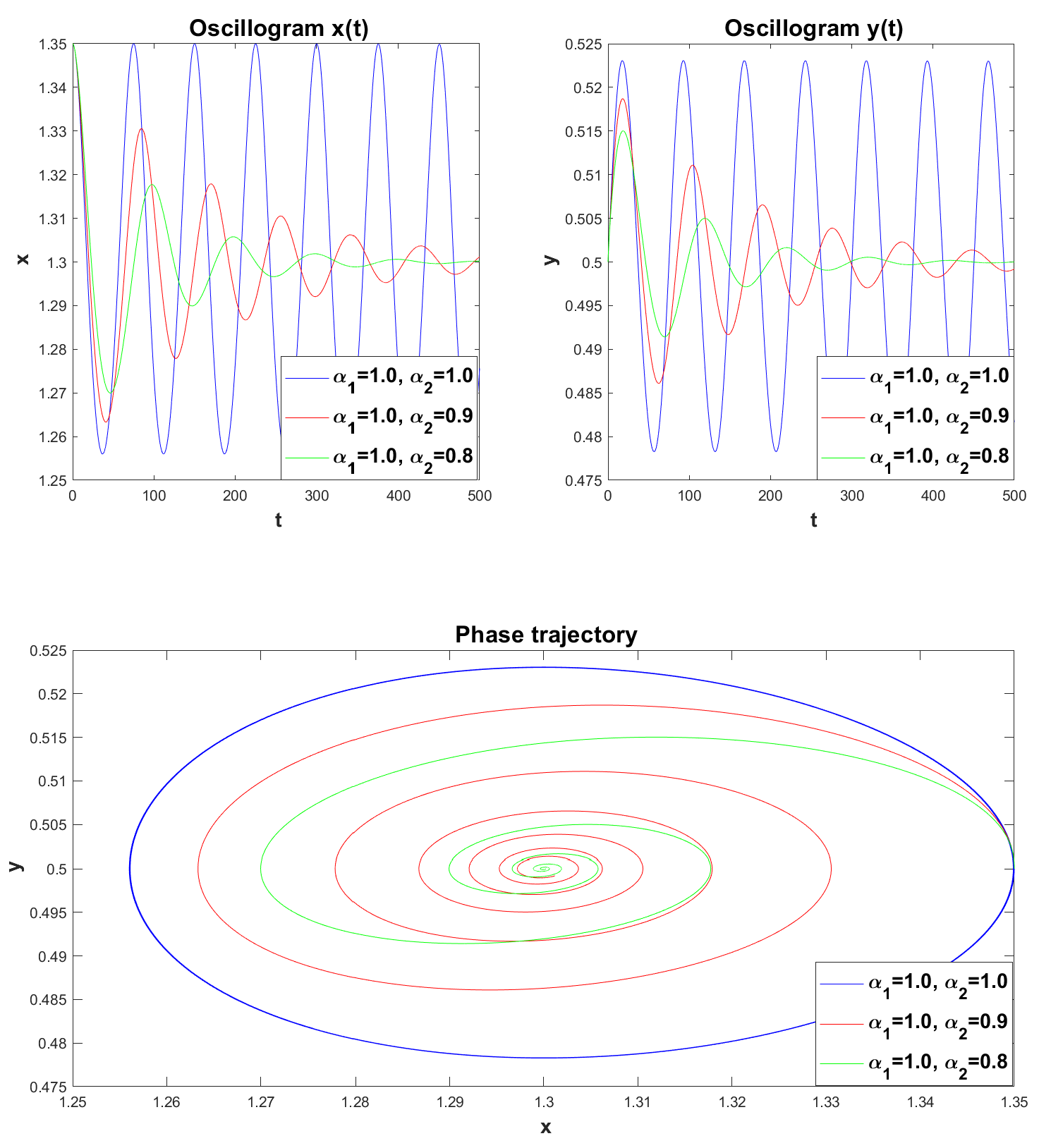
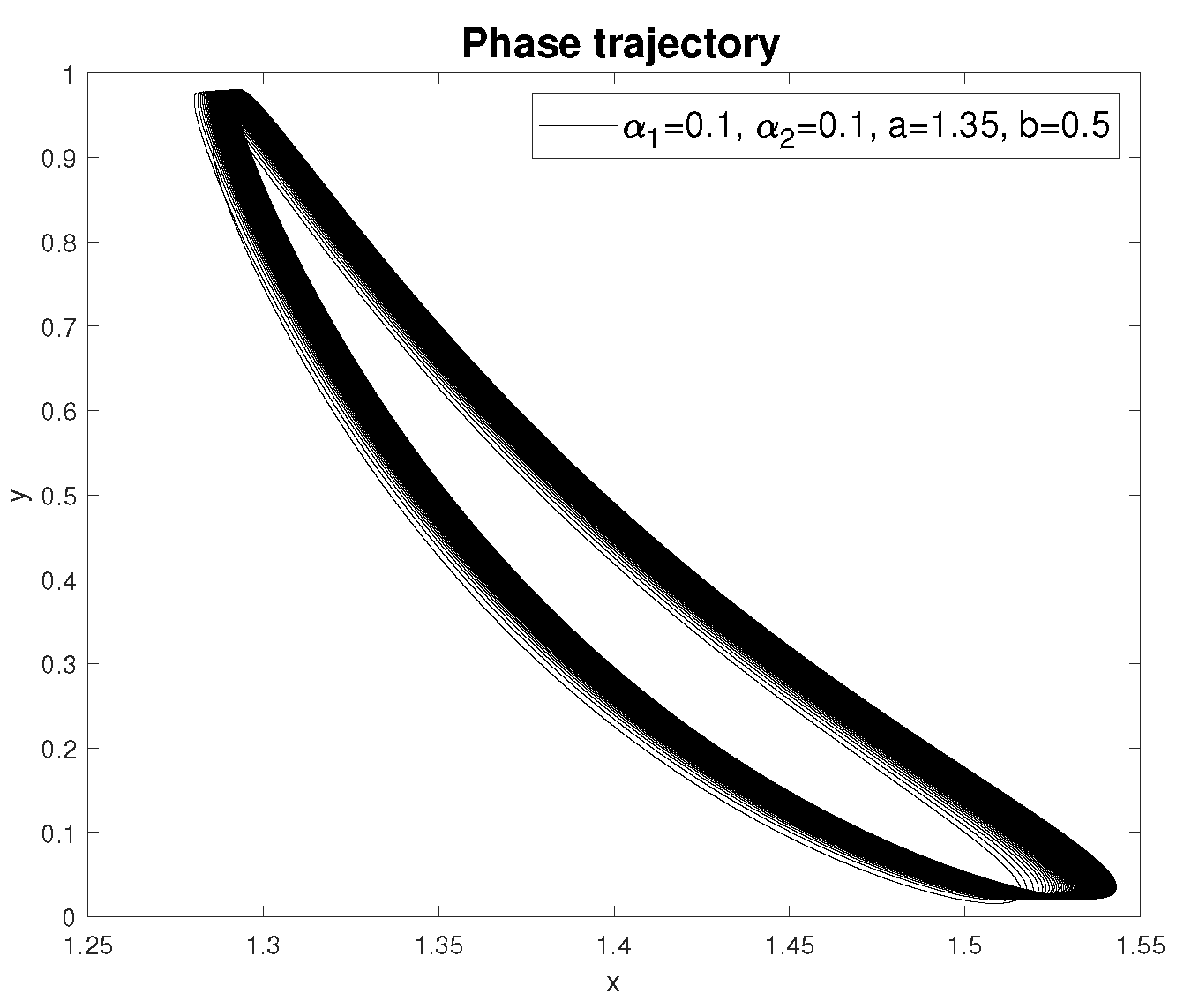
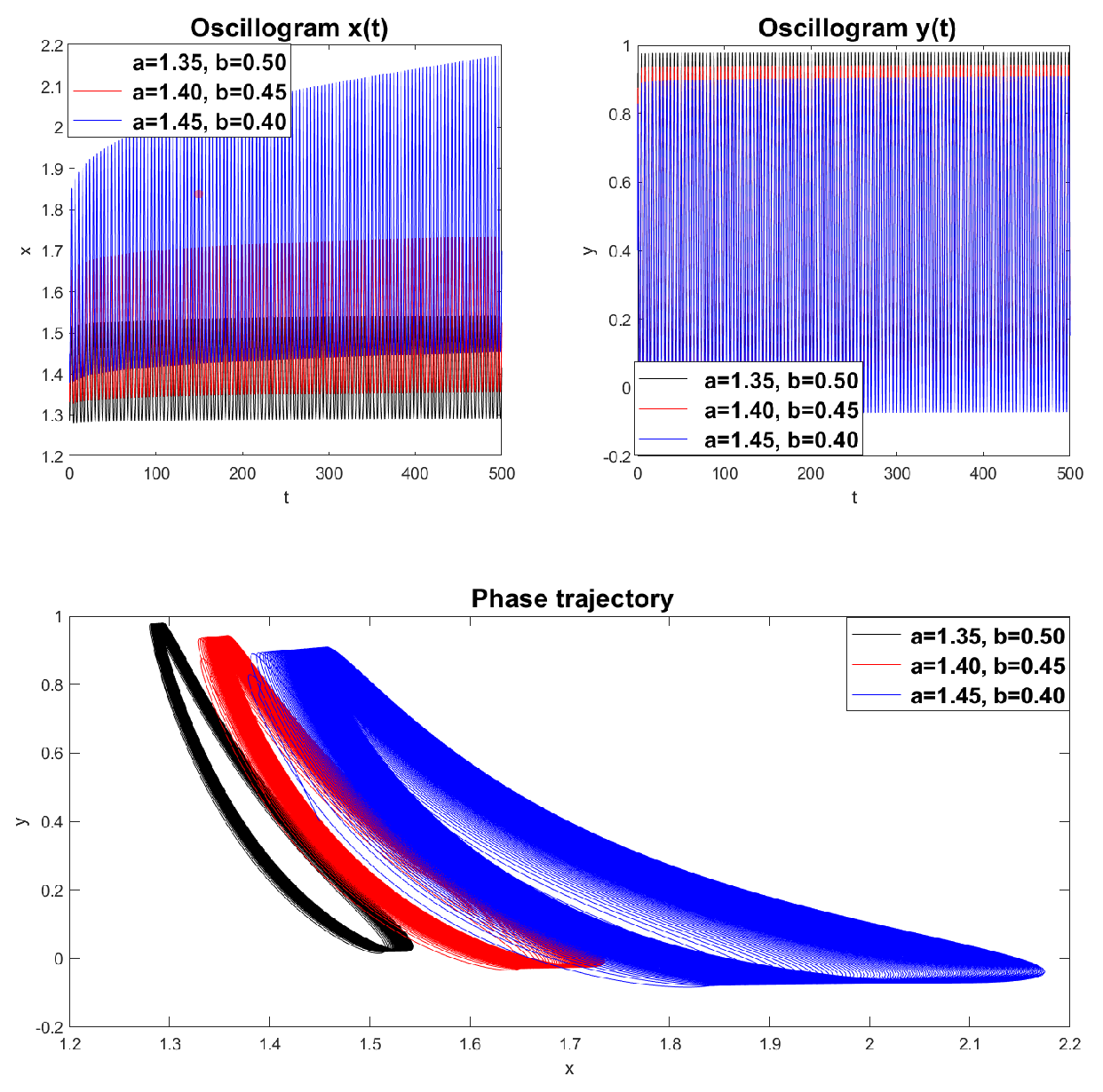
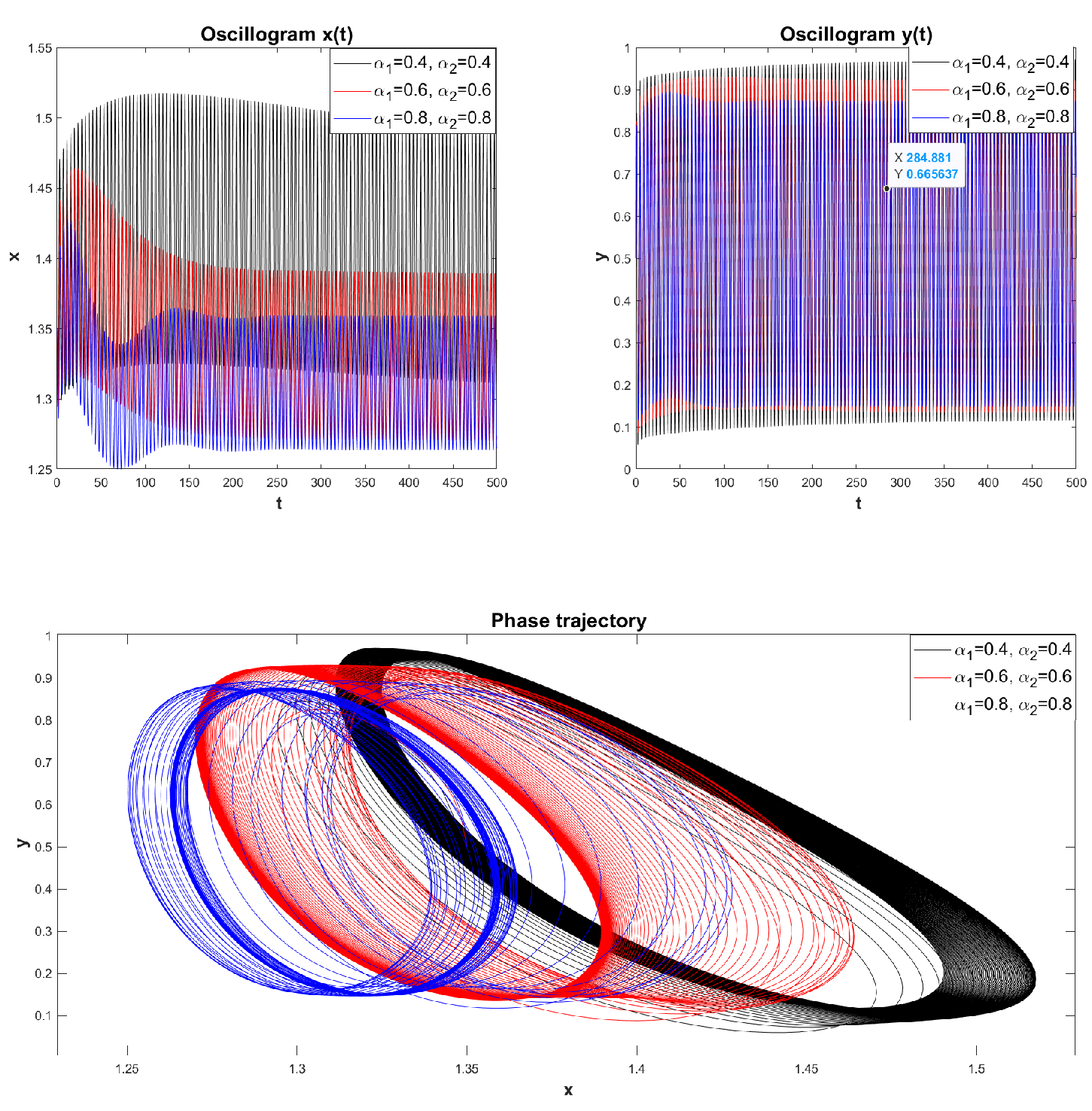
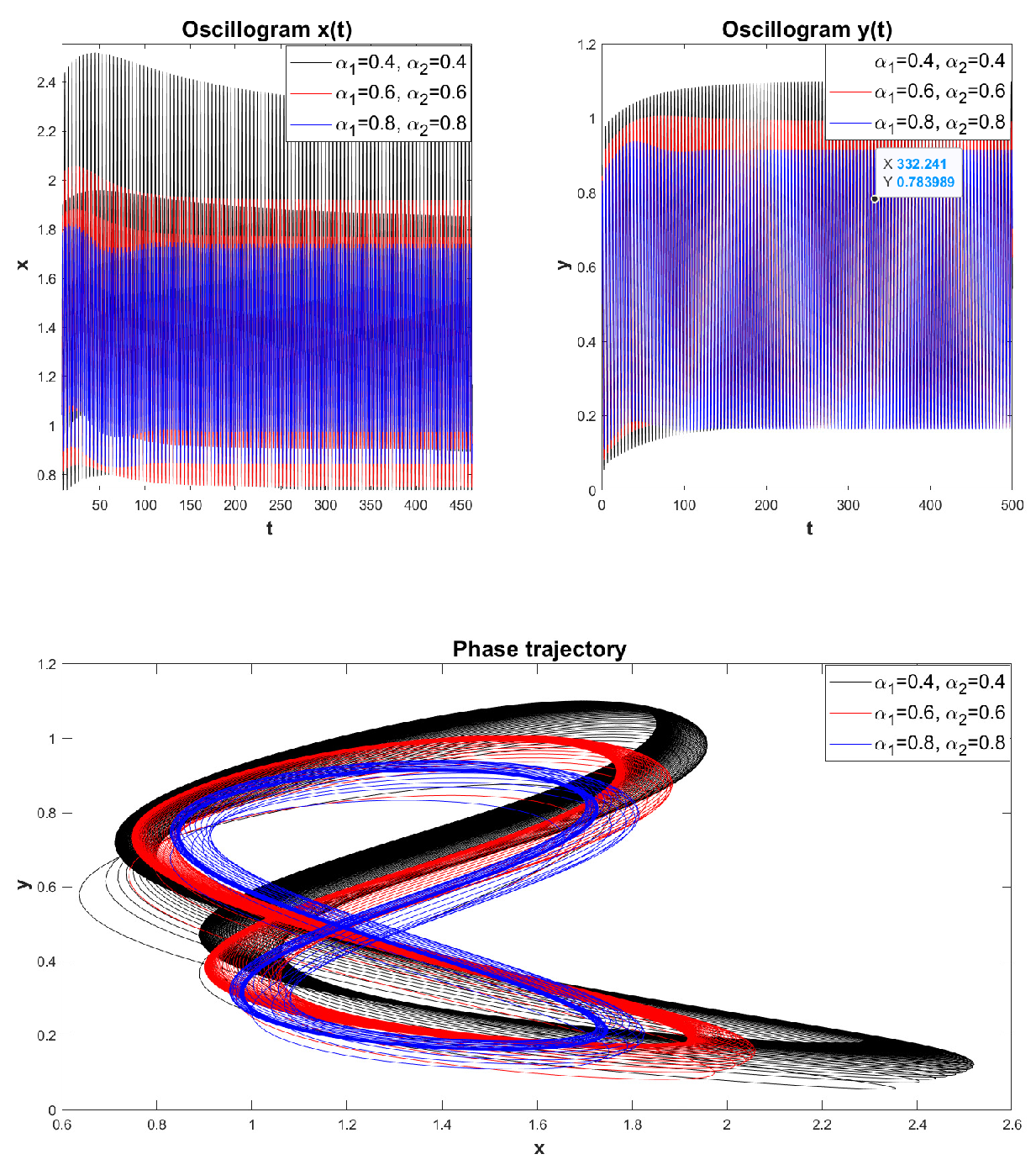
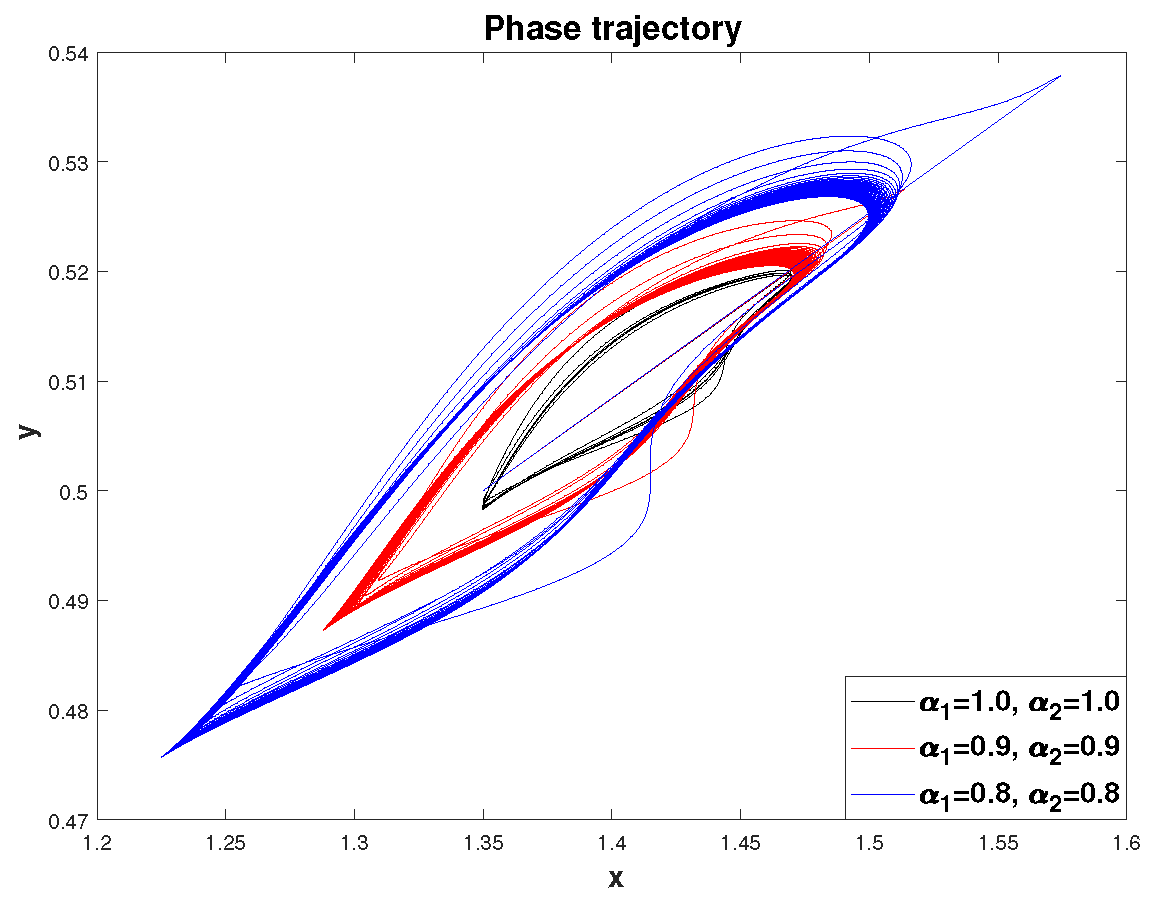
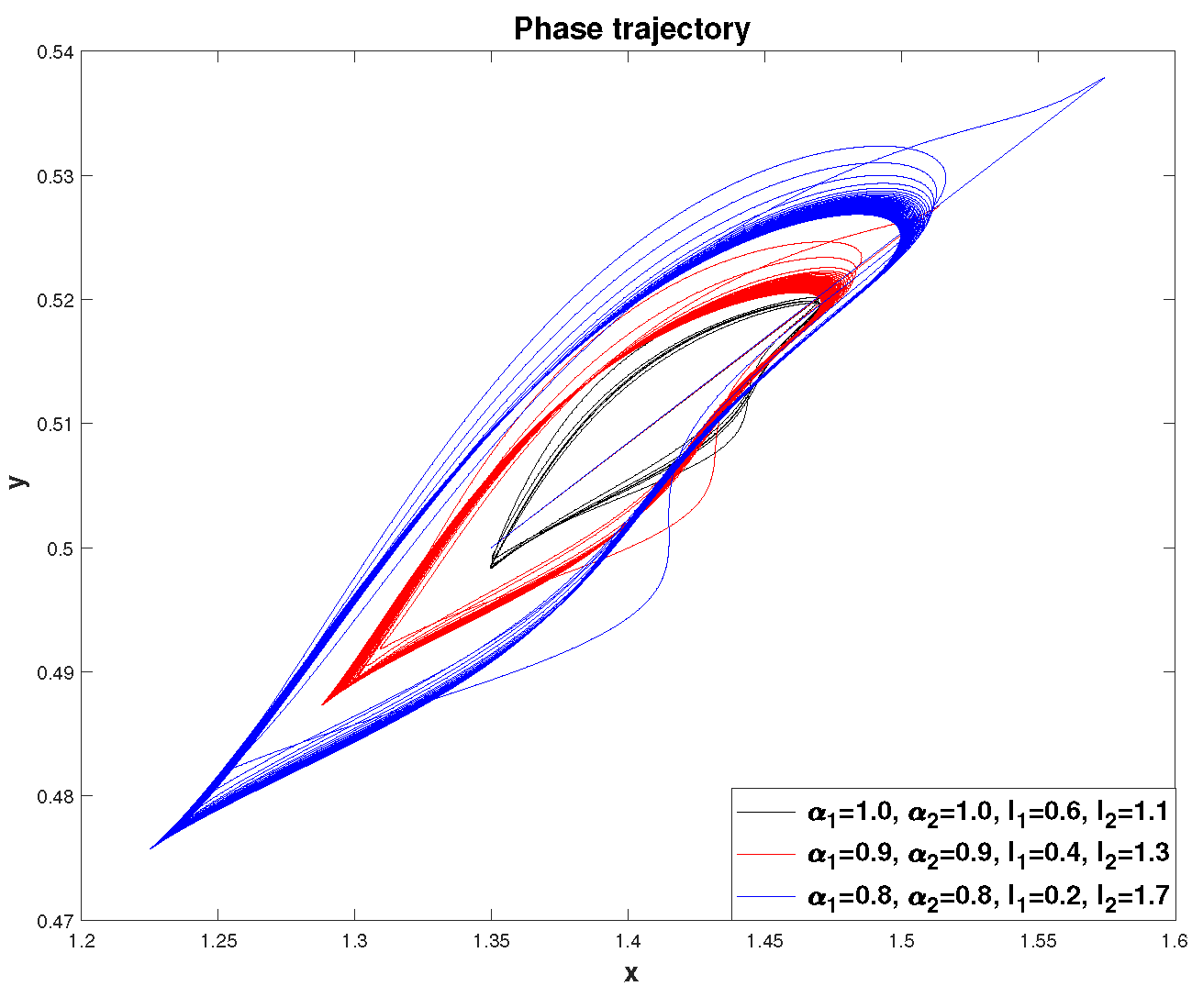
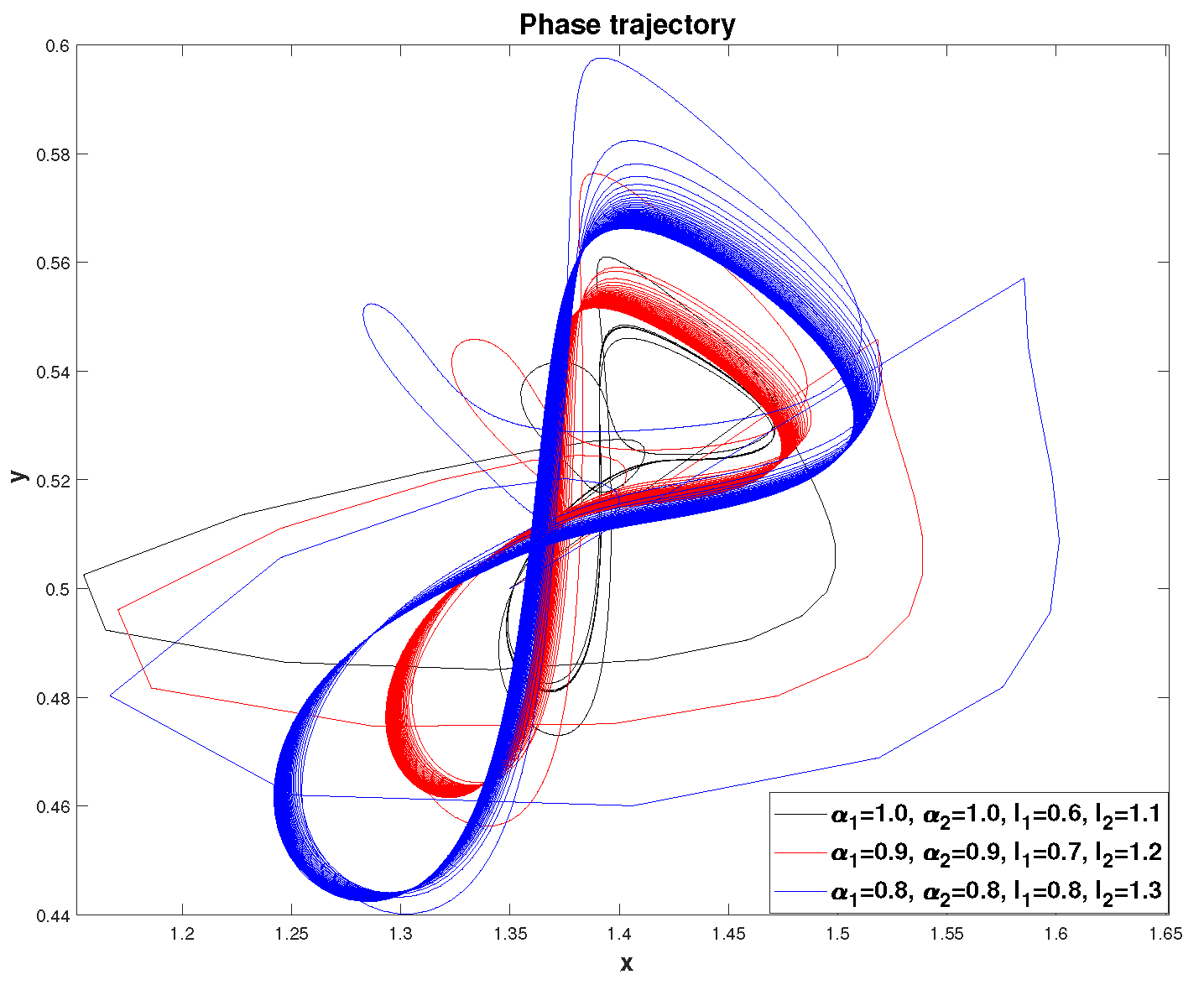
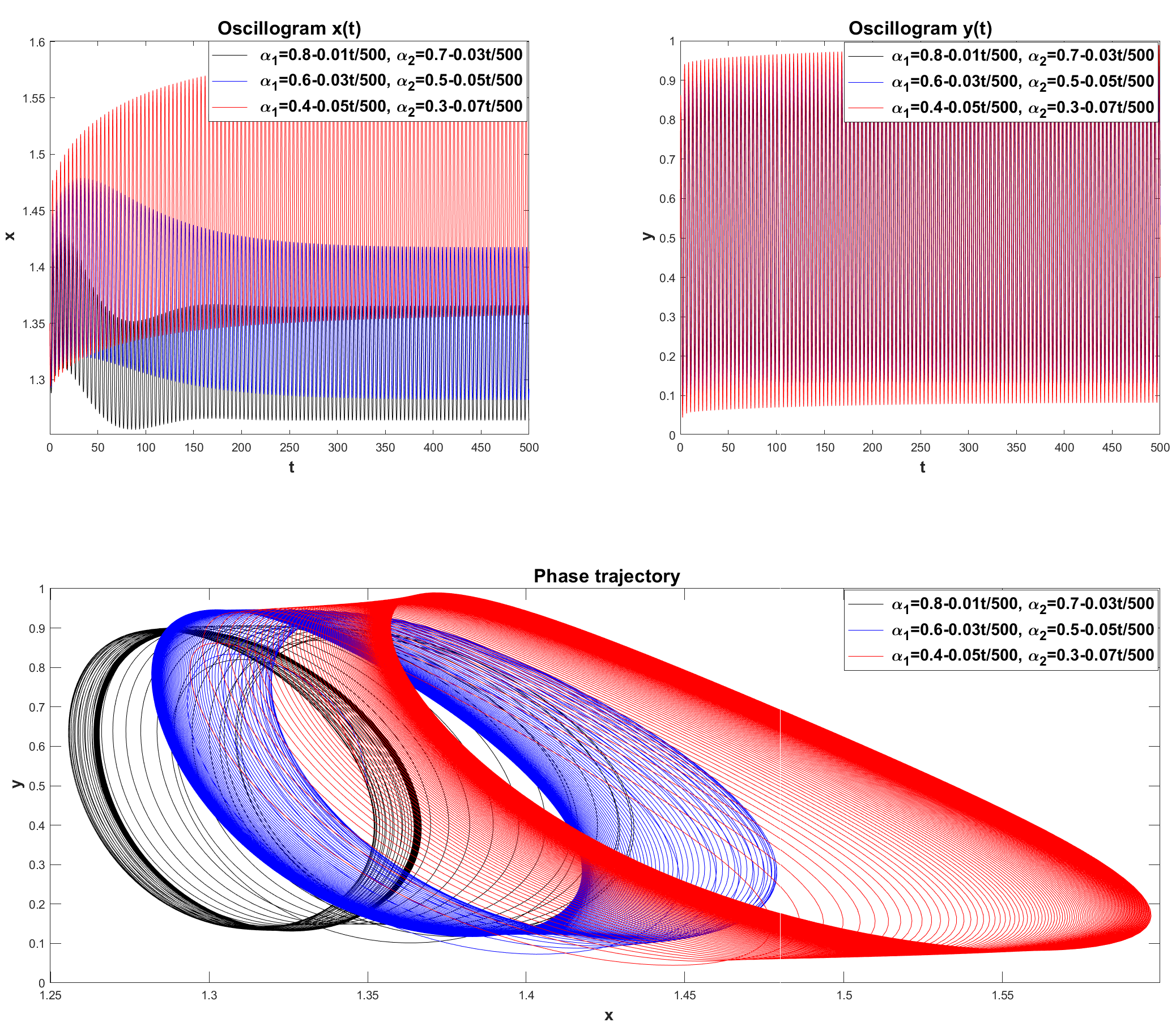
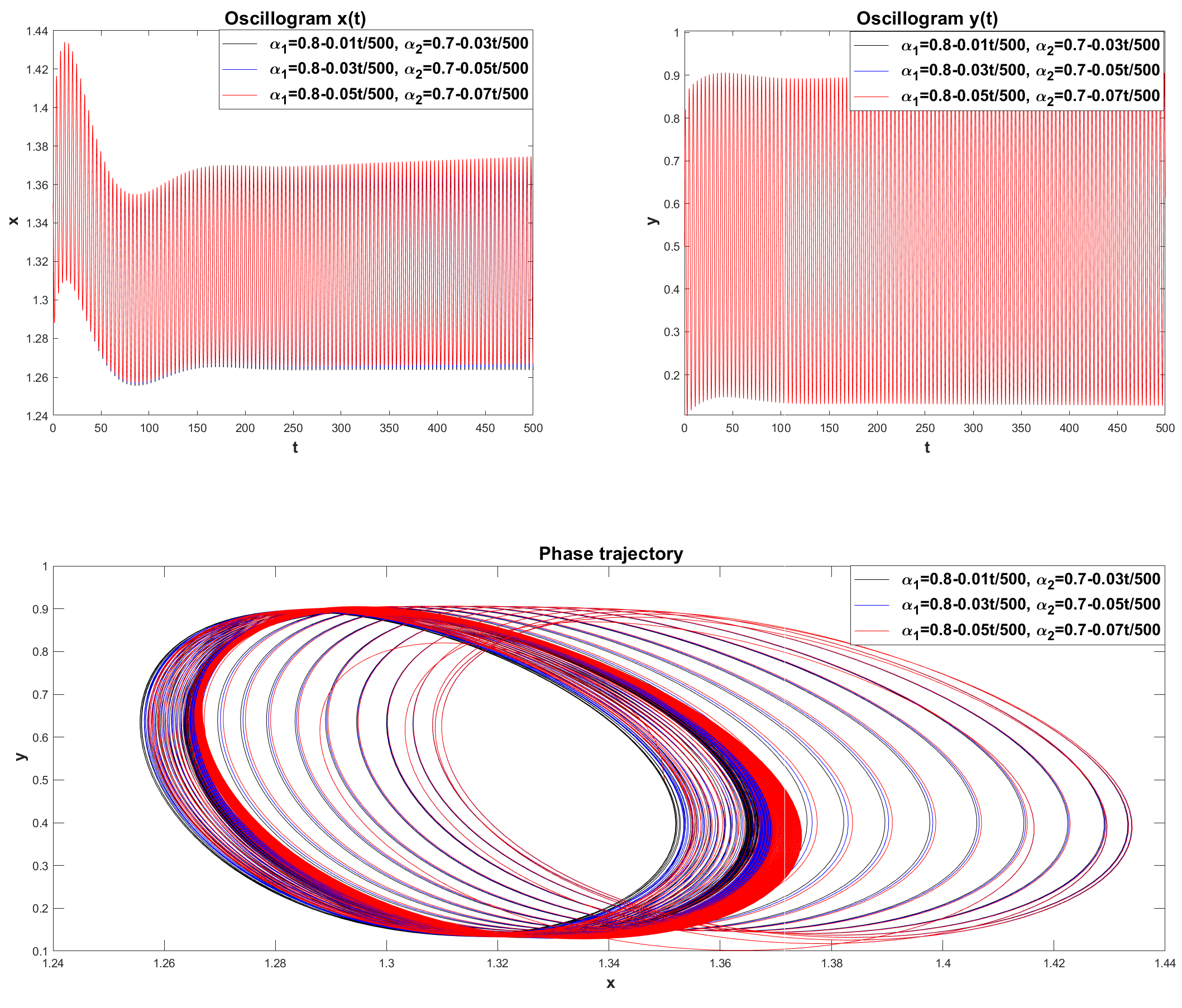
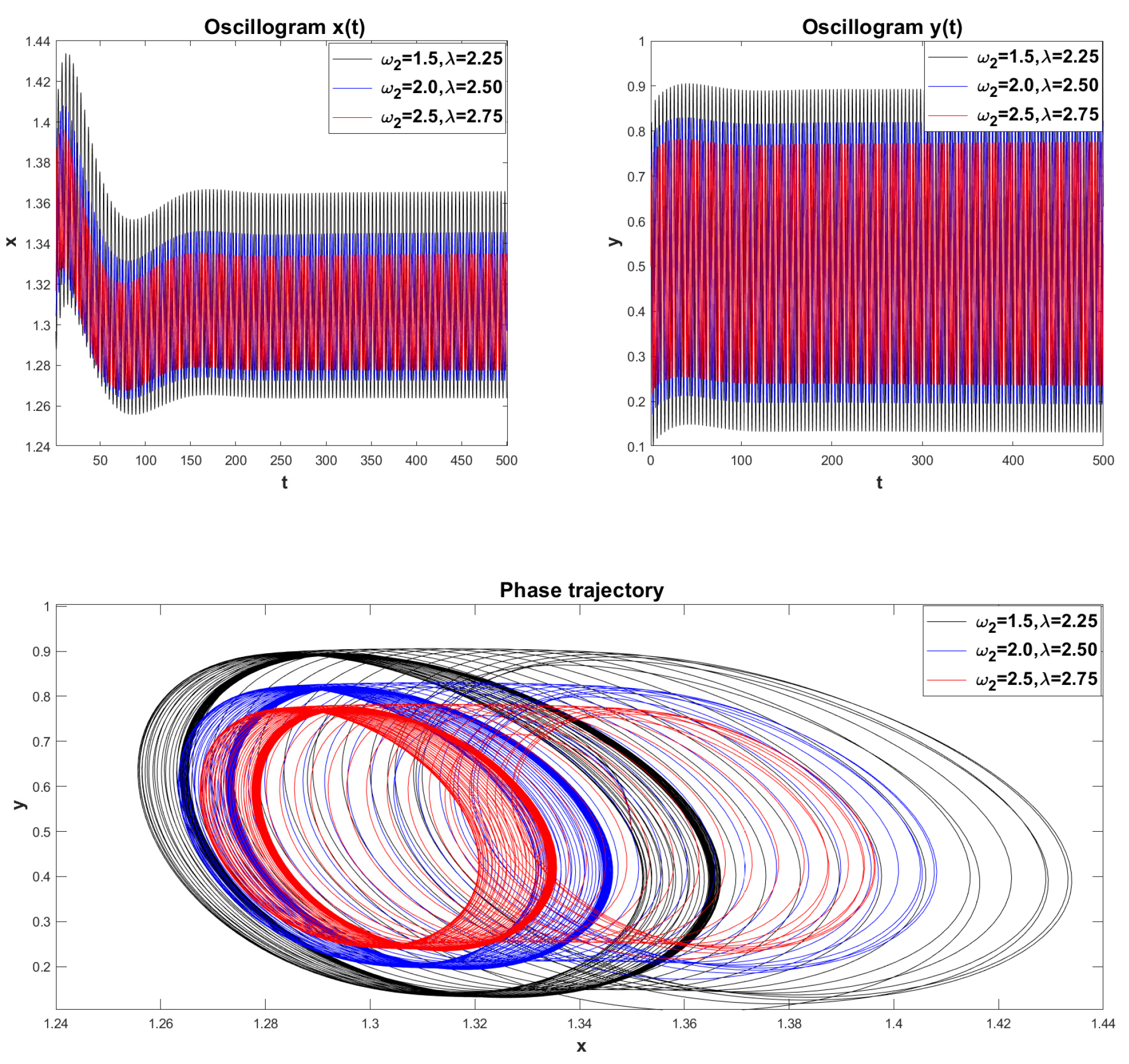
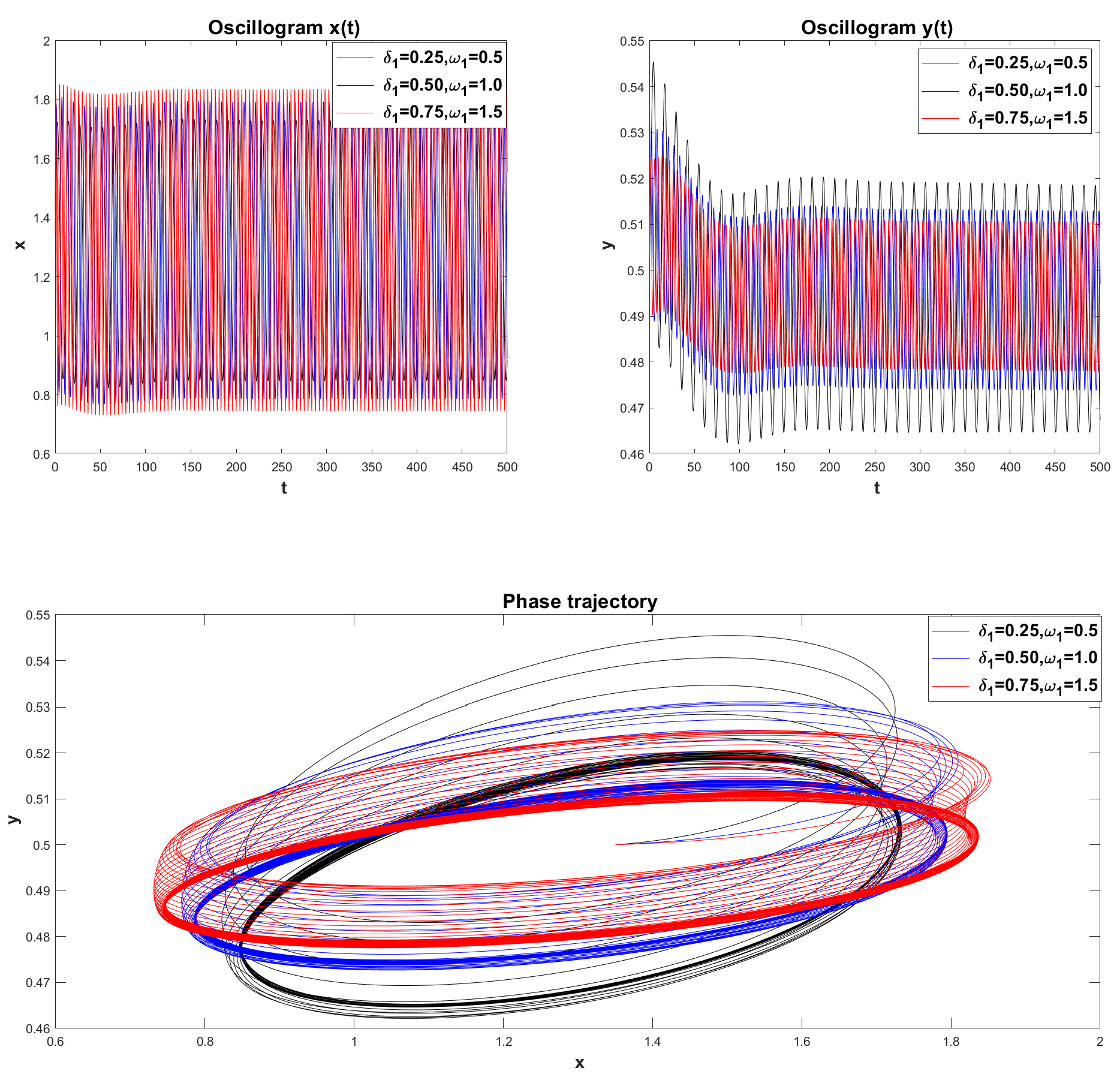
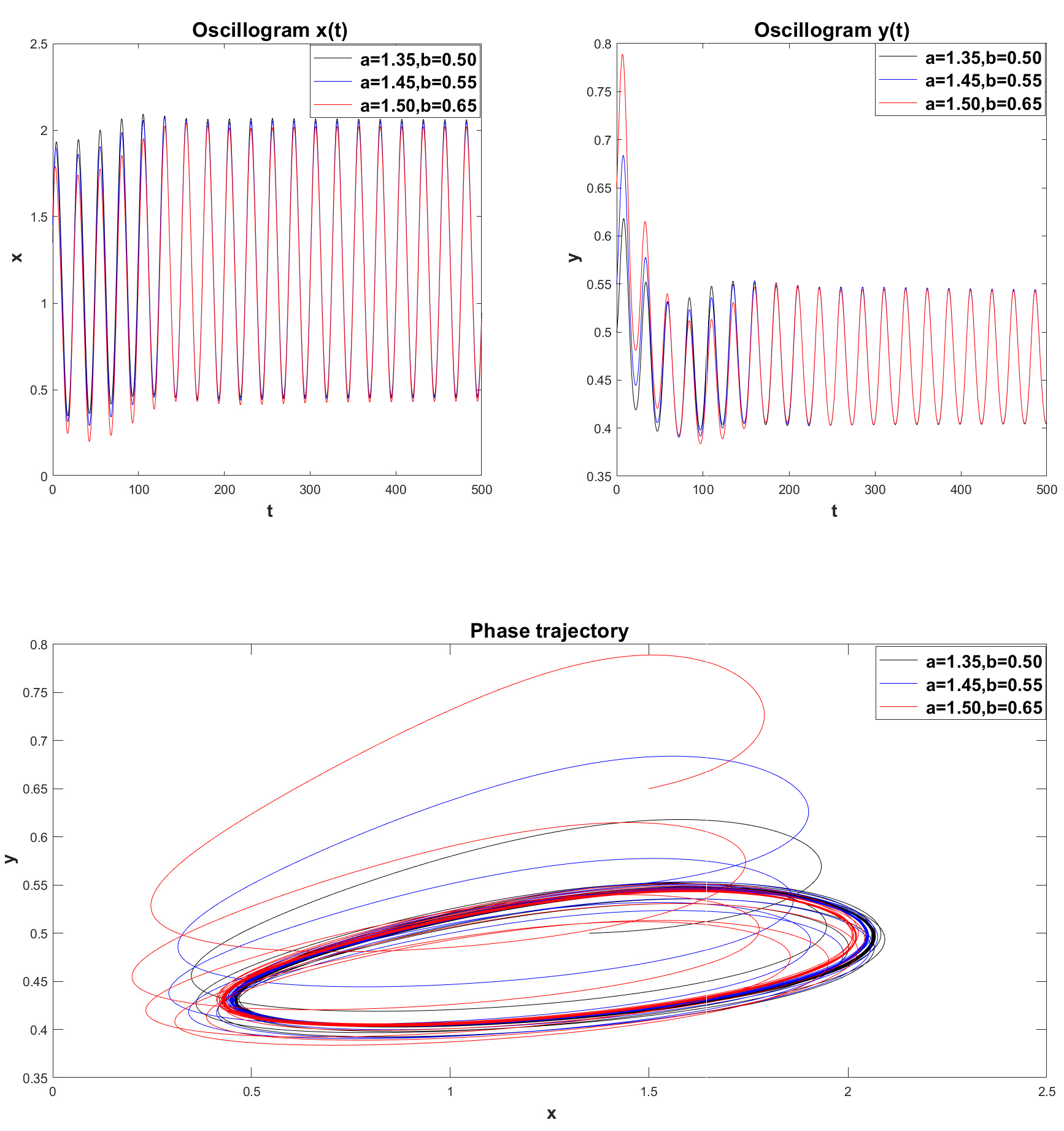
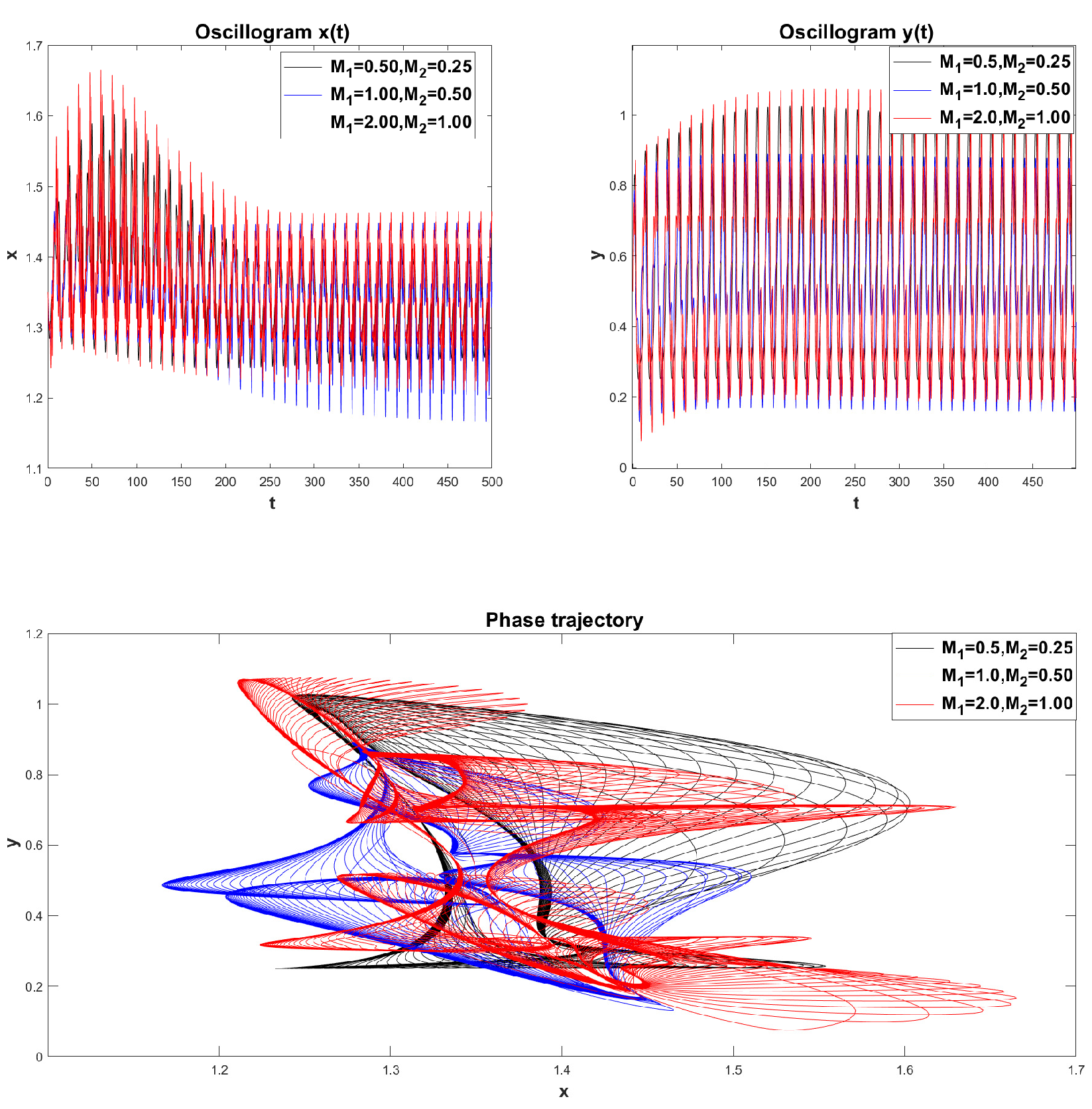
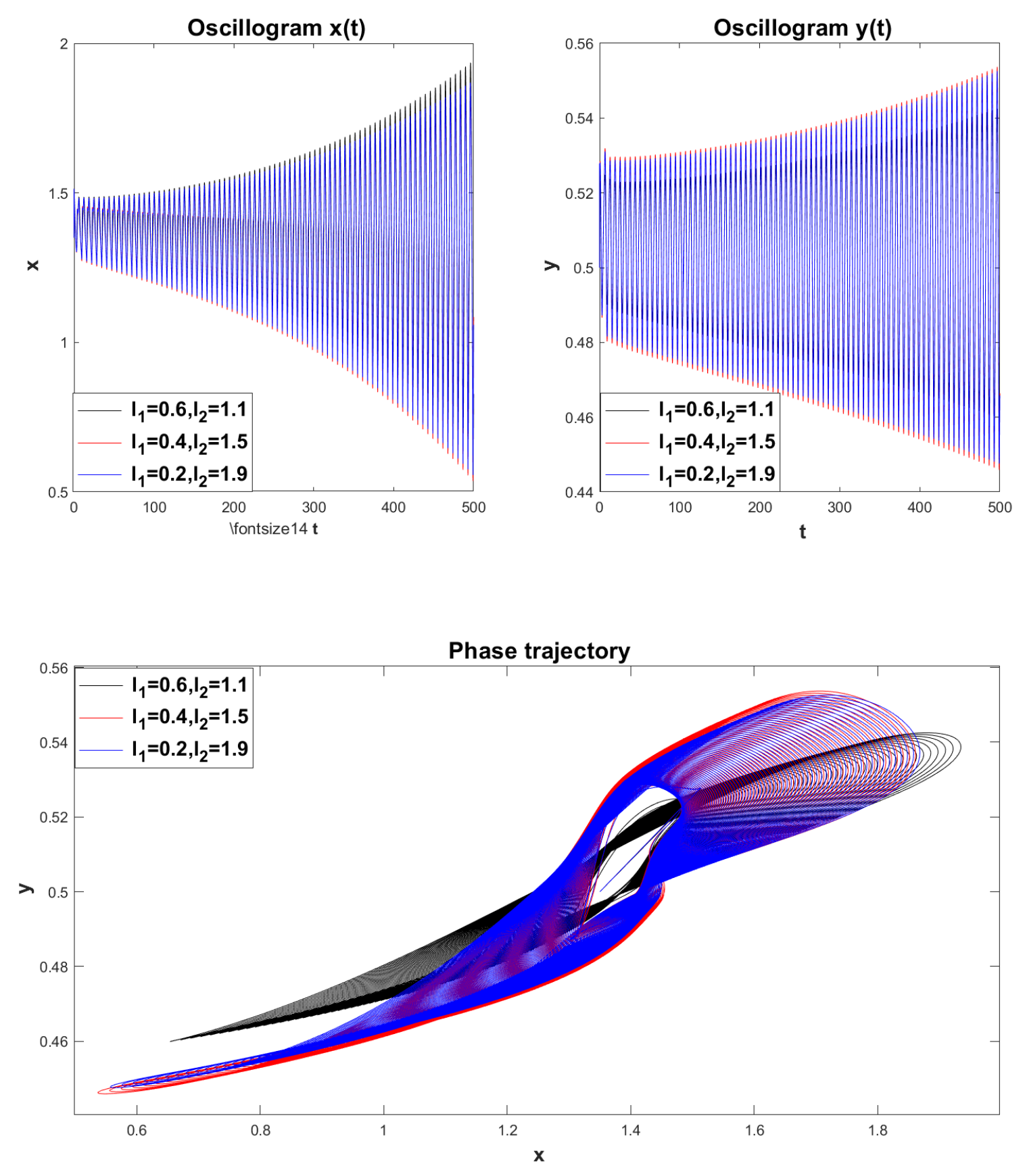
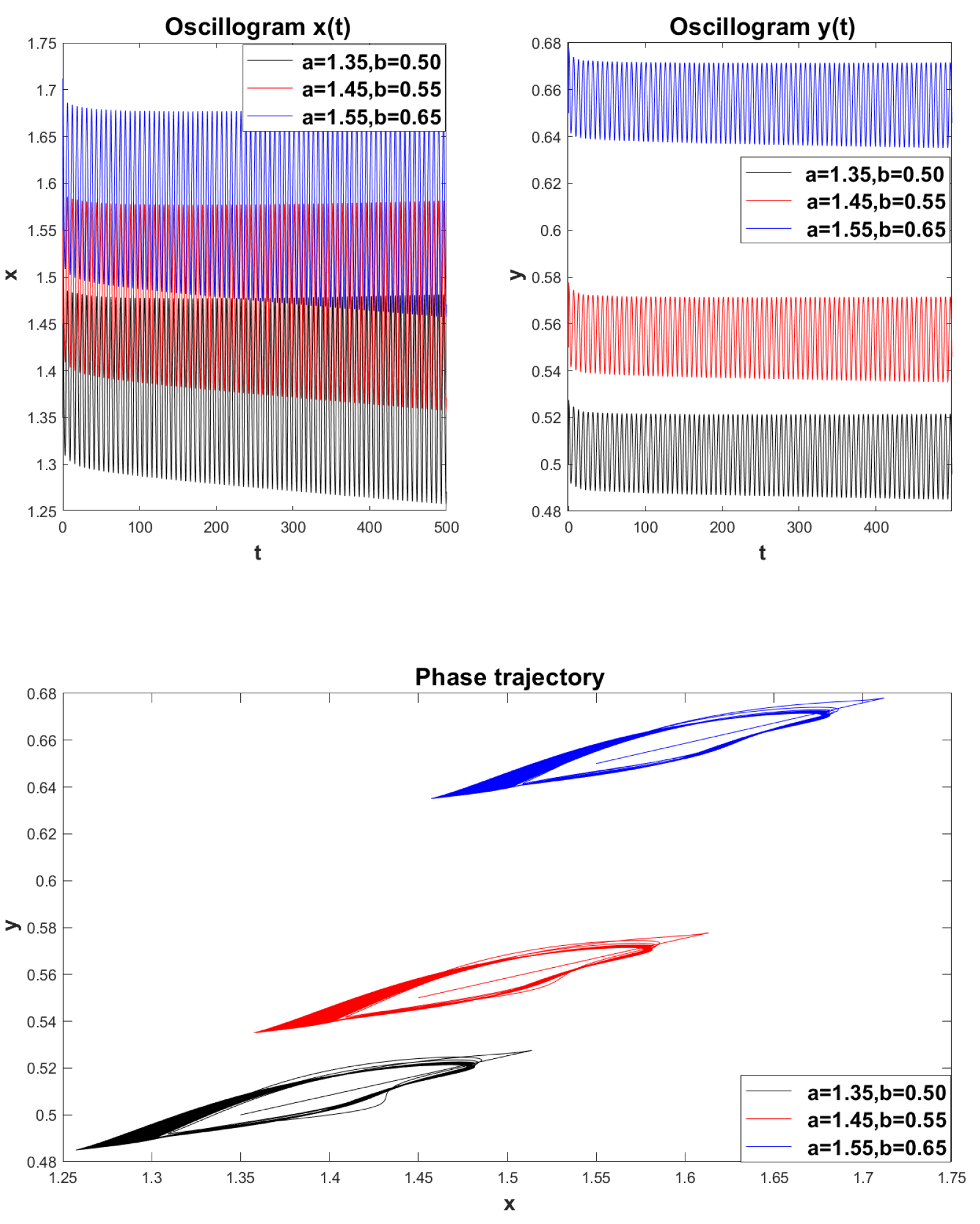
The article is devoted to the study of economic cycles within the framework of the theory of Kondratieff's long waves or K-waves. The object of the study is Dubovsky's fractional mathematical models, which consist of two nonlinear ordinary differential equations of fractional order and describe the dynamics of the efficiency of new technologies and capital productivity, taking into account constant and variable heredity. Fractional mathematical models also take into account the dependence of the accumulation rate on capital productivity, the influx of external investment and new technological solutions. The effects of heredity lead to a delayed effect of the reaction of the system in question to the impact. The property of heredity in mathematical models is taken into account using fractional derivatives of constant and variable orders, which are understood in the sense of Gerasimov-Caputo. Dubovsky's fractional mathematical models are studied numerically using the Adams-Bashforth-Moulton algorithm. Using a numerical algorithm, oscillograms and phase trajectories were constructed for various values of the model parameters. It is shown that Dubovsky's fractional mathematical models can have limit cycles, and there are no self-oscillatory modes.
Keywords:
MSC: 34A08, 34A34
1. Introduction
2. Classical mathematical model of S.V. Dubovsky and some modifications for describing K-waves
2.1. Derivation of the basic equations of the classical mathematical model by S.V. Dubovsky
2.2. Statement of the problem, solution method and its properties
2.3. The rate of accumulation as a function of capital productivity
2.4. Influx of external investments and new technologies
3. Fractional mathematical model S.V. Dubovsky with constant heredity
3.1. Some definitions from the theory of fractional calculus
3.2. Problem statement and solution method
3.3. Error analysis of the Adams-Bashforth-Moulton method
3.4. Simulation results
4. Fractional mathematical model S.V. Dubovsky with variable heredity
4.1. Definition of fractional derivative of variable order
4.2. Problem statement and solution method
4.3. Error analysis of the modified Adams-Bashforth-Moulton method
4.4. Simulation results
5. Conclusions
Author Contributions
Funding
Data Availability Statement
Conflicts of Interest
Abbreviations
| CMMD | Classical Mathematical Model of S.V. Dubovsky |
| ABM | Adams-Bashforth-Moulton Method |
| FMMD | Fractional Mathematical Model of S.V. Dubovsky |
| FMMDVO | Fractional Mathematical Model of S.V. Dubov Variable Order |
6. Listing of FDDSVO program procedures
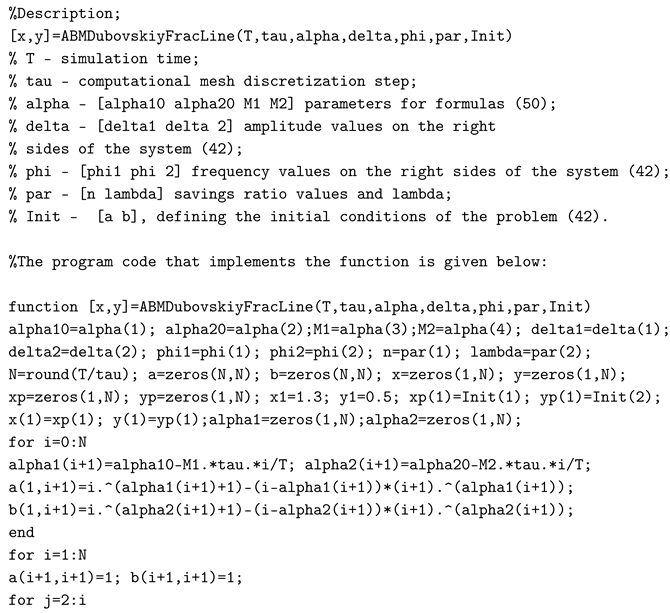
6.1. ABMDubovskiyFracLine.m
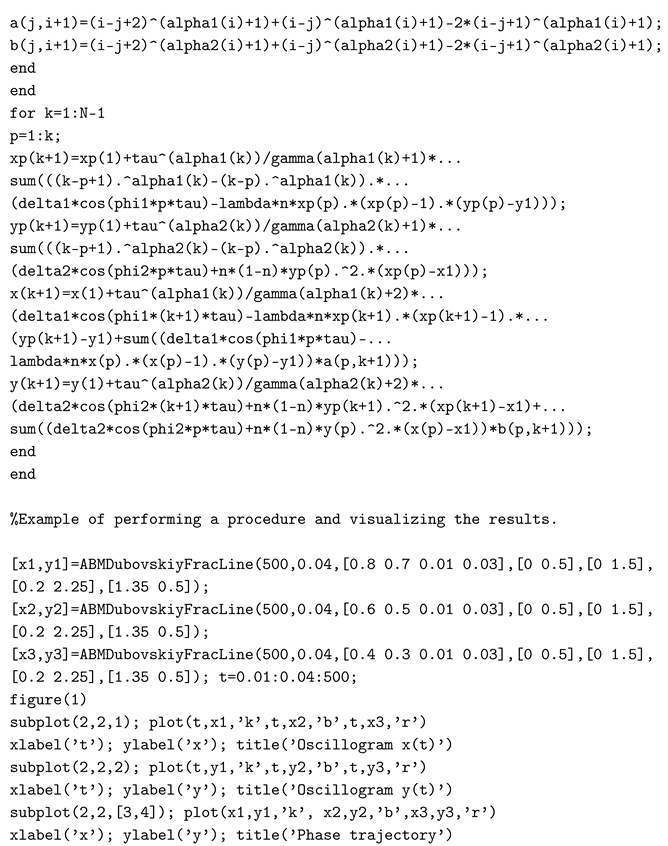
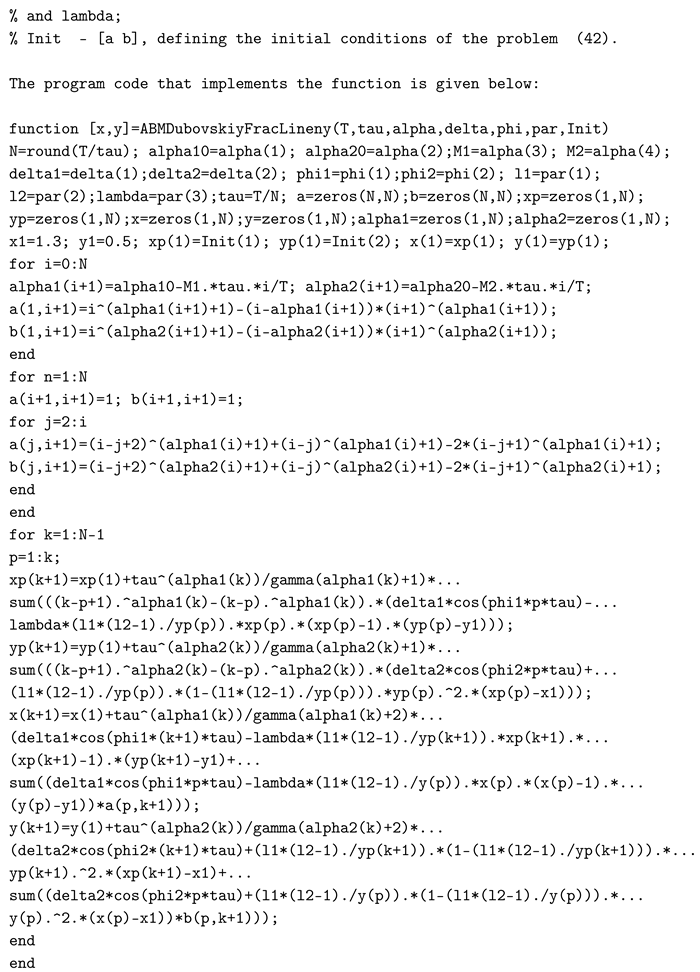
6.2. ABMDubovskiyFracLineny.m

References
- Clarke, H. Physical Economy. A Preliminary Inquiry into the Physical Laws Governing the Periods of Famines and Panics. Railway Register 1847, 5, 155–169. [Google Scholar]
- Juglar, C. Des crises commercials et de leur retour periodique en France, en Angleterre et aux EU; Guillaumin: Paris, France, 1862; p. 258 p. [Google Scholar]
- Jevons, W. S. The solar-commercial cycle. Nature 1882, 26, 226–228. [Google Scholar] [CrossRef]
- Tugan-Baranovskiy, M. Industrial crises. Essay on the social history of England; O. N. Popova: S.-Pb., Russia, 1900; p. 354 p. [Google Scholar]
- Kitchin, J. Cycles and Trends in Economic Factors. Review of Economics and Statistics 1923, 5, 10–16. [Google Scholar] [CrossRef]
- Kondratyev, N. D.; Oparin, D. N. Large cycles of market conditions; Institute of Economics: Moscow, Russia, 1928; p. 287 p. [Google Scholar]
- Solow, R.M. Technical Change and the Aggregate Production Function. The Review of Economics and Statistics 1957, 39, 312–320. [Google Scholar] [CrossRef]
- Rostow, W. W. Technical The Stages of Economic Growth. The Economic History Review, New Series 1959, 12, 1–16. [Google Scholar] [CrossRef]
- Mensch, G. Stalemate in Technology. Innovations Overcome the Depression; Ballinger Pub Co.: Cambrg., UK, 1979; p. 241 p. [Google Scholar]
- Gattei, G. Every 25 years? Strike waves and long economic cycles. In Proceedings of the colloquium "The Long Waves in the Economic Conjuncture—The Present State of the International Debates", Brussels, Belgium, 12-14 Junuary 1989; pp. 12–14.
- Menshikov, S. M.; Klimenko, L. A. Long waves in economics; International relations: Moscow, Russia, 1989; pp. 145–149. [Google Scholar]
- Amos, Jr O. M. Growth pole cycles: A synthesis of growth pole and long wave theories. Review of Regional Studies 1990, 20, 37–48. [Google Scholar]
- Tylecotte, A. Long Wave in the World Economy: The Present Crisis in Historical Perspective; Psychology Press: London, New York, 1993; p. 338 p. [Google Scholar]
- Dubovsky, S. V. Modeling object Kondratiev cycle. Mathematical modeling 1995, 7, 65–74. [Google Scholar]
- Alexander, M. A. The Kondratiev cycle: A generational interpretation; IUniverse: Bloomington, USA, 2002; p. 314 p. [Google Scholar]
- Kondratiev, N. D.; Yakovets, Yu. V.; Abalkin L., I. Large cycles of conjuncture and the theory of foresight: Selected works; Economics: Moscow, Russia, 2002; p. 766 p. [Google Scholar]
- Hirooka, M. Innovation Dynamism and Economic Growth. A Nonlinear Perspective; Edward Elgar: Cheltenham, Northampton, UK, 2006. [Google Scholar]
- Akaev, A. A. Derivation of the general macroeconomic dynamics equation describing the joint interaction of long-term growth and business cycles. Doklady Mathematics 2007, 76, 879–881. [Google Scholar] [CrossRef]
- Akaev, A. A. Influence of business cycles on long-term economic growth. Doklady Mathematics 2008, 78, 621–625. [Google Scholar] [CrossRef]
- Muller, K. H. Farewell to Long Waves: Substituting Cyclical Approaches in Innovation and Technology Research with a RISC-Framework; University of Ljubljana: Ljubljana, Slovenia, 2008; p. 54 p. [Google Scholar]
- Korotaev, A. V.; Tsirel, S. V. Kondratieff waves in global economic dynamics. System monitoring. Global and regional development; Librocom: Moscow, Russia, 2009; p. 229 p. [Google Scholar]
- Dementyev, V. E. Long waves of economic development and financial bubbles; CEMI RAS: Moscow, Russia, 2009. [Google Scholar]
- Akaev, A. A. Qualitative analysis of business cycles’ influence on economic growth. Economics and mathematical methods 2009, 45, 78–137. [Google Scholar]
- Gladkikh, I. P. Long waves in the post-industrial economy: Theoretical foundations and features; Lambert Academic, Saarbrücken, Germany, 2012.
- Dubovsky, S. V. Modeling Kondratiev cycles and forecasting crises. In Kondratiev waves. Aspects and prospects; Akaev, A. A., Ed.; Uchitel’: Volgograd, Russia, 2012; pp. 179–188. [Google Scholar]
- Akaev, A. A. Mathematical foundations of the Schumpeter-Kondratiev innovation-cyclical theory of economic development. In Kondratiev waves. Aspects and prospects; Akaev, A. A., Ed.; Uchitel’: Volgograd, Russia, 2012; pp. 314–341. [Google Scholar]
- Makarov, D. V.; Parovik, R. I. Modeling of the economic cycles using the theory of fractional calculus. Journal of Internet Banking and Commerce 2016, 21, S21. [Google Scholar]
- Kleinknecht, A. Innovation patterns in crisis and prosperity: Schumpeter’s long cycle reconsidered; Springer: Germany, 2016; p. 235 p. [Google Scholar]
- Kondratyev, N. D. Large cycles of market conditions. Selected works; Yurayt Publishing House: Moscow, Russia, 2021; p. 290 p. [Google Scholar]
- Makarov, D.; Parovik, R. Numerical modeling of Kondratyev’s long waves taking into account heredity. AIP Conference Proceedings 2021, 2365, 020007. [Google Scholar]
- Makarov, D. V.; Parovik, R. I. A computer program for the numerical analysis of economic cycles within the framework of the Dubovsky generalized model. AIP Conference Proceedings 2022, 2467, 060015. [Google Scholar]
- Makarov, D. V.; Parovik R., I. Fractional mathematical model S.V. Dubovsky and economic cycles. Problems of Computational and Applied Mathematics 2023, 52, 8–25. [Google Scholar]
- Makarov, D. V.; Parovik R., I. Fractional mathematical model S.V. Dubovsky with the effect of variable heredity. Problems of Computational and Applied Mathematics 2023, 53, 5–22. [Google Scholar]
- Makarov, D. V. The classical mathematical model of S.V. Dubovsky and some of its modifications for describing K-waves. Vestnik KRAUNC. Fiz.-mat. nauki 2024, 46, 52–69. [Google Scholar]
- Landa, P. S. Regular and chaotic oscillations; Springer: Berlin, Germany, 2012; p. 397 p. [Google Scholar]
- Lichtenberg, A. J.; Lieberman, M. A. Regular and chaotic dynamics; Springer: Berlin, Germany, 2013; p. 692 p. [Google Scholar]
- Oldham, K. B.; Spanier, J. The fractional calculus. Theory and applications of differentiation and integration to arbitrary order; Academic Press: London, UK, 1974; p. 240 p. [Google Scholar]
- Miller, K. S.; Ross, B. An introduction to the fractional calculus and fractional differential equations; A Wiley-Interscience publication: New York, USA, 1993; p. 384 p. [Google Scholar]
- Nakhushev, A. M. Fractional calculus and its application; Fizmatlit: Moscow, Russia, 2003; p. 272 p. [Google Scholar]
- Pskhu, A. V. Fractional partial differential equations; Nauka: Moscow, Russia, 2005; 199 p. [Google Scholar]
- Kilbas, A. A.; Srivastava, H. M.; Trujillo, J.J. Theory and Applications of Fractional Differential Equations; Elsevier: Amsterdam, Golland, 2006; 523 p. [Google Scholar]
- Tarasov, V. E. On history of mathematical economics: Application of fractional calculus. Mathematics 2019, 7, 509. [Google Scholar] [CrossRef]
- Granger, C.W.J. The typical spectral shape of an economic variable. Econometrica 1966, 34, 150–161. [Google Scholar] [CrossRef]
- Granger, C.W.J.; Joyeux, R. An introduction to long memory time series models and fractional differencing. J. Time Ser. Anal. 1980, 1, 15–39. [Google Scholar] [CrossRef]
- Rogers, L.C.G. Arbitrage with fractional Brownian motion. Math. Financ. 1997, 7, 95–105. [Google Scholar] [CrossRef]
- Scalas, E.; Gorenflo, R.; Mainardi, F. Fractional calculus and continuous-time finance. Phys. A Stat. Mech. Its Appl. 2000, 284, 376–384. [Google Scholar] [CrossRef]
- Mainardi, F.; Raberto, M.; Gorenflo, R.; Scalas, E. Fractional calculus and continuous-time finance II: The waiting-time distribution. Phys. A Stat. Mech. Appl. 2000, 287, 468–481. [Google Scholar] [CrossRef]
- Chen, W. C. Nonlinear dynamics and chaos in a fractional-order financial system. Chaos Solitons Fract. 2008, 36, 1305–1314. [Google Scholar] [CrossRef]
- Tarasov, V. E.; Tarasova, V. V. Criterion of existence of power-law memory for economic processes. Entropy 2018, 20, 414. [Google Scholar] [CrossRef]
- Pakhira, R.; Ghosh, U.; Sarkar, S. Study of memory effect in an inventory model with quadratic type demand rate and salvage value. Appl. Math. Sci. 2019, 13, 209–223. [Google Scholar] [CrossRef]
- Bendixson, I. Sur les courbes définies par des équations différentielles. Acta Math. 1901, 24, 1–88. [Google Scholar] [CrossRef]
- Iserles, A. A first course in the numerical analysis of differential equations; Cambridge university press: Cambridge, UK, 2009; 459 p. [Google Scholar]
- Stoleru, L. Economic equilibrium and growth; North-Holland Publishing Company: Amsterdam, Holland, 1975; 300 p. [Google Scholar]
- Volterra, V. Functional theory, integral and integro-differential equations; Dover Publications: New York, USA, 2005; 288 p. [Google Scholar]
- Podlubny, I. Fractional differential equations: An introduction to fractional derivatives, fractional differential equations, to methods of their solution and some of their applications; Elsevier: Amsterdam, Hollan, 1998; 340 p. [Google Scholar]
- Mainardi, F. Fractional calculus and waves in linear viscoelasticity: An introduction to mathematical models; World Scientific: Singapore, 2010; 368 p. [Google Scholar]
- Gerasimov, A. N. Generalization of the laws of linear deformation and their application to problems of internal friction. Academy of Sciences of the SSR. Applied mathematics and mechanics 1948, 44, 62–78. [Google Scholar]
- Caputo, M. Linear models of dissipation whose Q is almost frequency independent – II. Geophysical Journal International 1967, 13, 529–539. [Google Scholar] [CrossRef]
- Rabotnov, Yu. N. Elements of hereditary mechanics of solids; MIR Publishers: Moscow, Russia, 1980; 287 p. [Google Scholar]
- Pskhu, A. V. , Rekhviashvili S.Sh. Analysis of Forced Oscillations of a Fractional Oscillator. Technical Physics Letters 2018, 44, 1218–1221. [Google Scholar] [CrossRef]
- Aguilar, J. F. G.; Hernández M., M. Space-time fractional diffusion-advection equation with Caputo derivative. Abstract and Applied Analysis 2014, 2014, 283019. [Google Scholar] [CrossRef]
- Butenkov, S. A. Mathematical models of processes on fractal structures with given properties based on granulation methods. News of the Southern Federal University. Technical science 2011, 121, 199–209. [Google Scholar]
- Diethelm, K.; Ford, N. J. , Freed A. D. A predictor-corrector approach for the numerical solution of fractional differential equations. Nonlinear Dynamics 2002, 29, 3–22. [Google Scholar] [CrossRef]
- Yang, C.; Liu, F. A computationally effective predictor-corrector method for simulating fractional order dynamical control system. ANZIAM Journal 2005, 47, 168–184. [Google Scholar] [CrossRef]
- Garrappa, R. Numerical solution of fractional differential equations: A survey and a software tutorial, Mathematics 2018, 6, 016. 6.
- Gavrilyuk, I. Exact and truncated difference schemes for boundary value ODEs; Springer Science & Business Media: Basel, 2011; 247 p. [Google Scholar]
- Patnaik, S.; Hollkamp, J. P.; Semperlotti, F. Applications of variable-order fractional operators: A review. Proceedings of the Royal Society A 2020, 476, 20190498. [Google Scholar] [CrossRef]
- Ma, S.; Xu, Y.; Yue, W. Numerical Solutions of a Variable-Order Fractional Financial System. Journal of Applied Mathematics 2012, 2012, 417942. [Google Scholar] [CrossRef]
- Samko, S. G.; Ross, B. Integration and differentiation of a variable fractional order. Integral Transforms Spec. Funct. 1993, 1, 277–300. [Google Scholar] [CrossRef]
- Samko, S. G. Fractional integration and differentiation of variable order. Anal. Math. 1995, 21, 213–236. [Google Scholar] [CrossRef]
- Sun,H. ; Chang, A.; Zhang, Y.; Chen, W. A review on variable-order fractional differential equations: Mathematical foundations, physical models, numerical methods and applications. Fract. Calc. Appl. Anal. 2019, 22, 27–59. [Google Scholar] [CrossRef]
- Zhou, Y.; Suzuki, J.L.; Zhang, C.; Zayernouri, M. Implicit-explicit time integration of nonlinear fractional differential equations. Appl. Numer. Math. 2020, 156, 555–583. [Google Scholar] [CrossRef]
- Parovik, R. I. On a Finite-Difference Scheme for an Hereditary Oscillatory Equation. Journal of Mathematical Sciences 2021, 253, 547–557. [Google Scholar] [CrossRef]
- Yousuf, M.; Sarwar, S. Highly Efficient Numerical Algorithm for Nonlinear Space Variable-Order Fractional Reaction–Diffusion Models. Fractal Fract. 2023, 7, 688. [Google Scholar] [CrossRef]
- Kanwal, A.; Boulaaras, S.; Shafqat, R.; et al. Explicit scheme for solving variable-order time-fractional initial boundary value problems. Sci Rep 2024, 14, 5396. [Google Scholar] [CrossRef] [PubMed]
- Parovik, R. I.; Yakovleva T., P. Construction of maps for dynamic modes and bifurcation diagrams in nonlinear dynamics using the Maple computer mathematics software package. Journal of Physics: Conference Series 2022, 2373, 52022. [Google Scholar] [CrossRef]

| N | |||||
|---|---|---|---|---|---|
| 10 | 1/10 | 0.0397415350 | 0.0799740787 | – | – |
| 20 | 1/20 | 0.0060318953 | 0.0187709253 | 2.72 | 2.09 |
| 40 | 1/40 | 0.0010575820 | 0.0045870660 | 2.51 | 2.03 |
| 80 | 1/80 | 0.0002336673 | 0.0011345727 | 2.18 | 2.02 |
| 160 | 1/160 | 0.0000552493 | 0.0002821520 | 2.08 | 2.01 |
| 320 | 1/320 | 0.000013453 | 0.0000703530 | 2.04 | 2.00 |
| N | |||||
|---|---|---|---|---|---|
| 10 | 1/10 | 0.1171054420 | 0.2158809510 | – | – |
| 20 | 1/20 | 0.0235086005 | 0.0586392164 | 2.31 | 1.88 |
| 40 | 1/40 | 0.0041498810 | 0.0173332737 | 2.50 | 1.75 |
| 80 | 1/80 | 0.0009959756 | 0.0051032771 | 2.05 | 1.76 |
| 160 | 1/160 | 0.0002742665 | 0.0014889669 | 1.86 | 1.77 |
| 320 | 1/320 | 0.0000779949 | 0.0004308895 | 1.81 | 1.79 |
| N | |||||
|---|---|---|---|---|---|
| 10 | 1/10 | 0.4740440E-3 | 0.1036998E-2 | – | – |
| 20 | 1/20 | 0.9818199E-4 | 0.4061758E-3 | 1.57 | 1.41 |
| 40 | 1/40 | 0.3289388E-4 | 0.1522497E-3 | 1.54 | 1.45 |
| N | |||||
|---|---|---|---|---|---|
| 10 | 1/10 | 0.5457955E-3 | 0.4676925E-3 | – | – |
| 20 | 1/20 | 0.2583299E-3 | 0.2446991E-3 | 1.18 | 1.11 |
| 40 | 1/40 | 0.1137234E-3 | 0.1127146E-3 | 1.26 | 1.19 |
| 80 | 1/80 | 0.4747948E-4 | 0.4909588E-4 | 1.29 | 1.22 |
| 160 | 1/160 | 0.1937985E-4 | 0.2094110E-4 | 1.30 | 1.29 |
Disclaimer/Publisher’s Note: The statements, opinions and data contained in all publications are solely those of the individual author(s) and contributor(s) and not of MDPI and/or the editor(s). MDPI and/or the editor(s) disclaim responsibility for any injury to people or property resulting from any ideas, methods, instructions or products referred to in the content. |
© 2024 by the authors. Licensee MDPI, Basel, Switzerland. This article is an open access article distributed under the terms and conditions of the Creative Commons Attribution (CC BY) license (http://creativecommons.org/licenses/by/4.0/).