

Submitted:
26 February 2024
Posted:
27 February 2024
You are already at the latest version
Abstract
Our study reviews the significance of archaeological parks in the tourism sector, with a specific focus on how digital presence and visitor feedback impact their cultural and touristic appeal. Utilizing statistical analyses such as regression and cluster analysis on data sourced from both Hungarian and Western European parks, the research scrutinizes TripAdvisor and Google ratings, alongside the volume of photographs and reviews. The findings highlight a modest correlation between digital visibility and overall visitor ratings, underscoring the complex relationship between online engagement and the quality of visitor experience. Notably, the cluster analysis identified two distinct groups, signifying diverse levels of visitor engagement and digital visibility across the parks. The conclusions drawn advocate for a comprehensive strategy to enhance visitor experiences, emphasizing the integration of digital engagement with the promotion of the parks cultural and historical values. By exploring the influence of digital presence on the appeal of archaeological parks, our study sheds light on the evolving interface between urban studies and digital heritage, highlighting how digital tools and online platforms are becoming increasingly integral in shaping the perceptions and experiences of urban cultural sites.
Keywords:
archaeological park
; tourism
; museum tourism
; land use
; urban analysis
1. Introduction
The relationship between museums and urban studies is multifaceted and significant. Museums serve as important cultural attractors in cities, contributing to urban regeneration and acting as key landmarks within urban environments. They are involved in shaping the cultural landscape of cities and can play a role in reflecting and shaping the identity of urban communities.
Museums are often integrated into urban development plans due to their potential to attract visitors and act as catalysts for economic activity and investment, which can lead to the revitalization of city centers and other urban areas. Museums, the development of heritage institutions, are in most developed countries serious cultural policy projects, which, in addition to their prestige value, are crucial in increasing the economically significant tourism potential, and the exploitation of archaeological heritage is becoming increasingly important [1]. Heritage institutions are increasingly becoming the focus of cultural life in urban areas due to their innovative approach and visitor-friendly design.
Archaeological parks occupy a special place in the cultural tourism landscape as living museums of the remains of ancient civilisations. These sites attract not only visitors interested in history, but also those who want to take in the beauty of nature or enjoy a unique cultural experience. Both in Hungary and throughout Europe, outstanding archaeological parks can be found integrated in the urban terraces and they act as a bridge between the past and the present, giving visitors the opportunity to learn more about the history of mankind. In recent decades, advances in digital technology and the rise of social media have significantly changed the way we discover and appreciate these sites. Our research seeks to explore the role of archaeological parks in tourism and urban studies, with a particular focus on visitor evaluations, photographs and digital visibility.
The role and relationship of museums and archaeological parks with the public has changed and continues to change. “The focus of the exhibitions has changed from objects to people” [2] in rural and urban areas.
The main incentive to visit these facilities is leisure and entertainment [3], but their educational impact is also important. The exhibition spaces of museums and archaeological parks have become, with constant dynamism, new channels of communication and sites of socio-economic events, transformed into community spaces [4]. They are functional spaces for the organisation of modern social events.
Museum visits have been restructured into the tourism sector, and must be catered for with appropriate infrastructure, space and creativity, which no longer means just compulsory school groups and pensioners. Today’s tourism must put the experiential factor first. In the case of archaeological parks, the visitor does not take advantage of an artificially created service or experience, but rather the opportunity to have an experience through the appropriate design of the environment [5]. However, it is also important to develop an appropriate strategy to ensure that visitors choose the cultural attraction as the place of their visit [6].
To achieve the experiential factor, institutions need to create the conditions for learning history and social knowledge in a way that is enjoyable for visitors. Digitalisation tools should play an increasing role in learning about history, different architectural styles and society, and objects and buildings should be endowed with meaning, a key activity of modern museums [7]. The digital development of archaeological parks and the enhancement of the visitor experience are linked to the findings of Alreahi et al. [8], who emphasise the need to improve environmental stewardship and strive for sustainability.
Museum interpretation is supported by a number of factors that influence the visitor experience, which Bodnár has detailed in his 2019 study [9]. The most important of these are interactivity, the use of infocommunication tools and edutainment. For today’s visitor, it is important that devices have a multi-sensory impact, such as being tried, touched, deepening knowledge through experiential learning, and digital content that helps to enhance the experience. The use of these tools increases the attractiveness of the attraction and also promotes comprehensibility [10]. In the case of edutainment, visitors learn while having fun [11], for example by participating in a programme. Archaeological parks organise a number of such events, which are designed to showcase specific events of the Roman period through a variety of exciting programme elements.
In the researched areas, several important Roman urban settlements have been excavated, and archaeological parks have been established on their sites, where, in addition to the presentation of archaeological finds, temporary exhibitions and museum education activities are also available [12]. Archaeological parks in themselves have a special, authentic atmosphere, as walking among the original monuments, visitors are transported back in time. Rather than static presentations of ruins, these facilities are also increasingly focusing on the use of ICT to bring history closer to their visitors, while sustainability aspects are also of paramount importance, as tourism development should take into account the principles of sustainable development in order to preserve the tourism environment [13].
When designing sites for tourism purposes, the primary considerations are the protection of cultural heritage, the preservation of the landscape’s image [14]. and the sustainability of the site, while at the same time geographical features and accessibility must be taken into account [15]. Studies on the links between urban transport infrastructure and tourism destinations highlight that accessibility has a significant impact on the visitation of archaeological parks and tourism flows, which is a key aspect in the development of cultural tourism and the implementation of sustainable tourism management.
In our research, we investigated archaeological parks by using Tripadvisor, Google search results, social media presence and the services and websites of selected archaeological parks.
Hypothesis of our research:
Hypothesis 1:
The digital presence and visitor evaluations of archaeological parks have a significant impact on the attractiveness of parks for tourists and on the perception of their cultural value.
Hypothesis 2:
There are distinct groups of archaeological parks based on visitor activity and digital visibility.
Hypothesis 3:
Interactive and educational experiences in archaeological parks increase visitor satisfaction and positive evaluations.
2. Materials and Methods
The aim of our research is to examine the role of archaeological parks in contemporary tourism, with a particular focus on audience engagement and experience. We used primary and secondary sources for our research. Primary data were collected partly through direct observations and visitor opinions. Secondary data was obtained through literature review and analysis of Tripadvisor, Google and various social media platforms. Quantitative and qualitative methods were used to analyse the data. In the quantitative analysis, statistical methods were used to evaluate the online data. In the qualitative analysis, we conducted content analysis on the websites to understand how these institutions communicate with their audiences and what experiences they offer. In our research, we selected national and international archaeological parks, taking into account their geographical location and the strength of their online presence. The selected sites were analysed in detail, including the quality of the visitor experience. This methodological approach allowed us to gain a comprehensive picture of the current role of archaeological parks in tourism, their impact on cultural life and new audience engagement strategies.
3. Results
Most of the archaeological excavations have revealed the foundation walls of buildings, sometimes with walkways (floors) and ascending walls. Their ground plan and the data obtained from archaeological research, taking into account the period paintings, allow them to be reconstructed. The majority of urban buildings, such as public buildings and churches, were typically built according to a given pattern in the area. Military camps, such as the legionary or auxiliary camps, were also built according to a pattern. In the case of villa farms, the owner had buildings erected next to his dwelling (villa) which were necessary for his activity [16]. Archaeological parks were established on the sites of certain parts of the settlement and villa farms revealed during archaeological excavations.
The surviving work on architecture by M. Vitruvius Pollio [17], who lived during the reign of Emperor Augustus, was one of the foundations of Roman architecture during the imperial period. We know what it was like from his surviving work:
- The layout and location of buildings in cities,
- The layout of private villas,
- Location and layout of churches and other public buildings,
- The foundations, the materials and techniques of the masonry, the bonding material, the style of the columns, the decoration of the buildings (carvings, wall paintings, materials and painting techniques),
- The design of floors and streets
The document also gives the calculation of the height of the building’s rooms, which makes it possible to determine the height dimensions. This document provides an appropriate basis for reconstruction, helping to ensure a faithful representation of the period.
As the Roman period mainly consists of foundation walls that visitors cannot interpret, the ruins are presented in different ways:
- The building is constructed,
- Historic reconstruction is being carried out,
- A shelter will be set up (e.g., to display murals).
Modern digital tools are also a great help in interpreting and enhancing the visitor experience, making it easier to present and interpret.
When designing sites for tourism, the primary considerations are the protection of cultural heritage, the preservation of the landscape’s character and sustainability, while taking into account geographical features and accessibility.
3.1. Introduction and Websites of the Researched Areas
3.1.1. Gorsium Archaeological Park
The Gorsium Archaeological Park is located in Fejér County, Hungary, 14 km from the centre of the county, Székesfehérvár. It was founded in 1958 and has been open to the public since 1962. The park covers 28 hectares, of which 6 hectares are excavated and suitable for display. Using the original Roman road network, the site links two periods: the 2nd-3rd century and the 4th century city.
The complete renovation of the Archaeological Park is part of the project Quis Gorsiense - Gorsium, the ancient island of relaxation, which aims to present Roman monuments in an experiential way, creating an independent tourist attraction of international importance in Central Transdanubia.
As a result of the development, the Archaeological Park will present the values, traditions and customs of Roman culture to visitors in a versatile and experiential way, using modern tools, while the visitor will be an active participant in the events (exhibitions, interpretative activities, audiovisual programmes, IT services, cultural events).
Available programmes:
- Floralia Spring Welcome Celebration
- Castrum Sports and Family Day
- Museum education activities
- Guided tours
- Theatre performances
- Camps
In addition to general information, the website of the Archaeological Park provides a brief description of the main attractions of the ruin site, the programmes and educational activities available in the museum, as well as details of the development project. In addition to Hungarian, information is also available in English and German, but these are only a few sentences.
3.1.2. Aquincum Museum and Archaeological Park
Aqunicum was a Roman military camp and civilian settlement, also the centre of Eastern Pannonia, located in an urban environment, in Budapest, Hungary.
Interpretation sessions and events are held in the Archaeological Park, with a rich programme of activities. It is the best - known archaeological park in Hungary.
It is the seat of eastern Pannonia, with the status of a town (municipium, then colonia from 193 AD). The civilian settlement was founded next to the legion camp and was raised to the status of a town (municipium) by the emperor Hadrian. The gates of walled cities were built according to a given pattern. The so-called “House of the Painter” was rebuilt, whose wall paintings were repainted without incorporating the original fragments of wall paintings. The Painter’s House, which is furnished in period style, is highly frequented by visitors, who can also see the interior furnishings (replica furniture) of the private Roman building. The Archaeological Park contains restored ruins and reconstructions of buildings that have been built. The Aquincum water organ, reconstructed in 1988, is a special feature.
Programmes:
- Thematic walks
- Museum education activities
- Workshops
- Antic Cafe- educational club afternoons for seniors
- thematic camps
- Floralia celebrations
- Celtic Halloween
- Unusual history lessons
- Historical fair
The website of the archaeological park is attractive, with lots of information available. In addition to general information, you can download a map of the museum, find museum publications, detailed information on the permanent and temporary exhibitions, take a virtual tour of the archaeological park and take virtual guided tours of the museum on various themes. The museum’s educational activities for all ages are explained in detail, and other services are also available. The website is available in English and Hungarian and online ticketing is also possible.
3.1.3. Villa Romana Baláca, Roman Villa Farm and Roma Garden
The 3-4th century dwelling house and the surrounding buildings can be seen in Baláca, in Veszprém county, Hungary, in the village of Nemesvámos. Mosaic floors and wall paintings show the wealth of the owners. The villa farm was situated on 55 hectares, 2 hectares are currently open to visitors. The ruins are set in a Mediterranean park with a herb and medicinal plant garden, and a Roman-style sundial and oven. The central dwelling house covers an area of 2,400 m2 and is one of the best known villa buildings in Pannonia, where you can also learn about the Roman way of life. Further away from the centre, a few hundred metres away, is the mausoleum and fish tomb built by the owners.
Various activities are organised on site:
- Guided tours
- Theatre performances
- Poetry Day
- Ancient wine festival
The website of the Archaeological Park provides an interactive presentation of the site, its history and the services available. An interactive map shows the floor plans of each building with detailed descriptions, and details of the project “A Drop of Italy by Lake Balaton - Baláca Experience Park”, which is part of the Veszprém-Balaton 2023 European Capital of Culture programme. The website is also available in English and offers the possibility to buy tickets.
3.1.4. Xanten, Archaeological Park
The Xanten Archaeological Park is located in Germany, in the North Rhine-Westphalia region, and features a number of architectural reconstructions from the period. The park has an excellent information service, many interactive elements and a number of exciting programme elements. A playground and water playground are specially designed for families, and there is also a Roman games area.
The park is divided into two parts:
- LVR Römer Museum, a combination of archaeological shelter and modern museum architecture, with numerous exhibitions and modern infrastructure based on Roman foundations.
- Xanten Archaeological Park
At the Archaeological Park, you can try your hand at different crafts with period tools every weekend, as well as special guided tours and a Roman festival. The Park’s thematic pavilions offer a special insight into the Roman world, for example on travel, architecture or the life of gladiators.
The Park is also of great architectural value, as a great deal of professional work has been invested in its complete reconstruction, from an architectural, archaeological and tourist point of view.
The Archaeological Park has an attractive website with all the information you need. The buildings and thematic pavilions are presented, and a visual tour is also available. The website also provides information on current exhibitions and programmes. It is available in three languages and online ticketing is also possible.
3.1.5. Carnuntum Archaeological Park
Carnuntum Archaeological Park is a UNESCO World Heritage Site in northern Austria. The city of Carnuntum was the seat of Western Pannonia. The Archaeological Park comprises four units:
- City quarter: a period presentation of several buildings, including a residence, palace, halls, shops,
- Museums,
- Amphitheatre: in addition to the excavated ruins, it can also be explored using multimedia tools,
- Heathen’s Gate
A unique attraction among the permanent programmes is the presence of “Roman residents” in the quarter, who talk about Roman family life, the role of women and answer visitors’ questions, and a “slave” who regularly gives guided tours. You can also taste Apicius’ recipes on the spot, adding to the authentic atmosphere.
The Archaeological Park hosts a number of events, the most important of which are the Roman Festival, Gladiator Day, the Children’s Festival and the Late Antiquity Festival.
The archaeological park’s website has an impressive, dynamic look, with detailed information about the buildings and the services and programmes available. The website is available in 18 languages, including Hungarian.
3.2. Analysis Based on Tripadvisor Reviews
In our research, in addition to analysing the websites, we also examined the Tripadvisor interface.
Analysis on Tripadvisor in October 2023 shows that archaeological parks are less prominent in the site’s Travelers Favorites, with the site ranking them lower down the list of attractions.
Looking at the visitor ratings, all the archaeological parks received a rating of at least 4, which is a very good result. It is interesting to note that although Villa Baláca is the smallest of the Hungarian parks surveyed, it received ratings comparable to its international peers, as shown in Figure 1.
Looking in detail at the individual reviews, visitors to the site will find that the reviews are generally positive and even outstanding, with a low number of negative reviews, but as the number of reviews increases, so does the number of negative reviews, as shown in Table 1.
Visitors are also keen to illustrate their textual opinions by uploading photographs of their own making. In terms of visitor activity in this area, the Xanten Archaeological Park received the highest number of text reviews and photo uploads, with twice as many entries for each of these as for Aquincum, as shown in Figure 2. Aquincum Archaeological Park received slightly more reviews than Carnuntum Archaeological Park. Gorsium and Baláca have a low number of entries.
Based on the photos and evaluations, we also carried out statistical analyses using a linear regression model and cluster analysis.
Based on linear regression, the relationship between “Photos” and “Average rating” is 0.000244, which means that an increase in the number of “Photos” has a positive effect on “Average rating”, but the relationship is very weak.
The coefficient of the relationship between the “Number of Assessments” and the “Average Assessment” is 0.000334. This suggests that an increase in the number of assessments has a positive effect on the “Average Assessment”, but this relationship is also weak.
The results of the regression analysis show that, although there is a weak positive relationship between the average rating of parks and the number of photos and the number of ratings, these relationships are not strong enough to have a significant influence on the average ratings.
Based on the simplified cluster analysis, archaeological parks can be divided into two groups:
Cluster 1: Gorsium and Baláca, which have a lower number of reviews and photos on Tripadvisor. This cluster means lower visitor activity and lower online visibility.
Cluster 2: Aquincum, Xanten, and Carnuntum, which have a higher number of evaluation pieces and photos, indicating that these parks have a more active visitor presence and are better documented by visitors.
The cluster analysis shows that there are groups of archaeological parks with similar characteristics, which can be useful for marketing strategies and targeted development.
The results of the cluster analysis show which archaeological parks have a higher visitor interest and which ones need further promotion. This provides an opportunity for targeted marketing campaigns, measures to improve the visitor experience and to strengthen the digital presence.
This section may be divided by subheadings. It should provide a concise and precise description of the experimental results, their interpretation, as well as the experimental conclusions that can be drawn.
For the visitor text ratings, we created a word cloud of the most frequent mentions as shown in Figure 3. For each of these sites, the likes of Roman history, the advantage of the large area, family recreation, wonderful and amazing signifiers, being busy for several hours and interactivity are regularly mentioned.
In our research, we also examined the social media presence of the archaeological parks studied, as one of the most important platforms of the online space. Facebook is the dominant social media platform, with each archaeological park having its own account. Interestingly, Xanten has a very low number of followers in this respect, while Aquincum and Carnuntum have between 16 and 17 thousand followers. The use of Instagram and TikTok is not significant, and Xanten does not even have a presence on these sites, as shown in Figure 4. The presence of other archaeological parks is not very strong either, but a sufficient number of users display each site to justify their stay there.
Finally, we also examined the Google results list, which gave different results for different search terms. The largest number of results for each of the locations tested was obtained by typing the word location+ museum, which in the case of Xanten yielded more than 1,200,000 results, Figure 5 illustrates this outlier. Entering the official name was significant only for Aquincum and Baláca, while Gorsium was the only one where the word archaeological park was the most searched for this attraction. This is certainly important information for search engine optimisation, as with the right settings, online access to archaeological parks can be significantly increased.
4. Discussion
The main objective of the research was to compare the role of archaeological parks in tourism, visitor experience and digital visibility in Hungary and Western Europe. The analysis of visitor ratings, number of photos and social media presence revealed the extent to which these parks are able to attract and engage visitors. Analyses using statistical methods such as linear regression and cluster analysis highlighted the relationship between visitor activity and digital visibility. We observed that there are significant differences between parks in terms of visitor ratings and number of photos, which are important indicators of park popularity and visitation. Digital presence, in particular the use of social media, plays a crucial role in the marketing strategy of parks and in maintaining visitor interest.
Archaeological parks, much like museums, play an integral role in urban planning and development by serving as spaces that preserve historical and cultural heritage. These parks are often situated in areas of historical significance and can include ancient ruins, monuments, or other archaeological findings.
Archaeological parks can contribute to urban planning and community development the following ways:
Conservation of cultural heritage: Archaeological parks help in the preservation of significant historical sites. By integrating these parks into urban planning, cities can protect and highlight their unique histories.
Tourism and economy: These parks can become major tourist attractions, which can boost local economies. By drawing visitors, archaeological parks support local businesses and can lead to the creation of new jobs and services.
Education and research: Archaeological parks provide opportunities for educational programs and research initiatives. They can become outdoor classrooms for both local residents and visitors, fostering a deeper understanding of the past.
Community identity: These sites often become points of pride for local communities, strengthening a sense of identity and continuity. They serve as links to the past and can be a focal point for community activities and traditions.
Urban aesthetics and green spaces: Archaeological parks add aesthetic value to urban areas by offering green spaces for recreation and leisure. They contribute to the livability and environmental quality of urban environments.
Social cohesion: By serving as public spaces where people can gather, archaeological parks can promote social interaction and cohesion among diverse groups within the urban population.
Sustainable development: The conservation of archaeological parks aligns with sustainable development goals by preserving cultural resources for future generations while providing benefits to current populations.
In summary, archaeological parks, when thoughtfully integrated into urban development strategies, provide multifaceted benefits that extend beyond conservation, touching on economic, social, educational, and environmental aspects of urban life. They are essential elements that enhance the cultural richness and diversity of urban settings.
5. Conclusions
Based on the results of the research, it can be concluded that the effective use of modern technology and social media tools is essential for archaeological parks to enhance the visitor experience and increase tourism attractiveness. The differences between the archaeological parks analysed highlight the need to develop tailored strategies that take into account visitor preferences and visitor activity as determined by ratings and photos. Positive visitor experiences help to enhance the reputation of archaeological parks, which contributes to the preservation of cultural heritage and the sustainable development of tourism.
Archaeological parks that are more active on social media and collect more reviews are likely to attract more visitors, but providing high quality, educational and interactive experiences is essential for long-term success.
Proving hypotheses:
- Hypothesis 1: The digital presence and visitor evaluations of archaeological parks have a significant impact on the attractiveness of parks for tourists and on the perception of their cultural value.
Justification: digital visibility and positive visitor feedback have a direct impact on how visitors perceive and value archaeological parks as tourist and cultural destinations.
- Hypothesis 2: There are distinct groups of archaeological parks based on visitor activity and digital visibility.
Justification: Two distinct groups were identified in the cluster analysis, differing in terms of the number of photos and the number of evaluations. This confirms that parks can indeed be clustered based on visitor activity and digital visibility.
- Hypothesis 3: Interactive and educational experiences in archaeological parks increase visitor satisfaction and positive evaluations.
Justification: Although this research did not directly examine the impact of interactive and educational experiences, feedback suggests that such experiences improve visitor satisfaction.
Over the past decades, the use of archaeological sites for tourism has become a key pillar of cultural tourism, where visitors can explore and experience the past in an authentic environment, as part of the historical past. Archaeological parks should be designed to present the monuments in an experiential way, using modern technology and social media. These can engage several senses at the same time and promote a deeper understanding of historical facts and contexts, learning through play.
If the developments are implemented in a complex way, using a combination of site protection, conservation and modern technology, with exciting programme elements, they will create attractions that attract visitors and raise awareness of the importance of their conservation. The archaeological parks studied offer a range of interactive experiences where visitors can spend a whole day in comfort and learn about aspects of Roman life. The research has shown that there is a growing demand to learn about these attractions, with many positive reviews on the internet and a high online hit rate, but that they need to increase their active social and media presence in order to promote them.
Author Contributions
All authors have read and agreed to the published version of the manuscript.
Funding
This research received no external funding.
Conflicts of Interest
The authors declare no conflict of interest.
References
- Jászberényi, M. (ed.) (2014). The diversity of cultural tourism. Nemzeti Közszolgálati és Tankönyv Kiadó, Budapest.
- Bodnár D., Jászberényi M., Ásványi K.: The emergence of new museology in Budapest museums, Turizmus Bulletin XVII. volume 1-2. number (2017) p45-55.
- Packer, J., Ballantyne, R. (2002): Motivational factors and the visitor experience: a comparison of three sites. 45(3). pp. 183-198.
- Thyne, M. (2001) The importance of values research for nonprofit organizations: The motivation-based values of museum visitors. International Journal of Nonprofit and Voluntary Sector Marketing. 6(2). pp. 116-130. [CrossRef]
- Walls, A. R., Okumus, F., Wang, Y., Kwun, D. J. W. (2011) An epistemological view of consumer experiences. International Journal of Hospitality Management. 30(1). pp. 10-21. [CrossRef]
- Priatmoko, S., Kabil M., Vasa L., Pallás E.I., Dávid L.D.(2021) Reviving an Unpopular Tourism Destination through the Placemaking Approach: Case Study of Ngawen Temple, Indonesia, Sustainability, 2021, 13, 6704. [CrossRef]
- Walsh, K. (1992): The representation of the past: museums and heritage in the post-modern world, Routledge, London.
- Alreahi M., Bujdosó Z., Kabil M., Akaak A., Benkó K.F., Setioningtyas W.P., Dávid L.D. (2023): Green Human Resources Management in the Hotel Industry: a Systematic Review, Sustainability, 15: 1 Paper: 99, 25 p. [CrossRef]
- Bodnár, D. (2019). Museum visitor experience. Turizmus Bulletin, 19(3), 35-51. [CrossRef]
- Hjalager, A. M. (2010): A review of innovation research in tourism. Tourism Management. 31(1). pp. 1-12. [CrossRef]
- White, R., Hayward, M., Chartier, P. (2004): Edutainment: The next big thing. Presented at IAAPA 2004 Orlando Convention. Orlando, USA, Available via: https://www.whitehutchinson.com/news/downloads/IAAPAEdutainmentSeminar.pdf.
- Miskolczi, M. (ed.) (2023) Changing perspectives in tourism today. Budapest: Akadémiai Kiadó.
- Widawski, K., Krzeminska A., Zareba A., Dzikowska A.: A Sustainable Approach to Tourism Development in Rural Areas: The Example of Poland. Agriculture 2023, 13, 2028. [CrossRef]
- Dávid, L. (2008). Quarrying: an anthropogenic geomorphological approach. Acta Montanistica SLovaca, 1:1 pp. 66-74., 9 p. (2008), https://actamont.tuke.sk/pdf/2008/n1/9lorant.pdf.
- Tóth, G., Dávid, L., Vasa, L. (2012):Tthe role of transport in European tourism flows, Területi Statisztika, 15(2). 160-176. [CrossRef]
- Major, M.: Architectural History, Építésügyi Kiadó, 1954.
- Vitruvius: Ten books on architecture, Quintus Publishers, 2009.
- Available online: https://apx.lvr.de/en/willkommen/willkommen_1.html.
- Available online: http://www.aquincum.hu/.
- Available online: https://www.carnuntum.at/en.
- Available online: https://www.google.hu/.
- Available online: https://www.gorsium.org/gorsium-regeszeti-park.
- Available online: https://mnm.hu/hu/tagintezmenyek/mnm-villa-romana-balaca/balaca-regeszeti-park.
- Available online: https://www.tripadvisor.com/.
Figure 1.
Tripadvisor ratings. Source: own edit, based on Tripadvisor.
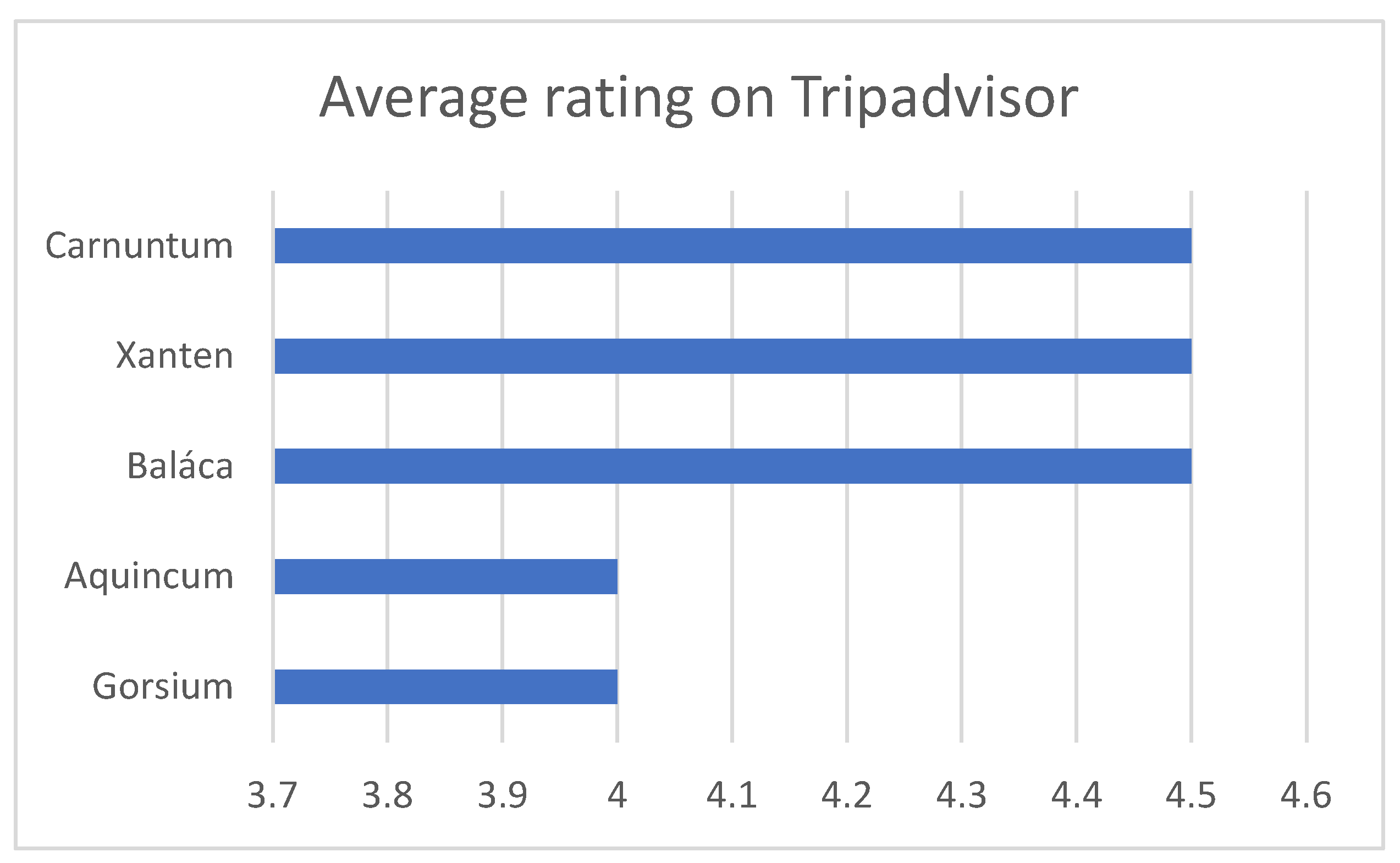
Figure 2.
Tripadvisor notes. Source: own edit, based on Tripadvisor.
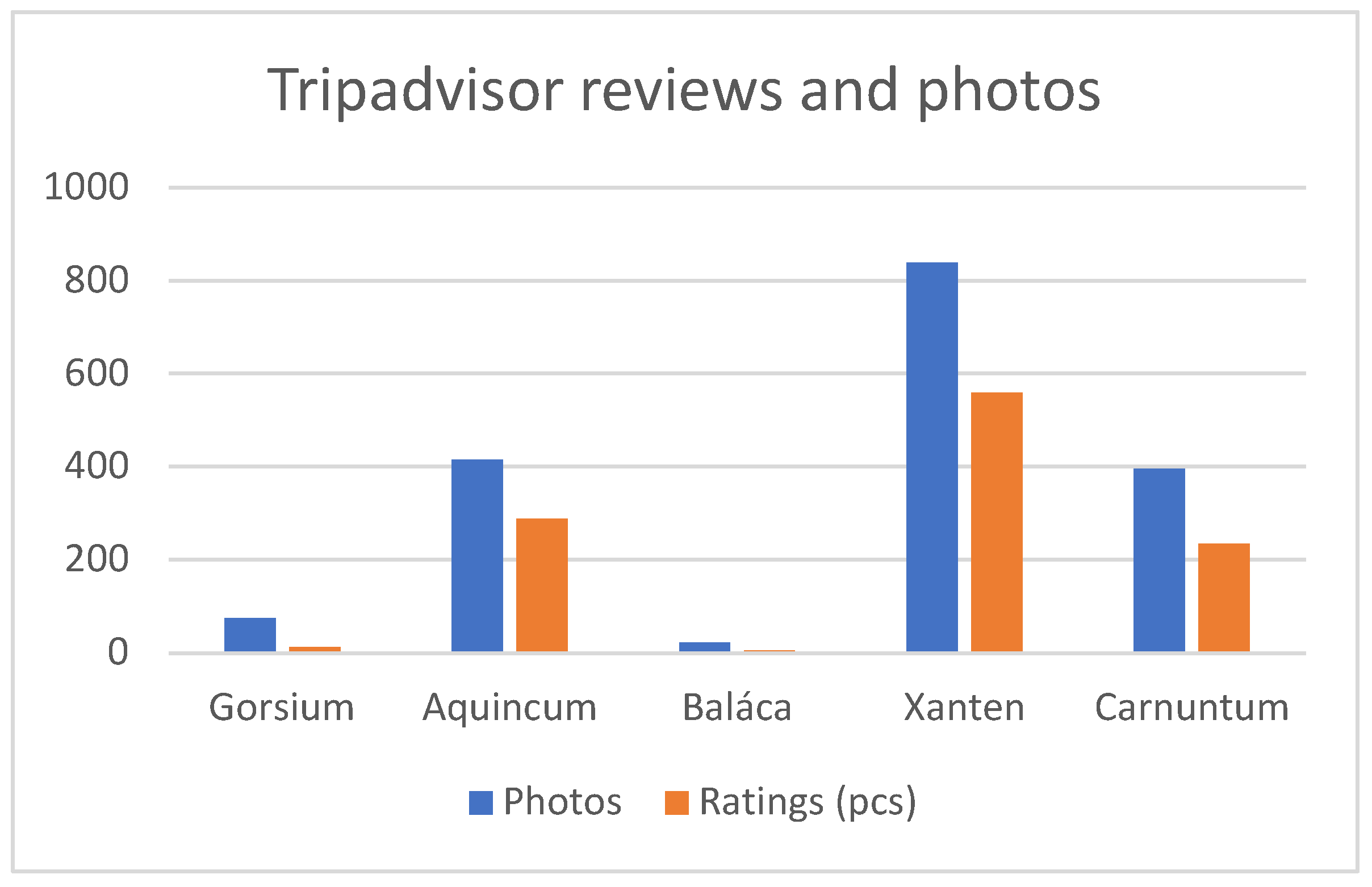
Figure 3.
Word cloud based on text ratings. Source: own edit, based on Tripadvisor.
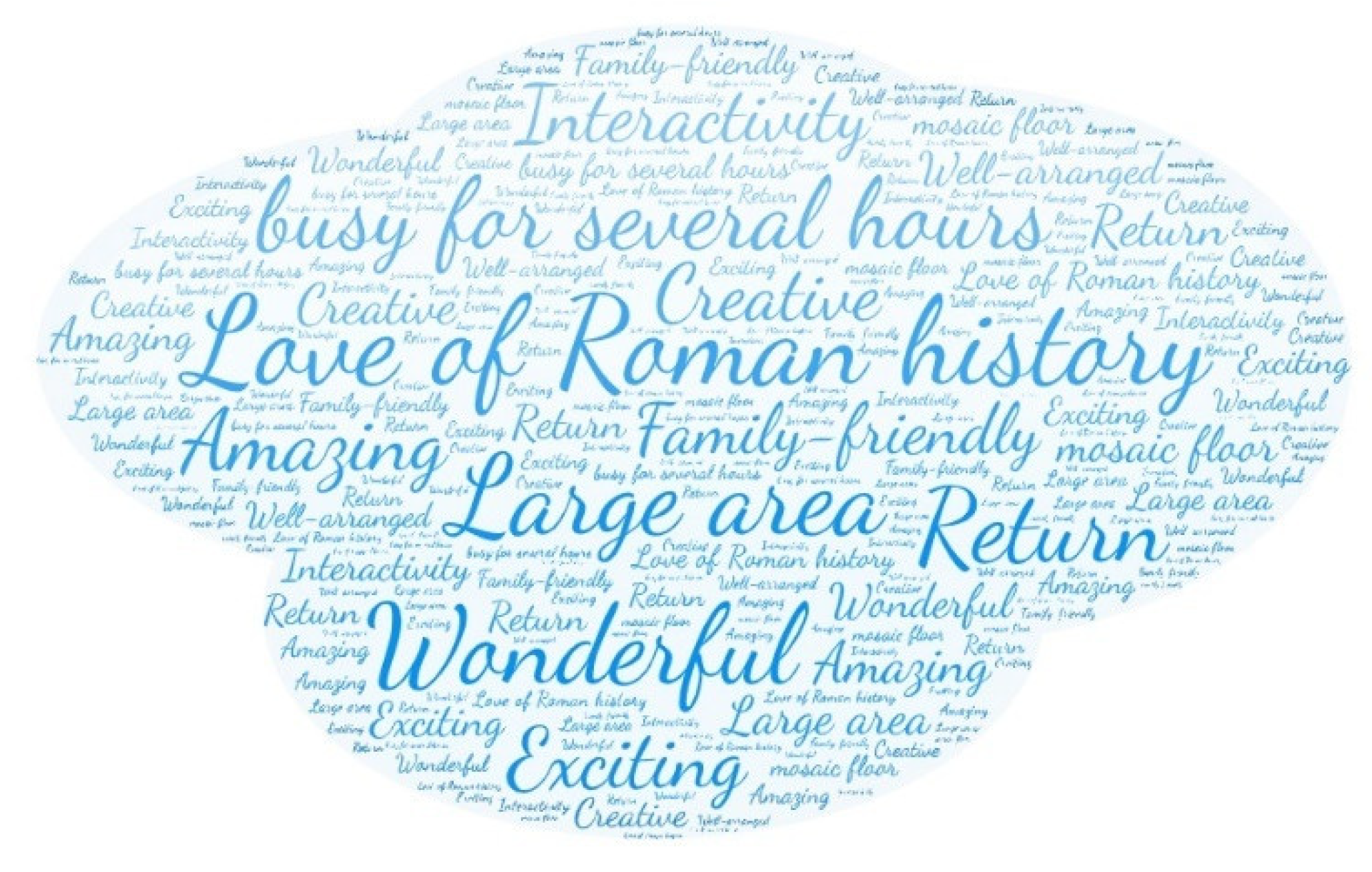
Figure 4.
Social media presence. Source: own edit, based on social networking sites.
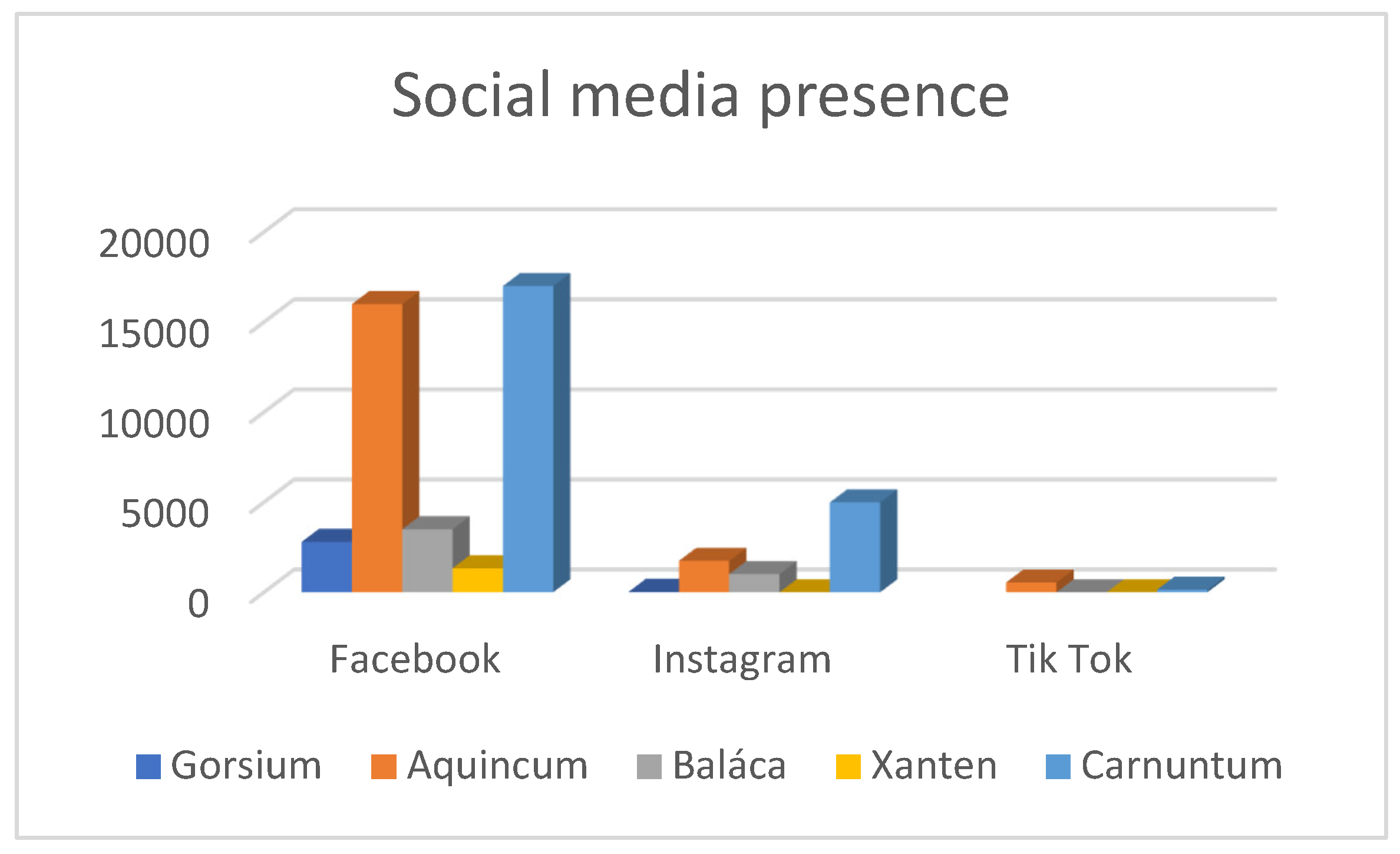
Figure 5.
Google results list. Source: own edit,based on Google.
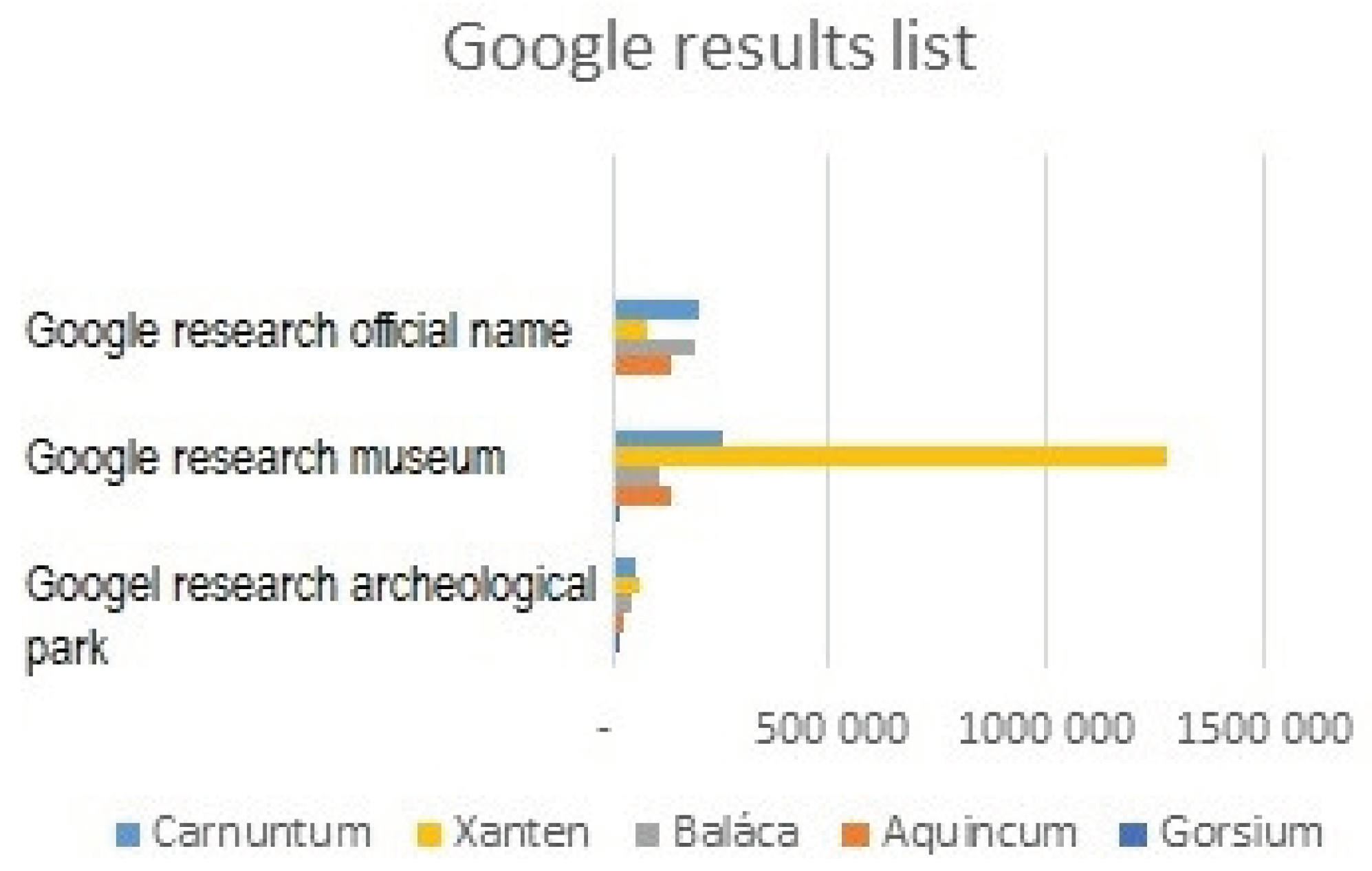

Table 1.
Evaluation of services. Source: own edit, based on Tripadvisor.
| Evaluation of services | Gorsium | Aquincum | Baláca | Xanten | Carnuntum |
| Excellent | 4 | 129 | 3 | 309 | 161 |
| Verx good | 3 | 96 | 2 | 170 | 60 |
| Average | 4 | 49 | 0 | 50 | 9 |
| Poor | 1 | 9 | 0 | 18 | 3 |
| Terrible | 0 | 5 | 0 | 12 | 2 |
Disclaimer/Publisher’s Note: The statements, opinions and data contained in all publications are solely those of the individual author(s) and contributor(s) and not of MDPI and/or the editor(s). MDPI and/or the editor(s) disclaim responsibility for any injury to people or property resulting from any ideas, methods, instructions or products referred to in the content. |
© 2024 by the authors. Licensee MDPI, Basel, Switzerland. This article is an open access article distributed under the terms and conditions of the Creative Commons Attribution (CC BY) license (http://creativecommons.org/licenses/by/4.0/).
Copyright: This open access article is published under a Creative Commons CC BY 4.0 license, which permit the free download, distribution, and reuse, provided that the author and preprint are cited in any reuse.