

Submitted:
14 February 2024
Posted:
15 February 2024
You are already at the latest version
Abstract
The concept of Green Human Resource Management (GHRM) is regarded as a major turning point in managing human capital among firms. Sustainable practices, ecofriendly initiatives, and adequate management of employees (i.e. recruitment, training, performance, rewards, and involvement) are fundamental aspects of GHRM, which enable improvements in the performance of firms and enhanced competitiveness among their rivals. In this regard, the current study takes a quantitative approach towards analyzing GHRM practices and their effects on employee retention among hotels of UAE. Furthermore, the indirect effect of green innovation is analyzed as a potential mediating variable that can better explain the GHRM-employee retention relationship. A total of 207 employees from five 5*-hotels were selected as participants to provide information regarding the factors under examination in this research. The collected data is analyzed using Smart-PLS v.3 and via PLS-SEM technique. The perspective of employees on the outcome of GHRM initiatives and their willingness to remain in their firms can greatly contribute to the current understanding of GHRM and its effectiveness on employee retention in the context of hotel industry of UAE, and thus, aid the practitioners and scholars alike.
Keywords:
GHRM
; UAE
; training
; green innovation
; sustainability
; hotels
1. Introduction
Green Human Resource Management (GHRM) is a fundamental and crucial improvement in the context of managing human resources, which focuses on sustainability and long-term outcomes and aspects including the three pillars (Triple Bottom Line - TBL) (Jiang et al., 2023) that are namely, economic, social, and environmental aspects of sustainable development (Abualigah et al., 2023; Alreahi et al., 2022). There are studies that have shown positive outcomes in various sectors and businesses through implementation of GHRM in their organizational setting and its embeddedness in the strategic plans and actions of the firm (e.g., Islam et al., 2022, 2023; Sarhan et al., 2020). Notably, as the current research examines GHRM in the tourism and hospitality sector, it is observed that GHRM can have positive impacts on employee retention (Aboramadan and Karatepe, 2021). This becomes of particular importance as there is a high level of turnover, and thus, a low retention rate among the hotels in the tourism industry. This has been supported in literature by both earlier studies (e.g., Davidson et al., 2011) and more recent ones (e.g., Bahmani et al., 2023). There are numerous positive results that can be achieved through GHRM that can be namely, enhanced performance, improved employee and personnel behavior, better image and reputation among stakeholders, and a more effective workplace. It is expected in this study that GHRM can have a visible and tangible effect on employees’ retention in the hotel (hospitality) sector of UAE as a tourist hub in the region of Middle East and Northern Africa (MENA) (Hopfinger and Scharfenort, 2020). Therefore, the current research focuses on the relationship between GHRM and Employee Retention (ER) as maintaining employees in this industry is a challenging task for managers.
In the service industry (i.e., hotels) having employees that thrive in their jobs requires a strategic, delicate, and innovative organizational environment, which GHRM can provide (Alreahi et al., 2022; Islam et al., 2023). As the tourism industry is a major contributor to the emission of greenhouse gases (Irani et al., 2022), taking new initiatives to improve the business can ensure growth in market (Irani et al., 2022), economic stability (Sobaih et al., 2020), and employee retention (Islam et al., 2023). It is also important to note that green innovation can carry a major role in determining how the organization improves the workplace and its processes and strategies for employees. The current research particularly aims to understand the effects of GHRM and GI on employee retention as both direct and indirect effects. Through the exhibition of green behaviors and initiatives, employees can drive the organization (i.e., hotel) towards success and competitive advantages due to innovative, modern, resilient, and social nature of GHRM in the strategy of the firm.
Following what was noted, this research aims to investigate the relationship between GHRM and ER from the perspective of employees, recognizing them as the heart of the organization (Zargar et al., 2019), and as the individuals who directly engage with GHRM practices and policies of their organizations (i.e., hotels in this case). Furthermore, the current study examines the indirect (mediating) effect of Green Innovation (GI) on the aforementioned linkage between GHRM and ER. Green innovation incorporates strategies as well as actions and/or functions of an organization (Bahmani et al., 2023). This translates into goods and/or services developed in the company and the processes alongside procedures that function as a unit (Al-Hajri, 2020). It is also important to note that GI entails ecofriendly and sustainable measures, which are aligned with the core context of GHRM (Rehman et al., 2021). In the case of current research, and with regards to the hotel sector, these can be namely, provision of services to customers, hotel processes (e.g., procurement, staff management, market, etc.). In this respect, enabling GI for employees can manifest in better services to customers, innovative ideas in performing tasks, and autonomy in terms of conducting one’s job (Rehman et al., 2021).
The notion of green initiatives has gained more vitality in recent years due to the need to maintain resources for future generations. This has shifted firms to push for sustainable practices and policies in their strategic decisions for their companies (Al-Hajri, 2020). Notably, in the tourism and particularly, hotel sector, managing the staff members as crucial touchpoints can obtain desirable results for the organization such as, increased customer satisfaction, improved job performance, enhanced image and reputation, and economic sustainability (Sobaih et al., 2020). GHRM plays a key role in delivering and implementing the set strategies towards the employees so that the organization is strengthened internally and sustainably (Islam et al., 2022).
In the light of what was mentioned, this study aims to investigate the relationship between GHRM and employee retention in the hotel industry of UAE (i.e., Dubai). This is while the mediating effect of GI on the aforementioned linkage is further examined to better understand the indirect influences that can aid the management of hotels in retaining their workforce. Accordingly, a theoretical framework containing Social Exchange Theory (SET) (Blau, 1964) and Ability-Motivation-Opportunity (AMO) model (Renwick et al., 2013) is employed in the current research, which provides a premise that supports our assumptions and hypotheses. Based on the noted gaps in the extant literature of the subject, it can be observed that A) GHRM requires further investigation to better understand its implications in business settings (Bahmani et al., 2023); B) Employee retention is a critical subject in the hotel industry, which calls for investigations and analyses to aid the managers in the field (Ghani et al., 2022); and C) The region of Middle East receives considerably less attention from academia, which is a shortcoming compared to other regions (e.g., North America and Western Europe) (Kurdi and Alshurideh, 2020; Sarhan et al., 2020).
These gaps are considered as major drivers for the conduct of this research. With UAE and Dubai being major tourism destinations in the MENA region (Alom et al., 2019; Dwesini, 2019), the current research aims to contribute to the current understanding of GHRM and its effects on retention of employees in a sector that suffers from high turnover (Abo-Murad and Abdullah, 2019). Additionally, analyzing the mediating effect of GI can further provide empirical evidence that organizational setting, leadership, and strategic development of the firm should be aligned to create a fostering atmosphere for employees. The aim of the study is to provide empirical evidence from the hotel industry of UAE, Dubai to contribute to the current understanding of GHRM and its implications in this sector. Arguably, for an industry that suffers from high turnover (Wen et al., 2020), this can yield extremely desirable outcomes such as, improved performance, better customer service, innovativeness in the workplace, employees’ satisfaction, and socio-economic advantages for the company as a unit (Irani et al., 2022).
The following sections of this research include theoretical framework, and hypothesis development, where the context and assumptions are clearly defined using the existing knowledge in the literature. This is followed by illustration of the research model, and detailed information regarding sampling procedure, measurements, and ethical means during the data collection process. Statistical analyses and results are presented and discussions upon findings are provided. Lastly, conclusions as well as theoretical and practical implications are highlighted, and limitations of the research alongside derived recommendations are addressed.
2. Theoretical Framework and Hypotheses
Based on the specific context, aims, and objectives of the study, theories and most recent/most relevant findings in the extant literature have been gathered to aid the current study in developing its foundation and framework, upon which the current hypotheses are shaped. In this respect, two theories have been found to be highly suitable for the context of current research and its premises. These are namely, Social Exchange Theory (SET) and Ability-Motivation-Opportunity (AMO) model, which together provide the necessary theoretical premise for the current context. In this respect, SET (Blau, 1964) encompasses situations where employees are encouraged to reciprocate to the organization due to the various benefits that they have received (i.e., job and personal progress via GHRM policies). In all stages of GHRM from recruitment to training and development, performance management, incentive and rewarding systems, and involvement that have a green core, wellbeing, and professional and personal development of employees are addressed, which further aligns with social values (Islam et al., 2023). Through provision of an environment that enables, empowers, and cares for individuals, GHRM can be a great tool for retaining employees, especially for hotels as it can directly translate into customer satisfaction (Ubeda-Garcia et al., 2021). This is due to the positive environmental, social, and economic benefits that are made possible through implementing GHRM and focusing on establishing an atmosphere where staff are provided with benefits to be encouraged to show loyalty and retention as a means for reciprocation (Islam 2023; Meira and Hancer, 2021; Pham et al., 2019). Based on the premises of SET, it can be stated that GHRM is effective, when it comes to promoting retention as it reduces intentions of turnover (Islam et al., 2023; Qadri et al., 2022).
In addition to SET, the AMO model (Renwick et al., 2013) also encompasses different aspects that support the context and arguments of the current research. This theory entails the personnel management concept from various angels that are namely, policies and regulations for work, benchmarking and modern initiatives, green and eco-friendly practices in all departments (companywide). These are embedded in the recruitment process, training of staff, managing performance, designating rewards, and involvement. Which contributes to the efforts of the organization regarding retaining employees and enhancing processes and atmosphere of work (Benevene & Buonomo, 2020). Furthermore, leadership and their role, the culture and environment of the firm, teams, and departments (workflow), eco-friendliness of processes and tasks, employee involvement and engagement, and both professional developments are incorporated in this model. Importantly, these aspects fall under GHRM practices as well as GI, which are the basis for the current research. Notably, psychological, and physical wellbeing of employees is addressed under the AMO theory (Bahmani et al., 2023), which further aligns with the context of the current research with regards to employee retention. Green initiatives, policies, and practices in the service industry (i.e., hotels) are significant gateways for enhancing the workplace, which in turn yields improved performance, and retention of the employees (Akpa et al., 2022; Tian et al., 2016). AMO and SET provide a foundational premise for the current arguments that incorporate human capital management (i.e., GHRM), and workplace atmosphere (i.e., GI) via creation of core values (i.e., sustainable/green) (Bahmani et al., 2023; Renwick et al., 2016).
2.1. GHRM and Employee Retention
GHRM as a mechanism increases the willingness of the employees towards taking green initiatives and showing green behavior. Following the policies of GHRM in an organization, employees will advocate the goals and vision of the company as it manifests in personal, social, economic, and environmental values (Amrutha and Geetha, 2020). When organizations (i.e., hotels) implement green strategies and initiatives, gaining advantages in the market will become more feasible (Al-Hajri, 2020). In the service industry, staff often engage with customers. This implies the essentiality of having employees that thrive in their work and behavior to ensure profitability through re-patronage or recommendation to visit (word-of-mouth) (Dechawatanapaisal, 2020; Rajput and Gahfoor, 2020). In this sense, GHRM is designed to have positive outcomes that are aligned with sustainability (i.e., economic, social, and environmental impacts) (Kramar, 2014), which can encourage employees to remain in the firm and carry its green initiatives (Ribeiro et al., 2022). The organizational atmosphere and workplace environment ought to be in a manner that promotes retention. This can be achieved through GHRM aspects that encompass green recruitment, training, performance (appraisal), rewards, and involvement. Combined with GI, which entails strategies and actions/processes of the organization under a sustainable and eco-friendly context, GHRM can be an effective tool for hotel managers to retain their employees. It is well-known that retaining employees that have been trained and developed is a key determinant of organizational success (Sawaneh and Kamara, 2019) and competitiveness (Das and Baruah, 2013; Kurdi & Alshurideh, 2020), particularly in the tourism industry (Ghani et al., 2022; Ohunakin et al., 2019). Employee retention can be described as the sum of all the activities and endeavors of the organization to keep their talented and/or developed/skilled staff in the firm for a long period of time (Al-Hajri, 2020; Ahmad et al., 2015). In this study, it is argued that each component of GHRM (i.e., selection and recruitment, training, performance, rewards, and involvement) negates the turnover intention among employees, and thus, enhances employee retention of the organization.
While there are studies that show the positive influence of GHRM on green initiatives of employees (e.g., Ansari et al., 2021), the literature suggests additional research based on its generalizability in various contexts (Hassanein and Özgit, 2022; Norton et al., 2012). With the employees being the key players in the context of current study (Ahmad et al., 2021; Yong et al., 2019), GHRM possesses the potential to direct the staff towards better performance through higher degrees of engagement with the organization and its goals. Due to the green nature of GHRM policies, employees are further encouraged to take green actions, amplifying the green objectives of the organization (Hassanein and Özgit, 2022). The values created by the firm increase the willingness of its staff towards positive behaviors (e.g., green actions, and retention) (Hooi et al., 2022; Pham et al., 2019; Zhang et al., 2019). Referring to the premises of SET, GHRM fosters an environment, where individuals are provided with various means for better performing their tasks while being equipped with an organization that provides support, growth, and sense of belonging. Therefore, the sense of reciprocation grows stronger, which in turn translates to longer retention and lower turnover intentions (Al-Hajri, 2020; Islam et al., 2023; Sobaih et al., 2020). GHRM enables the staff to contribute to social, economic, and environmental aspects of their own lives as well as the prospect of their organization. This further links to the premises of AMO theory and the fact that it covers the activities and practices undertaken in the human resources department. GHRM provides abilities (green ideas and innovative tools for tasks, and involvement), motivation (performance and rewards), and opportunities (career development), which are in line with the core concept of GHRM and the endeavor to retain employees for longer periods (Bahmani et al., 2023). Skills and knowledge of the staff is enhanced through GHRM practices, which positively influences their green initiatives, overall performance, and their loyalty towards the firm, which is contextualized as employee retention in the current research (Amrutha and Geetha, 2020; Cherif and Farmanesh, 2022).
The prowess of human capital in the organization can be greatly enhanced through policies and initiatives of GHRM as they ensure that employees have sufficient and adequate tools, knowledge, and equipment alongside support from mangers, rewards and incentives, and career growth paths (Bahmani et al., 2023). Under this concept, individuals are motivated to share ideas, and engage in innovative behavior to perform their tasks (Singh et al., 2020; Yong et al., 2019). AMO and SET as theoretical premises, direct and encourage the staff towards green values that match with their social, economic, and environmental values, furthering their willingness to remain in the company. In the recruitment stage, GHRM policies can act as points of attraction for acquiring fit and talented personnel (Ahmad, 2015); in terms of training, GHRM provides an array of career development activities, benefiting employees’ personal and professional domains of life (Bahmani et al., 2023); Performance of the staff is managed through feedback, adequate support, and tailored practices that improves the skills of individuals while motivating them towards better performance (Renwick et al., 2016; Bahmani et al., 2023); monetary incentives, holidays, bonus and other reward systems are established to retain employees and increase their satisfaction with the organization and their jobs (Ahmad, 2015; Bahuguna et al., 2023; Wang, 2019); and involvement incorporates encouraging staff to share ideas, have their voices heard, and are included in communications, decisions, and changes that the managers tend to implement (Aftab et al., 2023; Parida and Brown, 2021; Tang et al., 2018). The current study, therefore, posits the following hypothesis (illustrated in Figure 1):
Hypothesis 1: GHRM has a positive and direct influence on employee retention in the hotel industry of Dubai.
3.2. Mediating Role of Green Innovation
GI can be characterized as green and eco-friendly actions, processes and/or functions, and strategies of the firm (Aftab et al., 2023). When organizations endeavor to have green processes aligned with green strategies, it is more likely that staff members will engage in eco-friendly behaviors for conducting their tasks. In an organizational setting, GI envelops strategies and processes/actions with an emphasis on ecological impacts. This is manifested via the behavior of employees and their green behaviors that can be observed during their jobs (actions) and surrounding the processes and core values of their work (strategies) (Bahmani et al., 2023; Parida and Brown, 2021; Su et al., 2020). In Figure 1, the proposed model of the current study illustrates the role of GI in the current context. in this respect, SET explains that employees are more likely to remain with their organization when GI is applied, as it pertains to their values, goals, and grants them more autonomy, and innovativeness (Hasan et al., 2023). GI establishes an environment where social exchange occurs in the work environment across all departments and aspects of the job, which strengthens the experience of individuals (Lawler, 2011). Strategic aspect of GI ensures that values are created within the firm (internally), which contribute to the link between the individual and their organization, further increasing the possibility of retention through sense of reciprocity (Hasan et al., 2023). While this requires the firm and its management (i.e., human resources) to commit to green strategies and improvement of the workplace for employees, the benefits have been reported in the extant literature regarding the positive emotional experiences through GI that lead to increased willingness to remain with organization (e.g., Aftab et al., 2023; Hasan et al., 2023; Parida and Brown, 2021). With the support of the premises of SET, the influence of GI on employee retention (ER in the current analysis) is addressed in this research.
In addition to what was mentioned, AMO contributes to the context of SET and its application in the current research regarding GI. In this respect, AMO provides the necessary premise to examine the linkage between GHRM and employee retention as it incorporates actions, policies, and systems used in the human resources department as well as managerial level of the firm regarding employee practices (i.e., recruitment, training and development, performance appraisal, rewards, and involvement) (Applebaum et al., 2000; Singh et al., 2020). Each aspect of AMO links to the support of GHRM and its impact on employee outcomes (i.e., retention). Accordingly, the selection and recruitment of new employees as well as implementation of career paths through training essentially address abilities. Similarly, rewarding systems (e.g., bonuses) are the manifestation of motivational aspect. Lastly, provision of support, encouragement and involvement of employees addresses the opportunity aspect of AMO (Singh et al., 2020). In the current research it is expected that premises of AMO enable GHRM practices to explain the positive employee outcomes, particularly employee retention. As strategic planning alongside the processes of the organization become aligned with green values and initiatives, the role of GHRM becomes more vivid due to its impact in terms of implementing employee-centric policies and practices. This is due to the notion that GHRM establishes an environment where employee can grow, be heard, and are encouraged to be innovative, which significantly enhances their experiences with the firm, leading to a desire to remain with the organization (Iftikar et al., 2022; Mohtar and Rajiani, 2016). Under the framework of AMO theory, the link between GHRM and GI is examined in this research.
GI in the current contextualization incorporates all activities undertaken in the hotel that are directed towards green and sustainable goals. This can include green purchasing and using green suppliers, efficient usage of energy and materials, waste management, and reductio in energy consumption (i.e., water and electricity) (Asadi et al., 2020; Sharma et al., 2023). GI is also regarded as a determinant of organizational competitiveness in the tourism industry, especially when it is combined with modern sustainable strategies (i.e., GHRM) (Hasan et al., 2023; Irani et al., 2022; Munawar et al., 2022). Strategic aspect of GI aids hotels and their HR managers to develop resilient systems via the innovativeness of their employees, which translates into enhanced organizational performance under the TBL (economic, social, and environmental) context. The core values that are created via such strategies become tools of competitive advantage in a market with high rivalry (i.e., hotels in Dubai) (Singh et al., 2020; Zargar et al., 2019). Moreover, GHRM combined with the green strategies and processes of the firm, creates a workplace, where staff can thrive through learning, improvement, motivation, support, and values addressing their social, economic, and environmental futures (Aftab et al., 2023; Asadi et al., 2020; Sharma et al., 2023). GI and GHRM in the hotel setting foster acquisition of workforce and other elements (e.g., supplies), actions to train and/or improve the processes and the workforce (e.g., awareness, workshops, etc.), and the actions that are towards enhancement of current processes as well as retaining the employees (e.g., rewards, promotions, and the like) (Alreahi et al., 2022; Obeng et al., 2023; Úbeda-García et al., 2021). These reports show that there is a linkage among GHRM, GI and ER. According to the aforementioned arguments, the following hypothesis is shaped:
Hypothesis 2: GI has a mediation effect on the linkage between GHRM and employee retention in the hotel industry of Dubai.
3. Methodology and Design
4.1. Sampling
Based on the hypotheses, theoretical setting, and the aims of the research, a quantitative approach was deemed appropriate which was deployed using questionnaires. To measure the adequate sample size, G*power was used (Faul et al., 2007) (statistical power = 0.85; effect size = 0.01; α = 0.01; with Min R2 = 0.10). This setting showed a total of 179 samples, which was also compared to the recommendations by experts in the statistics domain (i.e., Hair et al., 2021). This led to a slight addition to 201 samples to maintain the previously noted criteria. The data was collected between September and October 2023 using both purposive and convenience sampling techniques. While the former technique was used to pinpoint hotels, where GHRM and GI have been set in their strategies (if not implemented), the latter enabled the researcher to collect data based on availability, and willingness of employees during the time of data collection. The authors of this research used their personal networks and local knowledge to establish the necessary links with managers of over 10 hotels, of which one (1) was used for pilot testing, and five (5) were identified as good fit for the current context. Permissions were taken and the decision-makers of each hotel were informed of the purpose of the study. The aforementioned pilot test was employed with 25 employees of a hotel that was not included for the final dataset (no items were removed during the pilot test). A total of 230 surveys were distributed in-person, which were carried out by the authors and combined with explanations regarding the research and/or questions. With a total of 207 qualified surveys (8 withdrawn, and 15 incomplete – 90% response rate), the statistical criteria are complied with. Withdrawal from the survey at any stage was given to each participant, while their availability and willingness was highly considered. No sensitive information (e.g., sexual orientation, religious beliefs, and income) was included in the survey and anonymity was guaranteed to participants.
4.2. Measurements
The self-administered questionnaire used in this research was designed using the most recent and/or most relevant sources in the extant literature while considering the reliability, validity, and commonality of the scales among scholars addressing similar contexts. GHRM measures through its dimensions that are namely, recruitment, training, performance, rewards, and involvement. The items were selected from the work of Tang et al. (2018), with a total of 10 questions addressing each dimension (2 for each). Green Innovation including its dimensions (strategies, and actions) has been derived from the work of Zhang et al. (2015), with a total of four questions reflecting the variable. Lastly, employee retention was measured using five questions forming the variable, which were derived from the work of Kyndt et al. (2009). Furthermore, age, gender, and work experience were included in the survey as demographic variables that are controlled in the current analysis (i.e., control variables) due to their effect on the dependent variable (Dumont et al., 2017; Su et al., 2020) of the proposed model (see Figure 1). A 5-item Likert scale was used for all the questions within the range of 1 = totally disagree to 5 = totally agree (see Appendix). The researchers took a number of aspects of common method bias (CMB) into consideration (i.e., ethical considerations noted previously, anonymity, and confidentiality) to increase willingness to participate while reducing response errors (Podsakoff et al., 2003).
4.3. Respondents’ Profile
A total of 207 surveys qualified for the final analysis. The dataset is comprised of 54% women participants and 46% male respondents. The average age is 35 (standard deviation = 4.6). Lastly, the average of work experience was found to be 3.7 years (SD = 4.8). These demographic variables are further analyzed as control variables with regards to their relationship with the dependent variable of the proposed model (see Table 3).
3. Analysis and Results
Based on the context, approach, and framework of the study, Partial-Least Squares Structural Equation Modeling (PLS-SEM) was deployed as the analytical technique via Smart-PLS software version 3. Notably, the current model fits the criteria for this particular analytical technique (i.e., relatively small sample size, no concern for normal distribution, set statistical power, and inclusion of a latent variable) (Hair et al., 2019, 2021).
4.4. Measurement Model Assessment
The measurement model is analyzed in Table 1, where the results show that there is a satisfactory level of internal consistency (i.e., Rho A, α and composite reliability) as the values fall in the 0.7 to 0.9 ratio (Dijkstra and Henseler,2015; Diamantopoulos et al., 2012; Jöreskog, 1971). Moreover, average variance extracted (AVE) shows acceptable values (>0.5) implying satisfactory convergent validity (Hair et al., 2019) which is similar to the values of outer loading (>0.708) (Hair et al., 2019). Lastly, variance inflation factor (VIF) was deployed to test for multicollinearity, in which the values did not surpass the threshold of 3.3 (Kock, 2015), implying lack of concern regarding CMB.
There are studies that have shown positive outcomes in various sectors and businesses through implementation of GHRM in their organizational setting and its embeddedness in the strategic plans and actions of the firm (e.g., Ahmad et al., 2021; Al-Hajri, 2020; Ansari et al., 2021). Notably, as the current research examines GHRM in the tourism and hospitality sector, it is observed that GHRM can have positive impacts on employee retention (Ghani et al., 2022; Kurdi & Alshurideh, 2020). This is of particular importance as there is a high level of turnover in this sector. The results pertaining to the hypotheses of the research are further presented in Table 3.
Heterotrait-monotrait (HTMT) ratio is deployed to assess discriminant validity to provide a comprehensive assessment of the measurement model. As can be observed in Table 2, the values are within the suggested ration (<0.85) (Henseler et al., 2015).
4.4. Structural Model Assessment
Table 3 presents the results of structural model assessment and hypothesis testing as the second stage of PLS-SEM analysis. As can be observed, the direct relationship between GHRM and ER is supported as β = 0.321, which states that implementation of GHRM in the hotel sector can yield positive outcomes in terms of employee retention. Similarly, the second hypothesis of the study is supported by the current results as β = 0.134, which states that there is a mediation effect (partial) posed on the GHRM-ER relationship by GI.
The structural model and hypotheses of the research are examined in Table 3 with results showing a good ‘model fit’ as normal fit index (NFI = 0.923), and the standardized root mean square residual (SRMR = 0.027) (Henseler et al., 2014); multicollinearity was found to be of no concern (see Table 1) (Hair et al., 2019, 2021); and both predictive power (R-squared) and predictive relevance (Q-squared) have values that are within the acceptable thresholds (Henseler et al., 2009).
As Table 3 shows, the first hypothesis of the study, which addresses the direct influence of GHRM on employee retention is supported. Considering the theoretical premise of the research, utilizing SET and AMO theories, and the context of hotels in Dubai, employees have shown that green recruitment, training, management of performance, rewards, and involvement are key determinants of positive employee experience and emotional outcomes (i.e., sense of belonging and reciprocity towards the firm). This is in line with the existing literature (Islam et al., 2023; Pham et al., 2019; Qadri et al., 2022; Ubeda-Garcia et al., 2021), while contributing to the current understanding of the subject in terms of employees’ perspective towards GHRM practices in a setting that has reportedly high turnover rates (Aboramadan and Karatepe, 2021; Islam et al., 2023). These further are in line with the notion of sustainable development and its TBL pertaining to social, economic, and environmental aspects (Aftab et al., 2023; Parida and Brown, 2021).
The second hypothesis of the study is also supported according to Table 3, which suggests that GI carries a mediation effect on the relationship that persists between GHRM and ER in the tourism and hotel context. This implies that strategic and functional or procedural green initiatives can greatly improve the workplace for employees, which in turn enhances their experience in their job, leading to a higher degree of willingness to remain with the firm. While similar reports have been found in the literature (e.g., Hasan et al., 2023; Obeng et al., 2023; Munawar et al., 2022), the current results further improve the applicability of GI in the service sector, particularly in the Middle East region as it can foster a greater rate of competitiveness. Furthermore, the empirical nature of the current findings suggests that the call of the experts regarding this notion has been addressed (e.g., Alom et al., 2019; Dwesini, 201; Irani et al., 2022), while new pathways for further analysis have been indicated (see recommendations). GI encourages employees to take green actions and show innovative behaviors that can improve their work and potentially the processes of the organization. As the workplace fosters valuable elements that benefit the employees, the premises of both SET and AMO are triggered, where emphasis on employee-centric initiatives in the green domain will yield desirable results in the behavior and performance of the staff (Amrutha and Geetha, 2020; Karus et al., 2020; Wang, 2019).
The current findings highlight the vitality of having green strategies implemented in the hotel so that functions are directed towards creation of core values (i.e., social, economic, and environmental) for the firm and its employees. This can be boosted via GHRM practices that are designed to empower the employees while optimizing the workplace for innovative and positive behaviors. When this is combined with GI actions of the firm such as, green initiatives to reduce environmental impact, corporate social responsibility activities, and long-term economic planning, it can not only improve the internal image of the firm (i.e., for employees – retention) (Al-Hajri, 2020; Alreahi et al., 2022; Islam et al., 2023) but can also contribute to the corporate image and its competitive edge in the market (Ashraf et al., 2018; López-Gamero et al., 2023). Lastly, as the firm is more capable of maintaining its workforce (who become more skilled and competent with time), the long-term benefits of the previously noted strategies and policies will manifest as enhanced reputation (Sun et al., 2023), customer loyalty (Alreahi et al., 2022; Irani et al., 2022), and profitability for the hotel, rendering it a highly effective vision for the organization as a unit.
5. Conclusions
As noted in the previous section, the current results while being in consensus with the existing body of knowledge regarding GHRM and GI and their positive influences in organizational setting, contribute to the current understanding as the hotel industry is examined. Particularly, the region of Middle East receives considerably less studies, when compared to Western counterparts. In this respect, the UAE and Dubai as a major tourist destination across the world is a location, where innovation and progress is encouraged for all businesses (Elbanna and Abdel-Maksoud, 2023; Beshr and Hossan, 2018). Hotels can improve their existing systems to enhance the workplace for their employees which can directly affect the satisfaction and loyalty of their customers. As employees in this sector engage with customers (Zargar et al., 2019), it is essential that hotels and their HR departments implement strategies that are directed towards retaining employees while providing them with the necessary means to improve and shine in their roles. GI as a strategic and fundamental tool can ensure that hotels are equipped with adequate managerial dedication and support towards sustainable goals, green mechanisms, engagement and involvement of the staff in the workplace as well as green initiatives that address the TBL. Accordingly, this research addresses the noted gap in the literature that called for empirical evidence (quantitative data) (Cherif and Farmanesh, 2022), extended geography (Middle East) (Islami et al., 2022), organizational approach (employees’ perspective) (Ren & Hussain, 2022), and industrial setting (service industry – hotels) (Alreahi et al., 2022; Ubeda-Garcia et al., 2021) fulfilling its aims to contribute to the existing literature.
6.1. Theoretical Implications
According to the current findings, AMO theory explains the relationship between GHRM and positive employee behavioral outcomes (i.e., retention). This is the result of green policies and practices of GHRM in all stages of work that are namely, recruitment, training, managing performance, incentive, and reward systems, and involving employees in the decisions, all designed to increase expertise, improve experience, and create pathways for progress (Renwick et al., 2013; Benevene & Buonomo, 2020). In the same context, GI ensures that innovative actions and green strategies are embedded in the heart of the organization’s visions, which expand to its processes, functions, services, and other features (e.g., personnel management approaches) (Bahmani et al., 2023; Su et al., 2020). Employees (whether front or back) are able to show innovativeness, and new approaches to solve the problems in their tasks, which increases the efficiency in the performance of the firm. The green workplace and innovation-embracing environment in the hotel sector can greatly influence the employees’ intention to remain in the firm as they can vividly perceive the opportunities that the firm provides alongside its motivational and supportive atmosphere that aids in career development (Ahmad et al., 2021; Singh et al., 2020).
With regards to SET, a similar influence can be observed from GHRM and its combined practices with the notion of GI as the strategic approach of the organization (i.e., hotel). This states that the work environment and the culture/atmosphere of the organization is highly influential on the experiences of employees regarding social exchanges (Ubeda-Garcia et al., 2021). This further translates into a higher likelihood of sense of reciprocity towards the firm as the employees are provided with various benefits directed towards personal growth (e.g., awareness), professional improvement (e.g., workshops and training programs), economic stability (e.g., promotions, incentives, and bonuses), and social and environmental benefits (e.g., societal activities engaging with the local community and implementing strategies to reduce ecological impacts) (Islam et al., 2023). In such an environment, employees are more likely to engage in behaviors that are positive towards the organization as reciprocation due to the array of values that empower their lives and their societies.
6.2. Practical Implications
The current results show that hotel managers can benefit greatly from implementation of GHRM in their human capital management systems. Notably, those hotels where GHRM is established can always improve their existing practices by following the scholar findings and modern tools (e.g., data-driven and technology tools for improving HR systems). Using green selection policies, HR mangers can employ the individuals that have the potential to become advocates of company’s green objectives. Green training can provide the staff with the expertise needed to show innovation and perform better in their tasks, while having a valuable asset delivered to them by the firm, which can improve their personal and professional futures. Bonuses, holidays, and other incentives (non-financial) can motivate the staff to engage in behaviors that are desired by the firm and its policies. Engaging the employees in the decisions, changes, and new initiatives can improve their sense of involvement, which will steer them towards reciprocity and better performance. Additionally, considering GI, decision-makers in hotels of Dubai and to extension the neighboring countries can purchase materials from greener vendors, implement modern technologies to reduce energy consumption, equip the hotel with new water and electricity management tools, and hold social and environmental standards to high levels. This will foster and environment, where employees feel obligated to act as advocates of the firm in terms of having social, economic, and environmental impact on their surroundings. Social activities such as green seminars or awareness initiatives can benefit both the company and its employees, and the society that they serve in.
7. Limitations and Future Research
The current study faced a limitation regarding the amount of available secondary data in the literature on the region of Middle East and particularly, Dubai’s hotel industry. This while encouraging the conduct of this research, calls for additional studies to further examine the region and neighboring countries to contribute to the literature while aiding the practitioners in the hotel and tourism sector. In addition, the current research is limited regarding the proposed model as a comprehensive model, which is linked to the previous limitation. In this sense, scholars interested in this context can examined the effects of other variables (e.g., culture, leadership, economy of the location, and sociodemographic variables). Cross-sectional nature of the data in this research lowers generalizability, which future studies can bypass by conducting longitudinal research that analyzes the performance, turnover rate, and/or innovativeness of the firm in different time periods. Future studies can also overcome the representativeness limitation of the current study by expanding the sample size (while taking note of the required analytical techniques). Similarly, interview with employees may provide a deeper understanding of their feelings, experiences, and perspectives towards GHRM, and GI in the hotel sector and how it relates to their sense of retention. Comparative results can be obtained by examining hotel sector of Oman, Qatar, and even other cities in UAE (e.g., Sharjah) to provide a comprehensive overview on the status quo of GHRM in this industry throughout the region.
Author Contributions
Conceptualization, F.H. and Z.H.; methodology, F.H.; software, N.B.; validation, N.A., A.D. and D.Y.; formal analysis, N.B.; investigation, Z.H.; resources, F.H.; data curation, N.B.; writing—original draft preparation, Z.H.; writing—review and editing, D.Y.; visualization, Z.H.; supervision, A.D.; project administration, A.D. All authors contributed equally to this research work.
Funding
This research received no external funding.
Institutional Review Board Statement
Not relevant
Informed Consent Statement
Informed consent was obtained from all subjects involved in the study.
Data Availability Statement
The data (excluding its identifiers) used for the current data analysis can be obtained via request from the corresponding author.
Acknowledgments
Not applicable
Conflicts of Interest
The authors declare no conflict of interest.
Appendix A
Questionnaire Survey (draft format – the respondents’ format includes the Likert scale and the demographic items (i.e., age, gender, and work experience).
| Variable | Dimension | Items |
|
GHRM |
Recruitment |
The company tends to hire people with green awareness |
| There are policies for recruiting individuals who have green behavior | ||
|
Training |
Training programs are green and improve knowledge and skills | |
| Company has developmental programs for different departments | ||
|
Performance |
Employees of different departments have a set of green goals | |
| All employees are monitored regarding green performance | ||
|
Rewards |
The managers reward green behavior and | |
| There are bonuses and incentives for green initiatives | ||
|
Involvement |
Management includes the staff in sharing green ideas and innovation in tasks. | |
| Mangers include their staff in the changes that are to be applied | ||
|
Green Innovation |
Strategies | long-term goals persist for green innovation |
| short-term objectives exist for green innovation | ||
| Actions | processes are optimized with the aim of reduction in energy consumption across all departments. | |
| The hotel continuously seeks recyclable, reusable, recoverable means. | ||
|
Employee Retention |
I am happy with my work in this company. | |
| I can see a future for myself in this company. | ||
| the university is quick to adopt new technologies. | ||
| If a good offer comes, I would take the job and go to a new company. | ||
| I would like to work in this company for the next five years. | ||
References
- Abo-Murad, M., & Abdullah, A. K. (2019). Turnover culture and crisis management: Insights from Malaysian hotel industry. Academy of Strategic Management Journal, 18(2), 1-14.
- Aboramadan, M. , & Karatepe, O. M. (2021). Green human resource management, perceived green organizational support and their effects on hotel employees’ behavioral outcomes. International Journal of Contemporary Hospitality Management, 33(10), 3199-3222.
- Abualigah, A. , Koburtay, T., Bourini, I., Badar, K., & Gerged, A. M. (2023). Towards sustainable development in the hospitality sector: Does green human resource management stimulate green creativity? A moderated mediation model. Business Strategy and the Environment, 32(6), 3217-3232.
- Aftab, J. , Abid, N., Cucari, N., & Savastano, M. (2023). Green human resource management and environmental performance: The role of green innovation and environmental strategy in a developing country. Business Strategy and the Environment, 32(4), 1782-1798.
- Ahmad, N., Tariq, M. S., & Hussain, A. (2015). Human resource practices and employee retention, evidences from banking sector of Pakistan. Journal of business and management research, 7(3), 186-188.
- Ahmad, S. (2015). Green human resource management: Policies and practices. Cogent business & management, 2(1), 1030817.
- Ahmad, S. , Islam, T., Sadiq, M., & Kaleem, A. (2021). Promoting green behavior through ethical leadership: a model of green human resource management and environmental knowledge. Leadership & Organization Development Journal, 42(4), 531-547.
- Akpa, V. O. , Mowaiye, B., Akinlabi, B. H., & Magaji, N. (2022). Effect of green human resource management practices and green work life balance on employee retention in selected hospitality firms in Lagos and Ogun states, Nigeria. European Journal of Human Resource Management Studies, 5(4).
- Alom, S. , Patwary, A. K., & Khan, M. M. H. (2019). Factors affecting the turnover intention of Bangladeshi migrants in the United Arab Emirates: An empirical study on the hotel industry. International Journal of Innovation, Creativity and Change, 8(3), 344-360.
- Alreahi, M. , Bujdosó, Z., Kabil, M., Akaak, A., Benkó, K. F., Setioningtyas, W. P., & Dávid, L. D. (2022). Green human resources management in the hotel industry: A systematic review. Sustainability, 15(1), 99.
- Amrutha, V. N. , & Geetha, S. N. (2020). A systematic review on green human resource management: Implications for social sustainability. Journal of Cleaner production, 247, 119131.
- Ansari, N. Y. , Farrukh, M., & Raza, A. (2021). Green human resource management and employees pro-environmental behaviours: Examining the underlying mechanism. Corporate Social Responsibility and Environmental Management, 28(1), 229-238.
- Appelbaum, E. (2000). Manufacturing advantage: Why high-performance work systems pay off. Cornell University Press.
- Asadi, S. , Pourhashemi, S. O., Nilashi, M., Abdullah, R., Samad, S., Yadegaridehkordi, E.,... & Razali, N. S. (2020). Investigating influence of green innovation on sustainability performance: A case on Malaysian hotel industry. Journal of cleaner production, 258, 120860.
- Ashraf, S. , Ilyas, R., Imtiaz, M., & Ahmad, S. (2018). Impact of service quality, corporate image and perceived value on brand loyalty with presence and absence of customer satisfaction: A study of four service sectors of Pakistan. International journal of academic research in business and social sciences, 8(2), 452-474.
- Bahmani, S. , Farmanesh, P., & Khademolomoom, A. H. (2023). Effects of Green Human Resource Management on Innovation Performance through Green Innovation: Evidence from Northern Cyprus on Small Island Universities. Sustainability, 15(5), 4158.
- Bahuguna, P. C. , Srivastava, R., & Tiwari, S. (2023). Two-decade journey of green human resource management research: a bibliometric analysis. Benchmarking: An International Journal, 30(2), 585-602.
- Benevene, P. , & Buonomo, I. (2020). Green human resource management: An evidence-based systematic literature review. Sustainability, 12(15), 5974.
- Beshr, H. A. , & Hossan, C. G. (2018). Key drivers for service innovation in the UAE’s hotel sector. International Journal of Entrepreneurship and Innovation Management, 22(3), 251-268.
- Blau, P. M. (1964). Justice in social exchange. Sociological inquiry, 34(2), 193-206.
- CG Davidson, M. , McPhail, R., & Barry, S. (2011). Hospitality HRM: past, present and the future. International journal of contemporary hospitality management, 23(4), 498-516.
- Chreif, M. , & Farmanesh, P. (2022). Applying Green Human Resource Practices toward Sustainable Workplace: A Moderated Mediation Analysis. Sustainability, 14(15), 9250.
- Das, B. L. , & Baruah, M. (2013). Employee retention: A review of literature. Journal of business and management, 14(2), 8-16.
- Dechawatanapaisal, D. (2020, February). Millennials’ intention to stay and word-of-mouth referrals. In Evidence-based HRM: A Global Forum for Empirical Scholarship (Vol. 8, No. 1, pp. 60-78). Emerald Publishing Limited.
- Diamantopoulos, A. , Sarstedt, M., Fuchs, C., Wilczynski, P., & Kaiser, S. (2012). Guidelines for choosing between multi-item and single-item scales for construct measurement: a predictive validity perspective. Journal of the Academy of Marketing Science, 40, 434-449.
- Dijkstra, T. K., & Henseler, J. (2015). Consistent partial least squares path modeling. MIS quarterly, 39(2), 297-316. 2.
- Dumont, J. , Shen, J., & Deng, X. (2017). Effects of green HRM practices on employee workplace green behavior: The role of psychological green climate and employee green values. Human resource management, 56(4), 613-627.
- Dwesini, N. F. (2019). Causes and prevention of high employee turnover within the hospitality industry: A literature review. African Journal of Hospitality, Tourism and Leisure, 8(3), 1-15.
- Elbanna, S. , & Abdel-Maksoud, A. (2023). Organizational innovation and the role of strategic planning: the case of the Dubai hotel industry. Management & Sustainability: An Arab Review, 2(2), 109-125.
- Faul, F. , Erdfelder, E., Lang, A. G., & Buchner, A. (2007). G* Power 3: A flexible statistical power analysis program for the social, behavioral, and biomedical sciences. Behavior research methods, 39(2), 175-191.
- Fazal-e-Hasan, S. M., Ahmadi, H., Sekhon, H., Mortimer, G., Sadiq, M., Kharouf, H., & Abid, M. (2023). The role of green innovation and hope in employee retention. Business Strategy and the Environment, 32(1), 220-239.
- Ghani, B. , Zada, M., Memon, K. R., Ullah, R., Khattak, A., Han, H.,... & Araya-Castillo, L. (2022). Challenges and strategies for employee retention in the hospitality industry: A review. Sustainability, 14(5), 2885.
- Hair Jr, J. F. , Hult, G. T. M., Ringle, C. M., Sarstedt, M., Danks, N. P., & Ray, S. (2021). Partial least squares structural equation modeling (PLS-SEM) using R: A workbook (p. 197). Springer Nature.
- Hair, J. F., Sarstedt, M., & Ringle, C. M. (2019). Rethinking some of the rethinking of partial least squares. European journal of marketing, 53(4), 566-584.
- Hassanein, F., & Özgit, H. (2022). Sustaining human resources through talent management strategies and employee engagement in the Middle East hotel industry. Sustainability, 14(22), 15365.
- Henseler, J. , Dijkstra, T. K., Sarstedt, M., Ringle, C. M., Diamantopoulos, A., Straub, D. W.,... & Calantone, R. J. (2014). Common beliefs and reality about PLS: Comments on Rönkkö and Evermann (2013). Organizational research methods, 17(2), 182-209.
- Henseler, J. , Ringle, C. M., & Sarstedt, M. (2015). A new criterion for assessing discriminant validity in variance-based structural equation modeling. Journal of the academy of marketing science, 43, 115-135.
- Henseler, J. , Ringle, C. M., & Sinkovics, R. R. (2009). The use of partial least squares path modeling in international marketing. In New challenges to international marketing (Vol. 20, pp. 277-319). Emerald Group Publishing Limited.
- Hooi, L. W. , Liu, M. S., & Lin, J. J. (2022). Green human resource management and green organizational citizenship behavior: do green culture and green values matter?. International Journal of Manpower, 43(3), 763-785.
- Hopfinger, H. , & Scharfenort, N. (2020). Tourism geography of the MENA region: potential, challenges and risks. Zeitschrift für Tourismuswissenschaft, 12(2), 131-157.
- Iftikar, T. , Hussain, S., Malik, M. I., Hyder, S., Kaleem, M., & Saqib, A. (2022). Green human resource management and pro-environmental behaviour nexus with the lens of AMO theory. Cogent business & management, 9(1), 2124603.
- Irani, F. , Kilic, H., & Adeshola, I. (2022). Impact of green human resource management practices on the environmental performance of green hotels. Journal of Hospitality Marketing & Management, 31(5), 570-600.
- Islam, M. A. , Hack-Polay, D., Haque, A., Rahman, M., & Hossain, M. S. (2022). Moderating role of psychological empowerment on the relationship between green HRM practices and millennial employee retention in the hotel industry of Bangladesh. Business Strategy & Development, 5(1), 17-29.
- Islam, M. A. , Jantan, A. H., Yusoff, Y. M., Chong, C. W., & Hossain, M. S. (2023). Green Human Resource Management (GHRM) practices and millennial employees’ turnover intentions in tourism industry in malaysia: Moderating role of work environment. Global Business Review, 24(4), 642-662.
- Jiang, Y., Zaman, S. I., Jamil, S., Khan, S. A., & Kun, L. (2023). A triple theory approach to link corporate social performance and green human resource management. Environment, Development and Sustainability, 1-44.
- Jöreskog, K. G. (1971). Simultaneous factor analysis in several populations. Psychometrika, 36(4), 409-426.
- Kock, N. (2015). Common method bias in PLS-SEM: A full collinearity assessment approach. International Journal of e-Collaboration (ijec), 11(4), 1-10.
- Kraus, S. , Rehman, S. U., & García, F. J. S. (2020). Corporate social responsibility and environmental performance: The mediating role of environmental strategy and green innovation. Technological forecasting and social change, 160, 120262.
- Kurdi, B. , & Alshurideh, M. (2020). Employee retention and organizational performance: Evidence from banking industry. Management Science Letters, 10(16), 3981-3990.
- Kyndt, E. , Dochy, F., Michielsen, M., & Moeyaert, B. (2009). Employee retention: Organisational and personal perspectives. Vocations and Learning, 2, 195-215.
- Lawler, E. J. (2001). An affect theory of social exchange. American journal of sociology, 107(2), 321-352.
- López-Gamero, M. D. , Pereira-Moliner, J., Molina-Azorín, J. F., Tarí, J. J., & Pertusa-Ortega, E. M. (2023). Human resource management as an internal antecedent of environmental management: a joint analysis with competitive consequences in the hotel industry. Journal of Sustainable Tourism, 31(6), 1293-1314.
- Meira, J. V. D. S. , & Hancer, M. (2021). Using the social exchange theory to explore the employee-organization relationship in the hospitality industry. International Journal of Contemporary Hospitality Management, 33(2), 670-692.
- Mohtar, N. S., & Rajiani, I. (2016). Conceptual model in using ability and opportunity as GHRM. Int. Bus. Manag, 10(17), 3840-3846.
- Munawar, S., Yousaf, H. Q., Ahmed, M., & Rehman, S. (2022). Effects of green human resource management on green innovation through green human capital, environmental knowledge, and managerial environmental concern. Journal of Hospitality and Tourism Management, 52, 141-150.
- Norton, T. A. , Zacher, H., & Ashkanasy, N. M. (2012). On the importance of pro-environmental organizational climate for employee green behavior. Industrial and Organizational Psychology, 5(4), 497-500.
- Obeng, P. , Dogbe, C. S. K., & Boahen, P. A. N. (2023). Nexus between GHRM and organizational competitiveness: role of green innovation and organizational learning of MNEs. Business and Society Review.
- Ohunakin, F. , Adeniji, A. A., Oludayo, O. A., Osibanjo, A. O., & Oduyoye, O. O. (2019). Employees’ retention in Nigeria’s hospitality industry: The role of transformational leadership style and job satisfaction. Journal of human resources in hospitality & tourism, 18(4), 441-470.
- Parida, S. , & Brown, K. (2021). Green Human Resource Management and Green Innovation. Responsible Management in Emerging Markets: A Multisectoral Focus, 159-183.
- Pham, N. T. , Tučková, Z., & Viet, H. V. (2019, March). Green human resource management in enhancing employee environmental commitment in the hotel industry. In 2nd International Conference on Tourism Research (p. 396).
- Podsakoff, P. M. , MacKenzie, S. B., Lee, J. Y., & Podsakoff, N. P. (2003). Common method biases in behavioral research: a critical review of the literature and recommended remedies. Journal of applied psychology, 88(5), 879.
- Qadri, S. U. , Bilal, M. A., Li, M., Ma, Z., Qadri, S., Ye, C., & Rauf, F. (2022). Work environment as a moderator linking green human resources management strategies with turnover intention of millennials: a study of Malaysian hotel industry. Sustainability, 14(12), 7401.
- Rajput, A., & Gahfoor, R. Z. (2020). Satisfaction and revisit intentions at fast food restaurants. Future Business Journal, 6, 1-12.
- Ren, Z. , & Hussain, R. Y. (2022). A mediated–moderated model for green human resource management: An employee perspective. Frontiers in Environmental Science, 10, 973692.
- Renwick, D. W., Jabbour, C. J., Muller-Camen, M., Redman, T., & Wilkinson, A. (2016). Contemporary developments in Green (environmental) HRM scholarship. The International Journal of Human Resource Management, 27(2), 114-128. 2.
- Renwick, D. W. , Redman, T., & Maguire, S. (2013). Green human resource management: A review and research agenda. International journal of management reviews, 15(1), 1-14.
- Ribeiro, N. , Gomes, D. R., Ortega, E., Gomes, G. P., & Semedo, A. S. (2022). The impact of green HRM on employees’ eco-friendly behavior: the mediator role of organizational identification. Sustainability, 14(5), 2897.
- Sarhan, N. , Harb, A., Shrafat, F., & Alhusban, M. (2020). The effect of organizational culture on the organizational commitment: Evidence from hotel industry. Management Science Letters, 10(1), 183-196.
- Sawaneh, I. A., & Kamara, F. K. (2019). An effective employee retention policies as a way to boost organizational performance. Journal of Human Resource Management, 7(2), 41-48. 2.
- Sharma, T. , Chen, J. S., Ramos, W. D., & Sharma, A. (2023). Visitors’ eco-innovation adoption and green consumption behavior: the case of green hotels. International Journal of Contemporary Hospitality Management.
- Singh, S. K. , Del Giudice, M., Chierici, R., & Graziano, D. (2020). Green innovation and environmental performance: The role of green transformational leadership and green human resource management. Technological forecasting and social change, 150, 119762.
- Sobaih, A. E. E. , Hasanein, A., & Elshaer, I. (2020). Influences of green human resources management on environmental performance in small lodging enterprises: The role of green innovation. Sustainability, 12(24), 10371.
- Su, X., Xu, A., Lin, W., Chen, Y., Liu, S., & Xu, W. (2020). Environmental leadership, green innovation practices, environmental knowledge learning, and firm performance. Sage Open, 10(2), 2158244020922909.
- Sun, J. , Sarfraz, M., Ivascu, L., & Ozturk, I. (2023). Unveiling green synergies: sustainable performance through human resource management, CSR, and corporate image under a mediated moderation framework. Environmental Science and Pollution Research, 30(45), 101392-101409.
- Tang, G. , Chen, Y., Jiang, Y., Paillé, P., & Jia, J. (2018). Green human resource management practices: scale development and validity. Asia pacific journal of human resources, 56(1), 31-55.
- Tian, A. W. , Cordery, J., & Gamble, J. (2016). Staying and performing: How human resource management practices increase job embeddedness and performance. Personnel Review, 45(5), 947-968.
- Úbeda-García, M., Claver-Cortés, E., Marco-Lajara, B., & Zaragoza-Sáez, P. (2021). Corporate social responsibility and firm performance in the hotel industry. The mediating role of green human resource management and environmental outcomes. Journal of Business Research, 123, 57-69.
- Wang, C. H. (2019). How organizational green culture influences green performance and competitive advantage: The mediating role of green innovation. Journal of Manufacturing Technology Management, 30(4), 666-683.
- Wen, B. , Zhou, X., Hu, Y., & Zhang, X. (2020). Role stress and turnover intention of front-line hotel employees: the roles of burnout and service climate. Frontiers in Psychology, 11, 36.
- Yong, J. Y., Yusliza, M. Y., Ramayah, T., & Fawehinmi, O. (2019). Nexus between green intellectual capital and green human resource management. Journal of cleaner production, 215, 364-374.
- Zargar, P. , Sousan, A., & Farmanesh, P. (2019). Does trust in leader mediate the servant leadership style–job satisfaction relationship?. Management Science Letters, 9(13), 2253-2268.
- Zhang, B. , Wang, Z., & Lai, K. H. (2015). Mediating effect of managers’ environmental concern: Bridge between external pressures and firms’ practices of energy conservation in China. Journal of Environmental Psychology, 43, 203-215.
- Zhang, Y. , Luo, Y., Zhang, X., & Zhao, J. (2019). How green human resource management can promote green employee behavior in China: A technology acceptance model perspective. Sustainability, 11(19), 5408.
Figure 1.
Research Model.
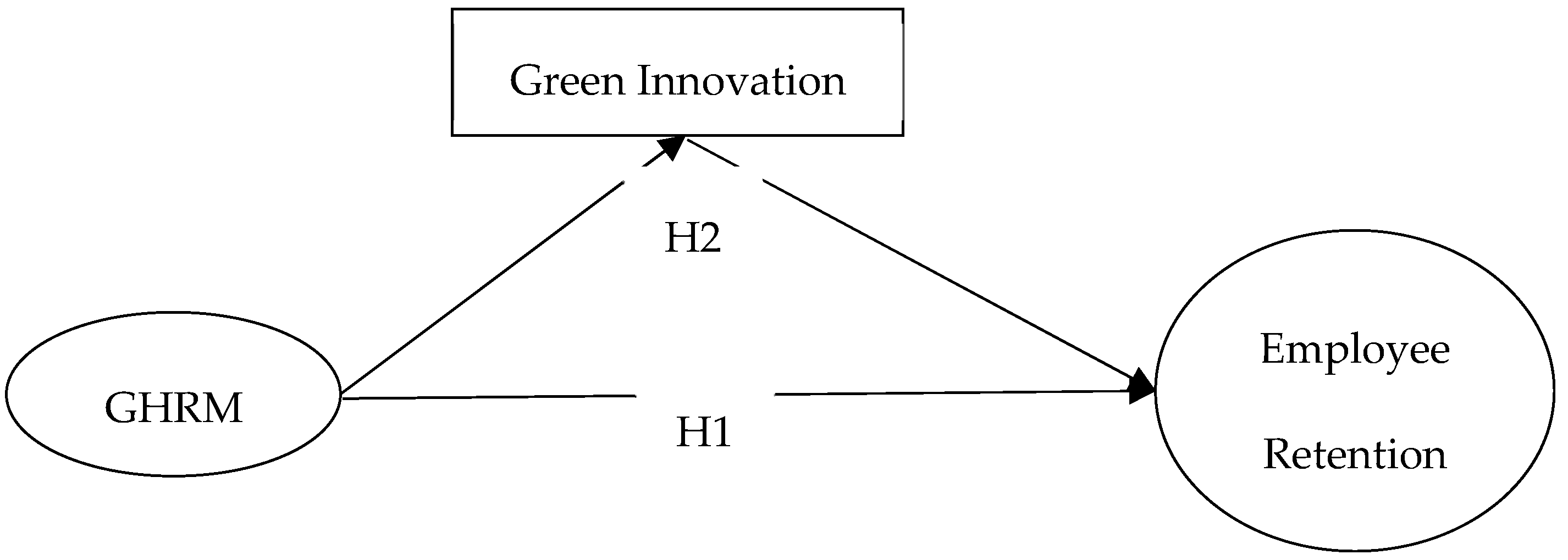

Table 1.
Measurement Model Assessment.
| Construct | Dimensions | Indicator | Outer Loadings | α | Rho A | CR | AVE |
VIF |
Weights |
t-stat. |
CV |
|---|---|---|---|---|---|---|---|---|---|---|---|
| GHRM α=0.811 CV=0.707 |
Green Recruitment | GR1 | 0.701 | 0.801 | 0.810 | 0.802 | 0.626 |
1.952 |
0.421 | 2.288** |
0.719 |
| GR2 | 0.731 | 0.403 | 2.189** | ||||||||
| Training | TR1 | 0.850 | 0.782 | 0.801 | 0.716 | 0.741 |
1.744 |
0.340 | 2.246* |
0.734 |
|
| TR2 | 0.822 | 0.371 | 3.902** | ||||||||
| Performance | PC1 | 0.764 | 0.777 | 0.734 | 0.708 | 0.728 |
2.321 |
0.521 | 3.324** |
0.725 |
|
| PC2 | 0.803 | 0.409 | 2.325* | ||||||||
| Reward | RD1 | 0.887 | 0.797 | 0.722 | 0.713 | 0.716 |
2.356 |
0.357 | 2.337** |
0.739 |
|
| RD2 | 0.809 | 0.339 | 2.072* | ||||||||
| Involvement | INV1 | 0.837 | 0.776 | 0.771 | 0.752 | 0.701 |
1.837 |
0.392 | 3.291* |
0.730 |
|
| INV2 | 0.846 | 0.397 | 3.214* | ||||||||
| Employee Retention | ER1 | 0.871 | 0.809 | 0.890 | 0.887 | 0.616 |
- |
||||
| ER2 | 0.832 | ||||||||||
| ER3 | 0.821 | ||||||||||
| ER4 | 0.811 | ||||||||||
| ER5 | 0.849 | ||||||||||
| Green Innovation α=0.791 CV=0.729 |
Strategies | ST1 | 0.755 | 0.777 | 0.848 | 0.794 | 0.649 | 1.871 | 0.421 | 2.266* |
0.730 |
| ST2 | 0.779 | 0.416 | 2.275* | ||||||||
| Actions | AC3 | 0.767 | 0.809 | 0.813 | 0.863 | 0.723 |
1.903 |
0.402 | 2.194* |
0.742 |
|
| AC4 | 0.784 | 0.409 | 2.459* | ||||||||
Table 2.
Heterotrait-Monotrait ratio (HTMT) values.
| GHRM | GR | TR | PC | RD | INV | ER | ST | |
| GR | 0.721 | |||||||
| TR | 0.467 | 0.579 | ||||||
| PC | 0.723 | 0.610 | 0.767 | |||||
| RD | 0.603 | 0.735 | 0.698 | 0.746 | ||||
| INV | 0.734 | 0.478 | 0.648 | 0.716 | 0.837 | |||
| ER | 0.728 | 0.741 | 0.737 | 0.718 | 0.702 | 0.821 | ||
| ST | 0.665 | 0.635 | 0.722 | 0.649 | 0.719 | 0.748 | 0.744 | |
| AC | 0.657 | 0.624 | 0.734 | 0.754 | 0.734 | 0.669 | 0.722 | 0.780 |
GHRM: Green Human Resource Management; GR = Green recruitment; TR = training; PC = performance; RD = rewards; INV = involvement; ST = green innovation (strategies); AC = green innovation (actions).
Table 3.
Hypotheses Testing.
| Effects | Relations | β | t-statistics | Ƒ2 | Decision |
|---|---|---|---|---|---|
| Direct | |||||
| H1 | GHRM → ER | 0.321 | 4.134*** | 0.144 | Supported |
| Mediation | |||||
| H2 | GHRM → GI → ER | 0.134 | 2.624** | 0.071 | Supported |
|
Control Variables |
Age → ER | 0.121 | 2.119* | ||
| Gender → ER | 0.123 | 2.281** | |||
| Experience → ER | 0.118 | 2.177* | |||
| R2ER = 0.44 / Q2ER = 0.24 R2GI = 0.49 / Q2GI = 0.27 SRMR: 0.027; NFI: 0.923 | |||||
*0.05, **0.01, ***0.001.
Disclaimer/Publisher’s Note: The statements, opinions and data contained in all publications are solely those of the individual author(s) and contributor(s) and not of MDPI and/or the editor(s). MDPI and/or the editor(s) disclaim responsibility for any injury to people or property resulting from any ideas, methods, instructions or products referred to in the content. |
© 2024 by the authors. Licensee MDPI, Basel, Switzerland. This article is an open access article distributed under the terms and conditions of the Creative Commons Attribution (CC BY) license (http://creativecommons.org/licenses/by/4.0/).
Copyright: This open access article is published under a Creative Commons CC BY 4.0 license, which permit the free download, distribution, and reuse, provided that the author and preprint are cited in any reuse.