

Submitted:
08 August 2023
Posted:
17 August 2023
You are already at the latest version
Abstract
This study examined if people who reside in different regions of South Korea exhibit different WTP for the mitigation of PM2.5 emissions from coal power plants by restricting the operation of such plants during the winter and spring when air pollution becomes severe. A contingent valuation method combined with a double bounded dichotomous choice was used to derive people’s WTP for the mitigation of PM2.5 emissions. Sample group was divided into central, western, eastern, and southern regions. It is known that the eastern region is affected by northwesterly winds in the winter and spring seasons, so air pollutants in the eastern areas fly to the eastern sea. According to the estimation results, respondents who live in eastern regions showed significantly lower WTP than the average WTP. We suggest that the mitigation policy on PM2.5 emissions should consider regional differences in the contributions of coal power plants to PM2.5 emissions.
Keywords:
PM2.5 emission
; regional difference
; Contingent valuation method
; Willingness To Pay
; Coal-fired power plants
1. Introduction
The 2022 Environmental Protection Index (EPI) provides a quantitative basis for comparing, analyzing, and understanding environmental performance for 180 countries. South Korea’s EPI places it on par with Djibouti and Albania, despite its relatively high GDP and membership in the Organization of Economic Cooperation and Development (OECD)1. Since the commencement of PM2.5 monitoring in 2015 in South Korea, high daily average PM2.5 concentrations have been observed between January and March and extended high concentration events have occurred because of the stagnation of air masses caused by low wind speeds. In March 2019, Korea experienced unprecedented air pollution as ultrafine particulate matter (PM2.5)2 concentrations increased drastically and remained at a significantly elevated level for one week. PM2.5, which can be laden with lead and arsenic, can penetrate lungs through inhalation and cause adverse health effects such as local and systemic inflammation. According to the recent study [1,2] nationwide actions to reduce energy-related emissions could significantly prevent premature deaths and provide tremendous economic benefits from avoided death and illness. Moreover, between 32% and 95% of the health benefits will remain in the region where pollution was eliminated. Among all OECD countries, South Korea has the highest PM2.5 concentrations and according to an OECD report [3] Korea could suffer the highest GDP losses among the OECD countries as its poor air quality will lead to reduced labor productivity, increased health costs, and shortfalls in crop yields.
China frequently gets the blame for Korea’s air pollution. Indeed, China and South Korea are ranked second and third in East Asia, respectively, in terms of the highest annual average PM2.5 concentrations. A sizable percentage of the pollutants are blown in by the prevailing winds from China. During the colder winter period, the air currents are noticeably slower and therefore do not disperse the pollutants that still drift across from China. This suggests that transboundary effects alone cannot explain the poor air quality in South Korea. Indeed, South Korea’s reliance on coal plants and diesel fuel for its vehicles is also a significant contributor to local pollution. About 61 coal plants help power the country, and account for one third of the country’s total power generation.
The Korean government is taking measures to retrofit the plants with carbon dioxide capture and storage (CCS), selective catalytic reduction (SCR), and flue gas desulfurization (FGD) systems. Although Korea’s coal-fired power plants are relatively modern and large, with newer steam parameters, in July 2016, the Korean Ministry of Environment (MOE) announced further air pollution control measures by targeting the closure of 10 thirty-year-old coal-fired power plants by 2025. A Comprehensive Action Plan on Fine Dust was also implemented in 2017 whose goal was to seek a reduction in PM2.5 emissions by 30 per cent compared to the level in 2014 by 2022. The Korean Ministry of Trade, Industry, and Energy (MOTIE) will also replace turbines at several plants to boost power efficiency and expand the capacity of circulation pumps to reduce emissions. Finally, by 2024, outdoor coal storage facilities will be replaced by indoor storage facilities.
As a specific response to the air-quality disaster of 2019, the Korean government decided to establish a ‘seasonal management system of PM2.5 emissions’ (SMS) policy that temporarily shuts down a set of coal units or reduces their maximum power outputs between December and March of each year [4]. Figure 1 and Figure 2 provide information about Korea’s SMS policy and the location of coal-fired plants by region respectively. This policy has been applied to sources of air pollution in the transportation, industry, power, and residential sectors. As of 2020, South Korea enforces regulatory limits on 11 air pollutants and 32 hazardous air substances.
The Korean SMS policy can potentially reduce PM2.5 concentrations which can lead to benefits such as improved labor productivity, increased outdoor activities, and increased crop yields. However, such a policy can also engender corresponding losses - First, as coal-fired power plants cannot operate or operate with restricted capacity for four months every year, liquefied natural gas (LNG) plants must complement the insufficient electricity supply. As the electricity production costs of LNG power plants are significantly higher than those of coal-fired power plants, there is a resultant increase in electricity prices. Second, municipal tax revenue is reduced when coal-fired power plants are either phased out or operated below maximum capacity.3 S. Korean power plants are required to pay a per unit tax, the so-called ‘local resource and facility tax’ (0.3KRW/kWh) to corresponding local governments. It is estimated that the total local tax revenue losses would be approximately 7 billion KRW in 20214 (Korean Southern Power Corporation, 2021). Finally, a seasonal management policy can also result in the loss of local jobs as old coal-fired power plants are idled and then phased out.
The foregoing suggests that air quality management in S. Korea is a complex problem —one that requires a nuanced understanding of the costs and benefits inherent in the seasonal management policy. In this paper, we examine whether individuals are willing to pay a higher electricity bill resulting from a substitution away from coal and into LNG. Although various socio-demographic characteristics such as education, income, age, sex, and awareness of the sources of air pollution can affect individual willingness to pay (WTP) for the net benefits stemming from environmental regulations, this study uniquely focuses on regional differences as an important antecedent of individual WTP.
Regional differences and variations play an important role in assessing the PM2.5 emissions and their dispersion in S Korea. The Eastern portions of the country are relatively insulated from the harmful effects of PM 2.5 emissions due to northwest winds (Figure 3) which cause air pollutants generated from coal-fired power plants to be carried out to the East Sea (Sea of Japan). Thus, the suspension or restriction of coal-fired plants in the Eastern region of the country has a negligible impact on national PM2.5 concentrations. Yet, blanket enforcement of the SMS policy without accounting for regional differences results in excessive costs being borne by residents in the eastern regions relative to the rest of the country. Some of these costs can take the form of a loss in tax revenue and loss of local jobs as coal plants are idled throughout the country. In other words, a one size fits all SMS policy to manage PM2.5 emissions can result in sub-optimal economic outcomes and a misallocation of resources.
Given their relatively reduced exposure to PM2.5 concentrations, do residents in the Eastern regions of Korea have a lower WTP for clean air compared to the rest of the country? Our study will attempt to answer this research question by utilizing a contingent valuation method (CVM). In addition to considering the regional specificity of respondent residences, our methodology will also examine several socio-demographic variables—including education, income, age, sex, and membership in environmental NGOs. A goal of this study is to highlight that regional differences matter when estimating respondent WTP for air quality. We develop a framework to estimate differences in WTP based on the regional location of respondents even within the same country. To the best of our knowledge, there has been no study in this vein. WTP for environmental quality is a key parameter for policy design, but well-identified estimates of this parameter are barely available for air quality.
A second novelty of our study is that we provide the first revealed preference estimates of WTP for clean air, disaggregated by region in S. Korea. We believe that the findings of our study are potentially applicable to other countries that are designing policies to address air pollution problems. Because environmental policies are not costless, the WTP methodological approach of our study helps address the issue of whether the benefit of a policy exceeds its cost, and therefore, enhances social welfare.
2. Theory: Contingent Valuation and Willingness to Pay Studies
Contingent valuation (CVM) has been used to measure the values of environmental goods that do not have market prices [5]. The CVM constructs a hypothetical market that describes how potential consumers can buy environmental goods by providing information on the benefits and costs of purchasing non-market goods. This is a survey-based method which queries respondents directly on their WTPs for environmental and public goods. However, the way in which the questionnaire asks people to respond with their WTPs for the environmental goods can affect the reliability of the WTP. Table 1 summarizes the results previous studies related to the WTP for improving air quality, which are based on the CVM.
Different formats of CVM can be used to estimate WTPs for non-market goods. Several studies use open-ended (OE) surveys [6,7,8] where respondents are directly asked to state their maximum WTP. However, the OE method can lead to large non-response rates, protest answers, zero answers and outliers and generally to unreliable responses [9]. In general, it is hard for respondents to value policies that they have little information on and because these respondents are not used to thinking in terms of maximum WTP values.
Payment card (PC) approaches were developed as improved alternatives to the OE method. PC approach also asks respondents’ maximum WTP, but now respondents are provided with visual aids containing several monetary options for ease of valuation. Respondents can choose only among given values which reduces outliers and mitigates a starting point bias that can arise when the respondent is influenced by the initial numbers given as examples or as part of a range in the survey. Several variants of the payment card method have also been developed and empirically utilized by scholars among scholars [8,10,11,12]. However, the PC method is still vulnerable to range biases in cases where the respondent’s true WTP is relatively low (high) compared to the lower (upper) bound of monetary values presented on the payment card. Additionally, the PC method can yield biased estimates of WTP such as a centering bias that is the result of respondent choices shifting toward the center if the range or an end-point bias which refers to the effects of various starting points of the payment cards values [9,13].
Recent CVM studies have adopted the DC (dichotomous choice) approach, opting for either the single-bounded dichotomous choice (SBDC) method [14], or the double-bounded dichotomous choice (DBDC) method [15]. There are several advantages of DC approach including ease of answering questions presented absence of starting point bias, range bias, and biases arising from the strategic behaviors of respondents. In the DC approach respondents are asked whether they are willing to pay a given amount (bid) for some public good by just answering Yes or No. The SBDC survey format is like a “take it or leave it” approach but in the DBDC method, the second highest bid is offered to the respondents if the answer was Yes, and the lower bid if the answer was No. There are number of studies that have utilized the SBDC approach to estimate WTP of reduction of PM2.5 pollution [8,16,17,18] as well as the DBDC method [19,20]. Some scholars have argued that DBDC is more efficient than the SBDC [21], however, a recent study [22] used a Monte Carlo analysis to demonstrate that the difference between the two approaches tends to decrease as one increases the sample size.
Apart from above-mentioned methods, some studies used a variety of other methodologies such as the Benefit transfer (BT) method [23], the Principal component analysis [24], the Multi-parameter quantitative regression model [25], and Multiple bound discrete choice approach [26].
A considerable amount of literature in the CVM space has directed attention to the differences between various CVM technique. For example, Afroz et.al [8] compares methods such as OE, DC and PC to note insignificant differences in the WTP values for higher fuel prices to minimize the concentration rates of SO2, CO, NO2, and PM in Klang Valley, Malaysia. Ardakani et al [18] used SBDC and DBDC methods to prepare a survey questionnaire to estimate the WTP of residents for reducing air pollution concentrations via the application of an environmental tax in four distinct regions of Tehran (in four selected regions: Shahr-e-Ray, Shoosh, Haft-e-Tir and Tajrish). The authors found that the average annual WTP of the respondents based on DBDC method was higher than corresponding WTP using the SBDC approach. Pertinent to our study, the authors also demonstrated a regional variation among the WTPs. The average WTP of respondents who lived in Tajrish was higher than that of respondents who lived in the other areas. However, they did not clarify the reasons for these regional differences in WTP.
According to several scholars, the DBDC approach [27,28,29] is an efficient CVM method. Hanemann et al. [21] conclude that the DBDC approach provides more certainty compared to the SBDC method. This conclusion is reinforced by Lusk and Hudson [30] who note that the DBDC approach led to greater accuracy for estimated coefficients and a lower mean squared error. For all of these reasons, we will adopt the DBDC methodology for our WTP estimation as detailed below.
3. Materials and Methods
In this section we first outline our methodology and then provide a description of the survey instrument utilized to solicit respondent choices.
As discussed above, this study adopts a CVM in conjunction with a DBDC technique to derive respondent WTPs. The DBDC approach offers a two-stage bidding process to respondents [32,33]. With this method, the respondents have two options: “Yes” or “No.” The second bid value is based on the first bid value, which can be lower or higher. Thus, if the respondents choose “Yes” to the first bid value, they will be given the higher value in the second bid. Alternatively, if the respondents choose “No” to the first bid value, they will face a lower value in the second bid. Hence, the DBDC method has four possibilities, which are “Yes-Yes”, “Yes-No”, “No-Yes,”, and “No-No.”
Thus, suppose that amount of the first bid is b1 and the second bid is b2, then each respondent will be in one of the following categories:
1. “Yes” to the first bid and “No” to the second, then b2> b1, so b1≤WTP< b2
2. “Yes” to the first bid and “Yes” to the second, then b2> b1, so b2≤WTP<∞
3. “No” to the first bid and “Yes” to the second, then b2< b1, so b2≤WTP< b1
4. “No” to the first bid and “No” to the second, then b2< b1, so 0<WTP< b2
The estimation of WTP is based on the following linear function [31]:
where is a vector of independent variables, is a vector of parameters, and is an error term with .
We define as the first bid value and as the second bid value, and we also define as the standard cumulative normal function. The probabilities that an individual will answer “Yes-Yes”, “Yes-No”, “No-Yes”, and “No-No” to the two bid values can be respectively expressed as , , , and , respectively. We denote the answer of an individual by dichotomous variable , where if the answer is “Yes” and if the answer is “No.” The four cases are presented in the following equations:
- Yes-Yes;
Applying Bayes rule to equation (2), we obtain:
According to this case, the second bid value is higher than the first bid value, so we have , which leads to , which then implies:
- 2.
- Yes-No;
- 3.
- No-Yes;
- 4.
- No-No.
To estimate and , we use maximum likelihood estimation, because equation (4) through equation (7) do not correlate directly with the probit model. Hence, we need to maximize the objective function to find the parameters as shown below:
where are the dummy variables such that they take the value of one or zero, which relies on the particular case for each individual.
To estimate WTP, and are estimated using equation (9) as follows:
where is the vector of coefficients associated with each of the explanatory variables and is the coefficient for the variable capturing the amount of the bid. We can then estimate the WTP for individuals, which is given by:
We describe our survey instrument next.
The Korea Research Survey Company6 conducted a preliminary review and several focus group interviews before conducting a final survey in July 2021. These survey questionnaires were sent to 7,129 respondents based on proportional allocation and extraction based on region, gender, and age. The survey was conducted online by sending a Uniform Resource Locator (URL) link to mobile phones thought text messaging and e-mail. In total we received 1502 completed surveys that corresponds to 21 percent response rate. More detailed information about survey process is provided in Table 2.
The survey questionnaire consisted of four sections: The introduction contained personal information questions relating to age, region of residence, and gender. Then we provided information on coal-fired electricity plant closures by province7. We also provided context on these closures by describing the Korean seasonal management system (SMS) policy for reducing PM2.5 emissions and gauged respondent awareness of the current state of this policy. The survey also queried respondents about their understanding of the benefits and costs of the SMS policy. The described benefits included — an increased number of days with good air quality (from 13 to 28 days; a decrease in number of days with bad air quality (from 35 to 22 days); a reduction of PM2.5 emissions by 30 percent during the operation of the SMS policy from December to March of every year. Respondents were informed that the decline in PM2.5 emissions was not uniform across the nation. Central8, southern9 and western10 regions of the country saw greater reductions compared to the eastern region11.
The questionnaire also described losses associated with the SMS policy such as those stemming from electricity plant operation restrictions that included a decrease in revenue of electricity producers (about KRW800 billion per year); a decrease in Regional Development tax revenues (KRW7 billion); and a fall in local employment as plants were idled. The survey questionnaire also queried respondents about their knowledge of the origin of PM2.5 and whether respondents suffered from any diseases or symptoms related to air pollution.
The second section of the survey questionnaire detailed the regional spread of PM2.5 emissions in S. Korea from December-March when the when the nationwide SMS policy was in effect. Figure 4 shows the change in the concentration of PM2.5 when the emissions from the coal-fired power plants were reduced by 50 percent in January and March. The figure clearly indicates that the SMS policy was significant reducing PM2.5 emissions in the central, western, and southern regions of the country but made only minor differences for PM2.5 emissions in the eastern region. The questionnaire explained that the Eastern parts of the country naturally benefitted from the flow of northwest winds that discharged pollutants to the East Sea during December-March. The survey questionnaire then solicited respondents’ views on the effectiveness of the current SMS policy that was applied nationwide and whether such a blanket policy should be modified to account for regional differences.
In the third section of the survey, respondents were queried about their WTP for the PM2.5 SMS policy via increases in their monthly electricity bills by explicitly considering regional differences between the eastern region and the rest of the country. Survey respondents were divided into five groups with different bids to apply the DBDC approach in estimating WTPs. Table 3 presents the values of two-stage bidding. As stated, the total sample was divided into five groups and each group was offered a different initial bid (100, 300, 500, 700, 900 KRW/month), as presented in column 2 of Table 3. Depending on responses to the first bids, we continued to suggest twice higher bids compare to initial bids if the response was “Yes”, as described in the third column, or twice lower bids relative to initial bids if the answer was “No”, as shown in the fourth column of Table 3.
Section 4 of the survey contained personal characteristics of the respondents, such as their educational backgrounds, household composition, residence type, monthly average income, their membership in environmental NGOs, and political preferences.
4. Results and Discussion
The basic statistics for the socio-demographic characteristics of the respondents are summarized in Table 4. 49.7 percent of our sample is male, and the rest identified as female. The average age of the respondents is 47 years old. About half of our respondents live in central regions such as Seoul, Incheon, and Gyeonggi, while about 30 percent of respondents resided in eastern regions including Daegu, Gyeongbuk, Busan, Ulsan, Gyeongnam, and Gangwon. Respondents who graduated college or had higher educational levels represented about 70 percent of the sample. Respondents’ incomes are distributed relatively evenly, and the average respondents’ monthly income is about KRW3 million. Most of the respondents are not members in environmental NGOs. Regarding respondents’ political preferences, 57.7 percent report they are neutral, 25.6 percent identify as progressives while 16.7 percent report being conservative.
The survey results indicated that two-thirds of respondents agreed that coal-fired plans ought to be shutting down from December-March to manage PM2.5 emissions. Specifically, survey results for SMS Effectiveness and SMS Effectiveness in Eastern regions indicate that 66 percent and 63.5 percent of respondents respectively believe that the nationwide SMS policy is only slightly effective in reducing PM2.5. 16 percent of respondents in our sample believe that the current SMS policy is ineffective in the eastern regions and only 6 percent of respondents consider it ineffective nationwide. Finally, survey results indicate that almost 78 percent of respondents support a revision of the current SMS policy and agree that the current SMS policy should be modified by exempting the eastern regions of the country. The modifications to the SMS policy should allow for the normal operation of coal-fired power plants in the eastern regions, but the operations of coal-fired power plants elsewhere in the country may be suspended and/or restricted in from December to March.
Table 5 shows respondent acceptance rates for the suggested bids in each group. As mentioned above, the five groups in our study were offered different initial bids. If a respondent answers 'Yes' to the initial bid, he/she is offered a bid twice as high. Otherwise, a bid twice as low was offered. The acceptance rate for the first bid was the highest at 100KRW/month (74 percent of respondents), and the lowest was 900KRW/month (64 percent of respondents). Moreover, if the respondent accepted the first bid, the probability that he/she will accept the higher bid in the second stage is also high (above 70 percent of respondents in each group).
To estimate WTPs we constructed six different model specifications, as listed in Table 6. In the first three models we estimated the mean WTP for the total sample (Total 1), respondents who live in the Eastern regions of Korea (East 1), and respondents who live in the remaining regions (Others 1). Thus, we can compare how WTP differs in the total sample and different regions without any control variables. The next three models (Total 2, East 2, and Others 2) introduce control variables pertaining to age, gender, income, political preferences, membership in environmental NGOs, acceptance of the existing SMS policy, and opinions on the effectiveness of the SMS policy (see Table 6 for additional detail).
We utilized command “doubleb”13 to estimate our models. In case there are no control variables, the mean WTP is simply the estimated coefficient of beta. When control variables are included, the mean WTP is estimated by first multiplying the control variables' coefficient values and their corresponding means and then adding this to the estimated beta coefficient [32]. The estimation results for models without control variables (Total 1, East 1, and Others 1) indicate that the mean WTP in the Eastern regions (KRW1,082) is lower than in other regions (KRW1.337). As described, models Total 2, East 2, and Others 2 examine the impact of various control variables. Table 6 indicates that for the total sample (Total 2) and all regions except the East (Others 2) all control variables are statistically significant and have the same signs in both specifications. Specifically, more older respondents with higher incomes, respondents who believe that the current SMS policy is quite effective, and those who are members of environmental NGOs have higher WTPs for reduction of PM2.5 emissions. Our results also indicate that male respondents, respondents with conservative political views, and those who oppose the current SMS policy, tend to have lower WTP. Respondents in the Eastern regions of the country (East 1 and East 2) have relatively lower WTP for reduction of PM2.5 via the existing SMS policy. The coefficient of income variable has a much lower value in model East 2 compared to the total sample (Total 2) and other regions (Others 2), while the acceptance of the current SMS policy coefficient occurs with a significantly higher absolute value, indicating that in Eastern regions respondents’ income has a lower effect on WTP for the existing SMS policy and respondents who oppose the suspension of coal-fired plants have much lower WTPs compared to respondents from other regions of the country.
Table 7 compares the WTPs of respondents in all six models. As expected, the lowest WTPs were obtained from respondents in the Eastern regions (about 1080 KRW/month), followed by total sample (about 1280 KRW/month), while the highest WTP for SMS revealed respondents who live in non-Eastern regions (above 1337 KRW/month). Interestingly the inclusion of the control variables does not seem to significantly affect the mean WTP in all specifications.
5. Conclusions
The air quality in S. Korea has long been a serious public health concern. The key contributor to the nation’s poor air quality is fine particulate matter (PM2.5). PM2.5 levels are impacted in complex ways, such as by weather conditions, external influences, and domestic emissions. The seasonal variation of PM2.5 in Korea is mostly affected by the operation of coal fired plants especially during the winter and spring months. In response, a nationwide seasonal management system (SMS) to mitigate PM2.5 emissions from the operation of coal-fired power plants has been in operation from December to March every year in South Korea since December 2019. While many have studied the impact of this nationwide SMS policy on pollution, there is scant literature on the assessing this policy from a WTP lens, especially one that considers regional differences. Our study attempts to fill this gap by examining the significance of regional differences in respondent WTPs for clean air via an increase in their electricity bills. We focus on the differences in WTP for the SMS policy among respondents who live in the eastern regions versus their counterparts in the rest of the country. It is well-known that the tempering influence northwesterly winds during December-March in the eastern regions results in a dispersion of PM2.5 matter to the East Sea without impacting PM2.5 emissions inland.
For our analysis and assessment of the SMS policy, we employed a contingent valuation method (CVM) combined with a double bounded dichotomous choice (DBDC) as a WTP question approach. Respondents were informed of the potential benefits and costs of the SMS policy that attempts to tackle air pollution by shutting down and/or reducing the operations of coal-fired generators across the nation from December to March when PM2.5 emissions are the highest. They were also informed that pollutants emitted from the coal-fired power plants located in the eastern regions do not significantly affect PM2.5 accumulation inland due to the flow of northwesterly winds over those regions. Respondents were queried about their WTP for clean air via increases in their monthly electricity bills14.
Our survey of literature indicates that only one study based in Iran [18] has taken a similar regional approach to comparing WTPs for improving air pollution. However, this study did not explore the reasons for the regional variations in respondent WTPs. Our study attempts to extends this line of research by providing a rationale for regional differences in the valuation of the PM2.5 mitigation policy. Owing to meteorological differences it is not surprising that our estimation results indicate that the WTP for clean air of respondents who live in eastern regions was significantly lower than the average WTP of all respondents in our sample.
Our estimation results also noted that respondents with higher education, higher incomes, and more progressive political preferences, had a higher than the average WTP. Older and female respondents had a higher WTP. Respondents who were members of environmental NGOs also showed a higher WTP for clean air via an increase in their electricity bills. Of note is the fact that almost 78 percent of survey respondents support a revision of the current SMS policy and are in favor of a revised SMS policy - one that exempts Eastern regions from a nationwide shut down of coal-fired generation from December to March. The policy conclusion emerging from our analysis is the Korean government should revise its current SMS policy and accordingly emend it to consider regional differences in contributions of coal-fired power plants to PM2.5 emissions. The government can use this study’s findings as a guideline when allocating budgets to deal with air pollution.
The Korean government has announced ‘Carbon Net Zero Emission by 2050’ in 2020. Although coal-fired power plants are bound to be replaced by renewable electricity sources such as solar PV and wind power by 2050 in S. Korea, the energy transition should be implemented efficiently and thoughtfully. In this regard, regionally differentiated restrictions on the operation of coal-fired power plants depending on the relative benefit and cost of the seasonal management on PM2.5 accumulation can help enhance the efficiency of current policy on clean air. Further, most renewable electricity sources rely on intermittent and volatile solar PV and wind power in Korea, which can lead to instability of the electricity supply, but coal-fired power plants can complement the intermittency and variability of renewable electricity. Accounting for all these aspects can lead to more efficient control of coal-power plants, which will contribute to the effective long term energy transition.
Our study contributes to the current literature on WTP for clean air by considering regional differences in respondent preferences. Our statistical analysis has implications beyond S. Korea as it provides empirical evidence that the CVM methodology grounded in a DBDC approach may be useful in assessing respondent WTP for clean air. We are also cognizant of the limitations of our study. A major drawback relates to methodological concerns associated with CVM methodology. Future research can utilize an attribute-based approach such as a choice experiment to understand preferences. Also, testing the modified SMS policy as described in this paper in a real-world setting would provide more information about the accuracy of the WTP values, and the potential of the modified SMS policy to improve air quality in S. Korea.
References
- Mailloux N, Abel DW, Holloway T, Patz JA. Nationwide and Regional PM2.5-Related Air Quality Health Benefits From the Removal of Energy-Related Emissions in the United States, GeoHealth, 2022, 6. [CrossRef]
- Safari Z, Fouladi-Fard R, Vahedian M, Mahmoudian MH, Rahbar A, Fiore M. Health impact assessment and evaluation of economic costs attributed to PM2.5 air pollution using BenMAP-CE. International Journal of Biometeorology 2022, 66, pages1891–1902. [Google Scholar] [CrossRef]
- OECD. In The Economic Consequences of Outdoor Air Pollution; OECD Publishing: Paris, 2016. [CrossRef]
- MOE. Special Act On The Reduction And Management Of Fine Dust. https://elaw.klri.re.kr/eng_mobile/viewer.do?hseq=54102&type=sogan&key=16 (2019, accessed 16 August 2022).
- Turner R, Pearce D, Bateman I. Environmental economics: An elementary introduction. Prentice Hall, 2004.
- Nguyen TC, Nguyen HD, Le HT, Kaneko S. Residents’ preferred measures and willingness-to-pay for improving urban air quality: A case study of hanoi city, Vietnam. Journal of Economics and Development 2021, 24, 262–275. [Google Scholar] [CrossRef]
- Wang Y, Zhang, Y-S. Air Quality Assessment by Contingent Valuation in Ji'nan, China. Journal of Environmental Management 2009, 90, 1022–1029. [Google Scholar] [CrossRef]
- Afroz R, Hassan M, Awang M, et al. Willingness to pay for air quality improvements in Klang Valley Malaysia. American Journal of Environmental Sciences 2005, 1, 194–201. [Google Scholar] [CrossRef]
- Mitchell R, Carson R. Using surveys to value public goods the contingent valuation method. Resources for the Future 1990.
- 10. Wei W, Wu Y. Willingness to pay to control PM2.5 pollution in Jing-jin-ji region, China. Applied Economics Letters 2017, 24, 753–761. [CrossRef]
- Pu S, Shao Z, Yang L, et al. How much will the Chinese public pay for air pollution mitigation? A nationwide empirical study based on a willingness-to-pay scenario and air purifier costs. Journal of Cleaner Production 2019, 218, 51–60. [CrossRef]
- Guo D, Wang A, Zhang AT. Pollution exposure and willingness to pay for clean air in urban China. Journal of Environmental Management 2020, 261, 110174. [CrossRef]
- Hu, W. Use of spike models in measuring consumers' willingness to pay for Non-GM Oil. Journal of Agricultural and Applied Economics 2006, 38, 525–538. [Google Scholar] [CrossRef]
- Bishop R, Heberlein T. Measuring values of extramarket goods: Are indirect measures biased? American Journal of Agricultural Economics 1979, 61, 926–930. [Google Scholar] [CrossRef]
- Hanemann, W. Some Issues in Continuous - and Discrete - Response Contingent Valuation Studies. Northeastern Journal of Agricultural and Resource Economics 1985, 14, 5–13. [Google Scholar] [CrossRef]
- Filippini M, Martínez-Cruz A. Impact of environmental and social attitudes, and family concerns on willingness to pay for improved air quality: A contingent valuation application in Mexico City. Latin American Economic Review 2016, 25, 7. [CrossRef]
- Zahedi S, Batista-Foguet J, Van Wunnik L. Exploring the public's willingness to reduce air pollution and greenhouse gas emissions from private road transport in Catalonia. Science of The Total Environment 2019, 646, 850–861. [CrossRef] [PubMed]
- Fattahi Ardakani A, Alavi C, Arab M. The comparison of discrete payment vehicle methods (dichotomous choice) in improving the quality of the environment. International Journal of Environmental Science and Technology 2017, 14, 1409–1418. [Google Scholar] [CrossRef]
- Kim J-H, Kim H-J, Yoo S-H. Public value of enforcing the PM2.5 concentration reduction policy in South Korean urban areas. Sustainability 2018, 10, 1144. [Google Scholar] [CrossRef]
- Tantiwat W, Gan Ch, Yang W. The Estimation of the Willingness to Pay for Air-Quality Improvement in Thailand. Sustainability 2021, 13, 12313; [Google Scholar] [CrossRef]
- Hanemann M, Loomis J, Kanninen B. Statistical efficiency of double-bounded Dichotomous Choice Contingent Valuation. American Journal of Agricultural Economics 1991, 73, 1255–1263. [Google Scholar] [CrossRef]
- Calia P, Strazzera E. Bias and efficiency of single versus double bound models for Contingent Valuation Studies: A Monte Carlo Analysis. Applied Economics 2000, 32, 1329–1336. [Google Scholar] [CrossRef]
- Rozan, A. Benefit transfer: a comparison of WTP for air quality between France and Germany. Environmental and Resource Economics 2004, 29, 295–306. [Google Scholar] [CrossRef]
- Ouyang X, Zhuang W, Sun C. Haze, health, and income: An integrated model for willingness to pay for haze mitigation in Shanghai, China. Energy Economics 2019, 84, 104535. [CrossRef]
- Wang B, Hong G, Qin T, et al. Factors governing the willingness to pay for air pollution treatment: A case study in the beijing-tianjin-hebei region. Journal of Cleaner Production 2019, 235, 1304–1316. [CrossRef]
- Wang H, He J, Huang D. Public distrust and valuation biases: Identification and calibration with contingent valuation studies of two air quality improvement programs in China. China Economic Review 2020, 61, 101424. [CrossRef]
- Arrow K, Solow R, Portney P, et al. Report of the NOAA panel on contingent valuation. Federal register 1993, 58, 4601–4614. [Google Scholar]
- Cooper J, Hanemann M. Referendum Contingent Valuation: How Many Bounds are Enough? American Journal of Agricultural Economics 1994, 76. [Google Scholar]
- Ready R, Buzby J, Hu D. Differences between continuous and discrete contingent value estimates. Land Economics 1996, 72, 397–441. [Google Scholar] [CrossRef]
- Lusk J, Hudson D. Willingness-to-pay estimates and their relevance to agribusiness decision making. Review of Agricultural Economics 2004, 26, 152–169. [Google Scholar] [CrossRef]
- Kanninen, BJ. Optimal Experimental Design for Double-Bounded Dichotomous Choice Contingent Valuation. Land Economics 1993, 69, 138–146. [Google Scholar] [CrossRef]
- Lopez-Feldman, A. Introduction to contingent valuation using STATA, Munich Personal RePEc Archive 2012. Available at: https://mpra.ub.uni-muenchen.de/41018/2/MPRA_paper_41018.pdf.
Figure 1.
The Korean Seasonal Management System (SMS).
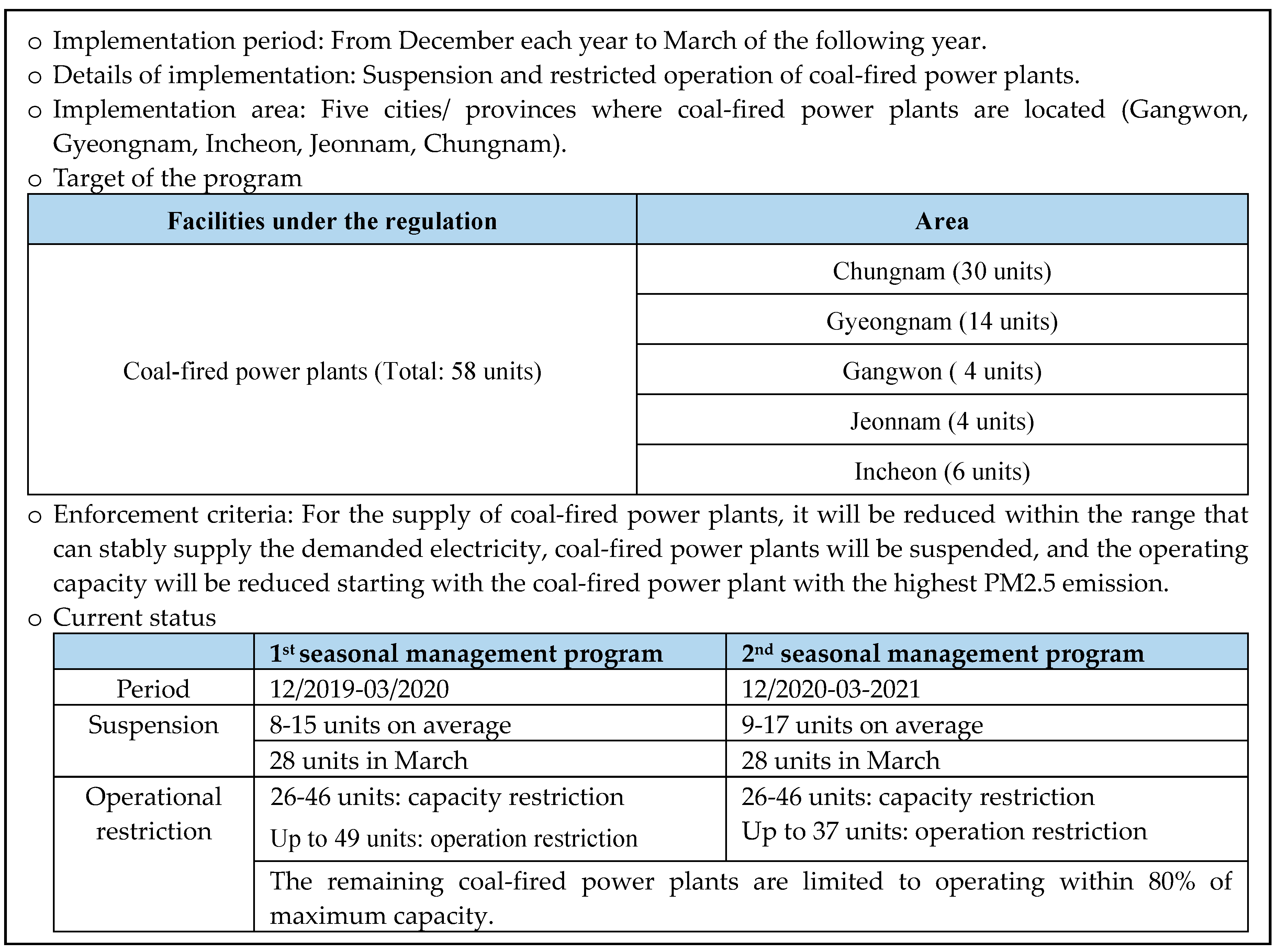
Figure 2.
Provincial Concentrations of PM2.5 (2021) (Unit: µm).
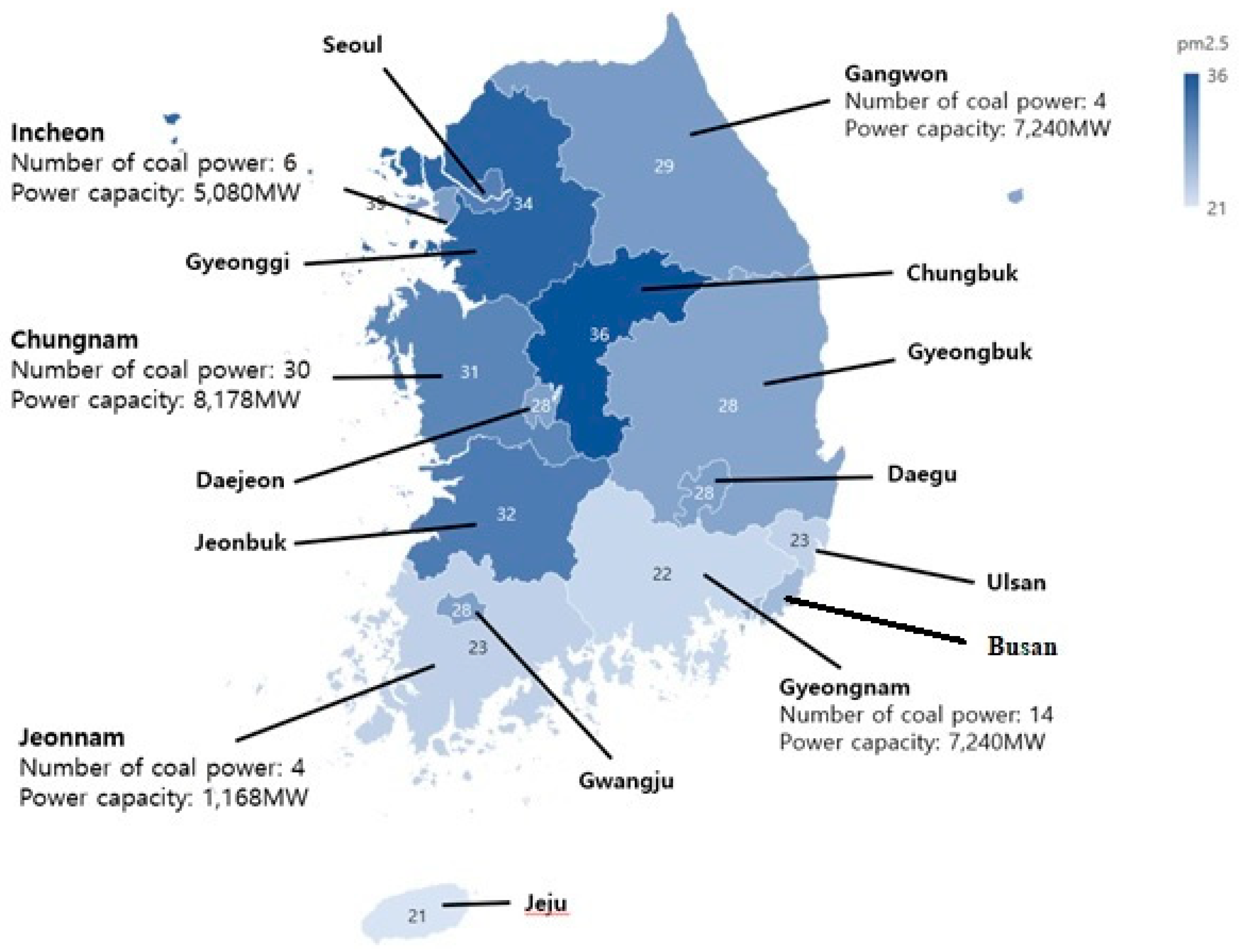
Figure 3.
Wind direction in central, eastern, and southern areas December-March5.
Figure 3.
Wind direction in central, eastern, and southern areas December-March5.
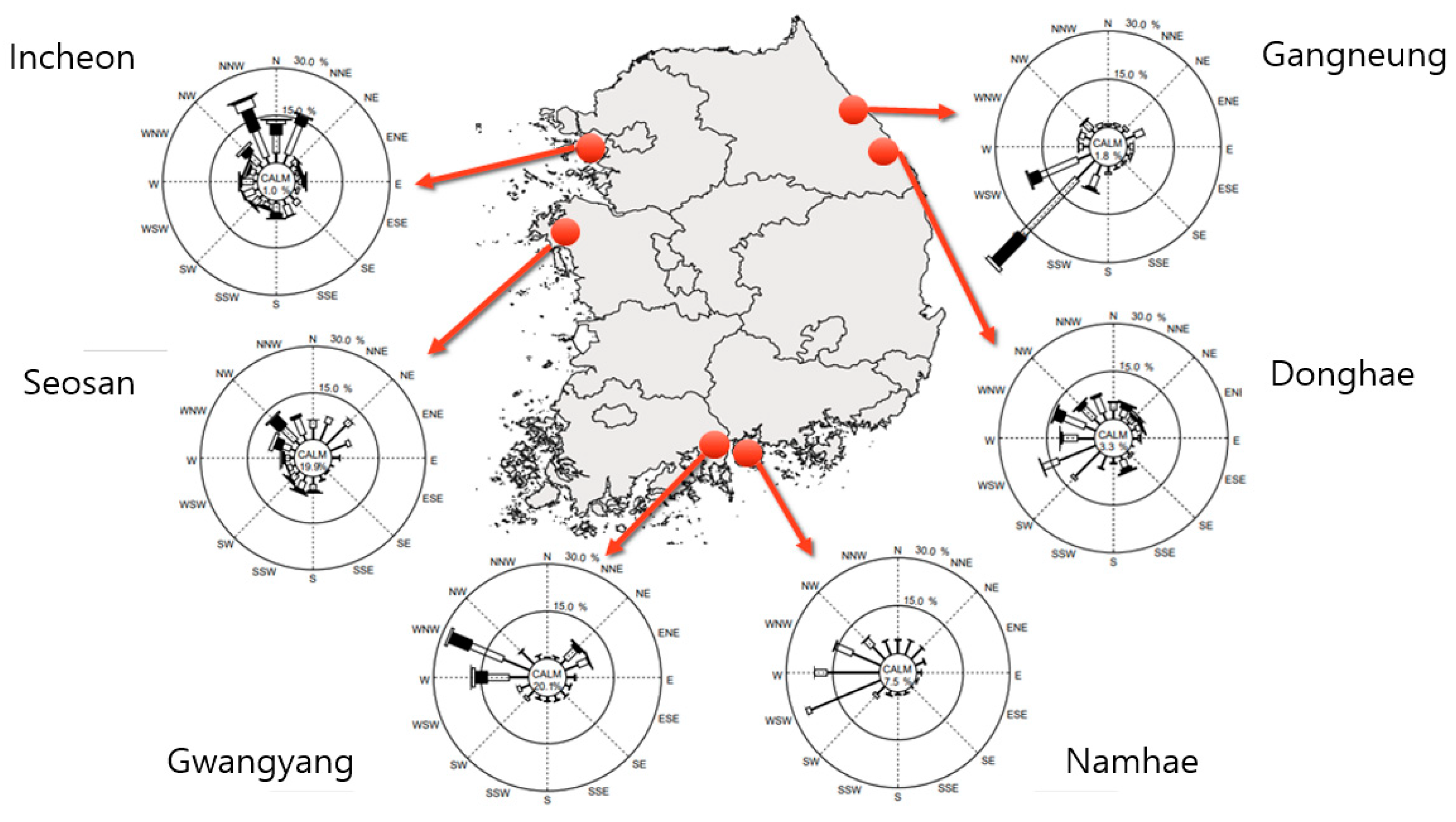
Figure 4.
Contribution of SMS policy on mitigation of PM2.5 accumulations.
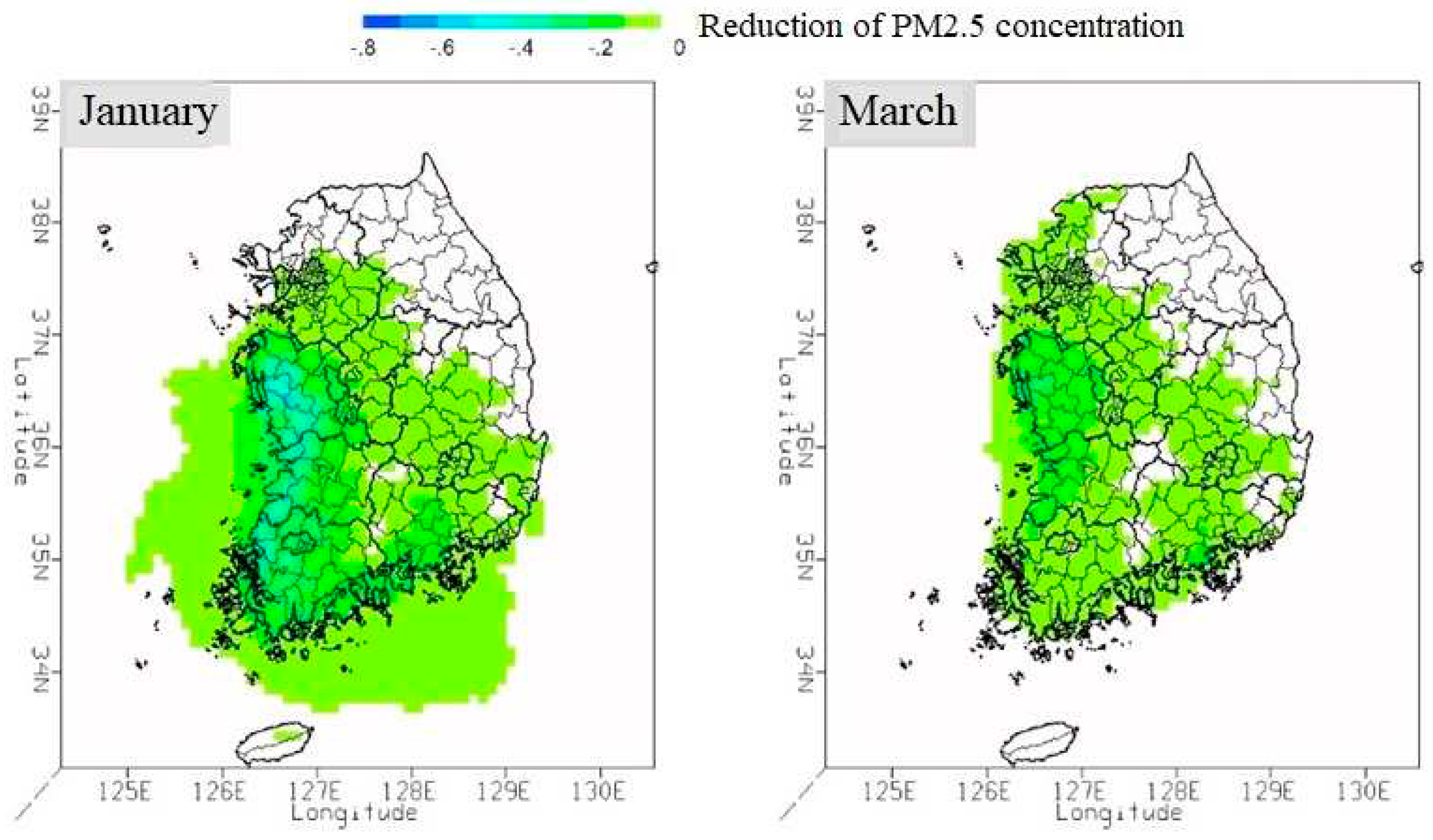

Table 1.
Extant studies on people’s WTP for improving air quality.
| Authors / publication year | Air pollution type | Research Focus | Method** | Actual annual WTP | Annual WTP in USD* |
|---|---|---|---|---|---|
| Nguyen et al. (2021) | Air quality improvement measures | Hanoi, Vietnam | OE | 148,000 VND per person |
6.45 per person |
| Rozan (2004)** | SO2, CO, NO2 and PM | Strasbourg (France) and Kehl (Germany) in January 1998 | BT | 465.3 FRF per person |
80.2 per person |
| Wang and Zhang (2009) | PM | Ji’nan (China) in December 2005 and April 2006 | OE | 107 CNY per person |
16.6 per person |
| Tantiwat et al. (2021) | Benefit from Air quality improvement | Bangkok, Tailand June-October 2020 |
DBDC | 2275 THB per person | 71 per person |
| Wei and Wu (2017) | PM2.5 | JingJinJi Region, China in 2015 | PC | 602 CNY per household |
93.3 per household |
| Ardakani et al. (2017) | SO2, CO, NO2 and PM | Shahr-e-Ray, Shoosh, Haft-e-Tir, and Tajrish (Tehran) in 2015 | SBDC | 5USD per person | 5 per person |
| DBDC | 8.06USD per person |
8.06 per person | |||
| Kim et al. (2018) | PM2.5 | South Korean Urban Areas in June 2017 | OOHB DC | 5591 KRW per household |
4.9 per household |
| Ouyang et al. (2019) | PM2.5 | Shanghai (China) in 2017 | Principal component analysis | 343.3USD per household |
343.3 per household |
| Wang et al. (2019) | PM2.5 | Beijing-Tianjin-Hebei (China) in November 2017 and January 2018 | Multi-parameter quantitative regression model | 59.8 CNY per person |
9.3 per person |
| Zahedi et al. (2019) | GHG, PM | Catalonia (Spain) in May and June 2015 | SBDC | 88.9 - 177.5 EUR per household |
79.97-103.1 per household |
| Guo et al. (2020) | PM, O3, NO2 and SO2 | Zhengzhou, Pingdingshan, Zhumadian (China) in May 2016 | PC over binary-choice | 65 CNY per person |
10.1 per person |
| Pu et al. (2020) | PM | 31 provinces in China from 12.2016 to 02.2017 | PC | 275.39 CNY per person | 42.7 per person |
| Wang et al. (2020) | PM2.5 | Guiyang and Xingtai (China) from 25.09 – 16.12 2014 | Multiple bound discrete choice | 1448.4 CNY per person | 224.6 per person |
|
*Reported WTP were converted to 2021 USD based on exchange rates published by the International Monetary Fund’s collection of development indicators (IMF, 2021): 1USD=6.45CNY; 1USD=0.9EUR; 1USD=22,938 VND; 1USD=1142.9KWR; 1USD=4.14MYR; 1USD=8.6SEK; 1USD=5.8FRF; 1USD= 31.99THB **Estimation methods: OE - open-ended; BT - Benefit transfer; DC - Dichotomous choice; PC – payment card; SBDC - Single-bounded dichotomous choice; DBDC - Double-bounded dichotomous choice; OOHB DC - one-and-one-half-bound dichotomous choice | |||||
Table 2.
Outline of the survey process.
| Division | Content |
| Population group | Adult men and women 18 years old or older who live in South Korea. |
| Panel of sample | Korea Research Master Panel (about 590,000 people as of the end of June 2021) |
| Sampling method | Proportional allocation and extraction based on region, gender, and age |
| Sample size | 1,502 people |
| Sampling error | Based on random sampling with a 95% confidence level, the maximum allowable sampling error is ±2.5%p. |
| Survey method | Web research (sending a URL through mobile phone text messaging and e-mail) |
| Response rate | Survey questionnaires were sent to 7,129 persons, and 1,689 persons responded to the survey. Ultimately, 1,502 people completed the survey (21.1% of requests, 88.9% participation) |
| Survey period | July 13-18, 2021 |
| Survey agency | Korea Research Co., Ltd. |
Table 3.
Suggested bids in each stage for different groups.
| No. | Initial suggested bids | Suggested bids for ‘Yes’ answer | Suggested bids for ‘No’ answer |
|---|---|---|---|
| Group 1 Group 2 Group 3 Group 4 Group 5 |
100 KRW 300 KRW 500 KRW 700 KRW 900 KRW |
200 KRW 600 KRW 1000 KRW 1400 KRW 1800 KRW |
50 KRW 150 KRW 250 KRW 350 KRW 450 KRW |
Table 4.
Distribution of socio-demographic variables of respondents12.
Table 4.
Distribution of socio-demographic variables of respondents12.
| Base = Total | Number of respondents | Percentage | |
|---|---|---|---|
| Total | 1,502 | 100.0 | |
| Gender | Male (1) | 746 | 49.7 |
| Female (0) | 756 | 50.3 | |
| Age | 19~29 (2) | 264 | 17.6 |
| 30~39 (3) | 231 | 15.4 | |
| 40~49 (4) | 280 | 18.6 | |
| 50~59 (5) | 295 | 19.6 | |
| 60 and over (6) | 432 | 28.8 | |
| Region | East | 379 | 25.23 |
| Others | 1123 | 74.77 | |
| Shutdown acceptance | Strongly agree (1) | 351 | 23.37 |
| Slightly agree (2) | 653 | 43.48 | |
| Neutral (3) | 352 | 23.44 | |
| Slightly disagree (4) | 112 | 7.46 | |
| Strongly disagree (5) | 34 | 2.26 | |
| SMS Effectiveness | No effect (1) | 92 | 6.13 |
| Slightly effective (2) | 994 | 66.18 | |
| Significantly effective (3) | 365 | 24.30 | |
| Very effective (4) | 51 | 3.40 | |
|
SMS Effectiveness in Eastern Regions |
No effect (1) | 242 | 16.1 |
| Slightly effective (2) | 954 | 63.5 | |
| Significantly effective (3) | 276 | 18.4 | |
| Very effective (4) | 30 | 2 | |
| Modified SMS | Agree (1) | 1168 | 77.8 |
| Disagree (2) | 334 | 22.2 | |
| Income | < 1,000,000 KRW (1) | 77 | 5.13 |
| 1,000,000-1,500,000 KRW (2) | 57 | 3.79 | |
| 1,500,000-2,000,000 KRW (3) | 86 | 5.73 | |
| 2,000,000-2,500,000 KRW (4) | 126 | 8.39 | |
| 2,500,000-3,000,000 KRW (5) | 149 | 9.92 | |
| 3,000,000-4,000,000 KRW (6) | 273 | 18.18 | |
| 4,000,000-5,000,000 KRW (7) | 218 | 14.51 | |
| 5,000,000-7,000,000 KRW (8) | 295 | 19.64 | |
| 7,000,000-10,000,000 KRW (9) | 163 | 10.85 | |
| 7,000,000 KRW and over (10) | 58 | 3.86 | |
| Environmental Organization | Experience (1) | 96 | 6.4 |
| Inexperienced (0) | 1,406 | 93.6 | |
| Political preferences | Very progressive (1) | 45 | 3.00 |
| Slightly progressive (2) | 340 | 22.64 | |
| Neutral (3) | 866 | 57.66 | |
| Slightly conservative (4) | 224 | 14.91 | |
| Very conservative (5) | 27 | 1.80 | |
Table 5.
Acceptance rates of respondents for first and second bids.
| First bid (KRW/Month) | Acceptance rate (%) |
Second bid (KRW/Month) | Acceptance rate (%) |
|---|---|---|---|
| 100 | 74.7 | 200 | 87.6 |
| 50 | 18.4 | ||
| 300 | 70.3 | 600 | 84.4 |
| 150 | 24.7 | ||
| 500 | 69.7 | 1000 | 72.2 |
| 250 | 23.1 | ||
| 700 | 68.4 | 1400 | 77.7 |
| 350 | 26.3 | ||
| 900 | 64 | 1800 | 77.1 |
| 450 | 23.1 |
Table 6.
Parameter Estimation Results.
| Region | Total 1 | East 1 | Others 1 | Total 2 | East 2 | Others 2 |
| Age | - | - | - | 9.368*** | -2.273 | 13.45*** |
| (3.098) | (6.594) | (3.534) | ||||
| Income | - | - | - | 91.67*** | 70.80* | 94.06*** |
| (19.91) | (41.50) | (22.72) | ||||
| Sex | - | - | - | -312.3*** | -284.9 | -331.6*** |
| (91.49) | (191.2) | (104.1) | ||||
| SMS Effectiveness | - | - | - | 306.6*** | 245.4 | 327.4*** |
| (82.38) | (180.4) | (92.49) | ||||
| Shutdown acceptance | - | - | - | -265.1*** | -432.4*** | -210.4*** |
| (51.81) | (114.2) | (58.78) | ||||
| Environmental Organization | - | - | - | 605.0*** | 494.4 | 629.5*** |
| (197.7) | (417.2) | (224.2) | ||||
| Political preference | - | - | - | -238.5*** | -159.7 | -267.0*** |
| (63.92) | (128.6) | (74.17) | ||||
| Beta | 1,275*** | 1,082*** | 1,337*** | 987.3*** | 1,783** | 755.5* |
| (53.15) | (102.0) | (62.47) | (354.9) | (785.2) | (397.6) | |
| Sigma | 1,522*** | 1,606*** | 1,492*** | 1,441*** | 1,536*** | 1,401*** |
| (71.48) | (150.8) | (80.88) | (67.18) | (143.4) | (75.35) | |
| Observations | 1,502 | 379 | 1,123 | 1,502 | 379 | 1,123 |
| Note 1: Standard errors in parentheses. *** p<0.01, ** p<0.05, * p<0.1. Note 2: SMS Effectiveness is respondent opinion on effectiveness of SMS (1 - No effect, 4 - Very effective), Shutdown acceptance is acceptance of suspending the operations of coal-fired plants (1 - strongly agree, 5 - strongly disagree), environmental organization refers membership in environmental NGOs (1 – participated, 2- never participated), Political preference gauges respondents’ political views (1 – very progressive, 5 – very conservative). | ||||||
Table 7.
Comparison of WTPs for total sample and for respondents who reside in the eastern and other regions.
Table 7.
Comparison of WTPs for total sample and for respondents who reside in the eastern and other regions.
| Model | Total 1 | East 1 | Others 1 | Total 2 | East 2 | Others 2 |
| Mean WTP | 1,275 | 1,082 | 1,337 | 1,288 | 1,087 | 1,353 |
| 1 | OECD members are high-income economies with a very high Human Development Index (HDI) and are regarded as developed countries. |
| 2 | Fine particulate matter (PM2.5) is an air pollutant that is a concern for people's health when levels in air are high. PM2.5 are tiny particles in the air that reduce visibility and cause the air to appear hazy when levels are elevated. |
| 3 | Local resource/facility taxes will not increase at the same proportion as the loss of revenue from idled coal plants. |
| 4 | Exchange rate in 2021 was USD1.0=KRW1,217. |
| 5 | Korea Environmental Economics Association, 2021, ‘Study on Introduction of Regional and Seasonal Management of Particulate Matter Emission’, Final Report, Korea Southern Power Company. |
| 6 | The Korea Research Survey Company. http://www.hrc.co.kr
|
| 7 | Chungnam (30 units), Gyeongnam (14 units), Gangwon (4 units), Jeonnam (4 units), Incheon (6 units) |
| 8 | Central region includes Seoul, Gyeonggido, and Incheon metropolitan cities |
| 9 | Southern region covers Jeonnam, Gyeongnam, Gwangju, and Jeju municipalities |
| 10 | Western region includes Chungnam, Chungbuk, Jeonbuk, Daejeon, and Sejong municipalities. |
| 11 | Eastern region covers Kangwon, Gyeongbuk, Daegue, Ulsan, and Busan metropolitan cities. |
| 12 |
Note 1: Variable values in parentheses.
Note 2: SMS Effectiveness is respondent opinion on effectiveness of SMS (1 - Not effective 4 - Very effective), Shutdown acceptance refers to the acceptance of suspending the operations of coal-fired plants (1 - strongly agree, 5 - strongly disagree), Modified SMS refers to exempting the Eastern regions of the country from the SMS policy. Environmental Organization- dummy for respondent experience with membership in an environmental NGO; Political preference gauges respondents’ political views (1 – very progressive, 5 – very conservative).
|
| 13 | Contingent Valuation using Double-Bounded Dichotomous Choice. User-written command in Stata, as suggested in Lopez-Feldman [32] |
| 14 | The exact question was: Would you accept to pay an additional (100) won per month to your electricity bill for 4 months from December to March every year, considering the benefits of increased visibility, access to outdoor activities, and improved health under the fine dust seasonal management system |
Disclaimer/Publisher’s Note: The statements, opinions and data contained in all publications are solely those of the individual author(s) and contributor(s) and not of MDPI and/or the editor(s). MDPI and/or the editor(s) disclaim responsibility for any injury to people or property resulting from any ideas, methods, instructions or products referred to in the content. |
© 2023 by the authors. Licensee MDPI, Basel, Switzerland. This article is an open access article distributed under the terms and conditions of the Creative Commons Attribution (CC BY) license (http://creativecommons.org/licenses/by/4.0/).
Copyright: This open access article is published under a Creative Commons CC BY 4.0 license, which permit the free download, distribution, and reuse, provided that the author and preprint are cited in any reuse.