

Submitted:
26 May 2023
Posted:
29 May 2023
You are already at the latest version
Abstract
We are living in a business context characterized by change, which today behaves with an unprecedented intensity, driven by the technological revolution and increased competition. As a result, increasingly large and complex companies are facing profound transformation processes in which the role of the human factor and of managers in particular, due to their high capacity to impact the organization, is essential. In response to this reality, the literature has developed a large number of approaches from different areas of knowledge: from business economics to psychology, including technical disciplines. This article offers a classification of these approaches that provides an overview of research on the role of managers in change management.
Keywords:
change management
; resistance to change
; organizational change
; bibliometric analysis
1. Introduction
Arthur Schopenhauer (1788–1860) asserted that “Change is the only immutable thing”. Recognizing the undeniable logic of this statement, which highlights the paradox of change behaving as a constant, the reality we are experiencing today shows an important singularity compared to other eras in terms of the acceleration and intensity of change.
Although the history of the human species is a constant evolution, the process of transformation only increased as we approached the present era. As happened at the beginning of the 20th century with the steam engine, since the 1990s, with the widespread use of computers, an even more intense wave of transformation has taken place: the technological revolution, in which we are still immersed. One way of quantifying the impact of this new wave can be found in an article by [1], which measured human knowledge by measuring the amount of information generated and stored in the world. Their conclusion is overwhelming: until 2007 the amount of information generated by humanity was 295 exabytes, and by 2011—only four years later—the accumulated information had increased to 600 exabytes (more than a twofold increase).
As a result of this transforming maelstrom, most companies today must revise their ways of doing things (organization, management systems, etc.) more and more rapidly in order to adapt to an environment that is in a permanent and rapid process of change. In this context, [2] (p. 4) notes that “Managers’ expectations have shifted from seeing change as an extraordinary event to seeing it as a permanent condition of business life”.
This paper is organized as follows. The next section details a bibliometric analysis of change management that enables us to identify the key features below the topic: organizational change, management and performance. Consequently, the following three sections focus on the implications of each key feature in the state of art. The third section describes a business context characterized by change, highlighting five main factors: technological development, market maturity and increased competition, concentration and globalization of business activity, customer professionalization and growing influence on business decisions by external agents. The fourth section deals with the challenge of change management in large companies and the fifth one explains the critical role of managers in business change. Finally, the sixth section proposes a classification of the literature on enterprise change management and explain the evolution of future research, considering the opportunity to incorporate sustainability into change management.
2. Bibliometric Analysis of Change Management
In order to explain in-depth the literature review of change management, we conduct a bibliometric analysis. As [3] (p. 6) point out, “A bibliometric study becomes the scientific area where quantitative analyses of the literature produced on a topic or study area allow us to appreciate what has already been researched and the potential for additional research”.
This section is organized as follows. First, we explain the methodology applied and the data collection. Second, the main results of the bibliometric analysis conducted are shown. Finally, we highlight the conclusions linking with previous research.
2.1. Methodology and Data Collection
The bibliometric analysis is focused on the Web of Science database as source for our study and we limited the results to “Business” and “Management” categories. The time span included last ten years (from 2013 to 2022).
The descriptors entered in WoS database were: “Corporate Change”, “Change Management”, “Resistance to Change”, and “Organizational Change”. We obtained an initial result consisted of 2950 documents. Due to the high amount of the information to analyze, we limited the search to documents with 25 citations of more. The final result included 493 documents.
Data processing and representation of the bibliometric study were carried out through the Open-source statistical R software, using the Bibliometrix R library and the Biblioshiny version [4].
2.2. Results
Table 1 resumes the main characteristics of the bibliometric analysis conducted. We select last 10 complete years, but 2022 offers no results due to the limitation applied on the number of citations. A total of 493 documents of 134 different sources are included, with an average citation ratio (ACR) of 45.7 per document. These documents identify a total of 1333 keywords. The bibliometric analysis depicts 883 different authors, 55 of them in single-authored documents. The average of authors per document is 2 and the share of international co-authorships is very close to 30%.
Figure 1 depicts the most relevant sources of the selected documents. The most important journals of the main topic “change management” are identified: The Journal of Organizational Change Management (with 22 documents) and The Journal of Change Management (with 16 documents). Others journals included in “Business, Management and Accounting” subject area of Web of Science are also relevant: Human Relations, MIS Quarterly, Academy of Management Journal, Organization Science and Strategic Management Journal.
Figure 2.
Most relevant sources.
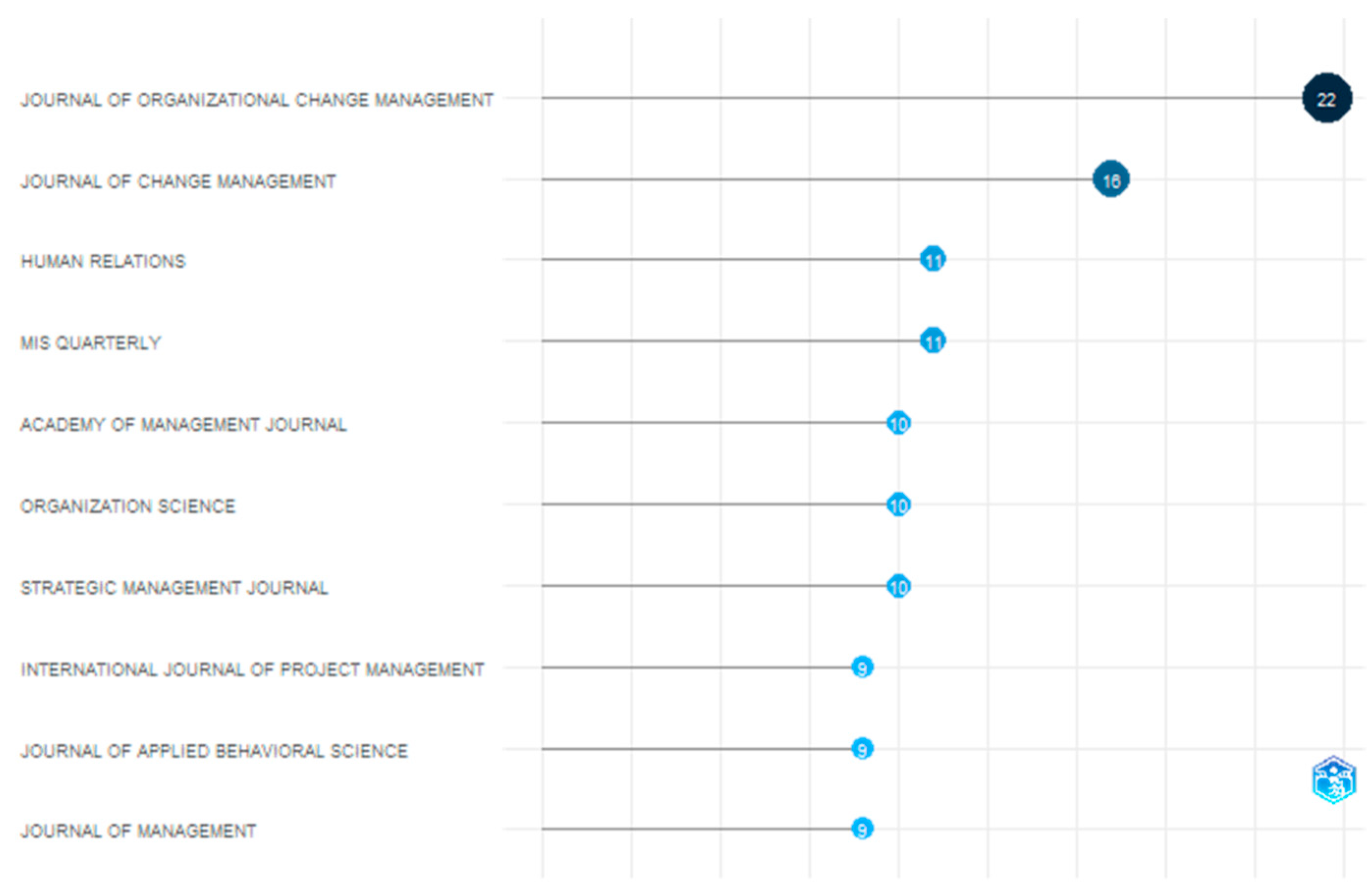
Figure 3 and Figure 4 show the main keywords used in the documents. Organizational change is the most frequently used keyword in the analysis, with 107 appearances, 10% out of total count. Performance and management appearances are also relevant, above the 5% of total count. The rest of keywords appear less than 50 occasions, with a total share below the 5%.
Figure 5 details the co-occurrence network in order to explain the relationships between the most frequently used keywords. The main cluster is associated with the three principal keywords identified previously in the word cloud and the tree map: organizational change, management and performance. The other two clusters represented are associated with less relevant keywords, as is shown in Figure 3 and Figure 4.
2.3. Conclusions of the Bibliometric Analysis
The bibliometric analysis allows us to conclude the key dimensions underlying change management literature are organizational change, management and performance. The organizational change dimension is influenced by the business context, in terms of uncertainty, globalization and technology. The management dimension acquires special importance in a large company’s context, due to their broad scope of competence. Finally, the performance dimension focuses on the critical role of managers in business change.
These findings are consistent with previous research on change management bibliometric analysis. [5] identified three main clusters in its research on change management literature from 1995 to 2019: organizational change, management and humans. The first two clusters fit properly with our findings, while humans cluster could be linked with the critical role of the managers in pursuit of company performance.
The following sections explains the theoretical and practical implications of each dimensions.
3. Focus on Organizational Change A Business Context Characterized by Change
Behind this unprecedented intensity of change that characterizes business activity, there are multiple factors that act in combination and feedback on each other, among which the experts highlight five.
3.1. Technological Development
Technological innovation is at the heart of the acceleration of change we are experiencing. Another example of the intensity of technological transformation is Moore’s Law [6], which predicted that the number of transistors per unit area in integrated circuits would double every year at the same time as their cost would fall, and which has generally been fulfilled over the last few decades.
The impact of technology development on companies is felt at all levels, although it should be noted that the factors of distance, time and cost—traditionally placing brakes on the pace of business performance—have been significantly reduced thanks to technology, allowing transformation processes to be increasingly faster. As a result, [7] note that technology has changed business models, work structures and working arrangements with employees. Another significant impact of technological dynamism is the shortening of the product life cycle and the increased pace of the introduction of innovations by competitors [8].
3.2. Market Maturity and Increased Competition
Developed economies have moved from a situation characterized by emerging markets to one in which mature markets predominate, which also intensifies the level of competition and dynamism. In environments characterized by high dynamism, as [9] point out, companies need to introduce more rapid changes in their products or services to remain competitive.
In the past, there was a large number of emerging markets. When this happened, the growth of companies was based on the increase in the number of customers (by incorporating new segments or new countries into the market economy) and/or in their purchasing power (increase in the income level of consumers and in the spending and investment of companies in organizational markets). Although this implied for companies the need to assume a certain level of change, this context was dominated by a strong orientation of the company to scale—rather than to vary significantly—its way of doing things.
Today, the most frequent situation is that markets are in a phase of maturity in which growth is slowing down because there is no longer such a significant incorporation of new customers, nor is there a significant increase in customers’ purchasing intensity. This opens up a new scenario in which companies must seek growth by capturing market share from competitors through greater differentiation of their value proposition. In this context of increased competition, companies must focus on innovating, rather than scaling their business by maintaining the same way of doing things.
3.3. Concentration and Globalization of Business Activity
The maturity of markets and the increase in the level of competition have in turn intensified concentration (with the emergence of large players in all sectors that base their efficiency on a greater volume of business) and the globalization of business activity (both in terms of the search for suppliers or production advantages, and for markets in which to market products and services). With regard to this second factor, in a few decades we have moved to a globalized economic scenario with clear facilitating elements and causes in companies. According to [10], the phenomenon of globalization is related to the increase in the generation, storage, processing and distribution of customer information through technological tools.
On the other hand, the internationalization of companies’ activity adds its own consequences on transformation processes. [7] point out that this factor has reshaped the organizational culture, its policies, the nature ofcustomers and the location of work.
Regarding the process of business concentration, it is also evident to what extent in a few years we have gone from markets with atomized competitors to a situation of strong dominance of large companies in many sectors. Concentration implies a higher level of change because it increases the company’s investment capacity (in R&D, operational capabilities, mergers and acquisitions, etc.) and globalization, and because it allows the transfer of business models and best practices between different countries.
Both trends are supported by other factors that in turn act as both cause and effect of the increase in the size and scope of action of companies. Among them, we must once again highlight technology, which has provided the necessary tools for companies to scale up and internationalize their activity, leading to cheaper transport costs, more efficient communications, etc.
Globalization and business concentration are also facilitated by the global process of socioeconomic homogenization. The needs of customers are becoming more and more similar due to the progressive emergence of a global social and business culture. Supporting this idea, [11] conclude that the convergence of consumer tastes and preferences at the global level favours market concentration processes.
A third factor of globalization and concentration is the evolution of policies and legislative frameworks to favour trade. States’ quest for growth, wealth and welfare has gradually led to the development of forums, agreements and legislative frameworks aimed at market unity within countries, the definition of common economic spaces between states (EU, T-MEC, Mercosur, etc.) and, in short, the gradual reduction of tariff barriers.
3.4. Customer Professionalization
Customers, whether in B2B or B2C markets, have not only homogenized their behaviour but have also evolved towards a higher level of demand to which companies must respond. In this regard, several studies point out that companies are facing increasingly sophisticated and demanding customers and end consumers, who have a large number of alternatives from which to select the product or service to be acquired [12,13].
The development of new distribution channels—particularly in the online sphere—facilitates the comparison of offers, giving the customer more and more power and allowing him or her to make purchasing decisions in a more professionalized manner. As a consequence, [14] propose that a marketing 4.0 environment is appearing, characterized by the coexistence of face-to-face and online channels that increase the possibilities of customer access to companies’ offers.
3.5. Growing Influence on Business Decisions by External Agents
Technology is also allowing a greater flow of information that has empowered other actors who, although they are not part of the management of companies, condition the direction taken by them, also influencing their level of dynamism.
[15] point out that technology has facilitated direct communication between company management and shareholders. Accordingly, both in large listed companies and in unlisted companies, the level of knowledge of shareholders about the activity they carry out and their results is faster, more precise and deeper, which makes them exercise greater control over their decisions.
Likewise, society as a whole—not just customers—has a large number of sources of information and the media at its disposal to assess the reputation of companies, which in turn leads to significant adjustments. The impact of scandals such as the public revelation of precarious working conditions in producing countries in sectors such as food, textiles and footwear, or the perception generated by the practices of the financial sector at the beginning of the 21st century, demonstrate how quickly society can demand a change in the behavioural models of companies and explain the strong interest of companies in defining corporate social responsibility or compliance policies.
In addition to the influence of shareholders and society, crises also occupy a prominent place among the external agents that affect companies. In 2009–12 we experienced an intense financial crisis and, a few years later—beginning in March 2020—a health crisis due to the COVID-19 pandemic. Just as the latter was beginning to be overcome in 2022, the war in Ukraine erupted, posing an uncertain future. In all these cases, companies have had to react by making major transformation efforts to adapt to a rapidly changing world.
Finally, beyond the current impact of these five factors as drivers of change, the forecasts made by experts and executives regarding their behaviour in the coming years coincide in their intensification, with even more accelerated technological development, greater competition, concentration and globalization, increasingly professionalized customers and greater influence of shareholders and society on business dynamics. If these forecasts come true, change will play an even greater role in the life of companies in the future.
As [2] (p. 4) describes, “Globalization, competition and accelerated technological innovation are creating conditions in which change itself is changing; change is becoming increasingly complex and pervasive, requiring companies to develop specific capabilities to manage it”.
In short, for companies, today more than ever, it is critical to optimize the management of change processes. But unfortunately, this task is not easy, and according to [16] (p. 98), “Studies show that, in organizations, two out of three transformation initiatives fail”, with numerous authors pointing in the same direction. [17] state that around 70% of business change initiatives fail. [18] echoes a study by Ernst & Young that concluded that 75% of transition processes fail. In addition to the need to find better solutions for dealing with change, a Harvard Business School review estimated that the implementation of change cost leading Fortune 100 companies an average of one billion dollars between 1980 and 1995 [19].
4. Focus on Management: The Challenge of Change in Large Companies
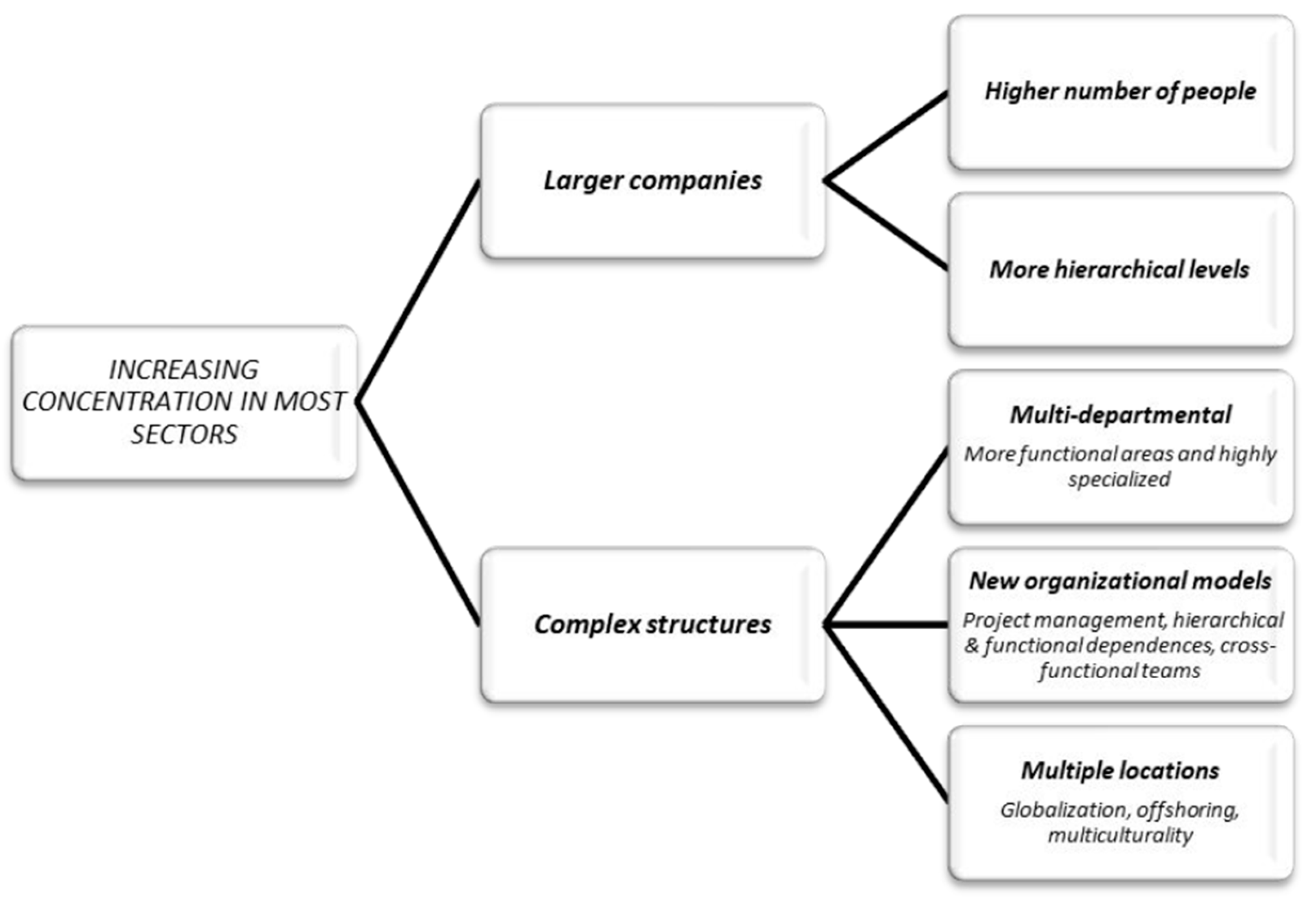
The need to manage this greater intensity of change in companies occurs as we have seen with the increasing concentration in most sectors, leading to the development of increasingly larger companies (both in terms of number of people and hierarchical levels) and with increasingly complex structures (multiple departments and locations, new organizational models, etc.), as summarized in Figure 1.
Therefore, the management of change processes today presents difficulties that make them even more complex to overcome in large companies due to the higher number of people involved and the fact that they may have very different levels of responsibility, situations and attitudes towards the transformation.
Traditionally, in the professional sphere, when dealing with change processes, there has been a strong focus on technical factors—economic resources, operational resources, etc.—because of their tangible nature and, therefore, their greater ease in management. However, [20] warn of the risks of falling into the “fallacy of programmatic change”, according to which employee behaviour changes automatically when the structure and formal systems of a company are altered. Accordingly, [21] point out that the greatest challenge in any change process is to change people’s behaviour, and [22] adds to this idea by pointing out that the natural human response to change is resistance and that people stick to familiar ways of doing things. Therefore, we must conclude that although technical factors are important, the human factor—despite being an intangible—plays a determining role for the company to optimize change management. And if changing the behaviour of one person or a small group can be a challenge, it becomes even more difficult if it involves a large number of people, as is the case in large companies.
Figure 6.
Schematic representation of the consequences of increased business concentration.
Consistent with the above, there is a growing concern in the business world for the human factor as a key element for value creation in general and for the efficient management of change processes in particular.
5. Focus on Performance: The Critical Role of Managers in Business Change
If we assume that the human factor is a key element in the management of business change, in a context where companies are becoming increasingly larger, this criticality is concentrated more intensely in the figure of managers, with the additional peculiarity that in facing the transformation process they must simultaneously manage the difficulties that this entails with the implications the process may have on their own position in the organization. In this sense, the words of [23] are illustrative when they state that leading, although often described as exciting and glamorous, is living dangerously and carries the risk of being expelled at difficult moments of change by the members of the organization when they see their habits, loyalties or ways of thinking at risk.
To summarize what has been said so far: if change management is today a key requirement for business success—and will foreseeably become more so in the future; if, in addition, people in the organization in general—and managers in particular—are a decisive factor in overcoming change processes; and if, finally, managers face the problem of how to influence the rest of the organization to promote change management, it is justified that the academic world should focus on deepening the knowledge of the manager’s role in the face of change and on applying models that make change management more efficient. Accordingly, [17] (p. 88) state that “it is imperative that executives understand the nature and process of corporate change much better”.
6. A proposed Classification of the Literature on Enterprise Change Management and Future Research: What about Sustainability?
When we turn to the literature for answers to the challenges faced by managers in managing business transformation processes, [2] (p. 4) admits that simply defining what change management is can be problematic, because the possible answers “are as diverse as the challenges that companies face in today’s ever-changing business environment”.
In fact, when reviewing the literature on the concept of change management, we find the problem that the limits of the subject are difficult to establish, as there is an enormous amount and diversity of research that can provide a theoretical basis from which to delve into the processes of change in the company and the role of managers in these processes. Moreover, this subject is unique in that it is located on the borderline between various research disciplines, with the fields of business economics, psychology and technical sciences intersecting. And the few publications that offer a compilation of theories on change do so only from one scientific discipline (e.g. [24] compares six theoretical frameworks on change, but all of them from the field of psychology). The previous analysis allows us to conclude that explaining how and why companies change has been and continues to be a central point in research on organizations ([25] (p. 10)).
6.1. A proposed Classification of the Literature on Enterprise Change Management
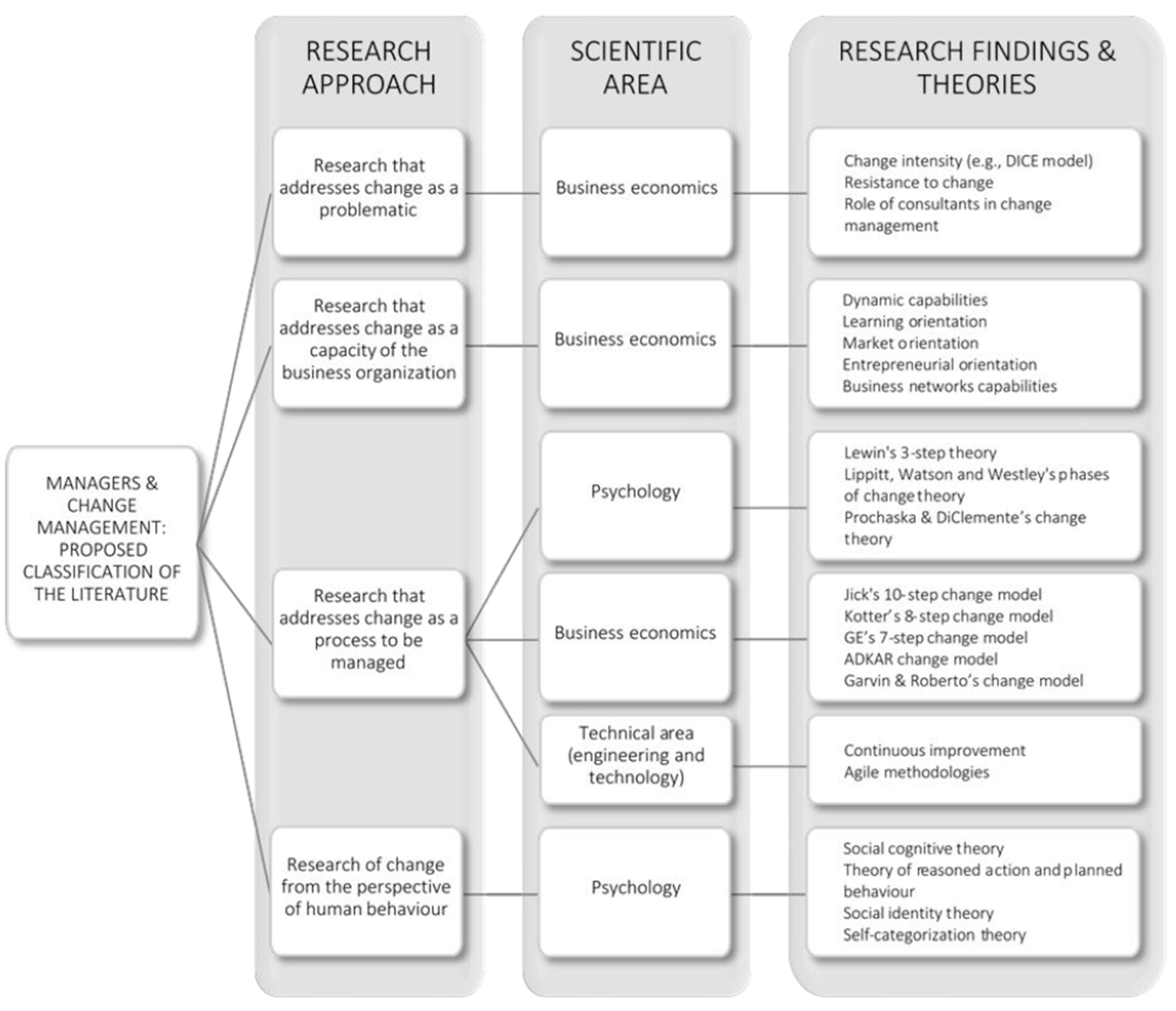
Given the difficulty of developing a broad perspective on the literature on the management of business change, after carrying out an extensive literature review on the subject, we will now present a proposal for classification that we believe may be useful for researchers in this area and which has been drawn up according to two criteria.
The first criterion is the type of research approach. When applied, it is found that the literature responds to four main approaches to change:
Research that addresses change as a problematic. According to [26], change is a problematic that is always present in the life of the organization. In accordance with this statement, some studies from the area of business sciences have focused on the analysis of change and its characteristics as an increasingly relevant challenge for organizations. Within this approach can be mentioned research about change intensity (e.g. the DICE model), resistance to change or the role of consultants in change management.
Research that addresses change as a capacity of the organization. Another current within business sciences analyses change in relation to the capabilities that an organization must develop to create competitive differentiation through adaptation processes (examples of this line are the theories of dynamic capabilities, learning orientation, market orientation, entrepreneurial orientation or business networks capabilities).
Research that addresses change as a process to be managed. Another approach to the phenomena of change is the one followed by those who conceive it as a process whose knowledge makes it possible to optimize its management. Following this approach, we find models in different disciplines: with a pioneering character in psychology (Lewin’s 3-step theory, Lippit, Watson and Westley’s phases of change, and Prochaska and DiClemente’s change theory), then in business sciences (Jick’s 10-step model, Kotter’s 8-step model, General Electric’s 7-step change model, the ADKAR change model and Garvin and Roberto’s change model) and also in the technical field (continuous improvement and, recently, agile methodologies).
Research on change from the perspective of human behaviour. Finally, change has also been approached from social psychology as part of human behaviour (social cognitive theory, theory of reasoned action and planned behaviour, social identity and self-categorization, etc.).
Consistent with what was explained above, the second classification criterion is the scientific area from which the study of change is approached. According to this criterion, we differentiate the studies that have been approached from business economics from those that propose constructs applicable to the business field developed from psychology—focused on an approach to mental processes and people’s behaviour, or from the technical perspective—focused on the application to change of solutions from engineering and technology. According to the proposed criteria, the studies that address the subject of change management in companies can be structured as shown in Figure 2:
Figure 7.
Proposed classification of the literature on enterprise change management.
6.2. Foreseeable Future Evolution of Theoretical Frameworks
From the global perspective of the literature on the management of business change provided by the proposed classification, it is striking that the main models for dealing with transformation processes in companies have been developed in recent times (the starting point can be established as the 1940s, with the work of Lewin), so that we have not yet accumulated even a century of scientific knowledge on the subject.
The diversity of approaches and the dynamism in the appearance of new publications show that this is a subject that arouses much interest, so that in the coming years we will foreseeably witness the development of theoretical frameworks in two directions.
Firstly, although there are a large number of disciplines and approaches to change management, diversification will continue in the future, driven by emerging fields such as the digital field (applying big data technology) or biology (with the advance of neuroscience).
On the other hand, although the diversity of approaches developed in the literature makes it possible to explain specific aspects of change management, a gradual integration of theories is also foreseeable, so that a generally applicable theoretical framework can be configured.
Both vectors of research will in any case be necessary because, as [27] state, the context has altered, from change being a non-normal event to being a permanent condition in the life of the companies.
6.3. The Opportunity to Incorporate Sustainability into Change Management
In recent years, many organizations have realized the importance of merging economic performance with social and environmental performance [28]. In a new context that some authors have defined as the "era of sustainable development" [29], the challenge is to avoid the appearance of imbalances between both dimensions of performance [30].
According to this, sustainable development has gained more and more attention from researchers [31]. These investigations try to demonstrate how organizations can maximize their results in a way that does not find limitations in the three key dimensions mentioned [29,32]. The economic performance can be evaluated through different indicators, such as assets, liability [33], benefits, income [34] and market share [35]. On the other hand, social performance refers to how an organization manages the well-being of its employees, stakeholders, the community and the rest of society in general [36]. Finally, the ecological dimension includes the sustainability of its activities, which must always be respectful with the environment, highlighting waste management, reducing the carbon footprint, recycling [37], and minimizing the use of energy and resources [38].
The result for organizations that take care of these three dimensions is to achieve a positive corporate reputation that is associated with important benefits: greater employee satisfaction, better relations with shareholders, positive brand equity [39], more motivated workers, more loyal and satisfied customers [40], better ability to attract and retain talent, and more innovation [41].
This context has led to enormous pressure on organizations in order to improve their sustainable development [31]. As we argued previously, sustainability is acquiring its own and differentiated weight that must be increasingly taken into account. Consequently, future investigations have the challenge to address sustainability from the perspective of change management with a complete and understandable guide of the main approaches analyzed in this research.
Author Contributions
Conceptualization, A.G.I..; writing—original draft preparation, writing—review and editing, A.G.I., J.C.A. and J.R.C. All authors have read and agreed to the published version of the manuscript.
Funding
This research received no external funding.
Conflicts of Interest
The authors declare no conflict of interest.
References
- Hilbert, M.; López, P. The World’s Technological Capacity to Store, Communicate, and Compute Information. Science 2011, 332, 60–65. [Google Scholar] [CrossRef] [PubMed]
- Metre, C. Deriving Value From Change Management. Master of Science in Organizational Dynamics Theses, 2009.
- Pacheco-Velázquez, E.A.; Vázquez-Parra, J.C.; Cruz-Sandoval, M. Salinas-Navarro, D.E.; Carlos-Arroyo, M. Business Decision-Making and Complex Thinking: A Bibliometric Study. Administrative Sciences 2023, 13. [Google Scholar] [CrossRef]
- Aria, M.; Cuccurullo, C. Bibliometrix: An R-Tool for Comprehensive Science Mapping Analysis. Journal of Informetrics 2017, 11, 959–75. [Google Scholar] [CrossRef]
- Moosa, M.; Khalid, A.H.; Mohamed, A. Intellectual landscape of research on change management: a bibliometric analysis. Management Research Review 2022, 45, 1044–1059. [Google Scholar] [CrossRef]
- Moore, G. E. Cramming more components onto integrated circuits. Electronics, McGraw Hill, Inc. 1965, 38, 114–117. [Google Scholar] [CrossRef]
- Hechanova, M.R.M.; Caringal-Go, J.F.; Magsaysay, J.F. Implicit change leadership, change management, and affective commitment to change: Comparing academic institutions vs business enterprises, Leadership & Organization Development Journal, 2018, Vol. 39 No. 7, 914-925.
- Atuahene-Gima, K.; Li, H.; De Luca, L. The Contingent Value of Marketing Strategy Innovativeness for Product Development Performance in Chinese New Technology Ventures. Industrial Marketing Management 2006, 35, 359–372. [Google Scholar] [CrossRef]
- Cui, A.; Griffith, D.; Cavusgil, S.; Dabic, M. The influence of market and cultural environmental factors on technology transfer between foreign MNCs and local subsidiaries: A Croatian illustration. Journal of World Business 2006, 41, 100–111. [Google Scholar] [CrossRef]
- Dholakia, U.; Kahn, B.; Reeves, R.; Rindfleisch, A.; Stewart, D.; Taylor, E. Consumer Behavior in a Multichannel, Multimedia Retailing Environment. Journal of Interactive Marketing 2009, 24, 86–95. [Google Scholar] [CrossRef]
- Ozturk, A.; Cavusgil, S. T. Global convergence of consumer spending: Conceptualization and propositions. International Business Review 2019, 28, 294–304. [Google Scholar] [CrossRef]
- Webster, F.E. The Changing Role of Marketing in the Corporation. Journal of Marketing 1992, 56, 1–17. [Google Scholar] [CrossRef]
- Pels, J. Exchange relationships in consumer markets? European Journal of Marketing 1999, 33, 19–37. [Google Scholar] [CrossRef]
- Kotler, P.; Kartajaya, H.; Setiawan, I. Marketing 4.0: moving from traditional to digital,2017.
- Vega-Jurado, J.; Juliao-Esparragoza, D.; Paternina-Arboleda, C.D. & Velez, M.C. Integrating Technology, Management and Marketing Innovation through Open Innovation Models. Journal of Technology Management & Innovation 2015, 10, 85–90. [Google Scholar]
- Sirkin, H.L.; Keenan P.; Jackson, A. The Hard Side of Change Management Harvard Business Review October 2005 Issue, p. 98-109. 20 October.
- Beer, M.; Nitin, N. Cracking the Code of Change. Harvard Business Review 78, no. 3 (May–June 2000): 133–141. 20 June.
- Lucey, J. Why is the Failure Rate for Organizational Change so high? Management Services, 2008, Winter 2008, 10-18.
- Jacobs, M. A strategic approach to a changing world. Credit Union Magazine 1998, 64, 17–21. [Google Scholar]
- Beer, M.; Eisenstat, R.A.; & Spector, B.; & Spector B. Why change programs don't produce change. Hardvard Business Review 1990, 68, 158–166. [Google Scholar]
- Kotter, J.; Cohen, D. The Heart of Change: Real-Life Stories of How People Change Their Organizations. Performance Improvement 2004, 43, 45–46. [Google Scholar] [CrossRef]
- Davidson, J. Overcoming Resistance to Change, Public Management, 2002, 84 #11, Dec, 20-23.
- Heifetz, R.; Linsky, M. A survival guide for leaders. Harvard Business Review, 2002, Vol. 80, 65-74, 152.
- Kritsonis, A. Comparison of Change Theories, International Journal of Scholarly Academic Intellectual Diversity, 2004, 8, number 1, 2004-2005.
- Van de Ven, A.; Poole, S. Explaining development and change in organizations. The Academy of Management Review 1995, 20, 510–540. [Google Scholar] [CrossRef]
- Burnes, B. Managing Change: A Strategic Approach to Organisational Dynamics, 4thedn. 2004 Harlow: Prentice Hall.
- Beaman, K. V.; Guy, G. R. Effecting Change in Business Enterprises: Current Trends in Change Management. 2005 New York, NY: The Conference Board, Inc.
- Bombiak, E.; Marciniuk-Kluska, A. Green human resource management as a tool for the sustainable development of enterprises: ‚Polish young company experience. Sustainability 2018, 10, 1739. [Google Scholar] [CrossRef]
- Bass, B.M.; Avolio, B.J. Transformational leadership: A response to critiques. In Leadership Theory and Research: Perspectives and Directions; Academic Press: San Diego, CA, USA, 1993; pp. 49–80. [Google Scholar]
- Bass, B.M.; Avolio, B.J.; Jung, D.I.; Berson, Y. Predicting unit performance by assessing transformational and transactional leadership. J. Appl. Psychol. 2003, 88, 207–218. [Google Scholar] [CrossRef]
- Lin, M.; Effendi, A.A.; Iqbal, Q. The Mechanism Underlying the Sustainable Performance of Transformational Leadership: Organizational Identification as Moderator. Sustainability 2022, 14, 15568. [Google Scholar] [CrossRef]
- Mingaleva, Z.; Shironina, E.; Lobova, E.; Olenev, V.; Plyusnina, L.; Oborina, A. Organizational Culture Management as an Element of Innovative and Sustainable Development of Enterprises. Sustainability 2022, 14, 6289. [Google Scholar] [CrossRef]
- Para-González, L.; Jiménez-Jiménez, D.; Martínez-Lorente, A.R. Exploring the mediating effects between transformational leadership and organizational performance. Empl. Relat. 2018, 40, 412–432. [Google Scholar] [CrossRef]
- Morrison, E.W. Organisational citizenship behaviour as a critical link between HRM practices and service quality. Hum. Resour. Manag. 1996, 35, 493–512. [Google Scholar] [CrossRef]
- Messersmith, J.G.; Patel, P.C.; Lepak, D.P.; Gould-Williams, J.S. Unlocking the black box: Exploring the link between high-performance work systems and performance. J. Appl. Psychol. 2011, 96, 1105–1118. [Google Scholar] [CrossRef] [PubMed]
- Paillé, P.; Boiral, O. Pro-environmental behavior at work: Construct validity and determinants. J. Environ. Psychol. 2013, 36, 118–128. [Google Scholar] [CrossRef]
- Roy, M.J.; Boiral, O.; Lagacé, D. Environmental commitment and manufacturing excellence: A comparative study within Canadian industry. Bus. Strateg. Environ. 2001, 10, 257–268. [Google Scholar] [CrossRef]
- Khan, N.U.; Irshad, A.U.R.; Ahmed, A.; Khattak, A. Do organizational citizenship behavior for the environment predict triple bottom line performance in manufacturing firms? Bus. Process Manag. J. 2021, 27, 1033–1053. [Google Scholar] [CrossRef]
- Robertson, J.L.; Barling, J. Toward a new measure of organizational environmental citizenship behavior. J. Bus. Res. 2017, 75, 57–66. [Google Scholar] [CrossRef]
- Ramus, C.A.; Killmer, A.C. Corporate greening through pro-social extra-role behaviors-a conceptual framework for employee motivation. Bus. Strateg. Environ. 2007, 16, 554–570. [Google Scholar] [CrossRef]
- Kennedy, S.; Whiteman, G.; Williams, A. Workplace pro-environmental behavior as a collective driver for continuous improvement. In The Psychology of Green Organizations; Oxford University Press: Oxford, UK, 2015; p. 351. [Google Scholar]
Figure 3.
Abstract keywords visualization by Word cloud.
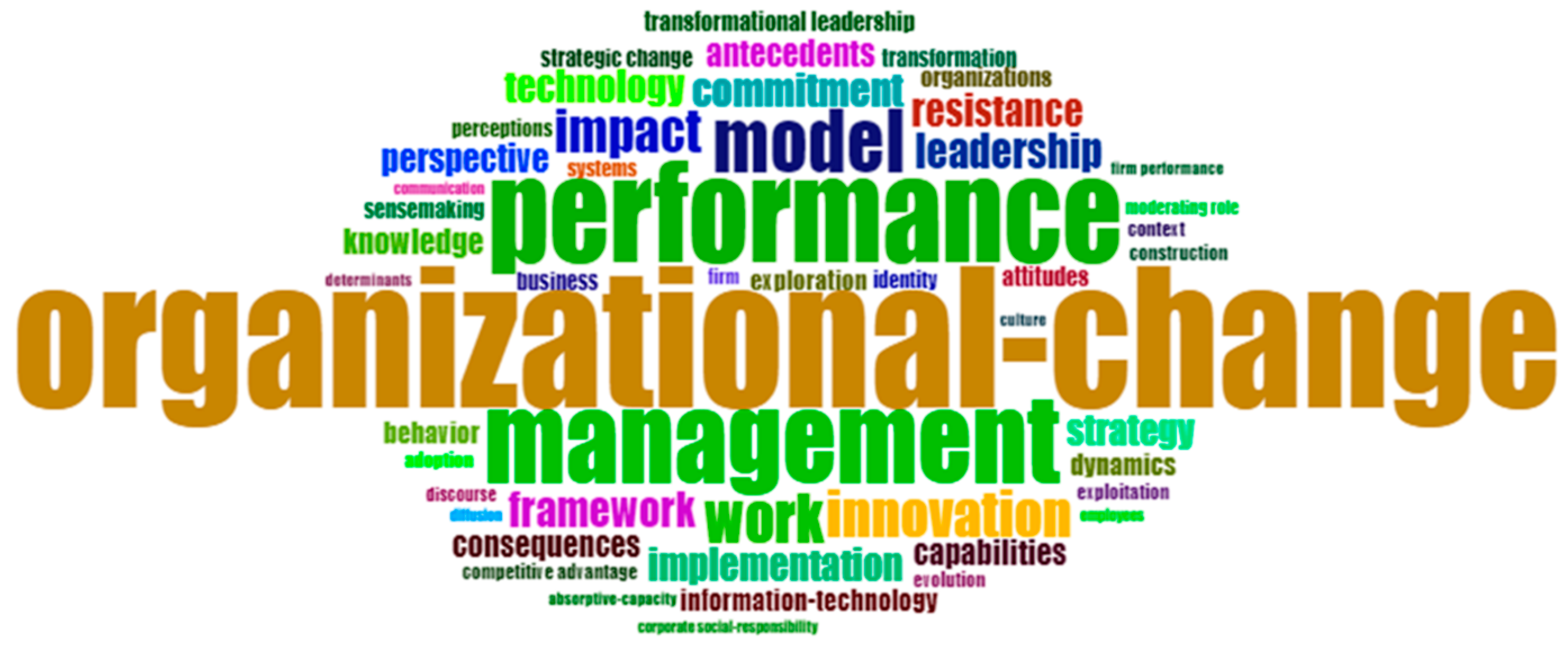
Figure 4.
Tree Map: Most frequently used words in the documents.
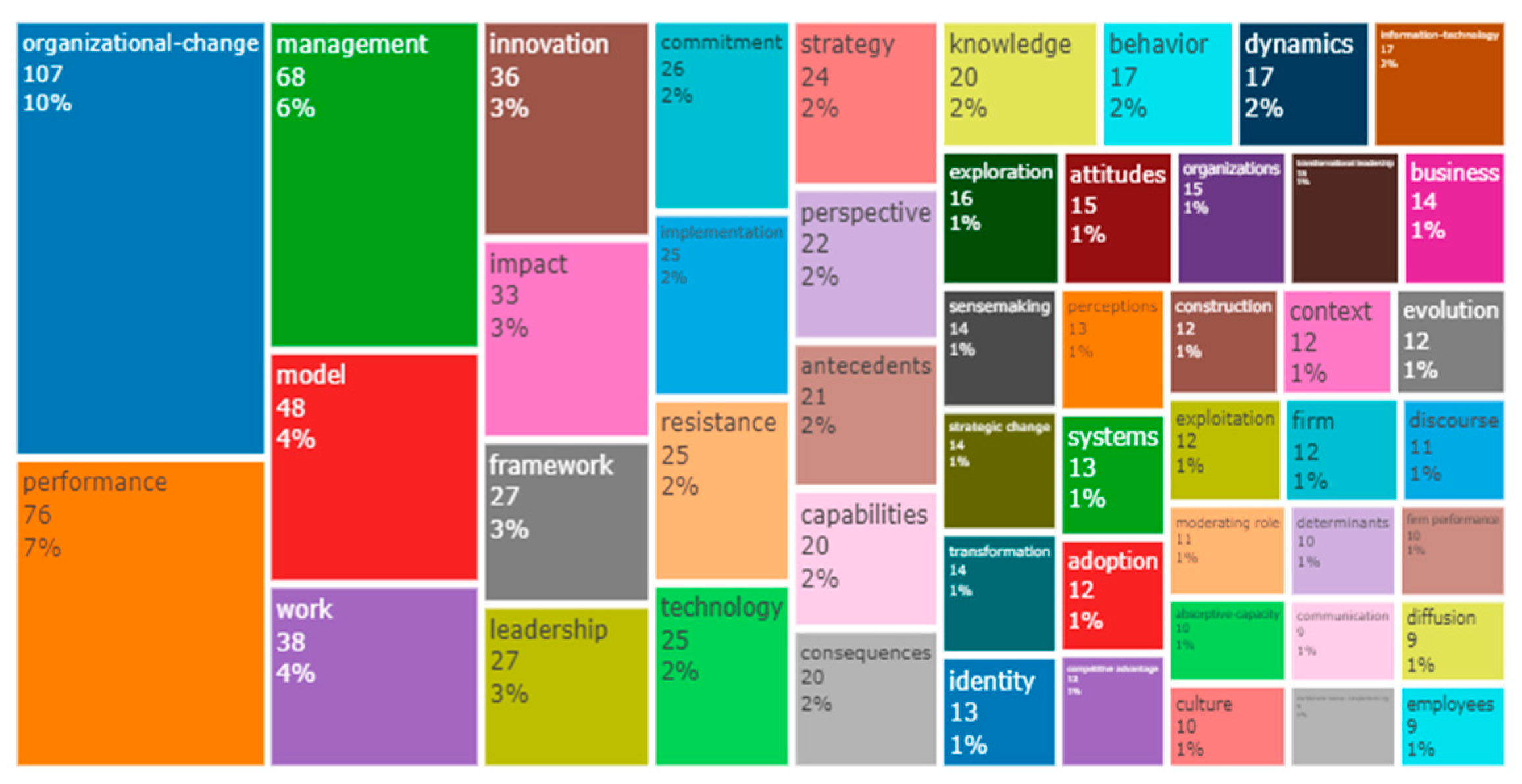
Figure 5.
Co-occurrence network.
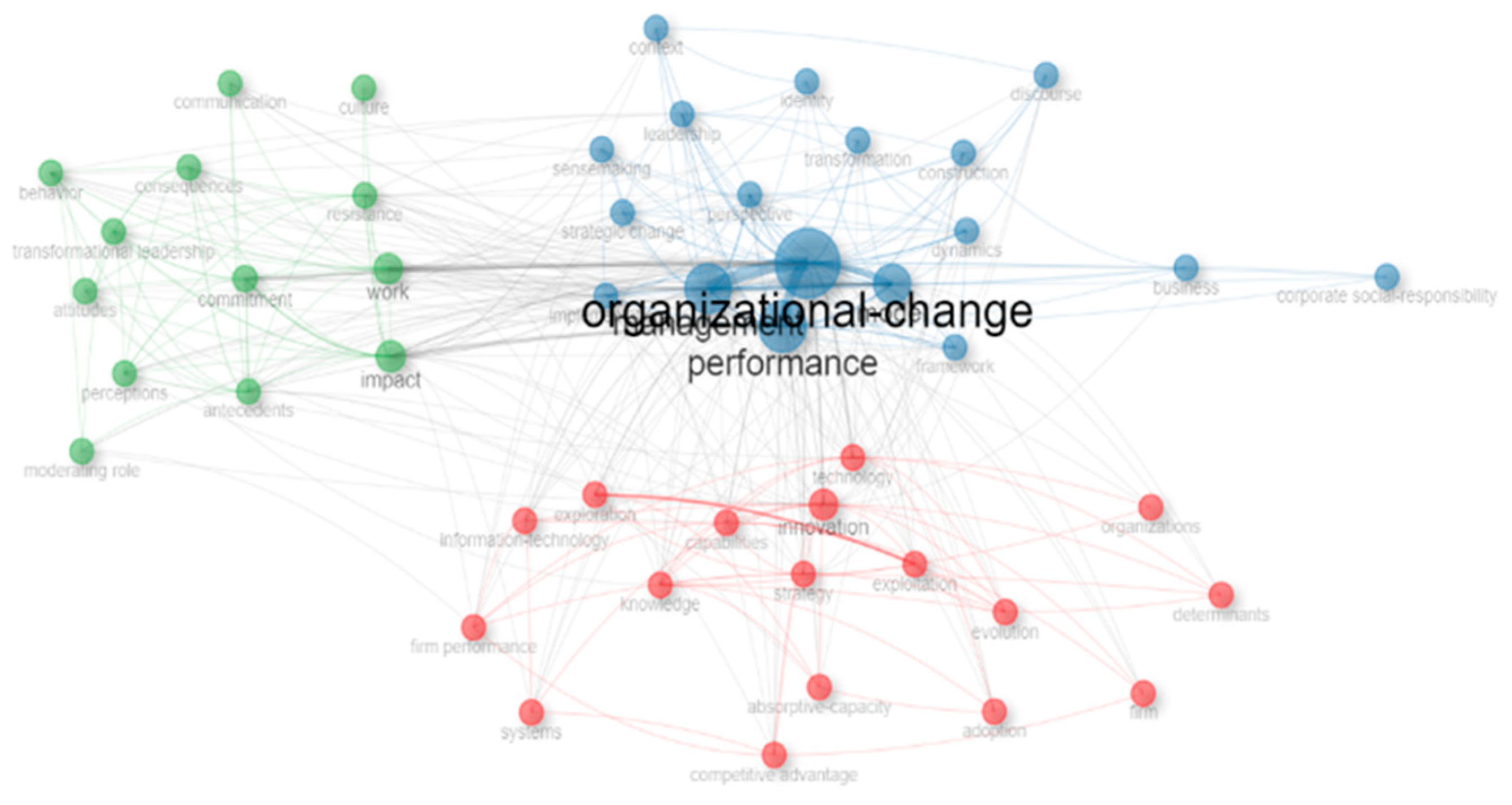

Table 1.
Descriptive statistics of change management publications.
| Descriptive statistics | Results |
|---|---|
| Time span | 2013-2022 |
| Documents | 493 |
| Sources (Journals, Books, etc) | 134 |
| Average citations ratio (ACR) | 45.7 |
| Keywords | 1333 |
| Authors | 883 |
| Authors of single-authored docs | 55 |
| Co-Authors per Doc | 2.17 |
| International co-authorships % | 29.01 |
Disclaimer/Publisher’s Note: The statements, opinions and data contained in all publications are solely those of the individual author(s) and contributor(s) and not of MDPI and/or the editor(s). MDPI and/or the editor(s) disclaim responsibility for any injury to people or property resulting from any ideas, methods, instructions or products referred to in the content. |
© 2023 by the authors. Licensee MDPI, Basel, Switzerland. This article is an open access article distributed under the terms and conditions of the Creative Commons Attribution (CC BY) license (http://creativecommons.org/licenses/by/4.0/).
Copyright: This open access article is published under a Creative Commons CC BY 4.0 license, which permit the free download, distribution, and reuse, provided that the author and preprint are cited in any reuse.