

Submitted:
01 January 2023
Posted:
06 January 2023
You are already at the latest version
Abstract
In this research, new setting is introduced for new SuperHyperNotions, namely, an 1-failed SuperHyperForcing and Neutrosophic 1-failed SuperHyperForcing. Assume a SuperHyperGraph. Then an ``1-failed SuperHyperForcing'' $\mathcal{Z}(NSHG)$ for a neutrosophic SuperHyperGraph $NSHG:(V,E)$ is the maximum cardinality of a SuperHyperSet $S$ of black SuperHyperVertices (whereas SuperHyperVertices in $V(G) \setminus S$ are colored white) such that $V(G)$ isn't turned black after finitely many applications of ``the color-change rule'': a white SuperHyperVertex is converted to a black SuperHyperVertex if it is the only white SuperHyperNeighbor of a black SuperHyperVertex. The additional condition is referred by ``1-'' about the usage of any black SuperHyperVertex only once to act on white SuperHyperVertex to be black SuperHyperVertex; a ``neutrosophic 1-failed SuperHyperForcing'' $\mathcal{Z}_n(NSHG)$ for a neutrosophic SuperHyperGraph $NSHG:(V,E)$ is the maximum neutrosophic cardinality of a SuperHyperSet $S$ of black SuperHyperVertices (whereas SuperHyperVertices in $V(G) \setminus S$ are colored white) such that $V(G)$ isn't turned black after finitely many applications of ``the color-change rule'': a white SuperHyperVertex is converted to a black SuperHyperVertex if it is the only white SuperHyperNeighbor of a black SuperHyperVertex. The additional condition is referred by ``1-'' about the usage of any black SuperHyperVertex only once to act on white SuperHyperVertex to be black SuperHyperVertex. Assume a SuperHyperGraph. Then an ``$\delta-$1-failed SuperHyperForcing'' is a \underline{maximal} 1-failed SuperHyperForcing of SuperHyperVertices with \underline{maximum} cardinality such that either of the following expressions hold for the (neutrosophic) cardinalities of SuperHyperNeighbors of $s\in S:$ $~|S\cap N(s)| > |S\cap (V\setminus N(s))|+\delta,~|S\cap N(s)| < |S\cap (V\setminus N(s))|+\delta.$ The first Expression, holds if $S$ is an ``$\delta-$SuperHyperOffensive''. And the second Expression, holds if $S$ is an ``$\delta-$SuperHyperDefensive''; a``neutrosophic $\delta-$1-failed SuperHyperForcing'' is a \underline{maximal} neutrosophic 1-failed SuperHyperForcing of SuperHyperVertices with \underline{maximum} neutrosophic cardinality such that either of the following expressions hold for the neutrosophic cardinalities of SuperHyperNeighbors of $s\in S:$ $~|S\cap N(s)|_{neutrosophic} > |S\cap (V\setminus N(s))|_{neutrosophic}+\delta,~ |S\cap N(s)|_{neutrosophic} < |S\cap (V\setminus N(s))|_{neutrosophic}+\delta.$ The first Expression, holds if $S$ is a ``neutrosophic $\delta-$SuperHyperOffensive''. And the second Expression, holds if $S$ is a ``neutrosophic $\delta-$SuperHyperDefensive''. A basic familiarity with SuperHyperGraph theory and neutrosophic SuperHyperGraph theory are proposed.
Keywords:
SuperHyperGraph
; (Neutrosophic) 1-failed SuperHyperForcing
; Cancer’s Recognitions
1. Background
Fuzzy set in Ref. [39] by Zadeh (1965), intuitionistic fuzzy sets in Ref. [22] by Atanassov (1986), a first step to a theory of the intuitionistic fuzzy graphs in Ref. [36] by Shannon and Atanassov (1994), a unifying field in logics neutrosophy: neutrosophic probability, set and logic, rehoboth in Ref. [37] by Smarandache (1998), single-valued neutrosophic sets in Ref. [38] by Wang et al. (2010), single-valued neutrosophic graphs in Ref. [26] by Broumi et al. (2016), operations on single-valued neutrosophic graphs in Ref. [18] by Akram and Shahzadi (2017), neutrosophic soft graphs in Ref. [35] by Shah and Hussain (2016), bounds on the average and minimum attendance in preference-based activity scheduling in Ref. [20] by Aronshtam and Ilani (2022), investigating the recoverable robust single machine scheduling problem under interval uncertainty in Ref. [25] by Bold and Goerigk (2022), polyhedra associated with locating-dominating, open locating-dominating and locating total-dominating sets in graphs in Ref. [19] by G. Argiroffo et al. (2022), a Vizing-type result for semi-total domination in Ref. [21] by J. Asplund et al. (2020), total domination cover rubbling in Ref. [23] by R.A. Beeler et al. (2020), on the global total k-domination number of graphs in Ref. [24] by S. Bermudo et al. (2019), maker–breaker total domination game in Ref. [27] by V. Gledel et al. (2020), a new upper bound on the total domination number in graphs with minimum degree six in Ref. [28] by M.A. Henning, and A. Yeo (2021), effect of predomination and vertex removal on the game total domination number of a graph in Ref. [33] by V. Irsic (2019), hardness results of global total k-domination problem in graphs in Ref. [34] by B.S. Panda, and P. Goyal (2021), are studied.
2. Extreme Failed SuperHyperForcing
Definition 2.1.
((neutrosophic) 1-failed SuperHyperForcing).
Assume a SuperHyperGraph. Then
- an 1-failed SuperHyperForcing for a neutrosophic SuperHyperGraph is the maximum cardinality of a SuperHyperSet S of black SuperHyperVertices (whereas SuperHyperVertices in are colored white) such that isn’t turned black after finitely many applications of “the color-change rule”: a white SuperHyperVertex is converted to a black SuperHyperVertex if it is the only white SuperHyperNeighbor of a black SuperHyperVertex with the additional condition is referred by “1-” about the usage of any black SuperHyperVertex only once to act on white SuperHyperVertex to be black SuperHyperVertex;
- a neutrosophic 1-failed SuperHyperForcing for a neutrosophic SuperHyperGraph is the maximum neutrosophic cardinality of a SuperHyperSet S of black SuperHyperVertices (whereas SuperHyperVertices in are colored white) such that is turned black after finitely many applications of “the color-change rule”: a white SuperHyperVertex is converted to a black SuperHyperVertex if it is the only white SuperHyperNeighbor of a black SuperHyperVertex with the additional condition is referred by “1-” about the usage of any black SuperHyperVertex only once to act on white SuperHyperVertex to be black SuperHyperVertex.
Definition 2.2.
((neutrosophic) 1-failed SuperHyperForcing).
Assume a SuperHyperGraph. Then
-
an 1-failed SuperHyperForcing is a maximal 1-failed SuperHyperForcing of SuperHyperVertices with a maximum cardinality such that either of the following expressions hold for the (neutrosophic) cardinalities of SuperHyperNeighbors ofThe Expression (2.1), holds if S is an SuperHyperOffensive. And the Expression (2.2), holds if S is an SuperHyperDefensive;
-
a neutrosophic 1-failed SuperHyperForcing is a maximal neutrosophic 1-failed SuperHyperForcing of SuperHyperVertices with maximum neutrosophic cardinality such that either of the following expressions hold for the neutrosophic cardinalities of SuperHyperNeighbors ofThe Expression (2.3), holds if S is a neutrosophic SuperHyperOffensive. And the Expression (2.4), holds if S is a neutrosophic SuperHyperDefensive.
Example 2.3.
Assume the SuperHyperGraphs in the Figures (1), (2), (3), (4), (5), (6), (7), (8), (9), (10), (11), (12), (13), (14), (15), (16), (17), (18), (19), and (20).
-
On the Figure (1), the SuperHyperNotion, namely, 1-failed SuperHyperForcing, is up. and are some empty SuperHyperEdges but is a loop SuperHyperEdge and is an SuperHyperEdge. Thus in the terms of SuperHyperNeighbor, there’s only one SuperHyperEdge, namely, The SuperHyperVertex, is isolated means that there’s no SuperHyperEdge has it as an endpoint. Thus SuperHyperVertex, is contained in every given 1-failed SuperHyperForcing. All the following SuperHyperSets of SuperHyperVertices are the simple type-SuperHyperSet of the 1-failed SuperHyperForcing.The SuperHyperSets of SuperHyperVertices, are the simple type-SuperHyperSet of the 1-failed SuperHyperForcing. The SuperHyperSets of the SuperHyperVertices, are the maximum cardinality of a SuperHyperSet S of black SuperHyperVertices (whereas SuperHyperVertices in are colored white) such that isn’t turned black after finitely many applications of “the color-change rule”: a white SuperHyperVertex is converted to a black SuperHyperVertex if it is the only white SuperHyperNeighbor of a black SuperHyperVertex with the additional condition is referred by “1-” about the usage of any black SuperHyperVertex only once to act on white SuperHyperVertex to be black SuperHyperVertex. There’re only two SuperHyperVertices outside the intended SuperHyperSet. Thus the non-obvious 1-failed SuperHyperForcing aren’t up. The obvious simple type-SuperHyperSet of the 1-failed SuperHyperForcing is a SuperHyperSet excludes only two SuperHyperVertices are titled to SuperHyperNeighbors in a connected neutrosophic SuperHyperGraph But the SuperHyperSets of SuperHyperVertices, don’t have more than two SuperHyperVertices outside the intended SuperHyperSet. Thus the non-obvious simple type-SuperHyperSet of the 1-failed SuperHyperForcing aren’t up. To sum them up, the SuperHyperSets of SuperHyperVertices, aren’t the non-obvious simple type-SuperHyperSet of the 1-failed SuperHyperForcing. Since the SuperHyperSets of the SuperHyperVertices, are the SuperHyperSet Ss of black SuperHyperVertices (whereas SuperHyperVertices in are colored white) such that isn’t turned black after finitely many applications of “the color-change rule”: a white SuperHyperVertex is converted to a black SuperHyperVertex if it is the only white SuperHyperNeighbor of a black SuperHyperVertex with the additional condition is referred by “1-” about the usage of any black SuperHyperVertex only once to act on white SuperHyperVertex to be black SuperHyperVertex and they are 1-failed SuperHyperForcing. Since it’s the maximum cardinality of a SuperHyperSet S of black SuperHyperVertices (whereas SuperHyperVertices in are colored white) such that isn’t turned black after finitely many applications of “the color-change rule”: a white SuperHyperVertex is converted to a black SuperHyperVertex if it is the only white SuperHyperNeighbor of a black SuperHyperVertex with the additional condition is referred by “1-” about the usage of any black SuperHyperVertex only once to act on white SuperHyperVertex to be black SuperHyperVertex. There aren’t only more than two SuperHyperVertices outside the intended SuperHyperSets, Thus the non-obvious 1-failed SuperHyperForcing, aren’t up. The obvious simple type-SuperHyperSets of the 1-failed SuperHyperForcing, are a SuperHyperSets, doesn’t exclude only more than two SuperHyperVertices in a connected neutrosophic SuperHyperGraph It’s interesting to mention that the only obvious simple type-SuperHyperSets of the neutrosophic 1-failed SuperHyperForcing amid those obvious simple type-SuperHyperSets of the 1-failed SuperHyperForcing, is only
-
On the Figure (2), the SuperHyperNotion, namely, 1-failed SuperHyperForcing, is up. and are some empty SuperHyperEdges but is an SuperHyperEdge. Thus in the terms of SuperHyperNeighbor, there’s only one SuperHyperEdge, namely, The SuperHyperVertex, is isolated means that there’s no SuperHyperEdge has it as an endpoint. Thus SuperHyperVertex, is contained in every given 1-failed SuperHyperForcing. All the following SuperHyperSets of SuperHyperVertices are the simple type-SuperHyperSet of the 1-failed SuperHyperForcing.The SuperHyperSets of SuperHyperVertices, are the simple type-SuperHyperSet of the 1-failed SuperHyperForcing. The SuperHyperSets of the SuperHyperVertices, are the maximum cardinality of a SuperHyperSet S of black SuperHyperVertices (whereas SuperHyperVertices in are colored white) such that isn’t turned black after finitely many applications of “the color-change rule”: a white SuperHyperVertex is converted to a black SuperHyperVertex if it is the only white SuperHyperNeighbor of a black SuperHyperVertex with the additional condition is referred by “1-” about the usage of any black SuperHyperVertex only once to act on white SuperHyperVertex to be black SuperHyperVertex. There’re only two SuperHyperVertices outside the intended SuperHyperSet. Thus the non-obvious 1-failed SuperHyperForcing aren’t up. The obvious simple type-SuperHyperSet of the 1-failed SuperHyperForcing is a SuperHyperSet excludes only two SuperHyperVertices are titled to SuperHyperNeighbors in a connected neutrosophic SuperHyperGraph But the SuperHyperSets of SuperHyperVertices, don’t have more than two SuperHyperVertices outside the intended SuperHyperSet. Thus the non-obvious simple type-SuperHyperSet of the 1-failed SuperHyperForcing aren’t up. To sum them up, the SuperHyperSets of SuperHyperVertices, aren’t the non-obvious simple type-SuperHyperSet of the 1-failed SuperHyperForcing. Since the SuperHyperSets of the SuperHyperVertices, are the SuperHyperSet Ss of black SuperHyperVertices (whereas SuperHyperVertices in are colored white) such that isn’t turned black after finitely many applications of “the color-change rule”: a white SuperHyperVertex is converted to a black SuperHyperVertex if it is the only white SuperHyperNeighbor of a black SuperHyperVertex with the additional condition is referred by “1-” about the usage of any black SuperHyperVertex only once to act on white SuperHyperVertex to be black SuperHyperVertex and they are 1-failed SuperHyperForcing. Since it’s the maximum cardinality of a SuperHyperSet S of black SuperHyperVertices (whereas SuperHyperVertices in are colored white) such that isn’t turned black after finitely many applications of “the color-change rule”: a white SuperHyperVertex is converted to a black SuperHyperVertex if it is the only white SuperHyperNeighbor of a black SuperHyperVertex with the additional condition is referred by “1-” about the usage of any black SuperHyperVertex only once to act on white SuperHyperVertex to be black SuperHyperVertex. There aren’t only more than two SuperHyperVertices outside the intended SuperHyperSets, Thus the non-obvious 1-failed SuperHyperForcing, aren’t up. The obvious simple type-SuperHyperSets of the 1-failed SuperHyperForcing, are a SuperHyperSets, doesn’t exclude only more than two SuperHyperVertices in a connected neutrosophic SuperHyperGraph It’s interesting to mention that the only obvious simple type-SuperHyperSets of the neutrosophic 1-failed SuperHyperForcing amid those obvious simple type-SuperHyperSets of the 1-failed SuperHyperForcing, is only
- On the Figure (3), the SuperHyperNotion, namely, 1-failed SuperHyperForcing, is up. and are some empty SuperHyperEdges but is an SuperHyperEdge. Thus in the terms of SuperHyperNeighbor, there’s only one SuperHyperEdge, namely, The SuperHyperSets of SuperHyperVertices, are the simple type-SuperHyperSet of the 1-failed SuperHyperForcing. The SuperHyperSets of the SuperHyperVertices, are the maximum cardinality of a SuperHyperSet S of black SuperHyperVertices (whereas SuperHyperVertices in are colored white) such that isn’t turned black after finitely many applications of “the color-change rule”: a white SuperHyperVertex is converted to a black SuperHyperVertex if it is the only white SuperHyperNeighbor of a black SuperHyperVertex with the additional condition is referred by “1-” about the usage of any black SuperHyperVertex only once to act on white SuperHyperVertex to be black SuperHyperVertex. There’re only two SuperHyperVertices outside the intended SuperHyperSet. Thus the non-obvious 1-failed SuperHyperForcing aren’t up. The obvious simple type-SuperHyperSet of the 1-failed SuperHyperForcing is a SuperHyperSet excludes only two SuperHyperVertices are titled to SuperHyperNeighbors in a connected neutrosophic SuperHyperGraph But the SuperHyperSets of SuperHyperVertices, don’t have more than two SuperHyperVertices outside the intended SuperHyperSet. Thus the non-obvious simple type-SuperHyperSet of the 1-failed SuperHyperForcing aren’t up. To sum them up, the SuperHyperSets of SuperHyperVertices, aren’t the non-obvious simple type-SuperHyperSet of the 1-failed SuperHyperForcing. Since the SuperHyperSets of the SuperHyperVertices, are the SuperHyperSet Ss of black SuperHyperVertices (whereas SuperHyperVertices in are colored white) such that isn’t turned black after finitely many applications of “the color-change rule”: a white SuperHyperVertex is converted to a black SuperHyperVertex if it is the only white SuperHyperNeighbor of a black SuperHyperVertex with the additional condition is referred by “1-” about the usage of any black SuperHyperVertex only once to act on white SuperHyperVertex to be black SuperHyperVertex and they are 1-failed SuperHyperForcing. Since they’vethe maximum cardinality of a SuperHyperSet S of black SuperHyperVertices (whereas SuperHyperVertices in are colored white) such that isn’t turned black after finitely many applications of “the color-change rule”: a white SuperHyperVertex is converted to a black SuperHyperVertex if it is the only white SuperHyperNeighbor of a black SuperHyperVertex with the additional condition is referred by “1-” about the usage of any black SuperHyperVertex only once to act on white SuperHyperVertex to be black SuperHyperVertex. There aren’t only more than two SuperHyperVertices outside the intended SuperHyperSets, Thus the non-obvious 1-failed SuperHyperForcing, aren’t up. The obvious simple type-SuperHyperSets of the 1-failed SuperHyperForcing, are the SuperHyperSets, don’t exclude only more than two SuperHyperVertices in a connected neutrosophic SuperHyperGraph It’s interesting to mention that the only obvious simple type-SuperHyperSets of the neutrosophic 1-failed SuperHyperForcing amid those obvious simple type-SuperHyperSets of the 1-failed SuperHyperForcing, is only
- On the Figure (4), the SuperHyperNotion, namely, an 1-failed SuperHyperForcing, is up. There’s no empty SuperHyperEdge but are a loop SuperHyperEdge on and there are some SuperHyperEdges, namely, on alongside on and on The SuperHyperSet of SuperHyperVertices, is the simple type-SuperHyperSet of the 1-failed SuperHyperForcing. The SuperHyperSet of the SuperHyperVertices, is the maximum cardinality of a SuperHyperSet S of black SuperHyperVertices (whereas SuperHyperVertices in are colored white) such that isn’t turned black after finitely many applications of “the color-change rule”: a white SuperHyperVertex is converted to a black SuperHyperVertex if it is the only white SuperHyperNeighbor of a black SuperHyperVertex with the additional condition is referred by “1-” about the usage of any black SuperHyperVertex only once to act on white SuperHyperVertex to be black SuperHyperVertex. There’re only two SuperHyperVertices outside the intended SuperHyperSet. Thus the non-obvious 1-failed SuperHyperForcing isn’t up. The obvious simple type-SuperHyperSet of the 1-failed SuperHyperForcing is a SuperHyperSet excludes only two SuperHyperVertices are titled to SuperHyperNeighbors in a connected neutrosophic SuperHyperGraph But the SuperHyperSet of SuperHyperVertices, doesn’t have more than two SuperHyperVertices outside the intended SuperHyperSet. Thus the non-obvious simple type-SuperHyperSet of the 1-failed SuperHyperForcing isn’t up. To sum them up, the SuperHyperSet of SuperHyperVertices, isn’t the non-obvious simple type-SuperHyperSet of the 1-failed SuperHyperForcing. Since the SuperHyperSet of the SuperHyperVertices, is the SuperHyperSet Ss of black SuperHyperVertices (whereas SuperHyperVertices in are colored white) such that isn’t turned black after finitely many applications of “the color-change rule”: a white SuperHyperVertex is converted to a black SuperHyperVertex if it is the only white SuperHyperNeighbor of a black SuperHyperVertex with the additional condition is referred by “1-” about the usage of any black SuperHyperVertex only once to act on white SuperHyperVertex to be black SuperHyperVertex and they are 1-failed SuperHyperForcing. Since it’s the maximum cardinality of a SuperHyperSet S of black SuperHyperVertices (whereas SuperHyperVertices in are colored white) such that isn’t turned black after finitely many applications of “the color-change rule”: a white SuperHyperVertex is converted to a black SuperHyperVertex if it is the only white SuperHyperNeighbor of a black SuperHyperVertex with the additional condition is referred by “1-” about the usage of any black SuperHyperVertex only once to act on white SuperHyperVertex to be black SuperHyperVertex. There aren’t only more than two SuperHyperVertices outside the intended SuperHyperSet, Thus the non-obvious 1-failed SuperHyperForcing, isn’t up. The obvious simple type-SuperHyperSet of the 1-failed SuperHyperForcing, is a SuperHyperSet, doesn’t exclude only more than two SuperHyperVertices in a connected neutrosophic SuperHyperGraph
-
On the Figure (5), the SuperHyperNotion, namely, SuperHyperForcing, is up. There’s neither empty SuperHyperEdge nor loop SuperHyperEdge. The SuperHyperSet of SuperHyperVertices,is the simple type-SuperHyperSet of the 1-failed SuperHyperForcing. The SuperHyperSet of the SuperHyperVertices,is the maximum cardinality of a SuperHyperSet S of black SuperHyperVertices (whereas SuperHyperVertices in are colored white) such that isn’t turned black after finitely many applications of “the color-change rule”: a white SuperHyperVertex is converted to a black SuperHyperVertex if it is the only white SuperHyperNeighbor of a black SuperHyperVertex with the additional condition is referred by “1-” about the usage of any black SuperHyperVertex only once to act on white SuperHyperVertex to be black SuperHyperVertex. There’re only two SuperHyperVertices outside the intended SuperHyperSet. Thus the non-obvious 1-failed SuperHyperForcing isn’t up. The obvious simple type-SuperHyperSet of the 1-failed SuperHyperForcing is a SuperHyperSet excludes only two SuperHyperVertices are titled to SuperHyperNeighbors in a connected neutrosophic SuperHyperGraph But the SuperHyperSet of SuperHyperVertices,doesn’t have more than two SuperHyperVertices outside the intended SuperHyperSet. Thus the non-obvious simple type-SuperHyperSet of the 1-failed SuperHyperForcing isn’t up. To sum them up, the SuperHyperSet of SuperHyperVertices,isn’t the non-obvious simple type-SuperHyperSet of the 1-failed SuperHyperForcing. Since the SuperHyperSet of the SuperHyperVertices,is the SuperHyperSet Ss of black SuperHyperVertices (whereas SuperHyperVertices in are colored white) such that isn’t turned black after finitely many applications of “the color-change rule”: a white SuperHyperVertex is converted to a black SuperHyperVertex if it is the only white SuperHyperNeighbor of a black SuperHyperVertex with the additional condition is referred by “1-” about the usage of any black SuperHyperVertex only once to act on white SuperHyperVertex to be black SuperHyperVertex and they are 1-failed SuperHyperForcing. Since it’s the maximum cardinality of a SuperHyperSet S of black SuperHyperVertices (whereas SuperHyperVertices in are colored white) such that isn’t turned black after finitely many applications of “the color-change rule”: a white SuperHyperVertex is converted to a black SuperHyperVertex if it is the only white SuperHyperNeighbor of a black SuperHyperVertex with the additional condition is referred by “1-” about the usage of any black SuperHyperVertex only once to act on white SuperHyperVertex to be black SuperHyperVertex. There aren’t only more than two SuperHyperVertices outside the intended SuperHyperSet,Thus the non-obvious 1-failed SuperHyperForcing,isn’t up. The obvious simple type-SuperHyperSet of the 1-failed SuperHyperForcing,is a SuperHyperSet,doesn’t exclude only more than two SuperHyperVertices in a connected neutrosophic SuperHyperGraph is mentioned as the SuperHyperModel in the Figure (5).
-
On the Figure (6), the SuperHyperNotion, namely, 1-failed SuperHyperForcing, is up. There’s neither empty SuperHyperEdge nor loop SuperHyperEdge. The SuperHyperSet of SuperHyperVertices,is the simple type-SuperHyperSet of the 1-failed SuperHyperForcing. The SuperHyperSet of the SuperHyperVertices,is the maximum cardinality of a SuperHyperSet S of black SuperHyperVertices (whereas SuperHyperVertices in are colored white) such that isn’t turned black after finitely many applications of “the color-change rule”: a white SuperHyperVertex is converted to a black SuperHyperVertex if it is the only white SuperHyperNeighbor of a black SuperHyperVertex with the additional condition is referred by “1-” about the usage of any black SuperHyperVertex only once to act on white SuperHyperVertex to be black SuperHyperVertex. There’re only two SuperHyperVertices outside the intended SuperHyperSet. Thus the non-obvious 1-failed SuperHyperForcing isn’t up. The obvious simple type-SuperHyperSet of the 1-failed SuperHyperForcing is a SuperHyperSet excludes only two SuperHyperVertices are titled to SuperHyperNeighbors in a connected neutrosophic SuperHyperGraph But the SuperHyperSet of SuperHyperVertices,doesn’t have more than two SuperHyperVertices outside the intended SuperHyperSet. Thus the non-obvious simple type-SuperHyperSet of the 1-failed SuperHyperForcing isn’t up. To sum them up, the SuperHyperSet of SuperHyperVertices,isn’t the non-obvious simple type-SuperHyperSet of the 1-failed SuperHyperForcing. Since the SuperHyperSet of the SuperHyperVertices,is the SuperHyperSet Ss of black SuperHyperVertices (whereas SuperHyperVertices in are colored white) such that isn’t turned black after finitely many applications of “the color-change rule”: a white SuperHyperVertex is converted to a black SuperHyperVertex if it is the only white SuperHyperNeighbor of a black SuperHyperVertex with the additional condition is referred by “1-” about the usage of any black SuperHyperVertex only once to act on white SuperHyperVertex to be black SuperHyperVertex and they are 1-failed SuperHyperForcing. Since it’s the maximum cardinality of a SuperHyperSet S of black SuperHyperVertices (whereas SuperHyperVertices in are colored white) such that isn’t turned black after finitely many applications of “the color-change rule”: a white SuperHyperVertex is converted to a black SuperHyperVertex if it is the only white SuperHyperNeighbor of a black SuperHyperVertex with the additional condition is referred by “1-” about the usage of any black SuperHyperVertex only once to act on white SuperHyperVertex to be black SuperHyperVertex. There aren’t only more than two SuperHyperVertices outside the intended SuperHyperSet,Thus the non-obvious 1-failed SuperHyperForcing,isn’t up. The obvious simple type-SuperHyperSet of the 1-failed SuperHyperForcing,is a SuperHyperSet,doesn’t exclude only more than two SuperHyperVertices in a connected neutrosophic SuperHyperGraph with a illustrated SuperHyperModeling of the Figure (6).
-
On the Figure (7), the SuperHyperNotion, namely, 1-failed SuperHyperForcing, is up. There’s neither empty SuperHyperEdge nor loop SuperHyperEdge. The SuperHyperSet of SuperHyperVertices,is the simple type-SuperHyperSet of the 1-failed SuperHyperForcing. The SuperHyperSet of the SuperHyperVertices,is the maximum cardinality of a SuperHyperSet S of black SuperHyperVertices (whereas SuperHyperVertices in are colored white) such that isn’t turned black after finitely many applications of “the color-change rule”: a white SuperHyperVertex is converted to a black SuperHyperVertex if it is the only white SuperHyperNeighbor of a black SuperHyperVertex with the additional condition is referred by “1-” about the usage of any black SuperHyperVertex only once to act on white SuperHyperVertex to be black SuperHyperVertex. There’re only two SuperHyperVertices outside the intended SuperHyperSet. Thus the non-obvious 1-failed SuperHyperForcing isn’t up. The obvious simple type-SuperHyperSet of the 1-failed SuperHyperForcing is a SuperHyperSet excludes only two SuperHyperVertices are titled to SuperHyperNeighbors in a connected neutrosophic SuperHyperGraph But the SuperHyperSet of SuperHyperVertices,doesn’t have more than two SuperHyperVertices outside the intended SuperHyperSet. Thus the non-obvious simple type-SuperHyperSet of the 1-failed SuperHyperForcing isn’t up. To sum them up, the SuperHyperSet of SuperHyperVertices,isn’t the non-obvious simple type-SuperHyperSet of the 1-failed SuperHyperForcing. Since the SuperHyperSet of the SuperHyperVertices,is the SuperHyperSet Ss of black SuperHyperVertices (whereas SuperHyperVertices in are colored white) such that isn’t turned black after finitely many applications of “the color-change rule”: a white SuperHyperVertex is converted to a black SuperHyperVertex if it is the only white SuperHyperNeighbor of a black SuperHyperVertex with the additional condition is referred by “1-” about the usage of any black SuperHyperVertex only once to act on white SuperHyperVertex to be black SuperHyperVertex and they are 1-failed SuperHyperForcing. Since it’s the maximum cardinality of a SuperHyperSet S of black SuperHyperVertices (whereas SuperHyperVertices in are colored white) such that isn’t turned black after finitely many applications of “the color-change rule”: a white SuperHyperVertex is converted to a black SuperHyperVertex if it is the only white SuperHyperNeighbor of a black SuperHyperVertex with the additional condition is referred by “1-” about the usage of any black SuperHyperVertex only once to act on white SuperHyperVertex to be black SuperHyperVertex. There aren’t only more than two SuperHyperVertices outside the intended SuperHyperSet,Thus the non-obvious 1-failed SuperHyperForcing,isn’t up. The obvious simple type-SuperHyperSet of the 1-failed SuperHyperForcing,is a SuperHyperSet,doesn’t exclude only more than two SuperHyperVertices in a connected neutrosophic SuperHyperGraph of depicted SuperHyperModel as the Figure (7).
-
On the Figure (8), the SuperHyperNotion, namely, 1-failed SuperHyperForcing, is up. There’s neither empty SuperHyperEdge nor loop SuperHyperEdge. The SuperHyperSet of SuperHyperVertices,is the simple type-SuperHyperSet of the 1-failed SuperHyperForcing. The SuperHyperSet of the SuperHyperVertices,is the maximum cardinality of a SuperHyperSet S of black SuperHyperVertices (whereas SuperHyperVertices in are colored white) such that isn’t turned black after finitely many applications of “the color-change rule”: a white SuperHyperVertex is converted to a black SuperHyperVertex if it is the only white SuperHyperNeighbor of a black SuperHyperVertex with the additional condition is referred by “1-” about the usage of any black SuperHyperVertex only once to act on white SuperHyperVertex to be black SuperHyperVertex. There’re only two SuperHyperVertices outside the intended SuperHyperSet. Thus the non-obvious 1-failed SuperHyperForcing isn’t up. The obvious simple type-SuperHyperSet of the 1-failed SuperHyperForcing is a SuperHyperSet excludes only two SuperHyperVertices are titled to SuperHyperNeighbors in a connected neutrosophic SuperHyperGraph But the SuperHyperSet of SuperHyperVertices,doesn’t have more than two SuperHyperVertices outside the intended SuperHyperSet. Thus the non-obvious simple type-SuperHyperSet of the 1-failed SuperHyperForcing isn’t up. To sum them up, the SuperHyperSet of SuperHyperVertices,isn’t the non-obvious simple type-SuperHyperSet of the 1-failed SuperHyperForcing. Since the SuperHyperSet of the SuperHyperVertices,is the SuperHyperSet Ss of black SuperHyperVertices (whereas SuperHyperVertices in are colored white) such that isn’t turned black after finitely many applications of “the color-change rule”: a white SuperHyperVertex is converted to a black SuperHyperVertex if it is the only white SuperHyperNeighbor of a black SuperHyperVertex with the additional condition is referred by “1-” about the usage of any black SuperHyperVertex only once to act on white SuperHyperVertex to be black SuperHyperVertex and they are 1-failed SuperHyperForcing. Since it’s the maximum cardinality of a SuperHyperSet S of black SuperHyperVertices (whereas SuperHyperVertices in are colored white) such that isn’t turned black after finitely many applications of “the color-change rule”: a white SuperHyperVertex is converted to a black SuperHyperVertex if it is the only white SuperHyperNeighbor of a black SuperHyperVertex with the additional condition is referred by “1-” about the usage of any black SuperHyperVertex only once to act on white SuperHyperVertex to be black SuperHyperVertex. There aren’t only more than two SuperHyperVertices outside the intended SuperHyperSet,Thus the non-obvious 1-failed SuperHyperForcing,isn’t up. The obvious simple type-SuperHyperSet of the 1-failed SuperHyperForcing,is a SuperHyperSet,doesn’t exclude only more than two SuperHyperVertices in a connected neutrosophic SuperHyperGraph of dense SuperHyperModel as the Figure (8).
-
On the Figure (9), the SuperHyperNotion, namely, 1-failed SuperHyperForcing, is up. There’s neither empty SuperHyperEdge nor loop SuperHyperEdge. The SuperHyperSet of SuperHyperVertices,is the simple type-SuperHyperSet of the 1-failed SuperHyperForcing. The SuperHyperSet of the SuperHyperVertices,is the maximum cardinality of a SuperHyperSet S of black SuperHyperVertices (whereas SuperHyperVertices in are colored white) such that isn’t turned black after finitely many applications of “the color-change rule”: a white SuperHyperVertex is converted to a black SuperHyperVertex if it is the only white SuperHyperNeighbor of a black SuperHyperVertex with the additional condition is referred by “1-” about the usage of any black SuperHyperVertex only once to act on white SuperHyperVertex to be black SuperHyperVertex. There’re only two SuperHyperVertices outside the intended SuperHyperSet. Thus the non-obvious 1-failed SuperHyperForcing isn’t up. The obvious simple type-SuperHyperSet of the 1-failed SuperHyperForcing is a SuperHyperSet excludes only two SuperHyperVertices are titled to SuperHyperNeighbors in a connected neutrosophic SuperHyperGraph But the SuperHyperSet of SuperHyperVertices,doesn’t have more than two SuperHyperVertices outside the intended SuperHyperSet. Thus the non-obvious simple type-SuperHyperSet of the 1-failed SuperHyperForcing isn’t up. To sum them up, the SuperHyperSet of SuperHyperVertices,isn’t the non-obvious simple type-SuperHyperSet of the 1-failed SuperHyperForcing. Since the SuperHyperSet of the SuperHyperVertices,is the SuperHyperSet Ss of black SuperHyperVertices (whereas SuperHyperVertices in are colored white) such that isn’t turned black after finitely many applications of “the color-change rule”: a white SuperHyperVertex is converted to a black SuperHyperVertex if it is the only white SuperHyperNeighbor of a black SuperHyperVertex with the additional condition is referred by “1-” about the usage of any black SuperHyperVertex only once to act on white SuperHyperVertex to be black SuperHyperVertex and they are 1-failed SuperHyperForcing. Since it’s the maximum cardinality of a SuperHyperSet S of black SuperHyperVertices (whereas SuperHyperVertices in are colored white) such that isn’t turned black after finitely many applications of “the color-change rule”: a white SuperHyperVertex is converted to a black SuperHyperVertex if it is the only white SuperHyperNeighbor of a black SuperHyperVertex with the additional condition is referred by “1-” about the usage of any black SuperHyperVertex only once to act on white SuperHyperVertex to be black SuperHyperVertex. There aren’t only more than two SuperHyperVertices outside the intended SuperHyperSet,Thus the non-obvious 1-failed SuperHyperForcing,isn’t up. The obvious simple type-SuperHyperSet of the 1-failed SuperHyperForcing,is a SuperHyperSet,doesn’t exclude only more than two SuperHyperVertices in a connected neutrosophic SuperHyperGraph with a messy SuperHyperModeling of the Figure (9).
-
On the Figure (10), the SuperHyperNotion, namely, 1-failed SuperHyperForcing, is up. There’s neither empty SuperHyperEdge nor loop SuperHyperEdge. The SuperHyperSet of SuperHyperVertices,is the simple type-SuperHyperSet of the 1-failed SuperHyperForcing. The SuperHyperSet of the SuperHyperVertices,is the maximum cardinality of a SuperHyperSet S of black SuperHyperVertices (whereas SuperHyperVertices in are colored white) such that isn’t turned black after finitely many applications of “the color-change rule”: a white SuperHyperVertex is converted to a black SuperHyperVertex if it is the only white SuperHyperNeighbor of a black SuperHyperVertex with the additional condition is referred by “1-” about the usage of any black SuperHyperVertex only once to act on white SuperHyperVertex to be black SuperHyperVertex. There’re only two SuperHyperVertices outside the intended SuperHyperSet. Thus the non-obvious 1-failed SuperHyperForcing isn’t up. The obvious simple type-SuperHyperSet of the 1-failed SuperHyperForcing is a SuperHyperSet excludes only two SuperHyperVertices are titled to SuperHyperNeighbors in a connected neutrosophic SuperHyperGraph But the SuperHyperSet of SuperHyperVertices,doesn’t have more than two SuperHyperVertices outside the intended SuperHyperSet. Thus the non-obvious simple type-SuperHyperSet of the 1-failed SuperHyperForcing isn’t up. To sum them up, the SuperHyperSet of SuperHyperVertices,isn’t the non-obvious simple type-SuperHyperSet of the 1-failed SuperHyperForcing. Since the SuperHyperSet of the SuperHyperVertices,is the SuperHyperSet Ss of black SuperHyperVertices (whereas SuperHyperVertices in are colored white) such that isn’t turned black after finitely many applications of “the color-change rule”: a white SuperHyperVertex is converted to a black SuperHyperVertex if it is the only white SuperHyperNeighbor of a black SuperHyperVertex with the additional condition is referred by “1-” about the usage of any black SuperHyperVertex only once to act on white SuperHyperVertex to be black SuperHyperVertex and they are 1-failed SuperHyperForcing. Since it’s the maximum cardinality of a SuperHyperSet S of black SuperHyperVertices (whereas SuperHyperVertices in are colored white) such that isn’t turned black after finitely many applications of “the color-change rule”: a white SuperHyperVertex is converted to a black SuperHyperVertex if it is the only white SuperHyperNeighbor of a black SuperHyperVertex with the additional condition is referred by “1-” about the usage of any black SuperHyperVertex only once to act on white SuperHyperVertex to be black SuperHyperVertex. There aren’t only more than two SuperHyperVertices outside the intended SuperHyperSet,Thus the non-obvious 1-failed SuperHyperForcing,isn’t up. The obvious simple type-SuperHyperSet of the 1-failed SuperHyperForcing,is a SuperHyperSet,doesn’t exclude only more than two SuperHyperVertices in a connected neutrosophic SuperHyperGraph of highly-embedding-connected SuperHyperModel as the Figure (10).
- On the Figure (11), the SuperHyperNotion, namely, 1-failed SuperHyperForcing, is up. There’s neither empty SuperHyperEdge nor loop SuperHyperEdge. The SuperHyperSet of SuperHyperVertices, is the simple type-SuperHyperSet of the 1-failed SuperHyperForcing. The SuperHyperSet of the SuperHyperVertices, is the maximum cardinality of a SuperHyperSet S of black SuperHyperVertices (whereas SuperHyperVertices in are colored white) such that isn’t turned black after finitely many applications of “the color-change rule”: a white SuperHyperVertex is converted to a black SuperHyperVertex if it is the only white SuperHyperNeighbor of a black SuperHyperVertex with the additional condition is referred by “1-” about the usage of any black SuperHyperVertex only once to act on white SuperHyperVertex to be black SuperHyperVertex. There’re only two SuperHyperVertices outside the intended SuperHyperSet. Thus the non-obvious 1-failed SuperHyperForcing isn’t up. The obvious simple type-SuperHyperSet of the 1-failed SuperHyperForcing is a SuperHyperSet excludes only two SuperHyperVertices are titled to SuperHyperNeighbors in a connected neutrosophic SuperHyperGraph But the SuperHyperSet of SuperHyperVertices, doesn’t have more than two SuperHyperVertices outside the intended SuperHyperSet. Thus the non-obvious simple type-SuperHyperSet of the 1-failed SuperHyperForcing isn’t up. To sum them up, the SuperHyperSet of SuperHyperVertices, isn’t the non-obvious simple type-SuperHyperSet of the 1-failed SuperHyperForcing. Since the SuperHyperSet of the SuperHyperVertices, is the SuperHyperSet Ss of black SuperHyperVertices (whereas SuperHyperVertices in are colored white) such that isn’t turned black after finitely many applications of “the color-change rule”: a white SuperHyperVertex is converted to a black SuperHyperVertex if it is the only white SuperHyperNeighbor of a black SuperHyperVertex with the additional condition is referred by “1-” about the usage of any black SuperHyperVertex only once to act on white SuperHyperVertex to be black SuperHyperVertex and they are 1-failed SuperHyperForcing. Since it’s the maximum cardinality of a SuperHyperSet S of black SuperHyperVertices (whereas SuperHyperVertices in are colored white) such that isn’t turned black after finitely many applications of “the color-change rule”: a white SuperHyperVertex is converted to a black SuperHyperVertex if it is the only white SuperHyperNeighbor of a black SuperHyperVertex with the additional condition is referred by “1-” about the usage of any black SuperHyperVertex only once to act on white SuperHyperVertex to be black SuperHyperVertex. There aren’t only more than two SuperHyperVertices outside the intended SuperHyperSet, Thus the non-obvious 1-failed SuperHyperForcing, isn’t up. The obvious simple type-SuperHyperSet of the 1-failed SuperHyperForcing, is a SuperHyperSet, doesn’t exclude only more than two SuperHyperVertices in a connected neutrosophic SuperHyperGraph
- On the Figure (12), the SuperHyperNotion, namely, 1-failed SuperHyperForcing, is up. There’s neither empty SuperHyperEdge nor loop SuperHyperEdge. The SuperHyperSet of SuperHyperVertices, is the simple type-SuperHyperSet of the 1-failed SuperHyperForcing. The SuperHyperSet of the SuperHyperVertices, is the maximum cardinality of a SuperHyperSet S of black SuperHyperVertices (whereas SuperHyperVertices in are colored white) such that isn’t turned black after finitely many applications of “the color-change rule”: a white SuperHyperVertex is converted to a black SuperHyperVertex if it is the only white SuperHyperNeighbor of a black SuperHyperVertex with the additional condition is referred by “1-” about the usage of any black SuperHyperVertex only once to act on white SuperHyperVertex to be black SuperHyperVertex. There’re only two SuperHyperVertices outside the intended SuperHyperSet. Thus the non-obvious 1-failed SuperHyperForcing isn’t up. The obvious simple type-SuperHyperSet of the 1-failed SuperHyperForcing is a SuperHyperSet excludes only two SuperHyperVertices are titled to SuperHyperNeighbors in a connected neutrosophic SuperHyperGraph But the SuperHyperSet of SuperHyperVertices, doesn’t have more than two SuperHyperVertices outside the intended SuperHyperSet. Thus the non-obvious simple type-SuperHyperSet of the 1-failed SuperHyperForcing isn’t up. To sum them up, the SuperHyperSet of SuperHyperVertices, isn’t the non-obvious simple type-SuperHyperSet of the 1-failed SuperHyperForcing. Since the SuperHyperSet of the SuperHyperVertices, is the SuperHyperSet Ss of black SuperHyperVertices (whereas SuperHyperVertices in are colored white) such that isn’t turned black after finitely many applications of “the color-change rule”: a white SuperHyperVertex is converted to a black SuperHyperVertex if it is the only white SuperHyperNeighbor of a black SuperHyperVertex with the additional condition is referred by “1-” about the usage of any black SuperHyperVertex only once to act on white SuperHyperVertex to be black SuperHyperVertex and they are 1-failed SuperHyperForcing. Since it’s the maximum cardinality of a SuperHyperSet S of black SuperHyperVertices (whereas SuperHyperVertices in are colored white) such that isn’t turned black after finitely many applications of “the color-change rule”: a white SuperHyperVertex is converted to a black SuperHyperVertex if it is the only white SuperHyperNeighbor of a black SuperHyperVertex with the additional condition is referred by “1-” about the usage of any black SuperHyperVertex only once to act on white SuperHyperVertex to be black SuperHyperVertex. There aren’t only more than two SuperHyperVertices outside the intended SuperHyperSet, Thus the non-obvious 1-failed SuperHyperForcing, isn’t up. The obvious simple type-SuperHyperSet of the 1-failed SuperHyperForcing, is a SuperHyperSet, doesn’t exclude only more than two SuperHyperVertices in a connected neutrosophic SuperHyperGraph in highly-multiple-connected-style SuperHyperModel On the Figure (12).
- On the Figure (13), the SuperHyperNotion, namely, 1-failed SuperHyperForcing, is up. There’s neither empty SuperHyperEdge nor loop SuperHyperEdge. The SuperHyperSet of SuperHyperVertices, is the simple type-SuperHyperSet of the 1-failed SuperHyperForcing. The SuperHyperSet of the SuperHyperVertices, is the maximum cardinality of a SuperHyperSet S of black SuperHyperVertices (whereas SuperHyperVertices in are colored white) such that isn’t turned black after finitely many applications of “the color-change rule”: a white SuperHyperVertex is converted to a black SuperHyperVertex if it is the only white SuperHyperNeighbor of a black SuperHyperVertex with the additional condition is referred by “1-” about the usage of any black SuperHyperVertex only once to act on white SuperHyperVertex to be black SuperHyperVertex. There’re only two SuperHyperVertices outside the intended SuperHyperSet. Thus the non-obvious 1-failed SuperHyperForcing isn’t up. The obvious simple type-SuperHyperSet of the 1-failed SuperHyperForcing is a SuperHyperSet excludes only two SuperHyperVertices are titled to SuperHyperNeighbors in a connected neutrosophic SuperHyperGraph But the SuperHyperSet of SuperHyperVertices, doesn’t have more than two SuperHyperVertices outside the intended SuperHyperSet. Thus the non-obvious simple type-SuperHyperSet of the 1-failed SuperHyperForcing isn’t up. To sum them up, the SuperHyperSet of SuperHyperVertices, isn’t the non-obvious simple type-SuperHyperSet of the 1-failed SuperHyperForcing. Since the SuperHyperSet of the SuperHyperVertices, is the SuperHyperSet Ss of black SuperHyperVertices (whereas SuperHyperVertices in are colored white) such that isn’t turned black after finitely many applications of “the color-change rule”: a white SuperHyperVertex is converted to a black SuperHyperVertex if it is the only white SuperHyperNeighbor of a black SuperHyperVertex with the additional condition is referred by “1-” about the usage of any black SuperHyperVertex only once to act on white SuperHyperVertex to be black SuperHyperVertex and they are 1-failed SuperHyperForcing. Since it’s the maximum cardinality of a SuperHyperSet S of black SuperHyperVertices (whereas SuperHyperVertices in are colored white) such that isn’t turned black after finitely many applications of “the color-change rule”: a white SuperHyperVertex is converted to a black SuperHyperVertex if it is the only white SuperHyperNeighbor of a black SuperHyperVertex with the additional condition is referred by “1-” about the usage of any black SuperHyperVertex only once to act on white SuperHyperVertex to be black SuperHyperVertex. There aren’t only more than two SuperHyperVertices outside the intended SuperHyperSet, Thus the non-obvious 1-failed SuperHyperForcing, isn’t up. The obvious simple type-SuperHyperSet of the 1-failed SuperHyperForcing, is a SuperHyperSet, doesn’t exclude only more than two SuperHyperVertices in a connected neutrosophic SuperHyperGraph
- On the Figure (14), the SuperHyperNotion, namely, 1-failed SuperHyperForcing, is up. There’s neither empty SuperHyperEdge nor loop SuperHyperEdge. The SuperHyperSet of SuperHyperVertices, is the simple type-SuperHyperSet of the 1-failed SuperHyperForcing. The SuperHyperSet of the SuperHyperVertices, is the maximum cardinality of a SuperHyperSet S of black SuperHyperVertices (whereas SuperHyperVertices in are colored white) such that isn’t turned black after finitely many applications of “the color-change rule”: a white SuperHyperVertex is converted to a black SuperHyperVertex if it is the only white SuperHyperNeighbor of a black SuperHyperVertex with the additional condition is referred by “1-” about the usage of any black SuperHyperVertex only once to act on white SuperHyperVertex to be black SuperHyperVertex. There’re only two SuperHyperVertices outside the intended SuperHyperSet. Thus the non-obvious 1-failed SuperHyperForcing isn’t up. The obvious simple type-SuperHyperSet of the 1-failed SuperHyperForcing is a SuperHyperSet excludes only two SuperHyperVertices are titled to SuperHyperNeighbors in a connected neutrosophic SuperHyperGraph But the SuperHyperSet of SuperHyperVertices, doesn’t have more than two SuperHyperVertices outside the intended SuperHyperSet. Thus the non-obvious simple type-SuperHyperSet of the 1-failed SuperHyperForcing isn’t up. To sum them up, the SuperHyperSet of SuperHyperVertices, isn’t the non-obvious simple type-SuperHyperSet of the 1-failed SuperHyperForcing. Since the SuperHyperSet of the SuperHyperVertices, is the SuperHyperSet Ss of black SuperHyperVertices (whereas SuperHyperVertices in are colored white) such that isn’t turned black after finitely many applications of “the color-change rule”: a white SuperHyperVertex is converted to a black SuperHyperVertex if it is the only white SuperHyperNeighbor of a black SuperHyperVertex with the additional condition is referred by “1-” about the usage of any black SuperHyperVertex only once to act on white SuperHyperVertex to be black SuperHyperVertex and they are 1-failed SuperHyperForcing. Since it’s the maximum cardinality of a SuperHyperSet S of black SuperHyperVertices (whereas SuperHyperVertices in are colored white) such that isn’t turned black after finitely many applications of “the color-change rule”: a white SuperHyperVertex is converted to a black SuperHyperVertex if it is the only white SuperHyperNeighbor of a black SuperHyperVertex with the additional condition is referred by “1-” about the usage of any black SuperHyperVertex only once to act on white SuperHyperVertex to be black SuperHyperVertex. There aren’t only more than two SuperHyperVertices outside the intended SuperHyperSet, Thus the non-obvious 1-failed SuperHyperForcing, isn’t up. The obvious simple type-SuperHyperSet of the 1-failed SuperHyperForcing, is a SuperHyperSet, doesn’t exclude only more than two SuperHyperVertices in a connected neutrosophic SuperHyperGraph
- On the Figure (15), the SuperHyperNotion, namely, 1-failed SuperHyperForcing, is up. There’s neither empty SuperHyperEdge nor loop SuperHyperEdge. The SuperHyperSet of SuperHyperVertices, is the simple type-SuperHyperSet of the 1-failed SuperHyperForcing. The SuperHyperSet of the SuperHyperVertices, is the maximum cardinality of a SuperHyperSet S of black SuperHyperVertices (whereas SuperHyperVertices in are colored white) such that isn’t turned black after finitely many applications of “the color-change rule”: a white SuperHyperVertex is converted to a black SuperHyperVertex if it is the only white SuperHyperNeighbor of a black SuperHyperVertex with the additional condition is referred by “1-” about the usage of any black SuperHyperVertex only once to act on white SuperHyperVertex to be black SuperHyperVertex. There’re only two SuperHyperVertices outside the intended SuperHyperSet. Thus the non-obvious 1-failed SuperHyperForcing isn’t up. The obvious simple type-SuperHyperSet of the 1-failed SuperHyperForcing is a SuperHyperSet excludes only two SuperHyperVertices are titled to SuperHyperNeighbors in a connected neutrosophic SuperHyperGraph But the SuperHyperSet of SuperHyperVertices, doesn’t have more than two SuperHyperVertices outside the intended SuperHyperSet. Thus the non-obvious simple type-SuperHyperSet of the 1-failed SuperHyperForcing isn’t up. To sum them up, the SuperHyperSet of SuperHyperVertices, isn’t the non-obvious simple type-SuperHyperSet of the 1-failed SuperHyperForcing. Since the SuperHyperSet of the SuperHyperVertices, is the SuperHyperSet Ss of black SuperHyperVertices (whereas SuperHyperVertices in are colored white) such that isn’t turned black after finitely many applications of “the color-change rule”: a white SuperHyperVertex is converted to a black SuperHyperVertex if it is the only white SuperHyperNeighbor of a black SuperHyperVertex with the additional condition is referred by “1-” about the usage of any black SuperHyperVertex only once to act on white SuperHyperVertex to be black SuperHyperVertex and they are 1-failed SuperHyperForcing. Since it’s the maximum cardinality of a SuperHyperSet S of black SuperHyperVertices (whereas SuperHyperVertices in are colored white) such that isn’t turned black after finitely many applications of “the color-change rule”: a white SuperHyperVertex is converted to a black SuperHyperVertex if it is the only white SuperHyperNeighbor of a black SuperHyperVertex with the additional condition is referred by “1-” about the usage of any black SuperHyperVertex only once to act on white SuperHyperVertex to be black SuperHyperVertex. There aren’t only more than two SuperHyperVertices outside the intended SuperHyperSet, Thus the non-obvious 1-failed SuperHyperForcing, isn’t up. The obvious simple type-SuperHyperSet of the 1-failed SuperHyperForcing, is a SuperHyperSet, doesn’t exclude only more than two SuperHyperVertices in a connected neutrosophic SuperHyperGraph as Linearly-Connected SuperHyperModel On the Figure (15).
-
On the Figure (16), the SuperHyperNotion, namely, 1-failed SuperHyperForcing, is up. There’s neither empty SuperHyperEdge nor loop SuperHyperEdge. The SuperHyperSet of SuperHyperVertices,is the simple type-SuperHyperSet of the 1-failed SuperHyperForcing. The SuperHyperSet of the SuperHyperVertices,is the maximum cardinality of a SuperHyperSet S of black SuperHyperVertices (whereas SuperHyperVertices in are colored white) such that isn’t turned black after finitely many applications of “the color-change rule”: a white SuperHyperVertex is converted to a black SuperHyperVertex if it is the only white SuperHyperNeighbor of a black SuperHyperVertex with the additional condition is referred by “1-” about the usage of any black SuperHyperVertex only once to act on white SuperHyperVertex to be black SuperHyperVertex. There’re only two SuperHyperVertices outside the intended SuperHyperSet. Thus the non-obvious 1-failed SuperHyperForcing isn’t up. The obvious simple type-SuperHyperSet of the 1-failed SuperHyperForcing is a SuperHyperSet excludes only two SuperHyperVertices are titled to SuperHyperNeighbors in a connected neutrosophic SuperHyperGraph But the SuperHyperSet of SuperHyperVertices,doesn’t have more than two SuperHyperVertices outside the intended SuperHyperSet. Thus the non-obvious simple type-SuperHyperSet of the 1-failed SuperHyperForcing isn’t up. To sum them up, the SuperHyperSet of SuperHyperVertices,isn’t the non-obvious simple type-SuperHyperSet of the 1-failed SuperHyperForcing. Since the SuperHyperSet of the SuperHyperVertices,is the SuperHyperSet Ss of black SuperHyperVertices (whereas SuperHyperVertices in are colored white) such that isn’t turned black after finitely many applications of “the color-change rule”: a white SuperHyperVertex is converted to a black SuperHyperVertex if it is the only white SuperHyperNeighbor of a black SuperHyperVertex with the additional condition is referred by “1-” about the usage of any black SuperHyperVertex only once to act on white SuperHyperVertex to be black SuperHyperVertex and they are 1-failed SuperHyperForcing. Since it’s the maximum cardinality of a SuperHyperSet S of black SuperHyperVertices (whereas SuperHyperVertices in are colored white) such that isn’t turned black after finitely many applications of “the color-change rule”: a white SuperHyperVertex is converted to a black SuperHyperVertex if it is the only white SuperHyperNeighbor of a black SuperHyperVertex with the additional condition is referred by “1-” about the usage of any black SuperHyperVertex only once to act on white SuperHyperVertex to be black SuperHyperVertex. There aren’t only more than two SuperHyperVertices outside the intended SuperHyperSet,Thus the non-obvious 1-failed SuperHyperForcing,isn’t up. The obvious simple type-SuperHyperSet of the 1-failed SuperHyperForcing,is a SuperHyperSet,doesn’t exclude only more than two SuperHyperVertices in a connected neutrosophic SuperHyperGraph
-
On the Figure (17), the SuperHyperNotion, namely, 1-failed SuperHyperForcing, is up. There’s neither empty SuperHyperEdge nor loop SuperHyperEdge. The SuperHyperSet of SuperHyperVertices,is the simple type-SuperHyperSet of the 1-failed SuperHyperForcing. The SuperHyperSet of the SuperHyperVertices,is the maximum cardinality of a SuperHyperSet S of black SuperHyperVertices (whereas SuperHyperVertices in are colored white) such that isn’t turned black after finitely many applications of “the color-change rule”: a white SuperHyperVertex is converted to a black SuperHyperVertex if it is the only white SuperHyperNeighbor of a black SuperHyperVertex with the additional condition is referred by “1-” about the usage of any black SuperHyperVertex only once to act on white SuperHyperVertex to be black SuperHyperVertex. There’re only two SuperHyperVertices outside the intended SuperHyperSet. Thus the non-obvious 1-failed SuperHyperForcing isn’t up. The obvious simple type-SuperHyperSet of the 1-failed SuperHyperForcing is a SuperHyperSet excludes only two SuperHyperVertices are titled to SuperHyperNeighbors in a connected neutrosophic SuperHyperGraph But the SuperHyperSet of SuperHyperVertices,doesn’t have more than two SuperHyperVertices outside the intended SuperHyperSet. Thus the non-obvious simple type-SuperHyperSet of the 1-failed SuperHyperForcing isn’t up. To sum them up, the SuperHyperSet of SuperHyperVertices,isn’t the non-obvious simple type-SuperHyperSet of the 1-failed SuperHyperForcing. Since the SuperHyperSet of the SuperHyperVertices,is the SuperHyperSet Ss of black SuperHyperVertices (whereas SuperHyperVertices in are colored white) such that isn’t turned black after finitely many applications of “the color-change rule”: a white SuperHyperVertex is converted to a black SuperHyperVertex if it is the only white SuperHyperNeighbor of a black SuperHyperVertex with the additional condition is referred by “1-” about the usage of any black SuperHyperVertex only once to act on white SuperHyperVertex to be black SuperHyperVertex and they are 1-failed SuperHyperForcing. Since it’s the maximum cardinality of a SuperHyperSet S of black SuperHyperVertices (whereas SuperHyperVertices in are colored white) such that isn’t turned black after finitely many applications of “the color-change rule”: a white SuperHyperVertex is converted to a black SuperHyperVertex if it is the only white SuperHyperNeighbor of a black SuperHyperVertex with the additional condition is referred by “1-” about the usage of any black SuperHyperVertex only once to act on white SuperHyperVertex to be black SuperHyperVertex. There aren’t only more than two SuperHyperVertices outside the intended SuperHyperSet,Thus the non-obvious 1-failed SuperHyperForcing,isn’t up. The obvious simple type-SuperHyperSet of the 1-failed SuperHyperForcing,is a SuperHyperSet,doesn’t exclude only more than two SuperHyperVertices in a connected neutrosophic SuperHyperGraph as Lnearly-over-packed SuperHyperModel is featured On the Figure (17).
- On the Figure (18), the SuperHyperNotion, namely, 1-failed SuperHyperForcing, is up. There’s neither empty SuperHyperEdge nor loop SuperHyperEdge. The SuperHyperSet of SuperHyperVertices, is the simple type-SuperHyperSet of the 1-failed SuperHyperForcing. The SuperHyperSet of the SuperHyperVertices, is the maximum cardinality of a SuperHyperSet S of black SuperHyperVertices (whereas SuperHyperVertices in are colored white) such that isn’t turned black after finitely many applications of “the color-change rule”: a white SuperHyperVertex is converted to a black SuperHyperVertex if it is the only white SuperHyperNeighbor of a black SuperHyperVertex with the additional condition is referred by “1-” about the usage of any black SuperHyperVertex only once to act on white SuperHyperVertex to be black SuperHyperVertex. There’re only two SuperHyperVertices outside the intended SuperHyperSet. Thus the non-obvious 1-failed SuperHyperForcing isn’t up. The obvious simple type-SuperHyperSet of the 1-failed SuperHyperForcing is a SuperHyperSet excludes only two SuperHyperVertices are titled to SuperHyperNeighbors in a connected neutrosophic SuperHyperGraph But the SuperHyperSet of SuperHyperVertices, doesn’t have more than two SuperHyperVertices outside the intended SuperHyperSet. Thus the non-obvious simple type-SuperHyperSet of the 1-failed SuperHyperForcing isn’t up. To sum them up, the SuperHyperSet of SuperHyperVertices, isn’t the non-obvious simple type-SuperHyperSet of the 1-failed SuperHyperForcing. Since the SuperHyperSet of the SuperHyperVertices, is the SuperHyperSet Ss of black SuperHyperVertices (whereas SuperHyperVertices in are colored white) such that isn’t turned black after finitely many applications of “the color-change rule”: a white SuperHyperVertex is converted to a black SuperHyperVertex if it is the only white SuperHyperNeighbor of a black SuperHyperVertex with the additional condition is referred by “1-” about the usage of any black SuperHyperVertex only once to act on white SuperHyperVertex to be black SuperHyperVertex and they are 1-failed SuperHyperForcing. Since it’s the maximum cardinality of a SuperHyperSet S of black SuperHyperVertices (whereas SuperHyperVertices in are colored white) such that isn’t turned black after finitely many applications of “the color-change rule”: a white SuperHyperVertex is converted to a black SuperHyperVertex if it is the only white SuperHyperNeighbor of a black SuperHyperVertex with the additional condition is referred by “1-” about the usage of any black SuperHyperVertex only once to act on white SuperHyperVertex to be black SuperHyperVertex. There aren’t only more than two SuperHyperVertices outside the intended SuperHyperSet, Thus the non-obvious 1-failed SuperHyperForcing, isn’t up. The obvious simple type-SuperHyperSet of the 1-failed SuperHyperForcing, is a SuperHyperSet, doesn’t exclude only more than two SuperHyperVertices in a connected neutrosophic SuperHyperGraph
-
On the Figure (19), the SuperHyperNotion, namely, 1-failed SuperHyperForcing, is up. There’s neither empty SuperHyperEdge nor loop SuperHyperEdge. The SuperHyperSet of SuperHyperVertices,is the simple type-SuperHyperSet of the 1-failed SuperHyperForcing. The SuperHyperSet of the SuperHyperVertices,is the maximum cardinality of a SuperHyperSet S of black SuperHyperVertices (whereas SuperHyperVertices in are colored white) such that isn’t turned black after finitely many applications of “the color-change rule”: a white SuperHyperVertex is converted to a black SuperHyperVertex if it is the only white SuperHyperNeighbor of a black SuperHyperVertex with the additional condition is referred by “1-” about the usage of any black SuperHyperVertex only once to act on white SuperHyperVertex to be black SuperHyperVertex. There’re only two SuperHyperVertices outside the intended SuperHyperSet. Thus the non-obvious 1-failed SuperHyperForcing isn’t up. The obvious simple type-SuperHyperSet of the 1-failed SuperHyperForcing is a SuperHyperSet excludes only two SuperHyperVertices are titled to SuperHyperNeighbors in a connected neutrosophic SuperHyperGraph But the SuperHyperSet of SuperHyperVertices,doesn’t have more than two SuperHyperVertices outside the intended SuperHyperSet. Thus the non-obvious simple type-SuperHyperSet of the 1-failed SuperHyperForcing isn’t up. To sum them up, the SuperHyperSet of SuperHyperVertices,isn’t the non-obvious simple type-SuperHyperSet of the 1-failed SuperHyperForcing. Since the SuperHyperSet of the SuperHyperVertices,is the SuperHyperSet Ss of black SuperHyperVertices (whereas SuperHyperVertices in are colored white) such that isn’t turned black after finitely many applications of “the color-change rule”: a white SuperHyperVertex is converted to a black SuperHyperVertex if it is the only white SuperHyperNeighbor of a black SuperHyperVertex with the additional condition is referred by “1-” about the usage of any black SuperHyperVertex only once to act on white SuperHyperVertex to be black SuperHyperVertex and they are 1-failed SuperHyperForcing. Since it’s the maximum cardinality of a SuperHyperSet S of black SuperHyperVertices (whereas SuperHyperVertices in are colored white) such that isn’t turned black after finitely many applications of “the color-change rule”: a white SuperHyperVertex is converted to a black SuperHyperVertex if it is the only white SuperHyperNeighbor of a black SuperHyperVertex with the additional condition is referred by “1-” about the usage of any black SuperHyperVertex only once to act on white SuperHyperVertex to be black SuperHyperVertex. There aren’t only more than two SuperHyperVertices outside the intended SuperHyperSet,Thus the non-obvious 1-failed SuperHyperForcing,isn’t up. The obvious simple type-SuperHyperSet of the 1-failed SuperHyperForcing,is a SuperHyperSet,doesn’t exclude only more than two SuperHyperVertices in a connected neutrosophic SuperHyperGraph
-
On the Figure (20), the SuperHyperNotion, namely, 1-failed SuperHyperForcing, is up. There’s neither empty SuperHyperEdge nor loop SuperHyperEdge. The SuperHyperSet of SuperHyperVertices,is the simple type-SuperHyperSet of the 1-failed SuperHyperForcing. The SuperHyperSet of the SuperHyperVertices,is the maximum cardinality of a SuperHyperSet S of black SuperHyperVertices (whereas SuperHyperVertices in are colored white) such that isn’t turned black after finitely many applications of “the color-change rule”: a white SuperHyperVertex is converted to a black SuperHyperVertex if it is the only white SuperHyperNeighbor of a black SuperHyperVertex with the additional condition is referred by “1-” about the usage of any black SuperHyperVertex only once to act on white SuperHyperVertex to be black SuperHyperVertex. There’re only two SuperHyperVertices outside the intended SuperHyperSet. Thus the non-obvious 1-failed SuperHyperForcing isn’t up. The obvious simple type-SuperHyperSet of the 1-failed SuperHyperForcing is a SuperHyperSet excludes only two SuperHyperVertices are titled to SuperHyperNeighbors in a connected neutrosophic SuperHyperGraph But the SuperHyperSet of SuperHyperVertices,doesn’t have more than two SuperHyperVertices outside the intended SuperHyperSet. Thus the non-obvious simple type-SuperHyperSet of the 1-failed SuperHyperForcing isn’t up. To sum them up, the SuperHyperSet of SuperHyperVertices,isn’t the non-obvious simple type-SuperHyperSet of the 1-failed SuperHyperForcing. Since the SuperHyperSet of the SuperHyperVertices,is the SuperHyperSet Ss of black SuperHyperVertices (whereas SuperHyperVertices in are colored white) such that isn’t turned black after finitely many applications of “the color-change rule”: a white SuperHyperVertex is converted to a black SuperHyperVertex if it is the only white SuperHyperNeighbor of a black SuperHyperVertex with the additional condition is referred by “1-” about the usage of any black SuperHyperVertex only once to act on white SuperHyperVertex to be black SuperHyperVertex and they are 1-failed SuperHyperForcing. Since it’s the maximum cardinality of a SuperHyperSet S of black SuperHyperVertices (whereas SuperHyperVertices in are colored white) such that isn’t turned black after finitely many applications of “the color-change rule”: a white SuperHyperVertex is converted to a black SuperHyperVertex if it is the only white SuperHyperNeighbor of a black SuperHyperVertex with the additional condition is referred by “1-” about the usage of any black SuperHyperVertex only once to act on white SuperHyperVertex to be black SuperHyperVertex. There aren’t only more than two SuperHyperVertices outside the intended SuperHyperSet,Thus the non-obvious 1-failed SuperHyperForcing,isn’t up. The obvious simple type-SuperHyperSet of the 1-failed SuperHyperForcing,is a SuperHyperSet,doesn’t exclude only more than two SuperHyperVertices in a connected neutrosophic SuperHyperGraph
Proposition 2.4.
Assume a connected neutrosophic SuperHyperGraph Then in the worst case, literally, is an 1-failed SuperHyperForcing. In other words, the most cardinality, the upper sharp bound for cardinality, of 1-failed SuperHyperForcing is the cardinality of
Proof.
Assume a connected neutrosophic SuperHyperGraph The SuperHyperSet of the SuperHyperVertices is a SuperHyperSet S of black SuperHyperVertices (whereas SuperHyperVertices in are colored white) such that isn’t turned black after finitely many applications of “the color-change rule”: a white SuperHyperVertex is converted to a black SuperHyperVertex if it is the only white SuperHyperNeighbor of a black SuperHyperVertex with the additional condition is referred by “1-” about the usage of any black SuperHyperVertex only once to act on white SuperHyperVertex to be black SuperHyperVertex but it isn’t an 1-failed SuperHyperForcing. Since it doesn’t have the maximum cardinality of a SuperHyperSet S of black SuperHyperVertices (whereas SuperHyperVertices in are colored white) such that isn’t turned black after finitely many applications of “the color-change rule”: a white SuperHyperVertex is converted to a black SuperHyperVertex if it is the only white SuperHyperNeighbor of a black SuperHyperVertex with the additional condition is referred by “1-” about the usage of any black SuperHyperVertex only once to act on white SuperHyperVertex to be black SuperHyperVertex. The SuperHyperSet of the SuperHyperVertices is the maximum cardinality of a SuperHyperSet S of black SuperHyperVertices (whereas SuperHyperVertices in are colored white) but it isn’t an 1-failed SuperHyperForcing. Since it doesn’t do the procedure such that isn’t turned black after finitely many applications of “the color-change rule”: a white SuperHyperVertex is converted to a black SuperHyperVertex if it is the only white SuperHyperNeighbor of a black SuperHyperVertex with the additional condition is referred by “1-” about the usage of any black SuperHyperVertex only once to act on white SuperHyperVertex to be black SuperHyperVertex [there’s at least one white without any white SuperHyperNeighbor outside implying there’s, by the connectedness of the connected neutrosophic SuperHyperGraph a SuperHyperVertex, titled its SuperHyperNeighbor, to the SuperHyperSet S does the “the color-change rule”.]. There’re only two SuperHyperVertices outside the intended SuperHyperSet, Thus the obvious 1-failed SuperHyperForcing, is up. The obvious simple type-SuperHyperSet of the 1-failed SuperHyperForcing, is a SuperHyperSet, excludes only two SuperHyperVertices are titled in a connected neutrosophic SuperHyperNeighbors SuperHyperGraph Since the SuperHyperSet of the SuperHyperVertices is the maximum cardinality of a SuperHyperSet S of black SuperHyperVertices (whereas SuperHyperVertices in are colored white) such that isn’t turned black after finitely many applications of “the color-change rule”: a white SuperHyperVertex is converted to a black SuperHyperVertex if it is the only white SuperHyperNeighbor of a black SuperHyperVertex with the additional condition is referred by “1-” about the usage of any black SuperHyperVertex only once to act on white SuperHyperVertex to be black SuperHyperVertex. □
Figure 1.
The SuperHyperGraphs Associated to the Notions of 1-failed SuperHyperForcing in the Example (2.3).
Figure 1.
The SuperHyperGraphs Associated to the Notions of 1-failed SuperHyperForcing in the Example (2.3).
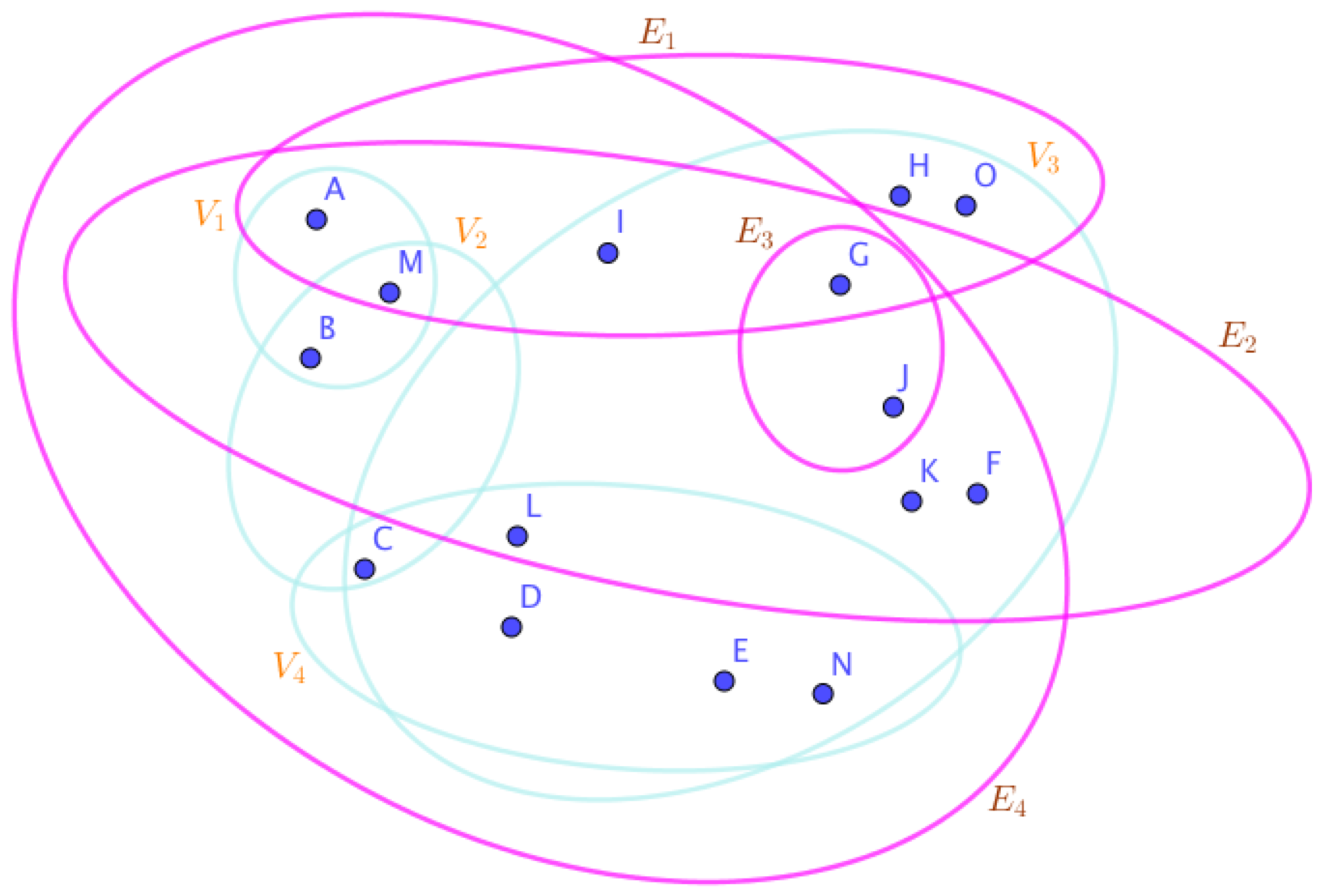
Figure 2.
The SuperHyperGraphs Associated to the Notions of 1-failed SuperHyperForcing in the Example (2.3).
Figure 2.
The SuperHyperGraphs Associated to the Notions of 1-failed SuperHyperForcing in the Example (2.3).

Figure 3.
The SuperHyperGraphs Associated to the Notions of 1-failed SuperHyperForcing in the Example (2.3).
Figure 3.
The SuperHyperGraphs Associated to the Notions of 1-failed SuperHyperForcing in the Example (2.3).

Figure 4.
The SuperHyperGraphs Associated to the Notions of 1-failed SuperHyperForcing in the Example (2.3).
Figure 4.
The SuperHyperGraphs Associated to the Notions of 1-failed SuperHyperForcing in the Example (2.3).
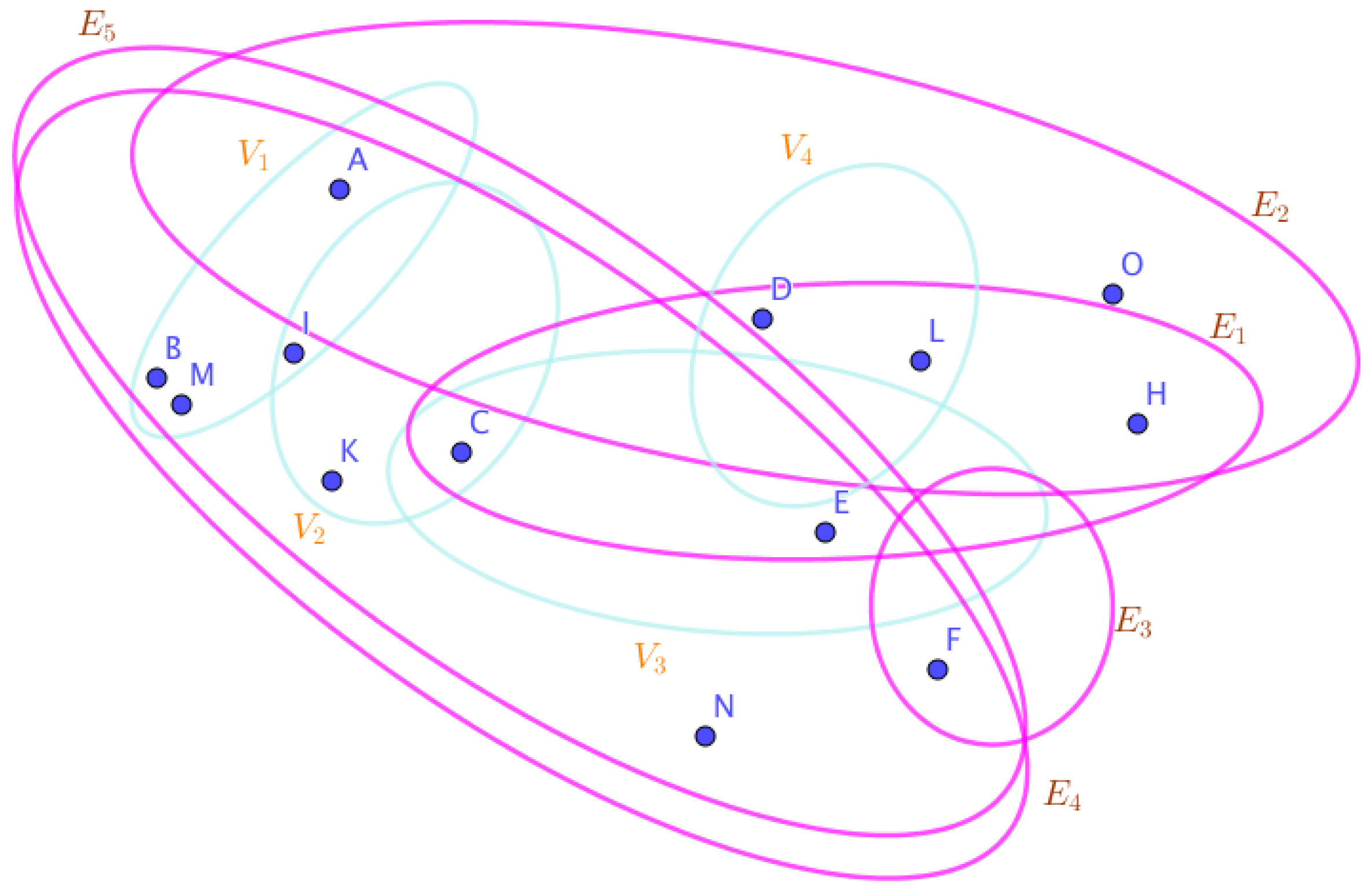
Figure 5.
The SuperHyperGraphs Associated to the Notions of 1-failed SuperHyperForcing in the Example (2.3).
Figure 5.
The SuperHyperGraphs Associated to the Notions of 1-failed SuperHyperForcing in the Example (2.3).
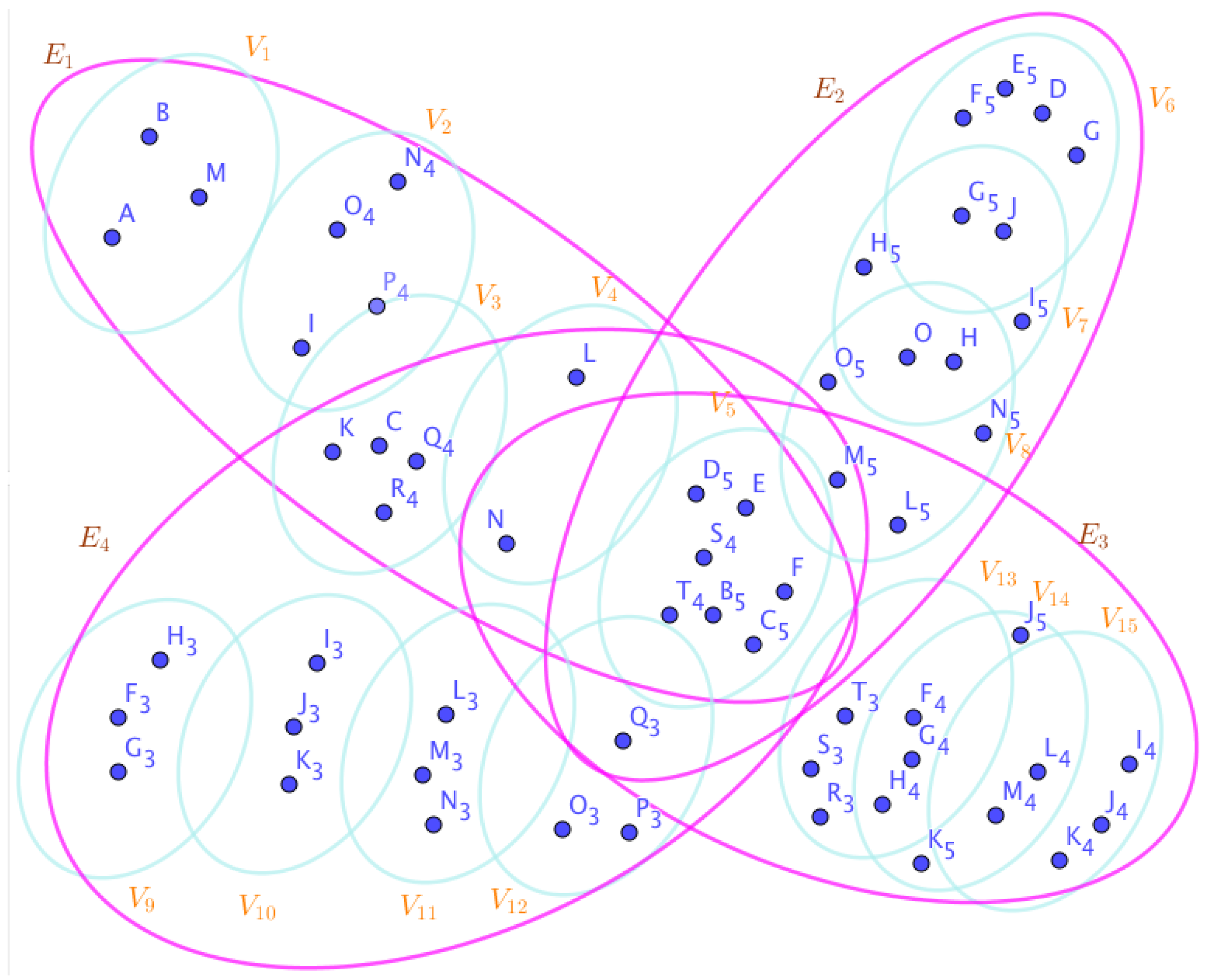
Figure 6.
The SuperHyperGraphs Associated to the Notions of 1-failed SuperHyperForcing in the Example (2.3).
Figure 6.
The SuperHyperGraphs Associated to the Notions of 1-failed SuperHyperForcing in the Example (2.3).
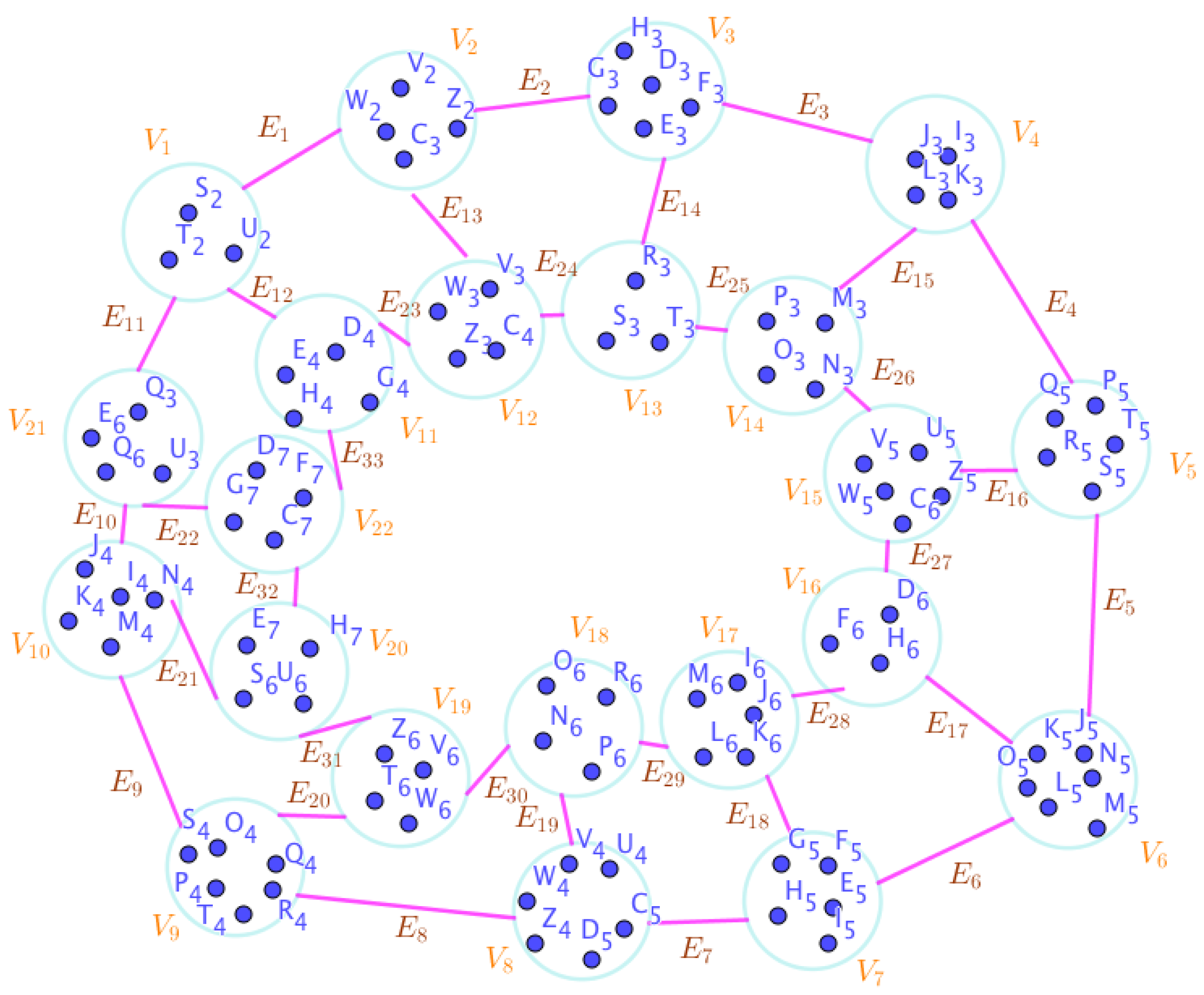
Figure 7.
The SuperHyperGraphs Associated to the Notions of 1-failed SuperHyperForcing in the Example (2.3).
Figure 7.
The SuperHyperGraphs Associated to the Notions of 1-failed SuperHyperForcing in the Example (2.3).
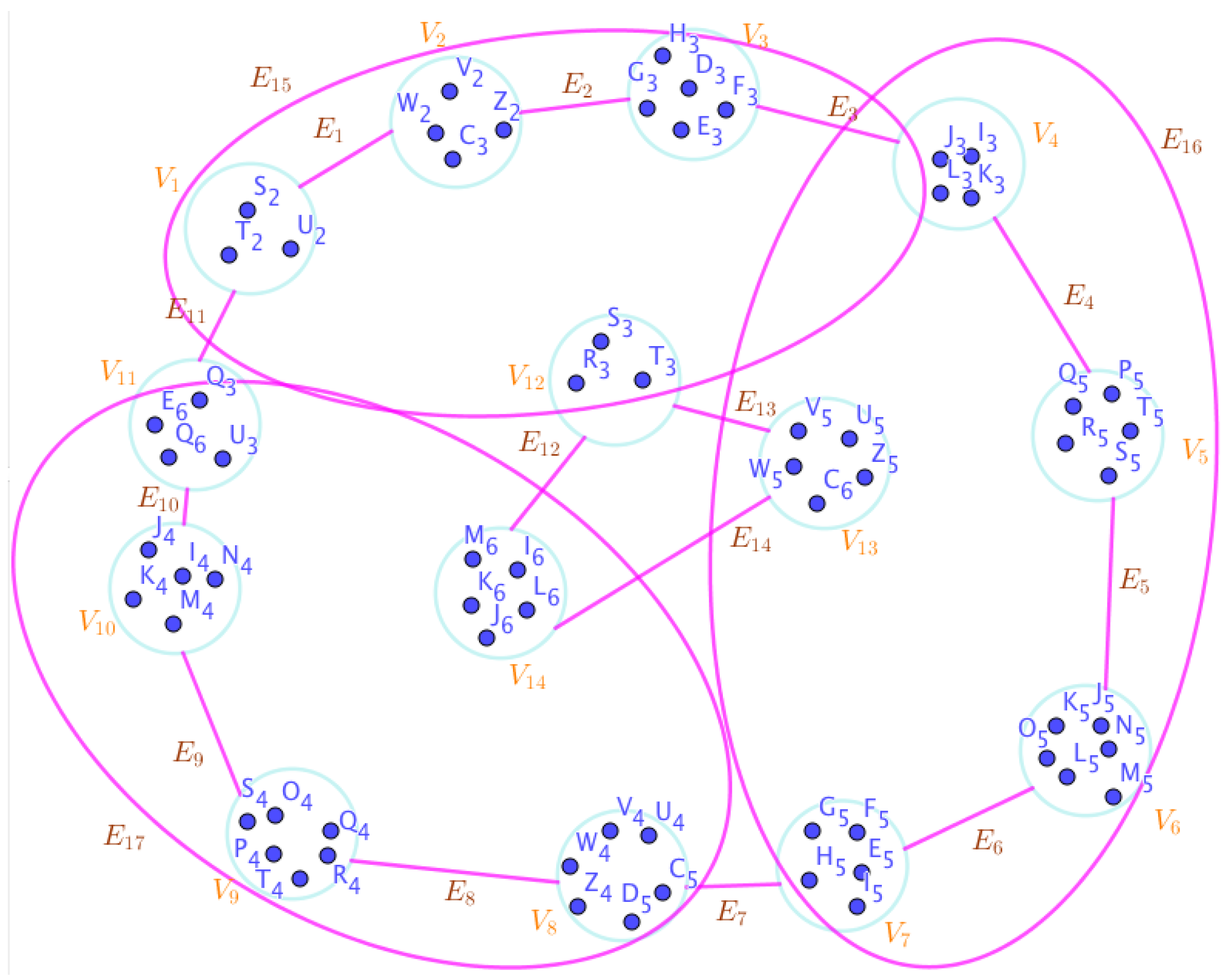
Figure 8.
The SuperHyperGraphs Associated to the Notions of 1-failed SuperHyperForcing in the Example (2.3).
Figure 8.
The SuperHyperGraphs Associated to the Notions of 1-failed SuperHyperForcing in the Example (2.3).
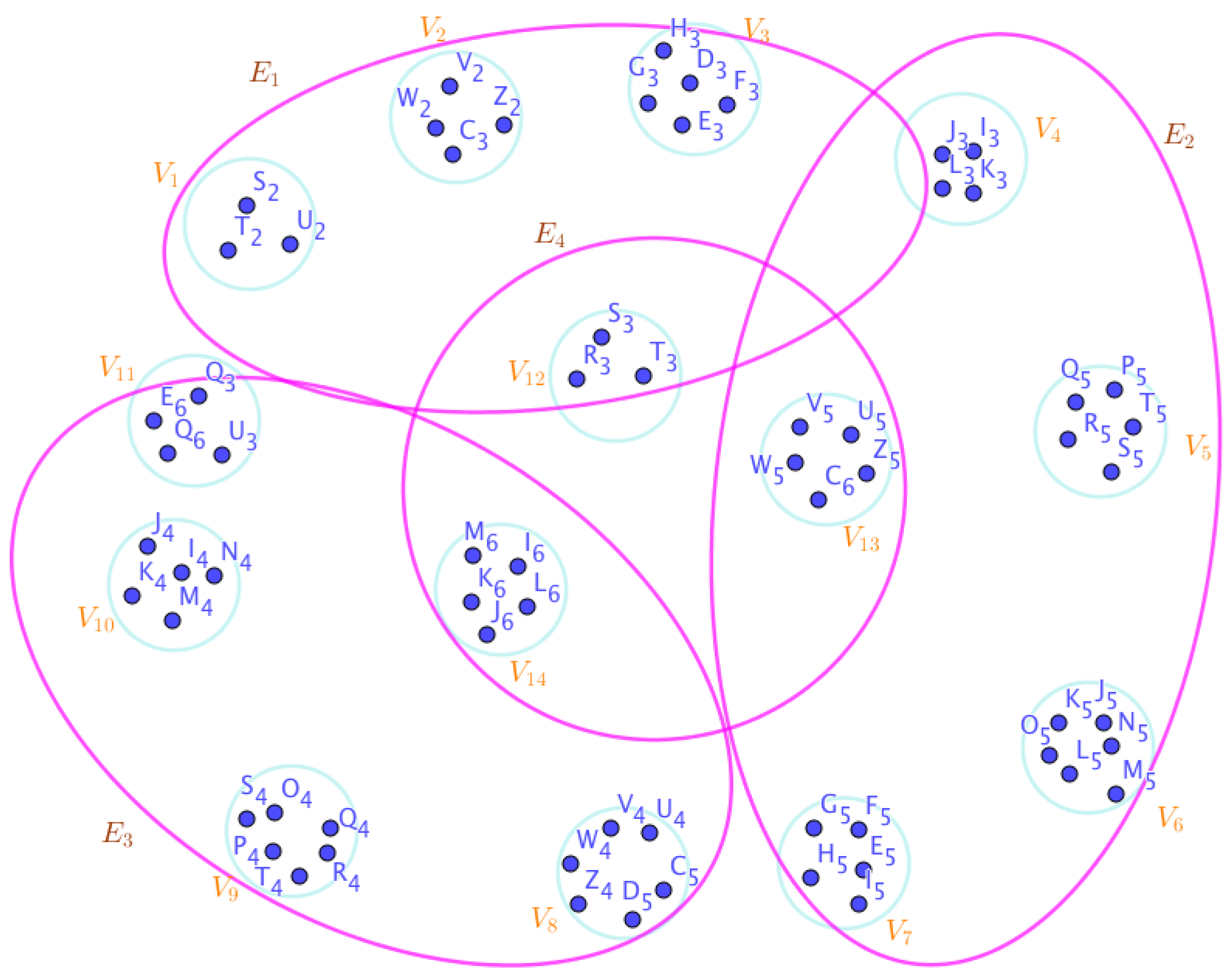
Figure 9.
The SuperHyperGraphs Associated to the Notions of 1-failed SuperHyperForcing in the Example (2.3).
Figure 9.
The SuperHyperGraphs Associated to the Notions of 1-failed SuperHyperForcing in the Example (2.3).
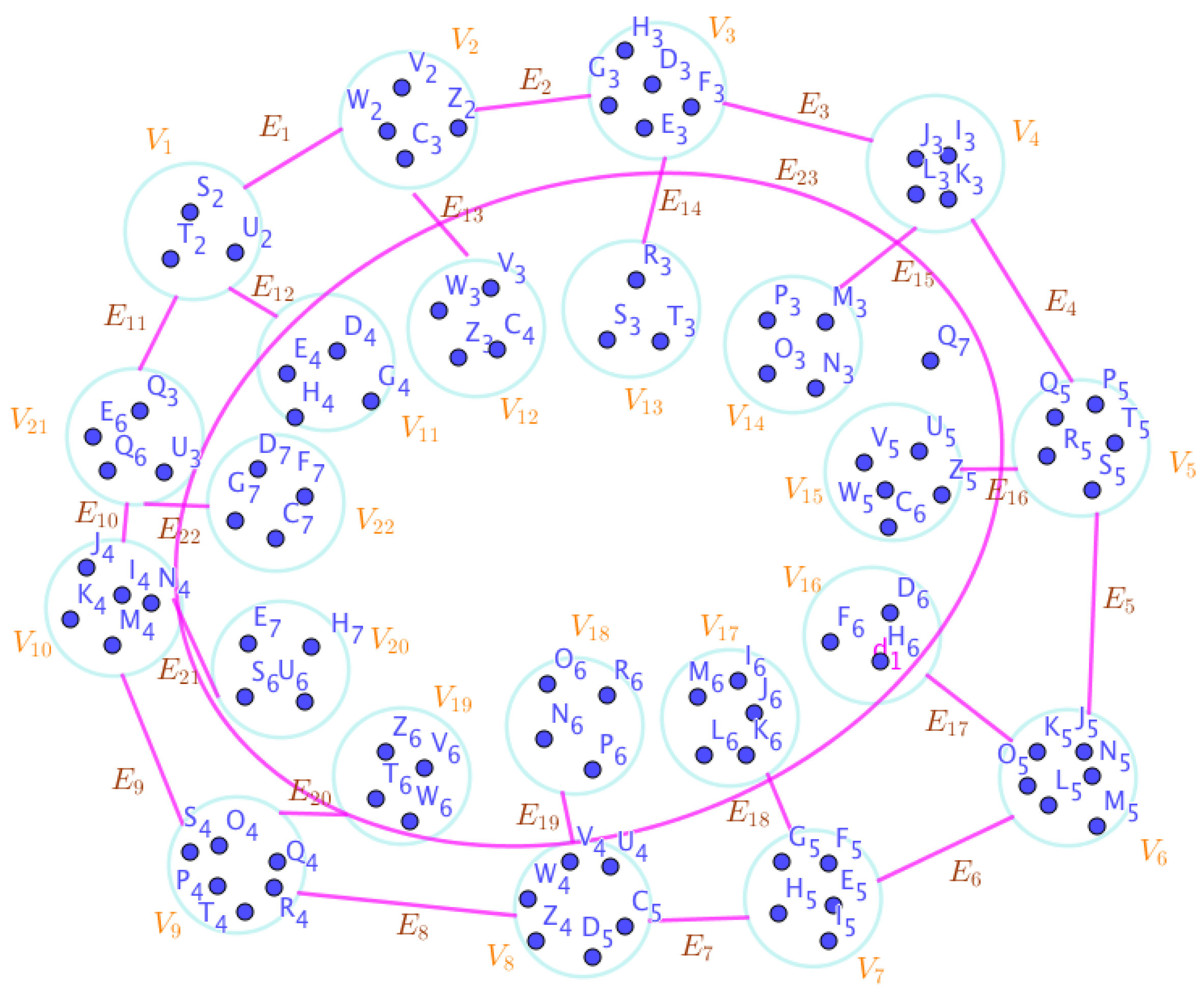
Figure 10.
The SuperHyperGraphs Associated to the Notions of 1-failed SuperHyperForcing in the Example (2.3).
Figure 10.
The SuperHyperGraphs Associated to the Notions of 1-failed SuperHyperForcing in the Example (2.3).
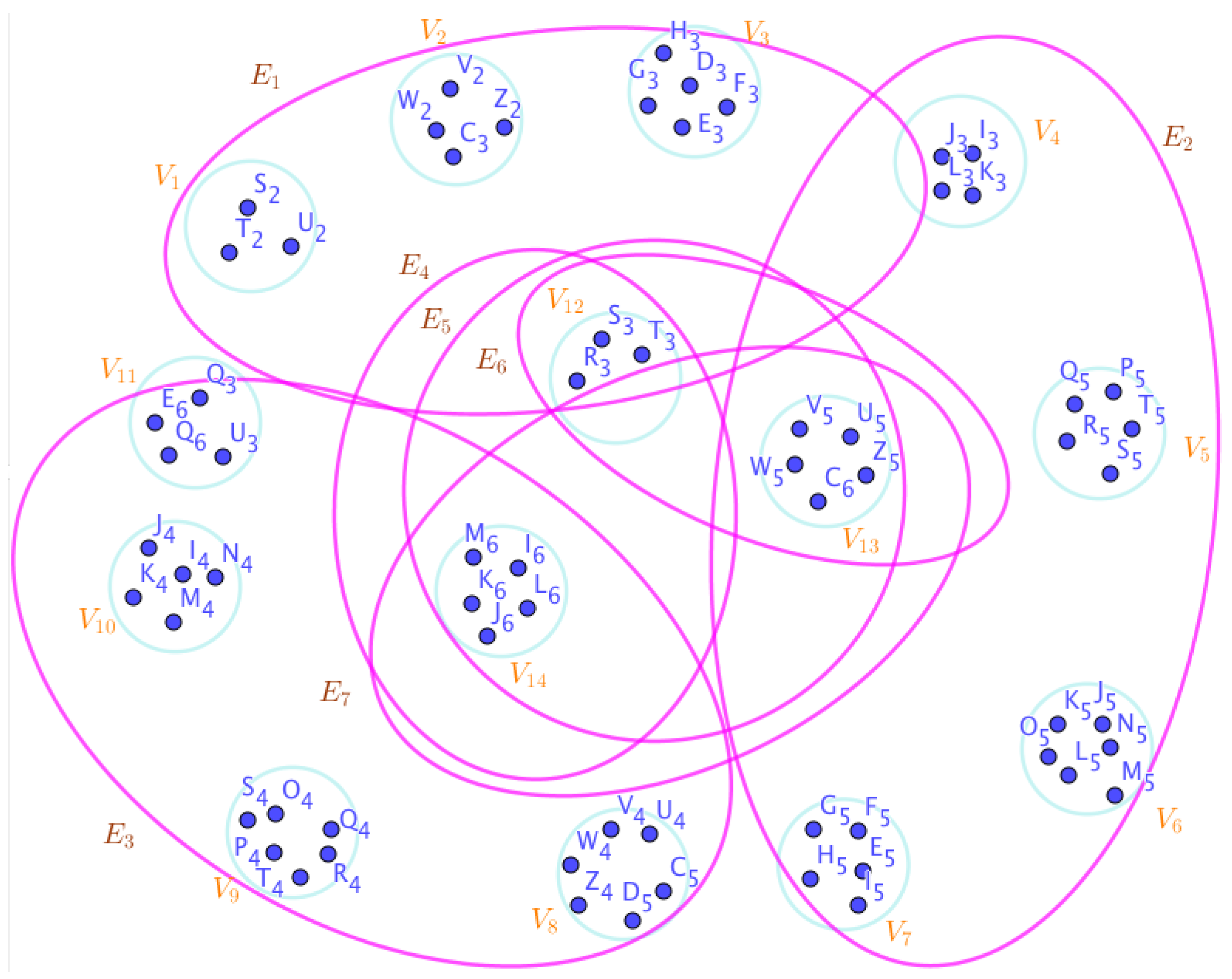
Figure 11.
The SuperHyperGraphs Associated to the Notions of 1-failed SuperHyperForcing in the Example (2.3).
Figure 11.
The SuperHyperGraphs Associated to the Notions of 1-failed SuperHyperForcing in the Example (2.3).
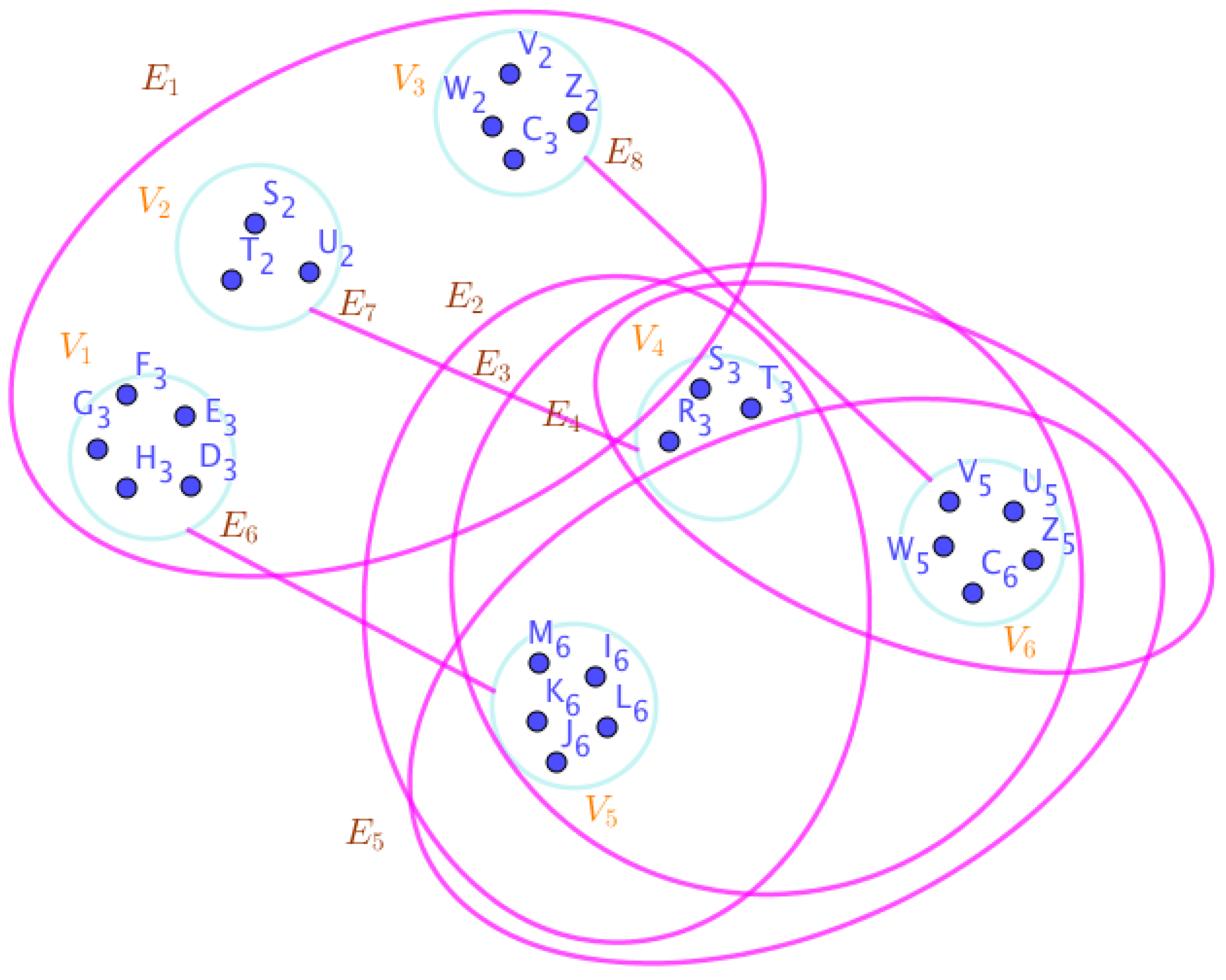
Figure 12.
The SuperHyperGraphs Associated to the Notions of 1-failed SuperHyperForcing in the Example (2.3).
Figure 12.
The SuperHyperGraphs Associated to the Notions of 1-failed SuperHyperForcing in the Example (2.3).
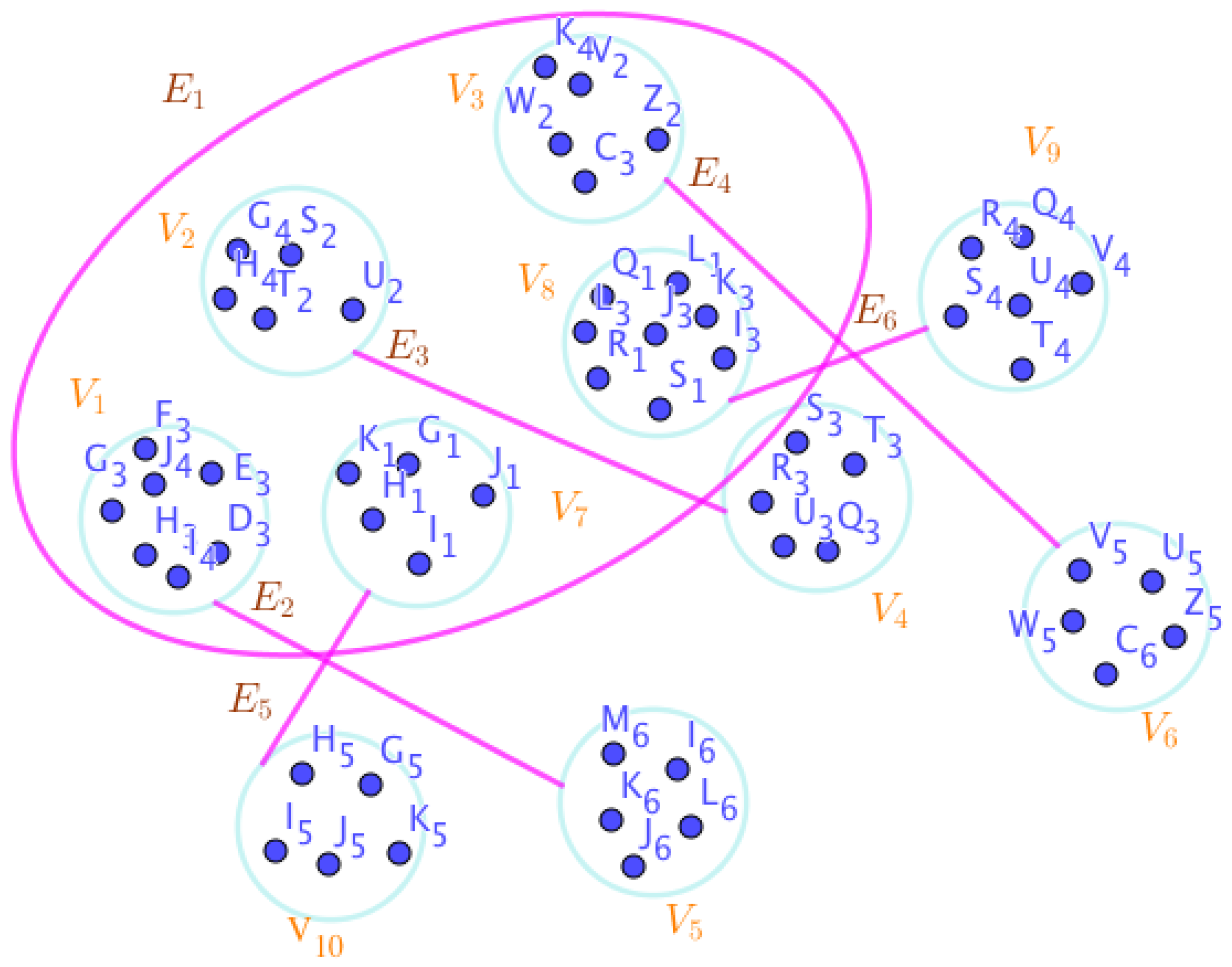
Figure 13.
The SuperHyperGraphs Associated to the Notions of 1-failed SuperHyperForcing in the Example (2.3).
Figure 13.
The SuperHyperGraphs Associated to the Notions of 1-failed SuperHyperForcing in the Example (2.3).
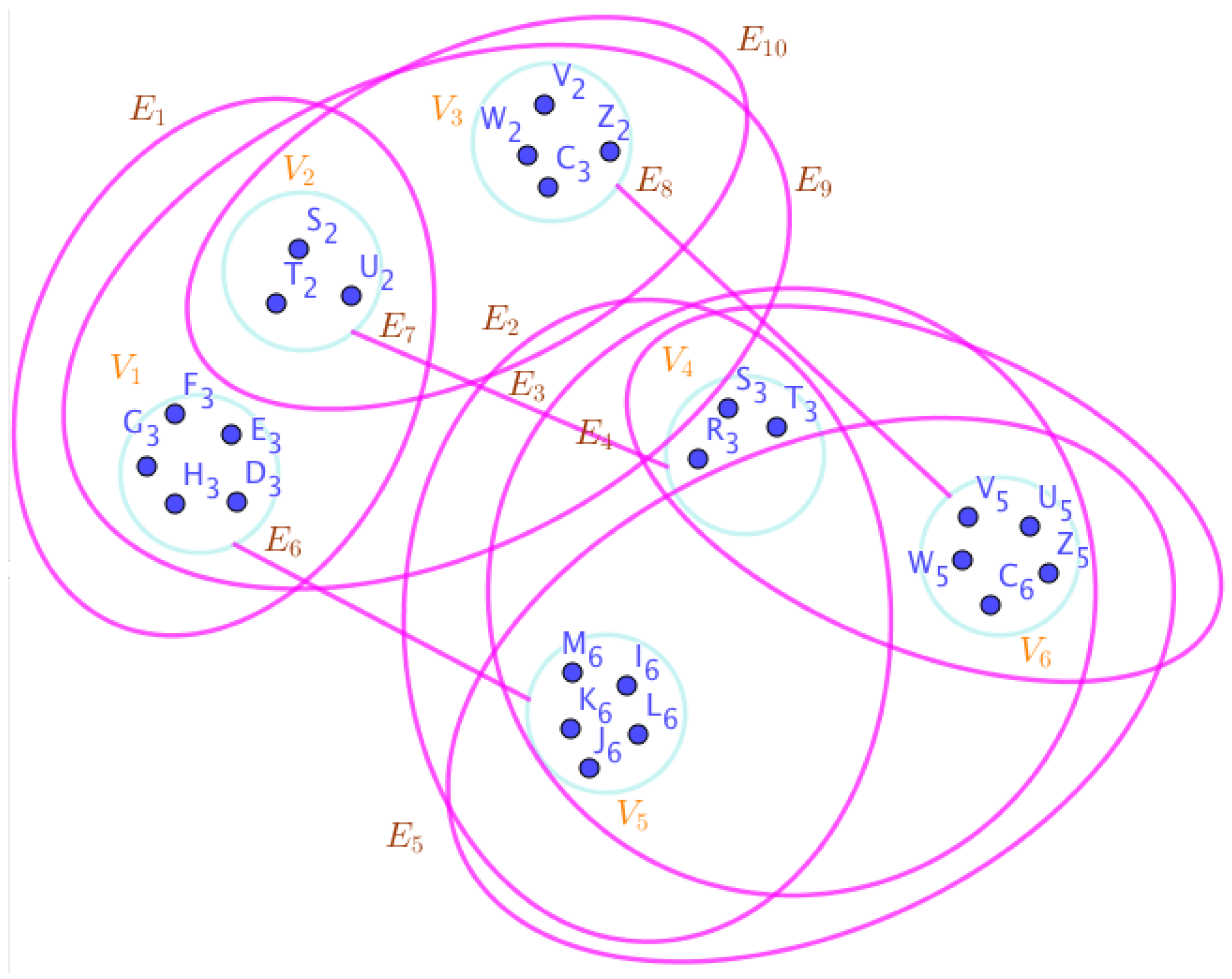
Figure 14.
The SuperHyperGraphs Associated to the Notions of 1-failed SuperHyperForcing in the Example (2.3).
Figure 14.
The SuperHyperGraphs Associated to the Notions of 1-failed SuperHyperForcing in the Example (2.3).
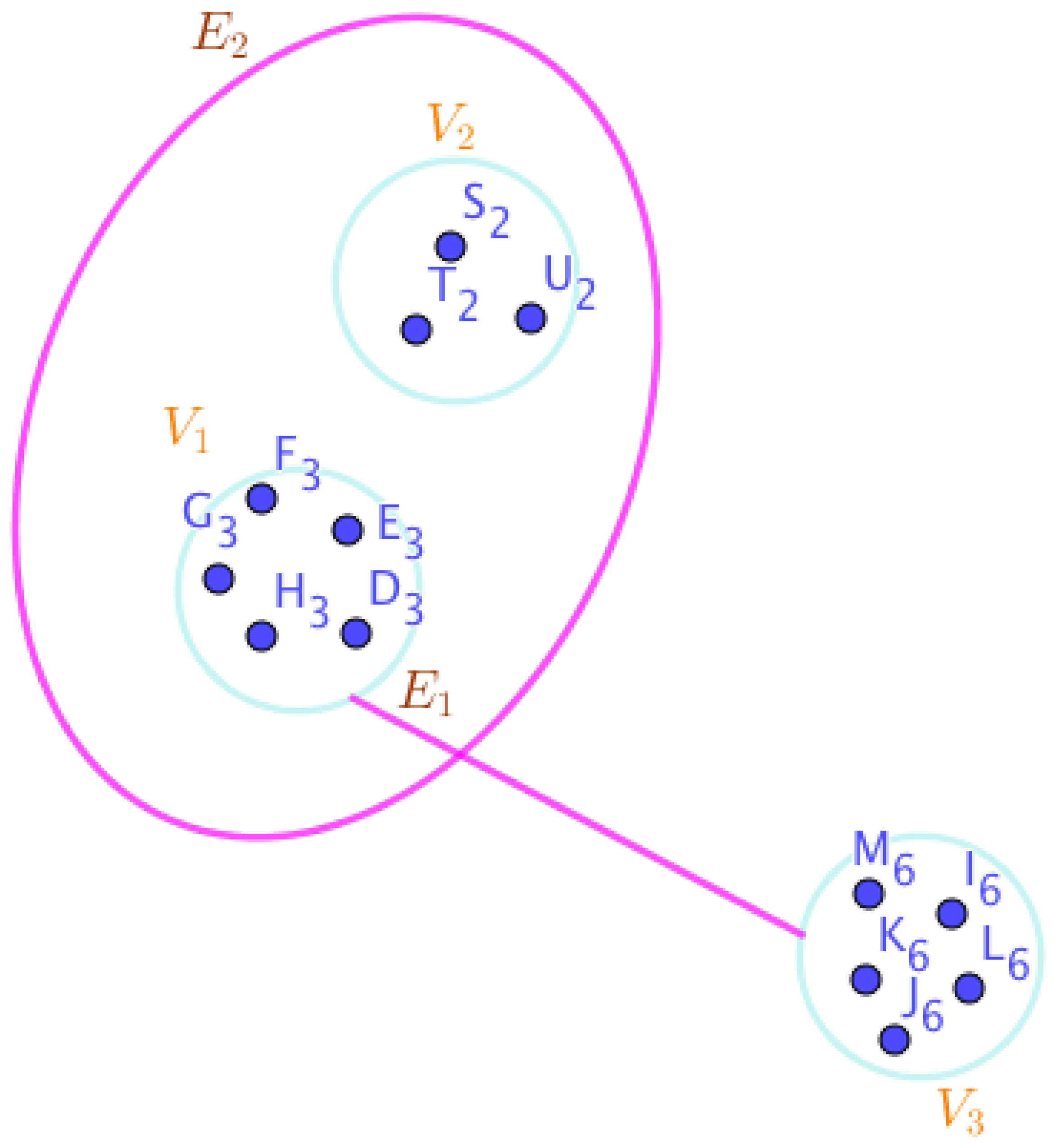
Figure 15.
The SuperHyperGraphs Associated to the Notions of 1-failed SuperHyperForcing in the Example (2.3).
Figure 15.
The SuperHyperGraphs Associated to the Notions of 1-failed SuperHyperForcing in the Example (2.3).
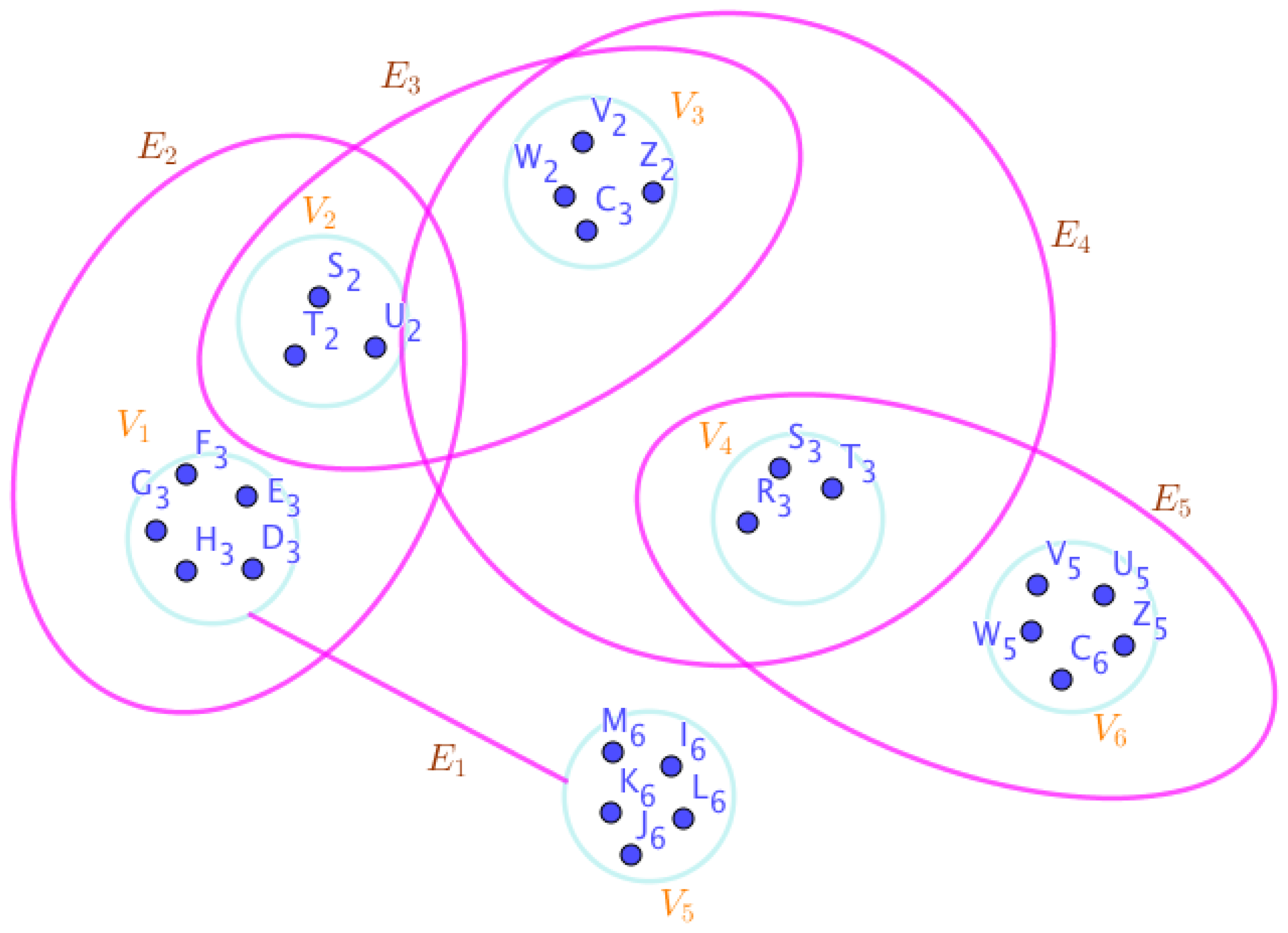
Figure 16.
The SuperHyperGraphs Associated to the Notions of 1-failed SuperHyperForcing in the Example (2.3).
Figure 16.
The SuperHyperGraphs Associated to the Notions of 1-failed SuperHyperForcing in the Example (2.3).
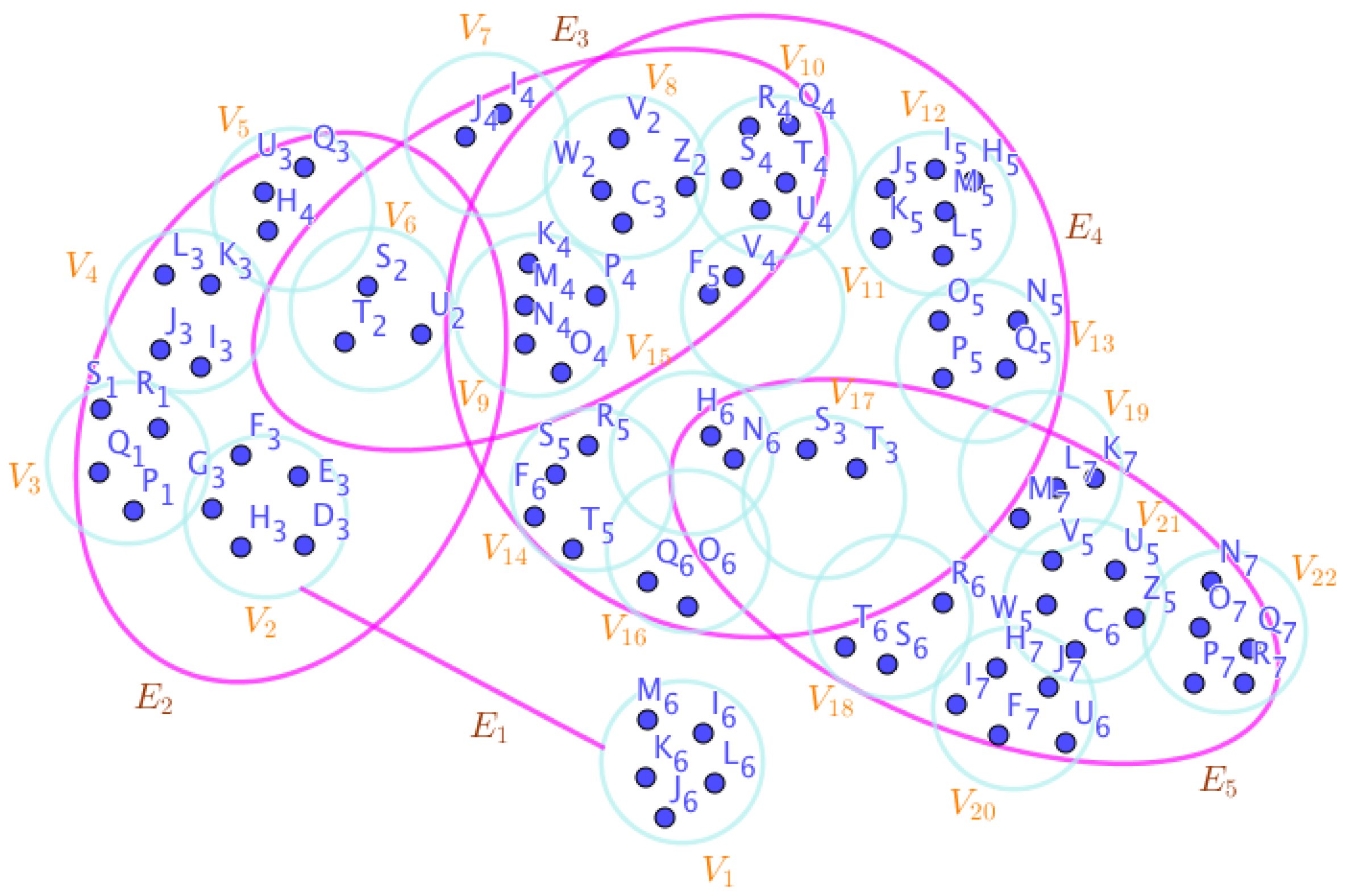
Figure 17.
The SuperHyperGraphs Associated to the Notions of 1-failed SuperHyperForcing in the Example (2.3).
Figure 17.
The SuperHyperGraphs Associated to the Notions of 1-failed SuperHyperForcing in the Example (2.3).
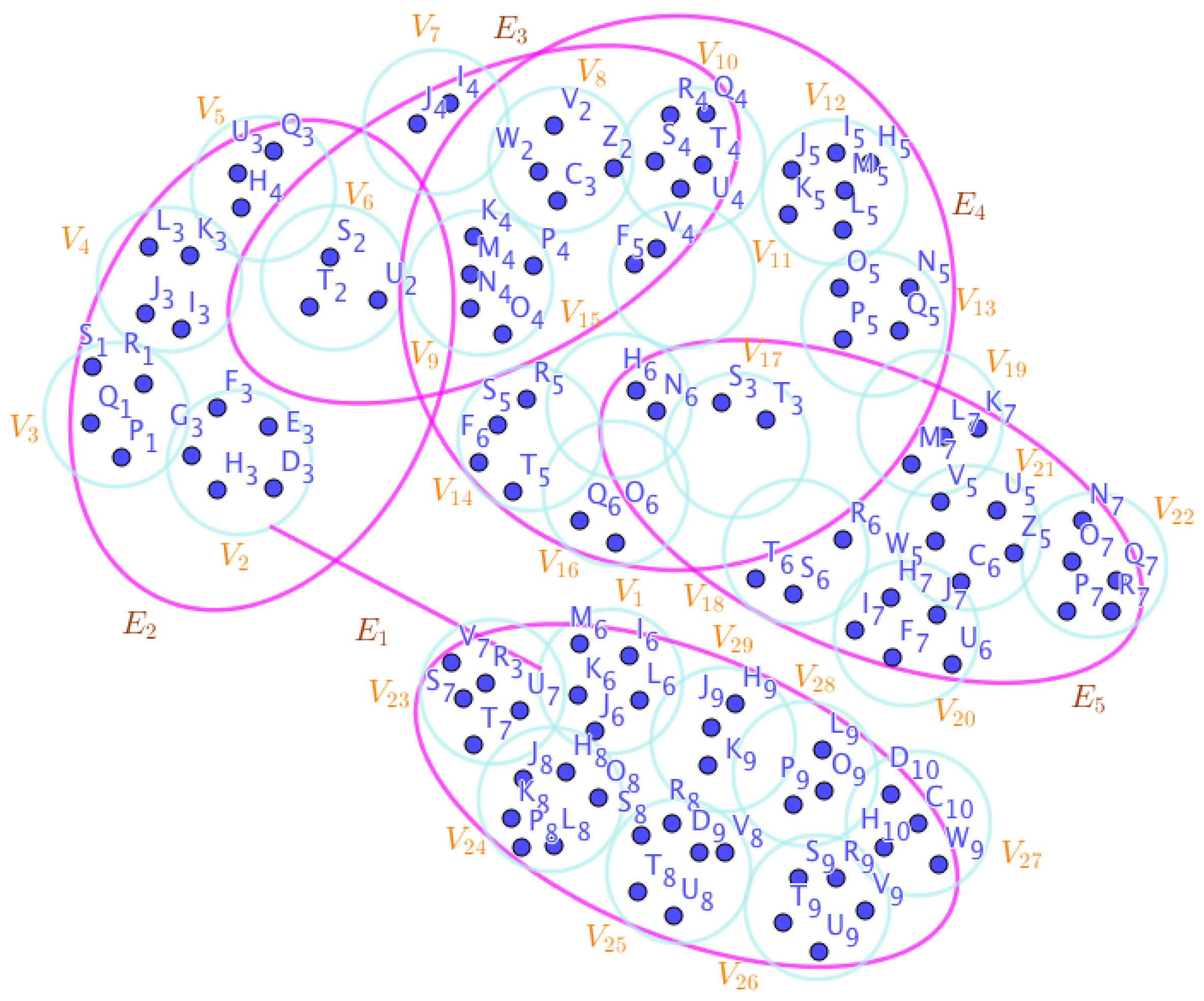
Figure 18.
The SuperHyperGraphs Associated to the Notions of 1-failed SuperHyperForcing in the Example (2.3).
Figure 18.
The SuperHyperGraphs Associated to the Notions of 1-failed SuperHyperForcing in the Example (2.3).
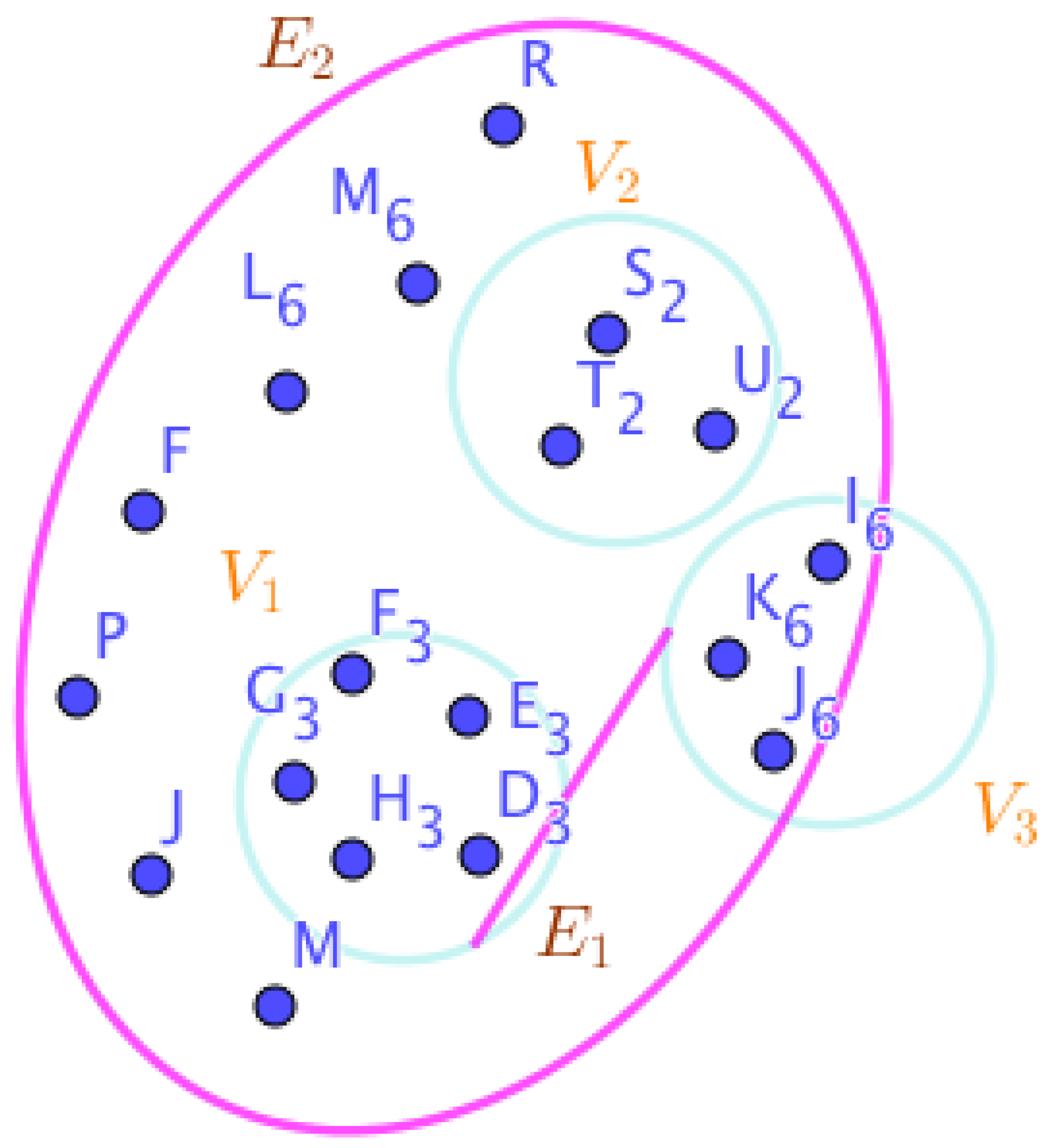
Figure 19.
The SuperHyperGraphs Associated to the Notions of 1-failed SuperHyperForcing in the Example (2.3).
Figure 19.
The SuperHyperGraphs Associated to the Notions of 1-failed SuperHyperForcing in the Example (2.3).
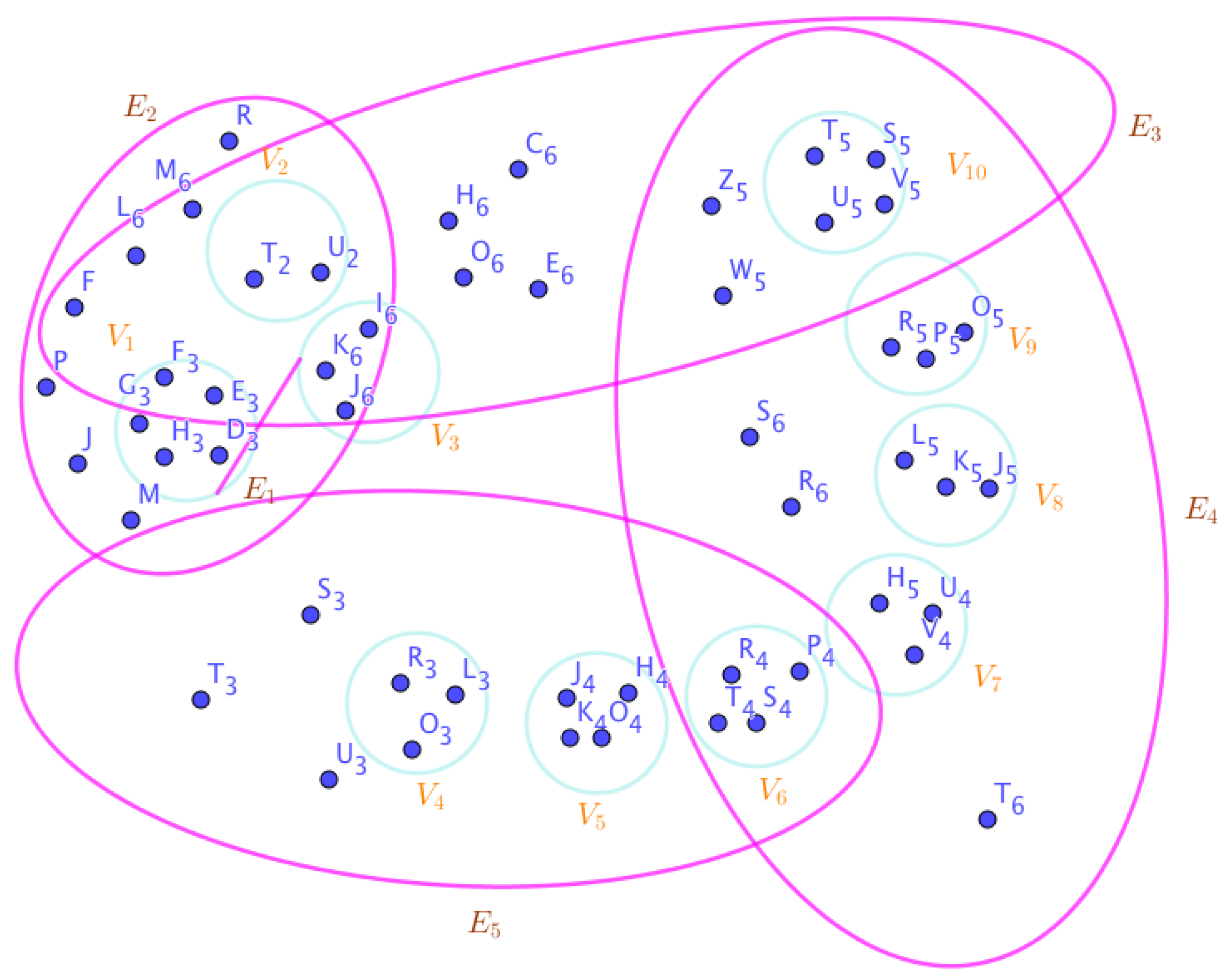
Figure 20.
The SuperHyperGraphs Associated to the Notions of 1-failed SuperHyperForcing in the Example (2.3).
Figure 20.
The SuperHyperGraphs Associated to the Notions of 1-failed SuperHyperForcing in the Example (2.3).

Proposition 2.5.
Assume a connected neutrosophic SuperHyperGraph Then the extreme number of 1-failed SuperHyperForcing has, the most cardinality, the upper sharp bound for cardinality, is the extreme cardinality of if there’s an 1-failed SuperHyperForcing with the most cardinality, the upper sharp bound for cardinality.
Proof.
Assume a connected neutrosophic SuperHyperGraph Consider there’s an 1-failed SuperHyperForcing with the most cardinality, the upper sharp bound for cardinality. The SuperHyperSet of the SuperHyperVertices is a SuperHyperSet S of black SuperHyperVertices (whereas SuperHyperVertices in are colored white) such that isn’t turned black after finitely many applications of “the color-change rule”: a white SuperHyperVertex is converted to a black SuperHyperVertex if it is the only white SuperHyperNeighbor of a black SuperHyperVertex with the additional condition is referred by “1-” about the usage of any black SuperHyperVertex only once to act on white SuperHyperVertex to be black SuperHyperVertex but it isn’t an 1-failed SuperHyperForcing. Since it doesn’t have the maximum cardinality of a SuperHyperSet S of black SuperHyperVertices (whereas SuperHyperVertices in are colored white) such that isn’t turned black after finitely many applications of “the color-change rule”: a white SuperHyperVertex is converted to a black SuperHyperVertex if it is the only white SuperHyperNeighbor of a black SuperHyperVertex with the additional condition is referred by “1-” about the usage of any black SuperHyperVertex only once to act on white SuperHyperVertex to be black SuperHyperVertex. The SuperHyperSet of the SuperHyperVertices is the maximum cardinality of a SuperHyperSet S of black SuperHyperVertices (whereas SuperHyperVertices in are colored white) but it isn’t an 1-failed SuperHyperForcing. Since it doesn’t do the procedure such that isn’t turned black after finitely many applications of “the color-change rule”: a white SuperHyperVertex is converted to a black SuperHyperVertex if it is the only white SuperHyperNeighbor of a black SuperHyperVertex with the additional condition is referred by “1-” about the usage of any black SuperHyperVertex only once to act on white SuperHyperVertex to be black SuperHyperVertex [there’s at least one white without any white SuperHyperNeighbor outside implying there’s, by the connectedness of the connected neutrosophic SuperHyperGraph a SuperHyperVertex, titled its SuperHyperNeighbor, to the SuperHyperSet S does the “the color-change rule”.]. There’re only two SuperHyperVertices outside the intended SuperHyperSet, Thus the obvious 1-failed SuperHyperForcing, is up. The obvious simple type-SuperHyperSet of the 1-failed SuperHyperForcing, is a SuperHyperSet, excludes only two SuperHyperVertices are titled in a connected neutrosophic SuperHyperNeighbors SuperHyperGraph Since the SuperHyperSet of the SuperHyperVertices is the maximum cardinality of a SuperHyperSet S of black SuperHyperVertices (whereas SuperHyperVertices in are colored white) such that isn’t turned black after finitely many applications of “the color-change rule”: a white SuperHyperVertex is converted to a black SuperHyperVertex if it is the only white SuperHyperNeighbor of a black SuperHyperVertex with the additional condition is referred by “1-” about the usage of any black SuperHyperVertex only once to act on white SuperHyperVertex to be black SuperHyperVertex. It implies that extreme number of 1-failed SuperHyperForcing has, the most cardinality, the upper sharp bound for cardinality, is Thus it induces that the extreme number of 1-failed SuperHyperForcing has, the most cardinality, the upper sharp bound for cardinality, is the extreme cardinality of if there’s an 1-failed SuperHyperForcing with the most cardinality, the upper sharp bound for cardinality. □
Proposition 2.6.
Assume a connected neutrosophic SuperHyperGraph If a SuperHyperEdge has z SuperHyperVertices, then number of those SuperHyperVertices from that SuperHyperEdge belong to any 1-failed SuperHyperForcing.
Proof.
Assume a connected neutrosophic SuperHyperGraph Let a SuperHyperEdge has z SuperHyperVertices. Consider number of those SuperHyperVertices from that SuperHyperEdge belong to any given SuperHyperSet of the SuperHyperVertices. Consider there’s an 1-failed SuperHyperForcing with the most cardinality, the upper sharp bound for cardinality. The SuperHyperSet of the SuperHyperVertices is a SuperHyperSet S of black SuperHyperVertices (whereas SuperHyperVertices in are colored white) such that isn’t turned black after finitely many applications of “the color-change rule”: a white SuperHyperVertex is converted to a black SuperHyperVertex if it is the only white SuperHyperNeighbor of a black SuperHyperVertex with the additional condition is referred by “1-” about the usage of any black SuperHyperVertex only once to act on white SuperHyperVertex to be black SuperHyperVertex but it isn’t an 1-failed SuperHyperForcing. Since it doesn’t have the maximum cardinality of a SuperHyperSet S of black SuperHyperVertices (whereas SuperHyperVertices in are colored white) such that isn’t turned black after finitely many applications of “the color-change rule”: a white SuperHyperVertex is converted to a black SuperHyperVertex if it is the only white SuperHyperNeighbor of a black SuperHyperVertex with the additional condition is referred by “1-” about the usage of any black SuperHyperVertex only once to act on white SuperHyperVertex to be black SuperHyperVertex. The SuperHyperSet of the SuperHyperVertices is the maximum cardinality of a SuperHyperSet S of black SuperHyperVertices (whereas SuperHyperVertices in are colored white) but it isn’t an 1-failed SuperHyperForcing. Since it doesn’t do the procedure such that isn’t turned black after finitely many applications of “the color-change rule”: a white SuperHyperVertex is converted to a black SuperHyperVertex if it is the only white SuperHyperNeighbor of a black SuperHyperVertex with the additional condition is referred by “1-” about the usage of any black SuperHyperVertex only once to act on white SuperHyperVertex to be black SuperHyperVertex [there’s at least one white without any white SuperHyperNeighbor outside implying there’s, by the connectedness of the connected neutrosophic SuperHyperGraph a SuperHyperVertex, titled its SuperHyperNeighbor, to the SuperHyperSet S does the “the color-change rule”.]. There’re only two SuperHyperVertices outside the intended SuperHyperSet, Thus the obvious 1-failed SuperHyperForcing, is up. The obvious simple type-SuperHyperSet of the 1-failed SuperHyperForcing, is a SuperHyperSet, excludes only two SuperHyperVertices are titled in a connected neutrosophic SuperHyperNeighbors SuperHyperGraph Since the SuperHyperSet of the SuperHyperVertices is the maximum cardinality of a SuperHyperSet S of black SuperHyperVertices (whereas SuperHyperVertices in are colored white) such that isn’t turned black after finitely many applications of “the color-change rule”: a white SuperHyperVertex is converted to a black SuperHyperVertex if it is the only white SuperHyperNeighbor of a black SuperHyperVertex with the additional condition is referred by “1-” about the usage of any black SuperHyperVertex only once to act on white SuperHyperVertex to be black SuperHyperVertex. It implies that extreme number of 1-failed SuperHyperForcing has, the most cardinality, the upper sharp bound for cardinality, is Thus it induces that the extreme number of 1-failed SuperHyperForcing has, the most cardinality, the upper sharp bound for cardinality, is the extreme cardinality of if there’s an 1-failed SuperHyperForcing with the most cardinality, the upper sharp bound for cardinality. Thus all the following SuperHyperSets of SuperHyperVertices are the simple type-SuperHyperSet of the 1-failed SuperHyperForcing. It’s the contradiction to the SuperHyperSet either or is an 1-failed SuperHyperForcing. Thus any given SuperHyperSet of the SuperHyperVertices contains the number of those SuperHyperVertices from that SuperHyperEdge with z SuperHyperVertices less than isn’t an 1-failed SuperHyperForcing. Thus if a SuperHyperEdge has z SuperHyperVertices, then number of those SuperHyperVertices from that SuperHyperEdge belong to any 1-failed SuperHyperForcing. □
Proposition 2.7.
Assume a connected neutrosophic SuperHyperGraph There’s a SuperHyperEdge has only two distinct SuperHyperVertices outside of an 1-failed SuperHyperForcing. In other words, there’s an unique SuperHyperEdge has only two distinct white SuperHyperVertices.
Proof.
Assume a connected neutrosophic SuperHyperGraph Let a SuperHyperEdge has some SuperHyperVertices. Consider some numbers of those SuperHyperVertices from that SuperHyperEdge excluding three distinct SuperHyperVertices, belong to any given SuperHyperSet of the SuperHyperVertices. Consider there’s an 1-failed SuperHyperForcing with the most cardinality, the upper sharp bound for cardinality. The SuperHyperSet of the SuperHyperVertices is a SuperHyperSet S of black SuperHyperVertices (whereas SuperHyperVertices in are colored white) such that isn’t turned black after finitely many applications of “the color-change rule”: a white SuperHyperVertex is converted to a black SuperHyperVertex if it is the only white SuperHyperNeighbor of a black SuperHyperVertex with the additional condition is referred by “1-” about the usage of any black SuperHyperVertex only once to act on white SuperHyperVertex to be black SuperHyperVertex but it isn’t an 1-failed SuperHyperForcing. Since it doesn’t have the maximum cardinality of a SuperHyperSet S of black SuperHyperVertices (whereas SuperHyperVertices in are colored white) such that isn’t turned black after finitely many applications of “the color-change rule”: a white SuperHyperVertex is converted to a black SuperHyperVertex if it is the only white SuperHyperNeighbor of a black SuperHyperVertex with the additional condition is referred by “1-” about the usage of any black SuperHyperVertex only once to act on white SuperHyperVertex to be black SuperHyperVertex. The SuperHyperSet of the SuperHyperVertices is the maximum cardinality of a SuperHyperSet S of black SuperHyperVertices (whereas SuperHyperVertices in are colored white) but it isn’t an 1-failed SuperHyperForcing. Since it doesn’t do the procedure such that isn’t turned black after finitely many applications of “the color-change rule”: a white SuperHyperVertex is converted to a black SuperHyperVertex if it is the only white SuperHyperNeighbor of a black SuperHyperVertex with the additional condition is referred by “1-” about the usage of any black SuperHyperVertex only once to act on white SuperHyperVertex to be black SuperHyperVertex [there’s at least one white without any white SuperHyperNeighbor outside implying there’s, by the connectedness of the connected neutrosophic SuperHyperGraph a SuperHyperVertex, titled its SuperHyperNeighbor, to the SuperHyperSet S does the “the color-change rule”.]. There’re only two SuperHyperVertices outside the intended SuperHyperSet, Thus the obvious 1-failed SuperHyperForcing, is up. The obvious simple type-SuperHyperSet of the 1-failed SuperHyperForcing, is a SuperHyperSet, excludes only two SuperHyperVertices are titled in a connected neutrosophic SuperHyperNeighbors SuperHyperGraph Since the SuperHyperSet of the SuperHyperVertices is the maximum cardinality of a SuperHyperSet S of black SuperHyperVertices (whereas SuperHyperVertices in are colored white) such that isn’t turned black after finitely many applications of “the color-change rule”: a white SuperHyperVertex is converted to a black SuperHyperVertex if it is the only white SuperHyperNeighbor of a black SuperHyperVertex with the additional condition is referred by “1-” about the usage of any black SuperHyperVertex only once to act on white SuperHyperVertex to be black SuperHyperVertex. It implies that extreme number of 1-failed SuperHyperForcing has, the most cardinality, the upper sharp bound for cardinality, is Thus it induces that the extreme number of 1-failed SuperHyperForcing has, the most cardinality, the upper sharp bound for cardinality, is the extreme cardinality of if there’s an 1-failed SuperHyperForcing with the most cardinality, the upper sharp bound for cardinality. Thus if a SuperHyperEdge has some SuperHyperVertices, then, with excluding two distinct SuperHyperVertices, the all number of those SuperHyperVertices from that SuperHyperEdge belong to any 1-failed SuperHyperForcing. Thus, in a connected neutrosophic SuperHyperGraph there’s a SuperHyperEdge has only two distinct SuperHyperVertices outside of 1-failed SuperHyperForcing. In other words, there’s a SuperHyperEdge has only two distinct white SuperHyperVertices which are SuperHyperNeighbors. □
Proposition 2.8.
Assume a connected neutrosophic SuperHyperGraph The all exterior SuperHyperVertices belong to any 1-failed SuperHyperForcing if there’s one of them such that there are only two interior SuperHyperVertices are mutually SuperHyperNeighbors.
Proof.
Assume a connected neutrosophic SuperHyperGraph Let a SuperHyperEdge has some SuperHyperVertices. Consider some numbers of those SuperHyperVertices from that SuperHyperEdge excluding three distinct SuperHyperVertices, belong to any given SuperHyperSet of the SuperHyperVertices. Consider there’s an 1-failed SuperHyperForcing with the most cardinality, the upper sharp bound for cardinality. The SuperHyperSet of the SuperHyperVertices is a SuperHyperSet S of black SuperHyperVertices (whereas SuperHyperVertices in are colored white) such that isn’t turned black after finitely many applications of “the color-change rule”: a white SuperHyperVertex is converted to a black SuperHyperVertex if it is the only white SuperHyperNeighbor of a black SuperHyperVertex with the additional condition is referred by “1-” about the usage of any black SuperHyperVertex only once to act on white SuperHyperVertex to be black SuperHyperVertex but it isn’t an 1-failed SuperHyperForcing. Since it doesn’t have the maximum cardinality of a SuperHyperSet S of black SuperHyperVertices (whereas SuperHyperVertices in are colored white) such that isn’t turned black after finitely many applications of “the color-change rule”: a white SuperHyperVertex is converted to a black SuperHyperVertex if it is the only white SuperHyperNeighbor of a black SuperHyperVertex with the additional condition is referred by “1-” about the usage of any black SuperHyperVertex only once to act on white SuperHyperVertex to be black SuperHyperVertex. The SuperHyperSet of the SuperHyperVertices is the maximum cardinality of a SuperHyperSet S of black SuperHyperVertices (whereas SuperHyperVertices in are colored white) but it isn’t an 1-failed SuperHyperForcing. Since it doesn’t do the procedure such that isn’t turned black after finitely many applications of “the color-change rule”: a white SuperHyperVertex is converted to a black SuperHyperVertex if it is the only white SuperHyperNeighbor of a black SuperHyperVertex with the additional condition is referred by “1-” about the usage of any black SuperHyperVertex only once to act on white SuperHyperVertex to be black SuperHyperVertex [there’s at least one white without any white SuperHyperNeighbor outside implying there’s, by the connectedness of the connected neutrosophic SuperHyperGraph a SuperHyperVertex, titled its SuperHyperNeighbor, to the SuperHyperSet S does the “the color-change rule”.]. There’re only two SuperHyperVertices outside the intended SuperHyperSet, Thus the obvious 1-failed SuperHyperForcing, is up. The obvious simple type-SuperHyperSet of the 1-failed SuperHyperForcing, is a SuperHyperSet, excludes only two SuperHyperVertices are titled in a connected neutrosophic SuperHyperNeighbors SuperHyperGraph Since the SuperHyperSet of the SuperHyperVertices is the maximum cardinality of a SuperHyperSet S of black SuperHyperVertices (whereas SuperHyperVertices in are colored white) such that isn’t turned black after finitely many applications of “the color-change rule”: a white SuperHyperVertex is converted to a black SuperHyperVertex if it is the only white SuperHyperNeighbor of a black SuperHyperVertex with the additional condition is referred by “1-” about the usage of any black SuperHyperVertex only once to act on white SuperHyperVertex to be black SuperHyperVertex. It implies that extreme number of 1-failed SuperHyperForcing has, the most cardinality, the upper sharp bound for cardinality, is Thus it induces that the extreme number of 1-failed SuperHyperForcing has, the most cardinality, the upper sharp bound for cardinality, is the extreme cardinality of if there’s an 1-failed SuperHyperForcing with the most cardinality, the upper sharp bound for cardinality. Thus if a SuperHyperEdge has some SuperHyperVertices, then, with excluding two distinct SuperHyperVertices, the all number of those SuperHyperVertices from that SuperHyperEdge belong to any 1-failed SuperHyperForcing. Thus, in a connected neutrosophic SuperHyperGraph there’s a SuperHyperEdge has only two distinct SuperHyperVertices outside of 1-failed SuperHyperForcing. In other words, here’s a SuperHyperEdge has only two distinct white SuperHyperVertices. In a connected neutrosophic SuperHyperGraph the all exterior SuperHyperVertices belong to any 1-failed SuperHyperForcing if there’s one of them such that there are only two interior SuperHyperVertices are mutually SuperHyperNeighbors. □
Proposition 2.9.
Assume a connected neutrosophic SuperHyperGraph The any 1-failed SuperHyperForcing only contains all interior SuperHyperVertices and all exterior SuperHyperVertices where there’s any of them has two SuperHyperNeighbors out.
Proof.
Assume a connected neutrosophic SuperHyperGraph Let a SuperHyperEdge has some SuperHyperVertices. Consider some numbers of those SuperHyperVertices from that SuperHyperEdge excluding three distinct SuperHyperVertices, belong to any given SuperHyperSet of the SuperHyperVertices. Consider there’s an 1-failed SuperHyperForcing with the most cardinality, the upper sharp bound for cardinality. The SuperHyperSet of the SuperHyperVertices is a SuperHyperSet S of black SuperHyperVertices (whereas SuperHyperVertices in are colored white) such that isn’t turned black after finitely many applications of “the color-change rule”: a white SuperHyperVertex is converted to a black SuperHyperVertex if it is the only white SuperHyperNeighbor of a black SuperHyperVertex with the additional condition is referred by “1-” about the usage of any black SuperHyperVertex only once to act on white SuperHyperVertex to be black SuperHyperVertex but it isn’t an 1-failed SuperHyperForcing. Since it doesn’t have the maximum cardinality of a SuperHyperSet S of black SuperHyperVertices (whereas SuperHyperVertices in are colored white) such that isn’t turned black after finitely many applications of “the color-change rule”: a white SuperHyperVertex is converted to a black SuperHyperVertex if it is the only white SuperHyperNeighbor of a black SuperHyperVertex with the additional condition is referred by “1-” about the usage of any black SuperHyperVertex only once to act on white SuperHyperVertex to be black SuperHyperVertex. The SuperHyperSet of the SuperHyperVertices is the maximum cardinality of a SuperHyperSet S of black SuperHyperVertices (whereas SuperHyperVertices in are colored white) but it isn’t an 1-failed SuperHyperForcing. Since it doesn’t do the procedure such that isn’t turned black after finitely many applications of “the color-change rule”: a white SuperHyperVertex is converted to a black SuperHyperVertex if it is the only white SuperHyperNeighbor of a black SuperHyperVertex with the additional condition is referred by “1-” about the usage of any black SuperHyperVertex only once to act on white SuperHyperVertex to be black SuperHyperVertex [there’s at least one white without any white SuperHyperNeighbor outside implying there’s, by the connectedness of the connected neutrosophic SuperHyperGraph a SuperHyperVertex, titled its SuperHyperNeighbor, to the SuperHyperSet S does the “the color-change rule”.]. There’re only two SuperHyperVertices outside the intended SuperHyperSet, Thus the obvious 1-failed SuperHyperForcing, is up. The obvious simple type-SuperHyperSet of the 1-failed SuperHyperForcing, is a SuperHyperSet, excludes only two SuperHyperVertices are titled in a connected neutrosophic SuperHyperNeighbors SuperHyperGraph Since the SuperHyperSet of the SuperHyperVertices is the maximum cardinality of a SuperHyperSet S of black SuperHyperVertices (whereas SuperHyperVertices in are colored white) such that isn’t turned black after finitely many applications of “the color-change rule”: a white SuperHyperVertex is converted to a black SuperHyperVertex if it is the only white SuperHyperNeighbor of a black SuperHyperVertex with the additional condition is referred by “1-” about the usage of any black SuperHyperVertex only once to act on white SuperHyperVertex to be black SuperHyperVertex. It implies that extreme number of 1-failed SuperHyperForcing has, the most cardinality, the upper sharp bound for cardinality, is Thus it induces that the extreme number of 1-failed SuperHyperForcing has, the most cardinality, the upper sharp bound for cardinality, is the extreme cardinality of if there’s an 1-failed SuperHyperForcing with the most cardinality, the upper sharp bound for cardinality. Thus if a SuperHyperEdge has some SuperHyperVertices, then, with excluding two distinct SuperHyperVertices, the all number of those SuperHyperVertices from that SuperHyperEdge belong to any 1-failed SuperHyperForcing. Thus, in a connected neutrosophic SuperHyperGraph there’s a SuperHyperEdge has only two distinct SuperHyperVertices outside of 1-failed SuperHyperForcing. In other words, here’s a SuperHyperEdge has only two distinct white SuperHyperVertices. In a connected neutrosophic SuperHyperGraph the all exterior SuperHyperVertices belong to any 1-failed SuperHyperForcing if there’s one of them such that there are only two interior SuperHyperVertices are mutually SuperHyperNeighbors. Thus in a connected neutrosophic SuperHyperGraph any 1-failed SuperHyperForcing only contains all interior SuperHyperVertices and all exterior SuperHyperVertices where there’s any of them has two SuperHyperNeighbors out. □
Remark 2.10.
The words “1-failed SuperHyperForcing” and “SuperHyperDominating” refer to the maximum type-style and the minimum type-style. In other words, they refer to both the maximum[minimum] number and the SuperHyperSet with the maximum[minimum] cardinality.
Proposition 2.11.
Assume a connected neutrosophic SuperHyperGraph An 1-failed SuperHyperForcing contains the SuperHyperDominating.
Proof.
Assume a connected neutrosophic SuperHyperGraph By applying the Proposition (2.9), the results are up. Thus in a connected neutrosophic SuperHyperGraph an 1-failed SuperHyperForcing contains the SuperHyperDominating. □
3. Results on SuperHyperClasses
Proposition 3.1.
Assume a connected SuperHyperPath Then an 1-failed SuperHyperForcing-style with the maximum SuperHyperCardinality is a SuperHyperSet of the exterior SuperHyperVertices.
Proposition 3.2.
Assume a connected SuperHyperPath Then an 1-failed SuperHyperForcing is a SuperHyperSet of the exterior SuperHyperVertices and the interior SuperHyperVertices with only two exceptions in the form of interior SuperHyperVertices from the same SuperHyperEdge. An 1-failed SuperHyperForcing has the number of all the SuperHyperVertices minus two.
Proof.
Assume a connected SuperHyperPath Let a SuperHyperEdge has some SuperHyperVertices. Consider some numbers of those SuperHyperVertices from that SuperHyperEdge excluding three distinct SuperHyperVertices, belong to any given SuperHyperSet of the SuperHyperVertices. Consider there’s an 1-failed SuperHyperForcing with the most cardinality, the upper sharp bound for cardinality. The SuperHyperSet of the SuperHyperVertices is a SuperHyperSet S of black SuperHyperVertices (whereas SuperHyperVertices in are colored white) such that isn’t turned black after finitely many applications of “the color-change rule”: a white SuperHyperVertex is converted to a black SuperHyperVertex if it is the only white SuperHyperNeighbor of a black SuperHyperVertex with the additional condition is referred by “1-” about the usage of any black SuperHyperVertex only once to act on white SuperHyperVertex to be black SuperHyperVertex but it isn’t an 1-failed SuperHyperForcing. Since it doesn’t have the maximum cardinality of a SuperHyperSet S of black SuperHyperVertices (whereas SuperHyperVertices in are colored white) such that isn’t turned black after finitely many applications of “the color-change rule”: a white SuperHyperVertex is converted to a black SuperHyperVertex if it is the only white SuperHyperNeighbor of a black SuperHyperVertex with the additional condition is referred by “1-” about the usage of any black SuperHyperVertex only once to act on white SuperHyperVertex to be black SuperHyperVertex. The SuperHyperSet of the SuperHyperVertices is the maximum cardinality of a SuperHyperSet S of black SuperHyperVertices (whereas SuperHyperVertices in are colored white) but it isn’t an 1-failed SuperHyperForcing. Since it doesn’t do the procedure such that isn’t turned black after finitely many applications of “the color-change rule”: a white SuperHyperVertex is converted to a black SuperHyperVertex if it is the only white SuperHyperNeighbor of a black SuperHyperVertex with the additional condition is referred by “1-” about the usage of any black SuperHyperVertex only once to act on white SuperHyperVertex to be black SuperHyperVertex [there’s at least one white without any white SuperHyperNeighbor outside implying there’s, by the connectedness of the connected neutrosophic SuperHyperGraph a SuperHyperVertex, titled its SuperHyperNeighbor, to the SuperHyperSet S does the “the color-change rule”.]. There’re only two SuperHyperVertices outside the intended SuperHyperSet, Thus the obvious 1-failed SuperHyperForcing, is up. The obvious simple type-SuperHyperSet of the 1-failed SuperHyperForcing, is a SuperHyperSet, excludes only two SuperHyperVertices are titled in a connected neutrosophic SuperHyperNeighbors SuperHyperGraph Since the SuperHyperSet of the SuperHyperVertices is the maximum cardinality of a SuperHyperSet S of black SuperHyperVertices (whereas SuperHyperVertices in are colored white) such that isn’t turned black after finitely many applications of “the color-change rule”: a white SuperHyperVertex is converted to a black SuperHyperVertex if it is the only white SuperHyperNeighbor of a black SuperHyperVertex with the additional condition is referred by “1-” about the usage of any black SuperHyperVertex only once to act on white SuperHyperVertex to be black SuperHyperVertex. It implies that extreme number of 1-failed SuperHyperForcing has, the most cardinality, the upper sharp bound for cardinality, is Thus it induces that the extreme number of 1-failed SuperHyperForcing has, the most cardinality, the upper sharp bound for cardinality, is the extreme cardinality of if there’s an 1-failed SuperHyperForcing with the most cardinality, the upper sharp bound for cardinality. Thus if a SuperHyperEdge has some SuperHyperVertices, then, with excluding two distinct SuperHyperVertices, the all number of those SuperHyperVertices from that SuperHyperEdge belong to any 1-failed SuperHyperForcing. Thus, in a connected neutrosophic SuperHyperGraph there’s a SuperHyperEdge has only two distinct SuperHyperVertices outside of 1-failed SuperHyperForcing. In other words, here’s a SuperHyperEdge has only two distinct white SuperHyperVertices. In a connected neutrosophic SuperHyperGraph the all exterior SuperHyperVertices belong to any 1-failed SuperHyperForcing if there’s one of them such that there are only two interior SuperHyperVertices are mutually SuperHyperNeighbors. Then an 1-failed SuperHyperForcing is a SuperHyperSet of the exterior SuperHyperVertices and the interior SuperHyperVertices with only two exceptions in the form of interior SuperHyperVertices from the same SuperHyperEdge. An 1-failed SuperHyperForcing has the number of all the SuperHyperVertices minus two. □
Example 3.3.
In the Figure (21), the connected SuperHyperPath is highlighted and featured. The SuperHyperSet,
of the SuperHyperVertices of the connected SuperHyperPath in the SuperHyperModel (21), is the 1-failed SuperHyperForcing.
Figure 21.
A SuperHyperPath Associated to the Notions of 1-failed SuperHyperForcing in the Example (3.3).
Figure 21.
A SuperHyperPath Associated to the Notions of 1-failed SuperHyperForcing in the Example (3.3).
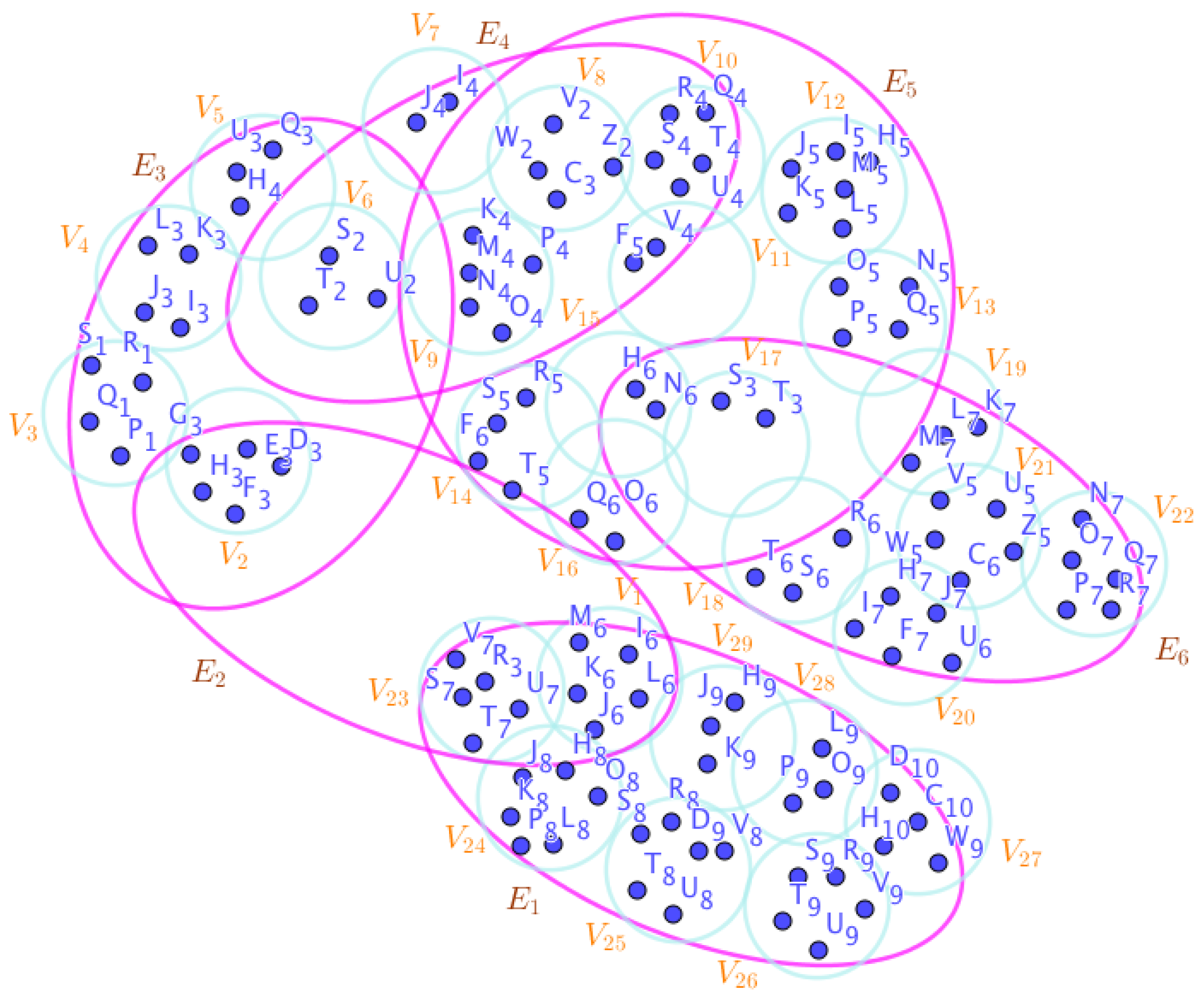
Proposition 3.4.
Assume a connected SuperHyperCycle Then an 1-failed SuperHyperForcing is a SuperHyperSet of the exterior SuperHyperVertices and the interior SuperHyperVertices with only two exceptions in the form of interior SuperHyperVertices from the same SuperHyperEdge. An 1-failed SuperHyperForcing has the number of all the SuperHyperVertices minus on the 2 numbers excerpt the same exterior SuperHyperPart.
Proof.
Assume a connected SuperHyperCycle Let a SuperHyperEdge has some SuperHyperVertices. Consider some numbers of those SuperHyperVertices from that SuperHyperEdge excluding three distinct SuperHyperVertices, belong to any given SuperHyperSet of the SuperHyperVertices. Consider there’s an 1-failed SuperHyperForcing with the most cardinality, the upper sharp bound for cardinality. The SuperHyperSet of the SuperHyperVertices is a SuperHyperSet S of black SuperHyperVertices (whereas SuperHyperVertices in are colored white) such that isn’t turned black after finitely many applications of “the color-change rule”: a white SuperHyperVertex is converted to a black SuperHyperVertex if it is the only white SuperHyperNeighbor of a black SuperHyperVertex with the additional condition is referred by “1-” about the usage of any black SuperHyperVertex only once to act on white SuperHyperVertex to be black SuperHyperVertex but it isn’t an 1-failed SuperHyperForcing. Since it doesn’t have the maximum cardinality of a SuperHyperSet S of black SuperHyperVertices (whereas SuperHyperVertices in are colored white) such that isn’t turned black after finitely many applications of “the color-change rule”: a white SuperHyperVertex is converted to a black SuperHyperVertex if it is the only white SuperHyperNeighbor of a black SuperHyperVertex with the additional condition is referred by “1-” about the usage of any black SuperHyperVertex only once to act on white SuperHyperVertex to be black SuperHyperVertex. The SuperHyperSet of the SuperHyperVertices is the maximum cardinality of a SuperHyperSet S of black SuperHyperVertices (whereas SuperHyperVertices in are colored white) but it isn’t an 1-failed SuperHyperForcing. Since it doesn’t do the procedure such that isn’t turned black after finitely many applications of “the color-change rule”: a white SuperHyperVertex is converted to a black SuperHyperVertex if it is the only white SuperHyperNeighbor of a black SuperHyperVertex with the additional condition is referred by “1-” about the usage of any black SuperHyperVertex only once to act on white SuperHyperVertex to be black SuperHyperVertex [there’s at least one white without any white SuperHyperNeighbor outside implying there’s, by the connectedness of the connected neutrosophic SuperHyperGraph a SuperHyperVertex, titled its SuperHyperNeighbor, to the SuperHyperSet S does the “the color-change rule”.]. There’re only two SuperHyperVertices outside the intended SuperHyperSet, Thus the obvious 1-failed SuperHyperForcing, is up. The obvious simple type-SuperHyperSet of the 1-failed SuperHyperForcing, is a SuperHyperSet, excludes only two SuperHyperVertices are titled in a connected neutrosophic SuperHyperNeighbors SuperHyperGraph Since the SuperHyperSet of the SuperHyperVertices is the maximum cardinality of a SuperHyperSet S of black SuperHyperVertices (whereas SuperHyperVertices in are colored white) such that isn’t turned black after finitely many applications of “the color-change rule”: a white SuperHyperVertex is converted to a black SuperHyperVertex if it is the only white SuperHyperNeighbor of a black SuperHyperVertex with the additional condition is referred by “1-” about the usage of any black SuperHyperVertex only once to act on white SuperHyperVertex to be black SuperHyperVertex. It implies that extreme number of 1-failed SuperHyperForcing has, the most cardinality, the upper sharp bound for cardinality, is Thus it induces that the extreme number of 1-failed SuperHyperForcing has, the most cardinality, the upper sharp bound for cardinality, is the extreme cardinality of if there’s an 1-failed SuperHyperForcing with the most cardinality, the upper sharp bound for cardinality. Thus if a SuperHyperEdge has some SuperHyperVertices, then, with excluding two distinct SuperHyperVertices, the all number of those SuperHyperVertices from that SuperHyperEdge belong to any 1-failed SuperHyperForcing. Thus, in a connected neutrosophic SuperHyperGraph there’s a SuperHyperEdge has only two distinct SuperHyperVertices outside of 1-failed SuperHyperForcing. In other words, here’s a SuperHyperEdge has only two distinct white SuperHyperVertices. In a connected neutrosophic SuperHyperGraph the all exterior SuperHyperVertices belong to any 1-failed SuperHyperForcing if there’s one of them such that there are only two interior SuperHyperVertices are mutually SuperHyperNeighbors. Then an 1-failed SuperHyperForcing is a SuperHyperSet of the exterior SuperHyperVertices and the interior SuperHyperVertices with only two exceptions in the form of interior SuperHyperVertices from the same SuperHyperEdge. An 1-failed SuperHyperForcing has the number of all the SuperHyperVertices minus on the 2 numbers excerpt the same exterior SuperHyperPart. □
Example 3.5.
In the Figure (22), the connected SuperHyperCycle is highlighted and featured. The obtained SuperHyperSet, by the Algorithm in previous result, of the SuperHyperVertices of the connected SuperHyperCycle in the SuperHyperModel (22), is the 1-failed SuperHyperForcing.
Proposition 3.6.
Assume a connected SuperHyperStar Then an 1-failed SuperHyperForcing is a SuperHyperSet of the exterior SuperHyperVertices and the interior SuperHyperVertices, excluding the SuperHyperCenter, with only one exception in the form of interior SuperHyperVertices from any given SuperHyperEdge. An 1-failed SuperHyperForcing has the number of the cardinality of the second SuperHyperPart minus one.
Figure 22.
A SuperHyperCycle Associated to the Notions of 1-failed SuperHyperForcing in the Example (3.5).
Figure 22.
A SuperHyperCycle Associated to the Notions of 1-failed SuperHyperForcing in the Example (3.5).
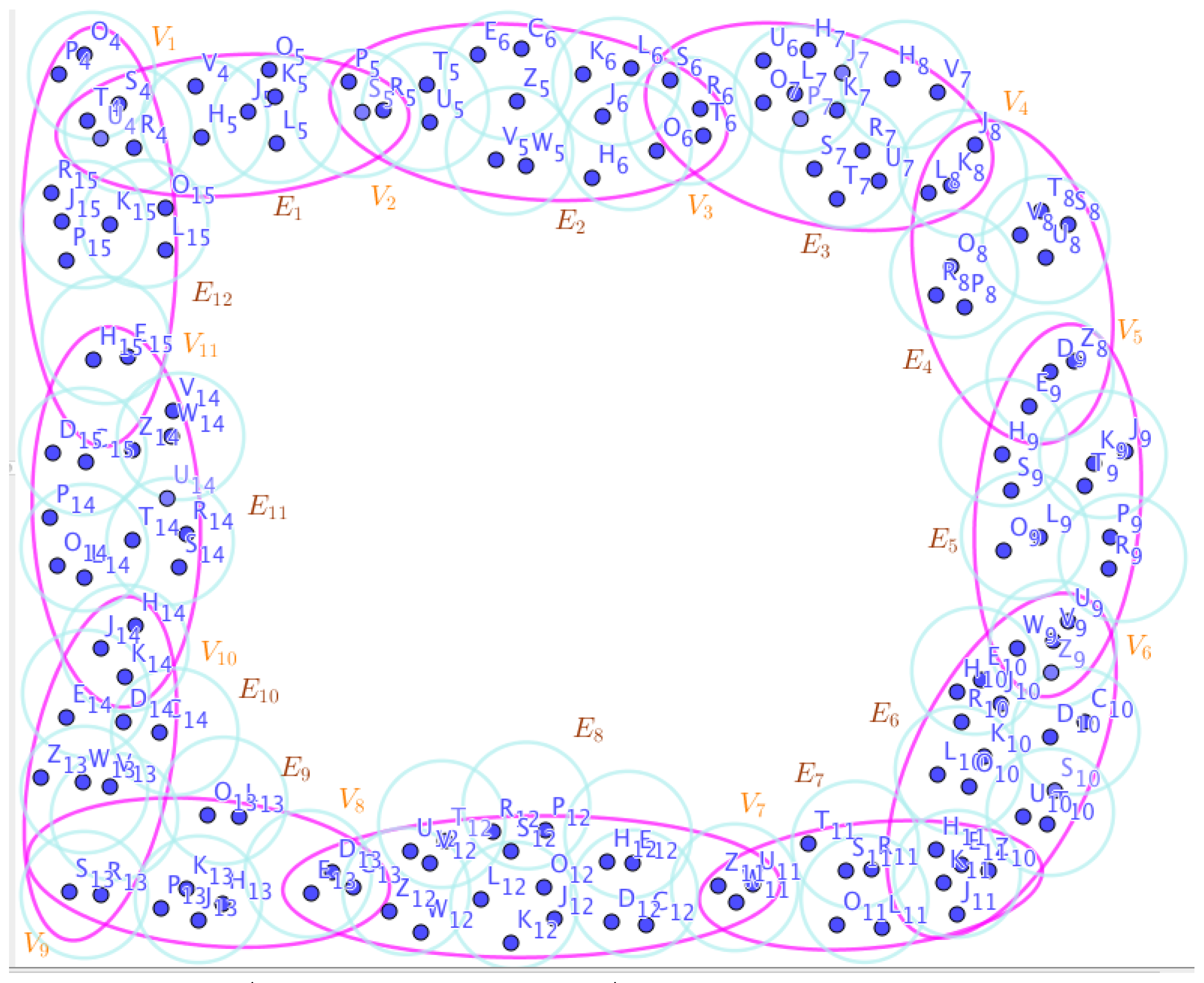
Proof.
Assume a connected SuperHyperStar Let a SuperHyperEdge has some SuperHyperVertices. Consider some numbers of those SuperHyperVertices from that SuperHyperEdge excluding three distinct SuperHyperVertices, belong to any given SuperHyperSet of the SuperHyperVertices. Consider there’s an 1-failed SuperHyperForcing with the most cardinality, the upper sharp bound for cardinality. The SuperHyperSet of the SuperHyperVertices is a SuperHyperSet S of black SuperHyperVertices (whereas SuperHyperVertices in are colored white) such that isn’t turned black after finitely many applications of “the color-change rule”: a white SuperHyperVertex is converted to a black SuperHyperVertex if it is the only white SuperHyperNeighbor of a black SuperHyperVertex with the additional condition is referred by “1-” about the usage of any black SuperHyperVertex only once to act on white SuperHyperVertex to be black SuperHyperVertex but it isn’t an 1-failed SuperHyperForcing. Since it doesn’t have the maximum cardinality of a SuperHyperSet S of black SuperHyperVertices (whereas SuperHyperVertices in are colored white) such that isn’t turned black after finitely many applications of “the color-change rule”: a white SuperHyperVertex is converted to a black SuperHyperVertex if it is the only white SuperHyperNeighbor of a black SuperHyperVertex with the additional condition is referred by “1-” about the usage of any black SuperHyperVertex only once to act on white SuperHyperVertex to be black SuperHyperVertex. The SuperHyperSet of the SuperHyperVertices is the maximum cardinality of a SuperHyperSet S of black SuperHyperVertices (whereas SuperHyperVertices in are colored white) but it isn’t an 1-failed SuperHyperForcing. Since it doesn’t do the procedure such that isn’t turned black after finitely many applications of “the color-change rule”: a white SuperHyperVertex is converted to a black SuperHyperVertex if it is the only white SuperHyperNeighbor of a black SuperHyperVertex with the additional condition is referred by “1-” about the usage of any black SuperHyperVertex only once to act on white SuperHyperVertex to be black SuperHyperVertex [there’s at least one white without any white SuperHyperNeighbor outside implying there’s, by the connectedness of the connected neutrosophic SuperHyperGraph a SuperHyperVertex, titled its SuperHyperNeighbor, to the SuperHyperSet S does the “the color-change rule”.]. There’re only two SuperHyperVertices outside the intended SuperHyperSet, Thus the obvious 1-failed SuperHyperForcing, is up. The obvious simple type-SuperHyperSet of the 1-failed SuperHyperForcing, is a SuperHyperSet, excludes only two SuperHyperVertices are titled in a connected neutrosophic SuperHyperNeighbors SuperHyperGraph Since the SuperHyperSet of the SuperHyperVertices is the maximum cardinality of a SuperHyperSet S of black SuperHyperVertices (whereas SuperHyperVertices in are colored white) such that isn’t turned black after finitely many applications of “the color-change rule”: a white SuperHyperVertex is converted to a black SuperHyperVertex if it is the only white SuperHyperNeighbor of a black SuperHyperVertex with the additional condition is referred by “1-” about the usage of any black SuperHyperVertex only once to act on white SuperHyperVertex to be black SuperHyperVertex. It implies that extreme number of 1-failed SuperHyperForcing has, the most cardinality, the upper sharp bound for cardinality, is Thus it induces that the extreme number of 1-failed SuperHyperForcing has, the most cardinality, the upper sharp bound for cardinality, is the extreme cardinality of if there’s an 1-failed SuperHyperForcing with the most cardinality, the upper sharp bound for cardinality. Thus if a SuperHyperEdge has some SuperHyperVertices, then, with excluding two distinct SuperHyperVertices, the all number of those SuperHyperVertices from that SuperHyperEdge belong to any 1-failed SuperHyperForcing. Thus, in a connected neutrosophic SuperHyperGraph there’s a SuperHyperEdge has only two distinct SuperHyperVertices outside of 1-failed SuperHyperForcing. In other words, here’s a SuperHyperEdge has only two distinct white SuperHyperVertices. In a connected neutrosophic SuperHyperGraph the all exterior SuperHyperVertices belong to any 1-failed SuperHyperForcing if there’s one of them such that there are only two interior SuperHyperVertices are mutually SuperHyperNeighbors. Then an 1-failed SuperHyperForcing is a SuperHyperSet of the exterior SuperHyperVertices and the interior SuperHyperVertices, excluding the SuperHyperCenter, with only one exception in the form of interior SuperHyperVertices from any given SuperHyperEdge. An 1-failed SuperHyperForcing has the number of the cardinality of the second SuperHyperPart minus one. □
Example 3.7.
In the Figure (23), the connected SuperHyperStar is highlighted and featured. The obtained SuperHyperSet, by the Algorithm in previous result, of the SuperHyperVertices of the connected SuperHyperStar in the SuperHyperModel (23), is the 1-failed SuperHyperForcing.
Proposition 3.8.
Assume a connected SuperHyperBipartite Then an 1-failed SuperHyperForcing is a SuperHyperSet of the exterior SuperHyperVertices and the interior SuperHyperVertices with only two exceptions in the form of interior SuperHyperVertices from same SuperHyperEdge. An 1-failed SuperHyperForcing has the number of the cardinality of the first SuperHyperPart minus one plus the second SuperHyperPart minus one.
Proof.
Assume a connected SuperHyperBipartite Let a SuperHyperEdge has some SuperHyperVertices. Consider some numbers of those SuperHyperVertices from that SuperHyperEdge excluding three distinct SuperHyperVertices, belong to any given SuperHyperSet of the SuperHyperVertices. Consider there’s an 1-failed SuperHyperForcing with the most cardinality, the upper sharp bound for cardinality. The SuperHyperSet of the SuperHyperVertices is a SuperHyperSet S of black SuperHyperVertices (whereas SuperHyperVertices in are colored white) such that isn’t turned black after finitely many applications of “the color-change rule”: a white SuperHyperVertex is converted to a black SuperHyperVertex if it is the only white SuperHyperNeighbor of a black SuperHyperVertex with the additional condition is referred by “1-” about the usage of any black SuperHyperVertex only once to act on white SuperHyperVertex to be black SuperHyperVertex but it isn’t an 1-failed SuperHyperForcing. Since it doesn’t have the maximum cardinality of a SuperHyperSet S of black SuperHyperVertices (whereas SuperHyperVertices in are colored white) such that isn’t turned black after finitely many applications of “the color-change rule”: a white SuperHyperVertex is converted to a black SuperHyperVertex if it is the only white SuperHyperNeighbor of a black SuperHyperVertex with the additional condition is referred by “1-” about the usage of any black SuperHyperVertex only once to act on white SuperHyperVertex to be black SuperHyperVertex. The SuperHyperSet of the SuperHyperVertices is the maximum cardinality of a SuperHyperSet S of black SuperHyperVertices (whereas SuperHyperVertices in are colored white) but it isn’t an 1-failed SuperHyperForcing. Since it doesn’t do the procedure such that isn’t turned black after finitely many applications of “the color-change rule”: a white SuperHyperVertex is converted to a black SuperHyperVertex if it is the only white SuperHyperNeighbor of a black SuperHyperVertex with the additional condition is referred by “1-” about the usage of any black SuperHyperVertex only once to act on white SuperHyperVertex to be black SuperHyperVertex [there’s at least one white without any white SuperHyperNeighbor outside implying there’s, by the connectedness of the connected neutrosophic SuperHyperGraph a SuperHyperVertex, titled its SuperHyperNeighbor, to the SuperHyperSet S does the “the color-change rule”.]. There’re only two SuperHyperVertices outside the intended SuperHyperSet, Thus the obvious 1-failed SuperHyperForcing, is up. The obvious simple type-SuperHyperSet of the 1-failed SuperHyperForcing, is a SuperHyperSet, excludes only two SuperHyperVertices are titled in a connected neutrosophic SuperHyperNeighbors SuperHyperGraph Since the SuperHyperSet of the SuperHyperVertices is the maximum cardinality of a SuperHyperSet S of black SuperHyperVertices (whereas SuperHyperVertices in are colored white) such that isn’t turned black after finitely many applications of “the color-change rule”: a white SuperHyperVertex is converted to a black SuperHyperVertex if it is the only white SuperHyperNeighbor of a black SuperHyperVertex with the additional condition is referred by “1-” about the usage of any black SuperHyperVertex only once to act on white SuperHyperVertex to be black SuperHyperVertex. It implies that extreme number of 1-failed SuperHyperForcing has, the most cardinality, the upper sharp bound for cardinality, is Thus it induces that the extreme number of 1-failed SuperHyperForcing has, the most cardinality, the upper sharp bound for cardinality, is the extreme cardinality of if there’s an 1-failed SuperHyperForcing with the most cardinality, the upper sharp bound for cardinality. Thus if a SuperHyperEdge has some SuperHyperVertices, then, with excluding two distinct SuperHyperVertices, the all number of those SuperHyperVertices from that SuperHyperEdge belong to any 1-failed SuperHyperForcing. Thus, in a connected neutrosophic SuperHyperGraph there’s a SuperHyperEdge has only two distinct SuperHyperVertices outside of 1-failed SuperHyperForcing. In other words, here’s a SuperHyperEdge has only two distinct white SuperHyperVertices. In a connected neutrosophic SuperHyperGraph the all exterior SuperHyperVertices belong to any 1-failed SuperHyperForcing if there’s one of them such that there are only two interior SuperHyperVertices are mutually SuperHyperNeighbors. Then an 1-failed SuperHyperForcing is a SuperHyperSet of the exterior SuperHyperVertices and the interior SuperHyperVertices with only two exceptions in the form of interior SuperHyperVertices from same SuperHyperEdge. An 1-failed SuperHyperForcing has the number of the cardinality of the first SuperHyperPart minus one plus the second SuperHyperPart minus one. □
Figure 23.
A SuperHyperStar Associated to the Notions of 1-failed SuperHyperForcing in the Example (3.7).
Figure 23.
A SuperHyperStar Associated to the Notions of 1-failed SuperHyperForcing in the Example (3.7).
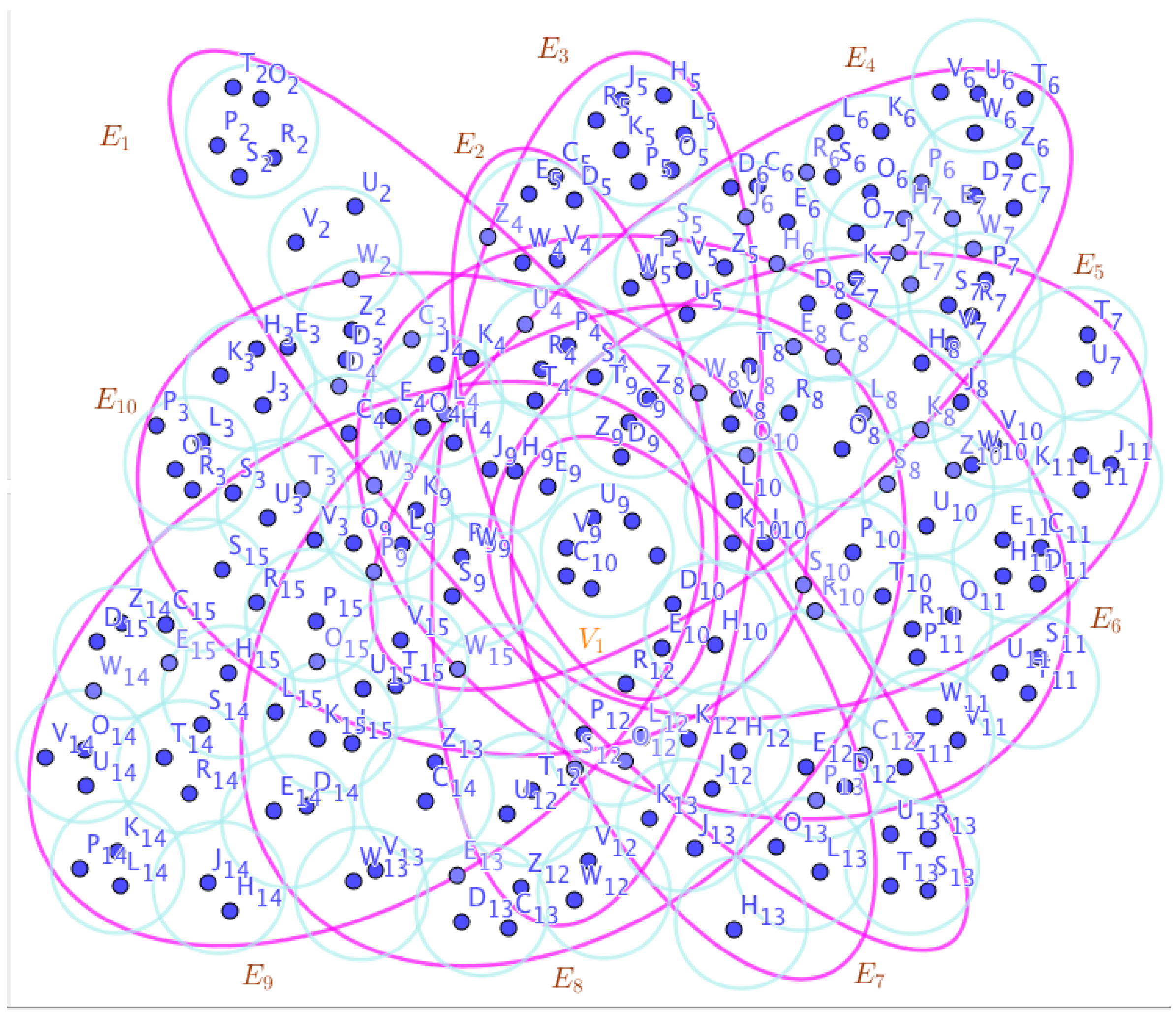
Example 3.9.
In the Figure (24), the connected SuperHyperBipartite is highlighted and featured. The obtained SuperHyperSet, by the Algorithm in previous result, of the SuperHyperVertices of the connected SuperHyperBipartite in the SuperHyperModel (24), is the 1-failed SuperHyperForcing.
Proposition 3.10.
Assume a connected SuperHyperMultipartite Then an 1-failed SuperHyperForcing is a SuperHyperSet of the exterior SuperHyperVertices and the interior SuperHyperVertices with only one exception in the form of interior SuperHyperVertices from a SuperHyperPart and only one exception in the form of interior SuperHyperVertices from another SuperHyperPart. An 1-failed SuperHyperForcing has the number of all the summation on the cardinality of the all SuperHyperParts minus two excerpt distinct SuperHyperParts.
Proof.
Assume a connected SuperHyperMultipartite Let a SuperHyperEdge has some SuperHyperVertices. Consider some numbers of those SuperHyperVertices from that SuperHyperEdge excluding three distinct SuperHyperVertices, belong to any given SuperHyperSet of the SuperHyperVertices. Consider there’s an 1-failed SuperHyperForcing with the most cardinality, the upper sharp bound for cardinality. The SuperHyperSet of the SuperHyperVertices is a SuperHyperSet S of black SuperHyperVertices (whereas SuperHyperVertices in are colored white) such that isn’t turned black after finitely many applications of “the color-change rule”: a white SuperHyperVertex is converted to a black SuperHyperVertex if it is the only white SuperHyperNeighbor of a black SuperHyperVertex with the additional condition is referred by “1-” about the usage of any black SuperHyperVertex only once to act on white SuperHyperVertex to be black SuperHyperVertex but it isn’t an 1-failed SuperHyperForcing. Since it doesn’t have the maximum cardinality of a SuperHyperSet S of black SuperHyperVertices (whereas SuperHyperVertices in are colored white) such that isn’t turned black after finitely many applications of “the color-change rule”: a white SuperHyperVertex is converted to a black SuperHyperVertex if it is the only white SuperHyperNeighbor of a black SuperHyperVertex with the additional condition is referred by “1-” about the usage of any black SuperHyperVertex only once to act on white SuperHyperVertex to be black SuperHyperVertex. The SuperHyperSet of the SuperHyperVertices is the maximum cardinality of a SuperHyperSet S of black SuperHyperVertices (whereas SuperHyperVertices in are colored white) but it isn’t an 1-failed SuperHyperForcing. Since it doesn’t do the procedure such that isn’t turned black after finitely many applications of “the color-change rule”: a white SuperHyperVertex is converted to a black SuperHyperVertex if it is the only white SuperHyperNeighbor of a black SuperHyperVertex with the additional condition is referred by “1-” about the usage of any black SuperHyperVertex only once to act on white SuperHyperVertex to be black SuperHyperVertex [there’s at least one white without any white SuperHyperNeighbor outside implying there’s, by the connectedness of the connected neutrosophic SuperHyperGraph a SuperHyperVertex, titled its SuperHyperNeighbor, to the SuperHyperSet S does the “the color-change rule”.]. There’re only two SuperHyperVertices outside the intended SuperHyperSet, Thus the obvious 1-failed SuperHyperForcing, is up. The obvious simple type-SuperHyperSet of the 1-failed SuperHyperForcing, is a SuperHyperSet, excludes only two SuperHyperVertices are titled in a connected neutrosophic SuperHyperNeighbors SuperHyperGraph Since the SuperHyperSet of the SuperHyperVertices is the maximum cardinality of a SuperHyperSet S of black SuperHyperVertices (whereas SuperHyperVertices in are colored white) such that isn’t turned black after finitely many applications of “the color-change rule”: a white SuperHyperVertex is converted to a black SuperHyperVertex if it is the only white SuperHyperNeighbor of a black SuperHyperVertex with the additional condition is referred by “1-” about the usage of any black SuperHyperVertex only once to act on white SuperHyperVertex to be black SuperHyperVertex. It implies that extreme number of 1-failed SuperHyperForcing has, the most cardinality, the upper sharp bound for cardinality, is Thus it induces that the extreme number of 1-failed SuperHyperForcing has, the most cardinality, the upper sharp bound for cardinality, is the extreme cardinality of if there’s an 1-failed SuperHyperForcing with the most cardinality, the upper sharp bound for cardinality. Thus if a SuperHyperEdge has some SuperHyperVertices, then, with excluding two distinct SuperHyperVertices, the all number of those SuperHyperVertices from that SuperHyperEdge belong to any 1-failed SuperHyperForcing. Thus, in a connected neutrosophic SuperHyperGraph there’s a SuperHyperEdge has only two distinct SuperHyperVertices outside of 1-failed SuperHyperForcing. In other words, here’s a SuperHyperEdge has only two distinct white SuperHyperVertices. In a connected neutrosophic SuperHyperGraph the all exterior SuperHyperVertices belong to any 1-failed SuperHyperForcing if there’s one of them such that there are only two interior SuperHyperVertices are mutually SuperHyperNeighbors. Then an 1-failed SuperHyperForcing is a SuperHyperSet of the exterior SuperHyperVertices and the interior SuperHyperVertices with only one exception in the form of interior SuperHyperVertices from a SuperHyperPart and only one exception in the form of interior SuperHyperVertices from another SuperHyperPart. An 1-failed SuperHyperForcing has the number of all the summation on the cardinality of the all SuperHyperParts minus two excerpt distinct SuperHyperParts. □
Figure 24.
A SuperHyperBipartite Associated to the Notions of 1-failed SuperHyperForcing in the Example (3.9).
Figure 24.
A SuperHyperBipartite Associated to the Notions of 1-failed SuperHyperForcing in the Example (3.9).
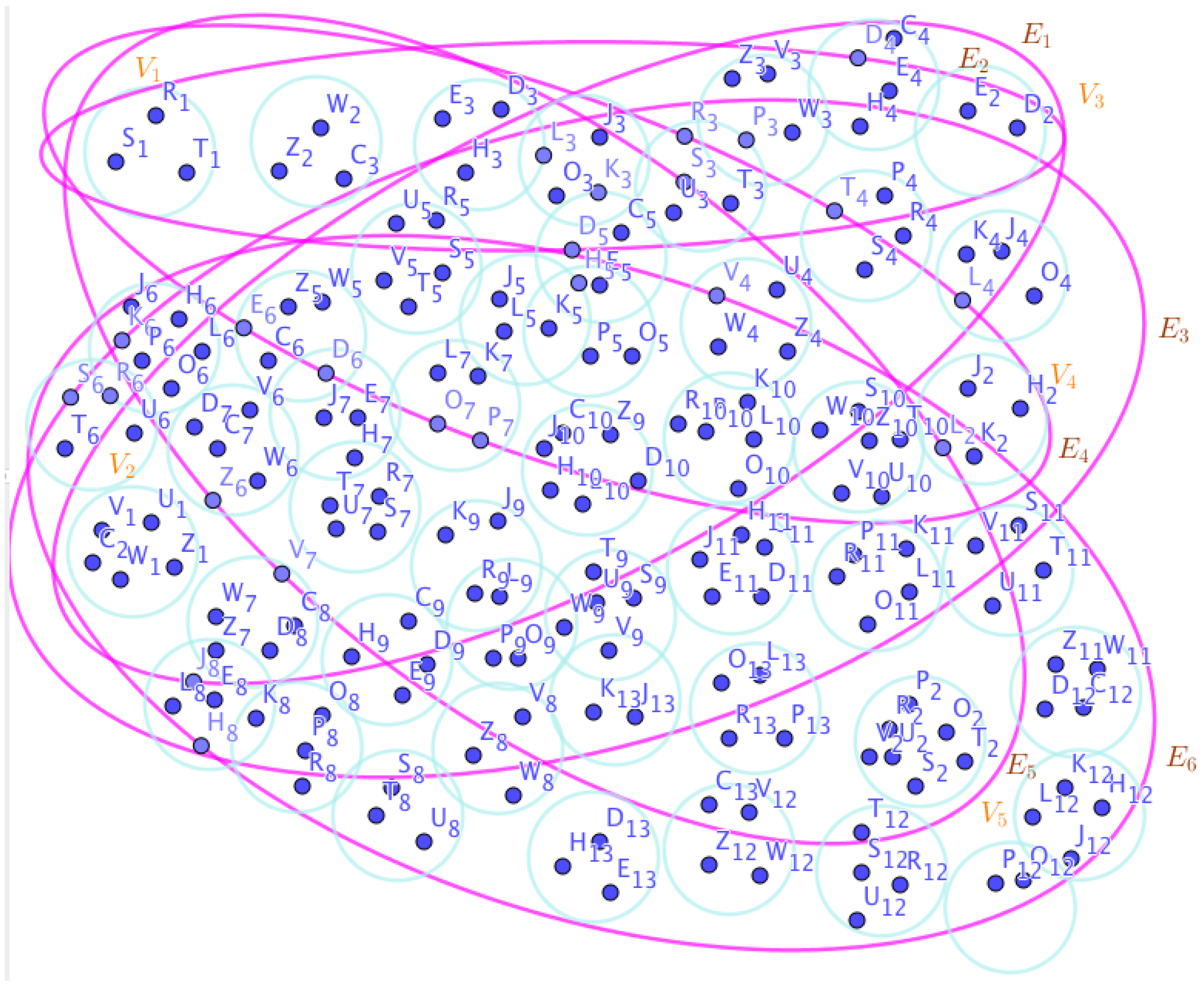
Figure 25.
A SuperHyperMultipartite Associated to the Notions of 1-failed SuperHyperForcing in the Example (3.11).
Figure 25.
A SuperHyperMultipartite Associated to the Notions of 1-failed SuperHyperForcing in the Example (3.11).
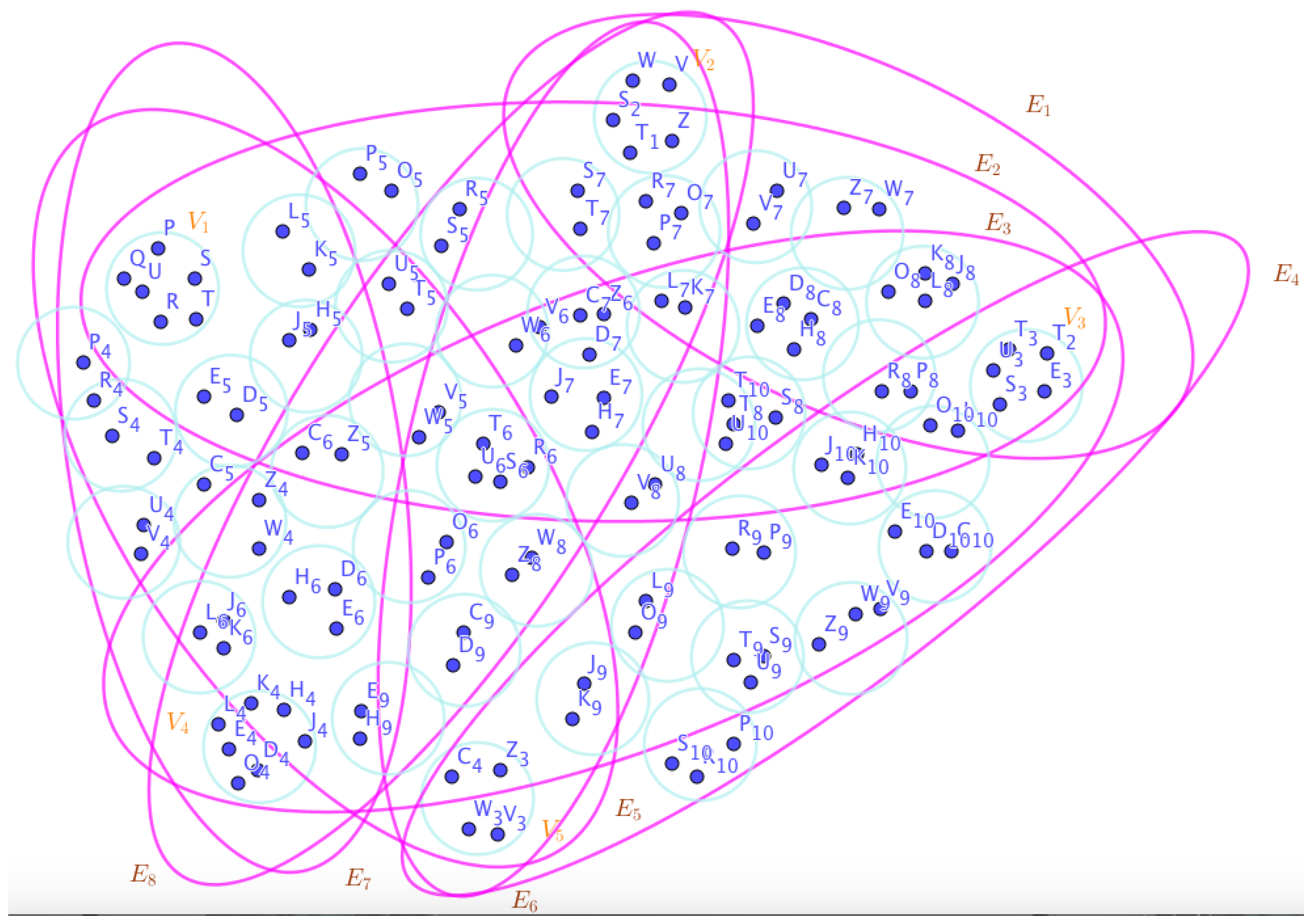
Example 3.11.
In the Figure (25), the connected SuperHyperMultipartite is highlighted and featured. The obtained SuperHyperSet, by the Algorithm in previous result, of the SuperHyperVertices of the connected SuperHyperMultipartite in the SuperHyperModel (25), is the 1-failed SuperHyperForcing.
Proposition 3.12.
Assume a connected SuperHyperWheel Then an 1-failed SuperHyperForcing is a SuperHyperSet of the exterior SuperHyperVertices and the interior SuperHyperVertices, excluding the SuperHyperCenter, with only one exception in the form of interior SuperHyperVertices from any given SuperHyperEdge. An 1-failed SuperHyperForcing has the number of all the number of all the SuperHyperEdges minus two numbers excerpt two SuperHyperNeighbors.
Proof.
Assume a connected SuperHyperWheel Let a SuperHyperEdge has some SuperHyperVertices. Consider some numbers of those SuperHyperVertices from that SuperHyperEdge excluding three distinct SuperHyperVertices, belong to any given SuperHyperSet of the SuperHyperVertices. Consider there’s an 1-failed SuperHyperForcing with the most cardinality, the upper sharp bound for cardinality. The SuperHyperSet of the SuperHyperVertices is a SuperHyperSet S of black SuperHyperVertices (whereas SuperHyperVertices in are colored white) such that isn’t turned black after finitely many applications of “the color-change rule”: a white SuperHyperVertex is converted to a black SuperHyperVertex if it is the only white SuperHyperNeighbor of a black SuperHyperVertex with the additional condition is referred by “1-” about the usage of any black SuperHyperVertex only once to act on white SuperHyperVertex to be black SuperHyperVertex but it isn’t an 1-failed SuperHyperForcing. Since it doesn’t have the maximum cardinality of a SuperHyperSet S of black SuperHyperVertices (whereas SuperHyperVertices in are colored white) such that isn’t turned black after finitely many applications of “the color-change rule”: a white SuperHyperVertex is converted to a black SuperHyperVertex if it is the only white SuperHyperNeighbor of a black SuperHyperVertex with the additional condition is referred by “1-” about the usage of any black SuperHyperVertex only once to act on white SuperHyperVertex to be black SuperHyperVertex. The SuperHyperSet of the SuperHyperVertices is the maximum cardinality of a SuperHyperSet S of black SuperHyperVertices (whereas SuperHyperVertices in are colored white) but it isn’t an 1-failed SuperHyperForcing. Since it doesn’t do the procedure such that isn’t turned black after finitely many applications of “the color-change rule”: a white SuperHyperVertex is converted to a black SuperHyperVertex if it is the only white SuperHyperNeighbor of a black SuperHyperVertex with the additional condition is referred by “1-” about the usage of any black SuperHyperVertex only once to act on white SuperHyperVertex to be black SuperHyperVertex [there’s at least one white without any white SuperHyperNeighbor outside implying there’s, by the connectedness of the connected neutrosophic SuperHyperGraph a SuperHyperVertex, titled its SuperHyperNeighbor, to the SuperHyperSet S does the “the color-change rule”.]. There’re only two SuperHyperVertices outside the intended SuperHyperSet, Thus the obvious 1-failed SuperHyperForcing, is up. The obvious simple type-SuperHyperSet of the 1-failed SuperHyperForcing, is a SuperHyperSet, excludes only two SuperHyperVertices are titled in a connected neutrosophic SuperHyperNeighbors SuperHyperGraph Since the SuperHyperSet of the SuperHyperVertices is the maximum cardinality of a SuperHyperSet S of black SuperHyperVertices (whereas SuperHyperVertices in are colored white) such that isn’t turned black after finitely many applications of “the color-change rule”: a white SuperHyperVertex is converted to a black SuperHyperVertex if it is the only white SuperHyperNeighbor of a black SuperHyperVertex with the additional condition is referred by “1-” about the usage of any black SuperHyperVertex only once to act on white SuperHyperVertex to be black SuperHyperVertex. It implies that extreme number of 1-failed SuperHyperForcing has, the most cardinality, the upper sharp bound for cardinality, is Thus it induces that the extreme number of 1-failed SuperHyperForcing has, the most cardinality, the upper sharp bound for cardinality, is the extreme cardinality of if there’s an 1-failed SuperHyperForcing with the most cardinality, the upper sharp bound for cardinality. Thus if a SuperHyperEdge has some SuperHyperVertices, then, with excluding two distinct SuperHyperVertices, the all number of those SuperHyperVertices from that SuperHyperEdge belong to any 1-failed SuperHyperForcing. Thus, in a connected neutrosophic SuperHyperGraph there’s a SuperHyperEdge has only two distinct SuperHyperVertices outside of 1-failed SuperHyperForcing. In other words, here’s a SuperHyperEdge has only two distinct white SuperHyperVertices. In a connected neutrosophic SuperHyperGraph the all exterior SuperHyperVertices belong to any 1-failed SuperHyperForcing if there’s one of them such that there are only two interior SuperHyperVertices are mutually SuperHyperNeighbors. Then an 1-failed SuperHyperForcing is a SuperHyperSet of the exterior SuperHyperVertices and the interior SuperHyperVertices, excluding the SuperHyperCenter, with only one exception in the form of interior SuperHyperVertices from any given SuperHyperEdge. An 1-failed SuperHyperForcing has the number of all the number of all the SuperHyperEdges minus two numbers excerpt two SuperHyperNeighbors. □
Figure 26.
A SuperHyperWheel Associated to the Notions of 1-failed SuperHyperForcing in the Example (3.13).
Figure 26.
A SuperHyperWheel Associated to the Notions of 1-failed SuperHyperForcing in the Example (3.13).
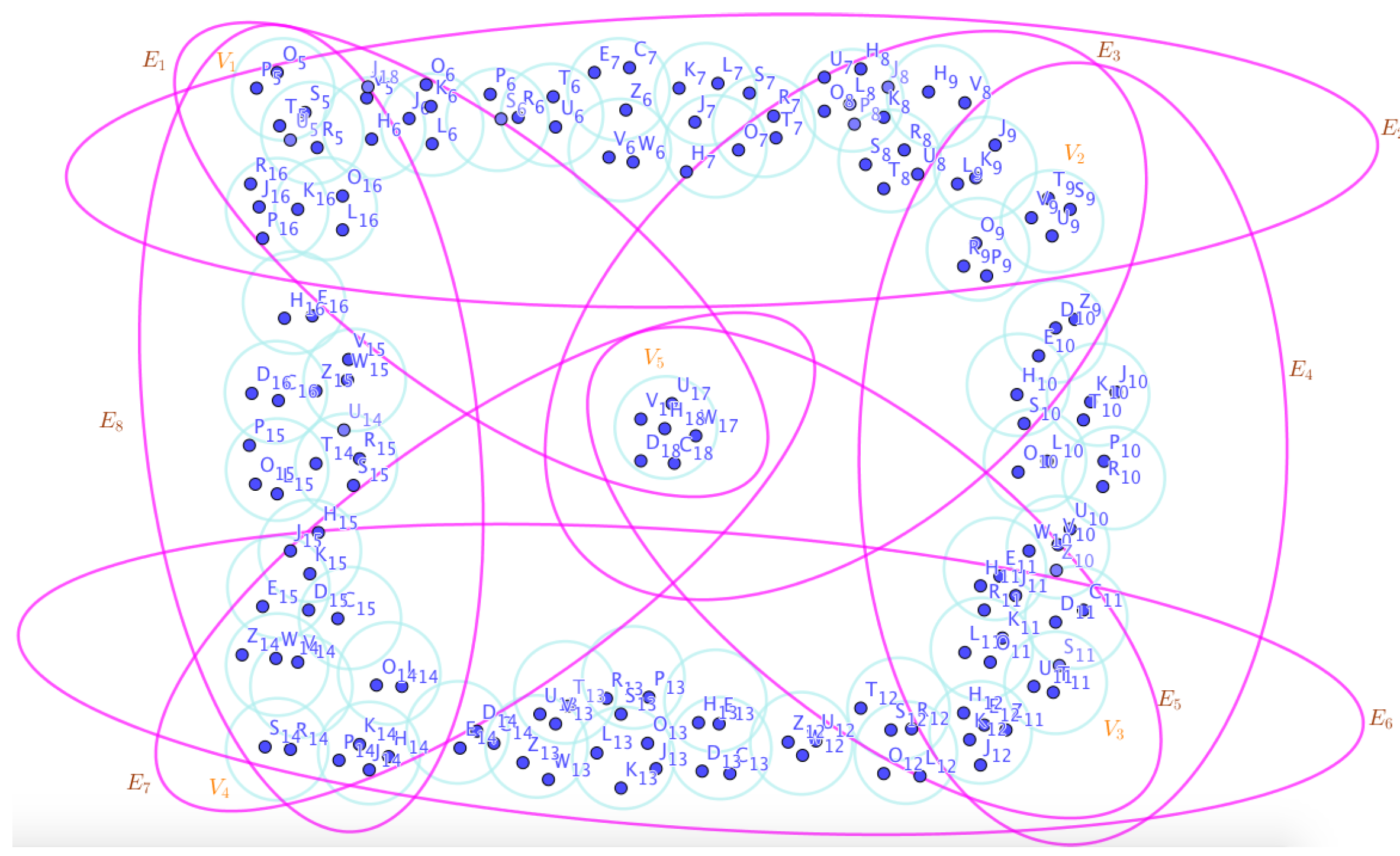
Example 3.13.
In the Figure (26), the connected SuperHyperWheel is highlighted and featured. The obtained SuperHyperSet, by the Algorithm in previous result, of the SuperHyperVertices of the connected SuperHyperWheel in the SuperHyperModel (26), is the 1-failed SuperHyperForcing.
References
- Henry Garrett, “Properties of SuperHyperGraph and Neutrosophic SuperHyperGraph”, Neutrosophic Sets and Systems 49 (2022) 531-561. (http://fs.unm.edu/NSS/NeutrosophicSuperHyperGraph34.pdf). (https://digitalrepository.unm.edu/nss_journal/vol49/iss1/34). [CrossRef]
- Henry Garrett, “Neutrosophic Co-degree and Neutrosophic Degree alongside Chromatic Numbers in the Setting of Some Classes Related to Neutrosophic Hypergraphs”, J Curr Trends Comp Sci Res 1(1) (2022) 06-14.
- Henry Garrett, “(Neutrosophic) SuperHyperModeling of Cancer’s Recognitions Featuring (Neutrosophic) SuperHyperDefensive SuperHyperAlliances”, Preprints 2022, 2022120549. [CrossRef]
- Henry Garrett, “(Neutrosophic) SuperHyperAlliances With SuperHyperDefensive and SuperHyperOffensive Type-SuperHyperSet On (Neutrosophic) SuperHyperGraph With (Neutrosophic) SuperHyperModeling of Cancer’s Recognitions And Related (Neutrosophic) SuperHyperClasses”, Preprints 2022, 2022120540. [CrossRef]
- Henry Garrett, “SuperHyperGirth on SuperHyperGraph and Neutrosophic SuperHyperGraph With SuperHyperModeling of Cancer’s Recognitions”, Preprints 2022, 2022120500. [CrossRef]
- Henry Garrett, “Some SuperHyperDegrees and Co-SuperHyperDegrees on Neutrosophic SuperHyperGraphs and SuperHyperGraphs Alongside Applications in Cancer’s Treatments”, Preprints 2022, 2022120324. [CrossRef]
- Henry Garrett, “SuperHyperDominating and SuperHyperResolving on Neutrosophic SuperHyperGraphs And Their Directions in Game Theory and Neutrosophic SuperHyperClasses”, Preprints 2022, 2022110576. [CrossRef]
- Henry Garrett, “Basic Notions on (Neutrosophic) SuperHyperForcing And (Neutrosophic) SuperHyperModeling in Cancer’s Recognitions And (Neutrosophic) SuperHyperGraphs”, ResearchGate 2022. [CrossRef]
- Henry Garrett, “Basic Neutrosophic Notions Concerning SuperHyperDominating and Neutrosophic SuperHyperResolving in SuperHyperGraph”, ResearchGate 2022. [CrossRef]
- Henry Garrett, “Initial Material of Neutrosophic Preliminaries to Study Some Neutrosophic Notions Based on Neutrosophic SuperHyperEdge (NSHE) in Neutrosophic SuperHyperGraph (NSHG)”, ResearchGate 2022. [CrossRef]
- Henry Garrett, (2022). “Beyond Neutrosophic Graphs”, Ohio: E-publishing: Educational Publisher 1091 West 1st Ave Grandview Heights, Ohio 43212 United States. ISBN: 979-1-59973-725-6 (http://fs.unm.edu/BeyondNeutrosophicGraphs.pdf).
- Henry Garrett, (2022). “Neutrosophic Duality”, Florida: GLOBAL KNOWLEDGE - Publishing House 848 Brickell Ave Ste 950 Miami, Florida 33131 United States. ISBN: 978-1-59973-743-0 (http://fs.unm.edu/NeutrosophicDuality.pdf).
- F. Smarandache, “Extension of HyperGraph to n-SuperHyperGraph and to Plithogenic n-SuperHyperGraph, and Extension of HyperAlgebra to n-ary (Classical-/Neutro-/Anti-) HyperAlgebra”, Neutrosophic Sets and Systems 33 (2020) 290-296. [CrossRef]
- M. Akram et al., “Single-valued neutrosophic Hypergraphs”, TWMS J. App. Eng. Math. 8 (1) (2018) 122-135.
- S. Broumi et al., “Single-valued neutrosophic graphs”, Journal of New Theory 10 (2016) 86-101.
- H. Wang et al., “Single-valued neutrosophic sets”, Multispace and Multistructure 4 (2010) 410-413.
- H.T. Nguyen and E.A. Walker, “A First course in fuzzy logic”, CRC Press, 2006.
- M. Akram, and G. Shahzadi, “Operations on Single-Valued Neutrosophic Graphs”, Journal of uncertain systems 11 (1) (2017) 1-26.
- G. Argiroffo et al., “Polyhedra associated with locating-dominating, open locating-dominating and locating total-dominating sets in graphs”, Discrete Applied Mathematics (2022). [CrossRef]
- L. Aronshtam, and H. Ilani, “Bounds on the average and minimum attendance in preference-based activity scheduling”, Discrete Applied Mathematics 306 (2022) 114-119. [CrossRef]
- J. Asplund et al., “A Vizing-type result for semi-total domination”, Discrete Applied Mathematics 258 (2019) 8-12. [CrossRef]
- K. Atanassov, “Intuitionistic fuzzy sets”, Fuzzy Sets Syst. 20 (1986) 87-96.
- R.A. Beeler et al., “Total domination cover rubbling”, Discrete Applied Mathematics 283 (2020) 133-141. [CrossRef]
- S. Bermudo et al., “On the global total k-domination number of graphs”, Discrete Applied Mathematics 263 (2019) 42-50. [CrossRef]
- M. Bold, and M. Goerigk, “Investigating the recoverable robust single machine scheduling problem under interval uncertainty”, Discrete Applied Mathematics 313 (2022) 99-114. [CrossRef]
- S. Broumi et al., “Single-valued neutrosophic graphs”, Journal of New Theory 10 (2016) 86-101.
- V. Gledel et al., “Maker–Breaker total domination game”, Discrete Applied Mathematics 282 (2020) 96-107. [CrossRef]
- M.A. Henning, and A. Yeo, “A new upper bound on the total domination number in graphs with minimum degree six”, Discrete Applied Mathematics 302 (2021) 1-7. [CrossRef]
- Henry Garrett, (2022). “Beyond Neutrosophic Graphs”, Ohio: E-publishing: Educational Publisher 1091 West 1st Ave Grandview Heights, Ohio 43212 United States. ISBN: 979-1-59973-725-6 (http://fs.unm.edu/BeyondNeutrosophicGraphs.pdf).
- Henry Garrett, “Dimension and Coloring alongside Domination in Neutrosophic Hypergraphs”, Preprints 2021, 2021120448. [CrossRef]
- Henry Garrett, “Properties of SuperHyperGraph and Neutrosophic SuperHyperGraph”, Neutrosophic Sets and Systems 49 (2022) 531-561. (http://fs.unm.edu/NSS/NeutrosophicSuperHyperGraph34.pdf). (https://digitalrepository.unm.edu/nss_journal/vol49/iss1/34). 2022. [CrossRef]
- Henry Garrett, “Three Types of Neutrosophic Alliances based on Connectedness and (Strong) Edges”, Preprints 2022, 2022010239. [CrossRef]
- V. Irsic, “Effect of predomination and vertex removal on the game total domination number of a graph”, Discrete Applied Mathematics 257 (2019) 216-225. [CrossRef]
- B.S. Panda, and P. Goyal, “Hardness results of global total k-domination problem in graphs”, Discrete Applied Mathematics (2021). [CrossRef]
- N. Shah, and A. Hussain, “Neutrosophic soft graphs”, Neutrosophic Set and Systems 11 (2016) 31-44.
- A. Shannon and K.T. Atanassov, “A first step to a theory of the intuitionistic fuzzy graphs”, Proceeding of FUBEST (Lakov, D., Ed.) Sofia (1994) 59-61.
- F. Smarandache, “A Unifying field in logics neutrosophy: Neutrosophic probability, set and logic, Rehoboth:” American Research Press (1998).
- H. Wang et al., “Single-valued neutrosophic sets”, Multispace and Multistructure 4 (2010) 410-413.
- L. A. Zadeh, “Fuzzy sets”, Information and Control 8 (1965) 338-354.
Disclaimer/Publisher’s Note: The statements, opinions and data contained in all publications are solely those of the individual author(s) and contributor(s) and not of MDPI and/or the editor(s). MDPI and/or the editor(s) disclaim responsibility for any injury to people or property resulting from any ideas, methods, instructions or products referred to in the content. |
© 2023 by the authors. Licensee MDPI, Basel, Switzerland. This article is an open access article distributed under the terms and conditions of the Creative Commons Attribution (CC BY) license (http://creativecommons.org/licenses/by/4.0/).
Copyright: This open access article is published under a Creative Commons CC BY 4.0 license, which permit the free download, distribution, and reuse, provided that the author and preprint are cited in any reuse.


