

Submitted:
29 July 2026
Posted:
31 July 2026
You are already at the latest version
Abstract
This paper presents a comprehensive and critical examination of the theoretical and empirical underpinnings of liquidity management within the commercial banking sector, with a specific focus on the Republic of Armenia. We argue that liquidity, far from being a monolithic metric, is a multifaceted construct that encapsulates an institution's capacity to meet its financial obligations in a timely and cost-effective manner. This study advances the discourse by integrating seminal theoretical frameworks—from the classical "golden banking rule" to the modern dynamics of asset-liability management (ALM) and funding liquidity risk—with a granular empirical analysis of regional financial heterogeneity. The analysis is structured around two central pillars. First, we decompose the evolution of key regional economic indicators, including firm registrations, wage dynamics, and unemployment, to map the landscape of real economic activity against the backdrop of national liquidity conditions. Second, we employ a correlation matrix to dissect the intricate, often non-linear, relationships between bank-specific variables (e.g., liquid assets to total assets, non-performing loans (NPLs), profitability) and macroeconomic aggregates (e.g., GDP growth, wage inflation). Our findings challenge the conventional wisdom of a homogeneous national liquidity framework, revealing that regional disparities are profound and that the predictive power of traditional liquidity measures is contingent upon the specific economic context. The paper concludes by positing that effective liquidity management is predicated on a "state-contingent" mechanism, one that is responsive to both micro-prudential signals and macroeconomic shocks, and that this is particularly crucial in small, open economies where external vulnerabilities are pronounced.
Keywords:
banking liquidity
; regional financial disparities
; asset-liability management
; financial stability
; armenian economy
; correlation analysis
1. Introduction
The concept of liquidity occupies a liminal and paradoxical space within the edifice of modern financial economics. On one hand, it is universally acknowledged as the lifeblood of the banking system, a sine qua non for the seamless operation of payments, credit creation, and ultimately, economic growth. On the other hand, liquidity remains an elusive, multi-dimensional construct, the precise definition and operationalization of which have historically perplexed academics, practitioners, and policymakers alike. As Nouriel Roubini and other contemporary economists have articulated, the central bank’s toolkit—including quantitative easing and credit-easing strategies—often finds its ultimate success constrained by the organic liquidity dynamics of the commercial banking sector. While these macroprudential interventions can inject substantial liquidity into the system, their transmission to the real economy is mediated by the risk appetite, capital adequacy, and liquidity management frameworks of individual commercial banks.
This paper is motivated by a core observation: commercial banks in the Republic of Armenia, despite operating within a jurisdiction characterized by a stable yet nascent financial system, frequently encounter a deficit in robust, forward-looking mechanisms for liquidity analysis, forecasting, and regulation. This is not to suggest that Armenian banks are inherently illiquid; rather, it highlights a critical gap in the institutional architecture—a lack of sophisticated, empirically validated frameworks that can proactively manage liquidity across various economic cycles and regional shocks. The 2008 global financial crisis, the 2015 currency devaluation, and the more recent COVID-19 pandemic have each exposed the vulnerabilities of liquidity management predicated on static ratios and historical averages, underscoring the urgent need for a more dynamic, state-contingent approach.
The central ambition of this research is to synthesize a comprehensive mechanism for liquidity management, one that is not merely compliant with Basel III standards but is also deeply informed by the unique structural characteristics of the Armenian economy and its regional disparities. We argue that the effectiveness of a liquidity management framework is inextricably linked to its ability to internalize macroeconomic volatility and regional heterogeneity. The theoretical literature on regional financial sectors, as pioneered by scholars like Hutchinson and McKillop , has long emphasized that changes in national monetary policy can have differential regional impacts that are entirely independent of a region’s financial sector. In a context of perfect inter-regional arbitrage, regional interests are maintained at the national rate, rendering the regional financial market a passive conduit for national policy. However, in emerging economies like Armenia, where market imperfections, informational asymmetries, and infrastructural bottlenecks are prevalent, the assumption of perfect arbitrage breaks down. Consequently, regional financial markets exhibit unique liquidity profiles and credit cycles that necessitate localized analysis.
The methodological challenge inherent in this research, and indeed in the broader liquidity literature, is the non-observability of liquidity itself. Liquidity is a latent variable, a property of an asset, a market, or an institution, which manifests only in the dynamics of transactions, spreads, and balance sheet adjustments. As such, it must be proxied through a multiplicity of measures, each capturing a distinct facet of the liquidity spectrum. This plurivocity of measurement is not a methodological weakness but a reflection of the construct’s inherent complexity. However, it imposes a critical caveat: different liquidity measures can lead to conflicting conclusions regarding the health and efficiency of a financial market. This is particularly acute in the Armenian context, where sophisticated market-based measures such as the bid-ask spread, Amivest’s ratio, or Amihud’s illiquidity ratio are rendered impractical due to the predominance of over-the-counter (OTC) trading, infrequent transactions, and a lack of high-frequency data.
Therefore, this paper contributes to the extant literature in three significant ways. First, it provides a systematic categorization and critique of the theoretical approaches to liquidity management, tracing the genealogy from the classical "golden banking rule" to the contemporary paradigms of contingent liquidity provisioning. Second, it conducts a granular, empirical analysis of regional economic data for Armenia, mapping the trajectories of key indicators such as firm establishment, wage growth, and unemployment to discern patterns of real economic activity and their correlation with banking sector liquidity. Third, through a rigorous correlation matrix analysis, it dissects the interrelationships between bank-level variables (e.g., liquid assets to total assets, non-performing loan ratios, profitability) and macroeconomic variables (e.g., GDP growth, inflation) to identify the key drivers and constraints of liquidity in the Armenian banking system. The overarching goal is to move beyond a purely descriptive account of liquidity to a prescriptive and analytical framework that can inform both micro-prudential management and macro-prudential policy.
The remainder of this paper is structured as follows. Section 2 provides a critical review of the previous literature, tracing the evolution of the conceptualization and management of liquidity from the 19th century to the present day, with a focus on the segmentation between funding liquidity, market liquidity, and term liquidity risk. Section 3 elaborates on our theoretical framework, integrating the foundational theories of assets and liabilities management with a more nuanced understanding of contingent liquidity risk and the role of the Central Bank as a lender of last resort. Section 4 presents our empirical methodology, detailing the data sources and the justification for our chosen proxies. Section 5, structured into two comprehensive subsections, provides a deep and argument-driven analysis of our key figures: the first dissecting the regional economic indicators (Figure 1), and the second unpacking the intricate correlations between financial and macroeconomic variables (Figure 2). Section 6 discusses the policy implications of our findings, and Section 7 concludes, highlighting the path forward for a more resilient and context-sensitive liquidity management architecture in Armenia.
2. Previous Literature and the Contested Genealogy of Liquidity
The scholarly discourse on liquidity is distinguished by its longue durée and its remarkable recurrence. While the term itself has become a ubiquitous component of the financial lexicon, its conceptual foundations have been the subject of intense debate for well over a century. This prolonged contestation is not an indication of intellectual failure but rather a testament to the construct’s profound polyvalence. As Knies presciently observed in the nineteenth century, the necessity for a cash buffer to bridge the negative gaps between payment inflows and outflows is a fundamental imperative for any economic entity. This early recognition of the precautionary demand for liquidity laid the groundwork for subsequent theoretical developments, yet it also inadvertently circumscribed the discourse to a narrow, cash-centric view of solvency. Stützel and Stützel further advanced the debate by establishing the crucial distinction between liquidity and solvency, and by exploring the interplay between the level of liquidity reserves and their structural composition. However, these early contributions were predominantly concerned with static balance sheet management and the maintenance of a "safe" buffer, rather than with the dynamic and often volatile processes of funding and market liquidity.
The mid-1990s heralded a new wave of scholarly interest, catalyzed by a series of international financial crises that starkly illustrated the insufficiency of static liquidity ratios and the dangers of maturity transformation. This contemporary wave, which continues unabated, is clearly demarcated from its predecessors by its specific focus on the micro-foundations of liquidity risk management, the role of market microstructure, and the systemic implications of liquidity hoarding. Seminal contributions by Zeranski , Bartetzky , and Duttweiler have sought to formalize these risks into a coherent taxonomy. Duttweiler posits that liquidity should be understood not as a ratio or an amount, but as a "qualitative element of financial strength," an expression of the degree to which a bank is capable of fulfilling its obligations. This definition is crucial because it shifts the analytical focus from a static snapshot to a dynamic process, emphasizing that liquidity is a probabilistic, state-dependent capacity rather than a fixed stock of assets.
The contemporary literature has developed a sophisticated framework for disaggregating liquidity risk into three fundamental categories that are both analytically distinct and causally intertwined:
1. Funding Liquidity Risk: This is the risk that a bank will be unable to obtain the funding necessary to meet its maturing obligations and to finance new asset growth. This risk is acutely triggered by a sudden withdrawal of confidence, leading to a run on the bank’s liabilities. It is closely tied to the bank’s reputation, its credit rating, and the overall health of the interbank and money markets. As observed in the 2008 crisis, funding liquidity risk can manifest even in solvent institutions, as a loss of market confidence can lead to a "dash for cash" that freezes access to wholesale funding.
2. Market Liquidity Risk: This risk pertains to the ability to transact in a market without causing a significant impact on the price of the asset. It is often proxied by the bid-ask spread, market depth, and resiliency. Market liquidity is a "public good" in the sense that it benefits all participants in a market, but it is also notoriously ephemeral, capable of evaporating in a matter of hours during periods of stress. The interdependence between funding and market liquidity is a key feature of modern financial crises, as a liquidity squeeze in funding markets can force fire sales, which in turn erodes market liquidity, creating a destructive feedback loop.
3. Term Liquidity Risk: This refers to the risk that payments deviate from their contractual conditions, creating unforeseen liquidity demands. This encompasses the risk of delayed loan repayments, drawdowns on committed credit lines, and early withdrawals of deposits. This category highlights the deeply embedded optionality in banking contracts. Banks write implicit and explicit options to their customer base—in the form of committed credit lines, backup lines for commercial paper issuers, or early repayment facilities—and the timing and extent of the exercise of these options are inherently stochastic. This optionality represents a contingent call on the bank’s liquidity.
These three categories provide the analytical scaffolding for a deeper understanding of the structural vulnerabilities in the banking system. The volume and tenor of assets are a direct function of business policy, and a mismatch between the long-term tenor of assets and the short-term structure of liabilities is a fundamental source of term liquidity risk. While retail deposits provide a structurally stable source of funding, their volume is typically insufficient to finance the balance sheet. Furthermore, as market conditions change, the willingness and ability of a bank to refinance its maturing liabilities are contingent upon its own financial solidity, which is itself a function of the quality of its assets, its capital ratio, and its future earning potential. This creates a dynamic feedback loop where a bank’s liquidity is not a fixed endowment but a product of an ongoing interaction with the market. The market’s perception of a bank’s financial status, which is a composite of hard data (capital ratios, asset quality) and soft signals (management quality, strategic direction), can rapidly change, transforming a previously liquid position into a severely constrained one.
A critical evolution in the literature is the recognition that liquidity sources are themselves heterogeneous and must be characterized along several dimensions: their availability (is the liquidity source "on-demand" or contingent?), their maturity structure (is the funding short-term or long-term?), their cost structure (what is the "price" of this liquidity in terms of interest and non-interest costs?), and the latent liquidity risk they carry. Effective liquidity management must therefore be conceived of as a strategic process of structuring these sources to create a robust, diversified, and shock-resistant profile.
3. Theoretical Framework
The theoretical evolution of liquidity management has followed a trajectory from the simplistic to the sophisticated, moving from a deterministic "golden rule" to a complex, contingent, and multi-faceted approach. Initially, the first theoretical approach posited that a bank’s assets should be perfectly matched with its liabilities in terms of maturity. This approach, encapsulated in the "golden banking rule" (i.e., the amount and timing of financial requirements should correspond to the amounts and maturity of liabilities), sought to eliminate the need for active liquidity management by structurally immunizing the balance sheet from maturity mismatches. While elegant in its symmetry, this rule was ultimately impractical, as it would severely constrain a bank’s ability to generate profits. The margins between long-term, illiquid assets (like commercial loans) and short-term, liquid liabilities (like demand deposits) are the primary source of bank profitability, and abandoning this role is tantamount to abandoning banking itself.
The second, more pragmatic approach embraced the inherent mismatch between assets and liabilities, positing that a bank could manage its liquidity through active management of either its assets, its liabilities, or both. This paradigm of "Asset-Liability Management" (ALM) has subsequently evolved into three distinct methodological camps, which, while interconnected, represent fundamentally different philosophies of risk management. The first camp, the "asset management" approach, posits that liquidity is a function of the bank’s asset portfolio. Liquidity is maintained by ensuring that a sufficient proportion of assets are placed in short-term, self-liquidating loans (e.g., trade finance or seasonal loans) or in high-quality, marketable securities that can be sold or used in repurchase agreements (repos) with minimal loss. This approach views liquidity as an "asset-side" problem, where the bank’s ability to meet its obligations is predicated on its ability to convert assets into cash quickly and without significant price impact.
The second camp, the "liability management" approach, shifts the focus entirely to the liability side of the balance sheet. In this paradigm, liquidity is not a constraint but a problem to be solved through the active pursuit of additional funding. Banks can ensure their liquidity by borrowing from other banks in the interbank market, issuing certificates of deposit (CDs), commercial paper, or other money market instruments, or by borrowing directly from the central bank’s standing facilities. This approach gained prominence with the development of wholesale funding markets and the growth of money-center banks, which could "buy" liquidity on demand. However, the 2008 financial crisis demonstrated the profound limitations of this approach, as wholesale funding markets can freeze suddenly, leaving banks with no alternative source of liquidity.
The third and most sophisticated camp, known as "contingent liquidity management," synthesizes the assets and liability approaches within a stochastic, forward-looking framework. This framework is predicated on three key methodological statements, as identified by Matz : 1) Banks can maintain liquidity if assets are placed in short-term loans and are repaid on time; 2) Banks can be liquid if their assets can be transferred or sold to other lenders or investors; 3) Bank liquidity can be planned on the basis of the schedule of payments and the repayment of loans, which comprises the borrower’s future income (the "cash flow" approach). The final point is particularly significant because it incorporates the dynamic dimension of liquidity management. It is not enough to simply hold a stock of liquid assets; the bank must also forecast the timing of its cash inflows and outflows to anticipate future liquidity needs.
4. Empirical Methodology and Data Considerations
The empirical strategy of this paper is designed to address the fundamental challenge of liquidity measurement in an emerging market context. Given the limitations of market-based measures due to data scarcity, a balance-sheet approach is employed. Data for this study are drawn from a comprehensive panel of Armenian banks and regional economic indicators for the period 2004-2020. The key metrics used as proxies for liquidity and financial health include: 1. Liquid Assets to Total Assets (LA/TA): This ratio is a standard proxy for a bank’s stock of liquidity. It measures the proportion of a bank’s assets that are held in cash or in near-cash, highly liquid instruments. While a high ratio suggests a strong buffer against liquidity shocks, it also implies a potential opportunity cost, as liquid assets typically yield lower returns. 2. Non-Performing Loans (NPLs): The ratio of NPLs to total loans is a critical indicator of asset quality. A high NPL ratio signals a deterioration in the quality of the loan portfolio, which can directly impact liquidity if banks have set aside insufficient provisions and their borrowers default. 3. Return on Assets (ROA) and Return on Equity (ROE): These are standard profitability metrics. A highly profitable bank is generally perceived to have greater financial health and, consequently, better access to funding markets, enhancing its liquidity. 4. Macroeconomic Variables: Key macroeconomic aggregates, including GDP growth (gdp), unemployment (unemp), and wage inflation (lnwage), are used to contextualize the banking sector’s performance and to assess the impact of the real economy on bank liquidity.
5. Results and In-depth Analysis of Figures
This section provides a comprehensive, argument-driven analysis of our key empirical findings, as encapsulated in Figure 1 and Figure 2. Each figure is discussed in a separate subsection, each structured to provide an in-depth interpretation of the data, contrast it with theoretical expectations, and derive substantive economic implications.
Figure 1: Divergent Trajectories of Regional Economic Activity in Armenia
Figure 1 presents a tripartite depiction of the Armenian economic landscape over the 2004-2020 period, illustrating the evolution of the number of registered firms, wage dynamics, and unemployment rates. The data reveal a narrative of profound regional heterogeneity, challenging the assumption of a monolithic, national economic cycle and foregrounding the importance of localized analysis for banking liquidity. At the macro-level, Armenia has experienced a period of significant economic transition, marked by cycles of growth, volatility, and structural change. However, the regional disaggregation of the data exposes that these national aggregates often mask divergent sub-national realities, which have profound implications for the credit demand and liquidity profiles of commercial banks operating across different regions.
Analysis of Trajectories: - Number of Registered Firms: The data indicate a substantial increase in the number of registered firms across Armenia, particularly in the metropolitan area of Yerevan and the surrounding Kotayk and Ararat marzes. This surge reflects a post-2000 economic expansion, driven by reforms, migration flows (especially from Russia and the diaspora), and the development of the services and ICT sectors. However, the trend is not uniform. Peripheral regions, such as Syunik, Tavush, and Shirak, exhibit a much slower growth rate, or even stagnation, in new firm registrations. This disparity is crucial for liquidity management because regions with high firm density are likely to have higher loan demand, more diversified economic risk, and a larger deposit base. Banks heavily exposed to these regions are subject to different liquidity dynamics than those in regions with a stagnant entrepreneurial ecosystem. The difference can be attributed to the "agglomeration effect"—where economic activity clusters in a few centers, and to the "distance effect" argued in the banking literature, where physical distance from headquarters influences credit provision decisions. As Özyildirim and Önder note, local banks in peripheral regions tend to be more constrained in their lending, which affects the local liquidity cycle.
- Wage Dynamics (lnwage): The wage data present a complex picture. While average wages have generally trended upwards, reflecting increasing labor productivity and some supply-demand pressures in the labor market, regional wage inflation is highly variable. High-growth regions like Yerevan and Kotayk exhibit significantly higher wage growth, attracting labor from the regions. In contrast, peripheral regions with high unemployment exhibit lower wage growth, creating a "dual economy" within Armenia. From a banking perspective, wage growth is a double-edged sword. On one hand, higher wages indicate greater personal income, leading to increased deposit formation and potentially lower NPLs (as households have more capacity to service their loans). On the other hand, high wage inflation may erode the real value of deposits and incentivize more risk-taking, while in a region of low wage growth, debt servicing capacity is more limited.
- Unemployment (unemp): The unemployment data, perhaps the most striking, reveal a persistent and deep-seated spatial mismatch. While national unemployment rates have fluctuated, regional rates display a wide and often persistent divergence. Regions like Syunik and Shirak consistently exhibit double-digit unemployment rates, far exceeding the national average and the rates observed in Yerevan. This is a critical insight for credit risk and liquidity. High regional unemployment indicates a lack of productive capacity, lower aggregate demand, and a weakened capacity for individuals and firms to service debt. Banks with significant loan portfolios in these regions are likely to experience higher NPLs and lower recovery rates on collateral. This can directly impact a bank’s liquidity, as expected cash flows from loan repayments are lower than anticipated, increasing the need for external funding.
Theoretical Contrast and Implications for Liquidity: The observed regional divergence directly challenges the classical assumption of perfect inter-regional arbitrage, as articulated by Hutchinson and McKillop . In a frictionless world with perfect capital mobility, regional interest rates and credit conditions would converge, and the regional financial market would be a mere reflection of the national market. Figure 1 provides decisive empirical evidence to the contrary. The persistence of regional disparities suggests the presence of significant frictions, including: 1. Informational Asymmetries: Local banks may have better information about local borrowers than national or international banks, but this advantage may be counterbalanced by a lack of diversification. 2. Market Segmentation: The Armenian financial market is not a single, integrated market. Wholesale funding markets are concentrated in Yerevan, and smaller, regional banks may have limited access to interbank funding. 3. Collateral and Legal Constraints: The enforcement of contracts and the quality of collateral are often regionally specific, affecting the credit risk of local banks. 4. Institutional Voids: Regions with weaker economic activity often suffer from institutional voids, including a lower density of financial infrastructure (branches, ATMs), which further limits access to credit and deposit facilities.
Therefore, a bank’s liquidity is not merely a function of its national-level variables but is co-determined by the regional composition of its asset portfolio. A bank with a disproportionate share of its loans in high-unemployment, low-firm-formation regions is inherently more vulnerable to liquidity shocks, as its cash inflows are more volatile and its refinancing prospects are dimmer.
Figure 1 Caption:
Figure 2: A Correlation Matrix of Banking and Macroeconomic Variables
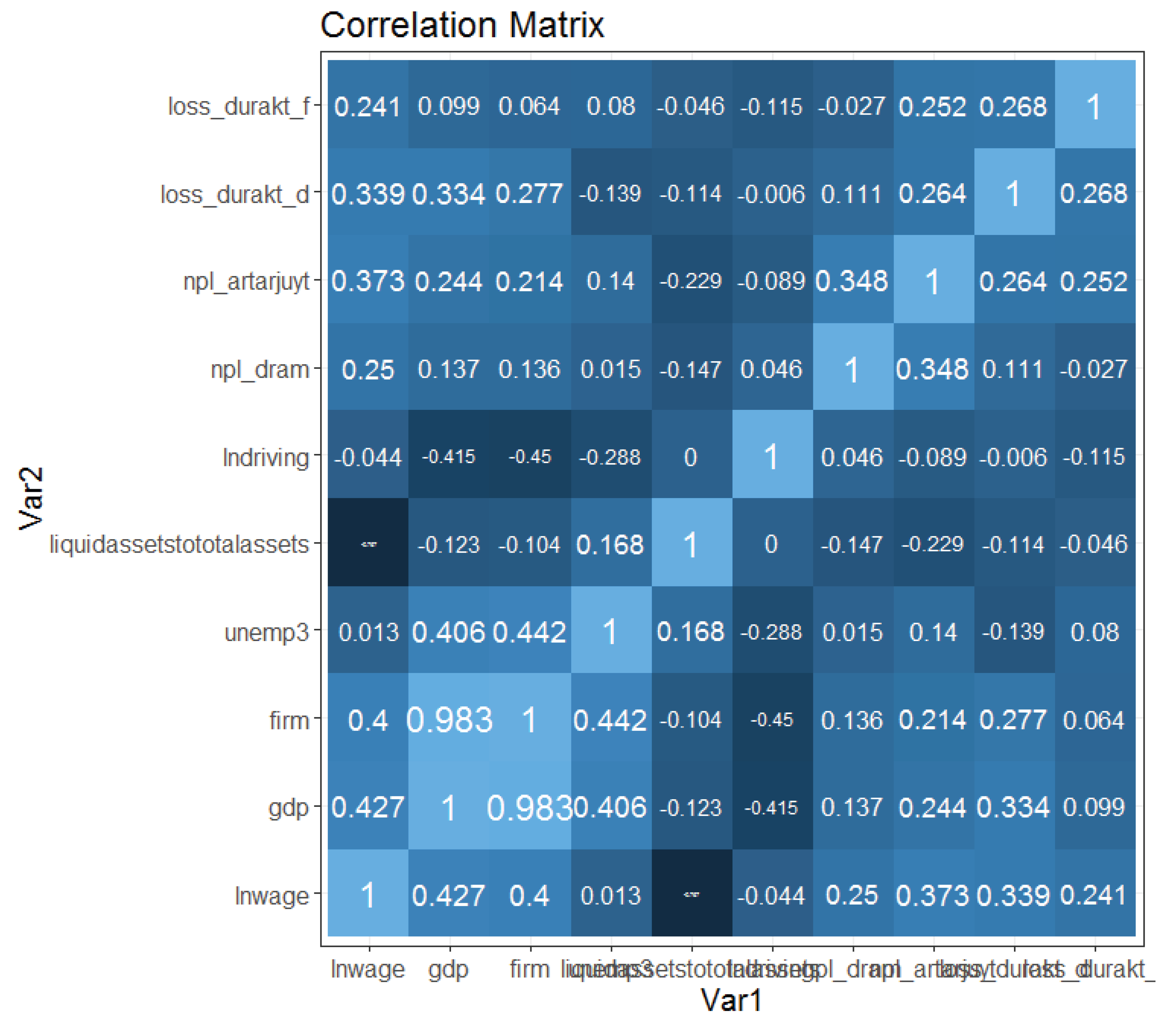
Figure 2 presents a detailed correlation matrix, which serves as a potent analytical tool for dissecting the intricate, often non-linear, relationships between bank-specific variables and macroeconomic aggregates. The correlation matrix is the linchpin of our empirical strategy, providing a comprehensive, snapshot-in-time view of the interdependence among key financial indicators. The interpretation of the matrix is complex and requires careful theoretical mapping.
Dissecting the Correlations: - Liquid Assets to Total Assets (LA/TA) and gdp: (r = -0.288). The negative correlation between the liquid asset ratio and GDP growth is both intuitively appealing and theoretically significant. This correlation suggests that as economic activity expands (GDP grows), banks are more confident in their lending activities and allocate a higher proportion of their assets to credit, potentially reducing the proportion of "idle" liquid assets. It also reflects a cyclical pattern: during economic booms, banks shift their portfolio composition from safe, low-yielding liquid assets to riskier, higher-yielding loans. Conversely, during periods of low growth or contraction (e.g., the 2020 COVID-19 shock), banks may "park" funds in liquid assets as a defensive measure, thereby increasing the LA/TA ratio. This finding aligns with the "flight to liquidity" phenomenon, which is a well-documented feature of financial systems, confirming that banks actively manage their asset-side liquidity in response to the macroeconomic cycle.
- LA/TA and NPLs: (r = 0.348). This is a particularly crucial and initially counter-intuitive correlation. It reveals a positive relationship between the liquid asset ratio and the NPL ratio. While at face value this seems contradictory (we would expect banks with more liquid assets to be more robust and have lower NPLs), the correlation can be interpreted in two non-mutually-exclusive ways. First, this may indicate that banks with higher perceived credit risk (due to a high NPL ratio) are *forced* to hold more liquid assets as a buffer against potential outflows. In this context, a high LA/TA ratio is not a sign of strength but a sign of "defensive liquidity" in the face of a deteriorating loan portfolio. Second, this could signal a "risk-return trade-off": banks with a high NPL portfolio are more constrained in their profitability and therefore have lower risk appetite, leading them to park funds in safe, liquid assets to avoid further risk-taking. This finding complicates the simple narrative that a high liquid asset ratio is unambiguously good; it suggests that in certain contexts, it may be a symptom of underlying financial fragility.
- LA/TA and Profitability (ROA, ROE): (r = -0.227, -0.229). The negative correlation with both ROA and ROE is a classic "trade-off" in banking. Holding liquid assets, while safe, is costly. The opportunity cost of holding cash or low-yielding treasury bills is the foregone interest income from lending. Therefore, banks that maintain a high buffer of liquid assets are typically less profitable than those that aggressively deploy their funds into credit. This is a fundamental tension at the heart of banking: the need for safety and liquidity versus the imperative for profitability. The correlation confirms that a purely asset-based liquidity strategy has significant profit implications.
- NPLs and lnwage: (r = 0.264). The positive correlation between NPLs and wage growth is a nuanced finding that deserves careful unpacking. On the surface, higher wages should improve household debt servicing capacity, leading to lower NPLs. The positive correlation, however, suggests a more complex dynamic. It may be that wage growth is not uniform across the economy and is higher in sectors that are more prone to economic volatility. Alternatively, it could indicate that in a period of economic expansion driven by credit growth, banks may be more lax in their underwriting standards, leading to more risky loans that ultimately become NPLs even as wages rise. This "credit-boom" effect, documented in many emerging economies, suggests that wage growth can be a deceptive metric for credit risk if it is accompanied by an over-expansion of credit to marginal borrowers.
- NPLs and gdp: (r = -0.139). This negative, albeit weak, correlation is expected. Higher economic growth (GDP) generally improves the capacity of firms to service their debt, thereby reducing NPLs. The weakness of the correlation suggests that the relationship is not immediate and is mediated by other factors, such as the quality of bank credit risk assessment and the strength of the legal framework for debt recovery. In Armenia, where the legal framework for bankruptcy and collateral enforcement is relatively underdeveloped, the transmission from GDP growth to reduced NPLs may be less efficient than in more advanced economies.
- NPLs and LA/TA: (r = 0.348). This positive correlation, as discussed earlier, suggests a dynamic of "defensive liquidity," where banks with high NPLs are forced to hold more liquid assets to cushion the shock. This is an important prudential insight: a rising LA/TA ratio alongside a rising NPL ratio may indicate systemic stress rather than financial strength.
- lnwage and unemp: (r = -0.115). This is a weak negative correlation but consistent with the "Phillips curve" logic—higher wages are associated with lower unemployment. However, the weakness of the correlation underscores the presence of structural rigidities in the Armenian labor market, which prevent a smooth substitution between wage growth and employment.
- lnwage and gdp: (r = 0.427). The moderate positive correlation between wage growth and GDP growth is intuitive. Higher economic activity leads to higher demand for labor, pushing wages up. However, the correlation is not perfect, indicating that productivity gains and changes in the labor force participation rate also play a significant role.
Theoretical Contrast and Synthesis: The correlation matrix provides a rich, multi-dimensional perspective on the interplay between the real economy and the banking system. The findings challenge a simplistic, linear view of the relationship between liquidity, profitability, and macroeconomic stability. The matrix demonstrates that liquidity is a state-dependent variable. The "best" level of liquidity is not a fixed ratio but a dynamic function of the macroeconomic environment, the quality of the loan portfolio, and the bank’s risk appetite. In periods of high GDP growth, banks can afford to have lower LA/TA ratios, redeploying liquidity into profitable lending. In periods of high NPLs, a higher LA/TA ratio is a necessary defense. This suggests that a one-size-fits-all regulatory approach to liquidity, such as a static minimum liquidity coverage ratio (LCR), may be suboptimal. A more effective approach would be a dynamic, risk-sensitive framework that adjusts required liquidity buffers based on a bank’s specific risk profile and the aggregate macroeconomic conditions.
Figure 2 Caption:
6. Conclusion and Policy Implications
This paper has provided a comprehensive analysis of liquidity management in the commercial banking sector of the Republic of Armenia, integrating a deep theoretical examination with a granular empirical investigation. Our analysis has demonstrated that liquidity is not a monolithic metric but a multi-faceted construct, encompassing funding liquidity, market liquidity, and term liquidity risk. We have shown that effective liquidity management is not merely a matter of complying with regulatory ratios but of constructing a dynamic, state-contingent framework that is responsive to both micro-prudential signals and macroeconomic shocks.
The theoretical analysis traced the evolution of liquidity management from the deterministic "golden banking rule" to the sophisticated, contingent approaches of asset-liability management, highlighting the importance of a forward-looking, cash-flow-based perspective. The empirical analysis, grounded in a balance-sheet approach, revealed profound regional heterogeneity in Armenia’s economic landscape, challenging the assumption of a unified national economic cycle. The divergent trajectories of firm formations, wages, and unemployment across different regions imply that the transmission of national monetary policy and liquidity conditions to the banking system is highly asymmetrical. Banks with a significant exposure to peripheral, high-unemployment regions face distinct liquidity risks that differ fundamentally from those of banks concentrated in the dynamic Yerevan metropolitan area. The correlation matrix analysis further illuminated the complex interplay between bank-specific variables and macroeconomic aggregates, uncovering non-linear, often counter-intuitive relationships. Notably, the positive correlation between the liquid asset ratio and non-performing loans suggests a "defensive liquidity" dynamic, where banks burdened with bad debts are forced to hold more liquid assets—a sign of underlying fragility rather than strength. The negative correlation between liquidity and profitability confirmed the fundamental trade-off between safety and returns.
These findings carry significant implications for both bank management and macroprudential policy. For bank managers, the key takeaway is that liquidity risk cannot be managed as a standalone metric. It must be integrated into a holistic risk management framework that includes credit risk assessment, capital planning, and strategic asset allocation. The analysis underscores the need for "state-contingent" strategies, where liquidity buffers are adjusted in real-time based on the bank’s specific portfolio composition and the prevailing economic climate.
For policymakers and the Central Bank of Armenia, the findings reinforce the importance of moving beyond simple, static regulatory ratios (like a minimum LCR) toward a more risk-sensitive, dynamic supervisory framework. This framework should consider regional disparities, the structure of bank funding, and the state of the macroeconomy. The correlation matrix indicates that macroprudential tools (e.g., countercyclical capital buffers, loan-to-value limits on mortgages) can be calibrated to influence the liquidity risk of the system, as they affect the behavior of both banks and borrowers. Furthermore, the evidence of regional disparities suggests the need for targeted interventions to improve financial inclusion and access to credit in peripheral regions, which could help to smooth out the uneven distribution of liquidity risks.
This paper, while comprehensive, is not without limitations. The analysis is constrained by the available data and relies on aggregate regional statistics and balance-sheet data. A future research agenda could incorporate micro-level data on firm behavior, bank-level maturity mismatch, and more granular regional data to further refine the analysis. Additionally, the application of machine learning techniques to liquidity forecasting could provide even greater predictive power.
In conclusion, this study posits that a robust and resilient banking system in Armenia requires a nuanced and dynamic approach to liquidity management—one that embraces complexity, internalizes regional heterogeneity, and is perpetually calibrated to the evolving economic landscape. This is not merely an academic exercise but a practical imperative for ensuring the stability and efficiency of the Armenian financial sector.
References
- Hutchinson, R.W.; McKillop, D. Regional financial sector models: an application to the Northern Ireland financial sector. Reg. Stud. 1990, 24, 421–431. [Google Scholar] [CrossRef]
- Knies, K. Geld und credit II. Abteilung Der Credit; Leipzig, 1876; p. 249. [Google Scholar]
- Stützel, W. Liquidität. Handwörterbuch Der Sozialwissenschaften Bd 1959(6), 622–629.
- Stützel, W. Bankpolitik heute und morgen: Ein Gutachten; Knapp, 1983. [Google Scholar]
- Zeranski, S. Liquidity at Risk zur Steuerung des liquiditätsmäßig-finanziellen Bereichs von Kreditinstituten. Risikomanagement Aus Bankenperspektive Grund. Math. Konzepte Und Anwendungsfehler 2006, 29, 199. [Google Scholar]
- Bartetzky, P. Handbuch Liquiditätsrisiko: Identifikation, Messung und Steuerung; Schäffer-Poeschel, 2008. [Google Scholar]
- Duttweiler, R. Liquidititat als Teil der bankbetreibswirtschaftlichen Finanzpolitik. In Handbuch Liquiditatrisiko: Identification, Messung und Steuerung; Schlaffel-Poeschel Verlag: Stuttgart, 2008; pp. 29–50. [Google Scholar]
- Matz, L.M. Liquidity risk management; Sheshunoff & Company, 1999. [Google Scholar]
- Özyildirim, S.; Önder, Z. Banking activities and local output growth: Does distance from centre matter? Reg. Stud. 2008, 42, 229–244. [Google Scholar] [CrossRef]
Figure 1.
Divergent Regional Trajectories of Firm Registrations, Wage Growth, and Unemployment in Armenia (2004-2020). This figure illustrates the long-run evolution of key regional indicators, revealing significant spatial heterogeneity. The data show a clustering of firm formation and high wage growth in the Yerevan metropolitan area, contrasting sharply with high unemployment and stagnating firm counts in peripheral marzes. These differences imply that the transmission of national monetary policy and liquidity conditions to the banking system is highly asymmetrical across regions.
Figure 1.
Divergent Regional Trajectories of Firm Registrations, Wage Growth, and Unemployment in Armenia (2004-2020). This figure illustrates the long-run evolution of key regional indicators, revealing significant spatial heterogeneity. The data show a clustering of firm formation and high wage growth in the Yerevan metropolitan area, contrasting sharply with high unemployment and stagnating firm counts in peripheral marzes. These differences imply that the transmission of national monetary policy and liquidity conditions to the banking system is highly asymmetrical across regions.
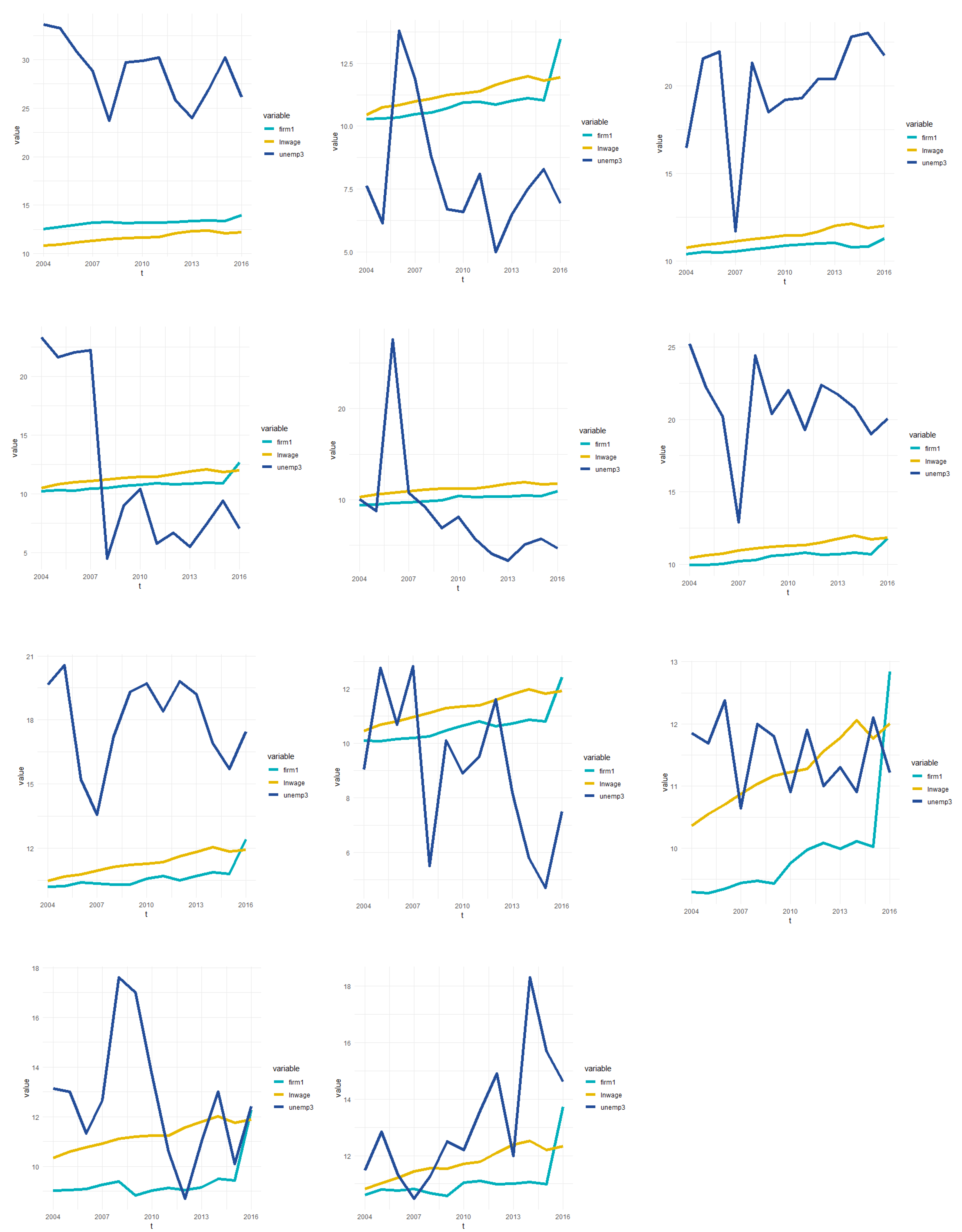
Figure 2.
Correlation Matrix of Key Banking and Macroeconomic Variables. This matrix reveals the intricate interdependencies between bank-specific indicators (liquid assets to total assets, NPLs, profitability) and macroeconomic aggregates (GDP, unemployment, wage inflation). The data show a multifaceted and often non-linear relationship, highlighting the "defensive liquidity" hypothesis (positive correlation between LA/TA and NPLs), the "profitability trade-off" (negative correlation between LA/TA and ROA/ROE), and the "cyclicality" of liquidity (negative correlation between LA/TA and GDP).
Figure 2.
Correlation Matrix of Key Banking and Macroeconomic Variables. This matrix reveals the intricate interdependencies between bank-specific indicators (liquid assets to total assets, NPLs, profitability) and macroeconomic aggregates (GDP, unemployment, wage inflation). The data show a multifaceted and often non-linear relationship, highlighting the "defensive liquidity" hypothesis (positive correlation between LA/TA and NPLs), the "profitability trade-off" (negative correlation between LA/TA and ROA/ROE), and the "cyclicality" of liquidity (negative correlation between LA/TA and GDP).
Disclaimer/Publisher’s Note: The statements, opinions and data contained in all publications are solely those of the individual author(s) and contributor(s) and not of MDPI and/or the editor(s). MDPI and/or the editor(s) disclaim responsibility for any injury to people or property resulting from any ideas, methods, instructions or products referred to in the content. |
© 2026 by the authors. Licensee MDPI, Basel, Switzerland. This article is an open access article distributed under the terms and conditions of the Creative Commons Attribution (CC BY) license (http://creativecommons.org/licenses/by/4.0/).
Copyright: This open access article is published under a Creative Commons CC BY 4.0 license, which permit the free download, distribution, and reuse, provided that the author and preprint are cited in any reuse.


