

Submitted:
31 July 2018
Posted:
31 July 2018
You are already at the latest version
Abstract
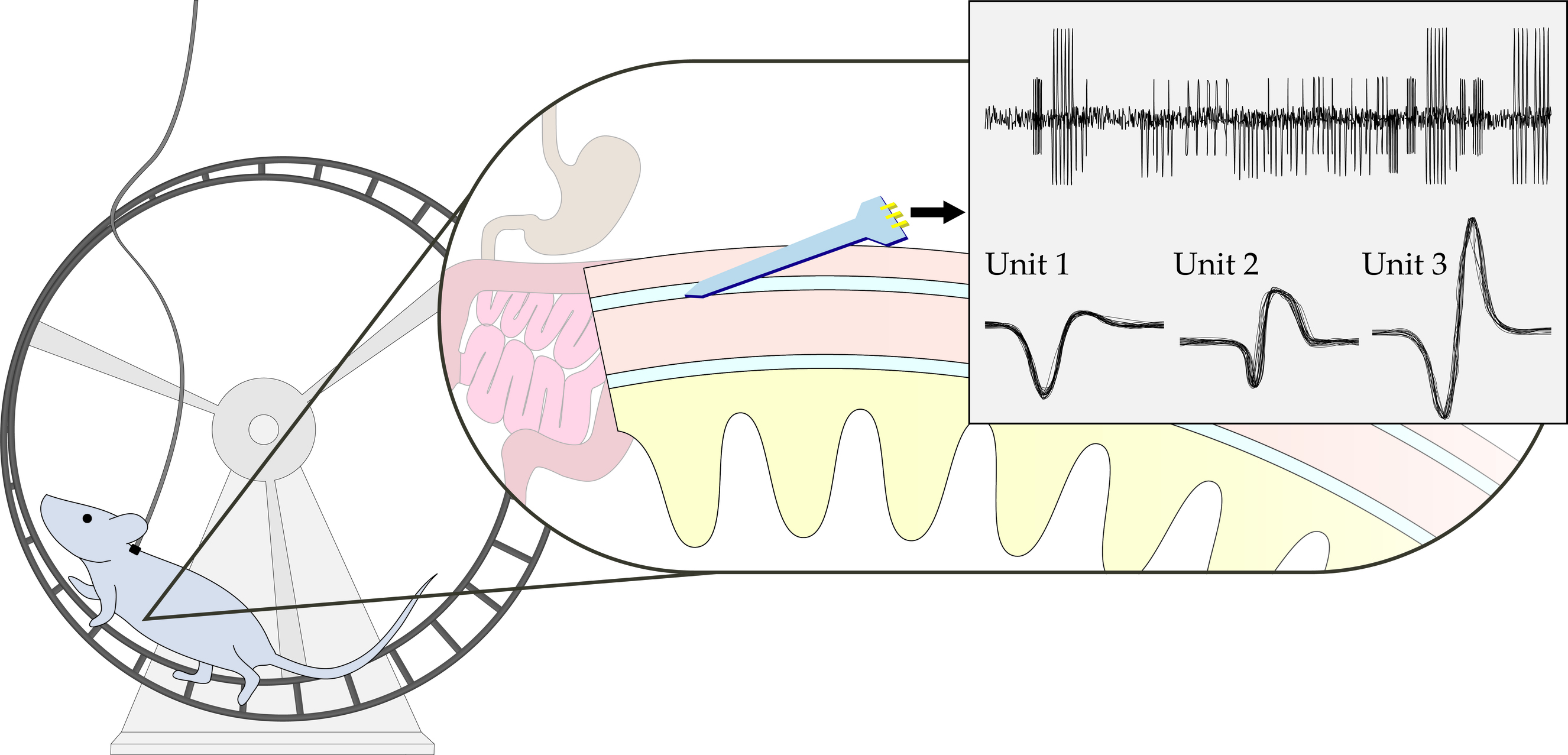
Advanced electrode designs have made single-unit neural recordings commonplace among modern neuroscience research. However, single-unit resolution remains out of reach for the intrinsic neurons of the gastrointestinal system. Single-unit recordings of the enteric (gut) nervous system have been conducted in anesthetized animal models and excised tissue, but there is a large physiological gap between awake and anesthetized animals, particularly for the enteric nervous system. Here, we describe the opportunity for advancing enteric neuroscience offered by single-unit recording capabilities in awake animals. We highlight the primary challenges to microelectrodes in the gastrointestinal system including structural, physiological, and signal quality challenges.
Keywords:
microelectrodes
; in vivo electrophysiology
; neural interfaces
; enteric nervous system
; conscious recording
; electrode implantation
Copyright: This open access article is published under a Creative Commons CC BY 4.0 license, which permit the free download, distribution, and reuse, provided that the author and preprint are cited in any reuse.


