
Submitted:
12 October 2025
Posted:
15 October 2025
You are already at the latest version
Abstract
Purpose:To develop an experiential assessment framework for cultural and creative products in the Edong region based on experience-centered research paradigms.Methods:Experience walkthroughs, in-depth interviews, and text mining techniques were deployed to extract evaluation metrics;Evaluation indicators were integrated through comprehensive experience modeling, with subsequent refinement using expert assessments of relative importance, opinion concentration, and coordination coefficients; Confirmatory factor analysis was used to validate the framework's construct validity;Empirical investigations verified the model's scientific robustness and operational efficacy.Conclusions:Validation and practical implementation demonstrate that the proposed experiential assessment framework delivers pragmatic value for evaluating cultural products in Edong. The methodology offers a novel approach for developing regional cultural product evaluation systems elsewhere.
Keywords:
user experience (UX) dimensions
; assessment metrics
; Edong-region cultural products
; text mining techniques
; confirmatory factor analysis (CFA)
1. Introduction
Edong-region folk textiles, recognized as China's National Intangible Cultural Heritage, exhibit profound historical legacy, rich thematic content, exquisite patterns, and sumptuous color palettes. These textiles embody distinctive regional aesthetics and vernacular characteristics, possessing both exceptional utilitarian functionality and high artistic merit, as particularly exemplified by Huangmei cross-stitch, Hong'an embroidery, and Yangxin fabric appliqué 1.This study aims to develop an experiential assessment framework for Edong cultural products to establish systematic evaluation methodologies that inform design innovation through systemic design principles. This approach facilitates the strategic deployment of Edong textile cultural resources, ensuring the preservation, transmission, and revitalization of these traditional crafts. The research holds significant theoretical and applied implications for safeguarding Chinese cultural traditions while enhancing the aesthetic, symbolic, and economic values of folk art.
2. Experiential Dimensions of Cultural Products
The advent of the experience economy and evolving value systems have driven a shift in consumption patterns, elevating the demand for spiritual fulfillment. Consequently, products and services that foster active user engagement and elicit deeply resonant, personalized emotional responses have become essential consumer criteria. Cultural products function not only as vital vehicles for transmitting Intangible Cultural Heritage (ICH) but also as crucial channels for fostering profound cultural understanding. To meet the demands of the experiential economy and enhance the communication of ICH's cultural significance and value, heritage-focused cultural products are increasingly emphasizing user experience (UX). This experience constitutes a complex synthesis, integrating utilitarian functionality, affectively charged responses elicited by the objects, and multisensory stimulation, which collectively shape the user's perceived value and engagement. Husserl's phenomenological framework identifies intentionality as the fundamental mechanism underpinning conscious experience 2. Within this framework, human engagement with products extends beyond mere assessment of utility, appreciation, or rejection. Instead, as Husserl argues, such engagement is actively mediated and constituted through the interdependent lenses of memory (past experiences), context (situational and cultural environment), and affect (emotional states and responses).
Cultural products differ fundamentally from conventional commodities due to their deeper layers of signification. Unlike ordinary goods, where utilitarian functionality is central to the user experience, cultural products prioritize affective resonance and the generation of meaning as key experiential dimensions. Affective responses are elicited through emotional arousal triggered by interactions with the product in specific contextual settings, which subsequently lead to valenced emotional reactions 3. According to Desmet, meaning arises from sustained user engagement with the product, fostering attachment in which personal exclusivity and aesthetic primacy play dominant roles in shaping the user’s experience of cultural products 4.Personal exclusivity operates through mechanisms of tacit knowledge. As theorized by Xu Pu, tacit knowledge is constructed through individual cognitive processes involving four stages: the expression, perception, comprehension, and abstraction of explicit knowledge. As a result, personal exclusivity can be understood as a form of individualized tacit knowledge that serves as the cognitive foundation for meaning construction.
The experience of cultural products is shaped by four core dimensions: product aesthetics, individual cognition, affective engagement, and utilitarian functionality. In addition to these intrinsic factors, brand-associated semiotics play a critical role in modulating experiential outcomes. Brand experience—defined as the affective bond and perceived sense of belonging between users and the brand 5—further enhances the experiential structure through the attribution of symbolic value. In the context of cultural products from the Edong region, this is reflected in the use of culturally specific semiotic systems. To effectively influence user experience, such regional symbols must generate cognitive resonance among consumers.
3. Experiential Research Methodologies for Cultural Products
Current experiential research on cultural and creative products is primarily applied in the fields of innovative product design and development strategy. Many scholars have drawn upon Maslow’s hierarchy of needs to guide such research. For instance, Liu Xiaobin proposed a sensory-based design framework for cultural and creative products, aiming to enhance user experience and innovation by optimizing visual, auditory, olfactory, tactile, and gustatory elements 6.Other researchers have approached the study of cultural and creative product experiences from a marketing perspective. Yang Yong, for example, identified five experiential modules—sensory, cognitive, behavioral, social, and emotional—that align with different levels of human needs. His work integrates experiential dimensions in marketing with the current development trends and challenges in the tourism-oriented cultural and creative product sector 7.In the domain of user experience design, numerous studies have been informed by Norman’s emotional design theory. Hou Jia et al., for example, organized Shanghai’s red cultural resources hierarchically according to this theory, explored users' emotional needs, applied cultural translation strategies, and constructed a localized practice model for cultural and creative product development 8. Building on the three levels of emotional design, Li Wei proposed emotional design strategies such as landscape reconstruction, participatory engagement, and scenario-based design 9.Additionally, some researchers have adopted the user experience element model to guide design practices. For instance, Zhou Rui et al. conducted experiential design and creative practice based on the user experience element model, using the creation of Jinsha’s blessing culture and its associated cultural and creative products as a case study 10.
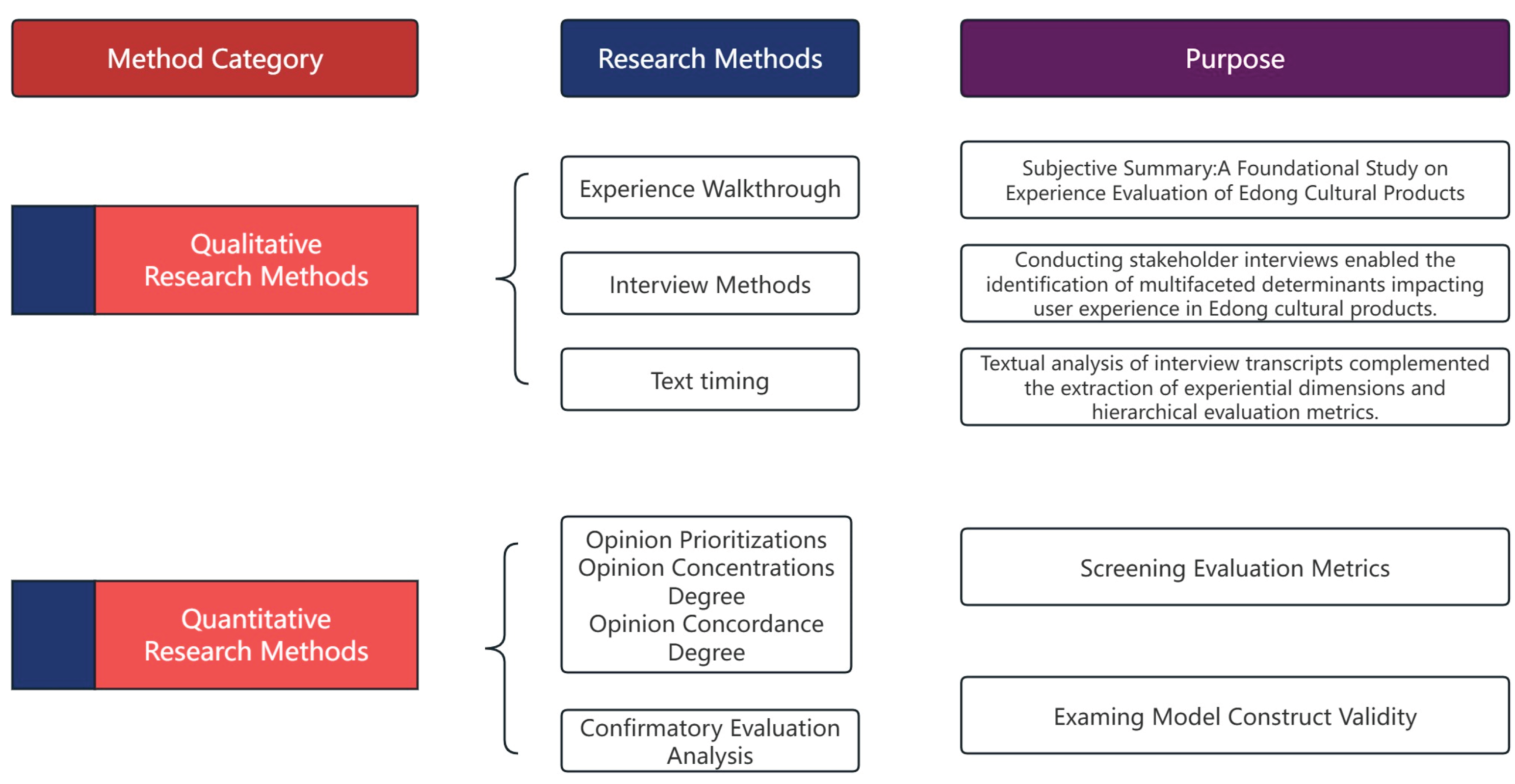
However, experiential research (Error! Reference source not found.) has rarely been incorporated into the development of evaluation models for cultural and creative products. This can be attributed to several factors. First, the limited circulation of regional cultural and creative products restricts the formation of a broad user base, thereby impeding consumers’ cognitive familiarity with such products8. Second, the construction of experiential evaluation methods for these products faces challenges related to both internal and external validity. Third, due to the specificity of the research subjects, existing evaluation approaches—such as traditional user research methods (e.g., focus groups, interviews, and questionnaires) and product-oriented methods (e.g., stylistic and technical analysis)—are insufficient to support the comprehensive development of evaluation frameworks for regionally specific cultural and creative products.
Experience walkthroughs were employed as qualitative tools to facilitate rapid assessment of user–product interactions. The analysis of walkthrough outcomes enabled the identification of key experiential determinants; however, the extraction of such factors remains inherently subjective. Nevertheless, these findings provide foundational insights for the development of an evaluation framework.Second, to ensure comprehensive data collection on cultural products from the Edong region, semi-structured interviews were conducted to explore experiential dimensions and their hierarchical organization. Subsequently, text mining techniques were applied to transform qualitative textual data into structured, actionable knowledge. This approach, which has been validated in previous studies on evaluation systems 11, ensures the completeness of information while refining experiential dimensions, hierarchical relationships, and the derivation of evaluation metrics.Finally, indicator screening was conducted using Relative Indicator Importance, Opinion Concentration Coefficients, and Inter-Rater Coordination Indices. Confirmatory factor analysis was subsequently employed to assess the construct validity of the proposed model. The integration of quantitative methods with qualitative research on a unified basis allows both approaches to complement each other, thereby enhancing the robustness and explanatory power of the evaluation process.
Figure 1.
Research methodology.
4. Development of an Assessment Framework for Edong-Region Cultural Products
4.1. Protocol-Based Experience Walkthroughs
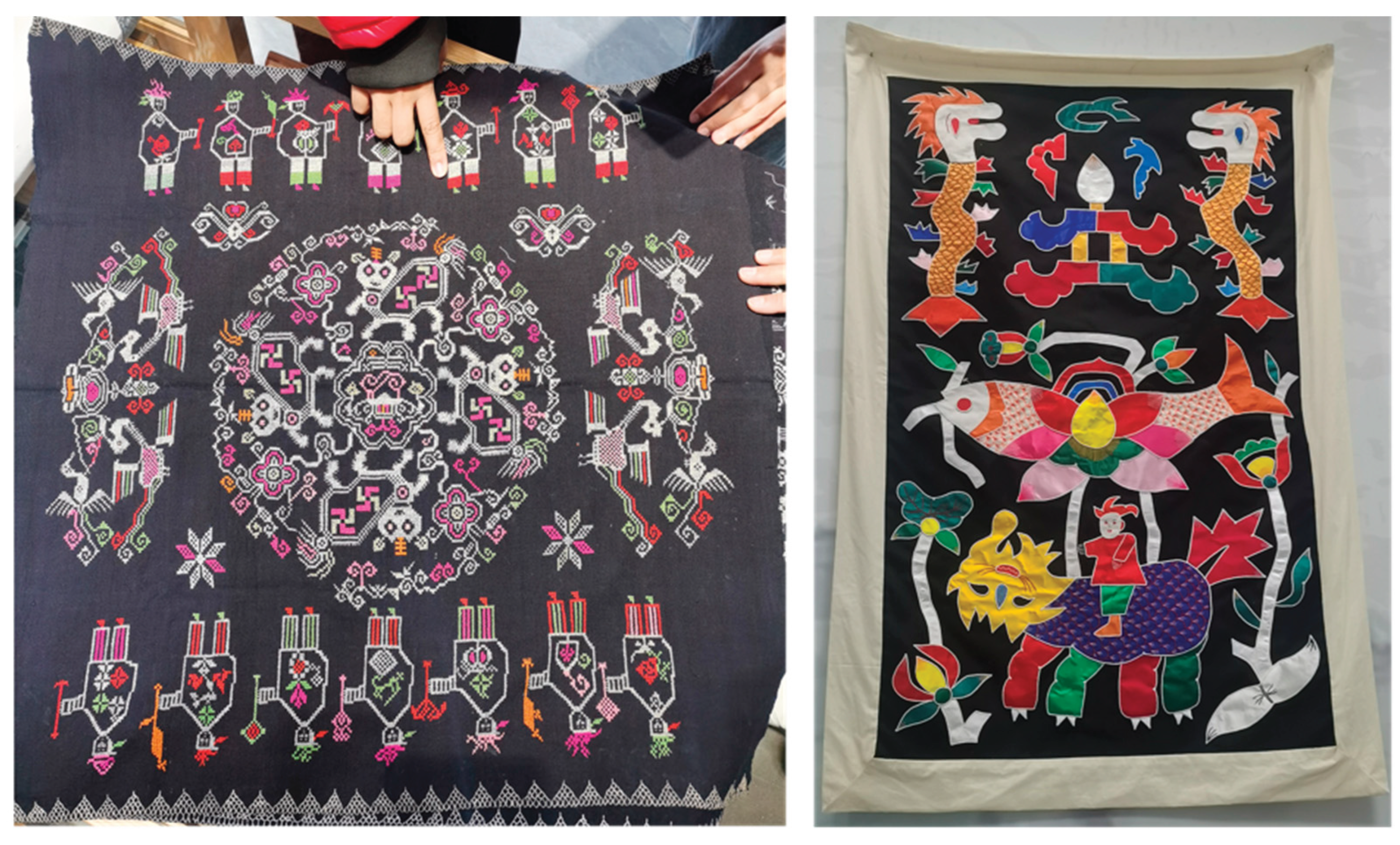
The scope of the experience walkthrough conducted by the author primarily encompassed Huangmei County and Yangxin County. During the walkthrough, identical instances of Huangmei cross-stitch and Yangxin cloth-pasting works were rarely observed, suggesting a high degree of diversity in stylistic expressions and compositional patterns.
Huangmei cross-stitch is primarily executed using colored threads on ultramarine coarse cloth as the base. White threads are employed to establish the foundational framework, while bright red, peach red, water red, and light red serve as the dominant hues. These are complemented by orange-yellow, medium yellow, and light yellow to create an overall warm color palette, interspersed with cooler tones such as light green, dark green, and lake blue. This combination results in compositions that are warm yet not overwhelming, visually rich yet harmonious in structure 1213.The resulting cross-stitch works are characterized by pronounced layering, vivid coloration, and clearly defined compositional units 14. In terms of form, Huangmei cross-stitch adopts the 45-degree cross-stitch technique as its fundamental unit, which is systematically repeated and spatially organized to construct complete patterns 14. Each unit is arranged with a high degree of precision, exhibiting clear order, structured layout, and extensive variation. The imagery is not strictly representational but instead reflects abstraction and symbolization of traditional motifs.
Yangxin cloth-pasting primarily employs black or dark blue as the background color, while pasted fabrics are composed of highly saturated colors such as red, yellow, blue, and green, often inlaid with pure white and pure black to enhance visual contrast [15]. In terms of form, the modeling emphasizes largeness and fullness, frequently exaggerating the heads and eyes of figures or animals to convey symbolic meanings of wholeness and aesthetic abundance 15.The modeling techniques utilized include mental image modeling, symbolic motifs, decorative deformation, and geometric patterning. Among these, mental image modeling serves as the primary approach in Yangxin cloth-pasting, with most motifs derived from representations of animals and plants. Scissors are used as creative tools—replacing traditional brushes—and there are no predetermined templates or diagrams. Artisans cut freely based on mental visualization, shaping forms in accordance with their intuitive perception.The compositional content typically centers around traditional auspicious themes, such as Qilin Sending a Child, Lion Rolling a Hydrangea, and Phoenix Playing with Peony 16.
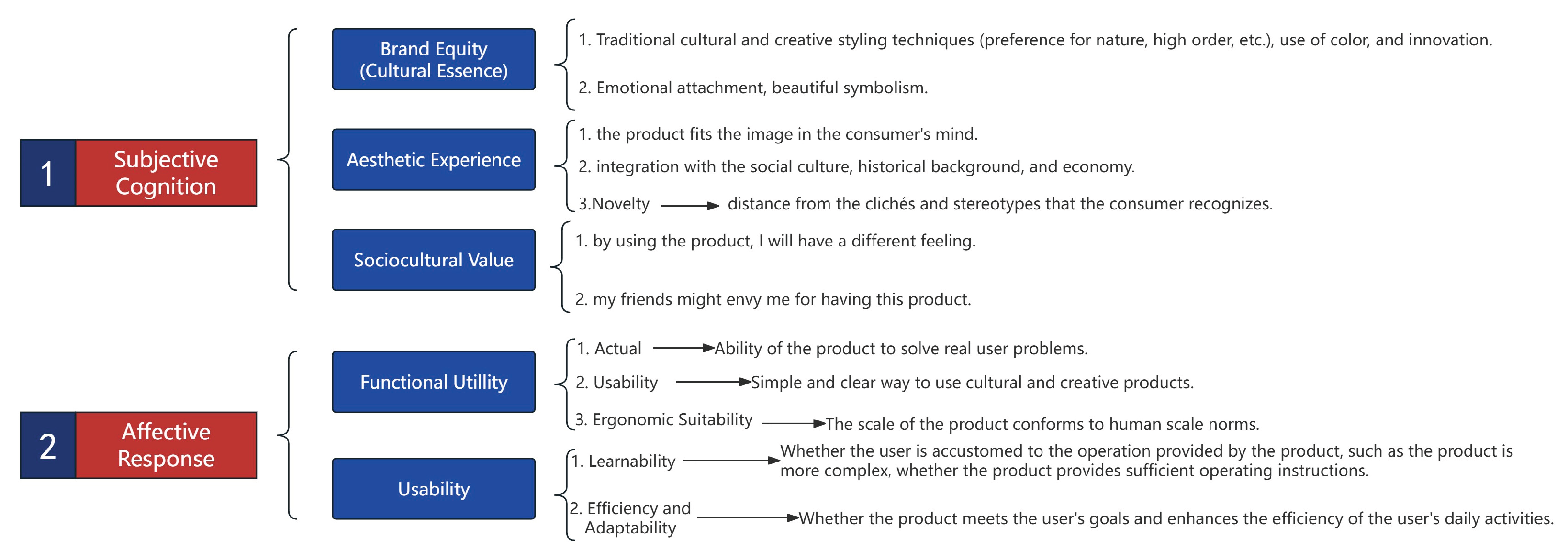
According to the development of the assessment framework, the experiential structure of Edong cultural and creative products can be deconstructed as illustrated in Error! Reference source not found.. The aesthetic function refers primarily to the three aspects proposed by Crilly: (1) alignment with the consumer’s mental image, (2) integration with social culture, historical context, and economic conditions, and (3) deviation from cognitive clichés and stereotypes, also described as novelty 17.The functionality dimension draws on Park’s definition of product practicality 18, which in the context of Edong cultural and creative products is expressed through both social value and utilitarian performance. The ergonomic scale refers to the dimensional conformance of daily-use items (Type III products) to the 50th percentile of human body measurements, ensuring accessibility and usability for the majority of users 19.As a qualitative research method, the experience walkthrough enables the rapid identification of experiential issues in existing products. However, it does not involve user testing or behavioral analysis, and its findings are therefore inherently subjective. To comprehensively capture the experiential interaction between subject and object, it is also essential to investigate the user perspective, which constitutes the subjective dimension of product experience.
Figure 3.
Conclusion of the experience walk - Erdong CCP design experience level.
4.2. Interview-Driven Experiential Mining
In light of the limitations associated with qualitative methods for Edong-region cultural products, text mining was adopted as a quantitative text-processing approach to comprehensively capture stakeholder perspectives, even under small-sample constraints. As the source data were exclusively derived from interviews, this approach is herein referred to as interview mining. In parallel, literature-based text mining was conducted to systematically extract prevailing evaluation priorities from academic discourse in the field of cultural product research.
Given the varying evaluation priorities of stakeholders and the disciplinary diversity among experts and scholars, both interview data and academic literature contain numerous domain-specific terms. However, when semantically equivalent terms recur frequently across a broad range of sources, such convergence suggests a high degree of conceptual consensus. Text mining is particularly well-suited to capturing such patterns, thereby supporting its validity in the selection of evaluation indicators.
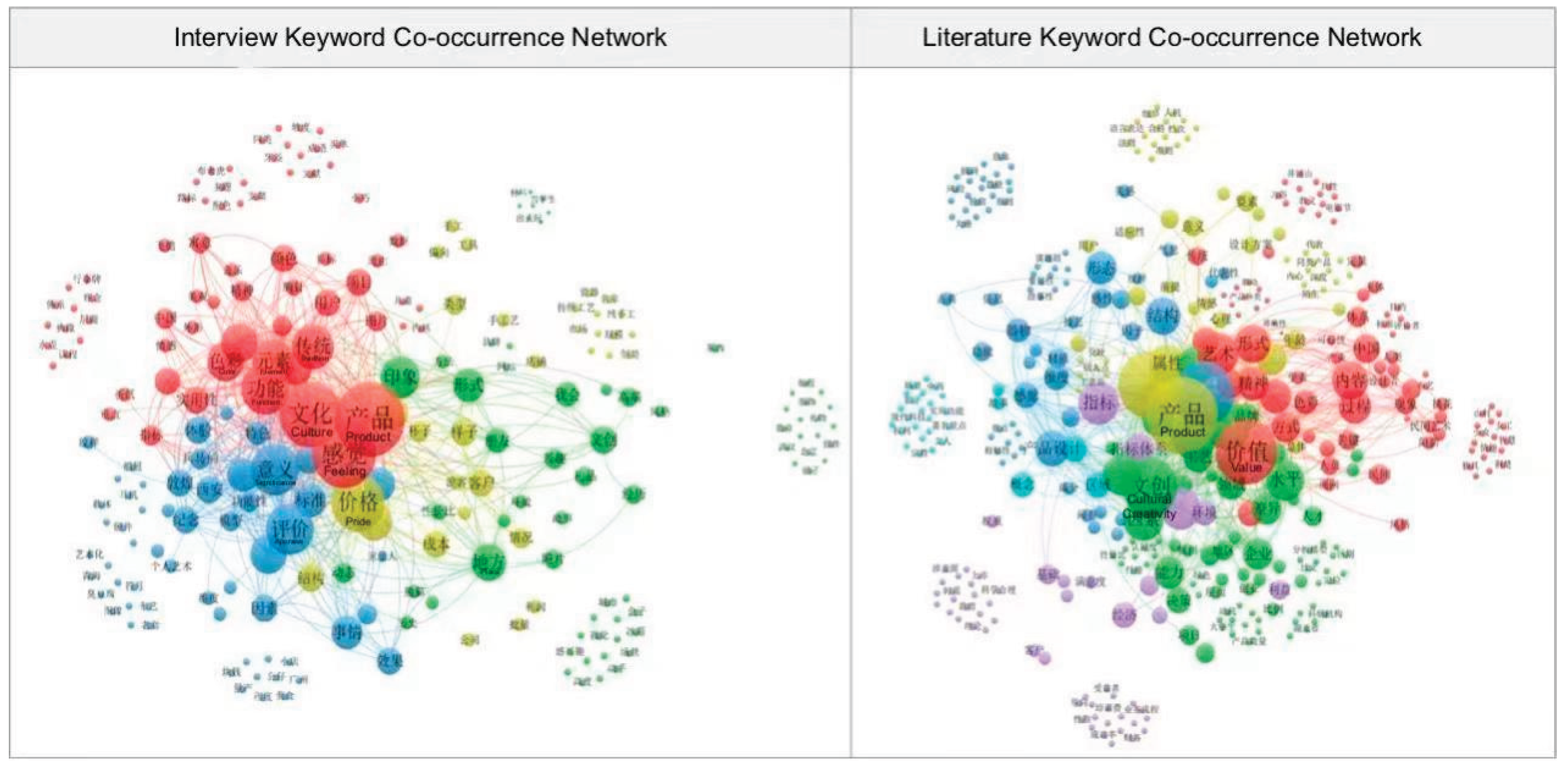
A total of 20 stakeholders involved in Edong cultural and creative products—including cultural affairs officials, managers of cultural and creative enterprises, intangible cultural heritage (ICH) artisans, retail store directors, designers, and consumers—were invited to participate in semi-structured interviews. Drawing on materials and images collected during the experience walkthrough, the interviews focused on the design and experiential aspects of Edong cultural and creative products. All interview narratives were transcribed from speech to text using the iFlytek Tingjian platform. Each interview lasted approximately 30–40 minutes, yielding an average transcript of 5,300 words per participant. Subsequently, Python was used to extract keywords from the entire corpus for topic modeling based on Latent Dirichlet Allocation (LDA) 20. The resulting data were visualized using VOSviewer 21, as shown in Error! Reference source not found.. In the visualization, larger circular nodes represent keywords with higher significance, highlighting key research foci. Colors indicate distinct thematic clusters, while connecting lines denote the strength of association between terms—where denser connections reflect greater user attention to that topic.
Figure 2.
Huangmei cross-stitch(left) and Yangxin cloth sticker (right).
The left panel of Error! Reference source not found. presents the keyword co-occurrence network generated from text mining of stakeholder interview transcripts. Based on the modularity coefficient, all evaluation-related keywords are grouped into four distinct clusters, each represented by a different color. The red cluster reflects evaluations concerning the cultural and product attributes of Edong cultural and creative products. The blue cluster, in which the keyword "meaning" exhibits the highest betweenness centrality, primarily encompasses factors influencing consumer decision-making.The yellow cluster is centered around the keyword "price" and includes several terms related to the evaluation criteria of enterprise decision-makers. The green cluster pertains to users’ cultural and emotional experiences. In contrast, the right panel of Error! Reference source not found., derived from academic literature, highlights keywords related to government decision-making and cultural characteristics—such as macro-level concepts like "region" and "environment", and culturally symbolic terms like "art" and "spirit". These dimensions are not prominently featured in the stakeholder-derived corpus on the left. Since the corpus in the right panel was not specifically developed for Edong cultural and creative products, the policy- and culture-oriented indicators it reveals can serve as valuable supplements to the experiential hierarchy established for Edong cultural and creative products.
Figure 4.
Semantic network of stakeholder interviews and Literature.
A total of 192 keywords were extracted through interview mining. Following expert consultation, 39 evaluation indicators were identified using the affinity diagram method (Error! Reference source not found.). The refinement process involved the following steps: (1) eliminating overly abstract terms lacking specific meaning; (2) replacing emotionally charged words with neutral equivalents; and (3) grouping semantically similar terms under broader, superordinate categories.

Table 1.
Relative Importance of Expert Opinions, Opinion Concentration, Opinion Coordination.
| Experiential Hierarchy | Indicator(s) | Relative Importance | Opinion Concentration | Opinion Coordination |
|---|---|---|---|---|
| Comprehensive Experience | Social Benefit | 6.170 | 0.464 | 0.15 |
| Cost-Performance Ratio | 4.863 | 0.301 | 0.255 | |
| Cultural Connotation | 6.157 | 0.399 | 0.131 | |
| Cultural Inheritance | 6.157 | 0.516 | 0.173 | |
| Inheritability | 5.529 | 0.307 | 0.217 | |
| Representativeness | 5.680 | 0.320 | 0.203 | |
| Regional Characteristics | 5.745 | 0.353 | 0.159 | |
| Symbolism | 4.889 | 0.373 | 0.258 | |
| Sense of Atmosphere | ||||
| Attraction | 5.935 | 0.366 | 0.165 | |
| Accuracy | ||||
| Sense of the Times | ||||
| Useful Experience | Novelty | |||
| Decorativeness | 5.935 | 0.379 | 0.146 | |
| Craftsmanship | 5.601 | 0.320 | 0.197 | |
| Commemorative Value | 5.765 | 0.373 | 0.206 | |
| User Pleasure | 6.085 | 0.438 | 0.162 | |
| Innovation | 5.732 | 0.340 | 0.189 | |
| Narrative Quality | ||||
| Practicality | 5.209 | 0.235 | 0.261 | |
| Interactivity | 4.627 | 0.392 | 0.249 | |
| Branded Experience | Clear User Positioning | |||
| Economic Benefit | 5.379 | 0.333 | 0.233 | |
| Economic Efficiency | 4.784 | 0.379 | 0.249 | |
| Mass Production | 4.889 | 0.386 | 0.218 | |
| Commercialization | ||||
| Branding | ||||
| Artistic Quality | ||||
| Stylization | ||||
| Differentiation | 5.111 | 0.438 | 0.27 | |
| Acceptance | 5.203 | 0.333 | 0.221 | |
| Systematicity | ||||
| Usable Experience | Feasibility | 5.268 | 0.373 | 0.221 |
| Usability | 5.333 | 0.451 | 0.181 | |
| Structure | 4.771 | 0.464 | 0.207 | |
| Legal and Regulatory Compliance | 5.961 | 0.431 | 0.206 | |
| Ergonomic Suitability | 5.386 | 0.333 | 0.229 | |
| Environmental Friendliness | 5.784 | 0.412 | 0.207 | |
| Experiential Quality | 5.327 | 0.294 | 0.245 |
4.3. Metric System Development
By synthesizing the data obtained from experience walkthroughs and interview mining, it was observed that the experiential hierarchy of Edong cultural and creative products centers on six key dimensions: brand experience, social value, emotional engagement, aesthetic appeal, commercial viability, and regional characteristics. Drawing on Corey Stern’s CUBI user experience model, these dimensions were further abstracted into four overarching experiential categories: comprehensive experience, useful experience, branded experience, and usable experience. Based on this classification, a design evaluation model for Edong cultural and creative products was subsequently developed.
First, stakeholders were invited to complete a questionnaire assessing the perceived importance of evaluation indicators for Edong cultural and creative products. The questionnaire employed a seven-point Likert scale to capture varying levels of importance. A total of 152 valid responses were collected. To evaluate the internal consistency of the data, Cronbach’s alpha was calculated, yielding a coefficient of 0.906. Additionally, the Kaiser–Meyer–Olkin (KMO) measure was 0.763, indicating that the data possessed satisfactory reliability and sampling adequacy for further factor analysis.
The arithmetic mean of each indicator was calculated to determine its relative importance—higher mean values indicated greater importance. The mode percentage was used to assess the concentration of expert opinions: lower mode percentages suggested weaker consensus. To evaluate the degree of coordination among expert judgments, the coefficient of variation was employed; a higher coefficient reflected lower consistency in expert ratings 22. Based on these metrics, an initial round of indicator screening was performed. Given the small differences in opinion concentration across indicators, both relative importance and coordination degree were jointly considered. Indicators with an arithmetic mean below 5 and a coefficient of variation greater than 0.27 were excluded. Following this screening process, 28 indicators were retained.
4.4. Confirmatory Factor Analysis (CFA)
To verify the validity of the qualitative classification derived from the affinity diagram, Confirmatory Factor Analysis (CFA) 23 was conducted. The CFA model was developed using SPSS Amos, and the evaluation model for Edong cultural and creative product design was subsequently revised and tested based on model fit indices and modification indices 24. In the first-round CFA, the standardized factor loadings for the indicators “cost-performance ratio” and “practicality” were 0.413 and 0.325, respectively—both below the commonly accepted threshold of 0.5. Accordingly, these two indicators were removed, and a second-round CFA was performed.
The goodness of fit for the Confirmatory Factor Analysis (CFA) model was assessed using a range of standard indices, including the Goodness-of-Fit Index (GFI), Comparative Fit Index (CFI), Tucker–Lewis Index (TLI), Root Mean Square Error of Approximation (RMSEA), and the Chi-Square to Degrees of Freedom Ratio (CMIN/DF). A CMIN/DF value between 1 and 3 indicates an excellent model fit, while values between 3 and 5 are generally considered acceptable. An RMSEA value below 0.05 suggests an excellent fit, and values below 0.08 indicate an acceptable fit. For incremental fit indices such as GFI, NFI, IFI, TLI, and CFI, values above 0.90 are typically regarded as excellent, whereas values above 0.80 are considered acceptable 25.
The overall fit indices of the second-round CFA model were as follows: CFI = 0.897, GFI = 0.895, TLI = 0.877, CMIN/DF = 1.823, and RMSEA = 0.075, indicating an acceptable level of model fit. In the third round, the model was revised based on modification indices to improve the TLI. The updated fit indices were: CFI = 0.913, GFI = 0.901, TLI = 0.912, CMIN/DF = 1.679, and RMSEA = 0.057. These results demonstrate a good model fit, with all indices falling within acceptable thresholds.
According to the standardized path coefficients, the relative weights of each observed variable can be determined 26. These weights represent the contribution of each indicator within the design evaluation system of Edong cultural and creative products. The weight of each indicator is calculated using the following formula:
Wij is the weight of the j-th indicator under the i-th factor; λij is the standardized factor loading of the j-th indicator under the i-th factor; ∑njλij the sum of the standardized factor loadings of all indicators under the i-th factor 27. The weights of the experiential evaluation indicators calculated according to the formula are shown in Error! Reference source not found..
Table 2.
Standardized Path Coefficient and Relative Weight.
| Path | Factor Loading | Relative Weight | AVE | CR | ||
|---|---|---|---|---|---|---|
| Attraction | <--- | Comprehensive Experience | 0.712 | 0.113 | 0.6248 | 0.9297 |
| Symbolism | <--- | Comprehensive Experience | 0.671 | 0.107 | ||
| Regional Characteristics | <--- | Comprehensive Experience | 0.775 | 0.123 | ||
| Representativeness | <--- | Comprehensive Experience | 0.766 | 0.122 | ||
| Inheritability | <--- | Comprehensive Experience | 0.766 | 0.122 | ||
| Cultural Inheritance | <--- | Comprehensive Experience | 0.857 | 0.136 | ||
| Cultural Connotation | <--- | Comprehensive Experience | 0.875 | 0.139 | ||
| Social Benefit | <--- | Comprehensive Experience | 0.876 | 0.139 | ||
| Interactivity | <--- | Useful Experience | 0.558 | 0.136 | 0.4762 | 0.8435 |
| Decorativeness | <--- | Useful Experience | 0.715 | 0.174 | ||
| Innovation | <--- | Useful Experience | 0.687 | 0.167 | ||
| User Pleasure | <--- | Useful Experience | 0.793 | 0.193 | ||
| Commemorative Value | <--- | Useful Experience | 0.73 | 0.177 | ||
| Craftsmanship | <--- | Useful Experience | 0.633 | 0.154 | ||
| Recognition | <--- | Branded Experience | 0.761 | 0.221 | 0.488 | 0.821 |
| Differentiation | <--- | Branded Experience | 0.644 | 0.187 | ||
| Mass Production | <--- | Branded Experience | 0.652 | 0.189 | ||
| Economic Efficiency | <--- | Branded Experience | 0.615 | 0.178 | ||
| Economic Benefit | <--- | Branded Experience | 0.779 | 0.226 | ||
| Experiential Quality | <--- | Usable Experience | 0.832 | 0.158 | 0.5708 | 0.9017 |
| Environmental Friendliness | <--- | Usable Experience | 0.712 | 0.136 | ||
| Ergonomic Suitability | <--- | Usable Experience | 0.794 | 0.151 | ||
| Legal and Regulatory Compliance | <--- | Usable Experience | 0.804 | 0.153 | ||
| Structure | <--- | Usable Experience | 0.543 | 0.103 | ||
| Usability | <--- | Usable Experience | 0.768 | 0.146 | ||
| Feasibility | <--- | Usable Experience | 0.797 | 0.152 | ||
4.5. Operational Definitions of Metrics
The purpose of defining operational indicators is to ensure clarity for evaluators and maintain consistency throughout the evaluation process. Within the dimension of comprehensive experience, attraction is regarded in current research as a pure valence concept—either positive or negative 28. Kim argues that attraction influences users’ emotional responses to products 29. Therefore, in the context of Edong cultural and creative products, attraction should be assessed based on the novelty of product form and appearance, as well as the continuity of traditional pattern elements.Symbolism is reflected in the way Edong textile products draw inspiration from natural motifs and emotional values. Accordingly, these cultural and creative products should express symbolic meaning through their design language. Representativeness concerns whether the product design reflects the landscapes and local customs of the Edong region. In concrete design terms, this involves alignment with the formal and chromatic characteristics of existing Edong textile-based cultural products. Closely related to representativeness, inheritability refers to the integration of innovative interpretations of traditional motifs. This includes the processes of symbolization, abstraction, and image transformation of conventional patterns, alongside the incorporation of modern aesthetic principles and the expression of local cultural ideals such as blessings and auspiciousness.
Within the dimension of impactful experience, innovation is primarily manifested through deviations from consumers’ established cognitive schemas. As the dominant sensory channel in product interaction, visual perception plays a pivotal role in assessing innovation—particularly for Edong cultural products, which are characterized by strong visual features 30.Closely related to representativeness and inheritability, memorability refers to the degree to which design elements of Edong cultural and creative products—such as cultural content and modes of expression—are retained in users’ cognition. The longer these elements persist in memory, the higher the product’s memorability. In the case of traditional Huangmei cross-stitch, 45-degree diagonal stitches constitute the basic structural unit. Pattern formation is achieved through techniques such as repetition, scaling, and layering. In evaluating textile heritage products, fidelity to traditional craftsmanship is a key criterion. For innovative derivatives (e.g., decorative or functional items), craftsmanship is assessed based on the extent to which original embroidery patterns are preserved and interpreted.
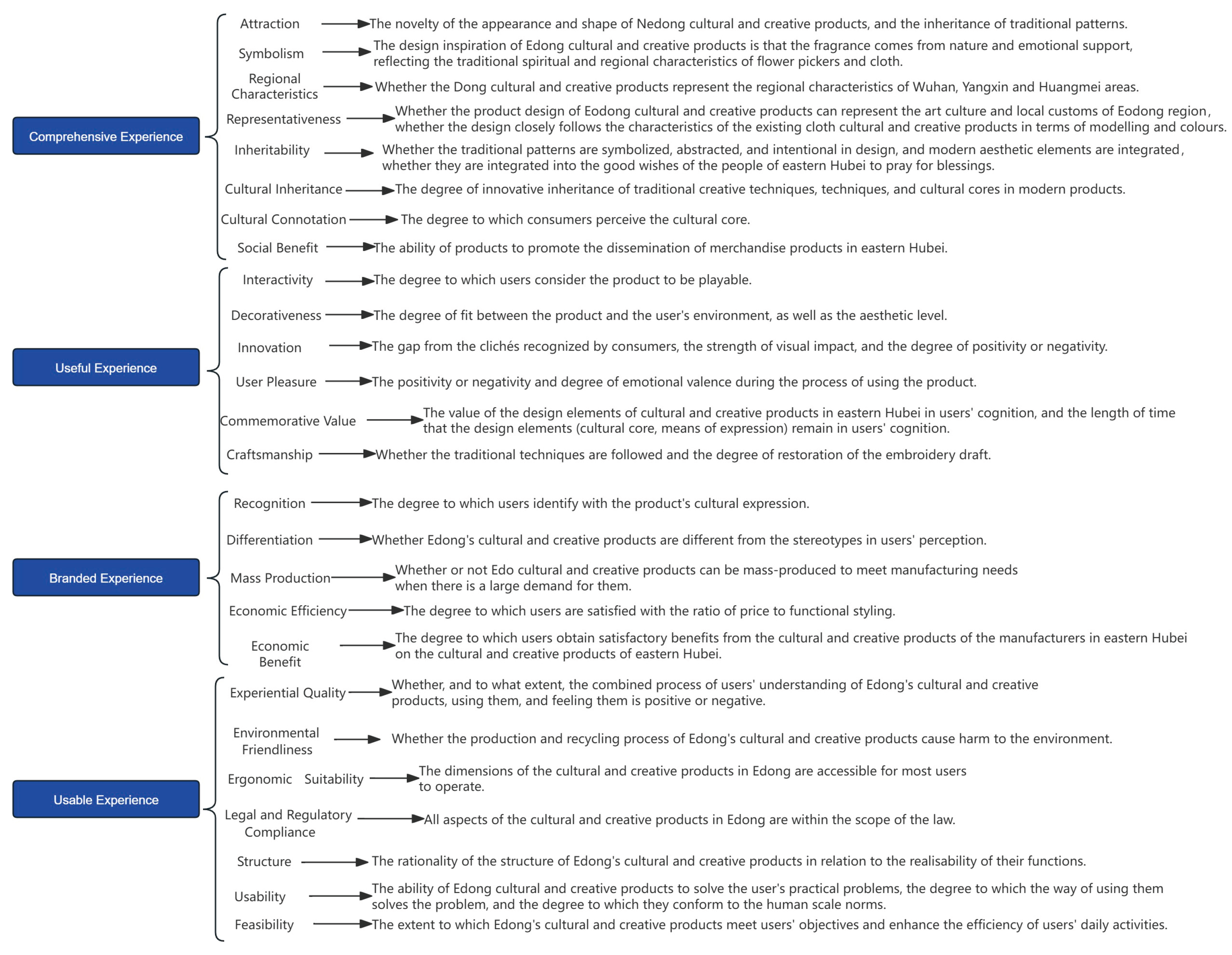
In the dimension of usable experience, ergonomics and usability constitute the core components. As an outcome of cognitive processing, user experience can be either positive or negative, directly influencing the overall experiential quality. Therefore, the evaluation of experiential quality primarily concerns whether the entire process—from users’ understanding and interaction to emotional response—is perceived as positive. Usability in this context overlaps with functional practicality and is reflected in three dimensions: practicality, ease of use, and ergonomic compliance. Specifically, usability encompasses aspects such as learnability, efficiency, and adaptability during product interaction. The operational and descriptive definitions of the corresponding indicators are illustrated in Error! Reference source not found..
Figure 5.
Evaluation index and operational definition of CCP experience in Edong.
5. Validation and Application of the Evaluation Model.
Based on the relative weights, each evaluation indicator was assigned a score on a 100-point scale (see Error! Reference source not found.). Nine Edong cultural and creative products, each representing a different theme and currently available on the market, were randomly selected for assessment (Error! Reference source not found.). A panel of experts evaluated the products according to the established indicators, and the scoring results are presented in Table 3. Preliminary market research indicates that the score rankings of the nine products are generally positively correlated with their actual market performance.
Figure 6.
Erdong cultural and creative products.
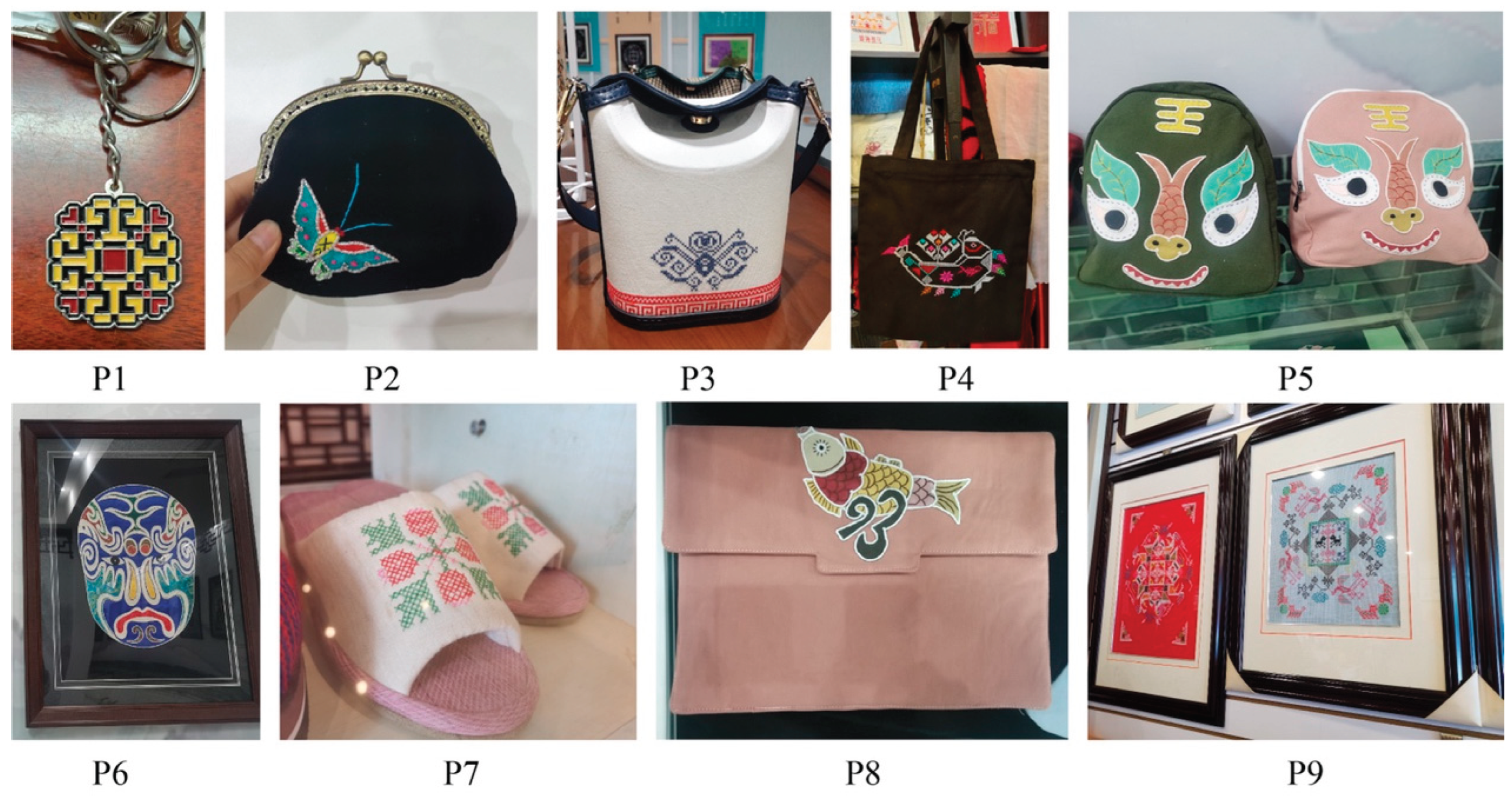
Table 3.
Scores of cultural and creative products in Edong.
| Evaluation Hierarchy | Evaluation indicators | P1 | P2 | P3 | P4 | P5 | P6 | P7 | P8 | P9 |
|---|---|---|---|---|---|---|---|---|---|---|
| Product Commercial Logic | Recognition (5分) |
4.3 | 2.1 | 2.1 | 2.1 | 1.4 | 4.3 | 3.6 | 2.1 | 5.0 |
| Recognition (5分) |
3.6 | 3.6 | 3.6 | 1.4 | 3.6 | 1.4 | 0.7 | 2.9 | 1.4 | |
| Mass Production (5分) |
5.0 | 2.1 | 2.9 | 2.1 | 4.3 | 2.9 | 2.1 | 3.6 | 1.4 | |
| Economic Efficiency (4分) |
2.9 | 0.6 | 0.6 | 0.6 | 0.6 | 0.6 | 0.6 | 0.6 | 2.9 | |
| Economic Benefit (6分) |
1.7 | 0.9 | 0.9 | 0.9 | 0.9 | 0.9 | 0.9 | 0.9 | 3.4 | |
| User Profiling | Interactivity (3分) |
2.1 | 1.7 | 1.3 | 0.9 | 2.1 | 0.9 | 0.4 | 1.3 | 1.3 |
| Decorativeness (4分) |
3.4 | 2.9 | 3.4 | 1.1 | 2.9 | 1.7 | 1.1 | 2.3 | 3.4 | |
| Innovation (4分) |
2.3 | 3.4 | 3.4 | 1.1 | 2.9 | 0.6 | 1.1 | 1.7 | 1.7 | |
| User Pleasure (5分) |
3.6 | 2.9 | 2.9 | 1.4 | 4.3 | 2.1 | 1.4 | 2.1 | 3.6 | |
| Commemorative Value (5分) |
5.0 | 2.1 | 2.9 | 2.9 | 3.6 | 3.6 | 2.9 | 1.4 | 4.3 | |
| Craftsmanship (4分) |
1.1 | 3.4 | 3.4 | 3.4 | 3.4 | 4.0 | 4.0 | 4.0 | 4.0 | |
| Design-Oriented Cultural Resource Utilization | Attraction (2分) |
1.7 | 0.6 | 1.7 | 0.6 | 0.6 | 0.6 | 0.9 | 1.1 | 1.1 |
| Symbolism (2分) |
1.7 | 1.7 | 1.4 | 1.7 | 1.7 | 1.7 | 2.0 | 2.0 | 2.0 | |
| Regional Characteristics (3分) |
2.6 | 2.1 | 1.7 | 2.6 | 3.0 | 1.7 | 2.6 | 2.1 | 3.0 | |
| Representativeness (3分) |
2.1 | 1.7 | 2.1 | 2.6 | 3.0 | 0.9 | 1.7 | 0.9 | 3.0 | |
| Inheritability (3分) |
0.9 | 0.4 | 0.9 | 1.7 | 2.6 | 0.4 | 0.4 | 1.7 | 2.1 | |
| Cultural Inheritance (4分) |
1.1 | 2.3 | 3.4 | 4.0 | 4.0 | 1.1 | 2.3 | 2.3 | 3.4 | |
| Cultural Connotation (4分) |
3.4 | 2.3 | 3.4 | 2.9 | 3.4 | 1.7 | 2.9 | 2.3 | 4.0 | |
| Social Benefit (4分) |
4.0 | 1.1 | 1.1 | 1.1 | 1.1 | 1.1 | 1.1 | 1.1 | 1.7 | |
| Product Ergonomics & Usability | Experiential Quality (4分) |
3.4 | 3.4 | 2.9 | 2.9 | 3.4 | 1.7 | 2.3 | 2.3 | 2.9 |
| Environmental Friendliness (3分) |
2.1 | 3.0 | 2.6 | 3.0 | 3.0 | 2.1 | 3.0 | 3.0 | 2.1 | |
| Ergonomic Suitability (4分) |
4.0 | 3.4 | 2.9 | 4.0 | 3.4 | 3.4 | 4.0 | 2.9 | 3.4 | |
| Legal and Regulatory Compliance (4分) |
4.0 | 4.0 | 4.0 | 4.0 | 4.0 | 4.0 | 4.0 | 4.0 | 4.0 | |
| Structure (2分) |
2.0 | 2.0 | 2.0 | 2.0 | 2.0 | 2.0 | 2.0 | 2.0 | 2.0 | |
| Usability (4分) |
4.0 | 4.0 | 4.0 | 4.0 | 2.9 | 2.9 | 1.1 | 1.7 | 2.3 | |
| Feasibility (4分) |
4.0 | 2.3 | 2.9 | 3.4 | 2.3 | 2.3 | 2.9 | 2.9 | 2.3 | |
| Composite Score | 100 | 76.1 | 60.1 | 64.3 | 58.4 | 70.3 | 50.6 | 52.0 | 55.1 | 71.9 |
6. Discussion and Conclusion
6.1. Discussion
The evaluation model is presented in the form of indicators; however, this does not imply that all Edong cultural and creative products must be designed or assessed strictly according to these predefined criteria. As cultural and creative products from different regions and across various categories gain broader consumer recognition, the diversity in their forms, stylistic expressions, and color schemes will naturally increase. Therefore, it would be inappropriate to rigidly regard these indicators as universal design standards. This caution is warranted for two primary reasons:
(1) The theoretical evaluation model is a hypothetical model, and its practicality still needs to be verified in practice. The operational definitions and descriptive definitions of its specific references also need to be modified in practice.
(2) Any evaluation model will be constrained by internal and external validity. If the model is divorced from the theoretical context and directly applied in practice, it will lead to low external validity, and the significance of evaluation will cease to exist. This is more evident in models with a wider coverage.
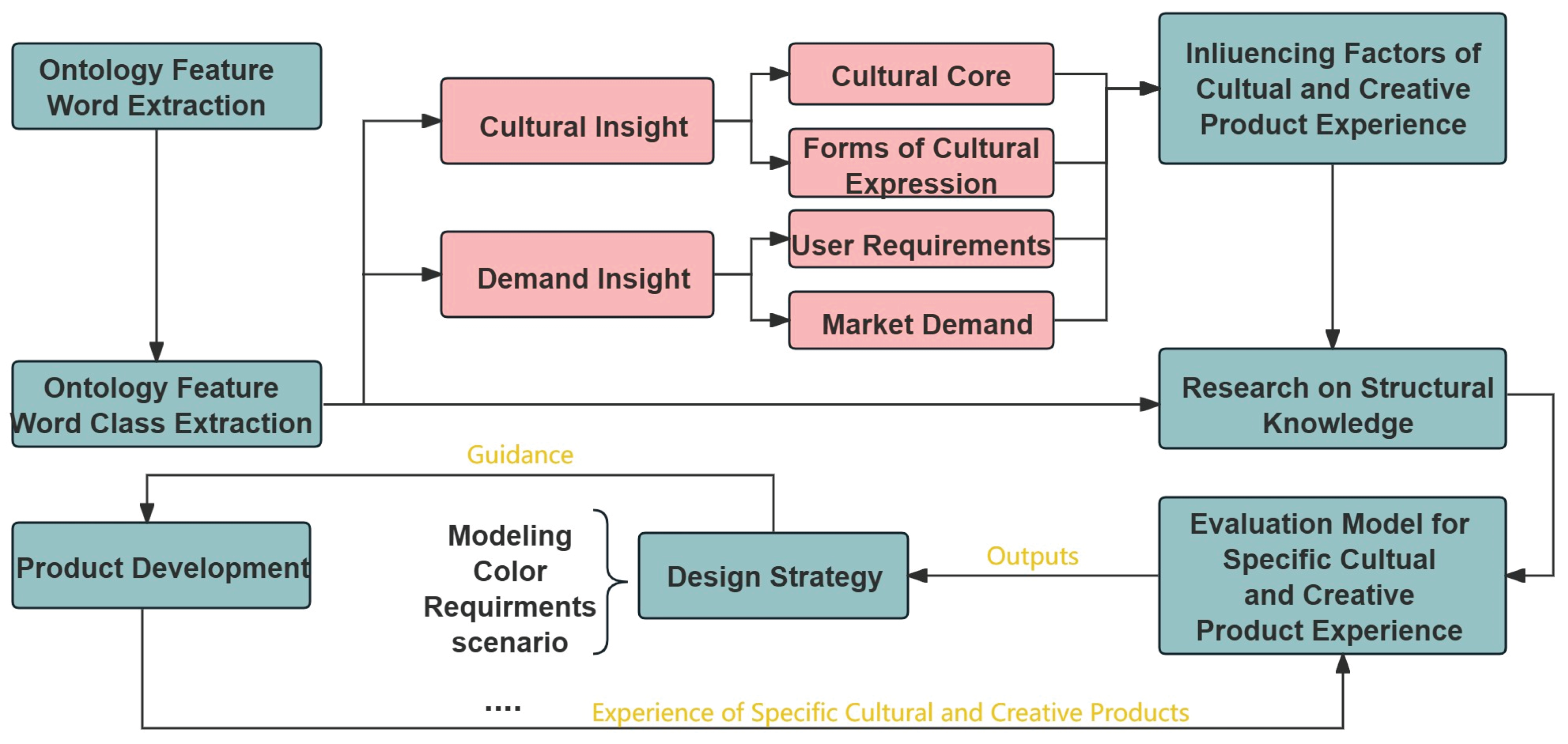
Therefore, the model can be flexibly adapted in practical applications (Error! Reference source not found.). The first step involves conducting cultural insight into the evaluation object, focusing on both its cultural core and modes of cultural expression. The cultural core encompasses the history, allusions, and origins associated with the culture. In the case of Edong cultural and creative products, this refers to the practical significance of fabric craftsmanship—such as expressing the emotional attachments of embroiderers, and conveying local farmers' understanding of natural cycles, life paths, and moral values. Cultural expression forms, on the other hand, include modeling elements, compositional methods, color schemes, and other visual or material features reflected in the design of cultural and creative products. Secondly, a needs insight should be conducted. This includes not only an analysis of user needs, but also broader demands such as commercial profitability, cultural dissemination, and brand-building effects. Lastly, it is essential to assess consumers’ cognitive familiarity with the cultural product, often referred to as structural knowledge 31. Guided by this structural knowledge, researchers can apply specific methods to construct a targeted and contextually relevant experiential evaluation model for cultural and creative products.
Figure 7.
Practical adaptation method of CCP experience evaluation.
6.2. Conclusion
Cultural and creative products of various types are grounded in long-standing historical traditions and enriched with profound cultural connotations. However, in the context of modern industrialization, traditional handicraft production methods have faced significant disruption. Genuine preservation and continuation of these crafts can only be achieved through their integration into contemporary production processes. In other words, for a traditional craft to be meaningfully safeguarded, it must actively participate in the creation of present-day social and economic value 32.This study’s evaluation model incorporates interdisciplinary approaches drawn from design, computer science, and phenomenology, effectively addressing the current gap in experiential evaluation research on Edong cultural and creative products. The proposed method has been empirically validated and holds significant potential in supporting the experiential assessment of these products and informing the development of targeted design strategies.
References
- Liu Huan, Wang Ke, Wu Yang. Cognitive Survey and Analysis of Marriage Themes in Huangmei Cross-stitch[J]. Journal of Wuhan Textile University, 2021, 34(04): 62-66.
- Zahavi D. Husserl’s Phenomenology [M]. Trans. Li Zhongwei. Shanghai: Shanghai Translation Publishing House, 2007: 174.
- Leikas J, Rousi R, Saariluoma P. Emotions in Technology Design: From Experience to Ethics[M]. Springer, 2020.
- Desmet P. M. A., Hekkert P. Framework of Product Experience [J]. International Journal of Design, 2007, 1(1).
- Klein N. No Logo: Taking Aim at the Brand Name Bullies[J]. 2000.
- Liu Xiaobin, Zhu Qingxiang. Research on Design Strategy of Cultural and Creative Products Based on Five Senses Experience[J]. Packaging Engineering, 2022, 43(06): 329-335.
- Yang Yong. Optimization Method of Tourism Cultural and Creative Products from the Perspective of Experience[J]. Packaging Engineering, 2022, 43(06): 259-268.
- Hou Jia, Xie Zhen, Xia Minyan, et al. Analysis of Emotional Design of Shanghai Red Cultural and Creative Products in the Context of Local Practice[J]. Packaging Engineering, 2022, 43(04): 376-382+422.
- Li Wei. Research on Cultural and Creative Product Design Based on Emotional Design—Taking the Design Practice of "Suzhou Gardens" as an Example[J]. Decoration, 2021(05): 136-137.
- Zhou Rui, Lan Junhao, Qiu Yang, et al. Experience Design and Practice of Blessing Culture Based on Cultural and Tourism Integration[J]. Packaging Engineering, 2022, 43(02): 298-305.
- Geng Bing, Fu Meichen. Research on Livable City Evaluation System Based on Scientific Text Mining[J]. Technical Economics and Management Research, 2016(12): 30-34.
- Zhang Yishu. Analysis of Artistic Characteristics of Huangmei Cross-stitch[J]. Decoration, 2004(05): 61.
- Chen Siji, Wang Baosheng. Analysis of Huangmei Cross-stitch Square Towel Patterns[J]. Silk, 2019, 56(09): 84-90.
- Li Xinyang. Research on Pattern Design of Huangmei Cross-stitch Based on Modular Conception[J]. Art Panorama, 2020(10): 87-89.
- Yin Haixia. On the Inheritance and Innovation of Yangxin Cloth Paste Culture in Hubei[J]. Hubei Social Sciences, 2013(07): 189-191.
- Yin Zhaoyang, Liu Yuhan. Research on Traditional Yangxin Cloth Paste and Its Aesthetic Function[J]. Decoration, 2011(06): 96-97.
- Crilly N, Moultrie J, Clarkson P J. Seeing things: Consumer Response to the Visual Domain in Product Design[J]. Design Studies, 2004, 25(6): 547-577.
- Park J, Han S H. A Value Sampling Method for Evaluating User Value: A Case Study of a Smartphone[J]. International Journal of Mobile Communications, 2018, 16(4): 440.
- Ding Yulan. Ergonomics[M]. Beijing: Beijing Institute of Technology Press, 2017: 223.
- Blei D. M., Ng A. Y., Jordan M. I. Latent Dirichlet Allocation [J]. Journal of Machine Learning Research, 2003, 3(Jan): 993–1022.
- Van Eck N, Waltman L. Software Survey: VOSviewer, a Computer Program for Bibliometric Mapping[J]. Scientometrics, 2010, 84(2): 523-538. [CrossRef]
- Lin Jinping, Cheng Die, Zhou Meiqi, et al. Study on Evaluation Index System and Theoretical Model of Cold-free Tourist Destination Suitability[J]. Resource Development & Market, 2021, 37(05): 605-611.
- Tian Fei. Constructing Index System with Structural Equation Model[J]. Journal of Anhui University (Philosophy and Social Sciences Edition), 2007(06): 92-95.
- Wu Minglong. Operation and Application of Structural Equation Model AMOS[M]. Chongqing: Chongqing University Press, 2010: 520.
- Bentler P, Bonett M, et al. Significance Tests and Goodness of Fit in the Analysis of Covariance Structures[J]. Psychological Bulletin, 1980, 88(3): 588-606.
- Wu Yanxia, Xin Jinguo. Empirical Study on Performance Evaluation Framework and Index Screening of Family Enterprises[J]. Chinese Journal of Management Science, 2013, 21(S2): 527-534.
- Yang Ruiqi, Peng Jie, Zhao Hui. Empirical Study on Value Evaluation System of Scientific and Technological Achievements—Based on Confirmatory Factor Analysis Test[J]. Journal of Intelligence, 2015, 34(11): 44-49.
- Laugwitz B, Held T, Schrepp M. Construction and Evaluation of a User Experience Questionnaire[C]. Symposium of the Austrian HCI and Usability Engineering Group, 2008: 63-76. [CrossRef]
- Kim H K, Han S H, Park J, et al. How User Experience Changes over Time: A Case Study of Social Network Services[J]. Human Factors & Ergonomics in Manufacturing & Service Industries, 2014, 25(6): 659-673.
- Fenko A, Schifferstein H N, Hekkert P. Shifts in Sensory Dominance between Various Stages of User–Product Interactions[J]. Applied Ergonomics, 2010, 41(1): 34-40. [CrossRef]
- Benyon D. Designing User Experience[M]. Pearson UK, 2019.
- Lü Pintian. Revitalizing Handicrafts and Productive Protection of Intangible Cultural Heritage[J]. Journal of South-Central University for Nationalities (Humanities and Social Sciences), 2009, 29(04): 4-5.
Disclaimer/Publisher’s Note: The statements, opinions and data contained in all publications are solely those of the individual author(s) and contributor(s) and not of MDPI and/or the editor(s). MDPI and/or the editor(s) disclaim responsibility for any injury to people or property resulting from any ideas, methods, instructions or products referred to in the content. |
© 2025 by the authors. Licensee MDPI, Basel, Switzerland. This article is an open access article distributed under the terms and conditions of the Creative Commons Attribution (CC BY) license (http://creativecommons.org/licenses/by/4.0/).
Copyright: This open access article is published under a Creative Commons CC BY 4.0 license, which permit the free download, distribution, and reuse, provided that the author and preprint are cited in any reuse.