

Submitted:
23 September 2025
Posted:
24 September 2025
You are already at the latest version
Abstract
Globalization and digital transformation have redefined the way businesses operate, with e-commerce emerging as a dominant force in the global economy. The sector’s rapid growth highlights the critical importance of strategic planning for competitiveness, sustainability, and long-term success. This study employs a systematic bibliometric literature review (LRSB) combined with the PRISMA framework to ensure rigour and transparency. The Scopus database was searched using specific keywords related to “e-commerce” and “strategic planning.” The final sample comprised 147 peer-reviewed documents that met the inclusion criteria. The review reveals that strategic planning in e-commerce is multidimensional, encompassing marketing, decision-making, supply chain management, customer relationship management, procurement, human resources, investment, and project management. Technology emerges as a central enabler, with tools such as big data, artificial intelligence, cloud systems, and knowledge management systems driving efficiency, personalization, and agility. Additionally, the findings highlight the growing role of sustainability and resilience in strategic planning, reflecting rising consumer expectations and global market pressures. Strategic planning provides a structured framework for e-commerce firms to navigate complexity, mitigate risks, and leverage opportunities in an evolving digital marketplace. By integrating technological innovations, customer-centric strategies, and sustainable practices, businesses can achieve competitive advantage and long-term growth.
Keywords:
E-commerce
; strategic planning
; digital transformation
1. Introduction
Globalization and technological advancements have significantly changed how businesses conduct their operations. Most brands worldwide have embraced technologies that facilitate selling online, thus leading to the emergence of electronic commerce or e-commerce. With the global Internet adoption, there are over 5 billion Internet users [1]. This creates a significant opportunity for e-commerce. For instance, in 2024, the retail e-commerce industry generated approximately US $4.1 trillion in revenues. [2] (p. 4647) define e-commerce as "the process of buying, selling, transferring or exchanging products, services and information using electronic means of communication." [3] describe e-commerce as a form of trade that uses technology to automate business transactions and workflows. E-commerce can also be defined from a communication perspective, where it involves computer networks, phones, or other means to complete online payments or present information, services, and products.
Most businesses today have embraced e-commerce to speed up the delivery of products or services, improve efficiency, and reduce costs. [4] also found that e-commerce creates more jobs and reduces income inequality compared to the traditional brick-and-mortar retail sector. Between 2007 and 2017, e-commerce jobs increased by more than 400,000, exceeding the 140,000 jobs lost in brick-and-mortar retail. In addition, [4] found that shopping online saves households about 64 million hours weekly. Incomes in fulfillment centers are 31% higher than those in brick-and-mortar retail stores. These findings reflect the significant opportunities resulting from the growth of the e-commerce industry and its potential for future growth. However, the success and sustainability of e-commerce relies heavily on strategic planning. [5] (p. 9) defines strategic planning as a “deliberative, disciplined approach to producing fundamental decisions and actions that shape and guide what an organization (or other entity) is, what it does, and why,” as shown in Figure 1. In e-commerce, it entails setting clear objectives, understanding market trends, leveraging technological innovations, and optimizing operations to create value for the organization and its customers. Consumer demands continue to evolve and competition intensifies as the industry matures. As a result, it has become crucial for businesses to adopt forward-thinking strategies to navigate this dynamic business environment.
A robust strategic plan in e-commerce addresses multiple dimensions. These include customer acquisition and retention, supply chain optimization, brand positioning, and integrating emerging technologies like artificial intelligence and machine learning [6]. Moreover, it emphasizes agility and resilience, enabling businesses to adapt swiftly to external changes such as regulatory shifts, economic fluctuations, or technological disruptions [6,7]. In addition, strategic planning in e-commerce involves promoting sustainability [5,8]. With growing consumer awareness of environmental and social issues, businesses must align their strategies with sustainable practices to remain competitive. This systematic bibliometric literature review (LRSB) synthesizes findings from 127 documents to show how e-commerce businesses leverage strategic planning.
2. Methodology
The researcher utilized a systematic bibliometric literature review (LRSB) methodology supported by the PRISMA (Preferred Reporting Items for Systematic Reviews and Meta-Analyses) framework. This helped ensure a comprehensive and rigorous evaluation of the literature. The LRSB approach enables the identification of patterns, trends, and gaps in existing research by systematically analyzing large volumes of academic work. The PRISMA framework provides a transparent and replicable structure, minimizing bias in article selection and enhancing the reliability of the findings [9,10]. The Scopus database was selected for its comprehensive coverage of high-quality, peer-reviewed academic publications across diverse disciplines. This makes it an ideal source for analyzing the intersection of strategic planning and e-commerce. This combined methodology ensures that the research is grounded in robust evidence and effectively identifies relevant insights.
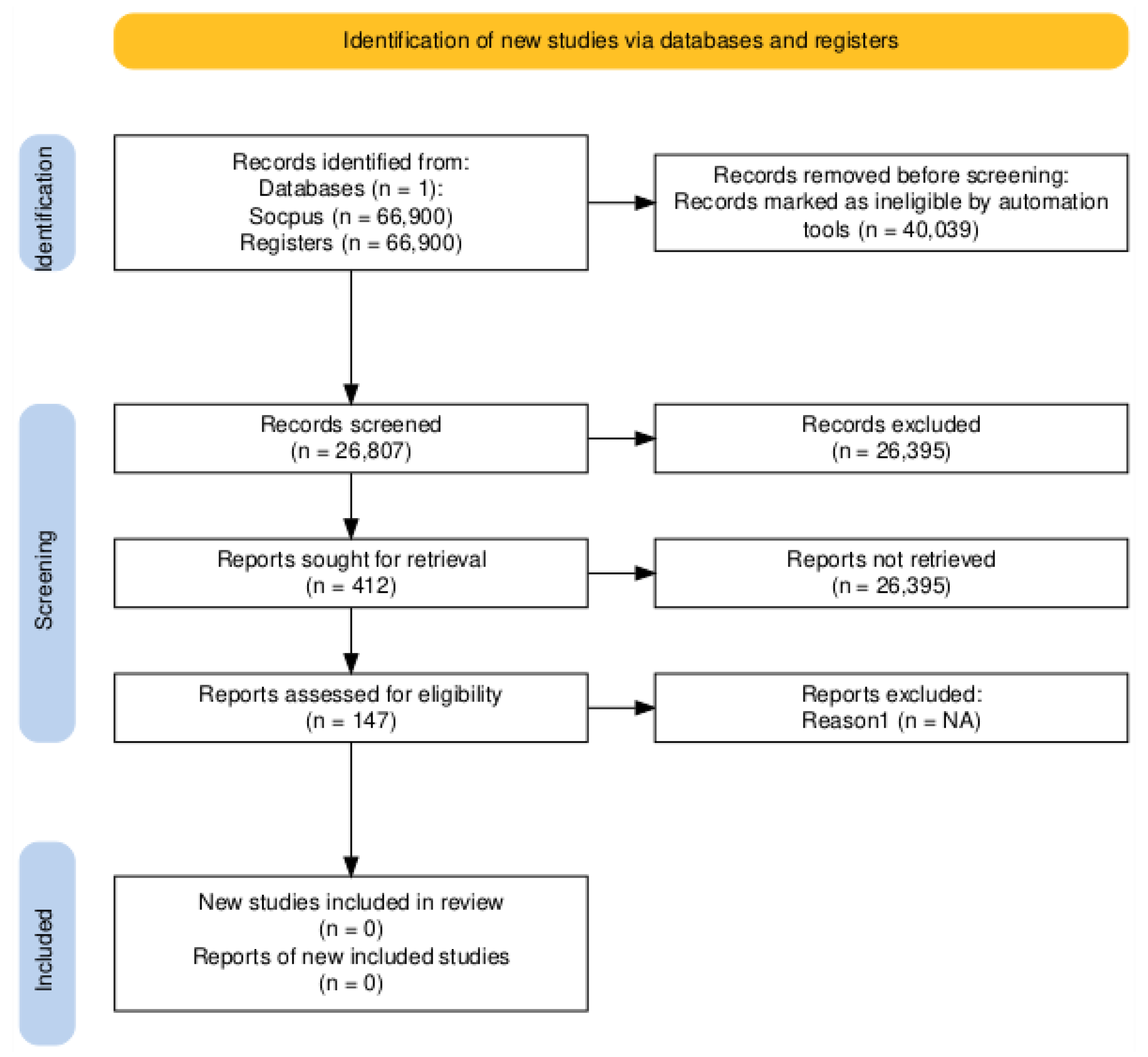
The literature search process was designed to refine the results and focus on the most relevant studies. The initial search using TITLE-ABS-KEY ("electronic commerce") yielded 66,900 documents. These were then narrowed down by including "e-commerce" as an additional keyword, resulting in 26,807 documents. The researcher then limited the search to the subject area "BUSI," further refining the results to 5,584 documents. Finally, the results were filtered by adding the keyword "strategic planning," leaving 147 documents for final analysis. Inclusion criteria were applied to ensure relevance and quality, focusing on peer-reviewed articles, conference proceedings, and studies published in English. Duplicates, articles outside the scope of e-commerce strategic planning, and inaccessible full texts were excluded. This systematic approach ensured that the final selection of literature was highly relevant and contributed meaningfully to the research topic.
Figure 2.
PRISMA Flowchart for Literature Search Procedure.
3. Theoretical Perspectives
The rise of e-commerce has transformed global business operations. It enables companies to expand their reach, streamline processes, and offer personalized consumer experiences [11]. Strategic planning has emerged as a critical factor in maintaining competitiveness and adapting to the rapidly changing marketplace as the industry evolves. This section reviews existing literature on strategic planning in e-commerce. The insights from this review provide a foundation for understanding how businesses can leverage strategic planning to navigate challenges and seize opportunities in the digital economy.
3.1. E-Commerce and Its Organizational Enablers
E-commerce refers to the buying and selling goods and services through digital platforms [12] describes it as a form of trade that has revolutionized traditional commerce by leveraging technology to connect businesses with consumers across the globe. This digital marketplace is characterized by convenience, accessibility, and scalability [13] explain that it enables businesses to operate beyond geographical constraints. From small startups to multinational corporations, e-commerce has become integral to the global economy by offering new opportunities for innovation, cost-efficiency, and customer engagement [14,15]. E-commerce encompasses various business models, each defined by the nature of transactions and the parties involved. According to [3], these models include business-to-business (B2B), business-to-consumer (B2C,) consumer-to-consumer (C2C), consumer-to-business (C2B,) business-to-administration (B2A), and consumer-to-administration (C2A). These models (Figure 3) enable diverse interactions in the digital marketplace and cater to the needs of businesses, consumers, and administrative entities.
The success of e-commerce is deeply intertwined with various organizational enablers that drive its operations, enhance its capabilities, and sustain its growth. These include:
3.1.1. Internet
The internet serves as the backbone of e-commerce by providing the infrastructure that enables businesses to connect with customers and manage their operations digitally. High-speed internet connectivity allows for the seamless functioning of e-commerce platforms [16,17]. It supports everything from online browsing and transactions to customer service. The Internet's global reach enables businesses to access new markets and attract a diverse consumer base, breaking geographical barriers [18,19]. Furthermore, advancements in internet technologies, such as 5G, continue to enhance the speed and reliability of online interactions. Thus, it further drives the growth of e-commerce.
3.1.2. Payment Gateway
Payment gateways are critical in facilitating secure and efficient financial transactions in e-commerce. According to [20], these systems act as intermediaries between buyers and sellers, enabling customers to pay using various methods, including credit cards, digital wallets, and bank transfers. Payment gateways build consumer trust and confidence by ensuring secure transactions through encryption and fraud detection mechanisms [21,22]. The integration of advanced payment technologies, such as one-click payments and biometric authentication, enhances the convenience and reliability of e-commerce platforms, contributing to a seamless shopping experience
3.1.3. Analytics
Analytics is a cornerstone of e-commerce success by enabling businesses to make data-driven decisions that optimize their operations and enhance customer experiences. Organizations can gain valuable insights into consumer behavior and market trends through tools like predictive analytics, customer segmentation, and sales forecasting [23]. Analytics also plays a crucial role in personalizing shopping experiences, from recommending products based on browsing history to tailoring marketing campaigns for specific customer segments [24,25]. E-commerce businesses can improve operational efficiency, boost customer satisfaction, and gain a competitive edge by leveraging data effectively.
3.1.4. Social Media
Social media has transformed how businesses engage with customers and market their products. Platforms such as Instagram, Facebook, and TikTok provide opportunities for targeted advertising, influencer partnerships, and real-time customer interaction [26]. These networking platforms help businesses reach a broader audience and allow them to build brand loyalty through authentic connections and engaging content [27,28]. In addition, integrating social commerce features, such as in-app shopping and direct product links, streamlines the purchasing process and enhances the overall customer journey.
3.1.5. 3D Printing
3D printing, also known as additive manufacturing, is a process that creates physical objects layer by layer from digital designs. According to [29], this technology is transforming e-commerce by enabling businesses to produce items on demand. This reduces the need to maintain large inventories and minimizes storage costs [30,31]. Unlike traditional manufacturing methods that often require mass production to be cost-effective, 3D printing allows for the efficient creation of custom or limited-edition products.
3.1.6. Autonomous Vehicle
Autonomous vehicles are reshaping last-mile logistics in e-commerce by providing faster, more efficient, and sustainable delivery solutions. [32] indicates that technologies such as drones and self-driving trucks enable businesses to meet growing consumer expectations for speed and convenience while reducing operational costs. Autonomous vehicles also have the potential to address labor shortages in the logistics sector and improve delivery accuracy through advanced navigation systems [33]. As these technologies continue to evolve, they are set to play an increasingly significant role in the future of e-commerce logistics.
3.2. Strategic Planning and Its Importance in E-Commerce
Strategic planning is a systematic process through which organizations define their goals, determine the resources needed to achieve them, and outline a clear roadmap for success. According to [34], it involves analyzing internal strengths and weaknesses, assessing external opportunities and threats, and creating actionable strategies that align with the organization’s long-term vision. This process is not static but dynamic. Thus, continuous evaluation and adjustment are required to respond to changing market conditions and emerging challenges [35,36]. Strategic planning provides a proactive approach that allows organizations to remain focused on their objectives, optimize resource allocation, and enhance operational efficiency.
Strategic planning in e-commerce takes on heightened significance due to the dynamic nature of the digital marketplace. Unlike traditional business models, e-commerce operates in an environment where technological advancements, consumer expectations, and competitive pressures constantly evolve [37,38]. Strategic planning in this domain requires businesses to focus on key elements such as market positioning, customer acquisition strategies, supply chain management, and the integration of cutting-edge technologies [39,40]. For instance, identifying emerging trends like mobile commerce, social commerce, or sustainable practices enables [41]. These practices enable businesses to stay ahead of the curve and meet the demands of modern consumers.
Strategic planning in e-commerce ensures businesses remain agile and prepared to navigate the challenges of an increasingly complex digital business environment. A well-defined strategic plan enables organizations to anticipate and mitigate risks like cybersecurity threats, market saturation, or economic fluctuations [42,43]. In addition, it supports innovation by encouraging investments in tools like artificial intelligence, big data analytics, and automation, which are critical for personalizing customer experiences and improving operational efficiency. Strategic planning supports scalability, allowing businesses to expand into new markets, manage rapid growth, and maintain customer satisfaction [44,45,46]. Ultimately, it is a guiding framework that empowers e-commerce companies to achieve sustainable growth, build competitive advantages, and thrive in a highly competitive and fast-paced environment
3.3. Technologies Enabling Strategic Planning in E-Commerce
Strategic planning in e-commerce is deeply intertwined with technological advancements that empower businesses to operate efficiently, gain insights, and stay competitive. These technologies enhance decision-making, improve customer experiences, and enable businesses to anticipate market trends effectively [47]. Integrating innovative tools and systems into operations allows e-commerce companies to build resilience, scale their efforts, and execute strategies with precision [48,49]. Below, in Figure 4, is an exploration of key technologies driving strategic planning in e-commerce
3.3.1. Virtual Private Network
Virtual Private Networks (VPNs) are vital in securing communication and data transfer within e-commerce businesses. VPNs encrypt internet connections and protect sensitive information, including customer data, financial transactions, and business communications, from unauthorized access or cyberattacks [50,51]. This level of security is particularly important in a digital marketplace where breaches can lead to financial loss and reputational damage. VPNs also enable remote work, allowing employees to access internal systems and collaborate securely, regardless of location [52]. This capability ensures business continuity and supports the flexibility that modern e-commerce operations require, especially in an increasingly globalized workforce.
3.3.2. Websites
Websites are the digital storefronts of e-commerce businesses. They serve as the primary interface between the company and its customers. A strategically designed website is critical for attracting and retaining visitors [53,54]. [55] found that this data should have features such as responsive design, intuitive navigation, and fast loading times to enhance user experience. Personalization tools and recommendation engines improve customer engagement by delivering tailored product suggestions [56,57]. Moreover, [58] found that websites are essential in collecting valuable customer data through tracking tools and analytics. This data informs strategic planning by helping businesses understand consumer behavior, refine marketing efforts, and optimize their product offerings, ultimately driving sales and building brand loyalty.
3.3.3. Big Data
Big data is a transformative technology for e-commerce businesses that allows processing and analyzing massive amounts of information. According to [59], it provides insights into customer behavior, market trends, and operational performance, enabling businesses to make informed decisions. For example, big data can help identify which products are in demand, predict future purchasing patterns, and assess the effectiveness of marketing campaigns [60,61]. In strategic planning, these insights allow businesses to develop data-driven strategies, from inventory management to pricing optimization. Big data also supports personalization by enabling businesses to customize user experiences, enhancing customer satisfaction, and increasing conversion rates.
3.3.4. Data Mining
Data mining is a powerful tool that complements big data by uncovering hidden patterns, correlations, and trends within large datasets. For e-commerce businesses, data mining provides actionable insights that drive strategic decisions, such as identifying customer preferences, detecting fraudulent activities, and predicting future market demands [23,62]. Data mining enables businesses to segment their audience, refine marketing strategies, and enhance product offerings through algorithms and advanced analytical techniques [63]. These insights are used in strategic planning to help e-commerce companies anticipate challenges, allocate resources efficiently, and gain a competitive advantage by staying ahead of market trends and consumer expectations.
3.3.5. Internet of Things (IoT)
The Internet of Things (IoT) connects physical devices to the internet, enabling real-time data sharing and monitoring. This technology has significant applications in e-commerce, particularly in supply chain management and customer experience [64]. IoT-enabled devices like smart sensors and RFID tags allow businesses to track inventory levels, monitor delivery processes, and improve warehouse efficiency. In addition, IoT devices like smart home assistants and wearable technology provide businesses with detailed insights into user behavior, preferences, and usage patterns [65,66]. These insights are invaluable for strategic planning, allowing businesses to tailor their offerings, improve logistics, and create more personalized and efficient shopping experiences.
3.3.6. Cloud Systems
Cloud systems provide e-commerce businesses with scalable, cost-effective solutions for storing, managing, and accessing data. Companies can ensure seamless operations and collaboration, even during peak demand periods, by hosting applications and services on cloud platforms [67,68]. Cloud systems also enhance strategic planning by enabling businesses to analyze real-time data, deploy updates quickly, and integrate new technologies effortlessly. Moreover, [69] indicate that cloud-based platforms support remote work and global operations by providing employees with secure, on-demand access to critical resources. The flexibility and scalability of cloud systems make them an indispensable tool for e-commerce companies aiming to adapt to evolving market demands and expand their reach.
3.3.7. 3D Technologies
3D technologies, including 3D modeling and virtual reality (VR), transform how e-commerce businesses interact with customers and showcase products. These tools enable businesses to offer immersive shopping experiences, allowing customers to visualize products in detail or try them virtually before purchasing [30,70]. For example, furniture retailers can use 3D technologies to help customers see how a product fits within their space, while fashion brands can offer virtual fitting rooms. 3D technologies in strategic planning provide valuable insights into consumer preferences and behaviors while differentiating businesses from competitors [71,72]. Finally, 3D technologies improve customer satisfaction and drive sales by enhancing product visualization and engagement.
3.3.8. Knowledge Management Systems
Knowledge Management Systems (KMS) are essential for e-commerce businesses seeking to capture, organize, and utilize their collective knowledge. These systems facilitate the sharing of critical information across teams, enhancing collaboration and decision-making [73,74]. For example, a KMS can store best practices, customer insights, and market research, making this information easily accessible for strategic planning. Moreover, KMS ensures that institutional knowledge is preserved, even as team members change or roles evolve [75,76]. E-commerce businesses that integrate KMS into their operations make more informed decisions, promote innovation, and maintain a consistent approach to achieving their long-term goals.
3.4. Categories of E-Commerce Strategic Planning
E-commerce strategic planning involves various categories (Figure 5) that work together to ensure businesses can adapt to changing markets, meet customer needs, and maintain a competitive edge. Each category addresses a critical aspect of e-commerce operations, from marketing and decision-making to human resources and investment management [77]. Effective strategic planning requires a comprehensive approach that aligns these categories with the business goals. Below is a detailed analysis of each category of e-commerce strategic planning:
3.4.1. Marketing Strategies
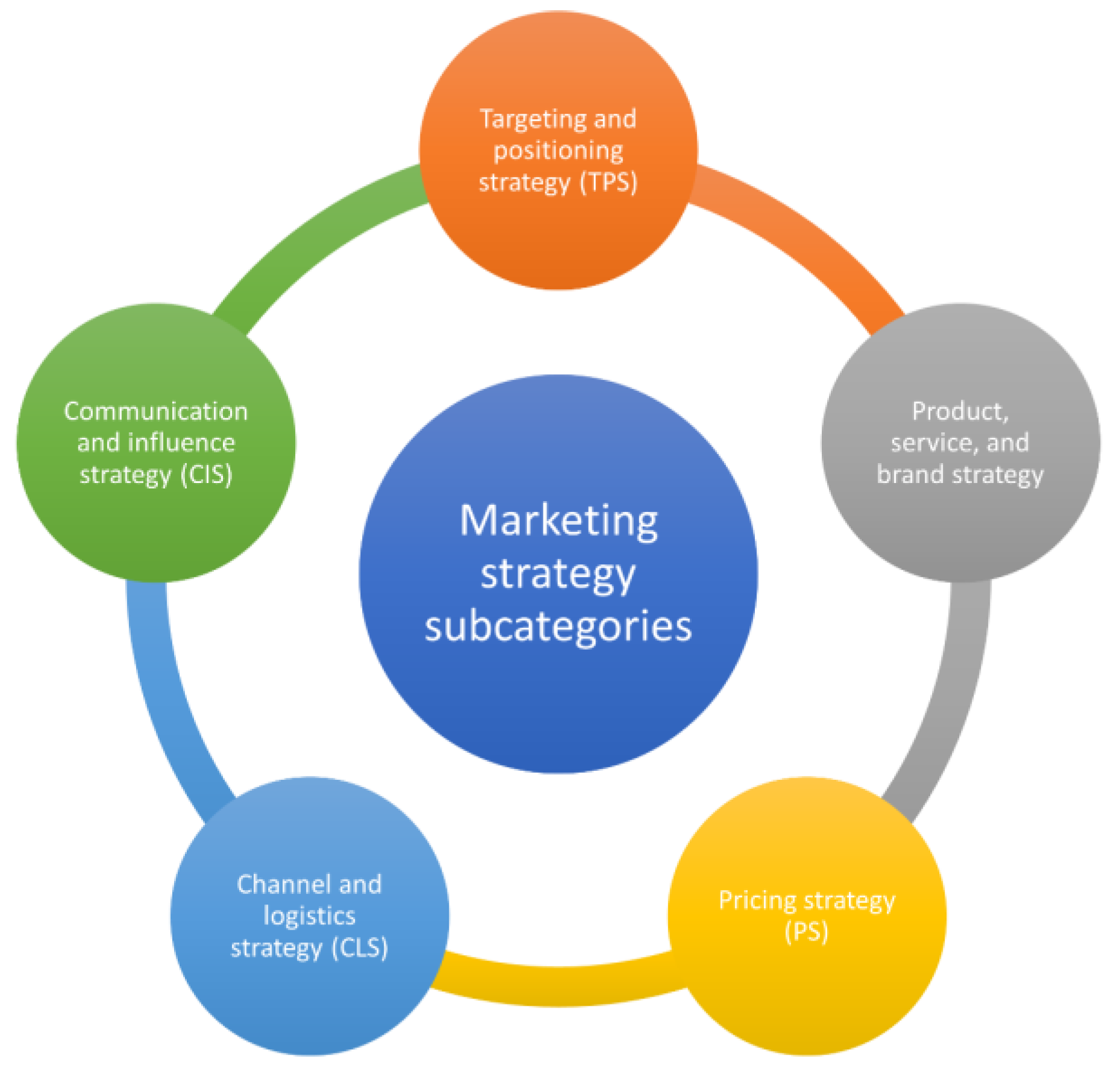
Marketing strategies in e-commerce are crucial for attracting and retaining customers. [78] explains that these strategies encompass a range of activities to promote products, build brand awareness, and drive sales. They include identifying target audiences, creating compelling value propositions, and leveraging digital channels like search engines, social media, and email marketing [79,80]. Thus, a well-executed marketing strategy helps e-commerce businesses differentiate themselves from competitors and build long-term customer relationships [81,82]. The key to successful e-commerce marketing is effectively applying targeted approaches considering customer preferences, market trends, and business objectives. [83] identified five key sub-categories of e-commerce marketing strategies (Figure 6), businesses must adopt to enhance visibility and drive growth. These include:
- Targeting and positioning strategy (TPS)
The targeting and positioning strategy (TPS) is a critical aspect of e-commerce marketing, focusing on identifying specific customer segments and creating personalized offers that appeal to these groups. Businesses can target the most lucrative market segments by analyzing customer demographics, behaviors, and preferences [64,84]. Positioning, on the other hand, involves distinguishing the brand or product in the target audience's minds. The goal is to create a unique image or value proposition that resonates with the segment's needs and desires [83]. In e-commerce, where customer options are vast, a well-defined TPS helps businesses stand out by offering tailored experiences that encourage brand loyalty and repeat purchases.
- Product, service, and brand strategy
The product, service, and brand strategy revolves around creating a compelling portfolio of products and services that meet customer needs while aligning with the brand's identity. In e-commerce, the product strategy should offer a wide range of high-quality products catering to the target market [83,85]. It should emphasize differentiation through innovation and unique features. The service component ensures a seamless shopping experience through easy navigation, fast checkout, and excellent customer support [86,87]. [88] explain that the brand strategy in e-commerce is about establishing a strong and recognizable identity that communicates the company’s values and quality to customers. By developing a robust product, service, and brand strategy, businesses can establish and maintain customer trust and loyalty, which are key to long-term success.
- Pricing strategy (PS)
Pricing strategy (PS) in e-commerce marketing directly impacts customer perception and profitability. E-commerce businesses must set competitive prices that attract customers while ensuring sufficient margins to sustain operations [83,89]. Pricing strategies in e-commerce may vary based on factors such as product type, competition, and market demand. Common pricing approaches include dynamic pricing, where prices fluctuate based on demand or customer behavior, and psychological pricing, where prices are set just below whole numbers to create the perception of a better deal [90,91]. Promotional pricing tactics such as discounts, bundling, or limited-time offers can be used to stimulate sales and attract new customers [92]. An effective pricing strategy ensures that the business remains competitive, attracts customers, and maximizes revenue.
- Channel and logistics strategy (CLS)
Channel and logistics strategy (CLS) focuses on the distribution of products to customers in a timely, cost-effective manner. In e-commerce, a well-developed CLS ensures that products reach the target audience through multiple sales channels, such as the company’s website, third-party marketplaces, or mobile apps [83,90]. This strategy must also consider the fulfillment logistics, including inventory management, warehousing, and shipping methods. Efficient CLS is critical for e-commerce businesses to ensure customers receive their orders quickly and reliably, contributing to overall satisfaction [93,94]. In addition, [95] found that integrating technology such as tracking systems and automated warehouses can streamline operations, reduce costs, and improve the customer experience. A strong CLS also supports customer retention by offering flexibility in delivery options, which modern consumers increasingly demand.
- Communication and influence strategy (CIS)
Communication and influence strategy (CIS) in e-commerce marketing helps build brand awareness and facilitate customer engagement. This strategy involves developing clear and consistent messaging across various channels, including social media, email marketing, and online advertising [83]. It also entails leveraging influencers, bloggers, and content creators to amplify the brand's reach and credibility. Effective communication in e-commerce is key to guiding potential customers through the purchasing process [96,97]. It informs them of product benefits, promotions, and company values. An influential presence on social media platforms and relevant forums can significantly boost customer trust and influence buying decisions [98]. E-commerce businesses should align their messaging with customer interests and preferences. Creating more personalized and compelling narratives can drive conversions and customer loyalty.
3.4.2. Decision-Making Strategies
Decision-making strategies are crucial for guiding e-commerce businesses in making informed choices that align with their goals and market conditions. The digital environment offers vast data to support strategic decision-making [24]. However, [99] indicate that this data must be carefully analyzed and interpreted to drive meaningful actions. Decision-making in e-commerce involves understanding market trends, customer preferences, and internal capabilities to identify the best courses of action [100,101,102]. With the rise of artificial intelligence and machine learning, e-commerce businesses increasingly rely on predictive analytics to inform inventory management, pricing, marketing, and product development decisions.
In addition to data-driven approaches, decision-making strategies involve clear governance structures, defined processes, and effective stakeholder collaboration. In an e-commerce environment, decisions must be made quickly and often across multiple channels [25]. Therefore, businesses must implement streamlined decision-making frameworks. For instance, agile methodologies allow businesses to make fast decisions in response to market fluctuations or new opportunities [103,104]. This ensures that they remain competitive in a fast-paced environment. The ultimate goal is to ensure that decision-making is efficient and aligned with the long-term vision of the business, promoting sustainability and growth.
3.4.3. Supply-Chains Strategies
Supply chain strategies in e-commerce are essential for ensuring the timely delivery of products, maintaining inventory levels, and minimizing costs. [105] indicate that the complexity of global e-commerce requires businesses to manage multiple suppliers, distribution centers, and shipping carriers, all while meeting customer expectations for fast and reliable service. Strategic supply chain planning involves optimizing logistics, managing relationships with suppliers, and implementing systems for tracking products from production to delivery [106,107]. E-commerce businesses often adopt Just-in-Time (JIT) inventory management, which minimizes storage costs by receiving products only when needed. This approach relies heavily on efficient supplier communication and real-time inventory management systems to prevent stockouts or overstocking [108,109]. In addition, [110] explain that businesses are increasingly incorporating automation and artificial intelligence to optimize supply chain operations, predict demand, and enhance forecasting accuracy. A key aspect of supply chain strategy in e-commerce is balancing cost-efficiency with customer satisfaction [111,112]. Faster shipping times, lower delivery costs, and real-time tracking options can significantly enhance the customer experience. These benefits make supply chain strategy a critical area for competitive advantage.
3.4.4. Customer Relationship Management Strategies
Customer Relationship Management (CRM) strategies are essential in e-commerce to build long-term, profitable customer relationships. In today’s competitive online environment, customers have numerous choices [113,114]. Thus, retaining customers and building loyalty are key drivers of business success. CRM strategies focus on understanding customer needs, preferences, and behaviors to deliver personalized experiences that enhance satisfaction and encourage repeat purchases [57]. E-commerce businesses often use CRM software to manage customer data, track interactions, and segment their audience for targeted marketing campaigns [115,116]. Analyzing this data allows businesses to create tailored promotions, provide customized recommendations, and engage with customers in ways that make them feel valued.
Building customer trust and loyalty is a primary goal of CRM strategies in e-commerce. Loyalty programs, rewards, and exclusive deals can incentivize repeat purchases and increase customer lifetime value [117,118]. Furthermore, CRM strategies should be integrated with other aspects of the business, such as marketing and sales, to provide consistent customer experience at every touchpoint [119]. In addition, CRM strategy enables e-commerce businesses to provide the best customer service. These services must be responsive, efficient, and available across multiple channels such as live chat, email, and social media.
3.4.5. Procurement Process Strategies
Procurement process strategies enable e-commerce businesses to maintain a steady supply of products, manage costs, and ensure quality. Strategic procurement involves selecting reliable suppliers, negotiating favorable contracts, and managing supplier relationships to ensure products are sourced efficiently and at competitive prices [105,120]. E-commerce businesses, especially those with extensive product ranges, must carefully evaluate suppliers to meet their quality standards while minimizing costs, delivery times, and product availability risks [121] (. The procurement strategy must also account for evolving customer demands, market fluctuations, and global supply chain disruptions [122,123]. To stay agile, e-commerce businesses use procurement technologies like automated ordering systems, supplier management software, and predictive analytics to streamline procurement operations and manage inventory levels more effectively.
Furthermore, procurement strategies should be closely aligned with sustainability goals. [124] explain that most procurement managers deal with tensions related to the social and environmental interests of their key stakeholders. The researcher argues that these professionals must consider sustainability claims at all times, regardless of their interest or lack thereof. Similarly, [125] explain that stakeholders in today’s globalized supply chains expect businesses to employ ethical and sustainable sourcing practices. Procurement managers experience this pressure since they are responsible for how goods and services are produced within the company and its supply chain partners [126,127]. Thus, [128] indicate that many businesses are increasingly prioritizing ethical sourcing and eco-friendly suppliers to meet consumer expectations for sustainable practices. Integrating sustainability into procurement strategies is becoming a key differentiator in the e-commerce industry.
3.4.6. Human Resources Development Strategies
Human resources (HR) development strategies are key to e-commerce business success. As e-commerce companies grow, they need to attract, develop, and retain top talent in various roles, including marketing, data analysis, customer service, and logistics [129]. HR strategies in e-commerce focus on ensuring employees have the skills and support necessary to contribute to the company's success [130]. Effective HR development involves continuous learning and professional growth opportunities for employees [131]. E-commerce businesses often invest in training programs, mentorship, and leadership development to foster a culture of innovation and excellence.
HR strategies must focus on employee retention. This can be achieved by creating a positive work environment, offering competitive compensation, and implementing recognition programs [132,133]. As remote work becomes more prevalent in e-commerce, HR strategies also need to address the challenges of managing a distributed workforce, including communication, performance management, and employee engagement [129,134]. A strategic HR approach helps e-commerce businesses maintain a skilled, motivated, and adaptable workforce that can navigate the fast-changing demands of the digital marketplace.
3.4.7. Investment Strategies
Investment strategies in e-commerce are crucial for funding growth initiatives, developing new technologies, and expanding into new markets. E-commerce businesses often require substantial capital to support various activities, such as product development, marketing campaigns, infrastructure upgrades, and international expansion [135,136]. Strategic investment planning helps businesses allocate resources effectively. This ensures that investments align with their long-term goals and deliver a strong return on investment (ROI) [137]. E-commerce businesses may seek funding from different sources, including venture capital, private equity, crowdfunding, or reinvested profits.
The key to a successful investment strategy is identifying opportunities to drive scalability and profitability while minimizing risk. For instance, investing in automation tools, data analytics, or AI-driven technologies can yield significant operational efficiencies and improve customer experience [138,139]. Strategic investments in branding, customer acquisition, and market research are vital for staying competitive in a crowded market [140,141]. A sound investment strategy enables e-commerce businesses to adapt to changing market conditions, innovate continuously, and position themselves for long-term success [142,143]. Businesses should carefully assess risks and opportunities. This helps them make informed investment decisions that support sustainable growth.
3.4.8. Project Management Strategies
Project management strategies are essential for ensuring the successful execution of e-commerce initiatives. They provide a structured approach to planning, monitoring, and delivering projects within scope, budget, and timeline [144]. These strategies involve defining clear objectives, assigning roles and responsibilities, managing resources effectively, and mitigating potential risks. Project management strategies in e-commerce are particularly vital for initiatives such as website development, digital marketing campaigns, supply chain optimization, and technology integration [145,146]. Tools like Gantt charts, agile methodologies, and project management software streamline collaboration among cross-functional teams and ensure transparency throughout the project lifecycle [147]. These strategies enhance operational efficiency, reduce delays, and ensure the successful implementation of strategic plans in a dynamic and competitive e-commerce environment.
4. Conclusions
The rise of e-commerce has transformed the global business environment, redefining how businesses and consumers interact in the digital age. Enabled by advanced technologies such as the internet, payment gateways, analytics, social media, 3D printing, and autonomous vehicles, e-commerce offers unparalleled accessibility, efficiency, and scalability. These organizational enablers ensure smooth operations and enhance customer experiences, forming the foundation of this rapidly evolving sector. Moreover, technological advancements have enabled businesses to create personalized shopping experiences, using data analytics and AI to tailor product recommendations and promotional strategies. In addition, e-commerce is characterized by diverse business models, including business-to-business (B2B), business-to-consumer (B2C), consumer-to-consumer (C2C), consumer-to-business (C2B), business-to-administration (B2A), and consumer-to-administration (C2A). This highlights its ability to cater to a wide range of market demands and operational frameworks and demonstrates the versatility and expansive nature of the industry. These business models allow organizations to scale their operations, tap into niche markets, and diversify their revenue streams, ensuring adaptability in a fast-paced digital environment.
Strategic planning is an essential component of a successful e-commerce business. It provides firms with a structured framework to navigate the complexities of the competitive e-commerce business environment. In addition, strategic planning enables organizations to align resources, technologies, and goals, facilitating innovation and long-term sustainability. Technologies such as virtual private networks, big data, cloud systems, and knowledge management systems serve as critical tools for implementing strategic plans. They offer valuable insights and operational efficiencies. For instance, big data and analytics enable businesses to identify emerging trends and understand consumer behaviors, while cloud systems enhance collaboration and scalability.
There are various categories of strategic planning, including marketing, decision-making, supply chain management, customer relationship management, and human resources development. These further support businesses in addressing challenges and capitalizing on opportunities. For example, marketing strategies are crucial in differentiating brands in a competitive marketplace. On the other hand, decision-making strategies ensure the efficient allocation of resources and quick adaptation to market changes. These elements of strategic planning allow businesses to remain agile, customer-focused, and well-prepared for future developments.
Supplementary Materials
Not applicable.
Author Contributions
Conceptualization, J.C. and A.T.R.; methodology, J.C. and A.T.R.; software, J.C. and A.T.R.; validation, J.C. and A.T.R.; formal analysis, J.C. and A.T.R.; investigation, J.C. and A.T.R.; resources, J.C. and A.T.R.; data curation, J.C. and A.T.R.; writing—original draft preparation, J.C. and A.T.R.; writing—review and editing, J.C. and A.T.R.; visualization, J.C. and A.T.R.; supervision, J.C. and A.T.R.; project administration, J.C. and A.T.R.; funding acquisition, Y.Y. All authors have read and agreed to the published version of the manuscript.
Funding
Please add: The first author receives financial support from the Research Unit on Governance, Competitive-ness and Public Policies (UIDB/04058/2020) + (UIDP/04058/2020), funded by national funds through FCT—Fundação para a Ciência e a Tecnologia.
Data Availability Statement
Not applicable.
Acknowledgments
We would like to express our gratitude to the Editor and the Referees. They offered extremely valuable suggestions or improvements. The authors were supported by the GOVCOPP Research Unit of Universidade de Aveiro, Instituto Politécnico de Setúbal, Escola Superior de Ciências Empresariais de Setúbal, and UNIDCOM/IADE, Unidade de Investigação em Design e Comunicação.
Conflicts of Interest
The funders had no role in the design of the study; in the collection, analyses, or interpretation
References
- Van Gelder, K. (2024). E-commerce worldwide - statistics & facts. Statista. https://www.statista.com/topics/871/online-shopping/#topicOverview.
- Pavlova, V. , Murovana, T., Sarai, N., Velychko, V., Illiashenko, K. V., & Hryshyna, H. (2021). Crisis phenomena as an incentive to intensify ecommerce of the enterprise.
- Jain, V. , Malviya, Bindoo & Arya, S. An overview of electronic commerce (e-Commerce). The journal of contemporary issues in business and government 2021, 27, 665–670. [Google Scholar] [CrossRef]
- Mandel, M. How ecommerce creates jobs and reduces income inequality. Progressive Policy Institute 2017, 3, 1–28. [Google Scholar]
- Bryson, J. M. (2024). Why strategic planning is more important than ever. In Strategic planning for public and nonprofit organizations, 6th ed. Jossey-Bass, San Francisco, 2-29.
- Andry, J. F. , Bernanda, D. Y., Honni, K. C., & Andriani, A. Analysis of information systems strategic planning using Ward and Peppard framework case e-commerce company. Int. J. Adv. Appl. Sci 2023, 12, 179–187. [Google Scholar] [CrossRef]
- Barroso, R. M. , Ferreira, F. A., Meidutė-Kavaliauskienė, I., Banaitienė, N., Falcão, P. F., & Rosa, Á. A. Analyzing the determinants of e-commerce in small and medium-sized enterprises: a cognition-driven framework. Technological and economic development of economy 2019, 25, 496–518. [Google Scholar] [CrossRef]
- Kamel, S. , & Hussein, M. The emergence of e-commerce in a developing nation: Case of Egypt. Benchmarking 2002, 9, 146–153. [Google Scholar] [CrossRef]
- Haddaway, N. R. , Page, M. J., Pritchard, C. C., and McGuinness, L. A. PRISMA 2020: An R package and Shiny app for producing PRISMA 2020-compliant flow diagrams, with interactivity for optimized digital transparency and Open Synthesis. Campbell Systematic Reviews 2022 2022, 18, e1230. [Google Scholar] [CrossRef] [PubMed]
- Page, M. J. , McKenzie, J. E., Bossuyt, P. M., Boutron, I., Hoffmann, T. C., Mulrow, C. D.,... and Moher, D. The PRISMA 2020 statement: an updated guideline for reporting systematic reviews. BMJ 2021, 2021, 372. [Google Scholar] [CrossRef]
- Singh, J. , & Saha, K. (2019). Ecommerce retail: Challenges and opportunities for CpG related distribution packaging. 21st IAPRI World Conference on Packaging 2018 - Packaging: Driving a Sustainable Future.
- Arzoumanian, M. Why e-commerce can't be ignored. Official Board Markets 2000, 76, 2pp. [Google Scholar]
- Hackney, R. , Griffiths, G., & Ranchhod, A. Towards an e-commerce business strategy. International Journal of Services, Technology and Management 2002, 3, 39–53. [Google Scholar] [CrossRef]
- Baker, S. Global e-commerce, local problems. IEEE Engineering Management Review 2000, 28, 104–110. [Google Scholar]
- Cheangtawee, P. , Praneetpolgrang, P., & Paopun, N. (2005). An evaluation e-commerce performance in hotel businesses using balanced scorecard. Proceedings of the International Conference on Electronic Business (ICEB).
- Beach, R. Adopting Internet technology in manufacturing: A strategic perspective. Production Planning and Control 2004, 15, 80–89. [Google Scholar] [CrossRef]
- Peng, Q. (2021). A Study on the Influence of Internet Cross-border E-Commerce on China's Import and Export Trade and Development Strategy. Proceedings - 2nd International Conference on E-Commerce and Internet Technology, ECIT 2021 C7 – 9407005.
- Liu, Q. (2021). Analysis of Short Video Marketing Strategy under the Background of Social E-commerce. Proceedings - 2nd International Conference on E-Commerce and Internet Technology, ECIT 2021 C7 - 9406865,.
- Lo, W. C. W. , Everett, A. M., & Wong, Y. Y. (2002). Business Implications of How China Regulates the Internet. Proceedings - Annual Meeting of the Decision Sciences Institute.
- Olanrewaju, R. F. , Khan, B. U. I., Mattoo, M. M. U. I., Anwar, F., Nordin, A. N. B., & Mir, R. N. Securing electronic transactions via payment gateways–a systematic review. International Journal of Internet Technology and Secured Transactions 2017, 7, 245–269. [Google Scholar] [CrossRef]
- Hassan, M. A. , Shukur, Z., & Hasan, M. K. An efficient secure electronic payment system for e-commerce. computers 2020, 9, 66. [Google Scholar] [CrossRef]
- Lowry, P. B. , Wells, T. M., Moody, G. D., Humphreys, S., & Kettles, D. Online payment gateways used to facilitate e-commerce transactions and improve risk management. Communications of the Association for Information Systems (CAIS) 2006, 17, 1–48. [Google Scholar]
- Lihua, Y. (2022). Research on E-commerce Network Marketing Strategy Based on Data Mining. Proceedings - 2022 6th Annual International Conference on Data Science and Business Analytics, ICDSBA 2022,.
- Purba, A. A. , Hamzah, M. L., & Rizki, M. (2022). Decision Making for Optimal Marketing Strategy: A Case Study in E-Commerce. 2022. [Google Scholar]
- Raisinghani, M. S. , Meade, L., & Schkade, L. L. Strategic e-business decision analysis using the analytic network process. IEEE Transactions on Engineering Management 2007, 54, 673–686. [Google Scholar] [CrossRef]
- Linda, S. L. A. I. Social commerce–e-commerce in social media context. World Academy of Science Engineering and Technology 2010, 72, 39–44. [Google Scholar]
- Peng, Y. C. , Trappey, C. V., & Liu, N. Y. Internet and e-commerce adoption by the Taiwan semiconductor industry. Industrial Management and Data Systems 2005, 105, 476–490. [Google Scholar] [CrossRef]
- Zhao, W. X. , Li, S., He, Y., Chang, E. Y., Wen, J. R., & Li, X. Connecting social media to e-commerce: Cold-start product recommendation using microblogging information. IEEE Transactions on Knowledge and Data Engineering 2015, 28, 1147–1159. [Google Scholar] [CrossRef]
- Cheng, G. , Yu, C., & Liu, K. A 3D virtual space for the E-commerce strategy model. Journal of Electronic Commerce in Organizations 2014, 12, 59–73. [Google Scholar] [CrossRef]
- Hewawalpita, S. , & Perera, I. (2017, May). Effect of 3D product presentation on consumer preference in e-commerce. In 2017 Moratuwa Engineering Research Conference (MERCon) (pp. 485–490). IEEE. [CrossRef]
- Son, J. Y. , & Benbasat, I. Organizational buyer's adoption and use of B2B electronic marketplaces: Efficiency- and legitimacy-oriented perspectives. Journal of Management Information Systems 2007, 24, 55–99. [Google Scholar] [CrossRef]
- Mnyakin, M. Challenges and Opportunities of Integrating Autonomous Vehicles into Urban Retail Delivery Services. Reviews of Contemporary Business Analytics 2023, 6, 14–28. [Google Scholar] [CrossRef]
- Rai, H. B. , Touami, S., & Dablanc, L. Autonomous e-commerce delivery in ordinary and exceptional circumstances. The French case. Research in Transportation Business & Management 2022, 45, 100774. [Google Scholar]
- Fong, B. , & Fong, A. C. M. (2009). Effective strategic planning for successful e-commerce project completion and deployment. IE and EM 2009 - Proceedings 2009 IEEE 16th International Conference on Industrial Engineering and Engineering Management C7 - 5344575.
- Edmund, M. , & Zhao, S. (2003). Edmund Industrial Optics: Keeping ahead of the bleeding edge. Proceedings - Annual Meeting of the Decision Sciences Institute.
- Frohlich, W. H. 2007 NPTA Alliance distribution business forecast report. Paper and Packaging 2007, 48, 14–17. [Google Scholar]
- Zhu, L. , & Li, L. (2016). Investment Timing Game of B2B E-commerce Platforms Under Network Externality. 15th Wuhan International Conference on E-Business, WHICEB 2016.
- Wang, W.
- Khani, N. , Nor, K. M., & Samani, M. B. (2011). A proposed research model for the relationship between organizational IS capabilities, organizational performance and strategic planning. A: Innovation and Knowledge Management, 2011. [Google Scholar]
- Levy, M. , Powell, P., & Worrall, L. Strategic intent and e-business in SMEs: Enablers and inhibitors. Information Resources Management Journal 2005, 18, 1–20. [Google Scholar] [CrossRef]
- Němcová, Z. , & Janková, M. (2013). A systems approach to the strategic management of E-Commerce. Creating Global Competitive Economies: 2020 Vision Planning and Implementation - Proceedings of the 22nd International Business Information Management Association Conference, IBIMA 2013.
- Chang, K. C. , Jackson, J., & Grover, V. E-commerce and corporate strategy: An executive perspective. Information and Management 2003, 40, 663–675. [Google Scholar] [CrossRef]
- Kao, D. , & Decou, J. A strategy-based model for e-commerce planning. Industrial Management and Data Systems 2003, 103, 238–252. [Google Scholar] [CrossRef]
- Leng, T. K. Singapore's multi-pronged strategy against spam. Computer Law and Security Report 2006, 22, 402–408. [Google Scholar] [CrossRef]
- Standing, C. , Love, P. E. D., Stockdale, R., & Gengatharen, D. Examining the relationship between electronic marketplace strategy and structure. IEEE Transactions on Engineering Management 2006, 53, 297–311. [Google Scholar] [CrossRef]
- O'Regan, N. , Ghobadian, A., & Gallear, D. In search of the drivers of high growth in manufacturing SMEs. Technovation 2006, 26, 30–41. [Google Scholar] [CrossRef]
- Veloso, F. , & Roth, R. Cost implications of the e-supply chain in the auto industry: Results from a simple model. International Journal of Technology, Policy and Management 2003, 3, 174–193. [Google Scholar] [CrossRef]
- Kishore, R. , Agrawal, M., & Rao, H. R. Determinants of sourcing during technology growth and maturity: An empirical study of e-commerce sourcing. Journal of Management Information Systems 2004, 21, 47–82. [Google Scholar] [CrossRef]
- Barnes, D. , Hinton, M., & Mieczkowska, S. E-commerce in the old economy: Three case study examples. Journal of Manufacturing Technology Management 2004, 15, 607–617. [Google Scholar] [CrossRef]
- Chou, D. C. , Yen, D. C., & Chou, A. Y. Adopting virtual private network for electronic commerce: An economic analysis. Industrial Management and Data Systems 2005, 105, 223–236. [Google Scholar] [CrossRef]
- Angelo, R. Secure Protocols and Virtual Private Networks: An Evaluation. Issues in Information Systems 2019, 20, 37–46. [Google Scholar] [CrossRef]
- Heyman, K. A new virtual private network for today's mobile world. Computer 2007, 40, 17–19. [Google Scholar] [CrossRef]
- Changchit, C. , & Klaus, T. An exploratory study on small business website creation and usage. Journal of Electronic Commerce in Organizations 2015, 13, 1–14. [Google Scholar] [CrossRef]
- Rao Kowtha, N. , & Whai Ip Choon, T. Determinants of website development: A study of electronic commerce in Singapore. Information and Management 2001, 39, 227–242. [Google Scholar] [CrossRef]
- Pejic-Bach, M. , & Knezevic, B. Development of a web-based business oriented towards a market niche in an emerging economy: Profightstore.com. Journal of Cases on Information Technology 2010, 12, 31–48. [Google Scholar] [CrossRef]
- Chatterjee, D. , Grewal, R., & Sambamurthy, V. Shaping up for E-commerce: Institutional enablers of the organizational assimilation of Web technologies. MIS Quarterly: Management Information Systems 2002, 26, 65–90. [Google Scholar] [CrossRef]
- Jih, W. J. Impact of e-CRM on Website Loyalty of a Public Organizations Customers. Information Resources Management Journal 2011, 24, 46–60. [Google Scholar] [CrossRef]
- Constantinides, E. (2002). The 4S web-marketing mix model. Electronic Commerce Research and Applications.
- Lyu, R. (2022). Optimisation of Existing Marketing Strategies for Cross-border E-commerce ERP Products Based on Big Data Statistical Foundation. Proceedings - 2022 3rd International Conference on Computer Science and Management Technology, ICCSMT 2022.
- Yan, H. (2021). Research on E-commerce Precision Marketing Strategy Based on Big Data Technology. Proceedings - 2nd International Conference on E-Commerce and Internet Technology, ECIT 2021 C7 - 9406986.
- Lunce, S. E. , Lunce, L. M., Kawai, Y., & Maniam, B. Success and failure of pure-play organizations: Webvan versus Peapod, a comparative analysis. Industrial Management and Data Systems 2006, 106, 1344–1358. [Google Scholar] [CrossRef]
- Yu, H. , Huang, X., Hu, X., & Wan, C. (2009). Knowledge management in e-commerce: A data mining perspective. 2009 International Conference on Management of e-Commerce and e-Government, ICMeCG 2009 C7 - 5279962.
- Phan, D. D. E-business development for competitive advantages: A case study. Information and Management 2003, 40, 581–590. [Google Scholar] [CrossRef]
- Guo, S. , & Zhai, R. E-Commerce Precision Marketing and Consumer Behavior Models Based on IoT Clustering Algorithm. Journal of Cases on Information Technology 2022, 24. [Google Scholar] [CrossRef]
- Lo, F. Y. , & Campos, N. Blending Internet-of-Things (IoT) solutions into relationship marketing strategies. Technological Forecasting and Social Change 2018, 137, 10–18. [Google Scholar] [CrossRef]
- Liu, T. Z. , Fang, I. J., & Chen, H. J. (2010). Exploring business intelligent indexes of a Korean style theme restaurant in Taiwan. Proceedings of the International Conference on Electronic Business (ICEB).
- Zhang, L. Z. (2014). Investment strategies for implementing cloud systems in supply chains. In Business Transformation and Sustainability through Cloud System Implementation (pp. 32–43). IGI Global. [CrossRef]
- Schneberger, S. L. STATER NV: E-servicing strategies. Journal of Information Technology 2004, 19, 108–116. [Google Scholar] [CrossRef]
- Al-Jaberi, M. , Mohamed, N., & Al-Jaroodi, J. (2015, March). e-commerce cloud: Opportunities and challenges. In 2015 international conference on industrial engineering and operations management (IEOM) (pp. 1–6). IEEE. [CrossRef]
- Grande, R. , Albusac, J., Vallejo, D., Glez-Morcillo, C., & Castro-Schez, J. J. Performance Evaluation and Optimization of 3D Models from Low-Cost 3D Scanning Technologies for Virtual Reality and Metaverse E-Commerce. Applied Sciences 2024, 14, 6037. [Google Scholar]
- Billewar, S. R. , Jadhav, K., Sriram, V. P., Arun, D. A., Mohd Abdul, S., Gulati, K., & Bhasin, D. N. K. K. The rise of 3D E-Commerce: the online shopping gets real with virtual reality and augmented reality during COVID-19. World Journal of Engineering 2022, 19, 244–253. [Google Scholar] [CrossRef]
- Davidrajuh, R. Realizing a new e-commerce tool for formation of a virtual enterprise. Industrial Management and Data Systems 2003, 103, 434–445. [Google Scholar] [CrossRef]
- Oppong, S. A. , Yen, D. C., & Merhout, J. W. A new strategy for harnessing knowledge management in e-commerce. Technology in Society 2005, 27, 413–435. [Google Scholar] [CrossRef]
- Chou, C. M. , Shen, C. H., Lee, Y. J., & Hsiao, H. C. (2009). The e-commerce entrepreneurs' professional knowledge in the service industry. IE and EM 2009 - Proceedings 2009 IEEE 16th International Conference on Industrial Engineering and Engineering Management C7 - 5344565.
- Jih, W. J. K. , Helms, M. M., & Mayo, D. T. Effects of knowledge management on electronic commerce: An exploratory study in Taiwan. Journal of Global Information Management 2005, 13, 1–24. [Google Scholar] [CrossRef]
- Winston, E. R. , & Tafti, M. H. A. (2003). A framework for e-commerce deployment strategy: Knowledge management and economizing perspective. Proceedings - Annual Meeting of the Decision Sciences Institute.
- Schniederjans, M. , & Cao, Q. Alignment of operations strategy, information strategic orientation, and performance: An empirical study. International Journal of Production Research 2009, 47, 2535–2563. [Google Scholar] [CrossRef]
- Chunli, H. Notice of Retraction: The analysis of customized marketing strategies on e-business environment. 2011 International Conference on E-Business and E-Government, ICEE2011 - Proceedings C7 - 5881843, 2011; 1668–1670. [Google Scholar] [CrossRef]
- Delaney-Klinger, K. , Boyer, K. K., & Frohlich, M. The return of online grocery shopping: A comparative analysis of Webvan and Tesco's operational methods. TQM Magazine 2003, 15, 187–196. [Google Scholar] [CrossRef]
- Sen, R. , King, R. C., & Shaw, M. J. Buyers' choice of online search strategy and its managerial implications. Journal of Management Information Systems 2006, 23, 211–238. [Google Scholar] [CrossRef]
- Fang, G. , & Liang, X. (2011). E-commerce marketing strategy on the basis of customer value and customer loyalty. BMEI 2011 - Proceedings 2011 International Conference on Business Management and Electronic Information.
- Gadish, D. Online marketing of a dental supply e-store on a tight budget. Journal of Cases on Information Technology 2009, 11, 1–14. [Google Scholar] [CrossRef]
- Jallouli, R. , & Kaabi, S. Mapping top strategic e-commerce technologies in the digital marketing literature. Journal of Telecommunications and the Digital Economy 2022, 10, 149–164. [Google Scholar]
- Zhang, X. , & Dai, Z. (2021). The Upward Development Strategy of Fruit Agricultural Products under the Background of E-commerce. Proceedings - 2021 IEEE International Conference on e-Business Engineering, ICEBE 2021.
- Zhong, S. , Wang, X., Feng, S., Meng, Y., Meng, H., & Liu, P. (2020). Analysis of the Impact of Marketing Strategies on Customer Loyalty in a B2C E-Commerce Environment-Mediated by Customer Perceived Value. Proceedings - 2020 International Signal Processing, Communications and Engineering Management Conference, ISPCEM 2020 C7 – 9480959.
- Ma, F. , Lu, T., & Zhan, G. (2009). A conceptual model of E-commerce sale service for manufacturing industry. 2009 International Conference on E-Business and Information System Security, EBISS 2009 C7 – 5137867.
- Shaw, M. Business strategy drives e-commerce, flexible it architecture for Riverwood. Pulp and Paper 2001, 75, 31–33. [Google Scholar]
- Marcelinus, A. F. , Mona, E. N., Putri, G. S., & Husna, N. (2023). Building Brand Image as Beauty and Lifestyle E-Commerce (Case Study IStyle. id Branding Strategy). In E3S Web of Conferences (Vol. 426, p. 02096). EDP Sciences.
- Ghose, A. , & Sundararajan, A. Evaluating Pricing Strategy Using e-Commerce Data: Evidence and Estimation Challenges. Statistical Science 2006, 21, 131–142. [Google Scholar] [CrossRef]
- 90 Hertweck, B. M. , Rakes, T. R., & Rees, L. P. (2003). Dynamic pricing in e-commerce markets: Strategic pricebots and memory-enabled shopbots. Proceedings - Annual Meeting of the Decision Sciences Institute.
- Chowdhury, M. S. , Shak, M. S., Devi, S., Miah, M. R., Al Mamun, A., Ahmed, E.,... & Mozumder, M. S. A. Optimizing E-Commerce Pricing Strategies: A Comparative Analysis of Machine Learning Models for Predicting Customer Satisfaction. The American Journal of Engineering and Technology 2024, 6, 6–17. [Google Scholar] [CrossRef]
- Lee, S. (2010, May). A Research on Pricing Strategy of E-commerce Logistics. In 2010 International Conference on E-Business and E-Government (pp. 5028–5030). IEEE.
- Wu, J. , & Zhai, X. (2007). A promotion model by randomizing price in electronic commerce. Proceedings - ICSSSM'07: 2007 International Conference on Service Systems and Service Management C7 - 4280213. 2.
- Gundry, L. K. , & Kickul, J. R. Leveraging the 'E' in entrepreneurship: Test of an integrative model of e-commerce new venture growth. International Journal of Technology Management 2006, 33, 341–355. [Google Scholar] [CrossRef]
- Xu, Y. (2009). The credit violating behaviour in China's e-Commerce field. 2009 International Conference on Management of e-Commerce and e-Government, ICMeCG 2009 C7 - 5279884.
- Oprescu, P. G. Influence of New Technologies in E-Commerce. Economy Informatics 2019, 19, 23–33. [Google Scholar]
- Chuang, M. L. , & Shaw, W. H. A roadmap for e-business implementation. EMJ - Engineering Management Journal 2005, 17, 3–13. [Google Scholar] [CrossRef]
- Kremez, Z. , Frazer, L., Quach, S., & Thaichon, P. (2023). Collaboration, communication, support, and relationships in the context of e-commerce within the franchising sector. In Relationship Marketing in Franchising and Retailing (pp. 25–47). Routledge.
- Sparks, L. , & Wagner, B. A. Retail exchanges: A research agenda. Supply Chain Management 2003, 8, 17–25. [Google Scholar] [CrossRef]
- Kim, Y. H. , Hudson, S. A., & Fresh, F. A. (2003). Small business adaptation and utilization of e-commerce strategies. Proceedings - Annual Meeting of the Decision Sciences Institute.
- Li, J. , Sikora, R., Shaw, M. J., & Woo Tan, G. A strategic analysis of inter organizational information sharing. Decision Support Systems 2006, 42, 251–266. [Google Scholar] [CrossRef]
- Jeffcoate, J. , Chappell, C., & Feindt, S. Best practice in SME adoption of e-commerce. Benchmarking: An International Journal 2002, 9, 122–132. [Google Scholar] [CrossRef]
- Randall, T. , Netessine, S., & Rudi, N. An empirical examination of the decision to invest in fulfillment capabilities: A study of internet retailers. Management Science 2006, 52, 567–580. [Google Scholar] [CrossRef]
- Tafti, M. H. A. (2002). A case-based study of the impact of e-commerce on corporate value chain. Proceedings - Annual Meeting of the Decision Sciences Institute.
- Aigbedo, H. , & Tanniru, M. Electronic markets in support of procurement processes along the automotive supply chain. Production Planning and Control 2004, 15, 688–695. [Google Scholar] [CrossRef]
- Disney, S. M. , Naim, M. M., & Potter, A. (2004). Assessing the impact of e-business on supply chain dynamics. International Journal of Production Economics.
- Fraser, J. , Fraser, N., & McDonald, F. The strategic challenge of electronic commerce. Supply Chain Management: An International Journal 2000, 5, 7–14. [Google Scholar] [CrossRef]
- Holmes, S. C. , & Miller, R. H. The strategic role of e-commerce in the supply chain of the healthcare industry. International Journal of Services, Technology and Management 2003, 4, 507–517. [Google Scholar] [CrossRef]
- Zhang, Z. , Xu, H., Ke, G. Y., & Chen, K. Selecting online distribution modes for differentiated products in a platform supply chain. International Journal of Production Economics 2022, 244, 108384. [Google Scholar] [CrossRef]
- Kathawala, Y. , Abdou, K., & Von Franck, C. Supply chain/electronic hubs: A comparative analysis. Benchmarking 2002, 9, 450–470. [Google Scholar] [CrossRef]
- Liao, Y. , & Hong, P. (2003). Supply chain integration in E-commerce: Antecedences and key dimensions. Proceedings - Annual Meeting of the Decision Sciences Institute.
- Power, D. J. , & Sohal, A. S. Implementation and usage of electronic commerce in managing the supply chain: A comparative study of ten Australian companies. Benchmarking 2002, 9, 190–208. [Google Scholar] [CrossRef]
- Steinhardt, D. J. PapiNet E-standard offers chance to improve, integrate the value chain. Pulp and Paper 2005, 79, 49–53. [Google Scholar]
- Suchanek, P. , & Vymetal, D. Management system in e-commerce. 9th International Conference on Strategic Management and its Support by Information Systems 2011, 2011.
- Nejad, M. B. Customer relationship management and its implementation in e-commerce. International Journal of Computer Science and Information Security 2011, 9, 86. [Google Scholar]
- Maxwell, S. , & Khan, A. M. Electronic customer relationship management (E-CRM): A study of its role, influence & benefitsto e-commerce. Management Dynamics 2018, 18, 43–51. [Google Scholar] [CrossRef]
- Bajpai, H. , & Venaik, A. (2023). A Study on the Loyalty Market in E-Commerce Business. In Constructive Discontent in Execution (pp. 159–191). Apple Academic Press.
- Hua, N. , Hight, S., Wei, W., Ozturk, A. B., Zhao, X. R., Nusair, K., & DeFranco, A. The power of e-commerce: Does e-commerce enhance the impact of loyalty programs on hotel operating performance? International Journal of Contemporary Hospitality Management 2019, 31, 1906–1923. [Google Scholar] [CrossRef]
- Pang, C. , Yen, D. C., & Tarn, J. M. Exploring online shoppers' e-trust in China. Human Systems Management 2007, 26, 193–198. [Google Scholar] [CrossRef]
- Fu, H. P. , Chang, T. H., & Wu, W. H. An implementation model of an e-Procurement system for auto parts: A case study. Production Planning and Control 2004, 15, 662–670. [Google Scholar] [CrossRef]
- Barnes, D. , Hinton, M., & Mieczkowska, S. The strategic management of operations in e-business. Production Planning and Control 2004, 15, 484–494. [Google Scholar] [CrossRef]
- Cai, S. , & Xu, Y. Effects of outcome, process and shopping enjoyment on online consumer behaviour. Electronic Commerce Research and Applications 2006, 5, 272–281. [Google Scholar] [CrossRef]
- Davidrajuh, R. Modeling and implementation of supplier selection procedures for e-commerce initiatives. Industrial Management and Data Systems 2003, 103, 28–38. [Google Scholar] [CrossRef]
- Fayezi, S. , Zomorrodi, M., & Bals, L. Procurement sustainability tensions: an integrative perspective. International Journal of Physical Distribution & Logistics Management 2018, 48, 586–609. [Google Scholar] [CrossRef]
- Boruchowitch, F. , & Fritz, M. M. Who in the firm can create sustainable value and for whom? A single case-study on sustainable procurement and supply chain stakeholders. Journal of Cleaner Production 2022, 363, 132619. [Google Scholar] [CrossRef]
- Shaw, M. Mill managers see new products as potential bright spot on the horizon. Pulp and Paper 2003, 77, 34–38. [Google Scholar]
- Shukla, S. , Mohanty, B. K., & Kumar, A. Strategizing sustainability in e-commerce channels for additive manufacturing using value-focused thinking and fuzzy cognitive maps. Industrial Management and Data Systems 2018, 118, 390–411. [Google Scholar] [CrossRef]
- Cordova-Buiza, F. , Hernandez-Zuniga, K., Julca-Carrasco, K., & Huerta-Tantalean, L. N. (2022). Strategic Management of E-Commerce in Commercial Companies: A Systematic Review (2016-2020). Proceedings of the European Conference on Innovation and Entrepreneurship, ECIE.
- Chao, Y. F. (2011). Study on human resources development strategy of e-commerce enterprise based on enterprise life cycle. In 2011 International Conference on E-Business and E-Government (ICEE). [CrossRef]
- Razi, M. A. , & Tarn, J. M. Exploring dotcom failure: A mediator modeling approach. Human Systems Management 2004, 23, 257–268. [Google Scholar] [CrossRef]
- Zhang, X. , Li, Q., & Lin, Z. E-commerce education in China: Driving forces, status, and strategies. Journal of Electronic Commerce in Organizations 2005, 3, 1–17. [Google Scholar] [CrossRef]
- Sameni, M. K. , & Khoshalhan, F. (2006, July). Analysis of Human Resource Development for Information Technology and E-Commerce in Iran. In 2006 Technology Management for the Global Future-PICMET 2006 Conference (Vol. 3, pp. 1186–1202). IEEE. [CrossRef]
- Prasad, K. D. V. , Mangipudi, D. M. R., & Vaidya, D. R. Gamification and resource pooling for improving operational efficiency and effective management of human resources: A case study with an ecommerce company. International Journal of Management (IJM) 2019, 10. [Google Scholar]
- To, M. L. , & Ngai, E. W. T. Predicting the organisational adoption of B2C e-commerce: An empirical study. Industrial Management and Data Systems 2006, 106, 1133–1147. [Google Scholar] [CrossRef]
- Marra, A. , & Antonelli, P. Social commerce: A taxonomy and cross-component investigation of business practices and technological choices. International Journal of Electronic Business 2018, 14, 352–370. [Google Scholar] [CrossRef]
- Yang, J. , & Yang, Y. (2022). Research on the impact of securities liquidity on momentum investment strategy returns. Proceedings of the International Conference on Electronic Business (ICEB).
- Zhu, L. , Li, L., Zhang, Y., & Shi, Q. (2017). Strategic IT investment in B2B e-commerce platform on user loyalty: Considering variable investment cost. International Journal of Networking and Virtual Organizations.
- Li, L. , & Xie, Z. (2012). IT Investment Strategy of B2B E-Commerce Website with Sequential Entry. 11th Wuhan International Conference on E-Business, WHICEB 2012.
- Yang, F. , Cao, J., Han, Y., & Mao, Y. (2009). An integrated shopping portal-based recommendation across web storefronts: Architecture and management. 2009. [Google Scholar]
- Yan, M. (2008). Analysis on mobile E-commerce value-chain Proceedings - International Conference on Management of e-Commerce and e-Government, ICMeCG 2008 C7 - 4656594.
- Li, J. , Zhao, Z., & Cheng, T. Research on the development strategy and logistics optimization of green food market under E-commerce background. Paper Asia 2018, 1, 10–13. [Google Scholar]
- Xu, L. , & Chen, J. (2018). Research on overseas development status of digital product enterprises. Proceedings of the International Conference on Electronic Business (ICEB).
- White, A. , Daniel, E., Ward, J., & Wilson, H. The adoption of consortium B2B e-marketplaces: An exploratory study. Journal of Strategic Information Systems 2007, 16, 71–103. [Google Scholar] [CrossRef]
- Marca, D. A. (2006). Project management for e-Business initiatives: Project framework, proven practices, coordinated work, focused sub-teams. ICE-B 2006 - International Conference on e-Business, Proceedings.
- Collier, Z. A. , & Lambert, J. H. Evaluating management actions to mitigate disruptive scenario impacts in an e-commerce systems integration project. IEEE Systems Journal 2018, 13, 593–602. [Google Scholar] [CrossRef]
- Salmeron, J. L. , & Hurtado, J. M. Modelling the reasons to establish B2C in the fashion industry. Technovation 2006, 26, 865–872. [Google Scholar] [CrossRef]
- Okoli, C. , & Pawlowski, S. D. The Delphi method as a research tool: An example, design considerations and applications. Information and Management 2004, 42, 15–29. [Google Scholar] [CrossRef]
Figure 1.
Aspects of Strategic Planning [5].
Figure 1.
Aspects of Strategic Planning [5].
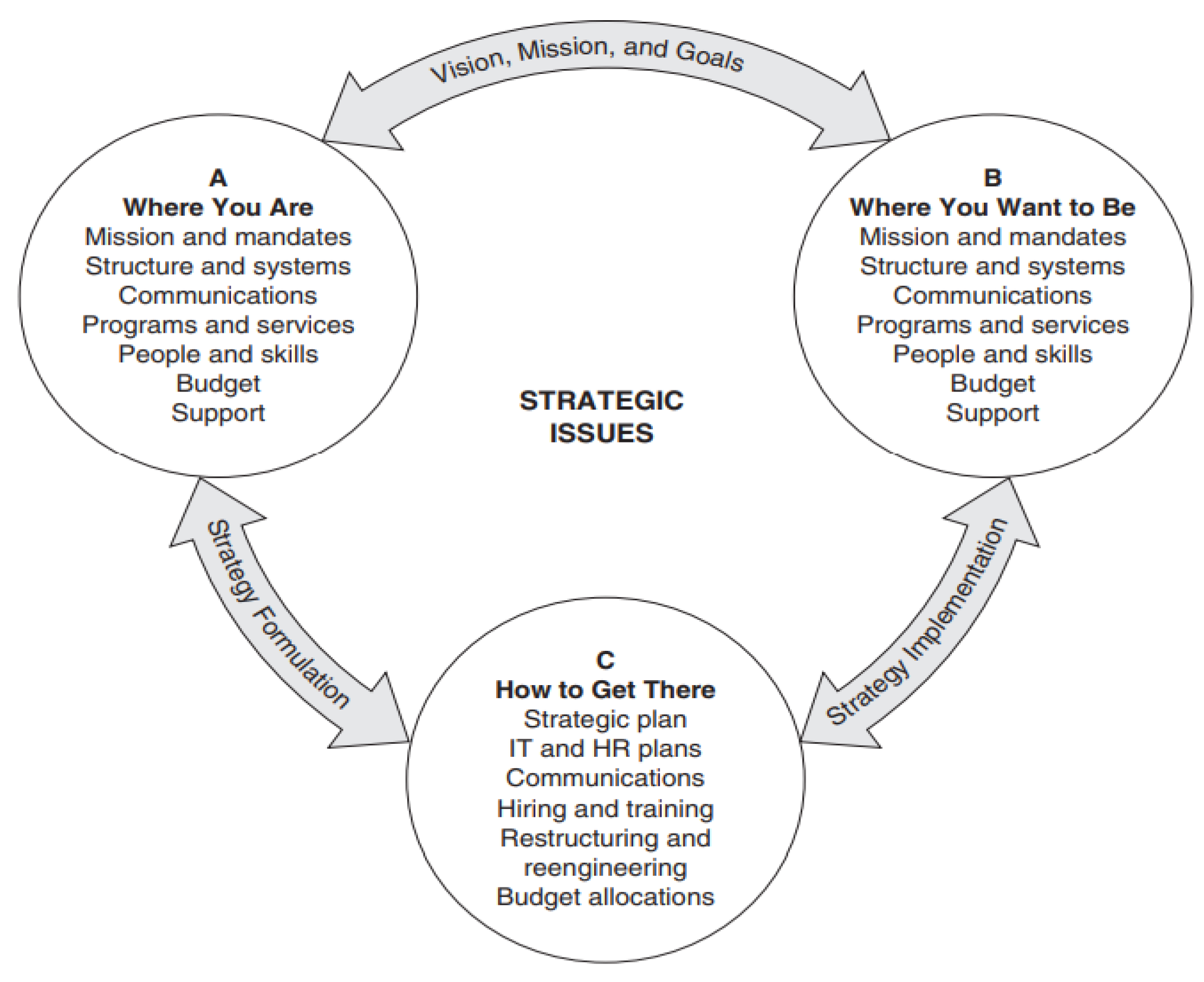
Figure 3.
Types of E-commerce Businesses [3].
Figure 3.
Types of E-commerce Businesses [3].
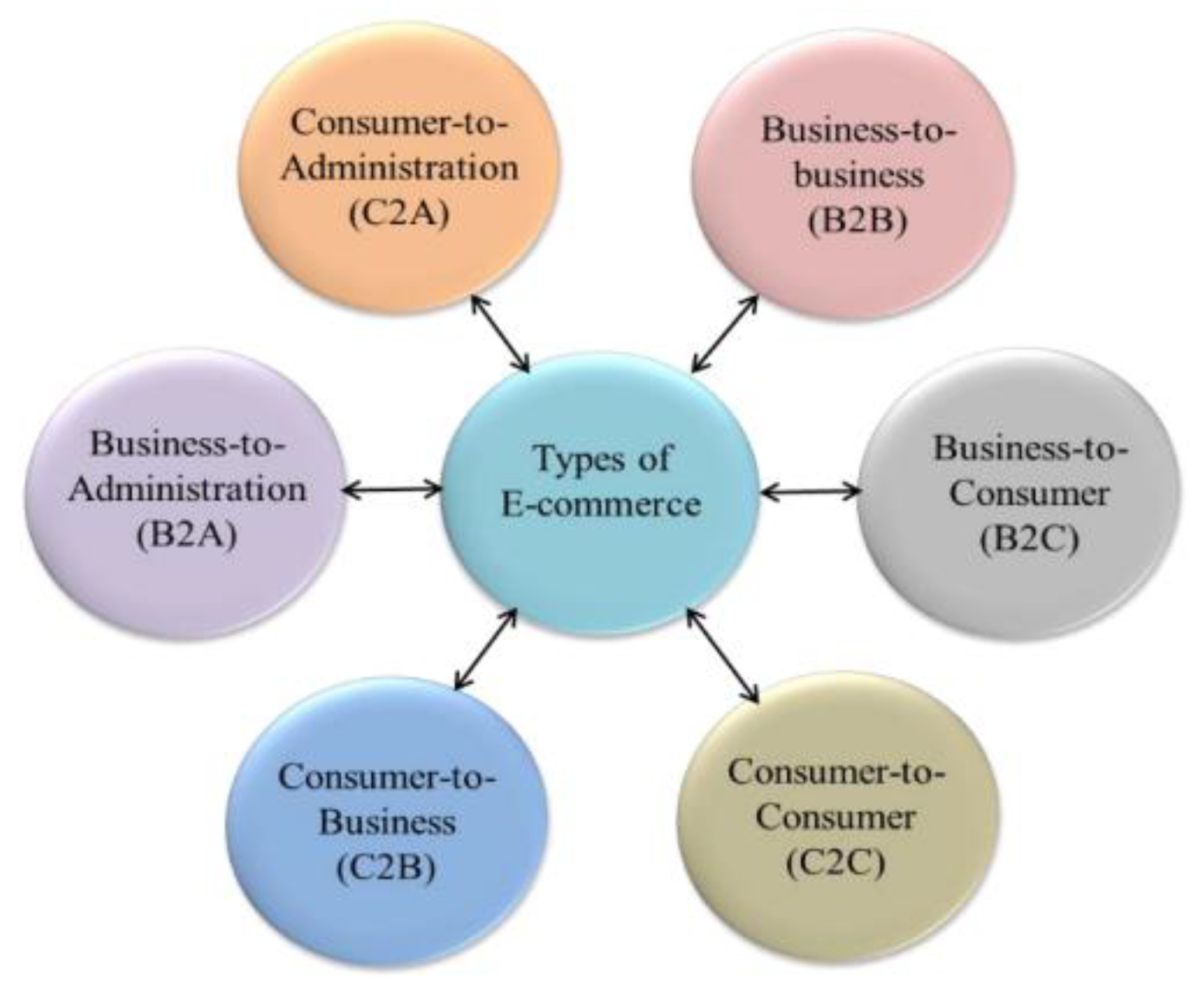
Figure 4.
Technologies Supporting Strategic Planning in E-commerce.
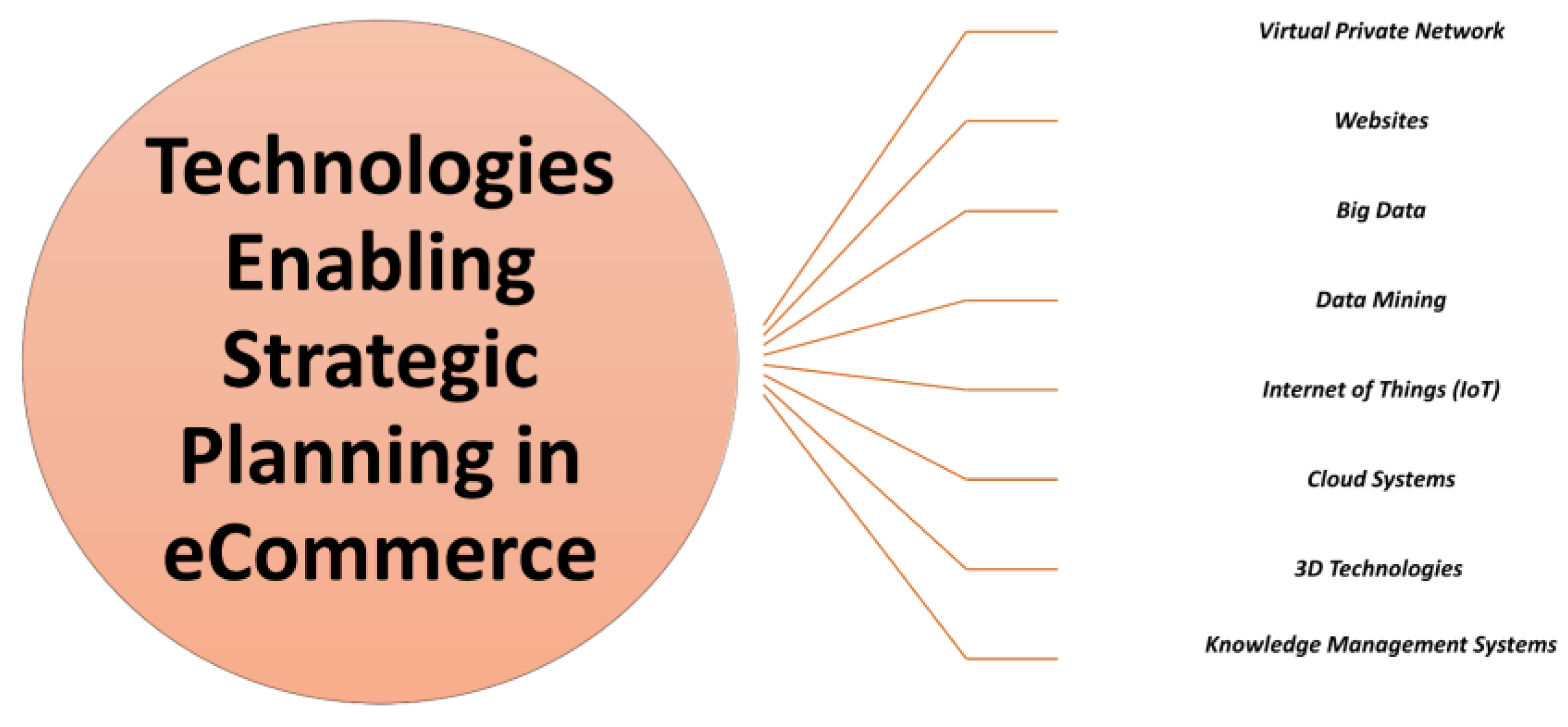
Figure 5.
Categories of E-commerce Strategic Planning.
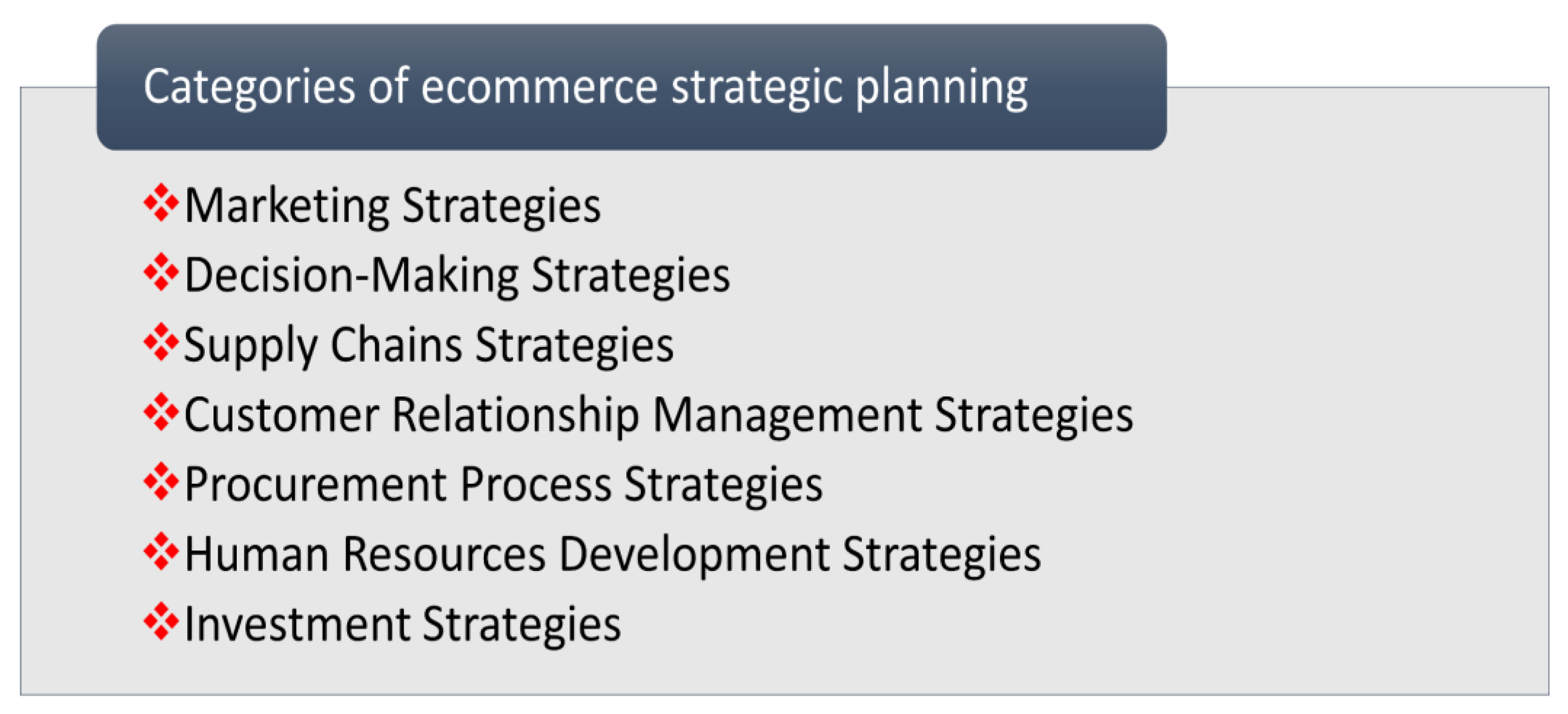
Figure 6.
Marketing Strategy Subcategories [83].
Figure 6.
Marketing Strategy Subcategories [83].
Disclaimer/Publisher’s Note: The statements, opinions and data contained in all publications are solely those of the individual author(s) and contributor(s) and not of MDPI and/or the editor(s). MDPI and/or the editor(s) disclaim responsibility for any injury to people or property resulting from any ideas, methods, instructions or products referred to in the content. |
© 2025 by the authors. Licensee MDPI, Basel, Switzerland. This article is an open access article distributed under the terms and conditions of the Creative Commons Attribution (CC BY) license (http://creativecommons.org/licenses/by/4.0/).
Copyright: This open access article is published under a Creative Commons CC BY 4.0 license, which permit the free download, distribution, and reuse, provided that the author and preprint are cited in any reuse.