

Submitted:
16 September 2025
Posted:
17 September 2025
You are already at the latest version
Abstract
We propose a method for generating sequences of advertisements derived from product descriptions and targeting keywords. Each sequence functions as a narrative, guiding potential customers through a storytelling journey. The sequence begins by building brand awareness, then highlights key product features, and ultimately culminates in a persuasive call to action that encourages the viewer to purchase the product or engage a service. The structure mirrors a well-crafted discourse framework, with each stage contributing to a final “punchline” designed to prompt the desired user action. The discourse structure of the ad sequence is dynamically managed by a large language model (LLM) enhanced with discourse analysis data. This enables the LLM to generate not only coherent and compelling ad content but also a persuasive narrative flow. Additionally, the LLM manages targeting features, tailoring messages to specific audiences. By leveraging click data from previous, similar ad campaigns, the model refines sequences to improve both relevance and performance. This integration of storytelling, discourse analysis, and data-driven targeting enables the creation of highly personalized and adaptive ads that evolve over time to improve engagement and conversion rates. The approach applies advanced AI techniques to automate ad creation, providing a scalable solution for businesses seeking to optimize advertising strategies through data-informed, narrative-driven campaigns. Our experiments demonstrate substantial improvements in ad impressions and targeting when using discourse analysis–supported LLM-generated sequences.
Keywords:
ad sequence generation
; narrative advertising
; storytelling journey
; automated ad creation
; persuasive communication
1. Introduction
With the rapid advancements in artificial intelligence (AI) and Large Language Models (LLMs) in recent years, their applications have expanded across various fields, significantly transforming industries such as advertising, media, e-commerce, education, and more (Gao & Huang, 2021). The rise of AI has established a technical foundation for intelligent operations in the advertising industry (Lai, 2021).
By analyzing consumer behavior, LLMs offer valuable insights that help advertisers craft more effective strategies, enhancing the efficiency of ad information processing and decision-making (Malthouse & Copulsky, 2023). This represents a major breakthrough in the field. In the area of ad targeting, various machine learning techniques are employed to optimize online advertising, particularly by refining the scope of target audiences and improving user segmentation (Chandra et al., 2022; Dwivedi et al., 2021).
For advertisers, the primary appeal of online ads lies in their ability to strategically target users based on factors like demographics and online behavior. Targeted ads are widely believed to be more effective than non-targeted ones. Research supports this view, showing that users are more likely to engage with and click on targeted ads (Tucker, 2014). As a result, ad targeting has become a key focus for many researchers (Rafieian & Yoganarasimhan, 2021).
LLMs also assist creative teams by generating diverse and engaging advertising content through the analysis of large datasets (Wiredu, 2023). For example, Toyota developed an “intuition-driven” ad scenario where content can be optimized in real-time based on location, timing, and customer profiles (Huang & Rust, 2021). Using LLMs in advertising campaigns and content creation can elevate creative quality and increase ad effectiveness. Moreover, integrating LLMs with reinforcement learning (RL) allows for the optimization of ads to align more closely with users’ actual needs, thereby boosting ad effectiveness and purchase conversion rates (Muhlhoff & Willem, 2023). For instance, eBay leverages LLMs to develop descriptive and predictive models, providing users with precise ad content tailored to their preferences, such as price points and other criteria (Kumar et al., 2019).
1.1. Ad Sequencing
Ad sequencing is a storytelling strategy in digital advertising that allows advertisers to deliver ads in a specific order to their target audience, based on previous interactions with the brand. This technique leverages dynamic creative optimization to fine-tune message delivery, ensuring that each interaction with the audience is personalized. In this chapter, we will explore the concept of ad sequencing. Ad sequencing enables businesses to deliver targeted and personalized ads in a deliberate sequence to potential customers, guided by their prior engagement with the brand. The goal is to create a cohesive and relevant experience for customers by presenting tailored messages at each stage of their interaction journey. Ad sequencing is crucial because consumers are constantly exposed to multiple ads from various brands across different channels, making it harder for marketers to capture their attention. By using ad sequencing, businesses can effectively communicate their stories by adapting their message delivery to the customer's engagement level with the brand.
The process of ad sequencing involves analyzing customer data and behavior to anticipate their interests, preferences, and intent. It breaks down long-form content into smaller, bite-sized pieces delivered sequentially across different channels, tailored to each stage of the user's journey. This approach helps increase conversion rates by providing personalized messaging aligned with the customer’s position in the sales funnel. Key elements for successful ad sequencing are shown in Figure 1.
Existing approach, dynamic creative optimization (DCO) is an ML technique that selects the best combination of creative elements for ad delivery based on user data. In ad sequencing, DCO is vital for crafting personalized messages using various ad formats, visuals, and copy, all tailored to user behavior.
Optimizing message sequencing is essential in ad sequencing to ensure that messages are delivered in a specific order, creating a seamless experience for the customer. To optimize message sequencing, advertisers should:
- (1)
- Develop a clear narrative that aligns with the brand's overall message
- (2)
- Personalize messaging based on user behavior
- (3)
- Start with a compelling hook to grab attention immediately
- (4)
- Use high-quality visuals and copy to tell the story effectively
- (5)
- Continuously test and optimize for improvements
The benefits of ad sequencing shown in Figure 2.
Ad sequencing is a powerful strategy for delivering personalized messages that resonate with target audience, while also telling brand’s story in a compelling and engaging way (Sugarman 2009). By following best practices, you can create an effective ad sequencing campaign that drives results.
1.2. Limitations of Dynamic Creative Optimization
DCO offers powerful capabilities in personalizing ads by selecting the best combinations of creative elements based on user data. However, there are several limitations to using DCO in ad sequencing:
- (1)
- Complex setup and management: implementing DCO requires significant upfront work in creating multiple variations of ad components, such as headlines, visuals, and calls-to-action. Managing and optimizing these variations over time can become complex, particularly for campaigns with multiple touchpoints or large audiences.
- (2)
- Limited creative flexibility: while DCO excels at optimizing combinations of predefined creative elements, it can struggle with maintaining the broader narrative or emotional appeal required in some storytelling campaigns. The automated nature of DCO may prioritize performance metrics over creativity, potentially leading to generic or fragmented messaging.
- (3)
- Technical integration challenges: implementing DCO requires sophisticated technical infrastructure, including integration with data management platforms (DMPs), demand-side platforms (DSPs), and creative management systems. This can be challenging for companies that lack the technical expertise or resources to manage these integrations (Affstaff 2024).
- (4)
- Data dependency: DCO relies heavily on user data to optimize ads effectively. If the data is incomplete, outdated, or inaccurate, the optimization may be flawed, leading to suboptimal ad performance.
- (5)
- Limited control for advertisers: Since DCO automates much of the creative decision-making, marketers may have less control over the final output. This can be problematic if the automatically selected combinations do not align with the brand’s overall message or campaign objectives.
- (6)
- Ad fatigue: while DCO aims to personalize ads, repetitive exposure to similar creative elements can lead to ad fatigue, where users become desensitized to the messaging. Without careful monitoring and refreshing of creative variations, this can diminish the effectiveness of the campaign over time.
In this chapter, we address the technological limitations of ad sequences (1)-(3) by applying logical analysis to the automated construction and management of ad sequences. Our approach leverages discourse linguistics to manage textual content at a higher level, focusing on the organization of sentences, paragraphs, sections, and entire documents. This method contrasts with the more commonly used semantic and syntactic analyses in marketing. By integrating discourse analysis, we aim to elevate the effectiveness of ad sequencing beyond the conventional methods.
The logical analysis of ad sequences will be implemented through an LLM, which will not only facilitate discourse analysis but also support other stages of ad sequence delivery. This allows for a more structured and coherent narrative flow throughout the ad campaign, enhancing the overall user experience.
Discourse linguistics examines the general organization of text and the thought structure of its authors (Blackmore 1988). This makes it particularly promising for the logical simulation of ad sequences, as it enables the system to understand and simulate how ideas and messages are structured and delivered across different stages of a campaign. By focusing on the macro-structure of content, discourse analysis helps ensure that the sequence of ads maintains a consistent and logical flow, engaging the audience at a deeper level.
This approach offers a significant advantage over traditional methods, which often focus on optimizing individual elements (e.g., keywords or phrases) without considering the broader narrative context. By analyzing the discourse, we can create ad sequences that are not only personalized but also coherent and engaging, leading to more effective storytelling and better audience retention. Ultimately, this methodology aims to bridge the gap between technological automation and the need for sophisticated, narrative-driven ad campaigns.
1.3. Main Components of Ad Management System
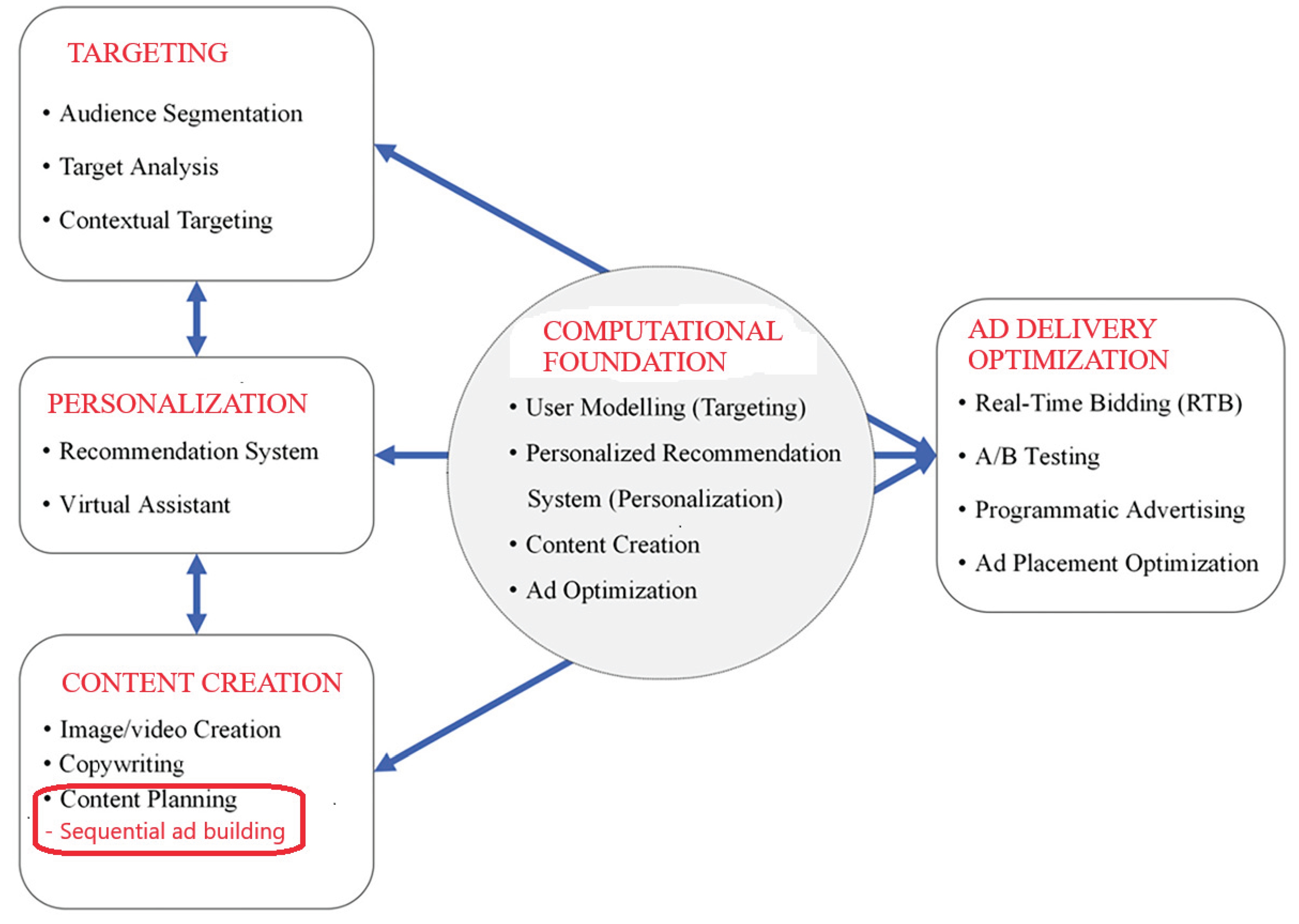
The relationship among the four key elements of AI-driven advertising—Targeting, Personalization, Content Creation, and Ad Optimization—is deeply interconnected, with each component reinforcing and depending on the others. Grounded in computational advertising, these elements form a cohesive framework that maximizes the effectiveness and efficiency of advertising campaigns (Figure 3).
Targeting and personalization (Chapter 6) are two closely related aspects of AI advertising, each addressing a different part of the advertising process. Targeting focuses on identifying the audience most likely to engage with an advertisement by analyzing demographic data, behavioral patterns, preferences, and other relevant factors. Essentially, it answers the question, "Who should see the ad?". Personalization, on the other hand, takes the insights gained from targeting and tailors the content of the ad to match the preferences and behaviors of individual users or user segments. It answers the question, "What type of ad should they see?" By delivering content that resonates on a personal level, personalization enhances the likelihood of user engagement. Together, targeting and personalization ensure that the right users see the most relevant ads, optimizing the chances for a positive response.
Content creation plays a vital role in executing effective personalization strategies. Leveraging advancements in LLMs and other AI tools, content creation involves generating advertising content that aligns with the targeted users' preferences and needs. This content can range from text to multimedia formats such as images, audio, and video. The creative appeal and relevance of the content are critical factors in the success of personalized advertising. In this relationship, content creation supports personalization by providing the necessary materials that make the ads engaging and effective. High-quality, personalized content enhances the user experience and increases the likelihood of a successful advertising campaign.
Ad optimization is the final piece of the puzzle, integrating the efforts of targeting, personalization, and content creation into a cohesive strategy that maximizes advertising effectiveness and return on investment (ROI). Ad optimization involves data-driven strategies that adjust ad delivery parameters, such as frequency, timing, and placement, to ensure the ads reach the right audience at the right time in the right context. Drawing on the insights from targeting, Ad Optimization ensures that the ads are served to the most responsive user groups. Personalization and content creation provide the creative elements that drive engagement, and ad optimization fine-tunes the delivery to maximize impact. This process often involves continuous testing and refinement, using performance data to adjust strategies dynamically. By constantly analyzing the effectiveness of different ad variations and placements, ad optimization enhances the overall success of advertising efforts.
Together, these four elements—targeting, personalization, content creation, and ad optimization—create a feedback loop that enhances the overall advertising process. Targeting identifies the audience, personalization ensures that the content resonates with them, content creation provides the materials that make this connection possible, and ad optimization fine-tunes the entire process to maximize results. Each component relies on data generated by the others, creating a cycle of continuous improvement that drives more effective and efficient advertising strategies.
This integrated approach enables advertisers to move beyond traditional methods,
leveraging AI to deliver highly personalized and optimized campaigns that can
adapt in real-time, ultimately leading to more successful and impactful advertising outcomes. possible return on investment in ads.
Figure 3.
Interaction between four main components of Ad Management system. The focus of this chapter is depicted in bottom-right corner.
Figure 3.
Interaction between four main components of Ad Management system. The focus of this chapter is depicted in bottom-right corner.
1.4. Contribution
We present LLM and Discourse Ad Generation and Targeting (LDAGT), a novel framework that leverages the generative capabilities of large language models (LLMs) to create high-quality advertising content while orchestrating ad delivery through discourse-informed narrative structures. Unlike conventional advertising systems, which often treat content creation, targeting, and sequencing as separate processes, LDAGT unifies these tasks into a single adaptive pipeline.
At the core of LDAGT is the integration of discourse tree modeling with keyword-driven targeting, enabling the system to construct ad sequences that follow a coherent rhetorical progression. By mapping ad components to nodes in a discourse tree, the framework ensures that each stage of the campaign—whether introducing brand awareness, elaborating on product benefits, or delivering a persuasive call to action—flows logically and persuasively into the next. This structural consistency enhances narrative impact and reinforces brand messaging across multiple touchpoints.
The targeting process is further optimized through adaptive LLM prompt engineering and reinforcement learning–based feedback loops, which dynamically refine both content and keyword selection in response to user engagement data. These feedback mechanisms enable LDAGT to continuously adapt to audience behavior, ensuring high relevance and improved click-through performance over time. By aligning keyword targeting, ad sequencing, and narrative structure within a single system, LDAGT achieves a strong correspondence between generated ad text and its intended search or display context.
Experimental evaluations demonstrate that LDAGT delivers substantial improvements in key advertising metrics, including engagement rates, conversion rates, and return on ad spend. The results indicate that discourse-informed generation, when coupled with data-driven targeting, provides a scalable and effective strategy for producing personalized, persuasive, and context-aware ad campaigns.
2. Targeting Dimensions
Intuitively, targeting should increase an advertiser’s profit by allowing the advertiser to stop wasting money on users who are not interested in the advertiser’s products (Skiera et al., 2022). However, it is difficult to ascertain the impact of tar getting on an advertiser’s profit because targeting affects profit in three ways:
(1) Targeting often comes with extra data costs for the advertiser (or an increased price of the ad impression), which negatively affects the advertiser’s profit.
(2) Targeting reduces the number of reachable users, which may decrease the total number of conversions and, in turn, the advertiser’s profit.
(3) Despite the above, targeting should improve the performance of advertising campaigns via an increase in at least one of the following metrics: The probability of a click, the probability of a conversion, and the (long term) margin per conversion (Beales, 2021, Ahmadi et al 2024).
2.1. IP Based Targeting
Ad targeting based on a user's IP address is a method commonly used in digital marketing to deliver relevant ads based on the user's geographic location or network-related information. Here is how IP-based ad targeting typically works:
IP address to location mapping: IP addresses can be mapped to approximate geographic locations (country, region, city, etc.) using IP geolocation databases. These databases are updated regularly to reflect the latest allocations and reassignments of IP addresses. Advertisers can deliver ads to users in specific geographic regions based on their IP address. For example, businesses can target local ads to people in a particular city or region. Applications include local business ads, region-specific offers and language-specific content.
By identifying the Internet Service Provider (ISP) associated with the IP address, advertisers can target users based on their network provider. This might be useful for marketing specific internet services or devices. Some IP addresses can indicate that a user is part of a corporate network. Advertisers can use this information to target ads specific to certain industries or companies.
Advertisers can whitelist or blacklist certain IP ranges. For example, they can exclude IP addresses associated with non-targeted regions or specific competitors from seeing their ads. Also, if a company is hosting an event or conference, they can target ads to specific IP ranges that belong to the venue's network to ensure that event attendees see their ads.
Limitations of IP-based targeting are as follows:
- (1)
- Accuracy: IP-based geolocation isn’t always precise, especially with dynamic IP addresses, VPNs, or mobile networks. Users may appear to be in a different location than they actually are.
- (2)
- Broad targeting: Since IP-based targeting is often limited to geographic or network information, it doesn’t offer the same level of precision as other forms of targeting, such as behavioral or demographic targeting.
Tools and platforms include Google Ads, Facebook Ads. Major ad platforms allow for geo-targeting based on IP address. Advertisers can set up campaigns that focus on users from specific locations (O’Brien 2019). IP Geolocation services tools like MaxMind, IP2Location, or GeoIP services from providers like Google Cloud or AWS can provide accurate IP-to-location mapping.
By leveraging IP addresses, advertisers can reach users based on where they are or what network they are using, making their ad campaigns more relevant and effective. However, it's important to combine IP-based targeting with other methods for a more holistic and accurate approach.
2.2. Enhanced LLM Based Reasoning for Behavioral Targeting
Large Language Models (LLMs) can significantly enhance behavioral targeting by improving the reasoning behind ad placements, user segmentation, and personalized messaging. By integrating LLMs into behavioral targeting systems, advertisers can better understand user behavior, preferences, and intent, leading to more effective and personalized advertising strategies. Below are several use cases where LLMs can support better reasoning for behavioral targeting:
- (1)
- Contextual understanding of user intent analyzes search queries, social media posts, and content consumption to infer deeper user intent. An LLM can analyze the nuances of a user’s recent search queries and social media activity to determine if they are casually browsing for information or if they have a strong purchase intent. For example, if a user searches for "best electric cars" and engages with content about sustainability, the LLM can infer an environmentally-conscious purchase intent and suggest targeted ads for eco-friendly products. LLMs excel at understanding context and can distinguish between different levels of intent, improving the precision of ad targeting.
- (2)
- Crafting personalized ad copy based on a user’s online behavior and preferences. By analyzing a user's browsing history and social media interactions, an LLM can generate personalized ad copy that resonates with the user's preferences. If a user frequently engages with content about healthy living, the LLM can tailor an ad to emphasize the health benefits of a product, making the messaging more compelling.
- (3)
- Segmenting audiences based on psychological traits, values, attitudes, and lifestyles inferred from text analysis. An LLM can analyze user-generated content such as reviews, social media posts, and blogs to categorize users into psychographic segments (e.g., trendsetters, bargain hunters, health-conscious individuals). Advertisers can then target each segment with ads that align with their values and preferences. LLMs can detect subtle patterns in language that indicate underlying psychological traits, enabling more refined and meaningful audience segmentation.
- (4)
- Continuously adapting ad strategies based on real-time analysis of changing user behavior. An LLM can monitor a user’s interaction with ads, websites, and content over time to detect shifts in behavior or preferences. For instance, if a user’s browsing patterns suggest a sudden interest in a new hobby, the LLM can recommend shifting ad campaigns to target that new interest. LLMs can reason about changes in user behavior and adjust targeting strategies dynamically, leading to more relevant ad placements.
- (5)
- Detecting user sentiment and emotions from text interactions to adjust ad content accordingly. An LLM can analyze a user’s tone in emails, chat messages, or social media posts to determine their emotional state. If the user expresses frustration or dissatisfaction, the system can avoid pushing aggressive sales ads and instead offer supportive or problem-solving content. LLMs provide deeper emotional and sentiment analysis, allowing for more empathetic and context-aware ad targeting.
- (6)
- Mapping the user’s journey across different touchpoints to provide cohesive and logical ad sequencing. An LLM can analyze the stages of a user’s journey (e.g., awareness, consideration, decision) by reviewing their interactions with various content and ads. The LLM can then recommend ad content that fits the user’s current stage in their journey. For example, if a user is in the consideration phase for purchasing a car, the LLM can suggest comparison ads instead of awareness-building ads. LLMs can reason about the user's position in their decision-making process, ensuring ads are delivered at the right time and with the right message.
- (7)
- Understanding user behavior across different platforms (e.g., social media, e-commerce sites, email) to create a unified ad strategy. An LLM can integrate data from multiple sources, such as a user’s social media activity, purchase history, and email interactions, to create a holistic profile. This allows for consistent and contextually relevant ads across channels, ensuring that users receive a cohesive brand experience. LLMs can synthesize information from various sources, providing a more complete picture of user behavior and enabling better-targeted cross-channel campaigns.
- (8)
- Predicting future behavior and preferences based on past interactions. An LLM can analyze patterns in a user’s past behavior to predict future interests. For instance, if a user frequently engages with tech-related content and makes gadget purchases, the LLM can predict that they are likely to be interested in upcoming tech releases and target them with pre-launch ads. LLMs can enhance the predictive capabilities of behavioral targeting by identifying subtle trends and patterns in user behavior, leading to proactive and anticipatory ad strategies.
- (9)
- Providing recommendations based on the context of user behavior, such as location, time, or activity. An LLM can consider contextual factors, such as a user’s current location or the time of day, to suggest relevant ads. For example, if a user is searching for lunch options during midday, the LLM can prioritize ads for nearby restaurants or food delivery services.
Current research on behavioral targeting shows that behavioral information may increase ad effectiveness (Aziz & Telang, 2016; Rafieian & Yoganarasimhan, 2021). Studies discover the positive effects of behavioral targeting on purchase intent and sales, with the former increasing by about 2/4 (Goldfarb & Tucker, 2011) and the latter by 1/30 (Johnson et al 2017). (Aziz and Telang 2016) find that users with high baseline purchase probabilities responded positively to ads, increasing their purchase probability by up 1/35 percentage points. Moreover, (Rafieian and Yoganarasimhan (2021) demonstrate with their targeting strategy based on behavioral and contextual information that improved CTR by 2/3 over the baseline system. These gains mainly stemmed from behavioral rather than contextual information.
By integrating LLMs into behavioral targeting strategies, advertisers can gain a deeper understanding of user behavior, improve personalization, and create more engaging and effective ad campaigns. LLMs enable advanced reasoning capabilities that go beyond simple data analysis, allowing for more thoughtful and context-aware targeting.
2.3. Enhanced LLM Based Reasoning for Demographic Targeting
Companies such as Google, Facebook/Instagram, Twitter, and Spotify have built digital advertising ecosystems that provide advertisers with self-service platforms to purchase and test hundreds of audience segments. Also known as ‘‘audience lists,” ‘‘user lists,” or ‘‘data segments,” these user groups share specific attributes such as demographics, income, region, interests, or behaviors (Cutura 2017). For instance, advertisers can currently target their Google ads using:
- (1)
- affinity segments (based on people’s interests and habits),
- (2)
- in-market segments (based on recent purchase intent),
- (3)
- similar segments (based on interests similar to those of the advertiser’s website visitors or existing customers),
- (4)
- detailed demographic segments (based on long-term life facts), and
- (5)
- life-event segments (people who are amid important life milestones; see, for example, Google (2023)).
Facebook’s core audiences similarly cover a wide range of location-, demographic-, interest-, and behavior-based segments for targeting (Meta, 2023), resulting in more than six hundred segments (Figure 4).
LLMs can significantly enhance demographic targeting by providing deeper insights into demographic profiles, understanding the nuances of specific groups, and helping advertisers create more relevant and personalized campaigns. Below are several use cases where LLMs can support better reasoning for demographic targeting:
- (1)
- Understanding cultural nuances: Tailoring ads to different cultural backgrounds by understanding language nuances, traditions, and cultural sensitivities. An LLM can analyze demographic data (e.g., ethnicity, language, cultural practices) to tailor ad content that resonates with specific cultural groups. For example, an ad campaign targeting Hispanic audiences in the U.S. can incorporate culturally relevant themes, holidays, and language variations such as Spanglish. Reasoning enhancement is important as well: LLMs can reason about cultural references, ensuring that ads are contextually appropriate and resonate with the target demographic.
- (2)
- Age-specific content personalization manages ad content that is age-appropriate and tailored to different generational groups (e.g., Gen Z, Millennials, Boomers). For example, an LLM can analyze text and behavioral data to segment audiences by age group and create ad content that appeals to each group’s preferences. Furthermore, it can generate playful, meme-based content for Gen Z while producing more professional, informative content for Baby Boomers. LLMs can understand generational differences in language, humor, and values, allowing for more precise targeting and better engagement.
- (3)
- Gender-sensitive marketing crafts gender-sensitive ads that avoid stereotypes and appeal to modern gender identities. For instance, an LLM can analyze demographic data to understand the gender identities and preferences of an audience. It can help create gender-inclusive marketing campaigns that resonate with diverse gender groups, avoiding traditional stereotypes and promoting inclusivity. LLMs can reason about gender-specific language, preferences, and sensitivities, ensuring that ads are respectful, relevant, and inclusive (Deiss and Henneberry 2020).
- (4)
- Geo-specific targeting customizes ad campaigns based on the geographic location of users, considering regional preferences, climates, and lifestyles. In particular, an LLM can analyze the geographic location of users and tailor ad content accordingly. An ad for winter clothing would be targeted at users in colder regions, while users in tropical climates might see ads for summer apparel. LLMs can reason about regional variations in climate, culture, and lifestyle, helping advertisers create more geographically relevant campaigns.
- (5)
- Income-based targeting creates ads that cater to different income levels, adjusting the messaging, product positioning, and offers accordingly. An LLM can analyze data related to a user's income level (inferred from purchase history, location, and other indicators) and create ads that are relevant to their financial situation. For example, luxury products would be marketed to higher-income segments, while value-oriented products would be highlighted for lower-income groups. LLMs can reason about economic indicators and tailor marketing messages that are sensitive to the financial realities of different demographics.
- (6)
- Educational background and professional targeting tailors content based on the educational background and professional experience of the target audience. An LLM can analyze users' educational and professional backgrounds to create ads that resonate with their knowledge level and career stage. For example, a tech product might be marketed differently to an engineer with a PhD than to a college student studying computer science. LLMs can reason about the educational and professional context of users, ensuring that ads are appropriately targeted based on knowledge and experience.
- (7)
- Family and life stage targeting adjusts ad content based on family status and life stage (e.g., single, married, parents, empty nesters). For instance, an LLM can analyze a user's demographic data and life stage to suggest relevant products and services. For example, new parents might see ads for baby products, while empty nesters might receive ads for travel and leisure activities. LLMs can reason about the implications of different life stages, helping advertisers create campaigns that resonate with users' current needs and priorities.
- (8)
- Health and wellness targeting customizes ads based on demographic health data, such as age-related health concerns or regional health trends. An LLM can analyze demographic health data to create ads that address specific health concerns. For example, targeting an older demographic with ads for joint supplements or wellness programs tailored to age-related health needs. LLMs can reason about health trends and demographic-specific health concerns, improving the relevance and impact of health-related marketing campaigns.
- (9)
- Event-specific targeting tailors ad content to demographic groups based on relevant events (e.g., festivals, sports events, national holidays). An LLM can identify upcoming events relevant to certain demographic groups and create targeted campaigns around those events. For example, targeting sports fans during major tournaments or creating holiday-specific campaigns for different cultural celebrations. LLMs can reason about the timing and relevance of events to specific demographic groups, optimizing ad placements and engagement.
By leveraging LLMs for demographic targeting, advertisers can go beyond basic demographic data to understand the deeper context of users' lives, preferences, and needs. LLMs offer advanced reasoning capabilities that allow for more nuanced and effective targeting, resulting in more relevant and personalized ad experiences for diverse demographic groups.
2.4. Introduction to the Discourse of Targeted Advertisement
The discourse of targeted advertisement refers to the language, communication strategies, and underlying ideologies that shape the way advertisements are created, delivered, and perceived by specific audiences. It involves the use of personalized messaging to engage particular demographic groups, psychographic segments, or behavioral clusters. The discourse of targeted advertising includes nine components:
- (1)
- Language of personalization: targeted ads often use language that feels personal and relevant to the individual. This might include addressing the user by name, referencing specific behaviors, or tailoring content based on their preferences or location. Discourse emphasizes creating a connection with the user by delivering messages that resonate with their identity, interests, and needs. The language used is often direct, relatable, and sometimes informal, aiming to establish trust and familiarity.
- (2)
- Data as a narrative: discourse of targeted advertising increasingly revolves around data-driven insights. Advertisers analyze data to craft messages that seem more tailored to individual users or groups. This can be reflected in the choice of words, images, and offers that speak directly to the user’s previous online behaviors. Behind the scenes, the discourse involves discussions around the role of algorithms, machine learning, and artificial intelligence in shaping advertising. These technologies allow advertisers to create and refine messages based on vast amounts of data.
- (3)
- Language of segmentation: targeted advertising divides the audience into segments based on various factors like age, gender, location, interests, and behaviors. The discourse focuses on how different segments respond to specific messaging, and the language is crafted accordingly to appeal to these segmented identities.
- (4)
- Representation and stereotyping: ad discourse also deals with the representation of different demographic groups. Targeted ads may reinforce certain stereotypes or challenge them, depending on how the advertiser chooses to address the segment. This includes the use of culturally specific references, images, and language that resonate with the target group.
- (5)
- Behavioral cues and persuasion include the language of persuasion: targeted ads often use persuasive language tailored to the psychological triggers of the audience. This includes urgency (e.g., "limited-time offer"), social proof (e.g., "people like you also bought this"), or emotional appeals (e.g., "feel confident every day"). Behavioral influence is important as well: ad discourse explores how certain types of language and imagery influence consumer behavior, nudging them toward specific actions such as making a purchase, signing up for a service, or sharing content.
- (6)
- Cross-platform communication and platform-specific language are reflected in discourse managing targeted advertising that varies across different platforms (e.g., social media, search engines, video platforms). The language used in targeted ads is adapted to the norms of each platform, whether it’s a concise call-to-action on Twitter, a visually driven narrative on Instagram, or a conversational tone in a chatbot. Ad sequence discourse also involves ensuring consistency across various channels. Advertisers aim to create a seamless experience where the targeted message feels consistent and coherent, regardless of whether the user encounters it on a website, app, or social media.
- (7)
- Ad sequence discourse described the engagement-driven language. Targeted ads often encourage user interaction and engagement, using language that invites clicks, likes, shares, or comments. This part of the discourse involves crafting messages that prompt the user to take action. Discourse also involves analyzing how users respond to ads, including their feedback, reviews, and interactions. This feedback loop helps refine future targeted messaging.
- (8)
- Discourse facilitates storytelling: targeted ad sequences increasingly employ storytelling techniques to build a narrative around the product or service. The discourse of storytelling in ads is designed to connect emotionally with the target audience by framing the product as part of a larger, meaningful story that resonates with their lives.
- (9)
- Discourse is also a tool for framing. How an ad is framed depends on the target demographic. For example, an ad targeting eco-conscious consumers might frame a product as environmentally friendly, emphasizing sustainability through both language and imagery.
The discourse of targeted advertising is a complex interplay of language, personalization, and modern LLM technology. It is about crafting messages that resonate with specific audiences, leveraging data and algorithms to predict what will be most effective, while navigating the balance between persuasion and ethical considerations. This discourse is continually evolving as technologies like AI and machine learning advance, making targeted ads more sophisticated and personalized.
3. Computing Ad Sequencing
Adaptive ad sequencing introduces a forward-looking approach to the advertiser's ad allocation challenge. Unlike traditional methods that only consider immediate user engagement based on current data, adaptive sequencing accounts for future user behavior and exposure to ads. This forward-thinking approach is illustrated by distinguishing between information from past user interactions and the anticipated data that future engagements might provide.
However, many advertising platforms shy away from forward-looking models due to the added complexity they introduce. The predominant approach in the industry relies on supervised learning and contextual bandit algorithms, which focus solely on optimizing ad delivery based on real-time data, disregarding potential future exposures and engagements (Theocharous et al., 2015).
The reluctance to adopt forward-looking models stems from several factors. Firstly, the computational complexity of integrating future projections into ad allocation models can be daunting. Secondly, the potential returns from such an approach remain uncertain, making it difficult for advertisers to justify the investment in a more dynamic framework.
Ultimately, an advertiser’s decision to embrace a forward-looking model depends on whether incorporating future user behavior data can deliver better outcomes. Advertisers must weigh the benefits of predictive modeling against the increased complexity and uncertainty, considering whether the potential for improved engagement and conversion justifies the shift from traditional methods. If successful, adaptive ad sequencing could revolutionize the way advertisers allocate their budgets, enhancing long-term effectiveness by anticipating and influencing future user actions rather than merely reacting to present circumstances.
A chart for the ad sequencing decision based on ad exposure discourse tree is shown in Figure 5.
The user is at the fourth exposure in the session, and the advertiser needs to decide which ad to show to this user. The advertiser is enabled with ad forecasting possibility to accounts for the futures exposures when making the decision.
The first ad A just introduces a generic product. Then ad B introduces a more specific version of a product from a family. After that, ad C introduces a complementary product that is needed to enable A. Finaly, ad D is introduced for a product from a competitive family, so that the user choses if she prefers A family of products or D family of products (Figure 6).
3.1. Ad Network as an Auction
The ad network designs an auction to sell ad slots. In our setting, the ad network runs a quasi-proportional auction with a cost-per-click payment scheme. As such, for a given ad slot and a set of participating ads A with a bidding profile <b1, b2, b|A|>, the ad slot is allocated to ad a with the following probability:
where is ad a’s quality score, which is an expression for the profitability of ad a. The ad network does not customize quality scores across auctions. The subscript 0 in expresses the baseline allocation policy. The payment scheme is cost-per-click, similar to Google’s sponsored search auctions. That is, ads are first ranked based on their product of bid and quality score, and the winning ad pays the minimum amount that guarantees their rank if a click happens on their ad.
Google’s sponsored search auctions are the mechanism by which Google determines which ads appear at the top of search results, and in what order, when users enter search queries. This process involves advertisers bidding to have their ads shown to users who search for relevant terms. Sponsored search refers to the ads that appear at the top or bottom of the search engine results page (SERP) when users enter specific search queries. These ads are labeled as "sponsored" or "ad" to differentiate them from organic search results. Every time a user performs a search, an auction is triggered instantly. The auction determines which ads appear, their ranking, and how much each advertiser pays if a user clicks on their ad.
Advertisers bid on keywords that they think are relevant to their business. For example, a shoe retailer might bid on keywords like "buy running shoes." When a user enters a query, Google matches the query with the relevant ads based on the keywords chosen by advertisers. An auction is initiated for all the ads that are eligible to appear based on the keyword match. Advertisers are not guaranteed placement; instead, their ads compete in the auction.
The position of an ad in the auction is determined by its Ad Rank. Ad Rank is calculated
AdRank=BidAmount×QualityScore
based on several factors:
- (1)
- Bid amount: The maximum amount an advertiser is willing to pay per click (CPC bid).
- (2)
- Quality score: This measures the relevance and quality of the ad and includes Expected click-through rate (CTR): How likely the ad is to be clicked when shown, Ad relevance: how closely the ad matches the user’s search query, and Landing page experience: The relevance and quality of the page users are taken to when they click the ad.
- (3)
- Ad extensions and formats: The impact of additional information provided with the ad, such as phone numbers, site links, or location information.
A quasi-proportional auction with a cost-per-click (CPC) payment scheme is a type of online advertising auction model where advertisers bid for ad placement, and the payment is based on user clicks rather than impressions. The term "quasi-proportional" refers to the method used to allocate ad slots to advertisers, where the probability of an ad being shown is roughly proportional to the advertiser's bid, but not strictly proportional as in a standard proportional auction.
The auction setup is as follows: advertisers bid for ad slots, typically indicating the maximum amount they are willing to pay for each click on their ad (CPC bid). Multiple advertisers compete for the same ad placement on a website or search engine results page. The term "quasi-proportional" implies that the allocation of ad slots is influenced by the advertisers' bids, but not in a strictly proportional way. Unlike a fully proportional auction, where the probability of an ad being shown is directly proportional to the bid amount, a quasi-proportional auction adjusts the allocation in a more complex way. This could involve factors such as ad quality, relevance, or user engagement history, in addition to the bid amount.
The goal is to balance maximizing revenue for the platform (by giving higher-bid ads a better chance) with ensuring that users see relevant and high-quality ads. Cost-per-Click (CPC) payment works as follows: advertisers only pay when their ad is clicked, rather than paying based on the number of times the ad is shown (impressions). The amount is usually determined by a second-price auction mechanism, where the winning advertiser pays slightly more than the next highest bidder's price, rather than their own maximum bid. As an example, let us consider three advertisers (A, B, C) bidding for ad slots with the following CPC bids: advertiser A with $2.00 per click, advertiser B with $1.50 per click, and advertiser C with $1.00 per click.
In a quasi-proportional auction, the probability that each advertiser’s ad will be shown is roughly proportional to their bid, but also adjusted based on factors like ad quality. If advertiser A has a slightly lower ad quality than B and C, their bid might be de-emphasized, and advertiser B could have a better chance of winning the auction even though they bid less. Ultimately, the ad that gets the click will trigger the CPC payment. This approach balances the need for effective advertising with ensuring that ad placements are not solely determined by the highest bid, providing a more equitable and performance-based auction system.
3.2. Ad Allocation Process
The ad allocation process is implemented as follows:
(1) The ad network designs an auction to sell ad slots
(2) Advertisers participating in the auction make the following choices:
(a) design their banner,
(b) decide which impressions they want to target, and
(c) decide how much to bid.
(3) Whenever a user starts a new session in an app, a new impression is being recognized, and a request is sent to the publisher to run an auction.
(4) The auction takes all the participating ads into account and selects the ad probabilistically based on the weights. Note that all the participating ads have the chance to win the ad slot. This is in contrast with more widely used deterministic mechanisms like second-price auctions, where the ad with the highest product of bid and quality score always wins the ad slot.
(5) The selected ad is delivered.
(6) Each ad exposure lasts certain period of time, like a minute. During this time, the user makes two key decisions:
(a) whether to click on the ad, and
(b) whether to stay in the app or leave the app and end the session.
If the user clicks on the ad, the corresponding advertiser has to pay the amount determined by the auction. After a certain time period, if the user continues using the app, the ad network treats the continued exposure as a new impression and repeats steps 3 to 6 until the user leaves the app.
In the fiercely competitive world of digital advertising, securing prime ad placements is like playing a high-stakes game of strategy, where every move is carefully planned to win the attention of potential customers. Ad placement is influenced by a delicate balance of factors, from the advertiser's budget and audience behavior to the constantly shifting algorithms of ad platforms. Success in this landscape requires advertisers to navigate these elements with precision, adapting to changes while staying ahead of the competition (Figure 7). The factors are as follows:
- (1)
- Budget allocation: advertisers must judiciously allocate their budgets to bid for premium ad spaces. For instance, a company might decide to spend more on placements during peak shopping seasons to maximize visibility.
- (2)
- Audience targeting: understanding the demographics and interests of the audience is crucial. A travel agency might target ads towards users who have recently searched for vacation destinations.
- (3)
- Ad quality and relevance: the quality and relevance of the ad itself can affect its placement. A well-designed ad with high relevance to the user is more likely to win a favorable spot.
- (4)
- Bidding strategies: advertisers employ various bidding strategies to outmaneuver competitors. A common strategy is to set a higher bid for placements on popular websites or during prime time slots.
- (5)
- Discourse-based ad sequence planning, which is a focus of this chapter (Figure 8).
- (6)
- Real-time adjustments: the ability to make real-time adjustments to bids based on analytics can give advertisers an edge. For example, if an ad is performing well on a particular site, the advertiser might increase the bid for that site to secure more placements.
- (7)
- Platform algorithms: each advertising platform has its own set of algorithms that determine ad placement. Advertisers need to stay informed about these algorithms to tailor their strategies accordingly.
Figure 8 illustrates a simple ad sequence along with its corresponding discourse tree. The discourse tree visually represents the logical structure of the ad sequence, guiding the user through a carefully crafted persuasive journey. This structure is organized using rhetorical relations such as Elaboration, Means, and Consequence.
- Elaboration provides additional details, enriching the initial message by explaining the features or benefits of the product or service.
- Means shows how the product can be used or how it solves a specific problem, connecting the user to the practical value of the offer.
- Consequence highlights the positive outcomes or rewards of taking action, driving home the necessity of the purchase.
Each step of the ad sequence corresponds to a mental step for the user, progressively convincing them that buying the product or service is not just an option, but a necessity. The discourse tree effectively mirrors the user's thought process, systematically addressing concerns, highlighting benefits, and ultimately leading them toward a decision to purchase.
By organizing the sequence this way, the ad taps into psychological triggers, increasing engagement and maximizing the likelihood of conversion. This discourse-based framework helps ensure that each part of the ad sequence builds on the previous one, maintaining coherence and momentum, and aligning with the user’s decision-making process.
3.3. Calculating Targeting Profit
To calculate the revenue from the targeted campaign in comparison with untargeted, we define revenue functions for each case.
The advertiser’s revenue (p) is a function of:
- (1)
- the number of users who purchase the advertiser’s product (Q),
- (2)
- the (long-term) margin per conversion (m, which can represent customer lifetime value (CLV)), and
- (3)
- the cost per conversion.
No-targeting case will have a subscription ‘-‘ and a targeting audience segment is denoted by i. The totality of segment is denoted by S, S.
In case where an exact profit margins data on ad conversions is unavailable, advertisers can measure advertisement results such as registrations, leads, certain website activities including booking the service or demanding a quote.
The advertiser’s no-targeting revenue is as follows:
where is the number of ad impressions, is click-through rate, is a conversion rate,
is the absolute margin per conversion, and is the advertising cost in CPM. This is what an advertiser pays for 1000 non-targeted ad impressions.
The targeting revenue is computed analogously
where is the data cost in CPM. This is an extra expense that an advertiser pays to target the respective audience segment i.
It is obvious that advertiser have a boost in revenue when targeting users who are more likely to be interested in the advertiser’s products. At the same time, targeting may decrease the number of ad impressions by reducing the number of available users because it excludes those who do not meet the targeting criteria. Also, targeting is associated with additional expense for the advertiser due to increased number of impressions for targeted users.
Four coefficients need to be introduced to representing the changes in CTR, CR, margin, and reach, respectively, through targeting audience segment i. As a result, = , = , and . There should be an increase in CTR, CR, and margin and a decrease in reach (i.e., 0 < <1).
Data cost can be defined as a function of reach: = 1/. , an estimated parameter expressing the observation that a segment is more expensive with a larger . It can be transferred from previous ad campaigns.
Now we have for targeting revenue:
Break-even performance of a segment i can now be expressed as
This equation expresses a break-even performance related to targeting audience segment i that makes targeting as profitable as no-targeting (with the reach ). Advertisers need to evaluate whether their targeting is actually improving their revenue, and targeting makes sense.
4. A Discourse Chain of Ads
Research has revealed that individuals exposed to a strategically sequenced series of advertisements are significantly more likely to convert, with conversion rates reported to be 14 to 17 times higher than those who were exposed only to stand-alone ads (Visioneerit, 2024). This dramatic increase underscores the power of sequential advertising in building a narrative, reinforcing brand messaging, and gradually guiding the audience through a well-structured journey from awareness to action. By delivering ads in a specific order that aligns with the consumer's decision-making process, brands can foster deeper engagement, enhance recall, and ultimately drive more successful conversions. This finding highlights the importance of moving beyond isolated, one-off ads and adopting a more cohesive, story-driven approach to advertising.
We introduce a novel approach called LLM and Discourse Ad Generation and Targeting (LDAGT), which harnesses the power of LLMs to generate ad content and structure ad delivery using discourse trees. LDAGT optimizes keyword targeting while utilizing adaptive LLM prompt engineering and reinforcement learning-based feedback loops to enhance ad relevance and effectiveness. By integrating ad content generation with ad sequence delivery and keyword targeting, LDAGT ensures a cohesive discourse structure across a sequence of ads, along with a strong alignment between the generated ad text and targeted keywords. This leads to significantly improved ad performance.
4.1. Ad Sequence Templates
We now consider more complex discourse structures of ad sequences. Figure 9 shows a discourse representation of an ad sequence where a proposed product is presented as an opposite entity to another product which is not recommended because of certain negative characteristics. This is a well-known pattern to strengthen the benefits of one product by explaining how it is better than the other product.
To strengthen an advantage of a given product, an efficient way is to show that skillful users can use this advantage and unskillful cannot (Figure 10).
4.2. LLM Support
Kumar and Khana (2024) proposed adaptive prompt engineering and reinforcement learning-based feedback loops to enhance the relevance and effectiveness of ads. The adaptive prompt engineering technique dynamically adjusts the prompts based on user behavior and ad performance, while the reinforcement learning-based feedback loop enables continuous optimization of the ad generation and targeting process.
To construct the prompts and optimize them, we rely on a combination of contextual information, such as user demographics, browsing history, and search queries. Incorporating user demographics and browsing history into prompt engineering via algorithmic optimization can improve the relevance of generated ad content by about 1/5 having the fixed to generic prompts as a baseline (Yan et al. 2021). Domain-specific knowledge, such as product attributes and brand guidelines, is also valuable to make sure the delivered ad content is informative and convincing. More than 2/3 of prospective buyers and users are more likely to engage with ads that are relevant to their interests and preferences (Interactive Advertising Bureau 2020). The prompts are adaptively updated based on real-time user interactions and feedback. For example, if a user clicks on an ad, the corresponding prompt is reinforced to generate similar ad content in the future. Conversely, if an ad receives low engagement, the prompt is adjusted to explore alternative ad content strategies. Chen et al. 2021 showed that dynamic prompt adjustment based on user feedback can improve the click-through rate (CTR) of generated ads by 12% compared to static prompts, served as inspiration for this adaptive approach.
Given a prompt and a set of discourse trees templates for sequential ads, the LLM generates multiple candidate ad variations for each sequence element and for each template. These variations are assessed as candidate ad sequence elements based on:
- (1)
- their relevance to the prompt,
- (2)
- discourse coherence, and
- (3)
- alignment with the advertising objectives.
The assessment is done based on perplexity and semantic similarity, and human judgments from domain experts. It has been confirmed that combining automatic metrics with human judgments can improve the quality assessment of generated ad content by about 1/4 compared to using stand-alone automatic measurement (Liu et al. 2020). Obtained sequence of ads is also associated with relevant keywords extracted from text of ads.
We leverage algorithmic optimization of LLM prompts and weights, which improves efficiency when LMs are used one or more times within a pipeline. Without algorithmic optimization, the default steps are:
- (1)
- break the problem down into steps,
- (2)
- prompt the LLM well until each step works well in isolation,
- (3)
- tweak the steps to work well together,
- (4)
- generate synthetic examples to tune each step, and
- (5)
- use these examples to fine-tune smaller LMs to cut costs.
Every time advertisement pipeline is updated, all prompts (or fine-tuning steps) may need to be re-done.
To make the advertising pipeline more systematic and powerful, algorithmic optimization employs several key strategies:
- (1)
- Separation of Workflow and Parameters: It decouples the program's flow (modules) from the parameters (language model prompts and weights) at each step, allowing for better control and flexibility.
- (2)
- Introduction of Optimizers: These are LM-driven algorithms designed to tune both prompts and weights based on specific metrics, optimizing the performance of the system to achieve desired outcomes.
The algorithmic optimization system, DSPy, enhances the reliability of powerful models like GPT, and local models such as T5-base or Llama (Opsahl-Ong et al 2024). It achieves this by improving output quality and identifying and mitigating specific failure patterns. DSPy translates the same program into different instructions, few-shot prompts, or weight updates (fine-tuning) for each language model. This represents a new paradigm where language models and their prompts become optimizable components within a larger system that learns from data, driving more efficient and effective ad delivery.
4.3. Meta-Learning
We extend DSPy approach to prompting with meta-learning (Figure 11).
Is it necessary to train an ML model for ad sequence to evaluate its potential effectiveness? Or can the performance of ML model for the prediction of ad performance be estimated based solely on its architecture and training parameters? These questions are central to meta-learning, an approach that seeks to identify the patterns that make one model outperform another for a particular learning task (Benveniste 2024).
Meta-Learning focuses on optimizing the learning process itself by leveraging prior knowledge about model performance. The basic idea involves transforming information about the training configuration into a set of features, then training a separate model, known as a meta-learner, to predict performance metrics based on those features. Once trained, this meta-learner can be used to navigate the optimization space when tuning other models, guiding the selection of parameters that are likely to improve performance (Finn et al 2017).
Featurizing learning meta-data involves converting various aspects of the training setup into quantifiable features. For example, a model’s architecture can be represented as a one-hot encoded vector. Hyperparameters, such as learning rate, batch size, and other training parameters like the number of epochs or the type of hardware (e.g., CPU or GPU), can also be encoded as features. This meta-feature space can be further extended to include characteristics of the dataset used for training, such as a one-hot encoded representation of the input features and the number of samples involved. This allows for the inclusion of data-related variables like feature selection in the optimization process. Essentially, any factor that could influence a model's learning behavior or performance can be captured as a meta-feature.
However, expanding the meta-feature space increases both the potential for optimization and the complexity of learning the target variable. Including a broader range of meta-features offers a more comprehensive view of the factors affecting model performance, but it also presents challenges in accurately predicting performance outcomes, especially with a limited number of training examples.
Once the training experiments have been featurized, a meta-learner can be trained to understand the relationship between training parameters and performance metrics. Given the typically small number of available samples, simple models such as linear regression or shallow neural networks are often used as meta-learners. These models attempt to capture patterns in the meta-data that correlate with higher performance, enabling more informed decisions when selecting configurations for future models.
With a trained meta-learner in place, it becomes possible to explore the optimization space more efficiently. The meta-learner can evaluate billions of different training configurations in a short amount of time, converging quickly on the set of meta-features that are likely to maximize performance metrics. Common approaches to this optimization process include Reinforcement Learning and supervised fine-tuning.
Fine-tuning, in particular, can refine the meta-learner’s predictions. When specific training data is available or when the focus shifts to a subset of the optimization space, training a few new models and feeding their performance metrics back into the meta-learner allows for better-targeted optimization. This iterative process enhances the meta-learner's ability to guide the search for optimal training configurations, ultimately improving the efficiency and effectiveness of the model development process.
By leveraging Meta-Learning, it becomes possible to automate and accelerate the search for high-performing models, reducing the reliance on trial-and-error experimentation and paving the way for more systematic model optimization.
4.4. Reinforcement Learning-Based Feedback Loop for A/B ad Testing
Loop continuously optimizes the ad generation and targeting process based on real-time user interactions and feedback. The optimization problem is formulated as a Markov Decision Process (MDP), where the state is the currently delivered ads in a sequence, current position in a discourse tree and the user's behavior. MDP action is the created ad content and the targeted keywords. The reward is based on how well the ad performed, expressed via the click-through rate (CTR) and conversion rate (CR), assisting with learning the optimal policy for all steps of ad sequence creation and delivery.
A deep reinforcement learning (RL) algorithm, such Deep Q-Network (DQN) (Wang et al 2018), can be used to learn the optimal policy. The DQN agent interacts with the environment by selecting an ad sequence template, generating ad as each element of this sequence, observing user reactions, and receiving rewards. The agent aims to maximize the cumulative reward over time, leading to improved ad performance. Employing DQN for ad selection can increase the CTR by a quarter and the CR by 1/6 compared to traditional rule-based methods (Zhao et al. 2018).
The feedback loop allows LDAGT to continuously adapt and refine its ad composition targeting, retargeting and reengagement strategies based on real-time user interactions. This enables LDAGT to quickly identify effective ad content and keyword combinations and adjust its policies and strategies accordingly. By incorporating reinforcement learning, LDAGT can learn from its actions and optimize its performance over time, as shown in the work of where a RL-based approach improved the overall ad revenue by almost a third compared to a baseline without RL (Zhao et al. 2018).
4.5. Retargeting and Reengagement
Aziz and Telang (2016) study the effect of using more cookie information on accuracy of purchase predictions in the course of retargeting, leveraging impression and bid-level data. The authors use regression analysis and counterfactual simulations and observe up to 35% increase in purchase intent. Example ad here are where discourse structure controls re-engagement as a part of retargeting campaign.
Retargeting and reengagement are two crucial strategies in digital advertising that focus on reconnecting or keeping in a loop with users who have already interacted with a brand but may need a nudge to complete a desired action or to stay engaged with the brand. Retargeting reaches out to potential customers who have previously visited a website, engaged with an ad, or shown interest in a product but have not completed a specific action, such as making a purchase. The idea is to "retarget" these users with ads as they browse other websites or social media platforms, reminding them of what they were interested in and encouraging them to return and complete the action (Austin 2020).
A sequence of Facebook ads takes users through the marketing funnel versus a set of standard individual call-to-action ads (Figure 12).
Instead of focusing on getting the immediate conversion from key prospects, a social media ad campaign can serve a set of creatives sequentially to tell the brand story and lead viewers through the marketing funnel before going for the hard sell. This story is structured in the form of discourse tree with rhetorical relations Elaboration, Cause, Means, Explanation. It turns out that a sequential story-telling social media ad campaign can outperform a typical campaign in which each ad is designed to generate an immediate conversion.
4.6. Benefits of Sequential Advertising with Management at Discourse Level
Sequential advertising offers numerous advantages, with one of the most significant being its effectiveness in storytelling. Research shows that ads which combine storytelling with a call to action (CTA) are more successful than those focused solely on the CTA. By presenting ads in a narrative format, brands can create more engaging, immersive, and personalized experiences for their audiences. In addition to storytelling, sequential advertising provides other key benefits:
- (1)
- Versatility: sequential advertising is a flexible strategy that can be applied across virtually any platform and channel, including social media giants like Facebook. This adaptability allows brands to reach their audience wherever they are.
- (2)
- Reduced Ad Fatigue: repeatedly showing the same ad can quickly lead to ad fatigue, causing the audience to lose interest. Sequential advertising allows for varied content, keeping the audience engaged and targeting different segments more effectively.
- (3)
- Focused Targeting: with sequential advertising, you can tailor the ads to specific buyer personas or target users at different stages of their journey. This precision targeting ensures that the content resonates with the right people at the right time.
- (4)
- Maximized Return on Ad Spend: by honing in on the most relevant audience with sequential messaging, brands can make a greater impact, leading to more efficient use of their ad budget and higher returns.
- (5)
- Increased Viewership: sequential advertising combats ad fatigue by delivering varied and engaging content over time. This keeps the audience interested, which correlates with higher viewership and attention rates.
- (6)
- Higher Conversions: Data shows that sequential advertising can lead to 14x-17x higher conversion rates when two or more ads are used in sequence. This is because the strategic sequencing of creatives allows for a more focused delivery, driving higher engagement and turning quality leads into paying customers.
- (7)
- Sequential advertising with management at the discourse level is a powerful tool that not only tells a compelling brand story but also delivers targeted, engaging content that drives better results across the board.
5. System Architecture
The LDAGT framework consists of four main components (Figure 13):
- (1)
- LLM-based single Ad Generation,
- (2)
- LLM-based discourse management system for ad sequence,
- (3)
- Targeting, retargeting and reengagement ad delivery system,
- (4)
- Reinforcement Learning-based ad feedback.
These components work together to generate relevant and effective sequential ad content while continuously optimizing the targeting strategy based on user feedback.
The chart in Figure 13 shows how an LLM can be used to create and optimize ad sequences using past marketing data, discourse structures, and reinforcement learning. It starts with data from previous marketing campaigns, which include examples of ads and their performance. From there, the process either generates a new ad with the LLM or selects a successful ad from the past. That ad becomes the final step in a larger ad sequence, and earlier ads are created to lead up to it in a coherent narrative.
The sequence is then adjusted for specific audience targeting and projected profitability. Once the ads are optimized, they are prepared for auction on advertising platforms and launched as part of a new campaign. After launch, reinforcement learning is used to update and improve the ads in real time based on how well they perform. Data from this new campaign is added to the historical campaign data so the system can keep improving over time.
6. Evaluation
We compare LDAGT with the following five baseline approaches:
- (1)
- Template-based Ad Generation: This method generates ad content using predefined templates and fills in the slots with relevant product information. Template-based methods have been widely used in the industry due to their simplicity and efficiency (Mita et al 2024).
- (2)
- Rule-based Keyword Targeting: This method selects targeted keywords based on a set of predefined rules, such as term frequency and relevance to the product category. Rule-based methods have been shown to be effective for keyword targeting in various domains (Chen et al 2023).
- (3)
- LLM-based Ad Generation: This method generates ad content using an LLM but does not perform keyword targeting. LLM-based ad generation has gained attention in recent years due to the success of large language models in text generation tasks (Meguellati et al 2024).
- (4)
- LLM-based Keyword Targeting: This method selects targeted keywords using an LLM but does not generate ad content. LLM-based keyword targeting leverages the semantic understanding capabilities of LLMs to identify relevant keywords (Kathiriya et al 2022).
- (5)
- LLM-based single ad generation and targeting (Kumar and Khanna 2024).
Instead of relying on a high volume of randomized controlled trials (RCTs) to test different targeting strategies and their combinations, we utilize the model developed by Ahmadi et al. (2024) to simulate and systematically compare various targeting approaches. While RCTs are the gold standard for assessing the causal impact of ads and determining the profitability of a limited number of targeting strategies, they can be both costly and time-consuming. Running RCTs on hundreds of audience segments and their combinations poses significant challenges. By leveraging the simulation model, we can narrow down the most promising strategies that should be tested in real-world scenarios.
The simulator analyzes different advertising strategies that various advertisers might implement during their campaigns. Click-through rates (CTRs), conversion rates (CRs), and profit margins show significant variation depending on the product, advertisement network, and advertiser. The simulation adjusts baseline CTRs, CRs, and margins under no-targeting conditions, exploring four distinct factor levels for each: low, mid-low, mid-high, and high.
The targeting study covers twelve different scenarios, incorporating data from hundreds of audience segments, including those from major platforms like Facebook, as documented in studies by Yan et al. (2021), Kathiriya et al. (2022), and Kumar and Khanna (2024). These audience segments are categorized by factors such as age, gender, device type (mobile/desktop), user preferences, and online behavior. This comprehensive simulation provides valuable insights, allowing advertisers to focus on the most effective strategies before investing in large-scale real-world testing.
Table 1 illustrates the improvement in ad performance compared to a non-targeting baseline, as well as baseline ad creation and targeting components. For each row, a specific parameter range is set (such as mid-low for CTR), while other parameters like CR and margin (m) are averaged.
The study evaluates performance across twelve different ad delivery rates and cost settings, with the remaining parameters averaged. In all baseline evaluations, as well as in the LDAGT case, higher CR values consistently result in better performance than higher CTR values. Due to the approximate averaging of parameters, the sum of performance for the top, middle, and bottom four rows are not identical.
The rightmost column presents the performance of LDAGT compared against five different baselines for ad sequence or individual ad construction. LDAGT demonstrates superior performance in more than half of the cases (7 out of 12), outperforming the "LLM-based single ad generation and targeting" approach, which wins in 5 cases. Additionally, LDAGT significantly outperforms other baselines (in columns 4-7).
The results indicate that the application of discourse analysis for automatic ad sequence construction leads to a substantial improvement in ad performance. This supports the conclusion that discourse-based ad sequence management significantly outperforms baseline methods that rely on semi-automatic ad sequence generation or fixed sequence structures.
7. Analysis of Advertisement Discourse
Discourse analysis emphasizes language as a tool that constructs texts and talk. It does not only analyze the text itself but also the processes that govern its production and reception, from producers to the target audience. Rather than using language to imply the presence of underlying psychological constructs, it focuses on how people use language to express their inner-self and state of mind. The discourse analysts are more concerned with studying what people are doing while talking than what they are saying in their talk.
By using discourse analysis as a means of examining the social processes that create ads, advertising techniques and discursive strategies, an in-depth analysis of the advertising discourse can be conducted (Baig 2013). The study of social processes of a discourse is dealt under a contemporary approach to discourse analysis which is called Critical Discourse Analysis (CDA).
In CDA, we trace three components of Speech Act theory:
- (1)
- Locution involves all the linguistic elements used in this advertisement. These linguistic items are the utterances that contain a meaningful effect in their production.
- (2)
- Illocution, in the discourse under discussion, is the communicative intent of the advertiser that is to persuade the consumers in such a way that they would make Standard Chartered their choice.
- (3)
- Perlocution is the degree of influence that the advertiser could have upon the viewers.
If the meaningful utterances (locutionary act) in an ad generate a strong effect upon the listeners/viewers controlling their minds and actions, then the perlocutionary aim of the advertiser is achieved.
As speech act is a “thing” to be done through “words”, so the speech act being performed in this piece of discourse is that of the speaker’s/advertiser’s communicative intent, the illocutionary act, which is persuasion.
According to (Searle 1975)’s classification of speech acts, this discourse would falls under the class of commissives. As commissives are the utterances which commit the speaker to some future action, so the claims made in the advertisement are a kind of commissive speech act being performed by the advertiser. Such as claiming:
| To be here for Customers |
| Here for Progress in Usability |
| Here for the Long Run! |
| Here for Good! |
Classifying the speech act performed in the chosen discourse in terms of structure, it could be called an indirect speech act which exhibits an indirect relationship between the linguistic form and the function of the utterance.
The structure or the linguistic form of this advertisement is that of interrogative utterances. As demonstrated below: Can a Bank really stand for something? Can it balance its ambition with its Conscience to do what it must not what it can? Can it not only look at the profit it makes but that how it makes it makes that profit and stand beside people not above them? Where every solution depends on each person, simply by doing good, can a bank in fact be great?
Communicative function: The communicative function being performed by “text and talk” in the advert is that of persuasion, as the advertiser aims at influencing the opinions and ideologies of the consumers. Thus, the linguistic structure and communicative function do not coincide in the chosen discourse, for the interrogation does not require a response from the viewers, rather it aims at questioning the nature and performance of a ‘bank’ in general.
8. Conclusions
In this chapter, we demonstrated that incorporating discourse analysis significantly enhances ad sequence creation and improves ad delivery performance. We identified a set of discourse tree structures that are particularly effective for ad sequences. Applying this proposed discourse analysis technology on a large scale in practice will further refine the selection of optimal discourse structures for sequential ads.
There are four dimensions of application of AI in the advertising domain (Gao et al 2023, Figure 14):
- (1)
- Targeting primarily relies on ML to precisely identify and target the audience group most likely to respond positively to the advertisement.
- (2)
- Personalization mainly uses technologies like the Recommendation System and Virtual Assistant to tailor the most relevant and appealing advertising content for each user content creation utilizes Generative AI and NLP technology to generate creative content that can pique users’ interest.
- (3)
- Ad optimization leverages LLMs and RL techniques to adjust advertising strategies dynamically, maximizing advertising effectiveness and return on ad investment.
Audience segmentation algorithms can analyze consumer data and target specific user subsets through very refined descriptive targeting criteria (Bateni et al., 2017), identifying different customer groups (Chandra et al., 2022). Based on this, it is possible to identify each group’s unique needs and preferences, predicting which ads are most likely to succeed, thus achieving scientific targeting. By segmenting customer data, advertisers can more accurately target their audiences and tailor a personalized advertising experience based on consumer habits, interests, and needs (Theodoridis & Gkikas, 2019). This precise targeting significantly enhances the effectiveness of advertising campaigns.
The second point that requires attention is Target Analysis. By applying AI algorithms, advertisers can identify consumers with characteristics similar to their existing customers, effectively expanding their coverage and locking in new potential user groups (Muhlshof & Willem, 2023). Although no two consumers are identical, AI’s precise analysis can identify shared characteristics or behavioral patterns between them. In this way, advertisers can more accurately predict consumer needs, thus formulating more personalized advertising strategies and more effectively meeting the specific needs of different consumer groups. Lastly, contextual targeting deserves consideration. AI technology can deeply analyze content on websites and social media platforms, understanding and grasping its background and context. This capability enables it to calculate automatic ad pushes combined with user scenarios, precisely determining the best background for placing ads to ensure the content’s relevance and adapt ability to its placement environment and target audience (Bansal & Gupta, 2023). This targeting strategy not only improves the adaptability and effectiveness of the advertisement but also reduces user antipathy and interference, enhancing user acceptance. As a result, advertisers can obtain optimal advertising placement suggestions, such as the best placement time, placement location, and the advertising style and content that best matches the target audience.
The approach described in this chapter can be characterized as neuro-symbolic, as the symbolic, explicit discourse structure is learned by an LLM through fine-tuning to predict a sequence of ads based on a previously successful seed ad. A neuro-symbolic approach with meta-reasoning support (Galitsky et al. 2023) would be an ideal platform for managing discourse-based ad sequences. Additionally, techniques for handling noisy discourse trees (Galitsky 2020) appear promising for this application.
The author's interest in automated ad creation began nearly three decades ago. The Scenario Synthesis system proposed in Galitsky (1998) aimed to automate the creation of advertisement scenarios, enhancing their appeal, making them more natural and memorable, and improving composition performance. This system was based on a model of formal logical anecdotes derived from natural language, with deductive tools developed for their representation. This tool, using metalanguage reasoning about action, spatial-temporal relationships, knowledge, and belief, was capable of understanding anecdotes and synthesizing formal scenarios. The Scenario Synthesis prototype was designed to generate multiple scenarios for Internet advertisements.
The scenario synthesis project later evolved into ad persuasiveness technology, presented in Galitsky and Kuznetsov (2008). We conducted a comparative analysis of two sources of argumentation-related information to evaluate the validity of scenarios in agent interactions. The first source is the overall structure of a scenario, which includes communicative actions in addition to attack relations and is learned from prior multi-agent interactions. Our earlier studies introduced a concept-based learning technique for this source, representing scenarios as directed graphs with labeled vertices (for communicative actions) and arcs (for temporal and attack relations). The second source involves traditional methods of handling argumentative structures in dialogues, assessing the validity of individual claims. We developed a system where data from both sources are visually specified to assess the validity of customer complaints. Evaluating the contribution of each source shows that both sources of argumentation-related information are essential for building persuasive scenarios.
We observed that the Discourse Ad Generation and Targeting (LDAGT) system, which leverages the capabilities of LLMs to generate and optimize ad content, offers a significant enhancement in the overall ad creation process. By structuring the ad delivery using discourse trees, the LDAGT system organizes advertisements in a logical and persuasive manner that aligns with the user’s cognitive journey from initial exposure to final conversion.
The discourse trees guide the flow of each ad sequence by incorporating rhetorical relations, such as Elaboration, Justification, and Consequence, ensuring that the narrative structure of the ads is cohesive and compelling. This systematic organization allows the ad sequence to progressively address potential user concerns, highlight product benefits, and deliver persuasive arguments that culminate in a strong call to action.
In addition to improving the quality of the ad content, the LDAGT system significantly enhances ad targeting by dynamically adjusting to user data, such as previous interactions, click-through rates, and conversion rates. By continuously refining the ad structure based on real-time feedback and leveraging past performance data, LDAGT ensures that each ad is not only relevant but also strategically optimized for maximum engagement.
The combined impact of discourse-driven content generation and data-informed targeting leads to a notable increase in ad efficiency. This approach not only boosts user engagement and conversion rates but also reduces the time and resources required for ad creation, making it a powerful tool for marketers seeking to optimize their advertising strategies.
References
- Shannon M (2021) Embracing Contextual vs. Behavioral Targeting. https://www.stackadapt.com/resources/blog/behavioural-vs-contextual/#compare.
- Shannon M (2021) Embracing Contextual vs. Behavioural Targeting. StackAdapt https://www.stackadapt.com/resources/blog/behavioural-vs-contextual/.
- Visioneerit (2024) Understanding Social Media Analytics. https://www.visioneerit.com/blog/understanding-social-media-analytics.
- Rafieian O (2022) Optimizing User Engagement through Adaptive Ad Sequencing. Available at SSRN: https://ssrn.com/abstract=4026195 or http://dx.doi.org/10.2139/ssrn.4026195.
- Kumar L and Karan Khanna (2024) Optimizing contextual advertising with large language models: a unified approach to ad content generation and targetingJournal of Advanced Research Engineering and Technology (JARET) Volume 3, Issue 1, January-June 2024, pp. 103-116,.
- Tucker, C. (2014). Social networks, personalized advertising, and privacy controls. Journal of Marketing Research, 51(5), 546–562. [CrossRef]
- Rafieian, O., & Yoganarasimhan, H. (2021). Targeting and privacy in mobile advertising. Marketing Science, 40(2), 193–218. [CrossRef]
- Bateni M., Esfandiary H., Mirrokni V., Seddighin S. (2017, February). A study of compact reserve pricing languages. Proceedings of the AAAI Conference on Artificial Intelligence, San Francisco, CA, USA, (Vol. 31, No. 1, pp.363–368).
- Ahmadi I, Nadia Abou Nabout , Bernd Skiera, Elham Maleki, Johannes Fladenhofer (2024) Overwhelming targeting options: Selecting audience segments for online advertising. International Journal of Research in Marketing. V 41/1, 24-40.
- Chandra S., Verma S., Lim W. M., Kumar S., Donthu N. (2022). Personalization in personalized marketing: Trends and ways forward. Psychology & Marketing, 39(8), 1529–1562.
- Austin A (2020) Facebook Retargeting Ads for Ecommerce: How to Address the Full Funnel & Drive More Remarketing Conversions. https://commonthreadco.com/blogs/coachs-corner/facebook-ads-retargeting.
- Opsahl-Ong K, Michael J Ryan, Josh Purtell, David Broman, Christopher Potts, Matei Zaharia, Omar Khattab (2024) Optimizing Instructions and Demonstrations for Multi-Stage Language Model Programs. arXiv:2406.11695.
- Yan R, J. Nie, and X. Li, (2021) Incorporating User Demographics and Browsing History into Prompt Engineering for Ad Generation," in Proceedings of the 44th International ACM SIGIR Conference on Research and Development in Information Retrieval, 2021, pp. 2078-2086,.
- Interactive Advertising Bureau (IAB), 2020. Consumer Insights: Relevance and Personalization in Advertising. Available: https://www.iab.com/insights/consumer-insights-relevance-personalization-advertising/.
- Chen Y, Z. Meng, and J. Huang (2021) Dynamic Prompt Adjustment for Ad Generation Based onUser Feedback," in Proceedings of the 14th ACM International Conference on Web Search and Data Mining, 2021, pp. 93-101. [CrossRef]
- Liu Y, M. Zhang, and S. Ma (2020) Combining Automatic Metrics with Human Judgments for Quality Assessment of Generated Ad Content," in Proceedings of the 29th ACM International Conference on Information and Knowledge Management.
- Gao, B., & Huang, L. (2021). Toward a theory of smart media usage: The moderating role of smart media market development. Mathematical Biosciences and Engineering, 18(6), 7218–7238.
- Gao, B., Wang, Y., Xie, H., Hu, Y., & Hu, Y. (2023). Artificial Intelligence in Advertising: Advancements, Challenges, and Ethical Considerations in Targeting, Personalization, Content Creation, and Ad Optimization. Sage Open, 13(4).
- Lai, Z. (2021). Research on advertising core business reformation driven by artificial intelligence. Journal of Physics: Conference Series, 1757(1), 012018.
- Malthouse, E., & Copulsky, J. (2023). Artificial intelligence eco systems for marketing communications. International Jour nal of Advertising, 42(1), 128–140.
- Dwivedi, Y. K., Hughes, L., Ismagilova, E., Aarts, G., Coombs, C., Crick, T., Duan, Y., Dwivedi, R., Edwards, J., Eirug, A., Galanos, V., Vigneswara Ilavarasan, P., Janssen, M., Jones, P., Kumar Kar, A., Kizgin, H., Kronemann, B., Lal, B., Lucini, B., & .Williams, M. D. (2021). Artificial intelligence (AI): Multidisciplinary perspectives on emerging challenges, opportunities, and agenda for research, practice and policy. International Journal of Information Manage ment, 57, 1–47.
- Chandra, S., Verma, S., Lim, W. M., Kumar, S., & Donthu, N. (2022). Personalization in personalized marketing: Trends and ways forward. Psychology & Marketing, 39(8), 1529–1562.
- Wiredu, J. (2023). An investigation on the characteristics, abilities, constraints, and functions of artificial intelligence (ai): The age of ChatGPT as an essential. Information and Management, 108(3), 62614–62620.
- Huang, M. H., & Rust, R. T. (2021). A strategic framework for artificial intelligence in marketing. Journal of the Academy of Marketing Science, 49, 30–50.
- Muhlhoff, R., & Willem, T. (2023). Social media advertising for clinical studies: Ethical and data protection implications of online targeting. Big Data & Society, 10(1), 1–15.
- Kumar, V., Rajan, B., Venkatesan, R., & Lecinski, J. (2019). Understanding the role of artificial intelligence in personalized engagement marketing. California Management Review, 61(4), 135–155.
- Google (2023). About Audience Reporting. Retrieved from https://support.google.com/google-ads/answer/10566573.
- Aziz, A., & Telang, R. (2016). What is a Digital Cookie Worth? SSRN Working Paper Series. Retrieved from SSRN: https://papers.ssrn.com/sol3/papers.cfm? abstract_id=2757325.
- Goldfarb, A., & Tucker, C. (2011a). Online display advertising: targeting and obtrusiveness. Marketing Science, 30(3), 389–404. [CrossRef]
- AffStuff (2024) Ad Sequencing: Better Targeting And Ad Relevance (affstuff.com) https://affstuff.com/glossary/ad-sequencing/.
- Cutura K(2017) Advertising on Google: The High Performance Cookbook . Packt Publishing.
- Deiss R and Henneberry R (2020) Digital Marketing For Dummies . John Wiley & Sons.
- O’Brien (2018) Facebook Ads & Facebook Marketing Mastery Guide . https://www.udemy.com/course/facebook-ads-facebook-marketing-mastery-guide/.
- Sugarman J (2009) Advertising Secrets of the Written Word: The Ultimate Resource on How to Write Powerful Advertising Copy. Las Vegas, NV.
- Blakemore D (1988) The organization of discourse. Cambridge University Press.
- Searle JR. A taxonomy of illocutionary acts. Language, Mind and Knowledge, Minnesota Studies in the Philosophy of Science, pages 344-369, 1975.
- Baig M (2013) Analyzing the Advertising Discourse- A Journey from Sight to Mind International Journal of Applied Linguistics & English Literature Vol. 2 No. 1; January 2013.
- Benveniste D (2024) Meta-learning for model optimization. https://www.facebook.com/photo/?fbid=10163627781329338.
- Finn C, Abbeel P, Levine S (2017) Model-Agnostic Meta-Learning for Fast Adaptation of Deep Networks . 34th International Conference on Machine Learning, Sydney, Australia, PMLR 70, 2.
- Mita M, Soichiro Murakami, Akihiko Kato, and Peinan Zhang. 2024. Striking Gold in Advertising: Standardization and Exploration of Ad Text Generation. In Proceedings of the 62nd Annual Meeting of the Association for Computational Linguistics (Volume 1: Long Papers), pages 955–972, Bangkok, Thailand. Association for Computational Linguistics.
- Chen AH-L, Gunawan S. Enhancing Retail Transactions: A Data-Driven Recommendation Using Modified RFM Analysis and Association Rules Mining. Applied Sciences. 2023; 13(18):10057. [CrossRef]
- Meguellati, E., Han, L., Bernstein, A., Sadiq, S., & Demartini, G. (2024, May). How Good are LLMs in Generating Personalized Advertisements?. In Companion Proceedings of the ACM on Web Conference 2024 (pp. 826-829).
- Kathiriya S, Mahidhar Mullapudi, Rajath Karangara (2022) Optimizing Ecommerce Listing: LLM Based Description and Keyword Generation from Multimodal Data. International Journal of Science and Research (IJSR).
- Beales, H. (2021). The Value of Behavioral Targeting. Retrieved from http://delivery.acm.org/10.1145/2960000/2956586/a4-hummel.pdf?ip=137.205.11. 221&id=2956586&acc=OA&key=4D4702B0C3E38B35%2E4D4702B0C3E38B35%2E4D4702B0C3E38B35%2E5945DC2EABF3343C&__acm__= 1557226973_29f1fdbf6ce5cb39a17ede7a256e138b.
- Galitsky B (1998) Scenario synthesizer for the internet advertisement. Proc. J. Conf. Infol Sci, Duke Univ, Volume 3, Pages 197-200.
- Galitsky B, SO Kuznetsov (2008) Scenario argument structure vs individual claim defeasibility: what is more important for validity assessment? International conference on conceptual structure.
- Galitsky B (2020) Utilizing discourse structure of noisy user-generated content for chatbot learning. US Patent 10599885.
- Galitsky B , D Ilvovsky, S Goldberg (2023) Shaped-Charge Learning Architecture for the Human–Machine Teams. Entropy 25 (6), 924.
Figure 1.
Components of ad sequencing.
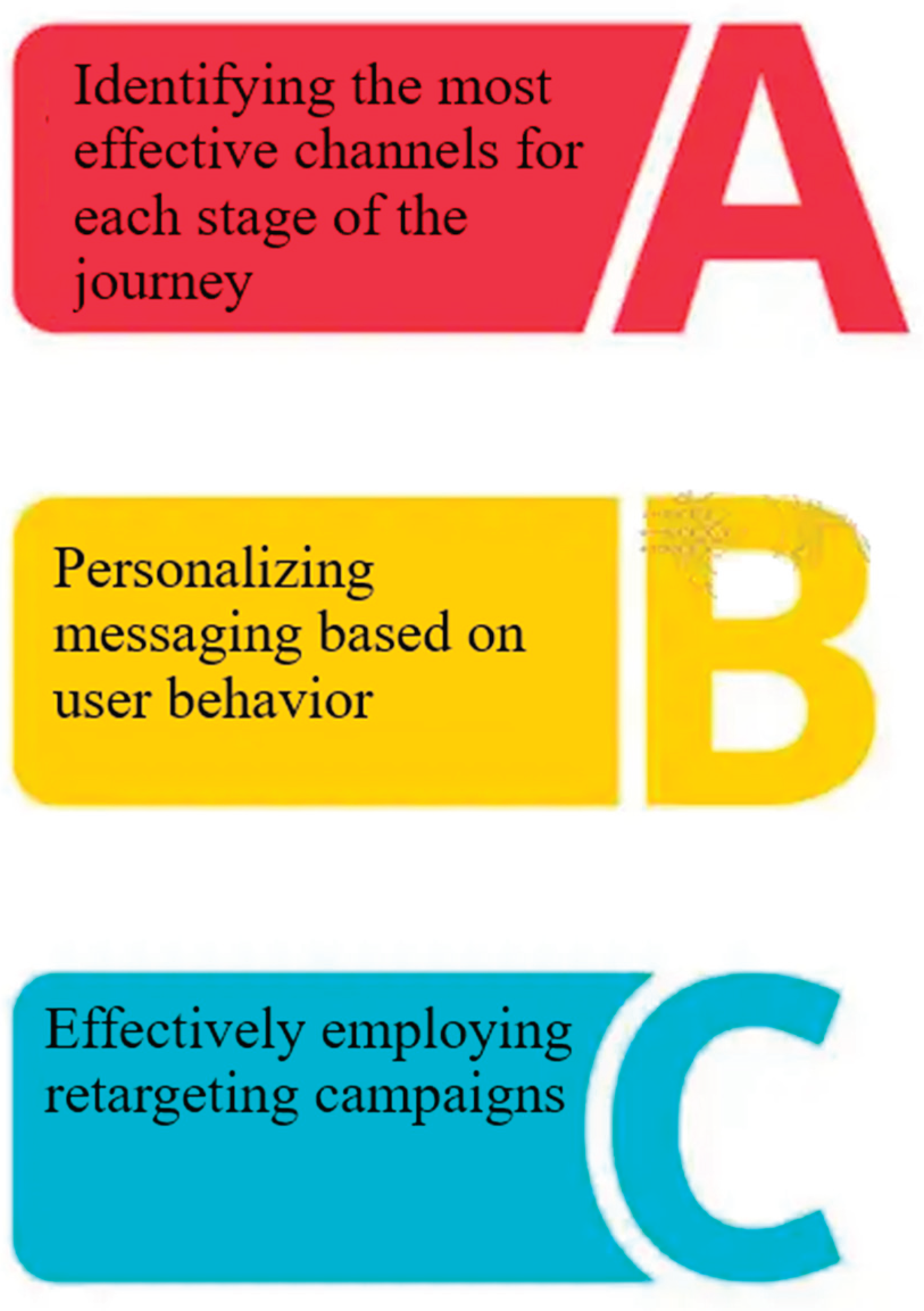
Figure 2.
Benefits of ad sequencing.
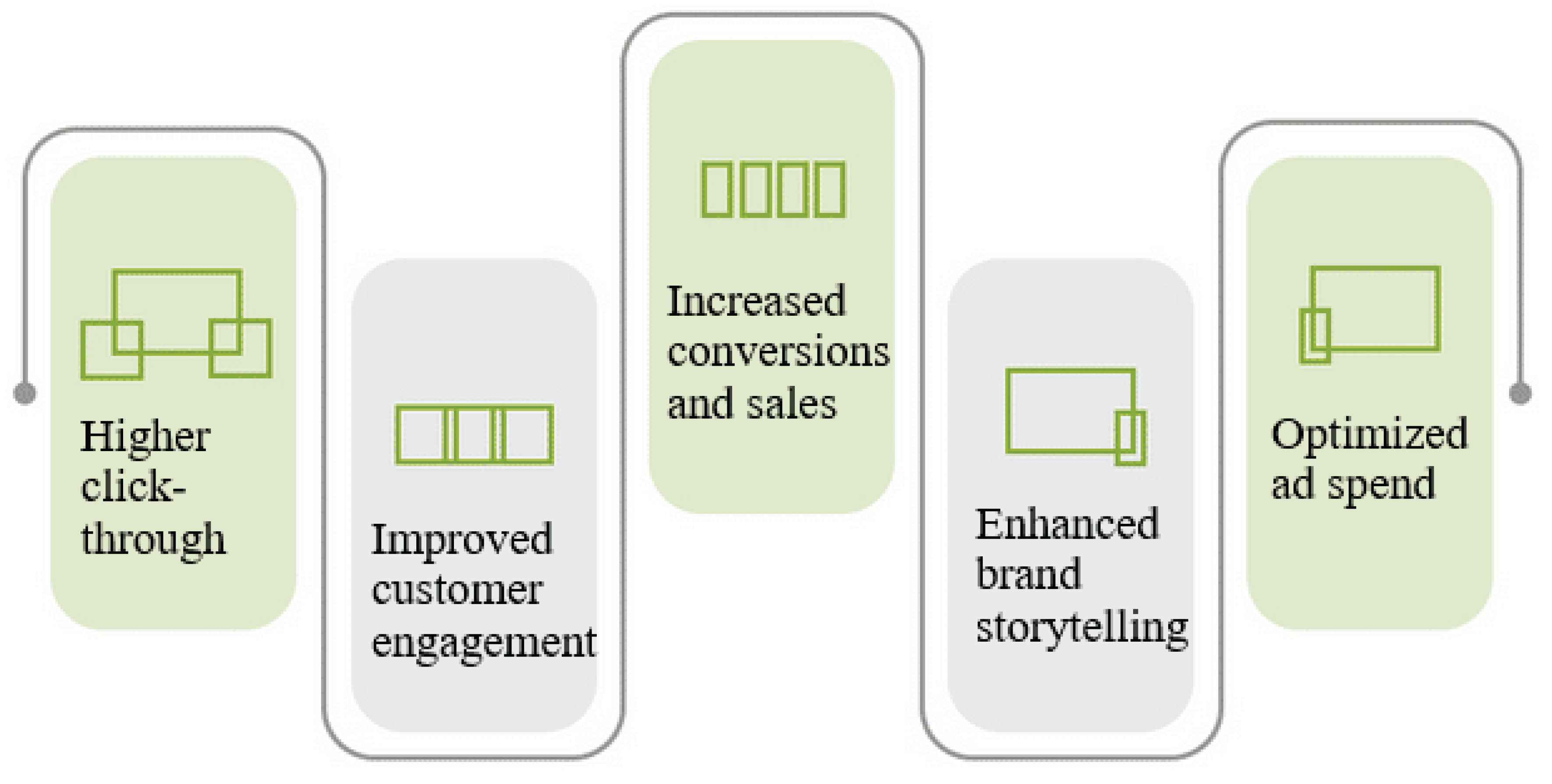
Figure 4.
Behavioral and contextual targeting (Shannon 2021).
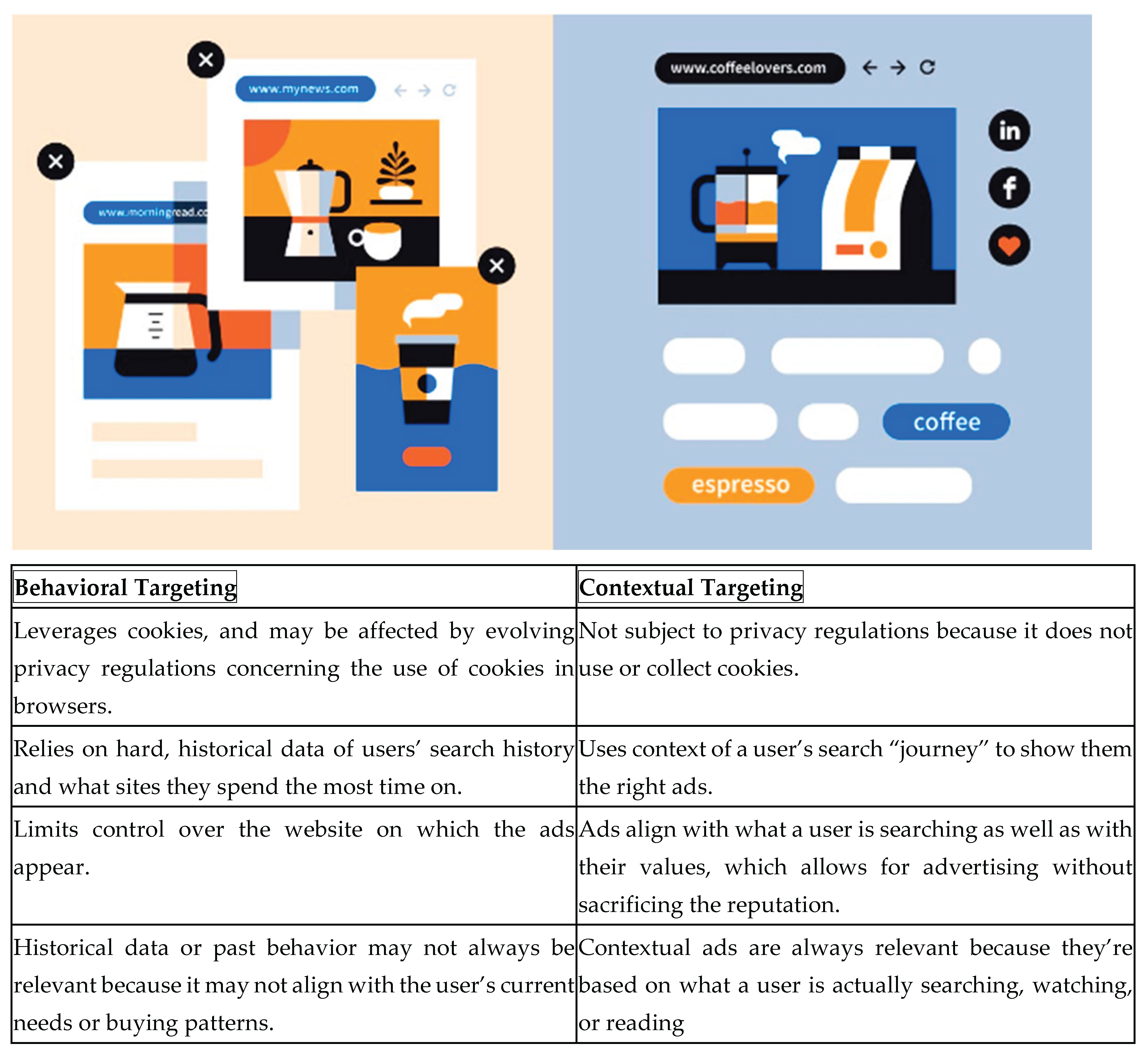
Figure 5.
A chart for the ad sequencing decision based on ad exposure discourse tree.
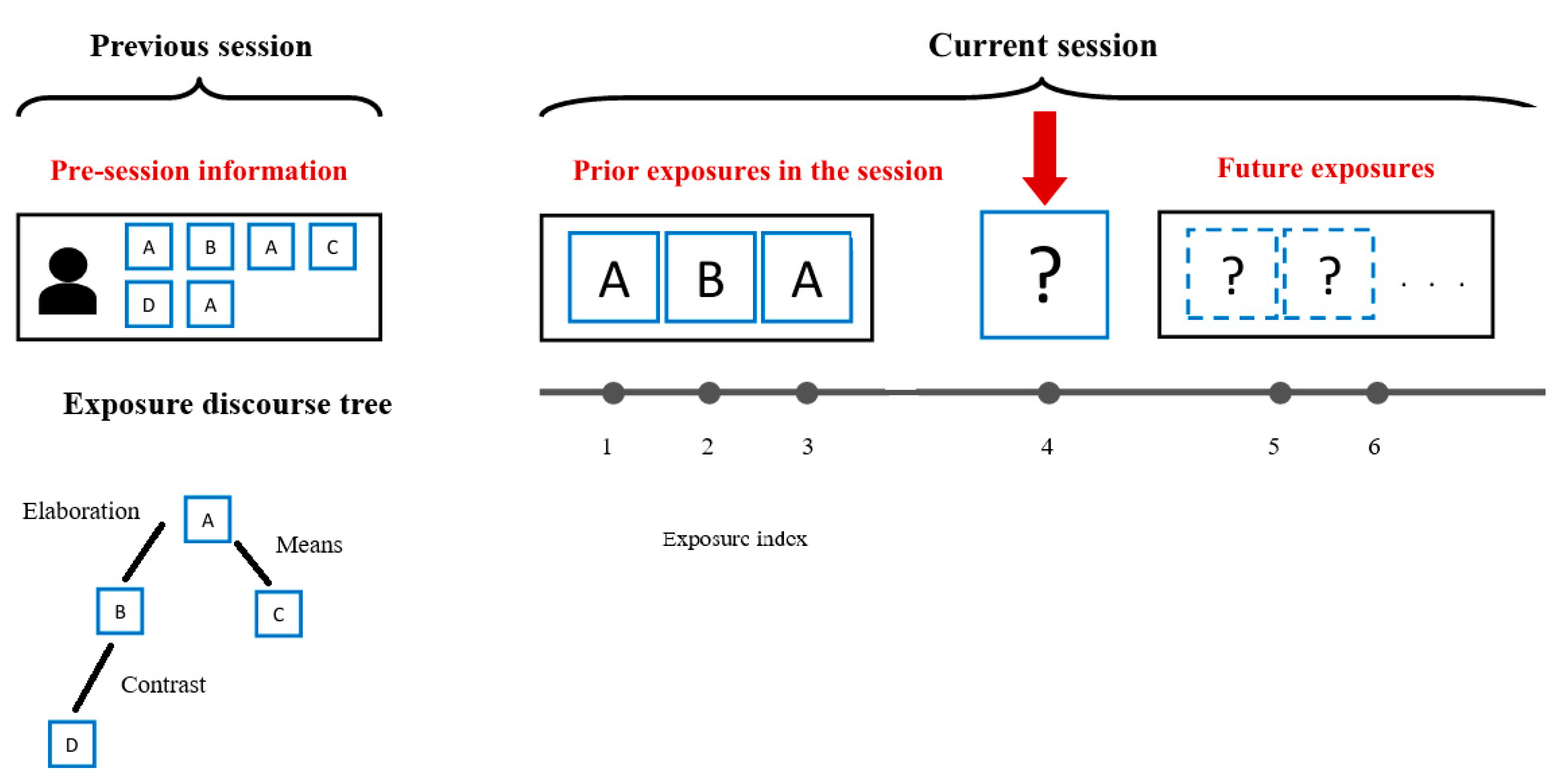
Figure 6.
An auction for sequential ads.
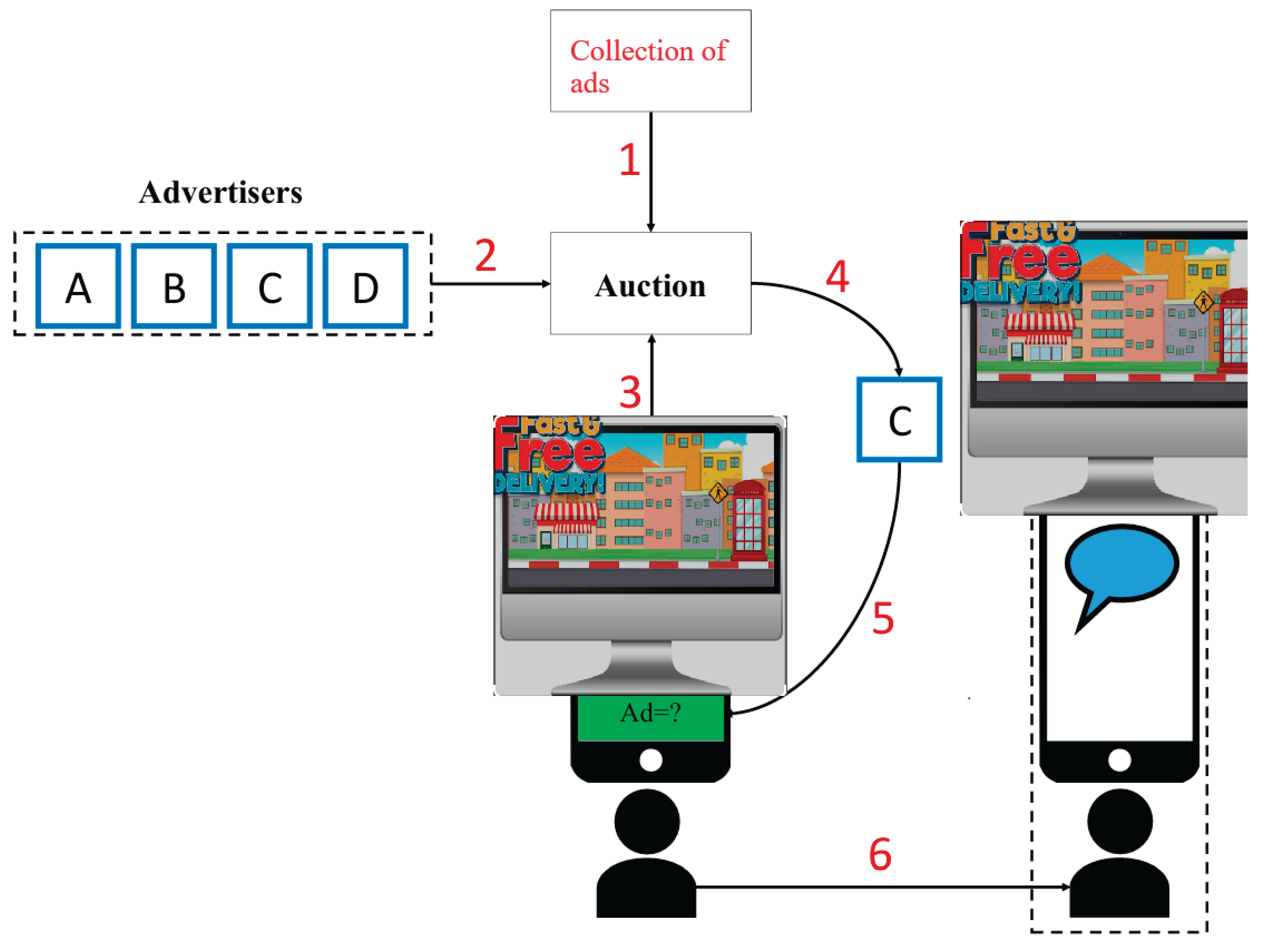
Figure 7.
Prime ad placement components.
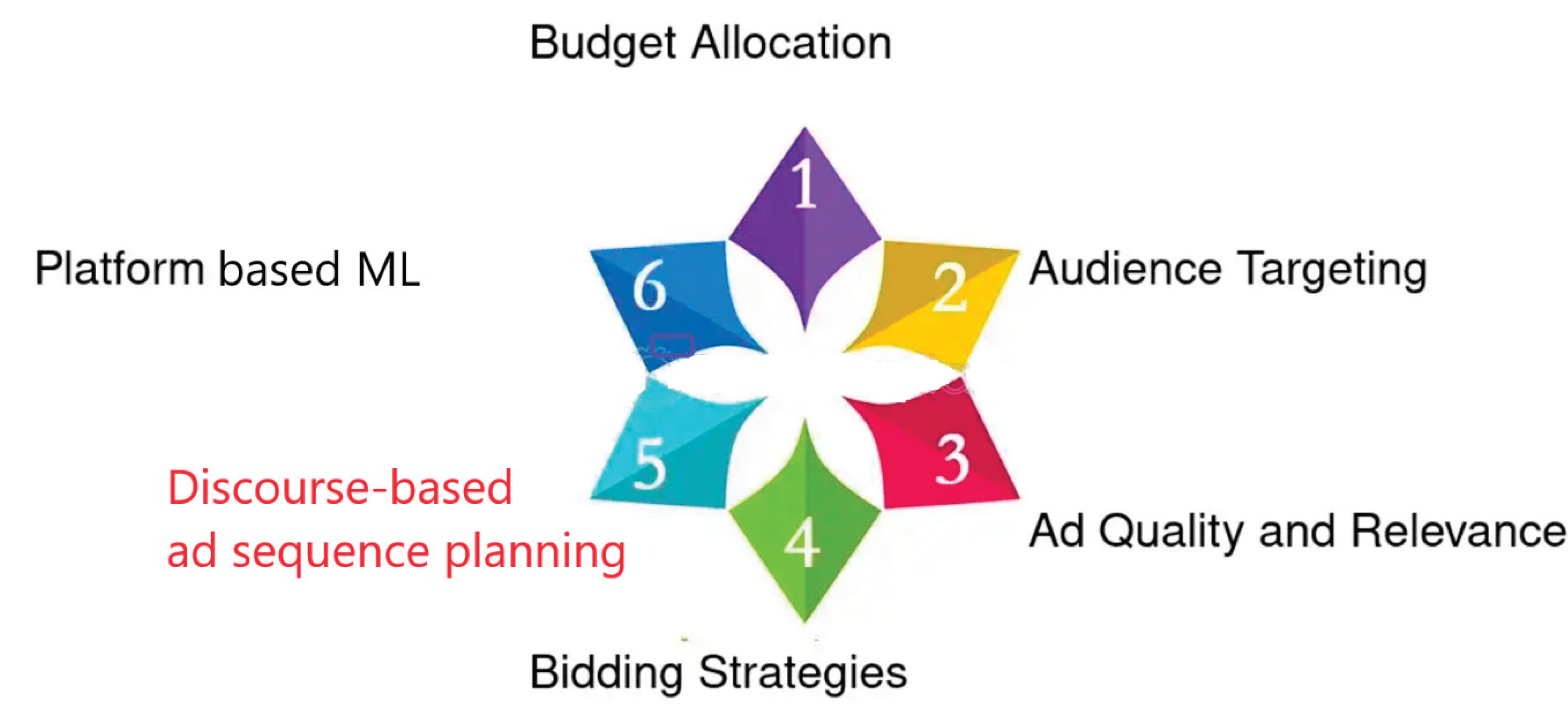
Figure 8.
A discourse chain of ads.
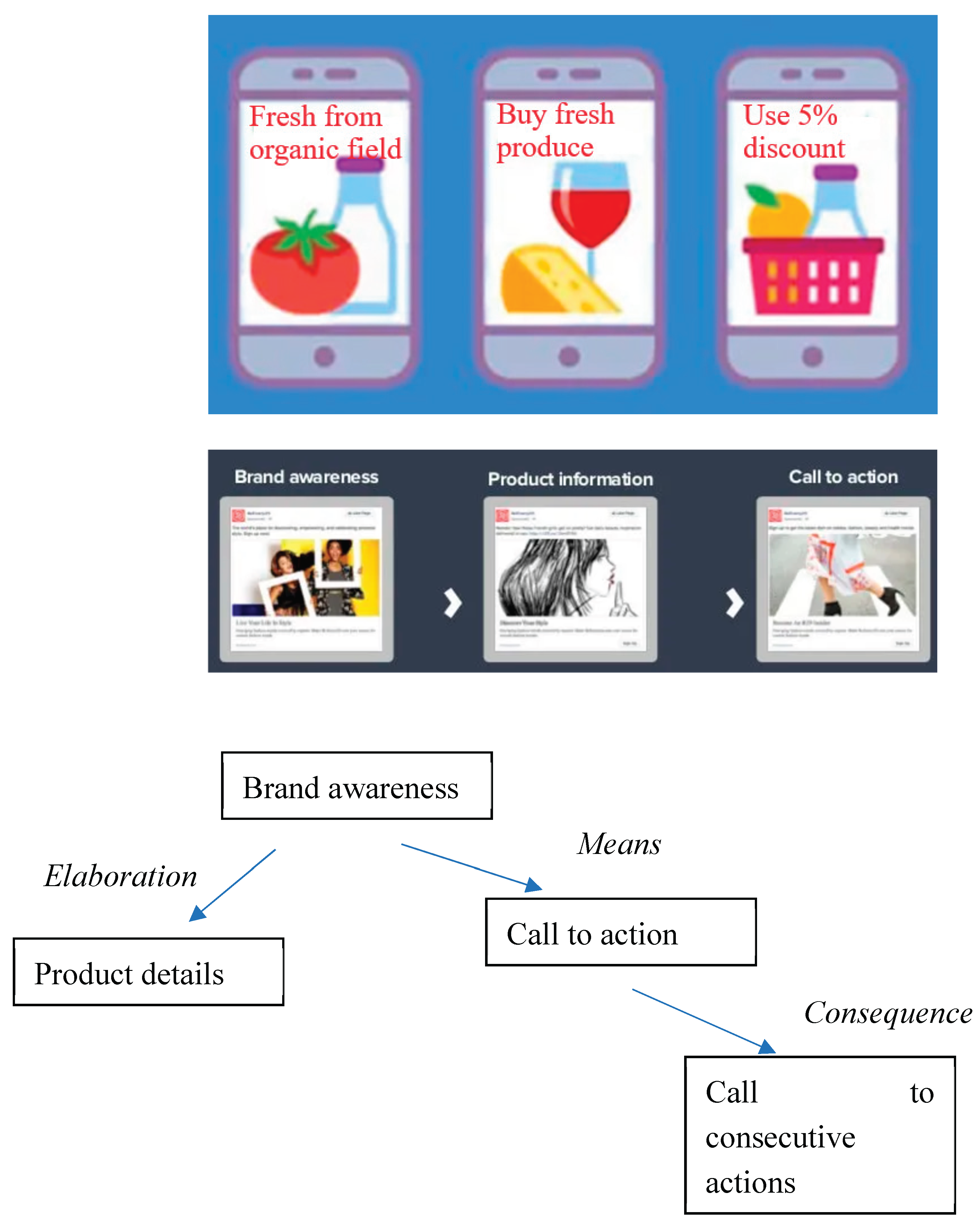
Figure 9.
A DT for opposing a good product to a product to avoid.
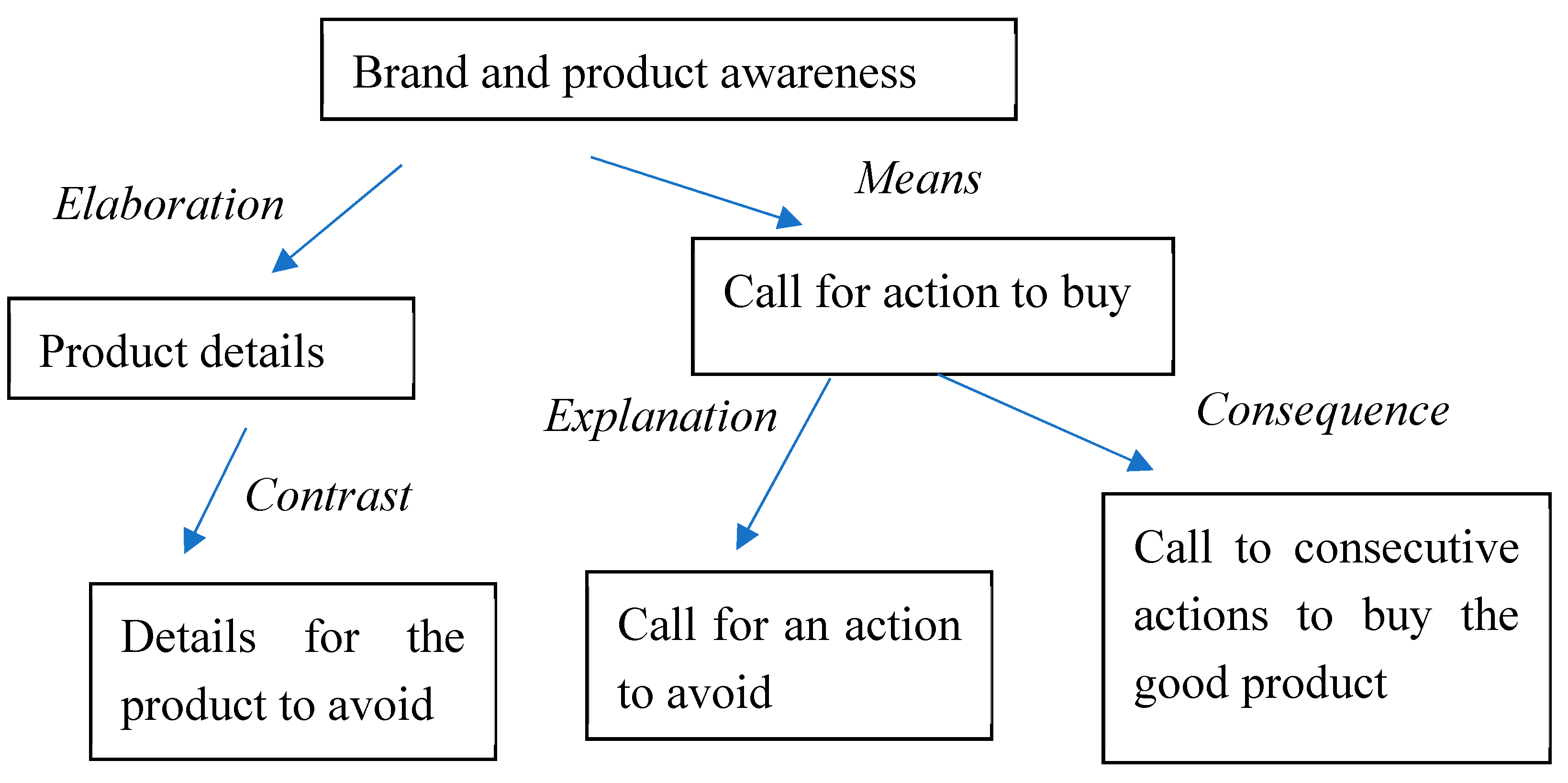
Figure 10.
DT for opposing a skillful user to unskillful.
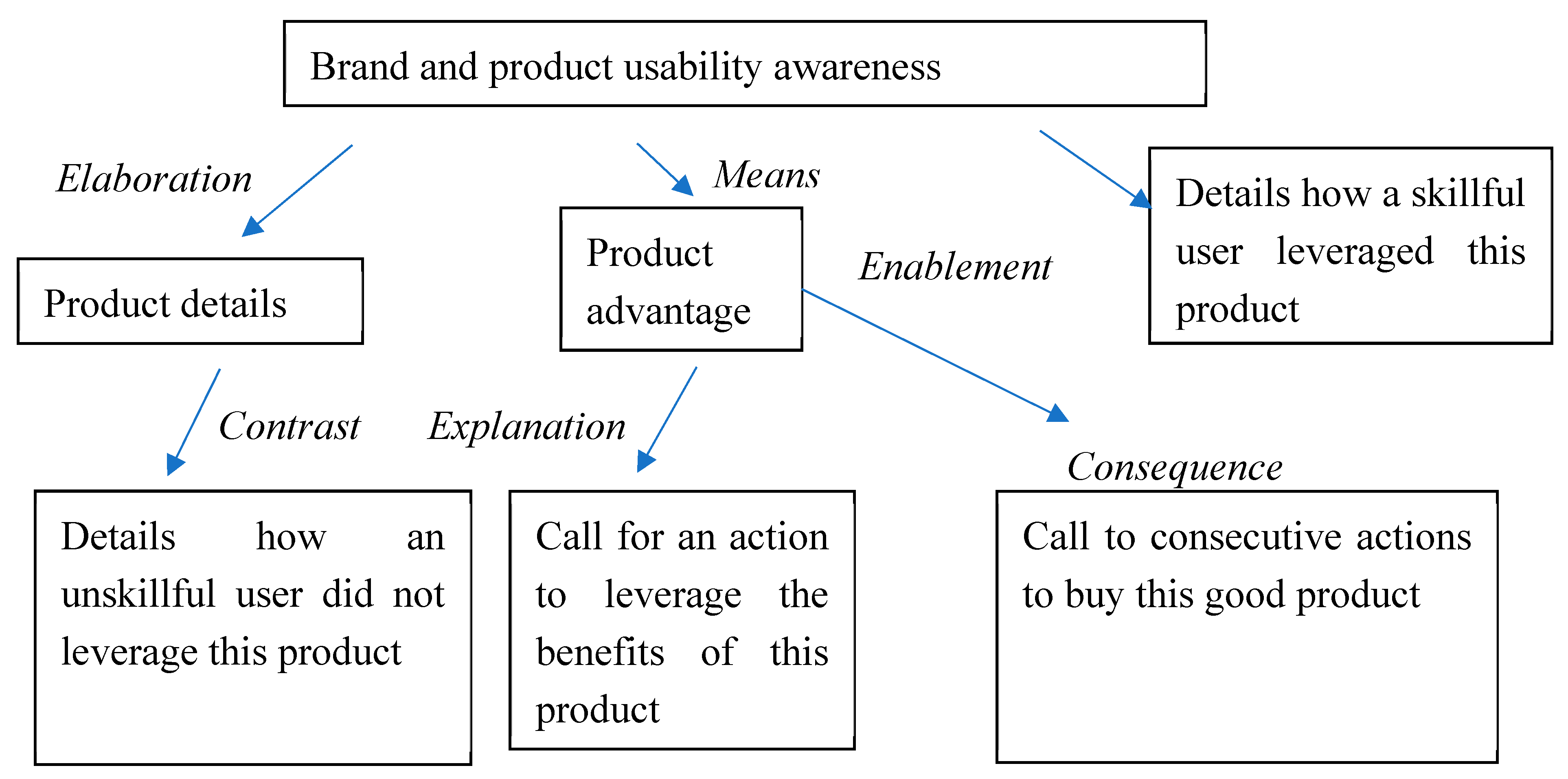
Figure 11.
Meta-learning for model optimization.
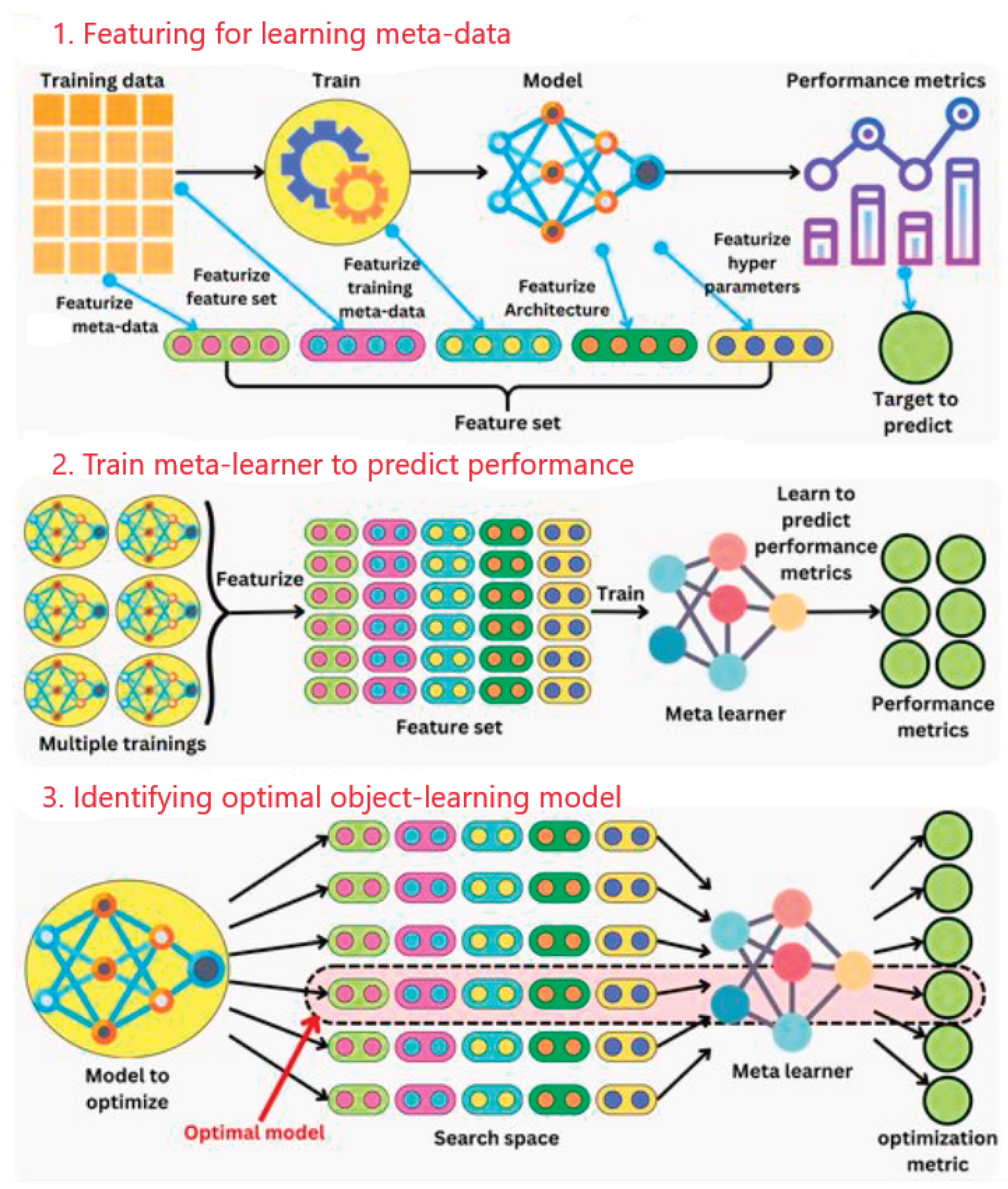
Figure 12.
Another example of a sequence of ads and its discourse representation.
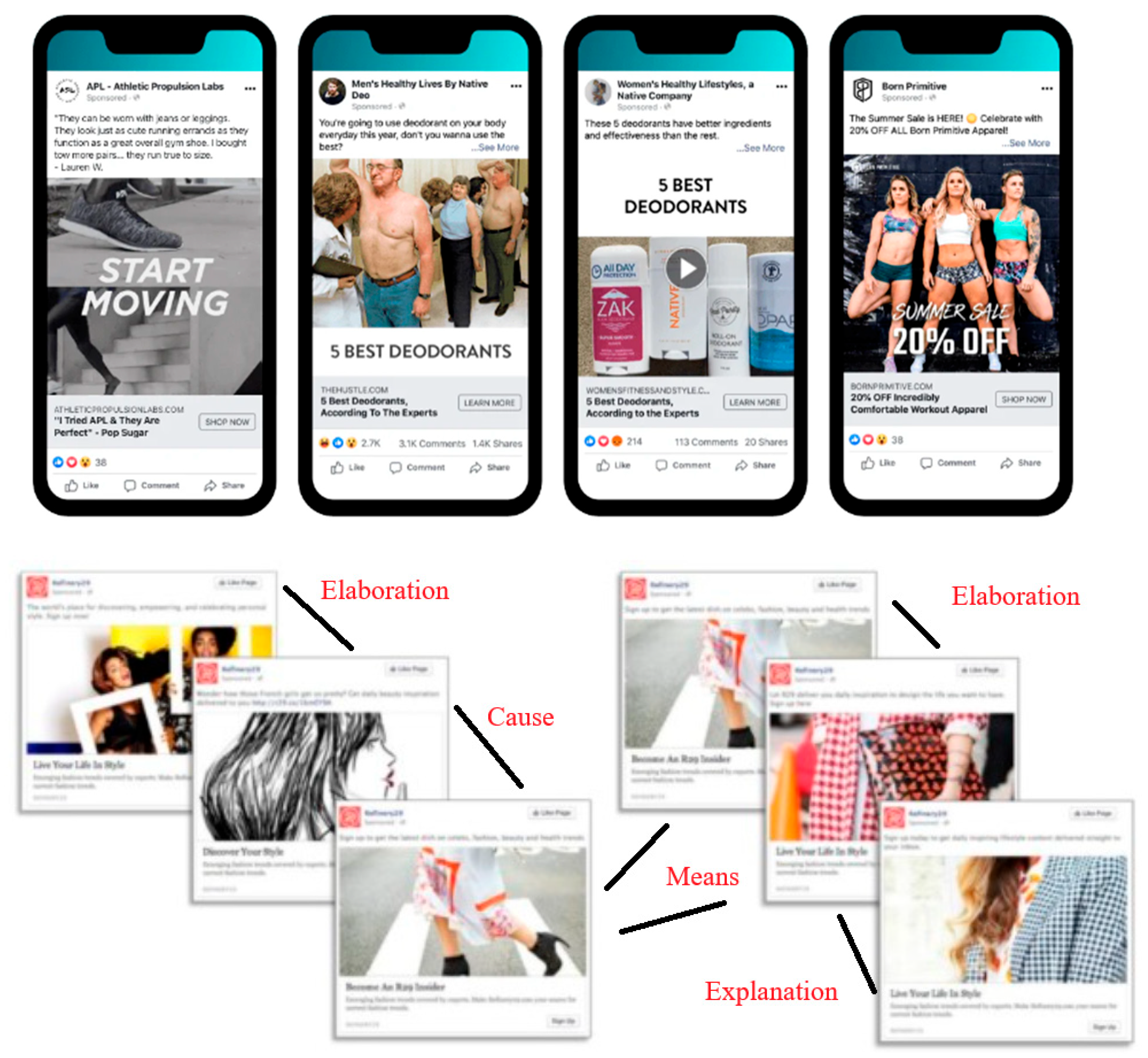
Figure 13.
System architecture.
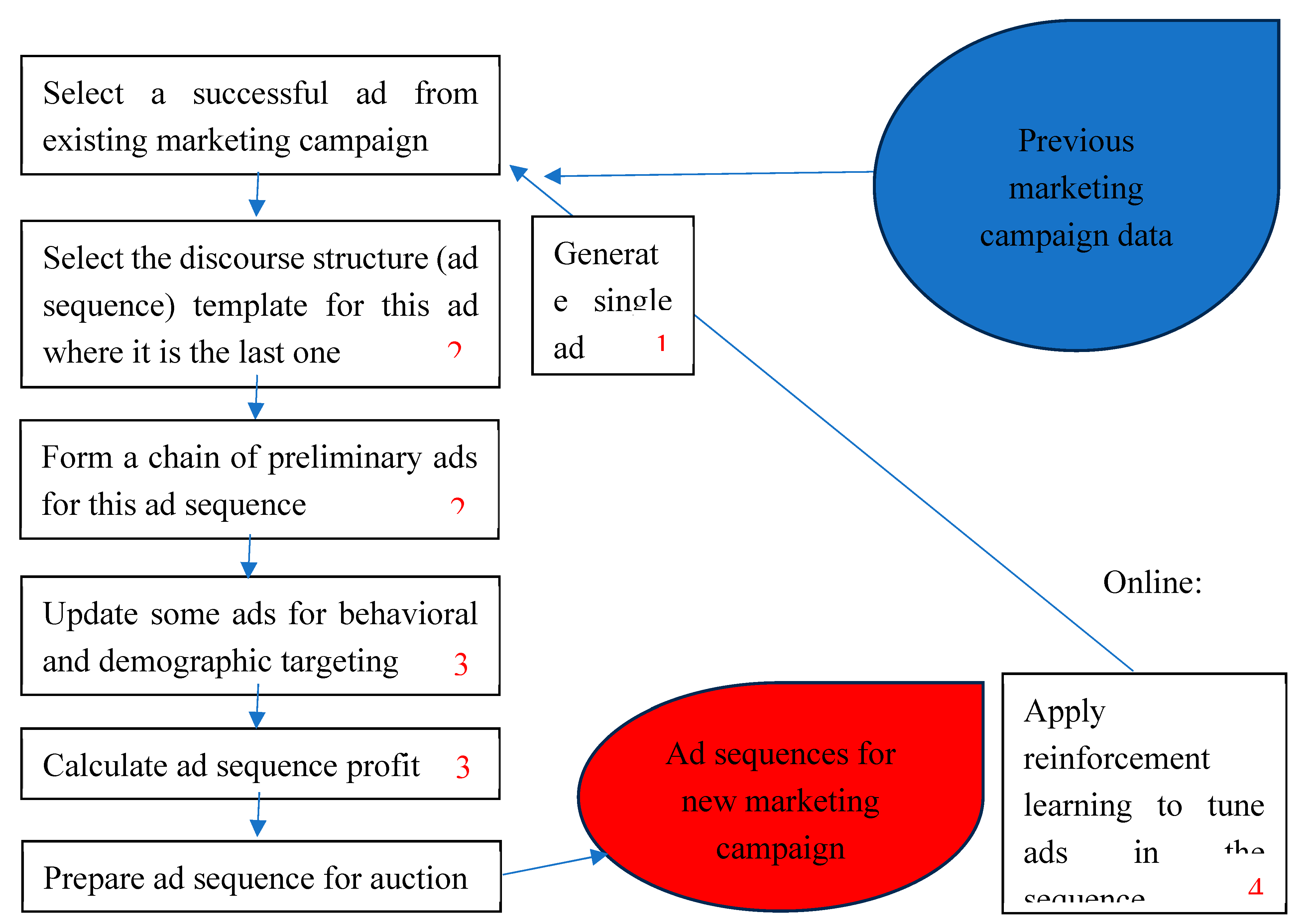
Figure 14.
Four pillars of AI in advertisement.
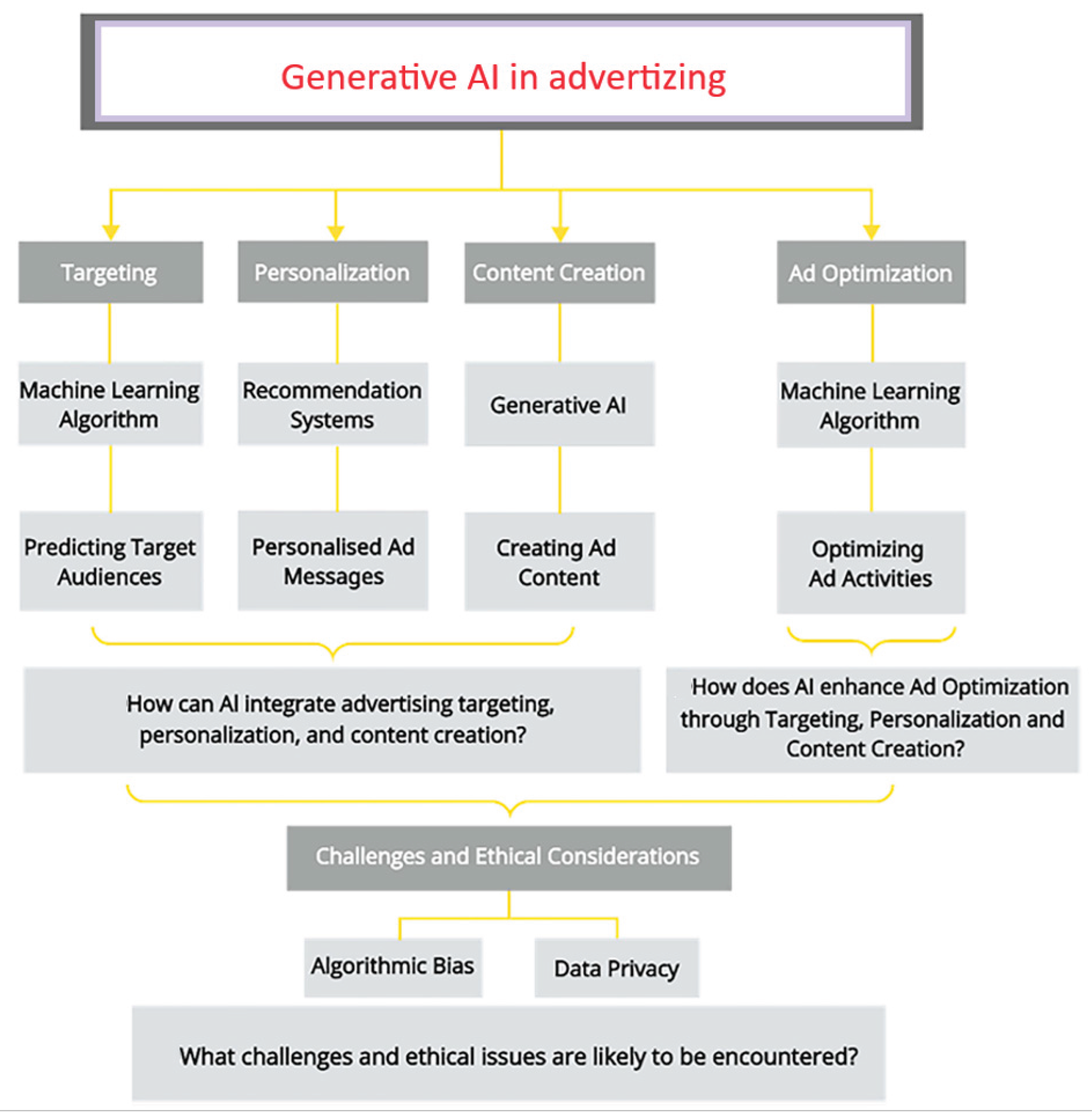

Table 1.
Ad performance rate for various advertising parameters and ad sequence techniques.
| Targeting parameter | Fuzzy value | Range | Template-based Ad Generation | Rule-based Keyword Targeting | LLM-based Ad Generation | LLM-based Keyword Targeting | LLM-based single ad generation and targeting | LLM-based ad sequence generation and targeting | |
| From | To | ||||||||
| CTR_ | Low | 0.5 | 0.75 | 1.07 | 1.12 | 1.15 | 1.22 | 1.28 | 1.26 |
| Mid-low | 0.75 | 1 | 1.12 | 1.14 | 1.15 | 1.24 | 1.25 | 1.27 | |
| Mid-high | 1 | 1.25 | 1.13 | 1.17 | 1.21 | 1.28 | 1.32 | 1.37 | |
| High | 1.25 | 1.5 | 1.13 | 1.16 | 1.20 | 1.28 | 1.28 | 1.36 | |
| CR_ | Low | 1.5 | 1.75 | 1.21 | 1.30 | 1.29 | 1.35 | 1.40 | 1.45 |
| Mid-low | 1.75 | 2 | 1.23 | 1.28 | 1.35 | 1.45 | 1.43 | 1.43 | |
| Mid-high | 2 | 2.25 | 1.27 | 1.25 | 1.34 | 1.42 | 1.47 | 1.52 | |
| High | 2.25 | 2.5 | 1.26 | 1.30 | 1.29 | 1.40 | 1.43 | 1.50 | |
| $ (m_) | Low | 150 | 250 | 1.19 | 1.27 | 1.36 | 1.40 | 1.49 | 1.46 |
| Mid-low | 250 | 500 | 1.23 | 1.30 | 1.32 | 1.38 | 1.52 | 1.50 | |
| Mid-high | 500 | 750 | 1.20 | 1.31 | 1.34 | 1.41 | 1.47 | 1.52 | |
| High | 750 | 1000 | 1.18 | 1.26 | 1.33 | 1.37 | 1.50 | 1.49 | |
Disclaimer/Publisher’s Note: The statements, opinions and data contained in all publications are solely those of the individual author(s) and contributor(s) and not of MDPI and/or the editor(s). MDPI and/or the editor(s) disclaim responsibility for any injury to people or property resulting from any ideas, methods, instructions or products referred to in the content. |
© 2025 by the authors. Licensee MDPI, Basel, Switzerland. This article is an open access article distributed under the terms and conditions of the Creative Commons Attribution (CC BY) license (http://creativecommons.org/licenses/by/4.0/).
Copyright: This open access article is published under a Creative Commons CC BY 4.0 license, which permit the free download, distribution, and reuse, provided that the author and preprint are cited in any reuse.


