

Submitted:
11 July 2025
Posted:
15 July 2025
You are already at the latest version
Abstract
Globally, approximately 39.9 million individuals are currently living with HIV, with over one million new cases reported each year. In Indonesia, the incidence of new HIV infections has risen significantly by more than 400% in just over a decade. Various interventions have been implemented to prevent and reduce HIV transmission and address the associated impacts of HIV. However, there exists a significant gap in the literature, as no comprehensive studies have synthesised the available evidence to elucidate the current status and future trajectory of HIV interventions within the country. This study aims to fill this gap by exploring publication trends on HIV interventions, the types of interventions, targeted population groups, and the settings in which these interventions were implemented. A bibliometric analysis and a scoping review were conducted. The bibliometric analysis facilitated the identification of publication trends, key authors and collaborators, citation metrics, influential journals, trending topics in HIV interventions, and the co-occurrence of relevant keywords. The scoping review enabled the categorisation of various types of HIV interventions, the identification of targeted groups, and intervention settings. Databases including Scopus, Embase, PubMed, Web of Science, Google Scholar, Cochrane Library, CINAHL, Psychology and Behavioural Sciences Collection, Garuda, and Google were used. The bibliometric analysis encompassed 84 articles from a total of 847 retrieved from the Scopus and Web of Science databases, showing a steady increase in annual publication post-2008. These articles were published across 65 distinct journals and authored by 400 authors. The average citation rate per document was 8.48%. Key trending topics and co-occurring keywords identified included human immunodeficiency virus, HIV infections, acquired immune deficiency syndrome or anti-retrovirus, people who inject drugs, and adherence. The scoping review, which included 90 articles selected from a total of 2,224 retrieved, identified four types of HIV interventions, with HIV treatment, and prevention and education being the most common types. The interventions targeted 14 different population groups and were implemented across seven distinct settings in 19 districts/municipalities across 14 provinces. The findings underscore the pressing need for an expansion of HIV interventions that not only focus on prevention and treatment but also consider the social, cultural, and religious factors influencing both HIV transmission and its impact. Furthermore, the results highlight the necessity of targeting specific high-risk and underserved populations, such as men who have sex with men, transgender women, female sex workers and their male clients, pregnant women, individuals who use or inject drugs, prisoners, children, adolescents, and young people. Moreover, there is a critical need to extend the geographical coverage of these interventions into rural districts, often referred to as underdeveloped or disadvantaged areas within Indonesia.
Keywords:
HIV intervention
; bibliometric analysis
; scoping review
; Indonesia
Introduction
HIV is a public health problem which has infected tens of millions of people throughout the world, with 39.9 million people currently living with the infection [1]. Despite the sign of a declining trend, there are still over a million people newly diagnosed with the infection, and hundreds of thousands of people dying from AIDS every year globally [1,2]. Following Eastern and Southern Africa, Asia and the Pacific region is in the second leading position in terms of the number of HIV infections and AIDS-related deaths [1,2]. Meanwhile, with regard to HIV treatment coverage, the 2023 UNAIDS report showed that Asia and the Pacific is at the third bottom of regions with the lowest coverage [1,2].
Indonesia is one of the countries in Asia and the Pacific region with the second highest number of HIV infections and AIDS-related deaths [2,3]. The national AIDS data have reported that the country has been experiencing a 400% increase in new HIV infections over the last decade, from 98,390 in 2012 to 515,455 in 2023 [4]. The country’s low performance in the UNAIDS triple 95 goals, aiming for 95% of people living with HIV (PLHIV) to get tested, 95% of those living with HIV to receive antiretroviral therapy (ART), and 95% of those on ART to have their viral load suppressed [5], is a plausible explanation for such a significant increase. Of an estimated 515,455 PLHIV in the country, only 77% knew their HIV status, only 45% who knew their status were on ART, and only 50% of those on ART had their viral load suppressed [4]. Moreover, the performance of the UNAIDS triple 95 goals [5] in the country has been reported lower among the key population groups, such as transgender people, men who have sex with men (MSM), and female sex workers (FSWs) and their male clients, who represent a significant portion of HIV infection in the country [4,6]. Poor health outcomes among PLHIV have been linked to delayed diagnosis, poor linkage to HIV care and inconsistent adherence to ART [5,7].
HIV interventions, whether it is for HIV prevention, education, testing, care, or treatment, play a critical role in global health efforts to reduce the transmission and impact of HIV [8,9,10,11,12]. Therefore, a wide range and coverage of interventions is vital for and can contribute to better prevention of new infections, and improvement of HIV care, treatment, and the quality of life for PLHIV. In the context of Indonesia, various interventions and strategies have been initiated and implemented in different settings and districts in response to HIV and its impacts on individuals living with HIV. These include interventions, such as HIV treatment and medication adherence [13,14] and the management of opportunistic infections [15,16]. HIV prevention and education interventions [17,18] and behavioural interventions [19,20] have also been implemented to increase and improve knowledge and awareness of HIV, and prevent HIV transmission. Similarly, HIV testing and counselling to improve access, identification, and treatment of HIV have also been implemented in various places in the country [21]. Digital and mobile health interventions are also some other types of HIV interventions aiming at improving knowledge of HIV and access to services within communities in Indonesia [22,23].
Despite the determined and long efforts and investment over the years to tackle HIV in Indonesia, there has not been synthesised evidence that provides a comprehensive overview of the types of HIV interventions that have been implemented in the country over the last 30 years, the targeted population groups, and the settings/locations of those interventions. Similarly, there have not been studies undertaken to provide evidence on the trend of publications on HIV interventions in Indonesia, key authors, publication citations, and trending topics and co-occurrence keywords used in those interventional studies. In addition, to our knowledge, no bibliometric analysis and scoping review of literature on various HIV interventions in Indonesia have been conducted. Therefore, firstly, using a bibliometric analysis, we aim to identify the trend of publications on HIV interventions in Indonesia, key authors and collaborators with number of publications and citations, the sources (journals) that published these articles, the trending topics of HIV interventions, and the co-occurrence of keywords used in HIV interventions in Indonesia. Secondly, we also conducted a scoping review to synthesise evidence on the types of HIV interventions implemented in Indonesia, the target population groups in those HIV interventions, and the settings or locations where those interventions were implemented. This study presents a novel approach by integrating two techniques: bibliometric analysis and scoping review, which have not been previously applied to the examination of HIV interventions in Indonesia or other settings. The findings provide a comprehensive overview of the landscape of HIV interventions within Indonesia, facilitating the identification of priority areas and offering guidance for future initiatives. Specifically, the findings highlight at-risk population groups that warrant targeted interventions and settings that should be prioritised for HIV-related interventions in Indonesia. Consequently, these insights hold significant relevance for HIV policy formulation, as they can be utilised by the Indonesian government, non-governmental organisations, and researchers to inform the development of future HIV policies, interventions, and practices tailored to the Indonesian context and other similar settings.
Methodology
Study design
Bibliometrics is a method that is systematic and organised, and is employed by a variety of academic disciplines to compile and summarise publications on a particular topic [24]. Bibliometrics supports the advancement and improvement of knowledge in the concept under investigation. The methodology of bibliometric studies is similar to that of other literature review forms, consisting of four stages: the formulation of search strategies, the aggregation of research outcomes and the construction of the dataset, the summarisation of the findings, and the analysis of the findings [25].
A scoping review was also conducted to provide additional and more in-depth information regarding the HIV interventions implemented in Indonesia. Scoping review is a method that systematically identifies and examines key concepts and literature within a specific field of study to provide a comprehensive understanding of the breadth and characteristics of existing research. An initial set of five phases was implemented in this investigation. The procedures were as follows: (a) formulating the research question; (b) identifying relevant articles; (c) selecting the eligible articles; (d) organising and documenting the collected data; and (e) synthesising, summarising, and presenting the resulting conclusions [26]. The reporting followed the PRISMA-ScR (Preferred Reporting Items for Systematic Reviews and Meta-Analyses) statement for a Scoping Review (Supplementary 1) [27] and the reporting standard for bibliometric reviews of the biomedical literature is the BIBLIO checklist (Supplementary 2) [28].
Database and search strategy
Scopus and Web of Science databases were used to retrieve HIV intervention studies in Indonesia for bibliometric analysis. Both are multidisciplinary databases and the most extensive abstract and citation databases for peer-reviewed literature, covering publications in a range of areas, including arts and humanities, social sciences, medical, and health sciences [29]. For bibliometric analysis, the search was conducted from 25 to 30 March 2025 and rerun on 15 June 2025. For the scoping review, databases searched to retrieve articles were Scopus, PubMed, Embase, Web of Science, Google Scholar, Cochrane Library, CINAHL, and Psychology and Behavioural Sciences Collection. The search was conducted from 25 to 30 March 2025. A search of articles on Google was also performed. The Indonesian database, Garuda, was also searched to retrieve articles published in Indonesian journals.
The search technique was designed based on the primary concepts of “HIV”, “intervention”, and “Indonesia”. Following the completion of a preliminary search, we implemented a search strategy that involved a combination of keywords and Boolean operators. Publication dates were not restricted, and the sources were limited to both English and Indonesian literature. Detailed search strategies were provided in Supplementary 3.
Article selection process
The bibliometric analysis was conducted utilising Excel for the filtering process. Simultaneously, the sifting of all publications for the scoping review was performed by two researchers employing Covidence. This scoping review focused on studies on HIV interventions conducted in Indonesia. The inclusion criteria of an article to be included in this review were (1) an empirical study design in any form of design: qualitative, quantitative, or mixed methods, (2) related to HIV intervention studies, and (3) conducted in Indonesia. Articles were excluded according to the criteria: (1) unrelated topic, (2) non-HIV intervention studies, (3) studies in the form of reviews, and abstracts (with no full texts), (4) studies not conducted in Indonesia, and (5) non-English and non-Indonesian publications. The reviewers conducted the selection process based on title & abstract, following the criteria of population (people living with HIV), concept (interventions), and context (Indonesia). The screening, exclusion, and inclusion process is described under the “Description of the included study” section.
Data analysis
For the bibliometric analysis, the data were analysed using R Base version 4.2.2 with R Studio version 4.2.2 (Posit, Massachusetts, USA) [30]. The R programming environment utilised the open-source packages Bibliometrix and Biblioshiny. The Biblioshiny package is a shiny application that provides a web interface for the Bibliometrix program to obtain essential bibliometric indicators [30,31]. These indicators encompass a comprehensive summary of information, annual scientific output, identification of the most prolific authors, journals with the highest volume of publications, the most frequently cited documents, an analysis of keywords, and an examination of trends in thematic developments. This package is used across various scientific disciplines for bibliometric analysis.
The data acquired from the literature were systematically presented in a tabular format, following the objectives of the scoping review. Firstly, the included articles were read, and the texts (lines or data extracts) were coded, facilitating the interpretation of the data and the identification of key concepts and themes based on the review objectives. Next, descriptive themes were developed by organising similar concepts into overarching themes. Following the previous step, a critical review of the themes and a discussion regarding the potential addition or modification of these themes were carried out regularly among the reviewers [32]. Ultimately, the themes concerning the types of HIV interventions in Indonesia, the target groups and settings/locations of the interventions were identified and presented in the Results section [26]. Moreover, we created a forest plot to visually summarise the direction and magnitude of intervention or effects of exposures across various HIV-related outcomes, using adjusted odds ratios (AORs) with their corresponding 95% confidence intervals (CIs) extracted from studies that reported effect estimates or provided sufficient data to calculate them.
Results
Bibliometric analysis
In total, 847 articles were identified through a search of the Scopus and Web of Science databases. By employing the R software, 88 articles were identified as duplicates and subsequently excluded from further analysis. The population, concept, and context frameworks were all integrated into the screening process. Ultimately, 84 articles were screened and subsequently incorporated into the bibliometric study. The initial output of Biblioshiny is the summary information, which comprises the fundamental statistics regarding the literature dataset that was analysed. The retrieved articles were published in 65 distinct journals between 1993 and 2025 and authored by 400 authors, with 0.5% of them being single-author articles. The average number of citations per document was 8.48% (See Table 1). Articles accounted for over 91.67% of the documents, while others included reviews, brief surveys, and other forms of publication. The substantial discrepancy between the count of articles and the count of other literature categories is indicative of the high scholarly value of the literature in the field of HIV interventions in Indonesia.
Before 2009, the field recorded no publications or only one publication each year; however, the general trend post-2008 demonstrates a steady increase (Figure 1(A)). The years with the highest number of publications were 2019, 2021, and 2023, with a total of 10 articles for each year. The peak of citations was reached in 1996, averaging 59 (Figure 1(B)). Overall, the average citation per document was 8.48 citations annually (Table 1).
A variety of metrics were employed to assess the scientific productivity and impact of authors, including the volume of published papers, citation counts, the h-index, the g-index, and the extent of article fractionalisation. This bibliometric also assessed the citation measure, defined as the total number of citations a document has garnered since its release (Figure 2(A)). Among all the authors, the article by Miller, Hoffman [33] received the highest number of 68 citations, followed by Ford, Wirawan [20] with 59 citations and Ford, Wirawan [34] with 53 citations. The objective of the study by Miller, Hoffman [33] was to evaluate the feasibility of a future controlled trial by examining the incidence of HIV, enrolment, retention, and adoption of the intervention, as well as the efficacy of an integrated and flexible intervention on antiretroviral therapy (ART) use, viral suppression, and medication-assisted treatment (MAT) use. Additionally, articles on HIV interventions in Indonesia have been published in various journals. Acta Medica Indonesiana, AIDS, HIV and AIDS Review, PlosOne, Sexual Health, and Tropical Medicine & International Health have all published three articles, respectively (Figure 2(B).
In terms of country collaboration network, most authors in Indonesia collaborated with authors from the US (14 articles), Australia (13 articles), and the Netherlands (11 articles) (Figure 3).
The topics addressed in the publications are particularly relevant to this investigation, as the objective of this bibliometric study was to determine the publication trend on HIV intervention studies in Indonesia. Consequently, it is imperative to analyse the content of the literature items in accordance with the abstracts and keywords of the authors. The examination of these abstracts offers valuable insights into research trends and identifies deficiencies in the HIV intervention studies in Indonesia. In order to evaluate the feasibility of conducting future intervention studies in this discipline, it is essential to have a thorough understanding of the trend subjects.
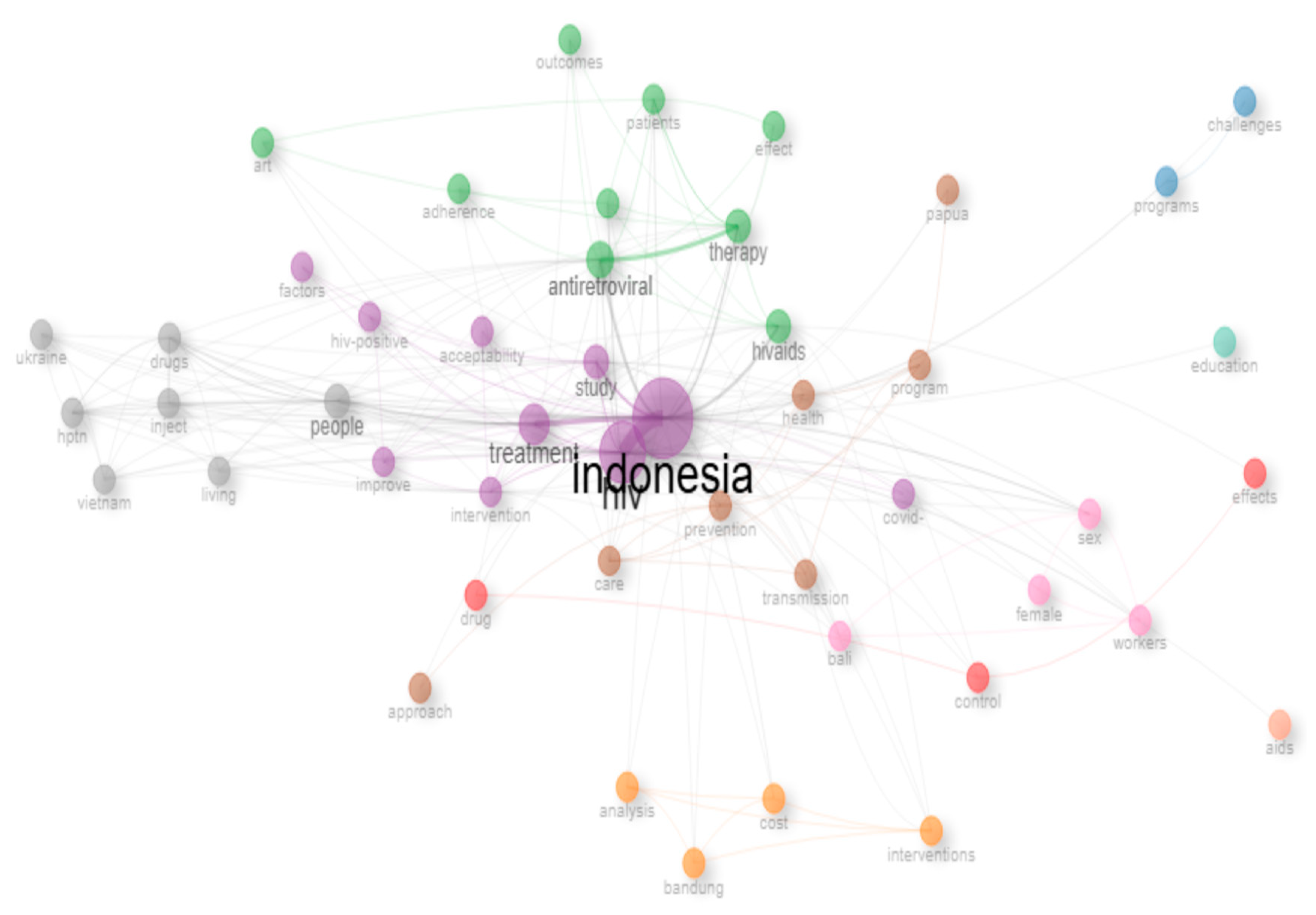
Key trending topics and co-occurring keywords identified, which reflected the focus of the HIV interventions implemented in Indonesia over the last 30 years (1994-2024) included immunodeficiency virus or HIV infections, acquired immune deficiency syndrome, antiretroviral therapy or anti-retrovirus, people who inject drugs, and adherence. Consequently, the subsequent steps should entail completing a scoping review to incorporate additional databases and more detailed and in-depth information about the characteristics of the interventions.
Figure 4.
Co-occurrence network Scoping review.
Descriptions of the included studies
The screening procedure was conducted by two reviewers using Covidence, and 2,224 articles were retrieved from the six databases. To identify as many articles as possible about HIV interventions in Indonesia, we broadened the search by conducting a manual search and screening of Google and Garuda (an Indonesian database), which resulted in the identification of 26 additional articles. Following the removal of 282 duplicates, the articles were screened based on the titles and abstracts, leading to further removal of 1,793 ineligible articles. The full text of 149 articles was evaluated, which led to further exclusion of 59 ineligible articles. The screening process was resolved through discussions between the two reviewers and consultation with the third reviewer in the event of any disagreements. Ultimately, 90 articles were processed for the scoping review (Supplementary 4). The detailed characteristics of the included studies, including the authors’ names, study aim, methodology (e.g., interventions, study designs, study participants, and study locations), and outcomes of the interventions, are presented in Supplementary 5.
The Special Capital Region (Jakarta) was the site 41% of the studies or interventions, followed by West Java (26%), and Bali (24%) (Supplementary 5). Approximately 16% of the studies or interventions were carried out in more than one city [18,22,23,35,36,37,38,39,40,41,42,43,44,45] and two studies (2%) did not specify the setting [46,47]. The number of participants was not specified in all of the studies; however, approximately 24,702 individuals were involved in these studies. Most participants were individuals living with HIV/AIDS (21%), followed by men who have sex with men (17%) and female sex workers (11%), as indicated by the target population of the studies.
In terms of the study design, the majority of the studies were conducted as interventional studies, with a randomised controlled trial (21%) or quasi-experiment (15%). Other studies that were included in the analysis employed an observational approach, primarily with a cohort design (28%), either using retrospective or prospective methodologies. The cost-analysis design was employed in approximately 11% of the included studies, while the remaining studies employed qualitative (13%) or mixed-methods designs (10%).
HIV interventions in Indonesia
The initial studies of HIV interventions in Indonesia were published in 1993 [47], 1994 [48], 1996 [20], which were six to nine years after the first HIV infection was diagnosed in the country. Over the last three decades, various HIV interventions in Indonesia have been documented in 90 scientific publications across various journals worldwide. These HIV interventions address a range of aspects related to HIV, whether among PLHIV or the general population, to prevent HIV transmission and address the impacts of HIV faced by various population groups and improve their health outcomes. The various HIV interventions have shown some promising results and can be categorised into four types or groups, as presented below.
Antiretroviral and alternative therapy interventions
One of the HIV interventions that has been frequently implemented in response to the HIV issue in Indonesia is the HIV treatment using ART as a standalone or in combination with other medical treatment or herbal medicines, which is reported in 36 studies. Eleven studies reported on ART initiation or treatment interventions, suggesting that the interventions led to better outcomes in terms of virological suppression and immunological recovery among HIV patients and increased CD4 counts [49,50,51,52,53,54,55,56,57,58,59,60]. However, it was reported that those who experienced HIV drug resistance were less likely to achieve viral suppression [61]. Four other studies report several interventions, such as the Strategic Use of ART (SUFA) initiative, implemented by the national government in several cities in Indonesia, the implementation of Highly Active Antiretroviral Therapy (HAART) through a program known as Universal Test and Treat (UTT), Simple ART Initiation, and the modified alarm medicine box intervention [40,42,62,63]. These studies suggest that these interventions have resulted in significantly increased coverage of HAART, increased proportion of ART initiation, a higher number of HIV tests and detected HIV cases, a decrease in loss to follow-up during treatment, and enhanced medication (ART) adherence among PLHIV [40,42,62,63]. Three studies focusing on evaluating the acceptability, feasibility of home delivery of ART program and ART switch to support the continuation of ART in Indonesia during COVID-19 pandemic and a culturally adapted medication adherence intervention, indicate that these interventions were both feasible and acceptable to health service providers, clients, and other stakeholders, and also within the Indonesian prison setting, and could maintain patients’ adherence to ART [13,64,65]. Other studies reported a decrease in levels of inflammatory biomarkers and Cytomegalovirus (CMV) antibodies in patients with HIV who were undergoing ART [66,67]. One study [68] reported a protocol for an intervention aimed at evaluating the effect of atorvastatin in statin-naive, virally suppressed HIV-infected patients with stable ART and CMV seropositivity, although details regarding the actual intervention are not yet available. In addition, three studies report on barriers to ART uptake suggesting that access procedures, poor financial conditions, ART side effects, lack of information about HIV testing and ART enrollment, lack of motivation to take up ART, and stigma are barriers to ART [69,70,71].
Furthermore, several other studies have also reported on HIV interventions that combine ART with other medical treatments. A study by Maemun and colleagues [14] highlighted the combination of ART and tuberculosis (TB) treatment for patients with HIV/TB co-infections. The findings show that early initiation of ART in patients already undergoing TB treatment resulted in higher survival rates compared to those who commenced ART at a later stage. Several other studies have reported on Methadone Maintenance Treatment (MMT) interventions for PLHIV, indicating that the integration of HIV treatment (ART) with MMT can be highly effective in preventing HIV infection [72,73,74]. For example, a study by Wammes et al. [74], which evaluated MMT as a method of HIV prevention, estimated that expanding MMT coverage from 5% to 40% by 2019 could potentially avert approximately 2,400 HIV infections. Similarly, another study examined the efficacy and practicality of substitution therapy for opioid dependency in the context of HIV prevention, treatment, and care for opioid-dependent injectors, reporting high retention rates in MMT, significant reductions in illicit drug (opioid) use, and improvements in emotional control and sleep disorders among clients [35]. Several other studies assessed the effects of the combination of ART and other medication-assisted treatments (MAT) or drugs and reported various benefits experienced by patients with HIV, including improved linkage to care, increased ART uptake, and other social and general benefits, such as enhancements related to employment, finances, relationships, and reduced stigma [75,76,77].
In addition to medical therapies involving antiretroviral medicines and methadone for HIV treatment or prevention, other studies have also reported on the use of alternative medicines or therapies, either as standalone treatments or in combination with ART. A study by Amanah and others [46] investigated an intervention using Mangosteen Peel Extract (MPE) for HIV patients on ART, suggesting a significant increase in the number of CD4+ T cells and a notable decrease in CD38 expression among the patients. Meanwhile, another study reported on an HIV intervention that utilised sago caterpillar oil extract, indicating an increase in CD4 cell count among participants and significant differences in leukocyte levels before and after the intervention [78]. However, this study did not specify whether the HIV patients receiving this alternative therapy were also on ART.
HIV counselling and testing interventions
HIV counselling and testing interventions in various forms have been initiated and implemented in several regions or cities across Indonesia, as reported in 12 studies. Two studies evaluating the outcomes of voluntary counselling and testing (VCT) service delivery intervention in urban Indonesia and community screening for HIV testing reported that these interventions resulted in a high number of HIV tests and facilitated early HIV diagnosis [45,79]. Another study focused on a prison-based assisted partner notification (APN) model aimed at assessing its effectiveness in enhancing partner notification and HIV testing reported that the intervention led to an increase in partner notifications regarding HIV exposure, and HIV testing uptake and diagnoses [21]. Other studies evaluating HIV self-testing interventions and their acceptability among groups of men who have sex with men (MSM) and men who purchase sex (MWPS) suggest that these interventions achieved high levels of acceptability, which in turn led to increased HIV testing uptake and early detection of HIV infection [80]. Moreover, some of the aforementioned studies reported that the HIV counselling and testing interventions ultimately resulted in enrolment in HIV treatment or ART, adherence to medication, and viral load suppression [77,79,81,82]. Finally, four additional studies concentrated on evaluating the costs associated with HIV testing interventions, including community-based oral HIV testing and APN [21,36,38,83].
Behavioural interventions
Behavioural interventions targeting various groups, such as adolescents, FSWs, PWID, and PLHIV in general, have been reported in eight interventional studies in Indonesia. Four studies reported on Motivational Interviewing (MI) interventions (behavioural approach) designed to enhance HIV prevention among adolescents, PWID, and PLHIV [19,20,41,84]. These studies suggest that behavioural interventions have resulted in a significant effect on awareness and behaviour regarding HIV prevention among adolescents, increased knowledge of sexually transmitted infections (STIs)/HIV and condom use, and reduced transmission rates of STIs/HIV [19,20,41,84]. Similarly, behavioural interventions for the prevention of risky behaviours reported that the interventions improved the resilience of adolescents to avoid unprotected sex and illicit drug use and supported women in helping their male partners change HIV risky behaviours [47,85]. Behavioural interventions not only positively affect the prevention of HIV transmission through improved knowledge of HIV/STIs and increased condom use but also contribute to early ART initiation, improved treatment outcomes or viral suppression, and enhanced self-reported adherence to ART among PLHIV, such as PWID and women [41,86]. In addition, another behavioural intervention focusing on self-management has been reported to improve the quality of life (QOL) of PLHIV in terms of their physical, psychological, and environmental dimensions [87].
Prevention and educational interventions
HIV interventions aimed at providing HIV education and prevention for population groups, which are reported in 34 studies, have been implemented using a range of strategies and methods. Several studies have reported on HIV interventions that utilised audio-visual media to educate adolescents or high school students [88,89,90]. These studies show that such interventions enhanced the knowledge and awareness of adolescents regarding HIV and its impacts [88,89,90]. Similarly, HIV education interventions employing social media platforms like WhatsApp and the internet have been deemed feasible, acceptable, and capable of improving access to HIV testing and treatment or ART [37,91,92]. The use of online applications such as Mobile Health Applications, My Therapy Application, and Integrated E-Health Services has also been reported in various studies, demonstrating an increase in knowledge about HIV and access to HIV services or ART [22,23,93,94]. Other educational interventions for young people and adolescents have also been reported effective in increasing their knowledge, attitudes and behaviours related to HIV transmission [44,95].
An art-based program or intervention has also been implemented to disseminate HIV education, promote prevention, testing, and treatment, particularly in low-resource areas, and has been reported to enhance awareness about HIV [96]. Peer education is another method employed in HIV education interventions, which has been shown to increase knowledge about STIs/HIV and promote the use of female condoms among FSWs [17,97,98]. Other HIV prevention and education interventions, such as male circumcision, the promotion of condom sales programs for vendors, and HIV training for medical doctors, have also been reported as acceptable and effective in increasing HIV knowledge and the number of vendors involved in condom sales [43,48,99]. Two studies specifically reported on HIV prevention interventions for men (male in IDUs and prisoners), such as HIV education, VCT, condom supply, prevention of rape and sexual violence, and reported effective in reducing risky sexual and injecting drug use behaviours [96,100]. Four studies reported on mother-to-child transmission (PMTCT) interventions which resulted in improved acceptability of and access to PMTCT services, such as HIV counselling and testing [18,101,102,103]. Other HIV education interventions or programs, such as peer outreach worker programs and group education initiatives focused on information disclosure and efforts to prevent HIV transmission among at-risk groups, have also reported positive outcomes [104,105]. These include increased community involvement in HIV programs, enhanced disclosure of HIV-related information, and improved prevention of transmission after the intervention.
Furthermore, five studies reported various HIV interventions, such as pre-exposure prophylaxis (PrEP), the HIV prevention trial network, condom distribution, mobile VCT, and STI services for different population groups, but primarily focusing on assessing the costs or financial implications of these interventions [39,106,107,108,109]. Meanwhile, two studies highlighted interventions aimed at integrating relevant social values to establish local priorities concerning HIV treatment and developing competent human resources and skills through individual and collective learning or research in order to be able to develop, pilot, implement, and evaluate evidence-based HIV prevention and treatment interventions [110,111]. Finally, one study reported on the effect of a brief educational intervention in informing oral health and HIV teaching in dental schools in Indonesia [112]. Moreover, Figure 5 depicts AOR for various HIV-related interventions. Several interventions (e.g., peer facilitator support, female condom use) demonstrated strong positive associations with improved service utilisation (e.g., PMTCT uptake, reduced mortality) or behavioural outcomes, while others showed insufficient statistical evidence to support their effectiveness.
Population groups targeted in HIV interventions in Indonesia
The population groups targeted by HIV interventions in Indonesia are diverse and include individuals living with HIV, children and adolescents (including high school students), men and women in general, people who use drugs (PWUD) or inject drug users (IDUs), FSWs, MSM, transgender women, healthcare workers and HIV counsellors, incarcerated individuals, mothers, stakeholders, clients of FSWs, university students, and employees in the private sector. A total of thirty-five studies reported targeting PLHIV both men and women in general [14,23,41,46,47,49,50,51,52,53,54,56,57,59,60,62,63,64,66,67,68,78,82,84,86,92,93,107,111], while nine studies reported HIV interventions for the general population of men and women who are not living with HIV [36,39,42,43,65,74,79,108,113]. Twelve studies reported HIV interventions targeting children and adolescents or high school students [19,43,44,53,63,65,85,88,89,90,91,95]. Ten studies specifically examined interventions involving healthcare workers, HIV counsellors, staff at infectious disease unit, dental school deans, and NGO staff [23,69,70,82,84,99,102,104,106,112], and one study reported on an HIV intervention that involved stakeholders from governmental and non-governmental organisations [110].
In terms of the coverage of populations at heightened risk for HIV infections and their associated impacts, fifteen studies reported interventions targeting IDUs and individuals who use illicit drugs [22,35,40,58,61,69,70,71,72,73,75,76,77,100,105]. Other high-risk groups, such as MSM [22,37,38,40,45,81,104,105,109], FSWs [17,20,38,40,97,98,114], and transgender women [22,37,40,109], were addressed in nine, seven, and four studies, respectively. Conversely, incarcerated individuals [13,21,83,96], mothers and pregnant women [18,101,103], and men who purchase sex or clients of FSWs [80], also recognised as high-risk groups for HIV transmission and its impacts, appear to have received comparatively less focus within HIV interventions in Indonesia.
Settings of HIV interventions in Indonesia
The studies reported that HIV interventions were implemented across a variety of settings in numerous districts and provinces within Indonesia. A total of 37 studies documented HIV interventions carried out in healthcare facilities or settings, which encompassed hospitals, public health centres, clinics, and health laboratories [14,23,35,36,39,40,42,49,50,51,52,53,55,57,59,62,64,66,67,68,69,72,73,78,79,81,82,86,87,89,99,102,107,108,111]. The predominant focus of these interventions was to facilitate HIV testing, counselling, and treatment. Sixteen and eight studies respectively highlighted interventions conducted within community settings [41,43,45,58,61,70,71,75,76,77,85,92,103,104,105,113] and in educational institutions such as schools and universities [19,44,88,90,91,94,95,112]. Six reported interventions carried out in brothel settings [17,20,80,97,98,114] and five studies reported interventions executed within organisational or institutional settings [60,63,93,101,106]. Four interventional studies were conducted in jails or prisons [13,21,83,96] and one study was implemented in a home environment [65].
Geographically, the HIV interventions spanned 19 distinct districts or municipalities across 14 provinces. Notably, a few municipalities accounted for the majority of these interventions: Jakarta municipalities, with 37 interventions [13,14,18,21,22,23,35,36,37,38,40,41,42,45,49,54,56,58,59,61,63,65,66,67,68,69,70,71,75,76,77,86,87,100,102,103,104], Bandung, with 19 interventions [19,36,37,39,40,41,42,55,62,72,73,79,83,84,95,96,108,109,111]; Denpasar, with 18 interventions [20,35,36,39,40,42,45,48,60,64,80,81,82,97,98,112,114]; Yogyakarta, with 7 interventions [36,37,40,45,50,53,113]; and Surabaya, with 5 interventions [37,39,42,51,93]. Other districts, such as Makasar [39,42,88,106], Surakarta [17,42], Medan [37,42], Malang [42,105], Bekasi [23,101], and Jayapura [42,78], reported the implementation of either two or three HIV interventions. In contrast, several municipalities, including Gowa [115], Wakatobi [91], Padang [23], Gianyar [85], Ogan Komering Ulu Timor [89], Manado [42], Sorong [42], Jayawijaya [42], and Bandar Lampung [90], each recorded only a single HIV intervention over the past three decades. The provinces that exhibited the highest concentration of HIV interventions included the Special Capital Region of Jakarta, West Java, Bali, the Special Region of Yogyakarta, and East Java.
Discussion
Despite a significant reduction in new HIV infections, declining by 39% since 2010 and by 60% since 1995, HIV remains a major public health problem in many countries. According to the UNAIDS report, an estimated 39.9 million people are currently living with HIV, with 1.3 million new diagnoses and 630,000 deaths attributed to AIDS-related illnesses globally in 2023 [1], reflecting the persistent threat of HIV over the last 40 years. In contrast to the global downward trend, Indonesia has witnessed a dramatic surge in new HIV infections, exceeding 400% from 2012 to 2023 [4]. This study aims to provide a thorough overview of HIV interventions that address the HIV epidemic in Indonesia and outline future directions for HIV interventions.
The first HIV case in Indonesia was diagnosed in September 1987 in a foreign male tourist in Bali [116]; however, HIV interventions in response to this emerging health threat appeared to be initiated years later. This is evidenced by the results of our bibliometric analysis, which suggest that initial publications on HIV intervention were recorded in 1993 [47], 1994 [48], and 1996 [20], which were six to nine years after the first HIV infection. The analysis further reveals a steady increase in annual publications starting post-2008, while there was only one publication per year or no publication at all before 2009. Despite this modest growth, there was a significant absence of publications on HIV interventions for 11 years, from 1997 to 2008. This gap may suggest that the issue of HIV was not being addressed with the requisite seriousness at the early stage of the epidemic, as the government tended to deny initial HIV cases to avoid worry and panic among Indonesians [117], nor had it emerged as a principal concern for governmental and non-governmental organisations in Indonesia. Moreover, one plausible explanation for the protracted absence of HIV interventions over more than a decade could be attributed to the severe monetary crisis in Indonesia that began in early July 1997 [118]. This crisis had far-reaching adverse effects on Indonesia’s economy, including instability within the banking sector, the closure of numerous enterprises, and a consequent surge in unemployment [119,120]. Additionally, various development programs, including those on health, were significantly neglected [120,121]. This precarious situation was further intensified by the major civil unrest in May 1998, which ultimately led to the resignation of President Suharto and a subsequent deterioration of Indonesia’s economic conditions for many years [122].
The bibliometric analysis also reveals that a total of 400 authors from various institutions in different countries (mostly from the US, Australia, and the Netherlands) have contributed to publications concerning HIV interventions in Indonesia. The average citation rate per document stands at 8.48%, and the article by Miller, Hoffman [33] received the highest number of 68 citations, followed by Ford, Wirawan [20] with 59 citations and Ford, Wirawan [34] with 53 citations. The identification of these key authors, along with the citation metrics, provides valuable insights for potential collaborations and the establishment of networks for future research and programs related to HIV interventions in Indonesia. Furthermore, our analysis highlights several trending topics and co-occurring keywords within the literature on HIV interventions in Indonesia, including “human immunodeficiency virus”, “HIV infections”, “acquired immune deficiency syndrome”, “antiretroviral therapy”, or “anti-retrovirus”, “people who inject drugs”, and “adherence”. These indicate a notable absence in HIV interventions specifically targeting children and adolescents living with HIV (CALHIV) in Indonesia. This gap underscores the urgent need for tailored interventions aimed at reducing and preventing HIV transmission among this demographic, improving ART and their health outcomes, as well as addressing the unique challenges they face [123,124,125]. The importance of such interventions is further emphasised by the alarming rise in new HIV infections among CALHIV, as evidenced by the 57,299 new diagnoses reported in 2023, of which 7.7% occurred in children and adolescents aged 4 to 19 years, and 18.1% in young individuals aged 20 to 24 years [4].
Our scoping review reveals that HIV interventions in Indonesia remain constrained in terms of the diversity of intervention types, the demographic groups they targeted, and the settings in which they were implemented. The review encompasses HIV interventions identified from 90 publications, which are categorised into four distinct groups. Notably, the findings indicate that the predominant focus of HIV interventions in Indonesia was on four key areas: HIV treatment, which included both biomedical and alternative therapies [13,14,42,51,52,53,62,63,65,72], HIV prevention and education [17,18,37,39,88,89,90,91,92,96,97,108,109,113,115], counselling and testing [21,36,38,40,61,79,80,81], and behaviour change [19,20,41,84,86,87]. The findings underscore a significant gap in interventions that address the social, cultural, and religious factors influencing both HIV transmission and impacts on individuals living with HIV and their families [126,127,128,129]. This gap highlights the need for future HIV interventions in Indonesia to consider these critical elements.
The findings from the scoping review have also highlighted that despite the initiation and implementation of HIV interventions in Indonesia over the past three decades, the coverage of PLHIV from high-risk groups, such as MSM, transgender women, and FSWs [40,64,98,114], PWUD or IDUs [72,75,76,77,83], prisoners [13,21], and pregnant women [18,103], remains markedly inadequate. The national AIDS report from Indonesia shows a concerning trend, with HIV infections within these high-risk groups steadily increasing over the years [4]. Notably, the prevalence of new HIV infections among MSM and transgender women surged from 2% in 2010 to 20% in 2019 [4]. In 2023, of the total 57,299 reported HIV infections, 31% were identified within these population groups [4]. Previous Indonesia-based studies have indicated that MSM and transgender women not only represent a high-risk demographic for HIV transmission but may also act as vectors for further transmission, both within their communities and to the general population, particularly given the prevalence of transactional sex involving both MSM/transgender women and heterosexual men [130,131,132,133,134]. Furthermore, pregnant women, who have not been adequately targeted by HIV interventions, accounted for 4% of new HIV infections in 2023, and mothers in general represented the highest proportion of AIDS cases compared to other groups in Indonesia [4]. These demographics are particularly vulnerable, facing not only the risk of infection but also a range of adverse effects associated with HIV, including physical and mental health challenges, as well as significant social and economic repercussions [117,135,136]. Therefore, our findings underscore the critical need for future HIV interventions that specifically target these high-risk groups to mitigate the risk of ongoing HIV transmission, mother-to-child transmission and to address the associated negative impacts on their health and overall wellbeing. Mother-to-child transmission prevention programs in many other settings globally have been shown to significantly mitigate the risk of HIV transmission from mothers to their newborns [137,138].
Our findings also highlight the limitations in the geographical coverage of HIV interventions, which have only reached 19 districts/municipalities, accounting for just 4% of the total 514 districts/municipalities in Indonesia [139]. Moreover, of these 19 districts/municipalities, the majority of the interventions were concentrated in major cities, such as Jakarta, Bandung, Denpasar, Yogyakarta, and Surabaya. These findings underscore the necessity of expanding the geographical coverage of future HIV interventions for PLHIV and the general population across many other districts in Indonesia. This is crucial if the country aims to successfully reduce or prevent HIV transmission, address the impacts on PLHIV and the affected families, and support their needs. This is particularly important as previous studies in Indonesia have suggested that PLHIV in rural districts, referred to as underdeveloped or disadvantaged areas, face significant challenges due to various factors, including a lack of HIV care services, the absence of HIV clinics, a shortage of HIV-trained healthcare professionals, limited availability of medications or ART, poor transportation systems that negatively affect access to services, and financial and economic difficulties [140,141].
Limitations and strengths of the study
The present study is subject to several limitations that must be acknowledged when interpreting the results. Firstly, the search for the bibliometric analysis was limited to articles that were indexed in the Scopus and Web of Science databases. Although both are multidisciplinary databases that are comprehensive and widely used, it is evident that relevant studies available in other databases, such as PubMed, Web of Science, CINAHL, Embase, Cochrane Library, Psychology and Behavioural Sciences Collection or Google Scholar, were overlooked. Additionally, it should be acknowledged that there may have been HIV programs or interventions initiated and implemented by the government of Indonesia at district or provincial levels, which have not been studied or reported in accessible documents, thus, information regarding those interventions was not included in this review. Notwithstanding these limitations, this study possesses notable strengths; it represents the first comprehensive review of HIV interventions, the demographic groups targeted, and the settings/locations in which these interventions were implemented in Indonesia over the past three decades. Furthermore, it is the first study to offer evidence-based directions for future HIV interventions in Indonesia, comprehensively identify high-risk population groups that should be targeted, and highlight underexplored settings/locations that warrant attention. Future studies using a quantitative approach are recommended to evaluate or measure the effectiveness of HIV interventions, as their findings could serve as a foundation for the scale-up of the already implemented or existing interventions or the development of new interventions in this field.
Conclusion
This study presents a comprehensive overview of HIV interventions implemented and studied in Indonesia over the past three decades. It presents a steady upward trend in publications on HIV interventions in Indonesia post-2008 and their citation rate, and identifies key authors and journals that disseminate these articles. It also presents trending topics and co-occurring keywords within the literature on HIV interventions, which indicate the possibility of exploring other topics that have not been investigated. Furthermore, the study also highlights the various types of HIV interventions implemented in Indonesia, identifies the targeted population groups in interventions, and outlines the settings in which these interventions were carried out. Ultimately, this research provides robust, evidence-based recommendations and strategic directions for future HIV interventions in Indonesia, highlighting high-risk populations that require attention and settings that merit further interventions. The findings are intended to serve as a substantial resource for healthcare systems, governmental agencies, non-governmental organisations, and researchers, thereby informing their future HIV policies, interventions and studies within the Indonesian context and other similar settings.
Acknowledgments
The findings and conclusions in this document are those of the authors, who are responsible for its contents.
Funding Statement
The authors did not receive any specific grant or financial support from funding agencies in the public, commercial, or not-for-profit sectors for the research, authorship, and/or publication of this article.
Ethical Approval Statement
Not required.
Patient Consent for Publication Statement
Not required.
Conflicts of Interest Statement
The authors have declared no potential conflicts of interest.
Data Availability
As this study is a review of previous data, no new data were generated in support of this research.
Supplementary Information
The following supporting information can be downloaded at the website of this paper posted on Preprints.org, Supplementary 1. Author guidelines for scoping review. Supplementary 2. Author guidelines for bibliometric analysis. Supplementary 3. Search strategies. Supplementary 4. PRISMA. Supplementary 5. Characteristics of the included studies.
References
- UNAIDS. Fact Sheet 2024: Global HIV Statitics. Switzerland: Joint United Nations Programme on HIV/AIDS. Available at: https://www.unaids.org/sites/default/files/media_asset/UNAIDS_FactSheet_en.pdf; 2024.
- UNAIDS. UNAIDS DATA 2023. Switzerland: Joint United Nations Programme on HIV/AIDS. Available at: https://www.unaids.org/sites/default/files/media_asset/data-book-2023_en.pdf; 2024.
- Kementerian Kesehatan, R.I. Laporan Situasi Perkembangan HIV/AIDS dan PIMS Triwulan IV Tahun 2022. Indonesia: Kementerian Kesehatan Republik Indonesia; 2023.
- Kementerian Kesehatan, R.I. Laporan Perkembangan HIV/AIDS dan Penyakit Menular Seksual Tahun 2023. Indonesia:: Kementerian Kesehatan Republik Indonesia. Available at: file:///C:/Users/manek/Downloads/Rev_Laporan_Tahunan_dan_Triwulan_HIVPIMS_2023%20(3).pdf; 2024.
- Frescura, L.; Godfrey-Faussett, P.; Feizzadeh, A.A.; El-Sadr, W.; Syarif, O.; Ghys, P.D.; et al. Achieving the 95 95 95 targets for all: A pathway to ending AIDS. PLoS ONE 2022, 17, e0272405. [Google Scholar] [CrossRef] [PubMed]
- BPS. Jumlah Penduduk menurut Kelompok Umur dan Jenis Kelamin, Indonesia, 2022. Indonesia: Badan Pusat Statistik. Available at: https://sensus.bps.go.id/topik/tabular/sp2022/188/1/0; 2023.
- Wringe, A.; Renju, J.; Seeley, J.; Moshabela, M.; Skovdal, M. Bottlenecks to HIV care and treatment in sub-Saharan Africa: A multi-country qualitative study. Sexually Transmitted Infections 2017, 93, e053172. [Google Scholar] [CrossRef] [PubMed]
- Threats, M.; Brawner, B.M.; Montgomery, T.M.; Abrams, J.; Jemmott, L.S.; Crouch, P.C.; Freeborn, K.; Kamitani, E.; Enah, C. A Review of Recent HIV Prevention Interventions and Future Considerations for Nursing Science. The Journal of the Association of Nurses in AIDS Care JANAC 2021, 32, 373–391. [Google Scholar] [CrossRef] [PubMed]
- Mbuagbaw, L.; Hajizadeh, A.; Wang, A.; Mertz, D.; Lawson, D.O.; Smieja, M.; Benoit, A.C.; Alvarez, E.; Puchalski Ritchie, L.; Rachlis, B.; et al. Overview of systematic reviews on strategies to improve treatment initiation, adherence to antiretroviral therapy and retention in care for people living with HIV: Part 1. BMJ Open 2020, 10, e034793. [Google Scholar] [CrossRef] [PubMed]
- Deuba, K.; Sapkota, D.; Shrestha, U.; Shrestha, R.; Rawal, B.B.; Badal, K.; Baird, K.; Ekström, A.M. Effectiveness of interventions for changing HIV related risk behaviours among key populations in low-income setting: A Meta-Analysis, 2001–2016. Scientific Reports 2020, 10, 2197. [Google Scholar] [CrossRef] [PubMed]
- Manby, L.; Aicken, C.; Delgrange, M.; Bailey, J.V. Effectiveness of eHealth Interventions for HIV Prevention and Management in Sub-Saharan Africa: Systematic Review and Meta-analyses. AIDS and behavior 2022, 26, 457–469. [Google Scholar] [CrossRef] [PubMed]
- Moreno, R.; Nababan, H.Y.; Ota, E.; Wariki, W.M.V.; Ezoe, S.; Gilmour, S.; Shibuya, K. Structural and community-level interventions for increasing condom use to prevent the transmission of HIV and other sexually transmitted infections. Cochrane Database of Systematic Reviews 2014. [Google Scholar] [CrossRef] [PubMed]
- Culbert, G.J.; Williams, A.B. Cultural adaptation of a medication adherence intervention with prisoners living with HIV in Indonesia: A pragmatic approach to intervention development. Journal of the Association of Nurses in AIDS Care 2018, 29, 454–465. [Google Scholar] [CrossRef] [PubMed]
- Maemun, S.; Mariana, N.; Rusli, A.; Mahkota, R.; Bayu Purnama, T. Early Initiation of ARV Therapy Among TB–HIV Patients in Indonesia Prolongs Survival Rates! Journal of Epidemiology and Global Health 2020, 10, 164–167. [Google Scholar] [CrossRef] [PubMed]
- Catrianiningsih, D.; Sanjaya, G.Y.; Chan, G.; Nababan, B.W.Y.; Triasih, R.; Intani, D.D.; Rahayu, E.S. Innovations in TB Screening and Preventive Therapy Services for PLHIV in Yogyakarta City, Indonesia. Tropical Medicine and Infectious Disease 2025, 10, 28. [Google Scholar] [CrossRef] [PubMed]
- Suryana, K.; Suharsono, H.; Sindhughosa, D. Co-trimoxazole preventive therapy reduces active pulmonary tuberculosis risk in people living with HIV/AIDS on antiretroviral at Wangaya hospital in Denpasar, Bali, Indonesia: A prospective cohort study. Asian Journal of Pharmaceutical and Clinical Research 2020. [Google Scholar] [CrossRef]
- Probandari, A.; Setyani, R.A.; Pamungkasari, E.P.; Widyaningsih, V.; Demartoto, A. Improving knowledge, acceptance, and utilization of female condoms among sex workers through a peer education: A mixed methods study in Surakarta Municipality, Central Java Province, Indonesia. Health Care for Women International 2020, 41, 600–618. [Google Scholar] [CrossRef] [PubMed]
- Camellia, A.; Swandari, P.; Irwanto, I.; Rahma, G.; Merati, T.P. Peer facilitators’s role to support pregnant women in utilizing HIV services during the COVID-19 pandemic. International Journal of Public Health Science 2023, 12, 377–384. [Google Scholar] [CrossRef]
- Herdiman; Lindayani, L. The effectiveness of motivational interviewing on HIV awareness and prevention behavior among adolescents in Bandung City, Indonesia: A randomized controlled trial. Malays. J. Med. Health Sci 2022, 18, 262–269. [Google Scholar]
- Ford, K.; Wirawan, D.N.; Fajans, P.; Meliawan, P.; MacDonald, K.; Thorpe, L. Behavioral interventions for reduction of sexually transmitted disease/HIV transmission among female commercial sex workers and clients in Bali, Indonesia. Aids 1996, 10, 213–222. [Google Scholar] [CrossRef] [PubMed]
- Culbert, G.J.; Levy, J.A.; Steffen, A.D.; Waluyo, A.; Earnshaw, V.A.; Rahadi, A. Findings from a prison-based model of HIV assisted partner notification in Indonesia. 2023.
- Garg, P.R.; Uppal, L.; Mehra, S.; Mehra, D. Mobile health app for self-learning on HIV prevention knowledge and services among a young Indonesian key population: Cohort study. JMIR mHealth and uHealth 2020, 8, e17646. [Google Scholar] [CrossRef] [PubMed]
- Idrus, L.R.; Fitria, N.; Hasan, N.; Saidi, K.; Postma, M.; Alffenaar, J.-W.C. Usability Testing of IeHS (Integrated E-Healthcare Services) Web-Based Application in the Therapy Management of HIV and Tuberculosis in Indonesia: A Concurrent Nested Study Design. Available at SSRN 4488946. 2023.
- Mejia, C.; Wu, M.; Zhang, Y.; Kajikawa, Y. Exploring Topics in Bibliometric Research Through Citation Networks and Semantic Analysis. Frontiers in Research Metrics and Analytics 2021, 6. [Google Scholar] [CrossRef] [PubMed]
- Altarturi, H.H.M.; Saadoon, M.; Anuar, N.B. Cyber parental control: A bibliometric study. Children and Youth Services Review 2020, 116, 105134. [Google Scholar] [CrossRef]
- Arksey, H.; O’Malley, L. Scoping studies: Towards a methodological framework. International Journal of Social Research Methodology 2005, 8, 19–32. [Google Scholar] [CrossRef]
- Tricco, A.C.; Lillie, E.; Zarin, W.; O’Brien, K.K.; Colquhoun, H.; Levac, D.; Moher, D.; Peters, M.D.J.; Horsley, T.; Weeks, L.; et al. PRISMA Extension for Scoping Reviews (PRISMA-ScR): Checklist and Explanation. Ann Intern Med 2018, 169, 467–473. [Google Scholar] [CrossRef] [PubMed]
- Montazeri, A.; Mohammadi, S.; Hesari, P.M.; Ghaemi, M.; Riazi, H.; Sheikhi-Mobarakeh, Z. Preliminary guideline for reporting bibliometric reviews of the biomedical literature (BIBLIO): A minimum requirements. Syst Rev 2023, 12, 239. [Google Scholar] [CrossRef] [PubMed]
- Koukopoulos, A.; Neimeyer, R.A. Prolonged grief disorder: A bibliometric analysis. Death studies 2024, 48, 150–163. [Google Scholar] [CrossRef] [PubMed]
- Aria, M.; Cuccurullo, C. bibliometrix: An R-tool for comprehensive science mapping analysis. Journal of Informetrics 2017, 11, 959–975. [Google Scholar] [CrossRef]
- Altarturi, H.H.M.; Nor, A.R.M.; Jaafar, N.I.; Anuar, N.B. A bibliometric and content analysis of technological advancement applications in agricultural e-commerce. Electronic Commerce Research 2023. [Google Scholar] [CrossRef]
- Thomas, J.; Harden, A. Methods for the thematic synthesis of qualitative research in systematic reviews. BMC Medical Research Methodology 2008, 8, 45. [Google Scholar] [CrossRef] [PubMed]
- Miller, W.C.; Hoffman, I.F.; Hanscom, B.S.; Ha, T.V.; Dumchev, K.; Djoerban, Z.; Rose, S.M.; Latkin, C.A.; Metzger, D.S.; Lancaster, K.E.; et al. A scalable, integrated intervention to engage people who inject drugs in HIV care and medication-assisted treatment (HPTN 074): A randomised, controlled phase 3 feasibility and efficacy study. Lancet 2018, 392, 747–759. [Google Scholar] [CrossRef] [PubMed]
- Ford, K.; Wirawan, D.N.; Reed, B.D.; Muliawan, P.; Wolfe, R. The Bali STD/AIDS Study: Evaluation of an intervention for sex workers. Sex Transm Dis 2002, 29, 50–58. [Google Scholar] [CrossRef] [PubMed]
- Ali, R.; Chiamwongpae, S.; Isfandari, S.; Jirammakoon, S.; Mardiati, R.; Murauskiene, L.; Newcombe, D.; Subata, E.; Poznyak, V.; Uchtenhagen, A. the WHO collaborative study on substitution therapy of Opioid Dependence and HIV/AIDS. World Health Organization 2005.
- Hardiawan, D.; Juwita, M.N.; Vadra, J.; Prawiranegara, R.; Mambea, I.Y.; Wisaksana, R.; Handayani, M.; Subronto, Y.W.; Kusmayanti, N.A.; Januraga, P. Cost of improved test and treat strategies in Indonesia. AIDS 2023, 37, 1189–1201. [Google Scholar] [CrossRef] [PubMed]
- Nugroho, A.; Erasmus, V.; Krier, S.E.; Reviagana, K.P.; Laksmono, P.A.; Widihastuti, A.; Richardus, J.H. Client perspectives on an outreach approach for HIV prevention targeting Indonesian MSM and transwomen. Health Promotion International 2020, 35, 916–924. [Google Scholar] [CrossRef] [PubMed]
- Putri, W.; Ulandari, L.P.S.; Valerie, I.C.; Prabowo, B.R.; Hardiawan, D.; Sihaloho, E.D.; Relaksana, R.; Wardhani, B.D.K.; Harjana, N.P.A.; Nugrahani, N.W.; et al. Costs and scale-up costs of community-based Oral HIV Self-Testing for female sex workers and men who have sex with men in Jakarta and Bali, Indonesia. BMC Health Serv Res 2024, 24, 114. [Google Scholar] [CrossRef] [PubMed]
- Siregar, A.Y.M.; Juwita, M.N.; Hardiawan, D.; Akbar, A.; Rachman, Z.H.; Haekal, M.D.F.; Marwah, Y.S.; Putri, T.A.; Rakhmat, F.F.; Pohan, M.N.; et al. Cost of implementing HIV pre-exposure prophylaxis at community-based clinics in Indonesia. Trop Med Int Health 2024, 29, 13–22. [Google Scholar] [CrossRef] [PubMed]
- Subronto, Y.W.; Kusmayanti, N.A.; Januraga, P.P.; Dewa Wirawan, L.N.; Wisaksana, R.; Sukmaningrum, E.; Kawi, N.H.; Iskandar, S.; Mulyani, T.; Sulaiman, N.; et al. Simplified clinical algorithm for immediate antiretroviral therapy initiation: The HATI [HIV awal (early) Test & Treat in Indonesia] implementation research in Indonesia. Indian J Med Res 2022, 156, 729–741. [Google Scholar] [CrossRef] [PubMed]
- Sukmaningrum, E.; Ayu, A.P.; Wongso, L.V.; Handayani, M.; Hendrianti, S.; Kawi, N.H.; Kusmayanti, N.A.; Sulaiman, N.; Irwanto, I.; Law, M.; et al. Motivational Interviewing as an Intervention to Improve Antiretroviral Treatment Initiation Among People who Inject Drugs (PWID): A Pilot Study in Jakarta and Bandung, Indonesia. Current Drug Research Reviews 2024, 16, 228–236. [Google Scholar] [CrossRef] [PubMed]
- Tarigan, Y.N.; Woodman, R.J.; Miller, E.R.; Wisaksana, R.; Ward, P.R. Impact of strategic use of antiretroviral therapy intervention to the HIV continuum of care in 13 cities in Indonesia: An interrupted time series analysis. AIDS Res Ther 2021, 18, 22. [Google Scholar] [CrossRef] [PubMed]
- Bailey, R.C.; Praptoraharjo, I.; Muryani, N.; Soeselo, D.A.; Ghosh, S.; Levy, J.A. Introduction of Voluntary Medical Male Circumcision for HIV Prevention in Tanah Papua, Indonesia. AIDS and Behavior 2025. [Google Scholar] [CrossRef] [PubMed]
- Diarsvitri, W.; Utomo, I. The importance of reproductive health and HIV/AIDS education program for young people in Papua and West Papua Provinces, Indonesia 2011.
- Hidayat, R.; Marguari, D.; Hairunisa, N.; Suparno, H.; Magnani, R. Community HIV Screening Among MSM in Three Indonesian Cities. Curr HIV Res 2019, 17, 65–71. [Google Scholar] [CrossRef] [PubMed]
- Amanah, A.; Komala, I.; Kurniasari, M.D.; Dharmana, E.; Gasem, M.H. Effect of Mangosteen (Garcinia mangostana) PEEL Extract towards CD4+, CD8+ T LYMPHOCYTES, CD38 Expression, NK Cells, IL-2 and IFNγ in Hiv Patients with Antiretroviral Therapy. Hiroshima Journal of Medical Sciences 2018, 67, 56–62. [Google Scholar]
- Middlestadt, S.E. Encouraging discussion with partners and building negotiation skills: HIV prevention strategies for women in relationships in Brazil, Tanzania and Indonesia. Advances in consumer research. Association for Consumer Research (U.S.) 1993, 20, 297–301. [Google Scholar] [PubMed]
- Merati, T.P. Condom distribution in Bali: Assuring supply meets demand. AIDSlink Eastern Central Southern Africa 1994, 7. [Google Scholar]
- Gani, R.A.; Yunihastuti, E.; Krisnuhoni, E.; Saraswati, H.; Djauzi, S.; Lesmana, L.A.; Lee, S.; Price, P. Periportal CD4+ Cell Infiltration Increases in HIV/Hepatitis C Virus-Coinfected Patients Commencing ART, Whereas CD8+ Cells Clear From the Liver. Journal of Infectious Diseases 2014, 210, 405–409. [Google Scholar] [CrossRef] [PubMed]
- Asturiningtyas, I.P.; Subronto, Y.W.; Kusmayanti, N.A. Nutritional status and other predictors of immune response recovery among HIV-AIDS patients receiving antiretroviral therapy in Dr. Sardjito Hospital, Yogyakarta, Indonesia: A retrospective cohort study. Malaysian Journal of Nutrition 2020, 26, 441–452. [Google Scholar] [CrossRef]
- Damayanti, N. Analysis of First-Line Antiretroviral Therapy toward Patients with HIV/AIDS in Indonesia. Journal of Pharmaceutical Sciences and Research 2020, 12, 730–733. [Google Scholar]
- Limmade, Y.; Fransisca, L.; Rodriguez-Fernandez, R.; Bangs, M.J.; Rothe, C. HIV treatment outcomes following antiretroviral therapy initiation and monitoring: A workplace program in Papua, Indonesia. PLoS ONE 2019, 14, e0212432. [Google Scholar] [CrossRef] [PubMed]
- Pangarungan, M.; Arguni, E. Immunological outcomes after six months with first line antiretroviral therapy: A lesson from Yogyakarta, Indonesia. The Journal of Infection in Developing Countries 2018, 12, 385–389. [Google Scholar] [CrossRef] [PubMed]
- Zeziulin, O.; Mollan, K.R.; Shook-Sa, B.E.; Hanscom, B.; Lancaster, K.E.; Dumchev, K.; Go, V.F.; Chu, V.A.; Kiriazova, T.; Syarif, Z.; et al. Depressive symptoms and use of HIV care and medication-assisted treatment among people with HIV who inject drugs. Aids 2021, 35, 495–501. [Google Scholar] [CrossRef] [PubMed]
- Fibriani, A.; Wisaksana, R.; Indrati, A.; Hartantri, Y.; van de Vijver, D.; Schutten, M.; Alisjahbana, B.; Sudjana, P.; Boucher, C.A.; van Crevel, R.; et al. Virological failure and drug resistance during first line anti-retroviral treatment in Indonesia. J Med Virol 2013, 85, 1394–1401. [Google Scholar] [CrossRef] [PubMed]
- Insaniputri, P.; Supardi, S.; Andrajati, R. Comparison of zidovudine combination and tenofovir combination on the effectiveness of therapy and side effects in HIV/AIDS patients in rsal mintohardjo. Asian Journal of Pharmaceutical and Clinical Research 2017, 10, 93. [Google Scholar] [CrossRef]
- Izzah, Z.; Suprapti, B.; Asmarawati, T.P.; Åberg, C.; Touw, D.J. Antiretroviral adherence and treatment outcomes among patients living with HIV at an Indonesian HIV clinic: A cross-sectional study. Pharmacy Practice 2024, 22, 2898. [Google Scholar]
- Lancaster, K.E.; Mollan, K.R.; Hanscom, B.S.; Shook-Sa, B.E.; Ha, T.V.; Dumchev, K.; Djoerban, Z.; Rose, S.M.; Latkin, C.A.; Metzger, D.S.; et al. Engaging People Who Inject Drugs Living With HIV in Antiretroviral Treatment and Medication for Opioid Use Disorder: Extended Follow-up of HIV Prevention Trials Network (HPTN) 074. Open Forum Infectious Diseases 2021, 8, ofab281. [Google Scholar] [CrossRef] [PubMed]
- Tanaskovic, S.; Fernandez, S.; Saraswati, H.; Yunihastuti, E.; Gani, R.A.; Djauzi, S.; Price, P. Naive and Memory CD4⁺ T Cells Are Differentially Affected in Indonesian HIV Patients Responding to ART. Viral immunology 2016, 29, 176–183. [Google Scholar] [CrossRef] [PubMed]
- Yuneti, O.N.; Sawitri, A.A.S.; Wulandari, L.P.L.; Muliawan, P.; Widyanthini, D.N.; Kathy, P.K.; Amin, J.; Mathers, B.; Kaldor, J.; Merati, T.; et al. P16.18 Influence of baseline characteristics on the increase cd4 >350 cells/mm3 among HIV/AIDS patients receiving antiretroviral therapy in indonesia. Sexually Transmitted Infections 2015, 91, A218. [Google Scholar] [CrossRef]
- Palumbo, P.J.; Zhang, Y.; Fogel, J.M.; Guo, X.; Clarke, W.; Breaud, A.; Richardson, P.; Piwowar-Manning, E.; Hart, S.; Hamilton, E.L. HIV drug resistance in persons who inject drugs enrolled in an HIV prevention trial in Indonesia, Ukraine, and Vietnam: HPTN 074. PLoS ONE 2019, 14, e0223829. [Google Scholar] [CrossRef] [PubMed]
- Suryana, K. The Impact of Universal Test and Treat Program on Highly Active Anti Retroviral Therapy Outcomes (Coverage, Adherence and Lost to Follow Up) at Wangaya Hospital in Denpasar, Bali-Indonesia: A Retrospective Cohort Study. The Open AIDS Journal 2021, 15, 28–34. [Google Scholar] [CrossRef]
- Ramdan, R.; Winata, B. The effect of a modified alarm medicine box in HIV patients undergoing antiretroviral therapy. HIV & AIDS Review 2018, 17. [Google Scholar] [CrossRef]
- Gedela, K.; Rajus, N.; Luis, H.; Fridayantara, W.D.; Irwanto, I.; Sukmaningrum, E.; Wignall, F.S. Antiretroviral drug switches to zidovudine-based regimens and loss to follow-up during the first COVID-19 lockdown in Bali, Indonesia. HIV Medicine 2022, 23, 1025–1030. [Google Scholar] [CrossRef] [PubMed]
- Hoke, T.; Bateganya, M.; Toyo, O.; Francis, C.; Shrestha, B.; Philakone, P.; Pandey, S.R.; Persaud, N.; Cassell, M.M.; Wilcher, R. How home delivery of antiretroviral drugs ensured uninterrupted HIV treatment during COVID-19: Experiences from Indonesia, Laos, Nepal, and Nigeria. Global Health Science and Practice 2021, 9, 978–989. [Google Scholar] [CrossRef] [PubMed]
- Ariyanto, I.A.; Estiasari, R.; Karim, B.; Wijaya, I.P.; Bela, B.; Soebandrio, A.; Price, P.; Lee, S. Which NK cell populations mark the high burden of CMV present in all HIV patients beginning ART in Indonesia? AIDS Research & Therapy 2022, 19, 1–10. [Google Scholar] [CrossRef]
- Wijaya, I.P.; Karim, B.; Azizi, M.S.; Ariyanto, I.; Mansjoer, A.; Yunihastuti, E.; Harimurti, K.; Alwi, I.; Lee, S.; Price, P. Cytomegalovirus may influence vascular endothelial health in Indonesian HIV-infected patients after 5 years on ART. AIDS Research & Therapy 2021, 18, 1–7. [Google Scholar] [CrossRef]
- Yunihastuti, E.; Rusdi, L.; Syahrir Azizi, M.; Estiasari, R.; Jasirwan, C.O.M.; Wulandari, E.A.T.; Purnamasari, D.; Shinta Noviar, M.; Aman Nasution, S. Effect of atorvastatin on subclinical atherosclerosis in virally-suppressed HIV-infected patients with CMV seropositivity: A randomized double-blind placebo-controlled trial. F1000Res 2021, 10, 151. [Google Scholar] [CrossRef] [PubMed]
- Go, V.F.; Hershow, R.B.; Kiriazova, T.; Sarasvita, R.; Bui, Q.; Latkin, C.A.; Rose, S.; Hamilton, E.; Lancaster, K.E.; Metzger, D.; et al. Client and Provider Perspectives on Antiretroviral Treatment Uptake and Adherence Among People Who Inject Drugs in Indonesia, Ukraine and Vietnam: HPTN 074. AIDS Behavior 2019, 23, 1084–1093. [Google Scholar] [CrossRef] [PubMed]
- Kiriazova, T.; Go, V.F.; Hershow, R.B.; Hamilton, E.L.; Sarasvita, R.; Bui, Q.; Lancaster, K.E.; Dumchev, K.; Hoffman, I.F.; Miller, W.C.; et al. Perspectives of clients and providers on factors influencing opioid agonist treatment uptake among HIV-positive people who use drugs in Indonesia, Ukraine, and Vietnam: HPTN 074 study. Harm Reduct J 2020, 17, 69. [Google Scholar] [CrossRef] [PubMed]
- Lancaster, K.E.; Miller, W.C.; Kiriazova, T.; Sarasvita, R.; Bui, Q.; Ha, T.V.; Dumchev, K.; Susami, H.; Hamilton, E.L.; Rose, S.; et al. Designing an Individually Tailored Multilevel Intervention to Increase Engagement in HIV and Substance Use Treatment Among People Who Inject Drugs With HIV: HPTN 074. AIDS education and prevention 2019, 31, 95–110. [Google Scholar] [CrossRef] [PubMed]
- Achmad, Y.M.; Istiqomah, A.N.; Iskandar, S.; Wisaksana, R.; van Crevel, R.; Hidayat, T. Integration of methadone maintenance treatment and HIV care for injecting drug users: A cohort study in Bandung, Indonesia. Acta Med Indones 2009, 41, 23–27. [Google Scholar] [PubMed]
- Afriandi, I.; Siregar, A.Y.; Meheus, F.; Hidayat, T.; van der Ven, A.; van Crevel, R.; Baltussen, R. Costs of hospital-based methadone maintenance treatment in HIV/AIDS control among injecting drug users in Indonesia. Health Policy 2010, 95, 69–73. [Google Scholar] [CrossRef] [PubMed]
- Wammes, J.J.; Siregar, A.Y.; Hidayat, T.; Raya, R.P.; van Crevel, R.; van der Ven, A.J.; Baltussen, R. Cost-effectiveness of methadone maintenance therapy as HIV prevention in an Indonesian high-prevalence setting: A mathematical modeling study. Int J Drug Policy 2012, 23, 358–364. [Google Scholar] [CrossRef] [PubMed]
- Ha, T.V.; Hoffman, I.F.; Miller, W.C.; Mollan, K.R.; Lancaster, K.E.; Richardson, P.; Zeziulin, O.; Djoerban, Z.; Sripaipan, T.; Chu, V.A.; et al. Association between drug use and ART use among people living with HIV who inject drugs in Vietnam, Ukraine and Indonesia: Results from HPTN 074. Journal of Substance Use 2022, 27, 648–657. [Google Scholar] [CrossRef] [PubMed]
- Miller, W.C.; Lancaster, K.E.; Metzger, D.S.; Dvoriak, S.; Mollan, K.R.; Reifeis, S.A.; Hudgens, M.G.; Piwowar-Manning, E.M.; Richardson, P.; Eshleman, S.H.; et al. A scalable, integrated intervention to engage people who inject drugs in HIV care and medication-assisted treatment (HPTN 074): A randomised, controlled phase 3 feasibility and efficacy study. Lancet 2018, 392, 747–759. [Google Scholar] [CrossRef] [PubMed]
- Sugarman, J.; Trumble, I.; Hamilton, E.; Sarasvita, R.; Dumchev, K.; Viet, H.; Hoffman, I.; Miller, W.; Hanscom, B. Reported Participation Benefits in International HIV Prevention Research with People Who Inject Drugs. Ethics & human research 2019, 41, 28–34. [Google Scholar] [CrossRef]
- Tingginehe, R.; Makaba, S. Effect of sago caterpillar (Rhyncophorus bilinetaus var papuanus) oil extract against lymphocyte, leukocyte, and cd4 levels of human immunodeficiency virus patients in papua, indonesia. Asian Journal of Pharmaceutical and Clinical Research 2018, 11, 494. [Google Scholar] [CrossRef]
- Siregar, A.Y.; Komarudin, D.; Wisaksana, R.; van Crevel, R.; Baltussen, R. Costs and outcomes of VCT delivery models in the context of scaling up services in Indonesia. Trop Med Int Health 2011, 16, 193–199. [Google Scholar] [CrossRef] [PubMed]
- Wulandari, L.P.L.; Kaldor, J.; Guy, R. Uptake and acceptability of assisted and unassisted HIV self-testing among men who purchase sex in brothels in Indonesia: A pilot intervention study. BMC Public Health 2020, 20, 730. [Google Scholar] [CrossRef] [PubMed]
- Widyanthini, D.N.; Januraga, P.P.; Wisaksana, R.; Subronto, Y.W.; Sukmaningrum, E.; Kusmayanti, N.A.; Dewi, H.; Law, M.; Kaldor, J.M.; Wirawan, D.N. HIV self-testing for men who have sex with men: An implementation trial in Indonesia. AIDS Care 2022, 34, 527–534. [Google Scholar] [CrossRef] [PubMed]
- Sawitri, A.A.S.; Sutarsa, I.N.; Merati, K.T.P.; Bakta, I.M.; Wirawan, D.N. Why Counseling Intervention Fails to Improve Compliance towards Antiretroviral Therapy: Findings from a Mixed-Methods Study among People Living with HIV in Bali Province, Indonesia. Infect Dis Rep 2021, 13, 136–147. [Google Scholar] [CrossRef] [PubMed]
- Nelwan, E.J.; Isa, A.; Alisjahbana, B.; Triani, N.; Djamaris, I.; Djaja, I.; Pohan, H.T.; Zwanikken, P.; Crevel, R.v.; van der Ven, A.; et al. Routine or targeted HIV screening of Indonesian prisoners. International Journal of Prisoner Health 2016, 12, 17–26. [Google Scholar] [CrossRef] [PubMed]
- Wongso, L.V.; Rahadi, A.; Sukmaningrum, E.; Handayani, M.; Wisaksana, R. Acceptability of a pilot motivational interviewing intervention at public health facilities to improve the HIV treatment cascade among people who inject drugs in Indonesia. Harm Reduct J 2024, 21, 73. [Google Scholar] [CrossRef] [PubMed]
- Marhaeni, G.; Surati, I.; Armini, N.W.; Suiraoka, I.P. Youth Resilience Capabilities Avoid Free Sex, HIVAIDS and Drugs based on Sekaa Teruna. Indian Journal of Public Health Research Development 2018, 11, 435–440. [Google Scholar] [CrossRef]
- Surilena; Ismail, R.; Irwanto, I.; Djoerban, Z.; Utomo, B.; Sabarinah, S.; Iwan; Akip, A. The Effect of Rational Emotive Behavior Therapy (REBT) on Antiretroviral Therapeutic Adherence and Mental Health in Women Infected with HIV/AIDS. Acta medica Indonesiana 2014, 46, 283–291. [Google Scholar] [PubMed]
- Fauzi, A.; Anggraini, N.; Fatkhurohman, N. Self-management: A comprehensive approach to improve quality of life among people living with HIV in Indonesia. Belitung Nursing Journal 2021, 7, 395. [Google Scholar] [CrossRef] [PubMed]
- Nurmalia. Efektivitas intervensi media audio visual aku bangga aku tahu dalam pencegahan penularan HIV-AIDS pada remaja. HEALTHY: Jurnal Inovasi Riset Ilmu Kesehatan 2022, 1, 158–165. [Google Scholar] [CrossRef]
- Saputri, T.; Lilia, D. Peningkatan Pengetahuan Tentang Bahaya HIV/AIDS Setelah Intervensi Media Audio Visual. Media Informasi 2024. [Google Scholar] [CrossRef]
- Widyasari, R.; Besral, B.; Widiastuti, S.; Siauta, J.A. PENINGKATAN PENGETAHUAN REMAJA TENTANG BAHAYA HIV/AIDS SETELAH INTERVENSI MEDIA AUDIO VISUAL DI SMPN 21 BANDAR LAMPUNG. NUSANTARA Jurnal Ilmu Pengetahuan Sosial 2021, 8. [Google Scholar] [CrossRef]
- Asrina, A.; Ikhtiar, M.; Idris, F.P. Intervensi Media Promosi Kesehatan Terhadap Perubahan Sikap Anggota OSIS mengenai Pencegahan HIV AIDS. Jurnal Keperawatan 2022, 14, 703–708. [Google Scholar]
- Ismail, R.; Yona, S.; Nurachmah, E.; Khariroh, S.; Sujianto, U.; Santoso, W.; Bangun, S.A.; Voss, J.G. Feasibility of Lantern Using WhatsApp to Improve Antiretroviral Therapy Adherence. CIN: Computers, Informatics, Nursing 2023, 41, 915–920. [Google Scholar] [CrossRef] [PubMed]
- Rositasari, D.V.; Wardani, E.M.; Rohmawati, R.; Hidaayah, N. Analysis of the application of «My therapy application» to the compliance of drinking (ARV) in HIV/AIDS people in Kompeda, Surabaya. Journal Infectology 2024, 15, 125–130. [Google Scholar] [CrossRef]
- Suyono, T.A.; Prasetyo, P.; Shafira, E.; Tanjung, F.; Syazwani, F.; Yudiana, W. Apakah intervensi prasangka lewat media bisa mengurangi prasangka implisit terhadap orang dengan HIV/AIDS? Eksperimen menggunakan Implicit Association Test (IAT). Jurnal Psikologi Sosial 2020, 18, 131–144. [Google Scholar] [CrossRef]
- Lindayani, L. The Effectiveness of Skills for Adolescents with Healthy Sexuality (SAHS) Program on Reducing the Risk of HIV Transmission among Adolescents. Indonesian Nursing Journal of Education & Clinic (INJEC) 2018, 3, 1–8. [Google Scholar]
- Nelwan, E.J.; Indrati, A.K.; Isa, A.; Triani, N.; Alam, N.N.; Herlan, M.S.; Husen, W.; Pohan, H.T.; Alisjahbana, B.; Meheus, A. Effect of HIV prevention and treatment program on HIV and HCV transmission and HIV mortality at an Indonesian narcotic prison. Southeast Asian J Trop Med Public Health 2015, 46, 880–891. [Google Scholar] [PubMed]
- Ford, K.; Wirawan, D.N.; Reed, B.D.; Muliawan, P.; Wolfe, R. The Bali STD/AIDS Study: Evaluation of an intervention for sex workers. Sexually transmitted diseases 2002, 29, 50–58. [Google Scholar] [CrossRef] [PubMed]
- Ford, K.; Wirawan, D.N.; Fajans, P. Factors related to condom use among four groups of female sex workers in Bali, Indonesia. AIDS education and prevention: Official publication of the International Society for AIDS Education 1998, 10, 34–45. [Google Scholar] [PubMed]
- Chua, A.C.; Leo, Y.S.; Lee, C.C. Building partnerships to address the HIV epidemic. Singapore Med J 2008, 49, 376–379. [Google Scholar] [PubMed]
- Lancaster, K.E.; Hoffman, I.F.; Hanscom, B.; Ha, T.V.; Dumchev, K.; Susami, H.; Rose, S.; Go, V.F.; Reifeis, S.A.; Mollan, K.R. Regional differences between people who inject drugs in an HIV prevention trial integrating treatment and prevention (HPTN 074): A baseline analysis. Journal of the International AIDS Society 2018, 21, e25195. [Google Scholar] [CrossRef] [PubMed]
- Purnamawati, D.; Djuwita, R.; Siregar, K.; Kamso, S.; Utomo, B.; Pratomo, H.; Muhaimin, T. Improving access to PMTCT services via a novel implementation model: Organizational support, health education, and HIV testing at the community level of West Java, Indonesia. International Journal of Health Promotion & Education 2020, 58, 282–292. [Google Scholar] [CrossRef]
- Badriah, F.; Tahangnacca, M.; Alkaff, R.; Takeru, A.; Hanifah, L. Implementation of Program for the Prevention of Mother-to-Child Transmission of HIV in South Jakarta. Kesmas: National Public Health Journal 2018, 12, 159–164. [Google Scholar] [CrossRef]
- Hardon, A.P.; Oosterhoff, P.; Imelda, J.D.; Anh, N.T.; Hidayana, I. Preventing mother-to-child transmission of HIV in Vietnam and Indonesia: Diverging care dynamics. Social science & medicine (1982) 2009, 69, 838–845. [Google Scholar] [CrossRef]
- Hegarty, B.; Nanwani, S.; Praptoraharjo, I. Understanding the challenges faced in community-based outreach programs aimed at men who have sex with men in urban Indonesia. Sexual Health 2020, 17, 352–358. [Google Scholar] [CrossRef] [PubMed]
- Utami, N.W. Effect of Group Education (Simulation Model) on Information Disclosure and HIV/AIDS Transmission Prevention for HIV/AIDS Risk Groups. Medico-Legal Update 2019, 19, 184–187. [Google Scholar] [CrossRef]
- Darmawansyah; Arifin, M.A.; Abadi, M.Y.; Fajrin, M.A.; Mallongi, A. Decentralization Implementation of HIV/Aids Programs in the Province of South Sulawesi. Medico-Legal Update 2020, 20, 1126–1130. [Google Scholar] [CrossRef]
- Vadra, J.; Komarudin, D.; Prawiranegara, R.; Lestari, M.; Wisaksana, R.; Siregar, A.Y.M. The cost of providing hospital-based (early) antiretroviral treatment in Indonesia: What has changed in almost a decade? AIDS Care 2023, 35, 131–138. [Google Scholar] [CrossRef] [PubMed]
- Verstraaten, E.J.M.; Beeren, F.M.M.; Janssen, J.L.C.; Kemper, S.; Siregar, A.Y.M.; Tromp, N.; Baltussen, R. Comparative Cost Analysis of Four Interventions to Prevent HIV Transmission in Bandung, Indonesia. Acta Med Indones 2017, 49, 236–242. [Google Scholar] [PubMed]
- de Bresser, I.; Remers, T.E.; Wieland, M.W.; Prawiranegara, R.; Siregar, A.Y.; Baltussen, R. Prioritizing HIV/AIDS prevention strategies in Bandung, Indonesia: A cost analysis of three different HIV/AIDS interventions. PLoS ONE 2019, 14, e0221078. [Google Scholar] [CrossRef] [PubMed]
- Tromp, N.; Prawiranegara, R.; Siregar, A.; Wisaksana, R.; Pinxten, L.; Pinxten, J.; Lesmana Putra, A.; Kurnia Sunjaya, D.; Jansen, M.; Hontelez, J.; et al. Translating international HIV treatment guidelines into local priorities in Indonesia. Trop Med Int Health 2018, 23, 279–294. [Google Scholar] [CrossRef] [PubMed]
- Pinxten, W.; Ia, T.; Hospers, H.; Alisjahbana, B.; Meheus, A. IMPACT-Bandung: A learning organization approach to build HIV prevention and care in Indonesia. Procedia-Social and Behavioral Sciences 2011, 15, 623–627. [Google Scholar] [CrossRef]
- Coulthard, P.; Tappuni, A.R.; Ranauta, A. Oral health and HIV: What dental students need to know. Oral Diseases 2020, 26, 47–53. [Google Scholar] [CrossRef] [PubMed]
- Newland, J.; Lestari, D.; Poedjanadi, M.N.; Kelly-Hanku, A. Co-locating art and health: Engaging civil society to create an enabling environment to respond to HIV in Indonesia. Sexual health 2021, 18, 84–94. [Google Scholar] [CrossRef] [PubMed]
- Ford, K.; Wirawan, D.N.; Suastina, S.S.; Reed, B.D.; Muliawan, P. Evaluation of a peer education programme for female sex workers in Bali, Indonesia. Int J STD AIDS 2000, 11, 731–733. [Google Scholar] [CrossRef] [PubMed]
- Alim, A.; Maulana, D.; Adam, A.; Thamrin, M.H. The influence of the HIV/AIDS program on the knowledge and attitudes of the labourer in the building construction project of the Faculty of Engineering, University of Hasanuddin, Indonesia. European Journal of Molecular & Clinical Medicine 2021, 8, 2021. [Google Scholar]
- Fauk, N.K.; Lau, F.; Fernandez, G.M.B.; Tetik, F.S.; Seran, D. HIV/AIDS, PMS dan Masyarakat Kita; Gita Kasih: Kupang, Indonesia, 2014. [Google Scholar]
- Fauk, N.K. Risk factors and the impact of HIV among women living with HIV and their families in Yogyakarta and Belu district, Indonesia. Flinders University, Australia, 2022.
- Baker, R.W. Indonesia In Crisis. Singore: The Institute of Southeast Asian Studies. Available at: https://www.files.ethz.ch/isn/28415/api036.pdf; 1998.
- Tarmidi, L.T. Kiris moneter Indonesia: Sebab, dampak, peran IMF dan saran. Buletin Ekonomi Moneter dan Perbankan 1999, 1, 1–25. [Google Scholar] [CrossRef]
- Hotchkiss, D.R.; Jacobalis, S. Indonesian heath care and the economic crisis: Is managed care the needed reform? Health Policy 1999, 46, 195–216. [Google Scholar] [CrossRef] [PubMed]
- Utomo, B. Health Status in Indonesia During the Economic Crisis. In The Indonesia Crisis: A Human Development Perspective; Ananta, A., Ed.; Institute of Southeast Asian Studies: Singapore, 2003. [Google Scholar]
- Purdey, J. Kekerasan Anti-Tionghoa di Indonesia, 1996–1999; University of Hawaii Press: Honolulu, 2006. [Google Scholar]
- Bain-Brickley, D.; Butler, L.M.; Kennedy, G.E.; Rutherford, G.W. Interventions to improve adherence to antiretroviral therapy in children with HIV infection. Cochrane Database of Systematic Reviews 2011, 1–34. [Google Scholar] [CrossRef] [PubMed]
- Hosek, S.; Pettifor, A. HIV Prevention Interventions for Adolescents. Current HIV/AIDS reports 2019, 16, 120–128. [Google Scholar] [CrossRef] [PubMed]
- Ward, P.R.; Puspitasari, R.; Rose, A.; Gebremariyam, B.S.; Fauk, N.K. Understanding HIV-Related Mental Health Challenges and Contributing Factors Among Indonesian Adolescents Living with HIV. Int J Environ Res Public Health 2025, 22. [Google Scholar] [CrossRef] [PubMed]
- Fauk, N.K.; Hawke, K.; Mwanri, L.; Ward, P.R. Stigma and Discrimination towards People Living with HIV in the Context of Families, Communities, and Healthcare Settings: A Qualitative Study in Indonesia. International Journal of Environmental Research and Public Health 2021, 18, 5424. [Google Scholar] [CrossRef] [PubMed]
- Fauk, N.K.; Ward, P.R.; Hawke, K.; Mwanr, L. HIV Stigma and Discrimination: Perspectives and Personal Experiences of Healthcare Providers in Yogyakarta and Belu, Indonesia. Frontiers in Medicine 2021, 8, 625. [Google Scholar] [CrossRef] [PubMed]
- Mahamboro, D.B.; Fauk, N.K.; Ward, P.R.; Merry, M.S.; Siri, T.A.; Mwanri, L. HIV Stigma and Moral Judgement: Qualitative Exploration of the Experiences of HIV Stigma and Discrimination among Married Men Living with HIV in Yogyakarta. Int J Environ Res Public Health 2020, 17, 636. [Google Scholar] [CrossRef] [PubMed]
- Fauk, N.K.; Ward, P.R.; Hawke, K.; Mwanri, L. Cultural and religious determinants of HIV transmission: A qualitative study with people living with HIV in Belu and Yogyakarta, Indonesia. PLoS ONE 2021, 16, e0257906. [Google Scholar] [CrossRef] [PubMed]
- Fauk, N.K.; Kustanti, C.Y.; Wulandari, R.; Damayani, A.D.; Mwanri, L. Societal determinants of HIV vulnerability among clients of female commercial sex workers in Indonesia. PLoS ONE 2018, 13, e0207647. [Google Scholar] [CrossRef] [PubMed]
- Fauk, N.K.; Merry, M.S.; Putra, S.; Sigilipoe, M.A.; Crutzen, R.; Mwanri, L. Perceptions among transgender women of factors associated with the access to HIV/AIDS-related health services in Yogyakarta, Indonesia. PLoS ONE 2019, 14, e0221013. [Google Scholar]
- Fauk, N.K.; Merry, M.S.; Siri, T.A.; Mwanri, L.; Ward, P.R. Structural, Personal and Socioenvironmental Determinants of HIV Transmission among Transgender Women in Indonesia. International Journal of Environmental Research and Public Health 2021, 18, 1–12. [Google Scholar] [CrossRef] [PubMed]
- Pisani, E.; Girault, P.; Gultom, M.; Sukartini, N.; Kumalawati, J.; Jazan, S.; Donegan, E. HIV, syphilis infection, and sexual practices among transgenders, male sex workers, and other men who have sex with men in Jakarta, Indonesia. Sexually Transmitted Infections 2004, 80, 536–540. [Google Scholar] [CrossRef] [PubMed]
- Kendall, M.; Razali, K. Sex Wotk and HIV, Indonesia. USA: UNAIDS. Available at: https://new.aidsdatahub.org/sites/default/files/resource/sex-work-hiv-indonesia.pdf; 2016.
- Fauk, N.K.; Merry, M.S.; Mwanri, L.; Hawke, K.; Ward, P.R. Mental Health Challenges and the Associated Factors in Women Living with HIV Who Have Children Living with HIV in Indonesia: A Qualitative Study. Int J Environ Res.Public Health 2022, 19, 6879. [Google Scholar] [CrossRef] [PubMed]
- Fauk, N.K.; Mwanri, L.; Hawke, K.; Mohammadi, L.; Ward, P.R. Psychological and Social Impact of HIV on Women Living with HIV and Their Families in Low- and Middle-Income Asian Countries: A Systematic Search and Critical Review. Int J Environ Res Public Health 2022, 19, 6668. [Google Scholar] [CrossRef] [PubMed]
- Li, D.; Ma, S.; Dang, B.; Shi, H.; Wei, Y.; Wang, X. Effectiveness of telemedicine for the prevention of mother-to-child transmission of HIV in low-income and middle-income countries: A systematic review and meta-analysis. International journal of infectious diseases 2024, 143, 106981. [Google Scholar] [CrossRef] [PubMed]
- Tudor Car, L.; Van Velthoven, M.H.M.M.T.; Brusamento, S.; Elmoniry, H.; Car, J.; Majeed, A.; Tugwell, P.; Welch, V.; Marusic, A.; Atun, R. Integrating Prevention of Mother-to-Child HIV Transmission Programs to Improve Uptake: A Systematic Review. PLoS ONE 2012, 7, e35268. [Google Scholar] [CrossRef] [PubMed]
- BPS. Jumlah Kabupaten, 2002-2004. Jakarta, Indonesia: Badan Pusat Statistik. Avaiilable at: https://www.bps.go.id/id/statistics-table/2/MTU0IzI=/jumlah-kabupaten.html; 2024.
- Fauk, N.K.; Gesesew, H.A.; Seran, A.L.; Ward, P.R. Barriers to access to antiretroviral therapy by people living with HIV in an indonesian remote district during the COVID-19 pandemic: A qualitative study. BMC Infectious Diseases 2023, 23, 296. [Google Scholar] [CrossRef] [PubMed]
- Hutahaean, B.S.H.; Stutterheim, S.E.; Jonas, K.J. Barriers and Facilitators to HIV Treatment Adherence in Indonesia: Perspectives of People Living with HIV and HIV Service Providers. Trop Med Infect Dis 2023, 8. [Google Scholar] [CrossRef] [PubMed]
Figure 1.
(A) Annual publications. (B) Average citations.
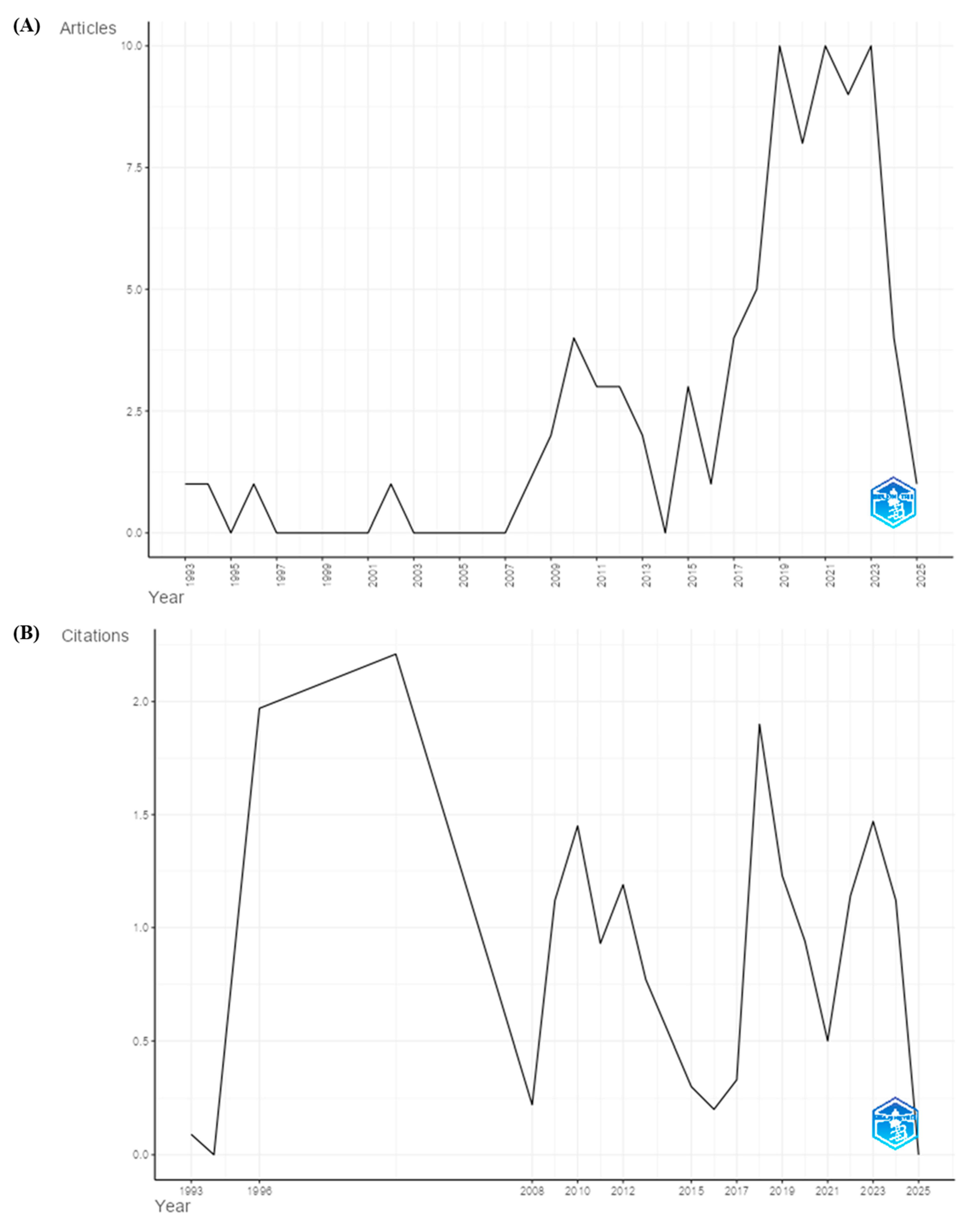
Figure 2.
(A) The most cited documents. (B) The most relevant sources.

Figure 3.
Country collaboration network.
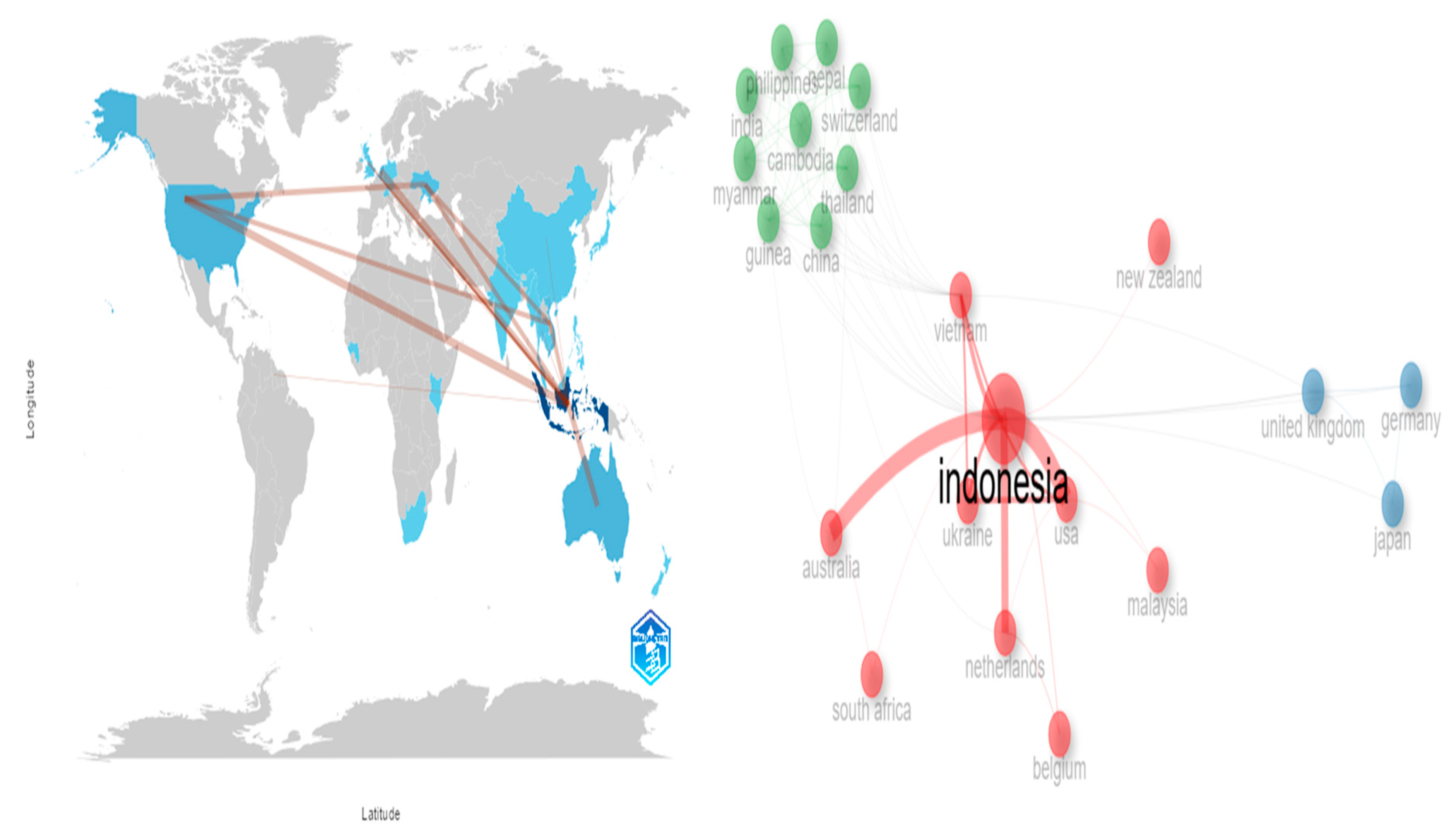
Figure 5.
Forest plot of adjusted odds ratios (95% CI) showing the effects of HIV-related interventions in Indonesia across studies.
Figure 5.
Forest plot of adjusted odds ratios (95% CI) showing the effects of HIV-related interventions in Indonesia across studies.
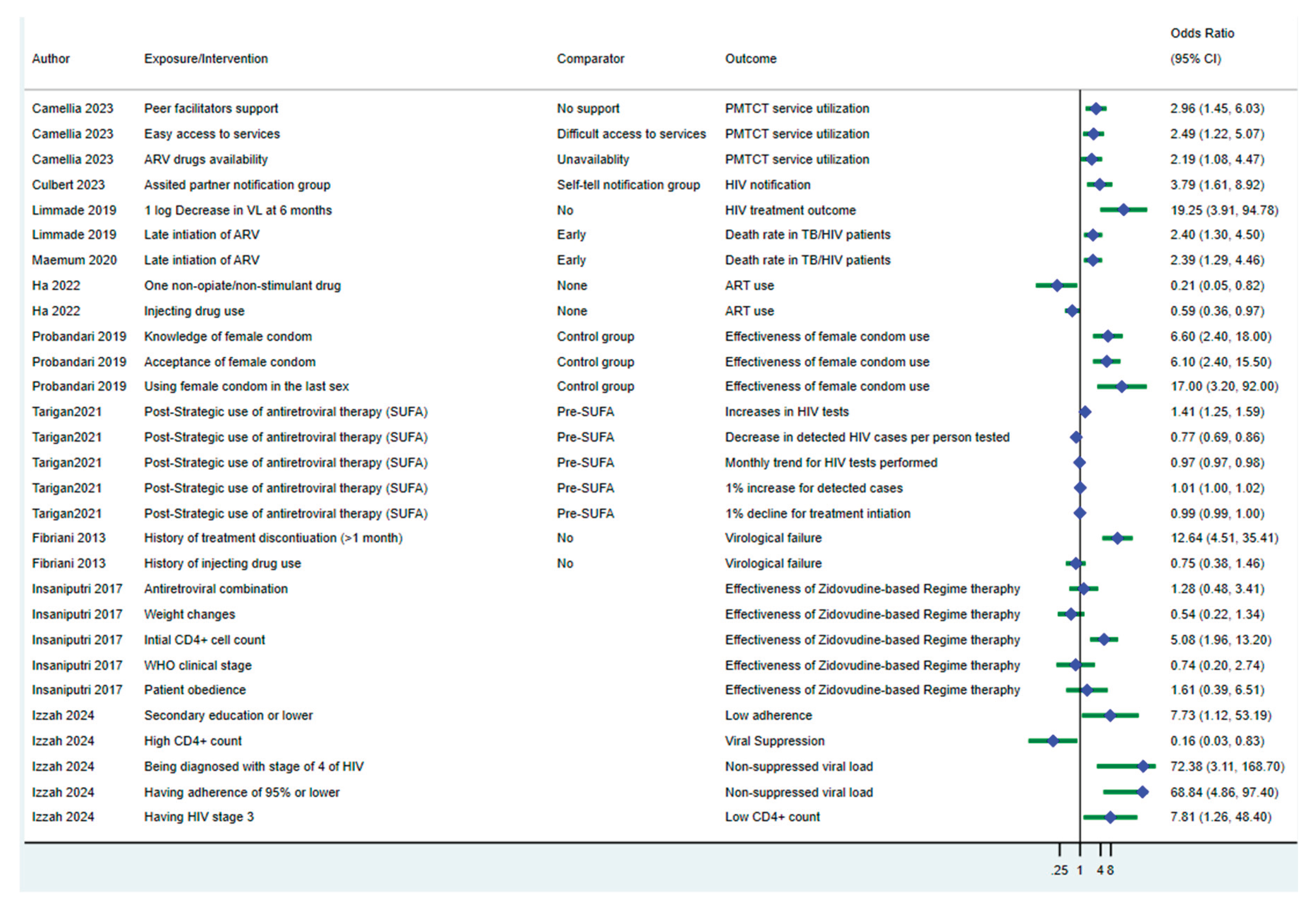

Table 1.
Summary information.
| Item | Results |
|---|---|
| Main information | |
| Timespan | 1993-2025 |
| Sources (Journals, Books, etc) (n) | 65 |
| Documents (n) | 84 |
| Document average age (mean) | 7.45 |
| Average citation per document (mean) | 8.48 |
| Authors | |
| Authors | 400 |
| Authors of single-authored docs | 2 |
| International co-authorship (%) | 51.19 |
| Co-author per document | 7.17 |
| Content | |
| Keywords Plus | 549 |
| Author’s Keywords | 220 |
| Document types | |
| Article | 77 |
| Short survey | 1 |
| Review | 3 |
| Others | 3 |
Disclaimer/Publisher’s Note: The statements, opinions and data contained in all publications are solely those of the individual author(s) and contributor(s) and not of MDPI and/or the editor(s). MDPI and/or the editor(s) disclaim responsibility for any injury to people or property resulting from any ideas, methods, instructions or products referred to in the content. |
© 2025 by the authors. Licensee MDPI, Basel, Switzerland. This article is an open access article distributed under the terms and conditions of the Creative Commons Attribution (CC BY) license (http://creativecommons.org/licenses/by/4.0/).
Copyright: This open access article is published under a Creative Commons CC BY 4.0 license, which permit the free download, distribution, and reuse, provided that the author and preprint are cited in any reuse.