

Submitted:
19 June 2025
Posted:
23 June 2025
You are already at the latest version
Abstract
Sustainability in the non-alcoholic beverage industry requires effective metrics to assess environmental, social, and economic performance. However, the lack of standardised indicators for small and medium-sized enterprises (SMEs) hinders the implementation of sustainable strategies. This study aims to select a set of sustainability indicators for small and medium-sized non-alcoholic beverage industries in Brazil. Seventy-four indicators were identified based on the Global Reporting Initiative (GRI) guidelines, which were subsequently evaluated and refined by industry experts for prioritisation. Statistical analysis led to the selection of 31 final indicators, distributed across environmental (10), social (12), and economic (9) dimensions. In the environmental dimension, priority indicators include water management, energy efficiency, carbon emissions, and waste recycling. The social dimension highlights working conditions, occupational safety, gender equity, and impacts on local communities. In the economic dimension, key indicators relate to supply chain efficiency, technological innovation, financial transparency, and anti-corruption practices. The results provide a robust framework to guide managers in adopting sustainable practices and support policymakers in improving the environmental, social, and economic performance of small and medium-sized non-alcoholic beverage industries.
Keywords:
sustainability indicators
; triple bottom line
; sustainable management
; beverage industry
; small and medium-sized enterprises
1. Introduction
The industrial beverage sector plays a multifaceted role in economic, social, and environmental dimensions, presenting both positive contributions and significant challenges. In Brazil, from an economic perspective, this industrial sector contributes positively to GDP, job creation, and trade balance improvement through exports, among other factors [1]. Socially, both in Brazil and other countries, it generates positive impacts such as income generation and quality-of-life improvements through Corporate Social Responsibility (CSR) programmes [2], but also negative impacts, including health issues (obesity and chronic diseases) stemming from excessive consumption of sugary and alcoholic beverages [3]. Environmentally, the beverage industry – irrespective of country – has negative impacts due to intensive consumption of natural resources (e.g., water and energy) as well as waste generation [4]. However, while large corporations have advanced in adopting sustainable practices, small and medium-sized enterprises (SMEs) in this sector still lack standardised indicators that account for their operational and financial specificities [5].
Beverage industries, particularly SMEs, face mounting pressure to adopt sustainable practices due to environmental concerns, regulatory requirements, and consumer demands. In this context, multiple studies discuss drivers of sustainability in beverage SMEs. Natalie et al. (2024) [6] highlight green process innovation as a strategy to enhance sustainable performance. Mwanaumo and Mwanza (2024) [7] argue that financial availability, leadership commitment, and employee engagement with environmental issues are critical determinants for sectoral sustainability. Furthermore, Tyler et al. (2023) [8] examine global appeals for emission reductions and regulatory pressures on the beverage industry.
Despite these drivers, several barriers hinder the adoption of sustainable practices in beverage SMEs. Knowledge and information-sharing gaps pose significant obstacles, as many SMEs lack awareness of sustainability concepts and practices [9]. Financial constraints, inadequate technological resources, and low employee involvement in environmental mitigation projects further exacerbate these challenges [8]. External barriers, such as supplier integration difficulties and commodity price volatility, also complicate implementation [7].
Adopting a structured management model is essential for achieving sustainability in beverage SMEs, particularly through indicators that measure and improve sustainable performance [10]. These indicators enable the identification of critical success factors and the establishment of best-practice benchmarks, allowing SMEs to enhance their environmental, social, and economic performance [10]. Moreover, systemic sustainability management tools integrating all three dimensions empower organisations – including SMEs – to manage and improve their sustainability outcomes [5].
Thus, sustainability indicators play a pivotal role in assessing sectoral performance by providing measurable targets to evaluate progress toward sustainable development. Integrating environmental, social, and economic indicators into a comprehensive framework remains a key challenge for beverage SMEs. Few studies have developed sustainability indicators that systemically capture all three dimensions [11]. Consequently, there is no standardised set of indicators holistically addressing environmental, social, and economic sustainability for SMEs in the non-alcoholic beverage sector.
Within this context, this study aims to select a tailored set of sustainability indicators for small and medium-sized non-alcoholic beverage industries in Brazil. It addresses a critical literature gap by proposing standardised indicators for a sector lacking defined benchmarks. Practically, these indicators enable integrated, systemic assessments of sustainable performance (Triple Bottom Line), facilitating the identification of critical areas. Additionally, the tool allows cross-comparison of sustainability levels among non-alcoholic beverage SMEs, fostering transparency and continuous improvement. The study thus offers significant academic and industrial contributions.
2. Theoretical Review
2.1. Brief Characterisation of the Non-Alcoholic Beverage Industry in Brazil
The non-alcoholic beverage industry in Brazil represents a robust and dynamic sector undergoing significant transformation, driven by evolving consumer preferences, economic growth, and environmental considerations. The Brazilian market encompasses a wide range of non-alcoholic beverages, including coconut water, fruit pulps, soft drinks, syrups, and others [12]. Non-alcoholic beverages are defined as those containing low or no alcohol content [13].
From an economic perspective, in 2023, Brazil registered 47,963 non-alcoholic beverage products distributed across 3,494 establishments [12]. Production exceeded 29 billion litres, with the Southeast region leading at over 13 billion litres. Soft drinks accounted for 79% of national production, reaching approximately 23 billion litres [12]. Market revenue is projected to reach US$23.62 billion by 2025 [14], while the beverage industry (alcoholic and non-alcoholic) contributed 1.31% to GDP in 2021 [15]. Federal tax revenue (excluding social security contributions) totalled R$11.97 billion in 2023, with employer social security contributions amounting to R$2.2 billion in 2022. Investments in acquisitions and net improvements to fixed assets reached R$7,894.55 million in 2022, while business expenditure on Research and Development (R&D) amounted to R$100.88 million in 2021 [15]. Additionally, exports totalled US$271.94 million in 2023, representing 0.11% of industrial goods exports.
Regarding social impacts, in 2023, the sector created 21,158 direct jobs in juice production and 51,198 in soft drinks and other non-alcoholic beverages [12]. The average monthly wage in the broader beverage industry (including alcoholic beverages) was R$3,929.39 [15], reflecting its role in generating household income, providing employment benefits, health plans, and broader access to food products such as water and functional juices [15]. However, the industry also presents negative health impacts, including the use of ingredients potentially containing chemical, biological, and physical impurities, as well as sweeteners, acidulants, preservatives, carbon dioxide, flavourings, and colourings [16]. Further concerns highlighted in the literature include low nutritional value [17] and high sugar content, which has been linked to rising obesity, type II diabetes, dental caries, and vascular diseases [18].
Environmentally, the beverage industry exhibits significant negative impacts, particularly high water consumption, which constitutes approximately 90% of the final product, underscoring the sector’s heavy reliance on water resources [19]. This dependence often leads to unsustainable water use and inadequate effluent treatment, contributing to aquatic ecosystem degradation [20]. Moreover, the generation of alkaline-pH liquid effluents with high organic loads—primarily from equipment, facilities, and container washing—poses environmental challenges, with key contaminants including sugars derived from syrups and plant extracts [21]. The sector is also energy-intensive, relying on electricity, fuel oil, LPG/propane, and diesel, substantially increasing its carbon footprint [19]. Another critical issue is the generation of large volumes of solid waste—such as plastics, paper, cardboard, wood, PET bottles, glass, scrap metal, and aluminium cans—from packaging and bottling processes [19].
In summary, Brazil’s non-alcoholic beverage industry plays a pivotal economic role, generating employment, contributing to GDP, and driving innovation investments. It also delivers positive social impacts, including income generation, improved access to food products, and labour benefits. Nevertheless, its negative impacts remain substantial, spanning public health challenges linked to high sugar and additive consumption, as well as pressure on water resources and the generation of solid waste and effluents.
2.2. Small and Medium-Sized Enterprises and Sustainability
The impact of SMEs on economic, social, and environmental dimensions is significant and, in many respects, surpasses that of large corporations. Recognised for their economic importance, SMEs represent approximately 90% of all businesses, account for over 50% of global employment, and contribute up to 40% of national income (GDP) in emerging economies [22]. Furthermore, they drive innovation and investment, bolstering economic stability [23]. Socially, SMEs promote stability by providing employment opportunities, reducing income inequality, and engaging in corporate social responsibility practices, thereby enhancing relationships with local communities, strengthening their public image, and fostering sustainable development [24]. Environmentally, many small and medium-sized industries have adopted sustainable practices such as waste reduction and energy efficiency [25], while sustainable supply chain practices can improve their market competitiveness and resilience [24].
In contrast, although large corporations possess advanced resources and technological capabilities, they often fail to engage deeply in local development or sustainable practices due to their scale and operational focus [26]. This underscores the unique and underappreciated role of SMEs in fostering more holistic development integrated with communities. However, integrating sustainability principles into SMEs presents a complex landscape of opportunities and challenges [27]. While large corporations advance in adopting sustainability reporting and practices, SMEs face specific difficulties, including limited resources, lack of expertise, and the perceived conflict between sustainability and short-term profitability [28].
SMEs frequently contend with financial constraints that restrict their ability to invest in sustainable practices, such as the high costs of new technologies and training programmes [29,30], as well as limited access to financing [31]. A lack of awareness and understanding of sustainable practices among owners and employees is another common barrier [29,30], exacerbated by insufficient resources for training and skills development [31]. Additionally, complex regulatory frameworks and the absence of supportive government policies hinder the implementation and communication of sustainability initiatives [32,33].
The pursuit of sustainable development in SMEs is intrinsically linked to the adoption of appropriate sustainability indicators, which serve as quantifiable metrics to monitor and evaluate environmental, social, and economic performance [34]. These indicators are essential for measuring progress, identifying areas for improvement, and demonstrating commitment to responsible practices [35]. However, the specific characteristics of SMEs—such as resource scarcity and lack of expertise—pose significant challenges in this process [28]. Therefore, sustainability indicators or indicator sets must be selected and structured with SME particularities in mind, prioritising simplicity, cost-effectiveness, and local relevance to ensure they are practical, accessible, and aligned with operational capacities and priorities.
2.3. Sustainability Indicators and SMEs in the Beverage Industry
Sustainability indicators play a crucial role as measurement and communication tools for organisational sustainability performance, ensuring operations align with sustainability principles [36]. These indicators enable comprehensive assessment of environmental, social, and economic impacts, providing an integrated and systemic view of organisational performance [37,38]. However, the inherent complexity of reconciling economic growth with environmental preservation, alongside the integration of diverse metrics—particularly for SMEs—demands a refined and strategic approach to embedding sustainability indicators in decision-making processes [39,40].
Sustainability indicators for SMEs are essential, yet to be effective, they must be tailored to SME-specific constraints, such as limited resources and access to capital. Key guidelines defining effective sustainability indicators for SMEs include:
a) Adaptation of Existing Standards: Many sustainability indicators derive from internationally recognised frameworks like the Global Reporting Initiative (GRI). To ensure applicability for SMEs, these indicators must be simplified and adjusted to their operational limitations and available resources [38,41].
b) Maturity Models: Implementing maturity models helps SMEs visualise their progression in adopting sustainable practices, enabling structured and incremental self-assessment. Such models facilitate realistic goal-setting and continuous adaptation to market and regulatory demands [33].
c) Resource Efficiency: Indicators should promote resource optimisation and cost reduction, ensuring sustainable practices are economically viable and compatible with SME operational realities. Resource-efficient indicators thus enhance both environmental sustainability and business competitiveness [42].
d) Stakeholder Engagement: Involving stakeholders in indicator development ensures they reflect the expectations of employees, customers, and local communities. This engagement enhances indicator legitimacy and strengthens corporate commitment to sustainability, fostering broader stakeholder buy-in [42].
For SMEs in the beverage industry, defining a standardised set of indicators that address their unique challenges is imperative. As outlined in Table 1, priority areas for indicator development span the three core dimensions of the Triple Bottom Line.
Addressing these priorities, the development of standardised indicators is a critical step to guide SMEs in the non-alcoholic beverage sector toward sustainable strategies. Such indicators not only facilitate performance measurement but also support evidence-based decision-making, balancing economic viability, social responsibility, and environmental preservation.
3. Methodology
3.1. Research Typology, Techniques, and Data Collection
This study adopts a mixed-methods approach, combining quantitative and qualitative techniques, following recommendations by Demo (2022) [48], Marconi and Lakatos (2017) [49], and Hair (2010) [50]. The research was conducted through a survey employing a structured questionnaire based on sustainability indicators from the Global Reporting Initiative (GRI). The GRI framework can be integrated with other sustainability metrics, as evidenced by the development of customised performance indicators in various case studies [51]. These indicators were selected due to their applicability to organisations of varying sizes and sectors, structured according to the Triple Bottom Line dimensions and developed using criteria of relevance, comparability, and reliability.
From the GRI Standards (2022) [52], 74 sustainability indicators were compiled, distributed across environmental (25), social (33), and economic (16) dimensions, with support from NVivo software (version 14). This process enabled the development of a more objective research instrument aligned with the realities of the organisations studied, ensuring a comprehensive sustainability assessment for the sector.
Indicator prioritisation was conducted via survey, where respondents evaluated each item using a five-point Likert scale: *Dispensable (1), Non-Priority (2), Desirable (3), Important (4),* and Very Important (5). The questionnaire targeted managers, employees, researchers, and other professionals affiliated with Brazil’s non-alcoholic beverage industry. The Likert scale—widely used for measuring perceptions and attitudes—allowed for quantification of each indicator’s perceived importance and facilitated consensus-building regarding essential elements for sectoral sustainability [53].
Non-probability convenience sampling was employed, yielding 299 responses between August 2023 and April 2024, with national coverage. Data collection utilised Google Forms to ensure accessibility and broad dissemination. Respondent anonymity was guaranteed to encourage candid responses, particularly for sensitive questions.
3.2. Analysis of Responses and Consensus Level
The analysis of responses was conducted in two stages: (i) Characterisation of respondents’ profiles using descriptive statistics and multivariate analysis, including correlations between respondent groups based on education, field of study, and professional experience in relation to the indicators; and (ii) Assessment of the level of agreement and consensus, aiming to define a validated set of sustainability indicators for SMEs in the non-alcoholic beverage industry.
Statistical analyses, including correlation tests, descriptive statistics, and measurement of the consensus level, were performed using IBM SPSS Statistics, version 27. The application of multiple statistical tests to verify the robustness of the results and establish a methodologically grounded consensus strengthens the reliability of the indicator selection for SMEs in the non-alcoholic beverage sector, as advocated by Giannarou and Zervas (2014) [54].
Multivariate analysis was conducted using Cronbach’s alpha reliability test, assessment of data normality via the Kolmogorov-Smirnov and Shapiro-Wilk tests, and correlation analysis using Spearman’s rho coefficient (rₛ). Spearman’s coefficient identifies relationships between variables influencing indicator selection, with values ranging from −1 ≤ rₛ ≤ 1. The correlation strength was categorised according to Schober, Boer, and Schwarte (2018): negligible (0.0–0.1), weak (0.1–0.39), moderate (0.40–0.69), strong (0.70–0.89), and very strong (0.90–1.00).
Agreement among respondents was analysed using descriptive statistics (mean (µₓ), standard deviation (σ), and coefficient of variation (CV)). The consensus level was measured based on the methodology by Tastle and Wierman (2007) [53]. The coefficient of variation, which expresses the relative dispersion of data in relation to the mean, was interpreted according to Pimentel-Gomes (2009): low CV and high consensus level (0.0 ≤ CV < 0.1), medium (0.1 ≤ CV ≤ 0.2), high (0.2 < CV ≤ 0.3), and very high CV, associated with low consensus (CV > 0.3).
Consensus can be defined as the degree of agreement among a group of individuals regarding a specific topic. Its level, Cns(X), can be estimated using Equation (1), following the methodology proposed by Tastle and Wierman (2007) [53]:
where μₓ represents the mean of the values of Xᵢ, and dₓ is the range of the dataset, defined as dₓ = X_max - X_min.
Tastle and Wierman (2007) [53] refined Shannon’s Entropy equation to enhance its efficiency in measuring consensus, making it particularly useful for five-point Likert scales. However, this approach does not establish an optimal cut-off point for classifying the consensus level. Thus, the categorisation proposed by Keeney et al. (2011) [55] was adopted, defining three consensus levels: low (50–69%), medium (70–79%), and high (> 80%).
The definition of a minimum consensus threshold varies in the literature. Hasson et al. (2000) [56] and Doria et al. (2009) [57] suggest that agreement levels between 51% and 80% may be considered acceptable. In this study, a cut-off criterion of ≥70% was adopted, ensuring a sufficiently representative set of indicators aligned with the Triple Bottom Line dimensions. This criterion is also supported by studies such as Giannarou and Zervas (2014) [54] and Brenner et al. (2019) [58], who used similar approaches for selecting sustainability indicators in specific contexts. Despite the adoption of reference values, determining the cut-off point remains a methodological decision for the researcher. Scarparo et al. (2012) [59] emphasise that there is no universally accepted standard, and different studies adopt varying criteria depending on the research scope and sample characteristics.
4. Results and Analyses
4.1. Analysis of Respondents’ Profile
The results indicate that the majority of respondents are affiliated with universities (63.2%), while 36.8% work directly in the beverage industry, demonstrating a balance between the academic perspective—focused on sustainability research and innovation—and practical sector experience (Figure 1). This mixed perspective (academic and practical) ensures that the selected indicators reconcile theoretical foundations with practical applicability, making them more aligned with the reality of small and medium-sized non-alcoholic beverage industries. According to Gebara et al. (2024) [60], the academic perspective guarantees that the indicators are aligned with sustainability principles, while Gunnarsdóttir et al. (2021) [61] emphasise that the participation of industry professionals contributes to the selection of relevant and applicable indicators.
The education level reveals a high qualification among participants, with a predominance of graduates (16.4%) and specialists (13.0%), as well as a significant percentage of master’s degree holders (10.0%) and doctoral candidates (7.7%). Thus, the solid technical and scientific background of the participants strengthens the credibility of the indicator selection. As Gebara et al. (2024) [60] argue, a high education level enhances individuals’ analytical capacity in evaluating and selecting indicators, ensuring greater scientific validity and reliability.
The analysis of knowledge areas highlights the significant participation of professionals from accounting (18.1%), engineering (15.1%), and administration (15.4%), followed by information technology, logistics and operations, and sustainability and quality. Trucillo and Erto (2023) [62] emphasise that this diversity allows for both a holistic and systemic understanding of sustainability, ensuring the inclusion of economic, environmental, and social aspects. Similarly, Gebara et al. (2024) [60] highlight that the involvement of experts from different fields facilitates the identification of specific and relevant indicators for distinct sustainability components.
Thus, the research findings indicate that the diversity of respondents’ backgrounds, experience, and knowledge contributes to the robustness and consistency of the proposed sustainability indicator set.
4.2. Analysis of Reliability and Consensus Level
The Cronbach’s alpha reliability test yielded α = 0.958, a value classified as excellent according to Taber (2018) [63], indicating high internal consistency of the questionnaire responses. The normality analysis, using the Kolmogorov-Smirnov and Shapiro-Wilk tests, resulted in p = 0.000, suggesting a skewed and non-normal distribution [64]. Consequently, a non-parametric approach was adopted, with Spearman’s rho tests employed to analyse correlations between variables.
The results of Spearman’s rho coefficient indicate that the variables professional experience, education level, and field of study exhibited statistically significant correlations (p < 0.01 or p < 0.05; see Appendix A), albeit of negligible to weak strength, as per the classification by Schober, Boer, and Schwarte (2018) [65]. Thus, the findings suggest subtle trends in respondents’ perceptions without indicating pronounced bias, reflecting a relatively neutral and impartial evaluation of the indicators. This interpretation aligns with the criteria established by Schober, Boer, and Schwarte (2018) [65] and Field (2018) [64], reinforcing the reliability and validity of the statistical analysis conducted.
The coefficient of variation revealed that 40.45% of the 74 indicators analysed exhibited a medium consensus level (0.10 ≤ CV ≤ 0.20), based on the classification proposed by Pimentel-Gomes (2009) [66]. Notably, no indicator achieved a high consensus level; however, a significant number of 31 indicators demonstrated relatively homogeneous perceptions among respondents regarding their relevance. This finding may indicate alignment in evaluations or a consolidated understanding of the topics addressed.
The consensus level methodology, Cns(X), proposed by Tastle and Wierman (2007) [53], revealed that 18 sustainability indicators (24.3%) presented Cns(X) ≤ 0.50, classified as lacking consensus or unacceptable (see Appendix B), in accordance with Hasson et al. (2000) [56] and Doria et al. (2009) [57]. Furthermore, the indicators were distributed across different consensus levels based on the classification by Keeney et al. (2011) [55]: 27 indicators (36.5%) exhibited low consensus, 30 indicators (40.54%) demonstrated medium consensus, and only 1 indicator (1.35%) was classified as having high consensus.
4.3. Set of Indicators for the Non-Alcoholic Beverage Industry
The final selection of indicators was based on the inclusion criterion of those with medium to high consensus levels (Cns(X) ≥ 0.70), as recommended by Giannarou and Zervas (2014) [54] and Brenner et al. (2019) [58]. Consequently, 31 indicators were selected to assess sustainability in small and medium-sized non-alcoholic beverage industries (Table 2, excerpt from Appendix B).
The set of 31 sustainability indicators is distributed across the Triple Bottom Line (TBL) dimensions: environmental (10), social (12), and economic (9). The number of indicators is classified as moderate and appropriate, as according to Sangwan et al. (2019) [67], a set of 20 to 50 indicators falls within a suitable range for measuring sustainability. Regarding the balance between TBL dimensions, the distribution is relatively even, which is considered optimal [68]. However, Loza-Aguirre et al. (2018) [68] and Sánchez-Hernández et al. (2019) [69] note that many sustainability efforts disproportionately focus on environmental and economic factors, often neglecting social aspects. This suggests that despite a balanced number of indicators across dimensions, sustainability measurement practices may still exhibit bias, potentially undervaluing one or two TBL dimensions.
The selected economic sustainability indicators (Table 2) encompass revenues, operational expenditures, salaries and benefits, dividends and interest on equity, taxes, local supplier purchases, societal investments, technological innovations, and indirect job creation. These indicators represent priority areas for economic sustainability in Brazil’s non-alcoholic beverage industry, aligning with key focuses of sustainable business management. Specifically, they reflect cost optimisation and value addition [43], market competitiveness through revenue growth, profitability, and dividend distribution [1], and supply chain efficiency through innovative technologies [45]. Thus, these indicators enable a comprehensive assessment of the sector’s economic sustainability, considering both financial viability and socio-economic impact.
The environmental sustainability indicators include recycled materials, water recycling and reuse, company location, energy from renewable and non-renewable sources, waste reuse and recycling, recovered packaging, environmental complaints, environmental management expenditures, supplier environmental policies, and environmental impact assessments. These reflect priority areas for environmental sustainability in small and medium-sized non-alcoholic beverage industries and align with sustainable environmental management principles. The findings correlate with water resource management through recycling technologies [44,45], waste and material management via recycling programmes [46], collaborative environmental risk management [70], and renewable energy use [45]. The selected indicators thus facilitate a holistic evaluation of the sector’s environmental performance, promoting sustainable practices and regulatory compliance.
The social sustainability indicators cover employees (number, legal benefits, training, performance), social impact assessments, public disclosure of impacts, local development programmes, corruption risk evaluations, anti-corruption policies, certified and labelled products, and customer satisfaction. These represent priority social focuses for Brazil’s non-alcoholic beverage industry and align with literature on labour rights [43], community development initiatives [46], and consumer awareness [71]. These indicators highlight key areas for social sustainability, serving as essential tools for promoting fairer and more inclusive business practices.
5. Final Considerations
This study selected a specific set of sustainability indicators tailored to small and medium-sized non-alcoholic beverage industries in Brazil, addressing the three dimensions of the triple bottom line. The results highlight the selection of 31 sustainability indicators, ensuring alignment with established frameworks such as the Global Reporting Initiative (GRI) while remaining adaptable to sector-specific particularities. The participatory selection process of these indicators ensured the legitimacy and applicability of the proposed metrics. The consensus analysis revealed a balanced set of indicators, emphasising essential aspects such as material recycling and reuse, water management, environmental impacts, transparency in labour practices, local economic development, and technological innovation, among others.
The contribution of this study to the literature lies in the development of a structured set of indicators specifically designed for small and medium-sized enterprises (SMEs) in the non-alcoholic beverage sector—a gap previously underexplored. Furthermore, the research provides valuable insights for industry managers and policymakers by establishing a framework for evaluating and enhancing the sustainability performance of these companies. Practically, managers can use this set of indicators as a strategic tool to monitor and improve the sustainability of their operations. For instance, indicators such as water management, waste recycling, and energy efficiency can guide the implementation of more effective environmental practices, while financial transparency and anti-corruption measures can strengthen corporate governance. Additionally, adopting these indicators enables SMEs in this sector to identify critical areas for improvement, align their strategies with stakeholder expectations, and demonstrate their commitment to sustainability, thereby enhancing their market competitiveness.
However, certain limitations must be acknowledged. The selected indicators were tailored to SMEs in the non-alcoholic beverage industry and may not be directly applicable to other industrial sectors. Moreover, the consensus-level threshold methodology can be adjusted according to organisational needs, allowing for greater or lesser scope in the final set of indicators. Future studies could further standardise the metrics for each indicator and explore methods for normalisation, weighting, and aggregation to develop composite sustainability indices that account for the specific characteristics of SMEs.
Thus, this study represents a significant advancement in sustainability measurement for SMEs in the beverage industry, contributing to both academic research and practical corporate sustainability management.
Author Contributions
Conceptualization, A.A.F.; methodology, A.A.F and D.S.; software, A.A.F.; validation, A.A.F., D.S., J.O., M.C.R., A.L.G.Z, and M.A.P.L.; formal analysis, A.A.F; investigation, A.A.F., M.C.R., A.L.G.Z, and M.A.P.L.; writing—original draft preparation, A.A.F.; writing—review and editing, A.A.F., D.S., J.O., M.C.R., A.L.G.Z, and M.A.P.L.; project administration, A.A.F. All authors have read and agreed to the published version of the manuscript.
Funding
This research is part of the research project “Assessment of sustainability in industries in the non-alcoholic carbonated beverage sector through a specific set of indicators” funded by the Fundação de Amparo à pesquisa do Estado do RS by FAPERGS notice 07/2021 and by Grant Term no. 21/2551-0002188-8.
Institutional Review Board Statement
Not applicable
Informed Consent Statement
Not applicable.
Data Availability Statement
The data presented in this study are available on request from the corresponding author.
Acknowledgments
We are profoundly grateful to Fapergs for generously funding our research, without which this work could not have been undertaken. Furthermore, we extend our heartfelt thanks to the anonymous reviewers and the Editor of this Issue. Their astute observations and constructive critiques were instrumental in refining and substantially improving the quality of this manuscript.
Conflicts of Interest
The authors declare no conflicts of interest.
Appendix A
| Variable | Company | Education Level | Knowledge Area |
| Company | 1 | 0.471** | -0.034 |
| Education Level | 0.471** | 1 | -0.105 |
| Knowledge Area | -0.034 | -0.105 | 1 |
| Sales Revenue | -0.049 | 0.023 | 0.01 |
| Operating Costs | -0.014 | 0.102 | -0.007 |
| Employee Wages and Benefits | 0.033 | 0.049 | 0.151** |
| Dividends and Interest on Equity Paid | 0.096 | -0.041 | 0.083 |
| Taxes and Levies Paid to Government | 0.085 | 0.073 | 0.081 |
| Community Investment | 0.135* | 0.058 | 0.164** |
| Private Employee Pension Plans | 0.095 | 0.015 | 0.183** |
| Government Incentives (Tax Credits0. Subsidies0. and others) | 0.028 | -0.114* | 0.102 |
| Lowest Wage Compared to Local Minimum Wage for the Category | 0.013 | -0.056 | -0.016 |
| Senior Management Hired from Local Community | 0.160** | 0.016 | 0.152** |
| Local Supplier Purchases and Contracts | 0.150** | 0.004 | 0.140* |
| Infrastructure Development Investment (Society) | 0.103 | -0.002 | 0.140* |
| Technological Changes in Productivity and Distribution | 0.049 | -0.093 | 0.057 |
| Economic Development in High-Poverty Areas (Society) | 0.195** | 0.055 | 0.091 |
| Availability of Products and Services for Low-Income Individuals | 0.075 | -0.127* | 0.064 |
| Indirect Jobs in Supplier or Distribution Chain | 0.112 | -0.023 | 0.098 |
| Non-Renewable and Renewable Materials | 0.035 | 0.089 | 0.054 |
| Recycled Materials | 0.064 | 0.008 | 0.011 |
| Energy from Non-Renewable and Renewable Sources | 0.052 | 0.118* | 0.007 |
| Surface and Groundwater | -0.002 | 0.015 | 0.088 |
| Water Recycled and Reused by the Organisation | 0.082 | 0.115* | 0.063 |
| Geographical Location of the Company | 0.066 | -0.087 | 0.097 |
| Size of Operational Unit | 0.018 | -0.117* | 0.143* |
| Introduction of Polluting Substances | 0.037 | 0.003 | 0.087 |
| Introduction of Invasive0. Harmful0. and Pathogenic Species | 0.038 | 0.013 | -0.01 |
| Species Reduction | 0.051 | 0.004 | 0.006 |
| Protected or Restored Habitat | 0.237** | 0.087 | 0.139* |
| Emissions of Ozone-Depleting Substances (ODS) | 0.029 | -0.02 | 0.022 |
| Persistent Organic Pollutants (POPs) | 0.048 | 0.004 | 0.057 |
| Particulate Matter (PM) | 0.062 | -0.015 | 0.029 |
| Hazardous Air Pollutants (HAPs) | 0.054 | 0.03 | 0.006 |
| Reused and Recycled Waste | 0.061 | 0.092 | 0.016 |
| Incineration Waste | 0.124* | 0.031 | 0.06 |
| Waste Sent to Landfills | 0.077 | 0.042 | 0.018 |
| Waste Stored On-Site | 0.091 | -0.012 | 0.073 |
| Environmental Impacts Caused by Products | 0.055 | 0.084 | 0.063 |
| Recovered Products and Packaging | 0.085 | 0.048 | 0.053 |
| Fines and Sanctions for Environmental Non-Compliance | 0.074 | 0.041 | 0.041 |
| Complaints Related to Environmental Impacts | 0.103 | -0.054 | 0.092 |
| Environmental Prevention and Management Expenditure | 0.145* | 0.057 | 0.011 |
| Suppliers Selected Based on Environmental Criteria | 0.099 | 0.037 | 0.027 |
| Number of Employees | 0.047 | -0.07 | 0.033 |
| Employee Turnover | -0.047 | -0.097 | -0.039 |
| Statutory Benefits Granted to Employees | 0.009 | -0.026 | 0.095 |
| Employees with Occupational Illnesses | 0.037 | -0.05 | 0.031 |
| Employee Training | -0.007 | -0.043 | 0.057 |
| Retirement or Redundancy Programs | 0.088 | 0.003 | 0.077 |
| Employee Performance Reviews | -0.03 | -0.101 | 0.039 |
| Employees by Functional Category | 0.102 | -0.031 | 0.129* |
| Suppliers Selected Based on Labour Practices | 0.096 | 0.031 | 0.133* |
| Complaints Related to Labour Practices | 0.131* | 0.038 | 0.027 |
| Complaints Related to Human Rights | 0.083 | 0.012 | -0.019 |
| Operations with Human Rights Violations | -0.025 | 0.019 | 0.022 |
| Discrimination Practices | 0.012 | 0.05 | -0.006 |
| Operations and Suppliers with Child Labour Risks | 0.049 | 0.099 | -0.025 |
| Occurrence of Forced or Slave Labour | 0.004 | 0.073 | -0.018 |
| Employee Training on Human Rights Policies | 0.121* | 0.037 | -0.096 |
| Violation of Indigenous and Traditional Peoples’ Rights | -0.008 | 0.046 | -0.005 |
| Social Impact Assessments via Participatory Processes | 0.119* | -0.017 | 0.047 |
| Environmental Impact Assessments | 0.125* | 0.078 | 0.031 |
| Public Disclosure of Environmental and Social Impact Assessments | 0.263** | 0.11 | 0.035 |
| Development Programs Based on Local Needs | 0.172** | 0.058 | 0.062 |
| Operations Subject to Corruption Risk Assessments | 0.11 | 0.107 | 0.094 |
| Anti-Corruption Policies and Procedures | 0.149* | 0.118* | 0.014 |
| Employees Trained in Anti-Corruption Measures | 0.140* | 0.051 | 0.036 |
| Corruption Cases and Measures Taken | 0.046 | 0.043 | 0.06 |
| Contributions to Political Parties | 0.094 | -0.019 | -0.029 |
| Legal Actions for Unfair Competition | 0.103 | 0.022 | -0.089 |
| Fines and Sanctions for Legal Non-Compliance | 0.195** | 0.073 | -0.05 |
| Products with Certification and Labelling | -0.005 | -0.088 | 0.147* |
| Customer Satisfaction Surveys | 0.02 | -0.057 | 0.065 |
| Sale of Banned or Controversial Products | -0.029 | -0.002 | -0.004 |
| Non-Compliant Marketing Communications | -0.002 | -0.034 | -0.004 |
| Complaints Regarding Privacy Violations and Customer Data Loss | 0.041 | -0.03 | 0.014 |
Appendix B
| Likert Scale | |||||||||
| Indicators | 1 | 2 | 3 | 4 | 5 | (µx) | SD | CV | Cns (X) |
| Sales Revenue | 0 | 7 | 18 | 79 | 195 | 4.5 | 0.7 | 0.2 | 0.8 |
| Operating Expenditure | 1 | 2 | 13 | 79 | 204 | 4.6 | 0.6 | 0.1 | 0.8 |
| Employee Wages and Benefits | 0 | 6 | 25 | 91 | 177 | 4.5 | 0.7 | 0.2 | 0.7 |
| Dividends and Interest on Equity | 2 | 18 | 58 | 125 | 96 | 4.0 | 0.9 | 0.2 | 0.7 |
| Taxes and Levies Paid to Government | 4 | 11 | 49 | 128 | 107 | 4.1 | 0.9 | 0.2 | 0.7 |
| Community Investment | 4 | 13 | 58 | 88 | 136 | 4.1 | 1.0 | 0.2 | 0.7 |
| Private Pension Plans | 8 | 30 | 90 | 97 | 74 | 3.7 | 1.0 | 0.3 | 0.6 |
| Government Incentives | 6 | 20 | 60 | 103 | 110 | 4.0 | 1.0 | 0.3 | 0.7 |
| Wage vs. Local Minimum Wage | 66 | 49 | 55 | 81 | 48 | 3.0 | 1.4 | 0.5 | 0.4 |
| Senior Management from Local Community | 6 | 36 | 68 | 100 | 89 | 3.8 | 1.1 | 0.3 | 0.6 |
| Purchases from Local Suppliers | 2 | 14 | 66 | 119 | 98 | 4.0 | 0.9 | 0.2 | 0.7 |
| Infrastructure Investment in Society | 0 | 6 | 48 | 118 | 127 | 4.2 | 0.8 | 0.2 | 0.7 |
| Technological Innovations (Production & Distribution) | 2 | 15 | 32 | 130 | 120 | 4.2 | 0.9 | 0.2 | 0.7 |
| Regional Development | 3 | 6 | 45 | 97 | 148 | 4.3 | 0.9 | 0.2 | 0.7 |
| Products and Services for Low-Income Individuals | 2 | 10 | 51 | 92 | 144 | 4.2 | 0.9 | 0.2 | 0.7 |
| Indirect Job Creation | 2 | 10 | 51 | 110 | 126 | 4.2 | 0.9 | 0.2 | 0.7 |
| Non-Renewable and Renewable Materials | 8 | 8 | 27 | 100 | 156 | 4.3 | 0.9 | 0.2 | 0.7 |
| Recycled Materials | 1 | 4 | 11 | 76 | 207 | 4.6 | 0.7 | 0.1 | 0.8 |
| Energy from Non-Renewable and Renewable Sources | 8 | 3 | 21 | 84 | 183 | 4.4 | 0.9 | 0.2 | 0.7 |
| Surface and Groundwater | 3 | 9 | 32 | 96 | 159 | 4.3 | 0.9 | 0.2 | 0.7 |
| Recycled and Reused Water | 1 | 4 | 16 | 74 | 204 | 4.6 | 0.7 | 0.1 | 0.8 |
| Geographical Location of the Company | 4 | 8 | 33 | 122 | 132 | 4.2 | 0.9 | 0.2 | 0.7 |
| Size of Operational Unit | 5 | 17 | 46 | 135 | 96 | 4.0 | 0.9 | 0.2 | 0.7 |
| Consumption of Polluting Substances | 48 | 14 | 31 | 69 | 137 | 3.8 | 1.5 | 0.4 | 0.4 |
| Use of Invasive, Harmful, and Pathogenic Species | 53 | 22 | 29 | 57 | 138 | 3.7 | 1.5 | 0.4 | 0.3 |
| Species Reduction | 54 | 27 | 27 | 61 | 130 | 3.6 | 1.5 | 0.4 | 0.3 |
| Protected or Restored Habitat | 7 | 12 | 25 | 60 | 195 | 4.4 | 1.0 | 0.2 | 0.6 |
| Emissions of Ozone-Depleting Substances (ODS) | 42 | 9 | 15 | 47 | 186 | 4.1 | 1.4 | 0.4 | 0.4 |
| Persistent Organic Pollutants (POPs) | 36 | 12 | 18 | 60 | 173 | 4.1 | 1.4 | 0.3 | 0.5 |
| Particulate Matter (PM) Generation | 35 | 14 | 27 | 79 | 144 | 3.9 | 1.3 | 0.3 | 0.5 |
| Hazardous Air Pollutants (HAPs) | 40 | 6 | 23 | 59 | 171 | 4.1 | 1.4 | 0.3 | 0.4 |
| Reused and Recycled Waste | 0 | 1 | 9 | 72 | 217 | 4.7 | 0.5 | 0.1 | 0.8 |
| Incineration Waste | 7 | 21 | 34 | 107 | 130 | 4.1 | 1.0 | 0.2 | 0.6 |
| Waste Sent to Landfills | 10 | 14 | 22 | 99 | 154 | 4.2 | 1.0 | 0.2 | 0.6 |
| On-Site Waste Storage | 8 | 14 | 32 | 104 | 141 | 4.2 | 1.0 | 0.2 | 0.7 |
| Environmental Impact of Products | 17 | 9 | 9 | 54 | 210 | 4.4 | 1.1 | 0.2 | 0.6 |
| Recovered Product Packaging | 4 | 2 | 15 | 89 | 189 | 4.5 | 0.7 | 0.2 | 0.7 |
| Environmental Fines and Sanctions | 7 | 5 | 17 | 80 | 190 | 4.5 | 0.9 | 0.2 | 0.7 |
| Environmental Complaints | 6 | 5 | 20 | 88 | 180 | 4.4 | 0.9 | 0.2 | 0.7 |
| Environmental Prevention and Management Expenditure | 1 | 2 | 27 | 91 | 178 | 4.5 | 0.7 | 0.2 | 0.7 |
| Supplier Environmental Policies | 2 | 4 | 34 | 85 | 174 | 4.4 | 0.8 | 0.2 | 0.7 |
| Number of Employees | 3 | 16 | 28 | 123 | 129 | 4.2 | 0.9 | 0.2 | 0.7 |
| Employee Turnover | 14 | 19 | 43 | 88 | 135 | 4.0 | 1.1 | 0.3 | 0.6 |
| Statutory Employee Benefits | 1 | 3 | 30 | 93 | 172 | 4.4 | 0.7 | 0.2 | 0.7 |
| Employees with Occupational Illnesses | 16 | 12 | 36 | 100 | 135 | 4.1 | 1.1 | 0.3 | 0.6 |
| Employee Training | 2 | 1 | 22 | 80 | 194 | 4.5 | 0.7 | 0.2 | 0.8 |
| Retirement or Redundancy Programs | 3 | 6 | 56 | 94 | 140 | 4.2 | 0.9 | 0.2 | 0.7 |
| Employee Performance | 4 | 2 | 32 | 103 | 158 | 4.4 | 0.8 | 0.2 | 0.7 |
| Employees by Functional Category | 5 | 10 | 46 | 115 | 123 | 4.1 | 0.9 | 0.2 | 0.7 |
| Suppliers Selected Based on Labour Practices | 4 | 5 | 38 | 100 | 152 | 4.3 | 0.9 | 0.2 | 0.7 |
| Labour Practice Complaints | 11 | 8 | 29 | 106 | 145 | 4.2 | 1.0 | 0.2 | 0.7 |
| Human Rights Complaints | 8 | 6 | 27 | 86 | 172 | 4.4 | 0.9 | 0.2 | 0.7 |
| Operations with Human Rights Violations | 30 | 7 | 21 | 58 | 183 | 4.2 | 1.3 | 0.3 | 0.5 |
| Discrimination Practices | 31 | 5 | 19 | 56 | 188 | 4.2 | 1.3 | 0.3 | 0.5 |
| Supplier Operations with Child Labour Risks | 32 | 6 | 13 | 53 | 195 | 4.2 | 1.3 | 0.3 | 0.5 |
| Occurrence of Forced/Slave Labour | 35 | 4 | 15 | 39 | 206 | 4.3 | 1.3 | 0.3 | 0.5 |
| Employee Training on Human Rights Policies | 7 | 1 | 27 | 81 | 183 | 4.4 | 0.9 | 0.2 | 0.7 |
| Violation of Indigenous and Traditional Peoples’ Rights | 38 | 6 | 24 | 58 | 173 | 4.1 | 1.4 | 0.3 | 0.4 |
| Social Impact Assessments via Participatory Processes | 3 | 4 | 33 | 95 | 164 | 4.4 | 0.8 | 0.2 | 0.7 |
| Environmental Impact Assessments | 0 | 3 | 16 | 72 | 208 | 4.6 | 0.6 | 0.1 | 0.8 |
| Public Disclosure of Environmental and Social Impacts | 1 | 5 | 33 | 82 | 178 | 4.4 | 0.8 | 0.2 | 0.7 |
| Local Development Programs | 2 | 5 | 30 | 95 | 167 | 4.4 | 0.8 | 0.2 | 0.7 |
| Operations Assessed for Corruption Risks | 3 | 6 | 27 | 71 | 192 | 4.5 | 0.8 | 0.2 | 0.7 |
| Anti-Corruption Policies and Procedures | 1 | 4 | 18 | 68 | 208 | 4.6 | 0.7 | 0.2 | 0.8 |
| Employees Trained in Anti-Corruption Measures | 2 | 6 | 30 | 82 | 179 | 4.4 | 0.8 | 0.2 | 0.7 |
| Corruption Cases and Measures Taken | 7 | 9 | 22 | 72 | 189 | 4.4 | 0.9 | 0.2 | 0.7 |
| Contributions to Political Parties | 70 | 56 | 50 | 49 | 74 | 3.0 | 1.5 | 0.5 | 0.4 |
| Legal Actions for Unfair Competition | 25 | 29 | 44 | 84 | 117 | 3.8 | 1.3 | 0.3 | 0.5 |
| Fines and Sanctions for Legal Non-Compliance | 22 | 15 | 32 | 80 | 150 | 4.1 | 1.2 | 0.3 | 0.5 |
| Products with Certification and Labelling | 2 | 1 | 14 | 71 | 211 | 4.6 | 0.7 | 0.1 | 0.8 |
| Customer Satisfaction | 1 | 3 | 24 | 83 | 188 | 4.5 | 0.7 | 0.2 | 0.7 |
| Sale of Banned or Controversial Products | 41 | 12 | 27 | 69 | 150 | 3.9 | 1.4 | 0.4 | 0.4 |
| Non-Compliant Marketing Communications | 20 | 11 | 41 | 94 | 133 | 4.0 | 1.2 | 0.3 | 0.6 |
| Complaints Regarding Privacy and Data Loss | 13 | 5 | 36 | 70 | 175 | 4.3 | 1.0 | 0.2 | 0.6 |
References
- Gazzola, P.; Pavione, E.; Amelio, S.; Mauri, M. Sustainable Strategies and Value Creation in the Food and Beverage Sector: The Case of Large Listed European Companies. Sustainability (Switzerland) 2024, 16. [CrossRef]
- Fatunnisa, H.; Hamdani, A.; Permana, I. Exploring the Relationship Between Corporate Social Responsibility and Corporate Sustainability within the Food and Beverage Industry. In Proceedings of the The 6th International Conference on Business, Economics, Social Sciences, and Humanities 2023; 2023; pp. 1085–1090. [CrossRef]
- Halawa, A. Prospective Health Outcomes of Sugar-Sweetened Beverage Consumption Patterns Associated with Sociodemographic and Ethnic Factors among Chinese Adults. Food Science and Engineering 2024, 63–79. [CrossRef]
- Marrucci, L.; Daddi, T.; Iraldo, F. Identifying the Most Sustainable Beer Packaging through a Life Cycle Assessment. Science of the Total Environment 2024, 948. [CrossRef]
- Küchler, R.; Nicolai, B.M.; Herzig, C. Towards a Sustainability Management Tool for Food Manufacturing Small and Medium-Sized Enterprises—Insights from a Delphi Study. Corp Soc Responsib Environ Manag 2023, 30, 589–604. [CrossRef]
- Natalie, H.C.; Bangsawan, S.; Husna, N. Driving Sustainable Business Performance: The Impact of Green Innovation on Food & Beverage SMEs in Bandar Lampung City. International Journal of Business and Applied Economics 2024, 3, 371–384. [CrossRef]
- Mwanaumo, E.T.; Mwanza, B.G. Assessment of the Drivers and Barriers to Adoption of Green Supply Chain Management Practices: A Case of the Beverage Manufacturing Industry. International Journal of Research and Innovation in Social Science (IJRISS) 2024, 8. [CrossRef]
- Tyler, B.B.; Lahneman, B.; Cerrato, D.; Cruz, A.D.; Beukel, K.; Spielmann, N.; Minciullo, M. Environmental Practice Adoption in SMEs: The Effects of Firm Proactive Orientation and Regulatory Pressure. Journal of Small Business Management 2024, 62, 2211–2246. [CrossRef]
- Zain, R.M.; Ramli, A.; Zain, M.Z.M.; Yekini, L.S.; Musa, A.; Rahim, M.N.A.; Dirie, A.N.; Aziz, N.I.C. An Investigation of the Barriers and Drivers for Implementing Green Supply Chain in Malaysian Food and Beverage SMEs: A Qualitative Perspective. WSEAS Transactions on Business and Economics 2024, 21, 2169–2189. [CrossRef]
- Dey, P.K.; Yang, G. liang; Malesios, C.; De, D.; Evangelinos, K. Performance Management of Supply Chain Sustainability in Small and Medium-Sized Enterprises Using a Combined Structural Equation Modelling and Data Envelopment Analysis. Comput Econ 2021, 58, 573–613. [CrossRef]
- Feil, A.; Traesel, E.G. indicadores de sustentabilidade empregados na avaliação do desempenho da indústria de bebidas no Brasil. Revista de Estudos Interdisciplinares 2024, 6, 01–23. [CrossRef]
- Ministério da Agricultura e Pecuária. Anuário das bebidas não alcoólicas 2024 ano referência 2023; MAPA/SDA: Brasília, 2024; ISBN 978-85-7991-239-9.
- Foodconnection. Tendências Em Bebidas Não Alcoólicas: 7 Novidades Para Conhecer e Se Inspirar. Available online: https://www.foodconnection.com.br/alimentosebebidas/bebidas/fique-por-dentro-do-setor-de-bebidas-nao-alcoolicas-veja-dados-sobre-o-mercado-inovacoes-e/ (accessed on 10 June 2025).
- Statista. Bebidas Não Alcoólicas No Brasil. Available online: https://www.statista.com/topics/10588/non-alcoholic-beverages-in-brazil/ (accessed on 10 June 2025).
- Portal da industria. Perfil Setorial Da Indústria Available online: https://perfilsetorialdaindustria.portaldaindustria.com.br/listar/11-bebidas/producao (accessed on 10 June 2025).
- Abu-Reidah, I.M. Carbonated Beverages. In GALANAKIS, Charis M. Trends in non-alcoholic beverages; Academic Press: Austria, 2020. Available online: https://www.researchgate.net/publication/351707747_Market_ Trend_in_ Beverage_Industry (accessed on 10 June 2025).
- Kumar, S.; Chand, K. Market Trend in Beverage Industry; 2021; Available online: https://www.researchgate.net/publication/351707747_Market_ Trend_in_ Beverage_Industry (accessed on 10 June 2025).
- Brownbill, A.L.; Braunack-Mayer, A.J.; Miller, C.L. What Makes a Beverage Healthy? A Qualitative Study of Young Adults’ Conceptualisation of Sugar-Containing Beverage Healthfulness. Appetite 2020, 150. [CrossRef]
- Arroque, C.; Hoppe, L.; Alvim, A.M.; Vitt, F. Análise dos indicadores ambientais na indústria de bebidas do grupo VONPAR SA sob a ótica da NBR ISO 14001. In Proceedings of the 8o Encontro de Economia Gaúcha; 2016. Available online: http://hdl.handle.net/10923/10457 (accessed on 10 June 2025).
- Lorena, E.M.G.; Santos, Í.G.S. dos; Gabriel, F.Ã.; Bezerra, A.P.X. de G.; Rodriguez, M.A.M.; Moraes, A.S. Analysis of the Procedural and Wastewater Treatment at a beverage Bottling Industry in the State of Pernambuco, Brazil. GEAMA Journal 2016, 2, 466–472. Available online: https://www.journals.ufrpe.br/index.php/geama/article/view/948 (accessed on 10 June 2025).
- Giroto Rebelato, M.; Lucas Madaleno, L.; Marize Rodrigues, A. Avaliação do desempenho ambiental dos processos industriais de usinas sucroenergéticas: um estudo na bacia hidrográfica do Rio Mogi Guaçu. Revista de Administração da UNIMEP 2014, 12. Available online: https://biblat.unam.mx/hevila/RevistadeadministracaodaUNIMEP/2014/vol12/no3/6.pdf (accessed on 10 June 2025).
- Santini, E.; Caputo, A. PMEs e Responsabilidade Social. In Concise Encyclopedia of Corporate Social Responsibility; Edward Elgar Publishing, 2024; pp. 146–150.
- Penjišević, A.; Somborac, B.; Anufrijev, A.; Aničić, D. Achieved results and perspectives for further development of small and medium-sized enterprises: statistical findings and analysis. Oditor 2024, 10, 313–329. [CrossRef]
- Andriyani, F.; Rochayatun, S. Corporate social responsibility in small medium enterprises: a scoping literature review. Jurnal Ekonomi Akuntansi Dan Manajemen 2023, 22. [CrossRef]
- Bamidele Micheal Omowole; Amarachi Queen Olufemi-Phillips; Onyeka Chrisanctus Ofodile; Nsisong Louis Eyo-Udo; Somto Emmanuel Ewim Conceptualizing Green Business Practices in SMEs for Sustainable Development. International Journal of Management & Entrepreneurship Research 2024, 6, 3778–3805. [CrossRef]
- Hörisch, J.; Johnson, M.P.; Schaltegger, S. Implementation of Sustainability Management and Company Size: A Knowledge-Based View. Bus Strategy Environ 2015, 24, 765–779. [CrossRef]
- Prasanna, R.P.I.R.; Jayasundara, J.M.S.B.; Gamage, S.K.N.; Ekanayake, E.M.S.; Rajapakshe, P.S.K.; Abeyrathne, G.A.K.N.J. Sustainability of SMEs in the Competition: A Systemic Review on Technological Challenges and SME Performance. Journal of Open Innovation: Technology, Market, and Complexity 2019, 5. [CrossRef]
- Moursellas, A.; De, D.; Wurzer, T.; Skouloudis, A.; Reiner, G.; Chaudhuri, A.; Manousidis, T.; Malesios, C.; Evangelinos, K.; Dey, P.K. Sustainability Practices and Performance in European Small-and-Medium Enterprises: Insights from Multiple Case Studies. Circular Economy and Sustainability 2023, 3, 835–860. [CrossRef]
- Chong, S.C.; Kaliappen, N. Antecedents and Consequences for Sustainability in Malaysian Small and Medium-Sized Enterprises (SMEs). Social Responsibility Journal 2025, 21, 987–1008. [CrossRef]
- Indriastuty, N.; Made, N.; Priliandani, I.; Sutadji, I.M.; Setiyaningsih, T.A.; Gunawan, A. Opportunities and Challenges: Implementation of Sustainable Business Practices in MSME’s. In Proceedings of the 1st Al Banjari Postgraduate International Conference: Multidisciplinary Perspective on Sustainable Development 2024; 2024; pp. 31–37. [CrossRef]
- Kurtanović, M.; Kadušić, E. Catalysts of Sustainability: The Transformative Role of Small and Medium Enterprises in ESG Practices of EU Candidate Countries. Journal of Forensic Accounting Profession 2024, 4, 34–51. [CrossRef]
- Binaluyo, J.P. Exploring the Challenges and Opportunities for Sustainability Reporting Adoption among Small and Medium Enterprises: A Case in a Developing Country in Asia. Journal of Infrastructure, Policy and Development 2024, 8, 8736. [CrossRef]
- Carlsson, R.; Nevzorova, T. Measuring Sustainable Transformation of Small and Medium-Sized Enterprises Using Management Systems Standards. Bus Strategy Environ 2024. [CrossRef]
- Álvarez Jaramillo, J.; Zartha Sossa, J.W.; Orozco Mendoza, G.L. Barriers to Sustainability for Small and Medium Enterprises in the Framework of Sustainable Development—Literature Review. Bus Strategy Environ 2019, 28, 512–524. [CrossRef]
- Radzi, A.I.N.; Jasni, N.S. Small and Medium-Sized Enterprises (SMEs) Advancing Business Sustainability Toward SDGs: A New Force Driving Positive Change. International Journal of Academic Research in Accounting, Finance and Management Sciences 2022, 12. [CrossRef]
- Parastatidou, G.; Chatzis, V. A Meta-Indicator for the Assessment of Misleading Sustainability Claims. 2024. [CrossRef]
- Miller, A.E.; Drozdov, D.O. Sustainability Indicators of Regional Industrial Systems. Herald of Omsk University. Series: Economics 2024, 22, 14–24. [CrossRef]
- Saygili, E.; Uye Akcan, E.; Ozturkoglu, Y. An Exploratory Analysis of Sustainability Indicators in Turkish Small- and Medium-Sized Industrial Enterprises. Sustainability (Switzerland) 2023, 15. [CrossRef]
- Bechir, M.H.; Martinez, D.F.-; Aguera, A.L.- Sustainability Indicators Correlation Matrix. Int J Res Appl Sci Eng Technol 2024, 12, 616–627. [CrossRef]
- Muniz, R.N.; da Costa Júnior, C.T.; Buratto, W.G.; Nied, A.; González, G.V. The Sustainability Concept: A Review Focusing on Energy. Sustainability (Switzerland) 2023, 15. [CrossRef]
- D’Angiò, A.; Acampora, A.; Merli, R.; Lucchetti, M.C. ESG Indicators and SME: Towards a Simplified Framework for Sustainability Reporting. In Innovation, Quality and Sustainability for a Resilient Circular Economy; Springer Nature, 2022; pp. 325–331. [CrossRef]
- Mengistu, A.T.; Panizzolo, R. Tailoring Sustainability Indicators to Small and Medium Enterprises for Measuring Industrial Sustainability Performance. Measuring Business Excellence 2023, 27, 54–70. [CrossRef]
- Amienyo, D. Life cycle sustainability assessment in the uk beverage sector, University of Manchester, 2012. Available online: https://pure.manchester.ac.uk/ws/portalfiles/portal/54527550/FULL_TEXT.PDF(accessed on 10 June 2025).
- Haseli, G.; Nazarian-Jashnabadi, J.; Shirazi, B.; Hajiaghaei-Keshteli, M.; Moslem, S. Sustainable Strategies Based on the Social Responsibility of the Beverage Industry Companies for the Circular Supply Chain. Eng Appl Artif Intell 2024, 133. [CrossRef]
- Ugrinov, S.; Ćoćkalo, D.; Bakator, M. Optimization and Sustainability of Supply Chains in the Food and Beverage Industry. Ekonomika 2024, 70, 59–78. [CrossRef]
- Budianto, R.; Isnalita Controlling Social Problems and Environmental Changes through Sustainability: Evidence from Indonesian Beverage Companies. International Journal of Management and Sustainability 2024, 13, 232–252. [CrossRef]
- Rodriguez-Sanchez, C.; Sellers-Rubio, R. Sustainability in the Beverage Industry: A Research Agenda from the Demand Side. Sustainability (Switzerland) 2021, 13, 1–10. [CrossRef]
- DEMO, P. Avaliação Qualitativa; 1st ed.; Autores Associados: Campinas, 2022; ISBN 9786588717691.
- Marconi, M. de A.; Lakatos, E.M. Fundamentos de Metodologia Científica; 8th ed.; Atlas: São Paulo, 2017; ISBN 9788597010121.
- Hair, J.F.; Wolfinbarger, M.F.; Ortinau, D.J.; Bush, R.P. Fundamentos de Pesquisa de Marketing; Bookman: Porto Alegre, RS, 2010; ISBN 9788577806249.
- Marrucci, L.; Daddi, T.; Iraldo, F. Creating Environmental Performance Indicators to Assess Corporate Sustainability and Reward Employees. Ecol Indic 2024, 158. [CrossRef]
- GRI Standart Consolidated GRI Standards. Available online: https://www.globalreporting.org/how-to-use-the-gri-standards/gri-standards-portuguese-translations/ (accessed on 10 June 2025).
- Tastle, W.J.; Wierman, M.J. Consensus and Dissention: A Measure of Ordinal Dispersion. International Journal of Approximate Reasoning 2007, 45, 531–545. [CrossRef]
- Giannarou, L.; Zervas, E. Using Delphi Technique to Build Consensus in Practice; International Journal of Business Science & Applied Management (IJBSAM) 2014, 9, 65-82. Available online: https://www.econstor.eu/bitstream/10419/190657/1/09_2_p65-82.pdf (accessed on 10 June 2025).
- Keeney, S.; Hasson, F.; McKenna, H. A Modified Delphi Case Study. In The Delphi Technique in Nursing and Health Research; Keeney, S., Hasson, F.H., McKenna, H., Eds.; Wiley: Oxford, 2011; pp. 125–141.
- Hasson, F.; Keeney, S.; McKenna, H. Research Guidelines for the Delphi Survey Technique. J Adv Nurs 2000, 32, 1008–1015. [CrossRef]
- Doria, M. de F.; Boyd, E.; Tompkins, E.L.; Adger, W.N. Using Expert Elicitation to Define Successful Adaptation to Climate Change. Environ Sci Policy 2009, 12, 810–819. [CrossRef]
- Brenner, M.; Browne, C.; Gallen, A.; Byrne, S.; White, C.; Nolan, M. Development of a Suite of Metrics and Indicators for Children’s Nursing Using Consensus Methodology. J Clin Nurs 2019, 28, 2589–2598. [CrossRef]
- Scarparo, A.F.; Laus, A.M.; Azevedo, A.L. de C.S.; Freitas, M.R.I. de; Gabriel, C.S.; Chaves, L.D.P. Reflexões sobre o uso da técnica delphi em pesquisas na enfermagem. Revista da Rede de Enfermagem do Nordeste 2012, 13, 242–251. Available online: https://www.redalyc.org/pdf/3240/324027980026.pdf (accessed on 10 June 2025).
- Gebara, C.H.; Thammaraksa, C.; Hauschild, M.; Laurent, A. Selecting Indicators for Measuring Progress towards Sustainable Development Goals at the Global, National and Corporate Levels. Sustain Prod Consum 2024, 44, 151–165. [CrossRef]
- Gunnarsdóttir, I.; Davíðsdóttir, B.; Worrell, E.; Sigurgeirsdottir, S. It Is Best to Ask: Designing a Stakeholder-Centric Approach to Selecting Sustainable Energy Development Indicators. Energy Res Soc Sci 2021, 74. [CrossRef]
- Trucillo, P.; Erto, A. Sustainability Indicators for Materials and Processes. Sustainability (Switzerland) 2023, 15. [CrossRef]
- Taber, K.S. The Use of Cronbach’s Alpha When Developing and Reporting Research Instruments in Science Education. Res Sci Educ 2018, 48, 1273–1296. [CrossRef]
- Field, A. Discovering Statistics Using IBM SPSS Statistics; 5th ed.; SAGE, 2018. Available online: http://repo.darmajaya.ac.id/5678/1/Discovering%20Statistics%20Using%20IBM%20SPSS%20Statistics%20(%20PDFDrive%20).pdf (accessed on 10 June 2025).
- Schober, P.; Schwarte, L.A. Correlation Coefficients: Appropriate Use and Interpretation. Anesth Analg 2018, 126, 1763–1768. [CrossRef]
- Pimentel-Gomes, F. Curso de Estatística Experimental; 15th ed.; FEALQ: Piracicaba, 2009.
- Sangwan, K.S.; Bhakar, V.; Digalwar, A.K. A Sustainability Assessment Framework for Cement Industry – a Case Study. Benchmarking: An International Journal 2019, 26, 470–497. [CrossRef]
- Loza-Aguirre, E.; Segura Morales, M.; Roa, H.N.; Montenegro Armas, C. Unveiling Unbalance on Sustainable Supply Chain Research: Did We Forget Something? In Proceedings of the Proceedings of the International Conference on Information Technology & Systems (ICITS 2018); Springer Nature, 2018; pp. 264–274. [CrossRef]
- Isabel Sanchez-Hernandez, M.; Hourneaux, F.; Dias, B.G. Sustainability Disclosure Imbalances. A Qualitative Case-Study Analysis. World Review of Entrepreneurship Management and Sustainable Development 2019, 15, 42–59. [CrossRef]
- Ismael Barugahare; Benjamin Ombok Advancing Sustainability: A Systematic Review of Supply Chain Management Practices. The International Journal of Business & Management 2024. [CrossRef]
- Maász, C.; Kroll, L.; Lingenfelder, M. Requirements of Environmentally-Aware Consumers on the Implementation and Communication of Sustainability Measures in the Beverage Industry: A Qualitative Kano-Model Approach. Journal of Food Products Marketing 2024, 30, 118–133. [CrossRef]
Figure 1.
Respondents’ Profile. Source: Prepared by the authors. Legend: Management and Administration (Administration, Business Management, Financial Management, Healthcare Management, Market Planning), Accounting (Controllership, Forensic Accounting), Engineering (Electrical Engineering, Civil Engineering, Mechanical Engineering, Production Engineering, Chemical Engineering, Materials Engineering, Food Engineering, Control and Automation Engineering, Environmental Engineering, Forestry Engineering, Process Engineering), Technology and IT (Information Technology, Computer Science, Systems Analyst, Informatics, Industrial Mechatronics), Logistics and Operations (Logistics, Logistics Technology, Machine Operation, Production Assistant, Production Supervisor, Paper Industry), Sustainability and Quality (Environmental Management, Quality Control, Packaging Specialist, International Relations, Local Development, Sustainable Management and Innovation), Communication and Marketing (Advertising and Marketing, Social Communication and Journalism, Press Relations, Graphic Design, Product Design), Health and Biosciences (Nursing, Pharmacy, Veterinary Medicine, Biomedicine, Psychology, Physiotherapy, Nutrition, Nutritionist, Healthcare Management), Biology and Environmental Sciences (Biology, Environmental Sciences, Environmental Monitoring, Oceanography, Genomics and Biotechnology), Tourism and Gastronomy (Tourism, Events and Gastronomy, Dairy Science, Nutrition and Environmental Quality, Animal Science – Quality), Agronomy and Agricultural Sciences (Agronomy, Forestry Engineering, Veterinary Medicine, Animal Science), Education and Research (Pedagogy, Literature, Education, Teaching, Anthropology, Mathematics), Industrial Chemistry (Chemistry, Chemical Engineering, Pharmaceutical Sciences, Clinical Pathology, Immunology).
Figure 1.
Respondents’ Profile. Source: Prepared by the authors. Legend: Management and Administration (Administration, Business Management, Financial Management, Healthcare Management, Market Planning), Accounting (Controllership, Forensic Accounting), Engineering (Electrical Engineering, Civil Engineering, Mechanical Engineering, Production Engineering, Chemical Engineering, Materials Engineering, Food Engineering, Control and Automation Engineering, Environmental Engineering, Forestry Engineering, Process Engineering), Technology and IT (Information Technology, Computer Science, Systems Analyst, Informatics, Industrial Mechatronics), Logistics and Operations (Logistics, Logistics Technology, Machine Operation, Production Assistant, Production Supervisor, Paper Industry), Sustainability and Quality (Environmental Management, Quality Control, Packaging Specialist, International Relations, Local Development, Sustainable Management and Innovation), Communication and Marketing (Advertising and Marketing, Social Communication and Journalism, Press Relations, Graphic Design, Product Design), Health and Biosciences (Nursing, Pharmacy, Veterinary Medicine, Biomedicine, Psychology, Physiotherapy, Nutrition, Nutritionist, Healthcare Management), Biology and Environmental Sciences (Biology, Environmental Sciences, Environmental Monitoring, Oceanography, Genomics and Biotechnology), Tourism and Gastronomy (Tourism, Events and Gastronomy, Dairy Science, Nutrition and Environmental Quality, Animal Science – Quality), Agronomy and Agricultural Sciences (Agronomy, Forestry Engineering, Veterinary Medicine, Animal Science), Education and Research (Pedagogy, Literature, Education, Teaching, Anthropology, Mathematics), Industrial Chemistry (Chemistry, Chemical Engineering, Pharmaceutical Sciences, Clinical Pathology, Immunology).
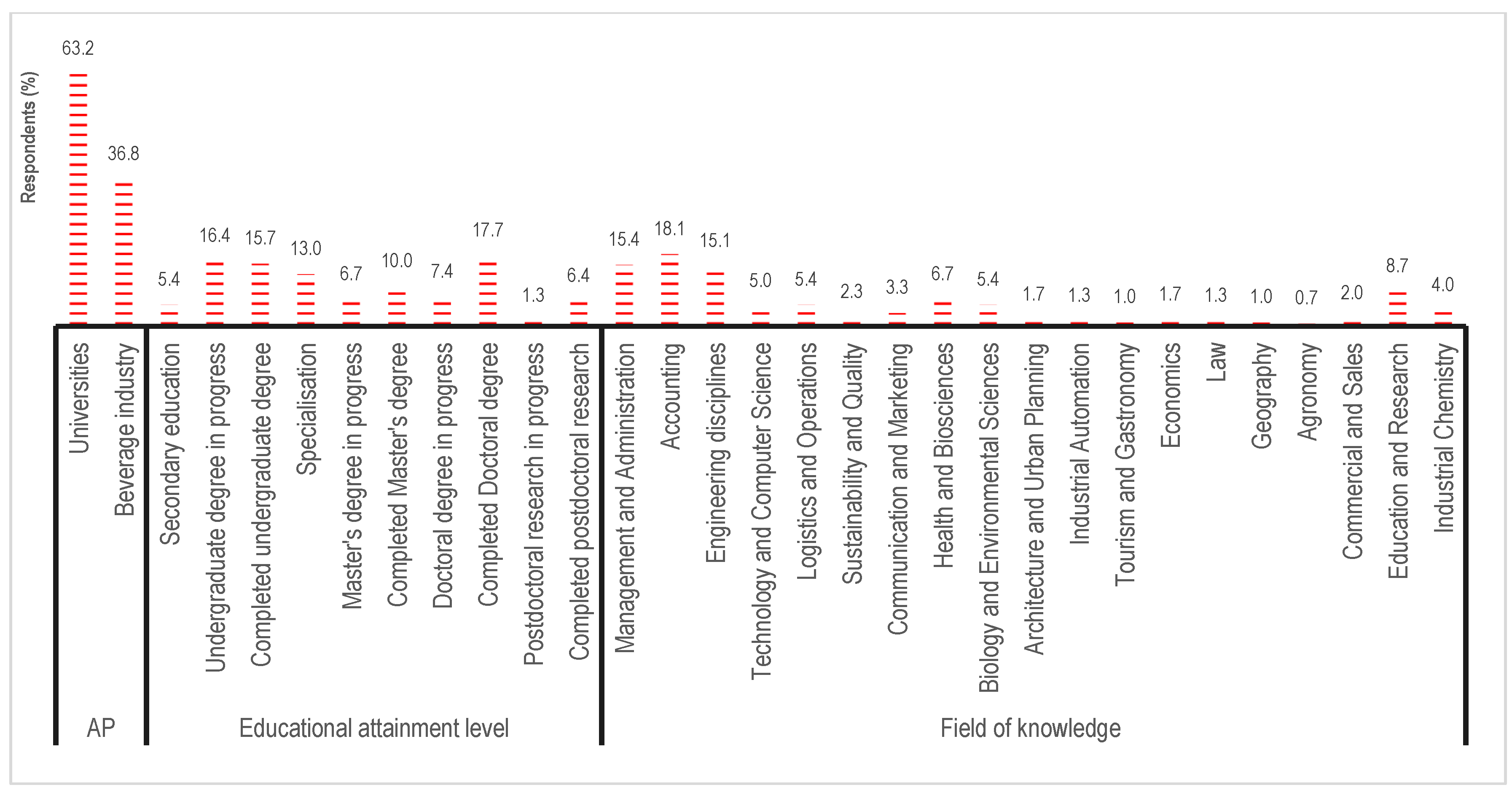

Table 1.
Key Priority Areas for SMEs in the Beverage Industry.
| Dimension | Priority Areas | Citations |
| Environmental | Carbon footprint reduction, water resource management, waste management | [43,44,45] |
| Social | Labour rights, human rights, community development, consumer awareness | [43,46,47] |
| Economic | Cost management, market competitiveness, supply chain efficiency | [1,43,45] |
Table 2.
Selection of Sustainability Indicators for the Non-Alcoholic Beverage Industry.
| Dimension/Indicators | Cns (X) |
| Economic Dimension | |
| Sales revenue | 0,75 |
| Operational expenditures | 0,78 |
| Employee salaries and benefits | 0,74 |
| Dividends and interest on equity | 0,71 |
| Taxes and government contributions | 0,71 |
| Purchases from local suppliers | 0,71 |
| Infrastructure investments in society | 0,73 |
| Technological innovations (production and distribution) | 0,71 |
| Indirect job creation | 0,70 |
| Environmental Dimension | |
| Recycled materials | 0,78 |
| Recycled and reused water | 0,77 |
| Company’s geographical location | 0,71 |
| Energy from non-renewable and renewable sources | 0,71 |
| Reused and recycled waste | 0,82 |
| Recovered product packaging | 0,74 |
| Environmental complaints | 0,70 |
| Environmental prevention and management costs | 0,74 |
| Environmental supplier policies | 0,71 |
| Environmental impact assessments | 0,79 |
| Social Dimension | |
| Number of employees | 0,70 |
| Legal employee benefits | 0,74 |
| Employee training | 0,75 |
| Employee performance | 0,71 |
| Social impact assessments through participatory processes | 0,71 |
| Public disclosure of environmental and social impacts | 0,72 |
| Local development programmes | 0,72 |
| Operations evaluated for corruption risks | 0,71 |
| Anti-corruption policies and procedures | 0,77 |
| Employees trained in anti-corruption measures | 0,71 |
| Products with certification and labelling | 0,78 |
| Customer satisfaction | 0,75 |
Disclaimer/Publisher’s Note: The statements, opinions and data contained in all publications are solely those of the individual author(s) and contributor(s) and not of MDPI and/or the editor(s). MDPI and/or the editor(s) disclaim responsibility for any injury to people or property resulting from any ideas, methods, instructions or products referred to in the content. |
© 2025 by the authors. Licensee MDPI, Basel, Switzerland. This article is an open access article distributed under the terms and conditions of the Creative Commons Attribution (CC BY) license (http://creativecommons.org/licenses/by/4.0/).
Copyright: This open access article is published under a Creative Commons CC BY 4.0 license, which permit the free download, distribution, and reuse, provided that the author and preprint are cited in any reuse.


