2. Background
LLMs represent the latest advancement in natural language processing, built on the foundation of deep learning and transformer architectures (Vaswani et. al, 2017). These models that started with a simple idea of attention mechanism and Reinforcement learning with Human feedback have transformed into large (200 Billion parameters) models that are trained on large amounts of multimodal datasets allowing them to understand and generate text, image and audio across a wide range of topics and tasks. The development of LLMs has been marked by rapid progress over the past 3 years, with each new iteration bringing significant improvements in performance and capabilities.
LLMs have had a tremendous impact across various fields, including healthcare, education, law, finance, and scientific research (Kukreja et. al., 2024). In healthcare, LLMs have been used for tasks like medical diagnosis based on foundational models (Vorontsov, E., Bozkurt, A., Casson, A. et al., 2024) and extracting biological information, but researchers have also raised concerns about misinformation and patient privacy (Haltaufderheide, J., Ranisch, R., 2024). In education, LLMs have been explored for helping with standardized tests and writing, while facing challenges related to plagiarism, inaccuracy and an inherent bias (Wang et. al, 2024). In law, LLMs have been used to analyze legal documents and predict judgments (Lai et. al. 2023). In finance, LLMs have been used for analyzing financial sentiment, but with careful monitoring due to potential risks to financial markets. In scientific research, LLMs have been used to help with various stages of the research process, from literature reviews to data analysis, while continually improving their reliability (Kukreja et. al., 2024). These adoptions of LLMs in different industries have been reported to have provided a significant boost to the productivity and output at a pace never experienced before.
Key milestones in LLM Research:
2017: Attention is all you need (Vaswani et. al, 2017)
2018: Introduction of BERT (Bidirectional Encoder Representations from Transformers) by Google, revolutionizing natural language understanding (Delvin et. al, 2018).
2019: Release of GPT-2 (Radford et. al, 2019) by OpenAI, demonstrating impressive text generation capabilities.
2022: Introduction of ChatGPT, bringing conversational AI to the mainstream.
2023: Release of GPT-4 and LLAMA, pushing the boundaries of LLM performance and accessibility.
2024: LLAMA 3 (open source) surpasses GPT4, Claude 3 is launched
As LLMs have evolved from text only to multimodal, their potential applications have expanded dramatically, from enhancing customer support systems (Rome et. al, 2024) to generate complex research reports.
However, the adoption of LLMs in enterprise environments presents unique challenges. These include managing massive datasets for fine tuning the model specifically for organization’s internal purposes, ensuring model safety, privacy and ethical behavior (Schillaci et. al, 2024). Given these challenges and opportunities, a systems engineering approach is crucial for successful LLM adoption in enterprise settings. This approach is needed to provide a structured approach for companies for addressing the challenges of LLM integration, ensuring that technical, organizational, and ethical considerations are addressed.
2.1. System Engineering for Developing AI Pipelines and Its Importance for LLM Adoption
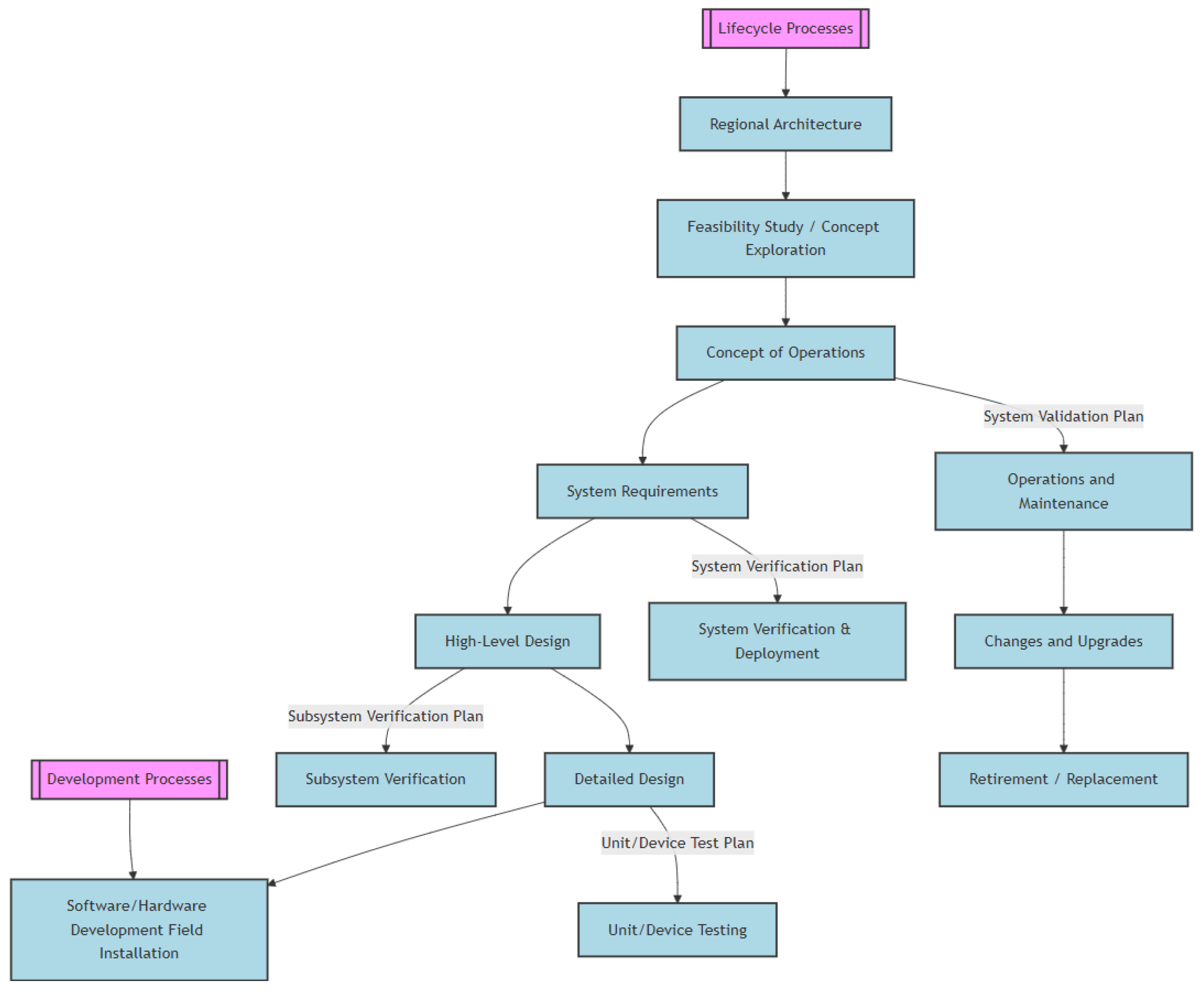
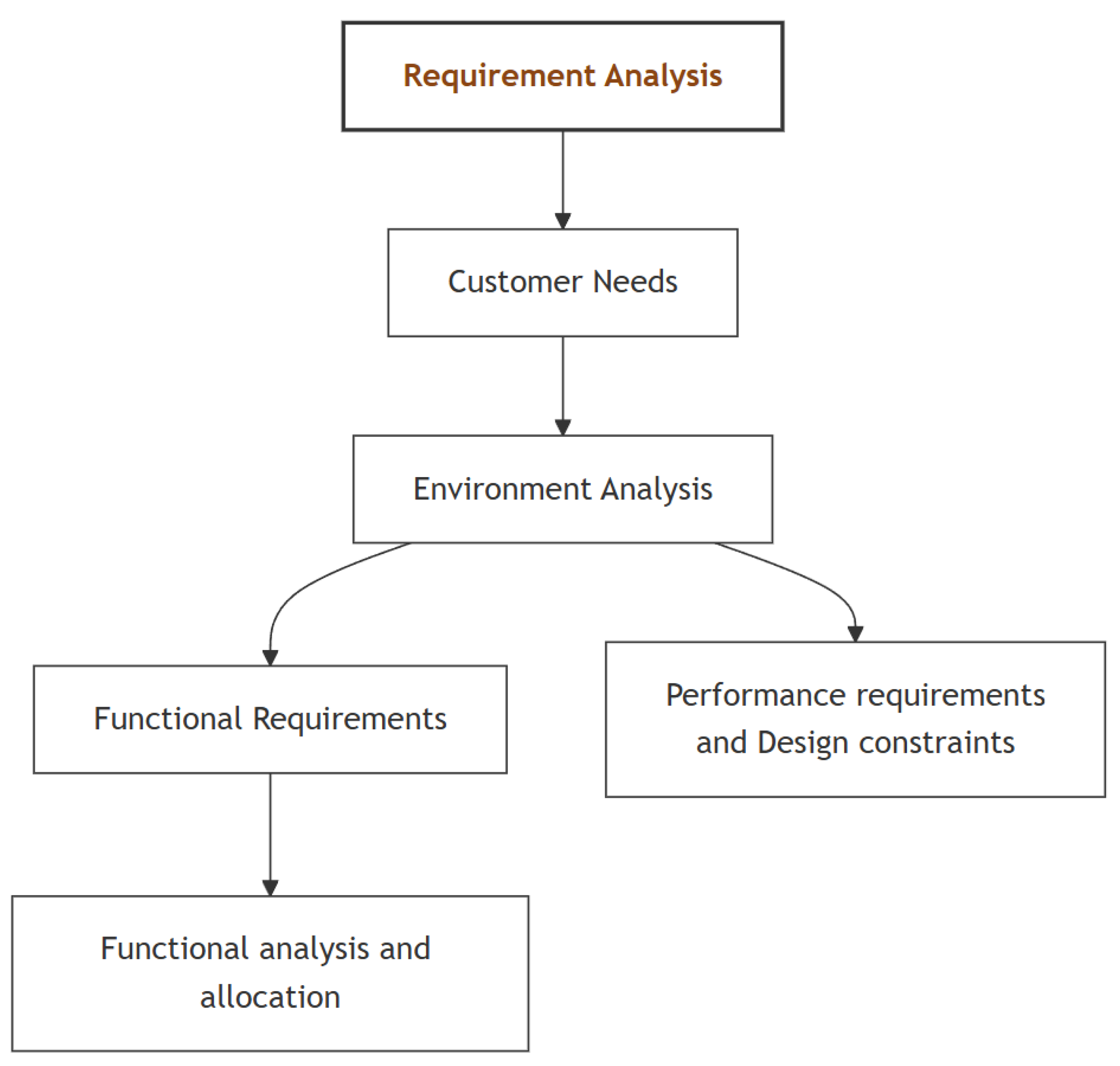
Systems engineering is crucial to any project from designing automotive systems (D’Ambrosio, 2017) to setting up complex software projects, and as adoption of AI grows there’s a need for a framework for designing these Large Language systems for enterprise applications.
The approach needs enterprises to view AI pipelines as interconnected systems rather than isolated components independent of companies software infrastructure. By applying systems engineering principles, organizations can more effectively define and manage requirements, design architectures, and implement comprehensive testing strategies. This methodology considers the entire lifecycle of AI systems, from conception through deployment and maintenance, while also facilitating risk management and performance optimization across the entire pipeline.
Systems engineering emphasizes thorough documentation and traceability, crucial for maintaining complex AI systems over time, and aligns well with the iterative nature of AI development. These systems engineering principles can help companies create efficient and manageable AI and LLM pipelines by effectively addressing challenges posed by tasks.
4. Development of Enterprise Systems
There are two primary approaches to developing AI for enterprise applications: customizing existing pre-trained models or developing in-house solutions from the ground up.
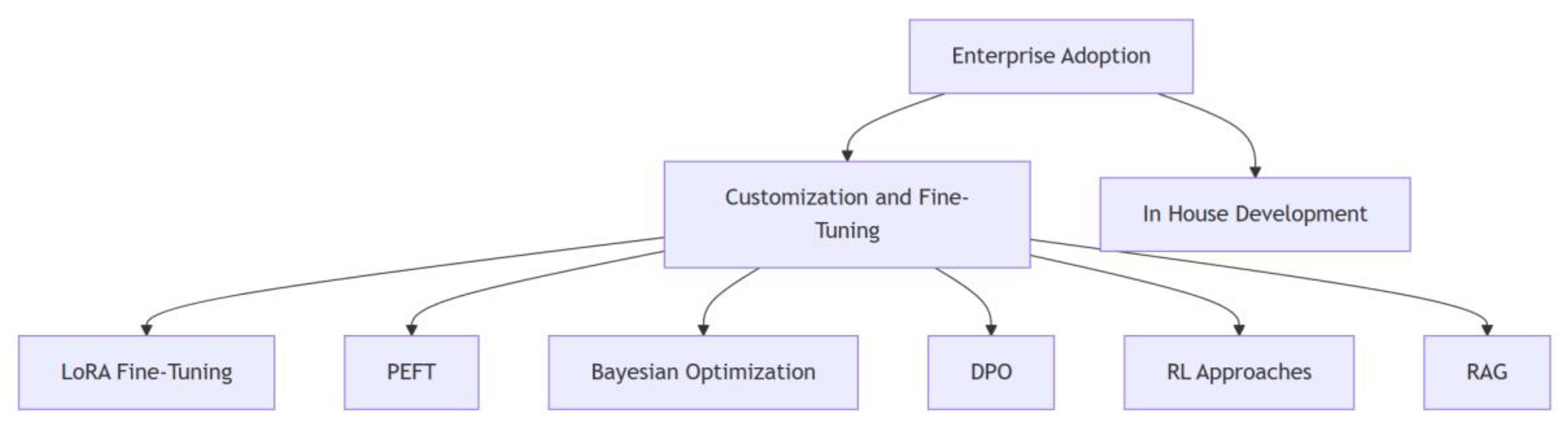
Customizing pre-trained models through fine-tuning offers a resource-efficient strategy, allowing businesses to rapidly leverage established technologies while tailoring them to specific requirements. Techniques such as LoRA, PEFT, and RAG enable efficient customization, delivering high performance without necessitating extensive retraining. These methods are particularly advantageous for organizations seeking prompt deployment with reduced computational costs. However, it is essential to recognize that not all models are compatible with every customization technique. For example, methods like PEFT and DPO require direct access to model parameters, which is not feasible with proprietary models like ChatGPT, Claude, or Gemini, as these platforms provide only API access.
In such cases, alternatives such as prompt engineering, external knowledge integration, or the use of open-source models like Llama, Qwen, or Mistral may be considered. Moreover, utilizing open-source models affords the additional benefit of enabling organizations to host and store model weights internally, thus enhancing model privacy and security.
Conversely, developing in-house models offers complete control over the AI system, allowing organizations to build highly specialized solutions tailored to their unique needs. While this approach is more resource-intensive, it provides significant advantages for entities with the computational resources, expertise, and need for maximum flexibility. In-house development is often preferred when proprietary or off-the-shelf models fail to meet specific industry demands or when total control over the architecture is required.
The decision between these two approaches is contingent upon factors such as available resources, project timelines, performance (accuracy and error metrics) and the degree of customization necessary. Customizing pre-trained models is typically more rapid and cost-effective, while in-house development is more suited to organizations with specialized requirements that necessitate full autonomy over the AI system.
This report also includes a collection of relevant resources, including code and reference papers, to assist users in applying these methods to their own LLMs as needed.
4.1. Enterprise Adoption Through Customization and Fine-Tuning
Enterprises looking to adopt Large Language Models (LLMs) can significantly benefit from customization and fine-tuning techniques that enable domain-specific adaptation with minimal computational resources.
Fine-tuning pre-trained models using methods like LoRA (Low-Rank Adaptation) and Parameter-Efficient Fine-Tuning (PEFT) allows organizations to adapt models to their specific requirements even with smaller datasets and constrained computing power. These methods maintain high model performance while minimizing resource consumption, making them ideal for enterprises with limited computational capacity. Additionally, optimization techniques such as Bayesian Optimization and Direct Preference Optimization (DPO) can further refine model parameters, aligning outputs with organizational preferences. However, it is important to reiterate that methods like PEFT and DPO require direct access to model parameters, which is not feasible with proprietary models, such as ChatGPT, Claude, or Gemini, as they only provide API access and do not allow modifications at the model parameter level. As discussed earlier, in such cases, alternatives such as prompt engineering, external knowledge integration, or utilizing open-source models like Llama, Qwen, or Mistral may provide viable solutions. Open-source models also offer the advantage of enabling organizations to host and store model weights internally, improving privacy and security.
In addition, advanced techniques like Reinforcement Learning and Retrieval Augmented Generation (RAG) contribute to the continuous, dynamic enhancement of model capabilities, allowing models to adapt to evolving requirements and domain-specific data.
Figure 3.
Enterprise adoption methods.
Figure 3.
Enterprise adoption methods.
These customization techniques offer a flexible, cost-effective approach for enterprises to integrate powerful AI solutions into their systems, enabling scalable adaptation without the high costs associated with training models from scratch.
4.2. Parameter-Efficient Fine-Tuning (PEFT) Techniques
Parameter-Efficient Fine-Tuning (PEFT) encompasses a family of techniques designed to adapt large language models while minimizing computational overhead and memory usage. The method works by employing various approaches such as quantization, adapter layers, LoRA and prompt tuning to modify only a small subset of model parameters while keeping the majority frozen. For example, QLoRA (Quantized Low-Rank Adaptation) combines 4-bit quantization with low-rank matrix decomposition, reducing memory requirements by up to 75% compared to traditional fine-tuning methods.
PEFT techniques dramatically reduce memory usage and training time, making it possible to fine-tune large models on consumer hardware. The approach maintains model performance while requiring significantly fewer computational resources than full fine-tuning. The primary disadvantages include potential performance degradation on complex tasks due to reduced parameter count, the need for careful hyperparameter selection, and possible quantization artifacts affecting model outputs.
PEFT include several ways to drastically reduce model size and resource usage such as:
Low-Rank Adaptation (LoRA): One of the most popular and efficient PEFT methods
Adapter Layers: Introduces small trainable modules between frozen layers
Prompt Tuning: Employs learnable soft prompts
Prefix Tuning: Adds trainable prefix tokens
4.3. Fine-Tuning with LoRA (Low-Rank Adaptation)
Introduced by Microsoft Research, Low-Rank Adaptation (Hu et. al, 2021) is a highly efficient fine-tuning technique that enables the customization of large language models with significantly reduced computational resources. This approach operates by freezing the original model’s weights and introducing trainable low-rank matrices, which adjust only a subset of the model’s parameters, as opposed to the full parameter updates required in traditional fine-tuning. LoRA achieves this by decomposing weight matrices into smaller, lower-rank matrices, thereby reducing the number of trainable parameters from billions to millions. For instance, LoRA can reduce the 175 billion parameters of GPT-3 to approximately 17.5 million trainable parameters.
LoRA offers several key advantages, particularly in terms of memory and computational efficiency. By reducing the number of trainable parameters, it lowers memory requirements and training time, making it feasible to fine-tune large models on consumer-grade GPUs and shortening the training process from weeks to hours. Importantly, LoRA does not introduce additional inference latency, as the trainable matrices are merged with the frozen model weights during deployment. This ensures that the fine-tuned model retains the performance of the original model while offering the benefits of task specialization.
LoRA also allows organizations to maintain multiple specialized versions of their models with minimal storage overhead. This flexibility makes it easy to switch between different tasks or domains by simply swapping the LoRA weights, thereby enabling efficient task-specific adaptation without incurring significant storage costs. As a result, LoRA provides substantial cost savings while often achieving performance comparable to, or even exceeding, that of traditional full fine-tuning.
LoRA-fine-tuned models become highly specialized for specific tasks or domains, which may necessitate additional fine-tuning or readjustment when new requirements emerge. While LoRA preserves the original model’s general knowledge, it may not capture the full range of adaptations that could be achieved through complete fine-tuning, potentially limiting its applicability in cases where broader model adjustments are required. Therefore, while LoRA is an efficient method for domain adaptation, its scope may be restricted in highly dynamic or rapidly evolving application environments.
To conclude this section, a recommendation of relevant papers and code implementations are provided:
Collection of Papers on LoRA:
LoRA+: Efficient Low Rank Adaptation of Large Models (Hayou et. al., 2024)
Sparse Low-rank Adaptation of Pre-trained Language Models (Ding et. al., 2023)
QA-LoRA: Quantization-Aware Low-Rank Adaptation of Large Language Models (Xu et. al., 2023)
LoRA-FA: Memory-efficient Low-rank Adaptation for Large Language Models Fine-tuning (Zhang et. al., 2023)
A brief reading of these research papers would help understand application of LoRA method in different applications and constraints.
4.4. Adapter Layers
Introduced in 2023, adapter layers for Parameter-Efficient Fine-Tuning present an approach to model adaptation by introducing small, trainable modules into pre-trained neural networks while keeping the original model parameters frozen. This method strategically places these modules between the frozen layers of the pre-trained model, typically after attention mechanisms and feed-forward networks. The adapter architecture generally consists of down-projection and up-projection layers, utilizing a bottleneck structure to minimize the number of trainable parameters. This design is essential for reducing the memory footprint while preserving the performance of the original model.
The implementation of adapter layers follows a structured pattern that typically includes a down-projection layer, an activation function (e.g., ReLU), an up-projection layer, and layer normalization. The down-projection layer reduces the input dimensionality, the activation function introduces non-linearity, the up-projection layer restores the original dimensionality, and layer normalization ensures stable training. This structure enables efficient parameter utilization while maintaining high model performance.(Hu et. al., 2023)
One of the significant advantages of adapter layers lies in their parameter efficiency. With only a small number of trainable parameters—often less than 1% of the original model—adapter layers drastically reduce the computational resources required for fine-tuning. This efficiency ensures that the model retains its high quality while significantly decreasing memory requirements. Additionally, adapter layers support the efficient storage and retrieval of multiple task-specific adaptations, making them ideal for multi-task learning, domain adaptation, and rapid prototyping scenarios.
In terms of performance, adapter layers achieve results that are near comparable to full fine-tuning. The pre-trained model's knowledge is effectively preserved while achieving robust generalization across various tasks.
Adapter layers also offer significant resource optimization, substantially reducing GPU memory consumption and enabling training on consumer-grade hardware. The reduced memory demands and shorter training times make adapter layers an attractive alternative to full fine-tuning, especially in resource-constrained environments.
The practical applications of adapter layers are diverse and include domain adaptation for specialized tasks, multi-task learning, and scenarios requiring rapid experimentation. By providing a cost-effective means of customizing pre-trained models, adapter layers have become an essential tool for organizations looking to adapt large-scale models to specific needs with minimal computational overhead.
Code Implementation of Adapter tuning:
Collection of Papers on Adapter tuning:
X-PEFT: eXtremely Parameter-Efficient Fine-Tuning for Extreme Multi-Profile Scenarios (Kwak & Kim, 2024)
Parameter-Efficient Fine-Tuning for Large Models: A Comprehensive Survey (Han et. al., 2024)
Compacter: Efficient Low-Rank Hypercomplex Adapter Layers (Mahabadi et. al., 2021)
A brief reading of these research papers would help how Adapters work, and how Adapter tuning can help in the fine tuning of LLMs for efficient usage of resources.
4.5. Prompt Tuning
Prompt tuning is an important technique within the Parameter-Efficient Fine-Tuning (PEFT) basket for fine tuning NLP models, focusing on the modification of input representations rather than altering the parameters of a pre-trained model. This approach enables the adaptation of large language models (LLMs) to task-specific requirements while minimizing computational overhead. Prompt tuning is generally classified into two primary categories: hard prompt tuning and soft prompt tuning. Both methods aim to guide the model's behavior by shaping input data in ways that align with the objectives of a given task. By avoiding changes to the model’s parameters, prompt tuning presents a resource-efficient means of customizing pre-trained models.
Hard prompt tuning involves the manual construction of textual instructions that are appended to the input data in order to provide task-specific guidance. For instance, a hard prompt for a classification task might consist of instructions such as “Classify this sentence as positive or negative.” These prompts are explicitly designed by human experts and directly influence the model's response based on clear, interpretable instructions. The straightforward nature and interpretability of hard prompts make them useful for the rapid adaptation of models to new tasks. However, their effectiveness is contingent upon the expertise of the designer, and the process of crafting precise prompts can prove challenging, particularly for more complex tasks. Furthermore, hard prompts may not fully exploit the latent knowledge within the model, potentially restricting their generalization capabilities. Although Hard prompts are technically PeFT, they are not considered PeFT (Xing et. al, 2024)
In contrast, soft prompt tuning replaces manually crafted textual instructions with learnable continuous vectors that are optimized during training (Lester et. al, 2021). These vectors are embedded directly into the model’s input layer, facilitating a more automated approach to task-specific adaptation. Unlike hard prompts, soft prompts capture complex patterns and relationships within the model’s knowledge space through optimization. Soft prompts demand significantly fewer computational resources compared to traditional fine-tuning, as only a limited set of parameters are trained. This characteristic makes them particularly well-suited for scenarios with constrained computational resources or where frequent adaptations are necessary. Additionally, soft prompts have demonstrated strong performance across a variety of tasks by effectively leveraging the model’s inherent understanding of language and context.
Both hard and soft forms of prompt tuning are widely applied in various natural language processing tasks, including sentiment analysis, summarization, translation, and question answering. Hard prompts are typically employed in situations where quick deployment or interpretability is prioritized, whereas soft prompts are preferred for tasks requiring greater adaptability and efficiency.
Prompt tuning provides several notable advantages, such as computational efficiency, adaptability, and ease of implementation. While hard prompts are relatively straightforward to design and interpret, they may require considerable effort for more complex tasks. Soft prompts are highly scalable and demonstrate robust performance across diverse tasks, although they may lack the direct interpretability associated with hard prompts.
Code Implementation of Prompt tuning:
Collection of Papers on Prompt tuning:
The Power of Scale for Parameter-Efficient Prompt Tuning (Lester et. al, 2021)
Prompt Programming for Large Language Models: Beyond the Few-Shot Paradigm (Reynolds & McDonell, 2021)
4.6. Bayesian Optimization
Bayesian optimization (BO) is a probabilistic model-based approach designed to efficiently optimize complex, expensive-to-evaluate functions. In machine learning, particularly with Large Language Models (LLMs), BO is employed to fine-tune hyperparameters, select optimal prompts, and enhance model performance.
LLMs possess numerous hyperparameters, such as learning rates, batch sizes, and architectural configurations. Manually tuning these parameters is resource-intensive. BO automates this process by constructing a probabilistic model of the objective function and iteratively selecting hyperparameters that are likely to improve performance. (Liu et. al, 2024) This method balances exploration of new hyperparameter regions with exploitation of known promising areas, leading to more efficient optimization.
The effectiveness of LLMs often depends on the prompts provided. Selecting optimal prompts can be formulated as a combinatorial optimization problem. Applying BO in a continuous embedding of the combinatorial space allows for efficient search of effective prompts without requiring access to the LLM's internal parameters. This approach has been demonstrated to enhance performance across various tasks (Sabbatella et. al, 2023).
In applications where user preferences guide model outputs, BO can be utilized to actively elicit preferences through natural language queries (Austin et. al, 2023). By integrating LLMs with BO, systems can generate queries that effectively reduce uncertainty over item utilities, leading to improved recommendations. This method has shown significant improvements in mean average precision after multiple turns of cold-start natural language preference elicitation dialogue.
To incorporate Bayesian optimization into machine learning workflows, one should define the objective function clearly, select a surrogate model to approximate the objective function, choose an acquisition function (e.g., Expected Improvement, Upper Confidence Bound) that guides the search for optimal configurations by balancing exploration and exploitation, and engage in iterative optimization by using the acquisition function to select new configurations, evaluate them, and update the surrogate model with the new data. This process is repeated until a stopping criterion is met, such as a predefined number of iterations or satisfactory performance.
Bayesian Optimization (BO) offers several advantages when applied to Large Language Models (LLMs). It enhances efficiency by reducing the number of evaluations needed to identify optimal hyperparameters, which is particularly valuable given the computational expense of training LLMs. Integrating LLMs into BO further accelerates the optimization process by leveraging their pre-trained knowledge and contextual understanding.
However, there are limitations to consider. While BO reduces evaluation costs, updating surrogate models becomes computationally expensive in high-dimensional spaces typical of LLMs. Integrating LLMs into BO frameworks adds further resource demands. Additionally, BO may converge to local optima if the surrogate model or acquisition function is poorly designed. Zero-shot warm starting with LLMs can mitigate this issue but does not eliminate it entirely. Implementing Bayesian Optimization for LLMs requires expertise in probabilistic modeling and optimization algorithms. Incorporating LLMs adds additional complexity due to their large-scale architecture and resource requirements. The success of BO depends on accurate evaluations of hyperparameters. For LLM-enhanced BO, poor-quality data or noisy observations can degrade performance.
Code Implementation of Bayesian Optimization:
Collection of Papers on Bayesian Optimization:
Large Language Models to Enhance Bayesian Optimization (Liu et. al, 2024)
Bayesian Optimization with LLM-Based Acquisition Functions for Natural Language Preference Elicitation (Austin et. al, 2024)
4.7. Direct Preference Optimization (DPO)
Direct Preference Optimization (DPO) is an emerging technique designed to align large language models (LLMs) with human preferences using a simplified and efficient training approach. Unlike traditional reinforcement learning-based methods, DPO adjusts model parameters directly through a binary cross-entropy objective, eliminating the need for complex reward modeling. This simplifies the alignment process, transforming it into a binary classification task where the model learns to distinguish between preferred and non-preferred responses. The method operates by utilizing paired examples of preferred and non-preferred responses, with the key steps involving a binary classification loss function. Preferred responses are assigned higher probabilities, while non-preferred ones are suppressed. The loss function is reparameterized to influence the model's policy, enabling alignment with human preferences without requiring an explicit reward signal. Through iterative training, the model continuously adjusts, increasing the likelihood of generating desired outputs while reducing undesired ones (Rafailov, 2024).
One of the main advantages of DPO is its simplicity and efficiency. By bypassing the computational complexity of reward modeling and reinforcement learning, it significantly reduces the training overhead. DPO can be implemented using standard classification techniques, making it more accessible and faster to train than traditional methods. Additionally, minimal hyperparameter tuning is required, further streamlining the process. DPO has demonstrated strong performance across a variety of tasks, such as sentiment modulation, summarization, and dialogue generation. In many cases, it performs comparably to or even surpasses more complex approaches, such as reinforcement learning with human feedback (RLHF). Its straightforward implementation also makes it easier to adopt in real-world applications.
However, DPO does have some limitations. The effectiveness of the method is highly dependent on the quality of the initial supervised fine-tuning. If the model is poorly fine-tuned, it may struggle to align effectively with human preferences. Moreover, DPO tends to prioritize avoiding undesirable outputs over improving the quality of preferred responses, which can limit its ability to generate highly optimized outputs in certain scenarios. Additionally, when preferred and non-preferred responses are very similar, DPO may struggle to differentiate between them, reducing its performance in more nuanced or subtle alignment tasks.
Code Implementation of DPO:
Collection of Papers on DPO:
4.8. Reinforcement Learning Approaches
Reinforcement Learning (RL) is a key approach for fine-tuning large language models (LLMs) (Ouyang et. al, 2022), encompassing both traditional RL techniques and Reinforcement Learning from Human Feedback (RLHF). These methods enable models to align with desired behaviors and human preferences by optimizing their outputs through reward-based systems. Traditional RL methods focus on optimizing an agent's policy through interactions with an environment.
Notable approaches include Q-Learning, which is an off-policy method using Q-tables to map state-action pairs to rewards, learning the optimal policy through iterative updates, but struggles with large state-action spaces. SARSA, an on-policy method, updates values based on the actual actions taken, offering a more conservative approach (Gholamian & Huh, 2024).
Monte Carlo methods learn from complete episodes of experience without requiring full knowledge of the environment, making them useful for episodic tasks but computationally expensive. Policy gradient methods directly optimize the policy by computing gradients of expected rewards, particularly suited for continuous action spaces, while temporal difference learning combines Monte Carlo and dynamic programming techniques, enabling learning from incomplete episodes and updating estimates iteratively.
Reinforcement Learning from Human Feedback (RLHF) is a specialized form of RL designed to align LLMs with human preferences by incorporating human feedback into the training process (Kirk et. al, 2023). RLHF involves three main stages: Supervised Fine-Tuning (SFT), where a pre-trained model is fine-tuned using labeled data to establish a baseline for further optimization; Reward Model Training, where a reward model is trained using human feedback, such as ranking responses or providing binary feedback to guide the model's understanding of preferences; and Policy Optimization, where the model is fine-tuned using Proximal Policy Optimization (PPO), which balances exploration and exploitation while optimizing the reward model's outputs. KL divergence penalties are often used to prevent the model from deviating too far from its baseline behavior.
RL and RLHF offer several key advantages. RL enables continuous learning without complete retraining, allowing models to adapt to changing requirements and user needs. It also enhances alignment with specific goals, such as safety, helpfulness, and reduced bias, and improves response quality through iterative optimization based on direct feedback. Furthermore, RLHF improves instruction-following capabilities, making models more reliable in real-world applications. However, both RL and RLHF come with limitations. Designing effective reward functions is challenging, as they must balance competing objectives and avoid unintended behaviors like reward hacking. RLHF also requires substantial human involvement for feedback collection and evaluation, making it resource-intensive and costly to implement at scale. Moreover, RL methods can be prone to training instabilities, particularly when reward models are inaccurate, or optimization leads to undesirable outputs. Both traditional RL and RLHF involve significant computational overhead, especially when scaling to large models like GPT-4 or LLaMA.
In comparison, traditional RL and RLHF differ in their focus and application. Traditional RL optimizes behavior in simulated environments and uses environment-based rewards, employing algorithms like Q-Learning, SARSA, and policy gradients. In contrast, RLHF focuses on aligning LLMs with human preferences, using human-provided feedback and algorithms such as PPO and KL divergence. While traditional RL has broad applicability across domains, RLHF offers stronger alignment with human values but is constrained by challenges such as high costs and reliance on human input. In conclusion, both traditional RL and RLHF are crucial for fine-tuning LLMs, but each method has its strengths and limitations. Traditional RL excels in general-purpose optimization tasks, while RLHF offers a more targeted approach for aligning AI systems with complex human values and preferences. Both methods face significant challenges in terms of computational cost, reward design, and stability.
Code Implementation of RL for NLP tasks:
Collection of Papers on RL for LLMs:
Fine-Tuning Language Models with Advantage-Induced Policy Alignment (Zhu et al., 2023)
Reinforcement Learning for Generative AI: A Survey (Cao et al., 2023)
Secrets of RLHF in Large Language Models Part I: PPO (Zheng et. al, 2023)
Pairwise Proximal Policy Optimization: Harnessing Relative Feedback for LLM Alignment (Wu et al., 2023)
DPO Meets PPO: Reinforced Token Optimization for RLHF" (Zhong et al., 2024)
4.9. Retrieval Augmented Generation (RAG)
Retrieval-Augmented Generation (RAG) is a framework that enhances Large Language Models (LLMs) by integrating information retrieval with natural language generation. This approach enables LLMs to access and utilize external knowledge sources, thereby improving the accuracy, relevance, and contextual understanding of their outputs. (Gao et. al, 2023) RAG operates through a structured process that combines retrieval and generation.
First, external data, such as documents or databases, is converted into vector embeddings—numerical representations of text—and stored in a vector database. This step facilitates efficient retrieval of relevant information. When a user submits a query, the system retrieves pertinent documents or data from the vector database using techniques like semantic search or similarity matching. (Wu et. al, 2024) The retrieved documents may then be scored and ranked by relevance using a reranker, ensuring the most pertinent information is selected. Finally, the retrieved information is combined with the original query and passed to the LLM, which generates a response that integrates both its pre-trained knowledge and the retrieved data. This process enables RAG systems to provide up-to-date, domain-specific, and contextually accurate responses without the need for retraining the LLM itself.
One of the key advantages of RAG is enhanced accuracy. By incorporating external knowledge, RAG reduces hallucinations (fabricated responses) and improves factual correctness. It ensures that outputs are aligned with current, domain-specific information, making it particularly useful for dynamic fields such as customer support or specialized industries. In addition, RAG offers practical benefits such as real-time updates, as it can access live data sources, ensuring responses remain relevant without retraining the model. Its flexibility also allows integration with any LLM and adaptation to various domains or tasks by connecting to different knowledge bases. RAG further excels in handling queries outside the LLM's training data by retrieving relevant external information, thus improving out-of-distribution performance.
RAG also has certain limitations. The introduction of additional components, such as the retriever, reranker, and vector database, increases system complexity and maintenance requirements. Furthermore, retrieval processes can add computational overhead, potentially causing latency issues during real-time applications. The quality of the generated responses is also heavily dependent on the relevance and accuracy of the retrieved documents. Poorly curated or incomplete knowledge bases can result in suboptimal outputs. Lastly, scaling RAG systems to handle diverse tasks or large datasets may require significant resources for data ingestion, indexing, and retrieval. (Zhao et. al, 2024)
Code Implementation of RAG:
Collection of Papers on RAG:
awesome-generative-ai-guide/research_updates/rag_research_table.md at main
4.10. Inhouse AI Models
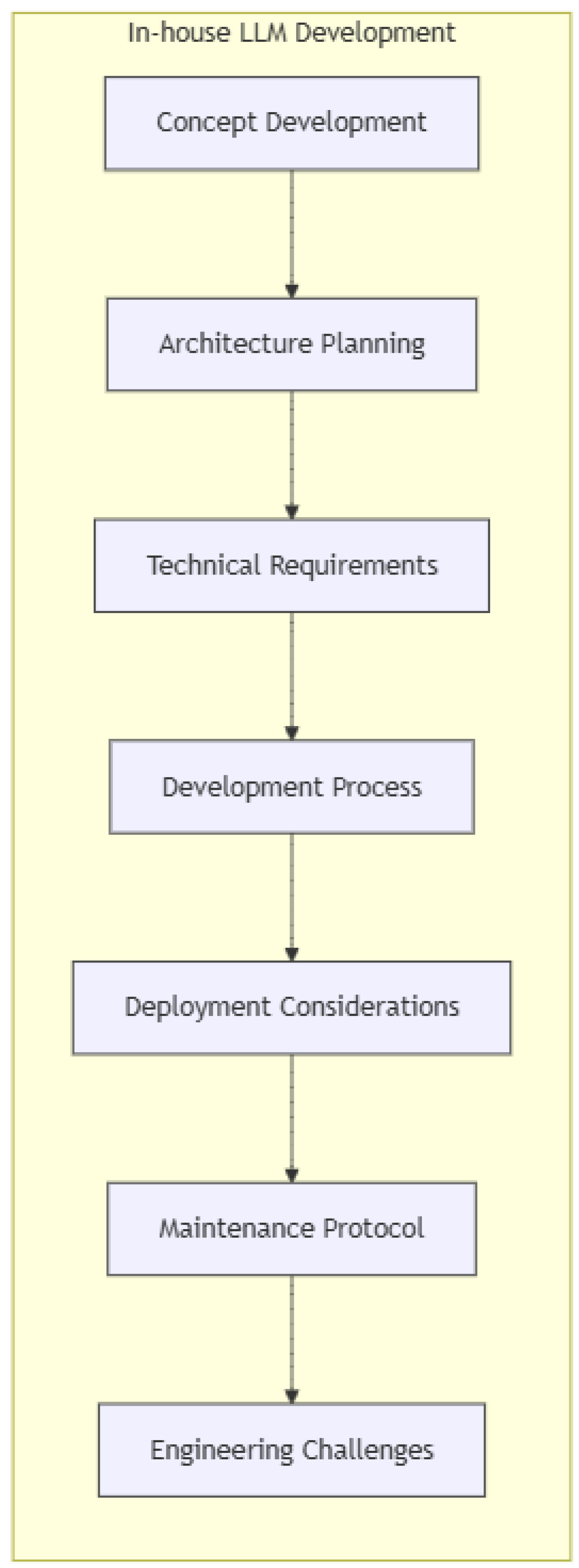
Developing in-house Large Language Models (LLMs) requires a structured systems engineering approach, spanning multiple stages from concept development to deployment and maintenance. This ensures the creation of highly specialized models that align with organizational goals while addressing the technical and operational challenges that arise during development.
The first step involves identifying the specific needs and use cases of the enterprise. A comprehensive needs analysis is performed to evaluate potential applications, define key performance metrics, and establish success criteria for the LLM. This phase helps clarify the business objectives and sets the foundation for subsequent stages of development.
- 2.
Architecture Planning
Once the goals are established, the architecture planning phase begins. This involves evaluating various model architectures, such as transformer-based models, and determining the optimal scale and capabilities for the LLM. The choice of architecture significantly impacts the model’s performance, scalability, and training requirements. Additionally, training methodologies must be defined to ensure the model can be effectively trained on the available computational infrastructure.
- 3.
Technical Requirements
In this phase, the computational infrastructure and data management strategies are addressed. High-performance computing clusters, distributed training systems, and scalable storage solutions are essential to handle the massive datasets required for LLM training. A robust network infrastructure is also necessary to manage data movement efficiently during training and inference. Domain-specific data is crucial for model specialization, requiring comprehensive data cleaning, preprocessing pipelines, and quality assurance protocols to ensure the integrity and relevance of the data.
- 4.
Development Process
The development process is divided into several key stages:
Model Training: This involves initial pre-training using large-scale datasets, followed by domain adaptation and specialization. Hyperparameter optimization is performed to fine-tune the model for maximum performance. Throughout this phase, performance validation ensures that the model meets the defined success criteria.
Safety and Robustness: Addressing ethical considerations is a priority in this phase. Bias mitigation techniques and safety protocols are implemented to ensure the model’s outputs align with ethical standards and avoid harmful or biased results. Compliance with relevant standards ensures that the model adheres to legal and regulatory requirements.
Deployment Considerations
Deployment requires careful planning around scalability, performance, and cost optimization. A scaling strategy is defined to manage resource allocation efficiently, while latency management ensures real-time or near-real-time performance. The deployment phase also requires continuous monitoring of the model’s performance, with strategies in place to detect emergent behaviors that could impact operational reliability.
- 6.
Maintenance Protocol
Post-deployment, the model must be regularly updated to incorporate new data and maintain performance. A maintenance protocol is implemented, which includes performance monitoring, periodic retraining, and the detection of any issues related to emergent behavior. Regular updates ensure the model remains effective as requirements and data evolve over time.
- 7.
Engineering Challenges
In-house LLM development is fraught with engineering challenges, particularly related to resource management and model optimization:
Resource Management: The development of LLMs requires significant computational resources, including handling massive datasets and managing the computational demands of training. Balancing the size of the model with its performance is a critical challenge, as larger models often require exponentially more resources.
Model Optimization: Ensuring that the model generalizes well across different tasks while remaining specialized in its domain is a key challenge. It is important to maintain robustness throughout the development process and manage the interdependencies between various model components to prevent training instability.
Figure 4.
In-House AI development process.
Figure 4.
In-House AI development process.
The success of in-house LLM development hinges on the integration of the right infrastructure, expert resources, and a systematic approach that addresses technical, ethical, and operational challenges at each stage of the process.