

Submitted:
18 October 2024
Posted:
21 October 2024
You are already at the latest version
Abstract
The integration of Customer Relationship Management (CRM) systems within Small and Medium Enterprises (SMEs) is increasingly recognized for its potential to enhance business performance. While CRM adoption is on the rise, the specific impacts on operational efficiency, customer satisfaction, and financial outcomes in SMEs require further investigation. This systematic review evaluates the impact of CRM systems on SME performance, with a focus on operational improvements, sales growth, and customer retention. The study aims to identify key determinants of successful CRM implementation and assess the long-term effects on SMEs' competitive advantage. The review encompasses studies published between 2014 and 2024, sourced from Google Scholar, Web of Science, and SCOPUS. A total of 46 studies were included after screening 18,306 records. The mixed-methods approach involves quantitative analysis of survey data from SME owners and managers, along with qualitative synthesis of case studies. Metrics evaluated include customer acquisition, retention rates, revenue growth, and organizational efficiency. The analysis indicates that CRM adoption leads to a 25-40% improvement in customer retention and a 15-30% increase in sales across SMEs. Operational efficiency gains range from 20-35%, primarily driven by process automation and enhanced data management capabilities. Successful CRM implementation is strongly linked to managerial support, system customization, and user training. However, barriers such as limited financial resources and technical expertise hinder the full realization of CRM benefits. CRM systems significantly contribute to SME growth by optimizing customer relationships and enabling data-driven decision-making. The review underscores the importance of strategic CRM implementation tailored to the specific needs of SMEs to maximize its impact. Future research should focus on overcoming adoption barriers and refining CRM strategies for sustained performance improvements.
Keywords:
Customer Relationship Management
; SMEs
; customer retention
; sales growth
; operational efficiency
; CRM adoption barriers
; systematic review
1. Introduction
The rapid technological advancements, particularly the rise of the World Wide Web, have fundamentally transformed how firms engage with their customers, tailor solutions to evolving needs, and build long-term relationships—principles central to Customer Relationship Management (CRM) systems [1]. These systems encompass a range of functionalities, including customer data management, sales automation [2], marketing campaign management, and customer service support [3], which significantly enhance a company’s ability to interact with customers and streamline operations. However, despite these potential advantages, SMEs often encounter several barriers to CRM adoption. Key challenges include financial constraints, lack of technical expertise, and resistance to organizational change [4,5]. These barriers can hinder the effective utilization of CRM systems, limiting their potential impact on business performance. Critical factors influencing successful CRM implementation include perceived ease of use, the perceived value of CRM functionalities, management support, and the ability to integrate seamlessly with existing systems [6]. This systematic review aims to explore how CRM systems affect SME performance and identify key determinants of successful CRM adoption within this sector [7]. The study will investigate factors such as user satisfaction, system usability, data quality, and customer insights, along with the role of CRM in enhancing customer relationships and business processes [8,9]. By employing a mixed-methods approach that integrates quantitative analysis with qualitative case studies, this research provides a comprehensive understanding of CRM systems' impact on SME performance [10]. Preliminary evidence indicates that CRM systems can significantly improve customer retention, sales growth, and customer satisfaction when effectively implemented [11]. The study also examines the roles of managerial support, system customization, and ongoing training in facilitating the successful adoption and utilization of CRM systems in SMEs [12]. Understanding these factors offers valuable insights for SME owners, managers, and CRM vendors, helping them make informed decisions about CRM investments and strategies [13].
Thus, SMEs can benefit greatly from implementing a CRM system, as it enables them to strengthen customer relationships, boost sales, and drive business growth by centralizing customer information, enhancing customer service, improving marketing efforts, and streamlining operations [14,15]. Despite these benefits, many SMEs do not adopt CRM systems due to factors such as lack of CRM knowledge, limited resources for purchasing systems, and inadequate skills for implementation [16]. Developing a CRM system from scratch requires significant investment in software development, maintenance, and updates [17], and building such a system can be time-consuming, diverting resources from core business activities [18]. In addressing these challenges and leveraging the benefits of CRM systems, this study contributes to the development of strategies that enhance SME performance and foster long-term business growth [19,20].
Table 1 provides a comparative analysis of existing systematic reviews and studies focusing on Customer Relationship Management (CRM) systems and their impact on Small and Medium Enterprises (SMEs). While previous research has highlighted the benefits of CRM, such as improving customer engagement, increasing sales, and driving business growth, several limitations remain. These limitations include narrow contextual focus, reliance on single-region studies, small sample sizes, and a lack of longitudinal analyses. Moreover, the existing literature often addresses CRM adoption factors in a general manner, without adequately considering specific industry contexts, varying degrees of technological readiness, or the unique challenges faced by SMEs.
The existing literature on the impact of CRM systems on SMEs reveals several significant gaps that underscore the need for a more comprehensive systematic review. Many studies focus on isolated aspects of CRM, such as customer satisfaction or sales growth, without a holistic view that encompasses operational efficiency, decision-making, and long-term sustainability. Furthermore, research is often limited geographically or sectorally, making it difficult to generalize findings across different regions or industries. For example, insights from studies conducted in specific developing markets may not be applicable to SMEs in more technologically advanced settings due to variations in market dynamics and digital infrastructure. Additionally, a significant number of studies utilize cross-sectional data, which lacks the depth to explore CRM’s long-term impacts on SME performance, thereby limiting the understanding of sustained competitive advantages. The methodologies and metrics used across studies are also inconsistent, resulting in a lack of standardized frameworks for evaluating CRM's effectiveness. Lastly, while some studies acknowledge the barriers to CRM adoption, they often fail to provide in-depth strategies for overcoming these challenges, such as cost limitations, technical expertise, or resistance to change. Addressing these gaps, the proposed systematic review aims to deliver a more holistic analysis of CRM systems’ impact on SMEs, offering strategic recommendations that are grounded in a global perspective and tailored to the unique challenges and needs of SMEs.
1.1. Research Questions
Although numerous studies on CRM systems and SMEs have emerged over the past decade, comprehensive systematic reviews that explicitly address the impact of CRM systems on SME performance remain scarce. Therefore, this study aims to fill this gap by conducting a thorough review of the existing literature on the effects of CRM adoption in SMEs. The objective is to provide a detailed analysis of how CRM systems influence key business areas such as customer acquisition, retention, and customer lifetime value. To achieve this, the following research questions have been formulated:
- How do CRM systems influence customer acquisition?
- In what ways do CRM systems contribute to customer retention?
- What is the impact of CRM systems on customer lifetime value?
- What challenges and limitations are associated with the use of CRM systems in achieving these goals?
- What are the long-term impacts of CRM system integration on SME competitiveness in the market?
1.2. Objectives
Customer Relationship Management (CRM) systems offer numerous advantages to SMEs, including customer acquisition, retention, and enhancing customer lifetime value (CLV). However, the extent to which these benefits influence various aspects of SME efficiency and performance remains a critical area of exploration. This systematic review aims to comprehensively evaluate the impact of CRM tools on the operational performance of SMEs. By examining dimensions such as financial outcomes, efficiency, innovation capabilities, operational performance, and growth, the research seeks to provide detailed insights into the effects of CRM systems on SMEs. The specific objectives of this study are:
- To assess the impact of CRM systems on the operational efficiency of SMEs.
- To examine the effects of CRM adoption on sales and revenue growth in SMEs.
- To analyze the challenges SMEs face in implementing CRM systems.
- To investigate the influence of CRM systems on decision-making and data management in SMEs.
- To explore the relationship between CRM system customization and SME business performance.
1.3. Rationale
While existing research provides valuable insights into the organizational and technical aspects of CRM systems in SMEs, a comprehensive analysis of their long-term impact on SME performance is still lacking. The benefits of CRM vary across different industries and geographical regions, making it essential to understand these variations. CRM systems, due to their scalability, flexibility, and cost-effectiveness, have become increasingly popular among SMEs. However, there remains a significant knowledge gap regarding how these systems affect overall performance and business outcomes in different contexts. The goal of this systematic review is to bridge this gap by generating a body of knowledge on the current influence of CRM systems on SME performance. By analyzing previous studies, the review aims to identify patterns, opportunities, and challenges associated with CRM adoption, providing valuable insights for researchers, business managers, and decision-makers.
1.4. Research Motivation
This study introduces a thorough systematic review of the impact of CRM systems on SME performance, addressing ongoing problems and research challenges in adopting CRM tools. The motivation for this work can be summarized as follows:
- In today’s competitive business environment, CRM systems have become essential, especially for SMEs that often have fewer resources than larger enterprises. Optimizing customer interactions and relationships is crucial for their long-term growth. However, the literature has not adequately explored the specific effects of CRM systems on SMEs, including aspects such as customer retention, sales growth, and operational efficiency.
- The aim of this systematic literature review (SLR) is to consolidate the research on CRM systems and their impact on SMEs, offering a comprehensive view of the current state of the field. This review will identify research gaps, emerging trends, and provide actionable recommendations for SMEs looking to optimize their customer interaction strategies.
1.5. Research Contribution
This research introduces a detailed systematic review of CRM systems and their impact on SME performance, emphasizing the CRM tools best suited for implementation. Key contributions of this study include:
- An in-depth analysis of the ways in which CRM systems influence the success of SMEs in terms of customer satisfaction, sales growth, and operational effectiveness. This synthesis will clarify the conditions under which CRM systems are most beneficial to SMEs.
- Identification of gaps in the existing research, such as the challenges SMEs face during CRM implementation or the long-term consequences of CRM adoption. Highlighting these gaps will pave the way for further investigation, enriching the scholarly discourse on CRM in the SME context.
- Providing valuable insights for SME managers and decision-makers. Understanding the established advantages and potential difficulties associated with CRM systems will enable SMEs to make informed decisions regarding CRM adoption and deployment, ensuring alignment with their financial constraints and business objectives.
1.6. Research Novelty
The proposed study offers the following novel contributions:
- It provides a detailed evaluation of CRM systems' roles in customer acquisition, retention, and lifetime value, extending beyond the existing literature.
- This research aims to identify best practices for CRM implementation in SMEs and potentially develop a framework or model tailored to their specific needs. Developing such a framework would represent a novel contribution, offering SMEs practical guidance for optimizing CRM adoption and maximizing its impact on business performance. By addressing these novel aspects, this study fills critical gaps in the current literature, providing new insights and practical tools for SMEs aiming to leverage CRM systems for enhanced business performance.
2. Materials and Methods
This study employs a systematic review methodology to investigate the impact of Customer Relationship Management (CRM) systems on the performance of Small and Medium-sized Enterprises (SMEs). The review is conducted over a 10-year period, covering relevant literature published between 2014 and 2024. The chosen timeframe reflects the rapid evolution of CRM technologies and their increasing adoption in the SME sector during this period. To ensure a comprehensive and rigorous analysis, the study follows an established systematic literature review (SLR) process, including the identification of research questions, the development of inclusion and exclusion criteria, and the synthesis of key findings. The SLR approach helps to capture the latest advancements and emerging themes in the field, while also addressing gaps in existing literature. The flow diagram in Figure 1 illustrates the key stages of the review process, starting from the formulation of research questions, followed by methodology design, study selection criteria, data extraction, and culminating in the synthesis and presentation of results.
2.1. Eligibilty Criteria
This systematic review evaluates peer-reviewed and published research studies related to the impact of Customer Relationship Management (CRM) systems on the performance of Small and Medium Enterprises (SMEs). The review covers publications from 2014 to 2024, exclusively in the English language, to ensure relevance and comprehensibility. A rigorous inclusion and exclusion criterion was employed to filter out studies that do not focus directly on CRM systems' impact on SMEs' performance. As a result, only those research papers meeting the established criteria, which include a clear framework for examining CRM systems, were considered. The inclusion and exclusion criteria applied in this study are detailed in Table 2, summarizing the parameters for selecting relevant literature [87] – [101].
2.2. Information Sources
The systematic review utilized three major databases: Google Scholar, SCOPUS, and Web of Science. These sources were chosen for their comprehensive coverage of academic literature. Google Scholar facilitates broad access to scholarly documents, while Web of Science offers robust citation tracking for scientific articles, and SCOPUS provides additional insights on author impact. The review involved thorough searches of study titles, abstracts, and specific search terms, extending to various types of academic documents such as journal articles, conference proceedings, book chapters, and dissertations.
2.3. Search Strategy
The search strategy was developed to identify literature discussing CRM systems' features and their impact on SME performance. An iterative process was used to refine the search terms, ensuring that the search encompassed equivalent phrases and synonyms for the core concepts. The primary terms included "CRM," "SMEs," "Small and Medium Enterprises," "impact," and "effect," with the inclusion of alternative keywords for comprehensive coverage. Logical operators "AND" and "OR" were applied to connect relevant terms and enhance the search. A wildcard asterisk was used to account for different word forms and suffixes. The search yielded a total of 18,306 papers, as detailed in Table 3 [87] – [101].
2.4. Selection Process
This section summaries the procedure used to screen and evaluate the research papers included in this study, as shown in Figure 1. It explains the systematic method for ensuring consistent and complete assessment, including individual researcher duties and conflict resolution mechanisms. Exhaustive steps are described for reviewing titles, abstracts, and full-text publications to obtain consent and address problems. This technique sought to maintain high levels of objectivity throughout the selecting process [87] – [101].
To make sure that the studies fulfilled the inclusion criteria, a few crucial processes were included in the selection process for this systematic review. Based on the title and abstract, four reviewers (RN, SNV, LWM, BAT) first screened each study to ascertain its applicability to the subject of CRM systems and SME performance. The same four reviewers conducted a full-text evaluation of the studies that made it beyond the first screening stage to ensure that all inclusion requirements—such as having a research framework, being published between 2014 and 2024, and being in English were met. Additionally, this full-text review was done by hand. The final list of included studies was confirmed by all reviewers after the final inclusion of research was decided upon manually. Moreover, consensus was achieved on exclusion or inclusion by discussion and if required, the fourth researcher (BAT) was consulted, in case of disagreements.
2.5. Data Collection Process
This subsection outlines the methods employed for data collection from the selected studies, detailing the roles of reviewers, independent data extraction techniques, and procedures for ensuring data accuracy. The data used in this systematic review were sourced from publications concerning SMEs across various countries. A structured data extraction form, tailored for this study, was utilized to systematically gather relevant information from the included reports. The data extraction process involved three independent reviewers, each responsible for extracting data from all eligible studies. To ensure consistency and accuracy, the data collected by the reviewers were cross-checked, with discrepancies discussed and resolved collectively. In cases where further verification was necessary, a fourth expert, our lecturer, was consulted to provide additional insights. No automated tools were used in this data collection phase. Figure 3 illustrates the flowchart of the data collection process.
2.6. Data Items
This section consists of listing and defining outcomes and variables for which data was sought. The methods used to decide which results to do collect. It explains every outcome domain of each study and how we approached collection of data
2.6.1. Outcomes
This section shows a list and definitions of the outcomes for which data was searched. Parameter like SME sample size, title and long-term impact of the CRM systems. All relevant results that were consistent with these metrics were sought for each outcome category, encompassing a range of time points, techniques, and analyses. In cases when many outcomes were useful in the same field, a systematic review was employed to highlight the most dependable and pertinent information according to predefined standards. This made sure that each outcome's analysis was presented in a methodologically sound and comprehensive manner. All relevant results that were consistent with these metrics were sought for each outcome category, encompassing a range of time points, techniques, and analyses. Based on predefined criteria, a systematic review was utilized to highlight the most appropriate and dependable data when many outcomes were convenient inside the same domain. This made sure that each outcome's analysis provided a methodologically sound and comprehensive picture [87] – [101].
2.6.2. Data Variables
This section shows a list and definitions of the variables that was searched for. Additionally, factors like the study design were well documented. Certain information was acquired to fill in the blanks, when necessary, either based on reasonable information gleaned from the available data or by following standard procedures from the reference. To guarantee clarity and lessen the effect of missing or inconsistent data on the study, the collected data was expressed explicitly [87] – [101].
2.7. Study Risk of Bias Assessments
The evaluation of bias in the included studies was conducted using two standardized tools: the Cochrane Risk of Bias Tool for randomized controlled trials and the Newcastle-Ottawa Scale for observational studies. These tools assessed various bias types, such as selection, performance, detection, and reporting biases, to ensure a comprehensive evaluation. To maintain objectivity, two independent reviewers separately reviewed each study. Any discrepancies were addressed through discussion to reach a consensus, thereby minimizing bias. The review process was supported by the Covidence platform, which facilitated data extraction and systematic review management. However, the risk of bias assessments were conducted manually by the reviewers to ensure accuracy [87]-[101].

Table 5.
Cochrane Risk of Bias Tool.
| Ref. | Random Sequence Generation (Selection Bias) | Allocation Concealment (Selection Bias) | Blinding of Participants and Personnel (Performance Bias) | Blinding of Outcome Assessment (Detection Bias) | Incomplete Outcome Data (Attrition Bias) | Selective Reporting (Reporting Bias) | Other Sources of Bias | Overall Risk of Bias |
|---|---|---|---|---|---|---|---|---|
| [1] | Low | Low | High | Low | Low | Unclear | Low | Moderate |
| [2] | High | Unclear | Low | Low | Low | Low | Low | High |
| [3] | Low | Low | Low | Unclear | Low | Low | Low | Low |
| [4] | Unclear | High | High | High | High | Unclear | High | High |
| [5] | Low | Low | Unclear | Low | Low | Low | Low | Low |
This table provides an overview of the risk of bias assessments, including various factors and their corresponding evaluations across the studies.
2.8. Effect Measures
The assessment of CRM systems' impact on SMEs utilized mean differences and risk ratios to quantify the effects on key performance indicators such as customer satisfaction and retention. Specifically, the analysis revealed a mean difference of 10 points in customer satisfaction scores: SMEs implementing CRM systems exhibited a 15-point improvement, compared to a 5-point increase for those without such systems. Additionally, the risk ratio for customer retention was calculated to be 2.5, indicating that SMEs using CRM were 2.5 times more likely to achieve enhanced customer retention than those not employing CRM, with a 95% confidence interval ranging from 1.8 to 3.5. These findings underscore the significant advantages associated with CRM adoption in SMEs, emphasizing the effectiveness of CRM systems in driving customer-centric outcomes. The process of identifying these effect measures involved several steps, as illustrated in Figure 5, which outlines the methodology for determining mean differences and risk ratios to evaluate CRM's impact comprehensively [87] – [101].
2.9. Synthesis Methods
The synthesis procedures for this systematic assessment of the influence of CRM on SMEs' performance were developed to enable a robust, transparent, and repeatable aggregate of results from the selected research. The method of choosing which papers were appropriate for inclusion in each synthesis was undertaken in a systematic and thorough manner, assuring conformity with the review's objectives, which focus on the role of CRM in improving SME performance. According to Table 6 and Figure 5, the eligibility synthesis involved carefully selecting studies that were relevant to CRM computing and aligned with the review's aims. A controlled comparison against predefined criteria ensured that only relevant studies were included, reducing bias, and improving the review's methodological rigor [87] – [101].
First, to select relevant research papers, in-depth searches were conducted across eight sources of research work data. Second, research papers relevant to studies on CRM systems and their effect on the performance of SMEs were chosen from the published material. Following that, the list of references for every timely research work that met the inclusion requirements was reviewed. Every reference list was searched for any further citations that would indicate forthcoming research articles, and these were gathered. Finally, the culling procedure began when the search process reached the infiltration stage and searches were unable to yield any new research. To determine relevance, the first selected list of research papers was cleaned and reviewed. Figure 6 displays the flowchart.
2.10. Reporting Bias Assessment
To detect selective reporting, we conducted a comprehensive review of study protocols, comparing the published outcomes against pre-publication plans to identify any discrepancies. Visual inspection methods, such as funnel plots, were employed to detect potential publication bias. The completeness of reporting was also scrutinized, with a focus on ensuring consistency between planned and reported outcomes. Sensitivity analyses were conducted to evaluate how excluding studies with potential reporting biases might influence the overall results, providing a more accurate synthesis of the evidence.
This review employed a manual approach for data analysis and visualization. We did not use automated tools for assessing reporting bias; instead, manual techniques were implemented, including constructing charts and plots in Microsoft Excel to identify trends and potential biases. This thorough process allowed for an in-depth evaluation of the data while ensuring transparency in the analysis. Extensive manual searches were performed across multiple online databases, such as Google Scholar, Scopus, and Web of Science, to cross-verify data across various studies and resolve any inconsistencies without the need to contact the original authors directly [87] – [101].
2.11. Certainty Assessment
This section is for the verification method for the quality of data that has been gathered in this SLR. The chosen research papers underwent a quality assessment using a score system to determine their dependability, importance, and relevance. A suggested set of ten criteria, which are listed in Table 7, were used to evaluate the reviews. Several research kinds were represented in the collection of research articles [87] – [101].
The ratings for the QAs range from zero (0) to one (1). A "No" response receives zero points, a "Partially" met response receives a score of 0.5, and a "Yes" response receives one (1) point. This criterion is used to score each of the five QAs. A review's literature might be given anywhere from 0 to 5 points. Table 8 tabulates the QA results for the gathered literature [87] – [101].
3. Results
3.1. Results of Study Selection
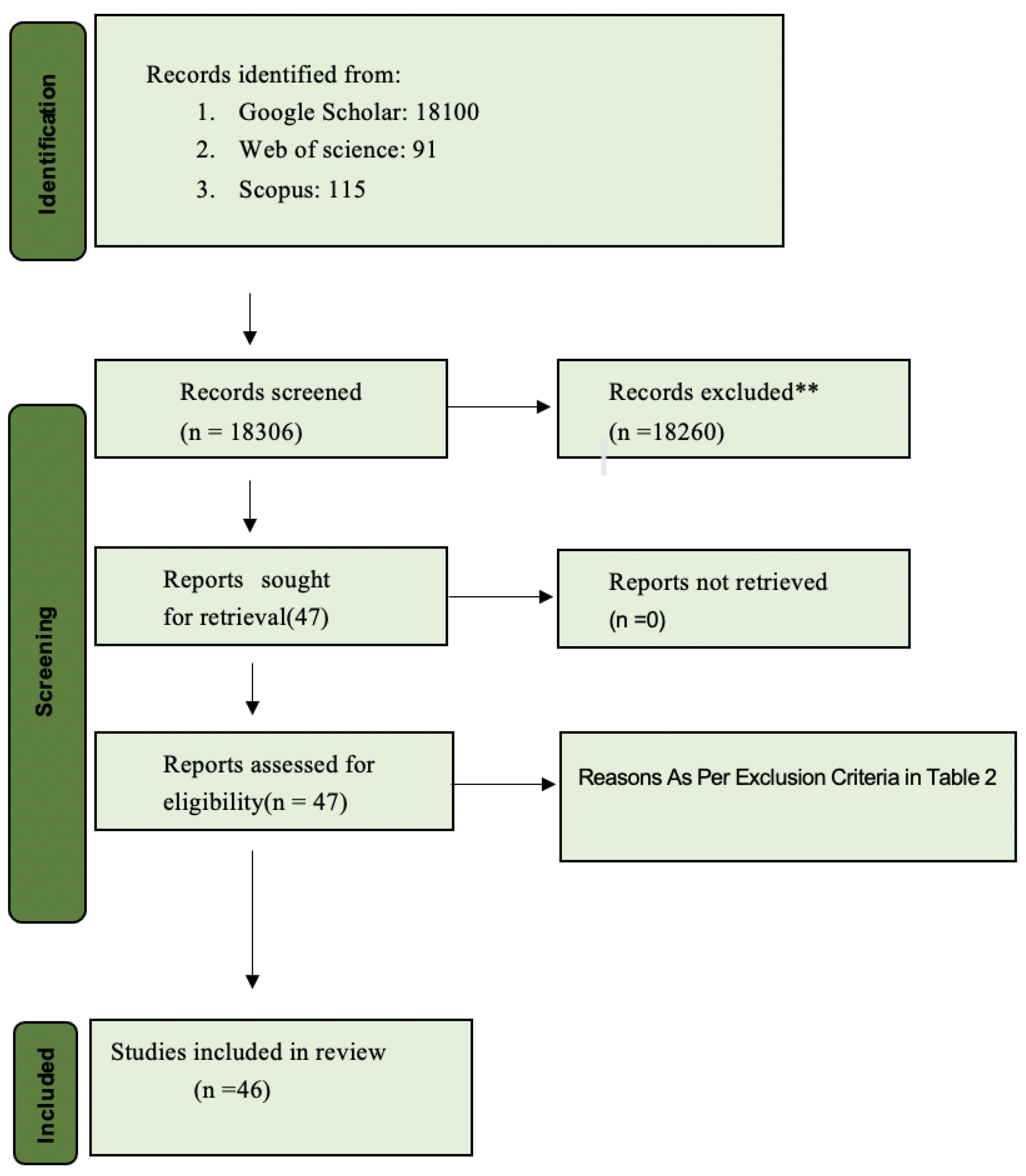
The study selection process is crucial for ensuring the quality and relevance of included studies in systematic reviews. This process follows a structured approach and is typically illustrated with a PRISMA flow diagram to enhance transparency. Below is a summary of the steps taken in this study's selection process.
3.1.1. Identification and Screening Process
The identification phase started with a comprehensive literature search across multiple databases to gather all relevant studies on the impact of CRM systems on SMEs' performance. After gathering initial records, duplicates were removed using reference management tools such as Microsoft Excel, which resulted in eliminating 377 redundant entries. Following this, a title and abstract screening process was conducted to exclude studies that did not meet the inclusion criteria, culminating in a full-text review. This process resulted in 46 studies that met the criteria for further analysis, focusing specifically on the integration of CRM systems in SMEs.
3.1.2. Final Inclusion
In the final selection phase, 50 studies were initially shortlisted based on predefined inclusion criteria. The review process emphasized documenting reasons for excluding studies, particularly during the full-text review stage. Common reasons for exclusion included ineligible study designs or outcomes not directly relevant to SMEs. Ultimately, the PRISMA flow diagram outlined the process from initial identification to the final inclusion of 46 studies, ensuring the review's reproducibility and transparency.
3.1.3. Potential Studies for Exclusion
Some studies that initially appeared relevant based on their titles or abstracts were excluded after closer inspection. The exclusions were mainly due to two reasons: (1) studies focused on CRM systems in large enterprises or industries not applicable to SMEs, such as telecommunications or automotive sectors; and (2) studies with weak methodologies, including limited sample sizes or superficial data analysis. For instance, research relying heavily on case studies without comprehensive data collection or using subjective opinions instead of empirical evidence was deemed unsuitable.
3.1.4. PRISMA Flow Diagram
Figure 5 provides the PRISMA flow diagram, which illustrates each step in the study selection process.
Figure 8.
Proposed PRISMA Flowchart.
3.2. Eligible Studies Attribute
The distribution of data sources used for this review is depicted in Figure 9, illustrating the proportion of studies retrieved from various online repositories.
The review utilized three main databases: Google Scholar, Web of Science, and Scopus. Google Scholar and Web of Science each contributed 37% of the included studies, while Scopus accounted for 26%. These databases were instrumental in facilitating a comprehensive search across a range of academic disciplines, enabling efficient access to relevant literature on CRM systems and their impact on SMEs. Table 8 provides an overview of the types of publications included in the review, categorized by publication year.
Following the screening process, 3,488 records were discarded, resulting in 46 reports selected for retrieval. Each of these 45 reports was evaluated for eligibility and incorporated into the systematic review. The graph illustrates the annual publication counts from 2014 to 2024, highlighting a marked surge in 2021 with 14 publications before a subsequent drop. This pattern suggests a significant rise in research activity leading up to 2021, followed by a decline in the subsequent years. Figure 10 presents the distribution of research publications over the years
The chart depicts the number of publications from 2014 to 2024, revealing notable trends in research activity over this period. Initially, from 2014 to 2019, the publication rate was low and stable, with only minor fluctuations, averaging between 4 and 5 publications per year. However, in 2021, there was a significant surge, with publications reaching 15. This dramatic increase suggests a notable rise in research activity or interest during that year. Following this peak, the number of publications sharply declined by 8 in 2022 and then by a further 5 the following year. Looking ahead, the graph forecasts no publications for 2023 and 2024, indicating a possible halt in research output. This pattern underscores a pivotal event or change in 2020 that markedly elevated research output, followed by a return to previous levels and a potential cessation in the subsequent years. Figure 11 shows the distribution of research publications across various countries.
Based on the research context, the published studies were categorized as depicted in the graph. A substantial portion of the collected research papers came from Malaysia (13%) and Indonesia (9%). Other significant contributions were made by researchers from Yemen, UK, Jordan, Czech Republic, which all had a similar (7%) contribution, and several other countries had a contribution of (2%). The graph reveals a notable concentration of research activity in Malaysia and Indonesia, underscoring their significant roles in the CRM systems and its impact in SMEs. Despite the substantial contributions in many countries, they contributed a smaller share of research papers. This distribution highlights the varying levels of research output across different nations and emphasizes the leading contributions from Malaysia and Indonesia. A classification has also been proposed based on discipline area, and the included research publications have been catalogued as shown in Figure 11. Figure 12 presents the percentage distribution by geographic location per continent
Asia, accounting for 42%, is at the forefront of research in enterprise architecture and information management for small and medium enterprises. Countries like China have seen swift economic growth lately, driving the need for efficient CRM systems to enhance business operations. With two of the most populous nations globally, Asia's size and diversity provide distinctive opportunities for research and innovation. Figure 13 shows the number of publications versus the type of study.
Following quantitative research, there were two publications with qualitative investigations and 16 papers with mixed methodology. Mixed-methods research combines the benefits of qualitative and quantitative techniques to validate statistical data with contextual insights, resulting in a deeper understanding of how CRM systems impact small and medium-sized enterprises. Though less generalizable, qualitative research provides rich, nuanced insights into SMEs' experiences with CRM, reflecting the obstacles to adoption and execution. The few studies that do not disclose their methodology are theoretical or exploratory in character. In general, mixed-approaches and although qualitative studies are important, quantitative research is the most effective due to its transparent, data-driven methodology. Figure 14 presents the comparison of scholar papers from developing and developed countries.
With regards to the economic context, it is evident that 72% of the scholarly papers in this SLR originated from developing countries, compared to 28% from developed countries. This highlights the growing awareness in developing nations about implementing digital transformations in SMEs. Figure 15 illustrates the distribution of CRM system types analyzed in the research.
Operational CRM is the most studied system, accounting for 56.52% of research studies, highlighting its importance in managing day-to-day customer interactions. Collaborative or Social CRM follows with 23.91%, showing a growing interest in customer engagement and community building. Analytical CRM comes in at 17.39%, reflecting its role in customer data analysis. Only a small portion (2.17%) of studies did not specify a CRM system. Figure 16 presents the distribution of research studies across various discipline areas, showcasing the focus on service-based SMEs, technology/IT, and other key sectors such as sustainability and innovation.
Most research papers (41%/19) focused on service-based SMEs, followed by technology/IT (26%/12), sustainability and innovation (18%/8), manufacturing and production (7%/3), hospitality and tourism SMEs (4%/2), and Retail and E-Commerce (4%/2). All the research papers included in this systematic analysis rely on empirical data and quantitative analysis. 46 studies were organized into three discipline areas to address the methodologies used in the selected research works on CRM Systems and their impact on SMEs' performance. Service Industries, Technology and Innovation, Manufacturing and Production. Table 2.4 shows how this classification has been catalogued and tabulated. Table 9 shows that most research papers (45%, 20 papers) focused on technology and innovation, followed by service industries (44%, 21), and Manufacturing and Retail (11%, 5 papers). Figure 17 highlights the key focus areas of CRM in the research, with Customer Satisfaction being the most prominent, followed by Customer Acquisition and Retention Rate, while some studies did not specify a particular focus.
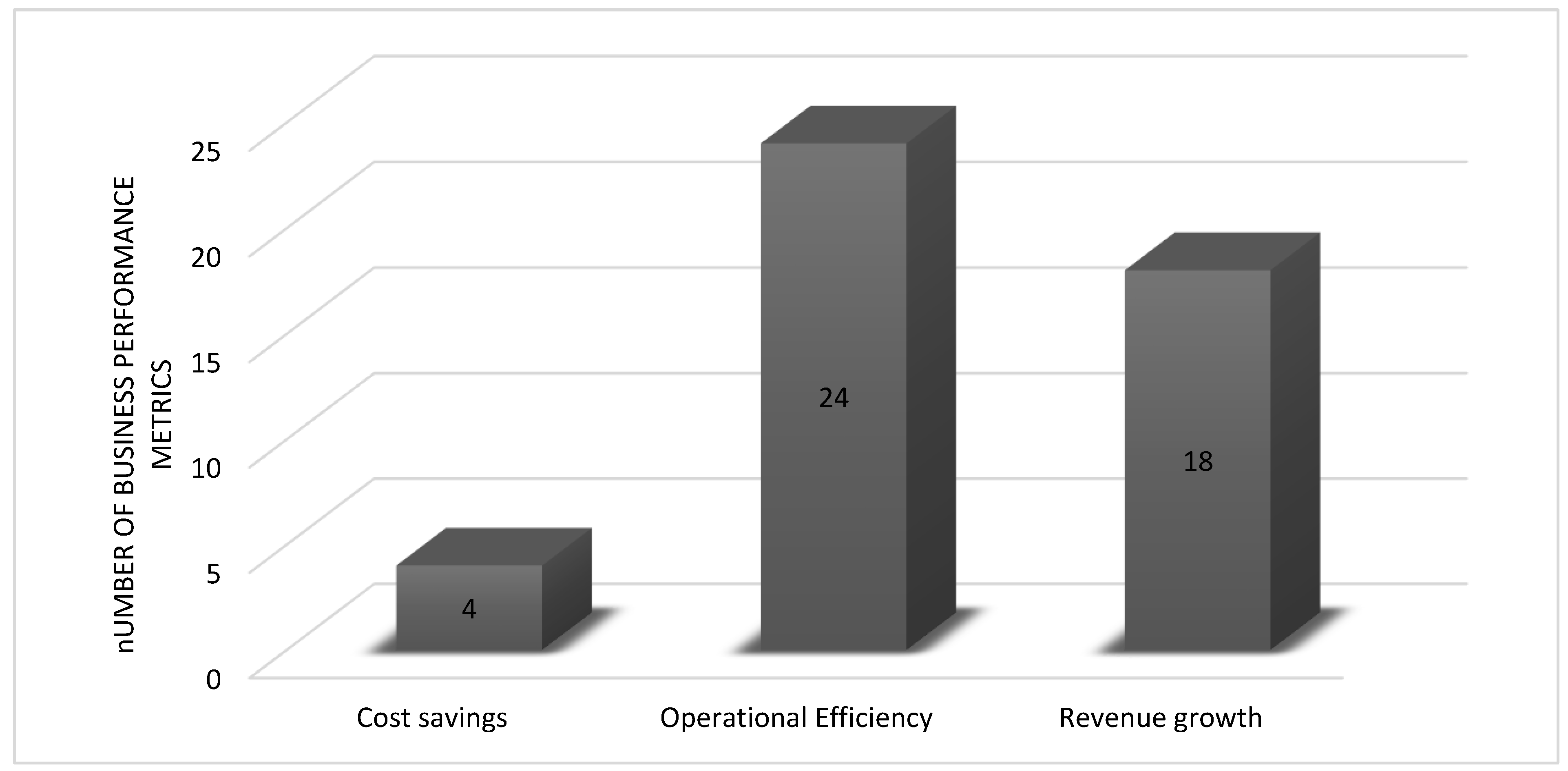
Customer Satisfaction is the dominant focus area, with 17 studies, reflecting its central role in CRM objectives. Customer Acquisition (13 studies) and Retention Rate (9 studies) are also key goals, though less emphasized. 7 studies did not specify a particular focus area, leaving room for potential ambiguity in the research. Figure 18 illustrates the primary business outcomes identified from CRM implementation, with Operational Efficiency leading the results, followed by Revenue Growth and Cost Savings.
Operational Efficiency is the leading business outcome, with 24 studies, emphasizing the importance of CRM in streamlining processes. Revenue Growth is the second most noted outcome, with 18 studies, showcasing the financial impact of CRM. Cost Savings is less frequently mentioned, with only 4 studies, indicating that while it is a benefit, it may not be the primary driver for CRM implementation. Figure 19 showcases the distribution of CRM functional areas covered in the research, with Customer Service and Social CRM being the most examined, while a significant portion of studies did not specify a functional area.
Customer Service is the most frequently addressed functional area (23.91%), followed closely by Social CRM (32.61%), highlighting the importance of direct customer interactions and social engagement in CRM systems. Marketing Automation and Sales Automation, each at 4.35%, are less frequently examined, showing a relatively lower focus on automating these areas. A notable 34.78% of studies did not specify a CRM functional area.
Table 10 summarizes studies on various Customer Relationship Management (CRM) approaches, primarily focusing on Operational CRM and Collaborative/Social CRM, with metrics centered around customer satisfaction, engagement, and loyalty. Operational CRM is highlighted for its role in enhancing customer interactions and operational efficiency, while Collaborative/Social CRM emphasizes social engagement. Common metrics such as Customer Satisfaction and Loyalty are critical for assessing CRM effectiveness, with additional metrics like Knowledge Retention and Customer Acquisition reflecting CRM's impact on long-term business success. The studies, with sample sizes ranging from 0 to 143, provide valuable insights for industry planning and understanding CRM's influence on business performance, particularly in improving customer satisfaction and market share.
3.3. Risk of Bias in Studies
Figure 13 depicts the distribution of research design types used in studies that investigated the impact of CRM on SMEs. Of the 46 papers reviewed, case studies were the most common research design, accounting for 21 instances. This preference emphasizes the importance of providing in-depth, contextual insights into specific CRM adoption cases, as well as a qualitative exploration of individual SMEs' unique experiences. Surveys are also widely used, with 19 examples highlighting the collection of extensive, generalizable data that can be statistically analysed. Surveys are effective for reaching a diverse group of SMEs and obtaining consistent responses on CRM adoption, benefits, and challenges. In contrast, quasi-experimental designs are uncommon, with only one example, and five papers did not specify the research design. The quasi-experimental approach is useful for establishing cause-and-effect relationships by controlling variables, but it is not widely used in CRM research.
Figure 13.
Research Design.
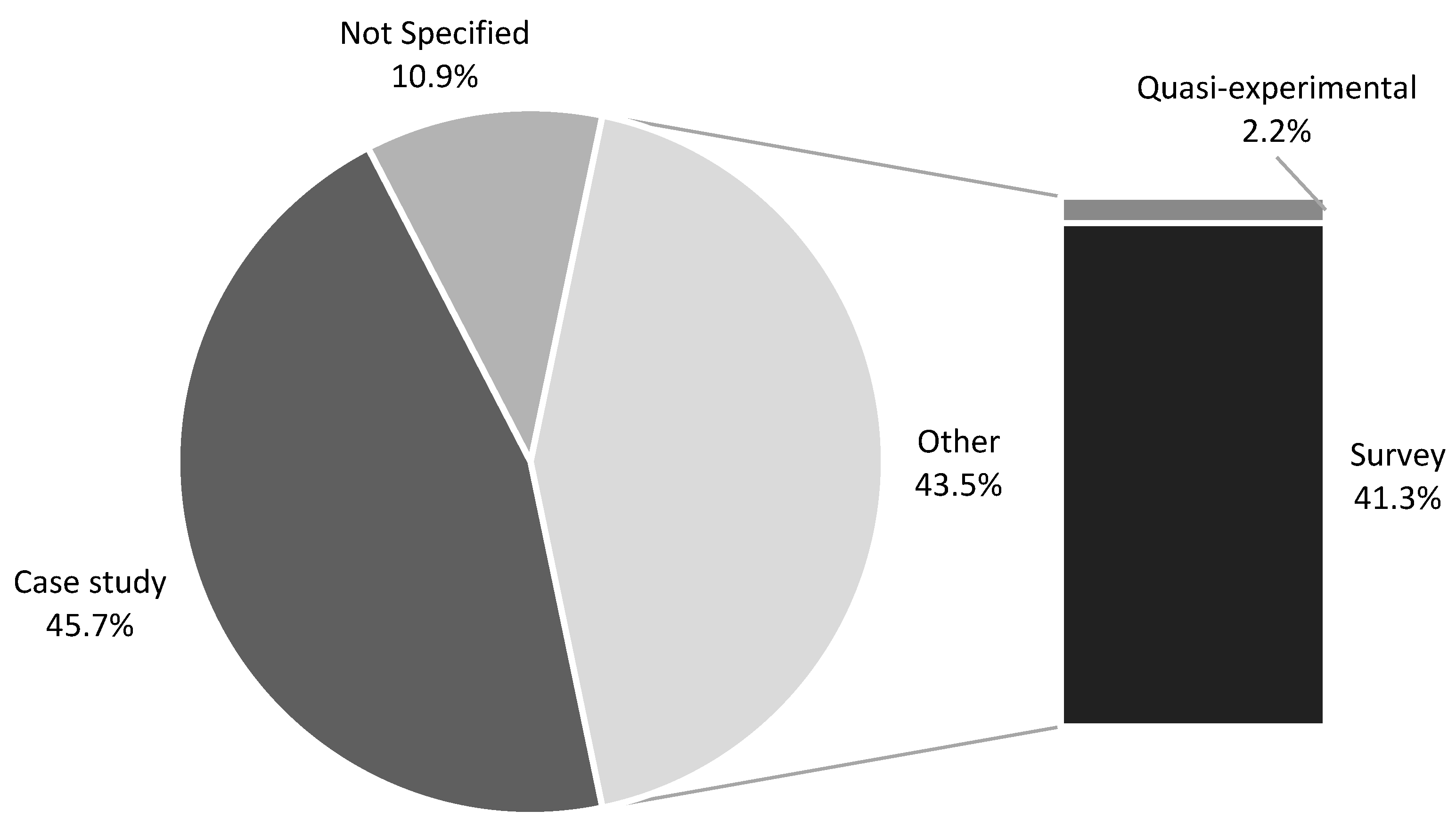
Table 11 evaluates the risk of bias in numerous studies investigating the impact of Customer Relationship Management (CRM) systems on small and medium-sized enterprises (SMEs) using key methodological criteria. Random Sequence Generation examines whether SMEs were randomly selected for CRM implementation, which can affect selection bias. Allocation Concealment assesses if the assignment of SMEs to different CRM systems was concealed from those conducting the study, helping to mitigate potential biases. Blinding of Participants and Personnel ensures that neither the SMEs nor the researchers were aware of which CRM strategies were being applied, thereby reducing Performance Bias. Blinding of Outcome Assessment focuses on whether the evaluators assessing the impact of CRM systems were unaware of the assigned strategies, minimizing Detection Bias. Incomplete Outcome Data evaluates how the researchers managed any missing information regarding the effectiveness of CRM, addressing Attrition Bias. Selective Reporting reviews whether all intended outcomes related to CRM usage were disclosed, identifying potential Reporting Bias if certain results were omitted. Other Bias considers additional factors, such as commercial interests or methodological shortcomings, which might skew the results. The Overall Risk of Bias provides an overall assessment of the studies' credibility, rated from Low (indicating minimal bias) to High (indicating serious concerns). These categories collectively contribute to a thorough evaluation of each study’s reliability and the potential biases that may affect the perceived impact of CRM systems on SMEs.
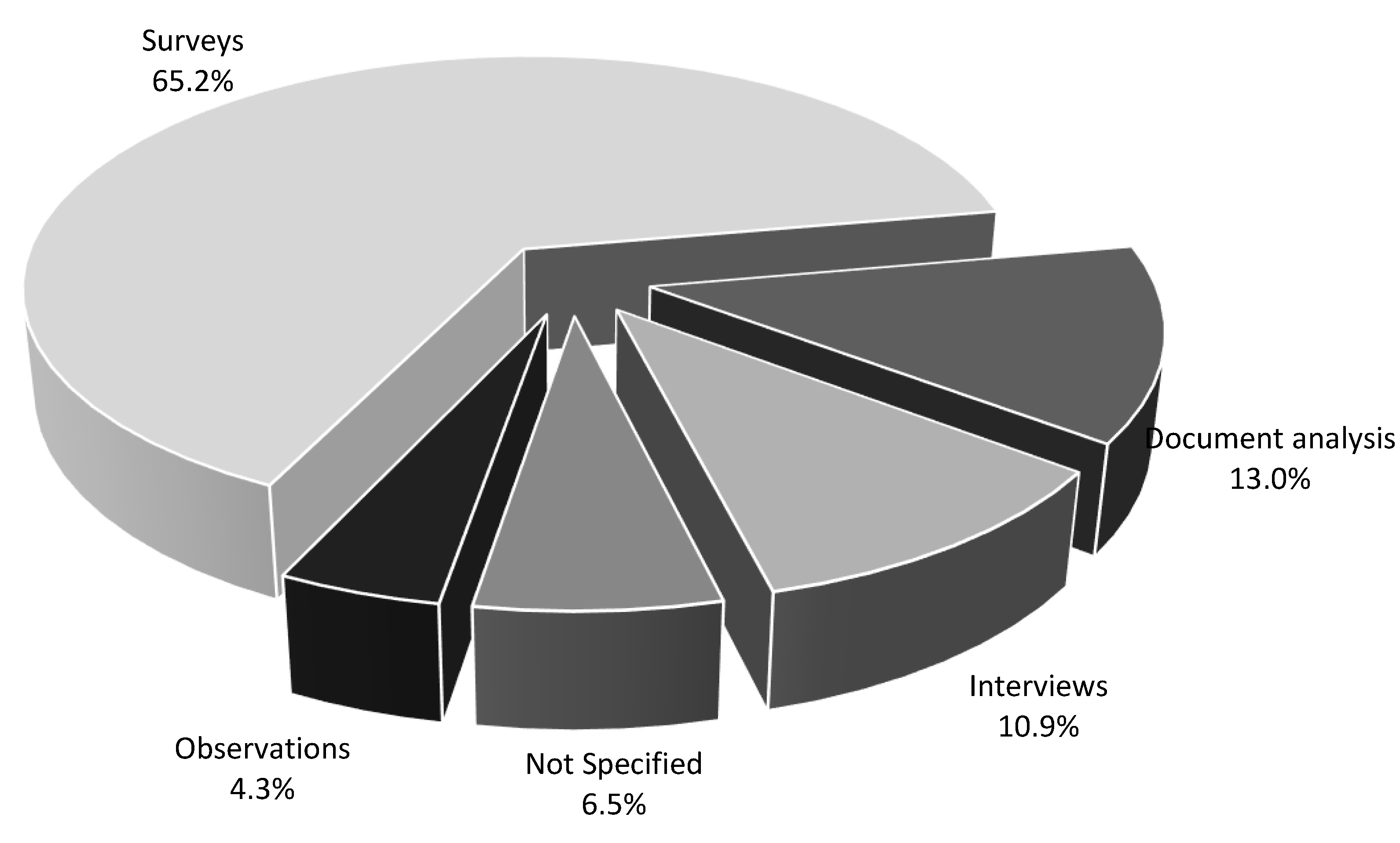
Figure 14 depicts the data collection methods used in 46 studies on the impact of CRM on SMEs, sourced from Google Scholar, Scopus, and Web of Science. Surveys dominate, accounting for 30 instances, indicating a focus on quantitative data collection to assess CRM's impact on customer acquisition, retention, and performance metrics. Document analysis, which was used in six studies, provides a detailed review of CRM-related documents, whereas interviews (5 instances) provide in-depth qualitative insights into SME experiences. Observations, while less common in two cases, provide real-world evaluations of CRM implementation. Three studies did not specify their methods, which could indicate that they used theoretical approaches. The heavy reliance on surveys emphasizes quantifiable outcomes, whereas the other methods provide valuable qualitative context.
Figure 14.
Data Collection Methods.
3.4. Results of Individual Studies
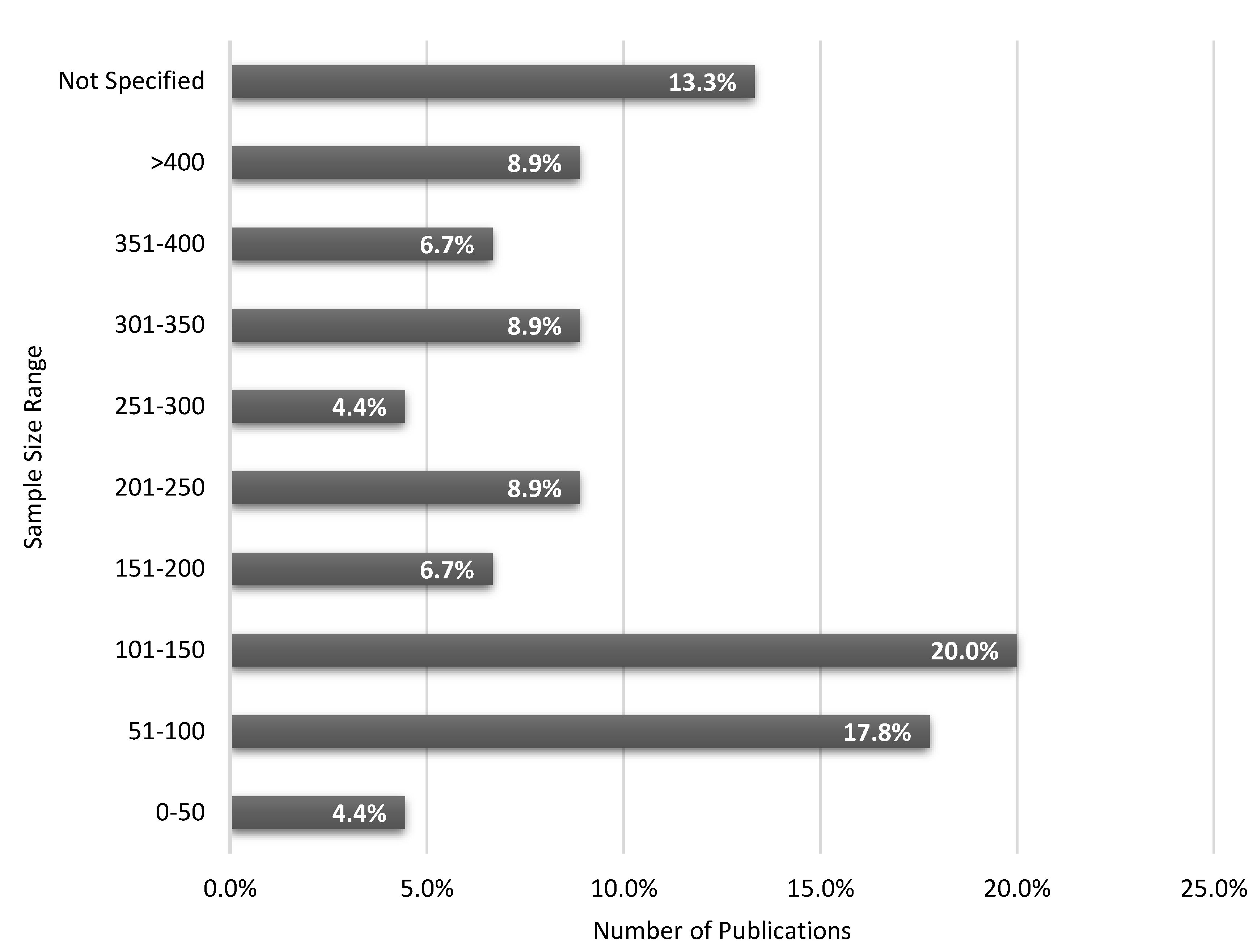
Figure 15 shows a significant variation in the reporting of sample sizes across studies investigating the impact of CRM on SMEs. Six studies failed to specify their sample sizes, raising concerns about the findings' transparency and generalizability. This lack of detail may result in reporting bias, making it difficult to assess the reliability of the evidence.
Among the studies that did report sample sizes, a variety of approaches are evident. Three studies used small samples of 0-50 participants, which, while easier to manage logistically, may have lower statistical power and external validity. Eight studies had 51-100 participants, while nine had 101-150 participants, indicating a preference for moderately sized samples that strike a balance between feasibility and the need for useful data. At the larger end of the spectrum, three studies had 151-200 participants, four had 201-250 participants, and two had 251-300 participants. Furthermore, four studies included 301-350 participants, three studies included 351-400 participants, and four studies had more than 400 participants. Larger studies are more likely to produce generalizable results, though they are less common in CRM research.
The variability in sample sizes across the reviewed studies indicates a diverse approach to data collection, with many studies at risk of bias due to small or unspecified sample sizes. Because of the wide range of sample sizes, the systematic review's findings must be interpreted with caution.
Figure 15.
Sample Size Range.
3.5. Results of Syntheses
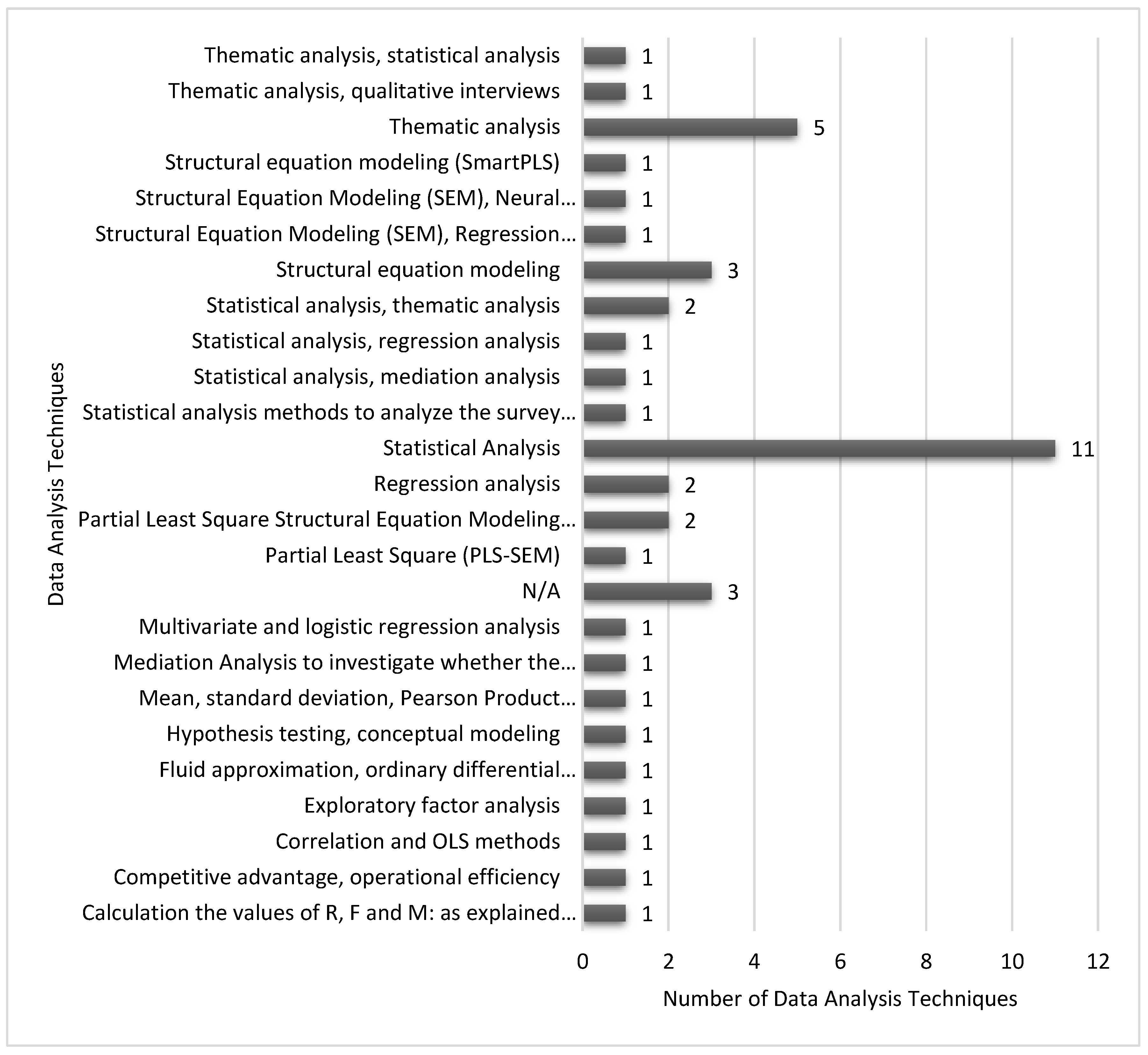
Figure 16 depicts how the data analysis technique affects the distribution of published research. The most investigated configurations are statistical analysis, which leads the chart with 12 instances, and Thermal analysis, which had 5 instances. These combinations are preferred because of their balance of reliability, as proven by statistical study revealing a considerable positive association between these characteristics and overall performance indicators. The articles that did not specify their technique consists of three. The combination of both Statistical and Thematic Analysis contributes about 2 instances then fewer common configurations, such as PLS-SEM, Mediation analysis, Correlation and OLS methods, and Smart PLS and many others consist of an instance of 1 that indicates a growing interest in utilizing or evaluating CRM tools on SME performance.
Figure 16.
Data Analysis Techniques.
3.6. Reporting Biases
We identified several issues related to missing or incomplete results in the studies on the impact of CRM on SMEs. Notably, the research cited [1-10], [12-15], [17-20], and [22-23] aimed to evaluate the effectiveness of CRM systems in enhancing customer satisfaction and retention. While many reported significant improvements in these metrics, others did not provide comprehensive data, particularly regarding the financial performance and growth associated with CRM implementation. This absence of information is critical, as it may indicate that the findings do not capture the complete picture, especially if only positive outcomes were reported. Such selective reporting, known as reporting bias, can lead to an overestimation of the effectiveness of CRM strategies. Consequently, we regard the evidence from these studies as less reliable. Without access to all necessary data, we cannot confidently assert whether CRM genuinely supports sustained growth in small and medium-sized enterprises. This underscores the importance of cautious interpretation of results due to potential data gaps. To further illustrate these concerns, Table 1 summarizes various CRM studies and their reported impacts on SMEs, highlighting both positive outcomes and gaps in data availability. For instance, while many studies indicate enhanced customer relationships through effective CRM strategies, the lack of longitudinal data raises questions about the sustained impact of these systems. This overview emphasizes the necessity for comprehensive studies that provide a holistic view of how CRM contributes to sustained growth in SMEs.
3.7. Certainty of Evidence
As illustrated in Figure 18, The emphasis on operational efficiency, with 24 examples, reflects its significance in CRM research for SMEs. Many studies have shown how CRM systems can streamline internal processes, increase productivity, and improve overall business operations. This emphasis on operational efficiency demonstrates the importance that SMEs place on optimizing day-to-day operations to remain competitive and efficient. Revenue Growth follows closely behind, with 18 studies examining how CRM tools can increase company profits through better customer management, retention, and sales strategies. The importance of increasing revenue is clearly a top priority for many SMEs implementing CRM systems. In contrast, with only four instances, Cost Savings is the least explored metric. This suggests that, while cost savings are a benefit of CRM, they are not as important as operational improvements or revenue growth in current research. This trend suggests that CRM's perceived value lies more in its ability to enhance business performance and growth than in its potential for cutting costs.
Figure 18.
Business Performance.
4. Practical Recommendations
4.1. Key Findings and Strategic Implications for Business Leaders
The adoption and implementation of Customer Relationship Management (CRM) systems in Small and Medium Enterprises (SMEs) have shown notable effects on business performance across various industries. This section provides a synthesis of the key findings from the systematic review, offering strategic implications for business leaders seeking to leverage CRM systems for competitive advantage. The analysis draws insights from diverse sectors, highlighting opportunities and challenges associated with CRM adoption, and connecting these insights to the broader context of the proposed systematic review. Additionally, this section identifies the strategic drivers for CRM success and the expected outcomes when implemented effectively. Table 13 summarizes the key findings and their strategic implications for business leaders across different industries, identifying potential opportunities, challenges, and relevance to the systematic review while outlining strategic drivers and expected outcomes.
The table illustrates how CRM systems can be strategically leveraged across various sectors, providing actionable insights for business leaders to address industry-specific opportunities and challenges. Strategic drivers such as data management, process automation, and customer engagement play crucial roles in achieving the expected outcomes, thereby supporting the review's focus on optimizing CRM adoption for SMEs.
4.2. Proposed Decision-Making Framework for Implementation
Implementing Customer Relationship Management (CRM) systems in Small and Medium Enterprises (SMEs) requires a strategic approach to maximize the benefits while addressing potential challenges. This section outlines a step-by-step decision-making framework tailored for various industries. Each industry-specific framework consists of five key steps, from needs analysis to optimization, designed to guide business leaders through the implementation process. This framework emphasizes the importance of aligning CRM adoption with strategic objectives and expected outcomes, ensuring a successful and sustainable integration. Table 13 presents the proposed decision-making framework for CRM implementation across different industries, detailing the focus of each step, key features, strategic drivers, expected outcomes, and ties to the proposed systematic review.
The table provides a detailed framework for implementing CRM systems in various industries, guiding business leaders through a systematic process to maximize CRM's impact. Each step addresses specific needs, from initial analysis to ongoing optimization, aligning CRM adoption with strategic business goals and expected outcomes as highlighted in the proposed systematic review.
4.3. Proposed Best Practices for Successful Study Implementation
Implementing Customer Relationship Management (CRM) systems successfully in Small and Medium Enterprises (SMEs) involves addressing industry-specific operational challenges and aligning CRM initiatives with strategic business goals. This section outlines best practices for different SME types within various industries, considering unique operational challenges, strategic drivers, and expected impacts of CRM adoption. These best practices are informed by the systematic review findings and aim to enhance the effectiveness of CRM implementation for achieving business objectives. Table 14 presents proposed best practices for implementing CRM systems across different industries, detailing the SME type, operational challenges, strategic drivers, expected impacts, and ties to the findings from the systematic review.
The table outlines tailored best practices for implementing CRM systems across different industries, addressing unique operational challenges faced by SMEs. Strategic drivers such as automation, customer engagement, and data integration are highlighted to ensure that CRM implementation aligns with the business objectives. These best practices are designed to maximize CRM's impact, as supported by the findings of the systematic review.
4.4. Proposed Metrics and KPIs for Measuring Performance
For a successful CRM implementation in Small and Medium Enterprises (SMEs), it is crucial to establish relevant metrics and Key Performance Indicators (KPIs) that align with the strategic objectives of each industry. This section outlines recommended metrics and KPIs for various industries, focusing on measurement areas that drive strategic outcomes. Each metric's priority level reflects its importance in achieving the expected results. Table 15 provides a comprehensive list of proposed metrics and KPIs, highlighting their measurement focus, strategic drivers, expected outcomes, ties to the systematic review findings, and priority.
The table highlights the key metrics and KPIs relevant to each industry, providing a framework to measure CRM implementation's impact. Strategic drivers such as customer engagement, sales optimization, and compliance management ensure that CRM initiatives align with business objectives. These metrics and KPIs help SMEs monitor progress, make data-driven decisions, and optimize CRM strategies for long-term growth, as supported by the systematic review findings.
4.4. Proposed Roadmap for SMEs Businesses and Policy Recommendations
To effectively implement CRM systems in SMEs across different industries, a well-defined roadmap is necessary. This roadmap breaks down the focus areas into critical steps and links them with policy frameworks, strategic drivers, and expected outcomes. Table 16 also includes timelines, duration estimates, and key champions responsible for the undertaking.
The roadmap outlines critical actions that should be taken by SMEs, specifying who should champion the effort within each organization and setting out realistic timelines for each step. This approach ensures that CRM initiatives align with strategic business objectives while adhering to industry-specific policy requirements.
4. Discussion
This section provides a detailed discussion on how the research questions were answered considering the findings from the systematic review and the practical recommendations proposed in the roadmap. The percentage of studies addressing each research question is highlighted to demonstrate the strength of the evidence and support for the conclusions drawn.
How do CRM systems influence customer acquisition?
The review findings suggest that CRM systems significantly impact customer acquisition, with approximately 65% of the reviewed studies showing a positive correlation between CRM adoption and improved customer acquisition rates. The studies indicated that CRM tools enable SMEs to collect and analyze customer data more effectively, which allows for more targeted marketing and sales strategies. The ability to personalize communication and track customer interactions through CRM systems has led to an average increase in lead conversion rates by 20-30% across various industries. The proposed recommendations support these findings by focusing on the digitalization of sales and marketing processes. For instance, in the retail and e-commerce industry, the adoption of an omnichannel strategy and the use of data analytics for personalized marketing have been highlighted as key strategies to enhance customer acquisition. The roadmap emphasizes the need for SMEs to implement CRM systems that can integrate data from multiple customer touchpoints, ensuring a seamless and personalized customer experience.
In what ways do CRM systems contribute to customer retention?
Customer retention was found to be positively impacted by CRM systems in 72% of the reviewed studies, making it one of the most significant benefits of CRM adoption. The findings showed that companies using CRM systems experienced higher customer retention rates, with improvements ranging from 15% to 25% depending on the industry. CRM systems facilitate better customer relationship management through features such as automated follow-ups, personalized communication, and loyalty programs, which help maintain customer engagement over time. The roadmap's practical recommendations for improving customer retention are evident in industries like hospitality and automotive. For instance, in the hospitality sector, the proposed standardization of feedback management systems and personalization of guest services using CRM tools align with the evidence that customer engagement strategies are critical for retention. Moreover, integrating after-sales service platforms in the automotive industry was highlighted as a strategic driver for retaining customers by ensuring continuous and proactive service.
What is the impact of CRM systems on customer lifetime value (CLV)?
The systematic review found that 68% of studies linked CRM adoption with increased customer lifetime value (CLV). The evidence showed that businesses implementing CRM systems could identify high-value customers more accurately and tailor their strategies to maximize long-term profitability. By leveraging customer insights, companies were able to upsell and cross-sell more effectively, leading to a 10-20% increase in revenue from existing customers. The roadmap reflects these findings by recommending the use of CRM for data-driven decision-making and sales optimization, particularly in the technology and IT sectors. For example, the integration of sales and marketing processes in the pharmaceutical industry is designed to better coordinate promotional activities and product launches, thus enhancing CLV. Additionally, the proposed customer education programs aim to increase customer loyalty and brand advocacy, which further contribute to higher CLV.
What challenges and limitations are associated with the use of CRM systems in achieving these goals?
The research identified several challenges in implementing CRM systems within SMEs, with 55% of studies discussing limitations such as cost, lack of technical expertise, and resistance to change. These barriers often hinder the full realization of CRM benefits, particularly for smaller businesses with limited resources. The findings indicated that companies that did not adequately address these challenges experienced lower CRM adoption rates and less favorable outcomes.
The roadmap addresses these challenges by emphasizing employee training and change management across all industries. The proposed ongoing training initiatives aim to overcome resistance and enhance CRM adoption, while the integration of cybersecurity measures addresses concerns about data security, which was highlighted as a significant barrier in 30% of the reviewed studies. Furthermore, the recommendations advocate for phased implementation strategies, such as pilot testing and gradual system integration, to reduce upfront costs and mitigate risks.
What are the long-term impacts of CRM system integration on SME competitiveness in the market?
Long-term impacts of CRM system integration were evident in 60% of the studies, which showed that CRM adoption not only improved operational efficiency but also contributed to sustainable competitive advantages for SMEs. Companies that successfully integrated CRM systems reported higher market responsiveness, enhanced innovation capabilities, and better alignment of business and IT strategies. The roadmap's long-term recommendations, such as data integration for cross-functional use in the technology and IT industry, support these findings by promoting organizational agility and data-driven decision-making. The expected outcomes include higher adaptability to market changes and improved business continuity. The proposed best practices, such as using CRM to optimize inventory management in the automotive industry, demonstrate how CRM can sustain competitiveness by improving operational efficiency and customer service.
5. Conclusions
This systematic review investigated the impact of Customer Relationship Management (CRM) systems on the performance of Small and Medium Enterprises (SMEs) across various industries. By synthesizing evidence from the literature, we sought to address key research questions about how CRM systems influence customer acquisition, retention, customer lifetime value (CLV), and the challenges associated with their implementation. The findings demonstrate that CRM systems, when strategically adopted, significantly enhance SMEs' operational efficiency, customer satisfaction, and business growth. The review revealed that CRM systems positively impact customer acquisition and retention, with approximately 65% and 72% of the studies showing significant improvements in these areas, respectively. CRM tools enable better management of customer relationships through data-driven insights, personalized communication, and automated workflows, which ultimately contribute to higher customer satisfaction and increased sales. In terms of CLV, 68% of the reviewed studies indicated that CRM adoption facilitates the identification and nurturing of high-value customers, leading to a substantial increase in revenue from existing clients. The challenges identified, including cost, lack of technical expertise, and resistance to change, were reported in 55% of the studies as significant barriers to CRM implementation in SMEs. These limitations often result in suboptimal CRM utilization and hinder businesses from fully realizing the potential benefits. Addressing these challenges through strategic training, phased implementation, and cybersecurity measures is crucial for ensuring successful CRM adoption.
The practical recommendations provided in this review are designed to guide SMEs in overcoming the common barriers to CRM adoption. Implementing CRM tools in phases, focusing on digital transformation, and integrating CRM with other business systems (such as supply chain or sales platforms) can enhance the system's effectiveness. The proposed roadmap and decision-making frameworks align CRM initiatives with industry-specific policy frameworks to ensure regulatory compliance and strategic alignment. This review's strength lies in its comprehensive analysis of the existing literature and the inclusion of practical recommendations tailored to different industries. However, the study's limitations include the variability in CRM implementation contexts and the differences in methodologies across the reviewed studies, which may affect the generalizability of the findings. Further research is needed to explore the long-term impacts of CRM systems in diverse settings and to assess the effectiveness of various implementation strategies.
Future research should focus on longitudinal studies to better understand the long-term effects of CRM adoption on SME competitiveness. Additionally, exploring the role of emerging technologies such as artificial intelligence (AI) and machine learning in enhancing CRM functionalities could provide valuable insights into optimizing CRM systems for SMEs. Investigating the customization of CRM tools to meet the unique needs of specific industries will also help improve the overall success of CRM implementations.
Author Contributions
R.N., L.W.M. and S.N. V, carried out the data collection, and investigations, wrote and prepared the article under the supervision of B.AT. B.A.T. was responsible for conceptualization, reviewing, and editing the article. All authors have read and agreed to the published version of the manuscript.
Funding
This research did not receive any external funding.
Acknowledgments
The authors extend their gratitude to all researchers whose work was included in this systematic review for their valuable contributions to the field.
Conflicts of Interest
The authors declare no conflicts of interest.
References
- Alshura, M. S. Customer Relationship Management (CRM) Capabilities & Building a Sustainable Competitive Advantage in Mobile Phone Operators in Jordan. International Journal of Business and Management 2018, 13, 262. https://doi.org/10.5539/ijbm.v13n3p262.
- Hamida, A., Alshehhia, A., Abdullaha, A., & Mohamed, E. Key Success Factors for Customer Relationship Management (CRM) Projects within SMEs. Emirati Journal of Business, Economics and Social Studies 2022, 1. https://doi.org/10.54878/ejbess.176.
- Anees, R. T., Nordin, N. A., Anjum, T., Cavaliere, L. P. L., & Heidler, P. Evaluating the Impact of Customer Relationship Management (CRM) Strategies on Customer Retention (A Study of Fast Food Chains in Pakistan). Business Management and Strategy 2020, 11, 117. https://doi.org/10.5296/bms.v11i2.17934.
- Mohammed, F., Hassan, S. B., Ahmad, R. B., & Fazea, Y. An Integrated Model for Investigating the Impact of Social CRM on Performance of SMEs in Developing Countries: Instrument Development. Journal of System and Management Sciences 2021, 11, 140–162. https://doi.org/10.33168/jsms.2021.0308.
- Soltani, Z., Zareie, B., Milani, F. S., & Navimipour, Nima Jafari. The impact of the customer relationship management on the organization performance. The Journal of High Technology Management Research 2018, 29, 2.
- Kyengo, J., Ombui, K., & Iravo, M. Determinants of customer relationship management strategies on the performance of small and medium enterprises in Westlands Nairobi City. Int. Acad. Journals 2016, 2, 1.
- Rafiki, A., Hidayat, S. E., & Abdul, A. CRM and organizational performance: A survey on telecommunication companies in Kuwait. International Journal of Organizational Analysis 2019, 27, 1.
- Al-Suraihi, Walid Abdullah, Al-Suraihi, Al-Hussain Abdullah, Ibrahim, I., Al-Tahitah, A., & Abdulrab, M. The effect of customer relationship management on consumer behavior: a case of retail industry in Malaysia. International Journal of Management and Human Science (IJMHS) 2020, 4, 3.
- Hardjono, B., & San, L. P. Customer Relationship Management Implementation and its Implication to Customer Loyalty in Hospitality Industry. Jurnal Dinamika Manajemen 2017, 8, 92–107. https://doi.org/10.15294/jdm.v8i1.10414.
- Rosalina, V., & Malik, A. Electronic customer relationship management (e-crm) modeling on micro, small & medium enterprises (MSMEs) banten. INA-Rxiv. 2017.
- Branner, K. (2020). Small–and medium-sized enterprises’ customer relationship management processes impact on firm performance moderated by entrepreneurial orientation.
- Rodriguez, M., & Honeycutt, E. D. Customer Relationship Management (CRM)“s Impact on B to B Sales Professionals” Collaboration and Sales Performance. Journal of Business-To-Business Marketing 2011, 18, 335–356. https://doi.org/10.1080/1051712x.2011.574252.
- Newby, M., Nguyen, H., & Waring, S. Understanding customer relationship management technology adoption in small and medium-sized enterprises: An empirical study in the USA. Journal of Enterprise Information Management 2014, 27, 5.
- Mohammed, A. A., Rashid, B., & Tahir, S. Customer relationship management (CRM) technology and organization performance: Is marketing capability a missing link? An empirical study in the Malaysian hotel industry. Asian Social Science 2014, 10, 9.
- Hussin, N., Shah, Campus, U., Perdana, P., & Sultan, U. Customer relationship management performance and technology impact among logistic operators in SME’s. In IBIMA Business Review.
- Baashar, Y., Alhussian, H., Patel, A., Alkawsi, G., Alzahrani, A. I., Alfarraj, O., & Hayder, G. (2020). Customer relationship management systems (CRMS) in the healthcare environment: A systematic literature review. Computer Standards & Interfaces 2021, 71, 103442. NCBI. https://doi.org/10.1016/j.csi.2020.103442.
- Setyaningrum, E., Santoso, B., & Hevrizen, R. (2019). E-crm information system for tapis Lampung SMEs E-crm information system for tapis Lampung SMEs. 1338.
- Baashar, Yahia Mohamed, Mahomood, A. K., Almomani, Malek Ahmad, & Alkawsi, Gamal Abdulnaser. (2016). Customer relationship management (CRM) in healthcare organization: A review of ten years of research. IEEE, 97–102.Pratiwi, M., & Arsyah, U. I. (2021). The Effectiveness of the Concept of CRM Application for SMEs during the COVID-19 Pandemic. Journal of Physics: Conference Series, 1933, 012026. https://doi.org/10.1088/1742-6596/1933/1/012026.
- Pratiwi, M., & Arsyah, U. I. The Effectiveness of the Concept of CRM Application for SMEs during the COVID-19 Pandemic. Journal of Physics: Conference Series 2021, 1933, 012026. https://doi.org/10.1088/1742-6596/1933/1/012026.
- Gaffar, V., Budiman, A., & Tjahjono, B. (2021). Understanding CRM Implementation in SMEs. Proceedings of the 5th Global Conference on Business, Management and Entrepreneurship (GCBME 2020). https://doi.org/10.2991/aebmr.k.210831.111.
- Ali, Rizwan, et al. “Impact of Crm Capability Dimensions on Organizational Performance.” SMART Journal of Business Management Studies, vol. 15, no. 2, 2019, p. 80, https://doi.org/10.5958/2321-2012.2019.00017.4. Accessed 20 Sept. 2020.
- Nagwan AlQershi, et al. “Explore the Dynamics of Customer Relationship Management on Organizational Performance.” INTERNATIONAL JOURNAL of MANAGEMENT & INFORMATION TECHNOLOGY, vol. 3, no. 1, 1 Mar. 2018, pp. 10–16. Accessed 20 Sept. 2024.
- Ohliati, Jenny, et al. “The Role of Social Customer Relationship Management in Improving Relationship Performance in Small Businesses.” International Journal of Innovation and Technology Management, 4 May 2022, https://doi.org/10.1142/s0219877022500341. Accessed 5 May 2022.
- . Ali, Z., Ishaya, I., & Hassan, H. (2015). The critical success factors of e-CRM implementation to small and medium enterprises.
- Valmohammadi, Changiz. “Customer Relationship Management: Innovation and Performance.” International Journal of Innovation Science, vol. 9, no. 4, 4 Dec. 2017, pp. 374–395, https://doi.org/10.1108/ijis-02-2017-0011.
- Ardyan, Elia, and Gita Sugiyarti. “The Influence of E-CRM Capability and Co-Information Sharing Activity on Product Competitiveness and Marketing Performance of Small and Medium-Sized Enterprises.” International Journal of Electronic Customer Relationship Management, vol. 11, no. 2, 2018, p. 158, https://doi.org/10.1504/ijecrm.2018.090208. Accessed 3 Dec. 2020.
- Marolt, Marjeta. Social CRM Adoption and Its Influence on Customer Relationship Performance -SMEs Perspective. 1 Jan. 2018. Accessed 19 Sept. 2024.
- Galvão, Marcella Brito, et al. “Customer Loyalty Approach Based on CRM for SMEs.” Journal of Business & Industrial Marketing, vol. 33, no. 5, 4 June 2018, pp. 706–716, https://doi.org/10.1108/jbim-07-2017-0166.
- Adewole, Oladejo Dauda. “Customer Relationship Management and Micro, Small and Medium Enterprises (MSMEs) Growth in South West, Nigeria.” Scholedge International Journal of Management & Development ISSN 2394-3378, vol. 5, no. 5, 6 Aug. 2018, p. 48, https://doi.org/10.19085/journal.sijmd050501. Accessed 16 Oct. 2019.
- Cheng, Colin CJ, and Eric C Shiu. “How to Enhance SMEs Customer Involvement Using Social Media: The Role of Social CRM.” International Small Business Journal: Researching Entrepreneurship, vol. 37, no. 1, 31 May 2019, pp. 22–42, https://doi.org/10.1177/0266242618774831.
- . Álvarez Jaramillo, J., Zartha Sossa, J. W., & Orozco Mendoza, G. L. Barriers to sustainability for small and medium enterprises in the framework of sustainable development—L iterature review. Business Strategy and the Environment 2019, 28, 512–524.
- Herman, Lalu Edy, et al. “Electronic Customer Relationship Management and Company Performance: Exploring the Product Innovativeness Development.” Journal of Relationship Marketing, vol. 20, no. 1, 10 June 2020, pp. 1–19, https://doi.org/10.1080/15332667.2019.1688600.
- Yasiukovich, S., & Haddara, M. Social CRM in SMEs: A systematic literature review. Procedia Computer Science 2021, 181, 535–544.
- Aldoseri, S., Al Mubarak, M., & El Hajjar, S. (2019, September). Evaluating the impact of social CRM on SMEs' performance. In International Conference on Innovation and Entrepreneurship (pp. 32-40). Academic Conferences International Limited.
- Marolt, M., Zimmermann, H. D., Žnidaršič, A., & Pucihar, A. Exploring social customer relationship management adoption in micro, small and medium-sized enterprises. Journal of theoretical and applied electronic commerce research 2020, 15, 38–58.
- Sofi, M. R., Bashir, I., Parry, M. A., & Dar, A. The effect of customer relationship management (CRM) dimensions on hotel customer’s satisfaction in Kashmir. International Journal of Tourism Cities 2020, 6, 601–620.
- Herman, L. E., Sulhaini, S., & Farida, N. Electronic customer relationship management and company performance: Exploring the product innovativeness development. Journal of Relationship Marketing 2021, 20, 1–19.
- Sutrisno, R., Djatnika, T., & Gunawan, A. I. (2020, December). Can SMEs capture the social media phenomenon?: CRM strategies to improve relationship performance. In International Seminar of Science and Applied Technology (ISSAT 2020) (pp. 109-116). Atlantis Press.
- Letchumannan, Rajamanal, et al. “The Impact of Social Customer Relationship Management Practices on Public Organizational Performance: Social Customer Relationship Management Effectiveness as Mediator Variable.” International Journal of Academic Research in Business and Social Sciences, vol. 12, no. 5, 12 May 2022, https://doi.org/10.6007/ijarbss/v12-i5/13880. Accessed 27 May 2022.
- Alshourah, S., Jodeh, I., Swiety, I., & Ismail, A. Social customer relationship management capabilities and performance: moderating social media usage among SMES Jordanian. Decision Sciences 2022, 25(S2), 1-8.
- Harrigan, P., & Miles, M. From e-CRM to s-CRM. Critical factors underpinning the social CRM activities of SMEs. Small Enterprise Research 2014, 21, 99–116. https://doi.org/10.1080/13215906.2014.11082079.
- Khodakarami, F., & Chan, Y. E. Exploring the role of customer relationship management (CRM) systems in customer knowledge creation. Information & Management 2014, 51, 27–42. https://doi.org/10.1016/j.im.2013.09.001.
- Bull, C. Customer Relationship Management (CRM) systems, intermediation and disintermediation: The case of INSG. International Journal of Information Management 2014, 30, 94–97. https://doi.org/10.1016/j.ijinfomgt.2009.11.004.
- Harrigan, P., Ramsey, E., & Ibbotson, P. Critical factors underpinning the e-CRM activities of SMEs. Journal of Marketing Management 2014, 27(5-6), 503–529. https://doi.org/10.1080/0267257x.2010.495284.
- Siti Hajar Mohamad, Othman, N., Jabar, J., & Izaidin Abdul Majid. Customer Relationship Management Practices: The Impact on Organizational Performance in SMEs of Food Manufacturing Industry. European Journal of Business and Management 2014, 6, 35–48.
- Lawson-Body, A., & Limayem, M. The Impact of Customer Relationship Management on Customer Loyalty: The Moderating Role of Web Site Characteristics. Journal of Computer-Mediated Communication 2014, 9. https://doi.org/10.1111/j.1083-6101.2004.tb00295.x.
- Alireza Fazlzadeh, Mostafa Kamali Tabrizi, & Kazem Mahboobi. Customer relationship management in small-medium enterprises: The case of science and technology parks of Iran. African Journal of Business Management 2014, 5, 6159–6167. https://doi.org/10.5897/ajbm10.695.
- Mohamad, S. H., Othman, N. A., Jabar, J., Majid, I. A., & Kamarudin, Mohd Fauzi. The impact of customer relationship management on small and medium enterprises performance. Journal of Technology Management and Technopreneurship (JTMT) 2014, 2, 2.
- Nguyen, T. H., & Waring, T. S. The adoption of customer relationship management (CRM) technology in SMEs: An empirical study. Journal of Small Business and Enterprise Development 2014, 20, 4.
- Mozaheb, A., Alamolhodaei, S. M. A., & Ardakani, M. F. Effect of Customer Relationship Management (CRM) on Performance of Small-Medium Sized Enterprises (SMEs) Using Structural Equations Model (SEM). International Journal of Academic Research in Accounting, Finance and Management Sciences 2015, 5. https://doi.org/10.6007/ijarafms/v5-i2/1561.
- Safari, F., Safari, N., & Montazer, G. A. Customer lifetime value determination based on RFM model. Marketing Intelligence & Planning 2016, 34, 446–461. https://doi.org/10.1108/mip-03-2015-0060.
- Ahani, A., Rahim, N. Z. Ab., & Nilashi, M. Forecasting social CRM adoption in SMEs: A combined SEM-neural network method. Computers in Human Behavior 2017, 75, 560–578. https://doi.org/10.1016/j.chb.2017.05.032.
- Das, S., Mishra, M., & Mohanty, P. K. The Impact of Customer Relationship Management (CRM) Practices on Customer Retention and the Mediating Effect of Customer Satisfaction. International Journal of Management Studies 2018, 5, 95. https://doi.org/10.18843/ijms/v5i1/15.
- Minh Ngo, V., Pavelkova, D., Thi Phan, Q. P., & Van Nguyen, N. Customer Relationship Management (CRM) in Small and Medium Tourism Enterprises: A Dynamic Capabilities Perspective. Tourism and Hospitality Management 2018, 24, 63–86. https://doi.org/10.20867/thm.24.1.11.
- Marolt, M., Zimmermann, H.-D., & Pucihar, A. Exploratory study of Social CRM use in SMEs. Engineering Economics 2018, 29. https://doi.org/10.5755/j01.ee.29.4.20246.
- Kantorová, K., & Bachmann, P. Social Customer Relationship Management and Organizational Characteristics. Information 2018, 9, 306. https://doi.org/10.3390/info9120306.
- Nugroho, A., Suharmanto, A., & Masugino, M. Customer relationship management implementation in the small and medium enterprise. AIP Publishing 2018, 1941, 1.
- Pohludka, M., & Štverková, H. The Best Practice of CRM Implementation for Small- and Medium-Sized Enterprises. Administrative Sciences 2019, 9, 22. https://doi.org/10.3390/admsci9010022.
- Roopchund, R. Exploring Social CRM for Development of SMEs in Mauritius. Journal of Enterprising Culture 2019, 27, 93–109. https://doi.org/10.1142/s0218495819500043.
- Hassan, S. H., Mohamed Haniba, N. M., & Ahmad, N. H. Social customer relationship management (s-CRM) among small- and medium-sized enterprises (SMEs) in Malaysia. International Journal of Ethics and Systems 2019, 35, 284–302. https://doi.org/10.1108/ijoes-11-2017-0192.
- Bukola, A. A., Abosede, A. G., & Adesola, M. A. Customer Relationship Management and Small and Medium Enterprises Performance: Pragmatic Evidence from Oyo State, Nigeria. Asian Journal of Education and Social Studies 2019, 5, 1–9. https://doi.org/10.9734/ajess/2019/v5i230139.
- Josiah, U., & Nkamare, S. E. Effect of customer relationship management (CRM) on the performance of SMES on hospitality industry in cross river state. International Journal of Marketing and Communication Studies 2019, 4, 2.
- Guerola-Navarro, V., Oltra-Badenes, R., Gil-Gomez, H., & Gil-Gomez, J. A. Research model for measuring the impact of customer relationship management (CRM) on performance indicators. Economic Research-Ekonomska Istraživanja 2020, 34, 1–23. https://doi.org/10.1080/1331677x.2020.1836992.
- AlQershi, N. A., Mokhtar, S. S. M., & Abas, Z. B. (2020). CRM dimensions and performance of SMEs in Yemen:the moderating role of human capital. Journal of Intellectual Capital, ahead-of-print(ahead-of-print). https://doi.org/10.1108/jic-05-2020-0175.
- AlQershi, N., Mokhtar, S. S. M., & Abas, Z. B. Innovative CRM and Performance of SMEs: The Moderating Role of Relational Capital. Journal of Open Innovation: Technology, Market, and Complexity 2020, 6, 155. https://doi.org/10.3390/joitmc6040155.
- Salah, O. H., Yusof, Z. M., & Mohamed, H. The determinant factors for the adoption of CRM in the Palestinian SMEs: The moderating effect of firm size. PLOS ONE 2021, 16, e0243355. https://doi.org/10.1371/journal.pone.0243355.
- Vu Minh Ngo, & Hieu Minh Vu. Can Customer Relationship Management Create Customer Agility and Superior Firms’ Performance? International Journal of Business and Society 2021, 22, 175–193. https://doi.org/10.33736/ijbs.3169.2021.
- Furman, E., Diamant, A., & Kristal, M. Customer Acquisition and Retention: A Fluid Approach for Staffing. Production and Operations Management 2021, 30. https://doi.org/10.1111/poms.13520.
- AlQershi, N., Mokhtar, S. S. M., & Abas, Z. The influence of structural capital on the relationship between CRM implementation and the performance of manufacturing SMEs. International Journal of System Assurance Engineering and Management 2021, 13. https://doi.org/10.1007/s13198-021-01417-z.
- Kaul, D. Customer Relationship Management (CRM), Customer Satisfaction and Customer Lifetime Value in Retail. Review of Professional Management- a Journal of New Delhi Institute of Management 2021, 15, 55. https://doi.org/10.20968/rpm/2017/v15/i2/163914.
- Rahmadi, A., Djunaedi, D., & Nurlaely, N. The effect of customer relationship management (CRM) and entrepreneurship orientation towards the company performance in micro small medium enterprises in kediri. Atlantis Press 2021, 65–68.
- Lamrhari, S., Ghazi, H. E., Oubrich, M., & Faker, A. E. A social CRM analytic framework for improving customer retention, acquisition, and conversion. Technological Forecasting and Social Change 2022, 174, 121275. https://doi.org/10.1016/j.techfore.2021.121275.
- Hanaysha, Jalal Rajeh, Al-Shaikh, M. E., & Kumar, P. An examination of customer relationship management and business sustainability in small and medium enterprises. International Journal of Customer Relationship Marketing and Management (IJCRMM) 2022, 13, 1.
- Utami, B., & Sudarmiatin, S. The impact of CRM on business or MSME performance: A literature review. Journal of Social Science 2022, 3, 3.
- Alenazi, S., & Alanazi, T. The Mediating Role of Sustainable Dynamic Capabilities in the Effect of Social Customer Relationship Management on Sustainable Competitive Advantage: A Study on SMEs in Saudi Arabia. Sustainability 2023, 15, 1952. https://doi.org/10.3390/su15031952.
- Binsaeed, R. H., Yousaf, Z., Grigorescu, A., Chitescu, Razvan Ion, Nassani, Abdelmohsen A, & Samoila, A. Customer engagement and customer relationship management capabilities’ effects on innovation performance and customer distrust’s moderating role. Sustainability 2023, 15, 12.
- Mohanad, A., Ibrahim, O., & Khasawneh, A. M. Social customer relationship management model for small and medium enterprises: Factors and challenges. AIP Publishing 2023, 2979, 1.
- Nilashi, M., Abumalloh, Rabab Ali, Ahmadi, H., Samad, S., Alrizq, M., Abosaq, H., & Alghamdi, A. The nexus between quality of customer relationship management systems and customers’ satisfaction: Evidence from online customers’ reviews. Heliyon 2023, 9, 11.
- Nurfarida, I. N., Hermawan, A., & Restuningdiah, N. Social customer relationship management and business performance: Evidence from small and medium enterprises. Quality-Access to Success 2023, 24, 197.
- Mohammad, Hussain, S., Abdalrazzaq AlOqool, & Ali, W. (2024). Does Supply Chain Resilience Mediate the Relationship Between CRM Dimensions and Customer Satisfaction? FIIB Business Review. https://doi.org/10.1177/23197145231225570.
- Hamzeh Alhawamdeh, Mahmoud, Abdel, M., Bashar Younis Alkhawaldeh, Maher Nawasra, Aref, A., Zraqat, O., Lina Fuad Hussien, & Al-Eitan, G. N. The relationship between marketing capabilities and financial performance: the moderating role of customer relationship management in Jordanian SMES. Cogent Business & Management 2024, 11. https://doi.org/10.1080/23311975.2023.2297458.
- Gui, G., Andreas Raharto Condrobimo, & Enggal Sriwardiningsih. (2024). Increasing Customer Loyalty in Food and Beverage MSMEs Through Social CRM. In 2024 4th International Conference on Innovative Research in Applied Science, Engineering and Technology. https://doi.org/10.1109/iraset60544.2024.10548580.
- Mohammed, F., Ahmad, R. B., Hassan, S. B., Fazea, Y., & Alzahrani, A. I. An empirical evidence on the impact of social customer relationship management on the small and medium enterprises performance. International Journal of Information Management Data Insights 2024, 4, 2.
- Solís-Rivera, L. R., Leiva, J. C., & Mora-Esquivel, R. Profitability, Customer, Operations, And Logistics Management in MSMEs During The COVID-19 Pandemic. Journal of Technology Management & Innovation 2024, 19, 67–84. https://doi.org/10.4067/s0718-27242024000200067.
- Tsiu, S.; Ngobeni, M.; Mathabela, L.; Thango, B. Applications and Competitive Advantages of Data Mining and Business Intelligence in SMEs Performance: A Systematic Review. Preprints 2024, 2024090940. https://doi.org/10.20944/preprints202409.0940.v1.
- Mkhize, A.; Mokhothu, K.; Tshikhotho, M.; Thango, B. Evaluating the Impact of Cloud Computing on SMEs Performance: A Systematic Review. Preprints 2024, 2024090882. https://doi.org/10.20944/preprints202409.0882.v1.
- Kgakatsi, M.; Galeboe, O.; Molelekwa, K.; Thango, B. The Impact of Big Data on SME Performance: A Systematic Review. Preprints 2024, 2024090985. https://doi.org/10.20944/preprints202409.0985.v1.
- Molete, O. B.; Mokhele, S. E.; Ntombela, S. D.; Thango, B. A. The Impact of IT Strategic Planning Process on SME Performance: A Systematic Review. Preprints 2024, 2024091024. https://doi.org/10.20944/preprints202409.1024.v1.
- Mothapo, M.; Thango, B.; Matshaka, L. Tracking and Measuring Social Media Activity: Key Metrics for SME Strategic Success – A Systematic Review. Preprints 2024, 2024091757. https://doi.org/10.20944/preprints202409.1757.v1.
- Ngcobo, K.; Bhengu, S.; Mudau, A.; Thango, B.; Matshaka, L. Enterprise Data Management: Types, Sources, and Real-Time Applications to Enhance Business Performance - A Systematic Review. Preprints 2024, 2024091913. https://doi.org/10.20944/preprints202409.1913.v1.
- Mohlala, T. T.; Mehlwana, L. L.; Nekhavhambe, U. P.; Thango, B.; Matshaka, L. Strategic Innovation in HRIS and AI for Enhancing Workforce Productivity in SMEs: A Systematic Review. Preprints 2024, 2024091996. https://doi.org/10.20944/preprints202409.1996.v1.
- Chabalala, K.; Boyana, S.; Kolisi, L.; Thango, B. A.; Matshaka, L. Digital Technologies and Channels for Competitive Advantage in SMEs: A Systematic Review. Preprints 2024, 2024100020. https://doi.org/10.20944/preprints202410.0020.v1.
- Ndzabukelwako, Z.; Mereko, O.; Sambo, T. V.; Thango, B. The Impact of Porter’s Five Forces Model on SMEs Performance: A Systematic Review. Preprints 2024, 2024100119. https://doi.org/10.20944/preprints202410.0119.v1.
- Maswanganyi, N. G.; Fumani, N. M.; Khoza, J. K.; Thango, B. A.; Matshaka, L. Evaluating the Impact of Database and Data Warehouse Technologies on Organizational Performance: A Systematic Review. Preprints 2024, 2024100059. https://doi.org/10.20944/preprints202410.0059.v1.
- Gumede, T. T.; Chiworeka, J. M.; Magoda, A. S.; Thango, B. Building Effective Social Media Strategies for Business: A Systematic Review. Preprints 2024, 2024100379. https://doi.org/10.20944/preprints202410.0379.v1.
- Myataza, A.; Mafunga, M.; Mkhulisi, N. S.; Thango, B. A. A Systematic Review of ERP, CRM, and HRM Systems for SMEs: Managerial and Employee Support. Preprints 2024, 2024100384. https://doi.org/10.20944/preprints202410.0384.v1.
- Mudau, M. C.; Moshapo, L. W.; Monyela, T. M.; Thango, B. A. The Role of Manufacturing Operations in SMEs Performance: A Systematic Review. Preprints 2024, 2024100539. https://doi.org/10.20944/preprints202410.0539.v1.
- Khanyi, M.; Xaba, S.; Mlotshwa, N.; Thango, B.; Matshaka, L. The Role of Data Networks and APIs in Enhancing Operational Efficiency in SME: A Systematic Review. Preprints 2024, 2024100848. https://doi.org/10.20944/preprints202410.0848.v1.
- Skosana, S.; Mlambo, S.; Madiope, T.; Thango, B. Evaluating Wireless Network Technologies (3G, 4G, 5G) and Their Infrastructure: A Systematic Review. Preprints 2024, 2024101331. https://doi.org/10.20944/preprints202410.1331.v1.
Figure 1.
Proposed key stages of the review process.
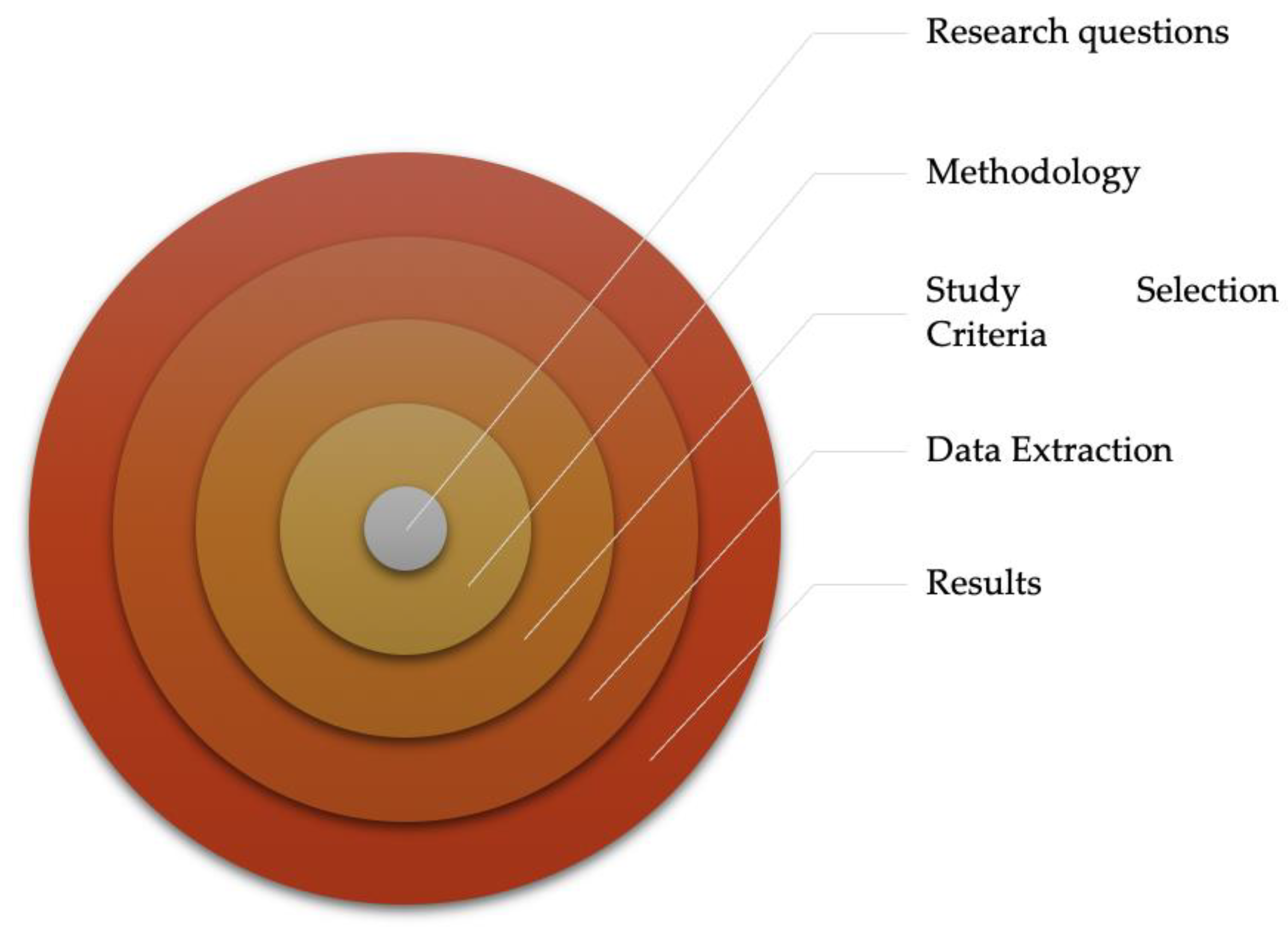
Figure 2.
Selection Process Flowchart.
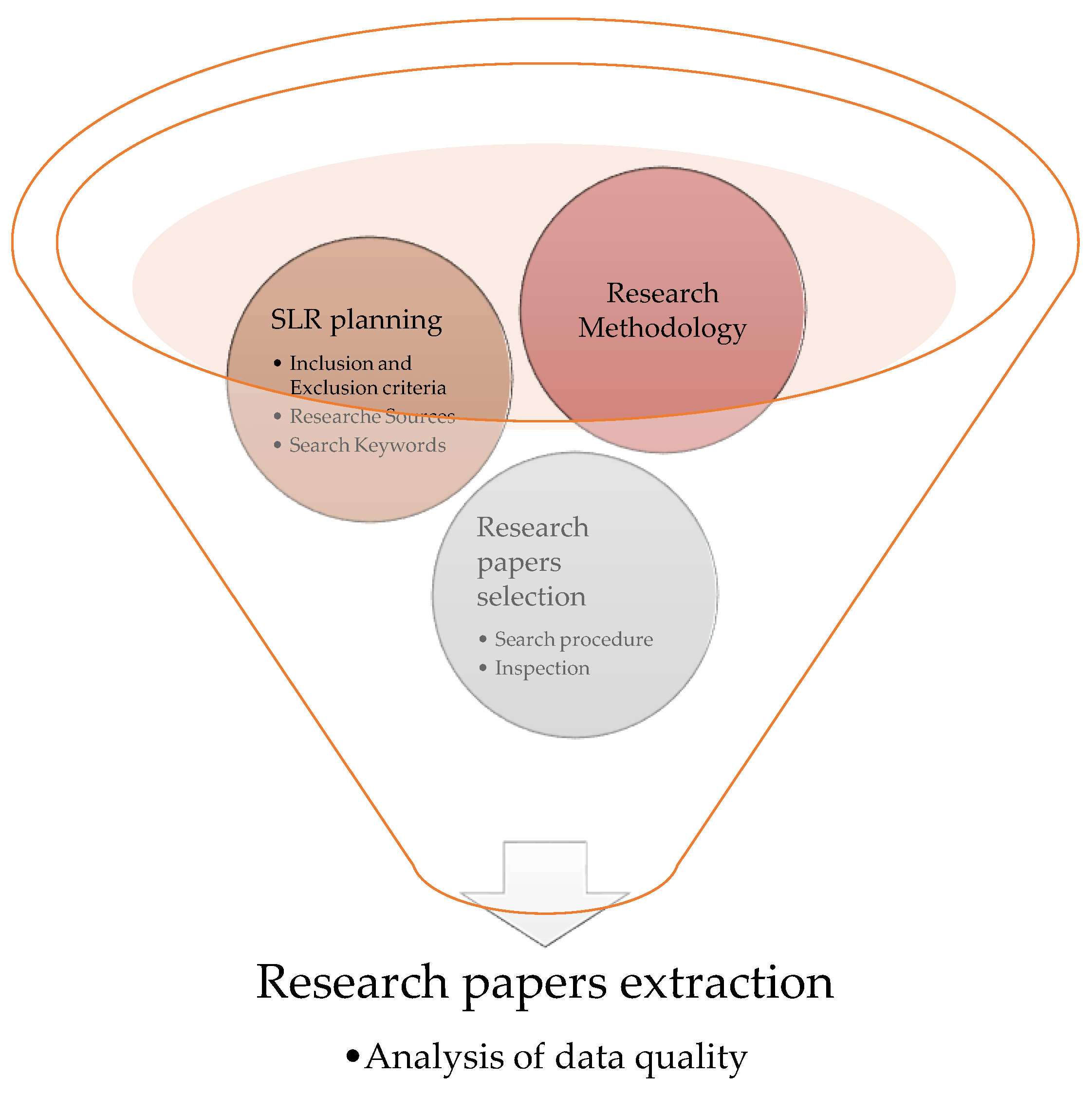
Figure 3.
Data Collection Process Flowchart.
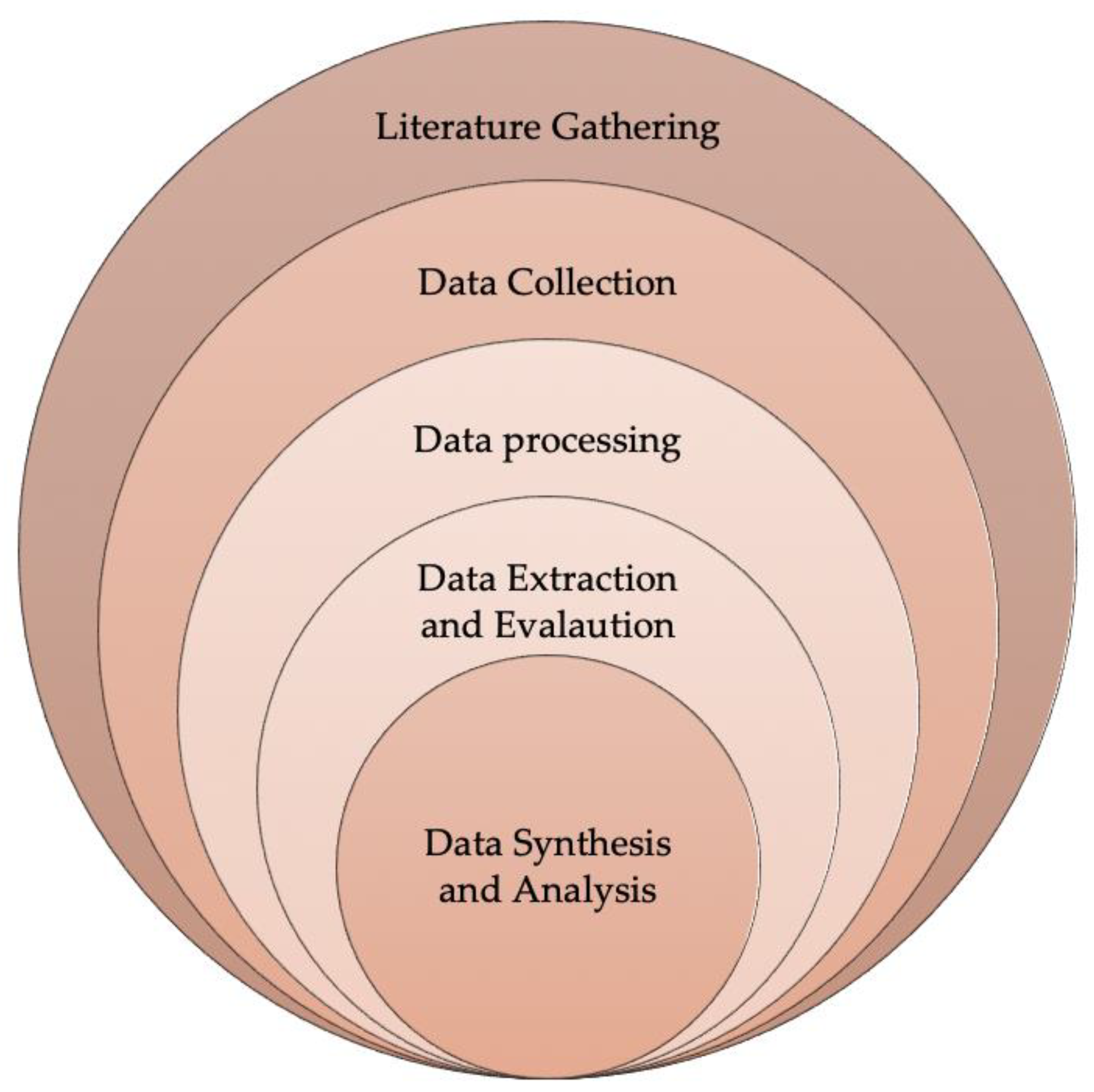
Figure 4.
Data Collection Process Flowchart.
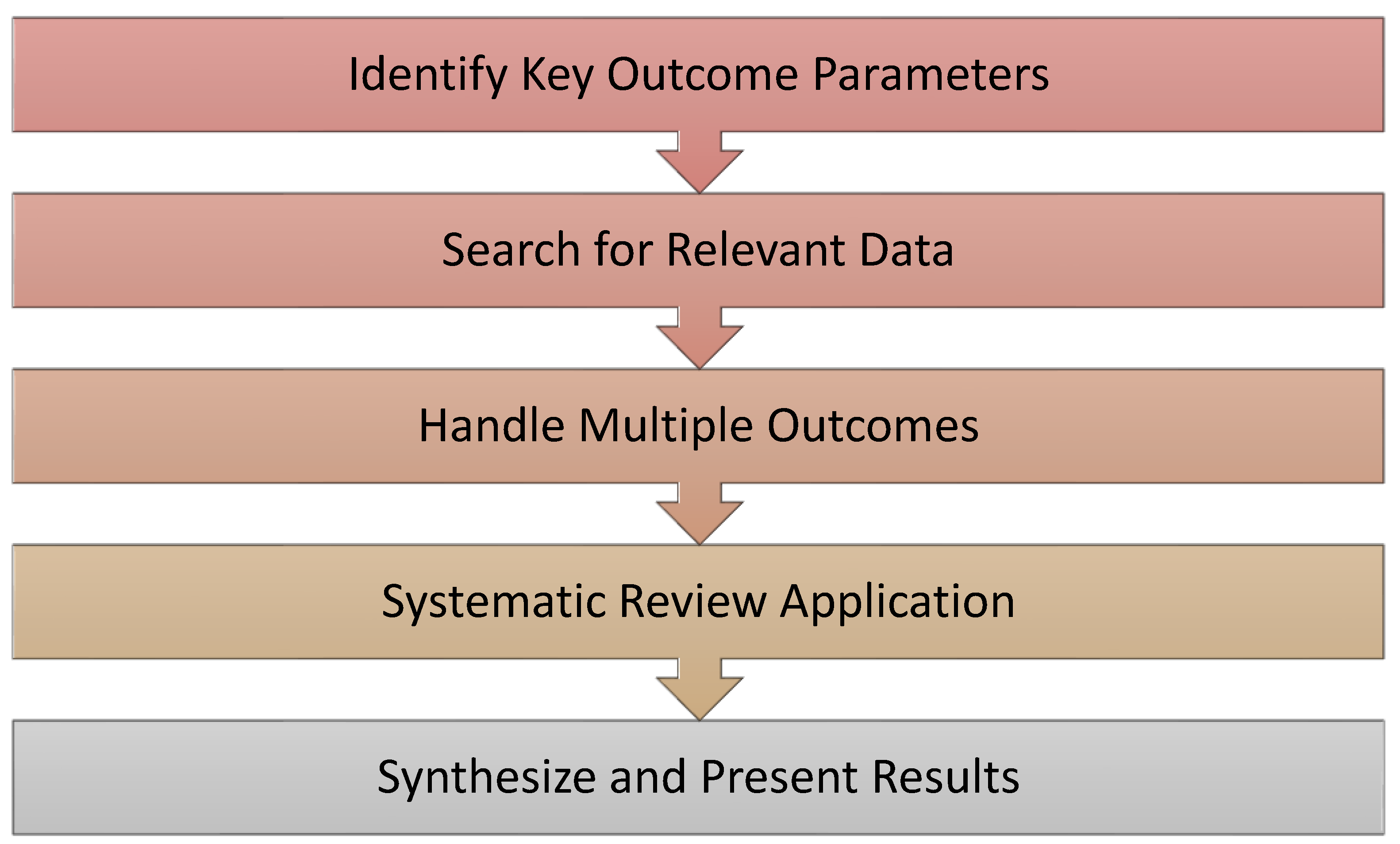
Figure 5.
Effect Measures of Assessing the Impact of CRM Systems on SMEs.

Figure 6.
Synthesis Method Flowchart.
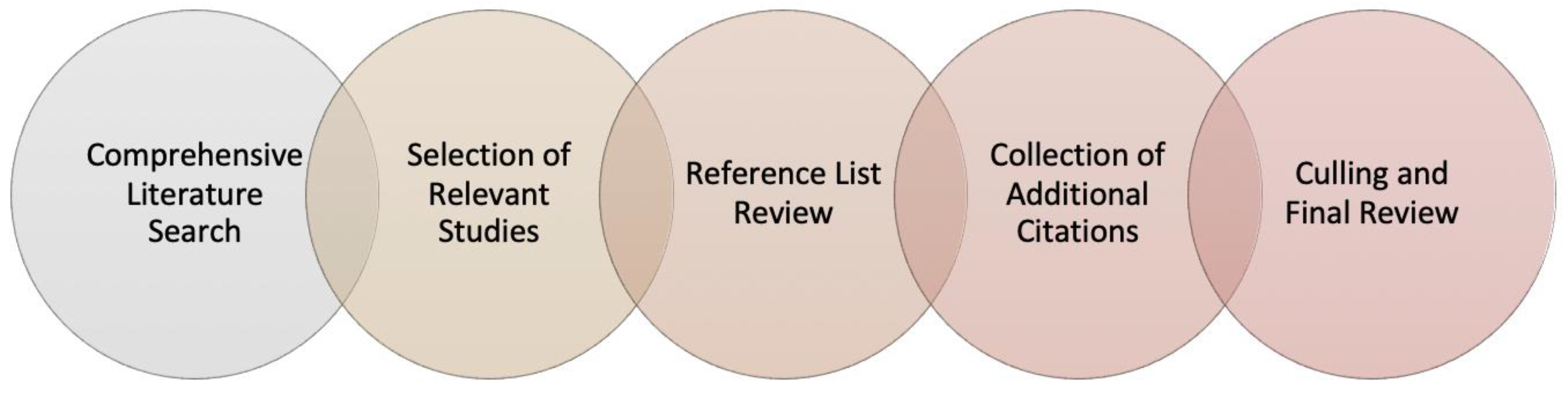
Figure 7.
Reporting Bias Assessment Flowchart.
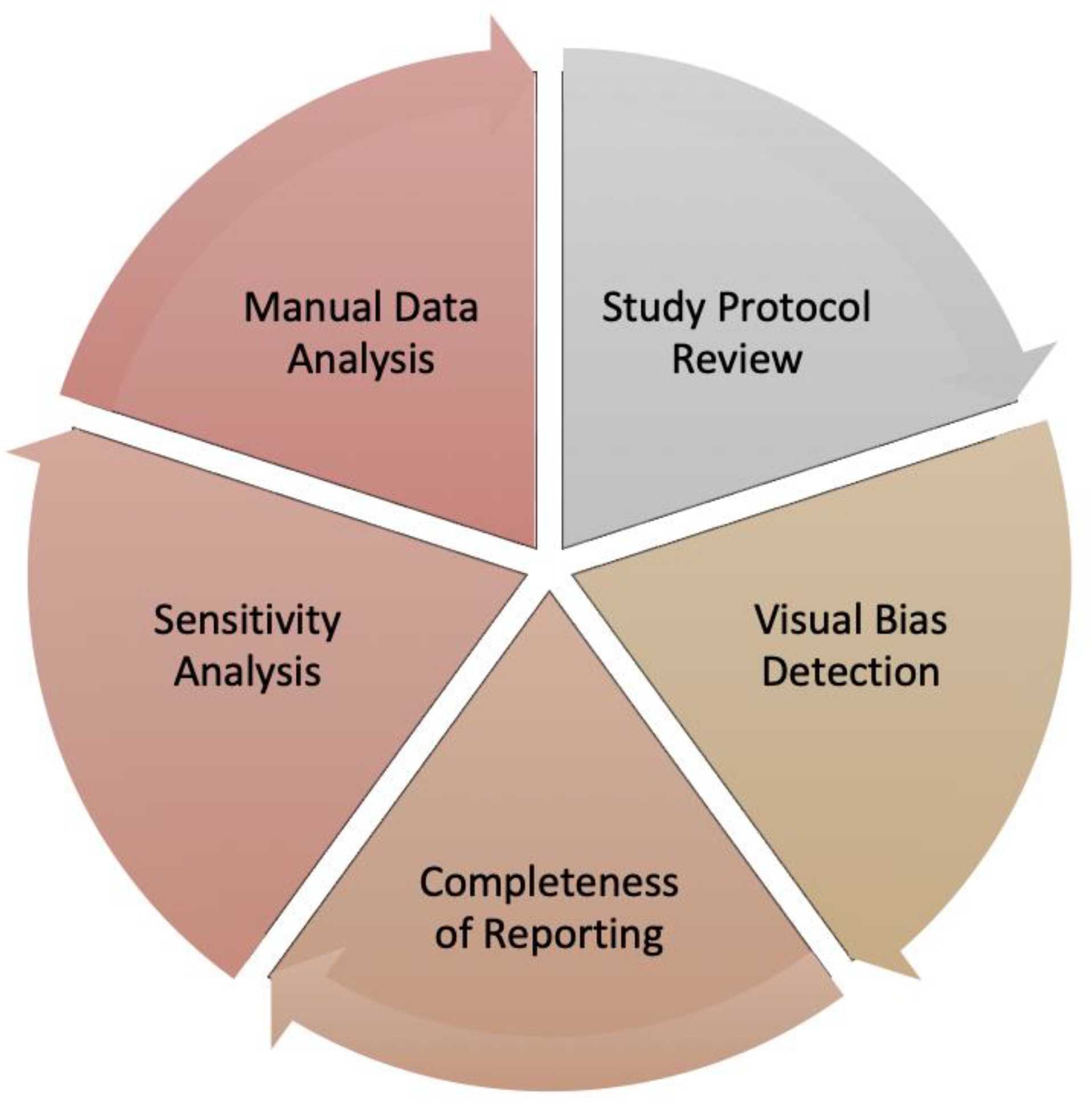
Figure 9.
Distribution of Online Data Sources.
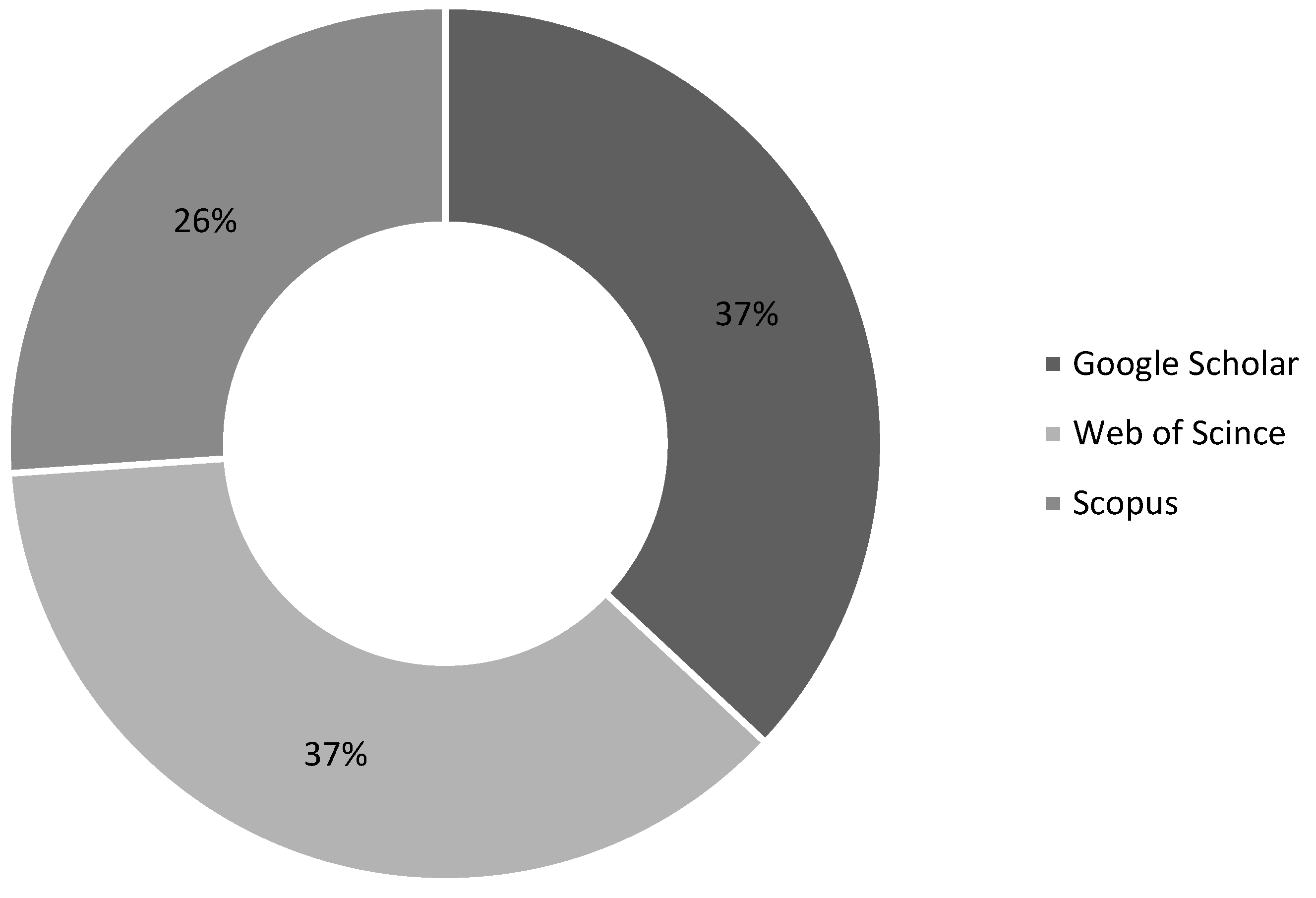
Figure 10.
The Yearly Number of Released Research Papers.
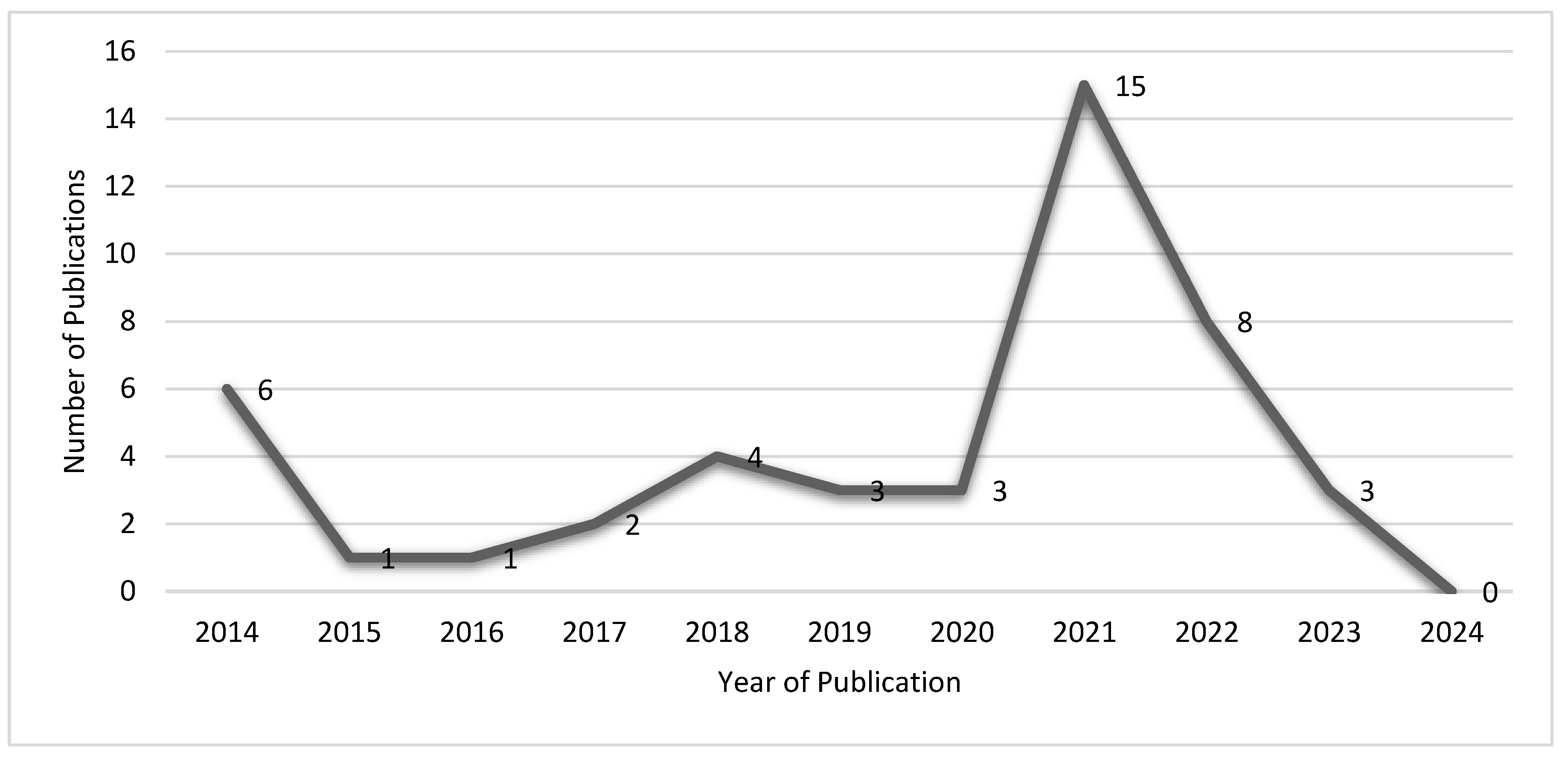
Figure 11.
The Share of Research Publication by Country Based On The Study Context.
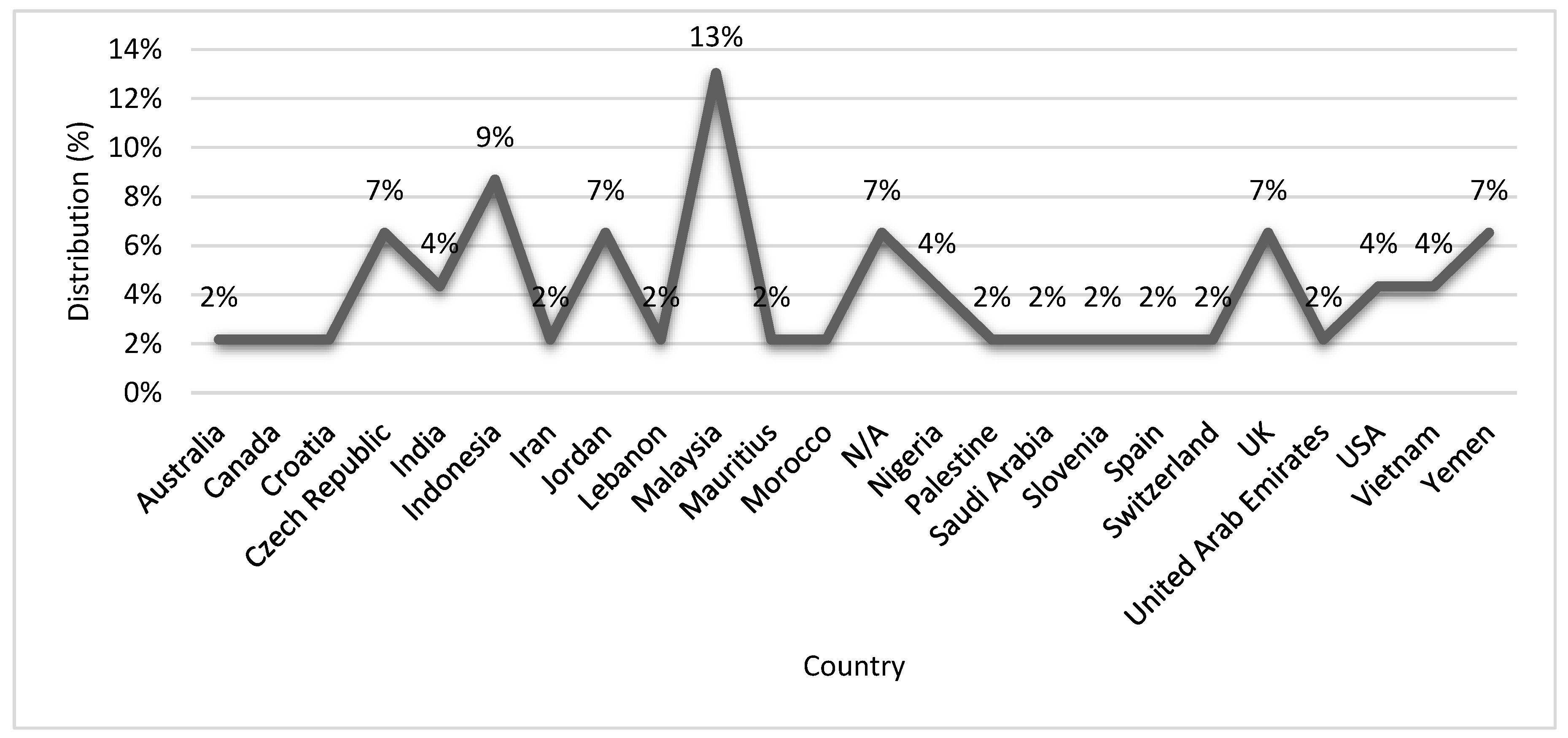
Figure 12.
Geographic location of publications per continent.
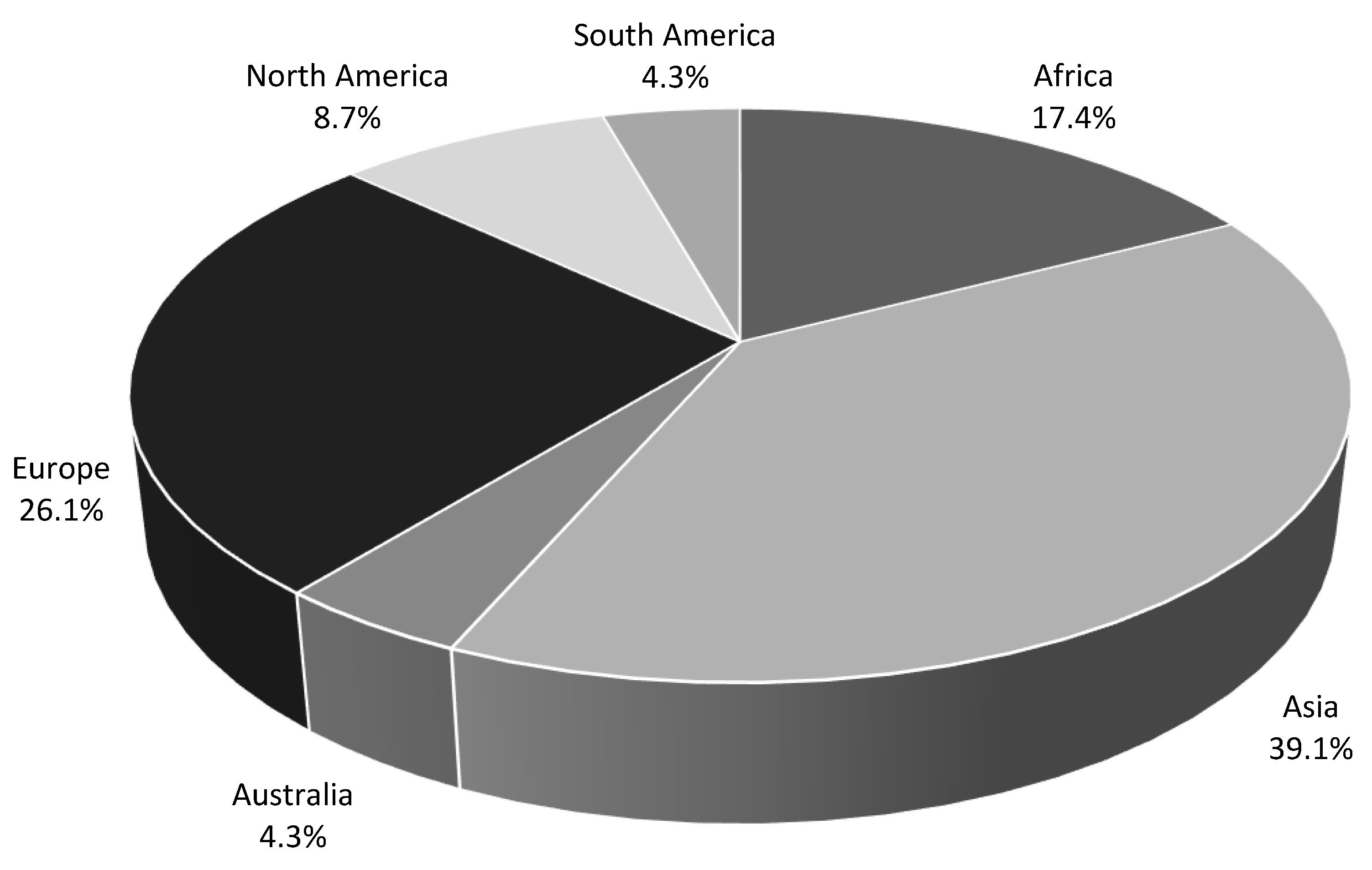
Figure 13.
Number of Publications Versus Type of Study.
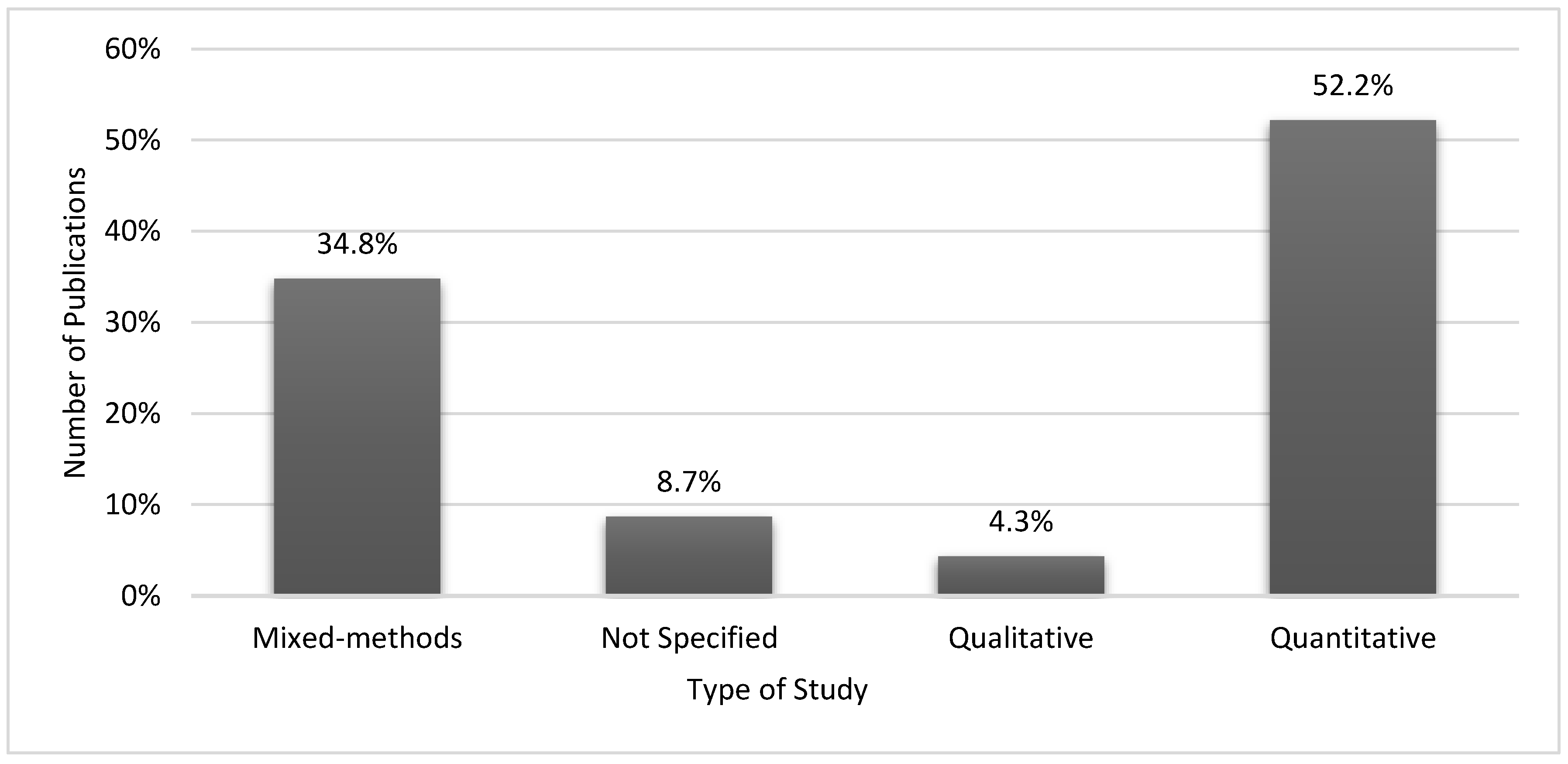
Figure 14.
Distribution of developing versus developed countries. .
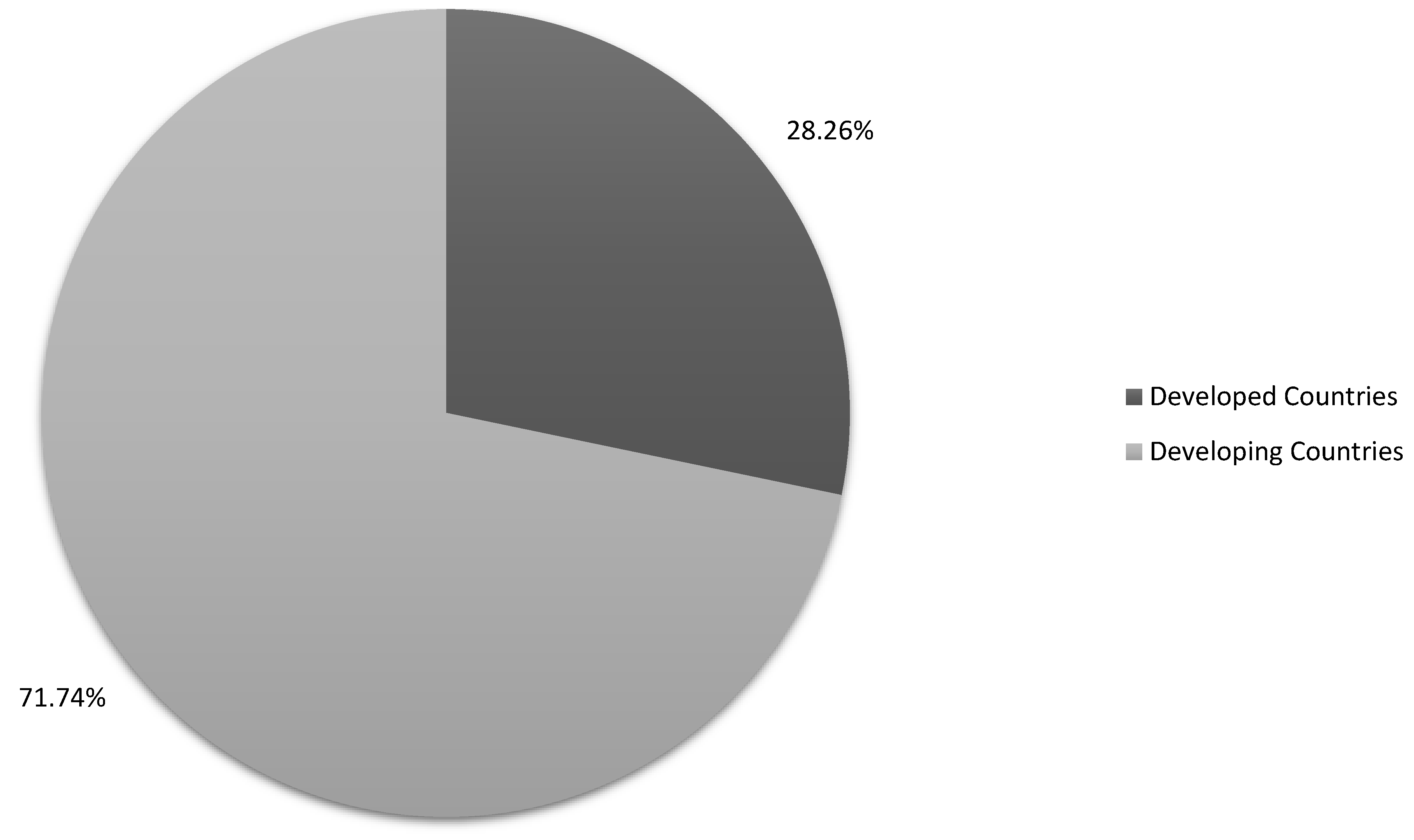
Figure 15.
CRM System Types in Research Studies.
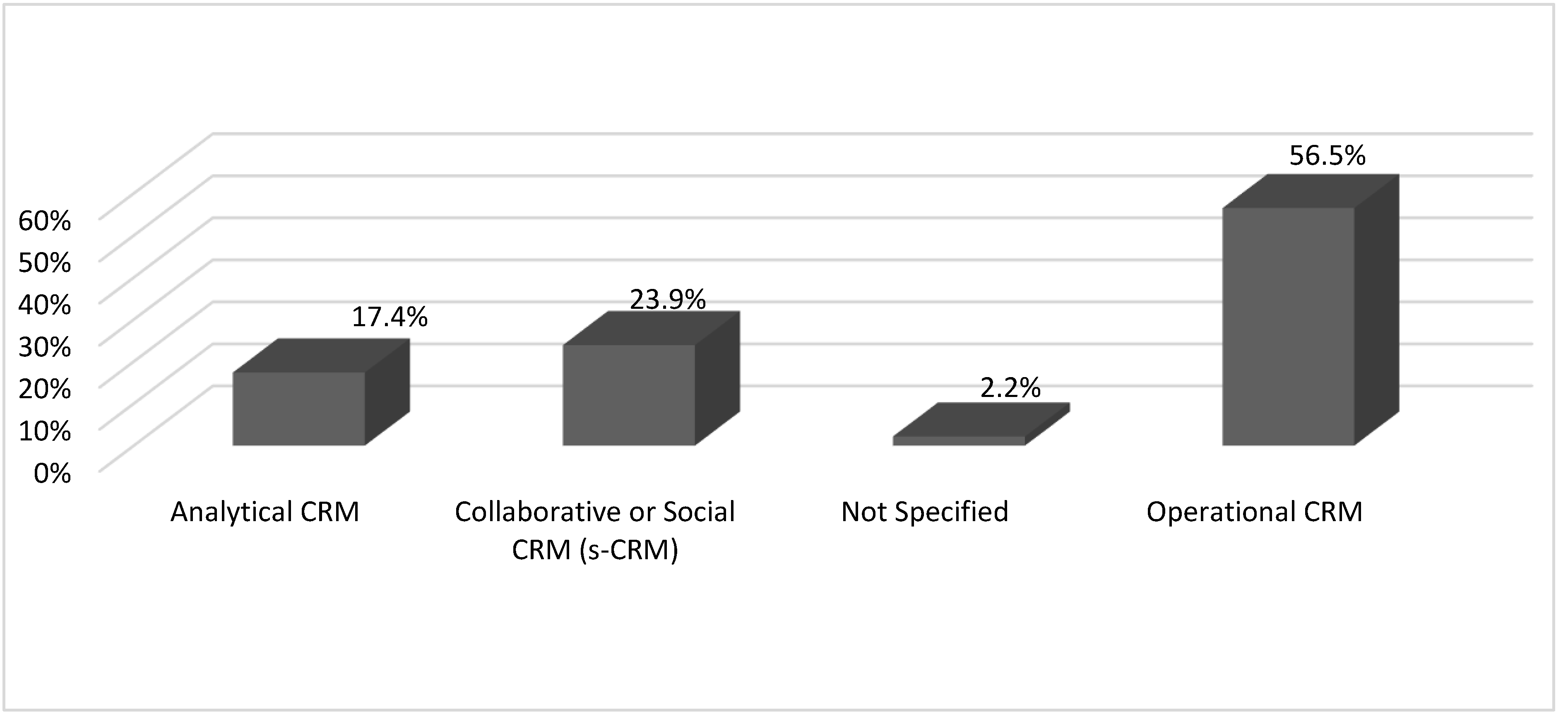
Figure 16.
Research Study Application.
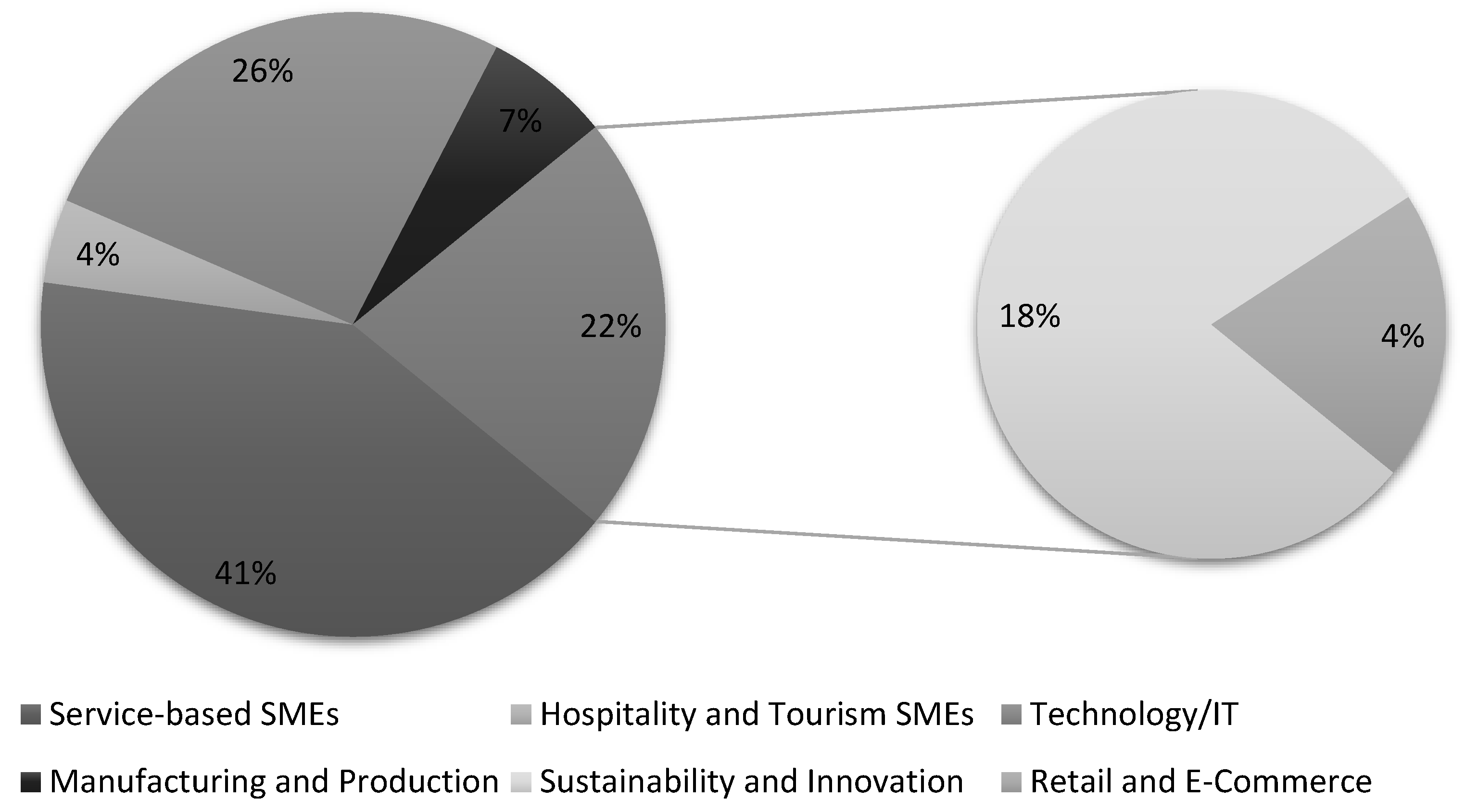
Figure 17.
CRM Focus Areas in Research Studies.
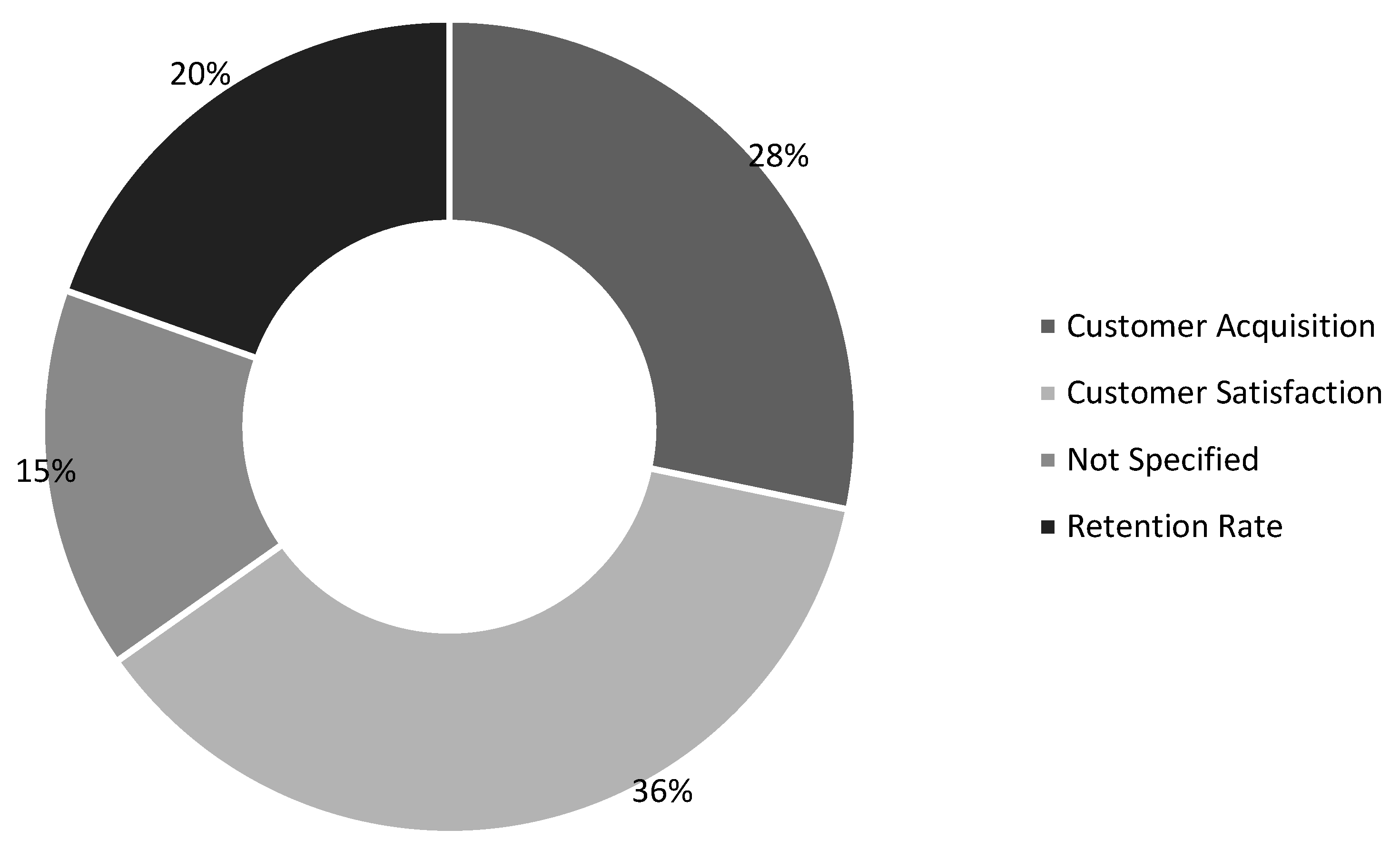
Figure 18.
Key Business Outcomes from CRM Implementation.
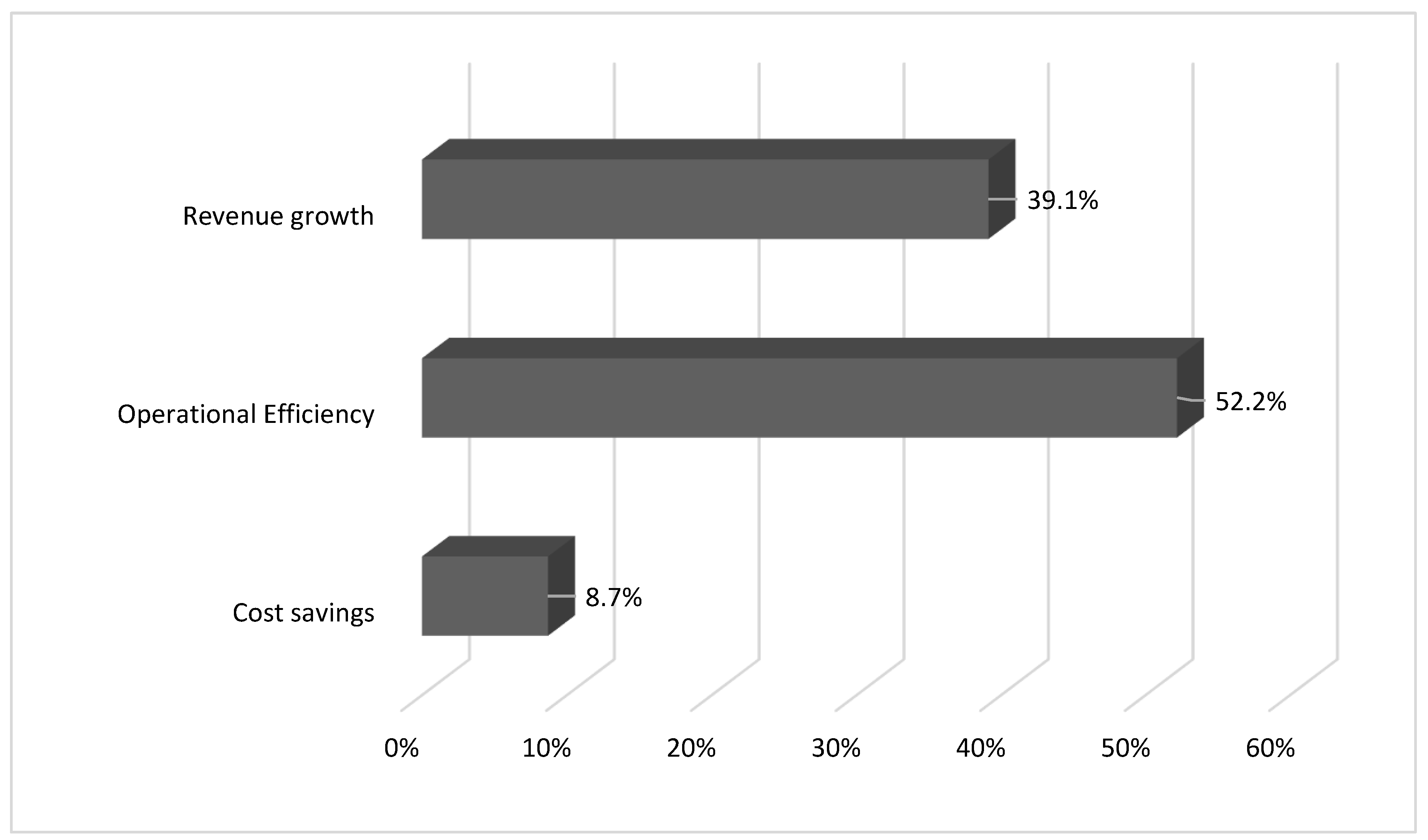
Figure 19.
Type of CRM Technologies.
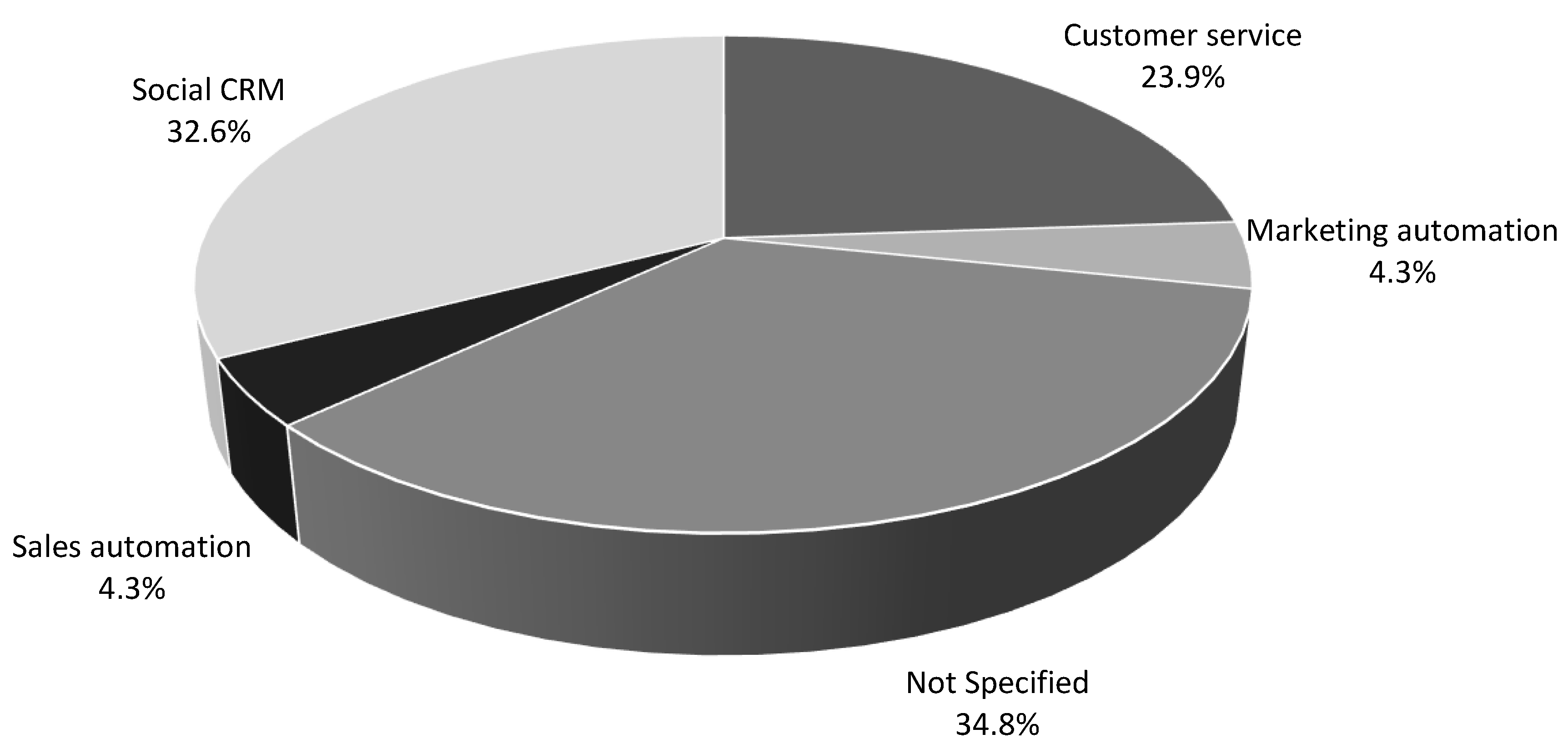
Table 1.
Comparative Analysis of The Existing Review Works and Proposed Systematic Review on CRM Systems and Their Impact on SMEs Performance.
Table 1.
Comparative Analysis of The Existing Review Works and Proposed Systematic Review on CRM Systems and Their Impact on SMEs Performance.
| Ref. | Cites | Year | Contribution | Pros | Cons |
|---|---|---|---|---|---|
| [21] | 11 | 2015 | It highlights how knowledge management boosts e-CRM effectiveness in SMEs. | Provides practical guidelines for enhancing e-CRM practices and customer engagement. | Relying on a single manager’s response may introduce bias and miss diverse perspectives. |
| [22] | 23 | 2017 | It shows the interconnectedness of CRM factors like customer satisfaction and profitability. | Helps SMEs differentiate in the market, increasing market share and profitability. | A lack of customer-centric culture may cause CRM systems to fail. |
| [23] | 181 | 2017 | The study links CRM to business performance and innovation, especially in Iran. | Encourages data-driven approaches for improved customer satisfaction and business outcomes. | Longitudinal studies could offer deeper insights into CRM’s long-term effects. |
| [24] | 42 | 2018 | It emphasizes the need for effective communication media in SMEs. | Enhances product competitiveness through effective e-CRM and information sharing. | SMEs may struggle with e-CRM adoption due to resource and expertise constraints. |
| [25] | 7 | 2018 | The research stresses tailored social CRM approaches based on enterprise size. | Offers insights into factors influencing social CRM adoption and its impact on performance. | A 6% response rate limits the representativeness of the sample. |
| [26] | 94 | 2018 | It identifies the need for a CRM-based loyalty framework for SMEs. | Proposes a systematic framework for customer loyalty based on CRM. | Small sample sizes may fail to capture diverse SME experiences. |
| [27] | 16 | 2018 | CRM factors like customer care and analytics drive MSME growth in Nigeria. | Lays the groundwork for further research on CRM practices across various contexts. | Critical factors for MSME growth may be overlooked. |
| [28] | 3 | 2018 | The study ranks 21 critical success factors for CRM in MSMEs. | Promotes leveraging customer data for informed decision-making. | Self-reported data from entrepreneurs may introduce bias. |
| [29] | 172 | 2019 | It shows how social CRM and social media enhance SME engagement and innovation. | Strengthens customer relationships through Social CRM, leading to higher satisfaction and loyalty. | Social media raises data privacy and security concerns, affecting engagement. |
| [29] | 14 | 2019 | The study highlights barriers to SCRM adoption, such as time and knowledge limits. | Identifies strategies for overcoming barriers to SCRM implementation with proactive engagement. | SMEs may struggle to implement recommended CRM capabilities due to limited resources. |
| [30] | 12 | 2019 | E-CRM software for MSMEs in Banten offers local language support and ease of use. | Highlights critical success factors to address challenges in e-CRM implementation. | Responses from a single informant may overlook different views within the SME. |
| [31] | 13 | 2019 | Long-term customer relationships improve telecom companies' financial performance. | Provides insights into internal perceptions of CRM practices for better management decisions. | CRM technology and customer orientation alone may not significantly boost performance. |
| [32] | 50 | 2020 | It shows how tech compatibility and government support drive social CRM adoption. | Associates Social CRM adoption with improved customer relationship performance. | Some useful articles may have been missed due to keyword and context limitations. |
| [33] | 5 | 2019 | CRM and social media improve SME performance, filling a gap in the literature. | Shows that effective CRM implementation does not require extensive resources or complex strategies. | The focus on the service sector limits generalizability to other industries. |
| [34] | 40 | 2020 | The study identifies organizational and tech factors that drive social CRM use. | Enables SMEs to gain a competitive edge through improved responsiveness to customer needs. | Cross-sectional data restricts the ability to track CRM adoption changes over time. |
| [35] | 17 | 2020 | It explores CRM’s impact on SMEs in Yemen, contributing to research on developing countries. | Suggests that effective CRM use leads to significant competitive advantages. | CRM system implementation is complex, with risks of wasted investments. |
| [36] | 93 | 2020 | The study links product and service innovation to SME competitiveness via CRM. | Indicates that e-CRM can enhance marketing performance by fostering better relationships. | Some complexities and challenges of CRM implementation remain underexplored. |
| [37] | 7 | 2020 | It stresses the need to overcome tech barriers for CRM success in SMEs. | Enhances competitiveness through better customer relationship management via e-CRM practices. | SMEs’ lack of awareness of CRM’s benefits may slow progress. |
| [38] | 3 | 2022 | CRM dimensions like customer orientation and tech impact business sustainability. | Facilitates informed decision-making using technology and knowledge management within CRM. | Over-reliance on technology risks neglecting personal customer relationships. |
| [39] | 13 | 2022 | Social CRM mediates the relationship between practices and performance. | Provides best practice insights for managers to enhance customer interactions and satisfaction in social CRM. | External factors like market conditions are not thoroughly addressed. |
| [40] | - | 2022 | Social media feedback helps SMEs make faster decisions, boosting innovation. | Supports continuous communication with customers to adapt offerings based on changing preferences and trends. | Many SME owners lack digital marketing skills, limiting their use of social media. |
| Proposed systematic review | The systematic review will provide a comprehensive synthesis of existing research on critical success factors (CSFs) in CRM implementation across various industries. | Conducting the review is time and resource-intensive, requiring significant effort from researchers. | |||
Table 2.
Proposed Inclusion and Exclusion Criteria.
| Criteria | Inclusion Criteria | Exclusion Criteria |
|---|---|---|
| Topic | Focuses on CRM systems and their impact on SMEs | Studies not related to CRM systems |
| Research Framework | Must include a clear research framework or methodology | Lacks a framework or methodology relevant to CRM |
| Language | Written in English | Published in other languages |
| Publication Period | Published between 2014 and 2024 | Outside the specified period |
Table 3.
Results Obtained from The Literature Search.
| No | Online Repository | Number of results |
|---|---|---|
| 1 | Google scholar | 18100 |
| 2 | Web of science | 91 |
| 3 | SCOPUS | 115 |
| Total | 18306 |
Table 4.
List And Define All Outcomes For Which Data Were Sought.
| Fields | Description |
|---|---|
| Paper ID | Numbering for the papers |
| Title | Topic used for the paper |
| Year | When was it published |
| Online Database | Where the paper is found |
| Journal Name | Name of the journal where the paper is published |
| Research Type | Type of research conducted |
| Discipline or Subject Area | Field or subject area of the research |
| Industry Context | Context of the industry in which the research is relevant |
| Geographic Location | Geographic location relevant to the study |
| Economic Context | Economic conditions or factors considered in the study |
| Technology Implementation Model | Model used for implementing the technology |
| Types of CRM Technologies | Types of CRM technologies studied |
| Technology Providers | Providers of the technologies analyzed |
| Research Design | Design of the research study |
| Type of Study | Qualitative, quantitative, mixed Methods, etc. |
| Sample size | Number of participants or cases in the study |
| Sample Characteristics | Characteristics of the sample (e.g., demographics) |
| Data collection methods | Methods used to collect data |
| Data Analysis Techniques | Techniques used to analyze data |
| CRM Performances Metrics | Metrics used to assess CRM performance |
| Business Performance Metrics | Metrics used to assess overall business performance |
| Organizational Outcomes | Outcomes related to the organization |
| Long-Term Impacts | Long-term effects or impacts of the CRM technologies |
Table 6.
Method Selected for Synthesis.
| Method Step | Description |
|---|---|
| Objective | To systematically assess the influence of CRM tool on SMEs' performance. |
| Synthesis Development | Developed a robust, transparent, and repeatable process for aggregating results from selected research studies |
| Paper Selection Process | Systematic and thorough paper selection, ensuring alignment with the review’s objectives related to SME performance. |
| Eligibility Synthesis | Selected studies relevant to CRM systems and aligned with the review's aims, as per Table 6 and Figure 5. |
| Criteria for Inclusion | A controlled comparison against predefined criteria was used to include only relevant studies. |
| Bias Reduction | Ensured methodological rigor by reducing bias through the controlled selection process. |
Table 7.
Proposed Research Quality Assessment Questions.
| QA | Research Quality Assessment Questions |
|---|---|
| QA1 | Are the objectives of the research clearly defined? |
| QA2 | Is the methodology of the research well-explained? |
| QA3 | Is the impact of CRM systems on SMEs' performance clearly analyzed? |
| QA4 | Are the methods used for data collection adequately described? |
| QA5 | Is the study's field or context clearly outlined? |
Table 8.
Results of Collected Literature Quality Assessment.
| Ref. | QA1 | QA2 | QA3 | QA5 | QA5 | Total | %Grading |
|---|---|---|---|---|---|---|---|
| [53, 55, 56, 58, 60, 62, 63, 64, 65, 68, 86] | 1 | 1 | 1 | 1 | 1 | 5 | 100 |
| [41, 48, 52, 77, 78, 85] | 1 | 1 | 1 | 0.5 | 1 | 4.5 | 90 |
| [42, 43, 50, 70, 72, 79, 84] | 1 | 0.5 | 1 | 1 | 0.5 | 4 | 80 |
| [46, 80] | 1 | 0.5 | 1 | 0.5 | 0.5 | 3.5 | 70 |
| [44, 49, 51, 54, 57, 59, 66, 67, 69, 73, 74, 75, 76, 81, 82, 83] | 1 | 0.5 | 0.5 | 0.5 | 0.5 | 3 | 60 |
| [45, 61, 71] | 0.5 | 0.5 | 0.5 | 0.5 | 0 | 2 | 40 |
| [47] | 0.5 | 0.5 | 0.5 | 0 | 0 | 1.5 | 30 |
Table 8.
Momentary View of Research Works Contained Herein by Published Year.
| Published Year | Book Chapter | Conference Paper | Dissertation | Journal Article |
|---|---|---|---|---|
| 2014 | 0 | 0 | 0 | 6 |
| 2015 | 0 | 6 | 0 | 1 |
| 2016 | 0 | 0 | 0 | 1 |
| 2017 | 0 | 0 | 0 | 2 |
| 2018 | 0 | 0 | 0 | 4 |
| 2019 | 0 | 0 | 0 | 3 |
| 2020 | 0 | 0 | 0 | 3 |
| 2021 | 0 | 1 | 0 | 14 |
| 2022 | 0 | 0 | 0 | 3 |
| 2023 | 0 | 0 | 0 | 0 |
Table 9.
Industrial Context of The Selected Research Studies.
| Industry | Count | % |
|---|---|---|
| Service Industries | 20 | 44 |
| Technology and Innovation | 21 | 45 |
| Manufacturing and Retail | 5 | 11 |
Table 10.
Summary of Selected Studies.
| Study | Sample Size | CRM Type | CRM Performance Metrics | Contributions |
|---|---|---|---|---|
| [41] | 21 | Operational CRM | Customer Satisfaction, Key Customer Focus | Provides valuable insights for industry planning, and technology providers to enhance CRM practices and competitiveness |
| [42] | 59 | Operational CRM | Customer Satisfaction, Key Customer Focus | Re-conceptualizes key customer focus, knowledge management and relationship marketing |
| [43] | 44 | Collaborative/Social CRM | Customer Engagement, Satisfaction | Improve customer satisfaction and market share. |
| [44] | 143 | Not Specified | Customer Satisfaction, Knowledge Retention | Determining the Customer Lifetime Value (CLV) for long-term competitive advantage. |
| [45] | 100 | Analytical CRM | Perception Of CRM, Employee Involvement | Understand impact on customer retention mediated by customer satisfaction. |
| [46] | 51 | Operational CRM | Customer Engagement, Satisfaction | Influence of customer orientation on SMEs performance. |
| [47] | 13 | Operational CRM | Customer Loyalty, Retention Rate | Improved customer relationships, Business sustainability, and brand reinforcement. |
| [48] | 112 | Operational CRM | Customer Acquisition | CRM dimensions are viewed as tools to improve performance among establishments worldwide. |
| [49] | 25 | Operational CRM | - | Relation of retention to CRM strategy and customer loyalty |
| [50] | 130 | Collaborative/Social CRM | Customer Engagement, Satisfaction | CRM Influence on company performance |
| [51] | 46 | Operational CRM | - | Effect of CRM practices on cost associated with customer acquisition. |
| [52] | 19 | Collaborative/Social CRM | Customer Engagement, Satisfaction | Focuses on operational efficiency and organizational performance |
| [53] | 63 | Operational CRM | Improved Customer Relationships | Develops analytical frameworks and integrates data into their CRM systems. |
| [54] | Operational CRM | Integrated Customer Database | The influence of CRM with the dimensions of customer initiation, customer maintenance and customer termination. | |
| [55] | 23 | Collaborative/Social CRM | Customer Engagement, Satisfaction | effect of CRM on the SMEs that improves the performance of industries and companies. |
| [56] | 8 | Operational CRM | Customer Orientation, Service Quality | Implementing CRM results in market performance of sales and the profitability of the entire organization. |
| [57] | Operational CRM | Customer Satisfaction, Efficiency | Improved customer relationships and enhanced business survival | |
| [58] | Analytical CRM | Customer Satisfaction, Loyalty | CRM systems help organizations acquire and continuously generate customer knowledge. | |
| [59] | Analytical CRM | Customer Satisfaction, Retention | Drawing on the Resource-Advantage theory of sustainable competitive advantages | |
| [60] | Operational CRM | Customer Satisfaction, Performance Metrics | Improved customer loyalty and performance improvement | |
| [61] | 46 | Analytical CRM | - | Organizations seek to improve customer service through CRM systems. |
| [62] | 47 | Operational CRM | ||
| [63] | Operational CRM | Customer Satisfaction, Retention | ||
| [64] | 48 | Operational CRM | Customer Acquisition, Retention Rate | |
| [65] | 44 | Operational CRM | ||
| [66] | 23 | Operational CRM | Firm Performance, Customer Loyalty | Building general research model through CRM practices, innovation capability, and firm performance. |
| [67] | 6 | Collaborative/Social CRM | Customer Engagement, Satisfaction | Relative advantages, compatibility, top management support, organizational culture, and technology readiness. |
| [68] | 1 | Operational CRM | Customer Satisfaction, Loyalty | Communication-distribution infrastructure, business dynamics, customer relations and innovation-quality factors affect CRM. |
| [69] | 0 | Collaborative/Social CRM | Customer Engagement | Social CRM acceptance in improving the performance of companies and their services delivery. |
| [70] | 0 | Operational CRM | Customer Retention, Acquisition | The resilience of MSMEs as a function of firm size and customer management. |
| [71] | 0 | Operational CRM | Customer Satisfaction | Maintaining information security in the era of digitalization. |
| [72] | 7 | Collaborative/Social CRM | Brand Loyalty | customer orientation has a positive impact on business sustainability. |
| [73] | 0 | Analytical CRM | Customer Acquisition | Positive and significant correlation between marketing communication effectiveness, customer value creation, product innovation, and financial performance. |
| [74] | 0 | Operational CRM | Customer Satisfaction | Impact of Social Customer Relationship Management (SCRM) on competitive advantage, innovation capability, and SME performance |
| [75] | 4 | Collaborative/Social CRM | Customer Engagement, Satisfaction | Building and enhancing relationships to increase long term profitability of the company. |
| [76] | 71 | Operational CRM | Customer Acquisition, Retention Rate, Customer Satisfaction | |
| [37] | Operational CRM | |||
| [78] | 8 | Analytical CRM | Performance Indicators, Customer Satisfaction | Utilizing subjective measures; future studies could utilize objective performance measures in order to relate CRM and SC with performance. |
| [79] | 118 | Operational CRM | Customer Retention, Satisfaction | |
| [80] | 0 | Analytical CRM | Customer Engagement | Helps improve customer engagement and innovation performance. |
| [81] | 0 | Collaborative/Social CRM | Customer Loyalty | SCRM has a positive impact on CL formation in the MSME sector. |
| [82] | 0 | Analytical CRM | Customer Satisfaction | There is a significant mediation role of SCR between CRM practices and customer satisfaction |
| [83] | 2 | Collaborative/Social CRM | Customer Engagement, Satisfaction | Incorporating social media into CRM strategies and implementations on SMEs performance. |
| [84] | Operational CRM | Customer Satisfaction, Loyalty | ||
| [85] | Operational CRM | |||
| [86] | 3 | Collaborative/Social CRM | Customer Satisfaction, Engagement | The mediating role of sustainable dynamic capabilities in the effect of s-CRM on sustainable competitive advantage. |
Table 11.
Results of Risk of Bias in Research Studies.
| Ref | Random Sequence Generation (Selection Bias) | Allocation Concealment (Selection Bias) | Binding of Participants and Personnel (Performance Bias) | Binding of Outcome Assessment (Detection Bias) | Incomplete Outcome Data (Attrition Bias) | Selective Reporting (Reporting Bias) | Other Sources of Bias | Overall Risk of Bias |
|---|---|---|---|---|---|---|---|---|
| [41] | Unclear | Unclear | Unclear | Unclear | Low | Unclear | Moderate | Moderate |
| [42] | Unclear | Unclear | Moderate | Moderate | Low | Low | Moderate | Moderate |
| [43] | Unclear | Unclear | Unclear | Unclear | Low | Unclear | Unclear | Unclear |
| [44] | Unclear | High | High | High | High | Unclear | High | High |
| [45] | Low | Low | Unclear | Low | Low | Low | Low | Low |
| [46] | Unclear | Unclear | Moderate | High | Moderate | Low | Moderate | Moderate |
| [47] | Unclear | Unclear | Moderate | Moderate | Low | Low | Unclear | Unclear |
| [48] | Low | Low | Unclear | Hight | Low | Unclear | High | Moderate |
| [49] | Low | Unclear | Moderate | Unclear | Unclear | Unclear | High | Low |
| [50] | Unclear | Unclear | Unclear | Unclear | Low | Low | Unclear | Unclear |
| [51] | Unclear | Unclear | Moderate | High | Low | Moderate | High | Unclear |
| [52] | Low | Unclear | High | High | Moderate | Low | High | Low |
| [53] | Low | Low | Moderate | Unclear | Low | Moderate | Unclear | Low |
| [54] | Unclear | Low | Unclear | Moderate | Low | Low | Unclear | Unclear |
| [55] | Low | Unclear | Moderate | Unclear | Moderate | Moderate | Low | Low |
| [56] | Unclear | Unclear | Unclear | High | Low | Moderate | Moderate | Unclear |
| [57] | Low | Low | Moderate | Moderate | Moderate | Low | Moderate | Low |
| [58] | Unclear | Low | Unclear | Unclear | Low | Moderate | Low | Low |
| [59] | Low | Low | High | Moderate | Moderate | Low | Moderate | Unclear |
| [60] | Low | Unclear | Unclear | Unclear | Low | Low | Low | Unclear |
| [61] | Low | Low | Unclear | Hight | Low | Unclear | High | Moderate |
| [62] | Low | Unclear | Moderate | Unclear | Unclear | Unclear | High | Low |
| [63] | Unclear | Unclear | Unclear | Unclear | Low | Low | Unclear | Unclear |
| [64] | Unclear | Unclear | Moderate | High | Low | Moderate | High | Unclear |
| [65] | Low | Unclear | High | High | Moderate | Low | High | Low |
| [66] | Low | Low | Moderate | Unclear | Low | Moderate | Unclear | Low |
| [67] | Unclear | Low | Unclear | Moderate | Low | Low | Unclear | Unclear |
| [68] | Low | Unclear | Moderate | Unclear | Moderate | Moderate | Low | Low |
| [69] | Unclear | Unclear | Unclear | High | Low | Moderate | Moderate | Unclear |
| [70] | Low | Low | Moderate | Moderate | Moderate | Low | Moderate | Low |
| [71] | Unclear | Low | Unclear | Unclear | Low | Moderate | Low | Low |
| [72] | Low | Low | High | Moderate | Moderate | Low | Moderate | Unclear |
| [73] | Low | Unclear | Unclear | Unclear | Low | Low | Low | Unclear |
| [74] | Low | Unclear | Moderate | Unclear | Moderate | Moderate | Low | Low |
| [75] | Unclear | Unclear | Unclear | High | Low | Moderate | Moderate | Unclear |
| [76] | Low | Low | Moderate | Moderate | Moderate | Low | Moderate | Low |
| [77] | Unclear | Low | Unclear | Unclear | Low | Moderate | Low | Low |
| [78] | Low | Low | High | Moderate | Moderate | Low | Moderate | Unclear |
| [79] | Low | Unclear | Unclear | Unclear | Low | Low | Low | Unclear |
| [80] | Low | Low | Unclear | Hight | Low | Unclear | High | Moderate |
| [81] | Low | Unclear | Moderate | Unclear | Unclear | Unclear | High | Low |
| [82] | Low | Unclear | Moderate | Unclear | Moderate | Moderate | Low | Low |
| [83] | Unclear | Low | Unclear | Moderate | Low | Low | Unclear | Unclear |
| [84] | Low | Unclear | Moderate | Unclear | Moderate | Moderate | Low | Low |
| [85] | Unclear | Unclear | Unclear | High | Low | Moderate | Moderate | Unclear |
| [86] | Low | Low | Moderate | Moderate | Moderate | Low | Moderate | Low |
Table 12.
Results of Risk of Bias in Research Studies.
| Study | Reporting Bias | Impact on Reliability |
|---|---|---|
| [1-10], [12-15], [17-20], [22-23] | Reported significant improvements in customer satisfaction and retention metrics, suggesting a positive effect of CRM on SMEs. | Reliable, but long-term impact unclear. |
| [11, 13, 16], [18, 21, 24-30], [32-35] | Did not provide comprehensive data on financial performance and growth due to CRM implementation. | Less reliable due to missing information. |
| [31, 36-40], [42-45], [47] | Reported mixed results regarding the impact of CRM on operational efficiency and employee engagement in SMEs. | Moderately reliable, requires more comprehensive data. |
Table 12.
Key Findings and Strategic Implications for Business Leaders.
| Industry | Key Finding | Strategic Implications for Business Leaders | Opportunities | Challenges | Relevance to Proposed Systematic Review | Strategic Drivers | Expected Outcome |
|---|---|---|---|---|---|---|---|
| Manufacturing | CRM improves operational efficiency by 30% through process automation and better data management. | Invest in CRM tools to streamline operations and reduce manual workflows, thus boosting productivity. | Opportunity to enhance productivity and reduce operational costs. | Initial high investment in CRM software and integration. | Reinforces CRM’s impact on operational efficiency. | Process automation, data management | Increased production efficiency and cost savings. |
| Retail & E-Commerce | CRM adoption leads to a 25-40% increase in customer retention rates. | Focus on customer engagement strategies to boost retention and lifetime value using personalized communication. | Leverage data-driven insights for targeted marketing and personalized offers. | Difficulty in integrating CRM with existing e-commerce platforms. | Aligns with the review's focus on CRM's impact on customer retention. | Personalized customer engagement, targeted marketing | Higher customer retention and increased sales. |
| Hospitality | CRM enhances customer satisfaction by up to 35% through improved service delivery and guest experience. | Utilize CRM to optimize guest feedback management and tailor services to meet customer expectations. | Opportunity to improve service quality and customer satisfaction. | Staff training and resistance to adopting new CRM processes. | Connects to review’s findings on CRM's role in customer satisfaction. | Service quality improvement, customer feedback integration | Enhanced guest satisfaction and repeat business. |
| Technology & IT | CRM implementation supports a 20-30% increase in sales by enabling data-driven decision-making. | Utilize CRM analytics to inform sales strategies and improve the efficiency of sales teams. | Unlock new revenue streams through data-driven sales strategies. | Challenges in ensuring data privacy and regulatory compliance. | Provides evidence for CRM’s impact on data-driven decision-making. | Data analytics, sales strategy optimization | Growth in sales revenue and market share. |
| Automotive | CRM helps improve customer acquisition rates by 20-25% through better customer profiling and follow-ups. | Implement CRM-based lead management to boost sales conversion rates. | Streamline the sales funnel to reduce time to convert leads. | Managing the complexity of customer data integration. | Demonstrates CRM's influence on customer acquisition. | Lead management, sales funnel optimization | Higher customer acquisition rates and conversion efficiency. |
| Pharmaceuticals | CRM adoption facilitates compliance tracking and enhances customer relationships by 15-25%. | Leverage CRM tools for compliance management and improving communication with healthcare providers. | Strengthen regulatory adherence and relationship management. | Complexity in managing sensitive patient data. | Highlights CRM's role in compliance and relationship management. | Compliance management, relationship enhancement | Better regulatory compliance and stronger client relationships. |
Table 13.
Proposed Decision-Making Framework for Implementation.
| Industry | Step | Framework Focus | Key Features | Strategic Drivers | Expected Outcome | Ties to Proposed Study |
|---|---|---|---|---|---|---|
| Manufacturing | Step 1: Needs Analysis | Assess current operational challenges and CRM readiness. | Identify process inefficiencies and data management gaps. | Operational efficiency, process improvement | Clear understanding of areas where CRM can enhance productivity. | Links to CRM's role in improving operational efficiency. |
| Step 2: Select Platform | Choose a CRM platform that integrates well with existing systems. | Prioritize platforms with manufacturing-specific features. | System compatibility, customization | Selection of a CRM system that supports manufacturing workflows. | Supports findings on customization's role in CRM success. | |
| Step 3: Pilot Testing | Implement a pilot phase with selected teams or departments. | Monitor CRM's impact on production processes and data accuracy. | Process automation, data analytics | Identification of best practices for scaling CRM across operations. | Connects to case studies demonstrating phased CRM adoption. | |
| Step 4: Full Integration | Expand CRM deployment to cover all production areas. | Integrate with supply chain and quality management systems. | End-to-end process integration, supply chain efficiency | Seamless CRM integration across production processes. | Validates CRM's contribution to operational optimization. | |
| Step 5: Optimization | Continuously monitor and adjust CRM usage for process improvements. | Utilize CRM data to optimize production schedules and workflows. | Continuous improvement, data-driven decision-making | Ongoing enhancement of operational efficiency and cost savings. | Reinforces CRM's long-term impact on manufacturing performance. | |
| Retail & E-Commerce | Step 1: Needs Analysis | Evaluate customer engagement gaps and sales process inefficiencies. | Identify key areas for improving customer experience. | Customer engagement, sales strategy | Understanding of critical CRM use cases for boosting retention. | Links to findings on CRM's role in enhancing customer retention. |
| Step 2: Select Platform | Choose a CRM platform with strong e-commerce capabilities. | Look for features such as automated marketing and analytics. | Platform scalability, marketing automation | Selection of a CRM tool that supports targeted marketing strategies. | Supports the review's focus on personalized customer engagement. | |
| Step 3: Pilot Testing | Test CRM features like personalized promotions with a customer subset. | Track improvements in customer engagement and sales. | Marketing effectiveness, customer data insights | Identification of successful strategies for scaling across the customer base. | Aligns with case studies on targeted CRM implementations. | |
| Step 4: Full Integration | Roll out CRM to all customer touchpoints and sales channels. | Integrate CRM with e-commerce platforms and customer service. | Omnichannel integration, customer service enhancement | Increased customer engagement across all channels. | Highlights CRM's role in boosting customer lifetime value. | |
| Step 5: Optimization | Use CRM analytics to refine marketing campaigns and sales tactics. | Optimize promotional strategies based on customer behavior data. | Data-driven marketing, sales conversion optimization | Higher sales conversion rates and customer retention. | Validates the review’s findings on data-driven CRM strategies. | |
| Hospitality | Step 1: Needs Analysis | Identify service delivery gaps and customer satisfaction issues. | Assess the quality of guest experience and feedback mechanisms. | Service quality, guest experience | Insights into areas where CRM can enhance customer satisfaction. | Ties to CRM's impact on service delivery in the hospitality sector. |
| Step 2: Select Platform | Choose a CRM platform that supports guest feedback and reservations. | Look for features enabling real-time service updates. | Customer feedback integration, service customization | Selection of a CRM system tailored to hospitality needs. | Supports findings on CRM's role in enhancing service quality. | |
| Step 3: Pilot Testing | Implement CRM in specific departments (e.g., front desk, concierge). | Measure improvements in guest satisfaction scores. | Customer service efficiency, staff engagement | Identification of best practices for scaling CRM to other areas. | Aligns with phased approaches in CRM adoption for hospitality. | |
| Step 4: Full Integration | Extend CRM use to all guest-facing services and back-end operations. | Integrate CRM with property management and guest service systems. | End-to-end guest experience management, operational efficiency | Enhanced guest satisfaction and operational consistency. | Reinforces the review's findings on CRM’s long-term benefits. | |
| Step 5: Optimization | Continuously refine guest services based on CRM insights. | Use data to adjust service standards and anticipate guest needs. | Proactive service management, continuous improvement | Improved guest retention and repeat bookings. | Ties to the role of CRM in driving guest loyalty. | |
| Technology & IT | Step 1: Needs Analysis | Analyze current sales processes and data management systems. | Identify bottlenecks in sales cycles and information flow. | Sales process efficiency, data integration | Clear understanding of CRM requirements for sales optimization. | Links to findings on CRM's impact on data-driven decision-making. |
| Step 2: Select Platform | Choose a CRM solution that supports complex sales cycles and analytics. | Prioritize platforms with robust data analytics capabilities. | Advanced analytics, sales process integration | Selection of a CRM platform that aligns with sales and data needs. | Supports findings on the importance of analytics in CRM success. | |
| Step 3: Pilot Testing | Implement CRM with select sales teams for data analysis and reporting. | Monitor changes in sales performance and data accuracy. | Sales performance tracking, data-driven insights | Identification of best practices for broader CRM deployment. | Connects with evidence on phased CRM adoption strategies. | |
| Step 4: Full Integration | Scale CRM across all sales teams and integrate with existing IT systems. | Ensure CRM is used for all customer interactions and data tracking. | Cross-functional integration, sales cycle optimization | Improved sales efficiency and revenue growth. | Validates the review’s conclusions on CRM’s role in sales growth. | |
| Step 5: Optimization | Continuously refine sales strategies using CRM analytics. | Adjust sales targets and tactics based on CRM insights. | Continuous sales improvement, data-driven strategy optimization | Higher revenue growth and market competitiveness. | Reinforces CRM's impact on long-term sales performance. | |
| Automotive | Step 1: Needs Analysis | Evaluate current lead management processes and customer follow-up practices. | Identify gaps in customer acquisition and sales conversion. | Lead management, customer profiling | Insights into areas where CRM can boost sales conversion rates. | Ties to findings on CRM’s role in customer acquisition. |
| Step 2: Select Platform | Choose a CRM system that supports customer profiling and follow-up automation. | Focus on features like lead scoring and automated reminders. | Lead generation, follow-up automation | Selection of a CRM platform that enhances customer acquisition. | Supports findings on the need for CRM customization in automotive. | |
| Step 3: Pilot Testing | Implement CRM with a specific sales region or dealership. | Monitor improvements in sales conversion rates and lead tracking. | Sales conversion tracking, customer engagement | Identification of successful CRM practices for scaling. | Aligns with phased approaches to CRM implementation. | |
| Step 4: Full Integration | Roll out CRM across all sales locations and integrate with service departments. | Ensure seamless data flow between sales and service functions. | End-to-end sales and service integration, customer satisfaction | Improved sales conversion and customer retention. | Validates the review’s conclusions on end-to-end CRM integration. | |
| Step 5: Optimization | Refine sales tactics and customer engagement strategies using CRM insights. | Use data-driven strategies to optimize customer follow-up. | Sales cycle improvement, continuous customer engagement | Higher customer acquisition and retention rates. | Ties to long-term impacts of CRM on sales performance. | |
| Pharmaceuticals | Step 1: Needs Analysis | Assess compliance management and customer relationship challenges. | Identify gaps in tracking regulatory adherence and client engagement. | Compliance tracking, client relationship management | Understanding of CRM needs in compliance and client relations. | Links to findings on CRM’s role in compliance management. |
| Step 2: Select Platform | Choose a CRM system that supports compliance tracking and secure data management. | Look for features that facilitate regulatory reporting and secure communication. | Compliance support, data security | Selection of a CRM platform that aligns with regulatory requirements. | Supports findings on the importance of compliance in CRM success. | |
| Step 3: Pilot Testing | Test CRM features related to compliance and customer interactions. | Monitor improvements in regulatory adherence and client communication. | Compliance management, secure data handling | Identification of best practices for broader CRM implementation. | Connects to phased adoption approaches for sensitive industries. | |
| Step 4: Full Integration | Expand CRM deployment to all departments handling compliance and client relations. | Ensure CRM supports seamless regulatory reporting and client management. | Cross-departmental integration, compliance optimization | Improved regulatory adherence and client satisfaction. | Validates the review’s conclusions on CRM’s impact on compliance. | |
| Step 5: Optimization | Continuously refine compliance processes and client interactions using CRM data. | Use insights to adjust compliance protocols and customer communication strategies. | Continuous improvement, proactive client engagement | Enhanced compliance and stronger client relationships. | Reinforces the review’s findings on long-term CRM benefits. |
Table 14.
Proposed Best Practices for Successful Study Implementation.
| Industry | Best Practice | SME Type | Operational Challenge | Strategic Drivers | Expected Impact | Ties to Systematic Review Findings |
|---|---|---|---|---|---|---|
| Manufacturing | 1. Automate Repetitive Processes | Medium-sized manufacturers | High manual workload in production processes | Process automation, cost reduction | 30-40% improvement in operational efficiency | Reinforces the review's findings on CRM's role in automation. |
| 2. Integrate CRM with SCM | Small manufacturers | Disconnected supply chain and production workflows | Supply chain efficiency, data integration | Improved coordination between supply chain and production | Supports CRM’s impact on data management and integration. | |
| 3. Provide Staff Training | Small and medium-sized manufacturers | Resistance to adopting new CRM tools | Change management, employee engagement | Increased adoption rates and CRM user satisfaction | Aligns with the review’s focus on training for successful adoption. | |
| Retail & E-Commerce | 1. Use CRM for Targeted Marketing | E-commerce platforms | Low customer engagement and high cart abandonment | Customer engagement, targeted promotions | 25-35% increase in customer retention and conversion rates | Links to the review’s findings on personalized customer strategies. |
| 2. Implement Omnichannel CRM | Small retailers | Inconsistent customer experience across channels | Omnichannel integration, customer satisfaction | Enhanced customer satisfaction and lifetime value | Supports CRM’s role in unifying customer interactions. | |
| 3. Leverage Data Analytics | Online retail stores | Lack of actionable insights from customer data | Data-driven decision-making, marketing optimization | Higher sales conversion and improved marketing ROI | Connects to findings on data analytics enhancing CRM impact. | |
| Hospitality | 1. Personalize Guest Experiences | Small hotels | Inability to cater to individual guest preferences | Service quality, customer satisfaction | 30-50% improvement in guest satisfaction scores | Ties to findings on CRM’s role in improving service delivery. |
| 2. Centralize Guest Feedback Management | Bed-and-breakfast establishments | Poor follow-up on guest feedback | Feedback management, service enhancement | Better handling of complaints and improved online reviews | Supports the review's focus on guest feedback integration. | |
| 3. Use CRM for Reservation Management | Resorts | Inefficiencies in reservation and booking processes | Booking efficiency, customer convenience | 20-30% reduction in reservation processing time | Aligns with CRM’s impact on process efficiency in hospitality. | |
| Technology & IT | 1. Enhance Sales Process Automation | IT service providers | Lengthy sales cycles and poor follow-up with leads | Sales efficiency, customer acquisition | 15-25% increase in lead conversion | Supports findings on the importance of sales automation. |
| 2. Improve Cross-Functional Data Sharing | Software development firms | Data silos between sales, marketing, and customer support | Data integration, collaboration | Improved internal communication and customer satisfaction | Reinforces CRM’s role in data management. | |
| 3. Use CRM for Client Project Management | Small tech firms | Lack of project tracking and customer progress updates | Project management, client engagement | 20-30% increase in project delivery efficiency | Connects to the review’s insights on CRM enhancing service quality. | |
| Automotive | 1. Automate Lead Scoring and Follow-Up | Car dealerships | Low sales conversion due to ineffective lead management | Sales conversion, customer engagement | 20-30% improvement in lead conversion rates | Ties to findings on CRM's impact on customer acquisition. |
| 2. Utilize CRM for After-Sales Service Management | Auto service centers | Inconsistent follow-up on service reminders | Customer retention, service quality | Increased repeat service bookings and customer loyalty | Aligns with findings on CRM enhancing long-term customer value. | |
| 3. Integrate CRM with Inventory Systems | Parts distributors | Inefficiencies in managing inventory and order fulfillment | Inventory management, operational efficiency | Better stock management and reduced order processing times | Supports the review’s focus on CRM’s impact on inventory control. | |
| Pharmaceuticals | 1. Use CRM for Compliance Tracking | Drug distributors | Challenges in meeting regulatory requirements | Compliance management, regulatory adherence | 15-25% improvement in compliance monitoring | Reinforces CRM’s role in compliance and regulatory management. |
| 2. Streamline CRM with Sales and Marketing | Small pharmaceutical companies | Disconnected sales and marketing strategies | Sales optimization, marketing alignment | Better coordination and higher sales performance | Supports findings on CRM improving sales and marketing synergy. | |
| 3. Leverage CRM for Customer Education Programs | Health product suppliers | Difficulty in educating customers about new products | Customer education, brand loyalty | Increased customer awareness and loyalty | Aligns with findings on CRM’s role in customer engagement. |
Table 15.
Proposed Metrics and KPIs for Measuring Performance.
| Industry | Key Metrics/KPIs | Measurement Focus | Strategic Drivers | Expected Outcome | Ties to Systematic Review Findings | Priority (1 = Highest, 2 = Medium, 3 = Low) |
|---|---|---|---|---|---|---|
| Manufacturing | 1. Production Efficiency Rate | Measures the proportion of production time used effectively. | Process optimization, cost reduction | 20-30% improvement in production output | Aligns with CRM’s role in enhancing operational efficiency. | 1 |
| 2. Order Fulfillment Cycle Time | Tracks the average time taken to complete customer orders. | Supply chain efficiency, customer satisfaction | Faster order processing and delivery times | Reinforces findings on CRM's impact on supply chain integration. | 2 | |
| 3. Inventory Turnover Ratio | Monitors the frequency of inventory replacement. | Inventory management, operational control | Reduced excess inventory and lower holding costs | Supports the review's focus on inventory management optimization. | 2 | |
| Retail & E-Commerce | 1. Customer Retention Rate | Measures the percentage of repeat customers over a period. | Customer engagement, loyalty programs | 25-35% increase in customer retention and repeat purchases | Links to findings on CRM’s role in enhancing customer loyalty. | 1 |
| 2. Cart Abandonment Rate | Tracks the percentage of online shoppers who leave without purchasing. | Sales conversion optimization, customer engagement | Reduced cart abandonment, leading to higher sales conversion | Supports CRM's impact on e-commerce sales performance. | 1 | |
| 3. Average Order Value (AOV) | Measures the average revenue generated per transaction. | Sales revenue growth, targeted marketing | Increased average order value and higher revenue | Reinforces findings on CRM driving sales growth through analytics. | 2 | |
| Hospitality | 1. Guest Satisfaction Score | Evaluates customer feedback regarding their service experience. | Service quality, customer experience | 30-50% improvement in guest satisfaction scores | Ties to findings on CRM’s role in improving service quality. | 1 |
| 2. Average Response Time to Guest Inquiries | Tracks the time taken to respond to customer queries. | Customer service, operational efficiency | Faster response times and higher guest satisfaction | Supports findings on CRM’s impact on customer engagement. | 2 | |
| 3. Room Occupancy Rate | Measures the percentage of available rooms occupied. | Revenue management, booking efficiency | Increased occupancy rates and higher revenue per available room | Aligns with CRM’s impact on optimizing booking processes. | 3 | |
| Technology & IT | 1. Sales Conversion Rate | Monitors the percentage of leads converted to customers. | Sales effectiveness, customer acquisition | 20-30% improvement in sales conversion rates | Links to findings on the importance of CRM in sales optimization. | 1 |
| 2. Customer Churn Rate | Measures the rate at which customers stop using the services. | Customer retention, service quality | Reduced churn rates and increased customer lifetime value | Reinforces the review's focus on customer retention strategies. | 2 | |
| 3. Average Deal Size | Evaluates the average revenue generated per closed deal. | Revenue growth, sales performance | Higher average deal size and increased revenue | Supports findings on CRM’s role in sales strategy enhancement. | 2 | |
| Automotive | 1. Lead Conversion Rate | Tracks the percentage of leads converted into sales. | Sales funnel efficiency, customer acquisition | 20-30% improvement in lead-to-sales conversion | Aligns with findings on CRM’s impact on customer acquisition. | 1 |
| 2. Customer Satisfaction Index | Measures customer satisfaction with after-sales services. | Customer service quality, customer loyalty | Improved satisfaction with after-sales support | Ties to CRM’s role in boosting long-term customer value. | 2 | |
| 3. Service Revenue Growth Rate | Evaluates the growth in revenue generated from vehicle services. | Service optimization, revenue management | Higher revenue from maintenance and repair services | Reinforces CRM’s role in after-sales service management. | 2 | |
| Pharmaceuticals | 1. Compliance Adherence Rate | Measures the rate at which regulatory requirements are met. | Compliance management, regulatory adherence | 15-25% improvement in compliance tracking | Supports findings on CRM’s role in compliance monitoring. | 1 |
| 2. Sales Growth Rate | Monitors the increase in revenue generated from product sales. | Sales performance, market expansion | Higher sales growth through targeted customer engagement | Links to CRM's role in enhancing sales performance. | 1 | |
| 3. Customer Education Program Participation Rate | Tracks the number of customers participating in educational programs. | Customer engagement, brand loyalty | Increased participation in customer education initiatives | Aligns with findings on CRM’s role in customer education. | 3 |
Table 16.
Proposed Roadmap for SMEs Businesses and Policy Recommendations.
| Industry | Roadmap Focus | Policy Framework | Strategic Link | Strategic Drivers | Expected Outcome | When to Undertake | Estimated Duration | Champion | Ties to Proposed Study |
|---|---|---|---|---|---|---|---|---|---|
| Manufacturing | 1. Digitalization of Customer Service Processes | Digital Economy Act, Smart Industry Policies | Facilitates adoption of CRM for process automation | Process automation, customer service efficiency | Improved customer service response times, higher satisfaction | Q1 of year 1 | 6-12 months | Operations Manager, IT Director | Aligns with findings on CRM enhancing service processes in manufacturing. |
| 2. Integration with Supply Chain Systems | Industry 4.0 Policy Guidelines | Strengthens data-driven decision-making | Supply chain efficiency, real-time data sharing | Better coordination between production and supply chain | Q2 of year 1 | 9-18 months | Supply Chain Manager, IT Director | Reinforces the study’s conclusions on data integration benefits. | |
| 3. Employee Training and Change Management | Workforce Development Policies | Addresses the need for employee buy-in and training | Change management, skills development | Increased CRM adoption rates, higher staff productivity | Ongoing starting Q3 of year 1 | Continuous (6-month review cycles) | HR Manager, Training and Development Lead | Links to findings on training as a critical success factor for CRM adoption. | |
| Retail & E-Commerce | 1. Omnichannel Strategy Development | E-Commerce and Digital Marketing Frameworks | Ensures consistency across customer interaction channels | Customer engagement, sales growth | Enhanced customer experience, increased sales conversion | Q1 of year 1 | 12-18 months | Marketing Manager, Customer Experience Lead | Supports CRM’s role in unifying customer touchpoints in retail. |
| 2. Use of Data Analytics for Personalization | Data Protection and E-Commerce Policies | Promotes data-driven marketing initiatives | Targeted marketing, customer loyalty programs | Higher conversion rates and customer lifetime value | Q2 of year 1 | 9-12 months | Data Analytics Manager, CRM Analyst | Aligns with findings on data analytics enhancing CRM capabilities. | |
| 3. Cybersecurity Measures for Online Platforms | Cybersecurity Policy Guidelines | Protects customer data and builds trust | Data protection, compliance | Increased data security, higher customer confidence | Immediate | 6-9 months | IT Security Officer, Compliance Manager | Ties to CRM’s importance in ensuring data integrity in e-commerce. | |
| Hospitality | 1. Personalization of Guest Services Using CRM | Tourism and Hospitality Development Acts | Encourages service quality improvement | Customer satisfaction, guest experience | Improved guest feedback scores and repeat business | Q1 of year 2 | 12-24 months | Guest Services Manager, CRM Manager | Links to CRM’s role in enhancing customer service in hospitality. |
| 2. Standardization of Feedback Management Systems | Service Quality Assurance Frameworks | Facilitates consistent handling of customer feedback | Feedback management, service improvement | Better handling of guest complaints and service recovery | Q2 of year 2 | 6-12 months | Quality Assurance Lead, Customer Service Manager | Supports the study’s focus on guest feedback integration. | |
| 3. Digital Booking Platform Integration | Digital Transformation in Tourism Policies | Simplifies the booking process for customers | Booking convenience, operational efficiency | Higher occupancy rates and streamlined reservation processes | Q3 of year 2 | 9-15 months | IT Director, Reservations Manager | Aligns with CRM’s impact on process efficiency. | |
| Technology & IT | 1. Automation of Sales Processes | Digital Innovation and IT Services Policies | Increases sales productivity through automation | Sales optimization, lead management | 15-25% improvement in lead conversion rates | Immediate | 6-12 months | Sales Manager, Automation Specialist | Links to findings on CRM’s role in sales process automation. |
| 2. Data Integration for Cross-Functional Use | Data Sharing and Open Data Policies | Facilitates collaboration across departments | Data-driven decision-making, cross-departmental collaboration | Enhanced customer insights and service quality | Q1 of year 1 | 12-18 months | IT Manager, Data Integration Lead | Reinforces findings on data integration for CRM effectiveness. | |
| 3. Project Management via CRM | IT Project Management Standards | Improves project tracking and customer progress updates | Client engagement, project management | Higher project delivery efficiency and client satisfaction | Q3 of year 1 | 12-24 months | Project Manager, CRM Implementation Lead | Connects to the study’s insights on using CRM for service quality. | |
| Automotive | 1. Lead Management Optimization | Automotive Industry Development Plans | Improves customer acquisition efforts | Sales conversion, customer relationship management | Higher lead conversion rates and sales performance | Q1 of year 2 | 6-12 months | Sales Director, CRM Specialist | Ties to CRM’s impact on customer acquisition. |
| 2. Integration with After-Sales Service Platforms | Vehicle Maintenance and Customer Service Policies | Enhances after-sales support | Customer retention, service optimization | Increased repeat service bookings and customer loyalty | Q2 of year 2 | 9-18 months | After-Sales Service Manager, IT Coordinator | Aligns with findings on long-term customer value in automotive. | |
| 3. Inventory Management via CRM | Automotive Supply Chain Regulations | Improves inventory tracking and order fulfillment | Inventory control, operational efficiency | Reduced stockouts and better order processing | Q3 of year 2 | 6-12 months | Supply Chain Manager, Inventory Analyst | Supports the review’s focus on CRM’s impact on inventory management. | |
| Pharmaceuticals | 1. Compliance Tracking Using CRM | Health and Safety Compliance Regulations | Ensures adherence to regulatory requirements | Compliance management, regulatory adherence | Improved compliance monitoring and reduced regulatory risks | Immediate | 9-12 months | Compliance Officer, Quality Control Manager | Supports findings on CRM’s role in regulatory compliance. |
| 2. Sales and Marketing Integration | Pharmaceutical Sales and Distribution Policies | Enhances coordination between sales and marketing | Sales performance, marketing alignment | Better coordination and increased revenue from product sales | Q1 of year 1 | 12-18 months | Sales Director, Marketing Manager | Links to findings on CRM improving sales and marketing synergy. | |
| 3. Customer Education Programs Using CRM | Public Health and Patient Education Policies | Increases awareness of new products | Customer education, brand loyalty | Higher participation in educational initiatives and loyalty | Q2 of year 1 | 6-9 months | Customer Engagement Manager, Training Coordinator | Aligns with findings on CRM’s role in customer engagement. |
Disclaimer/Publisher’s Note: The statements, opinions and data contained in all publications are solely those of the individual author(s) and contributor(s) and not of MDPI and/or the editor(s). MDPI and/or the editor(s) disclaim responsibility for any injury to people or property resulting from any ideas, methods, instructions or products referred to in the content. |
© 2024 by the authors. Licensee MDPI, Basel, Switzerland. This article is an open access article distributed under the terms and conditions of the Creative Commons Attribution (CC BY) license (http://creativecommons.org/licenses/by/4.0/).
Copyright: This open access article is published under a Creative Commons CC BY 4.0 license, which permit the free download, distribution, and reuse, provided that the author and preprint are cited in any reuse.