

Submitted:
24 May 2024
Posted:
27 May 2024
You are already at the latest version
Preprints on COVID-19 and SARS-CoV-2
Abstract
Long-haul truck drivers are responsible for transporting goods valued at millions of dollars of the world economy and may have their health affected by living and working conditions. This study analyzed and synthesized the scientific findings about risk factors for the development of chronic non-communicable diseases in long-haul truck drivers. An integrative literature review was conducted. We identified 23 studies that met the inclusion criteria and evaluated the health of 7,363 drivers. The biological risks identified were age, gender, race/ethnicity, genetics, comorbidities, and were considered non-modifiable for chronic diseases. The behavioral risks, considered modifiable, were sedentary lifestyle, smoking, alcohol consumption, overweight, diet, stress, anxiety, unfavorable socioeconomic conditions. Environmental risks involved working conditions such as the number of working hours per day, week and month; time away from home, risk of musculoskeletal injury, and opportunities for rest, hours of sleep and access to health services. The results were presented in two categories: 1) biological, behavioral and environmental risks, and 2) general recommendations to promote physical, cognitive and emotional health. Macro-structural changes are needed to reorganize work and rest, improve access to health services to control risk factors, and to support behavioral and environmental changes to reduce chronic non-communicable diseases and deaths.
Keywords:
Social Determinants of Health
; Work-Life Balance
; COVID-19
; Health
; Work-environmental
; Working conditions
; Truckers
1. Introduction
The main risk factors for the development of Chronic Noncommunicable Diseases (NCD) are linked to behaviors and the environment and include sedentary lifestyle, poor diet, smoking, alcohol consumption and chronic stress. These contribute to the epidemic increase of hypertension, diabetes mellitus, obesity, smoking, anxiety, depression and post-traumatic stress disorder; in recent years, because of the SARS-Cov2 pandemic (COVID-19), this global NCD syndrome has been aggravated [1].
Although preventable and/or modifiable, NCDs affect two billion people, causing three quarters of the deaths worldwide which corresponds to the death of 28 people every minute, due to some NCDs [2]. The World Health Organization (WHO) and the International Labour Organization (ILO) recognize that the high rate of NCDs contributes to the increase in mortality and loss of years due to disability DALYs (Disability Adjusted Life Years), causes damage to health systems, social security and economy of countries [2,3].
The road transport sector moves the world economy. Without the road transport sector, and long-haul truck drivers in particular, food, supplies, medications and various other essential products would never reach their destinations. Several studies have shown that the everyday work of long-haul truck drivers (LHTD) involve a series of occupational stressors including long journeys (more than 11 hours daily), irregular working hours, pressure related to schedules, chronic stress, social isolation, absence of routine regular physical activity and high risk of chronic non-communicable diseases (NCD) [4,5,6]. Long working hours (> 55 hours a week) are considered the largest occupational risk factor, to which 8.9% of the world’s population is exposed [7]. The work organization of the road transport sector can negatively influence the physical, cognitive and emotional health of workers, causing an imbalance in the work-life relationship [8].
It is important to explore the literature for the biological, behavioral, environmental and/or occupational risk factors that influence well-being and that contribute to the development of chronic non-communicable diseases in LHTD. In addition, articulating recommendations to promote the physical, cognitive and emotional health of LHTD, to overcome the challenges to achieve the goals of the Global Action Plan for the Prevention and Control of Chronic Non-Communicable Diseases 2023-2030 [2], as well as, the objectives of the UN Agenda 2030 for Sustainable Development [9], and presenting gaps in knowledge are also important. Given this context, the following guiding question of this study was formulated: What do we know about biological, behavioral and environmental risk factors for the development of chronic non-communicable diseases in long-haul truck drivers? This study aimed to analyze and synthesize the scientific findings about risk factors for the development of chronic non-communicable diseases in LHTD.
2. Materials and Methods
This is an integrative systematic review of the literature on biological, behavioral and environmental risk factors for the development of chronic non-communicable diseases and provides recommendations to promote the physical, cognitive and emotional health of LHTDs. Our aim is to help improve the practice of nurses in the health care of LHTDs, after the largest public health emergency of the last century -- the COVID-19 pandemic. To do so, seven steps were followed: (1) Write the review question, (2) Determine the search strategy, (3) Critical appraisal of the search results, (4) Summarise the search results (5) Data extraction and reduction, (6) Analysis, and (7) Conclusions and implications [10].
The problem was identified, that is, the occurrence of chronic non-communicable diseases in LHTDs, and the review question was established: “what scientific evidence are available in the literature about biological, behavioral and environmental risk factors for the development of chronic non-communicable diseases in long-haul truck drivers and the pandemic? The approach was based on the PICo strategy (P – Population, represented by long-haul truck drivers; I – Interest, expressed by the work-life-prevention relationship of chronic non-communicable diseases; Co – Context, Global – and the COVID-19 pandemic) [11].
The selection and review of studies took place from June to December 2023, from data collection and critical evaluation of the studies. The search strategies were performed from the descriptors in Health Sciences (DECs) and the respective terms of the SBJECT Headings Medical (Mesh) with the Bolean operator “and” “Long-Haul Truck Drivers”; “COVID-19”; “Health”; “Work-Life Balance”. The databases used were the National Library of Medicine (Medline) by the Virtual Health Library (VHL), with the following intersections. On the VHL regional portal (Long-Haul Truck Driver) = 13 (Long-Haul Truck Driver) and (Work-Life Balance) = 00 (Long-Haul Truck Driver) and (Health) = 02 (Long-Haul Truck Driver) And (COVID-19) = 01 (Long-Haul Truck Driver) and (Work-Life Balance) and (COVID -19) = 00. PubMed (Long-Haul Truck Driver) = 19 and (Work-Life Balance) = 00 (Long-Haul Truck Driver) and (Health) = 00 (Long-Haul Truck Driver) and (COVID -19) = 03.
The inclusion criteria were primary human studies, with either qualitative or quantitative methodologies (or both), randomized clinical trials, prospective and retrospective cohort studies, case control studies, cross-sectional studies, and published in Portuguese, English or Spanish between 2018 to 2022. The time frame adopted in the selection of articles was adopted to obtain studies published in the last five years, during the COVID-19 pandemic, studies available in full in English, Spanish or Portuguese, and that answered the research question. Dissertations, thesis, books, book chapters, editorials, newspaper articles, literature reviews, letters to the editor, reflective studies, experience reports and studies that did not respond to the objective of the review were excluded.
The selection of the studies occurred in the Rayyan application [12] and was conducted by two reviewers and a third was consulted when questions arose. A data collection instrument was developed by the researchers, addressing the following information: Authors, year and country of publication, objective, design, main results and recommendations for the prevention of chronic non-communicable diseases. Duplicate articles, which were articles that appeared in more than one database were grouped based on the database that contained a larger number of studies. This organization enabled the detailed visualization of the information for further analysis. After the search strategies were applied, 38 studies were found (Figure 1). All titles and abstracts were read to determine if the studies met inclusion criteria, which resulted -- 14 (of 38) studies that were excluded because they did not answer our research question and or because they were duplicates. When the abstract did not clearly determine whether the article should or should not be included, the article was read in full to determine its eligibility. For the critical appraisal of the search results, twenty-three articles were submitted to a full reading, and found to have met our inclusion criteria, thus all 23 were included in this review. For a summary of the search results, the guidelines of the Guidelines of Preferred Items of Systematic Reviews and Meta-Analyses (PRISMA) [13] were followed.
For data extraction and reduction of the selected articles, a researcher-developed instrument containing the following items was used: authorship; year of publication; objectives of the study; methodological description; characteristics of the sample; results and conclusions.
A descriptive analysis of the data was carried out from the reading of the titles and abstracts, as well as the full reading of the selected articles. The thorough reading allowed the convergent synthesis of the themes found in the literature. To calculate the means of prevalence of diagnoses of hypertension, diabetes mellitus, cholesterol, physical activity, sedentary lifestyle, obesity, smoking habit and alcohol consumption, a simple arithmetic mean calculation of the results presented in the review studies, highlighting the minimum and maximum value were performed. For the classification of biological, behavioral and environmental domains in the presentation of risk factors for chronic diseases (Table 2) and general recommendations to promote the physical, cognitive and emotional health (Table 3), the Global Action Plan for the Prevention and Control of NCDs 2023-2030 [2] document was used. And the International Labour Organization’s advancing the global agenda on prevention and control of noncommunicable diseases 2000 to 2020: looking toward 2030 [3] was also used. The biological risk factors inherent to the individual, considered non-modifiable, were age, sex, and gender. race and chronic diseases. The behavioral and environmental risk factors, considered modifiable, were described as education level, physical activity, smoking habit, overweight/obesity, inadequate diet, alcohol consumption, socioeconomic conditions, occupational safety, stress, depression, anxiety, fatigue, hours of sleep, number of hours and days of work in the week and month, time out of home, ergonomic risk, and access to health services. From this analysis it was possible to construct the conclusion and implications based on two categories, called “biological, behavioral and environmental risk factors for the development of chronic non-communicable diseases in long-haul truck drivers” and “general recommendations to promote the physical, cognitive and emotional health”.
3. Results
From the strategies employed in the search and recovery, 38 studies were identified, 23 in the Pubmed database and 16 in Medline (Figure 1).
After reading the titles and abstracts, 23 articles were selected for full reading [13,14,15,16,17,18,19,20,21,22,23,24,25,26,27,28,29,30,31,32,33,34,35] (Table 1).
The studies were conducted on five continents and in 10 countries, South Africa [25,32,35], Germany [22], Australia [26,36], Brazil [21], Canada [27,30], Spain [34], United States [14,15,17,19,23,24,28,29,31,33], Finland [20], Iran [16], and Sweden [18]. In 2018, eight articles were published [14,15,16,17,18,19,20,21]; followed by six publications in 2019 [22,23,24,25,26,27], two in 2020 [28,29], five in 2021 [30,31,32,33,34], and two publications in 2022 [35,36].
The 23 studies analyzed aimed to evaluate sleep [19,20,21], sleep and mental health [23,24,29], sleep and risk of cardiovascular disease [32], Diet [22], diet and physical activity [26], risk of cardiometabolic disease [17,18]. The prevalence of obesity and its association with systemic arterial hypertension and diabetes mellitus [35], sexual health [14], and sexually transmitted infection (STI) [33], risk of musculoskeletal injury [15], fatigue and occupational safety [34], physical and mental health [25,36], smoking [28], symptoms of depression [26] and about the health of truck drivers in the early years of the COVID-19 pandemic [30].
The authors evaluated the health of 7,363 LHTDs -- the samples ranged from 13 to 1,390 participants, with an average of 328 participants [14,15,16,17,18,19,20,21,22,23,24,25,26,27,28,29,30,31,32,33,34,35,36]. Of these, the methodology used in 19 studies was described as quantitative observational [14,15,17,19,21,22,23,24,25,26,27,28,29,31,32,33,34,35,36], a qualitative study [18], a case-control study [16] and an intervention study in education [20] (Table 1). None used mixed or multiple methods.
From the analysis of the 23 articles, biological, behavioral and environmental risk factors that contribute to the development of chronic non-communicable diseases in LHTDs were identified (Table 2). The average prevalence of diagnoses of hypertension was 24.6%, Diabetes Mellitus (11.6%), High Cholesterol (27.2%), Practice of Physical Activity (38%), Sedentarism (38.8%), BMI> 25 (55.3%), Obesity (48.4%), Smoking habit (37.1%), Alcohol consumption (48.5%).
The general recommendations to promote the physical, cognitive and emotional health were presented based on the themes addressed in the studies and described following the recommendations of the studies, the WHO’s global goals for the prevention of NCD [2]. and advancing the global agenda on prevention and control of noncommunicable diseases 2000 to 2020: looking forwards to 2030 [3] as a way to promote the health of LHTDs were described in (Table 3).
4. Discussion
When analyzing the articles regarding the evaluation of the occurrence of chronic non-communicable diseases and the recommendations of studies for the promotion of health of LHTDs, the results was presented in two categories: 1) biological, behavioral and environmental risks, and 2) general recommendations to promote physical, cognitive and emotional health.
4.1. Biological, Behavioral and Environmental Risk Factors for the Development of Chronic Non-Communicable Diseases in Long-Haul Truck Drivers
From the evaluation of the studies it was possible to identify biological, behavioral and environmental risk factors for the development of chronic non-communicable diseases in LHTDs. Among the biological factors, not modifiable for the development of chronic non-communicable diseases, the studies presented data on age, race, genetics and diagnosis of chronic diseases. Regarding age, 55% and 60% of the studies showed that LHTDs were over 45 years old [17,36]; other studies, with an average of more than 46 years old [19,30,35]; 50 years [24,27], and 53 years old [14,15,21,22]. Male sex is the most affected by premature deaths due to chronic non-communicable diseases and in all studies analyzed there was a predominance of male participants [14,15,17,18,21,22,25,27,28,30,31,32,34,36]. Only one study had a predominately female sample [29]. African Americans presented a higher risk for developing diabetes mellitus, although the sample in the articles were predominately Caucasian participants [14,15,19,27,29]. The study developed in South Africa had a predominance of African people in their sample [32].
Some chronic diseases have an important genetic component for health, such as hypertension, diabetes mellitus and obesity. The description of risk of diseases related to genetic factors was pointed out by one study, a professional, who reported that the cause of death of the father was due to heart attack, 3% of the participants revealed that their parents had stroke before the age of 60 [25], and 5% with history of acute myocardial infarction [14]. In other studies, the description of the diagnosis of some chronic non-communicable disease was frequent in 51% of LHTDs, with at least one chronic disease and there was a higher prevalence for arterial hypertension (33%) and high cholesterol (28%) among participants [23], 39.8% had high blood pressure diagnosis, 45.8% high cholesterol and 14% with diabetes mellitus [14], 71% of those who were overweight had some chronic disease (hypertension, diabetes and or chronic back pain) [22,30] and 30% reported three or more chronic health conditions [36]. For the diagnosis of hypertension, a mean of 22.5% was identified, with a minimum of 11% [25] and a maximum of 34% of hypertensive drivers [36]. Diabetes mellitus was identified on average in 14.5% of drivers, ranging from 2% [25] to 27% [17], and a mean of 27.2%, the diagnosis of high cholesterol varied from 7.8% [36] and 45% [14] of the participants of the studies.
Education level is a determining factor in people’s health due to increased exposure to risk factors and limitations to access to information and health services. The predominant level of education among drivers was high school in 91% [22]; followed by 56% who studied between four and eight years [21], 26% completed high school and more than 20% had studied at the college [30].
Sedentary behavior is related to the development of chronic diseases, and the evaluation of physical activity showed that on average 30.5% practiced physical activity three hours a week or more [31], with variation from 1% to 60% [23]. Similarly, the average of sedentary drivers was 48.5%, ranging from 26% to 45% [32,35].
Proper and healthy eating is a basic human right, promotes health and is related to the lower risk of chronic diseases. Regarding the diet of LHTDs, 74.2% reported spending only a few minutes to an hour per day for cooking and eating [23], 73% reported eating food brought from home and 32% reported eating the main meal in the places of stopping and resting [22], 88% consumed less vegetables than recommended, 63% consumed at least one health-damaging food per day and 65% consumed one can of sugary drink per day [26]. In addition, the difficulty of finding restaurants that were open during the COVID-19 pandemic was reported by 82% of drivers [30].
The control of overweight and obesity is considered fundamental for reducing the prevalence of chronic diseases. Among the studies evaluated, overweight was identified in studies that considered BMI > 25, the mean was 55.3%, with a minimum variation of 25.2% [32,36] and 90% [26] and obesity, on average 48.4%, ranging from 28% [22,32,35], to 69% [25]. Significant correlation was identified among drivers who ate meals in restaurants with weight gain during COVID-19 [30].
Among the modifiable behavioral risk factors for NCD illness, studies showed that tobacco consumption by LHTDs was on average 37.1%, with variation between 1.8% [21] and 68% [28]. Among smokers, 48.8% made at least one attempt to quit smoking the previous year [14]. The use of alcohol on days off work for 48% [23], and 50% reported consumption in the last 30 days [14]. Other studies have shown that the average usual consumption was 48.5%, with variation between 39% [21] and 57% [35]. Alcohol consumption by drivers compromises safety, and as well as tobacco use, increases the risk of chronic diseases and requires change in behavior, and prevention and control policies to reduce the consumption and marketing of cigarettes and alcohol harmful to health.
Income is part of the socioeconomic conditions, which define the living and working conditions of people. In the evaluation of drivers’ income, 54% earned more than $80 thousand US dollars per year and 95% of their revenue going to truck maintenance and labor-related expenses [14].
Increased stress at work may increase depression rate among drivers (HATAMI et al., 218). In a study of anxiety, depression, sleep and fatigue, there was a positive association between work and depression; drivers without co-pilots presented moderate to severe depression, while those with co-pilots had lower rates of depression, compared to those who worked alone [16]; 7% with anxiety and 12% with depression [19], 40% moderate perceived stress [24]; 8% Depression, 4% Posttraumatic Stress Disorder and 18% Daytime Drowsiness [25]; 19.4% of mental health problems [36]; 9% with severe headache and 10% with chronic fatigue, 60% moderate to chronic stress [23], 62% moderate or high perceived stress [24], 10% reported symptoms of anxiety or loneliness [29]. Drivers who reported depressive symptoms had a higher chance of low back pain, fatigue, fewer hours of sleep per night and greater use of medications [27] and 85% of drivers with depressive symptoms did not maintain follow-up appointments with their health care providers [27].
Time spent at work can be a barrier to changing behavior and adopting healthy habits. In the evaluation of the number of working days per week and month were described as more than five days per week in 73% [34], more than 15 days per month, by 85% [22,24]; and average of 20 days/month [25], more than 25 days per month, in 84% of participants [24]. As for working hours per day, the classification was five to eight hours per day was 11% and 53 % [34,36], 30% worked more than eight hours per day [21], more than 10 hours 53% [32]; mean of 10 hours per day [25], more than 11 hours per day was reported by 32% [24] and 50.4% [36], and more than 13 hours per day by 37.5% [36] and 38% [24]. It is understood that during the COVID-19 pandemic the workday for drivers has increased, considering that drivers carried essential items such as food and medical-hospital materials, which led 58% of drivers to report loss in quality of life from the outset of the COVID-19 pandemic [30].
Sleep hygiene is essential for the prevention of chronic diseases such as hypertension, diabetes mellitus, obesity, depression and road accidents, however, 29% of long-haul truck drivers reported worsening sleep quality during the COVID-19 pandemic [30]. Sleeping fewer than six hours compromises health, but sleep duration is a modifiable risk factor and in the evaluation of the number of hours of sleep was on average less than seven hours for 46% of drivers [23], seven hours of sleep [19] and more than seven hours of sleep [21,29,32]. The amount of time out of the house (i.e., on the road, working) and the feeling of loneliness varied according to the relationship with the company, the independent truck drivers stayed out of the house for significantly more nights than the company’s truck drivers [14] and 76% reported frequent support from supervisors [24]. In general, the period far from home varied in more than 21 days to 84% [24], and more than 14 days to 33% [22].
The driver’s work involves ongoing monotonous activity for hours and this can compromise safety. In order to maintain social interaction and decrease boredom, drivers performed secondary tasks while driving [18] and reported that they maintain social interaction and communication with friends, colleagues by smartphone and virtual social networks, and in places of stopping and rest [18].
The working conditions of drivers can cause acute musculoskeletal injuries that can then become chronic. The risk assessment of musculoskeletal injury showed that for 53% of drivers the injuries have led to the removal of work in the last 12 months [15]. Of these, 30% was the result of a drop in the same level and 32% by contact with object or equipment and 15% by effort [15]. The injuries occurred on the arm, shoulder and hand, for 26% of drivers and in 21% went after the neck and back, and 15% in the legs [15]. In other studies, 27% work-related injury and 26% reported chronic back pain [22]; 10% had work-related pain that lasted more than three months [25], and 40% chronic pain lasting three to 12 months [36], demonstrating the potential for chronicity.
The difficulty in accessing health services by LHTDs compromises the prevention of chronic non-communicable diseases. In an evaluation of health monitoring by professionals, 32% reported monitoring annually or every two years to 62.8%; 32% of truck drivers reported conflicts between work schedules and hours of care in health services and 19.6% citing financial problems that prevented them from obtaining health care [14]; 85% of drivers who reported depressive symptoms and who did not receive any form of psychiatric medications and 80% did not receive professional mental health treatment [27].
4.2. General Recommendations to Promote Physical, Cognitive and Emotional Health in Long-Haul Truck Drivers
The general recommendations of the studies to promote the physical, cognitive and emotional health were presented as a way to promote the health of LHTDs and were described in the (Table 3). These were categorized into behavioral and environmental areas (modifiable). In the behavioral area, the recommendations from this review about the promotion of physical activity were presented to increase the opportunities of physical activity with the installation of gyms in the places of stop and rest, availability of hiking trails and physical activity with supervision of health professionals, as well as providing health education on the importance of physical activity [14,17,23,31,32].
As for healthy eating, the need to provide health education for changing behavior was highlighted, increase the opportunities for healthy diet, with the availability of nutritious foods with fruits, vegetables, nutritious meals and free of excess salt, saturated fats, trans and sugars [14,17,22], as well as the recommendation for the automotive industry to improve food preparation sites in trucks [22]. Considering that 56% reported that finding a place to park is always a problem and for 64% was even higher during the COVID-19 pandemic [30].
The promotion of sleep and rest health was addressed in recommendations on the importance of encouraging rest and sleep hours [17,19,27,32], highlighting the importance of ensuring that the place of sleep is quiet, with adequate temperature control, and with quality air [17]. Also, to provide health education on the importance of sleep quality [27]; to monitor, detect and offer information on sleep changes and association with the risk of cardiovascular diseases [19], use new technologies to enable personalized, intensive and relevant training [20,32] and use strategies such as physical exercise, avoiding caffeine or other stimulants before bedtime [17], as well as providing resources and incentives to manage weight and reduce the risk of sleep disorders [17] and implement sleep disorder screening and treatment programs [17]. Still in relation to sleep quality, a study showed that monitoring the use of drugs, 53% of drivers who used antihypertensive drugs reported good or optimal sleep quality [21].
In addition, there is a need for initiatives to prevent STI with interventions to evaluate behavior, health education to prevent and control risk of infection by STI/HIV [32,33]. Health education interventions for smoking prevention and control [14], as well as text message interventions three times a week and counseling 10 to 15 minutes [28]. Similarly, the recommendations for health education interventions were recommended for prevention and control of the use of psychoactive/narcotic substances/drugs/alcohol [27]. With indication of mental health professional attendance via telephone, 24 hours (tele-health), or in online support groups, availability of emotional support and stress management technique [24,27,29], occupational stress level assessment [17]. In addition, one can explore the viability, acceptability and effectiveness of mindfulness practice. To encourage the practice of Mindfulness, considering that the practice of mindfulness acted as a protector against post-traumatic stress disorder [29].
In the environmental area, recommendations involving the work environment were included. These were described as general recommendations and highlighted the importance of expanding the opportunities for stopping and rest [14,23,34], with availability of space for basic needs and meals with tables and chairs [14,22].
For the prevention of injuries, it is recommended to evaluate and control risk factors and mechanism of injuries, use evidence to develop prevention and intervention protocols in work-related injuries [15]. The reorganization of the working day was pointed out as urgent, considering that more than 80% reported having a different daily work schedule each day [24] and the reorganization of working hours can act in the prevention of strenuous working hours [34], considering that professionals who had extensive journeys, had four times more chances of depression [27]. On the other hand, drivers with co-pilot had lower stress and depression rate [16].
There was an urgent recommendation to promote access to health care services for the prevention of non-communicable diseases, control of hypertension, diabetes mellitus and obesity, as well as the medications necessary to control non-communicable diseases. Health care services could be face-to-face at health centers close to roadways or online, need to include detecting and reporting on sleep, and disorders and their association with the risk of metabolic and cardiovascular diseases [14,27,31,32].
No studies were found that addressed two important issues for the prevention of chronic diseases. The first gap is knowledge about the social support network in and outside the workplace. Improving opportunities for social interaction in places of rest and rest with spaces for sports activities and intellectual games could have the potential to improve physical, cognitive and emotional health. Social interaction improves one’s sense of belonging, favors resilience, increases concentration, reduces loneliness and stress. The second gap is the absence of studies addressing opportunities for personal growth, learning spaces, such as libraries, face-to-face or online training, that promote the development of skills and individual growth in the workplace, in places of rest or remotely. Encouraging self-development, continuing education, skills development and participation in training can contribute to improving cognitive and emotional health. In addition, these activities can improve memory, performance at work, problem solving, concentration, interpretation and health literacy; and promote informed decision-making in health for the prevention and control of chronic non-communicable diseases.
4.3. Limitations
The possible limitations of the study may be related to the scarcity of studies produced during the COVID-19 pandemic period, which did not allow the deepening of how risk factors changed or were accentuated due to the need for care to prevent contagion. In addition, the methodological strategy adopted may have influenced the result, since it is estimated that the increase of search time and the inclusion of other databases and other languages could have expanded the sample. However, it is considered that this does not decrease the quality of the study, considering that appropriate methodological strategies were adopted to obtain the best scientific evidence, developed by researchers recognized in their areas and published in scientific journals with high impact indexes.
4.4. Contributions to Practice and Future Studies:
The Evidence Raised in This Study Can Contribute to Improve the Approach of Professionals to the Health of Truck Drivers, in the Prevention of Chronic Diseases, as Well as to Promote Reflection on the Need for Urgent Changes in Legislation and Work Organization, as Well as in the Environment of Places of Rest So that Measures Aimed at the Prevention of Chronic Non-Communicable Diseases Are Implemented. In Addition, the Gaps Found in the Scientific Literature on the Absence of Studies Addressing the Influence of the Social Support Network and the Encouragement of Personal Growth in Health Promotion and Encouraging the Development of other Studies that Promote Advances in the Prevention and Control of Chronic Non-Communicable Diseases Were Present in This Population.
5. Conclusions
The results of the study reported a synthesis of the evidence about the risk factors for the development of chronic non-communicable diseases in LHTDs and described recommendations for the promotion of physical health, cognitive and emotional of LHTD. Based on the analysis of the studies included in this review, it is clear that macrostructural changes are needed, which may improve working conditions, from the work and rest environment of LHTDs, and reduce barriers and allow behavioral changes such as access to health services, medications for control and treatment of NCDs, health education, implementation of programs to encourage physical activity, healthy eating, reduction of sedentary behavior, obesity, stress and depression.
The general recommendations of the studies to promote the physical, cognitive and emotional health were categorized in the behavioral and environmental areas, which are modifiable, such as the promotion of physical activity practice, healthy eating, health education on the quality and importance of sleep hours, control of tobacco and drug use, STI, and work reorganization, considering that long journeys are considered the highest occupational risk for heart disease, stroke, and deaths. For this, the demand to promote an environment conducive to changing behavior needs to be part of the global NCDs prevention agendas.
This study presented as a contribution the description of the main risk factors for the development of chronic non-communicable diseases and the general recommendations for health promotion. Faced with the gaps in the scientific literature, it is recommended that future research be conducted on the impact of strategies to strengthen the social support network and opportunities for personal growth in the prevention of chronic diseases and health promotion of LHTDs in the post-COVID-19 pandemic period.
Author Contributions
Conceptualization, F.L, M.S. and F.L.G.; methodology, F.L.; software, F.L, and F.L.G; validation, F.L, M.S., F.L.G. and L.K.; formal analysis, F.L. and F.L.G.; investigation, F.L., M.S., F.L.G; data curation, F.L.; writing—original draft preparation, F.L, M.S., F.LG., and L.K.; writing—review and editing, F.L., M.S., F.L.G., and L.K. All authors have read and agreed to the published version of the manuscript.
Funding
This research was funded by CNPq #200972/2022-7 to scholarship for FL.
Conflicts of Interest
The authors declare no conflicts of interest.
References
- Bispo Júnior, J.P.; dos Santos, D.B. COVID-19 as a syndemic: a theoretical model and foundations for a comprehensive approach in health. Cad Saude Publica 2021, 37, e00119021. [Google Scholar] [CrossRef] [PubMed]
- Word Health Organization. Discussion Paper on the development of an implementation roadmap 2023-2030 for the WHO Global Action Plan for the Prevention and Control of NCDs 2023-2030). 2023. Available online: https://www.who.int/publications/m/item/implementation-roadmap-2023-2030-for-the-who-global-action-plan-for-the-prevention-and-control-of-ncds-2023-2030 (accessed on 21 May 2024).
- International Labour Organization. Advancing the global agenda on prevention and control of noncommunicable diseases 2000 to 2020: looking forwards to 2030. 2023. Available online: https://iris.who.int/bitstream/handle/10665/370425/9789240072695-eng.pdf?sequence=1 (accessed on 21 May 2024).
- Cardoso, M.; Fulton, F.; Callaghan, J.P.; Johnson, M.; Albert, W.J. A pre/post evaluation of fatigue, stress and vigilance amongst commercially licensed truck drivers performing a prolonged driving task. Int J Occup Saf Ergon 2019, 25, 344–354. [Google Scholar] [CrossRef] [PubMed]
- Josseran, L.; Mcneill, K.; Fardini, T.; Sauvagnac, R.; Barbot, F.; Salva, M.A.Q.; Bowser, M.; King, G. Smoking and obesity among long-haul truck drivers in France. Tob Prev Cessat 2021, 7. [Google Scholar] [CrossRef] [PubMed]
- Shattell, M.; Apostolopoulos, Y.; Sönmez, S.; Griffin, M. Occupational stressors and the mental health of truckers. Issues Ment Health Nurs 2010, 31, 561–568. [Google Scholar] [CrossRef] [PubMed]
- Pega, F.; Náfrádi, B.; Momen, N.C.; Ujita, Y.; Streicher, K.N.; Prüss-Üstün, A.M.;... & Woodruff, T. J. Global, regional, and national burdens of ischemic heart disease and stroke attributable to exposure to long working hours for 194 countries, 2000–2016: A systematic analysis from the WHO/ILO Joint Estimates of the Work-related Burden of Disease and Injury. Environ Int, 2021, 154, 106595. [CrossRef]
- Gragnano, A.; Simbula. S.; Miglioretti, M. Work–life balance: Weighing the importance of work–family and work–health balance. Int J Environ Res Public Health 2020;17, 907. [CrossRef]
- UnitedNations. Sustainable Development Goals Report. 2021. Available online: https://unstats.un.org/sdgs/report/2021/ (accessed on 21 May 2024).
- Dhollande, S.; Taylor, A.; Meyer, S.; Scott, M. Conducting integrative reviews: a guide for novice nursing researchers. J Res Nurs 2021, 26, 427–438. [Google Scholar] [CrossRef] [PubMed]
- Melnyk, B.M.; Fineout-Overholt, E. Evidence-based practice in nursing & healthcare: A guide to best practice. 3rd ed.; Philadelphia: Wolters Kluwer/Lippincott Williams & Wilkins. 2011.
- Ouzzani, M.; Hammady, H.; Fedorowicz, Z.; Elmagarmid, A. Rayyan — a web and mobile app for systematic reviews. Systematic Reviews 2016, 5. [Google Scholar] [CrossRef] [PubMed]
- Page, M.J. McKenzie, J.E.; Bossuyt, P.M.; Boutron, I.; Hoffmann, T.C.; Mulrow, C.D.; et al. The PRISMA 2020 statement: an updated guideline for reporting systematic reviews. BMJ 2021, 372. [CrossRef]
- Bachmann, L.H.; Lichtenstein, B.; St Lawrence, J.S.; Murray, M.; Russell, G.B.; Hook III, E.W. Health risks of American long-haul truckers: results from a multi-site assessment. J Occup Environ Med 2018, 60, e349. [Google Scholar] [CrossRef]
- Combs, B.; Heaton, K.; Raju, D.; Vance, D.E.; Sieber, W.K. A descriptive study of musculoskeletal injuries in long-haul truck drivers: a NIOSH national survey. Workplace Health Saf 2018, 66, 475–481. [Google Scholar] [CrossRef] [PubMed]
- Hatami, A.; Vosoughi, S.; Hosseini, A.F.; Ebrahimi, H. Effect of co-driver on job content and depression of truck drivers. Saf Health Work, 2019, 10, 75-79. [CrossRef]
- Hege, A.; Lemke, M.K.; Apostolopoulos, Y.; Sönmez, S. Occupational health disparities among US long-haul truck drivers: the influence of work organization and sleep on cardiovascular and metabolic disease risk. PLoS One 2018, 13, e0207322. [Google Scholar] [CrossRef] [PubMed]
- Iseland, T.; Johansson, E.; Skoog, S.; Dåderman, A.M. An exploratory study of long-haul truck drivers’ secondary tasks and reasons for performing them. Accid Anal Prev 2018, 117, 154–163. [Google Scholar] [CrossRef] [PubMed]
- Lemke, M.K.; Apostolopoulos, Y.; Hege, A.; Newnam, S.; Sönmez, S. Can subjective sleep problems detect latent sleep disorders among commercial drivers? Accid Anal Prev 2018, 115, 62–72. [Google Scholar] [CrossRef] [PubMed]
- Pylkkönen, M.; Tolvanen, A.; Hublin, C.; Kaartinen, J.; Karhula, K.; Puttonen, S.; Sivola, M.; Sallinen, M. Effects of alertness management training on sleepiness among long-haul truck drivers: A randomized controlled trial. Accid Anal Prev 2018, 121, 301–313. [Google Scholar] [CrossRef] [PubMed]
- Rodrigues, L.F.S.; Avelar, G.G.; Toledo, J.O.; Camargos, E.F.; Nóbrega, O.T. Perfil de sono, variáveis clínicas e jornada de trabalho de caminhoneiros idosos e de meia-idade em rodovias. Geriatr Gerontol Aging 2018, 2, 96–101. [Google Scholar] [CrossRef]
- Bschaden, A.; Rothe, S.; Schöner, A.; Pijahn, N.; Stroebele-Benschop, N. Food choice patterns of long-haul truck drivers driving through Germany, a cross sectional study. BMC Nutrition 2019, 5, 1–8. [Google Scholar] [CrossRef] [PubMed]
- Hege, A.; Lemke, M.K; Apostolopoulos, Y.; Sönmez, S. The impact of work organization, job stress, and sleep on the health behaviors and outcomes of US long-haul truck drivers. Health Educ Behav 2019, 46, 626–636. [Google Scholar] [CrossRef] [PubMed]
- Hege, A.; Lemke, M.K.; Apostolopoulos, Y.; Whitaker, B.; Sönmez, S. Work-life conflict among US long-haul truck drivers: Influences of work organization, perceived job stress, sleep, and organizational support. Int J Environ Res Public Health 2019, 16, 984. [Google Scholar] [CrossRef] [PubMed]
- Lalla-Edward, S.T.; Fischer, A.E.; Venter, W.D.F.; Scheuermaier, K.; Meel, R.; Hankins, C.; Gomez, G.; Klipstein-Grobusch, K.; Draijeer, M.; Vos, A.G. Cross-sectional study of the health of southern African truck drivers. BMJ open 2019, 9, e032025. [Google Scholar] [CrossRef] [PubMed]
- Sendall, M.C.; McCosker, L.K.; Ahmed, R.; Crane, P. Truckies’ nutrition and physical activity: a cross-sectional survey in Queensland, Australia. Int J Occup Environ Med 2019, 10, 145–150. [Google Scholar] [CrossRef] [PubMed]
- Crizzle, A.M.; Mclean, M.; Malkin, J. Risk factors for depressive symptoms in long-haul truck drivers. Int J Environ Res Public Health 2020, 17, 3764. [Google Scholar] [CrossRef] [PubMed]
- Kagabo, R.; Thiese, M.S.; Eden, E.; Thatcher, A.C.; Gonzalez, M.; Okuyemi, K. Truck drivers’ cigarette smoking and preferred smoking cessation methods. Subst Abuse 2020, 14, 1178221820949262. [Google Scholar] [CrossRef] [PubMed]
- Wise, J.M.; Heaton, K.; Shattell, M. Mindfulness, sleep, and post-traumatic stress in long-haul truck drivers. Work 2020, 67, 103–111. [Google Scholar] [CrossRef] [PubMed]
- Crizzle, A.M.; Malik, S.S.; Toxopeus, R. The impact of COVID-19 on the work environment in long-haul truck drivers. J Occup Environ Med 2021, 63, 1073–1077. [Google Scholar] [CrossRef] [PubMed]
- Lemke, M.K.; Oberlin, D.J.; Apostolopoulos, Y.; Hege, A.; Sönmez, S.; Wideman, L. Work, physical activity, and metabolic health: Understanding insulin sensitivity of long-haul truck drivers. Work 2021, 69, 225–233. [Google Scholar] [CrossRef] [PubMed]
- Roche, J.; Vos, A.G.; Lalla-Edward, S.T.; Venter, W.D.F.; Scheuermaier, K. Relationship between sleep disorders, HIV status and cardiovascular risk: cross-sectional study of long-haul truck drivers from Southern Africa. Occup Environ Med 2021, 78, 393–399. [Google Scholar] [CrossRef] [PubMed]
- Patterson, M.S.; Nelon, J.L.; Lemke, M.K.; Sönmez, S.; Hege, A.; Apostolopoulos, Y. Exploring the Role of Social Network Structure in Disease Risk among US Long-haul Truck Drivers in Urban Areas. Am J Health Behav 2021, 45, 74–185. [Google Scholar] [CrossRef] [PubMed]
- Useche, S.A.; Alonso, F.; Cendales, B.; Llamazares, J. More than just “stressful”? Testing the mediating role of fatigue on the relationship between job stress and occupational crashes of long-haul truck drivers. Psychol Res Behav Manag 2021, 14, 1211–1221. [Google Scholar] [CrossRef] [PubMed]
- Modjadji, P.; Bokaba, M.; Mokwena, K.E.; Mudau, T.S.; Monyeki, K.D.; Mphekgwana, P.M. Obesity as a Risk Factor for Hypertension and Diabetes among Truck Drivers in a Logistics Company, South Africa. Appl. Sci 2022, 12, 1685. [Google Scholar] [CrossRef]
- Van Vred, C.; Xia, T.; Collie, A.; Pritchard, E.; Newnam, S.; Lubman, D.; Lubman, I.D.; Almeida Neto, A.; Iles, R. The physical and mental health of Australian truck drivers: a national cross-sectional study. BMC public health 2022, 22, 464. [Google Scholar] [CrossRef] [PubMed]
Figure 1.
Flowchart of the process of identification, selection and inclusion of studies. Source: Based on PRISM for review studies [13].
Figure 1.
Flowchart of the process of identification, selection and inclusion of studies. Source: Based on PRISM for review studies [13].
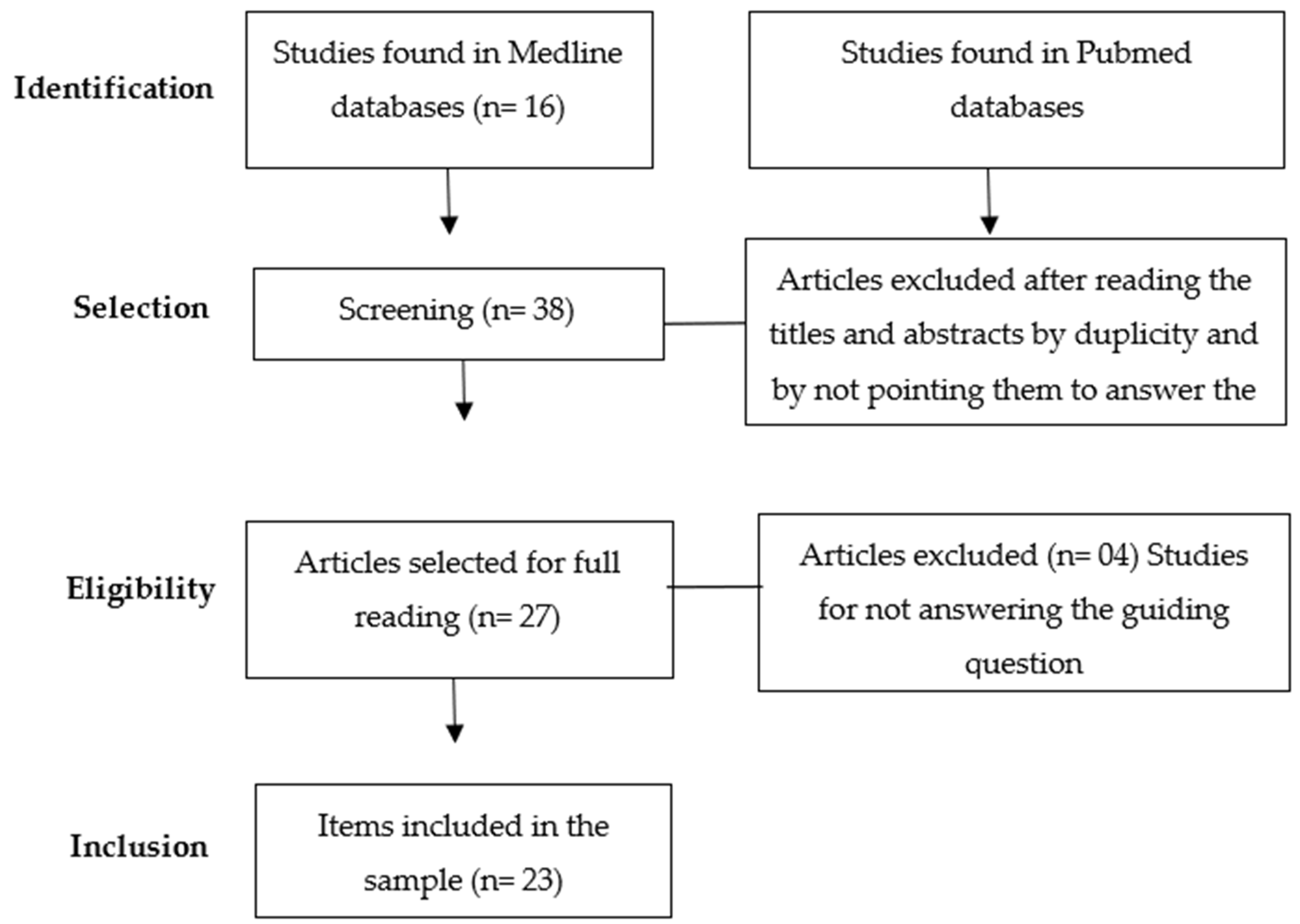

Table 1.
Characterization of health assessment studies of long-haul truck drivers published between 2018 and 2022.
Table 1.
Characterization of health assessment studies of long-haul truck drivers published between 2018 and 2022.
| Author/year | Country | Objective | Type of study | Main results | |
|---|---|---|---|---|---|
| Observational (n) |
Experimental (n) |
||||
| BACHMAN et al., 2018 [14]. | USA | Evaluate the general and sexual health of long-haul truck drivers in the United States. | X 266 |
Higher cholesterol levels and higher rates of smoking, obesity and diabetes were identified than the US average. 17.3% reported having had at least one STI in the previous year, the most frequent was gonorrhea (63.6%). STD/HIV infection rates were lower than the US average. | |
| COMBS et al., 2018 [15]. | USA | Investigate work-related musculoskeletal injuries in long-haul truck drivers. | X 1,265 |
The majority of lesions were on the arm (26.3%) and back (21.1%). Musculoskeletal injuries were most frequently caused by falls (38.9%) and contact with an object or equipment (33.7%), resulting more commonly in sprains (60%). | |
| HATAMI et al., 2018 [16]. | Iran | Investigate the effect of co-pilots on depression and occupational stress in truck drivers. |
X 70 drivers (33 drivers with co-pilot – intervention group. 37 drivers without co-pilot – control group) |
The depression rate in drivers with co-pilot is really lower than the depression rate in drivers without co-pilot. | |
| HEGE et al., 2018 [17]. | USA | Better understand the impacts of the unique characteristics of the work organization experienced by long-haul truck drivers and better explain the disparities in the risks of cardiometabolic diseases compared to the general population of the US. | X 115 |
62.5% characterized their stress as a moderate to chronic level. 84.6% of drivers were on the road 21 or more days a month. 70% worked more than 11 hours a day and 82.7% experienced a work schedule that varies each day. 68% of drivers reported a fast pace of work and 77.7% reported having timepressures. Longer sleep duration on working days (average 8.27 on working days vs. 6.95 hours on business days). 11% diagnosis of sleep apnea. | |
| ISELAND et al., 2018 [18]. | Sweden | Investigate whether long-haul truck drivers in Sweden engage in secondary tasks while driving, what tasks are performed and how often. | X 13 |
The secondary tasks, the interaction with the cell phone was mainly for communication, entertainment (social media and music) and GPS. They referred to perform them to reduce boredom, stress. | |
| LEMKE et al., 2018 [19]. | USA | Evaluate the value of subjective screening methods to detect latent sleep disorders and identify truck drivers at risk for poor sleep health and safety. | X 260 |
Five factors of latent sleep disorder were extracted: 1) circadian rhythm sleep disorders; 2) sleep-related respiratory disorders; 3) parasomnias; 4) insomnia; 5) and sleep-related movement disorders. Patterns of associations between these factors usually corresponded to risk factors and known symptoms. One or more factors of latent sleep disorder extracted were significantly associated with all the health and safety of sleep results. | |
| PYLKKÖNEN et al., 2018 [20]. | Finland | Examine the effects of an educational intervention on the drowsiness of long-haul truck drivers at the wheel, amount of sleep between work changes and use of efficient countermeasures of drowsiness in association with night and non-night. | X 53 |
The results of multilevel regression models did not show significant improvements related to intervention in driver drowsiness, previous sleep while working in night shifts and early morning shifts compared to daytime and/or night shifts. | |
| RODRIGUES et al., 2018 [21]. | Brazil | To investigate the association of variables representative of the sociodemographic profile, the working day and of the general health conditions of freight transport professionals on highways with the reported sleep regime. |
X 367 |
Prevalence of overweight men, 26% reported being hypertensive and 9% diabetic, 32% used drugs. 30% worked more than eight hours a day. 18% smokers, 39% consumed alcohol. | |
| BSCHADEN et al., 2019 [22]. | Germany | Describe the characteristics and patterns of food choice of long-haul truck drivers while working compared to food standards at home. | X 404 |
24% had normal weight, 46% overweight and 30% obese. More than 50% reported being a smoker 32% reportedat least one chronic disease. 37% had their meals frequently or always at truck stops, 6% never did it. 73% reported eating food brought from home. The items brought at home were fruits (62%), sausages (50.6%), sandwiches (38.7%), pre-ready meals (37%), sweets (35.4%) and raw vegetables (31%). 94% had in the truck, refrigerator, 62% gas pot and 8% microwave and eat less often in the places of stopping and resting. | |
| HEGE; APOSTOLOPOULOS; SÖNMEZ, 2019 [23]. | USA | Explore the connections between the organization of long-haul truck driver work, stress at work, sleep and health. | X 260 |
More than 70% reported working more than 11 hours a day. This resulted in higher odds of high caffeine consumption, high stress at work and low sleep quality. 46% reported sleeping less than seven hours a day. 48% consumed alcohol on non-work days. 48% were smokers. | |
| HEGE et al., 2019 [24]. | USA | Investigate whether adversity in the organization of work, stress and sleep health problems among long-haul truck drivers are significantly associated with professional life conflict. | X 260 |
Stress in perceived work was the only statistically significant predictor for work-life balance. Rapid pace of work, duration and sleep quality were predictors of stress at perceived work. | |
| LALLA-EDWARD et al., 2019 [25]. | South Africa | Evaluate and describe the health information of truck drivers in South Africa. | X 614 |
86% had sex with a regular partner; 27% had a casual partner; 14% had sex with a sex worker. 50% never worked in the night shift 12% worked nights approximatelyfour times a week. 8% were HIV positive, with half taking antiretrovirals. | |
| SENDAL et al., 2019 [26]. | Australia | Examine self-reported behavior of diet and physical activity. | X 231 |
85% worked more than nine hours a day. Halfconsumed less fruits and 88% consumed less vegetables national recommendations. 63% consumed at least one harmful food a day and 65% drank at least one can of sugary drink a day. 90% of drivers had above body mass index e60% were obese. | |
| CRIZZLE; MALKIN, 2020 [27]. | Canada | Identify predictors of depressive symptoms | X 107 |
95% of the participants were male, 44% reported symptoms of depression in the last 12 months. The results suggest that occupational stressors increase the risk of depression symptoms. There was a significant association between depressive symptoms with annual income and weeks worked. | |
| KAGABO et al., 2020 [28]. | USA | Describe the characteristics of smoking and identify their preferred methods of smoking cessation among truck drivers. | X 37 |
The reasons for smoking included staying awake, reducing stress or having something to do while driving. 68.8% were daily smokers. The average number of cigarettes per day was 15.7. 65% made at least one attempt to stop. | |
| WISE; HEATON; SHATTELL, 2020 [29]. | USA | Examine the relationship between sleep, mental health, health care use, And mindfulness on long-haul truck drivers in the United States. |
X 140 |
70% of the participants were female, 90% Caucasian, mean 37 years of age. 14% presented symptoms of depression, 10% anxiety or loneliness. Symptoms of post-traumatic stress disorder and daytime sleepiness were identified. Mindfulness was inversely correlated with the symptomatology of Post-traumatic Stress Disorder. | |
| CRIZZLE; MALIK; TOXOPEUS, 2021 [30]. | Canada | Describe and compare the working conditions of long-distance truck drivers before and during coronavirus pandemic (COVID-19) and evaluate drivers’ perceptions about access to food, bathrooms and parking. | X 146 |
Participants reported problems to find parking, bathrooms and food, compared to before COVID-19, drivers worked significantly more hours and consumed more caffeine; And more than 50% reported being tired. | |
| lemke et al., 2021 [31]. | USA | Compare the insulin sensitivity of truck drivers and associations between metabolic risk and insulin sensitivity factors, with those of the general population. | X 115 |
Most of the interviewees had 47.6, were white and had a diagnosis of diabetes. 13% used diabetes medicines and 67% were obese. The average insulin concentration was higher among truck drivers but the average glucose concentrations were lower among truck drivers compared to NHANE participants. | |
| ROCHE et al., 2021 [32]. | South Africa | To assess whether sleep disorders and circadian misalignment were associated with chronic inflammation and risk of cardiovascular diseases. | X 575 |
Mean age of 37 years. 17% were at risk of obstructive sleep apnea, 72.0% had high blood pressure, 9.4% had HIV and 28.0% were obese.Sleep duration was an average of seven hours and 49.6% reported work in the night shift at least once a week. | |
| PATTERSON et al., 2021 [33]. | USA | Explore the properties of the social networks of long-haul truck drivers Potentially influencing the acquisition and transmission of Sexually Transmitted Infections. |
X 58 male truck drivers 24 sex professionals and 6 male intermediaries |
27% tested positive for STI/HIV or hepatitis. People who tested negative for an infection involved in sex and/or drug exchanges with people who tested positive, increasing their risk of infection/transmission to other contacts. | |
| USECHE et al., 2021 [34]. | Spain | To assess whether work-related fatigue is a mechanism that mediates the relationship between work stress, health indicators and occupational traffic accidents with truck drivers. | X 521 |
47.9% were male, 53% worked five to eight hours a day. The work traffic accidents of long-haul truck drivers can be explained through work-related fatigue that mediates between stress at work (stress at work), health-related factors and traffic accidents suffered during the previous two years. | |
| MODJADJI et al., 2022 [35]. | South Africa | Determine the prevalence of obesity and its association with systemic arterial hypertension and diabetes mellitus. | X 96 |
The prevalence of overweight (44%) and obesity (30%), high abdominal obesity; 57% hypertensive and 14% diabetic. | |
| VREDEN et al., 2022 [36]. | Australia | To characterize the physical and mental health of Australian truck drivers in general, and to identify any differences in factors that influence the health profile of long-haul truck drivers to short-term drivers. | X 1390 |
Most respondents were overweight or obese. Almost a third reported three or more chronic health conditions such as hypertension, mental health problems. Long-haul truck drivers were more likely to be obese and reported pain lasting more than a year. Having more than one diagnosed chronic condition was associated with poor mental and physical health outcomes in long- and short-haul drivers. | |
Table 2.
Biological, behavioral and environmental risk factors for the development of chronic non-communicable diseases in long-haul truck drivers.
Table 2.
Biological, behavioral and environmental risk factors for the development of chronic non-communicable diseases in long-haul truck drivers.
| Domain | Risk Factor | Detail | References |
|---|---|---|---|
| Biological (non-modifiable) | Age | (>45 years) | [14,15,17,19,21,22,23,27,30,35,36]. |
| Sex | Male | [14,15,17,18,21,22,25,27,28,30,31,32,34,36]. | |
| Female | [29]. | ||
| Race | Caucasian | [14,15,19,27,29,30,31]. | |
| Afro-descendants | [32]. | ||
| Chronic disease | Diabetes mellitus Systemic arterial hypertension Metabolic syndrome |
[14,17,19,21,22,25,30,36]. | |
| Behavioral and/or environmental (modifiable) | Education | Up to eight years | [21,27]. |
| >eight years | [14,22,30]. | ||
| Physical activity | Sedentary | [17,23,25,31,32,35]. | |
| Habit of smoking | Smoking | [14,21,22,23,25,28,30,35]. | |
| Alcohol consumption | Working days/Days off | [17,21,27,30,35]. | |
| Overweight/Obesity | [14,17,21,22,25,26,27,30,32,35,36]. | ||
| Diet | Food | [22,23,26]. | |
| Socioeconomic conditions | Salary | [14,30]. | |
| Mental health | Anxiety/ stress/depression/sleep and fatigue | [16,17,19,23,25,27,29,30,36]. | |
| Occupational safety | [18]. | ||
| Working days per week/month | [22,23,25,30,34]. | ||
| Working hours per day | [21,23,25,32,34,36]. | ||
| Hours of sleep | [21,29,30,32]. | ||
| Time out of the house | Loneliness | [14,18,22,23]. | |
| Ergonomic risk | skeletal muscle injury | [15,22,25,36]. | |
| Access to health services | [14,27]. |
Table 3.
General recommendations to promote the physical, cognitive and emotional health of long-haul truck drivers.
Table 3.
General recommendations to promote the physical, cognitive and emotional health of long-haul truck drivers.
| Domain | Recommendation | Justification | Reference |
|---|---|---|---|
| Biological | Prevent and control hypertension, diabetes mellitus and obesity | Monitor height, weight and abdominal circumference and body mass index. Supporting initiatives promoting health education, physical activity, healthy diet, opportunities for rest, sleep and access to medicines and health services, as well as reducing stress, smoking, alcohol consumption, contributes to reducing morbidity and mortality by NCD, promotes physical and mental health. | [14,23,31,32]. |
| Behavioral | Promote regular physical activity | It reduces the risk of diseases such as obesity, diabetes, high blood pressure, obstructive sleep apnea, stress, fatigue, pain and anxiety. Increases safety, improves concentration and sleep. |
[14,17,23,31,32]. |
| Provide healthy eating | Decreases salt intake, saturated trans-fat contributes to reduce overweight and risk of cardiometabolic diseases. Improves memory and increases well-being. |
[14,17,22]. | |
| Provide adequate amount of sleep hours | Health education on the importance of maintaining circadian rhythm with up to eight hours of sleep and implementing measures to respect sleep and rest time can contribute to the prevention of cardiovascular diseases, decreases blood pressure, diabetes mellitus, obesity, pain, memory loss, stress and risk of depressive symptoms. Increases concentration and reaction. |
[17,19,20,27,32]. | |
| Control smoking | Decreases the risk of developing cardiometabolic disease, brain injuries and improves sleep. Increases the feeling of pleasure and reward. | [14,28]. | |
| Control alcohol/drug consumption | It reduces the risk of cardiovascular diseases, increases brain activity and favors the optimization of the sleep-wake cycle and reduces emotional problems. | [27]. | |
| Promote mental health | Promotes improvement of emotional control, cognitive and physical performance. Encouraging the practice of Mindfulness increases concentration, occupational safety and prevents stress, symptoms of post-traumatic stress disorder feelings of anxiety and loneliness. |
[17,23,29,31]. | |
| Prevent Sexually Transmitted Infection (STI) | Providing health education to reduce the risk of sexually transmitted infection, HIV/AIDS and cancer. | [14,32,33]. | |
| Environmental | Promote rest with the expansion of the places of stop and rest | Decreases the risk of fatigue, pain, accidents, drowsiness, stress, symptoms of depression, overweight. Increases safety at work and sleep quality. Prevention of the risk of cardiometabolic diseases, obesity and cancer. Reduces social isolation, stress, increases well-being. |
[14,22,23,34]. |
| Health education to prevent mechanical injuries | Promotes health, management of injuries more effectively and the appropriate development of the care plan. |
[15]. | |
| Reorganize the work day | Sharing responsibilities with a co-pilot colleague - decreases the driver’s loneliness, promotes free time to plan the achievement of new goals, increases job satisfaction and well-being.Lower number of hours at the wheel - contributes to the reduction of cardiometabolic diseases, increases occupational safety, reduces the level of stress and depression.Reducing long journeys increases the time available for family life, reduces the risk of illness and death. | [16,27,34]. | |
| Promote access to health care services | It prevents chronic diseases, increases productivity, prevents depressive symptoms and improves quality of life. | [14,19,27,32]. | |
| Promote access to essential medications for the control of NCD | Decreases the risk of premature death. Increase occupational safety, concentration and reduce mood swings. | [21,31]. |
Disclaimer/Publisher’s Note: The statements, opinions and data contained in all publications are solely those of the individual author(s) and contributor(s) and not of MDPI and/or the editor(s). MDPI and/or the editor(s) disclaim responsibility for any injury to people or property resulting from any ideas, methods, instructions or products referred to in the content. |
© 2024 by the authors. Licensee MDPI, Basel, Switzerland. This article is an open access article distributed under the terms and conditions of the Creative Commons Attribution (CC BY) license (https://creativecommons.org/licenses/by/4.0/).
Copyright: This open access article is published under a Creative Commons CC BY 4.0 license, which permit the free download, distribution, and reuse, provided that the author and preprint are cited in any reuse.


