
Submitted:
03 August 2023
Posted:
07 August 2023
You are already at the latest version
Preprints on COVID-19 and SARS-CoV-2
Abstract
Mental health impacts of COVID-19 pandemic have received a great deal of attention by policymakers for the management of present and future cases of the pandemic, especially as new COVID-19 variant cases are on the rise. Thus, this study seeks to conduct a systematic review to address the following research questions: (1) What are the mental health impacts of COVID-19 in the empirical literature? (2) Which categories of people are at higher risk of the mental health impacts of the pandemic based on the extant literature? A sample of 35 studies out of 196 potential studies (from various databases, including Scopus, Google Scholar, , Research Gate, PubMed, , and libraries, from 2020 to 2022) were used after a comprehensive literature search and thorough assessment based on PRISMA-P guidelines. The study reveals that the pandemic has led to severe cases of mental health challenges such as depression, anxiety, post-traumatic stress disorder, psychological disorders, mood disorders, and insomnia. The review identified groups such as health workers, patients with pre-existing psychiatric or mental health issues, COVID-19 survivors, patients with underlying health conditions, and the elderly as the most vulnerable groups to mental health challenges from the pandemic.
Keywords:
COVID-19
; mental health outcomes
; pandemic
; vulnerable population
; depression
; health workers
1. Introduction
In 2020, the world faced one of the most significant pandemics in the last two generations. The pandemic was called the Corona virus. The pandemic resulted in high records of death globally, massive job losses, and other complications related to health outcome (Anakpo & Mishi, 2021; 2022; Anakpo, Nqwayibana & Mishi, 2023; Anakpo, Hlungwane & Mishi, 2023). The pandemic has caused several mental health challenges, and indeed, studies have identified the mental outcomes of COVID-19 and the management of the health outcomes. Among these challenges, the government implemented procedures to eliminate the spread of coronaviruses through isolation and quarantining (World Health Organization, 2020). The fear of being affected by the virus caused negative impacts on mental health through damage to mental thinking, disruption of sleep, and anxious symptoms (Brooks et al., 2020). For such reasons, Xiong et al., 2020, reported in their study that there was a huge increase in suicide rates from 418 to 2114 due to being jobless, depressed, anxious, and having post-traumatic stress disorder. The COVID-19 outbreak drastically changed people’s lives globally, in the public and private economies. It caused a decline in the economy due to fears associated with the virus outbreak, lockdown, and economic recession (Mishi, Tshabalala, Anakpo, & Matekenya; 2023; Jafta, Anakpo, & Syden,2022; Mishi, Anakpo, Matekenya, & Tshabalala, 2023), which were predicted to lead to an increase in mental health disorders such as depression, anxiety, and high stress levels (Xiong et al., 2020). Veldhuis et al (2021) documented that the mental health impact of COVID-19 may be enduring even to years after the pandemic. This finding was reinforced in a study by Bourmistrova et al (2022) that COVID-19 pandemic has long-term implications on mental health especially among the vulnerable groups. Thus, understanding of mental health outcomes of the pandemic and the vulnerable population is important in the management of the present and futures cases in the related outbreak (Pragholapati, 2020).
The purpose of this study is therefore to conduct a systematic review on the mental health outcomes of COVID-19 and the more vulnerable groups based on the empirical studies. Doing so, the reviews seek to answer the following research questions (1) What are the mental health impacts of COVID-19 in the empirical literature (2) Which categories of people are at the higher risk of mental health impacts of the pandemic based on the extant literature? This study is important to provide deeper understanding evidence-based studies as mental health issues affect all quality of life (Young, 2021; Saarni et al.,2007; Sawyer, 2002), enduring (Pragholapati, 2020) and resurgence (Perzow, 2021). This will help in the management of present and future cases during related pandemic enrich policy inputs for the protection of the most vulnerable and serve as reference point for present and future related studies (Komanisi, Anakpo & Syden, 2022).
2. Methods
This review was conducted according to the guidelines provided in the Preferred Reporting Items for Systematic Reviews and Meta-Analysis (PRISMA) (BMJ, 2020). It envelops selection strategy, study design, eligibility, inclusive and exclusive criteria, quality of assessment and synthesis of the studies.
2.1. Study Selection Strategy
This paper looks at the studies that were published from 2020 to 2022, according to the mental health outcomes of COVID-19 and management, with the help of online resources such as Google Scholar, Scribber, Research Gate, PubMed, Scopus, and library among. Search of literature was conducted using terms such as "coronavirus", "anxiety", "depression", "mental health disorder” "psychology,"", "post-traumatic stress disorder" "depressive symptoms" and "vulnerable group to COVID-19” “risk factors of mental health in pandemic” “mental health impact of COVID-19” “risk factors of mental health in COVID-19” “mental health challenges of COVID-19”. The phrases, text, words, and symbols searched were combined and separated accordingly using Boolean operators (AND, OR NOT). For the validity of this research, a reference list of relevant articles related to the study and supporting documents from the data source were checked, the researchers assessed the titles and abstracts, and the World Health Organization was checked for possible relevant articles. The inclusion of publications must have addressed mental health outcome of COVID-19, vulnerabilities of mental health outcome during the pandemic.
2.2. Study Design Eligible Inclusion and Exclusion Criteria
Relevant articles were eligible if they met the right criteria, such as previous studies assessing mental health outcome of COVID-19, depression, anxiety, and post-traumatic stress during the pandemic. As such, the purpose of this systematic review is to look at studies that were written in English to satisfy the inclusion criteria. The inclusion criteria also looked at peer-reviewed articles, surveys, and journal studies on: (1) depression and anxiety among patients who were infected by COVID-19; (2) sleeping disorders in patients during and after the pandemic; (4) mental health disorder due to jobs losses during the pandemic; vulnerable group to mental health impacts of COVID-19. The exclusion criteria excluded articles that were not relevant to studies, such as: (1) studies not written in English; (2) full text was unavailable; (3) not referenced; (4) not peer-reviewed.
2.3. Quality of Assessment
Quality assessment was done in accordance with PRISMA-P, through rigorous screening procedure. This assessment was guided by the aims and objectives of the study and whether they corresponded with the study questions. That is, whether the studies address investigated impacts of COVID-19 on mental health and the most vulnerables. Furthermore, the quality also looks at the relevance of the studies, assessment of the sample size, nature of the study, and study design. Also, some studies that failed the assessment were dropped. Following the inclusion and exclusion criteria, the researcher examined whether the titles and abstracts were biased and extracted data. The remaining went through full-text screening using the criteria. The individual screening procedure had to be repeated to ensure that irrelevant studies were not included, to ensure consistency, and to ensure that no discrepancies were observed.
2.4. Synthesis
The findings of the studies were synthesized as summarized in Table 1. For the sake of misinterpretation, this study only used the data and results from the findings that were used. A thematic synthesis approach which provides a structured and comprehensive approach to conducting and reporting evaluation was used (Damarell et al., 2020).

Table 1.
Summary of studies on the mental health outcomes and management due to COVID-19.
| Authors/s (year) | Country of Study | Study Design | Study Aims | Sample/Population | Measures | Key Findings |
|---|---|---|---|---|---|---|
| (Adegboye et al., 2021) | London | Mixed method | The aim of this study is to understand why the COVID-19 pandemic worsened the mental health problems of vulnerable young children. | 142 participants | Surveys | The findings of this study showed that, the pandemic has worsened the mental health problems of the vulnerable children. |
| (Apisarnathanarak et al., 2020) | Thailand | Mixed methods | This study aims to look at the mental health care personnel during the COVID-19 pandemic. | 32 reports | Surveys | Health care workers had a higher mental health status. |
| (Cabrera et al., 2020) | Non-specific | Qualitative method | The aim of this study is to provide a systematic review on the impact of the pandemic on psychiatric practice. | 50 articles | Review | The results showed that, the population that was at risk included COVID-19 survivors, health care workers, old people, and population with pre-existing psychiatric disease. |
| (Cooper et al., 2020) | United Kingdom | Mixed method | The aim of this study was o conducting a thorough systematic review of the latest studies reporting on clinical findings with persons living with HIV/AIDS whom were infected with coronavirus. | 8 studies | Review | People living with HIV/AIDS were unlikely at to be a higher risk of mental health outcomes than the general population due to the pandemic if they have undetectable viral load and an adequate CD4 count. |
| (Damiano et al., 2021) | Brazil | Mixed method | This study aimed at examining at mental health strategies for preventing mental health problems on the general population during the coronavirus outbreak. | 25 (Qualitative studies) and 3 (Quantitative studies) | Review | It was discovered that in most of these studies, there was a lack of evidence and a need for additional studies with more effective design especially randomized controlled trials investigating possible interventions in mental health outcomes during the pandemic. |
| (De Brier et al., 2020) | New Zealand | Mixed method | The aim of this study is to overlook on the risks and protecting factors of mental health outcomes on health care workers during the pandemic. | 33 studies | Review | Health care workers were developing a higher risk of experiencing mental health outcomes with risk factors such as direct contact with infected patients. |
| (De Kock et al., 2021) | United Kingdom | Mixed method | This study aim is to identify the psychological impact of COVID-19 pandemic on health care, general population and management. | 24 studies | Review | Front line workers were easily infected with coronavirus; hence they had symptoms of stress and depression. |
| (Dutta el al., 2021) | India | Mixed method | The aim of this study was to look at the studies that were previously collected in order to establish the likelihood of the mental health problems among health care employees and compare findings with their study. | 33 studies | Review | This study revealed evidence that health care workers suffered from psychological and mental health problems during the pandemic due to fear of infecting their families and friends |
| (Farkas & Romaniuk 2020) | United States of America | Qualitative method | This paper aim at examining social worker, ethics and vulnerable groups during the COVID-19 pandemic. | Not specific | Not specific | The findings of this study is that every human was vulnerable to the COVID-19. |
| (Fiorenzato et al., 2021) | Italy | Mixed method | The aim of this study was look at the changes in cognitive and mental health outcomes and their vulnerability on the COVID-19 pandemic. | 12515 respondents | Online surveys | This study discovered results that were harmful to the society such as anxiety and depression disease burden rising to 32% and 36 %, respectively, and abnormal sleep, appetite changes, and health anxiety. |
| (Georgi et al., 2020) | Non-specific | Qualitative method | The objective of this study is to look at psychological aspects related to workplaces during the COVID-19 pandemic and address the important issues that were impacted by the pandemic in the workplace. | 37 studies | Review | The psychological conditions were impacted by long periods of isolation and uncertainty of the future on the workplaces. |
| (Hannenmann et al., 2022) | Austria | Quantitative method | The aim of this study is to look at pandemic stressors that impacted the public population such as fear of infecting each other and less workload at workplaces. | 46 studies | Review | Examined the associates between the general mental health constructs, resilience, and coping with pandemic stressors |
| (Hossain et al., 2020) | United States of America | Qualitative method | The aim of this study is to provide evidence on the mental health outcomes of quarantine and isolation due to population preventing themselves of not being infected. | 8 articles | Review | The individuals who were infected by the coronavirus were impacted with mental health problems such as mood disorder, anxiety, depression, and psychological distress etc. |
| (Iyengar et al., 2021) | United States of America | Mixed method | The aim of this is to investigate about the mental health care and postpartum of pregnant women during and after the pandemic | 91 studies | Review | Their results showed that pregnant women who tested positive for covid-19 were at risk for preterm birth. |
| (JAMA Psychiatry, 2021) | America | Mixed method | This study aims at looking at how mental health disorders has been increased due to the COVID-19 | 32 mixed studies (16 Qualitative and 16 Quantitative studies) | Review | Patients with mental health disorders were targeted as the high risk of COVID-19, by establishing disease management strategies. |
| (Kim et al., 2022) | United States of America | Mixed method | The aim of this study is look at how mental health impacted the lives of people in prison globally. | 62 studies | Review | People in prison were a high risk of the coronavirus, which led psychological impacts. |
| (Li et al., 2022) | China | Quantitative method | The objective of this study is to investigate the level of mental health and variables that affected the residents of China during and after COVID-19 pandemic. | 993 residents | Online questionnaire surveys | The results found that, the highest rate of symptoms and depression was at 37.06% and 22.86%, respectively. |
| (Min Lou et al., 2020) | China | Quantitative studies | The aim of this study was observed on psychological impacts due to COVID-19 pandemic among health care workers, general public and patients with pre-existing conditions. | 62 studies | Review | Patients with pre-existing conditions were reportedly to be significantly diagnosed with mental health problems compared to health care workers and the general public. |
| (Nearchou et al., 2020) | Ireland | Mixed method | The aim of this study was to look at the mental health of the youth during the COVID-19 pandemic. | 12 studies. | Review | The results of this study showed that the coronavirus pandemic had mental health impact on the youth which showed symptoms like depression and anxiety. |
| (Negri et al., 2023) | Italy and Poland | Mixed method | This study aim was to focus on the psychological process such as core belief violation, meaning made of the pandemic, vulnerability, and mortality perception. | 680 participants | Online surveys | The results of study revealed that mental processes (core belief violation, pandemic, vulnerability, and mortality perception) influenced the intensity of mental health outcomes greater than COVID-19 stressors and demographic combined. |
| (Nochaiwong et al., 2021) | Thailand | Quantitative method | The aim of this study is to overlook on the mental health problems during the pandemic nationally and globally. | 32 studies and 398,771 participants | Review | The findings demonstrated that the risk of mental health disorder and psychological impacts differs significantly between nations, especially with different regions, as measured by the global index of coronavirus readiness, disparities and economic vulnerability indices. |
| (Rizeq et al., 2021) | Canada | Mixed method | The aim of this study was to investigate on the impacts of pre-existing psychological and economic vulnerability on the mental health outcomes and stress on the families during the pandemic. | 427 participants | Surveys | The global health crisis had a negative effect on how households operate, and it also affects the anxiety and mental health of parents and children. |
| (Salazar et al., 2020) | United Kingdom | Mixed method | The aim of this study was to look at impacts of coronavirus symptoms on physical and mental health outcomes of health care workers. | 40 studies | Review | The findings of this study confirmed that health care workers are also considered as essential as a fragile population which it had higher physical and mental health burden during the COVID-19 pandemic. |
| (Shaukat et al., 2020) | Pakistan | Mixed method | The goal of this study is to summarize the evidence on health care workers on how the physical and mental health impacted their lives during the COVID-19 pandemic. | 10 studies | Review | This shows that health care workers were at direct risk of the physical and psychological effects in regard of taking care of patients who were infected with COVID-19. |
| (Simon et al., 2021) | Austria | Mixed method | This study focused on the Austrian adult residents about their experiences during the coronavirus lockdown. | 560 residents | Online surveys | The findings showed that 31% of residents showed poor mental well-being whilst 30% of residents with history of receiving mental health treatment received it during lockdown. |
| (Stephanie et al., 2022) | United States of America | Mixed method | This study concentrated on looking at the factors that influence the negative mental health outcomes, especially focused on the similarities between pregnant and non-pregnant women compared to male, in addition to subjective/perception issues e.g fear and worry and social vulnerabilities. | 740,640 participants | Surveys | The findings of this study identified that pregnant women were much higher risk of experiencing negative mental health outcomes than males during the COVID-19 pandemic. |
| (Theberath et al., 2022) | United States of America | Mixed method | This study focused on the effects of mental health on children and adolescents who have already diagnosed with psychiatric disorder. | 35 studies | Review | Female children were at a higher risk of experiencing domestic abuse and also young adolescents who preferred outdoor activities were at a higher risk of experiencing anxiety and depression symptoms during the pandemic. |
| (Tso et al., 2020) | Hong Kong | Quantitative method | This study aims at identifying a vulnerable general population of children. | 29,202 children | Online surveys | This study identified that the risk of a child psychosocial problems were at a higher level that with a children who has special needs. |
| (Uphoff et al., 2021) | Islam Republic of Iran | Mixed method | The primary objective of this study was to produce the impact of coronavirus pandemic upon mental health for population that is considered to be a higher risk of negative mental health outcomes. | 25 studies | Review | The symptoms of mental health problems such as depression, anxiety, sleep problems etc, were reported to be high among the samples of health care workers, COVID-19 patients, and children and adolescents. |
| (Veazie et al ., 2022) | United States of America | Mixed method | This study at addressing how women were seeking help other than men, and older people were a higher risk of coronavirus, which led to symptoms of feeling depressed. | 19 studies | Review | Adults who were hospitalized during the pandemic had higher chances of dying and many men did not seek help in management facilities |
| (Vizheh et al., 2020) | Switzerland | Mixed method | Mental health care suffered psychological illness. And people who were losing their were also significantly impacted by the mental illness. | 11 studies | Review | Health care workers felt more pressure and mental illness. |
| (Vindegaard & Benros, 2020) | Denmark | Mixed method | The psychiatric symptoms due to COVID-19 pandemic was evaluated on the infected and non- infected groups of people. | 43 studies | Review | The group who had less psychiatric symptoms were reported to be the female gender. |
| (Wang et al., 2021) | China | Quantitative method | The aim of this study was to identify factors that are driven by mental health outcomes among the population and the vulnerable groups under the COVID-19 pandemic. | 56,679 participants | Online surveys | The findings of the study showed that the most vulnerable on COVI-19 were people were a population with a pre-existing condition disease, health care workers, population living in a most affected place, infected patients, and financial unstable population. |
| (Xiong et al., 2020) | Canada | Qualitative method | This systematic review aims to synthesize extant literature that reports on the effects of COVID-19 on psychological outcomes of the general population and its associated risk factors | 19 studies | Review | Relatively high rates of symptoms of anxiety, depression, post-traumatic stress disorder psychological distress, and stress |
| (Yan et al., 2021) | China | Quantitative method | The purpose of this study was to determine on the incidence of negative mental health outcomes among health care workers during the COVID-19 pandemic and to investigate the spread of anxiety and depression symptoms. | 35 articles | Surveys | During the COVID-19 outbreak, health care workers experienced a high rate of negative mental health symptoms. |
3. Results
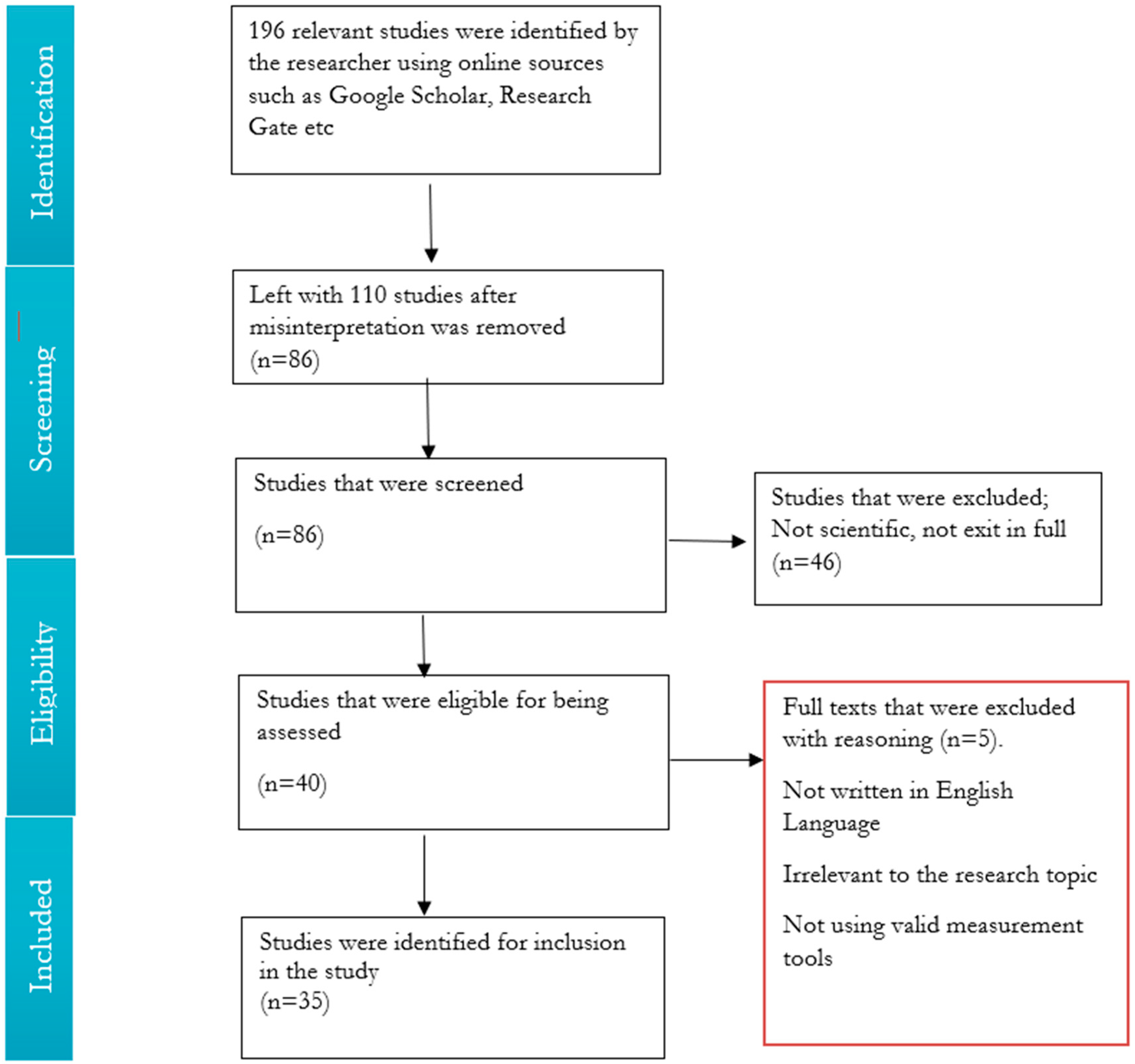
As stated above, a sample of nine studies was used to collect information for this systematic review. This study collection was not restricted to the same place,hence the geographical precinct allowed this study to also use global studies countries like the United States of America, Japan, and Russia, etc. As stated above on the study inclusion, this study will use peer-reviewed studies as well as studies written in English. During the collection of this research, the researcher has managed to get 196 potential studies; 42 abstracts and titles were removed after screening; 86 papers were screened again, which reduced the number to 44 studies after eliminating misinterpretation and irrelevant information; and finally, 35 studies were used to assess the inclusion and exclusion criteria. Below is a full illustration of the PRISMA diagram in Figure 1.
Figure 1.
The PRISMA study selection flow diagram.
3.1. Study Characteristics
3.1.1. Location
As stated above, the study selection focused on the effects of the mental health outcomes due to COVID-19 and vulnerable groups of people that was collected from different areas, locations, and regions. The study is based on data collected from developing and developed countries such as the United States of America, Japan, Russia, the United Kingdom, South Africa, China, Brazil, and the Philippines.
3.1.2. Aims of the Study
This systematic review is based on selected studies that are relevant to the research questions. It covers a range of areas such as exploring on the impacts of corona virus pandemic on the mental health outcomes and the most vulnerable group (Simon et al., 2021). As such, Vizheh et al. (2020) examined the fact that hospital workers experienced psychological impacts that led to high levels of stress, post-traumatic disorder, anxiety, and depression. Finally, Xiong et al.’s (2020) study investigated whether people with chronic illness and a record of always being in medicine were seriously having mental illness symptoms such as anxiety. and depression.
3.2. Study Methodology
3.2.1. Study Sample
The sample size used varies in the literature based on target participants, study area, design, and the goal of the study. The least sample size was 11 which was review studies by Vizheh et al. (2020) on the impacts of mental health on health care workers in the COVID-19 pandemic. The largest study (Stephanie et al., 2022) collected 740,640 participants were conducted in United States of America; it was a systematic review that focused on how pregnant and non-pregnant feared on getting infected by the COVID-19 pandemic compared to men. The study of Hossain et al (2020) included 8 studies (Copper et al., 2020) and 32 samples in reviews (Nochaiwong et al., 2021).
3.2.2. Nature of Study and Design
The relevant research studies that influence mental health outcomes and management combine a mixed method, which is qualitative and quantitative, study design (Kim et al., 2022), and explanatory studies (Yi-Ying Cha & Yibetal Assefa, 2021).
3.3. Findings
Table 1 summarizes the findings of the reviews on the impact of mental health outcomes due to COVID-19 and vulnerable group. A study by Hannemann et al.’s (2022) on the mental health impacts of COVID-19 on health care workers such as nursing staff and concluded that there was a higher rate of fear among nurses and doctors, fear of being infected by COVID-19, and that led to low self-eesteem and difficulties coping with depression and anxiety. On the related study, Xiong et al. (2020) examined a particular subgroup of the population, such as health care workers, college students, management, and pregnant women. The study focused on the mental health care status of the population during the COVID-19 pandemic and the risk associated with it. The outcomes of their study showed that there was a decline in the economy, and people and health care workers reported higher anxiety levels.
The Veazie et al. (2022) investigated mental health of patients during and after hospitalization; the study also focused on the management of mental health care disorders such as mood disorders and anxiety disorders; and it also emphasized that health care facilities were receiving many alerts from women seeking help because of mental health outcomes other than men. A study by Kim et al. (2022) reported that prisoners had a higher rate of being infected by COVI-19 than the general population. It further emphasized that health care workers did not pay much attention to prisoners during the pandemic, hence their rates of being infected increased. As a result, people in prison were later released from jail under probation.
The study of Vizheh et al. (2020) studied health care workers who were in-service caring for patients during the COVID-19 pandemic, who reported symptoms of depression, anxiety, stress, etc. Their study further elaborated that medical staff suffered from sleep disturbance and a low quality of sleep that resulted from being depressed. According to Vindegaard & Benros (2020), they managed to study the psychiatric symptoms of the patients and management that were infected by the spread of COVID-19; they mainly focused on the children by looking at their public population for substance abuse. The JAMA Psychiatry (2021) focused on the determinants of whether patients who were impacted by mental health disorders were increasing the risk of coronavirus mortality compared to other patients who had no mental health disorders. In a related study by Apisarnathanarak et al. (2020), which aimed at addressing the consequences of stress, depression, and anxiety on health care workers and patients during the pandemic, emphasized how the general population got to the extent of protecting themselves from the virus; as such, others put signs outside their gates stating that "no entry, it’s COVID-19", out of fear of being infected.
De Kock et al. (2021) concentrated on differentiating whether health care workers, between nurses and doctors, faced significant mental health outcomes during and after the pandemic. And their outcomes stated that nurses were hugely impacted by mental health other than doctors; the nurses showed signs of depression, anxiety, and higher levels of insomnia. Cabrera et al.’s (2020) study focused on the coronavirus and its implications for the psychiatric population. Their results showed that the population that was at risk of getting infected with COVID-19 were elderly people, health care workers, and the population that has a pre-existing psychiatric disease. Their study further elaborated that the survey they conducted showed that clinical staff feared working directly with the patients infected by the coronavirus, and the population that has a pre-existing mental health condition is at risk for the worst possible outcomes resulting from the pandemic.
A study by Damiano et al. (2021) stated that there is a need for a thorough investigation to evaluate the interventions on how the mental health outcomes can improve during and after the Corona virus infection. While De Brier et al. (2020) argued on the factors affecting the mental health outcomes due to the Corona virus pandemic, it further emphasized their findings and stated that the health care workers who were in direct contact with the patients who were infected by the COVID-19 were having mental health conditions due to the fear of spreading the virus to their families, friends, and other people with.
Dutta et al.’s (2021) study supported the study of De Brier et al. (2020) by stating the health care workers feared infecting their families and friends, which drove them into a state of suffering from depression and anxiety; hence, they had to isolate themselves from their loved ones. Giorgi et al.’s (2020) findings focused on general workers who faced anxiety, depression, stress, etc. due to job insecurity and long periods of isolation, especially emigrant workers.
Hossain et al.’s (2020) study findings revealed that individuals who were infected by COVID-19 showed signs of depression and anxiety due to being isolated and the stress of infecting their surrounding people. The study by Iyengar et al. (2021) focused on pregnant women who were infected by COVID-19, stating that they showed signs of fever and a mild cough during the pregnancy. While a study by Min Lou et al. (2020) found that health care workers and the general population must have protective factors such as sufficient medical resources, which is not a factor that everyone can have,
Nearchou et al.’s (2020) study findings showed that when schools are closed, children’s lives tend to be disrupted. This is due to the fact that when children are not at school, they are less physically active, their sleeping patterns change, and that could result in weight gain. Additionally, Nochaiwong et al. (2021) find the primary outcomes that affected the global population in terms of mental health problems during the Corona virus pandemic, such as depression, anxiety, and stress. While Salazar et al.’s (2020) study demonstrated that COVID-19 had a major impact on the health care workers physical and mental health, Shaukat et al.’s (2020) outcomes showed that people who were working in an environment with high risk factors due to the Corona virus, such as inadequate hand sanitizer, close contact with infected people, and diagnosed family members tending to have mild fever, cough, and weak systems, were experiencing depression, fear of being infected, and anxiety. Thaberath et al.’s (2022) study showed that children and adolescents who were already diagnosed with psychiatric disorders showed symptoms of obesity and chronic lung disease due to being vulnerable to the mental health effects of the COVID-19 pandemic.
Cooper et al.’s (2020) study findings showed that people living with HIV who are well-maintained are not at risk of poor COVID-19 outcomes other than the general population. The study’s (Uphoff et al., 2021) findings showed that health care workers were the most likely to be facing the burden of mental health problems during the COVID-19 pandemic. Lastly, Yan et al.’s (2021) study focused on health care workers during the COVID-19 pandemic who had mental health symptoms such as high levels of stress, anxiety, insomnia, and depression.
In a related development, Adegboye et al.’s (2021) revealed that during the COVID-19 pandemic there was a negative impact on the children and parental mental health, and also on the financial security, in addition, children experienced higher leves of mental health outcomes by 69 percentage change. Whilst findings of (Negri et al., 2023) showed that the psychological factors were impacting the lives of the individuals negatively during the pandemic. Li et al.’s (2021) analyzed 993 residents and found that the residents were showing symptoms of depression and anxiety during the pandemic.
Tso et al.’s (2022) surveyed 29,202 and 12,163 individual families and children in Hong Kong, to look at the vulnerability on children during the coronavirus pandemic. According to their study it revealed that children were a vulnerable group during the COVID-19 pandemic by being impacted by psychosocial risks especially on children with special education needs and with chronic disease. Whilst, Simon et al.’s (2021) surveyed 560 residents, their study revealed that residents with past mental health problems experienced significant impact of the mental health outcomes during the COVID-19 pandemic.
The findings of (Wang et al., 2021) revealed that some vulnerable individual groups were people with pre-existing condition, chronic disease and people who reside on places with most infected COVID-19. The 2021 study of (Fiorenzato et al) revealed that the self-reported cognitive functioning was substantially impacted by the mental health outcomes of the corona virus. The findings of (Stephanie et al 2021) had 740,640 participants who were pregnant and non-pregnant women and men and it revealed that pregnant and non-pregnant women were there most vulnerable group of mental health outcomes other than men. And lastly, Rizeq et al.’s (2021) study revealed that the COVID-19 pandemic stressed participants which resulted to mental health difficulties and stress.
4. Discussion
This review aimed at evaluating the impacts of mental health outcome and vulnerabilities of the COVID-19. We studied 35 studies to gain more knowledge about mental health problems and excluded 15 studies due to unwanted information. According to the findings of this study, mental health problems impacted a lot of the population globally during the COVID-19 pandemic, resulting on vulnerable groups having anxiety, depression, and stress due to isolation and fear of infecting their families and friends.
Apisarnathanarak et al. (2020) reported that during the first months of the COVID-19 outbreak, the reports of mental health disorders were increasing. Their study also elaborated that health care workers and patients were severely affected by mental health disorders such as anxiety, depression, and insomnia. De Kock et al. (2021) also elaborated that the management was facing challenges during the pandemic; for instance, some companies had to let some of the workers leave their firms, and other companies faced a decline in their profits, and they had no other means other than closing down the company. This finding shows that the majority of people who were facing mental disorders were the front-line emergency care workers; for instance, a Vindegaard and Benros (2020) study stated that health care workers were regarded as the exposed group with a high risk of psychiatric symptoms during the pandemic, and the majority of genders were female and front-line workers, among others.
A study of Vizheh et al., (2020) argued that health care workers mental health faced serious challenges, because they face death of their colleagues and felt the death threat of their lives, more they had the fear of being infected and they felt depressed because of the increase of their workload, while Vizheh et al., (2020) elaborated that these mental health outcomes drove health care workers into high levels of stress, depression, anxiety, fear, and frustration and Kim et al., (2022) study focused on the people in prison, their study elaborated that people in prison had no social interactions with other prisoners and they had limited visitors, which led to negative impact their mental health. Furthermore, people with serious illnesses and less danger in prison were released during the COVID-19 outbreak, but they had to continuously report to the station in case they committed a crime on the outside.
Cabrera et al. (2020) indicated that health care workers who were in direct contact with infected patients experienced a significant psychological pressure of fear of being infected with the COVID-19 virus and also a fear of infecting other people, which insignificantly impacted their mental health and increased their stress levels, anxiety, depression, and post-traumatic disorder. Hossain et al. (2020) supported the Cabrera et al. (2020) study by further elaborating that health care workers experienced different mental health problems, such as emotional exhaustion, which may be an outcome of poor performance at work. Giorgi et al. (2020) argued that other previous disease outbreaks did not show signs of mental problems in the population, such as the Ebola outbreak, but on the spread of COVID-19, health care workers showed signs of exhaustion, frustration, and isolation. But Shaukat et al. (2020) argued against the study of Giorgi et al. (2020) by stating that during the Ebola outbreak, a Chinese study showed results of health care workers facing mental health problems such as depression and anxiety.
The Nearchou et al. (2020) study emphasized that during the COVID-19 pandemic, mental health problems impacted not only health care workers but also children and adolescents. The psychological impact disrupted the children’s lives due to their inability to engage themselves in outdoor activities and their inability to be around their friends. Theberath et al. (2020) highlighted the coping strategies that can help children and adolescents by developing more knowledge about the Corona virus, connecting with friends and families via video calls, playing online games with friends and cousins, and having outdoor activities such as starting a garden by planting seeds (Mishi, Matekenya, Anakpo & Tshabalala, 2023) . These strategies were proven to have a better effect on mental health problems during the pandemic.
Copper et al. (2020) reported that people living with HIV who were infected by the COVID-19 outbreak showed the same symptoms as people who are HIV-free, such as mild fever, cough, and breathlessness. Their findings concluded that people living with HIV did not increase the risk of contracting COVID-19 compared to the general population, and Uphoff et al. (2021) supported the study of TJ Copper et al. (2020) by stating that people with pre-existing conditions were likely to have mental health problems than the population without a pre-existing condition.
Tso et al. (2020) argued that due to the corona virus pandemic, parents of the children who have special educational needs were experiencing mental health outcomes due to the prolonged school closure, which disturbed their rehabilitation training. Stephanie et al. 2022 reported that pregnant women were most vulnerable to the depression, anxiety, and the isolation during the pandemic. While, (Li et al. 2023 ) reported that women were found to be the most vulnerable people from the corona virus pandemic with depression, anxiety and stress level symptoms other than men.
The COVID-19 and lockdown a significant negative impact on the vulnerable groups which it indicate mental health outcomes, and that the most people who show signs of mental health outcomes are people with past mental health disorder (Simon et al. 2021). Further, (Wang et al., 2021) investigated that the vulnerable group were the health care workers, people with chronic disease and people living in a infected area, and especially a group with pre-existing psychiatric disorder were experiencing traumatic events which escalated into suffering from depression and anxiety during the COVID-19 pandemic. Parents felt financial stress during the COVID-19 especially low-income families, parental mental health were discovered to anxiety and depression, and also children were experiencing loneliness during the pandemic (Adegboye et al.,2021). Lastly, (Rizeq et al.’s 2021) revealed that vulnerable factors were influenced by the COVID-19 which associated mental health problems such as high level of stress, anxiety, depression, and insomnia.
5. Conclusion
COVID-19 pandemic has led to unprecedented impacts on mental health globally. This study used systematic reviews methodology according to the Preferred Reporting Items for Systematic Reviews and Meta-Analysis (PRISMA) (BMJ, 2020) to address the following research questions: (1) What are the mental health impacts of COVID-19 in the empirical literature? (2) Which categories of people are at higher risk of the mental health impacts of the pandemic based on the extant literature? A sample of 35 studies out of 196 potential studies (from various databases, including Scopus, Google Scholar, Research Gate, and PubMed, from 2020 to 2022) were used after a comprehensive literature search and thorough assessment based on PRISMA-P guidelines. The study reveals that the pandemic has led to severe cases of mental health challenges such as depression, anxiety, post-traumatic stress disorder, psychological disorders, mood disorders, and insomnia. The review identified groups such as health workers, patients with pre-existing psychiatric or mental health issues, COVID-19 survivors, patients with underlying health conditions, and the elderly as the most vulnerable groups to mental health challenges due to the pandemic. These findings have implications for intervention in the management of specific mental health challenges above and priority for the most vulnerable groups in the present and future pandemic by health authorities and policy makers.
References
- Adegboye D, Williams F, Collishaw S, et al (2021) Understanding why the COVID-19 pandemic increases mental health difficulties in vulnerable yung children. Available at: https://doi.org/10.1111/jcv2.12005. [CrossRef]
- Anakpo, G., & Mishi, S. (2021). Business response to COVID-19 impact: Effectiveness analysis in South Africa. . South. Afr. J. Entrep. Small Bus. Manag. 2021, 13, 7.
- Anakpo, G., & Mishi, S. (2022). Hesitancy of COVID-19 vaccines: Rapid systematic review of the measurement, predictors, and preventive strategies. Human Vaccines & Immunotherapeutics, DOI: https://10.1080/21645515.2022.2074716. [CrossRef]
- Anakpo, G., Hlungwane, F., & Mishi, S. (2023). The Impact of COVID-19 and Related Policy Measures on The Livelihood Strategies in Rural South Africa. Afr. Agenda .
- Anakpo, G., Nqwayibana, Z., & Mishi, S. (2023). The Impact of Work-from-Home on Employee Performance and Productivity: A Systematic Review. Sustainability, , 15(5), 4529.
- Apisarnathanarak A, Thatrimontrichai A & Weber D (2021) Mental health among healthcare personnel during COVID-19 in Asia. Available at: https://doi.org/10.1016/j.jfma.2021.01.023. [CrossRef]
- Benjamin F, Delport V, Shelley A & Nicolette V(2022). Mental health care services in rural South Africa: a systematic review. Available at: https://doi.org.10.1080/15332985.2021.1927283.
- BMJ (2020) Preferred reporting for systematic review and meta-analysis of diagnostic test accuracy studies (PRISMA-DTA): explanation, elaboration, and checklist. Available at: https://doi.org/10.1136/bmj.m2632. [CrossRef]
- Bourmistrova, N. W., Solomon, T., Braude, P., Strawbridge, R., & Carter, B. (2022). Long-term effects of COVID-19 on mental health: A systematic review. Journal of affective disorders, 299, 118-125.
- Brooks S, Webster R, Smith L, Woodland L, Wessley S, Greenberg N., et al. (2020). The psycholological impact of quarantine and how to reduce it: rapid review of the evidence. Available at: https://doi.1016/S0140-6736(20)30460-8.
- Cabrera A, Lakshmipriya K & Scott A (2020). Corona virus and its implications for psychiatry: A rapid review of the early literature. Available at: www.psychosomaticjournal.org.
- Damarell A, Morgan D & Tieman, J. (2020). General practitioner strategies for managing patients with multimorbidity: a systematic review and thematic synthesis of qualitative research. Available at: https://doi.org/10.1186/s12875-020-01197-8. [CrossRef]
- Damiano RF, Di Santi T, Beach S, Pan PM, Lucchetti AL, Smith FA, et al. ( 2021) Mental health interventions following COVID-19 and other coronavirus: a systematic review of current recommendations and meta-analysis of randomized controlled trials. Available at: https://dx.doi.org/org/10.1590/1516-4446-2020-1582. [CrossRef]
- De Brier N, Stroobants S, Vandekerckhove P & De Buck E (2020). Factors affecting mental health of health care workers during coronavirus disease outbreak (SARS,MERS & COVID-19): A rapid systematic review. Available at: https://doi.org/10.1371/journal.pone.0244052. [CrossRef]
- De Kock J, Latham A, Leslie J, Grindle M, Munoz S., et al. (2021)., A rapid review of the impact of COVID-19 on the mental health of healthcare workers: implications for supporting psychological well-being. Available at: https://doi.org/10.1186/s12889-020-10070-3. [CrossRef]
- Dutta A, Sharma A, Torres-Castro R, Pachori H & Mishra S (2021). Mental health outcomes among health-care workers dealing with COVID-19/severe acute respiratory syndrome 2 pandemic: A systematic review and meta-analysis.
- Farkas J.K & Romaniuk R (2020) Social Worker, Ethics and Vulnerable Groups in the Time of Coronavirus and Covid-19. Available at: DOI:10.14746/sr.2020.4.2.05. [CrossRef]
- Fiorenzato E, Zabberoni S, Costa A & Cona G (2021) Cognitive and mental health changes and their vulnerability factors related to Covid-19 lockdown in Italy. Available at: https://doi.org/10.1371/journal.pone.0246204. [CrossRef]
- Giorgi G, Leca L.I, Alessio F, Finstad G.L et al. (2020). Covid-19-Related Mental Health Effects in the Workplace: A narrative review.
- Hannemann J, Abdalrahman A, Erim Y, Morawa E, Jerg-Bretkze L, Beschoner P, et al. (2022) The impact of the COVID-19 pandemic on the mental health of medical staff considering the interplay of pandemic burden and psychosocial resources- A rapid systematic review. Available at: https://doi.org/10.1371/journal.pone.0264290. [CrossRef]
- Hossain M.M, Sultana A & Purohit N (2020). Mental health outcomes of quarantine and isolation for infection prevention : A systematic umbrella review of the global evidence. Available at: https://doi.org/10.4178/epih.e2020038. [CrossRef]
- Iyengar U, Jaiprakash B, Haitsuka H & Kim S (2021) One Year Into The Pandemic: A systematic Review of Perinatal Mental Health Outcomes During COVID-19. Available at: https://doi.org/10.3389/fpsyt.2021.674194. [CrossRef]
- Jafta, K., Anakpo, G., & Syden, M. (2022). Income and poverty implications of Covid-19 pandemic and coping strategies: the case of South Africa. Africagrowth Agenda, 19(3), 4-7.
- JAMA Psychiatry (2021) Association between mental health disorders and mortality among patients with COVID-19 in 7 countries: A systematic review and meta-analysis. Available at: https://jamanetwork.com/on06/27/2023.
- Kim H, Hughes E, Cavanagh A, Norris E, Gao A, Bondy SJ, et al. (2022) The health impacts of the OVID-19 pandemic on adults who experience imprisonment globally: A mixed methods systematic review. Available at: https://doi.org/10.1371/journal.pone.0268866. [CrossRef]
- Komanisi, E., Anakpo, G., & Syden, M. (2022). Vulnerability to COVID-19 impacts in South Africa: analysis of the socio-economic characteristics. Africagrowth Agenda, 19(2), 10-12.
- Li S.M, Guo B.B, Yang Q.P, Yin J.Y et al (2023) Predictive factors for enhanced community mental health vulnerability in this COVID-19 pandemic era. Available at: https://doi.org/10.1093/qjmed/hcac191. [CrossRef]
- Min L, Guo L, Yu M, Jiang W & Wang H (2020). The psychological and mental impact of coronavirus disease 2019 (COVID-19) on medical staff and general public- A systematic review and meta-analysis. Available at: https://doi.org/10.1016/j.psychres.2020.113190. [CrossRef]
- Mishi, S., Anakpo, G., Matekenya, W., & Tshabalala, N. (2023). COVID-19 Vaccine Hesitancy and Implications on Economic Recovery.
- Mishi, S., Matekenya, W., Anakpo, G., & Tshabalala, N. (2023). COVID-19 Vaccine Hesitancy and the Role of Information: Lessons from South Africa.
- Mishi, S., Tshabalala, N., Anakpo, G., & Matekenya, W. (2023). COVID-19 Experiences and Coping Strategies: The Case of Differently Sized Businesses in South Africa. Sustainability, 15(10), 8016.
- Nearchou F, Flinn C, Niland R, Subramaniam S.S & Hennessy E (2020) Exploring the impact of COVID-19 on mental health outcomes in children and adolescents: A systematic review.
- Negri A, Conte F, Caldiroli C.L, Neimeyer R.A & Castiglioni M (2023) Psychological Factors Explaining the COVID-19 Pandemic Impact on Mental Health: The Role of Meaningful, Beliefs, and Perceptions of Vulnerability and Mortality. Available at: https://doi.org/org/10.3390/bs13020162. [CrossRef]
- Nochaiwong S, Ruengorn C, Thavorn K, Hutton B, Awiphan R et al. (2021) Global prevalence of mental health issues among the general population during the coronavirus disease-2019 pandemic: A systematic review and meta-analysis. Available at: https://doi.org/10.1038/s41598-021-89700-8. [CrossRef]
- Pragholapati, A. (2020). Mental health in pandemic covid-19. Available at SSRN, 3596311.
- Salazar de P.G, Serrano V.J, Catalan A, Arango C, Moreno C et al. (2020) Impact of coronavirus syndromes on physical and mental health of health care workers: A systematic review and meta-analysis. Available at: https://doi.org/10.16/j.jad.2020.06.022.
- Rizeq J, Korczak D.J, Cost K.T, Anagnostou E et al (2021) Vulnerability pathways to mental health outcomes in children and parents during the Covid-19. Available at: https://doi.org/10.1007/s12144-021-02459-z. [CrossRef]
- Saarni, S. I., Suvisaari, J., Sintonen, H., Pirkola, S., Koskinen, S., Aromaa, A., & Lönnqvist, J. (2007). Impact of psychiatric disorders on health-related quality of life: general population survey. The British journal of psychiatry, 190(4), 326-332.
- Shaukat N, Mnasoor D & Razzak J (2020) Physical and mental health impacts of COVID-19 on health care workers: A scoping review. Available at:https://doi.org/10.1186/s12245-020-00299-5. [CrossRef]
- Simon J, Helter T.M, White R.G, Boor van der C & Laszewska A (2021) Impacts of the Covid-19 lockdown and relevant vulnerabilities on capability well-being, mental health and social support:an Astrian survey study. Available at: https://doi.org/10.1186/s12889-021-10351-5. [CrossRef]
- Stephanie A.G, HARRIS c.t, Fitzpatrick K.M & Kothari A (2022) Social and behavioral vulnerability, pregnancy, and negative mental health outcomes in the U.S during the Covid-19 pandemic. Available at:http://www.aimspress.com/journal/aimsph.
- Theberath M, Bauer D, Chen W, Salinas M et al. (2022) Effects of COVID-19 pandemic on mental health of children and adolescents: A systematic review of survey studies. Available at: https://journals.sagepub.com/home/smo.
- TJ Cooper, Woodward BL, Alom S & Harky A (2020) Coronavirus disease 2019 (COVID-19) outcomes in HIVE/AIDS: A systematic review.
- Tso W.Y, Wong R.S, Tung K.T.S, Rao N et al (2022) Vulnerability and resilience in children during the COVID-19 pandemic.
- Uphoff EP, Lambardo C, Johnston G, Weeks L, Rodgers M, Dawson S, et al. (2021) Mental health among healthcare workers and other vulnerable groups during the COVID-19 pandemic and other coronavirus outbreak: A rapid systematic review. Available at: https://doi.org/10.1371/journal.pone.0254821. [CrossRef]
- Veazie S, Lafavor B, Vela K, Young S, Sayer A, Carlson K & O’Neil M (2022) Mental health outcomes of adults hospitalized for COVID-19: A systematic review. Available at: https://doi.org/10.1016/j.jadr.2022.100312. [CrossRef]
- Veldhuis, C. B., Nesoff, E. D., McKowen, A. L. W., Rice, D. R., Ghoneima, H., Wootton, A. R., ... & Anderson, J. C. (2021). Addressing the critical need for long-term mental health data during the COVID-19 pandemic: changes in mental health from April to September 2020. Preventive Medicine, 146, 106465.
- Vindegaard N & Benros E (2020) COVID-19 pandemic and mental health consequences: Systematic review of the current evidence: Available at: https://doi.org/10.1016/j.bbi.2020.05.048. [CrossRef]
- Vizheh M, Qorbani M, Arzaghi S, Muhidini S, Javanmard Z & Esmaeili M (2020) The mental health of healthcare workers in the COVID-19 pandemic: A systematic review. Available at: https://doi.org/10.1007/s40200-020-00643-9. [CrossRef]
- World Health Organization (2020). WHO Director-General’s opening remarks at the media briefing on COVID-19. Available at: https://www.who.int/director-general/speeches/detail/who-director-general-opening-remarks-at-the-media-briefing-on-covid-19.
- Xiong J, Lipsitz O, Nasri F, Lui L et al., (2020) Impact of COVID-19 pandemic on mental health in the general population: A systematic review. Available at: https://doi.org/10.1016/j.jad.2020.08.001. [CrossRef]
- Yi-Ying C & Assefa Y (2021) The heterogeneity of the COVID-19 pandemic and national responses: an explanatory mixed methods study.
- Yan H, Ding Y & Guo W (2021) Mental health of medical staff during the coronavirus disease 2019 pandemic: A systematic review and meta-analysis.
- Wang Y, Shi L, Que J, Lu Q et al (2021) The impact of quarantine on mental health status among general population in China during the Covid-19 pandemic. Available at: https://doi.org/10.1038/s41380-021-01019-y. [CrossRef]
Disclaimer/Publisher’s Note: The statements, opinions and data contained in all publications are solely those of the individual author(s) and contributor(s) and not of MDPI and/or the editor(s). MDPI and/or the editor(s) disclaim responsibility for any injury to people or property resulting from any ideas, methods, instructions or products referred to in the content. |
© 2023 by the authors. Licensee MDPI, Basel, Switzerland. This article is an open access article distributed under the terms and conditions of the Creative Commons Attribution (CC BY) license (http://creativecommons.org/licenses/by/4.0/).
Copyright: This open access article is published under a Creative Commons CC BY 4.0 license, which permit the free download, distribution, and reuse, provided that the author and preprint are cited in any reuse.


