

Submitted:
03 June 2026
Posted:
04 June 2026
You are already at the latest version
Abstract
Tobacco mosaic virus (TMV) poses a serious threat to global agricultural production due to its extremely stable infectious nature, broad host range, and widespread distribution across diverse agroecosystems. In the context of TMV management, plant-derived metabolites have emerged as promising, eco-friendly antiviral agents. This review comprehensively summarizes the diversity of anti-TMV mechanisms triggered by natural and plant-sourced semisynthetic compounds exhibiting anti-TMV activity. These metabolites mainly include alkaloids, flavonoids, terpenoids, phenylpropanoids, and glycosides, which act through either directly targeting virus particles or indirectly by eliciting host immunity. Together, these mechanisms form an integrated defence network that restricts viral replication and movement within the host. Their understanding will be essential for the rational development of sustainable and effective plant derived antiviral agents.
Keywords:
tobacco mosaic virus
; plant-derived compounds
; anti-TMV activity
; antiviral mechanisms
; coat protein and induce resistance
1. Introduction
Plant viruses pose a serious threat to global agricultural production due to the difficulty of effective control measures [1]. As obligate intracellular pathogens, viruses disrupt key metabolic processes in plant cells, leading to stunted growth, reduced photosynthetic efficiency, and compromised crop yield and quality [2]. Precise estimates of their economic impact remain elusive however global losses inflicted by viral diseases are estimated to exceed $30 billion annually [2,3]. Tobacco Mosaic Virus (TMV) is one of the earliest known and most extensively studied plant pathogen [4,5]. It infects more than 885 plant species, including tobacco, tomato, pepper, cucumber, and numerous ornamental plants [6]. Its highly stable virion structure contributes to prolonged infectivity and widespread distribution across diverse agroecological regions. [1]. The annual economic loss raised by TMV alone is around $100 million [2,4]. From 2013 to 2017, mainland China conducted a comprehensive survey on the diversity of plant viruses in vegetable crops across 31 provinces. The survey included more than 41,000 vegetable samples from Solanaceae, Cucurbitaceae, Leguminosae, and Cruciferae families. The results indicated that TMV appeared as the most prevalent virus in these four vegetable families among the 63 other identified viruses in all studied provinces [7].
For managing TMV threat, the implications of resistance (R) genes have long been considered a key strategy for controlling TMV infection in crop plants. R gene-mediated resistance is highly specific, relying on the recognition of particular viral effectors by host-encoded resistance proteins. Consequently, different plant species have evolved distinct resistance genes that confer protection against the same virus through diverse recognition and defence activation mechanisms. For example, in tomato, well-characterised resistance genes, Tm-1, Tm-2, and Tm-22, have been widely utilised, either individually or in combination, to confer protection against TMV [8,9,10]. Likewise, leucine-rich repeat (LRR)-containing L genes offer resistance in pepper against TMV [1] and N gene—introgressed from wild tobacco relatives—provides resistance against TMV by inducing hypersensitive response mechanisms [11]. However, despite its effectiveness, N-gene-mediated resistance has not been extensively deployed in commercial tobacco cultivars [12]. Moreover, although R gene-mediated resistance provides highly specific and effective protection against targeted viral strains, its durability is often limited. The rapid evolution and genetic variability of viruses enable the emergence of mutant strains capable of bypassing host recognition, thereby compromising the R gene-mediated resistance over time [9].
Presently, the management of plant viral diseases largely relies on the extensive use of chemical pesticides, which work either by controlling their insect vectors or by interfering with the virus’s replication cycle [13]. However, this approach raises safety concerns, including adverse effects on non-target organisms, degradation of soil and water quality, and potential risks to human well-being [14]. For example, the two famous pesticides, i.e., organophosphates and dichlorodiphenyltrichloroethane, launched in the early 1930s, are now prohibited in most agricultural countries due to their deleterious effects on human health and other animals. Moreover, the continued use of chemical pesticides can promote the development of pest resistance; thus, over time, these potent drugs lose their efficacy [14,15]. Meanwhile, plant-derived natural compounds have emerged as promising alternatives for sustainable agricultural production. Their eco-friendly nature offers advantages such as biodegradability, minimal off-target effects, and a reduced likelihood of resistance development in target pathogens [16].
Current research on plant-derived metabolites with anti-TMV potential has been evolved significantly over the past few decades [17]. Early studies focused on identifying antiviral compounds, followed by their isolation and characterization using in vivo assays [18,19]. This gradually progressed towards understanding their modes of action, underlying molecular mechanisms, and roles in immune response pathways [20,21]. Subsequent advances emphasized structure–activity relationship studies and the synthesis of novel derivatives with improved antiviral efficacy [22,23]. The recent integration of multi-omics approaches has enabled deeper insights into immune pathways regulation and host-mediated systemic acquired resistance (SAR) responses [24]. To date, hundreds of plant-derived metabolites have been reported with significant anti-TMV efficacy, yet few studies have detailed their potential antiviral mechanisms [17], which is crucial for supporting the development of eco-friendly and sustainable plant-based antiviral agents. This review aims to consolidate current knowledge on the anti-TMV mechanisms of plant-derived metabolites, along with selected semi-synthetic and plant-inspired derivatives, providing a comprehensive overview of the diverse pathways through which these compounds exert anti-TMV activity.
2. Biology of TMV
TMV is a member of the genus Tobamovirus, family Virgaviridae, characterised by a highly stable virion structure that can persist for extended periods in infected plant debris [25]. It is primarily transmitted through mechanical means, including direct contact, using contaminated tools, and by infected plant materials. Although chewing insects may facilitate incidental transfer through contaminated mouthparts, are not considered true biological vectors of TMV [26]. As per TMV structure, Tobamoviral virions are rod-shaped with a rigid helical structure (Figure 1), measuring approximately 300 nm in length and 18 nm in diameter, and possessing a central hollow core of about 4 nm. The virion consists of a single-stranded RNA genome encapsidated by approximately 2,100 identical coat protein subunits arranged in a right-handed helical configuration. This highly ordered structure contributes to the remarkable environmental stability of TMV, enabling it to remain infectious under a wide range of environmental conditions [27].
The TMV genome is a positive-sense single-stranded RNA molecule of approximately 6.3–6.5 kb, encoding four major proteins [28], two replicase proteins Replicase I (126 kDa) and Replicase II (183 kDa), which are primarily involved in viral RNA replication. The 183 kDa protein is produced through read-through of the Replicase I open reading frame and holds core RNA-dependent RNA polymerase (RdRp) activity [29]. The movement protein (~30 kDa) facilitates the cell-to-cell movement of viral RNA through plasmodesmata, while the coat protein (~17.5 kDa) is responsible for RNA encapsidation and is essential for long-distance systemic movement within the host [30,31,32]. Concerning virus replication cycle, following entry into the host cell, viral RNA acts directly as messenger RNA and is translated to produce replicase proteins. These proteins, together with viral RNA, form replication complexes found associated with host cell membranes, particularly with the endoplasmic reticulum [28,33]. Replication involves the synthesis of a complementary negative-strand RNA intermediate, which serves as a template for the production of new positive-strand viral genomes. The movement protein directs viral RNA to plasmodesmata-the intercellular channels used for cell-to-cell movement, enabling intercellular movement of the virion by increasing the plasmodesmata size exclusion limits (Figure 1) [32]. The coat protein facilitates long-distance transport via the phloem vascular system, leading to the establishment of systemic infection [34].
TMV infection results in a wide range of symptoms affecting both vegetative and reproductive plant parts. Common symptoms include mosaic patterns, chlorosis, necrotic lesions, leaf curling, vein clearing, and stunted growth. In flowers, infection may cause colour breaking, while in fruits and vegetables, it may cause discolouration, malformation, and reduced quality. In some cases, stem abnormalities such as pitting or grooving may also be observed, reflecting the systemic nature of TMV infection [35].
3. Overview of Plant-Derived Anti-TMV Metabolites
Although plants appear sessile and passive, they exhibit highly dynamic biological activity in response to continuous exposure to biotic and abiotic stresses. Plants produce a wide array of biologically active defense metabolites, collectively known as secondary metabolites, to survive under such conditions [3]. These compounds assist plant immunity by directly inhibiting pathogen infection or by modulating plant stress-responsive pathways [6]. In recent years, plant-derived secondary metabolites have attracted considerable attention as potential antiviral agents. Studies published between 2010 and 2025 have identified a wide range of natural and synthetic plant-derived metabolites exhibiting anti-TMV activity, including alkaloids, flavonoids, terpenoids, phenolic compounds, glycosides, and steroidal compounds [17], please see Table 1. (1) Alkaloids are nitrogen-containing compounds widely distributed in plants with their antiviral, antibacterial, antitumor and analgesic effects [64]. Considering their structural diversity, alkaloids are divided into various classes like indole alkaloids, isoquinoline alkaloids, quinoline alkaloids, diterpenoid alkaloids, quinazolinone alkaloids and phenanthroindolizidine alkaloids. These compounds exhibit strong anti-TMV activity and often interfere with viral replication and protein synthesis, thereby reducing viral accumulation in infected tissues [40,43,60]. (2) Flavonoids represent one of the most extensively investigated classes of plant secondary metabolites exhibiting anti-TMV activity. Major subclasses, including flavones, flavonols, isoflavones, and chalcones, have demonstrated significant inhibitory, protective, and, in some cases, curative effects against TMV infection [45,65]. Given their mechanism, these compounds predominantly exert their antiviral activity by modulating host defence responses, including activating defence-related enzymes and upregulating resistance-associated genes, thereby enhancing host-mediated immunity [6,44,45,50,51,55]. However, flavonoids also exert direct antiviral activity in addition to inducing host immunity by interacting with the viral coat protein, leading to structural destabilization and reduced viral infectivity [50,51]. (3) Terpenoids constitute a large and structurally diverse class of plant secondary metabolites, characterised by isoprene units as their fundamental building blocks. This group includes monoterpenes, sesquiterpenes, diterpenes, and triterpenes, many of which have demonstrated notable antiviral activity against TMV. Terpenoid compounds isolated from Tithonia diversifolia and Nicotiana tabacum have shown significant anti-TMV effects either by inhibiting viral replication and assembly [39,40,41] or inducing systemic resistance in the host by activating defence-related pathways [6,24,48]. (4) Phenylpropanoids, including phenylpropanoic acids, coumarins, and lignans, represent an important class of antiviral phenolic compounds. Among these, phenylpropanoic acid derivatives largely exert their antiviral effects by inducing systemic resistance, involving the activation of host defence signalling pathways and associated gene expression [49,56,61]. In contrast, coumarins exhibit direct antiviral effects—such as inhibition of viral replication and accumulation and also induce indirect mechanisms mediated through enhancement of host resistance [6,44]. Lignans have also been reported to contribute to anti-TMV activity, although their mechanisms are comparatively less well characterized. (5) Steroidal glycosides and other glycosylated compounds have often demonstrated strong antiviral activity at relatively low concentrations. Their mode of action involves suppression of viral protein synthesis by targeting viral subgenomic RNA molecules [36,38] or inhibiting downstream viral protein synthesis [62]. Collectively, these findings suggest that different classes of plant-derived metabolites employ distinct yet overlapping antiviral strategies, which are discussed in detail below.
4. Anti-TMV Mechanisms
Plant-derived compounds exhibit diverse modes of action against TMV infection, as different classes of bioactive metabolites target distinct stages of the viral life cycle. In recent years, increasing attention has been directed toward elucidating the underlying mechanisms of action of these compounds, which is essential for understanding how they interact with viral components and host defense systems. Such mechanistic insights are critical not only for effective TMV management but also for the rational design and optimization of novel antiviral agents [23,55,56,66]. Current evidence suggests that the antiviral activities of plant-derived metabolites can be broadly categorized into two principal modes: (1) direct interactions with viral components or (2) indirectly inducing host defense response mechanisms. Direct antiviral mechanisms act by targeting multiple stages of the TMV life cycle, including (i) interference with viral replication, often through targeting viral RNA molecules; (ii) suppression of viral protein synthesis required for replication and systemic spread; (iii) disruption of virion assembly; and (iv) alteration or destabilization of viral coat protein (CP) structure, thereby compromising virion integrity (Figure 2). In contrast, indirect mechanisms involve the induction of systemic acquired resistance (SAR), characterized by the activation of defense-related genes and associated hormonal signaling pathways, particularly salicylic acid- and jasmonic acid-dependent responses, or by inducing ribosome-inactivating proteins (RIPs), which cause structural modifications in host ribosomal RNA molecules and inhibit viral protein synthesis. Overall, these mechanisms disrupt the TMV disease cycle by inhibiting its replication and systemic movement within the host plant. These mechanisms are discussed below.
4.1. Direct Anti-TMV Mechanisms
4.1.1. Targeting Viral RNA Molecules
The TMV genomic RNA directly serves as a messenger RNA molecule to encode viral replication-associated proteins. For rapid onset of viral infection, the virus synthesises short RNA molecules called sub genomic RNAs (SgRNAs), which serve as templates for translating structural proteins like coat (CP) and movement protein (MP) [67,68]. Seco-pregnane steroidal glycosides sourced from Strobilanthes cusia predominantly inhibit TMV replication by selectively suppressing the synthesis of viral SgRNAs encoding the CP and MPs [36]. Notably, when the GFP-fused TMV CP-containing vector was inoculated into N. benthamiana leaves to assess systemic infection, GFP expression was observed only around the primary inoculated area with reduced CP accumulation and viral systemic movement. Another TMV RNA targeting phenomenon was displayed by antofine and its synthetic analogues [37]. This mechanism does not directly inhibit viral replication or CP degradation; rather, it represents a highly effective strategy to inhibit virion assembly by targeting viral RNA. Unpaired bases or bulged structures in nucleic acids (e.g., TMV RNA) can form complexes with small molecules, such as antofine, a naturally nucleic acid-binding plant-derived alkaloid, and its synthetic analogues. These small molecules selectively bind to specific structural regions of TMV RNA, interfering with critical RNA–CP interactions required for nucleation and elongation processes during virion assembly. The viral CP recognises stem loop structures in genomic RNA for initiating assembly processes [69], but small molecules created physical hindrance prevent proper encapsidation of the viral genome, thus inhibiting TMV infection. Similarly, synthetic derivatives of lycoricidine were reported to interfere with TMV replication and viral protein synthesis by suppressing TMV CP expression, as evidenced by RT-PCR and western blot analyses showing reduced CP transcript and protein accumulation [42]. However, the precise mechanism underlying this inhibitory activity remains unclear. Likewise, two sesquiterpenoids, tagitinin C and 1β-methoxydiversifolin-3-O-methyl ether, isolated from Tithonia diversifolia, exhibit notable anti-TMV activity by suppressing the transcript level of CP and the RNA-dependent RNA polymerase (RdRp) enzyme in qRT-PCR assay [39]. RdRp plays a role in viral RNA synthesis, its downregulation indicating partial inhibition of viral replication, while reduced CP levels limit virion assembly and accumulation within host tissues. However, It is yet to be determined whether these compounds interfere with SgRNA synthesis or directly target genomic RNA, thereby disrupting viral replication and subsequent protein synthesis processes.
4.1.2. Suppression of Viral Protein Synthesis
In addition to targeting genomic RNA, anti-TMV metabolites hinder TMV infection by selectively suppressing downward protein expression. The α-, β-Cembratriene-diols selectively inhibit CP biosynthesis but do not affect CP transcript level in control and treated nicotiana plants during qRT-PCR-based investigations [48]. A similar mechanistic resemblance was seen for Atisine-type diterpene alkaloids isolated from Spiraea japonica [40]. These compounds markedly reduced TMV coat protein accumulation in western blot assays, whereas CP transcript levels remained unchanged between treated and control plants, suggesting selective inhibition at the translational or post-translational level. Likewise, CP suppression-mediated anti-TMV mechanism was demonstrated by three quassinoids (chaparrinone, glaucarubinone, and ailanthone) isolated from Ailanthus altissima. These compounds showed dose-dependent inhibition of TMV CP accumulation in the western blot assay, with increasing concentrations producing progressively greater inhibition [41]. Together, these studies illustrated that suppression of viral CP protein synthesis is an important inhibitory mechanism owned by different natural and synthetic anti-TMV compounds.
4.1.3. CP Binding and Interference with Virion Assembly
Viral CP is essential for virion assembly, genome protection, and infection initiation, which involves RNA uncoating and cell-to-cell movement [70]. Several plant-derived compounds target TMV by specifically binding to CP subunits, causes structural changes in protein’s 3D shape and disrupting its interaction with RNA molecules results in decrease viral infectivity with restricted systemic movement of viral particles [46,52]. Peganum nigellastrum-derived Luotonin A and its synthetic derivatives exhibit potent anti-TMV and antifungal activities primarily by targeting CP function [46]. Molecular docking and 20S CP disk analysis under TEM indicate that these compounds bind directly to TMV CP via hydrogen bonding and hydrophobic interactions. This interaction does not cause CP degradation; instead, it induces aberrant polymerization and conformational disruption of CP, thereby impairing its ability to assemble correctly around viral RNA. However, Camalexin, a phytoalexin originally identified in Arabidopsis thaliana, and its synthetic derivatives containing the camalexin scaffold employ a different CP-mediated assembly-inhibition approach [47]. These compounds target CP assembly by directly disrupting CP structure, leading to loss of virion integrity and reduced viral infectivity. Mechanistic investigations revealed that representative compound 5a induces fusion and disintegration of 20S CP disk intermediates, resulting in a distorted CP conformation and interfering with its orderly polymerization around viral RNA, ultimately preventing proper virion assembly. Diterpenoid alkaloids isolated from Dendrobium findlayanum [52], including findlayine A and dendrofindline B, showed a curative inhibition rate of 38.6% against TMV in tobacco leaves using the half-leaf assay, comparable to the commercial antiviral agent ningnanmycin (43.1%). The qRT-PCR analysis revealed significant transcriptional repression of the viral coat protein (CP) gene, indicating interference with viral gene expression. Furthermore, molecular docking demonstrated strong binding affinity of both compounds for TMV CP, with hydrogen bonding and hydrophobic interactions identified as the main stabilizing forces. Compounds such as ferulic acid dimers and α-aminophosphonate derivatives exhibited similar binding patterns at the coat protein’s active site, disrupting subunit aggregation and virion formation in in vitro assays [48,49].
4.1.4. TMV Particle Disruption
Disruption of TMV particles is a direct antiviral approach in which external agents destabilize CP–CP and CP–RNA interactions, causing the virion to partially or completely disintegrate [43,44,45,46]. This structural damage impairs the virus’s ability to stay infectious, as fragmented particles cannot properly uncoat, replicate, or spread within the host tissues. Plant-derived metabolites and their synthetic derivatives can induce virion fracture or deformation, often by binding directly to CP or interrupting assembly intermediates, thus weakening viral particle stability. As a result, TMV particle fracture is an effective antiviral mechanism of these metabolites, as it targets virion integrity and blocks successful infection. C. Lasianthera isolated flavonoid glycosides exert direct inactivation, protective, and curative effects against TMV infection, as well as inducing plant systemic resistance [45]. Among the tested compounds, compound 5 was the most potent in controlling TMV. TEM-based observations showed that TMV particles treated with compound 5 were severely fractured. Most TMV particles broke into small fragments ranging from 300 nm to 10–250 nm. The number of TMV particles also decreased due to the fusion phenomenon, but TMV particle aggregation was not observed clearly. Alkaloids extracted from Chelidonium majus, such as chelidonine and chelerythrine, demonstrated significant antiviral effects against TMV by triggering host defense responses [43]. However, only chelerythrine displayed a stronger direct action, disrupting TMV particles into small fragments, as seen under TEM. Osthole, a potent coumarin isolated from C. monnieri, exhibits antibacterial, antifungal, and antiviral properties [44]. It gradually destroys TMV particles by affecting CP synthesis. As the osthole concentration increases, more sever structural demage to viral particles was observed. Western blot assays showed dose-dependent inhibition of CP synthesis, with complete inhibition observed at 7 mg/mL osthole. However, It remains to be studied whether osthole functions by inhibiting CP synthesis or by disrupting the stereoscopic assembly of the virus. Nevertheless, these reports suggest that the mechanism underlying viral particle destruction is a common strategy employed by plant-derived reagents to combat viral infection.
4.2. Induced Resistance Mechanisms
Indirect antiviral activity against TMV is achieved primarily by activating and modulating host defense response mechanisms rather than directly interacting with viral particles. This reflects a strategic shift toward immune-priming-based disease control. Accumulated evidence from recent studies indicates that these indirect mechanisms can be broadly categorized into five interconnected pathways (Figure 3): (i) salicylic acid (SA)-mediated systemic acquired resistance (SAR) [6], (ii) calcium (Ca2+)–reactive oxygen species (ROS)-mediated signaling [55], (iii) ribosome-inactivating protein (RIP)-mediated antiviral responses [62], and (iv) activation of phenylpropanoid-driven secondary metabolism [61]. The exact classification of these immune-activating mechanisms remains unclear, as these pathways do not function independently but instead form a coordinated, dynamic defense network that enhances plant resistance at multiple molecular and physiological levels.
4.2.1. Salicylic Acid (SA)-Mediated Systemic Acquired Resistance
The SA-mediated induction of SAR mechanism serves as a central regulatory axis of antiviral immunity [71]. As per our current understanding, SA biosynthesis in plants occurs through two principal pathways: the phenylalanine-dependent pathway [72] and the isochorismate pathway [73]. In the phenylalanine route, phenylalanine is first converted into trans-cinnamic acid by phenylalanine ammonia lyase (PAL), followed by a series of reactions involving chorismate mutase 1 (CM1) that lead to the formation of benzoic acid, a key intermediate of this process. Benzoic acid is further hydroxylated to SA by benzoic acid 2-hydroxylase (BA2H), representing the final step in this pathway [74]. In parallel, the isochorismate pathway is mediated by isochorismate synthase (ICS1), which converts chorismate into isochorismate, followed by subsequent processing into PBS3 to generate SA [75]. Enhanced expression of PAL and CM1 promotes the accumulation of benzoic acid precursors, while increased BA2H activity facilitates their conversion into SA, collectively contributing to elevated SA levels during defense responses [74,75]. Compounds such as berberine [59], limonene [24], ursolic acid and 4-methoxycoumarin [6] have been shown to significantly elevate endogenous SA levels by upregulating the synthesis of PAL, ICS, and BA2H enzymes. Increased SA levels promote the expression of defense-responsive genes, like pathogenesis-related (PR) proteins (e.g., PR1, PR2, and PR5), by activating their central regulator NPR1 gene [76,77]. This cascade ultimately establishes systemic acquired resistance, providing long-lasting and broad-spectrum protection against plant pathogens. A particular example is 3-acetonyl-3-hydroxyoxindole (AHO) [60], which acts upstream of SA accumulation and fails to induce resistance against TMV in SA-deficient systems. Similarly, exogenous application of Nicotiana tabacum isolated α(β)-cembratriene-diols activates SA-mediated induction of defense-associated genes (such as PR1, NPR1, and EDS1), emphasizing the importance of this pathway [48]. The jasmonic acid (JA) pathway also plays a role in antiviral defense, working synergistically or antagonistically with SA signaling to regulate immune responses [78]. For example, α(β)-cembratriene-diols simultaneously activate JA-responsive genes such as COI1 and PDF1.2 along with SA markers [48], indicating a coordinated activation of both pathways that strengthens the plant’s defense.
4.2.2. Calcium (Ca2+)–Reactive Oxygen Species (ROS)-Mediated Signaling
The Ca2+–ROS cascade constitutes the earliest layer of the plant immune responses, acting as a rapid signal transduction mechanism upon elicitor recognition [79,80]. Compounds such as 4-hydroxychalcone [55] and the polysaccharide DNPE6(4) [53] have been shown to trigger transient calcium influx across cellular membranes, which in turn stimulates a burst of reactive oxygen species, particularly H2O2. This ROS accumulation functions not only as a direct antimicrobial agent but also as a secondary messenger that activates mitogen-activated protein kinase (MAPK) cascades, including MPK4 and MKK5, and transcription factors such as WRKY proteins, thereby initiating large-scale transcriptional reprogramming of defense genes [81]. Additionally, several SA-inducing compounds, including berberine and ursolic acid, contribute to ROS generation, highlighting the tight integration between ROS signaling and hormonal pathways [6,59]. This coordinated response strengthens cell wall barriers, promotes hypersensitive-like responses, and restricts viral replication and movement in host cells. Synthetic derivatives of cinnamic acid featuring glycoside scaffolds [61] trigger multiple defense-related pathways in N. tabacum plants including MAPK signaling pathway, phenylpropanoid biosynthesis, glutathione metabolism, plant hormone signaling, and the biosynthesis of cutin, suberin, and waxes. Notably, among these derivatives, compound 8d significantly induces the activity of defense enzymes such as chitinase and β-1,3-glucanase [61]. Chitinases modify cell wall chitin into chitosan [82], and chitosan derivatives have well-documented direct antiviral properties. The positively charged chitosan structure can bind to the negatively charged surfaces of viruses (such as Influenza or SARS-CoV-2), either blocking their entry into host cells or physically disrupting their protective envelope [83]. These derivatives also regulate defense-related transcriptional and proteomic profiles, indicating involvement of JA-associated signaling and its interplay with secondary metabolic pathways [83,84]. β-1,3-glucanase dissolves callose deposits around plasmodesmata channels [85]. Reportedly, fragmented callose serves as an “elicitor” (danger signal) that alerts the plant’s immune system, triggering a robust defense response against invading pathogens such as viruses.
4.2.3. Ribosome-Inactivating Protein (RIP)-Mediated Antiviral Responses
Beyond classical immune-associated signaling cascades, ribosome-inactivating proteins (RIPs) provide a distinct and highly effective indirect antiviral mechanism that links host defense activation to direct inhibition of viral replication [63,86,87]. RIPs primarily depurinate a specific adenine residue in the highly conserved sarcin–ricin loop of 28S rRNA, irreversibly inactivating ribosomes and halting cellular translation [88]. During TMV infection, this activity preferentially limits viral RNA translation, given the virus’s high replication and translation demands, thereby reducing synthesis of viral proteins essential for replication, encapsidation, and cell-to-cell movement. CIP31, a member of the RIP family induced by cinchonaglycoside C [62], functions by depurinating ribosomal RNA, thereby arresting protein synthesis and specifically impairing production of the TMV coat protein, which is essential for viral assembly and systemic movement. Other RIPs, including pokeweed antiviral protein (PAP) [63], α-momorcharin (α-MMC) [86], MAP30 and luffin-α [87] , not only dramatically reduce viral accumulation but also enhance expression of PR genes and antioxidant enzymes such as superoxide dismutase (SOD), catalase (CAT), and peroxidase (POD), thereby integrating direct antiviral effects with immune system activation.
4.2.4. Activation of Phenylpropanoid-Driven Secondary Metabolism
The phenylpropanoid pathway and secondary metabolism play a crucial role in reinforcing plant defense by enhancing both structural and biochemical barriers [89]. Compounds such as ferulic acid–eugenol conjugates have been shown to increase PAL activity (a key enzyme in phenylpropanoid biosynthesis) and stimulate the synthesis of phenolic compounds, flavonoids, and lignin precursors, which contribute to cell wall strengthening and oxidative stress mitigation [49]. Myricetin derivatives reduce malondialdehyde (MDA) levels, a marker of lipid peroxidation, and increase antioxidant enzyme activity, thereby preserving cellular integrity during viral infections [50]. Eudesmanolides and polyphenolic glycosides such as swertisin and isoorientin similarly enhance PAL activity and antioxidant defenses by increasing POD and SOD activity , further emphasizing the importance of metabolic reprogramming in antiviral resistance. These findings collectively endorse a unified model of indirect antiviral defense against TMV infection. Early signaling events, driven by Ca2+ influx and a burst of ROS, trigger rapid responses that are then amplified via SA- and JA-dependent hormonal pathways. This results in strong transcriptional activation of defense genes, increased PR protein production, and elevated antioxidant levels. In contrast, RIPs directly suppress TMV replication at the translational level, while phenylpropanoid metabolism strengthens cellular structures and biochemical resilience against TMV infection.
5. Limitations and Future Directions
Although notable progress has been made in identifying plant-derived metabolites with anti-TMV activity, several key limitations continue to hinder their practical applications. A major challenge is the lack of extensive in vivo and field validation studies, as most research remains confined to laboratory tests or greenhouse experiments [40,45,49,52,62]. Moreover, TMV infects a broad range of economically important crops, including tobacco, tomato, pepper, cucumber, and numerous ornamental plants, but antiviral activity is most often evaluated in Nicotiana species or a limited number of model hosts [45,52,55]. This host bias limits the effectiveness of natural pesticides in real-world agricultural settings. To bridge this gap, multi-location field trials across diverse crop systems and environmental conditions are necessary to evaluate the efficacy, consistency, and environmental performance of promising plant-derived antiviral metabolites.
Another important research direction is to examine whether plant-derived metabolites can be used in combination with existing antiviral agents like ningnanmycin and ribavirin [20]. Such investigations may improve the overall effectiveness of antiviral agent, with reduced application rates and risk of resistance development. In addition, although many plant-derived metabolites have been reported to activate diverse defense-related pathways, it remains unclear whether these responses are specific to TMV or confer broader protection against other plant pathogens [38,53,55,63]. Moreover, the durability of induced resistance remains largely unexplored; how long the protective effects last after metabolite treatment needs to be assessed [50,51,53]. Time-course studies and pathogen-specificity assays are therefore required to characterise the durability and spectrum of induced resistance responses [90]. Such investigation may facilitate the development of broad-spectrum antiviral biopesticides with sustained protective effects. Despite increasing mechanistic investigations, the modes of action of many anti-TMV metabolites remain partly understood [17]. Anti-TMV metabolites have been observed to bind viral coat proteins or disrupt viral RNA production, most evidence remains preliminary, based entirely on molecular docking predictions [50,51,61]. More rigorous mechanistic investigation employing molecular approaches and target validation experiments are needed to confirm these propositions. Another concern is that the antiviral efficacy is largely examined against limited TMV strains [44,55,62], efficacy against diverse TMV variants and related tobamoviruses is rarely assessed. Evaluating the broad-spectrum activity of plant-derived metabolites against diverse viral populations will be used to determine their practical utility under field conditions.
Finally, information on the toxicity and environmental safety of plant-derived antiviral metabolites remains limited. Most research focuses on their antiviral effectiveness, often neglecting their potential harm to the crop plants, beneficial organisms, or non-target organisms, and soil microbial communities [17]. Although the natural metabolites are considered safe, however, their environmental persistence, degradation rate, and possible accumulation in soil and water needs to be examined. These aspects are crucial to investigate; a compound that effectively fights against TMV but damages ecosystems cannot be used in practice. Hence, comprehensive toxicological and environmental evaluations are essential to confirm that these metabolites with natural background are safe, sustainable, and appropriate for commercial scale applications.
6. Conclusion
Plant-derived metabolites appear to be promising and sustainable antiviral agents against TMV, offering diverse mechanisms that target multiple stages of the viral infection cycle. Unlike conventional chemical pesticides, these natural compounds exhibit environmentally friendly characteristics, including biodegradability, reduced ecological toxicity, and lower risks of resistance development. Current evidence demonstrates that plant-derived metabolites and their synthetic derivatives can suppress TMV infection through both direct antiviral effects and indirect induction of host defense responses. Direct mechanisms include inhibition of viral RNA synthesis, suppression of coat protein accumulation, interference with virion assembly, and disruption of viral particle integrity. In parallel, indirect mechanisms involve activation of systemic acquired resistance, modulation of SA and JA mediated signaling pathways, induction of reactive oxygen species and calcium-dependent defense cascades, stimulation of ribosome-inactivating proteins, and enhancement of phenylpropanoid-associated secondary metabolism.
Recent advances in molecular biology, transcriptomics, proteomics, and computational approaches have significantly improved our understanding of the underlying antiviral mechanisms of these metabolites. Nevertheless, substantial gaps remain regarding their precise molecular targets, long-term efficacy, spectrum of activity, environmental safety, and practical applicability under field conditions. Future research should focus on integrating mechanistic investigations with translational applications, including toxicity assessment, field-scale validation, and the development of synergistic combinations with existing antiviral strategies. Expanding investigations toward broad-spectrum activity against diverse TMV strains and related tobamoviruses will also be essential references for practical disease management. Overall, plant-derived metabolites represent their importance toward sustainable and eco-friendly management of TMV and other plant viral diseases.
Author Contributions
M.Q.A. and Y.C.; conceptualization, M.Q.A.; writing—original draft preparation, A.S.M. and Z.G.; contributed to writing—original draft preparation, Y.C., Y.L., and K.W.; data curation and review, Y.C. and M.Q.A.; writing—review and editing, Y.C.; supervision, Y.C.; funding acquisition. All authors have read and agreed to the published version of the manuscript.
Funding
The APC was funded by the Basic Research General Project of Science and Technology, Department of Yunnan Province (202501AT070087) and the National Natural Science Foundation of China (32360638).
Institutional Review Board Statement
Not applicable.
Informed Consent Statement
Not applicable.
Data Availability Statement
No new data were created or analyzed in this study. Data sharing isnot applicable to this article.
Acknowledgments
During the preparation of this manuscript, the authors used BioRender (https://BioRender.com), FigureLabs AI (https://www.figurelabs.ai/), and ChatGPT (https://chatgpt.com) for conceptualization and creation of illustrations. The authors reviewed and approved all generated illustrations and take full responsibility for the content of this publication.
Conflicts of Interest
The authors declare no conflicts of interest.
Abbreviations
The following abbreviations are used in this manuscript:
| LRR | leucine-rich repeat |
| SAR | Systemic acquired resistance |
| RdRp | RNA-dependent RNA polymerase |
| RIPs | Ribosome-inactivating proteins |
| SgRNAs | Sub genomic RNAs |
| MP | Movement protein |
| CP | Coat protein |
| TEM | Transmission electron microscopy |
| ROS | Reactive oxygen species |
| CM1 | Chorismate mutase 1 |
| PAL | Phenylalanine ammonia lyase |
| BA2H | Benzoic acid 2-hydroxylase |
| PR | Pathogenesis-related |
| AHO | 3-acetonyl-3-hydroxyoxindole |
| NPR1 | Natriuretic peptide receptor 1 |
| EDS1 | Enhanced disease susceptibility 1 |
| COI1 | Coronatine-Insensitive 1 |
| MAPK | Mitogen-activated protein kinase |
| PAP | Pokeweed antiviral protein |
| SOD | Superoxide dismutase |
| POD | Peroxidase |
| CAT | Catalase |
References
- Shilpha, J.; Kang, W.-H. Molecular and genomic insights into viral resistance in Capsicum spp.: pathogenesis, defense mechanisms, and breeding innovations. Front. Plant Sci. 2025, 16, 1716114. [Google Scholar] [CrossRef]
- Sastry, K. S.; Zitter, T. A. Management of virus and viroid diseases of crops in the tropics. In Plant virus and viroid diseases in the tropics: volume 2: epidemiology and management; Springer, 2014; pp. 149–480. [Google Scholar]
- Nicaise, V. Crop immunity against viruses: outcomes and future challenges. Front. Plant Sci. 2014, 5, 660. [Google Scholar] [CrossRef] [PubMed]
- Lomonossoff, G. P.; Wege, C. TMV Particles: The Journey From Fundamental Studies to Bionanotechnology Applications. Adv. Virus Res. 2018, 102, 149–176. [Google Scholar]
- Lecoq, H. Discovery of the first virus, the tobacco mosaic virus: 1892 or 1898? C. R. Acad. Sci. III 2001, 324, 929–33. [Google Scholar] [CrossRef]
- Cai, L.; Zhang, W.; Jia, H.; Feng, H.; Wei, X.; Chen, H.; Wang, D.; Xue, Y.; Sun, X. Plant-derived compounds: A potential source of drugs against Tobacco mosaic virus. Pestic. Biochem. Physiol. 2020, 169, 104589. [Google Scholar] [CrossRef]
- Li, Y.; Tan, G.; Xiao, L.; Zhou, W.; Lan, P.; Chen, X.; Liu, Y.; Li, R.; Li, F. A multiyear survey and tdentification of pepper- and tomato-infecting viruses in Yunnan province, China. Front. Microbiol. 2021, 12, 623875. [Google Scholar]
- Zinger, A.; Doron-Faigenboim, A.; Gelbart, D.; Levin, I.; Lapidot, M. Contribution of the tobamovirus resistance gene Tm-1 to control of tomato brown rugose fruit virus (ToBRFV) resistance in tomato. PLoS Genet. 2025, 21, e1011725. [Google Scholar] [CrossRef]
- Sanchez-Sanchez, M.; Carrillo-Tripp, J.; Aispuro-Hernandez, E.; Quintana-Obregon, E. A.; Martinez-Tellez, M. A. Understanding tobamovirus-plant interactions: implications for breeding resistance to tomato brown rugose fruit virus. J. Plant Pathol. 2023, 105, 83–94. [Google Scholar] [CrossRef] [PubMed]
- Pfitzner, A. J. Resistance to tobacco mosaic virus and tomato mosaic virus in tomato. In Natural resistance mechanisms of plants to viruses; Springer, 2006; pp. 399–413. [Google Scholar]
- Dunigan, D.; Golemboski, D.; Zaitlin, M. In Analysis of the N gene of Nicotiana. Plant Resistance to Viruses, Ciba Foundation Symposium.
- Scholthof, K.-B. G. Spicing up the N gene: FO Holmes and tobacco mosaic virus resistance in Capsicum and Nicotiana plants. Phytopathology 2017, 107, 148–157. [Google Scholar] [CrossRef]
- Dietzgen, R. G.; Mann, K. S.; Johnson, K. N. Plant virus–insect vector interactions: Current and potential future research directions. Viruses 2016, 8, 303. [Google Scholar] [CrossRef]
- Zhou, W.; Li, M.; Achal, V. A comprehensive review on environmental and human health impacts of chemical pesticide usage. Emerg. Contam. 2025, 11, 100410. [Google Scholar] [CrossRef]
- Pathak, V. M.; Verma, V. K.; Rawat, B. S.; Kaur, B.; Babu, N.; Sharma, A.; Dewali, S.; Yadav, M.; Kumari, R.; Singh, S. Current status of pesticide effects on environment, human health and it’s eco-friendly management as bioremediation: A comprehensive review. Front. Microbiol. 2022, 13, 962619. [Google Scholar] [CrossRef] [PubMed]
- Souto, A. L.; Sylvestre, M.; Tölke, E. D.; Tavares, J. F.; Barbosa-Filho, J. M.; Cebrián-Torrejón, G. Plant-derived pesticides as an alternative to pest management and sustainable agricultural production: Prospects, applications and challenges. Molecules 2021, 26, 4835. [Google Scholar] [CrossRef] [PubMed]
- Wang, J.; Wang, J.; Xiao, S.; Miao, Y.; Wang, Z.; Liu, J.; Wang, H.; Liu, Y.; El-Seedi, H. R.; Zhou, W.; Cheng, G. Natural anti-tobacco mosaic virus constituents from plants: A review. Pestic. Biochem. Physiol. 2026, 220, 107072. [Google Scholar] [CrossRef]
- Okada, F.; Takeo, T.; Okada, S.; Tamemasa, O. Antiviral effect of theaflavins on tobacco mosaic virus. Agric. Biol. Chem. 1977, 41, 791–794. [Google Scholar]
- Zakaryan, H.; Arabyan, E.; Oo, A.; Zandi, K. Flavonoids: promising natural compounds against viral infections. Arch. Virol. 2017, 162, 2539–2551. [Google Scholar] [CrossRef]
- Chen, J.; Yan, X. H.; Dong, J. H.; Sang, P.; Fang, X.; Di, Y. T.; Zhang, Z. K.; Hao, X. J. Tobacco mosaic virus (TMV) inhibitors from Picrasma quassioides Benn. J. Agric. Food Chem. 2009, 57, 6590–5. [Google Scholar] [CrossRef]
- Naithani, R.; Huma, L. C.; Holland, L. E.; Shukla, D.; McCormick, D. L.; Mehta, R. G.; Moriarty, R. M. Antiviral activity of phytochemicals: a comprehensive review. Mini Rev. Med. Chem. 2008, 8, 1106–33. [Google Scholar]
- Wang, Z.; Feng, A.; Cui, M.; Liu, Y.; Wang, L.; Wang, Q. First discovery and stucture-activity relationship study of phenanthroquinolizidines as novel antiviral agents against tobacco mosaic virus (TMV). PLoS ONE 2012, 7, e52933. [Google Scholar] [CrossRef]
- Wu, M.; Han, G.; Wang, Z.; Liu, Y.; Wang, Q. Synthesis and antiviral activities of antofine analogues with different C-6 substituent groups. J. Agric. Food Chem. 2013, 61, 1030–5. [Google Scholar] [CrossRef]
- Luo, W.; Wang, K.; Luo, J.; Liu, Y.; Tong, J.; Qi, M.; Jiang, Y.; Wang, Y.; Ma, Z.; Feng, J.; Lei, B.; Yan, H. Limonene anti-TMV activity and its mode of action. Pestic. Biochem. Physiol. 2023, 194, 105512. [Google Scholar] [CrossRef]
- Broadbent, L.; Read, W.; Last, F. The epidemiology of tomato mosaic X. Persistence of TMV-infected debris in soil, and the effects of soil partial sterilization. Ann. Appl. Biol. 1965, 55, 471–483. [Google Scholar]
- Sacristan, S.; Diaz, M.; Fraile, A.; Garcia-Arenal, F. Contact transmission of Tobacco mosaic virus: a quantitative analysis of parameters relevant for virus evolution. J. Virol. 2011, 85, 4974–81. [Google Scholar] [CrossRef]
- Klug, A. The tobacco mosaic virus particle: structure and assembly. Philos. Trans. R. Soc. Lond. B Biol. Sci. 1999, 354, 531–5. [Google Scholar] [CrossRef] [PubMed]
- Liu, C.; Nelson, R. S. The cell biology of Tobacco mosaic virus replication and movement. Front. Plant Sci. 2013, 4, 12. [Google Scholar] [CrossRef]
- Hagiwara, Y.; Komoda, K.; Yamanaka, T.; Tamai, A.; Meshi, T.; Funada, R.; Tsuchiya, T.; Naito, S.; Ishikawa, M. Subcellular localization of host and viral proteins associated with tobamovirus RNA replication. EMBO J. 2003, 22, 344–53. [Google Scholar] [CrossRef] [PubMed]
- Bendahmane, M.; Szécsi, J.; Chen, I.; Berg, R. H.; Beachy, R. N. Characterization of mutant tobacco mosaic virus coat protein that interferes with virus cell-to-cell movement. Proc. Natl. Acad. Sci. USA 2002, 99, 3645–3650. [Google Scholar] [CrossRef]
- Peiró, A.; Martínez-Gil, L.; Tamborero, S.; Pallás, V.; Sánchez-Navarro, J. A.; Mingarro, I. The Tobacco mosaic virus movement protein associates with but does not integrate into biological membranes. J. Virol. 2014, 88, 3016–3026. [Google Scholar] [CrossRef]
- Sheshukova, E. V.; Ershova, N. M.; Kamarova, K. A.; Dorokhov, Y. L.; Komarova, T. V. The tobamoviral movement protein: a “conditioner” to create a favorable environment for intercellular spread of infection. Front. Plant Sci. 2020, 11, 959. [Google Scholar] [CrossRef]
- Mas, P.; Beachy, R. N. Replication of tobacco mosaic virus on endoplasmic reticulum and role of the cytoskeleton and virus movement protein in intracellular distribution of viral RNA. J. Cell Biol. 1999, 147, 945–58. [Google Scholar] [CrossRef]
- Kan, Y.; Citovsky, V. The roles of movement and coat proteins in the transport of tobamoviruses between plant cells. Front. Plant Sci. 2025, 16, 1580554. [Google Scholar] [CrossRef] [PubMed]
- Ilyas, R.; Rohde, M. J.; Richert-Pöggeler, K. R.; Ziebell, H. To be seen or not to be seen: Latent infection by tobamoviruses. Plants 2022, 11, 2166. [Google Scholar] [CrossRef]
- Li, Y.; Wang, L.; Li, S.; Chen, X.; Shen, Y.; Zhang, Z.; He, H.; Xu, W.; Shu, Y.; Liang, G.; Fang, R.; Hao, X. Seco-pregnane steroids target the subgenomic RNA of alphavirus-like RNA viruses. Proc. Natl. Acad. Sci. USA 2007, 104, 8083–8. [Google Scholar] [CrossRef]
- Gao, S.; Zhang, R.; Yu, Z.; Xi, Z. Antofine analogues can inhibit tobacco mosaic virus assembly through small-molecule–RNA interactions. ChemBioChem 2012, 13, 1622–1627. [Google Scholar] [CrossRef]
- Yan, Y.; Tang, P.; Zhang, X.; Wang, D.; Peng, M.; Yan, X.; Hu, Z.; Tang, L.; Hao, X. Anti-TMV effects of seco-pregnane C(21) steroidal glycosides isolated from the roots of Cynanchum paniculatum. Fitoterapia 2022, 161, 105225. [Google Scholar] [CrossRef]
- Zhao, L.; Dong, J.; Hu, Z.; Li, S.; Su, X.; Zhang, J.; Yin, Y.; Xu, T.; Zhang, Z.; Chen, H. Anti-TMV activity and functional mechanisms of two sesquiterpenoids isolated from Tithonia diversifolia. Pestic. Biochem. Physiol. 2017, 140, 24–29. [Google Scholar] [CrossRef]
- Mao, X.; Wang, C.; Liu, W.; Yu, J.; Sun, Z.; Wang, M.; Luo, H. Anti-TMV activity of atisine-type diterpene alkaloids in Spiraea japonica associates with down-regulating the expression of TMV coat protein. Trends Biochem. Eng. 2020, 1, 20–29. [Google Scholar]
- Tan, Q. W.; Ni, J. C.; Zheng, L. P.; Fang, P. H.; Shi, J. T.; Chen, Q. J. Anti-Tobacco Mosaic Virus Quassinoids from Ailanthus altissima (Mill.) Swingle. J. Agric. Food Chem. 2018, 66, 7347–7357. [Google Scholar] [CrossRef]
- Yang, D. Q.; Chen, Z. R.; Chen, D. Z.; Hao, X. J.; Li, S. L. Anti-TMV Effects of Amaryllidaceae Alkaloids Isolated from the Bulbs of Lycoris radiata and Lycoricidine Derivatives. Nat. Prod. Bioprospect. 2018, 8, 189–197. [Google Scholar] [CrossRef] [PubMed]
- Guo, W.; Lu, X.; Liu, B.; Yan, H.; Feng, J. Anti-TMV activity and mode of action of three alkaloids isolated from Chelidonium majus. Pest Manag. Sci. 2021, 77, 510–517. [Google Scholar] [CrossRef] [PubMed]
- Chen, Y. H.; Guo, D. S.; Lu, M. H.; Yue, J. Y.; Liu, Y.; Shang, C. M.; An, D. R.; Zhao, M. M. Inhibitory Effect of Osthole from Cnidium monnieri on Tobacco Mosaic Virus (TMV) Infection in Nicotiana glutinosa. Molecules 2019, 25, 65. [Google Scholar] [CrossRef]
- Li, Y.; Ye, S.; Hu, Z.; Hao, N.; Bo, X.; Liang, H.; Tian, X. Identification of anti-TMV active flavonoid glycosides and their mode of action on virus particles from Clematis lasiandra Maxim. Pest Manag. Sci. 2021, 77, 5268–5277. [Google Scholar] [CrossRef]
- Hao, Y.; Wang, K.; Wang, Z.; Liu, Y.; Ma, D.; Wang, Q. Luotonin A and its derivatives as novel antiviral and antiphytopathogenic fungus agents. J. Agric. Food Chem. 2020, 68, 8764–8773. [Google Scholar] [CrossRef]
- Liao, A.; Li, L.; Wang, T.; Lu, A.; Wang, Z.; Wang, Q. Discovery of phytoalexin camalexin and its derivatives as novel antiviral and antiphytopathogenic-fungus agents. J. Agric. Food Chem. 2022, 70, 2554–2563. [Google Scholar] [CrossRef]
- Zhou, X.; Ye, Y.; Liu, S.; Shao, W.; Liu, L.; Yang, S.; Wu, Z. Design, synthesis and anti-TMV activity of novel α-aminophosphonate derivatives containing a chalcone moiety that induce resistance against plant disease and target the TMV coat protein. Pestic. Biochem. Physiol. 2021, 172, 104749. [Google Scholar] [CrossRef]
- Tai, G.; Zhang, Q.; He, J.; Li, X.; Gan, X. Ferulic acid dimers as potential antiviral agents by inhibiting TMV self-assembly. J. Agric. Food Chem. 2024, 72, 14610–14619. [Google Scholar] [CrossRef] [PubMed]
- Yuan, C.; Tian, J.; Zhou, Q.; Xin, H.; Liu, Y.; Deng, T.; Zeng, W.; Sun, Z.; Xue, W. Myricetin derivatives containing the benzoxazinone moiety discovered as potential anti-tobacco mosaic virus agents. Fitoterapia 2024, 173, 105812. [Google Scholar] [PubMed]
- Li, Y. K.; Xiong, R. F.; Wu, Q. Y.; Yao, S.; Qu, X.; Huang, Z. H.; Su, Y. L.; Wu, Y. P.; Dong, M.; Zhou, M. C-Alkylated flavonoids from the whole plants of Desmodium caudatum and their anti-TMV activity. Pest Manag. Sci. 2023, 79, 3721–3730. [Google Scholar] [CrossRef]
- Song, C. G.; Yang, Y.; Cui, W.; Chen, W.; Wang, S.; Qin, J.; Liu, J. Anti-TMV Activity and Functional Mechanisms of Two Diterpenoid Alkaloids Isolated from Dendrobium findlayanum. J. Agric. Food Chem. 2025, 73, 2443–2450. [Google Scholar] [CrossRef] [PubMed]
- Li, Z.; Shi, J.; Hu, D.; Song, B. A polysaccharide found in Dendrobium nobile Lindl stimulates calcium signaling pathway and enhances tobacco defense against TMV. Int. J. Biol. Macromol. 2019, 137, 1286–1297. [Google Scholar] [CrossRef]
- Wang, Y.; Wang, Z.; Liu, Y.; Brennan, C.; Liu, J.; Zhou, J.; Zhou, W.; Cheng, G. Polysaccharide from discarded tobacco leaves and its anti-TMV activities. Pestic. Biochem Physiol. 2025, 212, 106443. [Google Scholar] [CrossRef]
- Gu, H.; Liu, Y.; Bai, J.; Xu, J.; Wang, Y.; Feng, J.; Ren, X. The natural chalcone derivative 4-hydroxychalcone primes tobacco immunity against TMV via Ca(2+)-ROS signaling and flavonoid biosynthesis. Pest Manag. Sci. 2026, 82, 1899–1911. [Google Scholar] [CrossRef]
- Gan, X.; Wang, Z.; Hu, D. Synthesis of novel antiviral ferulic acid–eugenol and isoeugenol hybrids using various link reactions. J. Agric. Food Chem. 2021, 69, 13724–13733. [Google Scholar] [CrossRef]
- Li, Y.; Hao, X.; Li, S.; He, H.; Yan, X.; Chen, Y.; Dong, J.; Zhang, Z.; Li, S. Eudesmanolides from Wedelia trilobata (L.) Hitchc. as potential inducers of plant systemic acquired resistance. J. Agric. Food Chem. 2013, 61, 3884–3890. [Google Scholar] [CrossRef]
- Guo, W.; Li, W.; Liu, Y.; Liu, Z.; Chen, Y.; Li, G. Effects of three compounds from Comastoma pedunlulatum (Royle ex D. Don) Holub on the resistance to tobacco mosaic virus and activities of four defense enzymes in tobacco. J. South. Agric. 2023, 54, 3591–3598. [Google Scholar]
- Guo, W.; Yan, H.; Ren, X.; Tang, R.; Sun, Y.; Wang, Y.; Feng, J. Berberine induces resistance against tobacco mosaic virus in tobacco. Pest Manag. Sci. 2020, 76, 1804–1813. [Google Scholar] [CrossRef]
- Li, Y.; Zhang, Z.; Jia, Y.; Shen, Y.; He, H.; Fang, R.; Chen, X.; Hao, X. 3-Acetonyl-3-hydroxyoxindole: a new inducer of systemic acquired resistance in plants. Plant Biotechnol. J. 2008, 6, 301–8. [Google Scholar] [CrossRef]
- Zhong, F.; Zhang, Q.; Chen, K.; Lan, S.; Yang, W.; Gan, X. Eco-friendly cinnamic acid derivatives containing glycoside scaffolds as potential antiviral agents. J. Agric. Food Chem. 2023, 71, 17752–17762. [Google Scholar] [CrossRef]
- Li, Y.; Jia, Y.; Zhang, Z.; Chen, X.; He, H.; Fang, R.; Hao, X. Purification and Characterization of a New Ribosome Inactivating Protein from Cinchonaglycoside C-treated Tobacco Leaves. J. Integr. Plant Biol. 2007, 49, 1327–1333. [Google Scholar] [CrossRef]
- Zhu, F.; Yuan, S.; Zhang, Z.-W.; Qian, K.; Feng, J.-G.; Yang, Y.-Z. Pokeweed antiviral protein (PAP) increases plant systemic resistance to Tobacco mosaic virus infection in Nicotiana benthamiana. Eur. J. Plant Pathol. 2016, 146, 541–549. [Google Scholar] [CrossRef]
- Barati, M.; Chahardehi, A. M. Alkaloids: the potential of their antimicrobial activities of medicinal plants. Med. Plants Chem. Biochem. Pharmacol. Approaches 2023. [Google Scholar]
- Badshah, S. L.; Faisal, S.; Muhammad, A.; Poulson, B. G.; Emwas, A. H.; Jaremko, M. Antiviral activities of flavonoids. Biomed. Pharmacother. 2021, 140, 111596. [Google Scholar] [CrossRef]
- Chen, J.; Luo, X.; Chen, Y.; Wang, Y.; Peng, J.; Xing, Z. Recent Research Progress: Discovery of Anti-Plant Virus Agents Based on Natural Scaffold. Front. Chem. 2022, 10, 926202. [Google Scholar] [CrossRef]
- Raffo, A. J.; Dawson, W. O. Construction of tobacco mosaic virus subgenomic replicons that are replicated and spread systemically in tobacco plants. Virology 1991, 184, 277–289. [Google Scholar] [CrossRef] [PubMed]
- Yang, C.; Yu, C.; Zhang, Z.; Wang, D.; Yuan, X. Molecular Characteristics of Subgenomic RNAs and the Cap-Dependent Translational Advantage Relative to Corresponding Genomic RNAs of Tomato spotted wilt virus. Int. J. Mol. Sci. 2022, 23, 15074. [Google Scholar] [CrossRef]
- Brown, R. S.; Kim, L.; Kielian, M. Specific recognition of a stem-loop RNA structure by the aphavirus capsid protein. Viruses 2021, 13, 1517. [Google Scholar] [CrossRef]
- Koritnik, N.; Kezar, A.; Kavcic, L.; Znidaric, M. T.; Leonardi, A.; De, S.; Pollari, M.; Makinen, K.; Podobnik, M. Species-specific structural adaptation of the potyviral coat protein in virions and virus-like particles. Commun. Biol. 2026, 9, 226. [Google Scholar] [CrossRef]
- Gao, Q. M.; Zhu, S.; Kachroo, P.; Kachroo, A. Signal regulators of systemic acquired resistance. Front. Plant Sci. 2015, 6, 228. [Google Scholar] [CrossRef]
- Zhu, B.; Zhang, Y.; Gao, R.; Wu, Z.; Zhang, W.; Zhang, C.; Zhang, P.; Ye, C.; Yao, L.; Jin, Y.; Mao, H.; Tou, P.; Huang, P.; Zhao, J.; Zhao, Q.; Liu, C. J.; Zhang, K. Complete biosynthesis of salicylic acid from phenylalanine in plants. Nature 2025, 645, 218–227. [Google Scholar] [CrossRef]
- Hong, K.; Nakano, M.; Tang, Y.; Jeanguenin, L.; Kang, W.; Wang, Y.; Zuo, L.; Li, P.; He, J.; Jiang, W. Emergence of isochorismate-based salicylic acid biosynthesis within Brassicales. Proc. Natl. Acad. Sci. USA 2025, 122, e2506170122. [Google Scholar] [CrossRef]
- Lefevere, H.; Bauters, L.; Gheysen, G. Salicylic Acid Biosynthesis in Plants. Front. Plant Sci. 2020, 11, 338. [Google Scholar] [CrossRef] [PubMed]
- Scholten, N.; Hartmann, M.; Abts, S.; Abts, L.; Reinartz, E.; Altavilla, A.; Muller, T. J. J.; Zeier, J. In-depth analysis of isochorismate synthase-derived metabolism in plant immunity: Identification of meta-substituted benzoates and salicyloyl-malate. J. Biol. Chem. 2024, 300, 107667. [Google Scholar] [CrossRef]
- Chen, J.; Mohan, R.; Zhang, Y.; Li, M.; Chen, H.; Palmer, I. A.; Chang, M.; Qi, G.; Spoel, S. H.; Mengiste, T.; Wang, D.; Liu, F.; Fu, Z. Q. NPR1 Promotes Its Own and Target Gene Expression in Plant Defense by Recruiting CDK8. Plant Physiol. 2019, 181, 289–304. [Google Scholar] [CrossRef]
- Kumar, P.; Pandey, S.; Pati, P. K. Interaction between pathogenesis-related (PR) proteins and phytohormone signaling pathways in conferring disease tolerance in plants. Physiol. Plant. 2025, 177, e70174. [Google Scholar] [CrossRef]
- Liu, L.; Sonbol, F.-M.; Huot, B.; Gu, Y.; Withers, J.; Mwimba, M.; Yao, J.; He, S. Y.; Dong, X. Salicylic acid receptors activate jasmonic acid signalling through a non-canonical pathway to promote effector-triggered immunity. Nat. Commun. 2016, 7, 13099. [Google Scholar] [CrossRef]
- Marcec, M. J.; Gilroy, S.; Poovaiah, B. W.; Tanaka, K. Mutual interplay of Ca(2+) and ROS signaling in plant immune response. Plant Sci. 2019, 283, 343–354. [Google Scholar] [CrossRef]
- Köster, P.; DeFalco, T. A.; Zipfel, C. Ca2+ signals in plant immunity. EMBO J. 2022, 41, EMBJ2022110741. [Google Scholar] [CrossRef] [PubMed]
- Jalmi, S. K.; Sinha, A. K. ROS mediated MAPK signaling in abiotic and biotic stress-striking similarities and differences. Front. Plant Sci. 2015, 6, 769. [Google Scholar] [CrossRef]
- Kappel, L.; Munsterkotter, M.; Sipos, G.; Escobar Rodriguez, C.; Gruber, S. Chitin and chitosan remodeling defines vegetative development and Trichoderma biocontrol. PLoS Pathog. 2020, 16, e1008320. [Google Scholar] [CrossRef] [PubMed]
- Jaber, N.; Al-Remawi, M.; Al-Akayleh, F.; Al-Muhtaseb, N.; Al-Adham, I. S. I.; Collier, P. J. A review of the antiviral activity of Chitosan, including patented applications and its potential use against COVID-19. J. Appl. Microbiol. 2022, 132, 41–58. [Google Scholar] [CrossRef]
- Gopal, J.; Muthu, M.; Pushparaj, S. S. C.; Sivanesan, I. Anti-COVID-19 Credentials of Chitosan Composites and Derivatives: Future Scope? Antibiotics 2023, 12, 665. [Google Scholar] [CrossRef] [PubMed]
- Iglesias, V. A.; Meins, F., Jr. Movement of plant viruses is delayed in a β-1, 3-glucanase-deficient mutant showing a reduced plasmodesmatal size exclusion limit and enhanced callose deposition. Plant J. 2000, 21, 157–166. [Google Scholar] [CrossRef] [PubMed]
- Zhu, F.; Zhang, P.; Meng, Y.-F.; Xu, F.; Zhang, D.-W.; Cheng, J.; Lin, H.-H.; Xi, D.-H. Alpha-momorcharin, a RIP produced by bitter melon, enhances defense response in tobacco plants against diverse plant viruses and shows antifungal activity in vitro. Planta 2013, 237, 77–88. [Google Scholar] [CrossRef] [PubMed]
- Wei, Z.; Yang, L.; Liu, W.; Xu, X.; Ran, M.; Jin, Y.; Sun, X. MAP30 and luffin-alpha: Novel ribosome-inactivating proteins induce plant systemic resistance against plant viruses. Pestic. Biochem. Physiol. 2023, 191, 105342. [Google Scholar] [CrossRef]
- De Zaeytijd, J.; Rouge, P.; Smagghe, G.; Van Damme, E. J. M. Structure and Activity of a Cytosolic Ribosome-Inactivating Protein from Rice. Toxins 2019, 11, 325. [Google Scholar] [CrossRef]
- Ninkuu, V.; Aluko, O. O.; Yan, J.; Zeng, H.; Liu, G.; Zhao, J.; Li, H.; Chen, S.; Dakora, F. D. Phenylpropanoids metabolism: Recent insight into stress tolerance and plant development cues. Front. Plant Sci. 2025, 16, 1571825. [Google Scholar] [CrossRef]
- Lilienthal, J.; Winter, S.; Pucker, B.; Sheat, S. Identification of immune response genes of cassava during early phases of cassava brown streak virus infection. BioRxiv 2025, 2025.04. 29, 651173. [Google Scholar]
Figure 1.
Schematic representation of the TMV virion structure, genomic organization and replication cycle in plant cell. Following entry into the host cell, the viral positive-sense single-stranded RNA [(+)ssRNA] is uncoated and directly translated to produce replication-associated proteins. Viral replication proceeds through the formation of an intermediate double-stranded RNA (dsRNA), which serves as a template for the synthesis of progeny viral RNAs. Newly synthesized viral RNAs and structural proteins assemble into mature virions, which subsequently move through plasmodesmata to neighboring cells. The TMV genome encodes four proteins named as replication proteins (Replicase I and Replicase II), a movement protein (MP), and a coat protein (CP).
Figure 1.
Schematic representation of the TMV virion structure, genomic organization and replication cycle in plant cell. Following entry into the host cell, the viral positive-sense single-stranded RNA [(+)ssRNA] is uncoated and directly translated to produce replication-associated proteins. Viral replication proceeds through the formation of an intermediate double-stranded RNA (dsRNA), which serves as a template for the synthesis of progeny viral RNAs. Newly synthesized viral RNAs and structural proteins assemble into mature virions, which subsequently move through plasmodesmata to neighboring cells. The TMV genome encodes four proteins named as replication proteins (Replicase I and Replicase II), a movement protein (MP), and a coat protein (CP).
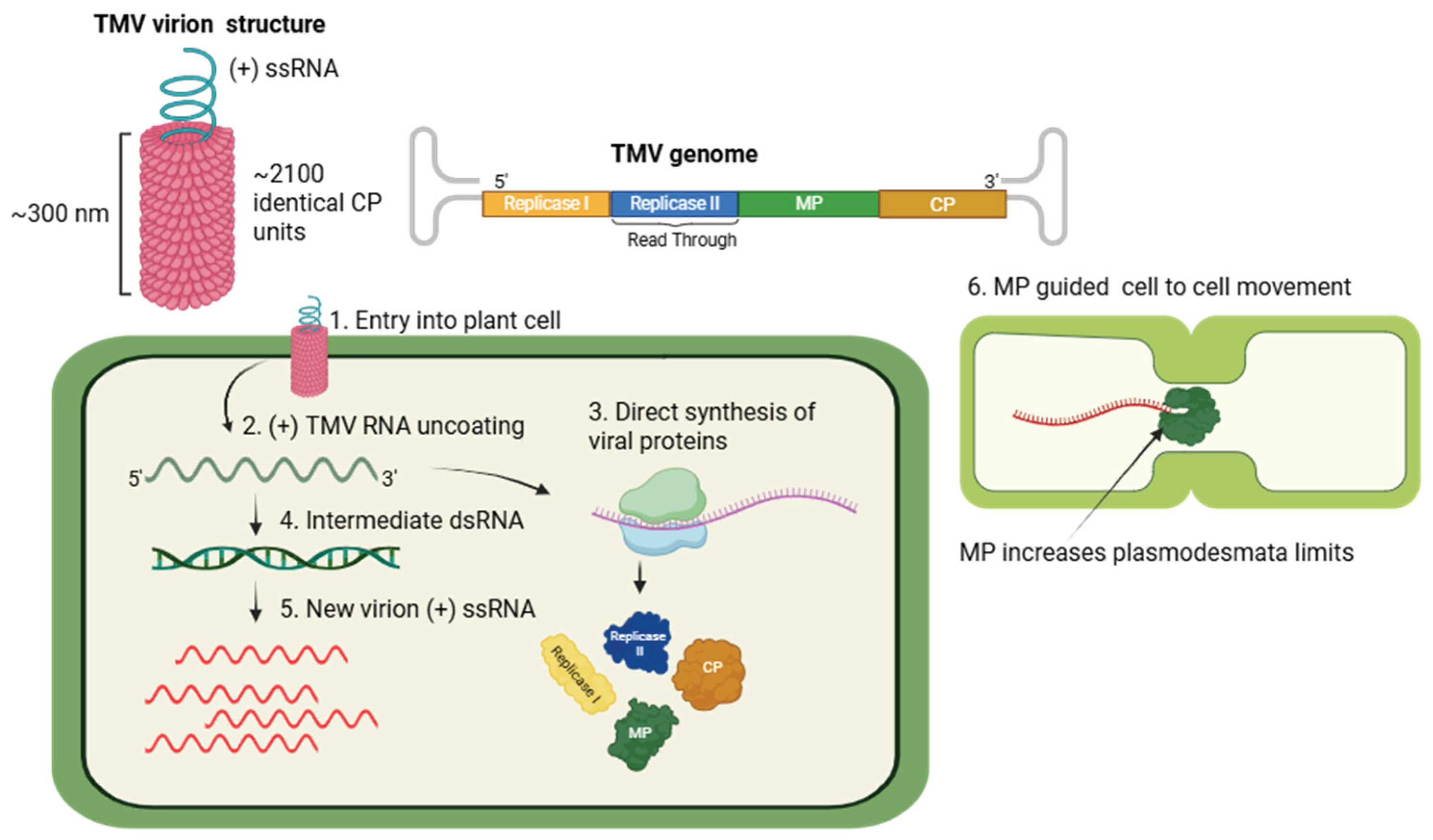
Figure 2.
Direct antiviral mechanisms of plant-derived compounds against the TMV infection cycle in plant cells. Plant-derived compounds interfere with multiple stages of the TMV infection cycle, targeting viral RNA replication and SgRNAs synthesis, suppression of viral CP synthesis, disruption of virion assembly and destabilization of viral particles.
Figure 2.
Direct antiviral mechanisms of plant-derived compounds against the TMV infection cycle in plant cells. Plant-derived compounds interfere with multiple stages of the TMV infection cycle, targeting viral RNA replication and SgRNAs synthesis, suppression of viral CP synthesis, disruption of virion assembly and destabilization of viral particles.
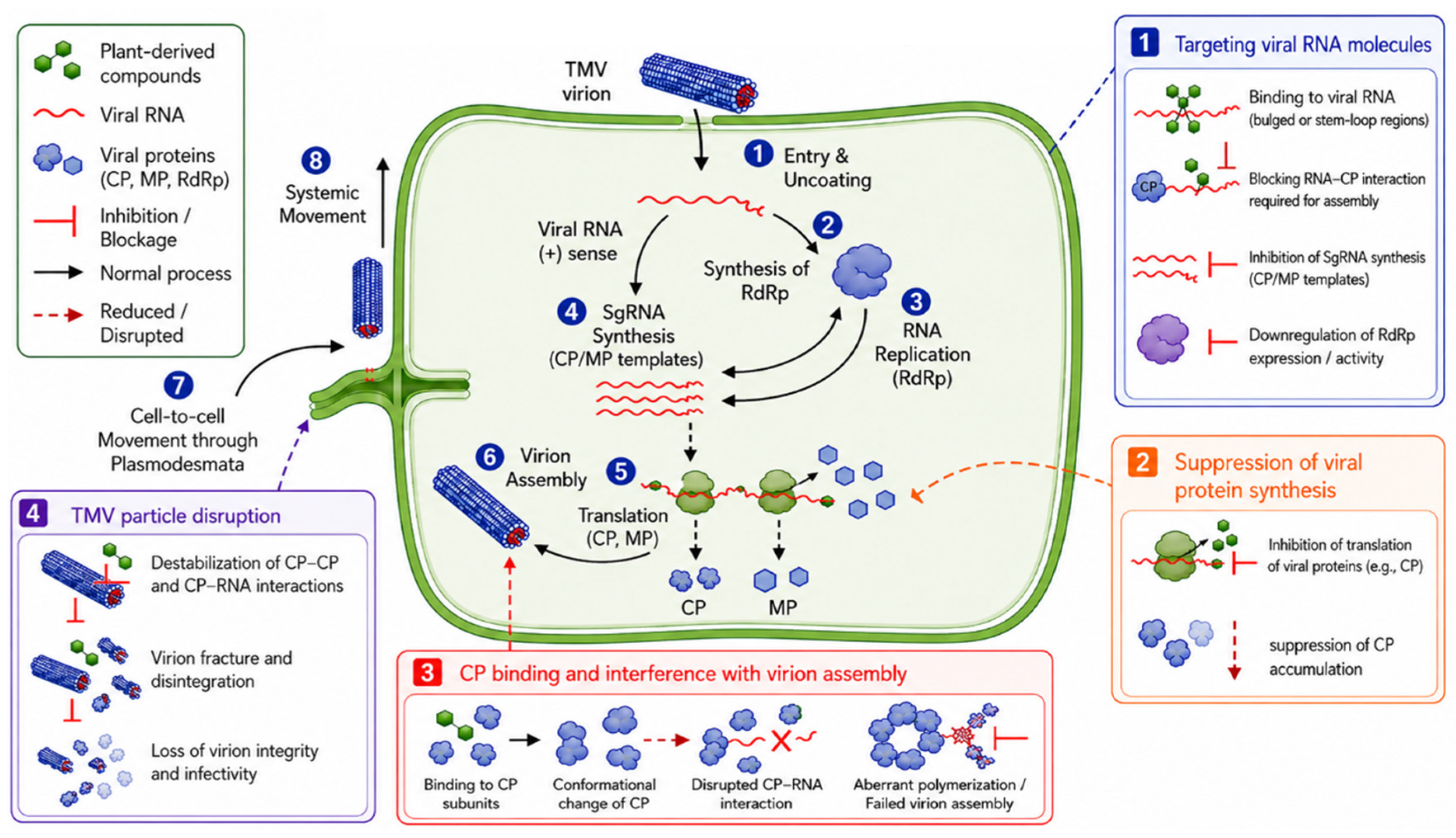
Figure 3.
Schematic diagram of induced resistance mechanisms triggered by plant-derived anti-TMV metabolites.
Figure 3.
Schematic diagram of induced resistance mechanisms triggered by plant-derived anti-TMV metabolites.
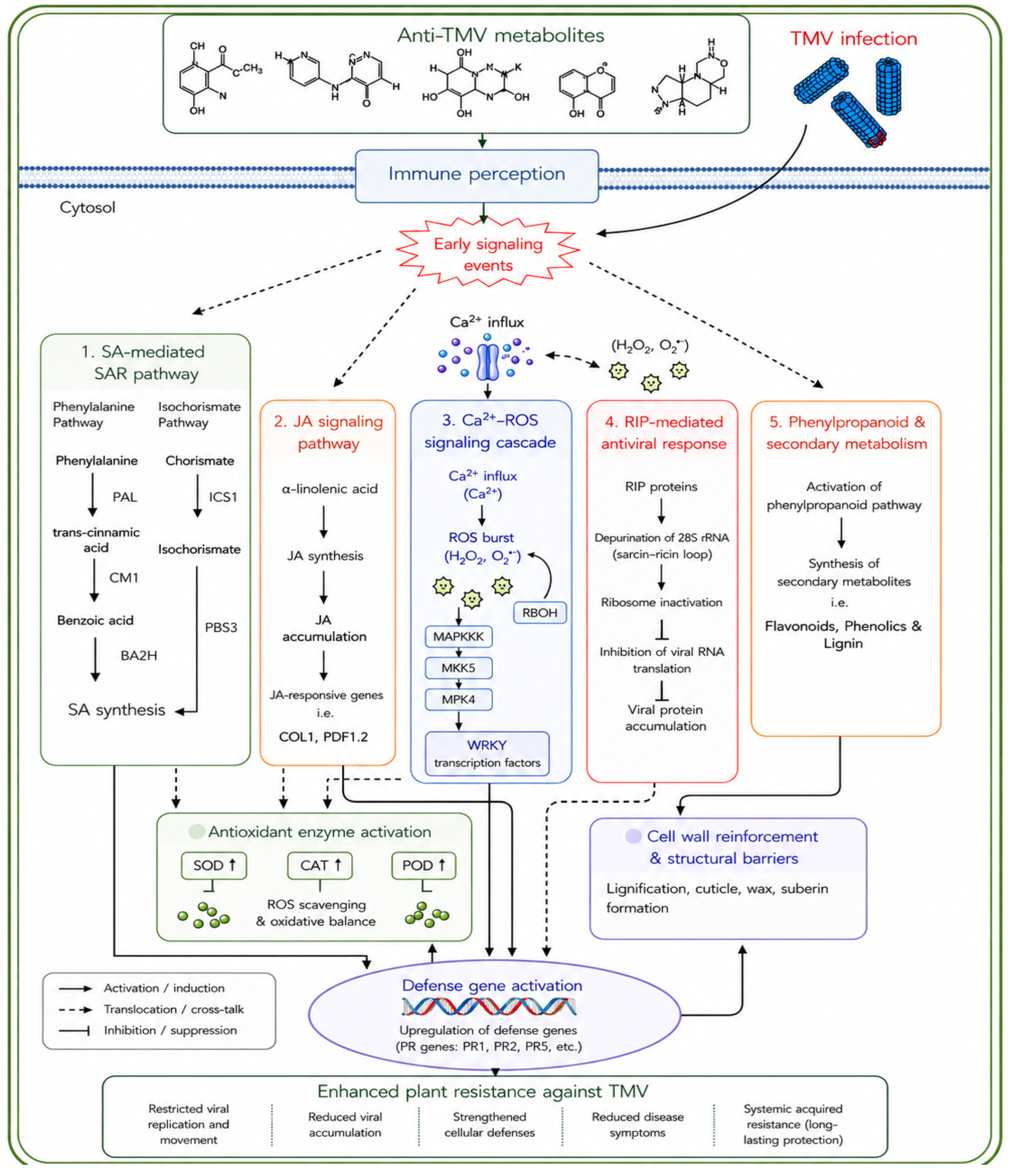

Table 1.
This is a table. Tables should be placed in the main text near to the first time they are cited.
Table 1.
This is a table. Tables should be placed in the main text near to the first time they are cited.
| Direct antiviral mechanisms by targeting viral RNA | |||
|---|---|---|---|
| Compound | Source | Antiviral Efficacy | Reference |
| Glaucogenin C, Cynatratoside A, Paniculatumoside C (Steroidal aglycone & glycosides) |
Strobilanthes cusia | IC50: 0.017–0.025μ MEC50: 0.001–0.002μM |
[36] |
| Antofine (Phenanthroindolizidine alkaloids) |
Natural (Plant-derived) |
86% inhibition IC50: 0.0044μM |
[37] |
| By suppressing the expression of viral proteins | |||
| seco-pregnane C21 steroids and analogues (Steroidal glycosides) |
Cynanchum paniculatum |
IC50: 14.8–28.3 μg/mL | [38] |
| Tagitinin C (Sesquiterpenoid) |
Tithonia diversifolia | Curative: 63% (100 μg/mL) |
[39] |
| 1β-Methoxydiversifolin-3-O-methyl ether (Sesquiterpenoid) |
Tithonia diversifolia | Curative: 60% (100 μg/mL) |
[39] |
| Atisine-type alkaloids (Diterpenoid alkaloids) |
Spiraea japonica | 64.45% inhibition (100μg/mL) |
[40] |
| Chaparrinone (Triterpenoids) |
Ailanthus altissima | Inactivation: 53–56% Protective: 59–62% Curative: 40–46% (100μg/mL) |
[41] |
| Glaucarubinone (Triterpenoids) |
Ailanthus altissima | IC50: 0.93μM (leaf-disk) IC50: 7.35μM (half-leaf) |
[41] |
| Ailanthone (Triterpenoids) |
Ailanthus altissima | IC50: 2.91μM (leaf-disk) IC50: 7.92μM (half-leaf) |
[41] |
| N-methyl lycoricidine derivatives (Isoquinoline alkaloids) |
Synthetic (Plant sourced) |
Inactivation: 72.57% Protective: 70.26% Curative: 61.97% (5000μg/mL) |
[42] |
| By disrupting TMV particle | |||
| Chelerythrine (Isoquinoline Alkaloids) |
Chelidonium majus | 85–90% inhibition (500μg/mL) |
[43] |
| Osthole (Coumarins) |
Cnidium monnieri | 55–59% inhibition (500μg/mL) |
[44] |
| Flavonoid glycosides (Flavonoids) |
Clematis lasiandra | Inactivation: 65–83% Protective: 58–59% Curative: 41–44% (500μg/mL) |
[45] |
| 4-Methoxycoumarin (Coumarins) |
Natural (Plant-derived) |
Protective: 60–70% Curative: 50–60% Inactivation: 65–75% (5μg/mL) |
[6] |
| By CP binding and virion assembly inhibition | |||
| Luotonin A derivatives (Quinazolinone alkaloids) |
Synthetic (Plant sourced) |
Curative: 53–61% (100μg/mL) |
[46] |
| Indole phytoalexin analogues (Indole alkaloids) |
Synthetic (Plant sourced) |
78% inhibition (10μg/mL) |
[47] |
| Phenanthroindolizidine analogues (Phenanthroindolizidine alkaloids) |
Synthetic (Plant sourced) |
80–91% inhibition IC50: 0.0037–0.0068μM |
[37] |
| α-aminophosphonate derivatives (Phosphorus-flavonoid hybrids) |
Synthetic (Plant sourced) |
EC50: 356.7 mg/L | [48] |
| Ferulic acid Dimers (Phenylpropanoid) |
Synthetic (Plant sourced) |
EC50: 63–85 μg/mL | [49] |
| Dual antiviral mechanisms byCP binding and inhibiting virion assembly, and by inducing host immunity through selective regulation of defense enzymes | |||
| Myricetin hybrid (Flavonols) |
Synthetic (Plant sourced) |
EC50: 240μg/mL(curative) EC50:210μg/mL(protective) |
[50] |
| C-alkylated flavonoids (Flavones) |
Desmodium caudatum | 35.8–64.3% inhibition (50μg/mL) |
[51] |
| Dual antiviral mechanisms by CP binding and inhibiting virion assembly, andby inducing the phenylpropanoid pathway mediated secondary metabolite synthesis | |||
| Findlayine A, Dendrofindline B (Diterpenoid alkaloids) |
Dendrobium findlayanum | 38.6% inhibition (1000μg/mL) |
[52] |
| Host-mediated immune responses, byeliciting Ca2+ signalling pathways | |||
| DNPE6(4) (Polysaccharide) |
Dendrobium nobile | Protective: 69.9%±5.7% Curative: 23.6±1.3 (125μg/mL) |
[53] |
| By eliciting Ca2+ signalling pathways and by inducing SA-mediated SAR response | |||
| Natural Polysaccharides | Nicotiana tabacum | Inactive & protective Inhibition: 80.40 -76.18% (500 μg/mL) |
[54] |
| By inducing Ca2+–ROS signaling pathways | |||
| 4-Hydroxychalcone (Flavonoids) |
Natural (Plant-derived) |
Protective: 48.36% (1000μM) |
[55] |
| By activation of phenylpropanoid pathway and the synthesis of secondary metabolites | |||
| Ferulic acid–eugenol conjugates (Phenylpropanoids) |
Synthetic (Plant sourced) |
Inactivation: 57% Curative: 55% Protective: 53% (500μg/mL) |
[56] |
| Wedelolide C (Sesquiterpene) |
Wedelia trilobata | Inhibition: 65.8% (10 μg/mL) |
[57] |
| By initiating ROS-mediated signalling and activating the phenylpropanoid pathway mediated synthesis of secondary metabolites | |||
| Swertisin, Comtraide A and Isoorientin (Xanthone Glycosides-Polyphenols) |
Comastoma pedunlulatum | Inactivation: 51.65%, 45.66% and 12.85% Protective: 50.05%, 57.55% and 61.73% (100μg/mL) |
[58] |
| By inducing SA and JA pathways mediated SAR response | |||
| α-, β-Cembratriene-diols (Diterpenoids) |
Nicotiana tabacum | Protective: 71–73% (75μM) |
[48] |
| By inducing SA-mediated SAR response | |||
| Ursolic acid (Triterpenoids) |
Natural (Plant-derived) |
Protective: 50–60% Curative: 40–50% Inactivation: 55–65% (5μg/mL) |
[6] |
| Berberine (Isoquinoline alkaloid) |
Coptis chinensis |
Protective: 63% Curative: 35% Inactivation: 14% (100μg/mL) |
[59] |
| Limonene (monoterpene) |
Natural (Plant-derived) |
Protective: 84.93% Curative: 58.89% (800 μg/mL) |
[24] |
| Chelidonine (Isoquinoline alkaloids) |
Chelidonium majus |
Protective: 46–59% (100μg/mL) |
[43] |
| 3-Acetonyl-3-hydroxyoxindole (Indole alkaloids) |
Strobilanthes cusia | 85% inhibition (500 nM) |
[60] |
| By inducing SA-mediated SAR response and activating the phenylpropanoid pathway mediated synthesis of secondary metabolites | |||
| Cinnamic acid glycoside (Phenylpropanoids) |
Synthetic (Plant sourced) |
EC50: 130μg/mL (protective) | [61] |
| By RIP-mediated antiviral responses | |||
| Cinchonaglycoside C (Steroidal glycosides) |
Strobilanthes cusia | 92% inhibition (0.5μM) | [62] |
| Pokeweed antiviral protein (Ribosomeinactivating proteins) |
Phytolacca americana | % antiviral activity not mentioned (100 μg/mL) |
[63] |
* IC50: Half maximal inhibitory concentration (the concentration required to inhibit 50% of biological activity), MEC50: Median effective concentration (the concentration required to achieve 50% of the maximum effect), EC50: Half maximal effective concentration (the concentration required to produce 50% of the maximum effect), Inhibition: Suppression of viral infection or replication, Inactivation: Loss of viral infectivity, Curative: Ability of a metabolite to suppress viral infection when applied after virus inoculation, Protective: Ability of a metabolite to prevent viral infection when applied before virus inoculation, Synthetic (Plant sourced): These compounds are chemically synthesized and their structures are derived or modified from naturally occurring plant metabolites. Natural (Plant-derived): Naturally occurring compounds isolated from plants, where the specific source plant is not mentioned.
Disclaimer/Publisher’s Note: The statements, opinions and data contained in all publications are solely those of the individual author(s) and contributor(s) and not of MDPI and/or the editor(s). MDPI and/or the editor(s) disclaim responsibility for any injury to people or property resulting from any ideas, methods, instructions or products referred to in the content. |
© 2026 by the authors. Licensee MDPI, Basel, Switzerland. This article is an open access article distributed under the terms and conditions of the Creative Commons Attribution (CC BY) license (http://creativecommons.org/licenses/by/4.0/).
Copyright: This open access article is published under a Creative Commons CC BY 4.0 license, which permit the free download, distribution, and reuse, provided that the author and preprint are cited in any reuse.


