

Submitted:
01 May 2026
Posted:
05 May 2026
You are already at the latest version
Preprints on COVID-19 and SARS-CoV-2
Abstract
The COVID-19 pandemic exposed significant vulnerabilities in health systems, extending beyond infection-related outcomes to multidimensional social, economic, psychological, and healthcare disruptions. This mixed-methods study aimed to assess multidimensional unmet needs and public health system gaps during the COVID-19 pandemic in India. A web-based cross-sectional survey was conducted among 958 community-dwelling adults using a structured questionnaire covering eight domains of unmet needs. Quantitative data were analyzed using descriptive statistics and multiple-response analysis, while qualitative data from open-ended responses (n = 20) were analyzed thematically. Integration was performed during interpretation. Financial instability was widely reported, with 79.1% experiencing income loss and 71.8% reporting difficulty managing expenses. Nutritional insecurity affected 63.4% of participants, with marked dietary changes and weight fluctuations. Social disruption included inability to meet friends (42%) and stigma (35.1%). Psychological distress was substantial, with 40% reporting stress and anxiety and only 15% accessing counseling services. Child-related educational disruption was prominent, including learning difficulties (46.1%) and academic disruption (44.8%). Preventive health gaps were evident, with 45.7% reporting need for COVID-19 awareness and 41–42% reporting insufficient information on treatment and complications. Healthcare access was disrupted, including missed follow-ups (32.4%) and delayed care. Qualitative findings reinforced quantitative results, highlighting compromised childcare, economic hardship, healthcare delays, psychological distress, and informational gaps. Integrated analysis demonstrated convergence across childcare and education, mental health, financial instability, healthcare access, and preventive awareness as key unmet needs. The study concludes that COVID-19 generated interconnected multidimensional unmet needs, highlighting the need for integrated, equity-focused health system strengthening. Findings emphasize the importance of community-based nursing, improved risk communication, continuity of care, and multisectoral coordination in future public health emergencies.
Keywords:
COVID-19
; pandemics
; public health
; needs assessment
; health services accessibility
; health equity
; mental health
; child care
; nutrition
; preventive health services
; mixed methods research
; India
1. Introduction and Background
The COVID-19 pandemic exposed critical vulnerabilities within health systems worldwide, extending beyond biomedical consequences to generate widespread social, economic, and psychosocial disruptions. Its high transmissibility led the World Health Organization to declare COVID-19 a pandemic due to substantial morbidity and mortality [1]. In response, governments implemented large-scale containment measures including isolation, social distancing, travel restrictions, quarantine, suspension of mass gatherings, and closure of educational institutions and workplaces. While essential for infection control, these interventions significantly disrupted essential services and daily functioning, revealing systemic gaps in public health preparedness, service continuity, and emergency response coordination [2,3].
In India, the first confirmed case was reported in Kerala on 30 January 2020 and subsequently in Tamil Nadu on 7 March 2020 [4]. By the end of 2020, more than 11 million cases and 148,000 deaths were recorded, placing India among the most affected countries globally [5]. Mitigation strategies included nationwide lockdowns, rapid healthcare expansion, and public health campaigns promoting hygiene, masking, and physical distancing [6,7]. Despite these measures, cumulative infections exceeded 34 million by December 2021, with nearly 478,000 deaths and a peak of 414,433 daily cases during the second wave [8].
Beyond epidemiological outcomes, the pandemic exposed profound public health system gaps, including disruption of routine healthcare services, preventive programs, and chronic disease management. The rapid reallocation of resources to COVID-19 care revealed limitations in surge capacity, continuity-of-care frameworks, and integration of emergency preparedness within primary and community health systems [2,3]. These disruptions highlight the need for resilient, community-oriented service delivery models, where community and public health nurses play a central role in maintaining essential care during crises.
The pandemic further intensified economic instability and revealed weaknesses in social protection systems. Marginalized populations, informal workers, and socioeconomically disadvantaged groups experienced disproportionate vulnerability, underscoring the interdependence of health, economic security, and social well-being [9,10]. Similarly, widespread mental health stress, fear, and isolation occurred alongside limited access to structured psychosocial support, revealing persistent gaps in mental health integration within emergency preparedness systems [11,12]. Community health nurses are strategically positioned to address these gaps through early identification, counseling support, and community-level interventions.
Disruptions in education, childcare, and information systems further exposed structural inequities. School closures, digital barriers, and limited home-based learning support disproportionately affected children and caregivers, reflecting the interconnected nature of social and health systems [13,14]. Unequal access to digital and telehealth services further widened disparities, reinforcing the need for inclusive, community-based public health interventions.
Frontline health professionals were central to surveillance, vaccination, and continuity of care, highlighting the importance of workforce capacity and coordinated response systems [15,16]. Within this context, community and public health nurses function as key links between health systems and communities through health education, risk communication, and service delivery. However, the pandemic also demonstrated that health emergencies are not only biomedical crises but systemic stress tests that expose fragmented, inequitable, and poorly integrated health and social systems.
Despite growing literature on COVID-19, most studies have examined isolated domains such as mental health, economic burden, or healthcare disruption independently [11,12]. In India, evidence remains fragmented, with limited studies capturing the interconnected and co-occurring nature of unmet needs across multiple life domains [15,16]. Importantly, integrated, mixed-methods evidence on how these multidimensional vulnerabilities coexist within the same population remains scarce, particularly from a community and public health systems perspective. This represents a critical gap for designing comprehensive, equity-oriented pandemic preparedness strategies.
To address this gap, the present mixed-methods study provides an integrated assessment of multidimensional unmet needs during the COVID-19 pandemic in India. Unlike prior single-domain approaches, this study systematically examines the interrelated nature of economic, social, psychological, preventive, childcare, and healthcare access needs within one analytical framework, supported by qualitative insights. This integrated approach generates systems-level evidence to inform resilient, coordinated, and equity-focused public health and community nursing responses.
The significance of this study lies in its contribution of multidomain, population-level evidence that moves beyond isolated outcome analysis to reveal the interconnected structure of pandemic-related vulnerabilities. It identifies priority areas for intervention, strengthens understanding of health system resilience, and informs community-centered nursing and policy strategies in India and comparable low- and middle-income settings.
2. Materials and Methods
2.1. Research Design
A mixed-methods approach was employed to investigate public health system gaps and multidimensional unmet needs experienced during the COVID-19 pandemic in India. The study integrated a quantitative web-based cross-sectional survey with qualitative analysis of open-ended responses, enabling simultaneous examination of measurable trends and contextual lived experiences. This design facilitated a broader understanding of the pandemic’s multifaceted impact and its relevance to community and public health nursing practice. Reporting standards were guided by the STROBE statement for the quantitative component and COREQ recommendations for the qualitative component to ensure methodological rigor and transparency.
2.2. Population and Sampling
The study targeted community-dwelling individuals residing in India during the COVID-19 pandemic who had internet access and were able to complete an online survey. Although the initial outreach intended to include a broad age range, the final analytical sample comprised adults aged 18 years and above.
Sample size was estimated using the standard formula for population proportions. In the absence of prior prevalence estimates for unmet needs, a conservative proportion of 50% was assumed. At a 95% confidence level and 5% precision, the minimum required sample was 384. After adjusting for a projected 20% non-response rate associated with online surveys, the final minimum target was 480 participants.
Given pandemic-related restrictions, probability sampling was not feasible. Therefore, convenience snowball sampling was adopted to facilitate rapid and wide community-level recruitment across diverse demographic groups. Participants were enrolled through online platforms, with eligibility criteria including age ≥18 years, internet accessibility, and informed consent. A total of 958 complete responses were obtained, exceeding the calculated requirement and thereby enhancing the precision of descriptive estimates.
For the qualitative strand, 20 information-rich responses were purposively selected from the open-ended survey items. Selection was based on completeness, depth, and relevance to the research objectives. This sample size was deemed adequate once thematic saturation was reached, indicated by the absence of new substantive codes across successive responses.
2.3. Data Collection Instrument
Data were collected using a structured questionnaire developed through focus group discussions involving families affected and unaffected by COVID-19. The instrument comprised two sections.
The first section captured socio-demographic and background information, including age, gender, educational attainment, marital status, occupation, household income, residence, COVID-19 exposure, vaccination status, and comorbidities.
The second section, titled Community Needs Assessment, examined eight domains of unmet needs: economic, nutritional, social, spiritual, mental health, preventive, childcare, and healthcare. This section included 40 dichotomous (yes/no) items and three open-ended questions to capture additional contextual challenges.
Content validity was established through expert review by six specialists, yielding a Content Validity Index (CVI) of 0.98. Internal consistency reliability of the 40-item dichotomous scale was assessed using the Kuder–Richardson Formula 20 (KR-20), resulting in an overall coefficient of 0.952, indicating excellent consistency. Domain-specific coefficients varied from 0.063 to 0.955, with the highest reliability observed in preventive, childcare, and mental health domains. Lower values in selected domains were interpreted as reflective of the exploratory and multidimensional nature of pandemic-related needs rather than deficiencies in instrument performance.
2.4. Pilot Testing
A pilot study was undertaken to evaluate feasibility, clarity, and administrative procedures associated with the questionnaire. Feedback obtained during this phase informed minor revisions prior to large-scale implementation.
2.5. Ethical Considerations
Ethical approval was obtained from the Institutional Review Board and Ethical Review Board of Narayana Health (Approval No. NHH/AEC-2021-602). Participants provided implied informed consent electronically before accessing the survey. Confidentiality, anonymity, and voluntary participation were maintained throughout the study.
2.6. Data Collection Procedure
Data collection was conducted between December 2021 and January 2022 using a Google Forms–based questionnaire. The survey link was disseminated through WhatsApp and other online social networks. The introductory page included study details, consent information, and participant rights.
To preserve data quality, respondents were restricted to a single submission. Participants were also encouraged to share the survey within their personal and professional networks, thereby extending community reach. Qualitative responses were recorded directly through the same platform, ensuring consistency in data capture.
2.7. Data Analysis
Quantitative data were analyzed using SPSS version 23. Descriptive statistics, including frequencies, percentages, means, and standard deviations, were used to summarize participant characteristics and unmet needs across the eight assessment domains. The hierarchy of needs was generated using a multiple-response analysis based on the proportion of affirmative responses for each item. Each need item was treated independently, and percentages reflect the proportion of participants endorsing that specific need. Therefore, the ranking represents relative frequency of reported needs and not mutually exclusive categories.
Qualitative data were analyzed using an inductive thematic approach aligned with COREQ principles. Responses were read repeatedly for familiarization, coded line-by-line into meaningful units, and subsequently grouped into categories. These categories were synthesized into broader themes representing participants’ experiences during the pandemic. Themes were iteratively refined for conceptual clarity, and representative quotations were selected to support interpretation.
To strengthen analytical rigor, two researchers independently reviewed codes and themes. No qualitative software was employed. Integration of quantitative and qualitative findings occurred during interpretation, allowing for a comprehensive understanding of multidimensional unmet needs.
2.8. Trustworthiness
Trustworthiness of the qualitative analysis was established using Lincoln and Guba’s framework. Credibility was supported through in-depth engagement with information-rich responses and the inclusion of verbatim quotations. Dependability was maintained through systematic coding procedures and an audit trail. Confirmability was ensured by grounding interpretations in participant narratives, while transferability was facilitated through detailed contextual description of the study population and setting.
3. Results
3.1. Socio-Demographic Characteristics
A total of 958 individuals participated in the online survey. As shown in Table 1, the majority were female (64%), with a mean age of 31.8 years (SD = 11.6). More than half were married (54.3%), and 42.5% were single. Regarding education, 43% were graduates and 28.9% had postgraduate or higher qualifications. Students formed the largest occupational group (27.5%), followed by teachers (14.6%) and healthcare professionals (12.7%). Over half of participants (56.7%) reported a monthly income below ₹25,000. Participants were distributed across rural (45.4%) and urban (42.6%) settings, with the majority from South India (91.6%).
3.2. COVID-19–Related Background Characteristics
As shown in Table 2, 52.3% of participants were not working during the pandemic, while 47.5% were employed. COVID-19 infection was reported by 6.4% during the first wave and 7.8% during the second wave. Household infection was reported by 16.1% of participants. At the time of data collection, 53.8% had received COVID-19 vaccination. Comorbidities were reported by 9.4%, with diabetes mellitus (34.4%) and hypertension (25.6%) being the most common.
3.3. Multidimensional Needs During the COVID-19 Pandemic
Table 3 presents participant-reported needs across multiple domains using a multiple-response format; therefore, percentages reflect independent endorsement of each item.
3.3.1. Financial Needs
Financial disruption was widely reported, with 79.1% experiencing job or salary loss and 71.8% reporting difficulty managing household expenses. Concerns regarding future financial stability were reported by 37.9%, while 19% reported borrowing money and 7% reported job changes.
3.3.2. Food and Nutritional Needs
Only 36.6% reported adequate access to food. Difficulty purchasing groceries was reported by 25.6%, and 31.5% reported lack of access to preferred foods. Weight changes included weight loss (16.6%) and weight gain (14.9%).
3.3.3. Social, Spiritual, and Informational Needs
Inability to meet friends was reported by 42%, perceived stigma by 35.1%, and exposure to misinformation by 35.4%. Difficulty performing religious or social rituals was reported by 39.6%, while 27% reported questioning faith following COVID-related loss.
3.3.4. Mental Health Needs
Stress and anxiety were reported by 40%, while 42% expressed a need for relaxation support. Only 15% reported accessing counseling services.
3.3.5. Preventive and Healthcare Needs
Need for COVID-19 prevention awareness was reported by 45.7%, while 41–42% reported need for information on treatment and complications. Difficulty accessing healthcare services included missed follow-ups (32.4%), admission barriers (21%), and reluctance to visit hospitals for mild symptoms (27%).
3.3.6. Child Health and Education Needs
Child-related disruptions were prominent, including learning difficulties (46.1%), academic disruption (44.8%), increased screen time (44.5%), and behavioral changes (41.7%). Inability to spend sufficient time with children was reported by 22.6%.
3.4. Priority Hierarchy of Needs
Figure 1 illustrates the ranking of participant-reported needs based on the proportion of affirmative responses. Child-related educational disruption, preventive health awareness, and mental health needs emerged as the most frequently reported domains.
The highest-ranked items included difficulties in children’s learning (46.1%), need for preventive awareness (45.7%), academic disruption (44.8%), and increased screen time (44.5%). Mental health concerns such as stress (40%) and need for relaxation (42%) were also prominent. Financial and healthcare access-related needs were moderately ranked, while counseling services (15%) and job changes (7%) were least frequently reported.
3.5. Qualitative Findings (Thematic Analysis)
Thematic analysis of open-ended responses generated five major themes reflecting participants’ lived experiences during the pandemic.
Theme 1: Compromised Childcare and Educational Support
Participants reported challenges in supervising children during online learning and limited digital access.
“Children were unattended during their online classes because I was working” (P5, Female, Teacher).
Theme 2: Economic Instability and Loss of Livelihood
Job loss and financial insecurity were widely reported.
“I lost my job in a private organization, and they did not give salary” (P2, Male, Private employee).
Theme 3: Disrupted Healthcare Access
Participants reported delayed and interrupted medical care.
“Even my heart surgery was delayed because of COVID” (P11, Male, Retired).
Theme 4: Psychological Distress and Work–Life Imbalance
Fear, stress, and emotional burden were frequently reported.
“Fear of death was always there, and we lost a close family member” (P7, Female, Homemaker).
Theme 5: Unmet Preventive and Informational Needs
Participants reported confusion due to changing public health guidelines.
“Information kept changing, and it was difficult to understand what to follow” (P15, Male, Self-employed).
3.6. Integrated Mixed-Methods Summary (Quantitative–Qualitative Convergence)
Integration of quantitative and qualitative findings demonstrated convergence across key domains. Quantitative data identified childcare and educational disruption, mental health stressors, and preventive health needs as the most frequently reported issues. These findings were strongly supported by qualitative themes, particularly Compromised Childcare and Educational Support and Psychological Distress and Work–Life Imbalance.
Similarly, financial instability and healthcare access limitations identified in quantitative analysis were reinforced by qualitative narratives describing job loss, delayed treatment, and difficulty accessing healthcare services. Informational gaps and uncertainty regarding COVID-19 prevention were consistently reflected across both datasets.
Overall, both quantitative and qualitative findings converged to highlight childcare and education, mental health, financial instability, healthcare access, and informational clarity as central multidimensional needs during the COVID-19 pandemic.
4. Discussion
This study demonstrates substantial multidimensional unmet needs during the COVID-19 pandemic across economic, nutritional, social, psychological, preventive, childcare, and healthcare domains. The findings highlight interconnected disruptions affecting individuals in India and reinforce that pandemic responses must extend beyond infection control to address broader social determinants of health. Economic instability was a major concern, with participants reporting job loss, delayed income, and difficulty meeting daily needs. Financial insecurity was associated with increased stress and sleep disturbances (p < 0.001) [17,18], consistent with evidence linking economic downturns to psychological distress [19], underscoring the need for early identification of socioeconomic vulnerability and strengthened social protection systems during crises.
Economic hardship was closely linked with nutritional insecurity, as reduced income and supply disruptions limited access to adequate food. More than half of participants reported nutrition-related difficulties, including dietary changes and weight fluctuations [23,24], consistent with prior evidence of increased food insecurity during the pandemic [20,21]. Social disruption was also evident, with participants reporting inability to meet friends (42%) and stigma (35%) [26,27,28], alongside limited social support (31%), reflecting weakened community cohesion and increased psychological vulnerability [29,30,31]. Misinformation further increased uncertainty [32,33], while spiritual practices emerged as a coping mechanism supporting resilience [34,35,36].
Psychological burden was substantial, including stress, anxiety, and emotional exhaustion [38,39,40,41], yet mental health service utilization remained low [42], reflecting barriers such as stigma and limited access. This highlights the importance of integrating community-based and tele-mental health services into emergency preparedness systems [43,44]. Childcare and educational disruptions were prominent, particularly among working parents, with difficulties in supervising children, limited digital access, and learning interruptions affecting academic engagement [45,46,47]. These disruptions increased caregiver burden and highlight the need for digital equity and continuity of education during emergencies [48].
Preventive health communication gaps contributed to confusion and vaccine hesitancy [49,50], although awareness improved over time [51,52], emphasizing the importance of consistent and transparent public health messaging [53]. Healthcare service disruptions, including delayed consultations and interrupted treatments, were widely reported [54,55,56], increasing stress and reflecting global patterns during the pandemic [57]. Strengthening telemedicine, decentralized care, and resilient primary healthcare systems is essential to ensure continuity of care during future crises.
Overall, the COVID-19 pandemic amplified pre-existing vulnerabilities through interconnected social and structural pathways. Unlike single-domain studies, this research provides a comprehensive multidimensional assessment of co-occurring needs, with key priority areas identified as childcare, preventive health, and economic stability. Integration of quantitative and qualitative findings demonstrated strong convergence across childcare and education disruption, psychological distress, economic instability, and healthcare access barriers, confirming that these needs were interrelated rather than isolated phenomena and strengthening the validity of findings.
4.1. Strengths and Limitations
This study has several strengths, including a mixed-methods design enabling triangulation of quantitative and qualitative data, a large sample size (n = 958), and assessment across multiple domains, providing a comprehensive understanding of pandemic-related needs. Inclusion of rural and urban participants enhances contextual relevance, while qualitative rigor was ensured through established trustworthiness criteria. However, limitations include potential selection bias due to online sampling, underrepresentation of individuals with limited digital access, and cross-sectional design limiting causal inference. Self-reported data may introduce recall bias, and formal reliability testing was not conducted. The qualitative component did not explicitly document data saturation, and the predominance of South Indian and highly educated participants may limit generalizability.
4.2. Implications
The findings have important implications for community and public health nursing. Nurses are central to identifying socioeconomic and nutritional vulnerability and linking individuals to social protection systems. Integration of mental health screening and brief psychosocial interventions into routine care is essential given low service utilization. Nurses also play a key role in supporting families affected by childcare and educational disruptions, promoting digital health equity, and addressing vaccine hesitancy through effective risk communication. Strengthening nurse-led continuity-of-care models, including telehealth and chronic disease follow-up, is critical for healthcare resilience, supported by investments in workforce capacity and digital infrastructure.
5. Conclusion
In conclusion, this study demonstrates that the COVID-19 pandemic generated multidimensional and interconnected unmet needs across economic, nutritional, psychological, preventive, childcare, and healthcare domains. These findings highlight the complex interplay of social determinants shaping vulnerability during large-scale health emergencies. Strengthening preparedness requires integrated, equity-focused strategies that ensure continuity of essential services, enhance risk communication, expand mental health integration, and reinforce multisectoral coordination. Building resilient health systems must extend beyond infection control to include social protection, community engagement, and sustainable primary care strengthening.
Supplementary Materials
The following supporting information can be downloaded at the website of this paper posted on Preprints.org.
Author Contributions
Conceptualization: PK, PCC; Data curation: AK, RS; Formal analysis: PK, US; Funding acquisition: PK; Investigation: PCC, VG, MM, JSK; Methodology: PK, AK; Project administration: PK; Resources: RS, AJY;Software: US; Supervision: PK; Validation: PK, PCC; Visualization: US, MM; Writing–original draft: PK, PCC; Writing–review & editing: all authors. All authors have read and agreed to the published version of the manuscript.
Funding
The author received no financial support for the research, authorship, and/or publication of this article.
Institutional Review Board Statement
The study was approved by the Institutional Review Board of Narayana Health (protocol code NHH/AEC-2021-602, date 26 November 2021).
Informed Consent Statement
Informed consent was obtained from all subjects involved in the study. Confidentiality, anonymity, and voluntary participation were maintained throughout the study.
Data Availability Statement
The original contributions presented in this study are included in the article/supplementary material. Further inquiries can be directed to the corresponding author(s).
Acknowledgments
The authors acknowledge the study participants. The authors are thankful to the Deanship of Scientific Research at University of Bisha for supporting this work through the Fast-Track Research Support Program.
Conflicts of Interest
The authors declare no conflict of interest.
References
- Oud, L.; Garza, J. The Contribution of COVID-19 to Acute Respiratory Distress Syndrome-Related Mortality in the United States. J. Clin. Med. Res. 2023, 15(5), 279–281. [Google Scholar] [CrossRef]
- Chu, I. Y.-H.; Alam, P.; Larson, H. J.; Lin, L. Social consequences of mass quarantine during epidemics: A systematic review with implications for the COVID-19 response. J. Travel Med. 2020, 27(7), taaa192. [Google Scholar] [CrossRef] [PubMed]
- Twardowska-Staszek, E.; Biel, K.; Rostek, I.; Seredyńska, A. Causes of Stress Among Poles and How They Cope With Stress During the COVID-19 Pandemic. Front. Psychiatry 2022, 13, 829918. [Google Scholar] [CrossRef] [PubMed]
- Andrews, M. A.; Areekal, B.; Rajesh, K. R. First confirmed case of COVID-19 infection in India: A case report. Indian J. Med. Res. 2020, 151(5), 490–492. [Google Scholar] [CrossRef]
- WHO COVID-19 Dashboard. Available online: https://data.who.int/ (accessed on 2025).
- Acharya, R.; Porwal, A. A vulnerability index for the management of and response to the COVID-19 epidemic in India: An ecological study. Lancet. Glob. Health 2020, 8(9), e1142–e1151. [Google Scholar] [CrossRef]
- Walker, P. G. T.; Whittaker, C.; Watson, O. J.; et al. The impact of COVID-19 and strategies for mitigation and suppression in low- and middle-income countries. Science 2020, 369(6502), 413–422. [Google Scholar] [CrossRef]
- Shankar, V. U.; Kumar, P. S.; Nirmala, K. Epidemiological impact of COVID-19 in India: Country with second foremost positive cases in the world. Total Environ. Res. Themes 2022, 3–4, 100007. [Google Scholar] [CrossRef]
- Brakefield, W.S.; Olusanya, O.A.; White, B.; Shaban-Nejad, A. Social Determinants and Indicators of COVID-19 Among Marginalized Communities: A Scientific Review and Call to Action for Pandemic Response and Recovery. Disaster Med. Public Health Prep. 2022, 17, e193. [Google Scholar] [CrossRef] [PubMed]
- McKibbin, W.; Fernando, RThe. global economic impacts of the COVID-19 pandemic. Econ. Model. 2023, 129, 106551. [Google Scholar] [CrossRef]
- Singh, K.; Kondal, D.; Mohan, S.; Jaganathan, S. Health, psychosocial, and economic impacts of the COVID-19 pandemic on people with chronic conditions in India: A mixed methods study. BMC Public Health 2021, 21(1), 685. [Google Scholar] [CrossRef] [PubMed] [PubMed Central]
- Athe, R.; Dwivedi, R.; Singh, K. Impact of COVID-19 on the Mental Health of Healthcare Workers and Job Loss From a Gender Perspective in India: A Systematic Review and Meta-Analysis. Cureus 2023, 15(11), e48219. [Google Scholar] [CrossRef] [PubMed] [PubMed Central]
- Sangra, S.; Razdan, N.; Gupta, S.; Dwivedi, N. A Study on Community needs, perceptions and demand regarding the use of the health services during COVID-19 pandemic in district Kathua, J and K. J Family Med Prim Care. 2023, 12(12), 3092–3097. [Google Scholar] [CrossRef] [PubMed] [PubMed Central]
- Yadav, R.; Yadav, J.; Shekhar, C. Unmet need for treatment-seeking from public health facilities in India: An analysis of sociodemographic, regional and disease-wise variations. PLoS Glob Public Health 2022, 2(4), e0000148. [Google Scholar] [CrossRef] [PubMed] [PubMed Central]
- Gale, A. Preventing Social Isolation: A Holistic Approach to Nursing Interventions. J. Psychosoc. Nurs. Ment. Health Serv. 2020, 58(7), 11–13. [Google Scholar] [CrossRef] [PubMed]
- Jayaprakash, P.; Majumdar, R.; Ingole, S. Geographical health inequalities in India: The impact of the COVID-19 pandemic on healthcare access and healthcare inequality. Int. J. Health Care Qual. Assur 2024, ahead-of-print(ahead-of-print), 42–67. [Google Scholar] [CrossRef] [PubMed]
- Borrescio-Higa, F.; Droller, F.; Valenzuela, P. Financial Distress and Psychological Well-Being During the COVID-19 Pandemic. Int. J. Public Health 2022, 67, 1604591. [Google Scholar] [CrossRef] [PubMed]
- Samuel, L. J.; Dwivedi, P.; Hladek, M. The effect of COVID-19 pandemic-related financial challenges on mental health and well-being among US older adults. J. Am. Geriatr. Soc. 2022, 70(6), 1629–1641. [Google Scholar] [CrossRef]
- Tai-Seale, M.; Cheung, M.W.; Kwak, J.; Harris, V.; Madonis, S.; Russell, L.; Haley, E.; Agnihotri, P. Unmet needs for food, medicine, and mental health services among vulnerable older adults during the COVID-19 pandemic. Health Serv. Res. 2023, 58 Suppl 1(Suppl 1), 69–77. [Google Scholar] [CrossRef] [PubMed] [PubMed Central]
- Larson, N.; Alexander, T.; Slaughter-Acey, J. C. Barriers to Accessing Healthy Food and Food Assistance During the COVID-19 Pandemic and Racial Justice Uprisings: A Mixed-Methods Investigation of Emerging Adults’ Experiences. J. Acad. Nutr. Diet. 2021, 121(9), 1679–1694. [Google Scholar] [CrossRef]
- Reimold, A. E.; Grummon, A. H.; Taillie, L. S.; Brewer, N. T.; Rimm, E. B.; Hall, M. G. Barriers and facilitators to achieving food security during the COVID-19 pandemic. Prev. Med. Rep. 2021, 23, 101500. [Google Scholar] [CrossRef] [PubMed]
- Williams, A.; Alwan, N.A.; Taylor, E.; Smith, D.; Ziauddeen, N. The COVID-19 pandemic and food insecurity in households with children: A systematic review. PLoS ONE 2024, 19(8), e0308699. [Google Scholar] [CrossRef] [PubMed] [PubMed Central]
- Al Zaman, K.; Ahmed, S.; Alshamsi, A. Impact of COVID-19 Pandemic on Weight Change Among Adults in the UAE. Int. J. General. Med. 2023, 16, 1661–1670. [Google Scholar] [CrossRef]
- Borgatti, A. C.; Schneider-Worthington, C. R.; Stager, L. M.; et al. The COVID-19 pandemic and weight management: Effective behaviors and pandemic-specific risk factors. Obes. Res. Clin. Pract. 2021, 15(5), 518–521. [Google Scholar] [CrossRef]
- He, Y. Impact of coronavirus disease 2019 on food security in early childhood. Curr. Opin. Pediatr. 2023, 35(1), 22–27. [Google Scholar] [CrossRef] [PubMed] [PubMed Central]
- Boskovic, I.; Puente-López, E.; Dandachi-FitzGerald, B.; Merckelbach, H. The prevalence of feigning and concealment of Covid-19 infections in an international sample. J. Health Psychol. 2024, 29(6), 595–607. [Google Scholar] [CrossRef]
- Alchawa, M.; Naja, S.; Ali, K.; Kehyayan, V.; Haddad, P. M.; Bougmiza, I. COVID-19 perceived stigma among survivors: A cross-sectional study of prevalence and predictors. Eur. J. Psychiatry 2023, 37(1), 24–35. [Google Scholar] [CrossRef]
- Haddad, C.; Bou Malhab, S.; Malaeb, D. Stigma toward people with COVID-19 among the Lebanese population: A cross-sectional study of correlates and mediating effects. BMC Psychol. 2021, 9(1), 164. [Google Scholar] [CrossRef]
- Ottoni, C. A.; Winters, M.; Sims-Gould, J. “We see each other from a distance”: Neighbourhood social relationships during the COVID-19 pandemic matter for older adults’ social connectedness. Health Place 2022, 76, 102844. [Google Scholar] [CrossRef]
- Achterhof, R.; Myin-Germeys, I.; Bamps, E.; et al. COVID-19-related changes in adolescents’ daily-life social interactions and psychopathology symptoms; OSF, 2021. [Google Scholar] [CrossRef]
- Itani, M. H.; Eltannir, E.; Tinawi, H.; Daher, D.; Eltannir, A.; Moukarzel, A. A. Severe Social Anxiety Among Adolescents During COVID-19 Lockdown. J. Patient Exp. 2021, 8, 23743735211038386. [Google Scholar] [CrossRef] [PubMed]
- Zhao, N.; Zhou, G. Social Media Use and Mental Health during the COVID-19 Pandemic: Moderator Role of Disaster Stressor and Mediator Role of Negative Affect. Appl. Psychol. Health Well-Being 2020, 12(4), 1019–1038. [Google Scholar] [CrossRef]
- Panchal, U.; Salazar de Pablo, G.; Franco, M.; Moreno, C.; Parellada, M.; Arango, C.; Fusar-Poli, P. The impact of COVID-19 lockdown on child and adolescent mental health: Systematic review. Eur. Child. Adolesc. Psychiatry 2023, 32(7), 1151–1177. [Google Scholar] [CrossRef]
- Fountoulakis, K. N.; Apostolidou, M. K.; Atsiova, M. B. Self-reported changes in anxiety, depression and suicidality during the COVID-19 lockdown in Greece. J. Affect. Disord. 2021, 279, 624–629. [Google Scholar] [CrossRef]
- Ting, R. S.-K.; Aw Yong, Y.-Y.; Tan, M.-M.; Yap, C.-K. Cultural Responses to Covid-19 Pandemic: Religions, Illness Perception, and Perceived Stress. Front. Psychol. 2021, 12. [Google Scholar] [CrossRef]
- Buchtova, M.; Malinakova, K.; Novak, L. The Associations of Experiencing the COVID-19 Pandemic With Religiosity and Spirituality: A Cross-Sectional Study in Czech Adults. Int. J. Public Health 2022, 67, 1604712. [Google Scholar] [CrossRef] [PubMed]
- Algahtani, F.D.; Alsaif, B.; Ahmed, A.A.; Almishaal, A.A.; Obeidat, S.T.; Mohamed, R.F.; Kamel, R.M.; Gul, I.; Hassan, S.U.N. Using Spiritual Connections to Cope With Stress and Anxiety During the COVID-19 Pandemic. Front Psychol. 2022, 13, 915290. [Google Scholar] [CrossRef] [PubMed] [PubMed Central]
- Sujan, Md. S. H.; Tasnim, R.; Islam, Md. S.; Ferdous, Most. Z.; Haghighathoseini, A.; Koly, K. N.; Pardhan. SFinancial hardship and mental health conditions in people with underlying health conditions during the COVID-19 pandemic in Bangladesh. Heliyon 2022, 8(9), e10499. [Google Scholar] [CrossRef]
- Baroud, T.; Masri, J. E.; Shammaa, H.; Saleh, M.; Chanbour, H.; Salemeh, P. The Impact of COVID-19 Pandemic, Financial Wellness, and Online Teaching on Schoolteachers’ Mental Health: A Cross-Sectional Study in Lebanon. Int. J. Clin. Res. 2023, 3(1), Article 1. [Google Scholar] [CrossRef]
- Talidong, K. J. B.; Toquero, C. M. D. Philippine Teachers’ Practices to Deal with Anxiety amid COVID-19. Journal of Loss and Trauma. 2020. Available online: https://www.tandfonline.com/doi/abs/10.1080/15325024.2020.1759225.
- Karageorghis, C. I.; Bird, J. M.; Hutchinson, J. C. Physical activity and mental well-being under COVID-19 lockdown: A cross-sectional multination study. BMC Public Health 2021, 21(1), 988. [Google Scholar] [CrossRef]
- Cha, L.; Thai, J.; True, M.; Le, T.; Ve’e, T.; Soon, N. A.; Bautista, R.; Tseng, W. A Community Assessment of Psychological Distress in Pacific Islanders Across San Francisco Bay Area Churches During the COVID-19 Pandemic. J. Racial Ethn. Health Disparities 2024, 11(1), 339. [Google Scholar] [CrossRef]
- Costa, R.; Mesquita, A.; Motrico, E.; Domínguez-Salas, S.; Dikmen-Yildiz, P.; Saldivia, S.; Vousoura, E.; Osorio, A.; Wilson, C.A.; Bina, R.; Levy, D.; Christoforou, A.; González, M.F.; Hancheva, C.; Felice, E.; Pinto, T.M. Unmet needs in mental healthcare for women with clinically significant symptoms of perinatal depression and/or anxiety during the COVID-19 pandemic. Acta Psychiatr. Scand. 2024, 150(5), 474–491. [Google Scholar] [CrossRef]
- Hao, X.; Qin, Y.; Lv, M.; Zhao, X.; Wu, S.; Li, K. Effectiveness of telehealth interventions on psychological outcomes and quality of life in community adults during the COVID-19 pandemic: A systematic review and meta-analysis. Int. J. Ment. Health Nurs. 2023, 32(4), 979–1007. [Google Scholar] [CrossRef]
- Abdoli, M.; Khoshgoftar, M.; Jadidi, H.; Daniali, S.S.; Kelishadi, R. Screen Time and Child Behavioral Disorders During COVID-19 Pandemic: A Systematic Review. Int. J. Prev. Med. 2024, 15, 9. [Google Scholar] [CrossRef]
- Zhou, S.-J.; Zhang, L.-G.; Wang, L.-L. Prevalence and socio-demographic correlates of psychological health problems in Chinese adolescents during the outbreak of COVID-19. Eur. Child. Adolesc. Psychiatry 2020, 29(6), 749–758. [Google Scholar] [CrossRef] [PubMed]
- Cortés-Albornoz, M. C.; Ramírez-Guerrero, S.; García-Guáqueta, D. P.; Vélez-Van-Meerbeke, A.; Talero-Gutiérrez, C. Effects of remote learning during COVID-19 lockdown on children’s learning abilities and school performance: A systematic review. Int. J. Educ. Dev. 2023, 101, 102835. [Google Scholar] [CrossRef]
- Chen, C.Y.; Byrne, E.; Vélez, T. A Preliminary Study of COVID-19-related Stressors, Parenting Stress, and Parental Psychological Well-being Among Parents of School-age Children. J. Child. Fam. Stud. 2022, 31(6), 1558–1569. [Google Scholar] [CrossRef]
- Neumann-Böhme, S.; Varghese, N. E.; Sabat, I. Once we have it, will we use it? A European survey on willingness to be vaccinated against COVID-19. Eur. J. Health Econ. 2020, 21(7), 977–982. [Google Scholar] [CrossRef] [PubMed]
- Yasmin, M.; Tfaily, M. A.; Wazzi Mkahal, R. Determinants of COVID-19 Vaccine Hesitancy: A Cross-Sectional Study in Three Communities in the United States and Lebanon. Microorganisms 2024, 12(6), 1200. [Google Scholar] [CrossRef] [PubMed]
- Kanagaraj, P.; Kanagaraj, A.; Srinivasan, M.; Jacob, J.; Philip, M. Awareness, anxiety and coping regarding COVID-19 among South Indian population: Web based cross sectional survey. Int. J. Community Med. Public Health 2020, 7(9), 3504–3511. [Google Scholar] [CrossRef]
- Rai, S.; Nayak, R.; Bhatt, A. S.; Vatsala, K. B.; Venkataramana, C. G.; Jain, A. Knowledge, attitude and practices towards COVID-19 among Indian medical undergraduates: A questionnaire-based study. F1000Research 2024, 12, 361. [Google Scholar] [CrossRef]
- Hearn, E.B.; Kehinde, G.; Sambamoorthi, U. Food insecurity and COVID-19 vaccine hesitancy among adults in the United States (US). Vaccine 2024, 42(7), 1723–1730. [Google Scholar] [CrossRef]
- Khattar, J.; Anderson, L. N.; De Rubeis, V. Unmet health care needs during the COVID-19 pandemic among adults: A prospective cohort study in the Canadian Longitudinal Study on Aging. CMAJ Open 2023, 11(1), E140–E151. [Google Scholar] [CrossRef] [PubMed]
- Ito, N.; Sugimori, H.; Odajima, T. Factors Associated with Refraining from Health Checkups during the COVID-19 Pandemic in Japan. Healthcare 2023, 11(17), 2385. [Google Scholar] [CrossRef] [PubMed]
- Moore, R.; Purvis, R.S.; Hallgren, E. “I am hesitant to visit the doctor unless absolutely necessary”: A qualitative study of delayed care, avoidance of care, and telehealth experiences during the COVID-19 pandemic. Medicine 2022, 101(32), e29439. [Google Scholar] [CrossRef]
- Lewis, S.; Ewald, L.; Duber, H.C.; Mokdad, A.H.; Gakidou, E. Determinants of Unmet Healthcare Needs During the Final Stage of the COVID-19 Pandemic: Insights From a 21-Country Online Survey. Int. J. Public Health 2024, 69, 1607639. [Google Scholar] [CrossRef] [PubMed]
Figure 1.
Percentage-based priority hierarchy of identified needs during the COVID-19 pandemic.
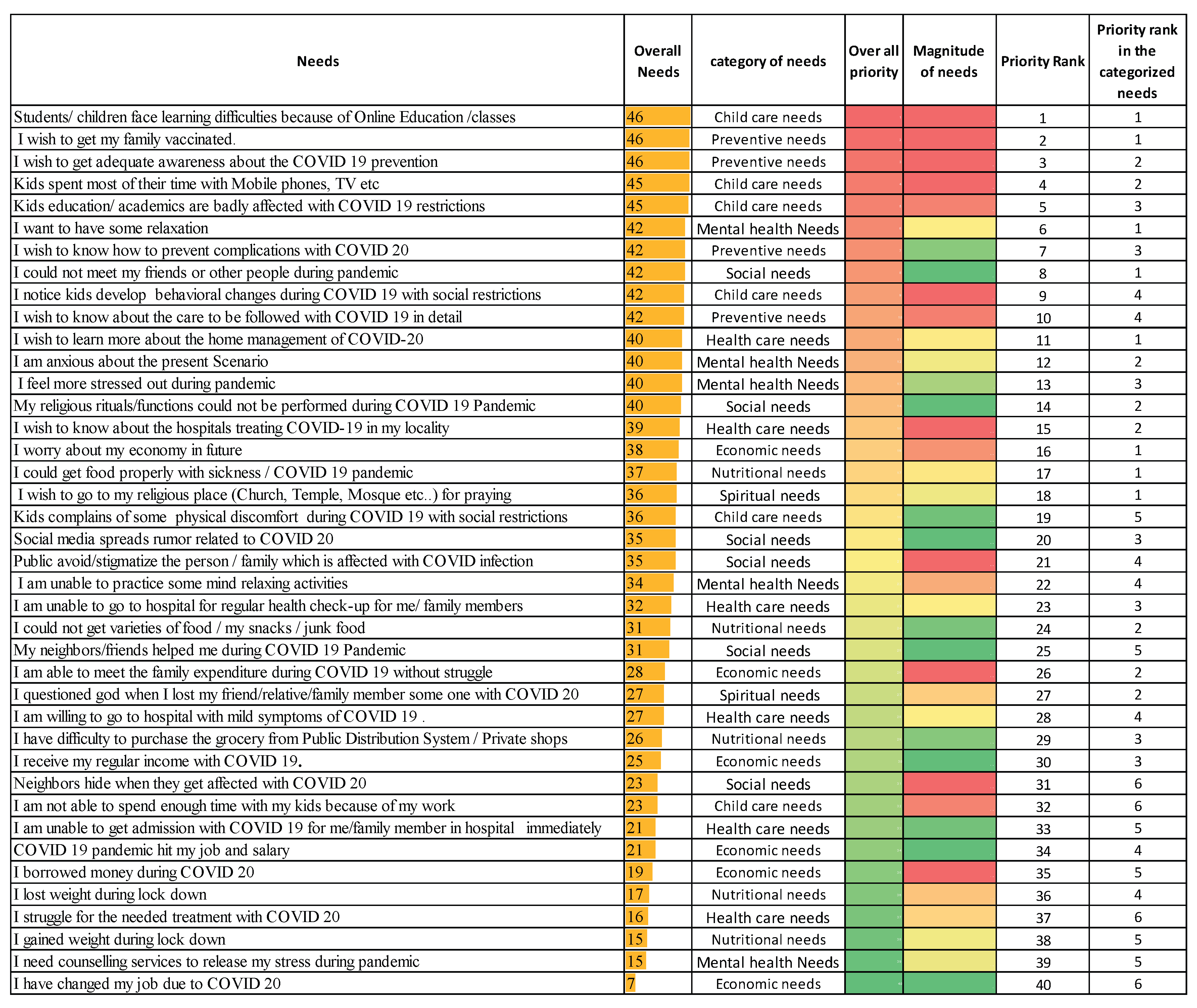

Table 1.
Frequency and percentage distribution of demographic variables n=958.
| S. No. | Demographic variables | Frequency (f) | Percentage (%) |
| 1 | Gender | ||
| Male | 351 | 36.6 | |
| Female | 607 | 63.4 | |
| 2 | Age (years) | ||
| Mean and S.D | 31.8 +11.6 | ||
| 3 | Educational status | ||
| Below 8th standard | 44 | 4.6 | |
| 8-12th standard | 138 | 14.4 | |
| Diploma | 87 | 9.1 | |
| Graduation | 412 | 43 | |
| Post-graduation and above | 277 | 28.9 | |
| 4 | Marital status | ||
| Single | 407 | 42.5 | |
| Married | 520 | 54.3 | |
| Separated / Divorced | 6 | 0.6 | |
| Widow/ widower | 25 | 2.6 | |
| 5 | Occupation /Profession | ||
| Teaching | 140 | 14.6 | |
| Health Care industry | 122 | 12.7 | |
| Engineering | 96 | 10 | |
| Agriculture | 34 | 3.5 | |
| Business / shopkeeper | 35 | 3.7 | |
| Law /Auditors/ Bank /Clerical /Office work | 22 | 2.3 | |
| Student | 263 | 27.5 | |
| Labor | 47 | 4.9 | |
| housewife | 112 | 11.7 | |
| Others | 87 | 9.1 | |
| 6 | Monthly income (Rupees) | ||
| Below 25000 | 543 | 56.7 | |
| 25001- 50000 | 226 | 23.6 | |
| above 50001 | 189 | 19.7 | |
| 7 | Place of residence | ||
| Rural | 435 | 45.4 | |
| Urban | 408 | 42.6 | |
| Sub urban | 115 | 12 | |
| 8 | Divisions- India | ||
| South | 877 | 91.6 | |
| Central | 44 | 4.6 | |
| East | 31 | 3.02 | |
| West | 4 | 0.4 | |
| North | 2 | 0.2 | |
Table 2.
Frequency and percentage distribution of Background Information n=958.
| S. No | Background information | Frequency (f) | Percentage (%) |
| 1 | Working status | ||
| Yes | 455 | 47.5 | |
| No | 501 | 52.3 | |
| 2 | Affected by COVID 19 during first wave | ||
| Yes | 61 | 6.4 | |
| No | 897 | 93.6 | |
| 3 | Affected with COVID 19 during second wave | ||
| Yes | 75 | 7.8 | |
| No | 883 | 92.2 | |
| 4 | Family member who stays in same house affected with COVID 19 | ||
| Yes | 154 | 16.1 | |
| No | 804 | 83.9 | |
| 5 | How many of them affected with COVID 19 in the family | ||
| 1 | 70 | 45.5 | |
| 2 | 26 | 16.9 | |
| 3 | 13 | 8 .4 | |
| 4 and more but less than 8 | 45 | 29.2 | |
| 6 | Have you vaccinated (as on month /year) | ||
| Yes | 515 | 53.8 | |
| No | 443 | 46.2 | |
| 7 | Any co morbidities / major diseases | ||
| Yes | 90 | 9.4 | |
| No | 868 | 90.6 | |
| 8 | Co-Morbidities | ||
| Hypertension | 23 | 25.6 | |
| DM | 31 | 34.4 | |
| Diabetes and hypertension | 20 | 22.2 | |
| Thyroid disorder | 9 | 10 | |
| Asthma | 2 | 2.2 | |
| Cardiac problems | 3 | 3.3 | |
| Neuro problems | 1 | 1.1 | |
| SLE | 1 | 1.1 | |
Table 3.
Frequency and Percentage distribution of various identified needs during COVID 19 pandemic.
Table 3.
Frequency and Percentage distribution of various identified needs during COVID 19 pandemic.
| Needs | ASPECTS | Yes | No |
| Economic needs | I receive my regular income with COVID 19. | 241(25.2%) | 716 (74.8%) |
| COVID 19 pandemic hit my job and salary | 757(79.1%) | 200(20.9%) | |
| I am able to meet the family expenditure during COVID 19 without struggle | 270 (28.2) | 687(71.8%) | |
| I worry about my economy in future | 363(37.9%) | 594(62.1%) | |
| I have changed my job due to COVID 19 | 67(7%) | 890(93%) | |
| I borrowed money during COVID 19 | 182(19%) | 775 (81%) | |
| Nutritional needs | I could get food properly with sickness / COVID 19 pandemic | 350(36.6%) | 607 (63.4%) |
| I have difficulty to purchase the grocery from Public Distribution System / Private shops | 245 (25.6%) | 712 (74.4%) | |
| I lost weight during lock down | 159 (16.6%) | 798(83.4%) | |
| I could not get varieties of food / my snacks / junk food | 301(31.5%) | 656 (68.5%) | |
| I gained weight during lock down | 143 (14.9%) | 814(85.1%) | |
| Social needs | Neighbors hide when they get affected with COVID 19 | 217 (22.7%) | 74(77.3%) |
| My neighbors/friends helped me during COVID 19 Pandemic | 299 (31.2%) | 658 (68.8%) | |
| I could not meet my friends or other people during pandemic | 402(42%) | 555(58%) | |
| Public avoid/stigmatize the person / family which is affected with COVID infection | 336(35.1%) | 621(64.9%) | |
| Social media spreads rumour related to COVID 19 | 339(35.4%) | 618 (64.6%) | |
| My religious rituals/functions could not be performed during COVID 19 Pandemic | 378 (39.6%) | 579(60.4%) | |
| Spiritual needs | I wish to go to my religious place (Church, Temple, Mosque etc..) for praying | 348 (36.4%) | 609(63.6%) |
| I questioned God when I lost my friend/relative/family member someone with COVID 19 | 261(27.3%) | 696 (72.7%) | |
| Mental Health Needs | I feel more stressed-out during pandemic | 381 (39.8%) | 576 (60.2%) |
| I am anxious about the present Scenario | 384 (40.1%) | 573 (59.9%) | |
| I want to have some relaxation | 406 (42.4%) | 551(57.6%) | |
| I am unable to practice some mind relaxing activities | 323 (33.8%) | 634 (66.2%) | |
| I need counseling services to release my stress during pandemic | 140 (14.6%) | 817(85.4%) | |
| Preventive needs | I wish to get my family vaccinated. | 437 (45.7%) | 520(54.3%) |
| I wish to get adequate awareness about the COVID 19 prevention | 437 (45.7%) | 520(54.3%) | |
| I wish to know how to prevent complications with COVID 19 | 403 (42.1%) | 554(57.9%) | |
| I wish to know about the care/treatment to be followed with COVID 19 in detail | 398(41.6%) | 559(58.4%) | |
| Child care needs | I notice kids develop behavioral changes during COVID 19 with social restrictions | 400(41.7%) | 557 (58.2%) |
| Kids’ education/ academics are badly affected with COVID 19 restrictions | 429 (44.8%) | 528 (55.2%) | |
| I am not able to spend enough time with my kids because of my work | 216 (22.6%) | 741(77.4%) | |
| Kids complain of some physical discomfort during COVID 19 with social restrictions | 340(35.5%) | 617(64.5%) | |
| Students/ children face learning difficulties because of Online Education /classes | 441 (46.1%) | 516 (53.9%) | |
| Kids spent most of their time with Mobile phones, TV etc | 435(44.5%) | 522 (54.5%) | |
| Health care needs | I am willing to go to hospital with mild symptoms of COVID 19 . | 258 (27%) | 699 (73%) |
| I am unable to get admission with COVID 19 for me/family member in hospital immediately | 201 (21%) | 756 (79%) | |
| I wish to know about the hospitals treating COVID-19 in my locality | 370 (35.7%) | 587 (61.3%) | |
| I struggle for the needed treatment with COVID 19 | 155 (16.2%) | 802 (83.8%) | |
| I am unable to go to hospital for regular health check-up for me/ family members | 310 (32.4%) | 647(67.6%) | |
| I wish to learn more about the home management of COVID-19 | 385 (40.2%) | 572(59.8%) |
Disclaimer/Publisher’s Note: The statements, opinions and data contained in all publications are solely those of the individual author(s) and contributor(s) and not of MDPI and/or the editor(s). MDPI and/or the editor(s) disclaim responsibility for any injury to people or property resulting from any ideas, methods, instructions or products referred to in the content. |
© 2026 by the authors. Licensee MDPI, Basel, Switzerland. This article is an open access article distributed under the terms and conditions of the Creative Commons Attribution (CC BY) license (http://creativecommons.org/licenses/by/4.0/).
Copyright: This open access article is published under a Creative Commons CC BY 4.0 license, which permit the free download, distribution, and reuse, provided that the author and preprint are cited in any reuse.


