

Submitted:
15 February 2026
Posted:
25 February 2026
You are already at the latest version
Abstract
This work presents a method for implementing dynamic difficulty adjustment in the arcade game of Air Hockey using reinforcement learning. The resulting AI-controlled opponent is capable of adapting its skill level to the player's performance, with the goal of maintaining engagement and providing a balanced gameplay experience throughout a match. The approach relies on generating several AI agents through progressively longer training durations, producing distinct and smoothly transitioning difficulty levels that can be switched dynamically. In addition, the system is extended with manually selected parameters that influence physical aspects of the agent's behavior, such as movement speed, reaction latency, and control precision, complementing the differences arising from decision-making quality. The combined method is potentially applicable to a wide range of video games, and the experimental results demonstrate its effectiveness in producing adaptive and varied opponent behavior.
Keywords:
machine learning
; reinforcement learning
; dynamic difficulty adjustment
; flow channel
; air hockey
1. Introduction
One of the central challenges faced by video game designers is maintaining player engagement throughout the gaming experience. Engagement is often conceptualized through the notion of a Flow Channel (FC), a psychological state in which the player remains situated between anxiety and boredom, thereby sustaining motivation and enjoyment [1]. This balance is delicate: anxiety typically arises when the game becomes too difficult relative to the player’s abilities, whereas boredom emerges when the challenge is insufficient. Both extremes can lead to disengagement, making it essential for games to adapt to the diverse skill levels of their audience.
A widely explored solution to this problem is the use of Dynamic Difficulty Adjustment (DDA) techniques [2,3]. DDA systems aim to continuously align the game’s difficulty with the player’s performance, ensuring that the experience remains stimulating without becoming overwhelming. Although many factors can influence perceived difficulty, the behavior and skill level of AI-controlled opponents often play a decisive role. Adjusting these opponents, whether by modifying their strategic reasoning, reaction time, or precision, has proven to be an effective method for implementing DDA in a broad range of game genres [4]. As a result, DDA has become increasingly prevalent in modern game design [5].
In parallel, the growing integration of machine learning techniques into video game AI has opened new possibilities for creating adaptive and believable opponents [6]. Building on this trend, the objective of the present work is to investigate how machine learning agents, combined with DDA, can be used to construct a flexible and responsive opponent for a simple arcade-style Air Hockey game. Our approach relies on training several AI agents for different durations, which produces opponents with distinct skill levels. These agents can then be interchanged dynamically, either at the start of a match or in response to in-game events such as goals scored by the player or the AI. Because the agents share similar training environments and architectures, adjacent difficulty levels exhibit consistent behavioral patterns, ensuring smooth transitions between them.
Through a series of controlled matches, we demonstrate that this method successfully generates opponents with clearly differentiated abilities, suitable for use in a DDA framework. Furthermore, we argue that the same methodology can be generalized to other game types, since it does not rely on characteristics unique to Air Hockey. Instead, it provides a modular and scalable strategy for integrating machine learning based difficulty adjustment into interactive digital environments.
2. The Game of Air Hockey
A video game adaptation of Air Hockey draws its inspiration from the real-world tabletop sport of the same name. The physical game is played by two opponents on a raised, low-friction table, typically measuring 8 feet in length and 4 feet in width. Each player uses a round mallet to strike a lightweight plastic puck with the objective of sending it through the opponent’s goalposts. The characteristic low friction of the playing surface is achieved through a continuous airflow produced by fans integrated into the table, which allows the puck to hover slightly above the surface and glide with minimal resistance.
Although Air Hockey is often perceived as a simple and fast-paced dexterity game, effective play requires a combination of precision, anticipation, and tactical decision-making. Even novice players quickly encounter strategic concepts that may initially seem counterintuitive. One well-known example is the "triangular defense", a technique that instructs players to position their mallet away from the goal line rather than directly in front of it, thereby improving defensive coverage and reaction time [7]. As players develop their skills, they learn to balance offensive opportunities with defensive stability, making the game both accessible and strategically engaging.
Air Hockey as a video game shares certain similarities with classic paddle-and-ball games like Pong, but its more advanced gameplay contributes to its enduring popularity, especially on mobile platforms that allow realistic touch-based controls. Given that most Air Hockey apps tend to be similar in terms of gameplay, it is graphics and AI that can make a certain implementation stand out. Arguably, in a single-player mode, AI is the single most important factor affecting player FC.
3. Related Works
DDA has long been recognized as an effective strategy for enhancing player enjoyment and sustaining engagement in digital games [8]. Increased player satisfaction has been reported across a wide range of genres, including classic puzzle games such as Tetris [9], first-person shooters [10,11], various action-oriented titles [12], and even cognitive training environments such as visual working memory games [13]. As noted by Zohaib [2], a fundamental component shared by most DDA approaches is the ability to estimate, at any given moment, the level of challenge experienced by the player. This estimation serves as the basis for adapting game parameters in a way that maintains player engagement while avoiding frustration or boredom. Existing research proposes a wide range of methods for this purpose, varying significantly in complexity and required instrumentation. At the simplest level, challenge estimation can rely on in game performance metrics such as score evolution, success and failure rates, or reaction times [14]. These score based heuristics are particularly well suited for games with clearly defined objectives and limited state spaces. Given the relatively simple and highly structured gameplay of Air Hockey, this category of methods is adopted in this work, as it enables efficient and transparent difficulty adaptation without introducing additional sources of noise or latency.
More complex approaches attempt to infer player experience through indirect measurements. For instance, Mi and Gao [15] treat DDA as a method of churn prevention, and thus attempt to track player engagement rather than straightforward win/loss ratio. Rani et al. [16] investigate the use of physiological signals, such as heart rate and galvanic skin response, to dynamically regulate task difficulty based on player emotional state. While such techniques can provide a finer-grained estimation of stress or engagement, they require specialized hardware and are therefore less practical for standard gaming environments.
Recent works have also explored nonintrusive perceptual methods. Blom et al. [17] present a system capable of continuously adapting game difficulty during live gameplay by analyzing facial expressions. This approach allows difficulty adjustment without explicit player input or gameplay interruption, but relies on computer vision pipelines that may be sensitive to environmental conditions and computational constraints.
Overall, these studies highlight a trade off between the accuracy of player state estimation and the practical feasibility of deployment. In the context of this project, score based evaluation was selected as a robust and lightweight solution that aligns with the fast paced nature of Air Hockey and integrates naturally with the Reinforcement Learning (RL) based opponent design.
Once the system identifies the need for adjustment, the implementation of difficulty changes typically relies on highly game-specific mechanisms. Because game mechanics vary significantly across genres, it is challenging to define universally applicable methods. Hossan et al. [18] discuss several notable approaches, including dynamic scripting, fast Bayesian content adaptation, and RL. Nevertheless, most studies focus on tailoring the difficulty modulation process to the unique characteristics of the game under consideration.
The task of developing AI opponents for Air Hockey has also been explored in prior work. Some physical robotics-based projects, such as [19], investigated mathematically grounded strategies for controlling an Air Hockey robots. Other studies leveraged machine learning to create more flexible and adaptive agents, as demonstrated in [20], although these efforts did not incorporate DDA.
The application of DDA specifically to Air Hockey was examined by Delgado-Mata and Ibáñez [21]. Their approach is distinctive in that it focuses on modifying the game environment rather than altering the skill of an AI-controlled opponent. This method is particularly suitable for player-versus-player scenarios, where both participants are human. The authors employ a score-based heuristic to adjust the width of each player’s goal line and to modify the friction of the playing surface, thereby influencing the likelihood of scoring.
More broadly, RL and artificial intelligence have become increasingly prominent in the design of video game agents, in particular, in classic and mechanically simple game environments. These technologies offer significant potential for enhancing DDA systems and maintaining player FC. Several studies have demonstrated promising results in this direction [22,23,24,25], highlighting the capacity of AI-driven methods to create adaptive and personalized gameplay experiences.
4. DDA in Air Hockey
4.1. 3D-AirHockey
The computer simulation of Air Hockey used as the testbed for this project is the open-source game 3D-AirHockey, developed in Unity by Andrei Lapusteanu1. The game provides a local two-player experience designed for casual, "couch-style" play and is presented through a top-down camera view (see Figure 1). Each player controls a mallet using four directional buttons, while mouse input is intentionally disabled. A mallet gradually accelerates when moved continuously in the same direction, which introduces a degree of challenge for human players who must adapt to the momentum-based controls. At the same time, this design choice simplifies the implementation of an AI controller, since simulating discrete button presses is considerably more straightforward than replicating continuous mouse movements.
For the purposes of this project, we created a fork of Lapusteanu’s original game2, integrating a custom AI controller while preserving all other gameplay elements, physics, and visual components. This ensures that the behavior of the AI agents can be evaluated within an environment that remains faithful to the original design, allowing for consistent comparisons between human and machine-controlled gameplay.
4.2. Reinforcement Learning
RL is a subfield of machine learning that studies how an autonomous agent can learn to make sequential decisions by interacting with an environment in order to maximize its cumulative reward. At each time step, the agent observes the current state of the environment, selects an action according to a policy, and receives a scalar reward that evaluates the quality of that action. The environment then transitions to a new state according to its underlying dynamics. This interaction loop is commonly formalized using the framework of Markov Decision Processes, which define the set of states, available actions, transition probabilities, and reward functions. Through repeated trial and error, and by balancing exploration of unfamiliar actions with exploitation of known beneficial ones, the agent gradually improves its policy.
In 3D-AirHockey, our goal is to apply RL and DDA to obtain an AI-controlled opponent able to facilitate player FC. Since the original project only supported local two-player matches, we had to extend it with an AI controller functionality. Our RL-based system generates a collection of dynamically switchable AI opponents, representing distinct skill levels.
To introduce RL capabilities into the game, we used Unity Machine Learning Agents Toolkit (ML-Agents)3, which provides convenient access to a wide range of machine learning algorithms, similar to those used in [6]. For training, we selected the proximal policy optimization (PPO) algorithm and employed a multi-layer perceptron network composed of two hidden layers with 256 neurons each. Both players were controlled by AI agents during training, enabling RL through self-play. The AI controller emulates human input by producing two output values corresponding to horizontal and vertical directional keypresses (see Figure 2).
The agent receives the following sensory information as input:
- Position of the AI bot and its opponent (3D coordinates).
- Velocity of the AI bot and its opponent (3D directional vector).
- Position of the puck (3D coordinates).
- Velocity of the puck (3D directional vector).
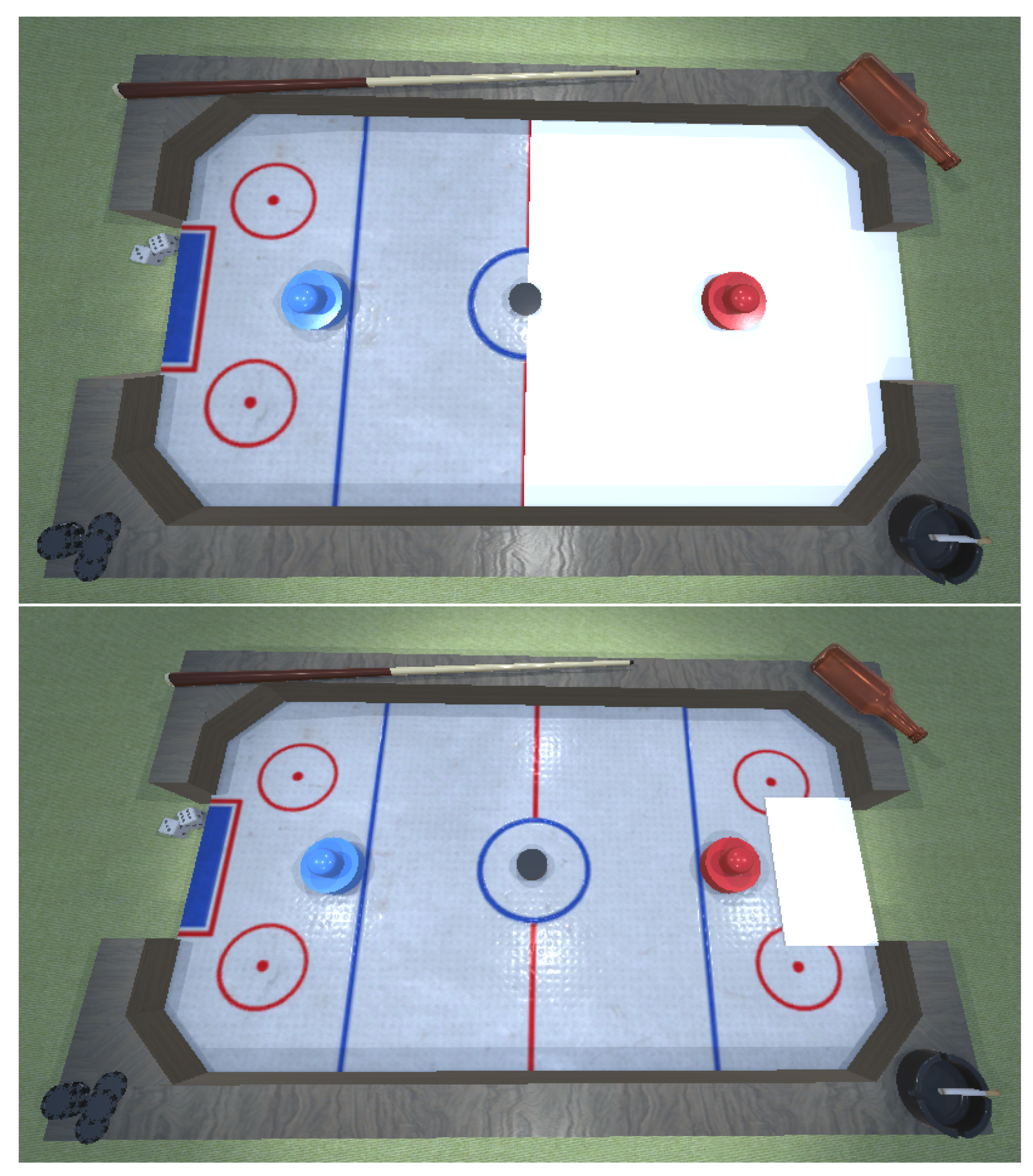
Although it is possible to design a reward function based solely on goals scored, faster training time and more meaningful intermediate strategies can be obtained with additional rewards, based on the concepts of defense zone and playing zone (see Figure 3). Defense zone corresponds to the area immediately surrounding the player’s goal. Playing zone denotes the whole player’s half of the game field. The idea is to encourage the AI player to remain close to its defense zone when the puck is located outside of its playing zone.
Training was carried out in a parallelized setup, using 100 subprocesses running simultaneously. To maximize training efficiency and reduce computational overhead, all nonessential visual components of the environment, including lighting effects and decorative elements, were disabled. This configuration allowed the learning process to focus exclusively on gameplay mechanics and agent decision making rather than rendering.
The reward function was designed to guide the agent toward effective and realistic Air Hockey strategies. The full set of rewards and penalties is presented in Table 1. Rewards marked with are computed as a function of the distance between relevant entities, such as the player and the puck, and are defined as follows:
This formula provides a smooth incentive that increases as the distance decreases, while remaining bounded. The clamping function ensures numerical stability and prevents extreme reward values:
A specific negative reward was introduced when the agent touches the puck while its velocity is close to zero. This penalty addresses the issue known as reward farming, where an agent exploits unintended loopholes in the reward structure to accumulate rewards without achieving the desired objective. In our case, such behavior occurs when the puck is trapped between the mallet and a wall, allowing the agent to repeatedly trigger the puck contact reward without performing a meaningful action. The penalty discourages this exploit while preserving the original intention of the contact reward, which is to motivate active puck engagement rather than passive positioning or avoidance.
Overall, the reward structure balances offensive incentives, such as scoring goals and shooting toward the opponent’s side, with defensive behaviors, including positioning between the puck and the goal and controlling puck movement in the defensive zone. Minor penalties were also applied to discourage unrealistic or ineffective behaviors, such as excessive wall contact, idling, or allowing the puck to pass behind the player.

Table 1.
Rewards and Penalties.
| Event | Value |
|---|---|
| Scoring a goal | +4 |
| Conceding a goal | -8 |
| Touching the puck | +1 |
| Staying close to the puck | |
| Touching a wall | -0.1 |
| Shooting the puck toward the opponent’s goal | +0.1 |
| Shooting the puck away from the opponent’s goal | -0.1 |
| Allowing the puck to pass behind the player | -0.02 |
| Staying between the puck and the goal | +0.05 |
| Aligning the player, the puck, and the opponent’s goal | +0.05 |
| Staying close to the defense zone when the puck is out of playable zone | |
| Keeping the puck velocity low | -0.005 |
| Touching the puck when its speed is near zero | -0.05 |
| Idling | -0.001 |
The AI controller reached a satisfactory level of performance after approximately 43 000 000 training steps, corresponding to roughly two hours of training on a conventional laptop. Since the primary objective of this work is DDA, the agent was considered sufficiently trained once its performance consistently exceeded that of the reasonably skillful human player. At this stage, the agent’s skill level justified its integration into a system capable of managing and adapting difficulty in response to in game performance.
4.3. DDA via Reinforcement Learning
DDA system developed in this project combines two complementary mechanisms that influence the skill level of the AI-controlled opponent. The first mechanism modifies several behavioral parameters of the agent, namely Speed, Latency, and Noise. The second mechanism switches between multiple trained AI models, each produced with different training durations and reward configurations, thereby representing distinct levels of proficiency.
Speed acts as a multiplier applied to the agent’s movement velocity. Reducing this value below 1.0 slows the mallet, making the agent less reactive and less capable of executing fast counterattacks. Empirical testing showed that values below 0.6 significantly degrade performance, so this threshold was adopted as a practical lower bound. Latency introduces an artificial reaction delay before the agent can initiate movement, and can be increased up to 1 second. This parameter simulates slower reflexes and reduces the agent’s ability to respond to sudden puck movements. Noise is a multiplier applied to a small, randomly generated directional vector added to the mallet’s movement on each update. This simulates imprecise or unstable control. Excessive Noise values lead to erratic behavior, so the parameter is capped at 4.
The combined system defines three difficulty levels, each corresponding to a specific configuration of training time and behavioral parameters:
- AgentMax; Full training time; Speed=1, Latency=0, Noise=0.
- Agent-1; 2/3 training time; Speed=1, Latency=0, Noise=1.
- Agent-2; 1/3 training time; Speed=0.7, Latency=1, Noise=2.
The active difficulty level is adjusted in response to changes in the game score. Whenever a goal is scored, the system computes the score difference:
If the score difference lies within the interval [, n], where n defaults to 3, the medium-skilled opponent Agent-1 is selected. If the AI leads by more than npoints, the weaker opponent Agent-2 is activated. Conversely, if the player leads by more than n points, the system switches to the strongest opponent AgentMax. This window-based strategy prevents abrupt fluctuations in difficulty after every goal and ensures smoother transitions between skill levels.
To assess the relative strengths of the three configurations (AgentMax, Agent-1, and Agent-2), we conducted a series of controlled matches. Each pair of agents played 100 sessions of 10 minutes, and the average scores were recorded. The results are presented in Table 2 and Table 4.
We also examined how individual behavioral parameters influence the overall skill of an AI-controlled opponent. Two sets of experiments were performed. In the first set, we compared AgentMax, Agent-1, and Agent-2 while keeping Speed, Latency, and Noise identical across all three models, isolating the effect of training time. In the second set, we evaluated the same model (AgentMax) under different parameter configurations to measure the impact of Speed, Latency, and Noise independently.
5. Results
The obtained results are summaried in Table 2, Table 3, Table 4. Table elements are score ratios () obtained in matches between models and :
Table 2 shows a clear performance gap between any two given models. In particular, the strongest model, AgentMax, is able to score 3.34 times more points in a match against the weakest model, Agent-2. However, this approach for obtaining models of different skill level has its limitations. The user may expect that even a low-skilled opponent tries to behave reasonably. It might lack fast reaction or accuracy, but still tries to win. Insufficient training data creates AI that sometimes fails to hit the puck at all or moves erratically, breaking user experience.
Table 2.
Relative performance of models having different training time.
| AgentMax | Agent-1 | Agent-2 | |
| AgentMax | 1.95 | 3.34 | |
| Agent-1 | 0.51 | 1.5 | |
| Agent-2 | 0.3 | 0.67 |
Table 3 shows the effect of adjusting Speed, Latency, and Noise instead of adjusting training time. In these game sessions, all opponents use the same fully-trained AI model, but differ in realtime parameters. This approach allows to obtain noticeable performance gaps between AgentMax and other two configurations, but the difference between Agent-1 and Agent-2 turned out to be minor.
Table 3.
Relative performance of models having different realtime parameters.
| AgentMax | Agent-1 | Agent-2 | |
| AgentMax | 1.1 | 1.53 | |
| Agent-1 | 0.91 | 1.53 | |
| Agent-2 | 0.65 | 0.65 |
The combined system exhibits a smoother "skill ladder", and provides more room for possible adjustments. Conceptually, training affects decision making quality of the AI system, while parameter adjustments reflect its physical abilities, such as speed, reaction, and accuracy.
Table 4.
Relative performance of the resulting configurations.
| AgentMax | Agent-1 | Agent-2 | |
| AgentMax | 2 | 3.18 | |
| Agent-1 | 0.5 | 1.72 | |
| Agent-2 | 0.31 | 0.58 |
6. Discussion
The primary objective of this study was to design an adaptive AI-controlled opponent for a video game version of Air Hockey. The experimental results indicate that this objective has been successfully achieved. The three pre-trained AI models, combined with carefully selected behavioral parameters, exhibit clearly distinguishable and progressively stronger skill levels. Furthermore, the system is capable of switching between these models in response to changes in the game score, allowing for smooth transitions that help maintain an appropriate level of challenge throughout a match.
The proposed approach has potential applicability beyond the specific context of Air Hockey. The underlying idea of generating multiple AI opponents by varying training duration is general and can be transferred to other game genres. Because the resulting models represent incremental refinements of the same fundamental behavior, transitions between difficulty levels are likely to appear natural rather than abrupt, which is essential for preserving player immersion.
Nevertheless, the method also has limitations. The differences between the AI models arise primarily from variations in decision-making quality rather than from changes in physical attributes. In many games, characters possess distinct profiles defined by attributes such as speed, strength, stamina, or precision. Capturing these variations requires a more comprehensive approach than simply adjusting a few behavioral parameters. In this work, we manually modified three parameters (Speed, Latency, and Noise) to approximate such differences, but these adjustments are inherently game-specific and may not generalize well to other environments. Developing more systematic or automated methods for integrating physical or profile-based variations into RL agents remains an important direction for future research.
The separation between "RL-based" and "attribute-based" behavior tuning highlight the difference between skill level achieved via better decision making and via higher physical abilities. It is possible to envision a pure RL-based DDA system, applicable to a variety of games, but tuning physical parameters might be more important in certain contexts. This point is elaborated in the work by Dziedzic [26], where games are classified across "pace" and "topography" dimensions, suggesting a particular approach to DDA for the given combination of pace/topography values.
7. Conclusion
We have demonstrated that a combination of manual parameter adjustment and machine learning techniques can be effectively employed to construct a DDA system for the game of Air Hockey. Although the resulting implementation contains several game-specific components, the overall methodology remains broadly applicable. The idea of generating multiple AI opponents through variations in training time, and refining their behavior through targeted parameter modifications, can be extended to a wide range of video games, including more complex genres such as Multiplayer Online Battle Arena (MOBA) titles [11]. This type of adaptive functionality is increasingly relevant in the modern game industry, which has evolved into a major entertainment sector [27] with a highly diverse player base and rising expectations for personalization and high-quality interactive experiences [28].
Several options for future research emerge from this work. One possible direction is to expand the number of difficulty levels to five or more, which would allow for smoother and more granular adjustments during gameplay. Another interesting extension would be to investigate alternative triggers for difficulty adaptation beyond goal events, e.g., connected to player engagement [15]. Such triggers may be particularly valuable in more complex games, where player performance and enjoyment can be assessed through a richer set of behavioral indicators.
References
- Cowley, B.; Charles, D.; Black, M.; Hickey, R. Toward an Understanding of Flow in Video Games. Computers in Entertainment 2008, 6, 1–27. [Google Scholar] [CrossRef]
- Zohaib, M. Dynamic Difficulty Adjustment (DDA) in Computer Games: A Review. Advances in Human-Computer Interaction 2018, 2018, 1–12. [Google Scholar] [CrossRef]
- Zohaib, M. Dynamic difficulty adjustment (DDA) in computer games: A review. Advances in Human-Computer Interaction 2018, 2018, 5681652. [Google Scholar] [CrossRef]
- Silva, M.P.; Silva, V.d.N.; Chaimowicz, L. Dynamic Difficulty Adjustment through an Adaptive AI. In Proceedings of the 2015 14th Brazilian Symposium on Computer Games and Digital Entertainment (SBGames); IEEE, 2015; pp. 173–182. [Google Scholar]
- Mortazavi, F.; Moradi, H.; Vahabie, A.H. Dynamic difficulty adjustment approaches in video games: a systematic literature review. Multimedia Tools and Applications 2024, 83, 83227–83274. [Google Scholar] [CrossRef]
- Urmanov, M.; Alimanova, M.; Nurkey, A. Training unity machine learning agents using reinforcement learning method. In Proceedings of the 2019 15th International Conference on Electronics, Computer and Computation (ICECCO); IEEE, 2019; pp. 1–4. [Google Scholar]
- Billiards, H. Professional Air Hockey: Tips, Techniques & Strategy. 2025. [Google Scholar]
- Moon, H.S.; Seo, J. Dynamic difficulty adjustment via fast user adaptation. In Proceedings of the Adjunct Proceedings of the 33rd Annual ACM Symposium on User Interface Software and Technology, 2020; pp. 13–15. [Google Scholar]
- Lora, D.; Sánchez-Ruiz, A.A.; González-Calero, P.A.; Gómez-Martín, M.A. Dynamic Difficulty Adjustment in Tetris. In Proceedings of the FLAIRS, 2016; pp. 335–339. [Google Scholar]
- Knorr, J.; Vaz De Carvalho, C. Using Dynamic Difficulty Adjustment to Improve the Experience and Train FPS Gamers. In Proceedings of the Ninth International Conference on Technological Ecosystems for Enhancing Multiculturality (TEEM’21), Barcelona Spain, 2021; pp. 195–200. [Google Scholar]
- Ye, D.; Liu, Z.; Sun, M.; Shi, B.; Zhao, P.; Wu, H.; Yu, H.; Yang, S.; Wu, X.; Guo, Q.; et al. Mastering complex control in moba games with deep reinforcement learning. Proceedings of the Proceedings of the AAAI conference on artificial intelligence 2020, Vol. 34, 6672–6679. [Google Scholar] [CrossRef]
- Climent, L.; Longhi, A.; Arbelaez, A.; Mancini, M. A framework for designing Reinforcement Learning agents with Dynamic Difficulty Adjustment in single-player action video games. Entertainment Computing 2024, 50, 100686. [Google Scholar] [CrossRef]
- Rahimi, M.; Moradi, H.; Vahabie, A.h.; Kebriaei, H. Continuous reinforcement learning-based dynamic difficulty adjustment in a visual working memory game. arXiv 2023, arXiv:2308.12726. [Google Scholar] [CrossRef]
- Fisher, N.; Kulshreshth, A.K. Exploring dynamic difficulty adjustment methods for video games. Proceedings of the Virtual Worlds. MDPI 2024, Vol. 3, 230–255. [Google Scholar] [CrossRef]
- Mi, Q.; Gao, T. Engagement-Oriented Dynamic Difficulty Adjustment. Applied Sciences 2025, 15. [Google Scholar] [CrossRef]
- Rani, P.; Sarkar, N.; Liu, C. Maintaining optimal challenge in computer games through real-time physiological feedback. Proceedings of the Proceedings of the 11th international conference on human computer interaction 2005, Vol. 58, 22–27. [Google Scholar]
- Blom, P.M.; Bakkes, S.; Spronck, P. Modeling and adjusting in-game difficulty based on facial expression analysis. Entertainment Computing 2019, 31, 100307. [Google Scholar] [CrossRef]
- Hossan, M.M.; Fouda, M.M.; Eishita, F.Z. Adaptive Game Design Using Machine Learning Techniques: A Survey. In Proceedings of the 2024 IEEE International Conference on Internet of Things and Intelligence Systems (IoTaIS); IEEE, 2024; pp. 144–150. [Google Scholar]
- Liu, P.; Tateo, D.; Bou-Ammar, H.; Peters, J. Efficient and reactive planning for high speed robot air hockey. In Proceedings of the 2021 IEEE/RSJ International Conference on Intelligent Robots and Systems (IROS); IEEE, 2021; pp. 586–593. [Google Scholar]
- Bara, M.; Gollamudi, S.; Williams, S. Developing an Air Hockey Game in LabVIEW. In Proceedings of the 2017 25th International Conference on Systems Engineering (ICSEng); IEEE, 2017; pp. 333–336. [Google Scholar]
- Delgado-Mata, C.; Ibáñez, J. Air Hockey iOS Game That Uses Fuzzy-Logic for Game-Balancing. In Proceedings of the 2012 Conference on Technologies and Applications of Artificial Intelligence. IEEE; 2012; pp. 272–277. [Google Scholar]
- Akşahin, B.F. Dynamic difficulty adjustment by changing enemy behavior using reinforcement learning.
- Romero-Mendez, E.A.; Santana-Mancilla, P.C.; Garcia-Ruiz, M.; Montesinos-López, O.A.; Anido-Rifón, L.E. The use of deep learning to improve player engagement in a video game through a dynamic difficulty adjustment based on skills classification. Applied Sciences 2023, 13, 8249. [Google Scholar] [CrossRef]
- Xiong, H. Dynamic Difficulty Adjustment: Developing an adaptive game AI with machine learning. PhD thesis, California State University, Northridge, 2019. [Google Scholar]
- Fuchs, R.; Gieseke, R.; Dockhorn, A. Personalized Dynamic Difficulty Adjustment Imitation Learning Meets Reinforcement Learning. In Proceedings of the 2024 IEEE Conference on Games (CoG); IEEE, 2024; pp. 1–2. [Google Scholar]
- Dziedzic, D. Dynamic difficulty adjustment systems for various game genres. Homo Ludens 2016, 9, 35–51. [Google Scholar]
- Engelstätter, B.; Ward, M.R. Video games become more mainstream. Entertainment Computing 2022, 42, 100494. [Google Scholar] [CrossRef]
- Bowman, N.D.; Daneels, R.; Possler, D. Excited for Eudaimonia? An Emergent Thematic Analysis of Player Expectations of Upcoming Video Games. Psychology of Popular Media 2024, 13, 416. [Google Scholar] [CrossRef]
| 1 | |
| 2 | |
| 3 |
Figure 1.
A screenshot of 3D-AirHockey.
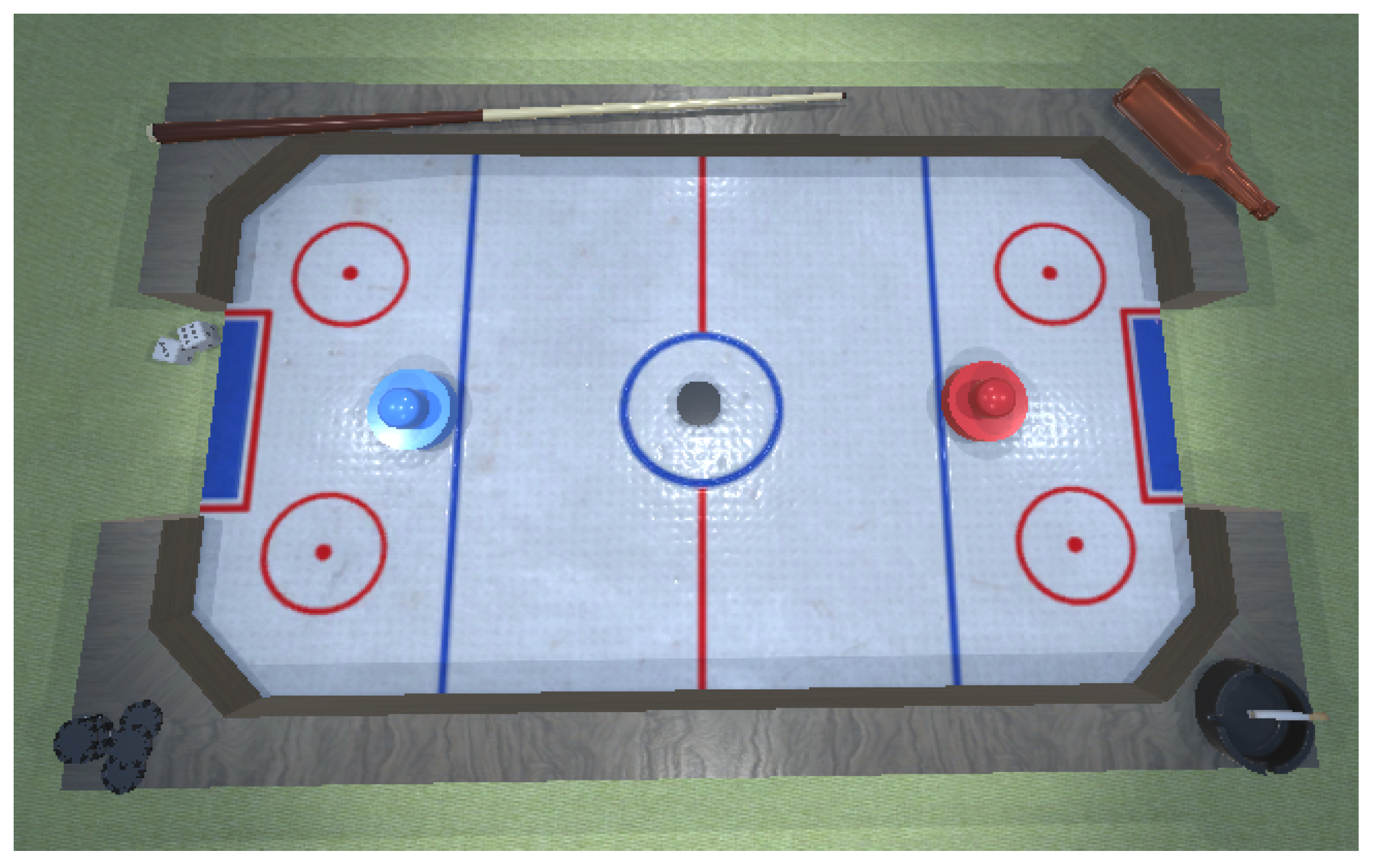
Figure 2.
Possible output values of AI controller.
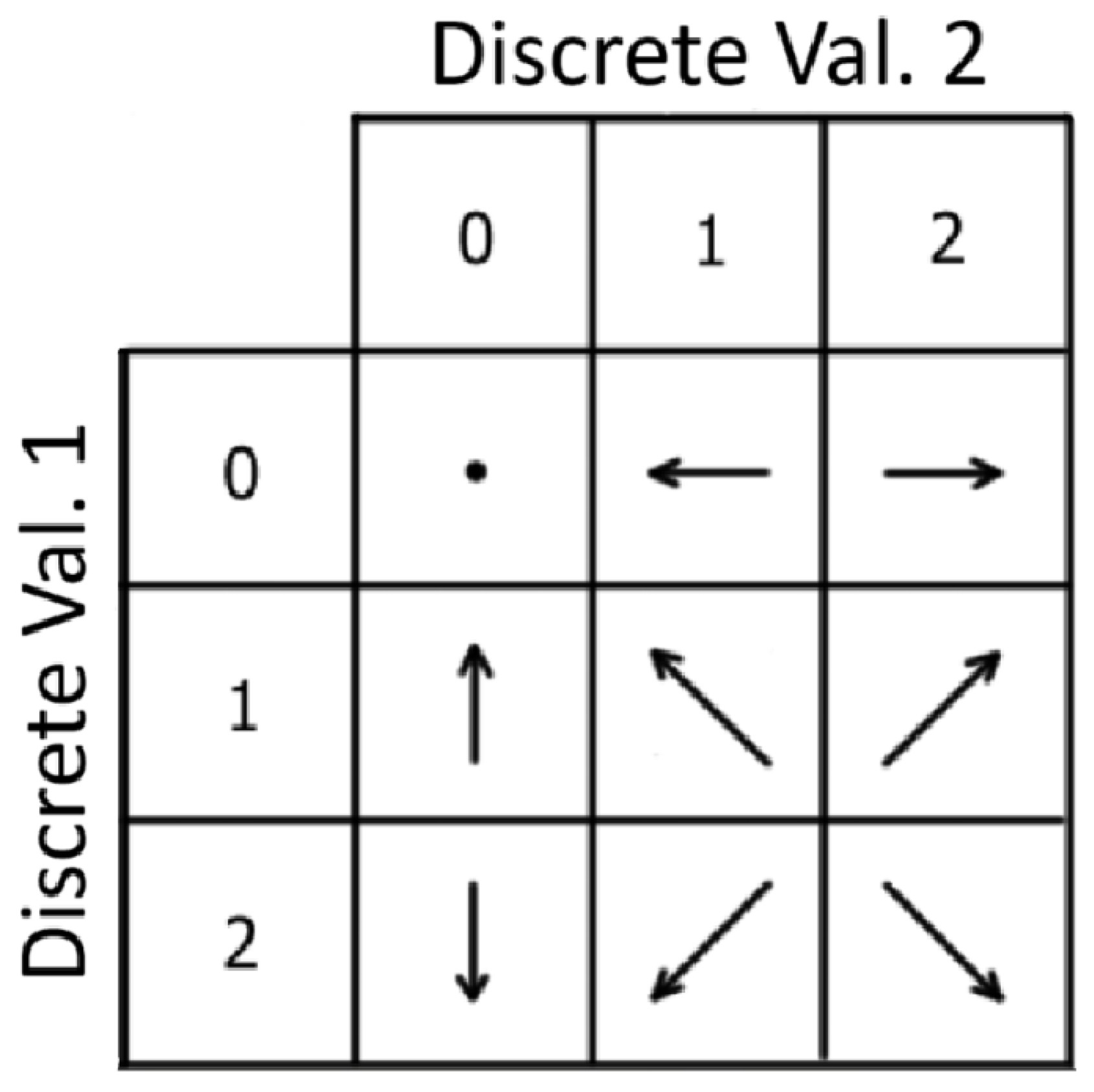
Figure 3.
AI-controlled areas: playable zone (above) and defense zone (below).
Disclaimer/Publisher’s Note: The statements, opinions and data contained in all publications are solely those of the individual author(s) and contributor(s) and not of MDPI and/or the editor(s). MDPI and/or the editor(s) disclaim responsibility for any injury to people or property resulting from any ideas, methods, instructions or products referred to in the content. |
© 2026 by the authors. Licensee MDPI, Basel, Switzerland. This article is an open access article distributed under the terms and conditions of the Creative Commons Attribution (CC BY) license (http://creativecommons.org/licenses/by/4.0/).
Copyright: This open access article is published under a Creative Commons CC BY 4.0 license, which permit the free download, distribution, and reuse, provided that the author and preprint are cited in any reuse.