

Submitted:
09 November 2025
Posted:
10 November 2025
You are already at the latest version
Abstract
This paper presents the results of assessing the influence of siltation factors in 23 ponds in one of the most agriculturally developed macro-regions of European Russia. Key natural and anthropogenic factors determining the intensity of pond siltation have been identified, and a typification of ponds has been developed to predict the rate of accumulation of bottom sediments in them. For the typification, statistical methods such as correlation analysis (Spearman's coefficient), cluster and factor analysis, as well as the Random Forest machine learning algorithm were used. Correlation analysis revealed that the percentage of catchment cultivation has a significant effect (0.55) on the volume of bottom sediments, while soil loss (0.47) and vertical terrain dissection (0.43) have a moderate effect. Forest cover (0.23) has a weak effect. The most important factors in the siltation process are the average slope of the catchment (24.5%), the percentage of soil cultivation (18.8%), and the average annual soil loss (14.1%). All factors were grouped into three clusters, which explained 77.8% of the variance. As a result, four pond types were identified, differing in their dominant limiting factors: pond hydrological characteristics, catchment morphometry, and the degree of anthropogenic transformation of the catchment. Verification of the typification was carried out based on the calculation of annual soil losses considering the sediment delivery coefficient; the discrepancies between the calculated and actual pond sediment volumes were 1.2–10.0%. The proposed approach allows, based on remote sensing and mapping data, to effectively identify the most degraded small water bodies and plan restoration measures without the need for costly field surveys at the initial stage.
Keywords:
catchment
; runoff
; land cover
; land use
; soil erosion
; soil loss
; sediment thickness
; machine learning
; factor analysis
; pond typification
; Belgorod Oblast
1. Introduction
Pond siltation is one of the most common, yet poorly understood, degradation processes in small water bodies, critical to the sustainability of rural ecosystems and water management. Unlike large reservoirs, ponds are characterized by shallow depth, limited hydraulic connectivity with rivers, and high sensitivity to changes in the catchment area, making them particularly vulnerable to sediment and organic matter accumulation [1]. Pond siltation not only reduces usable volume and disrupts water supply functions, but also leads to accelerated eutrophication, littoral overgrowth, and reduced biodiversity [2].
In the context of growing water scarcity and increasing water demand, maintaining the capacity of small water bodies is becoming critical for sustainable water management. Global analysis shows that siltation leads to a reduction in freshwater reserves, degradation of biotopes, and disruption of the hydrological regime, which in turn exacerbates problems of water and food security [3]. It is projected that by 2100, the world's water storage capacity will decline by >50% [4]. This prospect highlights the need to develop accurate sedimentation prediction methods that can aid in water resource planning and management.
The problem is clearly transboundary in nature, as water erosion and sedimentation processes are not limited by national borders and require coordinated efforts at the international level. Sedimentation rates in ponds vary widely depending on the environment, climate conditions, basin/catchment characteristics, and anthropogenic impacts.
A review [5] analyzed 33 articles, of which 14 found a general increase in sedimentation (siltation) rates, 13 identified a recent decrease, and 5 reported mixed results. This diversity of trends highlights the complexity of sedimentation processes and the need to consider multiple factors when developing predictive models. According to data presented in [6,7], approximately 25% of annual sediment runoff enters reservoirs, which leads to their gradual filling and a reduction in their service life. This problem is particularly acute in regions with intensive agricultural activity and rapid urbanization, where anthropogenic factors significantly intensify natural erosion processes.
Siltation of ponds and reservoirs is a complex process caused by multiple factors influencing sedimentation processes. As analysis of modern research shows, only an integrated approach that considers the interaction of climatic, geomorphological, and anthropogenic factors allows for the development of effective sedimentation management strategies [5]. In the context of global climate change, manifested in an increase in the frequency of extreme hydrological events and changes in precipitation patterns, the problem of siltation is becoming even more acute, requiring the development of adaptive management methods based on forecasting future scenarios [8].
In the Central Black Earth (Chernozem) macro-region of the European part of Russia, which includes Belgorod Oblast as an administrative region (the region of this study), ponds and small reservoirs play a key role in agriculture, providing irrigation and runoff accumulation under conditions of water resource scarcity, contributing to an increase in the local erosion base, and reducing the volume of slope erosion in the catchment [9,10,11]. As shown by the data of hydrological studies [12], Belgorod Oblast is characterized by significant siltation of water bodies, which negatively affects their functionality. The study region is characterized by a high degree of agricultural pressure on catchments/basins, which significantly increases erosion processes and sediment influx into water bodies. The average annual estimated potential soil loss in the region was estimated as 3.5 ± 0.3 tons/ha [13]. This situation is exacerbated by the lack of effective erosion management systems and an insufficient number of protective buffer zones along the shores/banks of water bodies.
Estimating bottom sediment thickness is a primary step in studying sedimentation processes. Current research demonstrates a wide range of approaches to measuring bottom sediment volume, ranging from traditional hydrological methods to innovative remote sensing technologies. Sonar methods, particularly single- and multibeam echosounders (SBES/MBES), have become the standard for rapid and non-destructive mapping of the water-bottom interface. These systems allow for the spatial distribution of bottom sediments to be assessed with a vertical accuracy of up to 5 cm under optimal conditions. However, their main limitation is their inability to penetrate the sediment layer to determine its total thickness above the hard (pre-depositional) bed. Sonar effectively displays modern bathymetry, but without additional data it cannot differentiate the original bottom of a reservoir/pond from accumulated sediment [14]. Therefore, sonar surveys require careful calibration and verification with direct sediment data.
Ground-penetrating radar (GPR) has proven itself as a powerful intermediate tool, combining the broad spatial coverage of sonar with the detailed vertical information of cores. GPR uses electromagnetic waves to probe subsurface structures, allowing the identification of the boundary between loose sediments and the underlying consolidated substrate (e.g., bedrock). In freshwater bodies with low electrical conductivity, GPR provides high-resolution sediment thickness profiles over large areas [15]. Due to the limitations of depth penetration, with 200 and 400 MHz antennas floating on the water surface, GPR is only suitable for <3–6 m shallow freshwater [16].
In recent decades, geographic information systems (GIS) and remote sensing have become key tools for assessing sedimentation processes. Although direct probing of reservoir/pond bottoms using optical satellite data is limited by water transparency, indirect methods, such as analyzing changes in bathymetry, reservoir/pond volume, and suspended matter discharge, allow for effective assessment of bottom sediment dynamics. The work [17] shows how the integration of GIS, remote sensing data and the RUSLE model allows for the quantitative assessment of soil erosion and, as a consequence, the potential sediment influx into river and lake/reservoir/pond systems. A particularly promising approach is the combination of satellite data with field measurements and hydrographic models. This approach allows not only to identify areas of intense siltation but also to predict sediment accumulation rates based on a spatial analysis of terrain, soil cover, and hydrological conditions. Some studies [18,19] emphasize that the use of digital elevation models (DEMs), land-use maps, and runoff data obtained using remote sensing significantly improves the accuracy of sedimentation estimates in reservoirs/ponds and lakes.
The rate and spatial patterns of sedimentation are determined by a complex interaction of natural and anthropogenic factors, with the latter becoming dominant in the Anthropocene. Anthropogenic pressure is the main accelerator of sedimentation (siltation) in most managed water bodies. Land-use changes in catchments, particularly deforestation, agricultural expansion, and urbanization, dramatically increase water erosion of the soil, leading to increased sediment runoff in water bodies. A study by Khodadadi et al. [20] showed that anthropogenic activities have a “noticeable influence” on mass accumulation rates in lake sediments, often overwhelming the natural background signal.
The topographic characteristics of the drainage basin play a special role. Nagle [21] notes that in tropical regions, the main source of siltation is cultivated steep slopes, where sheet and furrow water erosion are particularly intense. The steeper the slope, the greater the potential for soil loss and sediment transport into surface water bodies. Another key factor influencing siltation is urbanization, which, combined with agricultural activity, leads to a significant deterioration in the environmental state of water bodies. Severe siltation causes a range of negative consequences: reduced water flow, deterioration of water quality, loss of fisheries and recreational value, and the expansion of unusable wetlands [22]. The hydrodynamic conditions of a reservoir/pond are the main natural factor controlling the location and nature of sediment deposition. The transition from a high-energy river environment to a low-energy lake environment within a reservoir/pond creates an ideal trap for suspended particles. Specific sedimentation patterns are determined by the reservoir/pond morphology, inflow characteristics, and operating conditions. For example, regulated flow can disrupt the natural dynamics of sediment transport, causing unexpected deposition zones or increased erosion in certain areas [23].
Projections and observations indicate that climate change is leading to more frequent and intense precipitation events in many regions. These extreme rainfall events dramatically increase surface runoff and soil erosion in catchments, leading to increased peak sediments entering water bodies [24]. This could seriously disrupt future water balances in irrigation systems by 2050 [25].
Despite significant progress in the study of sedimentation processes, existing research reveals a number of critical gaps that limit the development of effective reservoir/pond siltation management strategies. An analysis of the current scientific literature reveals the lack of a unified methodology for assessing the relative contribution of various factors (climatic, geomorphological, landscape, and anthropogenic) to sedimentation processes [5]. Calculations based on analytical models do not determine detailed characteristics of the reservoir/pond's topography, increasing the uncertainty of water loss estimates. This limits the ability to accurately predict siltation in complex landscapes and anthropogenic impacts, where indicators vary significantly even within a single catchment. The introduction of LSTM (Long Short-Term Memory), ANN (Artificial Neural Networks), and MLP into forecasting can improve its accuracy [26,27]. In recent years, increasing attention has been paid to the application of machine learning to improve forecast accuracy. Machine learning, particularly LSTM and ANN, effectively handle nonlinear relationships between climate variables and sedimentation. For example, a study by Lucas et al. [28] demonstrated the successful application of MLP-ANN and Random Forest to sediment volume estimation. Similar models were used, for example, to predict sedimentation for 22 years in the Gobindsagar Reservoir [29]. Using PCA (Principal Component Analysis), DCA (Dollar-Cost Averaging) and UMAP (Uniform Manifold Approximation and Projection) methods, as well as hierarchical clustering and k-means algorithms, resilient pond types that differed in their morphometry and environment were identified [30].
A review of the scientific literature revealed a limited number of articles with comprehensive empirical data on the actual sedimentation (siltation) of reservoirs/ponds. Most existing studies focus on individual ponds [31,32], significantly limiting the ability to verify models for predicting reservoir/pond performance. In this regard, the results of the proposed study are intended to (1) contribute to the understanding of the causes of siltation of small artificial water bodies (ponds) using the example of one of the most agriculturally developed regions of Eastern Europe, based on field determination of the volume of bottom sediments in 23 ponds, through the identification of limiting factors in their siltation, and also (2) propose a typification of ponds for predicting the rate of siltation.
2. Materials and Methods
2.1. Study Region
Belgorod Oblast is one of the administrative units (regions) of the Russian Federation, located in the southwest of its European part. It is also situated within the southern and southwestern mega-slopes of the Central Russian Upland, in the basins of the Dnieper River and Don River (Figure 1). Covering primarily the forest-steppe and partially the steppe zones, its territory is a relatively high plain, elevated in the northern part and having weakly defined inclinations to the west-southwest and east-southeast, densely dissected by a network of gullies and small dry (more precisely, seasonally dry) valleys [33].
The region's climate is temperate continental, characterized by mild winters and hot summers. Air temperatures are influenced by incoming solar radiation and air masses. Significant climate change was noted in the region in the late 20th and early 21st centuries [34]. The summer season has lengthened by 1.5–2 weeks and the winter period has shortened by 20–25 days. At the same time, an increase in annual average air temperature has been observed, which reduces the depth of soil freezing [35]. Over the past 50 years, an increase in the length of the growing season by 13–16 days has also been noted [36]. Of particular concern is the trend toward an increase in the frequency of heavy precipitation events in the forest-steppe zone, interspersed with prolonged dry periods. For example, an increase in the total precipitation during the warm period of the year and the number of days with precipitation ranging from 12.7 to 40 mm have been noted. Such changes in precipitation patterns contribute to an increase in the rate of water erosion of soils, accelerating the siltation of water bodies [37]. On average, the amount of annual precipitation in the region varies from 500 mm in the eastern part to 630 mm in the western part [38]. The average value of the moisture coefficient decreased by 9.7%, from 1.0 at the end of the 20th century to 0.84 by 2020. The greatest decrease in this indicator was noted in the southern and central districts of the region: in Belgorod – from 0.93 to 0.67, in Gotna – from 1.10 to 0.80 and in Valuyki – from 0.93 to 0.73. This indicates the transition of most of the territory from the zone of insufficient moisture (1.3 ≥ HCH (Selyaninov's hydrothermal coefficient of humidification) > 1) to the status of an arid zone (1 ≥ HCH > 0.7) [39].
Average values of anthropogenic load on the region’s catchments indicate a significant transformation of natural landscapes: cropland accounts for approximately 60.6%, forest cover accounts for 12.2% (in some municipalities up to 6%), and development area, including industrial facilities and the road network, reaches 4.9% [40]. The construction of roads, settlements, and industrial facilities has reduced the area of natural landscapes, reducing their ability to infiltrate precipitation. This has led to increased stormwater runoff. As a result, even light precipitation causes significant soil erosion [41]. The low proportion of shrub and tree vegetation in catchments significantly increased soil erosion. Plant roots act as a natural "anchor," strengthening the soil cover and reducing its mobility under the influence of water and wind. The absence of forest belts in water protection zones deprives the soil of natural protection, increasing the rate of surface runoff and sediment removal. Scientific data has confirmed that forest belts in water protection zones can retain up to 70–87% of sediment and water runoff [42].
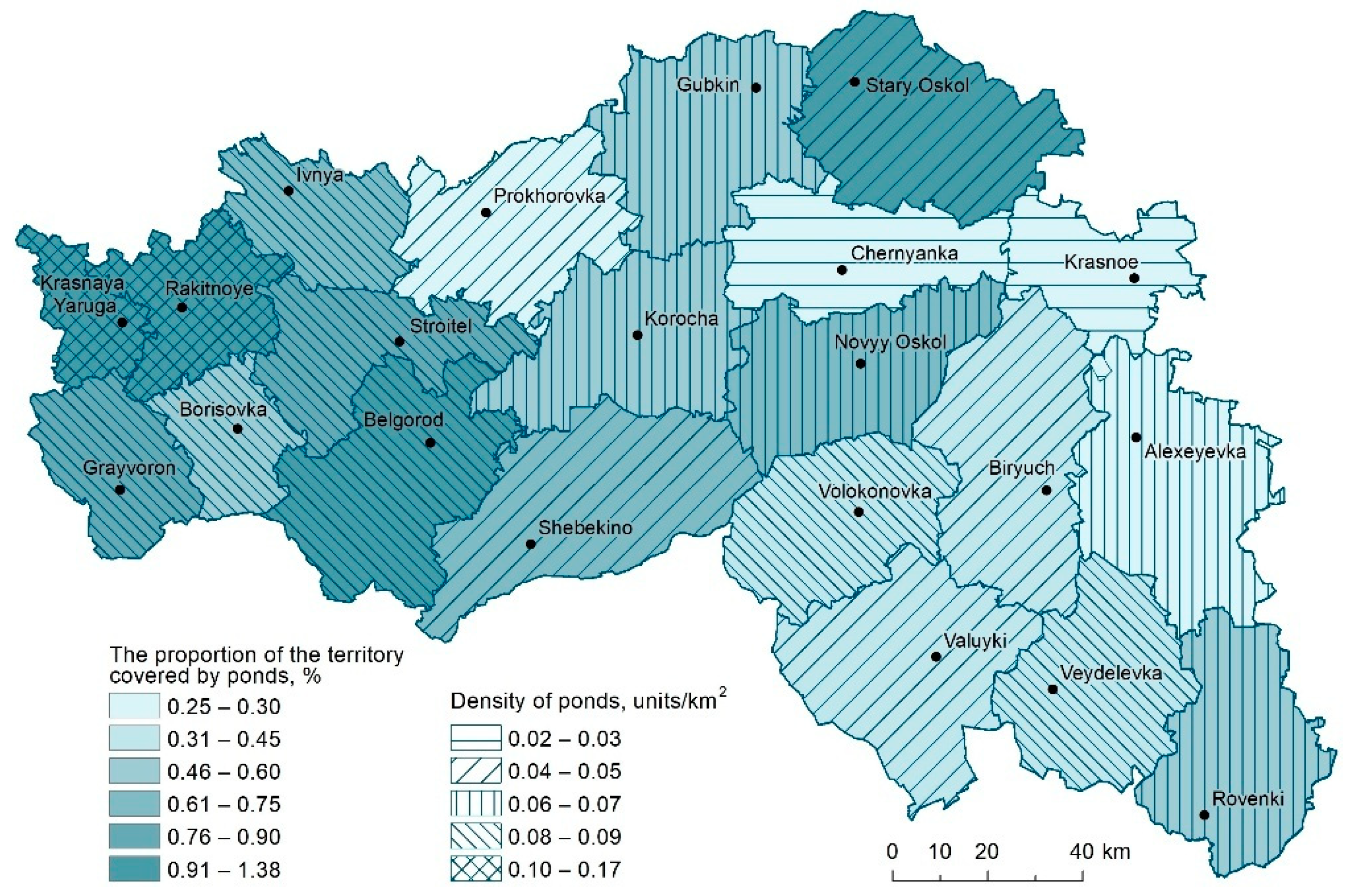
Belgorod Oblast is one of the water-scare regions of European Russia. Surface water bodies occupy less than 1% of its territory: from 0.2% in the eastern part of the region to 1.35% in its western part. Most of the water bodies in the region are shallow ponds and small rivers, which are prone to swamping and overgrowth of aquatic vegetation near their shores/banks [43]. Natural conditions have determined the specifics of the construction and operation of artificial small water bodies, which play a key role in the region's agricultural landscapes. Hydraulic engineering construction in Belgorod Oblast began in the 1950s and 1960s: approximately 9% of modern ponds and reservoirs were built during this period. Since the 1970s and 1980s, reservoir/pond construction in the region has become widespread: 65% of hydraulic structures were built during this period. The rate of water bodies construction declined in the 1990s, with 20% of hydraulic structures built for agricultural irrigation and fish farming. In total, the region contains over 1200 ponds and reservoirs (Figure 2). The pond density decreases from west to east. The sublatitudinal change in the area and number of ponds is primarily due to the aridization of the climate from west to east in the region.
The total useful volume of the region’s ponds is approximately 400 million m3, and the total surface area is over 160 km2 [44]. Small-volume ponds were constructed in small seasonally dry valleys — ancient (Neopleistocene/Holocene) erosional landforms with overgrown bottoms and slopes formed primarily by linear erosion. The geological basis of these areas is represented by Cretaceous deposits (clays and marls) and Quaternary sediments (sands and loams), which have low resistance to water erosion [45]. Most ponds today are heavily silted due to soil and gully erosion within adjacent areas, which is directly related to anthropogenic changes in the structure of catchments. Slope plowing, deforestation, and urbanization have disrupted the natural hydrological regime, increasing surface runoff. A large-scale regional project to clear bottom sediments not only from small water bodies, but also from rivers, showed that it is most expedient to synchronize these measures with the implementation of projects for soil and water conservation development of agricultural landscapes in catchments [46].
Figure 2.
Map of the distribution of small artificial water bodies (ponds) in Belgorod Oblast (European Russia) by its municipal districts.
Figure 2.
Map of the distribution of small artificial water bodies (ponds) in Belgorod Oblast (European Russia) by its municipal districts.
2.2. Study Objects
Belgorod Oblast is implementing the "Our Rivers" regional program, which includes scientific research to substantiate water body cleanup measures. Over 100 water bodies (ponds and river sections) in the region have already been cleaned of bottom sediments, removed tough vegetation, and other measures. In 2022–2024, the authors of this study carried out field surveys of 23 ponds within Belgorod Oblast (Figure 3), within the framework of this program. The studied ponds are located in the western part of the region: three of them belong to the Vorskla River basin, 11 to the Seversky Donets River, and 9 to the Psel and Seym rivers.
All the surveyed ponds were built between 1970 and 1990. As of 2025, the age of each of them ranges from 35 to 55 years, which allows them to be classified as old ponds according to the age classification of Spichakov [47]. Based on the functional-genetic classification of ponds by Mishon [48] and the typification by [49], the studied objects belong to seasonally-dry-valley–gully ponds of artificial origin, created by constructing earthen dams. These ponds are located outside of cascades, which allows them to be classified as single ponds. The ponds are fed by a mixed source, including surface runoff from their catchment area and, to some extent, groundwater. Based on their morphometric characteristics, the vast majority of the ponds are classified as medium-deep (with an average depth of 1–2 m), although a few reach significant depths (3–6 m) and can be classified as ultra-deep (the pond southwest of Komsomolsky village (No. 1), and the pond in Krasny Oktyabr´ village (No.2)). Most of the studied ponds have an elongated (ribbon-like) shape, a characteristic typical of artificial ponds formed in seasonally dry valleys and gullies. The characteristics of the catchments of the ponds were determined using land-use maps at a scale of 1:10,000 and are presented in Table 1.

Table 1.
Some quantitative characteristics of the studied ponds (see Figure 3) and their catchments.
Table 1.
Some quantitative characteristics of the studied ponds (see Figure 3) and their catchments.
| No. | Pond location (near the village of) | V, m3 | h, m | H, m | α, ‰ | F, % | Pl, % | W, t/ha | D, m |
|---|---|---|---|---|---|---|---|---|---|
| 1 | Komsomolsky | 8206 | 2.9 | 5.3 | 87.5 | 22.8 | 34.6 | 1.98 | 94.1 |
| 2 | Krasny Oktyabr´ | 2319 | 2.4 | 6.0 | 59.4 | 18.8 | 37.7 | 1.27 | 48.0 |
| 3 | Rakitnoye | 20,840 | 3.0 | 4.0 | 43.7 | 13.0 | 55.0 | 1.20 | 47.1 |
| 4 | Pyshokhov pond, Vyazovoye | 11,827 | 2.6 | 4.7 | 71.7 | 12.6 | 46.6 | 1.46 | 53.0 |
| 5 | Syrtsevo | 3992 | 1.2 | 2.4 | 40.2 | 8.0 | 84.0 | 1.27 | 55.6 |
| 6 | Arkhangelskoye | 22,900 | 1.6 | 2.0 | 34.9 | 3.4 | 74.0 | 1.24 | 83.0 |
| 7 | Novaya Glinka | 6207 | 1.4 | 1.8 | 47.2 | 5.2 | 62.7 | 2.00 | 69.5 |
| 8 | Verkhniy pond, Rzhavets | 10,213 | 1.3 | 2.7 | 52.4 | 8.6 | 69.0 | 2.87 | 102.4 |
| 9 | Krasny Otrozhek | 9976 | 1.5 | 3.9 | 22.7 | 10.3 | 58.1 | 2.08 | 99.0 |
| 10 | Ugrim | 2890 | 0.7 | 2.0 | 122.8 | 63.0 | 18.0 | 0.22 | 8.0 |
| 11 | Krasnaya Yaruga, Tkachenko Street | 28,209 | 1.3 | 2.6 | 194.4 | 15.3 | 38.5 | 1.52 | 52.4 |
| 12 | Ivnya (Sazhenka), Ivnyansky distr. | 7235 | 1.0 | 1.5 | 61.2 | 30.5 | 0.0 | 0.74 | 55.2 |
| 13 | Sergievka, Krasnoyaruzhsky distr. | 18,920 | 1.0 | 1.6 | 78.7 | 39.6 | 41.6 | 1.32 | 78.0 |
| 14 | Pionerskiy pond, Krasnaya Yaruga | 10,097 | 1.0 | 2.6 | 78.7 | 32.1 | 31.0 | 1.56 | 53.2 |
| 15 | Cheremoshnoye | 1756 | 1.2 | 2.0 | 89.2 | 0.0 | 8.0 | 0.17 | 61.5 |
| 16 | Tsentral'ny pond, Ilek-Pen'kovka, Krasnoyaruzhsky disctr. | 5976 | 1.0 | 2.6 | 66.4 | 8.7 | 33.8 | 1.59 | 59.3 |
| 17 | Smorodino | 2976 | 1.1 | 2.1 | 103.3 | 1.1 | 0.0 | 1.88 | 66.3 |
| 18 | Zelenaya Dubrava pond, Tsentral'noye | 16,290 | 1.9 | 4.0 | 45.4 | 16.0 | 35.0 | 0.54 | 53.8 |
| 19 | Verkhniy Ol'shanets | 6825 | 1.8 | 4.3 | 27.9 | 0.2 | 67.0 | 0.52 | 28.1 |
| 20 | At Belgorod, Sosnovka Street | 390 | 1.7 | 2.8 | 12.2 | 34.0 | 0.0 | 0.07 | 4.2 |
| 21 | Melikhovo | 1168 | 1.0 | 1.5 | 20.9 | 0.0 | 7.4 | 0.39 | 21.6 |
| 22 | Koshary pond, Grushki | 3517 | 1.2 | 2.9 | 18.0 | 0.0 | 42.2 | 0.28 | 14.4 |
| 23 | Zayach'ye | 3102 | 1.4 | 3.5 | 22.7 | 1.4 | 19.5 | 0.40 | 27.2 |
V is the volume of bottom sediment; h is the average depth to the hard bottom; H is the maximum depth; α is the average slope of the pond catchment; F is the forest cover of the pond's catchment area; Pl is the area of cropland in the pond´s catchment area; W is the annual soil loss; D is the vertical dissection of the pond catchment relief.
When selecting some parameters that could influence the volume of bottom sediments, their comprehensive reflection of both the geomorphological features of the pond and the characteristics of its catchment area were taken into account. It is these parameters that have a direct impact on siltation processes.
The average (h) and maximum (H) depth of a pond is an important characteristic that determines its resistance to the accumulation of sedimentary material. Shallow water bodies have less hydrodynamic stability, which contributes to a decrease in flow velocity and an increase in the sedimentation zone of suspended particles.
The average slope (gradient) of the catchment (α) plays a key role in the dynamics of surface runoff and the transport of suspended particles from the catchment area into the pond itself. With a steeper slope, runoff carries more energy, increasing soil/gully erosion and increasing the volume of sediment runoff entering water bodies.
Forest cover of a catchment (F) is one of the most important factors reducing the intensity of water erosion. Thanks to their extensive root systems, forests retain the topsoil, slow runoff, and facilitate water infiltration through the forest litter.
Cultivated areas, measured by cropland percentage (Pl), are characterized by increased erosion risk. The lack of protective vegetation makes cropland vulnerable to water and wind erosion. As a result, these areas become the main sources of sediments flowing into nearby water bodies.
Annual soil loss (W), averaged over a long period, is a quantitative measure of soil erosion. It depends on many factors, including soil type, climate, terrain slope, percentage of cropland, and percentage of forest cover in the catchment area. High soil loss indicates a significant influx of suspended solids into water bodies, which accelerates sediment accumulation and, consequently, reduces the lifespan of water bodies.
Vertical relief (terrain) dissection (D) serves as an important indicator of the overall activity of relief-forming processes and water flows in catchment areas. It characterizes the difference between the highest and lowest elevations in the catchment area. The higher this indicator, the higher the potential for rapid runoff formation, water erosion, and sediment removal into water bodies.
2.3. Methods
The bottom sediments of the studied ponds have significant differences in grain size composition, therefore the use of modern methods for determining their thickness (sonar and ground-penetrating radar), which require checking and adjusting the equipment, was excluded. For the field study of bottom thickness, a traditional measurement method was used by measuring the distance from the surface of the bottom sediments to the surface of the pond bottom (its solid base) by smoothly pressing a rod or mark into the bottom sediment of the pond, which was carried out from a boat [50]. The locations of the survey verticals were marked with a distance between them equal to 0.1 of the cross-section width. Since the bottom sediments have significantly less resistance to penetration, the rod penetrated them without hindrance until it encountered a denser underlying layer. Bottom sediment thickness was calculated as the difference between the initial reading (from the water table to the silt surface) and the final reading (after reaching the dense layer). Bottom sediment volume was calculated using the vertical cross-section method in the GIS "GEOMIX" (leading Russian mining and geological information system "GEOMIX") (Figure 4).
The volume of soil washed out from the catchment area was determined by calculation in the ArcGIS 10.5 program. For this purpose, the empirical formula (1) (V.P. Gerasimenko's formula) was used to calculate the average long-term soil loss during snowmelt (Ws) and formula (2) [51,52,53,54,55,56] to calculate rainfall erosion (Wr).
where Ws is the soil loss during snowmelt, tons/ha; I is the coefficient depending on the degree of moisture in the area; Ŵ is the long-term average zonal soil loss from fallow or compacted cropland, tons/ha; L is the distance from the watershed line to the cross section of a river/creek for which the soil loss is determined (m); β is the steepness of the slope (in degrees) along a distance of L (m) from the watershed line; π is the coefficient taking into account the influence of the slope profile on soil loss; T is the indicator characterizing the influence of the soil type (subtype) on water erosion; λ is the coefficient reflecting the influence of the degree of water erosion of cropland on erosion processes; Кa is the coefficient showing the impact of the slope aspect on soil loss; Кp is the coefficient of loss reduction when using soil-protecting agricultural or irrigation techniques on arable land.
Ws = І × Ŵ × L × sin(β) × π × T × λ × Кa × Кp
The long-term average annual rates of rainfall-induced soil erosion (Wr) on cropland were calculated using the empirical USLE model based on five main factors determining the intensity of water-erosion processes, adapted to the conditions of European Russia:
where R is the rainfall factor (MJ mm/ha h); K is the soil structure destruction factor (t ha h/MJ mm ha); LS is the slope length and steepness factor; C is the coefficient of projective soil cover with plant residues; P is the factor of the degree of soil protection from water erosion. To adjust the C factor calculated on the basis of the NDVI index [57,58] for 5 years (2020–2024) according to MODIS data, a multiplier of 2.16 was used to the average regional value of the C factor.
Wr = R × K × LS × C × P
After calculating Ws and Wr values, their rasters were summed to calculate the average annual soil loss (W) in tons/ha (formula (3)). To convert these values to soil volume, an average soil density of 1.2 tons/m³ was used.
W = Ws + Wr
The sediment delivery coefficient (SDC; 0 to 1), or sediment delivery ratio, is a key parameter in assessing water erosion processes in ponds’ catchments. It characterizes the proportion of eroded material reaching the reservoir/pond out of the total volume of potentially erodible material. This study utilized the empirical relationship between the sediment delivery coefficient and catchment area obtained by V.N. Golosov:
where S is the catchment area (km2). This formula is adapted to the conditions of the European part of Russia [59] and, compared with the formulas proposed by Lu. et al. [60], has advantages for application in the conditions of European Russia.
SDC = 0.65 × S–0.27
Thus, the use of empirical models of snowmelt- and rainfall-induced water erosion, combined with GIS technologies, allowed us to obtain data on the spatial distribution of soil loss in the study area. The resulting soil loss values, converted to volumetric units considering soil density, as well as the use of a sediment delivery coefficient, enable a more accurate assessment of the impact of water erosion processes on sediment formation within catchments.
2.4. Statistics and Software
To assess the strength and direction of the relationships between natural and anthropogenic factors on pond siltation, Spearman correlation analysis was used. This allowed us to identify nonlinear relationships between variables without assuming normal data [61]. Microsoft Excel software was used to implement this analysis. The result was a correlation matrix showing the correlation coefficients between all pairs of variables assessed using the Chaddock scale [62].
To perform statistical analysis procedures, we used the seaborn pandas library and scikit-learn in the Anaconda 3-2024.10-1 distribution. This made it easy to complete all standard steps in the interactive Jupyter Notebook environment. Writing the program codes for Anaconda required using a Qwen 3-VL-30B-A3B neural network with search and reasoning functions enabled.
To visualize the results of the correlation analysis, a heatmap was constructed using the seaborn library. The sns.heatmap() command was used for visualization, with parameters defined based on data display requirements: the RdBu_r color palette for clearly distinguishing positive and negative correlations, and the annot=True parameter for displaying correlation coefficient values in cells. To implement the feature importance analysis, factor and cluster analysis, the pandas library was used, which made it possible to load and pre-process source data using the pd.read_csv('.csv') command.
To identify key factors, the feature importance analysis was performed using the Random Forest method to rank variables according to their importance in explaining changes in sediment volume. This method was chosen due to its ability to account for nonlinear relationships and interactions between variables [63]. The Random Forest algorithm evaluates feature importance based on the Mean Decrease in Impurity (MDI): the more the variance decreases when partitioning by a feature, the more important it is. Feature importance was calculated using the Feature_importances_ command, which returns arrays of results reflecting the contribution of each feature to variance reduction across all trees.
To identify hidden relationships between natural and anthropogenic factors and pond siltation, factor analysis was carried out using the principal component analysis (PCA). This allowed us to reduce the dimensionality of data by identifying key hidden factors that explained the bulk of the variation in the original variables. Before analysis, the data was standardized using the StandardScaler class from scikit-learn, which converts all variables to a single scale with zero mean and one standard deviation. The Kaiser criterion was applied to determine the number of components considered [64]. This criterion selects components with eigenvalues greater than one. This ensured that the most informative factors were selected, reducing the number of components while maintaining the maximum proportion of explained variance. As a result of the analysis, three components were identified, which together explained more than 70% of the total variance in the data, which indicates the high information content of the resulting factor model. To interpret the results of the analysis, a matrix of factor loadings was calculated, reflecting the degree of influence of each initial variable on the selected components. Values in the matrix close to ±1 indicated a strong influence of the variable on the corresponding factor.
To identify hidden group patterns between the natural and anthropogenic characteristics of the studied ponds and their siltation, a cluster analysis was carried out. The analysis was performed without preliminary hypotheses about the structure of the data, which made it possible to objectively identify homogeneous groups of ponds with similar sediment formation conditions [65]. The initial data was a table containing quantitative indicators for each pond: area, average depth, distance to the nearest road, population density in the adjacent zone, intensity of agricultural impact, and siltation index. Before clustering, all features were standardized using the StandardScaler command from the scikit-learn library to eliminate the influence of differences in measurement scales and ensure equal contribution of each parameter to the clustering process.
To construct the dendrogram, hierarchical agglomerative clustering with the Euclidean distance metric was used, which minimizes intra-cluster variance and promotes the formation of compact and well-separated groups [66]. The linkage matrix was calculated using the linkage function from the scipy.cluster.hierarchy module, after which the dendrogram was constructed using the dendrogram function. To objectively select the number of clusters, we additionally calculated the silhouette score for a range of 2 to 9 clusters and determined the optimal number of groups based on the maximum of this score.
2.5. Limitations
The proposed analysis of the influence of natural and anthropogenic factors on pond siltation can be applied to landscape and climatic conditions similar to those of Belgorod Oblast. The calculation of sediment accumulation volumes is associated with the calculation of potential soil losses. To date, adapted regional models have been developed for various regions, considering factors such as topography, vegetation, and soil cultivation technology. Therefore, when applying the proposed approach, it is recommended to use precisely such models. Furthermore, the sediment delivery rate may vary regionally and may depend not only on the catchment area but also on the land use/cover pattern [60]. Therefore, it is advisable to select studies or carry out your own, adapted to local environmental conditions.
3. Results and Discussion
Correlation analysis using Spearman correlation coefficient (r) showed that the strongest correlation was observed between the volume of bottom sediments and plowing percentage (0.55). This is due to changes in the environmental state of the area (deforestation, plowing of dense steppe and meadow vegetation), the high proportion of fallow crop rotations, where the absence of protective forest belts leads to increased sediment input from agricultural fields, and, consequently, moderate soil erosion (0.47), which directly increases the volume of bottom sediment in the pond (Figure 5). A moderate correlation (r = 0.43) between siltation volumes and vertical terrain dissection was found. Forest cover, despite the expected reduction in water erosion and the transition of surface runoff into subsurface runoff, demonstrates a weak positive correlation (r = 0.23).
Using the Random Forest method, we determined that the greatest influence on the volume of bottom sediment is exerted by: the average slope of the catchment (24.6%), plowed area (18.8%), and average water runoff (14.1%). The maximum pond depth (H) has the least influence on siltation (Figure 6).
Taken together, these parameters demonstrate a significant share of influence (57.4%), but the loading of the remaining factors was not as significant, which may indicate their more complex, indirect impact or the presence of hidden relationships between variables. Therefore, as a result of factor analysis, three main factors were identified that cover the most significant aspects of data variability (Table 2).
Factor I explains the largest proportion of variance (38.5%) and shows high positive loadings for variables related to the hydrological characteristics of ponds: high positive factor loadings are observed for such indicators as the average depth to the hard bottom (0.92) and the maximum depth of the pond (0.87).
Factor II is associated with the morphometric characteristics of pond catchments. It explains 23.7% of the variance and is characterized by high factor loadings for the average slope of the catchment (0.91), average runoff (0.89), and vertical terrain dissection (0.82). These indicators influence the intensity of water erosion.
Factor III explains 15.6% of the data variance and is distinguished by clearly contrasting loadings for indicators such as forest cover (0.94) and cropland percentage (–0.93). This allows it to be considered a factor reflecting the influence of natural and anthropogenic conditions on bottom sediment formation. Increasing forest cover can reduce soil erosion by grassing slopes and converting surface runoff into subsurface runoff, which is confirmed by a positive correlation with this factor. In total, these three factors explain 77.8% of the total variance, indicating their high information content and significance in describing the original data.
The data obtained allowed us to conclude that the main factors contributing to the accumulation of bottom sediments in the studied ponds are morphometric parameters related to catchment slope gradient, vertical terrain dissection, and average soil loss. Average soil loss is particularly important, as it serves as an integral indicator of water erosion activity and directly influences the volume of accumulated bottom sediments. Unlike catchment slope (gradient) and vertical terrain dissection, which are relatively constant geomorphological characteristics, the intensity of soil loss can be controlled by regulating the structure of the land within the catchment area.
Given the high contribution of each parameter, we propose typifying small artificial water bodies (ponds) using these parameters. This will subsequently allow, even without measuring the sediment thickness in the water body, to propose measures to reduce sediment load based on the determined factors. For this purpose, cluster analysis with a clustering value of D = 5 was used (Figure 7).
Type I comprises ponds with the largest volume of bottom sediments (the average value is 10,798 m³). Characteristic features (Table 3) of this group include a high level of catchment cultivation (43.5%), a high catchment slope (65.6 ‰), and relatively low forest cover (16.8%), indicating a significant influence of cropland on the formation of surface runoff and the removal of surface sediments.
Type II includes ponds located in catchments with a high proportion of cropland (69.6%) and low slope values (39.5%). Despite the high anthropogenic load, the volume of bottom sediments in this type is slightly less than in the first (10,657.6 m³), which can be explained by the influence of the average slope (gradient) of the catchment. The average soil loss value in this type is 1.9 t/ha, which also indicates the intensity of sediment transport.
Type III is characterized by a high average slope of the pond catchments (99.3 ‰), however, despite this, the average value of the volume of bottom sediments in this group is 9757 m³, which is lower than that of the first two types, which is due to some predominance of forest cover (23.8%) over cropland (21.3%).
Type IV is characterized by the smallest average volume of bottom sediments in the ponds (5215.3 m³) and the lowest average vertical dissection of the relief (24.9 m). The average percentage of cropland in this group is 28.5%, which is lower than in types I and II, but higher than in type III. However, the key factor reducing the intensity of sediment input is the low average slope of pond catchment areas (24.5 ‰). The average soil loss rate in this type is 0.4 tons/ha, indicating weak water erosion.
The largest volume of bottom sediments was noted in ponds with high plowing and steep slopes (over 50 ‰) of the catchment, whereas in ponds with more gentle slopes and high forest cover in the catchment, the accumulation of bottom sediments is significantly lower. An analysis of the spatial distribution of ponds belonging to the same type did not reveal any clear patterns in their location, which indicates the complex and ambiguous nature of the relationship between the typology of ponds and their geographical location (Figure 8).
Individual catchment characteristics play a key role in the typification of ponds and should be considered when developing approaches to their reorganization. Recommendations include a special focus on revising the structure of land within pond catchments, including limiting cropland use and restoring protective forest plantations, which will minimize soil erosion intensity and extend the lifespan of the ponds.
As part of the study, two ponds of different types were selected to validate the chosen calculation methodology. They analyzed sedimentation processes and assessed the impact of hydrological and anthropogenic factors on bottom sediment accumulation. The first pond, in the village of Krasny Oktyabr´, belongs to type I. It is characterized by high anthropogenic load and the largest volume of bottom sediment, due to intensive soil erosion and steep slopes. The second pond, in the village of Verkhniy Ol'shanets, belongs to type IV, which is characterized by a smaller sediment volume due to the low average slope in the catchment and insignificant soil erosion there. As a result of the study, the following values were obtained (Table 4).
The adequacy of the proposed typification was verified by comparing the estimated volumes of soil washed away during the period of sediment accumulation with the results of field measurements. For the studied pond in the village of Krasny Oktyabr’ (type I), the estimated soil washout volume was 2087–2277 m³ with an actual siltation of 2319 m³, while for the pond in the village of Verkhniy Ol’shanets (type IV), it was 6224–6743 m³ versus 6825 m³ measured on-site. The deviation of the calculated values from the empirical results did not exceed 10%, which confirms the high accuracy and validity of the developed typification, and the error may be associated with historical changes in the landscape that are not considered in current models.
Successful verification of pond typification based on factors determining bottom sediment accumulation, using specific examples, confirms that the proposed typification allows for predicting the dynamics of siltation in small artificial water bodies. For example, the pond in the village of Krasny Oktyabr', classified as type I, accumulates sediment at a rate of 63.6 m³/year. Given the current sediment volume (2319 m³), this indicates a critically short service life of less than 50 years. Meanwhile, the pond in the village of Verkhniy Ol'shanets (type IV), with an annual sediment influx of 38.7 m³ and an accumulation period of 240–260 years, demonstrates resistance to siltation due to a favorable combination of natural and anthropogenic factors. This demonstrates the possibility of using the proposed classification to assess the resource potential of water bodies: based on the characteristics of the catchment, it is possible to determine the type of pond and predict its operational lifespan. This approach opens up opportunities for targeted management of small water bodies, including the selection of priority areas for restoration and the planning of erosion-control measures in agricultural landscapes.
4. Conclusion
The study showed that pond siltation is influenced by hydrological characteristics (average and maximum pond depth), morphometric features of the pond catchment (average slope, vertical dissection of the relief, average water runoff), as well as natural and anthropogenic conditions (forest cover and soil plowing). A combined analysis of these factors allows, without direct field measurements of bottom sediment volumes, to identify ponds with varying degrees of siltation and classify them into one of four types, and also makes it possible to solve the practical issue of cleaning ponds from sediments based on cartographic data. It should be noted that sediment supply rates may vary depending on landscape features and are calculated not only by area but also by other characteristics of the catchment, which may require additional research in other regions. Further research will be useful for determining the catchment areas of all ponds in Belgorod Oblast and implementing the typification system proposed in this paper when selecting ponds for treatment within the framework of the regional program "Our Rivers."
Author Contributions
Conceptualization, N.S., A.N. and A.G.; methodology, A.N. and N.S.; software, N.S.; validation, N.S., A.N. and A.G.; formal analysis, A.N. and N.S.; investigation, A.N. and N.S.; resources, A.N. and N.S.; data curation, N.S.; writing—original draft preparation, A.N. and N.S.; writing—review and editing, F.L. and A.G.; visualization, A.N., N.S. and A.G.; supervision, A.N. and A.G.; project administration, F.L.; funding acquisition, F.L. All authors have read and agreed to the published version of the manuscript.
Funding
This research was funded by the Ministry of Science and Higher Education of the Russian Federation within the framework of State Assignment No. FZWG-2025-0006.
Data Availability Statement
Some of the data presented in this study are available upon request from the corresponding author.
Conflicts of Interest
The authors declare no conflicts of interest. The funders had no role in the design of the study; in the collection, analyses, or interpretation of data; in the writing of the manuscript; or in the decision to publish the results.
References
- Yadav, S.; Goyal, V.C. Current status of ponds in India: A framework for restoration, policies and circular economy. Wetlands 2022, 42, 107. [CrossRef]
- Verstraeten, G.; Bazzoffi, P.; Lajczak, A.; Radoane, M.; Rey, F.; Poesen, J.; de Vente, J. Reservoir and pond sedimentation in Europe. In Soil Erosion in Europe; Boardman, J., Poesen, J., Eds.; John Wiley & Sons Ltd: The Atrium, Southern Gate, Chichester, West Sussex, England, 2006, pp. 771–784.
- Liu, H.; Walling, D. E.; Spreafico, M.; Ramasamy, J.; Thulstrup, H. D.; Mishra, A. Sediment problems and strategies for their management. Experience from several large river basins. Published in 2017 by the United Nations Educational, Scientific and Cultural Organization, 7, place de Fontenoy, 75352 Paris 07 SP, France. Available online: https://unesdoc.unesco.org/ark:/48223/pf0000258795 (accessed on 22 October 2025).
- Tessema, Y.; Zimale, F.; Kebedew, M. Understanding sedimentation trends to enhance sustainable reservoir management in the Angereb Reservoir, Upper Blue Nile basin, Ethiopia. Frontiers in Water 2024, 6, 1387915. [CrossRef]
- Gonzalez Rodriguez, L.; McCallum, A.; Kent, D.; Rathnayaka, C.; Fairweather, H. A review of sedimentation rates in freshwater reservoirs: recent changes and causative factors. Aquat. Sci. 2023, 85, 60. [CrossRef]
- Liu, H.; Guo, C.; Xiao, L.; Liu, P.; Du, J.; & Yi, Y. Estimating over thousands of reservoirs sedimentation and effects on sediment flux through a newly proposed sediment transport model. Engineering Applications of Computational Fluid Mechanics 2025, 19, 1. [CrossRef]
- Lisetskii, F. Rivers in the focus of natural-anthropogenic situations at catchments. Geosciences 2021, 11, 63. [CrossRef]
- Juško, V.; Sedmák, R.; Kúdela, P. Siltation of small water reservoir under climate. A case study from forested mountain landscape of Western Carpathians, Slovakia. Water 2022, 14(17), 2606. [CrossRef]
- Dmitrieva, V.A.; Zhigulina, Е.V. Water dynamics of small water currents of the Upper Don basin and its role in the structural-dynamic organization of landscapes. Regional Geosystems 2020, 44(4), 404–414. (In Russian). [CrossRef]
- Buryak, Zh.A.; Spesivtseva, A.D. Variability of the slope component of sediment balance for the erosion-channel system in anthropogenically transformed basin of a small river. Lomonosov Geography Journal 2025, 80(4), 49–62. (In Russian). [CrossRef]
- Marinina, O.A.; Yermolaev, O.P.; Maltsev, K.A.; Lisetskii, F.N.; Pavlyuk, Y.V. Evaluation of siltation of rivers with intensive economic development of watersheds. J. Eng. Appl. Sci. 2016, 11, 3004–3013. [CrossRef]
- Spesivy, O.V.; Pavlyuk, Ya.V.; Polumordvinov, N.S. Assessment of siltation of rivers in Belgorod Oblast. Nauch. Ved. Belgorod. Gos. Univ., Ser. Estestv. Nauki. 2018, 42, 80–88. (In Russian). https://cyberleninka.ru/article/n/otsenka-zaileniya-rek-belgorodskoy-oblasti/viewer.
- Buryak, Zh.A.; Narozhnyaya, A.G.; Marinina, O.A. Erosion risk of arable land in the Belgorod Oblast. Regional Geosystems 2023, 47, 101–115. (In Russian). [CrossRef]
- Feldens, P.; Schulze, I.; Papenmeier, S.; Schönke, M.; von Deimling, J.S. Improved interpretation of marine sedimentary environments using multi-frequency multibeam backscatter data. Geosciences 2018, 8, 214. [CrossRef]
- Janocha, J.; Birchall, T.; Senger, K.; Birchall, T. Seeing beyond the outcrop: Integration of ground-penetrating radar with digital outcrop models of a paleokarst system. Marine and Petroleum Geology 2021, 125, 104833. [CrossRef]
- Fediuk, A.; Wunderlich, T.; Wilken, D.; Rabbel, W. Ground penetrating radar measurements in shallow water environments–A case study. Remote Sens. 2022, 14, 3659. [CrossRef]
- Ghosh, A.; Rakshit, S.; Tikle, S.; Das, S.; Chatterjee, U.; Pande, C.B.; Alataway, A.; Al-Othman, A.A.; Dewidar, A.Z.; Mattar, M.A. Integration of GIS and remote sensing with RUSLE model for estimation of soil erosion. Land 2023, 12, 116. [CrossRef]
- Shekar, P.R.; Mathew, A. GIS-based assessment of soil erosion and sediment yield using the revised universal soil loss equation (RUSLE) model in the Murredu Watershed, Telangana, India. HydroResearch 2024, 7, 315–325. [CrossRef]
- Mashala, M.J.; Dube, T.; Mudereri, B.T.; Ayisi, K.K.; Ramudzuli, M.R. A systematic review on advancements in remote sensing for assessing and monitoring land use and land cover changes impacts on surface water resources in semi-arid tropical environments. Remote Sens. 2023, 15, 3926. [CrossRef]
- Khodadadi, M.; Gibbs, M.; Swales, A. et al. Anthropogenic and climatic impacts on historic sediment, carbon, and phosphorus accumulation rates using 210Pbex and 137Cs in a sub-watershed linked to Zarivar Lake, Iran. Environ. Monit. Assess. 2024, 196, 887. [CrossRef]
- Nagle, G.N. The contribution of agricultural erosion to reservoir sedimentation in the Dominican Republic. Water Policy 2002, 3, 491–505.
- Bandurin, M.A.; Prikhodko, I.A.; Bandurina, I.P.; Rudenko, A.A. Analysis of impact of urbanization development on the deterioration of ecological state of rivers. IOP Conf. Ser.: Earth Environ. Sci. 2022, 988, 042044. [CrossRef]
- Boukhanef, I.; Khadzhidi, A.; Kravchenko, L.; Zeroual, A.; Abdenour, K. Modeling of solid sediment transport in mountain rivers. E3S Web Conf. 2020, 175, 12002. [CrossRef]
- Chen, C.-N.; Tfwala, S.S.; Tsai, C.-H. Climate change impacts on soil erosion and sediment yield in a watershed. Water 2020, 12, 2247. [CrossRef]
- Ahmad, M.-u.-D.; Peña-Arancibia, J.L.; Yu, Y.; Stewart, J.P.; Podger, G.M.; Kirby, J.M. Climate change and reservoir sedimentation implications for irrigated agriculture in the Indus Basin Irrigation System in Pakistan. Journal of Hydrology 2021, 603, 126967. [CrossRef]
- Fan, M.; Zhang, L.; Liu, S.; Yang, T.; Lu, D. Investigation of hydrometeorological influences on reservoir releases using explainable machine learning methods. Frontiers in Water 2023, 5, 1112970. [CrossRef]
- Cherif, K.; Yahia, N.; Bilal, B.; Bilal, B. Erosion potential model-based ANN-MLP for the spatiotemporal modeling of soil erosion in wadi Saida watershed. Modeling Earth Systems and Environment 2023, 9, 3095-3117. [CrossRef]
- Lukas, P.; Melesse, A.M.; Kenea, T.T. Predicting reservoir sedimentation using multilayer perceptron – Artificial neural network model with measured and forecasted hydrometeorological data in Gibe-III reservoir, Omo-Gibe River basin, Ethiopia. Journal of Environmental Management 2024, 359, 121018. [CrossRef]
- Shaukat, M.; Hashmi, H.N.; Abid, M.; Aslam, M.; Hassan, Q.U.; Sarwar, S.; Masood, S.; Shahid, S.; Zainab, S.; Tariq, A. Sediment load forecasting of Gobindsagar reservoir using machine learning techniques. Front. Earth Sci. 2022, 10, 1047290. [CrossRef]
- Teo, H.C. Clustering environmental data in R. Spatial analysis and modeling in R, 2019. Available online: https://leclab.wixsite.com/spatial/post/clustering-environmental-data-in-r (accessed on 22 October 2025).
- Muendo, P.N.; Verdegem, M.C.J.; Stoorvogel, J.J.; Milstein, A.; Gamal, E.-N.; Duc, P.M.; Verreth, J.A.J. Sediment accumulation in fish ponds; Its potential for agricultural use. International Journal of Fisheries and Aquatic Studies 2014, 1, 228–241.
- Paseka, S. Innovative and cost-effective approaches to the measurement of sediment levels in small water reservoirs. Land Degradation and Development 2025, 36, 28–38. [CrossRef]
- Sablina, O.M.; Chendev, Y.G. Ravine network research practice using multi-temporal plane surveying. Nauch. Ved. Belgorod. Gos. Univ. Ser. Estestv. Nauk. 2018, 42, 507–515. (In Russian). [CrossRef]
- Buryak, Zh.A.; Krymskaya, O.V.; Krymskaya A.A.; Terekhin E.A. Spatialtemporal variability of the bioclimatic potential of the Central Black Earth region. Proc. Kazan Univ. Ser.: Nat. Sci. 2024, 166(1), 126–144. (In Russian). [CrossRef]
- Zubov, A. R.; Zubova, L. G. The impact of climate change on water erosion factors in Donbass. In Forest melioration and ecological-hydrological problems of the Don catchment basin (Proceedings of the National Scientific Conference held within the framework of the research "Long-term forecast of changes in water resources to ensure sustainable functioning of the water management complex of the Don River basin", Volgograd, October 29-30, 2020); Federal Scientific Center of Agroecology, Russian Academy of Sciences: Volgograd, Russia, 2020; pp. 523. (In Russian).
- Lebedeva, M.G.; Krymskaya, O.V.; Chendev, Yu.G. Agroclimatic resources of Belgorod region at the beginning of the 21st century. Achievements of Science and Technology of AIC 2016, 30(10), 71-76. (In Russian). https://www.agroapk.ru/86-archive/10-2016/1597-2016-10-19-ru (accessed on 5 November 2025).
- Chizhikova, N.; Yermolaev, O.; Golosov, V.; Mukharamova, S.; Saveliev, A. Changes in the regime of erosive precipitation on the European part of Russia for the period 1966–2020. Geosciences 2022, 12(7), 279. [CrossRef]
- Georgiadi, A. G.; Dolgov, S. V.; Kashutina, E. A.; Koronkevich, N. I.; Shaporenko, S. I.; Yasinsky, S. V. Contemporary climatic and hydrological changes in the Belgorod Region and their consequences. Proceedings of Voronezh State University. Series: Geography. Geoecology 2024, 4, 84–89. (In Russian). [CrossRef]
- Krymskaya, O.V.; Krymsky, I.A.; Krymskaya, A.A.; Buryak, Zh.A. Changes in agroclimatic indicators in the XXI century in the Belgorod region. Bul. Udmurt Univ. Ser. Biology. Earth Sciences 2024, 34(1). (In Russian). [CrossRef]
- State (National) Report on the State and Use of Land in the Russian Federation in 2023. Available online: https://rosreestr.gov.ru/upload/Doc/16-upr/Doc_Nation_report_2023(1).pdf (accessed on 20 October 2025).
- Dolgov, S. V.; Koronkevich, N. I.; Barabanova, E. A. Anthropogenic and climatic changes in water resources in Belgorod Oblast and their consequences. In Steppes of Northern Eurasia: Proceedings of the Tenth International Symposium; Chibilev, A.A.; Grosheva, O.A.; Levykin, S.V.; et al., Eds., Steppe Institute of the Ural Branch of the Russian Academy of Science: Orenburg, Russia, 2024. pp. 384–391. (In Russian). Available online: https://steppeforum.ru/sites/default/files/steppe_forum_x_2024.pdf (accessed on 27 October 2025).
- Rybakova, N.A. Evaluation of the water protected role of forest meliorative plantations of the European forest-steppe. Problems of Ecological Monitoring and Ecosystem Modelling 2017, XXVIII (5), 5–20. (In Russian).
- Petina, M.A.; Klubkova, G.V.; Novikova, Y.I. Change in water content and hydrochemical indicators of the major transboundary watercourse of Belgorod region – Seversky Donets River. Nauch. Ved. Belgorod. Gos. Univ., Ser. Estestv. Nauki. 2011, 21(116), 132–136. (In Russian).
- Lisetskii, F.N.; Degtyar', А.V.; Buryak, Zh.А.; Pavlyuk, YA.V.; Narozhnyaya, А.G.; Zemlyakova, А.V.; Marinina, O.А. Reki i vodnye ob"ekty Belogor'ya [The rivers and water bodies of Belogorie]. Lisetskii, F.N., Ed., Constanta Publ.: Belgorod, Russia, 2015; ISBN 978-5-9786-04-13-9. (In Russian).
- Petina, V.I.; Gaivoronskaya, N.I.; Belousova, L.I. Erosive processes in territory of the Belgorod region. Nauch. Ved. Belgorod. Gos. Univ., Ser. Estestv. Nauki. 2009, 11-2(66), 109–117. (In Russian).
- Lisetskii, F.N.; Buryak, Zh.A. Runoff of water and its quality under the combined impact of agricultural activities and urban development in a small river basin. Water 2023, 15(13), 2443. [CrossRef]
- Spichakov, F.A. How to breed and grow fish in ponds. Vsekokhotsoyuz: Moscow, USSR, 1931. (In Russian).
- Mishon, V.M. Functional-genetic classification of ponds of the Central Black Soil region. Proc. Voronezh State Univ. Ser: Geography. Geoecology 2003, 2, 23–32. (In Russian).
- Guillon, S.; Thorel, M.; Flipo, N.; Oursel, B.; Claret, C.; Fayolle, S.; Bertrand, C.; Rapple, B.; Piegay, H.; Olivier, J.-M.; Vienney, A.; Marmonier, P.; Franquet, E. Functional classification of artificial alluvial ponds driven by connectivity with the river: Consequences for restoration. Ecological Engineering 2019, 127, 394–403. [CrossRef]
- Clapcott, J.E.; Young, R.G.; Harding, J.S.; Matthaei, C.D.; Quinn, J.M.; Death, R.G. Sediment Assessment Methods: Protocols and guidelines for assessing the effects of deposited fine sediment on in-stream values; Cawthron Institute: Nelson, New Zealand, 2011. Available online: https://www.envirolink.govt.nz/assets/Envirolink/Sediment20Assessment20Methods20-20Protocol20and20guidelines.pdf (accessed on 3 November 2025).
- Gerasimenko, V. P.; Kumani, M. V. Recommendations for the regulation of soil-hydrological processes on arable lands. VNIIZiZPE: Kursk, Russia, 2000. (In Russian).
- Wischmeier, W.H.; Smith, D.D. Predicting Rainfall Erosion Losses. A Guide to Conservation Planning; The USDA Agricultural Handbook No. 537; U.S. Government Printing Office: Washington, D.C., USA, 1978.
- Larionov, G.A. Soil erosion and deflation: basic patterns and quantitative assessments. Moscow State University: Moscow, Russia, 1993. (In Russian).
- Krasnov, S.F.; Dobrovolskaya, N.G.; Litvin, L.F. Spatiotemporal aspects of assessing the erosion potential of rainfall. In Soil Erosion and Channel Processes; Chalov, R.S., Ed.; Moscow State University: Moscow, Russia, 2001; pp. 8–18. (In Russian).
- Buryak, Z.A.; Narozhnyaya, A.G.; Marinina, O.A. Erosion risk of arable land in the Belgorod Oblast. Regional Geosystems 2023, 47(1), 101–115. (In Russian). [CrossRef]
- Golosov, V.N. Radiometric dating in the studies of erosion and accumulation. Geomorfologiya 2000, 2, 26–33. (In Russian).
- Van der Knijff, J.M.; Jones, R.J.A.; Montanarella, L. Soil erosion risk assessment in Europe. EUR 19044 EN 2000. Available online: https://esdac.jrc.ec.europa.eu/content/soil-erosion-risk-assessment-europe (accessed on 5 November 2025).
- Van Leeuwen, W. J. D., Sammons, G. Vegetation dynamics and soil erosion modeling using remotely sensed data (MODIS) and GIS. In Proceedings of the Tenth Forest Service Remote Sensing Applications Conference. Salt Lake City, Utah, April 5-9, 2004, 2004, 5–9.
- Buryak, Z.; Lisetskii, F.; Gusarov, A.; Narozhnyaya, A.; Kitov, M. Basin-scale approach to integration of agro- and hydroecological monitoring for sustainable environmental management: A case study of Belgorod Oblast, European Russia. Sustainability 2022, 14, 927. [CrossRef]
- Lu, H.; Moran, C.J.; Prosser, I.P. Modelling sediment delivery ratio over the Murray Darling Basin. Environmental Modelling and Software 2006, 21, 1297–1308. [CrossRef]
- Zheng, S.; Cao, Y. Correlation analysis for different types of variables and relationship between different correlation coefficients. Biom Biostat Int. J. 2022, 11(4), 127–129. [CrossRef]
- Eliseeva, I.I., Yuzbashev, M.M. Obshchaya teoriya statistiki. Uchebnik [General theory of statistics. Textbook]. Finansy i Statistika: Moscow, Russia, 2002. (In Russian).
- Basilevsky, A.T. Statistical factor analysis and related methods: Theory and applications; Wiley-Interscience: New York, USA, 1994.
- Kuznetcov, N.N.; Kondrashov, L.Yu. Rockburst hazard potential assessment of rocks of the Khibiny massif deposits according to the Kaiser criterion. Vestnik of MSTU 2023, 26(2), 170–179. (In Russian). [CrossRef]
- Dalmaijer, E.S.; Nord, C.L.; Astle, D.E. Statistical power for cluster analysis. BMC Bioinformatics 2022, 23, 205. [CrossRef]
- Prajwala, T. R. A comparative study on decision tree and random forest using R tool. International Journal of Advanced Research in Computer and Communication Engineering 2015, 4(1), 196–199. [CrossRef]
Figure 1.
The study region – Belgorod Oblast (left) and its location in Eastern Europe (right). 1—the administrative border of Belgorod Oblast; 2—the border between the basins of the Dnieper River and Don River in the region; 3—rivers; 4—lakes, reservoirs, and ponds.
Figure 1.
The study region – Belgorod Oblast (left) and its location in Eastern Europe (right). 1—the administrative border of Belgorod Oblast; 2—the border between the basins of the Dnieper River and Don River in the region; 3—rivers; 4—lakes, reservoirs, and ponds.
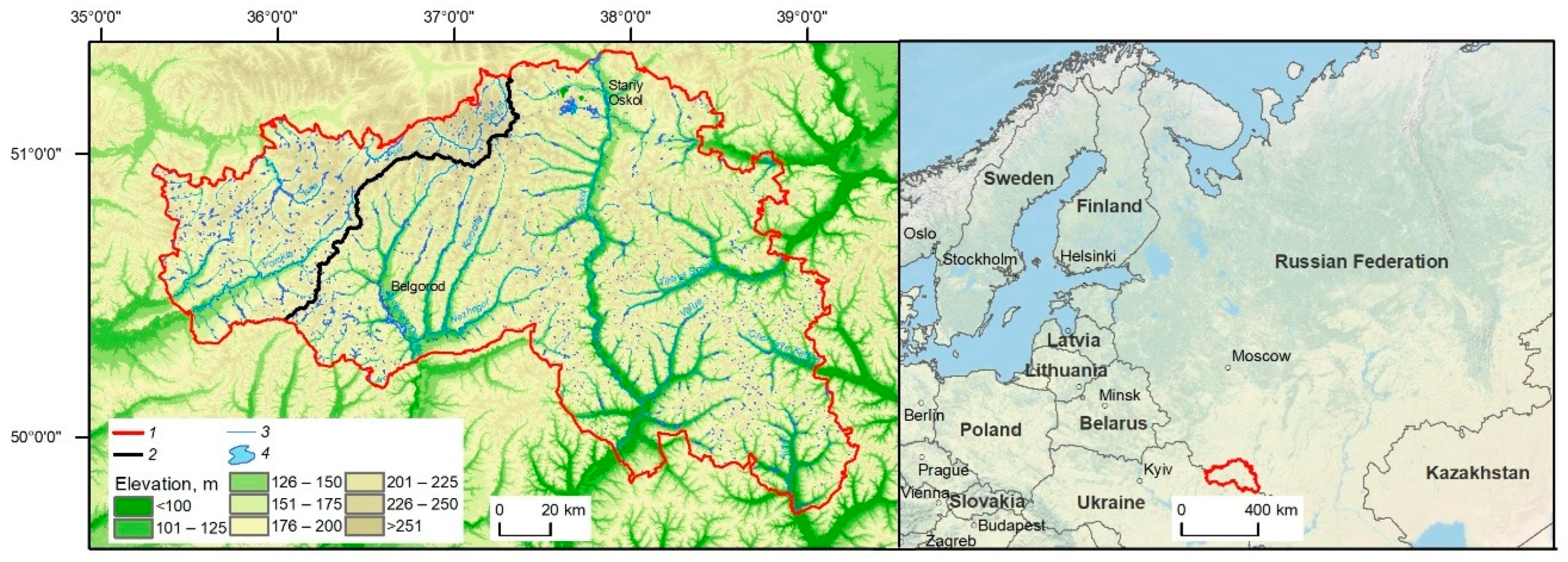
Figure 3.
The studied ponds in the western part of Belgorod Oblast (the numbering of the ponds on the map corresponds to the numbering of the ponds in Table 1).
Figure 3.
The studied ponds in the western part of Belgorod Oblast (the numbering of the ponds on the map corresponds to the numbering of the ponds in Table 1).
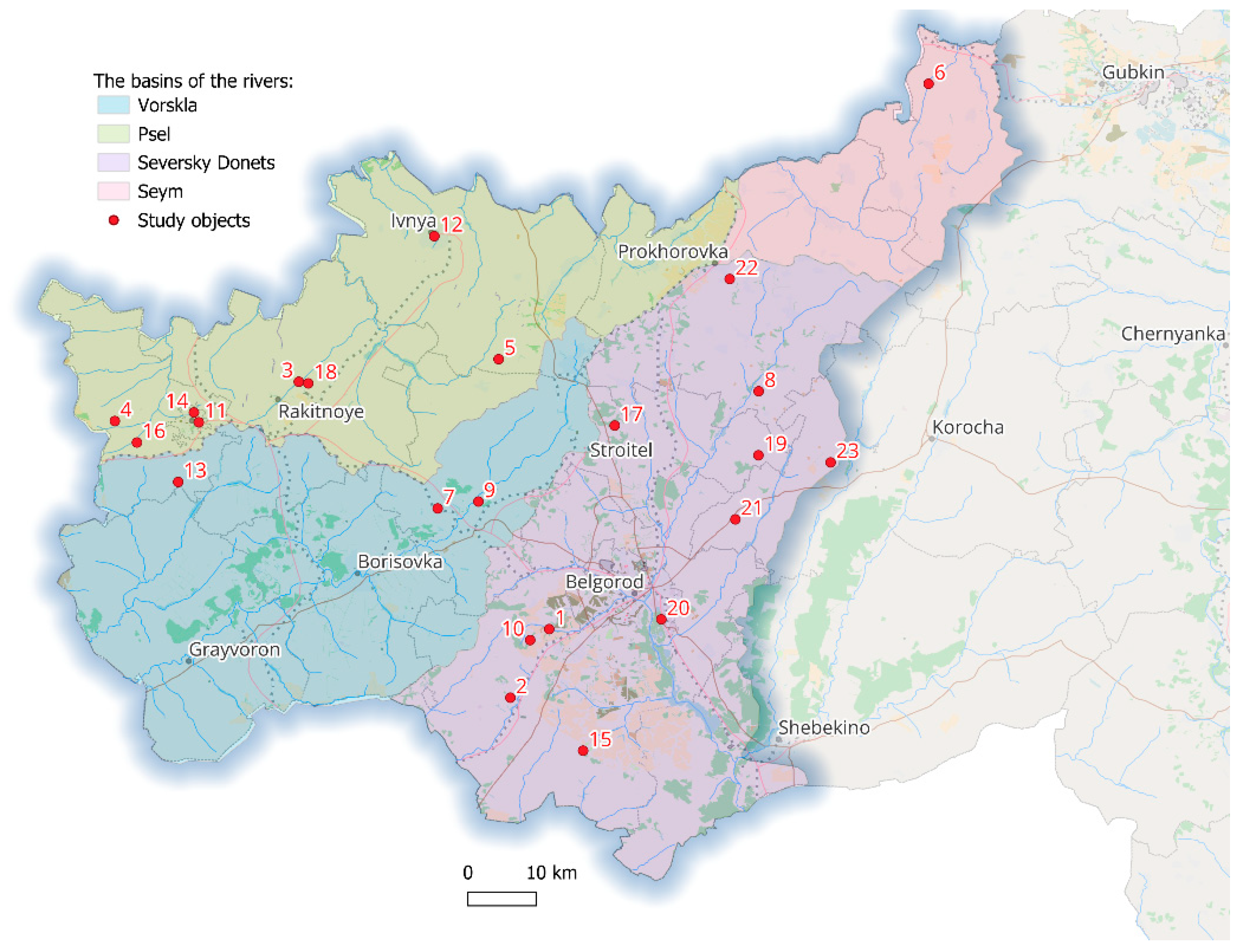
Figure 4.
An example of the location of profiles for determining the depths h and H and calculating the thickness of bottom sediments in one of the studied ponds.
Figure 4.
An example of the location of profiles for determining the depths h and H and calculating the thickness of bottom sediments in one of the studied ponds.
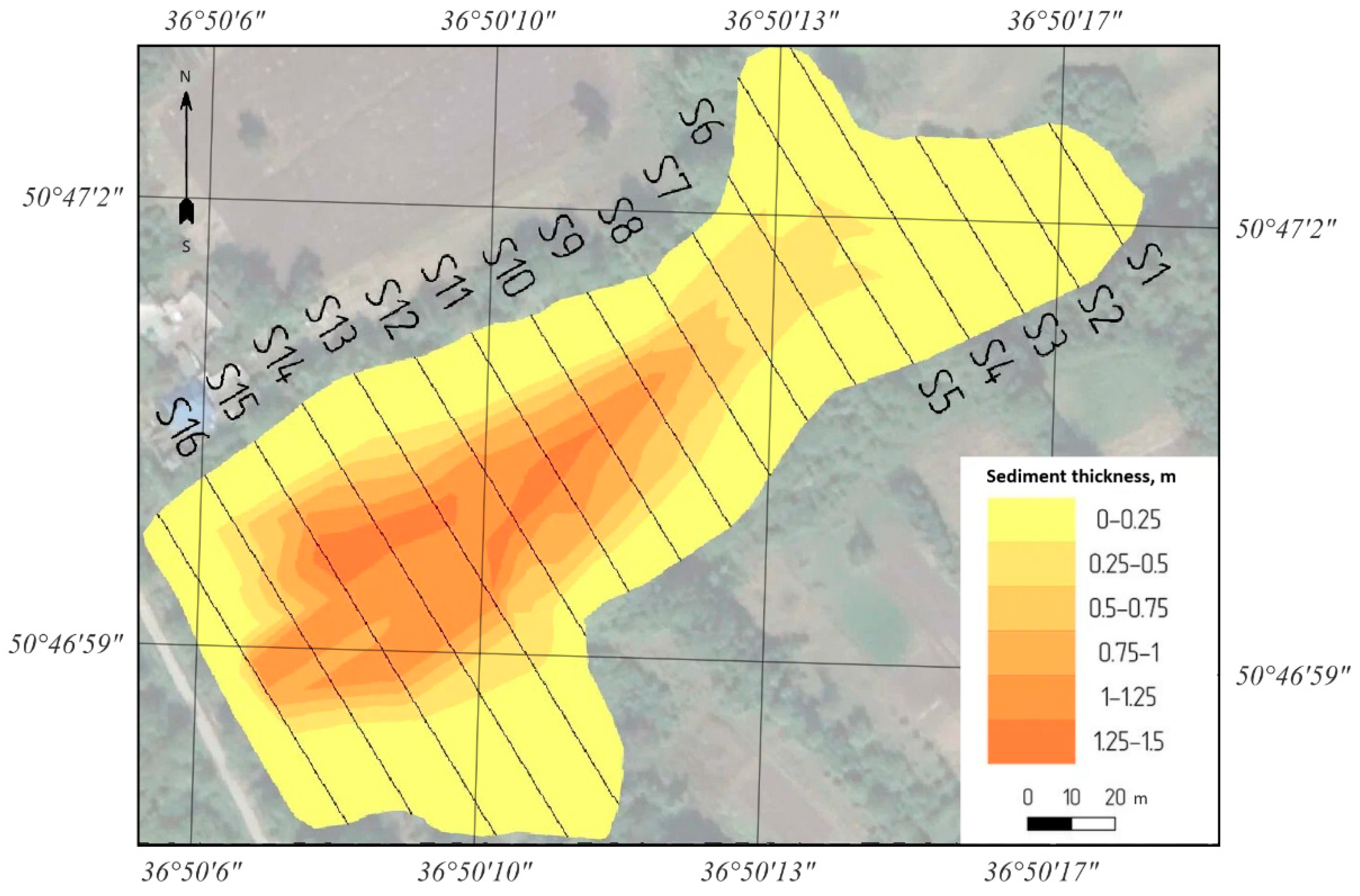
Figure 5.
Heatmap of Spearman correlation results for the studied ponds of Belgorod Oblast, European Russia; r—Spearman correlation coefficient. For other symbols, see Table 1.
Figure 5.
Heatmap of Spearman correlation results for the studied ponds of Belgorod Oblast, European Russia; r—Spearman correlation coefficient. For other symbols, see Table 1.
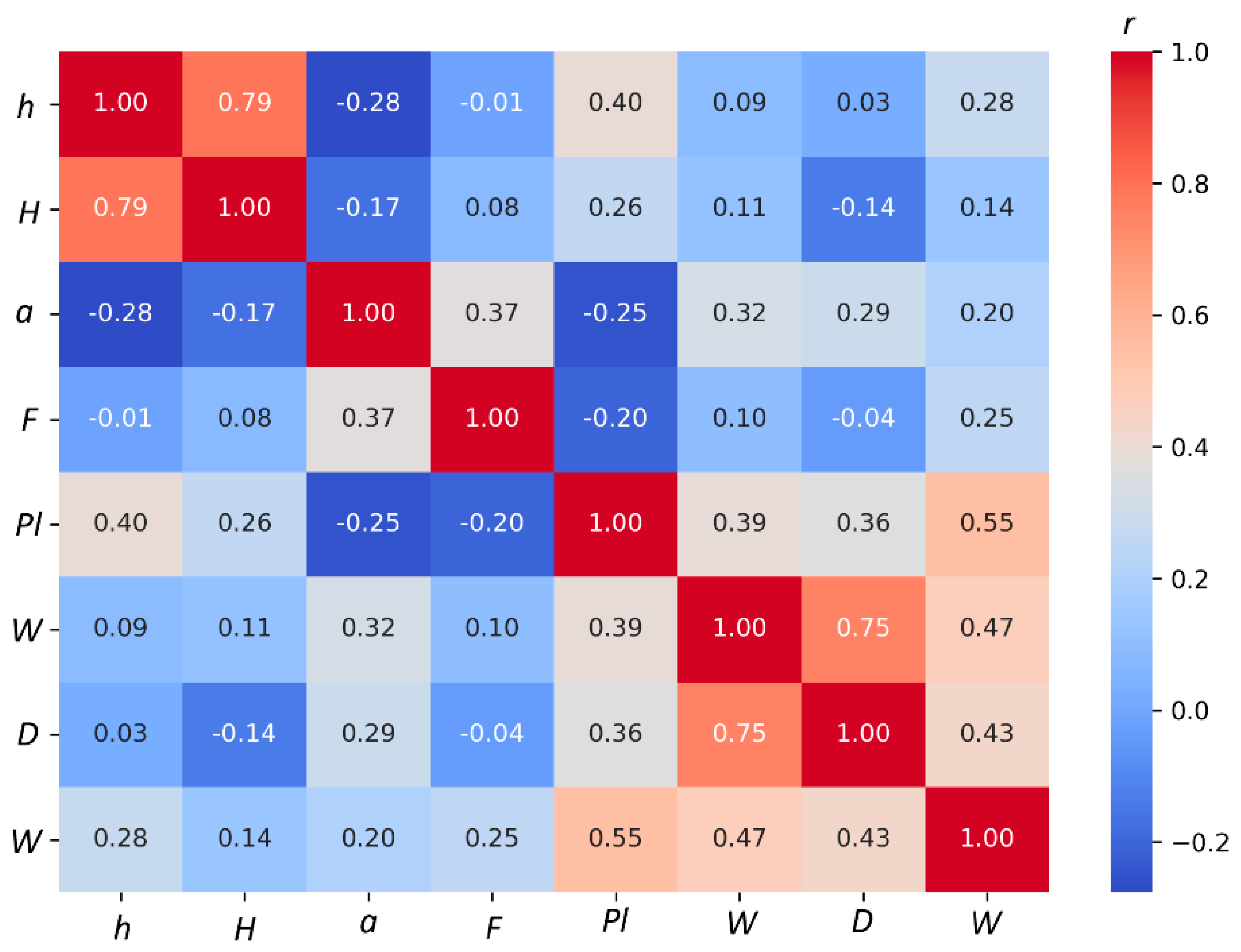
Figure 6.
The importance of siltation factors (IF) in the studied ponds in the western part of Belgorod Oblast (European Russia), determined using the Random Forest method. For other symbols, see Table 1.
Figure 6.
The importance of siltation factors (IF) in the studied ponds in the western part of Belgorod Oblast (European Russia), determined using the Random Forest method. For other symbols, see Table 1.
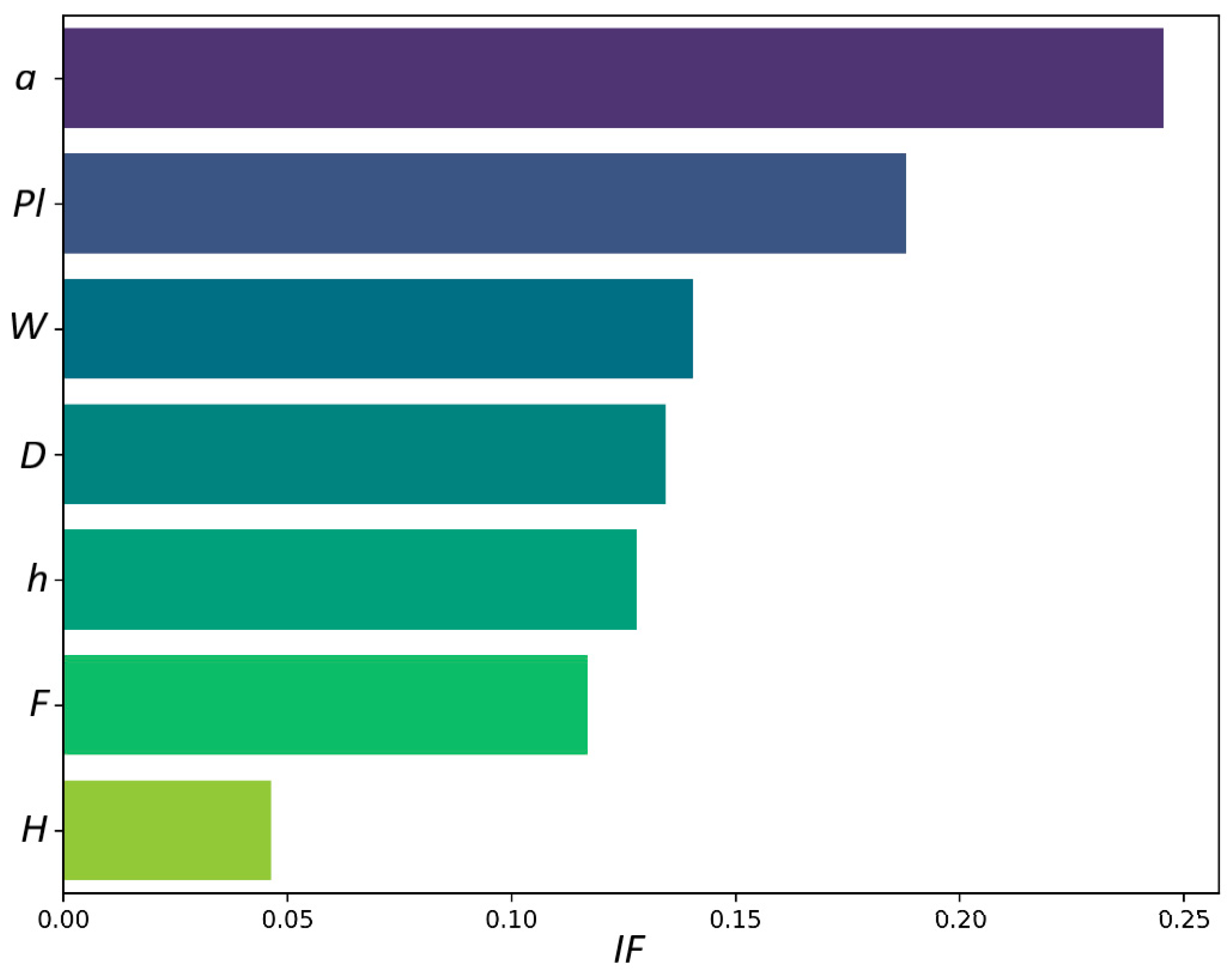
Figure 7.
Cluster analysis dendrogram. 1, 2 … 23—the numbering of the studied ponds (see Тable 1) (1 to 4 is Type I; 5 to 9 is Type II; 10 to 17 is Type III; 18 to 23 is Type IV); d— the threshold distance.
Figure 7.
Cluster analysis dendrogram. 1, 2 … 23—the numbering of the studied ponds (see Тable 1) (1 to 4 is Type I; 5 to 9 is Type II; 10 to 17 is Type III; 18 to 23 is Type IV); d— the threshold distance.
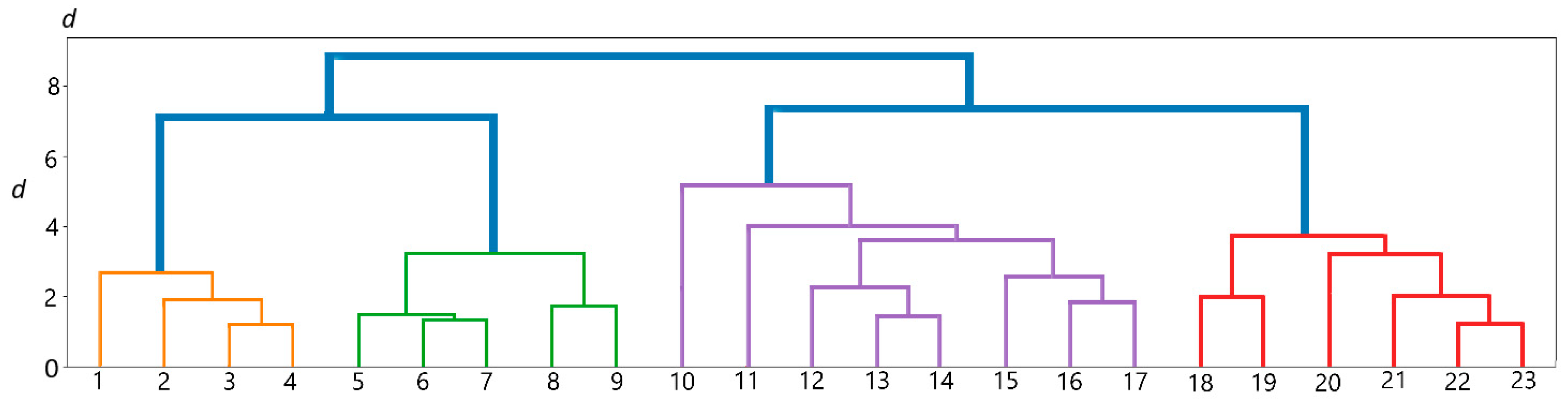
Figure 8.
Typification map of the studied ponds in the western part of Belgorod Oblast (European Russia) according to the influence of factors on their siltation.
Figure 8.
Typification map of the studied ponds in the western part of Belgorod Oblast (European Russia) according to the influence of factors on their siltation.
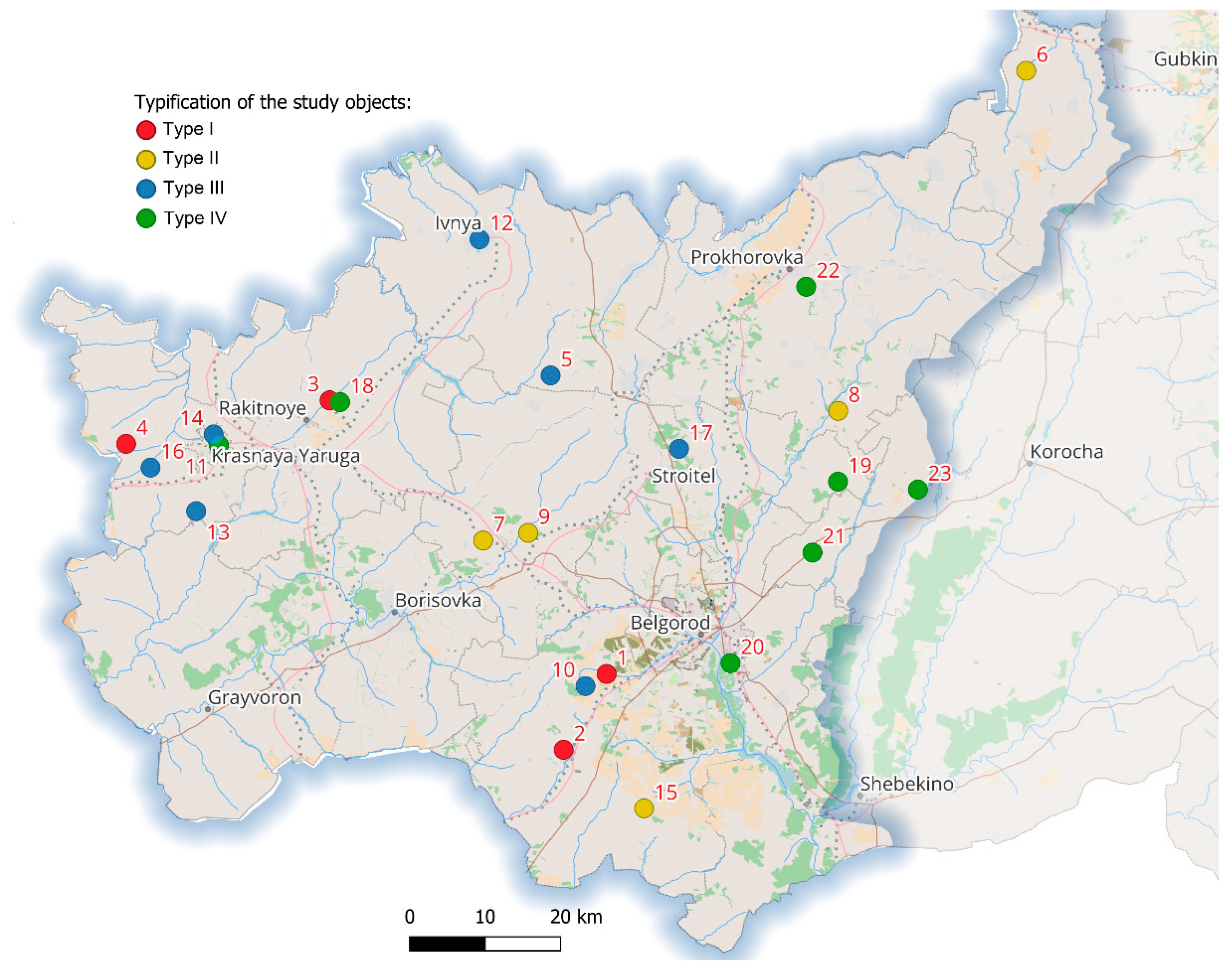
Table 2.
Results of factor analysis used in this study.
| Parameter | Factor I | Factor II | Factor III | |
|---|---|---|---|---|
| h | 0.92 | –0.15 | 0.05 | |
| H | 0.87 | –0.1 | 0.12 | |
| α | –0.2 | 0.91 | 0.08 | |
| F | 0.15 | –0.1 | 0.94 | |
| Pl | –0.1 | 0.05 | –0.93 | |
| W | 0.1 | 0.89 | 0.05 | |
| D | –0.05 | 0.82 | 0.15 | |
| V | 0.2 | 0.86 | 0.1 | |
| d | 38.5 | 23.7 | 15.6 |
h is the average depth to the hard bottom (m); H is the maximum depth (m); α is the average slope of the pond catchment (‰); F is the forest cover of the pond's catchment area (%); Pl is the area of cropland in the pond´s catchment area (%); W is the annual soil loss (tons/ha); D is the vertical dissection of the pond catchment relief (m); V is the volume of bottom sediments (m3); d is the explanatory variance (%).
Table 3.
Typification of the studied ponds in the western part of Belgorod Oblast (European Russia) according to the influence of factors (see Table 2) on their siltation.
Table 3.
Typification of the studied ponds in the western part of Belgorod Oblast (European Russia) according to the influence of factors (see Table 2) on their siltation.
| Parameter | Type | |||
|---|---|---|---|---|
| I | II | III | IV | |
| h, m | 2.7 | 1.4 | 1.0 | 1.5 |
| H, m | 5.0 | 2.6 | 2.1 | 3.2 |
| α, ‰ | 65.6 | 39.5 | 99.3 | 24.5 |
| F, % | 16.8 | 7.1 | 23.8 | 8.6 |
| Pl, % | 43.5 | 69.6 | 21.3 | 28.5 |
| W, t/ha | 1.5 | 1.9 | 1.12 | 0.4 |
| D, m | 60.6 | 81.9 | 54.2 | 24.9 |
| V, m3 | 10,798.0 | 10,657.6 | 9757.4 | 5215.3 |
Table 4.
The volume of soil washed away from the catchment area and the volume of bottom sediments during the period after cleaning/creation of two compared ponds.
Table 4.
The volume of soil washed away from the catchment area and the volume of bottom sediments during the period after cleaning/creation of two compared ponds.
| Parameter | Pond in Krasny Oktyabr' | Pond in Verkhniy Ol'shanets |
|---|---|---|
| Type | I | IV |
| Accumulation period, years | 44–48 | 240–260 |
| V, m3 (field measurements) | 2319 | 6825 |
| SDC | 0.75 | 0.67 |
| W, m3/year | 63.6 | 38.7 |
| W for the entire accumulation period, m3 | 2087–2277 | 6224–6743 |
| μ, % | 1.8–10.0 | 1.2–8.8 |
V is the volume of bottom sediments; SDC is the sediment delivery coefficient; W is the annual soil loss; μ is the deviation of the calculated soil loss from the field-measured soil loss.
Disclaimer/Publisher’s Note: The statements, opinions and data contained in all publications are solely those of the individual author(s) and contributor(s) and not of MDPI and/or the editor(s). MDPI and/or the editor(s) disclaim responsibility for any injury to people or property resulting from any ideas, methods, instructions or products referred to in the content. |
© 2025 by the authors. Licensee MDPI, Basel, Switzerland. This article is an open access article distributed under the terms and conditions of the Creative Commons Attribution (CC BY) license (http://creativecommons.org/licenses/by/4.0/).
Copyright: This open access article is published under a Creative Commons CC BY 4.0 license, which permit the free download, distribution, and reuse, provided that the author and preprint are cited in any reuse.


