Preprint
Review

This version is not peer-reviewed.

Vitamin D: Evidence-Based Health Benefits and Recommendations for Population Guidelines

A peer-reviewed article of this preprint also exists.

Submitted:

17 December 2024

Posted:

18 December 2024

You are already at the latest version

Abstract

Vitamin D offers a wide range of under-recognized health benefits beyond its well-established role in musculoskeletal health. It plays a crucial role in extra-renal and skeletal tissues, prenatal and newborn health, brain health, immune function, cancer prevention, cardiovascular disease, etc. Current clinical guidelines, particularly the Endocrine Society's 2024 recommendations, remain limited in scope and have not addressed the vital extra-skeletal benefits of this vitamin nor the thresholds for vitamin D assays. Their recommendations were based on conclusions from randomized controlled trials of the benefits of vitamin D, which were infrequently found. Most such trials included participants with above average 25-hydroxyvitamin D [25(OH)D] concentrations and treated with low vitamin D doses and analyzed based on intention to treat. This review considers the role of vitamin D in reducing the risk of incidence and death for eight of the top ten causes of death in the US illustrating that serum concentrations above 30 ng/mL (75 nmol/L) compared to <20 ng/mL are associated with significantly reduced risk of incidence and mortality rates for many health outcomes. Since about a quarter of the US population and 60% in Central Europe have 25(OH)D concentrations <20 ng/mL, significant reductions in disease rates and deaths could be achieved by raising those values above the minimum of 30 ng/mL. Daily vitamin D supplementation with 2000 international units (IU) (50 µg) of vitamin D3 is recommended for prevention of vitamin D deficiency/insufficiency (i.e, serum 25(OH)D < 30 ng/mL)—sufficient for musculoskeletal system functions. However, intake above 4000 IU/day are recommended to raise serum 25(OH)D to the range 40‒70 ng/mL to achieve protection against many adverse health outcomes. This review aims to pave the way for more inclusive, evidence-based guidelines that enhance public health and personalized care.

Keywords: 
;  ;  ;  ;  ;  ;  ;  

1. Introduction

The new 2024 Endocrine Society guidelines have been published under the title: “Vitamin D for the prevention of disease: an “Endocrine Society clinical practice guideline” [1]. Despite the authors' intention on whether this new document should replace the previous guidelines (2011) [2] or not, it raises concerns about vitamin D and human health throughout life, from intra-uterine life until the oldest old. The 2024 Endocrine Society guidelines stated that it was intended for clinicians but advocated against the measurement of 25-hydroxyvitamin D [25(OH)D] even in vulnerable groups and against the routine vitamin D empiric supplementation for disease prevention, except for children, pregnant women, pre-diabetic patients, and people age 75+ years [3].

1.1. Global Vitamin D Deficiency

Vitamin D, often called the “sunshine vitamin,” is essential for many biological and physiological human processes. Despite its well-documented importance, vitamin D deficiency (VDD) remains a significant global public health issue. This paper reviews the myriad health benefits of vitamin D that support the need to update vitamin D-related clinical guidelines. It examines the limitations of current guidelines, specifically those from the Endocrine Society [1], which do not encompass the vitamin’s broader roles in health and disease prevention or treatment.
Before reviewing the health benefits of vitamin D, it is helpful to explore how evidence for the beneficial effects of vitamin D was determined. Pharmaceutical companies use randomized controlled trials (RCTs) to obtain drug approval. In pharmaceutical drug RCTs, study participants are randomly assigned to treatment or control groups; only the treatment group receives the drug. Pre-defined clinical outcomes are compared for intention to treat analysis vs. placebo arms [4].
This approach is unsuitable and impractical for nutrients like vitamin D since there are many natural sources, and no one is entirely vitamin D-depleted. Besides, vitamin D is a threshold nutrient, and the pharmaceutical-study approach is unsuitable to test its efficacy [5,6]. In addition, most vitamin D RCTs have included participants with average serum 25(OH)D concentrations on or above 30 ng/mL, who may not benefit from vitamin D supplementation depending on the body system under investigation. They also generally provided the control arm with small doses of vitamin D and/or permitted them to take 600‒800 IU/day vitamin D as recommended by the Institute of Medicine (IoM) [7] based on ‘ethical’ concerns, mistakenly, or as in two recent major vitamin D RCTs [8,9]. Unsurprisingly RCTs have failed to support vitamin D's role in reducing the risk of most diseases [10]. As discussed in recent reviews, this outcome is due to poor study designs, bias, conduct, and analysis of vitamin D RCTs [3,5,11,12].
In 2014 Robert Heaney outlined guidelines for nutrient RCTs [13]. As applied to vitamin D, these guidelines strongly recommend measuring serum 25(OH)D concentrations of all prospective participants, enrolling only those with low concentrations. Those in the treatment arm should be supplemented with enough vitamin D doses to raise serum 25(OH)D concentrations associated with significantly reduced risk [4,6]. Achieved mean serum25(OH)D concentrations should be measured during the trial, and vitamin D doses should be adjusted as needed. Finally, the results should be analyzed in terms of achieved 25(OH)D concentrations. The only vitamin D supplementation study that comes closest to complying with Heaney’s guidelines is one evaluating the effects of vitamin D supplementation on pregnant women in Iran [14], discussed in detail later.

1.2. Alternative Strategies to Randomized Controlled Trials Better Suited for Nutrients

Since vitamin D is a threshold nutrient, RCTs are not the optimal way to test its efficacy [15]. A better way to ascertain the health benefits of vitamin D is through observational studies. Several types of observational studies, including geographical ecological, prospective cohort studies, cross-sectional, and case-control studies, are most frequently used. Geographical ecological studies use data for populations in various geographical regions, generally using population-averaged data for health outcomes and risk-modifying factors. Such studies are often the first to identify vitamin D through solar UVB exposure as the risk-reduction factor for diseases such as colon cancer [16]. Limitations of this approach include that the population-average data may not apply well to those with adverse health outcomes. Also, that important confounding risk-modifying factors may be overlooked.
Prospective cohort studies enroll large numbers of participants, collect data on many factors at the time of enrollment, and follow the participants for several years, noting changes in health conditions. While widely used, they have a significant limitation in of essential factors such as serum 25(OH)D concentration change over time, resulting in what has been termed “regression dilution” [17]. In that 1999 article, paired measurements of systolic blood pressure, diastolic blood pressure, and total cholesterol were recorded for participants in the Framingham Study (US) over 30 years and Whitehall Study (UK) over 26 years. They show that uncorrected associations of disease risk with baseline measurements underestimate the strength of the actual associations with usual levels of these risk factors during the first decade of exposure by about one-third, the second decade by about one-half, and the third decade by about two-thirds. This effect has been analyzed for prospective cohort studies regarding serum 25(OH)D concentrations. It was found that without accounting for the follow-up period, the beneficial effect for colorectal cancer was significantly underestimated for males using the traditional approach of averaging the results from all cohort studies, regardless of the mean follow-up period [18] as shown in a review [19].

1.3. Hypovitaminosis Increases Vulnerability to Diseases—Causality

Causality can be evaluated using Hill’s criteria in a biological system [20]. The criteria appropriate for vitamin D include the strength of association, consistency, dose-response relationship, biological plausibility, coherence of evidence, experiment, and analogy. As discussed by Doll in 2002, confounding and bias must also be considered [21]. He also noted that these were not criteria but aids in thinking about optimizing testing for a nutrient. Observational studies provide most of the evidence to support Hill’s criteria. Results from using Hill’s criteria to evaluate causality for vitamin D and various health outcomes will be discussed for some of the health outcomes considered in this work.
Cohort studies strongly suggested that hypovitaminosis D is associated with the initiating and worsening of diseases [5]. Most studies confirmed that VDD increases the vulnerability to acquiring diseases and developing complications. In addition, once an acute infection is acquired, vitamin D concentration will decrease rapidly [22]. Unless supplemented, the concentration in the blood would be reduced, prolonging recovery and increasing the risk of developing complications [4,23].
It should be noted that most of the actions of vitamin D are affected though its circulatory, hormonal metabolite, 1-dihydroxyvitamin D (1-25(OH)2D3) binding to a vitamin D receptor coupled to chromosomes where it can affect gene expression (i.e., genomic effects). A clinical study in healthy adults examined the number of genes up- or down-regulated in white blood cells when supplemented with different vitamin D doses [24]. For doses of 600, 4000, or 10,000 IU/day for six months, the number of genes up- or down-regulated were 162, 320, and 1289, respectively. This finding suggests that higher 25(OH)D concentrations lead to better health outcomes, which is in general agreement with the findings from many studies.
The approach taken in this review is to identify the health outcomes associated with the greatest risk of death in the US, then discuss the evidence that vitamin D could reduce the risk of incidence and death as well as assess whether the disease outcomes are causally linked to vitamin D status. After that, the new Endocrine Society vitamin D guidelines are discussed.

2. Health Benefits of Vitamin D

The health outcomes discussed in this review are presented for eight of the ten leading causes of death in the US for 2021 and 2022 [25]. They are, in descending order, heart disease, cancer, unintentional injuries (omitted), COVID-19, stroke, chronic lower respiratory diseases, Alzheimer’s disease (AD), diabetes mellitus, kidney disease, and chronic liver disease and cirrhosis.

2.1. Cardiovascular Disease

According to the American Heart Association, cardiovascular disease (CVD) accounted for 928,741 deaths in the US in 2020 [26]. The percentages of deaths due to types of CVD were coronary heart disease, 41.2%; stroke, 17.3%; other CVD, 16.8%; hypertension, 12.9%; heart failure, 9.2%, arterial diseases, 2.6%. In 2022, 702,880 people died from heart disease [27]. The global burden of CVD was estimated for 2021 at 67 million (95% CI, 61‒73 million) incident cases and 19 million (95% confidence interval [CI], 18‒21 million) deaths [28].
Vitamin D is associated with cardiovascular benefits, including potential protective effects against heart disease, as it influences calcium homeostasis and gene transcription, supporting myocardial contractility and reducing the risk of cardiac hypertrophy and atherosclerosis [29,30]. Systematic reviews and meta-analyse1.01]s of RCTs indicated that vitamin D supplementation improved several cardiovascular risk factors, including a significant increase in HDL cholesterol and reduced triglycerides and systolic blood pressure [31]. Other studies suggest that supplementation may help heart failure patients [32].
Hypertension is an important risk factor for CVD, especially if associated with other CVD risk factors [33]. Another study using data from the UK Biobank evaluated the association between serum 25(OH)D concentration and vitamin D supplementation and CVD mortality among adults with hypertension [34]. In fully-adjusted models, serum 25(OH)D concentrations between 25 and 50 nmol/L compared to >75 nmol/L were associated with HR = 1.71 (95%CI, 1.22‒2.40) for all-cause mortality rate and HR = 1.87 (95%CI, 1.55‒2.27) for CVD mortality. Serum 25(OH)D concentrations <50 nmol/L compared to >75 nmol/L were associated with HR = 1.97 (95%CI, 1.15‒3.39) for all-cause mortality rate and HR = 1.42 (95%CI, 0.70‒2.91) for CVD mortality. In a fully-adjusted model, vitamin D supplementation was associated with HR = 0.76 (95% CI, 0.61‒0.94) for all-cause mortality and HR = 0.75 (95% CI, 0.54‒1.03) for CVD mortality.
According to a 2019 meta-analysis, RCTs have not shown that vitamin D supplementation reduces the risk of CVD [35]. However, the D-Health RCT conducted in Australia from 2014 to 2020 did find reductions in CVD events [36]. The vitamin D treatment arm participants were given 60,000 IU of vitamin D3 per month. For the entire set of participants, the reduction in major cardiovascular events (MACE) with vitamin D supplementation was not significant (HR = 0.91 [95% CI, 0.81‒1.01]). However, it was significant for participants taking CV drugs (HR = 0.84 95% CI, 0.74‒0.97]).
Low levels of HDL-cholesterol (HDL-C) (<40 mg/dL) are strongly associated with an increased risk of coronary and peripheral arterial disease [37]. A meta-analysis of 57 observational studied and two cohort studies found that high vs. low 25(OH)D concentrations were associated with an 18% reduction in HDL-C (OR = 0.82 [95% CI, 0.76‒0.89]) [38].
A retrospective, observational, nested case-control study evaluated the effects of vitamin D supplementation on the risk of myocardial infarction and all-cause mortality for patients with VDD who received care at the Veterans Health Administration from 1999 to 2018 [39]. Cases and controls were matched using propensity score-weighted Cox proportional hazard models. In comparison of 10,014 treated subjects who achieved 25(OH)D >30 ng/mL compared to 2942 untreated subjects with 25(OH)D <20 ng/mL, the HR for all-cause mortality rate was 0.61 (95% CI, 0.56‒0.67, p <0.001) and the HR for myocardial infarction was 0.73 (95% CI 0.55‒0.96, p = 0.02).
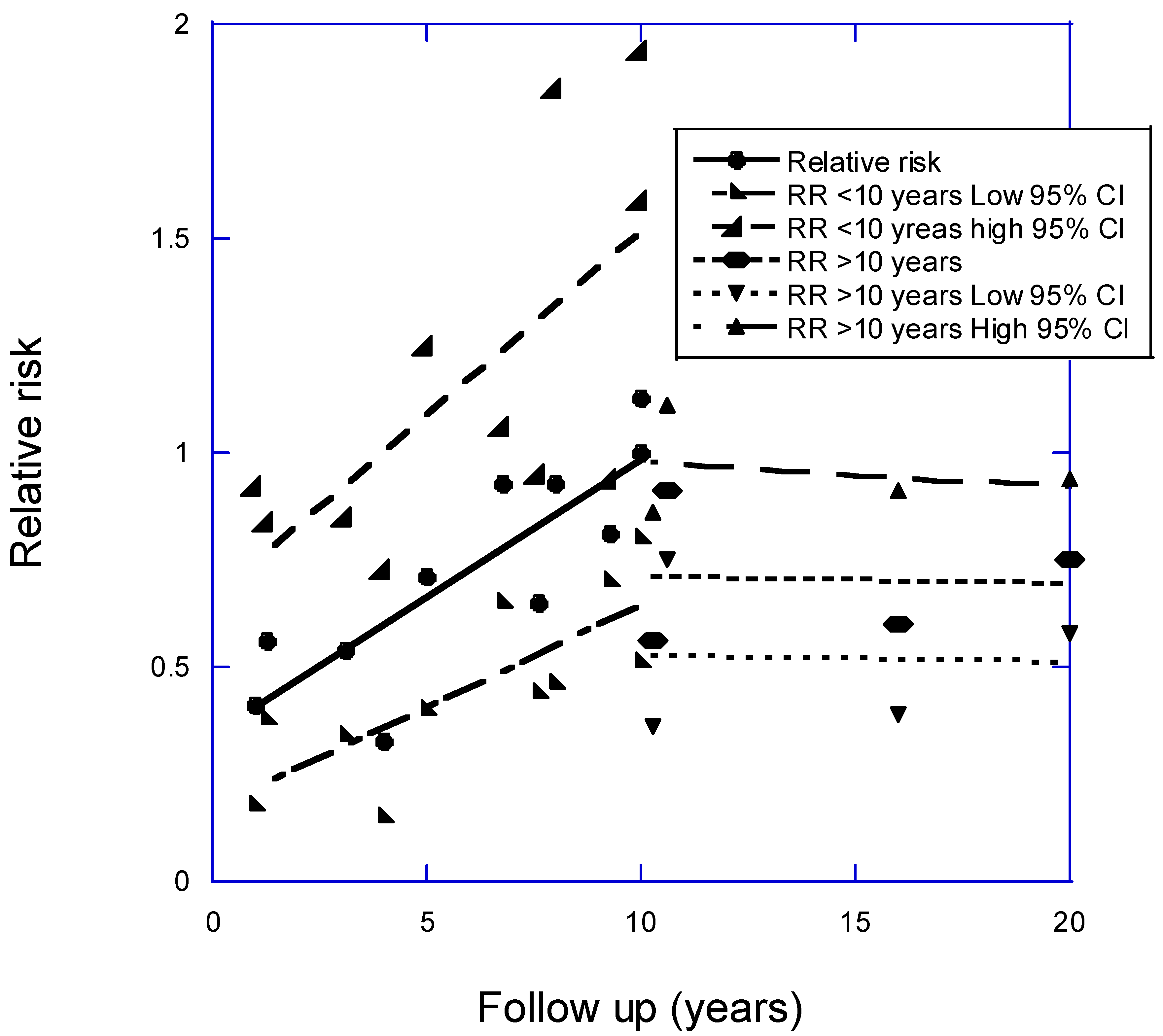
The effect of the follow-up period on the relative risk of a MACE concerning low vs. high serum 25(OH)D concentration was recently published [40]. The comparisons of serum 25(OH)D concentrations varied from <9 vs. >9 ng/mL to <30 vs. >30 ng/mL. As shown in Figure 1, the regression fit to the data indicates that risk increases by 50‒60%.
Mendelian randomization (MR) studies are used to evaluate causal relationships between risk factors and health outcomes. They involve randomizing participants in large databases by some of their alleles in the vitamin D metabolic pathway to generate a “genetically instrumented 25(OH)D concentration score” to compare with health outcomes. With large numbers of participants, it is expected that factors affecting 25(OH)D concentration, such as vitamin D supplementation and solar UVB exposure, will be averaged out. It has been demonstrated that a nonlinear approach with many such genetic scores is the more sensitive approach. A 2022 article reported a nonlinear MR analysis of the effect of VDD on CVD risk using data from the UK Biobank [41]. It was estimated that correcting VDD to above 75 nmol/L would reduce the risk of CVD by 6% (95% CI, 2‒10%). Using this figure for the US, the number of CVD deaths that could have been prevented in 2020 is 56,000 (95% CI, 19,000‒93,000).

2.2. Stroke

Stroke accounted for 160,264 deaths in the US in 2020 [42]. Observational studies find that stroke incidence is inversely correlated with serum 25(OH)D concentrations [40]. Many of the studies compared risk with respect to >30 vs. <20 ng/mL. This review analyzed the effect of follow-up time on stroke incidence using studies included in two standard meta-analyses [43,44]. For Stroke, it found a good linear fit to the data for follow-up periods of 1–10 years: RR = 0.34 + (0.065 × follow-up [years]), r = 0.84, adjusted r2 = 0.67, p < 0.001 (see Figure 2). It was argued that the preponderance of the evidence supported the claim that vitamin D reduced the risk of stroke outcomes in a causal manner as evaluated concerning the criteria for causality in a biological system outlined by Hill in 1965 [20]. The only criterion not satisfied is experimental verification by an RCT. However, it is noted that the beneficial effects of vitamin D for strokes occur above about 25(OH)D concentration of 20 ng/mL, which would require participants in an RCT to have concentrations below 20 ng/mL, which is very difficult to do in Western developed countries.

2.3. Cancer Prevention

According to the American Cancer Society, the number of cancer incidences in 2024 will be 1,029,080 for males and 972,060 for females, while cancer deaths will be 322,800 for males and 288,920 for females [45]. The leading types of cancer cases for males are prostate, lung and bronchus, colorectal, urinary bladder, melanoma of the skin, and kidney and renal pelvis. The first three have the highest mortality rates, followed by pancreas, liver, and intrahepatic bile duct cancers. For females, the top five types of cancer cases are breast, lung and bronchus, colorectal, uterine corpus, and melanoma of the skin. For deaths, pancreas cancer replaces melanoma in the top five.
Globally, there were an estimated 19.3 million cancer cases and 10.0 million cancer deaths in 2020 [46]. The most common types of cancer in descending order were female breast, lung, colorectal, prostate, and stomach cancers. The cancers with the highest numbers of deaths were lung, colorectal, liver, stomach, and female breast cancers.
The evidence that vitamin D can reduce the risk of cancer incidence and mortality rates is robust. A 2022 review noted that ecological studies have found inverse correlations between solar UVB radiation dose indices and incidence and/or mortality rates for over 20 types of cancer [19]. Solar UVB is a proxy for 25(OH)D concentration. The associations between solar UVB dose and cancer incidence were weaker than for cancer mortality rates. The likely reason is that many mechanisms could cause cancer, but few that reduce cancer mortality. Vitamin D reduces angiogenesis around tumors, which is required to deliver nutrients to the tumors, and reduces metastasis into the surrounding stromal tissue, which is generally required for mortality.
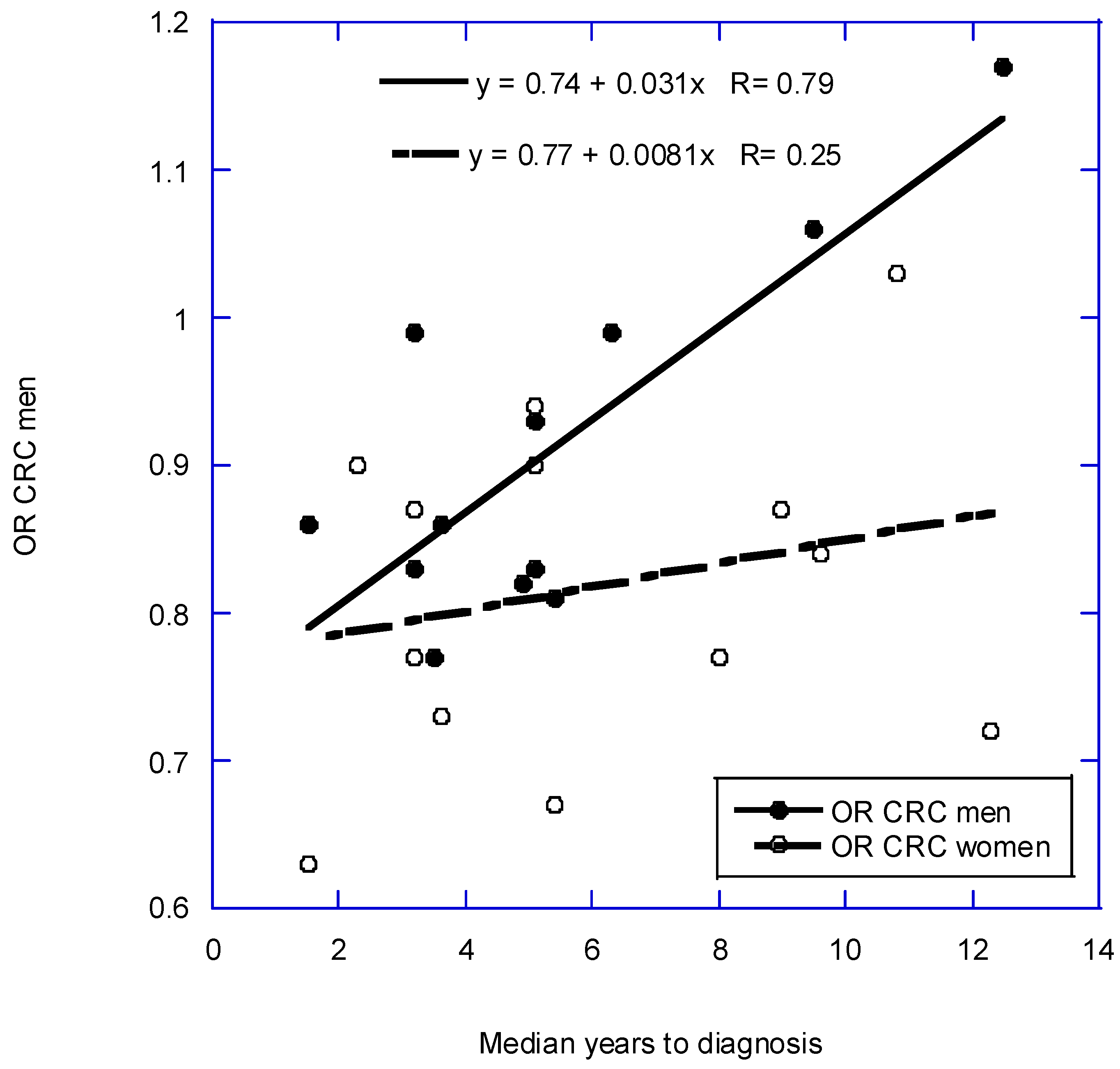
Prospective cohort studies have found inverse correlations between serum 25(OH)D concentration and the incidence of several types of cancer. However, as published, the studies do not fully demonstrate the beneficial effect of higher concentrations due to changes in serum 25(OH)D concentrations during the follow-up period. A study conducted in Norway found that the correlation coefficient, r, for serum 25(OH)D concentrations measured in 2668 participants in 1994 and again in 2008 and adjusted for season of measurement was 0.42 [47]. A meta-analysis of colorectal cancer incidence concerning serum 25(OH)D concentration in prospective cohort studies found that for each 25 nmol/L increment in circulating 25(OH)D, colorectal cancer risk was 19% lower in women (RR = 0.81, 95% CI = 0.75 to 0.87) and 7% lower in men (RR = 0.93, 95% CI = 0.86 to 1.00) [18]. However, when the RR was plotted vs. the mean follow-up period, it was found that the regression fit to the data for men was RR = 0.74 while that for women was RR = 0.77 [19]. Men had a 2.6 times higher rate of change of RR concerning the follow-up period than women (see Figure 3).
The observational study approach has also been used to assess the effect of vitamin D supplementation on breast cancer risk. In a 2018 study [48], findings for breast cancer incidence vs. achieved serum 25(OH)D concentrations were obtained from two vitamin D RCTs [49,50] and the GrassrootsHealth.net volunteer cohort. Multivariate Cox regression revealed that women with 25(OH)D concentrations ≥60 ng/mL had an 80% lower risk of breast cancer than women with concentrations <20 ng/mL (HR = 0.20 [95% CI, 0.05‒0.82], p = 0.03), adjusting for age, BMI, smoking status, calcium supplement intake, and study of origin.
RCTs have also provided limited support for vitamin D supplementation in reducing cancer risk. The largest RCT to study the effect of vitamin D supplementation on the risk of cancer was the VITAL study [8]. It enrolled over 25,000 participants in 2012‒2014, randomly assigning half to take 2000 IU/day of vitamin D3 and the other half as a placebo. The mean baseline all-year 25(OH)D concentrations of those in the vitamin D3 treatment arm for those who provided values were 29.7 for males and 32 ng/mL for females. The mean year one 25(OH)D concentrations for those in the vitamin D treatment group were 39.7 ng/mL for males (N = 395) and 43.6 ng/mL for females (N = 441). All participants were permitted to take 600 IU/d (800 IU/d for those over 70 years) vitamin D. The participants were followed for a median time of 5.3 years. When analyzed by intention to treat, the HR for cancer incidence was 0.96 (95% CI, 0.88‒1.06; p=0.47). However, for those with BMI <25 kg/m2, HR = 0.76 (95% CI, 063‒0.90). For Blacks with a mean 25(OH)D concentration of 24.9 ng/mL, HR = 0.77 (95% CI, 0.59‒1.01).
In the VITAL trial [8], a significant reduction in advanced cancers (metastatic or fatal) was found for those randomized to vitamin D compared with placebo (HR, 0.83 [95% CI, 0.69-0.99]; p = 0.04). When stratified by BMI, there was a significant reduction for the vitamin D arm in incident metastatic or fatal cancer among those with normal BMI (BMI<25: HR, 0.62 [95% CI, 0.45-0.86]) but not among those with overweight or obesity (BMI 25-<30: HR, 0.89 [95% CI, 0.68-1.17]); BMI≥30: HR, 1.05 [95% CI, 0.74-1.49]) (P = 0.03 for interaction by BMI) [51].

2.4. Immune System Support and COVID-19

Vitamin D supports immune function by enhancing innate and adaptive immunity. It boosts antimicrobial peptides like cathelicidin and defensin β2, essential for first-line defense against pathogens [52]. Vitamin D modulates T cells by promoting regulatory T cells while suppressing inflammatory Th1 and Th17 cells [53]. Vitamin D reduces the cytokine storm risk due to an overresponse to viral infections, resulting in greater severity of diseases such as COVID-19 [5]. VDD increases susceptibility to respiratory infections, including SARS-Cov-2 and autoimmune conditions [53,54]. Higher serum 25(OH)D concentrations reduce the risk of viral infection diseases in general [55] and COVID-19 in particular [56,57], as well as community-acquired pneumonia [58].
Supplementation has shown potential in reducing hospitalization rates and improving outcomes in infected patients [54]. Vitamin D supplementation and adequate vitamin D status also reduce the risk of diseases caused by bacteria and viruses, such as pneumonia [58] and COVID-19) [56,57]. Adequate 25(OH)D levels are also linked to reduced incidences of autoimmune diseases and allergic reactions, underscoring its protective effects on the immune system. While the guidelines recommend supplementation to prevent VDD, they may not account for the increased needs during illness or in individuals with chronic inflammatory conditions.
Vitamin D was proposed to reduce the risk of COVID-19 in March 2020 [59]. Evidence presented in support of that suggestion included that higher UVB doses were associated with reduced case-fatality rates during the 1918-1919 pandemic influenza in the US [60] and that a clinical trial found vitamin D supplementation reduced the risk of influenza type A in school children [61]. This suggestion turned out to be correct in terms of reduced risk of SARS-CoV-2 infection [56] and COVID-19 incidence [57] as well as COVID-19 severity and death [62].
SARS-CoV-2 vaccinations were associated with increased excess death rates in many countries [63]. However, the use of vitamin D to reduce the risk and severity of COVID-19 was not promoted but discouraged due to the development of mRNA “vaccines” to prevent SARS-CoV-2 infection. The US Food and Drug Administration granted emergency use authorization (EUA) for these “vaccines” on December 11, 2020 [64]. Under an EUA, the FDA may allow the use of unapproved medical products or unapproved uses of approved medical products in an emergency to diagnose, treat, or prevent serious or life-threatening diseases or conditions when specific statutory criteria have been met, including that there are no adequate, approved, and available alternatives [65]. As a result, the use of vitamin D and several repurposed drugs to prevent or treat COVID-19 was severely curtailed.
Reducing the risk of COVID-19 can also reduce the risk of other diseases. A recent study based on data from the UK Biobank found that having COVID-19 significantly increased the risk of MACE [66]. For those hospitalized for COVID-19, the HR for MACE was 3.85 (95% CI, 3.15‒4.24). A possible mechanism suggested was SARS-CoV-2 infection at the level of the vessel wall that potentially destabilizes vulnerable plaques and renders the endothelium more prone to thrombus formation.
Vitamin D would very likely to reduce the risk of many childhood viral diseases. Before the widespread use of vaccinations for childhood viral diseases, such diseases had peak seasonality in late winter and early spring. This was the case for measles [67], mumps [68], rubella [69], respiratory syncytial virus [70], and several others [71]. Winter-spring is the coldest season of the year in midlatitudes, as well as the season of lowest absolute humidity [72] and 25(OH)D concentrations [73,74]. Cold temperature increases the risk of viral infections by constricting the respiratory tract's capillaries. That restricts the epithelial cells lining the respiratory tract from fighting viruses at the first opportunity [75]. Many mechanisms, such as the induction of human cathelicidin, are innate responses controlled by vitamin D [76]. The promotion of vitamin D supplementation might also lead to a reduced need for childhood vaccinations, especially for viral infectious diseases that are more common in winter and spring.

2.5. Chronic Lower Respiratory Diseases

In 2021, more than 15 million Americans (6.4%) reported that they had been diagnosed with chronic lower respiratory disease (COPD) [77]. Major risk factors include tobacco smoking, occupational and environmental exposures, respiratory infections, and genetics [77]. The global prevalence of COPD based on the Global Initiative for Chronic Obstructive Lung Disease fixed ratio in 2019 was estimated at 392 million (95% CI, 313‒488 million) aged 30‒79 years [78].
There is mounting evidence that higher serum 25(OH)D concentrations are associated with a lower risk of COPD. A 2023 article reported results for the incidence of COPD concerning serum 25(OH)D concentration based on data from the UK Biobank with a median follow-up period of 12.3 years [79]. For participants with baseline 25(OH)D concentration <31.7 nmol/L compared to 51.8 to <64.6 nmol/L, the adjusted HR = 1.23 (95% CI, 1.16‒1.31). For COPD-specific death, the adjusted HR = 1.57 (95% CI, 1.03‒2.40). An MR study based on European data found an inverse causal association between genetically-predicted 25(OH)D concentration and the risk of COPD [80]. Each standard deviation of 25(OH)D concentration increase was associated with a 57% reduced risk of COPD (OR = 0.43 [95% CI, 0.28‒0.66]).
One of the mechanisms by which vitamin D reduces the risk of COPD may be by reducing inflammation. A hospital-based case-control study in China compared variables for 101 COPD patients and 202 controls [81]. Serum 25(OH)D concentrations were lower in COPD patients (adjusted OR = 0.86 [95% CI, 0.74‒0.99, p = 0.04]). All inflammation-related variables were higher in COPD patients than in controls, including CRP, TNF-α, MCP-1, IL-6, and IL-1β. The values for the variables increased with grade according to forced expiratory volume in 1s.

2.6. Alzheimer’s Disease and Dementia

In 2020, the number of people in the US with clinical AD was estimated at 6.1 million (95% CI, 5.9–6.4 million) people [82]. The US census-adjusted prevalence of clinical AD was 10% among non-Hispanic whites, 14% among Hispanics, and 18.6% among non-Hispanic African Americans [82]. A 2022 article estimated the number of pe worldwide across the AD continuum as 32 million with AD, 69 million with prodromal AD, and 315 million with preclinical AD [83]. This represents 22% of all persons aged 50 and above.
Vitamin D plays a significant role in brain health, cognition, and mood regulation, with emerging evidence supporting its therapeutic potential across various mental and neurological disorders. Adequate 25(OH)D concentrations are associated with improved cognitive function [84,85] and mood stability [86], particularly in vulnerable populations. Vitamin D supplementation has shown promise in enhancing mood and reducing depressive symptoms, with studies indicating improved clinical outcomes in patients receiving vitamin D alongside antidepressants [87].
Additionally, vitamin D deficiency, prevalent globally, has been associated with cognitive decline in conditions such as schizophrenia [88] as well as AD and dementia [89]. The neuroprotective effects of vitamin D are noted particularly in aging populations, where it may help mitigate cognitive decline through mechanisms involving neuroinflammation and neurotrophic factors [90]. A comprehensive review of the mechanisms whereby vitamin D reduces the risk of AD was published in 2023 [91]. Vitamin D also supports sleep health, improving sleep quality and duration, especially in young adults and those affected by depression. [92,93,94]
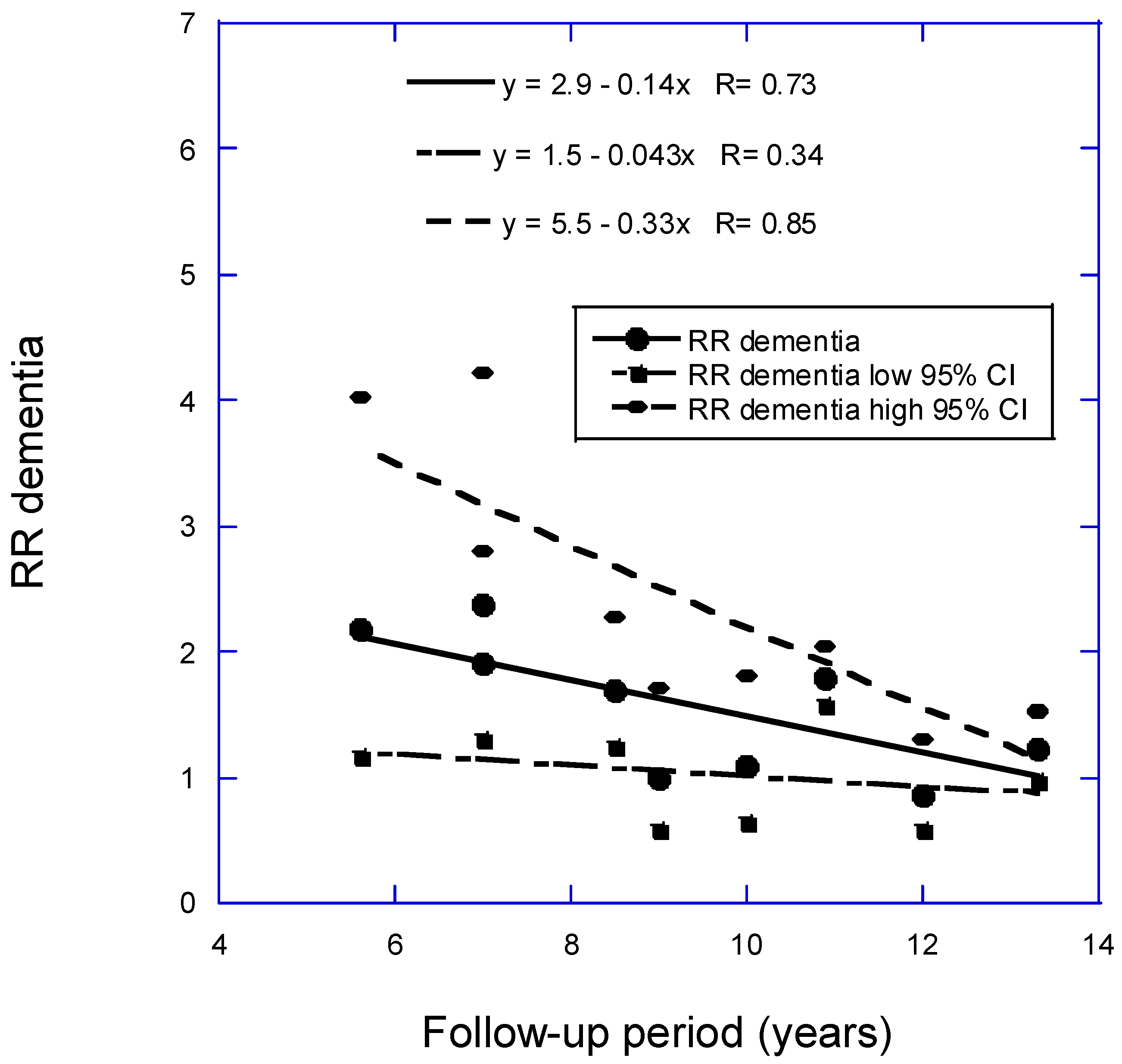
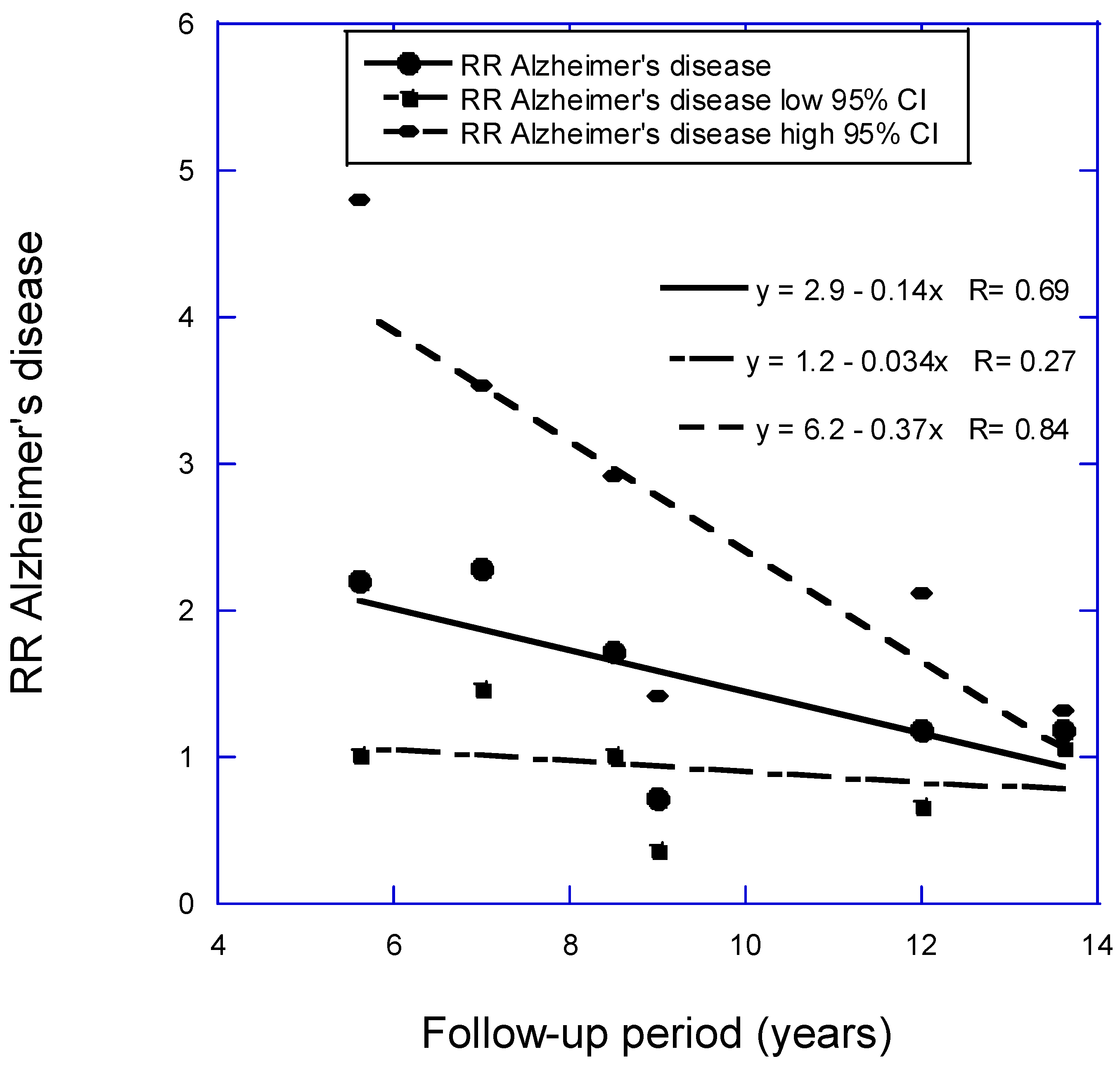
Prospective cohort studies have evaluated the effect of low vs. high serum 25(OH)D concentrations on the risk of adverse brain health. A recent review examined how the follow-up period affected results from nine cohort studies of all-cause dementia and six studies of AD concerning vitamin D deficiency [89]. The meant follow-up periods were for between three and 13 years. For all-cause dementia, the comparisons were mostly for <20 vs. >20 ng/mL. For AD, the comparisons of 25(OH)D concentration for the shortest three follow-up periods were for <10 vs. >20 ng/mL while for the longest three follow-up period studies, the comparisons of 25(OH)D concentration for the shortest three follow-up periods were for <20 vs. >20 or >30 ng/mL. For all-cause dementia and AD, respectively, for low vs. high serum 25(OH)D concentration, the linear regression fits are RR = 2.9 - 0.14 × years, r = 0.73, p = 0.02 and RR = 2.9 - 0.14 × years, r = 0.69, p = 0.13 (see Figure 4 and Figure 5). The finding that the regression fit to the data for AD is not significant is attributed to having fewer studies in the analysis (6 for AD versus 8 for dementia) as well as AD accounting for about 70% of dementia cases.
In addition, MR studies also support vitamin D's role in reducing the risk of AD [95] and dementia [96]. As it would be difficult to conduct an RCT to evaluate the effect of vitamin D on the risk of such outcomes, the results of these studies, in combination with the prospective studies and an understanding of the mechanisms, are the best evidence for the effect of vitamin D status on risk of these outcomes [3]. An analysis of the evidence concerning Hill’s criteria for causality in a biological system [27] would support a causal relationship between higher vitamin D status and reduced risk of dementia and AD.

2.7. Type 2 Diabetes Mellitus

An analysis of data from NHANES found that in 2017‒2018, the prevalence of diabetes mellitus (DM) in the US was 14%, with about 4% being undiagnosed [97]. This value was up from 10% in 1999‒2000. In 2015, it was estimated that there were 415 million (95% CI, 340‒536 million) living with DM aged 20‒79 years, and 5 million deaths attributed to DM globally [98].
Vitamin D is multifaceted in managing Type 2 DM (T2DM), influencing metabolic control, insulin resistance, and weight management. Research indicates that vitamin D deficiency is linked to increased insulin resistance and pancreatic dysfunction, which can exacerbate T2DM [99]. Vitamin D enhances insulin receptor transcription and glucose transport, potentially reducing insulin resistance. A systematic review of RCTs showed significant improvements in insulin resistance in T2DM patients following vitamin D supplementation among subgroups, including those receiving high-dose vitamin D, the non-obese, vitamin D deficient individuals, and those with well-controlled HbA1c [100].
However, systematic reviews show mixed results regarding vitamin D effects on metabolic syndrome parameters, with benefits in glycemic control observed primarily in deficient individuals and benefits in glycemic control observed primarily in deficient individuals. At the same time, other studies suggest that the relationship between vitamin D levels and metabolic health may not be causal [101,102].
The Vitamin D and Diabetes (D2d) study was an RCT regarding the effect of vitamin D supplementation on progression from pre-diabetes to T2DM [9]. Participants in the vitamin D treatment arm were given 4000 IU/day of vitamin D3, while those in the control arm were given a placebo. After a median period of 2.5 years, an analysis of the results regarding the intention to treat showed no benefit from vitamin D supplementation. However, in a subsequent analysis based on achieved serum 25(OH)D concentration in the vitamin D treatment arm, there was [103]. The risk reduction for those who achieved 40‒50 ng/mL compared to 20‒30 ng/mL was 52%, and for those who achieved >50 ng/mL it was 71%.
An analysis of data from NHANES evaluated the risk of death concerning serum 25(OH)D concentrations for adults with DM [104]. A total of 6326 adults with DM were identified between 2001 and 2014. They were followed until 31 December 2015. A total of 55,126 person-years of follow-up found 2056 deaths. The mean follow-up period was 8.7 years. The adjusted HR for all-cause mortality rate for 25(OH)D >75 nmol/L compared to <25 nmol/L was 0.58 (95% CI, 0.43‒0.83), while that for 25(OH)D between 25 and 50 nmol/L was 0.70 (95% CI, 0.55‒0.89). This suggests that the all-cause mortality rate reduction for >75 nmol/L vs. 25-50 nmol/L is 14%
A Danish study utilizing blood test results from the Copenhagen General Practitioners laboratory involved 222,311 individuals, of whom 7652 developed T2DM during follow-up periods from one to eight years [105]. Using 20 ng/mL as the reference 25(OH)D concentration, the HR for T2DM increased in a quasi-linear fashion to 2.0 (95% CI, 1.8‒2.1) for 25(OH)D = 10 ng/mL and decreased in a nonlinear fashion to 0.55 (95% CI, 0.50‒0.60) above 40 ng/mL.

2.8. Chronic Kidney Disease

Data from NHANES was used to estimate the prevalence of chronic kidney disease (CKD) in the US [106]. For 2003‒2004 and 2011‒2012, the adjusted prevalence of stages 3‒4 CKD was 6.9%. Rates were lower for non-Hispanic Blacks (6.2% [95% CI, 4.7‒7.7%]) than non-Hispanic Whites (8.0% [95% CI, 6.1‒10.0%]). Rates were higher for those with DM (19.1% [95% CI, 15.8‒22.4%]) than those without DM (5.3% [3.9‒6/7%]). The prevalence of people in the US with end-stage renal disease (ESRD) was estimated at 750,000 in 2015 and is projected to increase to between 971 thousand to 1259 thousand by 2030 [107]. The leading causes of ESRD are obesity, DM, and hypertension [107].
Globally, it was estimated that 844 million individuals had CKD in 2017 [108]. CKD caused 4.6% (95% CI, 4.3‒5.0%) of global deaths in 2017 [109]. More information regarding the burden of CKD if found in a 2022 review [110].
A 2008 article reviewed how vitamin D could increase survival in CKD [111]. Figure 1 in that article outlines how activation of the vitamin D receptor could reduce mortality from CKD. The mechanisms include effects on cardiac hypertrophy, atherosclerosis, vascular calcification, thrombosis, immune status, and tumorigenesis. In addition, lowering parathyroid hormone (PTH) concentrations has positive effects on cardiac, vascular, metabolic, metabolic, hematology, and immunology.
A 2023 article reported findings regarding all-cause and cardiovascular mortality in older people with chronic kidney disease (CKD) [112]. Data for 3230 CKD patients were obtained, followed, and followed up on for a median period of 6.2 years. Compared with those in the deficiency group (< 50 nmol/L), insufficient (50 to < 75 nmol/L) and sufficient group (≥75 nmol/L) were significantly associated with lower all-cause mortality (HR = 0.83 [95%CI, 0.71 to 0.97] and 0.75 [95%CI, 0.64 to 0.89], respectively) and cardiovascular mortality (HR = 0.87 [95%CI, 0.68 to 1.10] and 0.77 [95%CI, 0.59 to < 1.00], respectively).

2.9. Chronic liver disease

In 2022, there were approximately 54,800 deaths in the US from chronic liver disease (CLD) [113].
A meta-analysis of eight prospective observational studies with follow-up times between 180 and 1260 days found an RR for death from CLD concerning severe VDD (<12 ng/mL) = 1.75 (95% CI, 1.36‒2.28) [114]. VDD is common in patients with CLD [115]. However, RCTs have not demonstrated that vitamin D supplementation reduces the complications and progression of the disease. Since the liver converts vitamin D to 25(OH)D, it is difficult to separate the effect of liver disease in causing CLD from VDD causing CLD.

2.10. Bone and Oral Health

Vitamin D is crucial for calcium absorption and bone mineralization. Its role in reducing rickets is well known [116]. A 2023 systematic review found that vitamin D supplementation increased bone mineral density at the femoral neck, lumbar spine, and total hip sites [117]. A meta-analysis of seven RCTs found that supplementation with 800 IU/day of vitamin D3 plus 1000 mg/day of calcium significantly reduced the risk of hip fracture (OR = 0.69 [95% CI, 0.58‒0.82]) [118].
Controlled clinical trials conducted in the 1950s showed that vitamin D supplementation reduced the incidence of dental caries in children by about 50% [119]. Vitamin D status is inversely associated with periodontal disease inflammation [120].

2.11. Autoimmune Diseases

Vitamin D has gained attention for its potential in managing autoimmune diseases, mainly through high-dose protocols like the Coimbra Protocol, which modulate immune responses to improve outcomes [121]. This protocol involves administering high doses of vitamin D3, often exceeding 35,000 IU daily, under strict supervision, with studies showing it to be safe regarding calcium metabolism and renal function). By regulating immunity through the inhibition of Th1 and Th17 responses while enhancing Treg activity, vitamin D helps reduce inflammation and maintain immune balance [122].
The mentioned action is particularly beneficial in preventing overactive immune reactions, commonly observed in autoimmune diseases and allergies [53]. It has shown promise in improving conditions like systemic lupus erythematosus (SLE) [123]. Its immunomodulatory effects make vitamin D a valuable tool in managing inflammation and supporting overall immune health. The VITAL RCT found that supplementation with 2000 IU/day of vitamin D3 significantly reduced the incidence of autoimmune diseases [124]. Despite promising evidence, some studies suggest vitamin D deficiency might be a consequence, not a cause, of autoimmune diseases(63). The Endocrine Society’s guidelines may underestimate necessary doses for individuals with vitamin D resistance(66), underscoring the need for personalized protocols.

2.12. Pregnancy, Birth, and Infancy Outcomes

An estimated 13.4 million (95% CI, 12.3‒15.2 million) newborn babies were born preterm (<37 weeks) globally in 2020 (9.9% [95% CI, 9.1‒11.2%] of all births) [125]. Rates of gestational diabetes in the US in 2019 were 63.5 (95% CI, 63.1‒64.0) per thousand live births [126]. Preeclampsia rates globally vary from 2% to 8% [127]. The rate of eclampsia, a severe form of preeclampsia, was associated with 0.3% of live births in the US from 2009 to 2017 [128].
Vitamin D status is crucial during pregnancy, influencing fetal skeletal development and reducing risks such as gestational diabetes, preeclampsia, and preterm birth [129,130]. A key demonstration of the benefits of vitamin D during pregnancy was performed in Iran [14]. It was a stratified randomized field trial to investigate the effectiveness of a prenatal vitamin D deficiency screening and treatment program. This study included 900 pregnant women from two health centers. Eight hundred women at one center were given vitamin D supplementation, while the women at the second center were not supplemented and served as controls.
Women at one center with 25(OH)D concentration between 10 and 20 ng/mL were randomly selected to receive one of four vitamin D3 supplementation schedules varying from 50,000 IU/week for six weeks to a single intramuscular dose of 300,000 IU vitamin D3 and a monthly dose of 50,000 IU/month until delivery. Women with 25(OH)D concentration below 10 ng/mL were randomly selected to receive one of four vitamin D3 supplementation schedules: 50,000 IU/week for 12 weeks; 50,000 IU of oral D3 weekly for a total duration of 12 weeks plus a monthly maintenance dose of 50,000 IU of D3 until delivery.; an intramuscular dose of 300,000 IU vitamin D3 each six weeks; two 50,000 doses/week for six weeks; intramuscular administration of 300,000 IU of D3 each 6 weeks for two doses plus monthly maintenance dose of 50,000 IU of D3 until delivery.
In comparison between the two centers, those with baseline 25(OH)D concentrations between 10 and 20 ng/mL did not have significant differences in risk of gestational diabetes or preterm delivery. However, those in the treated site did for pre-eclampsia (OR = 0.5 [95% CI, 0.3 ‒0.9]). For those with baseline 25(OH)D concentrations below 10 ng/mL, significant reductions, significant reductions were found at the treated site for pre-eclampsia (OR = 0.3 [95% CI, 0.2‒0.5]), gestational diabetes (OR = 0.5 [95% CI, 0.3‒0.9]) and preterm delivery (OR = 0.3 [95% CI, 0.2‒0.5]). Thus, this study demonstrates that severe-to-moderate vitamin D deficiency is causally associated with an increased risk of adverse pregnancy and birth outcomes. It would be impossible to conduct an RCT along these lines in Western developed countries since it is considered unethical not to give participants in the control arm a minimal amount of vitamin D, generally 400 to 800 IU/day.
However, an open-label vitamin D supplementation trial was conducted with pregnant women to evaluate the effect of serum 25(OH)D concentration on the risk of preterm birth [131]. Over 1000 pregnant women visiting an urban medical center in South Carolina, USA were enrolled in the study. Their serum 25(OH)D concentration was measured, and they were given free vitamin D supplements and counseled on achieving >40 ng/mL. Preterm birth rates were significantly lower for those who achieved >40 ng/mL compared to those who had concentrations <20 ng/mL (OR = 0.41 [95% CI, 0.21‒0.72]). Reductions were also significant for those who achieved 30‒20 ng/mL (OR = 0.53 [95% CI, 0.31‒0.91]). The results were largely independent of race or ethnicity.
Adequate levels in newborns prevent nutritional rickets and other developmental issues. Extensive research has highlighted the role of vitamin D in pregnancy, emphasizing its importance for maternal and fetal health [132]. Despite these benefits, current Endocrine Society guidelines focus primarily on bone health, potentially overlooking the critical role of vitamin D in prenatal care [1,14].

2.13. All-Cause Mortality

The all-cause mortality rate concerning serum 25(OH)D concentration was analyzed using individual participant data from 26,916 European consortium members with a mean follow-up period of 10.5 years [133]. The adjusted HRs (with 95% CI) for mortality in the 25(OH)D groups with 16‒20, 12‒16, and <12 ng/mL were 1.15 (95% CI, 1.00–1.29), 1.33 (95%CI, 1.16–1.51), and 1.67 (95% CI, 1.44–1.89), respectively.

2.14. Vitamin D-Deficiency Associated Deaths and Their Prevention

An analysis of deaths by day of the year from 1979‒2004 in the US found rates were 30% higher near the end of the year than near the end of summer [134]. Evidence was reviewed supporting the hypothesis that a significant fraction of the increased deaths in winter could have been reduced though higher 25(OH)D concentrations [135]. Diseases with pronounced winter increases in mortality rates in the US include respiratory tract infections, and CVD. At the same time, smaller effects are found in the digestive system and in endocrine and metabolic diseases.
Table 1 presents findings for the age rates of adverse health effects for several leading causes of death in the US This includes mortality rates for all causes, CVD, and COVID-19, incidence rates for cancer, and prevalence for DM. As can be seen, rates increase with age, with the highest rates above 65. However, rates begin to rise above the age of 45 years. These data imply that vitamin D status contributes to the risk of adverse health effects even in middle age, if not sooner. Thus, we disagree with the 2024 Endocrine Society guidelines, which recommend that persons between 18 and 75 years do not need to have serum 25(OH)D concentrations measured [1]. Many would benefit from knowing their 25(OH)D concentrations so they could take measures to achieve their desired concentration [136]. These include those who are poor vitamin D responders. It has been shown that serum 25(OH)D concentrations can vary by ±20% for the same vitamin D intake due to genetic variations in the vitamin D metabolic pathway [137].

2.15. Racial Disparities

A recent article presented data on Americans' mean serum 25(OH)D concentrations from 2001 to 2018 [141]. The data were obtained during eight National Health and Nutrition Examination Survey (NHANES) surveys. During the 2017‒2018 survey, the mean 25(OH)D concentrations by race were: Mexican American, 57.3 (95% CI, 54.5‒60.1) nmol/L; non-Hispanic White, 81.0 (95% CI, 77.6‒84.4) nmol/L; non-Hispanic Black, 54.7 (95% CI, 51.7‒57.8) nmol/L; and other, 66.6 (95% CI, 63.7‒69.5) nmol/L. In that period, the percentages of VDD [25(OH)D below 50 nmol/L (20 ng/mL)] were: Mexican American, 40.2 (95% CI, 34.5‒46.0%); non-Hispanic White, 12.2 (95% CI, 8.7‒15.7%); non-Hispanic Black, 53.1 (95% CI, 46.7‒59.5%); and other, 26.9 (95% CI, 23.2‒30.6%). Thus, it would be expected that lower 25(OH)D concentrations among Mexican Americans and non-Hispanic Blacks would translate to higher rates of adverse health outcomes. That is what has been found [142]. The adverse health effects found to be significantly higher for Blacks compared to Whites attributed to disparities in serum 25(OH)D concentrations included several types of cancer, COVID-19, all-cause mortality rate, and adverse pregnancy outcomes.

2.16. Higher vitamin D doses and serum 25(OH)D concentrations from recommendations

There have been several recommendations regarding vitamin D doses and serum 25(OH)D concentrations. Table 2 lists vitamin D recommendations by government agencies, organizations, and experts from 1997 to 2024. It was not until 2013 that sufficient evidence from observational studies was available that vitamin D supplementation could be made to achieve 30‒50 ng/mL [143,144]. RCTs do not supply much evidence for guiding recommendations due to poor design and enrolling participants with above average 25(OH)D concentrations, giving the vitamin D treatment arm low vitamin D doses, and analyzing the results according to intention to treat [11,12]. Thus, observational studies provide the best evidence for recommendations.
Experts recommend higher vitamin D doses and serum 25(OH)D concentrations than government agencies and conventional health organizations. The reasons include that government agencies and conventional health organizations are largely controlled by pharmaceutical and medical treatment interests that profit from treating disease rather than preventing disease. Conventional nutrition adheres to population-based guidelines, such as Dietary Reference Intakes, primarily aiming to prevent deficiencies and maintain baseline health. In contrast, orthomolecular nutrition employs individualized, often high-dose nutrient therapies to achieve therapeutic effects and optimize health outcomes [152]. In addition, mainstream medicine interprets the dictum of the Hippocratic Oath “First do no harm” to mean that it may be better to do nothing than to intervene and cause more harm than good. However, it is apparent from the studies discussed in this review that many lives are lost due to not raising serum 25(OH)D concentrations through vitamin D supplements.
Few risks are associated with high-dose vitamin D supplementation and high serum 25(OH)D concentrations. The greatest concern is the development of hypercalcemia, which has an adverse effect. The symptoms of hypercalcemia are well known, and once it is diagnosed, it can be resolved by stopping vitamin D supplementation and waiting.
In response to the new Endocrine Society guidelines 2024 [1], Holick published a counter manuscript with suggestions [151], highlighting its discordance with 20 findings regarding the relative reduction in clinical outcomes for serum 25(OH)D concentration. One is for >60 ng/mL (pre-eclampsia), two are for >50 ng/mL (prediabetes to T2DM and breast cancer incidence), while six are for >40 ng/mL (autoimmune disorders, Cesarean section births, dental caries [infants], digestive cancers relapse and death, multiple sclerosis, premature births) and seven are for >30 ng/mL (cancer mortality, cardiovascular mortality, colon cancer, COVID-19 mortality and respiratory distress syndrome, osteomalacia, and upper respiratory tract infection) [151]. The wide range of health outcomes with improved health outcomes above 30 ng/mL indicates that 30 ng/mL should be the absolute minimum recommended serum 25(OH)D concentration. The number of outcomes improved above 40 ng/mL justifies recommending 40 ng/mL as the minimum 25(OH)D concentration that covers a broader group of disorders.
If one considers Holick’s suggestions better, then its conclusion needs to the need to determine the vitamin D doses required to achieve concentrations above 40 ng/mL in most people. A review in 2020 presented a table of vitamin D doses and serum 25(OH)D concentrations in selected clinical trials [153]. Some of the articles with higher vitamin D doses and achieved 25(OH)D concentrations in that review are included in Table 3. As can be seen, it takes 4000 IU/day of vitamin D3 supplementation to increase serum 25(OH)D concentration to about 50 ng/mL, even for mildly obese participants. Thus, it is often useful for measure achieved 25(OH)D concentration. Table 3 illustrates the serum 25(OH)D concentrations achieved following different doses of vitamin D. As can be seen in the table, the changes in serum 25(OH)D concentration have large standard deviations. This variation is due to differences in BMI and baseline serum 25(OH)D concentration, as well as genetic variations along the vitamin D metabolic pathway, which can be ±20% [137].

2.17. Different serum 25(OH)D concentrations are needed to overcome diverse disorders

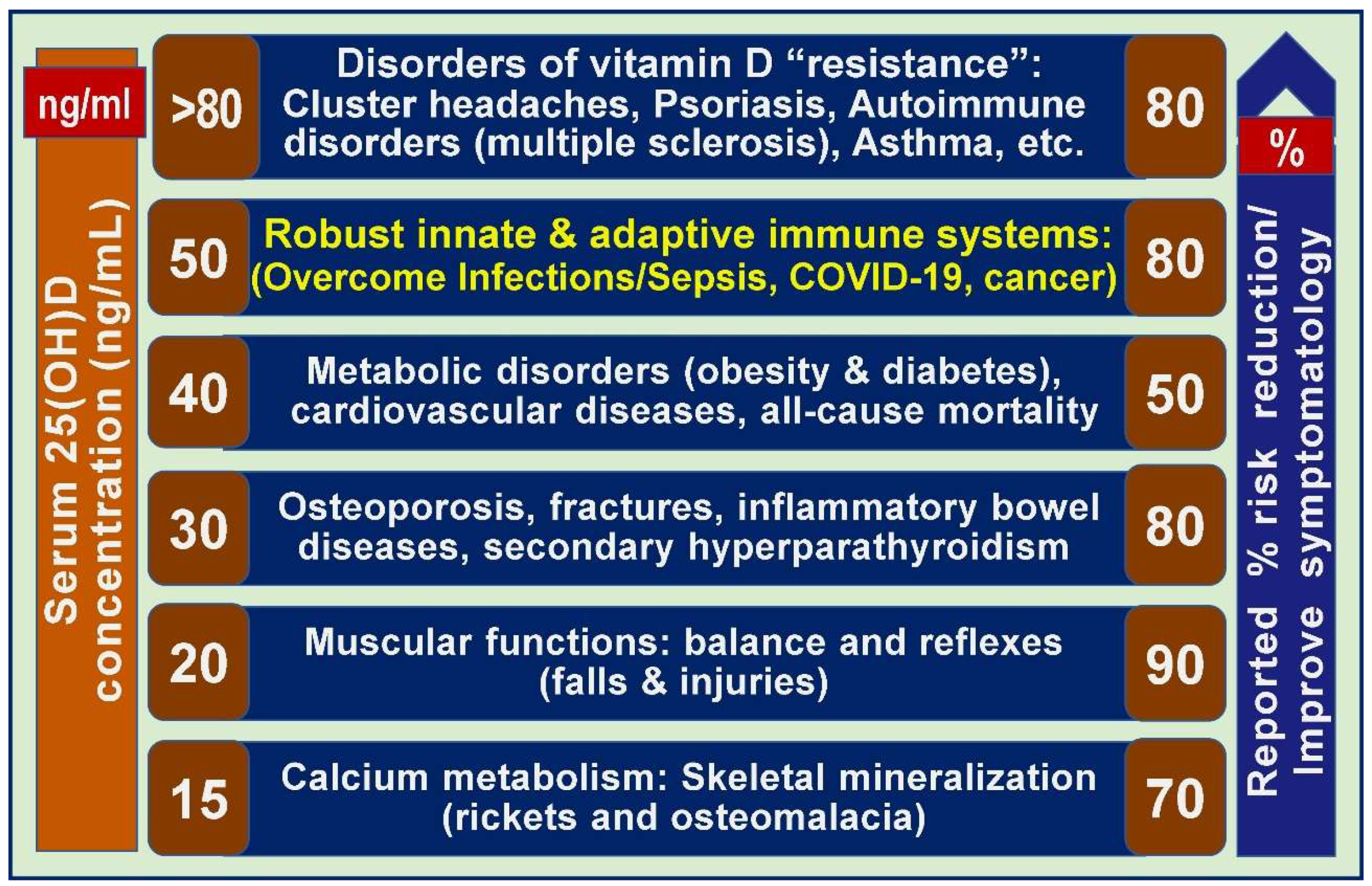
Serum 25(OH)D concentration above 20 ng/mL is adequate to support the needs of the musculoskeletal system, like skeletal physiology and neuromuscular coordination, that prevent falls and fractures [160]. Other systems need higher serum concentrations of 25(OH)D for their biological functions [161] For example, to reduce risks of cardiovascular diseases and metabolic disorders such as diabetes, insulin resistance, obesity, autoimmune diseases, and certain cancers [162,163].
The optimal serum 25(OH)D concentrations for achieving beneficial health outcomes, thus, vary depending on the specific disease entity and affected tissue [164,165]. Emerging data confirms the importance of maintaining varied serum 25(OH)D levels to counteract and reduce the risks of different diseases effectively, as illustrated in Figure 6. while minimizing complications linked to hypovitaminosis D [161,166,167]. For disorders beyond those affecting the musculoskeletal system, serum 25(OH)D concentrations should be kept above 40 ng/mL [161]. Examples of such conditions include cancer [168,169], T2DM [170,171], and all-cause mortality [133,166,172,173] .
Maintaining serum 25(OH)D concentrations above 40 ng/mL can significantly reduce the risks associated with various diseases [161,174]. Evidence suggests that doubling serum 25(OH)D levels in the population—from, for example, 20 ng/mL to 40 ng/mL—could lead to not only a decreased risk of diseases [4] but also a notable reduction in all-cause mortality, including premature deaths [175,176]. It is recommended to maintain serum 25(OH)D levels (vitamin D status) between 40 and 80 ng/mL, to overcome most of these disorders, [4,15] Figure 6 illustrates the varying steady-state serum 25(OH)D concentrations required to prevent or mitigate the effects of common diseases.
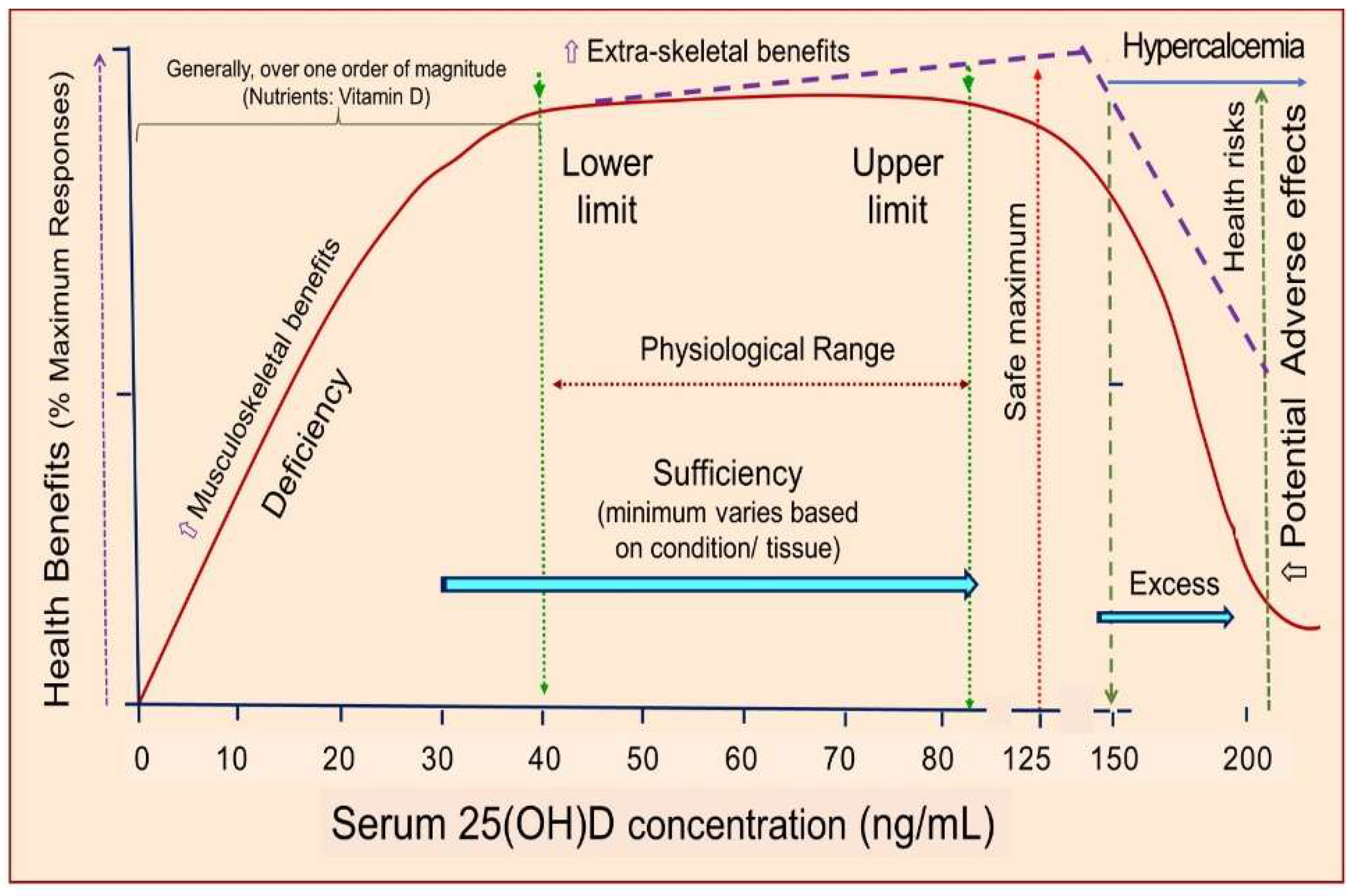
These data substantiate the necessity of higher thresholds for specific disease categories, particularly among older individuals and those with a high body mass index [99]. Neglecting such clinical practice and clinical trials can lead to failed health outcomes. Figure 7 illustrates the dose-response curve of vitamin D.
The broken purple line on the upper right corner represents those with rare indications (i.e., resistant to standard therapy), such as drug-resistant migraine and cluster headaches, psoriasis, asthma, etc. These groups of patients need the maintenance of significantly higher serum 25(OH)D concentrations to achieve vital benefits between 80 and 150 ng/mL levels [5]. As with the Coimbra protocol, benefits can be obtained without demonstrable adverse effects when appropriately treated under medical supervision. Hypercalcemia generally would not manifest under 150 ng/mL [5].
In addition, the doses, frequency of administration, and duration of studies were inappropriate in many vitamin D RCTs. As a result, their endpoints and conclusions were unreliable. The lack of appreciation for the above phenomenon illustrated in Figure 7 leads to failures of expected clinical outcomes. This is illustrated in several recent larger vitamin D RCTs—some designed to fail. As with piggyback studies in pharmaceutical trials, their primary endpoints focused on pharmaceutical agents, not vitamin D [177]. Data from such studies where vitamin D is not the primary interventional agent or given at an insufficient dose that failed to raise serum 25(OH)D to the expected threshold in the circulation, as illustrated in Figure 6, outcomes are likely to fail. Therefore, data and conclusions from such trials cannot be relied upon for drug approvals, clinical guidelines, or policy decision-making [3].

2.18. High-Dose Vitamin D and Vitamin D Resistance

High-dose vitamin D therapy has gained attention for its potential in addressing vitamin D resistance (VDRES), where standard doses are ineffective. Research suggests that VDRES can result from genetic mutations affecting vitamin D receptor (VDR) signaling and environmental factors like infections [178,179,180]. In acquired vitamin D resistance, which is becoming more common, lifestyle factors such as diet and other micronutrient imbalances can contribute to the need for high-dose vitamin D supplementation to effectively overcome resistance and maintain adequate vitamin D levels [178]
Genetic polymorphisms in the vitamin D system can lead to low responsiveness and autoimmune diseases, while infections and toxins may inhibit VDR signaling, requiring higher doses for therapeutic effects [179,180]. Clinical applications of high-dose protocols, such as 1000 IU/kg daily, have been effective in treating autoimmune conditions like multiple sclerosis, and high doses (e.g., 50,000 IU) have shown improvements in insulin sensitivity in populations with metabolic syndrome [181]. When properly monitored, these high-dose protocols can be quite safe and can help patients with underlying health conditions [121].
The Endocrine Society’s guidelines caution against high doses due to toxicity concerns, but this approach is overly conservative, particularly when considering autoimmune diseases that have limited effective treatments. Further, “Based on the panel’s best estimates of treatment effects in adults aged 50 years and older, the panel judged that any desirable effects of intermittent, high-dose vitamin D (compared to lower-dose, daily vitamin D) are likely trivial, while the anticipated undesirable effects are likely to be small”. The significant group of patients exposed to several drugs daily are asking this group of experts: “why are you going to become trivial when suggesting the above recommendation for us - taking so many medicines daily?”. In the context of such challenging conditions, where traditional therapies often fail to achieve sustained results, the potential benefits of higher doses may outweigh the risks. With autoimmune diseases, patients often face few options, making it critical to explore more aggressive interventions, such as higher dosing strategies, which may offer more effective relief and long-term improvement.

3. Recommendations for Prevention of Vitamin D Deficiency

Serum 25(OH)D concentrations can be increased in several ways: solar UVB exposure, vitamin D supplementation, food fortification with vitamin D, and diet, including animal products [182]. Vitamin D production from solar UVB exposure is more efficient when the solar elevation angle exceeds 45° [183]. However, vitamin D will still be made at lower angles, albeit at lower rates. Exposing more skin helps, too.
Vitamin D supplementation is the most efficient way to increase 25(OH)D concentrations. It can be done throughout the year and in a controlled manner. The case has been made that 2000 IU/day (50 µg/day) is the minimum appropriate dose for many people with normal weight, permitting them to achieve around 30‒40 ng/mL with minimal safety concerns [149]. This dose can be taken daily, weekly (15,000 IU), or monthly (60,000 IU). Compliance might be better with weekly or monthly doses. Low-dose supplementation takes several months to achieve steady-state concentrations in those with vitamin D deficiency [184]. Thus, taking large (bolus) doses for the first week or two is recommended to shorten the time required to reach a steady state [15].
Food fortification with vitamin D has been suggested for increasing serum 25(OH)D concentrations [185]. RCTs have been performed on vitamin D fortification of bread, orange juice, mushrooms, cheese, yogurt, fluid milk, powdered milk, eggs, edible oils, and breakfast cereal [186]. Finland increased food fortification in the period 2003‒2011 [187]. In 2003, it was recommended that vitamin D be added to fat spreads at a concentration of 10 µg/100 g and fluid milk products at 0.5 µg/100 g. These values were doubled in 2010. As a result, the mean serum 25(OH)D concentrations among non-supplement users increased by 20 nmol/L (95% CI, 19‒21 nmol/L) between 2000 and 2011 for daily fluid milk consumers and about 15 nmol/L for fat spread consumption. Mean serum 25(OH)D concentration increased from 48 nmol/L to 65 nmol/L, which could also be related to increased vitamin D supplementation. A subsequent analysis based on a Northern Finland Birth Cohort 1966 study found that mean serum 25(OH)D concentration increased from 54.3 nmol/L in 1997 to 64.9 nmol/L in 2012‒2013 [188]. Increases in concentration were attributed to vitamin D supplements and fluid milk consumption but not fat spreads. Vitamin D deficiency rates were cut in half.
In the US, milk is fortified with vitamin D. It would be worthwhile to consider fortifying foods preferred by African-Americans, who tend to be lactose intolerant and consume less milk, and Hispanics, who also have lower 25(OH)D concentrations than Whites.
The most efficient way to increase 25(OH)D concentrations is through vitamin D supplementation. It can be done in a measured way so that desired 25(OH)D concentrations can be achieved, provided serum 25(OH)D concentration is measured due to individual variations in vitamin D dose-25(OH)D concentration relationships (e.g., [137]).

4. Critiques of the Endocrine Society’s Vitamin D Guideline

The Endocrine Society group (2024) [1] recommended against screening serum 25(OH)D in adults aged 18-74 years and failed to provide any diagnostic threshold for this to determine the vitamin D status. The “empiric vitamin D,” according to “technical remarks,” “include daily intake of fortified foods, vitamin formulations that contain vitamin D, and/or daily intake of vitamin D supplement (pill or drops).” Previous Endocrine Society (TED) guidelines in 2011 [2], Central European guidelines published in 2023 [189], and many other related documents published by various medical societies worldwide also suggested 25(OH)D measurements for the prevention or treatment of vitamin D deficiency (VDD) and aiming for 30‒40 ng/mL (75‒100 nmol/L). Some have suggested that 40‒60 ng/mL as optimal [4].
Michael Holick has already published his response to the new TES [151]. He pointed out that these guidelines focused on RCTs and ignored all other clinical trials reporting associations [4]. Table 1, in his response, presented the percentage reduction in 20 clinical outcomes concerning suggested serum 25(OH)D concentrations based largely on observational studies. The reductions were reported from 25 to 100% for high vs. low concentrations, mostly above 30‒40 ng/mL vs. <20 ng/mL. There was one outcome for which the threshold was >60 ng/mL, two for >50 ng/mL, six for >40 ng/mL, and eight for >30 ng/mL. Prospective observational studies are generally the best clinical evidence for the beneficial effects of vitamin D on health outcomes due to the limitations of RCTs to demonstrate benefits of vitamin D supplementation [11,12]. Thus, 4000 IU/day are recommended to raise serum 25(OH)D to the 40‒70 ng/mL range to achieve added protection against many adverse health outcomes.
The Endocrine Society’s (2024) [1] guidelines on vitamin D have notable limitations. Firstly, the guidelines emphasize bone health and overlook broader benefits such as immune support, cancer prevention, and cardiovascular health. The recommended dosages are conservative, even for maintaining bone health. The recommended 600 IU dosage for children aged 1 year and older and adults up to 75 is often inadequate in raising circulating concentrations of 25(OH)D above 30 ng/mL. This level is necessary to observe health benefits such as reducing the risk of upper respiratory tract infections and type 1 DM in children [190], improving birth outcomes, and lowering the risk of progression from pre-diabetes to T2DM [103]. Despite significant variation in individual vitamin D metabolism, personalized supplementation based on genetic and lifestyle factors is also underemphasized.
It is noted that everyone has a “vitamin D response” based on variations in alleles of genes involved in the vitamin D pathway. According to a recent article, individuals may increase serum 25(OH)D concentrations up to 20% higher or lower than the average based on their genetics [137]. This is in addition to other factors that affect serum 25(OH)D concentrations, such as reduced production of vitamin D from solar UVB irradiance [191], seasonal variations [73,74], BMI [192], people of color [193], medications [194], and diet [182]. Thus, measuring serum 25(OH)D concentrations can be very important.
Furthermore, the guidelines caution against high doses (above 4000 IU/day) without fully exploring their therapeutic potential, particularly for autoimmune diseases or chronic illnesses, where higher doses are safe and effective under medical supervision [147]. The lack of guidance on safely managing high-dose vitamin D therapy limits the practical utility of the guidelines.
The new guidelines also ignored the health benefits of vitamin D supplementation for people between 18 and 75 years old. As shown in Table 1, people in that age range in the U.S. die from diseases for which vitamin D offers some protection. Routine vitamin D testing is not strongly recommended outside specific risk groups, potentially leading to widespread underdiagnosis and missed opportunities for early intervention.
Environmental and lifestyle factors are insufficiently addressed, such as latitude, pollution, diet, nutrition, and sun exposure, which dramatically influence vitamin D status. Populations in northern latitudes or those who spend most of their time indoors may require more aggressive supplementation, yet the guidelines remain general and conservative.
Many countries that are not among the Western developed countries have high rates of VDD. This can occur in the Middle East due to consuming diets based more on vegetable than animal products, wearing concealing clothing, and staying indoors in the hot summers [195]. It has been suggested that in countries with large fractions of the population with VDD, a combination of vitamin D fortification of food and promotion of vitamin D supplementation be recommended to increase serum 25(OH)D concentrations above 30 ng/mL.
In summary, the new guidelines, while focused on ensuring minimal standards for bone health, fail to leverage vitamin D’s broader health benefits fully. Considering vitamin D’s wide safety profile, affordability, and therapeutic potential, a more individualized and proactive approach would better serve public health. The new guidelines were based on vitamin D RCTs, which mostly failed to confirm health benefits of vitamin D supplementation. They ignored hundreds of other clinical research studies that provided convincing evidence of the extra-skeletal benefits of vitamin D with proper vitamin D intake. Vitamin D RCTs have been based on guidelines for pharmaceutical drugs and, thus, do not apply to micronutrients [5,11,12].
As discussed earlier in this review, those guidelines only focused on bone health are inappropriate for nutrients such as vitamin D and are misleading. In the field of micronutrients, observational studies have become an essential type of study mechanism.

5. Conclusion

Vitamin D is a critical component of the human body, with far-reaching effects on health, necessary for the entire lifespan from prenatal to end of life. The current guidelines from the Endocrine Society [1] are an attempt to revert to the Institute of Medicine’s 2011 vitamin D guidelines [7] when the only health benefits identified were for bones. Doing so overlooks 53,879 publications with vitamin D in the title or abstract published since then according to Pubmed.gov (accessed, 5 December, 2024). These publications included results for many health outcomes, age ranges, and populations. There is a clear need for more comprehensive and flexible guidelines that reflect the full range of vitamin D’s effects on health and consider the diverse needs of different populations. The information presented in this review should help provide the basis for such guidelines.

Author Contributions

Conceptualization, R.Z.C. and W.B.G.; methodology, W.B.G..; writing—original draft preparation, R.Z.C. and W.B.G.; writing—review and editing, W.B.G., S.J.W., P.P. and R.Z.C. All authors have read and agreed to the published version of the manuscript.

Funding

This research received no external funding.

Data Availability Statement

Not applicable.

Acknowledgments

None.

Conflicts of Interest

W.B.G. received grants for vitamin D research from Bio-Tech Pharmacal, Inc. (Fayetteville, AR, USA) for many years until the end of 2023. The other authors declare no conflicts of interest.

References

  1. Demay, M.B.; Pittas, A.G.; Bikle, D.D.; Diab, D.L.; Kiely, M.E.; Lazaretti-Castro, M.; Lips, P.; Mitchell, D.M.; Murad, M.H.; Powers, S., et al. Vitamin D for the Prevention of Disease: An Endocrine Society Clinical Practice Guideline. J Clin Endocrinol Metab 2024, 109, 1907-1947. [CrossRef]
  2. Holick, M.F.; Binkley, N.C.; Bischoff-Ferrari, H.A.; Gordon, C.M.; Hanley, D.A.; Heaney, R.P.; Murad, M.H.; Weaver, C.M.; Endocrine, S. Evaluation, treatment, and prevention of vitamin D deficiency: an Endocrine Society clinical practice guideline. J Clin Endocrinol Metab 2011, 96, 1911-1930. [CrossRef]
  3. Wimalawansa, S.J.; Weiss, S.T.; Hollis, B.W. Integrating Endocrine, Genomic, and Extra-Skeletal Benefits of Vitamin D into National and Regional Clinical Guidelines. Nutrients 2024, 16, 3969. [CrossRef]
  4. Wimalawansa, S.J. Physiology of Vitamin D-Focusing on Disease Prevention. Nutrients 2024, 16. [CrossRef]
  5. Wimalawansa, S.J. Physiological Basis for Using Vitamin D to Improve Health. Biomedicines 2023, 11, 1542. [CrossRef]
  6. Wimalawansa, S.J. Controlling Chronic Diseases and Acute Infections with Vitamin D Sufficiency. Nutrients 2023, 15. [CrossRef]
  7. Ross, A.C.; Manson, J.E.; Abrams, S.A.; Aloia, J.F.; Brannon, P.M.; Clinton, S.K.; Durazo-Arvizu, R.A.; Gallagher, J.C.; Gallo, R.L.; Jones, G., et al. The 2011 report on dietary reference intakes for calcium and vitamin D from the Institute of Medicine: what clinicians need to know. J Clin Endocrinol Metab 2011, 96, 53-58. [CrossRef]
  8. Manson, J.E.; Cook, N.R.; Lee, I.M.; Christen, W.; Bassuk, S.S.; Mora, S.; Gibson, H.; Gordon, D.; Copeland, T.; D'Agostino, D., et al. Vitamin D supplements and prevention of cancer and cardiovascular disease. N Engl J Med 2019, 380, 33-44. [CrossRef]
  9. Pittas, A.G.; Dawson-Hughes, B.; Sheehan, P.; Ware, J.H.; Knowler, W.C.; Aroda, V.R.; Brodsky, I.; Ceglia, L.; Chadha, C.; Chatterjee, R., et al. Vitamin D supplementation and prevention of type 2 diabetes. N Engl J Med 2019, 381, 520-530. [CrossRef]
  10. Autier, P.; Mullie, P.; Macacu, A.; Dragomir, M.; Boniol, M.; Coppens, K.; Pizot, C.; Boniol, M. Effect of vitamin D supplementation on non-skeletal disorders: a systematic review of meta-analyses and randomised trials. Lancet Diabetes Endocrinol 2017, 5, 986-1004. [CrossRef]
  11. Pilz, S.; Trummer, C.; Theiler-Schwetz, V.; Grubler, M.R.; Verheyen, N.D.; Odler, B.; Karras, S.N.; Zittermann, A.; Marz, W. Critical Appraisal of Large Vitamin D Randomized Controlled Trials. Nutrients 2022, 14. [CrossRef]
  12. Grant, W.B.; Boucher, B.J.; Al Anouti, F.; Pilz, S. Comparing the Evidence from Observational Studies and Randomized Controlled Trials for Nonskeletal Health Effects of Vitamin D. Nutrients 2022, 14. [CrossRef]
  13. Heaney, R.P. Guidelines for optimizing design and analysis of clinical studies of nutrient effects. Nutr Rev 2014, 72, 48-54. [CrossRef]
  14. Rostami, M.; Tehrani, F.R.; Simbar, M.; Bidhendi Yarandi, R.; Minooee, S.; Hollis, B.W.; Hosseinpanah, F. Effectiveness of Prenatal Vitamin D Deficiency Screening and Treatment Program: A Stratified Randomized Field Trial. J Clin Endocrinol Metab 2018, 103, 2936-2948. [CrossRef]
  15. Wimalawansa, S.J. Rapidly Increasing Serum 25(OH)D Boosts the Immune System, against Infections-Sepsis and COVID-19. Nutrients 2022, 14, 2977. [CrossRef]
  16. Garland, C.F.; Garland, F.C. Do sunlight and vitamin D reduce the likelihood of colon cancer? Int J Epidemiol 1980, 9, 227-231. [CrossRef]
  17. Clarke, R.; Shipley, M.; Lewington, S.; Youngman, L.; Collins, R.; Marmot, M.; Peto, R. Underestimation of risk associations due to regression dilution in long-term follow-up of prospective studies. Am J Epidemiol 1999, 150, 341-353. [CrossRef]
  18. McCullough, M.L.; Zoltick, E.S.; Weinstein, S.J.; Fedirko, V.; Wang, M.; Cook, N.R.; Eliassen, A.H.; Zeleniuch-Jacquotte, A.; Agnoli, C.; Albanes, D., et al. Circulating vitamin D and colorectal cancer risk: An international pooling Project of 17 cohorts. J Natl Cancer Inst 2019, 111, 158-169. [CrossRef]
  19. Muñoz, A.; Grant, W.B. Vitamin D and Cancer: An Historical Overview of the Epidemiology and Mechanisms. Nutrients 2022, 14, 1448. [CrossRef]
  20. Hill, A.B. The Environment and Disease: Association or Causation? Proc R Soc Med 1965, 58, 295-300.
  21. Doll, R. Proof of causality: deduction from epidemiological observation. Perspect Biol Med 2002, 45, 499-515. [CrossRef]
  22. Smolders, J.; van den Ouweland, J.; Geven, C.; Pickkers, P.; Kox, M. Letter to the Editor: Vitamin D deficiency in COVID-19: Mixing up cause and consequence. Metabolism 2021, 115, 154434. [CrossRef]
  23. Wimalawansa, S.J. Unlocking insights: Navigating COVID-19 challenges and Emulating future pandemic Resilience strategies with strengthening natural immunity. Heliyon 2024, 10, e34691. [CrossRef]
  24. Shirvani, A.; Kalajian, T.A.; Song, A.; Holick, M.F. Disassociation of Vitamin D's Calcemic Activity and Non-calcemic Genomic Activity and Individual Responsiveness: A Randomized Controlled Double-Blind Clinical Trial. Sci Rep 2019, 9, 17685. [CrossRef]
  25. Kochanek, K.D.; Murphy, S.L.; Xu, J.Q.; Arias, E. Mortality in the United States, 2022. National Center for Health Statistics: Hayettsville, MD, 2024; 10.15620/cec.135850.
  26. ElSayed, N.A.; Aleppo, G.; Aroda, V.R.; Bannuru, R.R.; Brown, F.M.; Bruemmer, D.; Collins, B.S.; Hilliard, M.E.; Isaacs, D.; Johnson, E.L., et al. 3. Prevention or Delay of Type 2 Diabetes and Associated Comorbidities: Standards of Care in Diabetes-2023. Diabetes Care 2023, 46, S41-S48. [CrossRef]
  27. Heart Disease Facts. Availabe online: https://www.cdc.gov/heart-disease/data-research/facts-stats/index.html (accessed on 1 December 2024).
  28. Wang, Y.; Wang, X.; Wang, C.; Zhou, J. Global, Regional, and National Burden of Cardiovascular Disease, 1990-2021: Results From the 2021 Global Burden of Disease Study. Cureus 2024, 16, e74333. [CrossRef]
  29. Gardner, D.G.; Chen, S.; Glenn, D.J. Vitamin D and the heart. Am J Physiol Regul Integr Comp Physiol 2013, 305, R969-977. [CrossRef]
  30. Wimalawansa, S.J. Vitamin D and cardiovascular diseases: Causality. J Steroid Biochem Mol Biol 2018, 175, 29-43. [CrossRef]
  31. Mirhosseini, N.; Rainsbury, J.; Kimball, S.M. Vitamin D Supplementation, Serum 25(OH)D Concentrations and Cardiovascular Disease Risk Factors: A Systematic Review and Meta-Analysis. Front Cardiovasc Med 2018, 5, 87. [CrossRef]
  32. Camici, M.; Galetta, F.; Franzoni, F.; Carpi, A.; Zangeneh, F. Vitamin D and heart. Intern Emerg Med 2013, 8 Suppl 1, S5-9. [CrossRef]
  33. Kjeldsen, S.E. Hypertension and cardiovascular risk: General aspects. Pharmacol Res 2018, 129, 95-99. [CrossRef]
  34. Ye, H.; Li, Y.; Liu, S.; Zhang, X.; Liang, H.; Wang, Y.; Wang, R.; Liu, H.; Wen, Y.; Jing, C., et al. Association between serum 25-hydroxyvitamin D and vitamin D dietary supplementation and risk of all-cause and cardiovascular mortality among adults with hypertension. Nutr J 2024, 23, 33. [CrossRef]
  35. Barbarawi, M.; Kheiri, B.; Zayed, Y.; Barbarawi, O.; Dhillon, H.; Swaid, B.; Yelangi, A.; Sundus, S.; Bachuwa, G.; Alkotob, M.L., et al. Vitamin D Supplementation and Cardiovascular Disease Risks in More Than 83 000 Individuals in 21 Randomized Clinical Trials: A Meta-analysis. JAMA Cardiol 2019, 4, 765-776. [CrossRef]
  36. Thompson, B.; Waterhouse, M.; English, D.R.; McLeod, D.S.; Armstrong, B.K.; Baxter, C.; Duarte Romero, B.; Ebeling, P.R.; Hartel, G.; Kimlin, M.G., et al. Vitamin D supplementation and major cardiovascular events: D-Health randomised controlled trial. BMJ 2023, 381, e075230. [CrossRef]
  37. Rohatgi, A.; Westerterp, M.; von Eckardstein, A.; Remaley, A.; Rye, K.A. HDL in the 21st Century: A Multifunctional Roadmap for Future HDL Research. Circulation 2021, 143, 2293-2309. [CrossRef]
  38. Bahadorpour, S.; Hajhashemy, Z.; Saneei, P. Serum 25-hydroxyvitamin D levels and dyslipidemia: a systematic review and dose-response meta-analysis of epidemiologic studies. Nutr Rev 2022, 81, 1-25. [CrossRef]
  39. Acharya, P.; Dalia, T.; Ranka, S.; Sethi, P.; Oni, O.A.; Safarova, M.S.; Parashara, D.; Gupta, K.; Barua, R.S. The Effects of Vitamin D Supplementation and 25-Hydroxyvitamin D Levels on the Risk of Myocardial Infarction and Mortality. J Endocr Soc 2021, 5, bvab124. [CrossRef]
  40. Grant, W.B.; Boucher, B.J. How Follow-Up Period in Prospective Cohort Studies Affects Relationship Between Baseline Serum 25(OH)D Concentration and Risk of Stroke and Major Cardiovascular Events. Nutrients 2024, 16. [CrossRef]
  41. Zhou, A.; Selvanayagam, J.B.; Hypponen, E. Non-linear Mendelian randomization analyses support a role for vitamin D deficiency in cardiovascular disease risk. Eur Heart J 2022, 43, 1731-1739. [CrossRef]
  42. Tsao, C.W.; Aday, A.W.; Almarzooq, Z.I.; Anderson, C.A.M.; Arora, P.; Avery, C.L.; al., e. 2023 Heart Disease and Stroke Statistics Update Fact Sheet. Availabe online: https://professional.heart.org/-/media/PHD-Files-2/Science-News/2/2023-Heart-and-Stroke-Stat-Update/2023-Statistics-At-A-Glance-final_1_17_23.pdf (accessed on December 1, 2024).
  43. Su, C.; Jin, B.; Xia, H.; Zhao, K. Association between Vitamin D and Risk of Stroke: A PRISMA-Compliant Systematic Review and Meta-Analysis. Eur Neurol 2021, 84, 399-408. [CrossRef]
  44. Xiong, J.; Zhao, C.; Li, J.; Li, Y. A systematic review and meta-analysis of the linkage between low vitamin D and the risk as well as the prognosis of stroke. Brain Behav 2024, 14, e3577. [CrossRef]
  45. Siegel, R.L.; Giaquinto, A.N.; Jemal, A. Cancer statistics, 2024. CA Cancer J Clin 2024, 74, 12-49. [CrossRef]
  46. Sung, H.; Ferlay, J.; Siegel, R.L.; Laversanne, M.; Soerjomataram, I.; Jemal, A.; Bray, F. Global Cancer Statistics 2020: GLOBOCAN Estimates of Incidence and Mortality Worldwide for 36 Cancers in 185 Countries. CA Cancer J Clin 2021, 71, 209-249. [CrossRef]
  47. Jorde, R.; Sneve, M.; Hutchinson, M.; Emaus, N.; Figenschau, Y.; Grimnes, G. Tracking of serum 25-hydroxyvitamin D levels during 14 years in a population-based study and during 12 months in an intervention study. Am J Epidemiol 2010, 171, 903-908. [CrossRef]
  48. McDonnell, S.L.; Baggerly, C.A.; French, C.B.; Baggerly, L.L.; Garland, C.F.; Gorham, E.D.; Hollis, B.W.; Trump, D.L.; Lappe, J.M. Breast cancer risk markedly lower with serum 25-hydroxyvitamin D concentrations >/=60 vs <20 ng/ml (150 vs 50 nmol/L): Pooled analysis of two randomized trials and a prospective cohort. PLoS One 2018, 13, e0199265. [CrossRef]
  49. Lappe, J.M.; Travers-Gustafson, D.; Davies, K.M.; Recker, R.R.; Heaney, R.P. Vitamin D and calcium supplementation reduces cancer risk: results of a randomized trial. Am J Clin Nutr 2007, 85, 1586-1591. [CrossRef]
  50. Lappe, J.; Garland, C.; Gorham, E. Vitamin D Supplementation and Cancer Risk. JAMA 2017, 318, 299-300. [CrossRef]
  51. Chandler, P.D.; Chen, W.Y.; Ajala, O.N.; Hazra, A.; Cook, N.; Bubes, V.; Lee, I.M.; Giovannucci, E.L.; Willett, W.; Buring, J.E., et al. Effect of vitamin D3 supplements on development of advanced cancer: A secondary analysis of the VITAL randomized clinical trial. JAMA Netw Open 2020, 3, e2025850. [CrossRef]
  52. Garcia, A.M.; Bishop, E.L.; Li, D.; Jeffery, L.E.; Garten, A.; Thakker, A.; Certo, M.; Mauro, C.; Tennant, D.A.; Dimeloe, S., et al. Tolerogenic effects of 1,25-dihydroxyvitamin D on dendritic cells involve induction of fatty acid synthesis. J Steroid Biochem Mol Biol 2021, 211, 105891. [CrossRef]
  53. Abo-Zaid, M.A.; Hamdi, H.A.; Elashmawy, N.F. Vitamin D and Immunity: A comprehensive review of its impact on autoimmunity, allergy suppression, antimicrobial defense, and cancer inhibition. Egypt J Immunol 2023, 30, 47-66.
  54. Bikle, D.D. Vitamin D Regulation of Immune Function. Curr Osteoporos Rep 2022, 20, 186-193. [CrossRef]
  55. Engin, M.M.N.; Ozdemir, O. Role of vitamin D in COVID-19 and other viral infections. World J Virol 2024, 13, 95349. [CrossRef]
  56. Kaufman, H.W.; Niles, J.K.; Kroll, M.H.; Bi, C.; Holick, M.F. SARS-CoV-2 positivity rates associated with circulating 25-hydroxyvitamin D levels. PLoS One 2020, 15, e0239252. [CrossRef]
  57. Oristrell, J.; Oliva, J.C.; Casado, E.; Subirana, I.; Dominguez, D.; Toloba, A.; Balado, A.; Grau, M. Vitamin D supplementation and COVID-19 risk: a population-based, cohort study. J Endocrinol Invest 2022, 45, 167-179. [CrossRef]
  58. Zhou, Y.F.; Luo, B.A.; Qin, L.L. The association between vitamin D deficiency and community-acquired pneumonia: A meta-analysis of observational studies. Medicine (Baltimore) 2019, 98, e17252. [CrossRef]
  59. Grant, W.B.; Lahore, H.; McDonnell, S.L.; Baggerly, C.A.; French, C.B.; Aliano, J.L.; Bhattoa, H.P. Evidence that Vitamin D Supplementation Could Reduce Risk of Influenza and COVID-19 Infections and Deaths. Nutrients 2020, 12, 988. [CrossRef]
  60. Grant, W.B.; Giovannucci, E. The possible roles of solar ultraviolet-B radiation and vitamin D in reducing case-fatality rates from the 1918-1919 influenza pandemic in the United States. Dermatoendocrinol 2009, 1, 215-219. [CrossRef]
  61. Urashima, M.; Segawa, T.; Okazaki, M.; Kurihara, M.; Wada, Y.; Ida, H. Randomized trial of vitamin D supplementation to prevent seasonal influenza A in schoolchildren. Am J Clin Nutr 2010, 91, 1255-1260. [CrossRef]
  62. Pal, R.; Banerjee, M.; Bhadada, S.K.; Shetty, A.J.; Singh, B.; Vyas, A. Vitamin D supplementation and clinical outcomes in COVID-19: a systematic review and meta-analysis. J Endocrinol Invest 2022, 45, 53-68. [CrossRef]
  63. Mostert, S.; Hoogland, M.; Huibers, M.; Kasperss, G. Excess mortality across countries in the Western World since the COVID-19 pandemic: ‘Our World in Data’ estimates of January 2020 to December 2022. BMJ Public Health 2024, 2, e000282. [CrossRef]
  64. Fortner, A.; Schumacher, D. First COVID-19 Vaccines Receiving the US FDA and EMA Emergency Use Authorization. Discoveries (Craiova) 2021, 9, e122. [CrossRef]
  65. Emergency Use Authorization for Vaccines Explained. Availabe online: https://www.fda.gov/vaccines-blood-biologics/vaccines/emergency-use-authorization-vaccines-explained (accessed on December 1, 2024).
  66. Hilser, J.R.; Spencer, N.J.; Afshari, K.; Gilliland, F.D.; Hu, H.; Deb, A.; Lusis, A.J.; Tang, W.H.W.; Hartiala, J.A.; Hazen, S.L., et al. COVID-19 Is a Coronary Artery Disease Risk Equivalent and Exhibits a Genetic Interaction With ABO Blood Type. Arterioscler Thromb Vasc Biol 2024, 44, 2321-2333. [CrossRef]
  67. Mantilla-Beniers, N.B.; Bjornstad, O.N.; Grenfell, B.T.; Rohani, P. Decreasing stochasticity through enhanced seasonality in measles epidemics. J R Soc Interface 2010, 7, 727-739. [CrossRef]
  68. Pomeroy, L.W.; Magsi, S.; McGill, S.; Wheeler, C.E. Mumps epidemic dynamics in the United States before vaccination (1923-1932). Epidemics 2023, 44, 100700. [CrossRef]
  69. Rozhnova, G.; Metcalf, C.J.; Grenfell, B.T. Characterizing the dynamics of rubella relative to measles: the role of stochasticity. J R Soc Interface 2013, 10, 20130643. [CrossRef]
  70. Bloom-Feshbach, K.; Alonso, W.J.; Charu, V.; Tamerius, J.; Simonsen, L.; Miller, M.A.; Viboud, C. Latitudinal variations in seasonal activity of influenza and respiratory syncytial virus (RSV): a global comparative review. PLoS One 2013, 8, e54445. [CrossRef]
  71. Martinez, M.E. The calendar of epidemics: Seasonal cycles of infectious diseases. PLoS Pathog 2018, 14, e1007327. [CrossRef]
  72. Shaman, J.; Goldstein, E.; Lipsitch, M. Absolute humidity and pandemic versus epidemic influenza. Am J Epidemiol 2011, 173, 127-135. [CrossRef]
  73. Hypponen, E.; Power, C. Hypovitaminosis D in British adults at age 45 y: nationwide cohort study of dietary and lifestyle predictors. Am J Clin Nutr 2007, 85, 860-868. [CrossRef]
  74. Kroll, M.H.; Bi, C.; Garber, C.C.; Kaufman, H.W.; Liu, D.; Caston-Balderrama, A.; Zhang, K.; Clarke, N.; Xie, M.; Reitz, R.E., et al. Temporal relationship between vitamin D status and parathyroid hormone in the United States. PLoS One 2015, 10, e0118108. [CrossRef]
  75. Roe, K. The epithelial cell types and their multi-phased defenses against fungi and other pathogens. Clin Chim Acta 2024, 563, 119889. [CrossRef]
  76. Liu, P.T.; Stenger, S.; Li, H.; Wenzel, L.; Tan, B.H.; Krutzik, S.R.; Ochoa, M.T.; Schauber, J.; Wu, K.; Meinken, C., et al. Toll-like receptor triggering of a vitamin D-mediated human antimicrobial response. Science 2006, 311, 1770-1773. [CrossRef]
  77. COPD. Availabe online: https://www.cdc.gov/cdi/indicator-definitions/chronic-obstructive-pulmonary-disease.html (accessed on 26 November 2024).
  78. Adeloye, D.; Song, P.; Zhu, Y.; Campbell, H.; Sheikh, A.; Rudan, I.; Unit, N.R.G.R.H. Global, regional, and national prevalence of, and risk factors for, chronic obstructive pulmonary disease (COPD) in 2019: a systematic review and modelling analysis. Lancet Respir Med 2022, 10, 447-458. [CrossRef]
  79. Zhu, Z.; Wan, X.; Liu, J.; Zhang, D.; Luo, P.; Du, W.; Chen, L.; Su, J.; Hang, D.; Zhou, J., et al. Vitamin D status and chronic obstructive pulmonary disease risk: a prospective UK Biobank study. BMJ Open Respir Res 2023, 10. [CrossRef]
  80. Lu, K.; Tan, J.S.; Li, T.Q.; Yuan, J.; Wang, H.; Wang, W. An inverse causal association between genetically predicted vitamin D and chronic obstructive pulmonary disease risk. Front Nutr 2023, 10, 1111950. [CrossRef]
  81. Fu, L.; Fei, J.; Tan, Z.X.; Chen, Y.H.; Hu, B.; Xiang, H.X.; Zhao, H.; Xu, D.X. Low Vitamin D Status Is Associated with Inflammation in Patients with Chronic Obstructive Pulmonary Disease. J Immunol 2021, 206, 515-523. [CrossRef]
  82. Bouillon, R.; Manousaki, D.; Rosen, C.; Trajanoska, K.; Rivadeneira, F.; Richards, J.B. The health effects of vitamin D supplementation: evidence from human studies. Nat Rev Endocrinol 2021, 10.1038/s41574-021-00593-z. [CrossRef]
  83. Gustavsson, A.; Norton, N.; Fast, T.; Frolich, L.; Georges, J.; Holzapfel, D.; Kirabali, T.; Krolak-Salmon, P.; Rossini, P.M.; Ferretti, M.T., et al. Global estimates on the number of persons across the Alzheimer's disease continuum. Alzheimers Dement 2023, 19, 658-670. [CrossRef]
  84. Castelli, V.; Cimini, A.; Ferri, C. Cytokine Storm in COVID-19: "When You Come Out of the Storm, You Won't Be the Same Person Who Walked in". Front Immunol 2020, 11, 2132. [CrossRef]
  85. Shea, M.K.; Barger, K.; Dawson-Hughes, B.; Leurgans, S.E.; Fu, X.; James, B.D.; Holland, T.M.; Agarwal, P.; Wang, J.; Matuszek, G., et al. Brain vitamin D forms, cognitive decline, and neuropathology in community-dwelling older adults. Alzheimers Dement 2023, 19, 2389-2396. [CrossRef]
  86. Yao, L.; Chen, M.; Zhang, N.; Ma, S.; Xie, X.; Xu, S.; Nie, Z.; Wang, W.; Zhou, E.; Xu, S., et al. The Mediation Role of Sleep Disturbances between Vitamin D and Depressive Symptoms: A Cross-Sectional Study. Brain Sci 2023, 13. [CrossRef]
  87. Zhao, W.; Zhu, D.M.; Shen, Y.; Zhang, Y.; Chen, T.; Cai, H.; Zhu, J.; Yu, Y. The protective effect of vitamin D supplementation as adjunctive therapy to antidepressants on brain structural and functional connectivity of patients with major depressive disorder: a randomized controlled trial. Psychol Med 2024, 54, 2403-2413. [CrossRef]
  88. Roy, N.M.; Al-Harthi, L.; Sampat, N.; Al-Mujaini, R.; Mahadevan, S.; Al Adawi, S.; Essa, M.M.; Al Subhi, L.; Al-Balushi, B.; Qoronfleh, M.W. Impact of vitamin D on neurocognitive function in dementia, depression, schizophrenia and ADHD. Front Biosci (Landmark Ed) 2021, 26, 566-611. [CrossRef]
  89. Grant, W.B. Follow-Up Period Affects the Association between Serum 25-Hydroxyvitamin D Concentration and Incidence of Dementia, Alzheimer's Disease, and Cognitive Impairment. Nutrients 2024, 16, 3211. [CrossRef]
  90. Farghali, M.; Ruga, S.; Morsanuto, V.; Uberti, F. Can Brain Health Be Supported by Vitamin D-Based Supplements? A Critical Review. Brain Sci 2020, 10. [CrossRef]
  91. Gezen-Ak, D.; Dursun, E. Vitamin D, a Secosteroid Hormone and Its Multifunctional Receptor, Vitamin D Receptor, in Alzheimer’s Type Neurodegeneration. J. Alz. Disease 2023, 95, 1273-1299. [CrossRef]
  92. Abboud, M. Vitamin D Supplementation and Sleep: A Systematic Review and Meta-Analysis of Intervention Studies. Nutrients 2022, 14. [CrossRef]
  93. Mergl, R.; Dogan-Sander, E.; Willenberg, A.; Wirkner, K.; Kratzsch, J.; Riedel-Heller, S.; Allgaier, A.K.; Hegerl, U.; Sander, C. The effect of depressive symptomatology on the association of vitamin D and sleep. BMC Psychiatry 2021, 21, 178. [CrossRef]
  94. Shuai, J.; Gao, M.; Zou, Q.; He, Y. Association between vitamin D, depression, and sleep health in the National Health and Nutrition Examination Surveys: a mediation analysis. Nutr Neurosci 2024, 27, 934-941. [CrossRef]
  95. Mokry, L.E.; Ross, S.; Morris, J.A.; Manousaki, D.; Forgetta, V.; Richards, J.B. Genetically decreased vitamin D and risk of Alzheimer disease. Neurology 2016, 87, 2567-2574. [CrossRef]
  96. Navale, S.S.; Mulugeta, A.; Zhou, A.; Llewellyn, D.J.; Hypponen, E. Vitamin D and brain health: an observational and Mendelian randomization study. Am J Clin Nutr 2022, 116, 531-540. [CrossRef]
  97. Wang, L.; Li, X.; Wang, Z.; Bancks, M.P.; Carnethon, M.R.; Greenland, P.; Feng, Y.Q.; Wang, H.; Zhong, V.W. Trends in Prevalence of Diabetes and Control of Risk Factors in Diabetes Among US Adults, 1999-2018. JAMA 2021, 326, 1-13. [CrossRef]
  98. Ogurtsova, K.; da Rocha Fernandes, J.D.; Huang, Y.; Linnenkamp, U.; Guariguata, L.; Cho, N.H.; Cavan, D.; Shaw, J.E.; Makaroff, L.E. IDF Diabetes Atlas: Global estimates for the prevalence of diabetes for 2015 and 2040. Diabetes Res Clin Pract 2017, 128, 40-50. [CrossRef]
  99. He, L.P.; Li, C.P.; Liu, C.W.; Gu, W. The Regulatory Effect of Vitamin D on Pancreatic Beta Cell Secretion in Patients with Type 2 Diabetes. Curr Med Chem 2024, 10.2174/0109298673270429240805050928. [CrossRef]
  100. Li, X.; Liu, Y.; Zheng, Y.; Wang, P.; Zhang, Y. The Effect of Vitamin D Supplementation on Glycemic Control in Type 2 Diabetes Patients: A Systematic Review and Meta-Analysis. Nutrients 2018, 10. [CrossRef]
  101. Oliveira, I.N.N.; Macedo-Silva, A.; Coutinho-Cruz, L.; Sanchez-Almeida, J.; Tavares, M.P.S.; Majerowicz, D. Effects of vitamin D supplementation on metabolic syndrome parameters in patients with obesity or diabetes in Brazil, Europe, and the United States: A systematic review and meta-analysis. J Steroid Biochem Mol Biol 2024, 243, 106582. [CrossRef]
  102. Argano, C.; Mirarchi, L.; Amodeo, S.; Orlando, V.; Torres, A.; Corrao, S. The Role of Vitamin D and Its Molecular Bases in Insulin Resistance, Diabetes, Metabolic Syndrome, and Cardiovascular Disease: State of the Art. Int J Mol Sci 2023, 24. [CrossRef]
  103. Dawson-Hughes, B.; Staten, M.A.; Knowler, W.C.; Nelson, J.; Vickery, E.M.; LeBlanc, E.S.; Neff, L.M.; Park, J.; Pittas, A.G.; Group, D.d.R. Intratrial Exposure to Vitamin D and New-Onset Diabetes Among Adults With Prediabetes: A Secondary Analysis From the Vitamin D and Type 2 Diabetes (D2d) Study. Diabetes Care 2020, 43, 2916-2922. [CrossRef]
  104. Wan, Z.; Guo, J.; Pan, A.; Chen, C.; Liu, L.; Liu, G. Association of Serum 25-Hydroxyvitamin D Concentrations With All-Cause and Cause-Specific Mortality Among Individuals With Diabetes. Diabetes Care 2021, 44, 350-357. [CrossRef]
  105. Rohold, C.K.; Jorgensen, H.L.; Vojdeman, F.J.; Madsen, C.M.; Olsen, A.; Heegaard, A.M.; Lind, B.S.; Tjonneland, A.; Schwarz, P.; Gaede, P.H. Levels of plasma 25-hydroxy vitamin D and risk of developing type 2 diabetes in a large Danish primary health care population. Acta Diabetol 2024, 10.1007/s00592-024-02368-0. [CrossRef]
  106. Murphy, D.; McCulloch, C.E.; Lin, F.; Banerjee, T.; Bragg-Gresham, J.L.; Eberhardt, M.S.; Morgenstern, H.; Pavkov, M.E.; Saran, R.; Powe, N.R., et al. Trends in Prevalence of Chronic Kidney Disease in the United States. Ann Intern Med 2016, 165, 473-481. [CrossRef]
  107. McCullough, K.P.; Morgenstern, H.; Saran, R.; Herman, W.H.; Robinson, B.M. Projecting ESRD Incidence and Prevalence in the United States through 2030. J Am Soc Nephrol 2019, 30, 127-135. [CrossRef]
  108. Jager, K.J.; Kovesdy, C.; Langham, R.; Rosenberg, M.; Jha, V.; Zoccali, C. A single number for advocacy and communication-worldwide more than 850 million individuals have kidney diseases. Kidney Int 2019, 96, 1048-1050. [CrossRef]
  109. Cockwell, P.; Fisher, L.A. The global burden of chronic kidney disease. Lancet 2020, 395, 662-664. [CrossRef]
  110. Kovesdy, C.P. Epidemiology of chronic kidney disease: an update 2022. Kidney Int Suppl (2011) 2022, 12, 7-11. [CrossRef]
  111. Kovesdy, C.P.; Kalantar-Zadeh, K. Vitamin D receptor activation and survival in chronic kidney disease. Kidney Int 2008, 73, 1355-1363. [CrossRef]
  112. Li, R.; Li, Y.; Fan, Z.; Liu, Z.; Lin, J.; He, M. L-shaped association of serum 25-hydroxyvitamin D with all-cause and cardiovascular mortality in older people with chronic kidney disease: results from the NHANES database prospective cohort study. BMC Public Health 2023, 23, 1260. [CrossRef]
  113. Chronic Liver Disease/Cirrhosis Mortality by State. Availabe online: https://www.cdc.gov/nchs/pressroom/sosmap/liver_disease_mortality/liver_disease.htm (accessed on December 1, 2024).
  114. Yang, F.; Ren, H.; Gao, Y.; Zhu, Y.; Huang, W. The value of severe vitamin D deficiency in predicting the mortality risk of patients with liver cirrhosis: A meta-analysis. Clin Res Hepatol Gastroenterol 2019, 43, 722-729. [CrossRef]
  115. Ravaioli, F.; Pivetti, A.; Di Marco, L.; Chrysanthi, C.; Frassanito, G.; Pambianco, M.; Sicuro, C.; Gualandi, N.; Guasconi, T.; Pecchini, M., et al. Role of Vitamin D in Liver Disease and Complications of Advanced Chronic Liver Disease. Int J Mol Sci 2022, 23. [CrossRef]
  116. Holick, M.F. The One-Hundred-Year Anniversary of the Discovery of the Sunshine Vitamin D(3): Historical, Personal Experience and Evidence-Based Perspectives. Nutrients 2023, 15. [CrossRef]
  117. Kazemian, E.; Pourali, A.; Sedaghat, F.; Karimi, M.; Basirat, V.; Sajadi Hezaveh, Z.; Davoodi, S.H.; Holick, M.F. Effect of supplemental vitamin D3 on bone mineral density: a systematic review and meta-analysis. Nutr Rev 2023, 81, 511-530. [CrossRef]
  118. Manoj, P.; Derwin, R.; George, S. What is the impact of daily oral supplementation of vitamin D3 (cholecalciferol) plus calcium on the incidence of hip fracture in older people? A systematic review and meta-analysis. Int J Older People Nurs 2023, 18, e12492. [CrossRef]
  119. Hujoel, P.P. Vitamin D and dental caries in controlled clinical trials: systematic review and meta-analysis. Nutr Rev 2013, 71, 88-97. [CrossRef]
  120. Lu, E.M. The role of vitamin D in periodontal health and disease. J Periodontal Res 2023, 58, 213-224. [CrossRef]
  121. Amon, U.; Yaguboglu, R.; Ennis, M.; Holick, M.F.; Amon, J. Safety Data in Patients with Autoimmune Diseases during Treatment with High Doses of Vitamin D3 According to the "Coimbra Protocol". Nutrients 2022, 14. [CrossRef]
  122. Ao, T.; Kikuta, J.; Ishii, M. The Effects of Vitamin D on Immune System and Inflammatory Diseases. Biomolecules 2021, 11. [CrossRef]
  123. Marinho, A.; Carvalho, C.; Boleixa, D.; Bettencourt, A.; Leal, B.; Guimaraes, J.; Neves, E.; Oliveira, J.C.; Almeida, I.; Farinha, F., et al. Vitamin D supplementation effects on FoxP3 expression in T cells and FoxP3(+)/IL-17A ratio and clinical course in systemic lupus erythematosus patients: a study in a Portuguese cohort. Immunol Res 2017, 65, 197-206. [CrossRef]
  124. Hahn, J.; Cook, N.R.; Alexander, E.K.; Friedman, S.; Walter, J.; Bubes, V.; Kotler, G.; Lee, I.M.; Manson, J.E.; Costenbader, K.H. Vitamin D and marine omega 3 fatty acid supplementation and incident autoimmune disease: VITAL randomized controlled trial. BMJ 2022, 376, e066452. [CrossRef]
  125. Ohuma, E.O.; Moller, A.B.; Bradley, E.; Chakwera, S.; Hussain-Alkhateeb, L.; Lewin, A.; Okwaraji, Y.B.; Mahanani, W.R.; Johansson, E.W.; Lavin, T., et al. National, regional, and global estimates of preterm birth in 2020, with trends from 2010: a systematic analysis. Lancet 2023, 402, 1261-1271. [CrossRef]
  126. Shah, N.S.; Wang, M.C.; Freaney, P.M.; Perak, A.M.; Carnethon, M.R.; Kandula, N.R.; Gunderson, E.P.; Bullard, K.M.; Grobman, W.A.; O'Brien, M.J., et al. Trends in Gestational Diabetes at First Live Birth by Race and Ethnicity in the US, 2011-2019. JAMA 2021, 326, 660-669. [CrossRef]
  127. Ives, C.W.; Sinkey, R.; Rajapreyar, I.; Tita, A.T.N.; Oparil, S. Preeclampsia-Pathophysiology and Clinical Presentations: JACC State-of-the-Art Review. J Am Coll Cardiol 2020, 76, 1690-1702. [CrossRef]
  128. Xiao, M.Z.X.; Whitney, D.; Guo, N.; Bentley, J.; Shaw, G.M.; Druzin, M.L.; Butwick, A.J. Trends in eclampsia in the United States, 2009-2017: a population-based study. J Hypertens 2022, 40, 490-497. [CrossRef]
  129. Arshad, R.; Sameen, A.; Murtaza, M.A.; Sharif, H.R.; Iahtisham Ul, H.; Dawood, S.; Ahmed, Z.; Nemat, A.; Manzoor, M.F. Impact of vitamin D on maternal and fetal health: A review. Food Sci Nutr 2022, 10, 3230-3240. [CrossRef]
  130. Zhang, H.; Wang, S.; Tuo, L.; Zhai, Q.; Cui, J.; Chen, D.; Xu, D. Relationship between Maternal Vitamin D Levels and Adverse Outcomes. Nutrients 2022, 14. [CrossRef]
  131. McDonnell, S.L.; Baggerly, K.A.; Baggerly, C.A.; Aliano, J.L.; French, C.B.; Baggerly, L.L.; Ebeling, M.D.; Rittenberg, C.S.; Goodier, C.G.; Mateus Nino, J.F., et al. Maternal 25(OH)D concentrations >/=40 ng/mL associated with 60% lower preterm birth risk among general obstetrical patients at an urban medical center. PLoS One 2017, 12, e0180483. [CrossRef]
  132. Wagner, C.L.; Hollis, B.W. The Implications of Vitamin D Status During Pregnancy on Mother and her Developing Child. Front Endocrinol (Lausanne) 2018, 9, 500. [CrossRef]
  133. Gaksch, M.; Jorde, R.; Grimnes, G.; Joakimsen, R.; Schirmer, H.; Wilsgaard, T.; Mathiesen, E.B.; Njolstad, I.; Lochen, M.L.; Marz, W., et al. Vitamin D and mortality: Individual participant data meta-analysis of standardized 25-hydroxyvitamin D in 26916 individuals from a European consortium. PLoS One 2017, 12, e0170791. [CrossRef]
  134. Phillips, D.; Barker, G.E.; Brewer, K.M. Christmas and New Year as risk factors for death. Soc Sci Med 2010, 71, 1463-1471. [CrossRef]
  135. Grant, W.B.; Bhattoa, H.P.; Boucher, B.J. Seasonal variations of U.S. mortality rates: Roles of solar ultraviolet-B doses, vitamin D, gene exp ression, and infections. J Steroid Biochem Mol Biol 2017, 173, 5-12. [CrossRef]
  136. Grant, W.B.; Al Anouti, F.; Moukayed, M. Targeted 25-hydroxyvitamin D concentration measurements and vitamin D(3) supplementation can have important patient and public health benefits. Eur J Clin Nutr 2020, 74, 366-376. [CrossRef]
  137. Gospodarska, E.; Ghosh Dastidar, R.; Carlberg, C. Intervention Approaches in Studying the Response to Vitamin D(3) Supplementation. Nutrients 2023, 15. [CrossRef]
  138. Woodruff, R.C.; Tong, X.; Khan, S.S.; Shah, N.S.; Jackson, S.L.; Loustalot, F.; Vaughan, A.S. Trends in Cardiovascular Disease Mortality Rates and Excess Deaths, 2010-2022. Am J Prev Med 2024, 66, 582-589. [CrossRef]
  139. Ahmad, F.B.; Cisewski, J.A.; Xu, J.; Anderson, R.N. COVID-19 Mortality Update - United States, 2022. MMWR Morb Mortal Wkly Rep 2023, 72, 493-496. [CrossRef]
  140. Gwira, J.A.; Fryar, C.D.; gu, Q. Prevalence of Total, Diagnosed, and Undiagnosed Diabetes in Adults: United States, August 2021–August 2023. Atlanta, GA, 2024.
  141. Hu, C.; Yang, M. Trends of serum 25(OH) vitamin D and association with cardiovascular disease and all-cause mortality: from NHANES survey cycles 2001-2018. Front Nutr 2024, 11, 1328136. [CrossRef]
  142. Ames, B.N.; Grant, W.B.; Willett, W.C. Does the High Prevalence of Vitamin D Deficiency in African Americans Contribute to Health Disparities? Nutrients 2021, 13. [CrossRef]
  143. Pludowski, P.; Holick, M.F.; Pilz, S.; Wagner, C.L.; Hollis, B.W.; Grant, W.B.; Shoenfeld, Y.; Lerchbaum, E.; Llewellyn, D.J.; Kienreich, K., et al. Vitamin D effects on musculoskeletal health, immunity, autoimmunity, cardiovascular disease, cancer, fertility, pregnancy, dementia and mortality-a review of recent evidence. Autoimmun Rev 2013, 12, 976-989. [CrossRef]
  144. Pludowski, P.; Karczmarewicz, E.; Bayer, M.; Carter, G.; Chlebna-Sokol, D.; Czech-Kowalska, J.; Debski, R.; Decsi, T.; Dobrzanska, A.; Franek, E., et al. Practical guidelines for the supplementation of vitamin D and the treatment of deficits in Central Europe - recommended vitamin D intakes in the general population and groups at risk of vitamin D deficiency. Endokrynol Pol 2013, 64, 319-327. [CrossRef]
  145. Holick, M.F. Vitamin D requirements for humans of all ages: new increased requirements for women and men 50 years and older. Osteoporos Int 1998, 8 Suppl 2, S24-29. [CrossRef]
  146. Heaney, R.P. Toward a physiological referent for the vitamin D requirement. J Endocrinol Invest 2014, 37, 1127-1130. [CrossRef]
  147. McCullough, P.J.; Lehrer, D.S.; Amend, J. Daily oral dosing of vitamin D3 using 5000 TO 50,000 international units a day in long-term hospitalized patients: Insights from a seven year experience. J Steroid Biochem Mol Biol 2019, 189, 228-239. [CrossRef]
  148. Hill, A.; Starchl, C.; Dresen, E.; Stoppe, C.; Amrein, K. An update of the effects of vitamins D and C in critical illness. Front Med (Lausanne) 2022, 9, 1083760. [CrossRef]
  149. Pludowski, P.; Grant, W.B.; Karras, S.N.; Zittermann, A.; Pilz, S. Vitamin D Supplementation: A Review of the Evidence Arguing for a Daily Dose of 2000 International Units (50 microg) of Vitamin D for Adults in the General Population. Nutrients 2024, 16, 391. [CrossRef]
  150. Pludowski, P.; Marcinowska-Suchowierska, E.; Togizbayev, G.; Belaya, Z.; Grant, W.B.; Pilz, S.; Holick, M.F. Daily and Weekly "High Doses" of Cholecalciferol for the Prevention and Treatment of Vitamin D Deficiency for Obese or Multi-Morbidity and Multi-Treatment Patients Requiring Multi-Drugs-A Narrative Review. Nutrients 2024, 16, 2541. [CrossRef]
  151. Holick, M.F. Revisiting Vitamin D Guidelines: A Critical Appraisal of the Literature. Endocr Pract 2024, 10.1016/j.eprac.2024.10.011. [CrossRef]
  152. Cheng, R.Z. Key Differences Between Conventional Nutrition and Orthomolecular Nutrition: The Role of Dosing and Regulatory Challenges. Availabe online: https://orthomolecular.org/resources/omns/v20n21.shtml (accessed on 7 December 2024).
  153. Ghanaati, S.; Choukroun, J.; Volz, U.; Hueber, R.; Mourão, C.F.A.B.; Sader, R.; Kawase-Koga, Y.; Mazhari, R.; Amrein, K.; Maybohm, P., et al. One Hundred Years after Vitamin D Discovery: Is There Clinical Evidence for Supplementation Doses? International Journal of Growth Factors and Stem Cells in Dentistry 2020, 3, 3-11. [CrossRef]
  154. Drincic, A.; Fuller, E.; Heaney, R.P.; Armas, L.A. 25-Hydroxyvitamin D response to graded vitamin D(3) supplementation among obese adults. J Clin Endocrinol Metab 2013, 98, 4845-4851. [CrossRef]
  155. He, C.S.; Fraser, W.D.; Tang, J.; Brown, K.; Renwick, S.; Rudland-Thomas, J.; Teah, J.; Tanqueray, E.; Gleeson, M. The effect of 14 weeks of vitamin D3 supplementation on antimicrobial peptides and proteins in athletes. J Sports Sci 2016, 34, 67-74. [CrossRef]
  156. Kimball, S.M.; Mirhosseini, N.; Holick, M.F. Evaluation of vitamin D3 intakes up to 15,000 international units/day and serum 25-hydroxyvitamin D concentrations up to 300 nmol/L on calcium metabolism in a community setting. Dermatoendocrinolgy 2018, 9, e1300213. [CrossRef]
  157. Pittas, A.; Dawson-Hughes, B.; Staten, M. Vitamin D Supplementation and Prevention of Type 2 Diabetes. Reply. N Engl J Med 2019, 381, 1785-1786. [CrossRef]
  158. Karonova, T.; Stepanova, A.; Bystrova, A.; Jude, E.B. High-Dose Vitamin D Supplementation Improves Microcirculation and Reduces Inflammation in Diabetic Neuropathy Patients. Nutrients 2020, 12, 2518. [CrossRef]
  159. Johnson, K.C.; Pittas, A.G.; Margolis, K.L.; Peters, A.L.; Phillips, L.S.; Vickery, E.M.; Nelson, J.; Sheehan, P.R.; Reboussin, D.; Malozowski, S., et al. Safety and tolerability of high-dose daily vitamin D(3) supplementation in the vitamin D and type 2 diabetes (D2d) study-a randomized trial in persons with prediabetes. Eur J Clin Nutr 2022, 76, 1117-1124. [CrossRef]
  160. Shirvani, A.; Kalajian, T.A.; Song, A.; Holick, M.F. Disassociation of vitamin D's calcemic activity and non-calcemic genomic activity and Individual tesponsiveness: A randomized controlled double-blind clinical trial. Sci Rep 2019, 9, 17685. [CrossRef]
  161. Wimalawansa, S.J. Non-musculoskeletal benefits of vitamin D. J Steroid Biochem Mol Biol 2018, 175, 60-81. [CrossRef]
  162. Pittas, A.G.; Chung, M.; Trikalinos, T.; Mitri, J.; Brendel, M.; Patel, K.; Lichtenstein, A.H.; Lau, J.; Balk, E.M. Systematic review: Vitamin D and cardiometabolic outcomes. Ann Intern Med 2010, 152, 307-314. [CrossRef]
  163. Baeke, F.; Takiishi, T.; Korf, H.; Gysemans, C.; Mathieu, C. Vitamin D: modulator of the immune system. Curr Opin Pharmacol 2010, 10, 482-496. [CrossRef]
  164. Wyon, M.A.; Koutedakis, Y.; Wolman, R.; Nevill, A.M.; Allen, N. The influence of winter vitamin D supplementation on muscle function and injury occurrence in elite ballet dancers: a controlled study. J Sci Med Sport 2014, 17, 8-12. [CrossRef]
  165. Khan, S.R.; Whiteman, D.C.; Kimlin, M.G.; Janda, M.; Clarke, M.W.; Lucas, R.M.; Neale, R.E. Effect of solar ultraviolet radiation exposure on serum 25(OH)D concentration: a pilot randomised controlled trial. Photochem Photobiol Sci 2018, 10.1039/c7pp00378a. [CrossRef]
  166. Armas, L.A.; Hollis, B.W.; Heaney, R.P. Vitamin D2 is much less effective than vitamin D3 in humans. J Clin Endocrinol Metab 2004, 89, 5387-5391. [CrossRef]
  167. Wimalawansa, S.J. Vitamin D in the new millennium. Curr Osteoporos Rep 2012, 10, 4-15. [CrossRef]
  168. Lappe, J.; Watson, P.; Travers-Gustafson, D.; Recker, R.; Garland, C.; Gorham, E.; Baggerly, K.; McDonnell, S.L. Effect of vitamin D and calcium supplementation on cancer incidence in older women: A randomized clinical trial. JAMA 2017, 317, 1234-1243. [CrossRef]
  169. Whitford, G., Pashley, DH, Stringer, GI. Fluoride renal clearance: A pH-dependent event. Am J Physiol Whitford GM, Pashley DH, Stringer GI1976, 230, 527-532.
  170. Perez-Lopez, F.R. Vitamin D and its implications for musculoskeletal health in women: an update. Maturitas 2007, 58, 117-137. [CrossRef]
  171. Nasri, H.; Behradmanesh, S.; Ahmadi, A.; Rafieian-Kopaei, M. Impact of oral vitamin D (cholecalciferol) replacement therapy on blood pressure in type 2 diabetes patients; a randomized, double-blind, placebo controlled clinical trial. J Nephropathol 2014, 3, 29-33. [CrossRef]
  172. Tretli, S.; Schwartz, G.G.; Torjesen, P.A.; Robsahm, T.E. Serum levels of 25-hydroxyvitamin D and survival in Norwegian patients with cancer of breast, colon, lung, and lymphoma: a population-based study. Cancer Causes Control 2012, 23, 363-370. [CrossRef]
  173. Garland, C.F.; Kim, J.J.; Mohr, S.B.; Gorham, E.D.; Grant, W.B.; Giovannucci, E.L.; Baggerly, L.; Hofflich, H.; Ramsdell, J.W.; Zeng, K., et al. Meta-analysis of all-cause mortality according to serum 25-hydroxyvitamin D. Am J Public Health 2014, 104, e43-50. [CrossRef]
  174. Cauley, J.A.; LaCroix, A.Z.; Wu, L.; Horwitz, M.; Danielson, M.E.; Bauer, D.C.; Lee, J.S.; Jackson, R.D.; Robbins, J.A.; Wu, C., et al. Serum 25 hydroxyvitamin D concentrations and the risk of hip Fractures: The women's health initiative. Annals of internal medicine 2008, 149, 242-250.
  175. Grant, W.B. An estimate of the global reduction in mortality rates through doubling vitamin D levels. Eur J Clin Nutr 2011, 65, 1016-1026. [CrossRef]
  176. Dudenkov, D.V.; Mara, K.C.; Petterson, T.M.; Maxson, J.A.; Thacher, T.D. Serum 25-hydroxyvitamin D values and risk of all-cause and cause-specific mortality: A population-based cohort study. Mayo Clin Proc 2018, 93, 721-730. [CrossRef]
  177. Wimalawansa, S.J. Physiology of Vitamin D-Focusing on Disease Prevention. Nutrients 2024, 16, 1666. [CrossRef]
  178. Cheng, R.Z. Understanding and Addressing Vitamin D Resistance: A Comprehensive Approach Integrating Genetic, Environmental, and Nutritional Factors. Availabe online: https://orthomolecular.org/resources/omns/v20n13.shtml (accessed on 1 December 2024).
  179. Lemke, D.; Klement, R.J.; Schweiger, F.; Schweiger, B.; Spitz, J. Vitamin D Resistance as a Possible Cause of Autoimmune Diseases: A Hypothesis Confirmed by a Therapeutic High-Dose Vitamin D Protocol. Front Immunol 2021, 12, 655739. [CrossRef]
  180. Jarvelin, U.M.; Jarvelin, J.M. Significance of vitamin D responsiveness on the etiology of vitamin D-related diseases. Steroids 2024, 207, 109437. [CrossRef]
  181. AlGhamdi, S.; AlHarthi, H.; Khoja, S.; AlJefri, A.; AlShaibi, H.F. A High Dose, Not Low Dose, of Vitamin D Ameliorates Insulin Resistance in Saudi Women. J Clin Med 2022, 11. [CrossRef]
  182. Crowe, F.L.; Steur, M.; Allen, N.E.; Appleby, P.N.; Travis, R.C.; Key, T.J. Plasma concentrations of 25-hydroxyvitamin D in meat eaters, fish eaters, vegetarians and vegans: results from the EPIC-Oxford study. Public Health Nutr 2011, 14, 340-346. [CrossRef]
  183. Engelsen, O. The relationship between ultraviolet radiation exposure and vitamin D status. Nutrients 2010, 2, 482-495. [CrossRef]
  184. Heaney, R.P.; Davies, K.M.; Chen, T.C.; Holick, M.F.; Barger-Lux, M.J. Human serum 25-hydroxycholecalciferol response to extended oral dosing with cholecalciferol. Am J Clin Nutr 2003, 77, 204-210. [CrossRef]
  185. Pilz, S.; Marz, W.; Cashman, K.D.; Kiely, M.E.; Whiting, S.J.; Holick, M.F.; Grant, W.B.; Pludowski, P.; Hiligsmann, M.; Trummer, C., et al. Rationale and Plan for Vitamin D Food Fortification: A Review and Guidance Paper. Front Endocrinol (Lausanne) 2018, 9, 373. [CrossRef]
  186. Cashman, K.D.; O'Neill, C.M. Strategic food vehicles for vitamin D fortification and effects on vitamin D status: A systematic review and meta-analysis of randomised controlled trials. J Steroid Biochem Mol Biol 2024, 238, 106448. [CrossRef]
  187. Jaaskelainen, T.; Itkonen, S.T.; Lundqvist, A.; Erkkola, M.; Koskela, T.; Lakkala, K.; Dowling, K.G.; Hull, G.L.; Kroger, H.; Karppinen, J., et al. The positive impact of general vitamin D food fortification policy on vitamin D status in a representative adult Finnish population: evidence from an 11-y follow-up based on standardized 25-hydroxyvitamin D data. Am J Clin Nutr 2017, 105, 1512-1520. [CrossRef]
  188. Ikonen, H.; Lumme, J.; Seppala, J.; Pesonen, P.; Piltonen, T.; Jarvelin, M.R.; Herzig, K.H.; Miettunen, J.; Niinimaki, M.; Palaniswamy, S., et al. The determinants and longitudinal changes in vitamin D status in middle-age: a Northern Finland Birth Cohort 1966 study. Eur J Nutr 2021, 60, 4541-4553. [CrossRef]
  189. Pludowski, P.; Kos-Kudla, B.; Walczak, M.; Fal, A.; Zozulinska-Ziolkiewicz, D.; Sieroszewski, P.; Peregud-Pogorzelski, J.; Lauterbach, R.; Targowski, T.; Lewinski, A., et al. Guidelines for Preventing and Treating Vitamin D Deficiency: A 2023 Update in Poland. Nutrients 2023, 15, 695. [CrossRef]
  190. Hypponen, E.; Laara, E.; Reunanen, A.; Jarvelin, M.R.; Virtanen, S.M. Intake of vitamin D and risk of type 1 diabetes: a birth-cohort study. Lancet 2001, 358, 1500-1503. [CrossRef]
  191. MacLaughlin, J.; Holick, M.F. Aging decreases the capacity of human skin to produce vitamin D3. J Clin Invest 1985, 76, 1536-1538. [CrossRef]
  192. Muscogiuri, G.; Sorice, G.P.; Prioletta, A.; Policola, C.; Della Casa, S.; Pontecorvi, A.; Giaccari, A. 25-Hydroxyvitamin D concentration correlates with insulin-sensitivity and BMI in obesity. Obesity (Silver Spring) 2010, 18, 1906-1910. [CrossRef]
  193. Shea, M.K.; Barger, K.; Dawson-Hughes, B.; Leurgans, S.D.; Fu, X.; James, B.D.; Holland, T.M.; Agarwal, P.; Wang, J.; Matuszek, G., et al. Brain vitamin D forms, cognitive decline, and neuropathology in community-dwelling older adults. Algheimer's Dement. 2022, 10.1002/alz.12836, 1-8. [CrossRef]
  194. Wakeman, M. A Literature Review of the Potential Impact of Medication on Vitamin D Status. Risk Manag Healthc Policy 2021, 14, 3357-3381. [CrossRef]
  195. Grant, W.B.; Fakhoury, H.M.A.; Karras, S.N.; Al Anouti, F.; Bhattoa, H.P. Variations in 25-Hydroxyvitamin D in Countries from the Middle East and Europe: The Roles of UVB Exposure and Diet. Nutrients 2019, 11, 2065. [CrossRef]
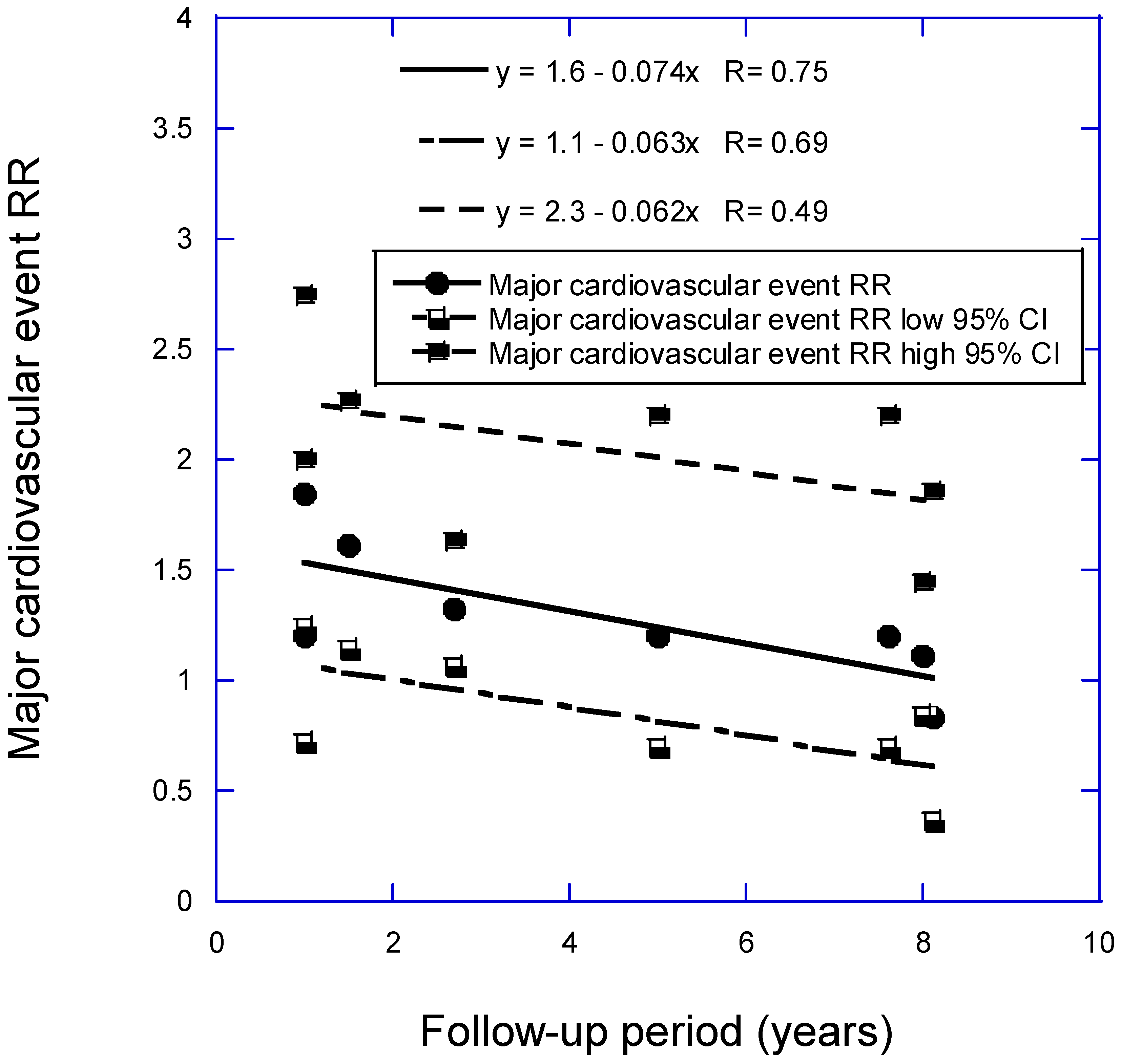
Figure 1. Plot the relative risk of [20major cardiovascular events (MACE) versus the mean follow-up period. The regression for risk of MACEs versus baseline serum 25(OH)D is a relative risk (RR) = 1.61 ‒ (0.074 × follow-up [years]), r = 0.75, adjusted r2 = 0.49, p = 0.03 [40].
Preprints 143205 g001
Figure 2. A plot of relative risk for stroke versus years of follow-up concerning high vs. low 25(OH)D concentration, with regression, fits for studies of less than 10 years and those carried out over more than 10 years. The equation for the regression fit to the RR for the follow-up period <10 years is RR = 0.34 + (0.065 × follow-up [years]), r = 0.84, adjusted r2 = 0.67, p = 0.03. [40].
Preprints 143205 g002
Figure 3. The plot of odds ratio (OR) for colorectal cancer concerning high vs. low 25(OH)D concentration against median years to diagnosis for data for men and women used in McCullough and colleagues [18] as shown in [19].
Preprints 143205 g003
Figure 4. Scatter plot of relative risk (RR) versus low to high 25(OH)D concentration for dementia concerning mean follow-up period less than 15 years [89].
Preprints 143205 g004
Figure 5. Relative risk (RR) for AD versus low to high 25(OH)D concentration versus mean follow-up period less than 15 years [89].
Preprints 143205 g005
Figure 6. Illustrates calculated serum 25(OH)D concentrations needed to overcome different groups of conditions and disorders and the reported average (percentage) improvements/ responses in primary clinical outcome. The figure summarizes cumulated data from many outcome-based vitamin D-related clinical trials (both (observational and RCTs) studies (Wimalwansa et al., 2024) [3,5].
Preprints 143205 g006
Figure 7. Illustrates the dose-response for vitamin D with response to health benefits. When the nutrients, vitamin D [25(OH)D] reach sufficiency for a given tissue/system, there would not be further benefits (i.e., providing more would not have additional physiological benefits). The broken red line illustrates that the beneficial effects of vitamin D could continue without causing hypercalcemia when high doses are administered under close medical supervision. Unlike with pharmaceutical agents, nutrient response curves are. narrow, about half of an order of magnitude (Wimalwansa et al., 2024) [3].
Preprints 143205 g007
Table 1. Age dependence of adverse health effects for several leading causes of death in the US.
Age range All-cause
Mortality rate
(deaths/
100,000)
in 2022
[25]
CVD*
Mortality rate
(deaths/
100,000)
in 2022
[138]
Cancer
Incidence (%)
2017‒2019
[45]
COVID-19
Mortality rate
(deaths/
100,000)
in 2022
[139]
DM
Prevalence
(%)
Aug. 2021‒
Aug 2023
[140]
25-34 163 0‒49 years
3.5
5 20‒39 years,
3.6
35-44 255 65 12
45-54 453 50‒64 years
F, 10.8; M, 11.8
30 40‒59 years
17.7
55-64 992 251 71
65-74 1979 541 F, 24.3; M 31.9 158 60+ years
27.3
75-84 4706 495 414
85+ 14,390 698 F, 39.6; M, 41.6 1224
*, 76% heart disease, 17% stoke; CVD, cardiovascular disease; DM, diabetes mellitus; F, female; M, male.
Table 2. Recommendations or suggestions for vitamin D supplementation and serum 25(OH)D concentrations for adults.
Year Organization, country Vitamin D
Dose (IU/day)
Serum
25(OH)D
(ng/mL)
Health basis Comments Reference
1997 Institute of Medicine, USA 200‒600
Depending on age
Bones [145]
2010 Institute of Medicine, USA 600 to 70 years, 800 for >70 years 20 Bones Based on RCTs [7]
2011 Endocrine Society, USA 1500‒2000 30 Bones,
VDD
Insufficient evidence for non-skeletal [2]
2013 International Conference,
Experts
800‒2000;
1600‒4000 for obese
30-50 Non-skeletal
[143]
[144]
2014 Expert 4000‒6000 40‒52 Physiological [146]
2019 Experts 5000‒50,000 30‒120 Treatment, e.g. psoriasis [147]
2023 Experts Bolus 30‒50 Sepsis [148]
2024 Experts 2000 30 VDD [149]
2024 Endocrine Society, USA 600‒800
1-18, 75+ years
VDD Lack of RCTs,
Observational studies ignored
[1]
2024 Experts 7000‒10,000 40‒60 Obese, multi-morbidity [150]
2024 Experts 1500‒2000 30,
40‒60 preferred
Skeletal, extra-skeletal Observational studies [151]
2024 Experts 15‒80 Disease prevention, treatment (see Figure 6) Observational studies [3]
Table 3. Selected findings regarding serum 25(OH)D concentrations achieved with higher vitamin D supplementation doses.
Population Intervention
Vitamin D supplementation
(IU/d)
Comparison Outcome
Units ng/mL
Reference
62 obese (BMI, 37±5 kg/m2, 45±12 year, meant baseline 25(OH)D 20‒26 ng/mL 1000, 5000, 10,000 for 21 weeks in winter Dose (IU/day), baseline (ng/mL)
1000 IU, 20±6
5000 IU, 27±7
10,000 IU, 23±15
Increments of 25(OH)D
1000 IU, 12±10
5000 IU, 28±10
10,000, 48±20
[154]
39 healthy male athletes, 20 years, BMI, 24, UK 5000 for 14 weeks
In winter
Placebo 25(OH)D increased from 22 (17‒28) to
50 (39‒60)
Vs.
23 (16‒28) to 13 (11‒20)
[155]
3882 community-based participants, Canada BMI 22±2 kg/m2
Supplementation (IU/day)
Base, 2200, Int, 6100
BMI 27±1 kg/m2
Base, 2100, Int, 6800
BMI 34±4 kg/m2
Base, 1900, Int, 7700
For 6‒18 months
BMI 22±2 kg/m2
Base, 37 (SD 12), Int, 52 (SD 16)
BMI 27±1 kg/m2
Base, 35 (SD 11), Int, 50 (SD 15)
BMI 34±4 kg/m2
Base, 32 (SD 10), Int, 47 (SD 15)
[156]
Long-term hospitalized patients, USA N = 36, 5000/day, 12 months
N = 78, 10,000 IU/day 12 months
5000 IU, Base 24, Ach, 68 (range, 41‒‒95)
10,000 IU, Base 25, Ach, 96 (range, 53‒‒148)
[147]
2423 overweight/ obese (Mean BMI, 32 [SD 4]) prediabetes patients, USA 4000/day, 24 months Base, 28 (SD 10)
Ach, 54 (SD 15)
[157]
30 healthy adults, BMI <30 kg/m2 600, 4,000 or 10,000 IU/d of vitamin D3 for 6 months 162, 320 and 1289 genes up- or down-regulated in their white blood cells, respectively [24]
67 T2DM patients with peripheral neuropathy, BMI, 30 (SD 2) kg/m2 Russia 40,000/week, 24 weeks 5000/week, 24 weeks 40,000 IU
Base, 16 (SD 8),
Ach, 72 (SD 17)
5000 IU
Base, 19 (SD 8),
Ach, 27 (SD 7)
[158]
2423 overweight/ obese prediabetes patients, USA 4000 for three years Placebo Achieved 25OHD
Adverse events, RR = 0.94 (95%, 0.90‒0.98)
[159]
Ach, achieved; BMI, body mass index; Int, intervention; IU, international unit; RR, relative risk; SD, standard deviation; T2DM, type 2 diabetes mellitus.
Disclaimer/Publisher’s Note: The statements, opinions and data contained in all publications are solely those of the individual author(s) and contributor(s) and not of MDPI and/or the editor(s). MDPI and/or the editor(s) disclaim responsibility for any injury to people or property resulting from any ideas, methods, instructions or products referred to in the content.
Copyright: This open access article is published under a Creative Commons CC BY 4.0 license, which permit the free download, distribution, and reuse, provided that the author and preprint are cited in any reuse.
Prerpints.org logo

Preprints.org is a free preprint server supported by MDPI in Basel, Switzerland.

Subscribe

Disclaimer

Terms of Use

Privacy Policy

Privacy Settings

© 2025 MDPI (Basel, Switzerland) unless otherwise stated