

Submitted:
23 May 2024
Posted:
24 May 2024
You are already at the latest version
Abstract
Objective: To determine the effect of sandblasting before and after sintering on the surface roughness of zirconia and the micro-tensile bond strength of a pressable veneering ceramic to zirconia.
Methods: Pre-sintered zirconia blocks (IPS e.max ZirCAD, Ivoclar Vivadent) were divided into a control group (CTR, no surface treatment) and four test groups of three specimens each: Pre-S-30, Pre-S-50, Pre-S-110 were sandblasted with 30µm SiO2, 50µm Al2O3 and 110µm Al2O3 particles respectively, before sintering, Post-S-30 was sandblasted with 30µm SiO2 after sintering. For each treatment, the surface roughness was measured (Ra, Perthometer M4P, Mahr Perthen). After sintering the zirconia blocks, a liner and a pressable ceramic (IPS e.max ZirPress, Ivoclar Vivadent) were fired. Sixteen micro-bars were obtained from each block and submitted to the micro-tensile bond strength (µTBS) test. Data were analyzed with one-way ANOVA. Any correlation between Ra and µTBS was evaluated (Sperman test).
Results: Sandblasting before sintering with 110µm Al2O3 (Ra=3.44±0.44µm), 50µm Al2O3 (Ra=2.32±0.46µm), and 30µm SiO2 (Ra=1.22±0.22µm) resulted in significantly higher roughness than sandblasting after sintering with 30µm SiO2 (Ra=0.46±0.11µm). The highest µTBS was measured when the sintered zirconia was sandblasted with 30μm SiO2 (26.79±14.80 MPa), which was significantly different from that of specimens that were sandblasted before sintering (Pre-S-30=20.90±11.70; Pre-S-50=21.27±15.19; Pre-S-110=23.99±16.83) or were not treated (CTR=17.44±14.03).
Conclusions: Sandblasting zirconia before sintering enhances the surface roughness proportionally to the particle size of the sand used. Sandblasting with 30µm SiO2 after sintering appeared to improve bonding between the veneering ceramic and zirconia.
Clinical Significance: Sandblasting with 30µm SiO2 after sintering may improve bonding between veneering ceramics and zirconia, thus reducing ceramic fractures/chippings.
Keywords:
Zirconia
; Veneering ceramic
; Surface treatments
; Sandblasting
; Surface roughness
; Microtensile bond-strength.
1. Introduction
In the last few decades, the application of zirconia in prosthodontics has grown and zirconia has been used as a metal-free alternative for all-ceramic restorations thanks to its mechanical properties, biocompatibility, optical characteristics and improved aesthetics [1,2,3,4]. All-ceramic single crowns and anterior fixed partial dentures (FPDs) have been used successfully since nineties. Afterwards, due to the development of high-strength ceramic frameworks, such as tetragonal zirconia polycrystals (Y-TZP), missing teeth have been replaced by all-ceramic FPDs in the posterior regions as well. The higher mechanical performance of zirconia combined with the computer-aided design and machining (CAD/CAM) fabrication procedures allowed even large and complex restorations to be realized with high accuracy and success rates [5]. Nowadays, thanks to a digital workflow the indications for all ceramic restorations have been more and more widened and the Y-TPZ is also widely used in implant prosthodontics, both for single crowns and fixed partial dentures [6,7,8,9].
To achieve better aesthetics, zirconia frameworks can be veneered with a ceramic material, which is built in different layers, providing the final restoration unique optical characteristics that can barely be distinguished from the surrounding natural dentition [5,10,11]. Alternatively, ceramic can be pressed on zirconia frameworks for veneering. Although the heat pressing technique is more laborious, it allows pores due to the lost-wax technique to be avoided and a one-step layering procedure [12,13].
However, establishing a strong and durable bond between Y-TZP and veneering ceramics has been proven to be cumbersome [14,15,16].
It has been reported that the zirconia–veneer bond is weaker than that of other all-ceramic systems, which suggests that layered zirconia frameworks are more susceptible to delamination and chipping during function [17,18,19].
Clinical studies reported a failure rate in a range of 10-15.2% after five years for veneered yttrium-TZP (YTZP) frameworks due to chipping of the ceramic veneer [7,14,15,17]. This fracture pattern is associated with a thin layer of glass-ceramic that remains on the zirconia framework. This finding supports the hypothesis of a reliable bonding of veneering ceramics to zirconia frameworks, but also reveals the brittleness of the veneering ceramic.
Moreover, determining the point of initial fracture seems to be very difficult. As already explained by Aboushelib et al. [5,10], a crack initiated at the ceramic-zirconia interface can grow through the weakest layer due to the asymmetric stress distribution in the specimen. Therefore, traces of elements may be left attached to the interface. When analysing, this will be incorrectly classified as cohesive failure.
Different treatments and techniques have been proposed to improve bonding at the zirconia-veneering ceramic interface, including air-abrasion with aluminium oxide (Al2O3), silica coating, liner application, acid etching or plasma treatment [20,21,22,23,24,25,26]. Silica coating has been proved to improve bonding of zirconia to luting agents, particularly when using the CoJet system (3M ESPE, St. Paul, MN, USA) [19]. This system uses silicate-coated alumina particles for sandblasting, thereby welding a silicate layer onto the surface by means of the high spot heat produced by the blasting pressure followed by silanization. The efficacy of this system is related to the high kinetic energy of the Al2O3 particles modified with SiO2 at impact and the fusion of the silica to the substrate surface. Since silicate-based veneering porcelains are often used to bond to zirconia frameworks, silica coating of zirconia might enhance the bond strength of the veneering ceramics as well. However, whether silica coating could also be effective to improve bonding at the zirconia-veneering ceramic interface has not been extensively evaluated yet.
In general, shear test or micro-tensile test are used to measure the bond strength of all-ceramic systems but using shear bond test may lead to negative stress pattern distribution, inducing cohesive failures and erroneous interpretation of data. In particular, the micro-tensile bond strength test (µTBS) has been proven to be a substantial test to evaluate the bond strength of composite materials to a variety of substrates [27,28]. Besides, SEM analysis can be of help when performing a qualitative analysis.
Aim of this study was to determine the effect of sandblasting before and after sintering on the surface roughness of zirconia and on the micro-tensile bond strength of a veneering ceramic to zirconia.
2. Materials and Methods
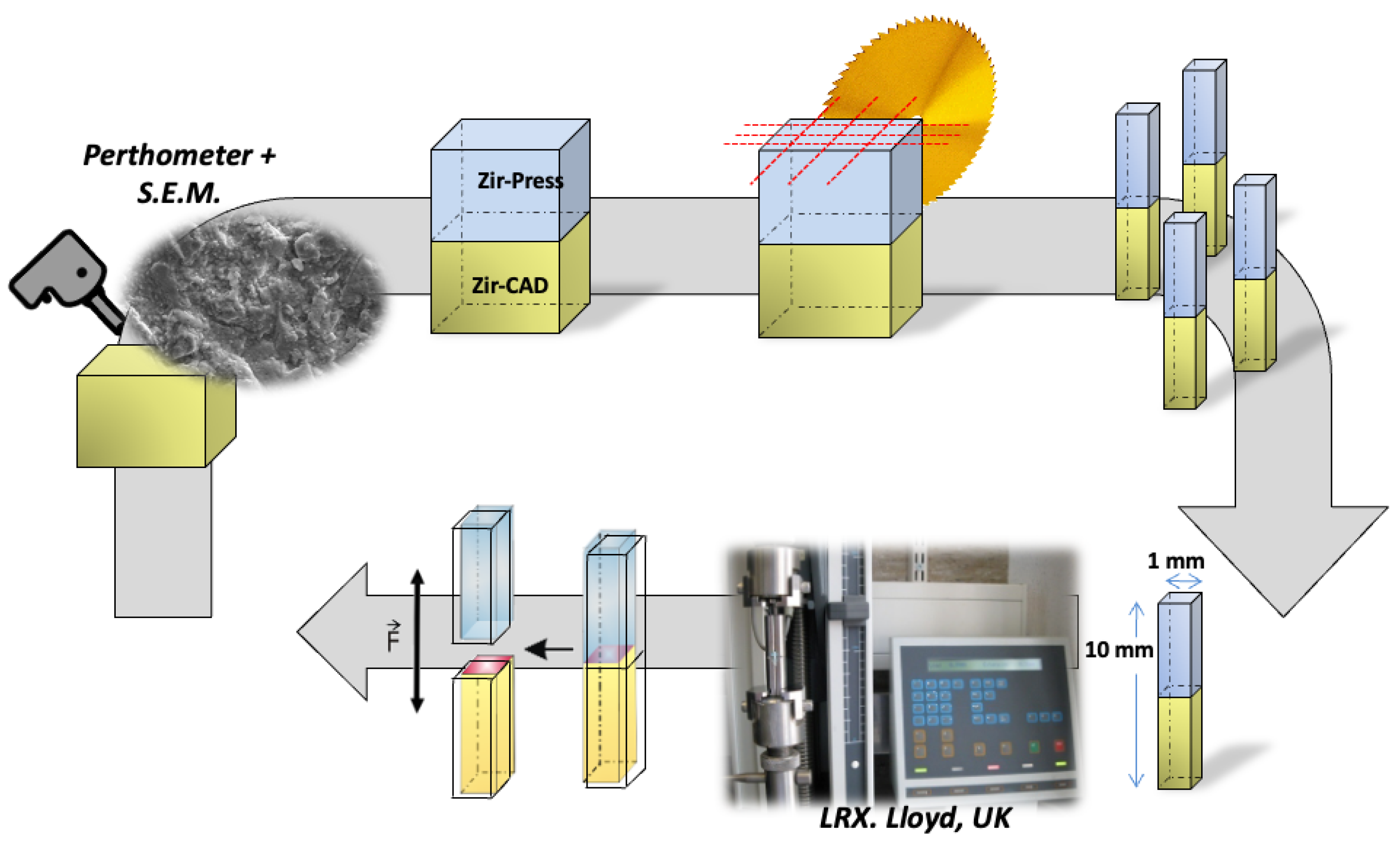
2.1. Specimen Preparation (Figure 1)
Three zirconia blocks, namely ZirCAD C15L (Ivoclar Vivadent, Shaan, Liechtenstein), were cut using a low-speed diamond disc (MDS100, Norton, USA) in order to obtain 15 smaller blocks of 7.2 mm height, 9.2 mm width, and 9.2 mm length. These blocks were further divided in 5 groups of three specimens each depending on the surface treatment at the interface Y-TZP-veneering ceramic.
Figure 1.
Specimen preparation.
2.1.1. Surface Treatment
One group did not receive any treatment (CTR, no surface treatment) and specimens were only polished. Four more groups of three specimens each were sandblasted before or after sintering by applying the following procedures: Pre-S-30, Pre-S-50, Pre-S-110 were sandblasted with 30µm SiO2 (CoJet, 3M ESPE), 50µm Al2O3 and 110µm Al2O3 particles respectively, before sintering; Post-S-30 was sandblasted with 30µm SiO2 after sintering.
All specimens were sandblasted using the same pressure of 2 bars for 15 seconds, at a distance between the nozzle and the surface of 1 cm for the 30-µm SiO2 and 1.5 cm for the 50-µm and 110-µm Al2O3.
2.1.2. Surface Roughness Evaluation
The surface roughness (Ra) was measured using a contact profilometry (Perthometer M4P, Mahr Perthen) on the polished, sandblasted, and silica-coated surface of each specimen. The surface was scanned twice by five parallel tracings with1.0-mm intervals and the Ra values were recorded.
2.1.3. Over-Pressing Technique
A layer of ZirLiner (IPS e.max, Ivoclar Vivadent, Shaan, Liechtenstein) was applied on the zirconia blocks and fired at 960°C (Sintramat oven, Ivoclar Vivadent, Shaan, Liechtenstein), following the manufacturer’s instructions. Then, the veneering ceramic ZirPress (IPS e.max, Ivoclar Vivadent, Shaan, Liechtenstein) was pressed on top. A wax-up was performed using a coping in order to fabricate an equivalent veneering structure for the corresponding ZirCAD specimen. The wax surface was smoothed, finished, and invested in a special investing material (IPS PressVEST, Ivoclar Vivadent, Shaan, Liechtenstein) in a size-2 muffle according to the manufacturer’s instructions.
The wax was burnt out and the muffle was heated. Copings were pressed using a porcelain with the proper coefficient of thermal expansion (IPS e.max ZirPress, Ivoclar Vivadent. Shaan, Liechtenstein). After cooling, the investment was removed in the sandblasting unit (Eurosab, Tissi, San Donato Milan, Italy) using 50-µm glass beads at 2 bars pressure. The reaction layer formed during pressing procedures was removed by soaking the crowns in HF solution (IPS e.max Press Invex Liquid, Ivoclar Vivadent, Shaan, Liechtenstein) in an ultrasonic cleaner (Sonorex, Bandelin, Berlin, Germany) for 5 min. Blocks were then cleaned with running water for 3 minutes and dried. Pressing sprues and extrusion flushes were removed using a water-cooled air-turbine without pressure to protect the porcelain from heat damages.
2.2. Micro-Tensile Bond Strength Test
The 15 blocks ZirCAD-ZirPress were stored in distilled water at 37°C for 1 week. Afterwards, they were cut using a diamond-coated blade (Acutom-40, Automatic Blade) for sintered zirconia, under water cooling, to obtain 20 microbars from each ceramic block. Each microbar had a length of 10 mm (5 mm of ZirCAD and 5 mm of ZirPress) and a horizontal cross-section of 1 mm2. Sixteen sound microbars were obtained from each group. Microbars were attached to the testing unit (LRX, Lloyd, Hampshire, UK) using an adhesive resin (Model Repair II Blue, Dentsply-Sankin, Ohtawara, Japan), taking care of the exactly cantered position of the zirconia-veneering porcelain interface onto the free space of the attachment unit. Specimens were loaded to failure at a crosshead speed of 1 mm/min. The maximum load at failure (N and MPa) was extracted from computer-generated files.
2.3. Microstructural (Stereomicroscopy and Scanning Electron Microscopy) Analysis
Specimens belonging to CTR and all Pre-Post sintered Y-TPZ blocks were gold sputtered and observed by using a scanning electron microscope (SEM, Zeiss EVO 40, D) equipped with an energy-dispersive X-ray analyser (EDS, Inca, Oxford Instruments, UK).
Analysis of failures was carried out with a stereomicroscope (Wild M5A, Heerbrugg, Switzerland) at 25X magnification. Failures were classified in cohesive (within the veneering ceramic), adhesive (at the interface between veneering ceramic and zirconia) and mixed. In addition, randomly selected failed microbars were cleaned in an ultrasonic bath, gold-sputtered and analysed by SEM and EDS.
2.4. Statistical Analysis
Statistical analysis was performed using the software package Statistica (StatSoft 9.1, OK, USA).
Analysis of variance (One-way ANOVA) with Tukey-HSD for post-hoc comparison was used to analyse surface roughness (Ra, p<0.05) and the micro-tensile bond strength results (µTBS, p<0.05). Statistical analysis was performed either excluding specimens that failed during the µTBS test, either including them as the lowest measured value or including them as value =0.
Spearman test was used to evaluate any correlation between µTBS and Ra values (p<0.05).
3. Results
Regarding surface roughness (Ra), Specimens sandblasted with 110-µm (3.436 ± 0.441 µm), 50-µm (2.325 ± 0.465µm), and 30-µm (1.217 ± 0.217µm) particles performed significantly better as compared to the control group (0.464 ± 0.107 µm), in which any treatment was performed (p<0.05). Ra values for all groups are presented in Figure 2.
Regarding micro-tensile bond strength (µTBS), the highest value was obtained when sandblasting zirconia blocks after sintering. When including the pre-testing failures as 0 or as the minimum obtained value, Post-S-30 performed significantly better than all the other groups (p<0.05). The mean micro-tensile bond strength, standard deviation and failure patterns are presented in Figure 3 and Table 3.
Regarding the mode of failure, the prevalence of mixed failures was observed in all groups (Figure 4).
Any correlation was found between µTBS and Ra values (p >0.2).
4. Discussion
Yttrium oxide-stabilized tetragonal zirconia polycrystals (Y-TPZ), among high strength ceramics, has been widely investigated as a core material for single crowns and fixed partial dentures. Overall, survival rate and success rate of all ceramic restorations have been reported to be ≥90% at 5 to 10 years [1,2,3,7,17,18]. However, chipping and delamination are still considered as major failures due to technical factors in single crowns or fixed partial dentures and, nowadays, in implant supported restorations as well [1,2,3,7,18,29]. Moreover, failures due to chipping or delamination seem not to differ significantly from that of the porcelain fused to metal restorations (PFMs) [1,2,3,18,29]. Many factors can affect those failures, including inadequate design or support of the zirconia framework, incompatibility of the coefficient of thermal expansion, occlusal factors or some other factors patient-related and inadequate adhesion between the zirconia core and the veneering ceramic [5,10,12]. Although a stable and predictable bonding between zirconia and a veneering ceramic is essential for success, the clinical occurrence of chipping and delamination is not often correlated to the outcomes of in vitro studies [30].
In this study, the highest micro-tensile bond strengths were obtained when sandblasting the pre-sintered zirconia with CoJet particles (26.79 ± 14.80), thus combining the smallest size of sand particles (30 μm) with its peculiar tribochemical effect. The better performance was significant when conducting the statistical analysis by including the pretesting failures (ptf) with the lowest obtained value. However, the same trend of increasing bond strength has been observed when including the pretesting failures as 0 value or when excluding them. In fact, the analysis of data was carried out by excluding the ptf or including them as the lowest obtained value or as 0. In literature, particularly in studies dealing with micro-tensile bond strength, the correct handling of samples that failed before they could be tested is still up to debate. By omitting the failures under loading, only the non-failed specimens that exhibit the highest micro-tensile bond strength are counted in, which will lead to a bias towards a higher value (Figure 3). On the other hands, if failures were included as 0 MPa, judgment would have been too severe, since it is known that specimens were subjected to a minimum failure tensile strength. Therefore, statistical analysis was also performed including failures with the lowest measured values. In this study, this resulted in no statistical differences.
The significant improvement in bond strength obtained when sandblasting with CoJet system after sintering was likely associated with the tribochemical effect due to silica-coated airborne particles, whereas results obtained for the specimens sandblasted before sintering were barely dependent on the roughness produced by sandblasting. The results of this study corroborate those reported by previous studies that demonstrated that sandblasting with CoJet or alumina particles improved the bond strength between zirconia and veneering ceramics [21,22,33]. However controversial results have been reported by Fischer et al., who demonstrated that sandblasting is not effective to improve the adhesion at the zirconia-ceramic interface or may even reduce the mechanical properties of zirconia [23,27]. Nishigori et al. also reported similar outcomes [20]. Some other authors proposed acid etching, plasma treatments or application or liner or glass coatings to improve adhesion by roughening or increasing wettability, pointing out that further investigations are needed [22,24,25,26,34]. The shear bond strength test has been widely used in most of the above-mentioned studies, which reported mean bond strength at the zirconia-veneering ceramic interface ranging from 22 to 45 MPa [19,20,26,27,31], which is in agreement with the outcomes of this study. Although clinical recommendations on materials and procedures are often based on mechanical laboratory test, it must be pointed out that using different setting during testing impairs comparison of data. Nevertheless, using shear bond test may lead to undesired stress pattern distribution, inducing cohesive failures and erroneous interpretation of data. The micro-tensile bond strength test appeared to be more accurate to evaluate the bonding effectiveness when measuring the tensile bond strength between zirconia core and veneer components of all-ceramic restorations [5,10,26,27,28,32]. For this reason, the micro-tensile bond strength test has been chosen for evaluation in this study.
In spite of the accuracy and effectiveness of the testing methodology, managing those brittle specimens is highly technique sensitive and involves a very careful handling in order to avoid cutting defects or unexpected cracking of the microbars. Using sharp new cutting discs at high cutting speeds and low loads reduces vibration and ensures a fine cutting of the specimens.
Regarding the surface roughness, the Ra parameter, which is the most common one reported in the dental literature [35,36], represents the average roughness as measured by the profilometer. The lower the Ra value, the smoother the surfaces [37]. The present study revealed that sandblasting the zirconia surface before sintering improved the roughness values proportionally to the dimensions of the airborne particles used, whereas sandblasting with CoJet after sintering did not affect surface roughness significantly. These findings corroborate those of other experimental studies, but most of published data are obtained by carrying out the air-born procedures with 50-110 μm alumina particles and only a few used the CoJet system. Lassila et al. [38], demonstrated that air-borning with 50-μm aluminum oxide particles or with Rocatec soft (30 μm) or with Rocatec (105 μm) enhanced surface roughness and significantly affected flexural strength, thus corroborating previous studies [20,21,25]. Harding et al. supported previous studies that revealed that sandblasting with alumina particles did may affect roughness [20,23] but, on the other hand, may decrease flexural strength [23]. Valandro et al. stated that neither the surface treatment of zirconia nor the thermocycling influences the porcelain crack resistance or the resistance to delamination of bilayer porcelain-veneered zirconia specimens [39].
Any correlation has been found between surface roughness and bond strength in this study, thus supporting the hypothesis that the best performance observed in specimens that were sandblasted with CoJet after sintering may be more attributed to the tribochemical effect. Furthermore, the application of a thin layer of liner, also contributed to increase wettability therefore improving the quality of micromechanical interlocking between the two ceramic materials tested, as already observed by Monaco et al. [22] and Lassila et al. [26].
Regarding the analysis of failures, overall, a prevalence of mixed failures was observed, probably due to the brittleness of the veneering ceramics and defects into the ceramic layer itself (Figure 5).
The SEM analysis of the failed specimens allowed a deeper sight onto the real surface’s morphology. Sandblasting drastically changed the microstructure of the zirconia surface, increasing the roughness according to the dimensions of the impacting particles. The worn surfaces presented detachments and plastic deformation of the material (Figure 6.A). Sandblasting before sintering also induced chemical changes of the structure, that could be detected by using the EDS analysis as well (Figure 6.B, Figure 7), whereas regarding specimens sandblasted after sintering, several fine silica particles, coming from the CoJet system, were smeared on the zirconia surface (Figure 6.C). The tribochemical silica coating achieved by using the Cojet system spread a silica layer on the ceramic surface, due to the high-pressure impact of alumina particles modified by silica on the conditioned substrate [21,38]. Such a technique is supposed to provide ultrafine mechanical retention by embedding treated surfaces with silica particles and improve chemical bonding [21,39,40]. Different punctual micro-analysis conducted on the cross section of the specimens at the interface zirconia-veneering ceramic pointed out that silica coating generated a reaction area. The EDS spectrum corresponding to the contact area, revealed the presence of a large amount of zirconia and elements of the veneering layer as well. These findings may suggest that sandblasting with CoJet not only produces widespread silica particles smearing on the surface, but it may also result in a partial zirconia phase transformation, from tetragonal to monoclinic, and a lattice distortion (Figure 7). Even if additional crystallographic studies are necessary, it can be supposed that this phenomenon induces at the zirconia surface a higher reactivity, thus resulting in a better interaction with veneering ceramics.
Finally, it is worth noticing that, to prevent the delamination or chipping of the zirconia restorations, it is necessary to select the proper ceramic materials, with similar coefficient of thermal expansion, as it has been carried out in this study, to reduce crack occurrence and growth.
5. Conclusions
It can be concluded that:
- Sandblasting with silica-coated alumina particles after sintering may improve the micro-tensile bond strength at the zirconia-veneering ceramic interface.
- A trend of increased surface roughness was observed when sandblasting before sintering, proportionally to the dimensions of the airborne particles.
- A crystallographic analysis of the interface may better explain the chemical interaction between zirconia and ceramic.
Further investigations are needed, especially to evaluate the effect of the oral environment and aging on the long-term stability of bond strength between zirconia and veneering ceramics.
Acknowledgments
We thank Ivoclar Vivadent for generously supplying the materials used in this research and the Center of Ceramic of Bologna, in particular Antonella Tucci, for her support during SEM/EDS analysis.
References
- Laumbacher H, Strasser T, Knüttel H, Rosentritt M. Long-term clinical performance and complications of zirconia-based tooth- and implant-supported fixed prosthodontic restorations: A summary of systematic reviews. J Dent. 111 (2021) 03723. [CrossRef]
- Pjetursson BE, Sailer I, Merino-Higuera E, Spies BC, Burkhardt F, Karasan D. Systematic review evaluating the influence of the prosthetic material and prosthetic design on the clinical outcomes of implant-supported multi-unit fixed dental prosthesis in the posterior area. Clin Oral Implants Res. 34(2023) 86-103. [CrossRef]
- Pjetursson BE, Valente NA, Strasding M, Zwahlen M, Liu S, Sailer I. A systematic review of the survival and complication rates of zirconia-ceramic and metal-ceramic single crowns. Clin Oral Implants Res. 29 (2018) 199-214. [CrossRef]
- Zarone F, Russo S, Sorrentino R. From porcelain-fused-to-metal to zirconia: clinical and experimental considerations. Dent Mater. 27 (201) 83–96. [CrossRef]
- Aboushelib MN, de Jager N, Kleverlaan CJ, Feilzer AJ. Microtensile bond strength of different components of core veneered all-ceramic restorations. Dent Mater 21 (2005) 984–91. [CrossRef]
- Heintze SD, Rousson V. Survival of zirconia and metal supported fixed dental prostheses: A systematic review. Int J Prosthod. 23 (2010) 493–502.
- Sailer I, Pjetursson BE, Zwahlen M, Hämmerle CH. A systematic review of the survival and complication rates of all-ceramic and metal-ceramic reconstructions after an observation period of at least 3 years: Part II: fixed dental prostheses. Clin Oral Implants Res. 183 (2007) 86–96. [CrossRef]
- Soleimani F, Jalali H, Mostafavi AS, Zeighami S, memarian M. Retention and clinical performance of zirconia crowns: A comprehensive review. Int J Dent. 15 (2020) 8846534. [CrossRef]
- Mühlemann S, Benic GI, Fehmer V, Hämmerle CHF, Sailer I. Clinical quality and efficiency of monolithic glass ceramic crowns in the posterior area: digital compared with conventional workflows. Int J Comput Dent. 21 (2018) 215-223.
- Aboushelib MN, Kleverlaan CJ, Feilzer AJ. Microtensile bond strength of different components of core veneered all-ceramic restorations. Part 3: double veneer technique. J Prosthodont. 17 (2008) 9-13. [CrossRef]
- Carlo E Poggio, Carlo Ercoli, Lorena Rispoli, Carlo Maiorana, Marco Esposito. Metal-free materials for fixed prosthodontic restorations. Cochrane Database Syst Rev. 20 (2017)12:CD009606. [CrossRef]
- Koenig V, Vanheusden AJ, Le Goff SO. Mainjot AK. Clinical risk factors related to failures with zirconia-based restorations: An up to 9-year retrospective study. J Dent. 41 (2013) 1164-1174 . [CrossRef]
- Isgrò G, Pallav P, Van der Zel JM, Feilzer AJ. The influence of the veneering porcelain and difference surface treatments on the biaxial flexural strength of a heat-pressed ceramic. J. Prosthet Dent. 90 (2003) 465-73. [CrossRef]
- Sailer I, Makarov NA, Thoma DS, et al. All-ceramic or metal-ceramic tooth- supported fixed dental prostheses (FDPs)? A systematic review of the survival and complication rates. Part I: Single crowns (SCs). Dent Mater. 31 (2015) 603–623. [CrossRef]
- Pjetursson BE, Sailer I, Makarov NA, Zwahlen M, Thoma DS. All-ceramic or metal-ceramic tooth-supported fixed dental prostheses (FDPs)? A systematic review of the survival and complication rates. Part II: Multiple-unit FDPs. Dent Mater. 31 (2015) 624-39. [CrossRef]
- Swain, MV. Unstable cracking (chipping) of veneering porcelain on all-ceramic dental crowns and fixed partial dentures. Acta Biomater. 5 (2009) 1668-1677. [CrossRef]
- D’Souza NL, Jutlah EM, Deshpande RA, Somogyi-Ganss E. Comparison of clinical outcomes between single metal-ceramic and zirconia crowns. J Prosthet Dent. 4 (2024) S0022-3913(24)00186-0. [CrossRef]
- Zirconia-based versus metal-based single crowns veneered with overpressing ceramic for restoration of posterior endodontically treated teeth: 5-year results of a randomized controlled clinical study. Monaco C, Llukacej A, Baldissara P, Arena A, Scotti R. J Dent. 65 (2017) 56-63. [CrossRef]
- Kim BK, Bae HE, Shim JS, Lee KW. The influence of ceramic surface treatments on the tensile bond strength of composite resin to all-ceramic coping materials. J Prosthet Dent. 94 (2005) 357-62. [CrossRef]
- Nishigori A, Yoshida T, Bottino MC, Platt JA. Influence of zirconia surface treatment on veneering porcelain shear bond strength after cyclic loading. J Prosthet Dent. 112 (2014) 1392-1398. [CrossRef]
- Guazzato M, Quach L, Albakry M, Swain MV. Influence of surface and heat treatments on the flexural strength of Y-TZP dental ceramic. J Dent. 1 (2005)9-18. [CrossRef]
- Monaco C, Tucci A, Esposito L, Scotti R. Adhesion mechanisms at the interface between Y-TZP and veneering ceramic with and without modifier. J Dent. 42 (2014) 1473-1479. [CrossRef]
- Harding AB, Norling BK, Teixeira EC. The effect of surface treatment of the interfacial surface on fatigue-related microtensile bond strength of milled zirconia to veneering porcelain. J Prosthodont. 21 (2012)346-352. [CrossRef]
- Liu YC, Hsieh JP, Chen YC, Kang LL, Hwang CS, Chuang SF. Promoting porcelain-zirconia bonding using different atmospheric pressure gas plasmas. Dent Mater. 8 (2018) 1188-1198. [CrossRef]
- Worpenberg C, Stiesch M, Eisenburger M, Breidenstein B, Busemann S, Greuling A. The effect of surface treatments on the adhesive bond in all-ceramic dental crowns using four-point bending and dynamic loading tests. J Mech Behav Biomed Mater. 139 (2023) 105686. [CrossRef]
- Aktas G, Sahin E, Vallittu P, Ozcan M, Lassila L. Effect of colouring green stage zirconia on the adhesion of veneering ceramics with different thermal expansion coefficients. Int J Oral Sci. 5 (2013) 236-241. [CrossRef]
- Fischer J, Stawarczyk B. Effect of zirconia surface treatments in the shear strength of zirconia/veneering ceramic composites. Dent Mater 27 (2008): 448-454. [CrossRef]
- El Zohairy AA, De Gee AJ, de Jager N, Ruijven LJ, Feilzer AJ. The influence of specimen attachment and dimension on the microtensile strength. J Dent Res. 83 (2004) 420-424. [CrossRef]
- Prause E, Hey J, Sterzenbach G, Beuer F, Adali U. Survival and success of veneered zirconia crowns. Int J Comput Dent. 26 (2023) 247-255. [CrossRef]
- Kern M. Bonding to oxide ceramics-laboratory testing versus clinical out-come. Dent Mater. 31 (2015) 8–14. [CrossRef]
- Al-Dohan HM, Yaman P, Dennison JB, Razzoog ME, Lang BR. Shear strength of core-veneer interface in bi-layered ceramics. J Prosthet Dent. 91 (2004) 349-355. [CrossRef]
- Aboushelib MN, Kleverlaan CJ, Feilzer AJ. Microtensile bond strength of different components of core veneered all-ceramic restorations. Part II: Zirconia veneering ceramics. Dent Mater. 22 (2006):857-863. [CrossRef]
- Guazzato M, Proos K, Sara G, Swain MV. Strength, reliability, and mode of fracture of bilayered porcelain/core ceramics. Int J Prosthodont. 17 (2004) 142-149.
- Chaiyabutr Y McGowan S Phillips KM Kois JC Giordano RA The effect of hydrofluoric acid surface treatment and bond strength of a zirconia veneering ceramic. J Prosthet Dent. 100 (2008) 194–202. [CrossRef]
- Rosentritt M, Schneider-Feyrer S, Kurzendorfer L. Comparison of surface roughness parameters Ra/Sa and Rz/Sz with different measuring devices. J Mech Behav Biomed Mater. 150 (2024) 106349. [CrossRef]
- Ayad MF, Fahmy NZ and Rosenstiel SF. Effect of surface treatment on roughness and bond strength of a heat- pressed ceramic. J Prosthet Dent. 99 (2008); 123-130. [CrossRef]
- Advanced technical ceramics. Monolithic ceramics. General and textures properties. Part 4: Determination of surface roughness. The European Standard EN 623–4:2004.
- Hjerppe J, Närhi TO, Vallittu PK, Lassila LV. Surface roughness and the flexural and bend strength of zirconia after different surface treatments. J Prosthet Dent. 116 (2016) 577-583. [CrossRef]
- Machado PS, Pereira GKR, Zucuni CP, Guilardi LF, Valandro LF, Rippe MP.I Influence of zirconia surface treatments of a bilayer restorative assembly on the fatigue performance. J Prosthodont Res. 65 (2021) 162-170. [CrossRef]
- Thammajaruk P, Buranadham S, Guazzato M, Swain MV. Influence of ceramic-coating techniques on composite-zirconia bonding: Strain energy release rate evaluation. Dent Mater. 2022 Feb;38(2):e31-e42. [CrossRef]
Figure 2.
Graph showing means and standard deviations of surface roughness (Ra) for all surface treatments tested. Different superscript letters indicate statistically significant differences.
Figure 2.
Graph showing means and standard deviations of surface roughness (Ra) for all surface treatments tested. Different superscript letters indicate statistically significant differences.
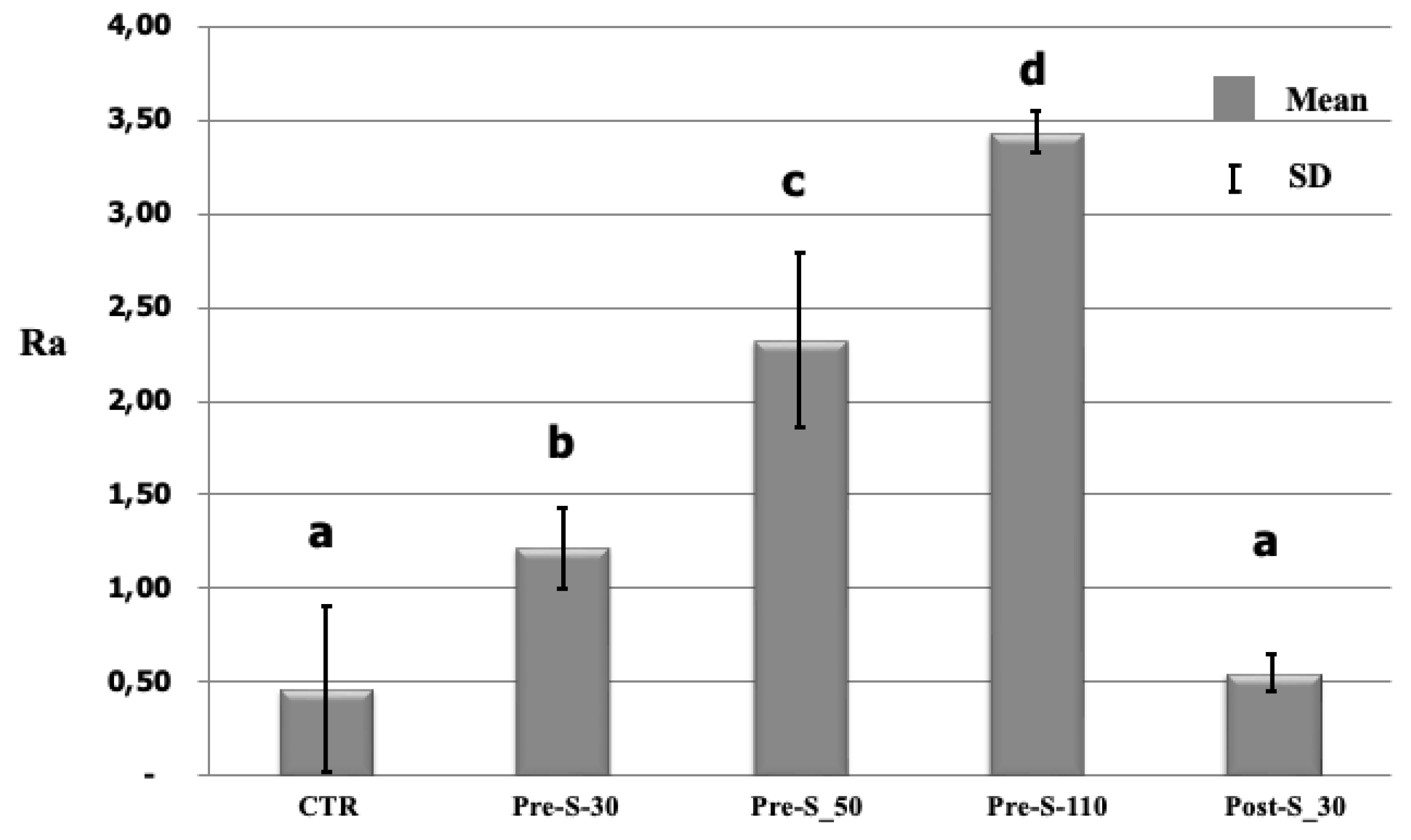
Figure 3.
Graph showing means and standard deviations of micro-tensile bond strength (µTBS) for all experimental groups. Different gray scale colors refer to the different strategy of dealing with pretesting failures (ptf). Overlapping bars indicate values that are not significantly different.
Figure 3.
Graph showing means and standard deviations of micro-tensile bond strength (µTBS) for all experimental groups. Different gray scale colors refer to the different strategy of dealing with pretesting failures (ptf). Overlapping bars indicate values that are not significantly different.
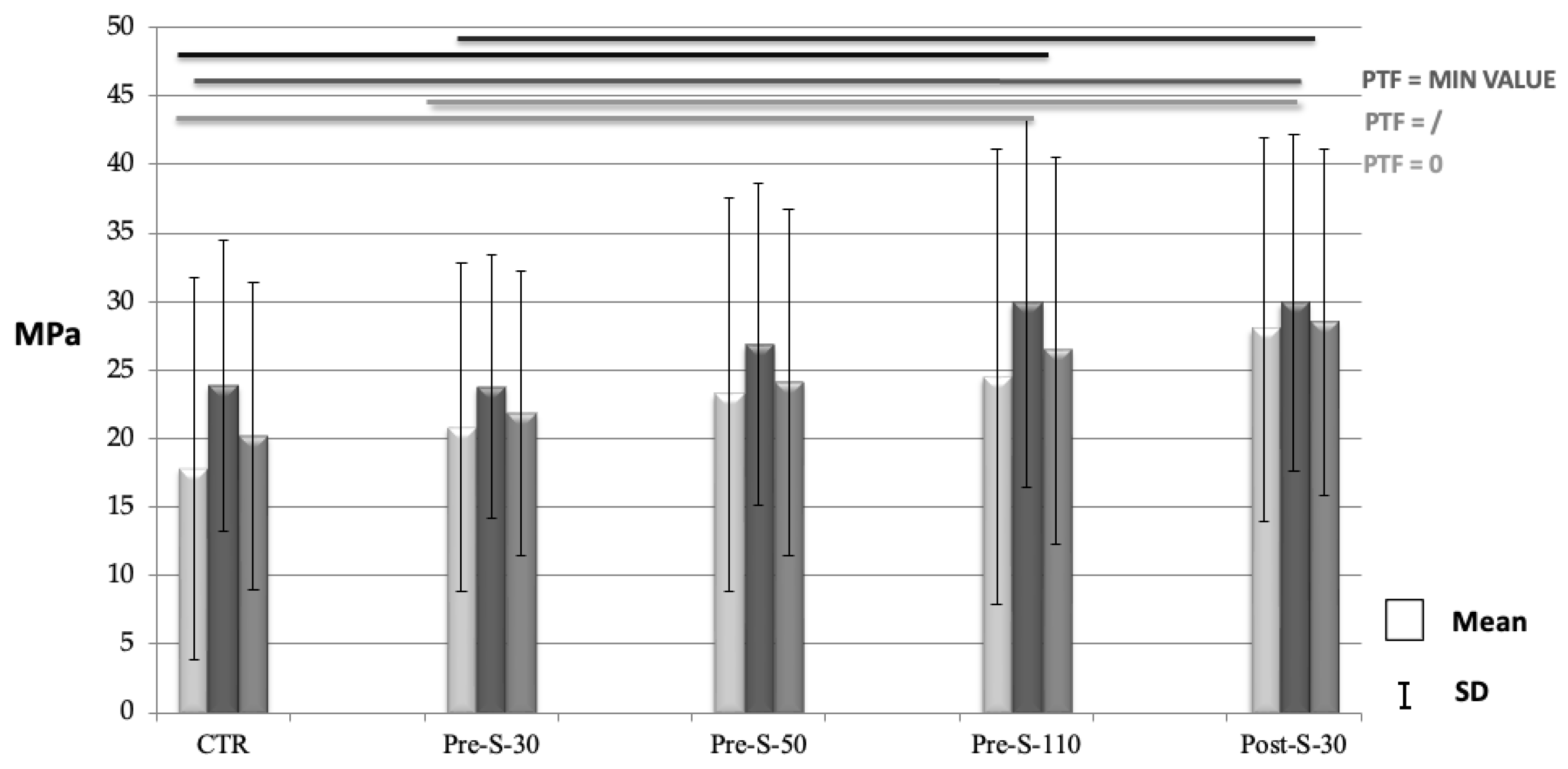
Figure 4.
Analysis of failure (light microscopy). A prevalence of mixed failures was observed in all experimental groups.
Figure 4.
Analysis of failure (light microscopy). A prevalence of mixed failures was observed in all experimental groups.
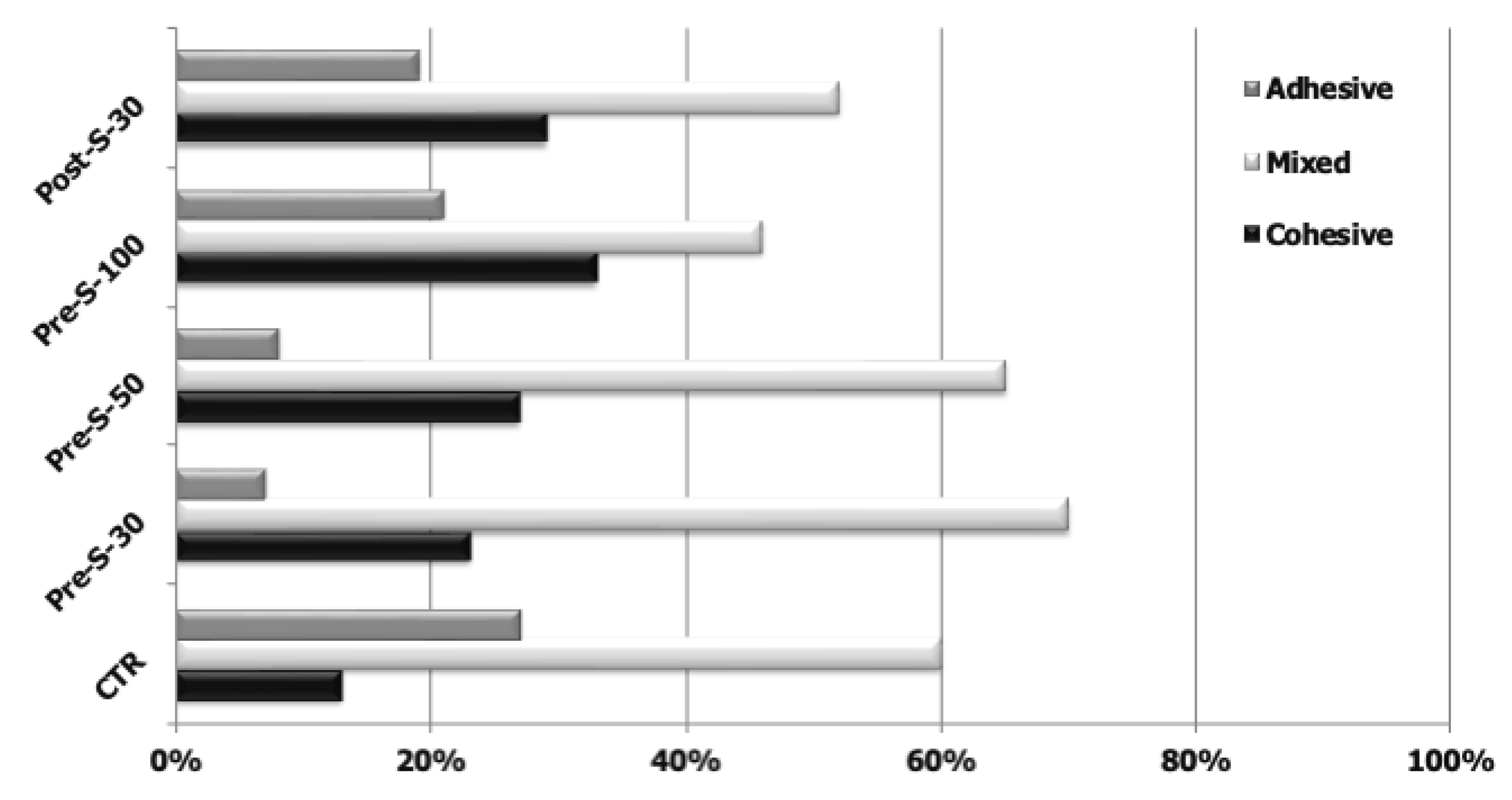
Figure 5.
Feg-SEM photomicrographs showing a typical mixed failure at the zirconia-veneering ceramic interface (left side) and inner defects as voids into the ceramic layer (right side).
Figure 5.
Feg-SEM photomicrographs showing a typical mixed failure at the zirconia-veneering ceramic interface (left side) and inner defects as voids into the ceramic layer (right side).
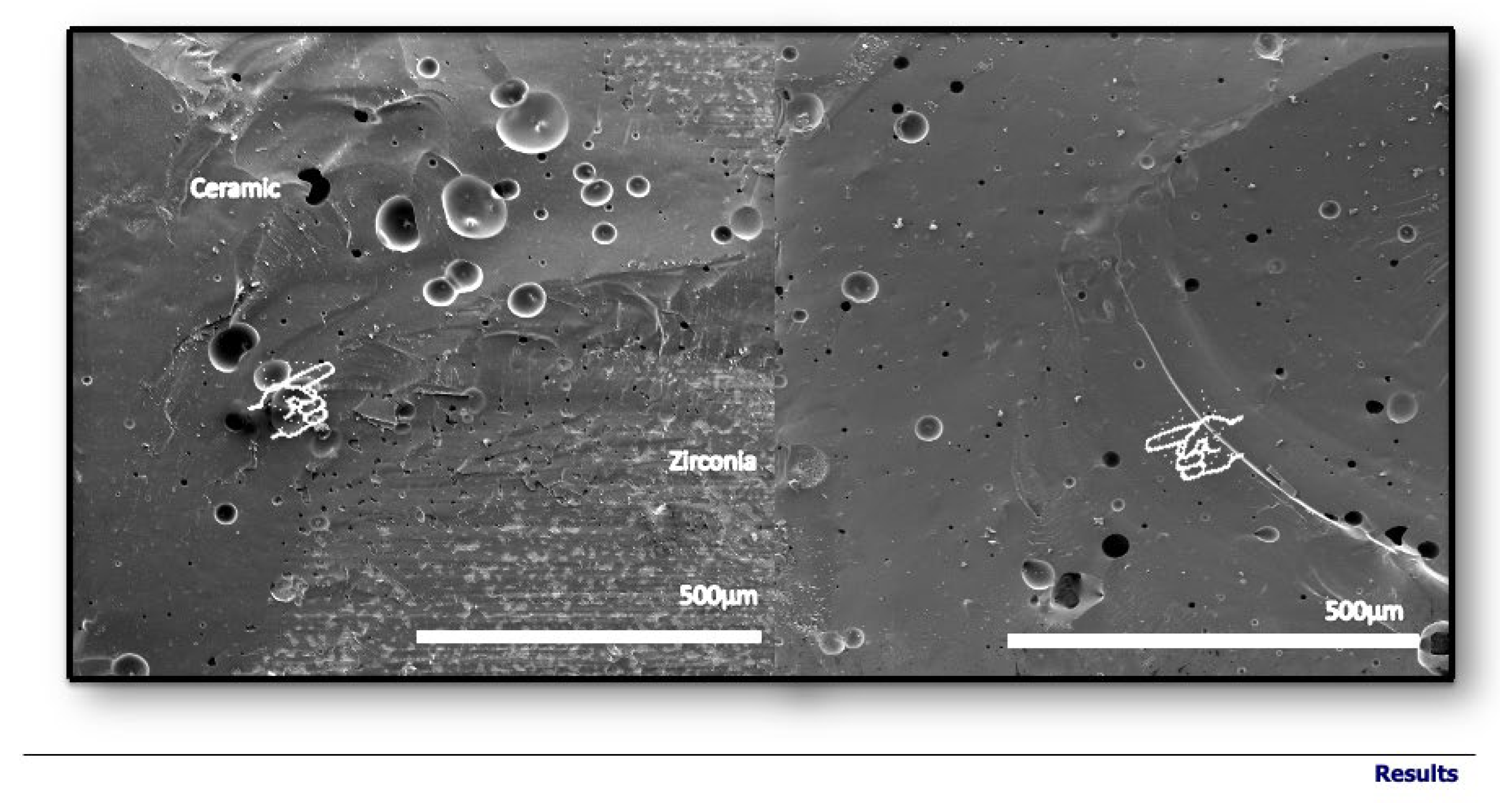
Figure 6.
Feg-SEM photomicrographs of specimens sandblasted with Al2O3 particles before sintering. A. Pre-S-30 B. Pre-S-50 C. Pre-S-110.
Figure 6.
Feg-SEM photomicrographs of specimens sandblasted with Al2O3 particles before sintering. A. Pre-S-30 B. Pre-S-50 C. Pre-S-110.
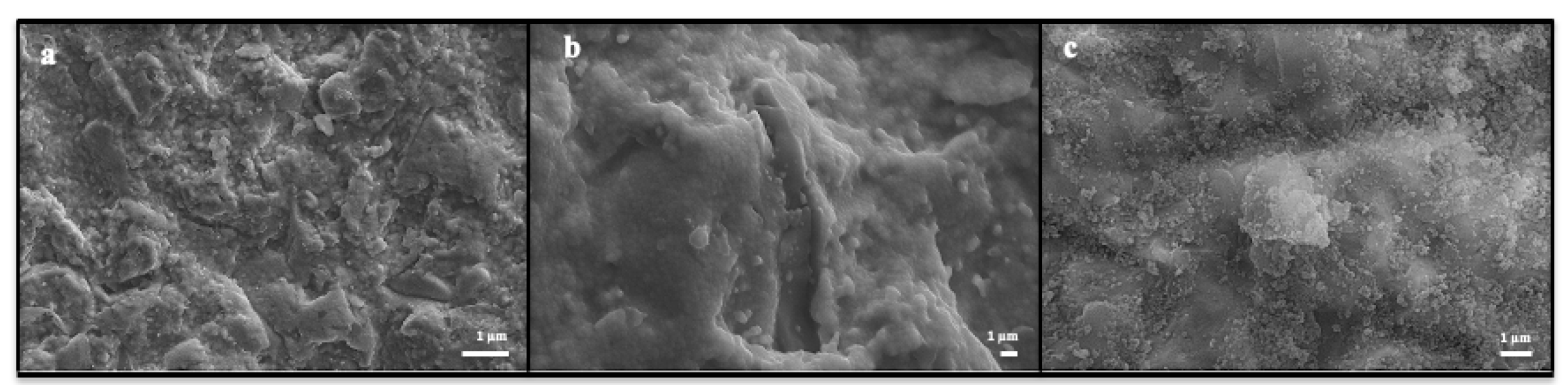
Figure 7.
Feg-SEM photomicrographs of specimens sandblasted with 30µm particles of Cojet after sintering (Post-S-30) and its EDS spectrum corresponding to the contact area, that revealed the presence of a large amount of Zr, Si and elements of the veneering ceramic layer.
Figure 7.
Feg-SEM photomicrographs of specimens sandblasted with 30µm particles of Cojet after sintering (Post-S-30) and its EDS spectrum corresponding to the contact area, that revealed the presence of a large amount of Zr, Si and elements of the veneering ceramic layer.
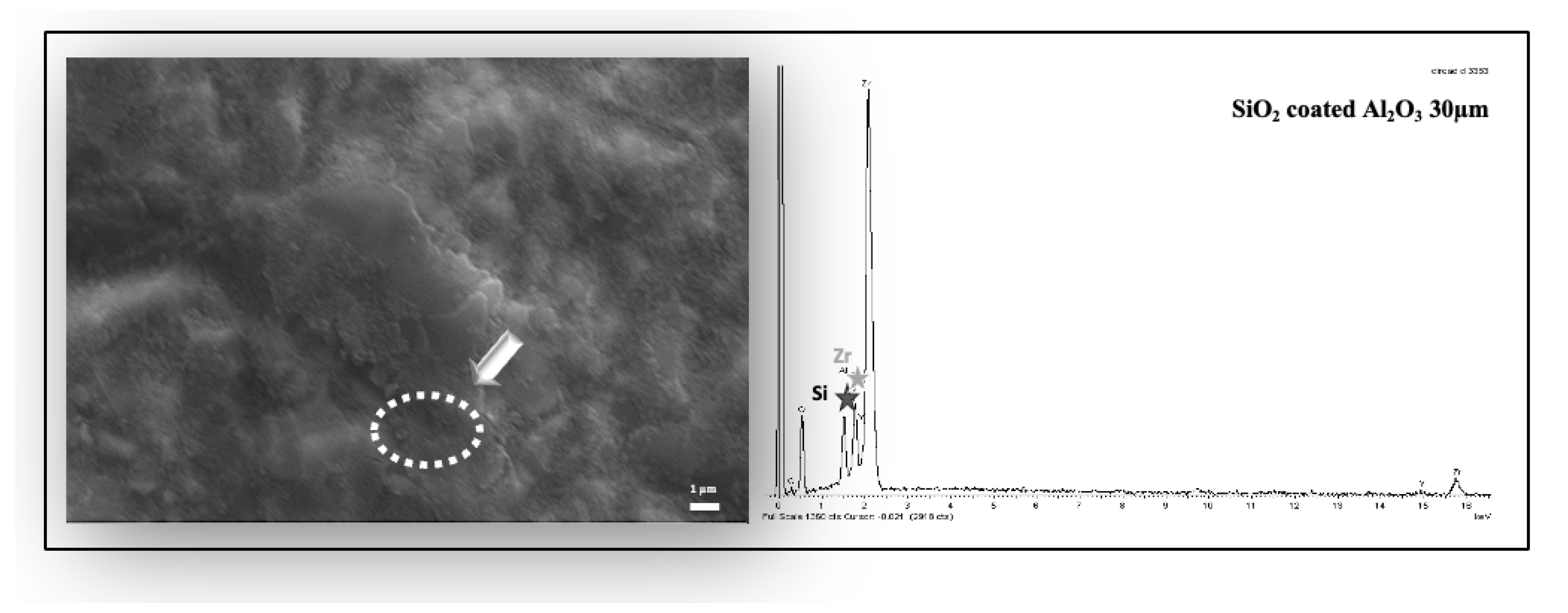

Table 1.
Materials tested in the study and their composition.
| Materials | Composition | Coefficient of thermal expansion 10−6K−1 | |
|---|---|---|---|
| IPS e.max ZirCAD Ivoclar Vivadent Shaan, Liechtenstein | Zirconium oxide (87–95% vol), yttrium oxide (4–6% vol), hafnium oxide (1–5% vol), and alumina and silica (<1% vol) | 10.75±0.25 | |
| IPS e.max Zir Liner Ivoclar Vivadent Shaan, Liechtenstein | Water, butandiol, and chloride | 9.8±0.25 | |
| IPS e.max ZirPress Ivoclar Vivadent Shaan, Liechtenstein | SiO2 with Li2O, Na2O, K2O, MgO, Al2O3, CaO, ZrO2, P2O5 | 9.75±0.25 |
Data provided by manufacturers.
Table 2.
Sandblasting treatments and application procedures.
| Group – Surface Treatment | Working distance | Working time |
|---|---|---|
| CTR - No treatment | - | / |
| Pre-S-30 - 30µm SiO2 before sintering | 1 cm | 15 sec |
| Pre-S-50 - 50µm Al2O3 before sintering | 1.5 cm | 15 sec |
| Pre-S-110 - 110µm Al2O3 before sintering | 1.5 cm | 15 sec |
| Post-S-30 - 30µm SiO2 after sintering | 1 cm | 15 sec |
Table 3.
Micro-tensile bond strength (in MPa) and failure mode of specimens.
| Group – Surface Treatment | µTBS (MPa) Mean (SD) |
Failure Patterns Cohesive Mixed Adhesive |
|---|---|---|
| CTR - No treatment | 17.44(14.03) B | 13% 60% 27% |
| Pre-S-30 - 30µm SiO2 before sintering | 20.90(11.70) B | 23% 70% 7% |
| Pre-S-50 - 50µm Al2O3 before sintering | 21.27(15.19) B | 27% 65% 8% |
| Pre-S-110 - 110µm Al2O3 before sintering | 23.99(16.83) B | 33% 46% 21% |
| Post-S-30 - 30µm SiO2 after sintering | 26.79(14.80) A | 29% 52% 19% |
Different superscript letters indicate statistically significant differences (p<0.05). Data reported in this table refer to the analysis conducted by including the ptf (pretesting failures) with the lowest obtained value.
Disclaimer/Publisher’s Note: The statements, opinions and data contained in all publications are solely those of the individual author(s) and contributor(s) and not of MDPI and/or the editor(s). MDPI and/or the editor(s) disclaim responsibility for any injury to people or property resulting from any ideas, methods, instructions or products referred to in the content. |
© 2024 by the authors. Licensee MDPI, Basel, Switzerland. This article is an open access article distributed under the terms and conditions of the Creative Commons Attribution (CC BY) license (http://creativecommons.org/licenses/by/4.0/).
Copyright: This open access article is published under a Creative Commons CC BY 4.0 license, which permit the free download, distribution, and reuse, provided that the author and preprint are cited in any reuse.


