

Submitted:
01 December 2023
Posted:
04 December 2023
You are already at the latest version
Abstract
Background: Extremametly lean athletes could have difficulty for adaptive eating (intuitively or consciously) during ad libitum refeed. Aims: we verificate if there is a relation between adaptive eating and coping strategies with energy intake in a model of refeed proposed for bodybuilders. Methods: Fourteen male bodybuilders (29.6±3.1yrs; 85.6±6.8kg, ≥6 competitions) completed the 4-week each consisting of a 5 days of energy restriction following 2 days of refeed. Dietary assessment, body composition (ultrasound), Recovery stress questionnaire (REST-Q) and BRUMS (Brunel mood scale) were accessed pre and post; Coping Function Questionnaire (CFQ), Mindful Eating Scale version 2 (MES 2) and the Intuitive Eating Scale-2 (IES-2) was used at 4th week. Results: The refeed day resulted in a daily caloric increment of ~44% compared to the average energy intake on the energy restriction days, culminating in a weekly calorie deficit of ~27% and a drop in body mass of 3.1±1.4% with relation to initial values. The most reduced body fat and preserved or gained lean mass. The energy consumption during refeed maintained an inverse relationship with the perception of satiety (r=-0.9; p<0.01), total scores of IES 2 (r=-0.82; p<0.01), as well as with the confidence in hunger and satiety cues (r=-0.62; p=0.02) and congruence in food-body choice (r=-0.56; p=0.04) dimensions. Coping based in emotions maintained a relationship with the total scores of IES 2 (r=0.54; p<0.05) and an inverse relationship with energy intake during refeed (r=-0.42; p<0.05). Conclusion: Our results suggest that a higher perception of internal hunger and satiety signals and higher scores in intuitive eating may contribute to energy intake adequate, even when high scores of coping based in emotions are present.
Keywords:
Physique athletes
; refeed
; intermittent energy restriction
; intuitive eating
; coping
1. Introduction
Bodybuilding (BB) is a modality in which competitors are judged by their muscular appearance, symmetry, and leanness in proportional physiques during rounds of poses in a contest [1]. In pre-competitive period (PreC), usually lasting 8 to 26 weeks previous to the competition, bodybuilders commonly combine energy restriction (ER) and increased energy expenditure in order for adjust body mass to a target weight class, reducing body fat stores as much as possible and fat-free mass (FFM) maintenance or modest gain [1,2].
Energy restriction can be conducted either continuously or intermittently (IER). Continuous energy restriction requires reducing energy intake each day below what is needed for weight maintenance, whereas IER alternates periods of restriction with periods of higher energy intake in a non-linear fashion [3]. One of the most popular configurations of IER among strength athletes is an energy restriction for 5-6 consecutive days followed by one or two days following high carbohydrate and energy intake [similar to maintenance levels or slightly higher (~5 to 10% above requirements)] [4].
The adherents of this approach think that it may be advantageous by the greater availability of carbohydrates and energy improving mood, motivation and performance [5]. In agreement with the possible physiological and psychological benefits of IER, Peos et al. [6] demonstrated that interruption of energy restriction for a week, increased lower limb muscle resistance, and reduced the subjective perception of hunger in resistance-trained individuals. Furthermore, our group showed that the addition of cheat meals could provide a better affective response and attenuation in objective and subjective markers of muscle recovery after a protocol based in high volume training in bodybuilders [4].
Although bodybuilders are recognized in the literature for having rigid attitude’s following food selection, meal frequency, and supplementation [7], it is not clear whether refeed practices can optimize the proposed energy intake. Some individuals admit that refeed practices can be a good opportunity to consume “forbidden foods”, reporting overfeeding and energy intake consistent with a compulsive episode [8]. Supposedly, the dichotomy “forbidden or not” of restraint revel a behavior consistent with rigid and inflexible diets, in which athletes could have difficulty for adaptive eating (intuitively or consciously), disconnecting the internal physiological signals of hunger and satiety to the detriment of emotional reasons [9]. Supporting this, higher scores of intuitive eating correlated to lower disordered eating behaviors and disinhibition episodes [10].
The PreC period is particularly critical since athletes undergoing dietary restraint. In this line, we demonstrated previously that bodybuilders undertaking ~44% energy restriction presented a higher perception of stress and worsens in mood states in comparison with a period of ~15% positive energy balance [2], while Hickey et al. [11] reported that a higher hunger were associated with stress indicators and poor athletic performance in student athletes.
The ability to deal with stressors, refereed as coping, in theory lead to food behaviors as a form of self-regulation to stress, and thus, the athlete can develop more adaptive psychophysiological responses [10,12]. Interestingly, individuals tend to eat in response to distress and dysphoric emotions, particularly when coping is focused in emotions, which are more passive, not promoting adaptive and problem-changing behaviors [12].
In view of the above, it is not clear whether athletes undergoing energy restriction could benefit from refeed practices in a pre-competitive context and whether energy intake arising from refeed are related to coping strategies. The purpose of the present study was to test the hypotheses: 1) refeed practices may contribute to adequate energy intake in bodybuilders with a more adaptive eating (conscious and intuitive eating pattern) and 2) higher levels of coping focused in emotion are associated with a maladaptive eating and, possibly a higher energy intake.
2. Methods
2.1. Participants
The present study selected participants for convenience due to the specificity needed to verify the proposed conditions. The president of local federation optimized the contacts of the athletes for participated of the study. Fourteen male bodybuilders previously selected4 completed data collection, which occur during the last week in Off season and during four initial weeks following PreC period.
After previous explanations, the athletes who agreed to participate of the study were evaluated regarding their habitual nutritional intake and then the diet was prescribed based on an energy deficit in order to reach the weights corresponding to their categories4. The inclusion criteria were: aged 18-40 years; have participated in at least tree contest and be in preparation for one competition, which was collected by patronized questioner. In this, also there was data referring to sleep (hours total and habits). The social jetlag was calculated as the absolute difference between mid-sleep on weekends and mid-sleep on weekdays13. Were excluded those who using diuretic or laxatives, appetite inhibitors as well as those who did not present regularity in training during the collection of data. The research was approved by the Local Research Ethics Committee (process 3664095) in accordance with the Helsinki Declaration and all participants signed an informed consent form.
2.2. Anthropometric Date
All the anthropometric measurements were realized before and after the 4-week follow-up. A balance Plenna® and Stadiometer (exata, Brazil) were utilized for body weight and height measurements, respectively.
Body composition was determined by a 2.5 MHz A-mode transducer portable ultrasound (BodyMetrix, BX2000, IntelaMetrix, Inc., Livermore, CA) was utilized for calculated the sum of thickness of the subcutaneous adipose tissue values in seven standardized anatomic sites: triceps, subscapular, chest, axillary, suprailiac, abdominal and thigh [14,15]. All measurements were performed by the same evaluator with experience in handling the device [16], and the average of three measurements was used for analysis.
2.3. Energy Intake
Each athlete completed at least a 3-day food diary each week to assess current nutritional intake according to the household measurement. Nutritional data were processed using the Webdiet® software. Data were adjusted for body mass and expressed in grams and % calories of the total energy. Deficit energy was estimated for reduced 40% of the habitual intake observed in final of the off-season period in restricted days.
Food preferences were used to develop individual meal plans. The quality and quantity of food sources were controlled, with care being taken to maintain adequate proportions between the main macronutrients. During each week of the 4-week study period, participants consumed the allocated energy restriction for five days followed by two days of refeed. On refeed days, participants were instructed to have 2 daily meals ad libitum and record their food intake as previously described [4].
One eligible cheat meal at fourth week, the adaptive eating questionnaires were applied (Figure 1).
2.4. Psychological Distress and Mood Disturbance
For characterize the restrictive period regarding distress was assessed by Recovery stress questionnaire for athletes (RESTQ-Sport), translated and validated to Brazilian Portuguese [17]. Measurements of simultaneous frequency of the actual stress with the frequency of recovery-associated activities were performed before and after the 4-week follow-up. RESTQ-Sport includes 76 items distributed in 19 scales (10 related to stress and nine related to recovery). Each scale contains four items evaluated by a 6-point Likert-type (ranging from 0 = “never” to 6 = “always”). Final scores were calculated as the sum of the stress-related scales (ΣS) and recovery (ΣR), and the difference between ΣR and ΣS.
Mood states were measured using the Brunel mood scale (BRUMS) questionnaire, previously translated into Portuguese, and validated in a Brazilian population [18]. The BRUMS is a self-report questionnaire consisting of 24 items rated on a 5-point scale (ranging from 0 = “no” to 4 = “extremely”) designed to assess 6 dimensions, each one consisting of 4 items. The total score of each dimension ranges from 0 to 16. The results were expressed as total mood disturbance, which was determined by the sum score of the negative dimension subtracting the score of the positive dimension vigor, and then adding the value “100”. The BRUMS was utilized before and after the 4-week follow-up.
2.5. Adaptive Eating
2.5.1. Mindful Eating
The questionnaire Mindful Eating Scale version 2 (MES 2) [19] was used to assess mindfulness, especially in the domain of eating behavior. The MES 2 contain 28 items with response options on a Likert-type scale, considering 1 being considered “never” up to 4 points “always”.
The MES 2 consist of five domains: 1) Consciousness (consciousness of what the food looks like, and consciousness of how it tastes); 2) Distraction (when attention is not focused on food); 3) Disinhibition (continues to eat even when satisfied); 4) Emotional response (eating in response to sadness/ stress); 5) External influences (comes in response to external cues, such as advertisements). The higher MES 2 score, the greater the ability to eat mindfully.
2.5.2. Perception of Hunger and Appetite
To assess the perception of hunger/ appetite, it was suggested that individuals use the hunger odometer [20]. This instrument is a scale with numerical values from 0 to 10, with lower values corresponding to greater perception of hunger and less satiety; values between 4 and 6 would correspond to an interval that represents a comfortable moment to have a meal in order to respect the body, not letting it starve and not exceeding the feeling of satiety; and above 6, greater perception of satiety to the detriment of hunger. A reminder for access was sent by Web diet applicative®.
2.5.3. Intuitive Eating
For intuitive eating, was used the Intuitive Eating Scale-2 (IES-2), translated and validated into Brazilian Portuguese [21]. The scale consists of 23 items with the following dimensions: unconditional permission to eat (UPE), eating for physical rather than emotional reasons (EPR), confidence in hunger and satiety signals (RHSC), body-food congruence (B -FCC). High scores indicate better levels of intuitive eating.
2.6. Coping Construct
To measure the coping construct, the Coping Function Questionnaire (CFQ) [22] for Brazilian athletes was used. The score was determined by the average of the answers given to the items of each dimension (problem-focused coping (6 items), emotion-focused coping (7 items) and avoidance-focused coping (5 items). Items are rated on a 5 -point Likert scale ranging from 1 = not at all to 5 = very much.
2.7. Statistical Analysis
Variables were described with mean and standard error of the mean. To test the normality of data distribution, the Shapiro-Wilk test were performed. When necessary, paired test t Pearson's was used for comparison between two moments; the Spearman's correlation were utilized to assess the association between the variables. A level of significance was considered when p<0.05.
3. Results
Athletes’ young males were selected to participate in this study. The athletes' mean age was 29.9 ± 1.2 years with 10.5 ± 1.1 years of training experience; all competed in bodybuilding events (6.6 ± 0.2 contests).
Table 1 presents food intake, anthropometric parameters, and training and sleep caractheristics of subjects.
Weekly energy restriction during four weeks was ~27%. The energy intake with refeed days was ~44% higher than energy intake in restricted days. It was estimated for refeed day ~70% of the energy total proving carbohydrates. The protein intake corresponded to a mean of 2.6g/kg (minimum 2.2 and maximum 3.1g/kg) per day. In general, the frequency of meals (6-7/ day) was the same in restricted and refeed days with two athletes consuming one less meal during refeed day.
With exception of the one athlete, all the individuals reduced body fat, and the most preserve or gain lean mass (n=11). Weight loss medium was 2.5 ± 1.4kg, corresponding to 3.1% with relation to initial values and weekly weight loss of ~0.8%. For those athletes who lost weight at a rate greater than 0.5% per week, there was an correlation between the amount of calories ingested during refeed and weekly weight loss rate (r=0.7; p<0.05).
Although it is not the main objective of the study, it is interesting to note that energy intake was associated to social jetlag, but not to total sleep time. Furthermore, individuals who had social jetlag > 1 (n=8) reduced less body fat over the 4 weeks when compared to individuals with social jetlag ≤1. In general, the athletes eat 5-7 meals per day.
Mood states and stress-recovery are presented in Figure 2. At 4th week of energy restriction, bodybuilders showed poor mood in relation to final of the off season period, as observed for levels increased in scores for total mood in BRUMS. Additionally, dimensions from REST-Q (Figure 2B) general stress and sport stress were increased during energy restriction in comparison to the final of the off season period. Both: the recovery general and sport were lower in energy restriction in comparison to the final of the off season period.
The Table 2 presented date regarding adaptive eat, expressed in total scores and dimensions respective for mindful eating, perception of hunger/ appetite and intuitive eating.
Eight athletes (57%), when starting the cheat meal, described scores between 4-6 on the hunger/satiety scale, while 3 (21%) perceived “more hunger” and 3 (21%) reported being predominantly satiated.
There was no correlation between total score and their dimensions in MES 2 and energy intake (p > 0.05).
As seen in Figure 3, the energy consumption during cheat meal maintained an inverse relationship with the perception of hunger (r=-0.9; p<0.01), with total scores of intuitive eating (r=-0.82; p = 0<0.01), as well as with the RHSC (r=-0.62; p=0.02), and BFCC (r=-0.56; p=0.04) dimensions.
In addition, coping based in emotions maintained an inverse relationship with the total scores of of IES 2 (r=0.54; p<0.05) and energy intake during cheat meal (r=0.40; p<0.05).
4. Discussion
Based on the premise that athletes could consume more energy than the proposed amount during refeed, this study examined the relation between adaptive eating, and coping based on emotions with energy intake in a model of refeed for bodybuilders. Our main findings were: 1) the most athletes consumed energy intake adequately; 2) higher scores of intuitive eating and perception of satiety cues were associated with lower energy intake; and 3) higher scores of coping based in emotions were associated with higher scores of intuitive eating and lower energy intake.
In recent years, bodybuilding athletes have implemented refeed strategies, temporarily reverting intake for ad libitum, increasing caloric intake in order to achieve energy or positive balance in a weight loss plan [3]. Although refeed can be organized in several formats, in the present study we used a common configuration among athletes (based on their preliminary reports) and similar to the other authors [23], which consisted of alternating 5 days of energy restriction and 2 days of refeed (5:2). The refeed day resulted in a daily caloric increment of ~44% compared to the average energy intake on the energy restriction days. Thus, the strategy culminated in a weekly calorie deficit of ~27%, suggesting moderate energy restriction [23].
Of interest, the most athletes (10/14 or 71%) adjusted the proposed energy intake, consuming food of their preference. In fact, a study of our group demonstrated that athletes maintained energy intake relatively stable with cheat meals during 4 weeks of energy restriction with refeed on weekends (5:2) [4]. As reported by Syed-Abdul et al. [24], while IER may presumably lead to a reduction in energy intake for most of the week, carbohydrate refeed ad libitum may not be sufficient for compensating energy deficit on restricted days.
Despite the fact of refeed may contribute for adequate energy intake, we understand that this strategy may be valid if it effectively contributes to greater flexibility and adherence to the diet plan. Here, we observe no drop out in our study; however, it is interesting to note that the follow-up was only during 4 weeks. Peos et al. [25] demonstrated that the dropout rate for the intervention with IER was about two times lower than the dropout rate observed with 12 weeks continuous energy restriction. This response can mainly be attributed to the nature of non-prescribed diet on days of diet break. However, it is interesting to note also that diet-breaks when taken too far, it can pathologize, what is consistent with disordered eating behaviors and disinhibition episodes [8]. For bodybuilders this is of particular interest since energy restriction is necessary for a “cutting” and leaner physical, which is determinant of performance aesthetic in a contest1. Future research should investigate the effects of how IER may interact with restrain eating patterns in bodybuilders.
In context of sport, restricting the diet and classifying foods as prohibited is common [9]. Thus, intuitive eating practices can be disrupted, leading to a lower awareness of hunger and satiety in athletes, which may experience cravings for these forbidden foods, especially when deprived. Furthermore, sport is associated with intense emotional experiences, and as such, the potential for emotionally triggered cravings is high, resulting in emotional eating at the expense of physical hunger [9].
It´s interesting note that the athletes of our study had basal levels of body fat extremely low and meet lower levels (4% of body fat) at 4th week in comparison to the bodybuilders reported in a recent systematic review (5.8–10.7%) [26]. This caractheristics are consistent with those found in experienced athletes and may reflecting long date bodybuilding practices. Particularly interesting was the fact that major of the athletes reduced body fat since both: loss of body fat and gain or preservation in leaner mass are more difficult when lower body fat levels are present [27]. Additionally, An inverse correlation between the amount of calories ingested during refeed and weight loss when weight loss rate is superior to 0.5% weekly, suggest that rapid weight loss may difficult to body recomposition. In fact, it has been suggest slower rates of weight loss (≤0.5% of body mass/ week) are preferable for attenuating the loss of fat-free mass in leaner competitors [28].
Of note, athletes who start the cheat meal with more satiety tend to consume less energy. Thus, the use of the perception of hunger/satiety scale could be an interesting strategy, helping to guide athletes to start for cheat meals in periods that correspond to a lower perception of hunger, especially those with greater difficulty in connecting the internal signs of hunger and satiety.
The negative correlation between energy consumption during refeed and intuitive eating scores partially confirms our hypothesis and corroborates the findings of Herbert et al. [29], in which it was shown that intuitive eating scores were positively correlated with interceptive sensitivity scores (ability to recognize body processes). Additionally, Plateau, Petrie, & Papathomas [30] showed that intuitive eating practices including three principles: permission to eat, recognition of hunger and satiety signals, and eating to satisfy physical and nutritional needs helped to reduce tendencies towards compulsive episodes in athletes after their competitive career. Taken together, these findings suggest that individuals who eat more intuitively are more aware of what their bodies are “telling them” and using intuitive eating principles may decrease the chance of developing unhealthy eating patterns.
One extremely rigid diet can is involved in a higher level of stress by limit food intake, psychological distress or mood disturbance [2,31,32]. Importantly, we observed that both: total mood disturbance and stress perceived increase in response to energy restriction during PreC, as observed in BRUMS and REST-Q scores indicating that decisions including those for eat in cheat meal, likely to be taken under conditions of stress and altered mood.
Coping´ strategies are comummently used by athletes for to deal with stress events, not only in contest, but during preparation for competition. Here, we utilized a tool that availed coping focused on the problem, avoidance and emotions. Intriguingly, only coping based in emotions showed relation with energy intake (Figure 3E). Our findings regarding the relation between IES 2 and coping based in emotions (Figure 3F) contrast with the reported by Deroost & Cserjési [12], in which individuals that utilized coping strategies with more with focus in emotions presented a more emotional eat, culminating in a more passive strategy. Thus, the higher scores in intuitive eating can optimize the adequacy of energy intake from refeed, when high scores of coping based in emotions are present in bodybuilders.
The fact that was no relation between the scores related to mindful eating and energy consumption, underscores the need to recognize that the scale has some limitations, and has not been previously tested with bodybuilding athletes. Furthermore, the total time of energy restriction (4 weeks) may not have been sufficient to culminate in changes in body weight determinants that could be detected by the MES 2 scale. A direction for future investigation would be to conduct it in the post-competition period, in which athletes usually exhibit a high frequency of compulsive episodes [33] and succinctly possible disconnection between physical and emotional hunger. Another limitation of the study was sample size and the lack of control group. However, t's very difficult to carry out studies in high level bodybuilders and those who qualify generally are hesitant to change their training practices for the sake of a research study.
Lastly, we admit that the others factors may influence energy intake during refeed. For example, athletes with higher jetlag social showed a higher energy intake, suggesting that jetlag, for any instance, might be a deleterious effect in perception of internal hunger and satiety signals. As reported previously in study carried out by Roenneberg et al. [13], individuals with jetlag social ( > 1h) were at greater risk for overweight, even after adjustments for confounding variables (gender, age, sleep duration and chronotype). It´s possible that circadian misalignment may play a pivotal role in response to refeed.
While the literature has shown that refeeds during energy restriction can benefit the athlete due to the transient increase in lower limb muscle resistance [6,25], better affective response and recovery after a session of a protocol based on high volume of resistance training [4], and mainly reduced feelings of hunger and irritability, as well as greater satiety [25]. Here, we extend the knowledge by demonstrating that extremely lean bodybuilders can optimize the adequacy of energy intake during refeed when high scores of intuitive eating and perception of hunger and satiety cues are increased. The correlation between coping based in emotions with higher of intuitive eating and lower energy intake suggest that emotions and your control has a role in energy intake during refeed.
5. Conclusions
The higher perception of internal hunger and satiety signals may contribute to adequate energy intake through refeed during energy restriction and suggest the need for interventions involving principles of intuitive eating.
Higher levels of coping based in emotion are associated with higher levels of intuitive eating, which, are also associated with lower energy intake during refeed. More studies are needed to better understand the relationship between refeed strategies, (mal) adaptive eating and coping strategies.
Author Contributions
Conceived and designed the experiments: WMAMM RFM BMC DLP. Analyzed the data: WMAMM RFM JOVL RA DLP. Wrote the manuscript: WMAMM JOVL RA JP. Critical review manuscript: WMAMM JOVL RA BMC DLP JP.
Acknowledgments
The authors are grateful to Larissa Lorrayne S Silva for assistance in data collected.
Conflicts of Interest
The authors declare no conflict of interest.
References
- Alves RC, Prestes J, Enes A, de Moraes WMA, Trindade TB, de Salles BF, et al. Training Programs Designed for Muscle Hypertrophy in Bodybuilders: A Narrative Review. Sports (Basel). 2020;8(11). [CrossRef]
- de Moraes WMAM, de Moura FC, Costa Moraes TCD, Sousa LGO, Rosa TDS, Schoenfeld BJ, et al. Oxidative stress, inflammatory, psychological markers and severity of respiratory infections are negatively affected during the pre-contest period in amateur bodybuilders. Appl Physiol Nutr Metab. 2018. [CrossRef]
- Peos JJ, Norton LE, Helms ER, Galpin AJ, Fournier P. Intermittent Dieting: Theoretical Considerations for the Athlete. Sports (Basel). 2019;7(1). [CrossRef]
- Moura RF, De Moraes WMAM, De Castro BM, Nogueira ALP, Trindade TB, Schoenfeld BJ, et al. Carbohydrate refeed does not modify GVT-performance following energy restriction in bodybuilders. Clin Nutr ESPEN. 2021;43:308-16. [CrossRef]
- Mitchell L, Hackett D, Gifford J, Estermann F, O'Connor H. Do Bodybuilders Use Evidence-Based Nutrition Strategies to Manipulate Physique? Sports (Basel). 2017;5(4). [CrossRef]
- Peos JJ, Helms ER, Fournier PA, Krieger J, Sainsbury A. A 1-week diet break improves muscle endurance during an intermittent dieting regime in adult athletes: A pre-specified secondary analysis of the ICECAP trial. PLoS One. 2021;16(2):e0247292. [CrossRef]
- Spendlove J, Mitchell L, Gifford J, Hackett D, Slater G, Cobley S, et al. Dietary Intake of Competitive Bodybuilders. Sports Med. 2015;45(7):1041-63. [CrossRef]
- Pila E, Mond JM, Griffiths S, Mitchison D, Murray SB. A thematic content analysis of #cheatmeal images on social media: Characterizing an emerging dietary trend. Int J Eat Disord. 2017;50(6):698-706. [CrossRef]
- Helms ER, Prnjak K, Linardon J. Towards a Sustainable Nutrition Paradigm in Physique Sport: A Narrative Review. Sports (Basel). 2019;7(7). [CrossRef]
- Yoon C, Jacobs DR, Duprez DA, Dutton G, Lewis CE, Neumark-Sztainer D, et al. Questionnaire-based problematic relationship to eating and food is associated with 25 year body mass index trajectories during midlife: The Coronary Artery Risk Development In Young Adults (CARDIA) Study. Int J Eat Disord. 2018;51(1):10-7. [CrossRef]
- Hickey A, Shields D, Henning M. Perceived Hunger in College Students Related to Academic and Athletic Performance. Education Sciences. 2019;9(3):242. [CrossRef]
- Deroost N, Cserjési R. Attentional avoidance of emotional information in emotional eating. Psychiatry Res. 2018;269:172-7. [CrossRef]
- Roenneberg T, Allebrandt KV, Merrow M, Vetter C. Social jetlag and obesity. Curr Biol. 2012;22(10):939-43. [CrossRef]
- Jackson AS, Pollock ML. Practical Assessment of Body Composition. Phys Sportsmed. 1985;13(5):76-90. [CrossRef]
- Gomes AC, Landers GJ, Binnie MJ, Goods PSR, Fulton SK, Ackland TR. Body composition assessment in athletes: Comparison of a novel ultrasound technique to traditional skinfold measures and criterion DXA measure. J Sci Med Sport. 2020;23(11):1006-10. [CrossRef]
- de Moraes WMAM, de Almeida FN, Dos Santos LEA, Cavalcante KDG, Santos HO, Navalta JW, et al. Carbohydrate Loading Practice in Bodybuilders: Effects on Muscle Thickness, Photo Silhouette Scores, Mood States and Gastrointestinal Symptoms. J Sports Sci Med. 2019;18(4):772-9.
- Costa, LO, Samulski, DM. (2005). Processo de validação do Questionário de Estresse e Recuperação para Atletas (RESTQ-Sport) na Língua Portuguesa. Rev Bras de Ciência & Movimento. 2005;13(1), 79-86. [CrossRef]
- Rholfs, ICPM. 2003. Validação do teste BRUMS para avaliação de humor em atletas e não-atletas brasileiros. Doctoral thesis. Florianópolis: Santa Catarina: Universidade do Estado de Santa Catarina, 111p.
- Framson C, Kristal AR, Schenk JM, Littman AJ, Zeliadt S, Benitez D. Development and validation of the mindful eating questionnaire. J Am Diet Assoc. 2009;109(8):1439-44. [CrossRef]
- Alvarenga M, Figueiredo M, Timerman F, editors. Nutrição comportamental. São Paulo: Manole;2019.
- da Silva WR, Neves AN, Ferreira L, Campos JADB, Swami V. A psychometric investigation of Brazilian Portuguese versions of the Caregiver Eating Messages Scale and Intuitive Eating Scale-2. Eat Weight Disord. 2020;25(1):221-30. [CrossRef]
- Pereira, FSA. Adaptação e validação da escala de Coping Function Questionnaire (CFQ) para o contexto esportivo brasileiro. 2019. Masters Dissertation. Universidade Federal de Santa Catarina, Florianópolis, Santa Catarina.118p.
- Campbell BI, Aguilar D, Colenso-Semple LM, Hartke K, Fleming AR, Fox CD, et al. Intermittent Energy Restriction Attenuates the Loss of Fat Free Mass in Resistance Trained Individuals. A Randomized Controlled Trial. J Funct Morphol Kinesiol. 2020;5(1). [CrossRef]
- Syed-Abdul MM, Dhwani S, Jason DW. Effects of self-implemented carbohydrate cycling and moderate to high intensity resistance exercise on body fat in body builders. Gazz Med Ital Archivio Sci. Med. 2019, 178, 221–224.
- Peos JJ, Helms ER, Fournier PA, Ong J, Hall C, Krieger J, et al. Continuous versus Intermittent Dieting for Fat Loss and Fat-Free Mass Retention in Resistance-trained Adults: The ICECAP Trial. Med Sci Sports Exerc. 2021;53(8):1685-98. [CrossRef]
- Bauer P, Majisik A, Mitter B, Csapo R, Tschan H, Hume P, et al. Body Composition of Competitive Bodybuilders: A Systematic Review of Published Data and Recommendations for Future Work. J Strength Cond Res. 2023;37(3):726-32. [CrossRef]
- Helms ER, Aragon AA, Fitschen PJ. Evidence-based recommendations for natural bodybuilding contest preparation: nutrition and supplementation. J Int Soc Sports Nutr. 2014;11:20. [CrossRef]
- Roberts BM, Helms ER, Trexler ET, Fitschen PJ. Nutritional Recommendations for Physique Athletes. J Hum Kinet. 2020;71:79-108. [CrossRef]
- Herbert BM, Blechert J, Hautzinger M, Matthias E, Herbert C. Intuitive eating is associated with interoceptive sensitivity. Effects on body mass index. Appetite. 2013;70:22-30. [CrossRef]
- Plateau CR, Petrie TA, Papathomas A. Learning to eat again: Intuitive eating practices among retired female collegiate athletes. Eat Disord. 2017;25(1):92-8. [CrossRef]
- Tylka TL, Calogero RM, Daníelsdóttir S. Is intuitive eating the same as flexible dietary control? Their links to each other and well-being could provide an answer. Appetite. 2015;95:166-75. [CrossRef]
- Hickey A, Shields D, Henning M. Perceived Hunger in College Students Related to Academic and Athletic Performance. Education Sciences. 2019;9(3):242. [CrossRef]
- Chica-Latorre S, Buechel C, Pumpa K, Etxebarria N, Minehan M. After the spotlight: are evidence-based recommendations for refeeding post-contest energy restriction available for physique athletes? A scoping review. J Int Soc Sports Nutr. 2022;19(1):505-28. [CrossRef]
Figure 1.
Design of study. BRUMS: Brunel mood scale; REST-Q; Recovery stress questionnaire for athletes CFQ: Coping Function Questionnaire; MES 2: Mindful Eating Scale version 2.
Figure 1.
Design of study. BRUMS: Brunel mood scale; REST-Q; Recovery stress questionnaire for athletes CFQ: Coping Function Questionnaire; MES 2: Mindful Eating Scale version 2.
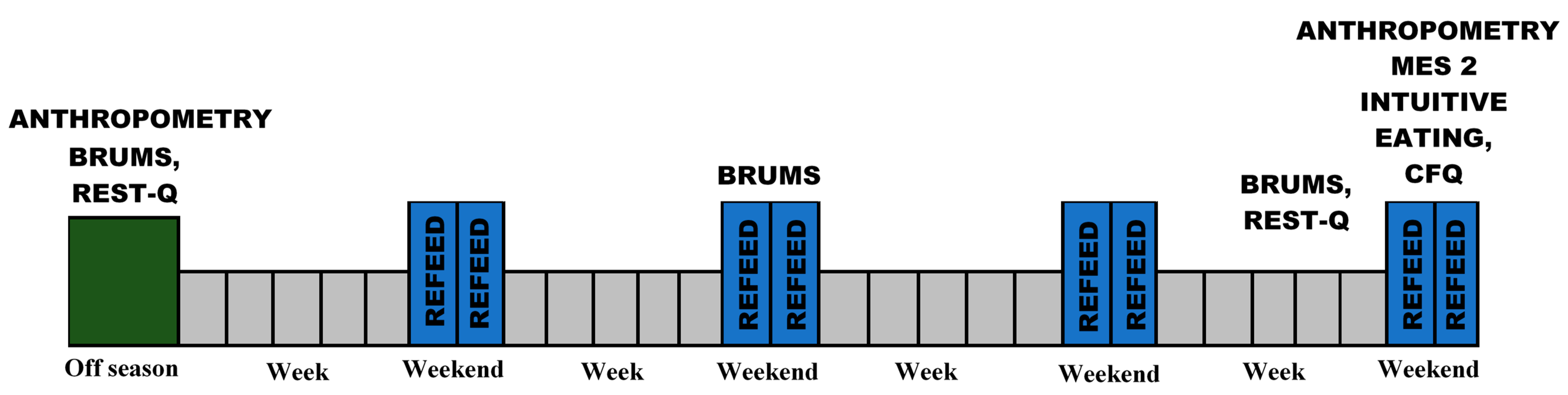
Figure 2.
Panel A: Total disturbance mood. Panel B: REST-Q sports questionnaire Values are expressed as mean and standard error. Black bars signify an age-matched group of non-athletic students. White bars given for athletes.
Figure 2.
Panel A: Total disturbance mood. Panel B: REST-Q sports questionnaire Values are expressed as mean and standard error. Black bars signify an age-matched group of non-athletic students. White bars given for athletes.
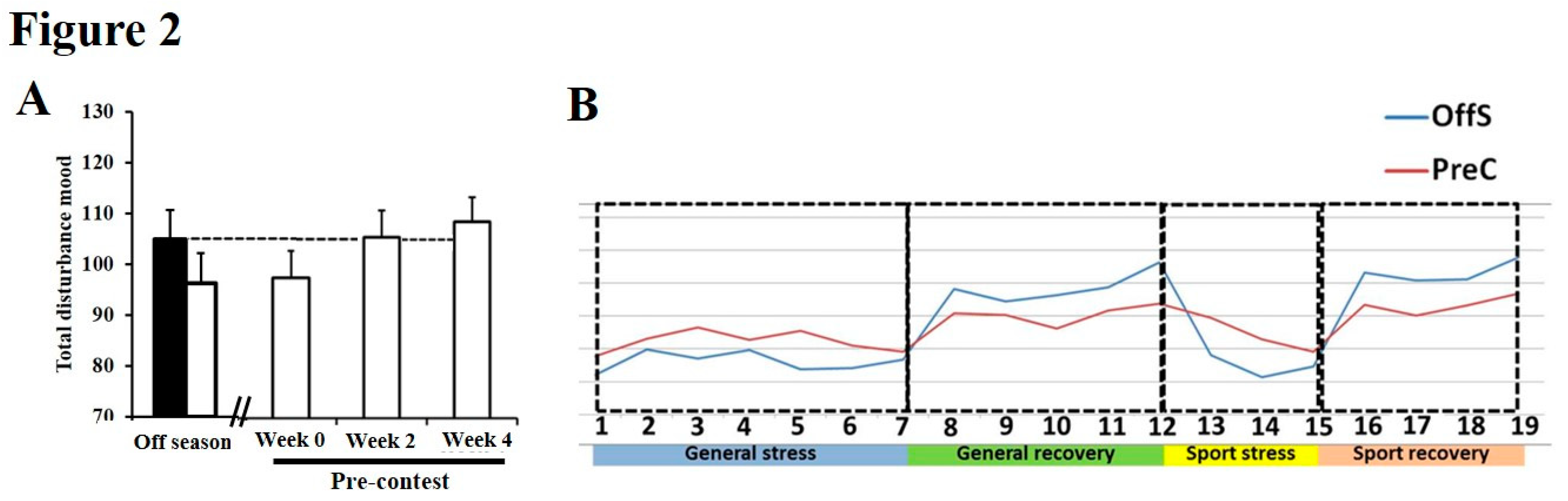
Figure 3.
Panel A: Linear correlation between energy intake during cheat meal and hunger/satiety perception scores. Panel B: Linear correlation between energy intake during cheat meal and intuitive eating scores (IES 2). Panel C: linear correlation between energy intake during cheat meal and scores of the dimension confidence in hunger and satiety cues (RHSC) dimension. Panel D: Linear correlation between energy intake during cheat meal and scores of the congruence in food-body choice (BFCC) dimension. Panel E: Linear correlation between IES 2 scores and coping based in emotions meal Panel F: Linear correlation between energy intake during cheat meal.
Figure 3.
Panel A: Linear correlation between energy intake during cheat meal and hunger/satiety perception scores. Panel B: Linear correlation between energy intake during cheat meal and intuitive eating scores (IES 2). Panel C: linear correlation between energy intake during cheat meal and scores of the dimension confidence in hunger and satiety cues (RHSC) dimension. Panel D: Linear correlation between energy intake during cheat meal and scores of the congruence in food-body choice (BFCC) dimension. Panel E: Linear correlation between IES 2 scores and coping based in emotions meal Panel F: Linear correlation between energy intake during cheat meal.
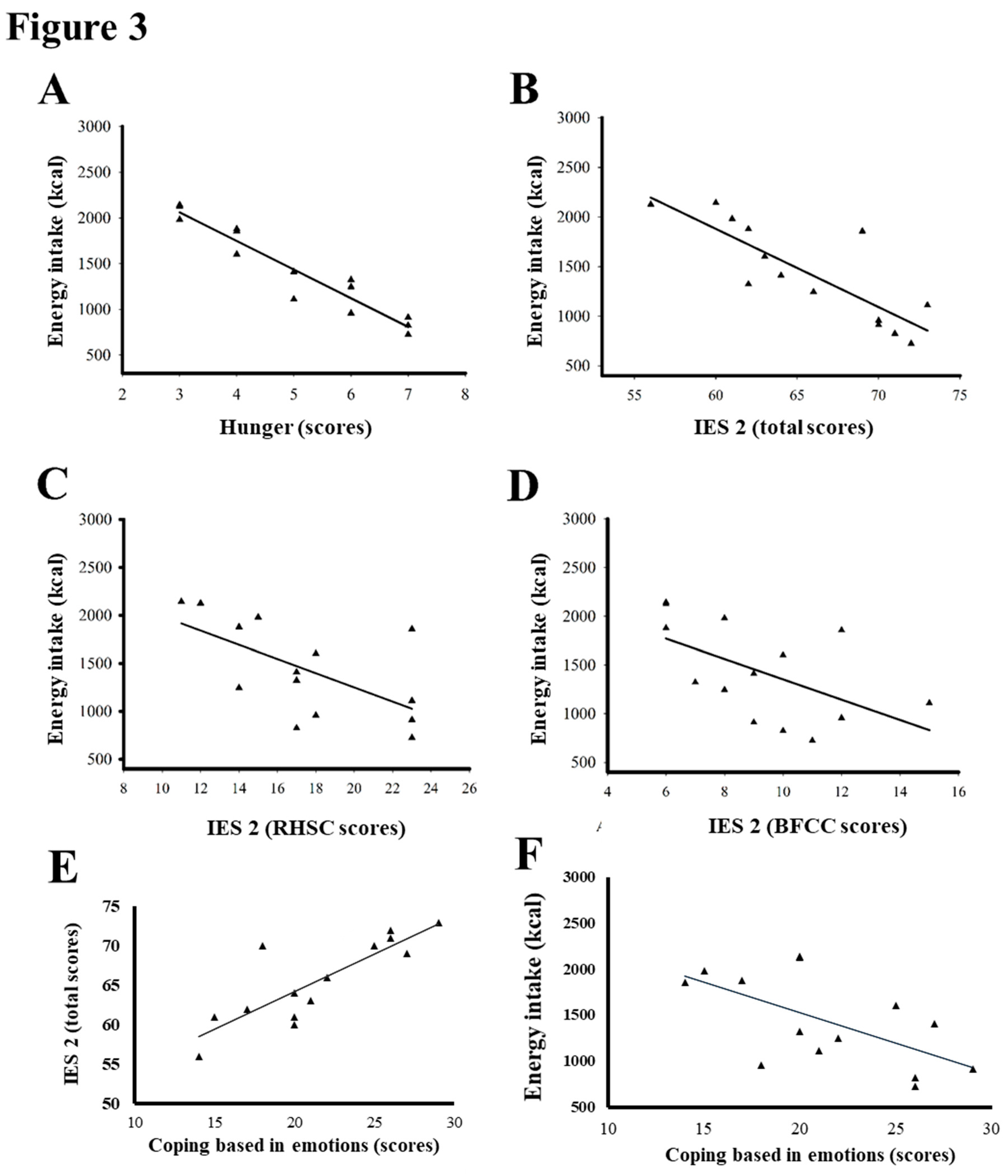

Table 1.
Mean daily macronutrient and energy intake during 4 weeks of energy restriction and subject characteristics regarding anthropometry, training and sleep. Values are expressed as mean and standard deviation. * paired test t, p < 0.05.
Table 1.
Mean daily macronutrient and energy intake during 4 weeks of energy restriction and subject characteristics regarding anthropometry, training and sleep. Values are expressed as mean and standard deviation. * paired test t, p < 0.05.
| Food intake | Weeks | |||
| 1 | 2 | 3 | 4 | |
| Protein (g/kg) | 2.8 ± 0.5 | 2.6 ± 0.3 | 2.7 ± 0.5 | 2.6 ± 0.4 |
| % energy | 38.0 ± 4 | 40 ± 4 | 36 ± 4 | 37 ± 4 |
| Carbohydrate (g) | 236 ± 36 | 242 ± 29 | 231 ± 32 | 249 ± 36 |
| % energy | 35 ± 4 | 35 ± 3 | 35 ± 3 | 35 ± 4 |
| Fats (g) | 83 ± 6 | 78 ± 6 | 88 ± 7 | 88 ± 6 |
| % energy | 27 ± 4 | 25 ± 4 | 29 ± 5 | 28 ± 3 |
| Energy intake (kcal) | 2729 ± 132 | 2801 ± 148 | 2746 ± 129 | 2731 ± 124 |
| Anthropometric parameter | Pre | Post | ||
| Height (cm) | 173.0 ± 0.1 | 173.1 ± 0.1 | ||
| Body mass (kg) | 85.6 ± 6.8 | 83.5 ± 5.9* | ||
| Body fat (%) | 7.3 ± 0.4 | 4.0 ± 0.2* | ||
| Fat mass (kg) | 6.1 ± 0.3 | 5.0 ± 0.2* | ||
| Lean body mass (kg) | 79.4 ± 5.9 | 78.4 ± 5.6* | ||
| Training caractheristics | ||||
| Resistance training | ||||
| Days/ week | 5.9 ± 0.3 | 6.3 ± 0.2 * | ||
| Minutes/ week | 517.5 ± 23.2 | 635.5 ± 29.2 * | ||
|
Poses training Days/ week Minutes/ week Aerobic exercise |
4.6 ± 0.8 79.3 ± 10.7 |
5.0 ± 0.6 * 89.3 ± 12.5* |
||
| Days/ week | 4.5 ± 0.6 | 5.6 ± 0.2 * | ||
| Minutes/ week | 261.4 ± 35.4 | 327.4 ± 30.2 * | ||
| Sleep | ||||
| Hours/ day | 6.4 ± 1.6 | 5.9 ± 1.4 | ||
| Social jet leg | 1.1 ± 0.7 | 1.2 ± 0.8 | ||
Table 2.
Total scores and dimensions of the Mindful Eating Scale 2 (MES), hunger and appetite scale and Intuitive Eating (n=14). Values are expressed as mean and standard deviation.
Table 2.
Total scores and dimensions of the Mindful Eating Scale 2 (MES), hunger and appetite scale and Intuitive Eating (n=14). Values are expressed as mean and standard deviation.
| MES 2 scale | |
| Consciousness | 1.8 ± 0.2 |
| Distraction | 2.3 ± 0.2 |
| Disinhibition | 2.1 ± 0.1 |
| Emotional response | 2.0 ± 0.1 |
| External influences | 1.5 ± 0.1 |
| Total score | 9.5 ± 0.7 |
| Perception of hunger/ appetite | 4.8 ± 0.4 |
| IES 2 scale | |
| Unconditional permission to eat | 14.9 ± 0.6 |
| Eating for physical rather than emotional reasons | 24.0 ± 0.6 |
| Confidence in hunger and satiety signals | 17.5 ± 1.1 |
| Body-food congruence | 9.2 ± 0.7 |
| Total scores | 65.9 ± 1.4 |
Disclaimer/Publisher’s Note: The statements, opinions and data contained in all publications are solely those of the individual author(s) and contributor(s) and not of MDPI and/or the editor(s). MDPI and/or the editor(s) disclaim responsibility for any injury to people or property resulting from any ideas, methods, instructions or products referred to in the content. |
© 2023 by the authors. Licensee MDPI, Basel, Switzerland. This article is an open access article distributed under the terms and conditions of the Creative Commons Attribution (CC BY) license (http://creativecommons.org/licenses/by/4.0/).
Copyright: This open access article is published under a Creative Commons CC BY 4.0 license, which permit the free download, distribution, and reuse, provided that the author and preprint are cited in any reuse.


